Home Blog Page 221

WSCIJ urges stronger action against human trafficking in Nigeria

0

THE Wole Soyinka Centre for Investigative Journalism (WSCIJ) has called for urgent and coordinated efforts to tackle human trafficking in Nigeria.

In a statement on Wednesday, July 30, to commemorate the World Day Against Trafficking in Persons, the Centre described human trafficking as one of the most organised forms of modern-day slavery.

While expressing solidarity with victims and survivors of trafficking, the Centre urged stakeholders, including government, law enforcement officers, media and civil society, to treat the issue as a calculated criminal enterprise rather than just a humanitarian crisis.

“This year’s theme, ‘Human trafficking is organised crime – End the exploitation,’ is a reminder that trafficking is a calculated and profit-driven enterprise, often enabled by weak systems, corruption and silence. To dismantle these networks, we must treat trafficking not merely as a humanitarian issue but as a criminal enterprise requiring systemic disruption.

“For WSCIJ, this includes supporting journalists to investigate and expose trafficking rings, uncover complicity at all levels and push for reforms that prioritise victim protection over blame,” the statement added.

The Centre, known for empowering journalists to expose human rights violations, highlighted the critical role of investigative journalism in breaking the silence around trafficking networks, adding that without exposing the hidden economies and complicity enabling trafficking, efforts to end it would remain superficial.

 “In 2014, the investigative story titled ‘Inside Nigeria’s Ruthless Human Trafficking Mafia,’ by Tobore Ovuorie, won the Report Women category of the Wole Soyinka Award for Investigative Reporting (WSAIR). The piece was an unflinching look into the operations of trafficking rings in Nigeria, showing the sheer scale of exploitation and institutional neglect. In 2023, Sharon Ijasan received the WSAIR award in the TV category for her story,  ‘Human trafficking: sad realities of trafficked Nigerians in Libya, West-Africa.’ The story exposed the route many traffickers ply; brought to the fore that traffickers collaborate with transporters to perpetuate the crime; revealed the trafficker of a survivor, and uncovered the sex camp where Nigerian girls are forced to sell their bodies,” the statement added.

It further said it had been actively building the capacity of reporters to cover migration and trafficking ethically and thoroughly, adding that in 2019, it partnered with UNESCO to host a two-day masterclass for 22 journalists on migration reporting. 

According to the Centre, the training examined links between trafficking, organ trade, migration law, and journalist safety.

The Centre also pointed to findings from its report ‘Missing Data, Missing Justice,’ which it said showed the gendered impact of human trafficking in Nigeria. 

It noted that the report found that trafficking accounted for nearly four per cent of all stories focused on women and girls, underlining the urgent need for gender-responsive interventions.

The organisation called on the Nigerian government to show stronger political will by reforming laws, resourcing enforcement agencies, and ensuring perpetrators are held accountable, regardless of their social or political standing. 

It also urged civil society organisations to ramp up public education and survivor-centred advocacy, and encouraged newsrooms to invest more in trafficking coverage and investigative work.

“WSCIJ calls on all relevant stakeholders, including the government, law enforcement agencies, the judiciary, civil society, international partners and the media to take urgent and coordinated action to dismantle the complex networks that fuel human trafficking. We urge the government to demonstrate stronger political will by strengthening legal and policy frameworks, resourcing enforcement agencies, holding perpetrators accountable regardless of their status and offering adequate support to survivors.

“We also call on civil society and development actors to intensify advocacy, public education and survivor-centred support systems, while working hand-in-hand with journalists to push for structural reforms. We encourage newsrooms to prioritise trafficking coverage, build the capacity of journalists to report safely and ethically and invest in investigative reporting that reveals the hidden economies of exploitation,” it stressed.


UNESCO offers African women filmmaking residency

THE United Nations Educational, Scientific and Cultural Organisation (UNESCO), in collaboration with the People’s Republic of China and the Tamayouz Cinema Foundation, is offering African women filmmakers residency in Morocco.

The six-week residency will last from September 15 to October 27, 2025.

The programme provides a platform to enhance skills, amplify voices, and connect with key players in the film industry across the continent.

Participants will receive professional training, produce their short film, and collaborate with peers from across Africa.

Ten emerging African women filmmakers will be selected. 

To apply, the applicant must identify as a woman, be a citizen of an African state, and be between 21 and 35 years old before the start of the residency.

The applicant must also have at least two years of professional experience in film or audio-visual production, have written and directed at least one fiction film (short, medium, or feature), preferably screened at a festival or broadcast, and speak and understand English and/or French fluently.

The deadline is July 31.

To apply, click here.

Ghanaians renew ‘Nigerians must go’ protests

GHANAIANS have renewed protests seeking the deportation of Nigerians from their country. 

The ICIR observed on Wednesday, July 30, from viral videos, how protesters in large numbers, held placards with various inscriptions such as “Armed robbery and violent attacks must stop”; “Our health at stake due to mass prostitution”; “Who protects the right and freedom of Ghanaians”; “Nigerians are kidnapping and using people for rituals”; “Our kids are getting missing because of Igbos,” among others.

In one of the videos, a visually impaired man shouted into a camera, urging President John Mahama to fulfil his “Ghana First” pledge.

Ghanaians demanding the deportation of Nigerians from Ghana

Ghanaians demanding the deportation of Nigerians from Ghana

They also held up a photo of a man who was reportedly killed by a Nigerian in the Accra area.

Another protester in a separate video alleged that Nigerians were killing and robbing Ghanaians.

“Our children can not go out and come back. You can not come (home) back at night,” the protester sitting on a bike said.

In another video, a protester decried the increase in human trafficking and prostitution allegedly caused by Nigerians.

Recall that in 1983, Nigerian former President Shehu Shagari cited similar issues of rising crime and economic pressure as justification for the mass expulsion of Ghanaian immigrants. 

“If they don’t leave, they should be arrested, tried and sent back to their homes.

“Illegal immigrants, under normal circumstances, should not be given any notice whatsoever. If you break a law, then you have to pay for it,” the former President had said. 

Nigeria eventually expelled over two million undocumented immigrants,  mostly Ghanaians, during a crippling economic downturn, which birthed the now-iconic checkered plastic bags known as “Ghana Must Go.”

However, the deportation did not start with Nigeria. Ghana was the first to launch the onslaught. Three million migrants, mostly Nigerians, were asked to leave Ghana under the “Ghana Aliens Compliance Order” law enacted by the country’s Prime Minister Kofi Abrefa Busia in 1969.

How the latest protest started 

The “Nigerians must go” protest was triggered by the installation of a Nigerian traditional leader, Eze Chukwudi Ihenetu, as the “Eze Ndi Igbo Ghana” (King of the Igbo People in Ghana) earlier this month.

Ghanaian youth groups and cultural advocates opposed the installation, saying that the presence of a foreign monarch undermined Ghana’s sovereignty and traditional chieftaincy institutions.

The title ‘Eze Ndi Igbo’ is widely recognised within Igbo diaspora communities as a symbolic representation of cultural leadership.

The protesters urged the Ministry of Chieftaincy and Religious Affairs to intervene and clarify whether Ghanaian law allowed foreigners to assume royal titles within the country.

Responding to the controversy, Ihenetu defended his title, explaining that it was purely ceremonial and intended to foster unity within the Igbo community in Ghana.

The protest worsened when a widely circulated video showing Ghanaian broadcaster,  Captain Smart, kneeling before Eze Ihenetu during a public event, igniting intense debate across social media platforms.

The ICIR reports that both countries belong to the Economic Community of West African States (ECOWAS), which guarantees the right of citizens to reside and work in member countries. 

Nigeria and Ghana have long shared cultural ties, trade relationships, and a history of reciprocal migration. But the growing tensions reveal the fragility of ECOWAS solidarity when faced with domestic unrest.

Countries making up the ECOWAS recently depleted after Niger, Mali, and Burkina Faso

Nigerian government reacts

Meanwhile, the Nigerian government has reacted to the crisis. The Chairman of the Nigerians in Diaspora Commission (NIDCOM), Abike Dabiri-Erewa, called for calm and condemned the protest.

In a statement she issued on Tuesday, July 29, Dabiri-Erewa said Nigerians were not criminals as alleged by the Ghanaians. 

“Nigerians are not criminals. They are good ambassadors wherever they find themselves. Ghana and Nigeria are like Siamese twins… they should continue to live in peace,” she said.

She advised Nigerians in Ghana to avoid provocation or engaging in violence, assuring that the matter was being addressed diplomatically by the Minister of State for Foreign Affairs, Bianca Ojukwu.

“Ghana and Nigeria are like Siamese twins. They are brothers, and in the spirit of ECOWAS and regional integration, should continue to live in peace like brothers,” she added.

However, the Ghanaian government has yet to issue a statement on the situation or address the demands to expel Nigerians from the country, regardless of their legal status.

The ICIR reports that the current crisis emerged from the embers of similar crises in 2020, which both nations diplomatically managed.

Ghana had threatened to deport Nigerians illegally living on its territory.

Ghanaians had demanded that Nigerians quit their country because they were taking over their jobs.

They were also displeased with increasing Nigerian businesses in the country, which they claimed did not comply with local laws which give advantage to citizens.

Nurses begin seven-day warning strike, threaten to down tools indefinitely

0

NURSES under the National Association of Nigerian Nurses and Midwives, Federal Health Institutions Sector (NANNM-FHI), have begun a seven-day warning strike, defying last-minute appeals from the Federal Government.

The industrial action, which began at midnight on Wednesday, July 30, followed what the union described as a prolonged period of neglect and failure by the government to engage meaningfully with their demands.

The National Chairman of NANNM-FHI, Morakinyo Rilwan, had on Tuesday, July 29, stated that the association had provided ample time for dialogue, including a 15-day ultimatum, which expired without any meaningful communication from the authorities.

The ICIR reported how the association had threatened to embark on a strike over the alleged exclusion of its members from the Federal Government’s newly approved allowance structure for healthcare workers.

At an emergency National Executive Council meeting held on Thursday, July 11, in Abuja, the group rejected a circular issued by the National Salaries, Income and Wages Commission, according to the News Agency of Nigeria.

Speaking in an interview with Punch Newspaper on Tuesday, Rilwan said, “There has been no communication from the government to this moment.”

According to him, the association has decided to proceed with the strike, whether or not the government communicates with it.

He said the strike was driven by members’ frustration over the government’s failure to meet their demands.

“So, we don’t have any option but to allow them to exercise their rights, because they are tired.

“They are not even contemplating ‘no work, no pay,’ because that is the only language the government can use, and they are ready because the money they are taking is not even enough for them. They are ready to sacrifice that as long as this strike continues,” he added.

Among the nurses’ core demands are the upward review of shift and uniform allowances, implementation of a distinct salary structure for nurses, an increase in core duty allowances, recruitment of more nurses, and the creation of a separate Nursing Department within the Federal Ministry of Health.

Rilwan (the group’s president) said that nurses had endured poor working conditions for decades without resorting to strikes.

“For over 40 years, we have been patient with them. They subjected us to no provision of gloves or equipment, and for the past 40 years, nurses have not embarked on any strike,” he said.

The ICIR reports that this claim is untrue as NANNM had embarked on strikes on similar issues raised by Rilwan multiple times in the past 15 years.

However, The ICIR contacted the FCT chapter of NANNM, Jama Medan, to seek clarification on the claim. He said the national president was right.

Medan said all the strikes the group had embarked on had been for solidarity, or those called by the Nigeria Labour Congress. He said NANNM had not initiated any strike in decades over issues concerning its members.

While the national president of NANNM noted that the ongoing strike was expected to end on August 5, he stressed that if the government remained unresponsive, a fresh 21-day ultimatum would be issued in line with labour laws.

He warned that an indefinite nationwide strike might follow after the fresh 21-day ultimatum.

He also clarified that only hospitals not in good financial standing with the union were exempted from the warning strike.

“Federal Medical Centre, Ebute-Metta and Lagos University Teaching Hospital, Lagos, have not been part of our association for the past three years due to some internal issues.

“They are not legally covered to participate in this strike because they are not legitimate financial members of the association. Other hospitals in Lagos and other states, including the Federal Capital Territory, are joining the strike,” Rilwan said.

Nigeria’s $1trillion economy target a mirage with 3% annual GDP growth – Financial derivatives

NIGERIA’s quest to achieve a target gross domestic product (GDP) of $1 trillion by 2030 could be a pipe dream given the current annual GDP growth rate of three per cent.

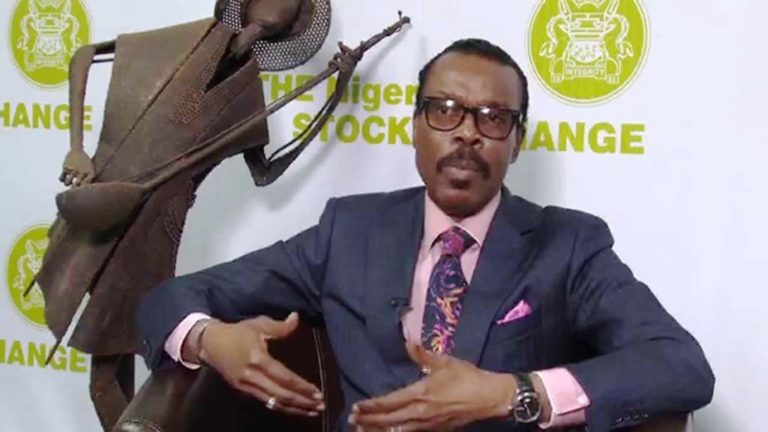
Economic expert and Managing Director of Financial Derivatives Company Ltd, Bismarck Rewane, made this submission on Tuesday, July 29, in response to the recent GDP rebasing by the National Bureau of Statistics (NBS).

He argued that the target could only be achieved with 15 per cent annual growth, adding that 3.13 per cent per cent growth as recorded in the first quarter (Q1) 2024, could not achieve the set target.

The ICIR reports that the President Bola Tinubu administration has set a target of $1 trillion economy by 2030, with most economic analysts querying the government on the methodology to achieve such milestone.

Rewane opined that Nigeria could grow mostly at seven per cent, but would be unable to meet the $ 1 trillion target.

“We need to accept that Nigeria is the fourth largest economy in Africa and the forty largest economy in the world, and that the goal of having a N1trillion economy is a mirage rather than a reality. We need to grow at 15 per cent to achieve a N1trillion economy, and that’s not going to happen.

While citing comparison, he said, “Nigeria and Singapore used to have the same GDP per head in 1960. Unfortunately, Singapore’s income per head today is $90,000 per head, while Nigeria’s is $1000.To state the least, Singapore is 90 times higher than Nigeria despite starting at the same time.”

He stated that a further comparison with Nigeria and Ghana shows a dismal performance of the Nigerian economy.

“GDP per head in Ghana is $5000 per head while Nigeria is slightly above $1000,” he added.

Rewane stressed the urgent need for Nigeria to resolve its lingering power supply issues, warning that continued outages posed a significant threat to national economic growth.

He emphasised the impact of electricity instability on Nigeria’s  GDP, particularly in key economic hubs like Lagos and Ogun states.

“There is the opportunity cost, and there is a cost. The cost is that Lagos and Ogun states may constitute about 30 per cent of Nigeria’s GDP. So, if you’re going to have one month of power outage, the impact is effectively one-twelfth of 30 per cent —which is significant,” he said.

Rewane described Nigeria’s power challenges as deeply rooted and multi-dimensional, citing issues such as cultural barriers, tariff imbalances, underinvestment, and debt forbearance within the sector. “You cannot grow the economy with what we’ve seen today without a broad power solution.

“If there is a power outage in Nigeria, it must be resolved – no question. You can’t put a Band-Aid on it. It has to be done, and it has to be done now,” he stated.

On economic performance, Rewane noted that Nigeria’s GDP was at approximately $2.45 billion, with a 3.13 per cent growth recorded in the first quarter of the year.

He also observed shifts within the economy, stressing that manufacturing’s contribution had declined, while agriculture had grown in visibility, and the service sector remained the primary driver of economic activity.

International Day of Friendship: the power of meaningful bond

FRIENDSHIP is a close, supportive, and enduring relationship between  people that involves mutual affection, trust, empathy, and a deep understanding of one another.

Some of its basic ingredients include, but are not limited to, mutual support, trust, communication, empathy, and shared experiences.

Friendship can bring joy, comfort, and a sense of belonging to our lives.

As the world celebrates “International Day of Friendship,” The ICIR hears from friends who have shared experiences focusing on the power of meaningful bonds.

‘We ate rice and palm oil from a pot’

The friendship between these two friends, Uduak Udo and Sylvanus Obot, which has spanned 36 years, captures the essence of long-standing friendship, highlighting enduring friendship, mutual support, and aligned values.

According to Udo, who spoke to The ICIR, 36 years of friendship with Obot is a testament to the power of true companionship. According to him, his bond with Obot is one that he cherished deeply.

“We weathered life’s storms together, from struggling to make ends meet to sharing what little we had. As I reflect on those early days, I’m reminded of the simple yet profound moments we shared – eating plain rice and palm oil from a single pot, laughing together, and facing our problems head-on.

“In those moments, we borrowed strength from each other, and our friendship became a source of comfort and solace,” he stated with nostalgia.

He said, “As pastors, we’ve had the privilege of praying together, supporting each other through life’s ups and downs, and sharing our burdens. Our friendship has been a sanctuary, a safe space where we can be ourselves, without fear of judgment.” He expressed gratitude for their enduring friendship, saying, “As I look back, I have no regrets – I am grateful for the gift of Sylvanus in my life.”

On what makes a strong friendship, he believes that “it is built on shared vision and values.” He emphasised that “you have to have your own vision and way that you think and see life, and your friend should be someone who thinks like you and has the same vision.”

The alignment, he noted, has allowed them to grow together and navigate life’s challenges side by side, proving that true relationships can withstand the test of time.

A childhood bond lost in time

In an expression filled with emotion, a chef, Favour Ahanonu, captures the essence of the close relationship between her and her old friend Tobechukwu Obiekwe.

According to Ahanonu, the 12-year friendship, which was formed during childhood and secondary school years, was deep but faded away due to life’s circumstances.

Ahanonu shared a heartwarming account of her childhood friendship with Obiekwe. According to her, they grew up together in Lagos, between the Volkswagen bus stop and Agric bus stop in Ojo Local Government Area, and were extremely close, likening their bond to that of blood sisters.

Ahanonu described friendship with Obiekwe as very close, saying they did most things together, including attending church and spending festive periods. Their parents knew each other well, which she attributed to their  pre-existing closeness that brought them together.

When asked about the meaning of friendship, Ahanonu explained that it signifies loyalty, complete loyalty, and a selfless kind of relationship. She stated, “When you say someone is your friend, that means it’s the person who can have my back wherever I’m not present… This is somebody that can speak on my behalf, that can defend me.”

She confirmed that Obiekwe embodied these attributes, but they eventually lost contact due to life circumstances, including marriage and Obiekwe losing her mother.

According to her, despite trying to reconnect on Facebook, she was unable to locate her friend.

The two had been friends for about 12 years, having met in primary school.

Reflections on enduring friendship

As we mark the International Day of Friendship on July 30, the stories of Udo and Obot, as well as Ahanonu and Tobechukwu Obiekwe, offer powerful reflections on the deep impact meaningful relationships can have in our lives.

Though their journeys differ, both friendships highlight the vital roles of trust, mutual support, and shared values in building lasting connections.

These stories remind us that friendships are essential to the human experience. They offer joy, comfort, and a sense of belonging. Whether they span a lifetime or just a few years, the influence of these relationships can shape our identities.

Ultimately, the International Day of Friendship is a tribute to the relationships that enrich our lives and encourages friendships we hold dear and to to our existence.

Elephants, hippopotamus kill residents in Yola, Ogun

IN a disturbing string of wildlife attacks, two Nigerian states, Adamawa and Ogun, are grappling with the deadly consequences of displaced wild animals invading human settlements.

In Adamawa State, a young man was reportedly killed after a group of hippopotamuses, displaced by flooding from the Kiri Dam, invaded farmlands and communities in Guyuk and Shelleng Local Government areas.

The Chairman of Guyuk LGA, Shalom Kassa, confirmed the death on Monday, July 28, during a community briefing in Banjiram.

“These animals are now moving freely through our riverbanks, farmlands, even flooded homes, and people are living in fear,” Kassa said, adding that “it’s a serious threat to human lives and livelihoods.”

Flooding across the state capital, Yola, and environs, has forced these animals out of their natural habitats and into populated areas, destroying crops and endangering both residents and livestock.

Kassa also highlighted the dilemma facing locals, including laws which prohibit killing or harming wildlife such as hippopotamus.

The chairman, alongside his fellow from Shelleng LGA, Abubakar Abba, and traditional leaders in the area, appealed to the Adamawa State Government for immediate intervention.

The Secretary to the State Government, Awwal Tukur, assured that steps would be taken to address the crisis.

Meanwhile, in Ogun State, a middle-aged farmer, Musa Kalamu, met a tragic end after being attacked by a wandering herd of elephants in the Onitasin Imobi community, Ijebu East LGA.

The animals were said to have escaped from a nearby government reserve.

Confirming the incident on Tuesday, the Commissioner for Forestry, Taiwo Oludotun, said state officials were already heading to the affected community.

The Commissioner of Police, Lanre Ogunlowo, also confirmed the attack, noting that the farmer died while being rushed to the hospital.

The incident went viral after a graphic video circulated online showing Kalamu’s lifeless body, with visible wounds from the attack.

In the video, distressed locals pleaded for help, saying: “The problem with these elephants is too much in our community.”

These twin incidents, although hundreds of kilometers apart, underscore a growing nationwide crisis.

As climate change, deforestation, and urban encroachment continue to erode natural habitats, wild animals are increasingly coming into deadly contact with humans.

The ICIR reports that both hippopotamuses and elephants are rapidly declining in Nigeria due to habitat loss, poaching, and human activities.

According to wildlife experts, Nigeria is home to less than 100 hippopotamuses and approximately 300 African forest and savannah elephants, mostly scattered in protected areas and reserves across the country.

The International Union for Conservation of Nature (IUCN) lists both animals as vulnerable or endangered, with elephants facing particular threats from the ivory trade and loss of grazing corridors.

Many wildlife reserves in Nigeria lack the necessary funding and infrastructure to effectively monitor or protect these animals.

Unfortunately, as their natural environments shrink due to climate change and unchecked development, these once-elusive species are being forced into human spaces, where they now pose deadly risks.

The challenge for authorities remains how to balance species conservation with the safety of communities living near these wild zones.

CAC to delist 100,000 dormant companies, gives 90-day ultimatum 

THE Corporate Affairs Commission (CAC) said it would delist 100,000 companies from its register over prolonged inactivity and non-compliance with statutory requirements under the Companies and Allied Matters Act (CAMA).

It gave the notice on Tuesday, July 29, issuing a 90-day ultimatum, from the date of its publication, for companies involved to regularise their status.

The move forms part of the Commission’s broader effort to sanitise Nigeria’s corporate registry and ensure that only active and compliant entities remain in the system.

It also aligns with ongoing efforts to enhance transparency in company ownership and governance in line with anti-money laundering standards.

“It shall be unlawful for any company struck off the Register of Companies to continue carrying on business unless it is restored by an order of the Federal High Court,” it warned, citing a similar notice in July last year, where it delisted several companies by November.

According to the Commission, the companies involved have been identified as either not carrying on business, inactive for at least 10 years, or failing to meet regulatory obligations, particularly the annual filing of returns and disclosure of Persons with Significant Control (PSC).

To avoid being struck off, CAC stated that the companies involved must promptly file all outstanding annual returns and send activation emails where applicable.

A report by The ICIR on November 11, 2019, documented a similar public notice and how the CAC had clamoured for companies to file their annual returns as provided by the law or risk being delisted from its register.

Rebased GDP shows manufacturing sector underperforming — MAN DG

NIGERIA’s latest rebased gross domestic product (GDP) figures indicate that the manufacturing sector is underperforming, according to the director-general of Manufacturers Association of Nigeria (MAN), Segun Ajayi-Kadir.

He is urging the federal government to prioritise the sector to reflect the real economic situation and gains of the rebased GDP.

Ajayi-Kadir made the call in Lagos on Tuesday, July 29, while reacting to the recently released rebased GDP figure.

He pointed out that the rebased GDP, mainly driven by improved data from agriculture, services, and the informal sector, should not be mistaken for real progress.

“The rebasing confirms that Nigeria’s economy may be statistically larger, but it is not more productive, nor more industrialised.

“While the rebasing exercise reveals a more diversified economy, it also exposes the underperformance of industry, particularly manufacturing, a sector which should be the backbone of Nigeria’s economic transformation,” Ajayi-Kadir said.

On July 22, the National Bureau of Statistics released the rebased GDP data, stating that it grew by 3.13 per cent year-on-year in real terms in the first quarter of this year from 2.27 per cent growth in the same period of 2024, The ICIR reported.

Ajayi-Kadir noted that despite the upward revision, Nigeria’s real GDP growth remains weak, averaging only 1.95 per cent between 2020 and 2024.

He described this as a sign of “underlying fragility of Nigeria’s productive base and the capacity of the economy to deliver sustainable and inclusive development.”

He further said that the rebased structure shows the industry’s share of the GDP declined from 27.65 per cent in the 2010 base year to 21.08 per cent under the new 2019 base year.

“This marks a structural shift away from production toward low-productivity service activities,” he said.

According to Ajayi-Kadir, the government must treat the rebased GDP not as a sign of success, but as “a strong call for structural industrial reforms.”

“Nigeria must re-industrialise to achieve inclusive growth, build export capacity, and reduce dependence on primary commodities and informal activities.”

The Director-General also urged policymakers to prioritise manufacturing in financing, infrastructure, and policy design.

“Without a strong industrial base, GDP expansion may just become a hollow statistic.

“The upward revision of Nigeria’s GDP to $243 billion could lift investors’ confidence and improve headline macroeconomic ratios such as the debt-to-GDP ratio,” Ajayi-Kadir said.

He, however, noted that confidence in the economy is anchored not just on size, but on structural resilience, depth of industrial capacity, and productivity growth.

He called for sustained implementation of industry-centric initiatives, such as the Industrial Revolution Working Group, improved infrastructure, and greater access to long-term finance to revitalise the sector.

He believes this is the only way for the GDP growth to translate into poverty reduction, job creation, and macroeconomic stability.

Ajayi-Kadir also called for a manufacturing-led growth strategy, including targeted support for critical sub-sectors like textiles and vehicle assembly.

Presidency defends Super Falcons rewards, compares gifts with BBNaija’s N150m prize

0

THE presidency has defended national honours and financial rewards splashed on Nigeria’s Super Falcons by President Bola Tinubu after their victory at the 2024 Women’s Africa Cup of Nations.

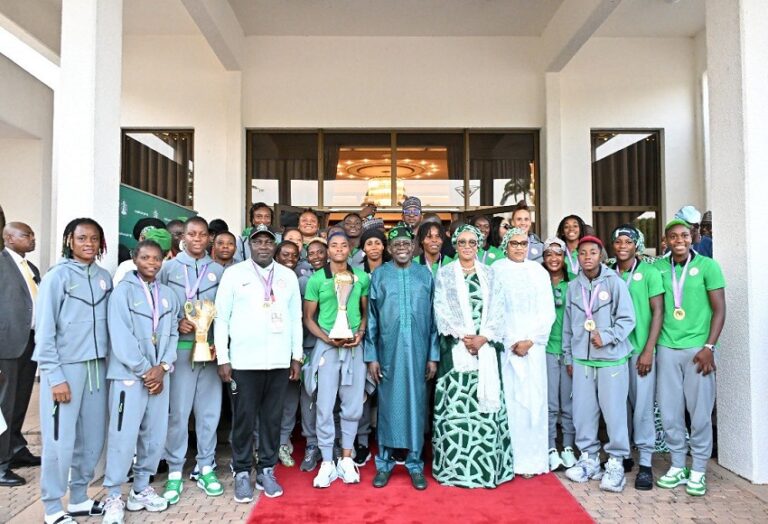
At a reception held on Monday, July 28, in Abuja, Tinubu rewarded the team with national awards, cash gifts, and houses, following their thrilling victory at the 2025 Women’s Africa Cup of Nations (WAFCON) in Morocco.

The president conferred the national honour of Officer of the Order of the Niger (OON) on all 24 players and 11 technical crew members.

 Each player also received a cash prize of the naira equivalent of $100,000, while the technical team members were awarded $50,000 each. 

In addition, the president directed the allocation of three-bedroom apartments to all recipients in the Federal Government’s Renewed Hope Housing Estate.

The gesture from the president has, however, drawn mixed reactions from Nigerians. While some commended the president’s action, others condemned it.

For instance, the presidential candidate of the African Action Congress (AAC) in the last general election, Omoyele Sowore, criticised the gift to the Falcons, comparing it with the plight of officers of the Nigeria Police Force (NPF).

“Life is brutally unfair to Nigeria Police Force @policeng officers! Super Falcons won WAFCON, trained for one year, played for one month, were rewarded with $100,000 (N150 million) each and houses!

“Police officers protected them for decades, worked 35 years, retired with $1,500 (N2 million as gratuity), no houses, no medicals, and a little pension! The president or the governor who handed the awards? $1 BILLION in gratuity, lifetime pension, homes everywhere, and full medical! #PoliceProtest ,he posted on X.

Another X user @ISAACJUNIOR9 claimed he thought it was $10 000 until he discovered it was $100,000.

“I won’t even lie, I agree with you Senior Comrade (responding to Sowore’s post). When I heard 100,000USD, I thought it was a mistake & PBAT (President Bola Armed Tinubu) meant 10,000USD. 100,000 USD for a trophy valued at 1 million USD & in the current hardship is outrageous. Like 30,000 should be okay. We love our players but doesn’t look ok at all.”

An X user @AchilleusChud described the president’s action as wasteful.

“Wasteful! And imagine that the president announced the rewards in dollar terms, not naira terms. Sad.”

Similarly, @Ezekwem_Franklin in a tweet on X submitted that the rewards were too much,I’m not against the gift, but that amount is too much for a country whose citizens are living in abject poverty, infrastructural decay, and insecurity. This wasn’t thoughtful from President Tinubu; it’s not a good way to buy favour.”

However, some users welcomed the president’s gesture for the team.

Reacting to the criticism of the president’s gifts to the Super Falcons in a post shared on his official X account on Tuesday, presidential spokesman Bayo Onanuga fired back at critics, comparing the rewards with the ₦150 million grand prize offered to the winner of the Big Brother Naija (BBNaija) reality show.

“When you remember that Multichoice, the organiser of the BBNaija reality show, is offering the winner a ₦150 million grand prize, you wonder why some Nigerians are unappreciative of President Tinubu’s rewards to the Super Falcons,” he posted.

According to him, Tinubu rewarded excellence, creativity, hard work, soccer artistry, and the undying Nigerian spirit.

Onanuga’s comparison has sparked mixed reactions on X, with Nigerians debating the Super Falcons’ rewards and the BBNaija analogy.

Nigeria’s Super Falcons claimed their 10th WAFCON title on Saturday, July 26, after a dramatic 3–2 comeback win against hosts Morocco in Rabat.

Esther Okoronkwo sparked the revival with a 64th-minute penalty before Folashade Florence Ijamilusi equalised in the 71st minute. Jennifer Echegini then sealed the dramatic turnaround with a late strike in the 88th minute.