Home Blog Page 2258

Putting the PSC Act amendment in perspective

0

By Waziri ADIO

ON Tuesday, 29th October 2019, the House of Representatives concurred with the Senate in amending the law governing the Production Sharing Contracts (PSCs) in Nigeria’s oil sector. The amendment, which was initiated by the executive arm of government and was signed by President Muhammadu Buhari yesterday, has been hailed as a historic milestone. And indeed it is, for many reasons. But the amendment has also been dismissed by some, even if in muffled tones, as desperate, unrealistic, badly-timed, and short-sighted. Such reservations and pushbacks should also be expected.

But given that the original PSC law categorically included unambiguous conditions that should have necessitated review(s) of the terms of the PSCs first in 2004, then in 2008, and in 2013 and 2018 if the 2008 review had taken place, it is clearly unrealistic to expect that the incentives frontloaded to oil companies for taking major risks at a period of uncertainties would be in perpetuity. A March 2019 report done by the Nigeria Extractive Industries Transparency Initiative (NEITI) and Open Oil stated that failure to review the PSCs terms, as demanded by the law, cost the country between $16.03bn and $28.61bn within ten years (2008 and 2017).

That is a loss of between $1.6bn and $2.86bn on the average per year within that period. Observers can postulate about how much difference that additional revenue would have made for Nigerians if judiciously spent; and they can even speculate about why a country in dire need had left such a princely sum on the table for so long. While one exercise may be mostly academic, the other may be quite speculative, except there is clear evidence of collusion, a possibility that should not be ruled out. However, and no matter how those opposed to the review spin it, there should be little doubt about its necessity and the inevitability.

A quick background on the PSCs, its defining nature, and its governing law will help put things in perspective. In the late 1980s and early 1990s, oil prices were very low and Nigeria was struggling to meet its cash-call obligations for the Joint Ventures (JVs), which for a long time accounted for more than 90% of oil produced in Nigeria. The country was also keen on expanding its oil reserves. To achieve these multiple goals, the country turned to an oil production/contractual arrangement called the PSC, pioneered by Indonesia in 1967.

Under the PSC arrangement, the country as the sole owner of the oil engages contractors to provide technical and financial services for exploration and production. The PSCs are a form of PPP, if you will. When successful, the contractor pays rent on the right to extract (royalty), recoups its costs, takes a major chunk of the profits over the life of the project, and pays taxes due on its profits. Fruits (oil) of PSCs are usually shared this way and in this order: royalty first (which goes to government), then the cost (which goes to the contractors), then profit (shared by the government and the contractors, but more to the contractors, as high as 80% in the early days), then tax on profit (paid to the government).

Based on its tight financial situation and its reserve aspiration, Nigeria did not have much leverage when the first PSCs were rolled out in January 1993. Besides, the technology for offshore exploration was expensive and uncertain. So the country gave and frontloaded a lot of incentives. While the royalty rate for JVs was 20%, the one for PSCs was graduated from 16.67% for oil production within 200 metres water depth to 0% for production from 1000 metres. This is the crux of the matter, which will be addressed shortly. Also, the tax rate for PSCs was 50% of chargeable profit, instead of the 85% for JVs. It is important to note that companies are allowed to recover their capital and operational costs before profit oil is shared and that companies get 50% investment tax credit or investment tax allowance on qualifying expenditure before tax is paid.

Given the economic and political uncertainties of the period and the fact that this was, literally, uncharted waters, the generous incentives made sense. However, it was reasoned that these liberal incentives would be superfluous at a price point and after some years because the costs would have been recouped and the risks taken would have been substantially rewarded. The first set of PSCs started in 1993 as contracts. To give additional comfort to the contractors and reinforce government’s commitment, the terms were set out in cold and clear letters of a law.

Thus the Deep Offshore and Inland Basin Production Sharing Contracts Decree (No 9, 1999) was promulgated on 23 March 1999, with 1st January 1993 as commencement date. On 10th May 1999, less than two months after, the decree was amended as Decree 29 of 1999 to extend the years of review of the terms from 10 years to 15 years and after oil price exceeds $20 per barrel. The decree later became the Deep Offshore and Inland Basic Production Sharing Contracts Act, Cap D3, Laws of the Federation of Nigeria (LFN), 2004.

In Section 16, the law had two trigger clauses or conditions for the review of terms “to such an extent as the PSCs shall be economically beneficial to the Government of the Federation”: when oil exceeds $20 per barrel, in real terms, and (irrespective of if this happens), fifteen years after and every five years thereafter. As stated earlier, the $20/barrel (adjusted for inflation) threshold was reached in 2004, but no review happened. On 26 July 2007, a letter from the Department of Petroleum Resources gave notice to the contractors that the 15-year mark would be attained on 1st January 2008 and the review would commence. But nothing of such happened on that date. If the 2008 review had taken place, two other reviews would have been necessary in 2013 and 2018. Needless to say that nothing of such happened.

Beyond the need to abide by the spirit and the letters of the law, two developments make the review inevitable: one, oil production from PSCs started to surpass the oil from JVs from 2012, with PSCs now accounting for over 40% and JVs now about 30%; and two, roughly 80% of PSC production attracts no royalty at all, because they come from water depth of 1000 meters and beyond. Agbami, Akpo, Bonga, and Erha—Nigeria’s most prolific fields— are beyond 1000 meters.

This means that in 2016 for example (when PSCs accounted for 49.2% of total oil produced in Nigeria), 39.3% of Nigeria’s total oil production attracted no royalty at all. Put differently, this means that no rent whatsoever was paid on four out of every ten barrels of oil extracted from Nigeria that year. It is clear that at some point someone would summon the will to do activate the review that the law not only foresaw but mandated.

Apart from assigning responsibilities and sanctions for subsequent reviews, the major highlight of the amendment is that all PSC productions will now attract royalty based on a combination of water depth and oil price. For productions from 200 meters, royalty rate now ranges from 10% when oil price is below $20 per barrel to 20% when oil sells above $150 per barrel. A review of the royalty rates for PSCs in different countries does not support the claim that the new rate is not competitive.

It is also important to state that other elements of the suite of incentives for PSCs in Nigeria remain intact. The tax rate is still 50% of chargeable profits, instead of 85% for JVs. The investment allowance (ITC/ITA) still remains at 50% of qualifying expenditure, and this will be before arriving at taxable profits. Cost recovery, cost determination, and cost consolidation issues have not been addressed.

The point is that as there are those protesting the amendment there are those who do not think it is far-reaching enough. For sustainability, a fair balance must be struck between the interests of the resource owner and of the contractors. Also, it is in the interest of both parties that the reviews mandated in the law are abided by, otherwise they open themselves up to charges of collusion. It is possible that nothing untoward happened in the periods when the triggers of the PSC law were observed in the breach. But given that resource-rich environments are low-trust spaces it is imperative to stay above suspicion by always keeping to the terms of the law in a transparent, responsible, and accountable manner.

Adio is the executive secretary of the Nigeria Extractive Industries Transparency Initiative (NEITI). This article was originally published by Thisday newspaper.
Four African states that have closed its borders in 2019

0

OVER the past eight months, different African countries have shut down borders connecting them to their neighbouring countries majorly for security, trafficking, health and commercial reasons.

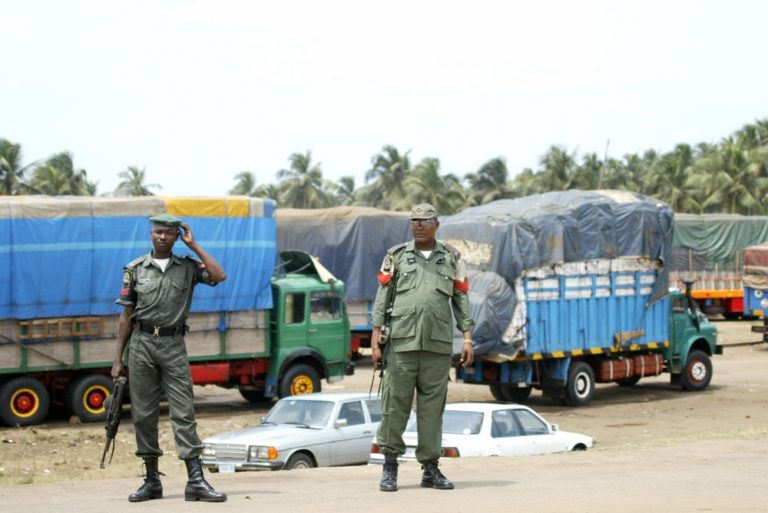
On August 19, Nigeria abruptly shut down its Seme border- a major trading point with its neighbouring Benin Republic due to smuggling, security and other illegal activities according to Joseph Attah, spokesperson of the Nigeria Customs Service (NCS). This action was to be a temporary situation lasting for 28 days.

However, two months after the temporary closure, the border still remains closed.

Borders are geographic boundaries of political entities or legal jurisdictions sovereign states, serves a vital role as a portal for economic interaction and movement of goods between countries.

Although the government said it saved N1.4 billion as a result of the closure, analysis by The ICIR suggests that the border closure could inflate the prices of commodities in the market.

On November 3, the Nigerian Customs Service, (NCS) with the approval of the Federal government announced the extension of the timeline in restricting the movement of goods into the country through the Beninese border till January 31st, 2020.

The government justified this new development as a means of achieving its “strategic objectives”.

Since the border closure, analysts say the action could hinder the achievement of the Africa Free Continental Free Trade Area (AfCFTA) deal to which Nigeria is a signatory.

Several African countries have also closed their border against neighbouring states in 2019.

Barely a week after Kenya banned fishing activities in the coast near the Somalia border on 3rd June 2019, citing incidents of trafficking in contraband goods and drugs, it also announced the indefinite closure of its land border with Somalia quoting security reasons.

The Kenyan government alleged that the porous nature of the borders contributed to the rise of illegal trade, including fake goods, human and drug trafficking. It then imposed sanctions that prohibit residents living in the border villages from any cross-border trade.

“Apart from security concerns, we are also aware of human and narcotics trafficking. That must stop. It is now a crime and for those who do not know, the border remains closed until further notice,” Kioi Muchangi a police chief at the border town had said.

Kenya has been said to be a gate-away destination for warlords in Somalia and South Sudan profiteers of the civil unrests in the nations.

The Democratic Republic of Congo closed its land border with Rwanda in August due to health reasons by placing its citizens on high alert. Migrants were banned from crossing the borders for few hours to avoid the Ebola virus from being carried across its borders by infected Congolese citizens.

DRC has been red-flagged by different countries as a high-risk area since the outbreak of the virus in the country. According to the World Health Organisation, the virus has claimed the lives of 2144 persons as of 8th October.

Reportedly, Congolese officials also claimed that Rwanda’s response is not only based on health grounds but also for security reasons. Referencing anonymous source in the military, Africannews said: “some Rwandan army personnel that have defected to Congo, and Kigali don’t want a repeat of that incident.”

After almost a decade of civil war, which have claimed the lives of more than 50,000 people, Sudan’s transitional government in September also ordered the immediate closure of the nation’s borders with Libya and the Central African Republic, citing arms trafficking through its borders with the nations

Late last year, Reuters also reported Eritrea closure of the border crossing to Ethiopia.

Wanted by FBI: Husband, wife arrested by EFCC in Nigeria over alleged $1.49m money laundering

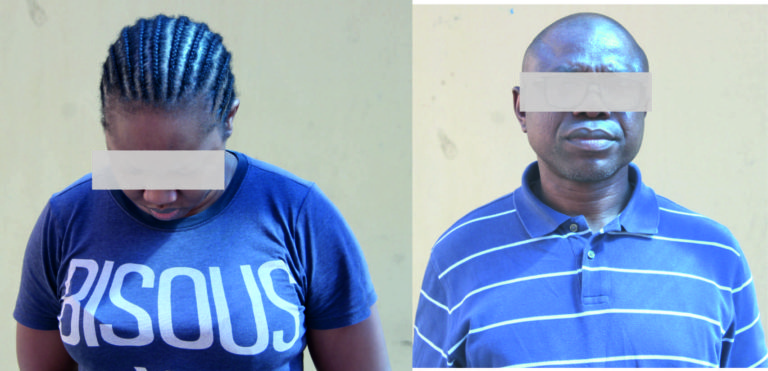
THE Economic Financial Crime Commission (EFCC) says it has arrested a couple wanted by the United States Federal Bureau of Investigation (FBI) over alleged $1.49 million money-laundering scheme.

A statement by Wilson Uwujaren, Head of Media and Publicity at EFCC sent to The ICIR, stated that  Rowly Isioro, a former assistant general manager with one of the first generation banks and his wife, Ovuomarhoni Naomi Isioro, a businesswoman, were arrested in Lagos following their involvement in Business Email Compromise fraud and money laundering.

The EFCC said the arrest followed a petition by the FBI through the office of the Legal Attache, United States Consulate, Lagos, about the couples’ alleged involvement in computer-based fraud, stealing and money laundering.

“So far, investigation revealed that Naomi met one Michael Uziewe (who is still at large) in  Atlanta,  Georgia, United States of America, sometime in 2016, and introduced her to foreign exchange business,”  the statement read.

According to the statement, Naomi and Rilly Isioro used their registered companies, Marhoni General Services Limited and Multaid Plus Limited for dispersal of funds sent by Uziewe, who is said to own Global Investment network.

The commission further disclosed that the couple gave statements that confirmed the alleged money laundering scam by the FBI.

It said the husband confessed he was aware that someone his wife met in the United States of America, sends her dollars, while she pays the naira equivalent to various accounts on the instruction of the US-based partner.

Naomi, the agency added, also confirmed to the commission that she had been receiving monies in dollars, with instructions to pay the naira equivalent into accounts provided by Uziewe, the partner.

EFCC said it discovered that when Naomi received the dollar transfers, she made over the counter withdrawals and sold them to Bureau de Change operators for naira equivalents.

The commission noted that the act is in breach of financial regulations which states that that such transaction goes through the established financial system.

Rowly has been allegedly relieved of his appointment with the bank as a result of his involvement in the money laundering scheme.


EXCLUSIVE: EFCC investigates alleged financial fraud at FUOYE

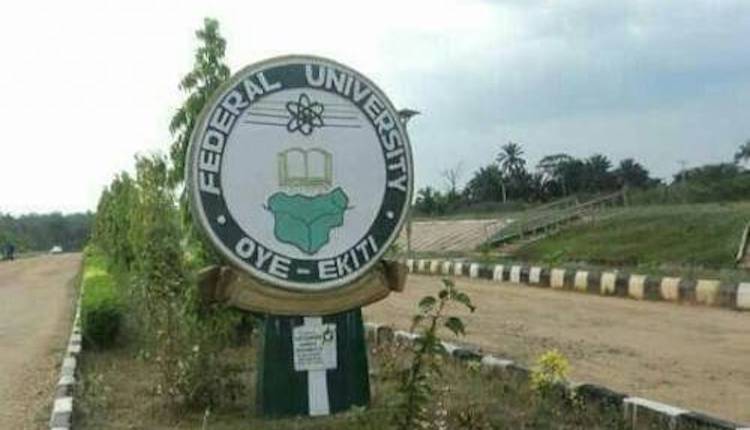
THE Economic and Financial Crimes Commission (EFCC) has commenced investigation into the alleged financial misappropriation at the Federal University Oye-Ekiti (FUOYE) in Ekiti State, The ICIR can report.

“Investigation on the matter has just commenced,” an operative of the EFCC who did not want to be named because he is not authorised to speak to the press told our correspondent.

This followed a petition by the Academic Staff Union of Universities (ASUU), Akure Zone to the anti-graft agency seeking its intervention in the crises rocking the university.


READ ALSO:

The academic union in a petition sighted by The ICIR dated September 23, 2019, addressed to the EFCC and also to the Independent Corrupt and Other Related Offences Commission (ICPC) had sought the intervention of the anti-corruption agencies in what it described as gross maladministration at the university administration.

“The administrative style of the Vice-Chancellor, Prof. Kayode Shoremekun has led to consistent crises in the university for the past three years and recently, the students protest that claimed lives of two students,” ASUU said in the document.

In view of the above, the union hereby seeks urgent intervention of your office for justice.”

The document was signed by Olu Olufayo, Zonal Coordinator of ASUU, Akure Zone, Adeola Egbedokun, Chairperson ASUU, OAU, Yinka Awopetu, Chairperson ASUU, FUTA, Kayode Arogundade, Chairperson, ASUU EKSU and Akinyemi Omonijo, Chairperson ASUU, FUOYE.

It alleged financial recklessness against the management of the university under the leadership of the Vice-Chancellor, Kayode Shoremekun.

According to the petition, ASUU among other allegations accused the management of the university of diversion and misuse of Tertiary Education Trust Fund (TETfund) money of about N11.7million to another account that would be difficult to trace for accurate supervision.

The union wants an investigation into the allegation against the university’s Deputy Vice-Chancellor, Abayomi Sunday, who it alleged received double salary during and after his Sabbatical leave at the university.

It also alleged the management of diversion of N13.560million into one university special imprest account with UBA and award of SIWES logbook to a company that did not bid for the contract at the rate of N550 per copy as against N220 per copy submitted by UNILORIN Press.

The Union sent copies of the petition to the National Universities Commission (NUC), the Code of Conduct Bureau (CCB) and Socio-Economic Rights and Accountability Project (SERAP).

A source at the Ibadan Zonal office of the ICPC who also declined to be named confirmed to our reporter that the Commission received a petition against the management of FUOYE written by ASUU.

He said action would be taken once necessary procedures of scrutiny on the petition have been concluded assuring that once it is established that there violations according to the Act of the Commission and the approval of the Chairman is granted, all those indicted would be invited for questioning.

The ICIR reported that the university has been embroiled in series of crises in recent time notable among which is the face-off between the academic union and the management over The State of FUOYE report which detailed the infrastructure decay and other issues at the university.

The crises have led to the termination of appointments of some lecturers and suspension of the union’s chairperson, Akinyemi Omonijo.

Nigeria set to build two condensate refineries, despite $60 million spent in refurbishing “old refineries” since 2015

0

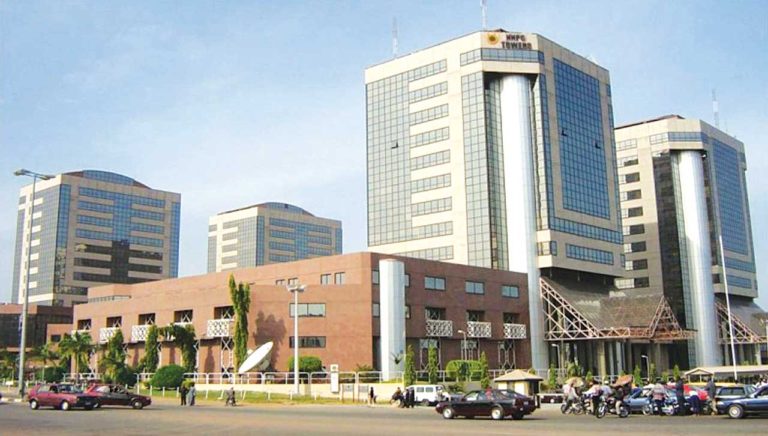
ON Monday, the Nigerian National Petroleum Corporation, NNPC announced it was set to establish two new condensate refineries with a production capacity of 200,000 barrels per day in a bid to boost Nigeria’s refining capacity.

Mele Kyari, Group Managing Director, GMD of the NNPC in a statement released by the oil firm in Abuja revealed when the project is completed, the condensate refineries would put Nigeria in the frontline of top exporters of petroleum products.

“Our objective is to make Nigeria a net exporter of petroleum products and you can only achieve that by complementing each other, both the public and the private sector.”

Condensate refineries primarily refine condensate, not crude oil. They often produce one product, mostly Premium Motor Spirit, also known as petrol.


READ ALSO:

He said the export of petroleum products from the condensate refineries will be achieved together with the expected 650,000 barrels per day from the Dangote Refinery when it is completed.

“We are going to do more and we actually need more of these private sector refineries for Nigeria to become a net exporter of gasoline and other associated products,” he said.

In 2015, President Muhammadu Buhari had pledged to fix the refineries when elected into office but currently, the combined installed capacity of Nigeria’s existing refineries still stagnates at 445,000 barrels per day.

An estimated $1.2 billion was projected to be raised to upgrade the country’s refineries in 2017 according to former Minister for Petroleum, Ibe Kachikwu who spearheaded the contractual process promising to end reliance on petroleum imports into the country by 2019.

The details of the contract with the oil firms to refurbish the refineries remain sketchy as the NNPC did not publicly disclose their identities.

In a report, Kachikwu said the NNPC mobilised its engineers and local oil servicing firms to carry out the turn around maintenance refineries at $10 million in 2015 but an estimated $50 million was also assigned for maintenance costs at the refineries in 2016.

Maikanti Baru, immediate past GMD of the NNPC according to a news report in January said the country’s refineries had not experienced any Turn Around Maintenance,TAM, for over 42 years.

He also confirmed that major rehabilitation works were being carried out in all the three refineries at the time but the amount involved was not disclosed to the public.

Also in September 2018, the Nigerian Bank of Industry acquired a $500 million loan from China to make available loans to investors interested in modular refineries to boost the increase of petroleum products for local consumption.

However, the loan has not translated into tangible results for the installed refining capacity of petroleum products in the country.

Kyari said these complementary efforts by NNPC and Dangote Group would guarantee energy security for Nigeria as well as crude oil feedstock and other necessary inputs.

He also stated that the national oil company was not in a contest for market share with the Dangote Refinery, but would support the project to give a boost to the country’s refining capacity.

AFRICMIL, journalism institute and Rosa Luxemburg task youths on political participation

0

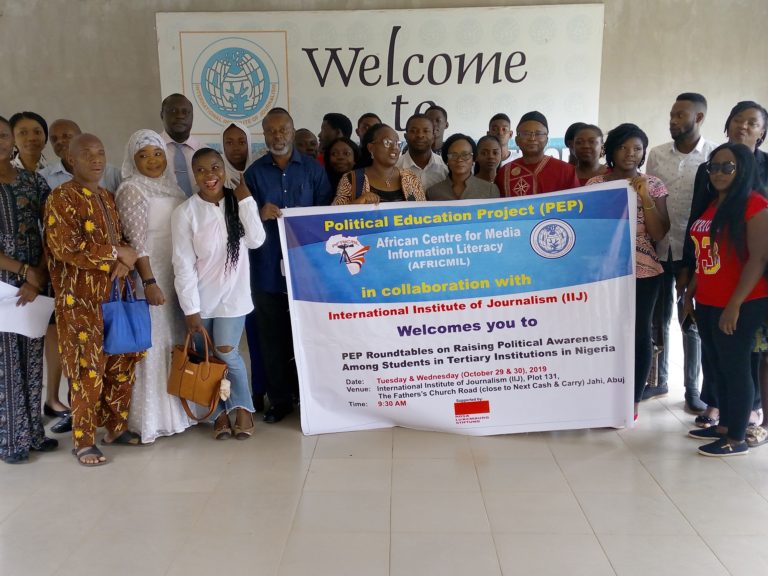
THE African Centre for Media & Information Literacy (AFRICMIL) in Abuja has made a call to the Nigerian youths to be actively involved in the political decision-making processes of Nigeria.

This statement was made at a two- day roundtable tagged: Raising Political awareness among Students in Tertiary institutions: Duties and Obligations of the Youth in the Nigerian Political System.

The event was organised by AFRICMIL in collaboration with the International Institute of Journalism and Rosa Luxemburg Foundation

Chido Onumah, Executive Director, AFRICMIL and the author of the book We are all Biafrans said the role of the Nigerian students in ensuring equality in social relations within the country is undeniable.

He, however, bemoaned the current trend of events in Nigeria campuses where student body has destroyed the main purpose of the formation of the student union, unlike in the past, when student union was a central voice that spoke the mind of students.

“Do not agonise, but organise. It is a message we would be passing along today,” he said.

Emphasising the need to raise political awareness of the students and youths, Angela Odah, programme director, Rosa Luxemburg Foundation said cultism has replaced political reasoning, hence the need to raise the consciousness of the students in tertiary institutions.

In addition, the discussants highlighted the cost of securing political tickets as a hindrance to political participation by the youths.

Dr Emman Usman Shehu, Rector, International Institute of Journalism, identified laxity on the part of parents as one of the reasons for the erosion of good character among the youths. He blamed Nigerians leaders and their followers.

“The people in governance are not playing their role, but the frustrating aspect of it is that citizens are not also carrying out the obligation of holding their leaders accountable.

Unfortunately, this same pattern is also seen in different campuses with increment in cultism and cultic groups springing up, and the youths also are not talking about this problem, he lamented.

Shehu in a lecture titled Student Radicalism and the Nigerian Project: A Critical Analysis of the Nigerian Student Movement,  said Nigerian higher institutions have birthed great student activism despite the bleak situation and government interference.

“As long as the salient issues that affect aspects of the Nigerian Project persist, students will react to the degree that they are directly affected,” he said.

Students at the event told The ICIR that student activism is certainly not ending on campuses, especially with the role of “Not too Young to rule” political platform.

AFRICMIL has assured the stakeholders at the event that social media platforms would be utilised for the Political Education Project.


Federal Secretariat Complex inflicted by filthy toilets, irregular water supply

POOR supply of water in Nigeria’s Federal Secretariat Complex located in the nation’s capital, Abuja, is frustrating government workers, as toilets within the building are filled with filths, producing unpleasant smell around the corridor.

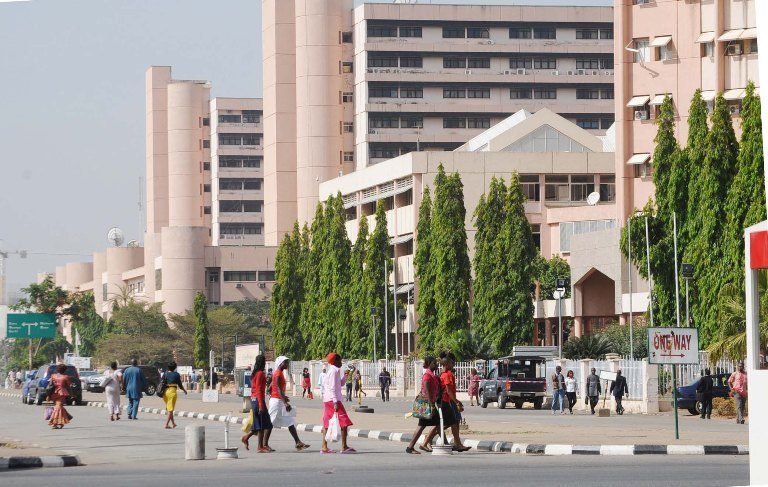
For two days, The ICIR visited Phase One of the complex and the reporter observed the poor sanitary condition of the government facility that houses offices of federal ministries including the Ministry of Niger Delta, Ministry of Labour and Employment, Ministry of Aviation, Ministry of Women Affairs and Police Service Commission.

There was no water in most of the toilets from the first floor to the fourth floor when the reporter visited on Tuesday, October 22.

That day at about 11:30 am, a woman in her late fifties was pressed and hurried to the ladies on the first floor close to Wing A, but a voice stopped her. “Madam, no water!”

It was the voice of a woman selling sachet water by the staircase near the toilets on the first floor.  she had noticed that the woman going to the toilet had no water with her. Too pressed to bother, the middle-age woman hurriedly  bought a sachet of water at N10 before she proceeded to ease herself. 

Taking a cue from the woman, this reporter also purchased two sachets of water at N20 and entered the restroom. Inside, water nylons littered the floor and the offensive smell of the lavatory became stronger. The handwashing dispenser was not functioning, and there was no single roll of tissue paper in sight.

“So, if there is no water, can pure water flush anything?,” the woman asked The ICIR reporter without expecting an answer.

Workers turn to using sachet water for urination due to lack of water. Photo credit: Rebecca Akinremi/ICIR. October 22.

The reporter visited the toilet on other floors, and the situation was the same. Some in fact were in worse condition because they have been abandoned.

A federal staff on the third floor where the Ministry of Niger Delta Affairs is situated told The ICIR there has been an irregular supply of water in the complex for more than a month. When there was water, it never circulated to all the floors, she told The ICIR.

“There could be water on the sixth floor, and not on the second floor,” she said.

“If they should bring it around 7 am, before 9 am it has gone,” she added. 

“As I am talking to you now, I want to use the toilet that is why I am holding this tissue in my hand, I want to use the toilets but there is no water. It is not easy,” she had lamented.

A toilet turned to dumpsite on the second floor, phase one at the Federal Secretariat, Abuja. Photo credit: Rebecca Akinremi/ICIR. October 24.

Employees contribute money to buy gallons of water from “mei ruwa”

A cleaner at 12 noon pulled a jerrycan of water to the convenience of the Wing B, third floor, holding a bottle containing detergent soap and a small broom. When The ICIR approached her, she said she was about to clean the toilets for the day because some staff contributed money to buy a keg of water. 

“We bought the water outside for N150. E don tey since water run for here. Till last month sef. We wash the toilet just once in a day if there is money for water,” she said in pidgin.

She said workers are allowed only to urinate, but not to defecate. “The day we get money, we buy water, the day we no get money, the toilet will remain locked,” she added.

A source who also works in the Ministry of Niger Delta Affairs confirmed that the workers usually contribute money for the purchase of jerry-cans of water from local sellers of water, popularly called “mei ruwa”. 

Every week, he contributes N200, he told The ICIR last Thursday, and most of the toilet structures of the phase were spoilt. 

“We have a big challenge,” he said. “All the urinary from the eleventh floor to the ground floor, you will hardly find any urinary that is working”.

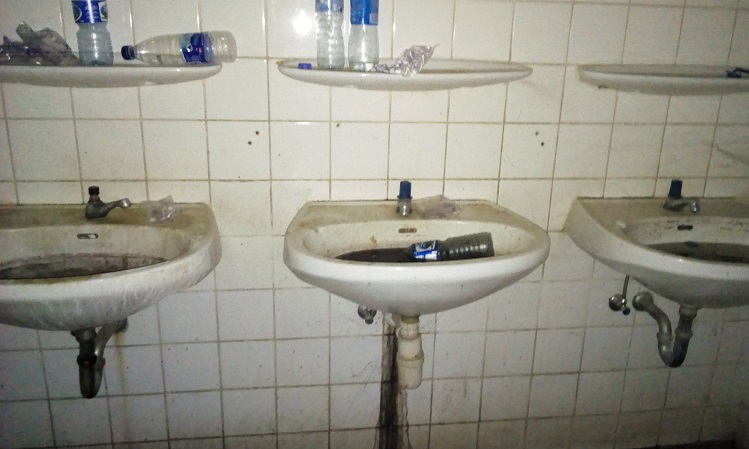
A washing basin inside a toilet on the second floor, phase one, Federal Secretariat in Abuja. Photo credit: Rebecca Akinremi/ICIR

Speaking to another source, she said the situation that she could not defecate at work made her neglect being at work on Friday, October 18.

“Because On Thursday from morning till evening I was so pressed, there was nowhere to use,” she explained. 

A woman should not to be exposed to bad toilets, she said. 


Abandoned toilets, leaking roofs at Federal Secretariat

Of the 20 toilets The ICIR saw at the five floors of the Phase One complex, there were nine of them that have been abandoned, showing various degree of neglect.

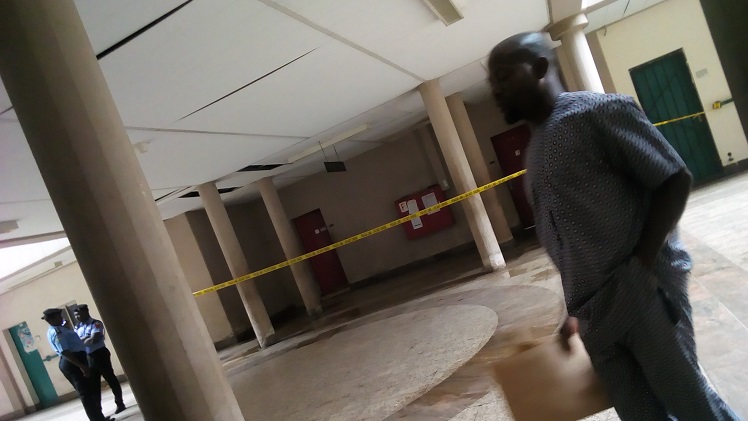
At the ground floor, where the police station is situated, the two conveniences near it were wrapped with yellow tape. On it was written: “Police line- Do not cross”. 

The barricade tape marked the toilets unsafe.  The two restrooms on the other side of the same ground floor were blocked with notice board made of plywoods. The furniture leaned against the doors of the toilets. 

Then going up, on the first floor towards Wing A, the two toilets (both male and female)  were also closed down with woods. At the other side, towards the Wing B, the male convenience entrance was blocked with a flat wood. Only one was working.

Both the male and female conveniences on the second floor towards Wing B have spoilt with one left slightly opened, the door of the other was blocked with wood. 

"Police Line-Do Not Cross" : toilets on the ground floor unsafe. Photo credit: Rebecca Akinremi/ICIR October 24.
“Police Line-Do Not Cross” : toilets on the ground floor unsafe. Photo credit: Rebecca Akinremi/ICIR October 24.

Most of the toilets had dilapidated roofs. The roof of a toilet on the second floor had broken and  a wide gaping hole is visible.

 According to Laz Ude, a public health physician, dirty toilets could cause urinary tract infections and genital tract infections,.  While both males and females could be infected with UTIs, women, he said, are at higher risk because of their short urethra which allows bacteria to travel quickly to the bladder. 

Based on an article of the United States Centre for Disease Control (CDC), many diseases and conditions are spread by not washing hands with soap and clean running water. 

Soap and clean-running water are major provisions for handwashing, meanwhile, nothing of such was at the restrooms of Phase One at the Federal Secretariat.

CDC noted handwashing with soap removes germs from hands. This helps prevent infections like diarrheal-related sickness and respiratory diseases.

Millions budgeted for water rates and maintenance services in four years

The approved budget between the 2016 fiscal year and 2019 stated the Office of the Head of the Civil Service of the Federation budgeted a total of N679 million ‬naira for water rates and maintenance services for its headquarters domiciled at the Federal Secretariat. 

The Office of the Head of the Civil Service of the Federation (OHCSF) is responsible for the leadership, management and capacity development of the Federal Civil Service.

For four years, more than N30.6 million naira was the amount budgeted for the water rates. And 649,211,578 million for maintenance-related services that included maintenance of the offices in the building.

The federal ministries also access monies every year for water rates and maintenance services for their headquarters. The Ministry of Niger Delta occupying offices at the third and ninth floors of Phase One in the complex budgeted on its recurrent expenditure a total of 26.4 million for water rates between 2016 and 2019, while 226 million nairas was for maintenance services. 

A Servicom box in a toilet on the second floor, Phase one of the Secretariat turned to wastebin. Photo credit: Rebecca Akinremi/ICIR. October 24.

The Labour and Employment Ministry with offices on the ground floor and the second floor of the complex budgeted N26.4 million for water rates in four years. More than N226 million was budgeted for maintenance-related services.

The Police Service Commission occupying the ground floor of phase one of the complex also budgeted a total of N709,401 for the water rates, and N30 million was for maintenance services. Of these N30 million, 10 million was for the maintenance of office building and residential, and N2.7 million for any other maintenance-related work at its headquarters in the secretariat. 

PDP dismisses speculation on the zoning of 2023 presidential election

0

By Vincent Ufuoma

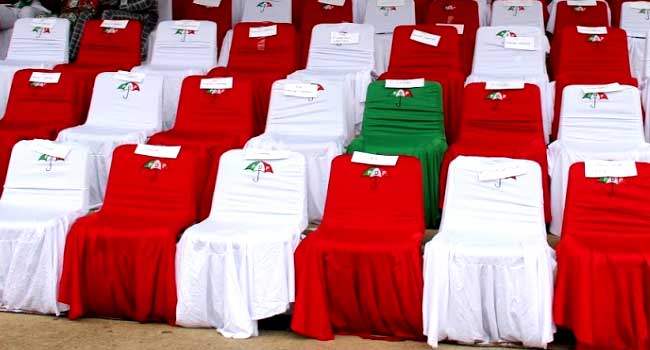
THE People’s Democratic Party has called upon its members to disregard the report making rounds the media that the party will retain the zoning of the 2023 Presidential election in the North East and South East respectively.

In a statement signed by its National Publicity Secretary, Kola Ologbondiyan, on Sunday, the party said, it is just the speculations of mischief makers who are bent on causing dissatisfaction among its members.

“The Peoples Democratic Party (PDP) has described reports in a section of the media suggesting that the party plots to retain the zoning of its presidential slot in the North East and South East, as merely speculative.

“The PDP says those behind the reports are political terrorists whose plan is to mislead the public and cause disaffection within the ranks of our party with the hope of using such fabrications to further their own selfish political ambitions.”

It said the party’s governors are not “divided along any lines of ambition towards 2023,” neither will it deter any of its members from pursuing their political ambitions.

It said the party is working with states governors and members of the legislatures within the party to deliver on the party’s manifesto to improve the welfare and development of Nigerians.

The party said the governors are not divided along any lines of ambition towards 2023, neither is there any plot to stop the ambition of any of our members.

“As a party, we are also working with our respective state governors and legislators across the country as they work hard, in line with the manifesto of our party, to improve on the welfare and development of Nigerians.”

The party said it is yet to discuss the 2023 Presidential election, as it is focusing all its effort towards winning the forthcoming governorship elections in both Kogi and Bayelsa States.

“For the avoidance of doubt, our party is yet to discuss the 2023 presidential election, overtly or covertly, at any time whatsoever.

“If anything, the PDP is currently working with Nigerians on how to win its elections in Kogi and Bayelsa states and will not be distracted by individuals who found themselves operating in the highest offices of the land but failing in governance.”

It warned the enemies of the party to be wary of their incessant attacks on Gov. Nyesom Wike of Rivers state. It said the party appreciates Rivers State governor and other governors of the party for their contributions towards the party.

“Moreover, it is also imperative to counsel, without any equivocation, that the enemies of our party, who feel threatened by the rising profile of Governor Nyesom Wike, should have a rethink on their incessant attacks on the governor.

“The PDP appreciates the contribution of Governor Wike, as well as all our governors, to the growth of our party and urge all members and supporters to ignore those seeking to cause disaffection in our ranks.”

After ICIR’s report, Dangote Mines visit late Etonu’s home, pays N200,000 compensation as family kicks

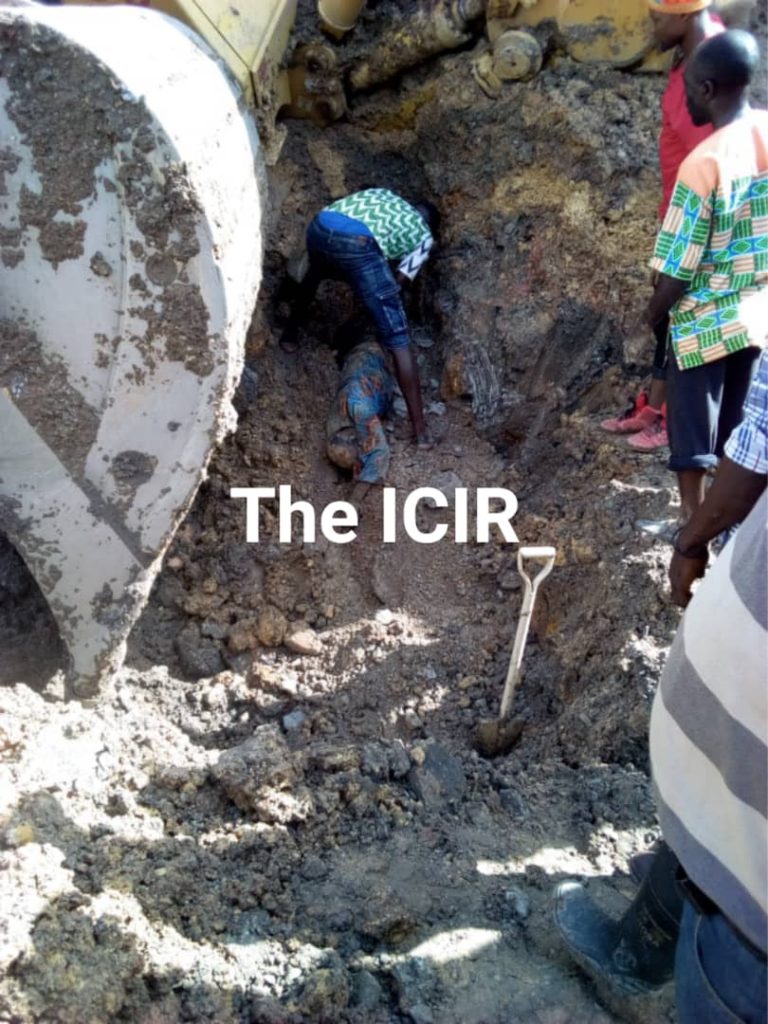
EMBITTERED family of late Benedict Etonu, on Sunday, expressed disappointment over N200, 000 compensation offered by the Dangote Coal Mining Company Limited, after the late father of seven died in a landslide at the coal site located in Awoakpali, Ankpa Local Government of Kogi State.

The mining firm is a subsidiary of the Dangote Group of companies that commenced operation in 2016.

The ICIR had exclusively reported the landslide incident which occurred on Tuesday, 22nd October, and how the victim got buried alive with two heavy-duty machines used for excavation, until almost 24 hours when the deceased was found dead.

He was buried the next day – Wednesday 23rd October.

“They came yesterday (Saturday) and gave us N200, 000 and paid N29, 700 his last salary,” Ferogeh Etonu, the first daughter told The ICIR.

“They also said that my junior sister Faith can replace my father so she can take care of my smaller siblings.”

However, she agonised over the debts left behind by her father including a bank loan yet to be repaid.

“Our father borrowed N50,000 from a cooperative and another N90,000. I don’t  know what to do anymore because I still have siblings.”

Faith Etonu, who is 23 years was said to have dropped at Class 2, (Senior Secondary School) due to the inability to pay tuition fees. “She is still at home. We don’t have money for her to resume.”

“I’ll tell you frankly, I am not happy with what they gave my son,” Agagu-Baba Stephen, an uncle to the late Etonu told The ICIR.

“He died while working for them. But is N200, 000 worth of his life?” he queried.

He said efforts to reject the money during the visit failed because he was stopped by his nephews.

“I wanted to complain right there but my other sons who are graduates but retired civil servants stopped me from talking. They said I don’t know the system Dangote uses to manage their staff.”

When this reporter contacted Awoakpali Community Representative, Fredrick Ahmadu, he acknowledged the visitation. He said the deceased family was paid N200,000 and the last salary for the month of October which was handled over to the wife.

However, he expressed concern over the amount saying it was too small knowing that the deceased died on duty.

He added that 80 percent of workers at the coal site are casual workers.

“They came yesterday. They also went to our chief. They paid the man’s last salary N29, 700 and gave the wife N200, 000 as compensation over the husband’s death,” says Ahmadu. “They gave our chief N1, 000, 000. They also promised to employ the daughter.”

The ICIR had earlier called the attention of Dangote Mines to the circumstance of Etonu’s death through the company’s verified Twitter account.

Ahmadu recalled how the company was persuaded to visit the deceased’s family after burial but never turned up until yesterday.

“We told them to come and sympathise with the family, even if they are not ready for compensation but they refused,” he said.

Also present at the meeting were vice-chairman of the community and two elders.

Nigeria border: Buhari extends closure to January 2020

NIGERIAN President Muhammadu Buhari has given directive to the Nigeria Custom Service (NCS) to keep the nation’s border closed till January 31, 2020.

The directive was contained in an official memo dated November 1, 2019, with reference number NCS/ENF/ABJ/221/S.45 addressed to the Sector Coordinators of the Joint Border Operation Drill – Sectors 1, 2, 3, and 4 and signed by Deputy Comptroller of Customs in charge of Enforcement, Investigation and Inspectorate, Victor Dimka,

Dimka wrote that the border closure so far has achieved overwhelming success considering its benefit to Nigeria’s security and economy.

However, he said Buhari has approved an extension of the exercise to January 31, 2020 due to an observation that a few strategic objectives are yet to be achieved.

He instructed that the development be communicated to all personnel of the Custom Service for awareness and necessary action.

The memo further read that allowances for personnel sustenance and fueling of vehicles for the period of extension shall be paid as soon as possible.

Meanwhile, on Thursday, the spokesperson for the Joint Border Security Exercise and National Public Relations Officer, Nigeria Customs Service, Joseph Attah, said the exercise so far has been able to record seized items worth N2,309,336,000,880.

He said the items consist of 437,225 jerrycans of Premium Motor Spirit,, 363 vehicles, 32,814 bags of rice as well as several drugs, ammunition and guns.

He added that 203 illegal migrants and eight human traffickers had also been arrested since the inception of the operation.

The border closure has caused leaders of the neighbouring countries to appeal to their Nigerian counterpart, and has caused mixed reactions from Nigerians. While some believed it is a good step taken by the government, others believed otherwise.

Human rights lawyer and Senior Advocate of Nigeria, Mr Femi Falana also recently advised the Federal Government as a matter of urgency to open the borders for national interest.

Analysis has shown that price of  rice would continue to increase despite the hike from N12,500 to  N25,000.