NIGERIAN Journalists have pointed at the Nigerian Army, Nigeria Police, and National Agency for Food and Drug Administration and Control (NAFDAC) as public institutions whose spokespersons they have had the worst experiences with .
This indication emerged in a poll conducted in October by The ICIR, in which journalists from various newsrooms were asked to disclose the government Public Relations Officers (PROs) with whom they have had their best and worst experiences.
They were also asked to rate their overall experience with the spokespersons and state what common problems they encounter in interacting with them.
The newspaper received a total of 32 responses from journalists across 12 media organisations including BBC Igbo Service, Business Day, Daily Post, Daily Trust, Legit, Nigeria Info, Premium Times, Punch, Sahara Reporters, TheCable, and The Nation. Two freelance journalists also filled the survey.
Their roles range from reporters to content producers, photo-journalists, data analysts, senior investigative reporters, and editors.
Police, Army ranked worst by most
While some spokespersons and MDAs were mentioned only once in the “worst experience” field, there are those whose names came up multiple times. Topping the list is the Nigeria Police with nine mentions.
Two of the nine journalists specifically wrote the name of Jimoh Moshood, former Police Public Relations Officer (PPRO) and another two submitted the name of Frank Mba, the current PPRO.
Two other respondents included Bala Elkana, PPRO of the Lagos Police Command, while the names of Anjuguri Manzah, the FCT PPRO, and Olugbenga Fadeyi, Police PRO of Oyo State Command appeared once.
Following closely is the Nigerian Army with five mentions. Two of the five journalists wrote Sagir Usman, the Director of Army Public Relations appointed in February 2019 and a third journalist said he has had an awful experience both with Usman and his predecessor, Sani Usman.
“I could write their names a million times,” the respondent stated for emphasis.
Then there is NAFDAC, a Federal Government regulatory agency, having the third-highest number of mentions, three. Two respondents mentioned the agency’s national PRO (Jimoh Abubakar) while a third respondent filled in the name of the Lagos office’s spokesperson, “Christians Obiazikor”.
Police preventing journalists from covering a court trial. File photo.
Other MDAs mentioned twice include the Ministry of Education, Ibrahim Usman Yakasai of the National Universities Commission (NUC); Stella Nezan of the National Agency for the Prohibition of Trafficking in Persons (NAPTIP), and the Economic and Financial Crimes Commission (EFCC).
Those whose names came up once include the presidential spokespersons; State Security Service (SSS); Nigerian National Petroleum Commission (NNPC); National Drug Law Enforcement Agency (NDLEA); River Basin Development Authorities; Universal Basic Education Commission (UBEC); ministries of water resources, agriculture, labour, and environment; Boade Akinola, Director of Press at the Ministry of Health; Ayang Ogbe, Director of Promotion at the Rural Electrification Agency; and Usman Arabi of the Nigerian Electricity Regulatory Commission (NERC).
We also have Bisi Kazeem, Public Education Officer of the Federal Road Safety Corps (FRSC); Moses Adaguusu, Head of Public Affairs at the Corporate Affairs Commission (CAC); Isaac Okoroafor, Director of Corporate Communications at the Central Bank Nigeria; and Sunday James, PRO of the Nigerian Immigration Service (NIS).
Some state governors’ spokespersons also made the list, including Sam Onwuemeodo, media aide to former Imo State governor Rochas Okorocha; Taiwo Adisa, Chief Press Secretary to Oyo State governor; Toye Arulogun, former Oyo State Commissioner for Information; and Ismail Omipidan, Chief Press Secretary to the Osun State governor.
EFCC, NEMA adjudged to have best spokespersons
With the highest number of five mentions under the category of best government spokespersons, the EFCC was the respondents’ top choice. All five journalists mentioned Tony Orilade, former Acting Head of media, by name and one included Ayo Oyewole, the Lagos office’s Head of Public Affairs.
Orilade was appointed as the commission’s Acting Head of Media and Publicity in November 2018 and handed over back to Wilson Uwujaren, his predecessor, in August.
Coming second place is the National Emergency Management Agency (NEMA). Sanni Datti, the agency’s Head of Press and Media, was mentioned twice, and Manzo Ezekiel, a press officer, was mentioned once.
Three spokespersons of the Nigeria Police were likewise commended: Frank Mba, PPRO; Chike Oti, former PPRO of the Lagos State Command; and Anjuguri Manza, FCT police command PRO.
Mentioned by two respondents each were Sunday James of the NIS and the Ministry of Works. While one journalist generally commended the “Ministry of Power, Works, and Housing”, another praised David Henry, a senior information officer at the Works Ministry.
Commonest problem: ‘They hardly answer calls’
The journalists who filled The ICIR‘s survey have a number of complaints about the spokespersons working for government institutions, but the biggest issue apparently is the difficulty in getting them to comment. As much as 84.4 per cent of the respondents said the spokespersons “hardly answer calls or reply texts”.
For not being detailed and patient in responding, 62.5 per cent lamented this attitude, 37.5 per cent said their contact details are difficult to get, and 28.1 per cent said they aren’t polite in responding to enquiries.
In August, for instance, when The ICIR reached out to Lauretta Onochie, Personal Assistant to the President on Social Media, to speak on a fact-check, she replied that the reporter “must be very stupid”.
The ICIRhas discovered too from a study conducted in October 2018 that six out of 24 federal ministries did not have email addresses stated on their websites for easy enquiries.
Also, 12.5 per cent of the respondents complained that there are spokespersons who spam their mailboxes with press statements. Finally, asked to describe their overall experience in interacting with govt spokespersons, 65.6 per cent of the respondents replied that it has been fair (that is average).
The second-highest number of respondents (18.8 per cent) described their experience as bad, 9.4 per cent selected “awful”, and 3.1 per cent each picked “good” and “excellent”.
The questions put to journalists include the following:
What common problems do you face in your interactions with govt. PROs?
Name which PROs you’ve had your worst experiences with and the MDA(s)
Name which PROs you’ve had your best experiences with and the MDA(s)
How would you describe your overall experience interacting with govt. PROs?
‘Spokespersons need training’
Lekan Otufodunrin, Executive Director of Media Career Development Network and former Editor of Online and Special Publications at The Nation Newspapers, told The ICIR that government public relations officers can improve with adequate training.
He rated the spokespersons average and said he has heard a lot of complaints from reporters. He suspects that this is because many of the spokespersons were originally civil servants and have several restrictions at their workplace regarding speaking to the press.
“Unfortunately some of them do not also have the grounding to handle the flurry of requests coming these days,” he observed. “Before, they were just dealing with a few traditional media organisations. Now, everybody is pulling them here and there and there are all kinds of fact-checking… So I will say they are just average and can do a lot better.”
He emphasised the need to have the spokespersons take advantage of professional capacity-building opportunities. There needs to be stronger synergy among government officials especially in sharing information, he said, and MDAs also need to constantly update their websites with relevant information so as not to make their work “unnecessarily difficult”.
Otufodunrin also advised journalists to be more patient in expecting statements from government institutions and not to delay calling spokespersons until the last hour.
“They need to be a bit understanding,” he urged. “My experience is that people who work in government also have a lot of challenges.”
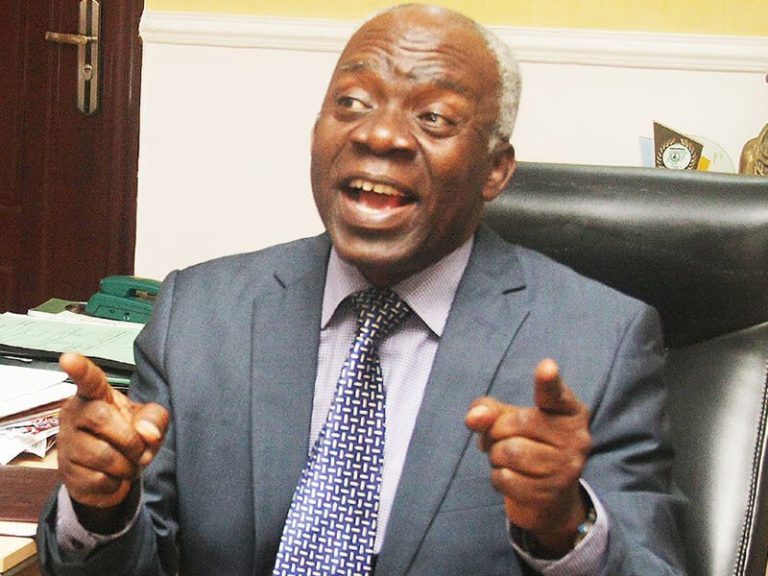
HUMAN Rights lawyer Femi Falana has advisedFederal Government to reopen the border with no delay, as its closure cannot be sustained for too long without serious repercussions for the Nigerian economy
Falana gave the advice while delivering a paper on Rule of Law, Good Governance and Economic Development at the annual conference of the ECOWAS Court of Justice in Accra, Ghana.
He asked that the government to ignore the endorsement of border closure by the International Monetary Fund (IMF) as the closure was inconsistent with the letter and spirit of ECOWAS Protocol.
The ECOWAS protocol according to him was hinged on Free Movement of Persons, Residence and Establishment and the African Continental Free Trade Agreement.
He posited that the endorsement of the IMF is a deliberate design to weaken the ECOWAS regional integration agenda.
Falana said there was a need for the Federal Government to urgently dialogue with neighbouring countries to fight the menace of smuggling which necessitated the country’s border to be closed.
He said this was imperative, because neighbouring countries may retaliate by imposing a ban on goods being exported from Nigeria by air, and may also close down Nigerian banks and other businesses operating in other member states of the ECOWAS.
“Instead of resorting to the unilateral closure of borders the federal government should drag the Republics of Benin and Niger to the Court of Justice of the ECOWAS for breaching the ECOWAS Protocol by allegedly encouraging the smuggling of petrol, rice and other products,: he said.
“In the alternative, smuggling should be addressed like terrorism which is being jointly combated by Nigeria and her neighbours.”
The human rights lawyer added that Nigeria should stop punishing law-abiding corporate bodies and community citizens because of the criminal activities of a few trans-border smugglers.
“The Federal Government should expose the smugglers by arresting and prosecuting them. The smugglers in Nigeria and the neighbouring countries are well known by the security agencies. Without official connivance, the crime of smuggling cannot thrive in the region,” Falana said.
He called on the Federal Government to take advantage of the ECOWAS Protocol Relating to the Re-exportation within ECOWAS of goods imported from third countries, beyond monitoring the borders with technology.
“Under the Protocol Benin, Togo and Ghana are only entitled to charge administrative fees in respect of goods whose destination is Nigeria,” he said.
He commended the ECOWAS Court for protecting the human rights of community citizens, whilst he asked member states to desist from disregarding the judgments and orders of the Court.
“Other leaders should emulate President Nana Akuffo-Addo who has ordered the Attorney- General and Minister of Ghana to ensure compliance with all decisions of the Court.
“The ECOWAS Commission should ensure that sanctions are imposed on recalcitrant member states in line with the ECOWAS Revised Treaty and the Protocol of the Community Court,” Falana said.
Earlier in August, the Federal Government had announced the partial closure of the Seme border for a total clamp down on smuggling and other illegal activities.
However, a few weeks ago, the border was officially closed to all forms of businesses across borders, inciting reactions from Nigerians who described the measure as the crudest and retrogressive decisions of the present administration.
A report by the National Bureau of Statistics (NBS) stated that the nation’s inflation rate had declinedfrom 11.08 per cent in July to 11.02 per cent in August, barely 11 days of 31 days for any significant impact to be felt either way on prices.
Conversely, the Nigerian Association of Chambers of Commerce, Industries, Mines and Agriculture (NACCIMA) said the closure of the country’s borders “is in order and long overdue”.
The Director-General of the Association in Niger State, Adamu Salihu enjoined the Federal Government to utilize the opportunity to reform the nation’s ports.
He asked that the government resist any pressure from any quarters for the reopening of the borders.
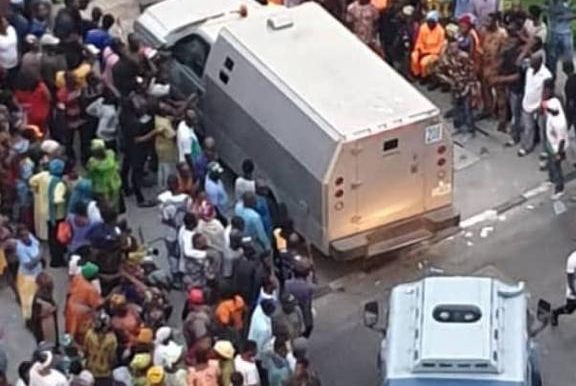
A GROUP known as “Concerned Nigeria” on Twitter has sent a petition to the Economic and Financial Crimes Commission (EFCC) over bullion vans seen at Bola Ahmed Tinubu’s house in Ikoyi, Lagos, on the eve of the 2019 presidential election.
Deji Adeyanju, a rights activist and leader of the group, who said though he doesn’t expect the EFCC will do anything about the petition, noted the group has decided to heed to the Commission’s demand for a petition to be forwarded to it before in order to investigates the incident.
“We @ConcernedNIG are going to submit a petition to the @officialEFCC on Friday about these bullion vans at Tinubu’s house on eve of presidential elections then wait to hear what excuse they will give again. We know they won’t take any action but we will submit the petition,” Adeyanju tweeted on Thursday.
The EFCC had said on its official twitter handle that its establishment Act empowers it to investigate “properties of any person if it appears to the Commission that the person’s lifestyle and extent of the properties are not justified by his source of income.”
This however, did not go down well with the Convener of End SARS campaign, Segun Awosanya, who accused the EFCC of fighting a one-sided war when it comes to corruption.
Awosanya said the EFCC only remembers that Act when it comes to prosecuting opposition politicians and “supposed Yahoo boys”.
He tweeted: “I’m sure this section only gives you an erection when it concerns Yahoo Boys and opposition politicians. While the miraculous self aggrandisers in bed with those the head of the EFCC worships are immune to investigation. Daylight bullion van exhibition of Bourdillon is justified right?”
The EFCC replied by asking Awosanya to send a petition on the subject to it.
“Kindly forward your petitions to or visit any of our zonal offices of head office to submit a copy of your petition,” the Commission had said.
AFTER 2o years of interventions, the Tertiary Education Trust Fund (TETFUND) is set to measure the impact of its interventions in Nigeria’s public tertiary institutions,Suleiman Bogoro, Executive Secretary of the Fund said on Thursday.
Bogoro disclosed this during a one-day meeting with the TETFUND Technical Advisory Committee on Impact Assessment in Abuja.
Bogoro recalled how monumental decay of the educational sector at all levels led to the agitation of the Academic Staff Union of Universities (ASUU) for a solution by the Federal Government which resulted into the establishment of Education Trust Fund (ETF) in 1993.
Represented by the Fund’s Director of Strategic Planning and Development, Ifiok Ukim, the TETFUND boss noted that the fund was initially meant for intervention on public primary and secondary schools but was eventually refocused to intervene in public tertiary institutions through the TETFund Act of 2011.
According to him, the project has made meaningful progress in years but has never been put into assessment since its establishment.
“In the 20 years of its interventions, the Fund had never presented itself for self-evaluation or examination, impact assessment which we are about to undertake is a contemporary phenomenon for reviewing and assessing progress made by any organization,” he said.
“It is important to the Fund as it would reveal the strengths, weaknesses, progress, challenges and windows of opportunities for it to improve on its service delivery to its beneficiaries.”
He continued that the TETFund, is determined to maintain a status as one of the most visible, impactful and relevant intervention agencies that has become a model in Africa.
Bogoro explained that they have selected a 62 men committee of experts in development work, research and scholarship including the leadership of ASUU to be part of the assessment committee.
He added that the committee shall be Co- Chaired by Nazifi Darma and Placid Njoku who are distinguished academics with lots of experience in development work.
“I have no doubt whatsoever that with the calibre of persons serving in the Committee they would deliver on the Committee’s mandates,” he said.
Highlighting the task of the committee, Bogoro stated that it shall carry out Impact Assessment of Education Trust Fund (ETF) Interventions, from 1999 to 2010, carry out Impact Assessment of Tertiary Education Trust Fund (TETFund) Interventions from 2011 to 2018;
The committee will determine the levels of Implementation of ETF/TETFund mandates and effectiveness, determine the achievements, challenges and weaknesses recorded and observed in the course of implementation of existing Projects, Programmes and Intervention lines of the Fund;
They shall also collate and analyse, selected speeches of past and present TETFund Executive Secretaries, annual/periodic publications and propose future direction of the Fund within the TETFund Statutory mandate as encapsulated in the TETFund Establishment Act 2011 among other obligations.
He however, gave the committee a deadline to submit the report of their findings on or before Friday, 29th November, 2019.
NIGERIA has moved 15 spots in the World Bank’s study Ease of Doing Business ranking from the 146th previous position in 2018 to 131 out of 190 economies.
The Doing Business Index is an annual ranking that objectively assesses existing business climate conditions across 190 countries based on 10 ease of doing business indicators.
The indicators include improvement in the sharing of credit information, strengthening minority investor protections, ease of paying taxes and electricity amongst other things.
Nigeria’s advancement on the economic chart comes a few weeks after the World Bank ranked it as one of the top 10 countries with improved economies in the world.
The ranking revealed that governments of 115 economies around the world launched 294 reforms over the past year with a total of 107 of such reforms coming from in Sub-Saharan African to top the list.
The report indicate that this has reportedly made it easy for the domestic private sector in the countries to engage in business activities while creating more jobs and expanding commercial activities and higher income.
The other seven economies where business climates improved the most were Saudi Arabia, Jordan, Togo, Bahrain, Tajikistan, Pakistan, and Kuwait
Meanwhile, China and India made the top 10 list of governments that have done the most in the past year to improve the ease of doing business in their countries.
Notwithstanding the ongoing trade war between China and United States, the Chinese economy made the top 10 list for the second year in a row.
The Asian country gained ahead of France to take the 31st spot in the ranking, also moving up 15 places just as Nigeria.
Similarly, India, also made it on the most-improved list for the third year in a row, moving up by 14 spots to 63 on the global rankings.
This feat by India has been attributed the country’s abolition of filing fees, lowering the time and cost of seeking construction permits and making trade easier with port improvements and an improved electronic platform for submitting documents.
New Zealand continues to top the global rankings, while Singapore, Hong Kong, Denmark, and Korea are right behind with the United States, Georgia, the United Kingdom, Norway and Sweden completing the top 10 list.
The study, however, does not measure the full range of factors, policies and institutions that affect the quality of an economy’s business environment or its national competitiveness as it affects the ease of doing business.
THE Economic and Financial Crimes Commission (EFCC) on Thursday re-arraigned, former chairman of the Independent National Electoral Commission (INEC) Maurice Iwu, before the Federal High Court in Lagos for an alleged fraud of N1.23 billion.
Iwu was re-arraigned before Justice Nicholas Oweibo on a four-count charge bordering on fraud and money laundering he allegedly participated in 2015.
The re-arraignment sequel to the transfer of the case from Justice Obiozor to Justice Oweibo which had started in August.
In one of the charges, the EFCC alleged that Iwu committed the offence in the build-up to the 2015 general elections in which President Muhammadu Buhari defeated then-incumbent President Goodluck Jonathan.
According to the prosecution team, Iwu, between December 2014 and March 27, 2015, aided the concealment of N1.23 billion in the account of Bioresources Institute of Nigeria Limited with number 1018603119, domiciled in the United Bank for Africa.
The anti-graft agency also alleged that the former INEC chairman ought to have reasonably been aware that the N1.23 billion was part of the proceeds connected to fraud.
Rotimi Oyedepo, prosecution lawyer for the EFCC told the court that Iwu acted contrary to sections 18(a) and 15 (2) (a) of the Money Laundering (Prohibition) Act 2011 and was liable to be punished under Section 15(3) of the same Act.
But the defendant pleaded not guilty to the charges.
Justice Oweibo permitted him to continue on the N1 billion bail earlier granted him by Justice Obiozor and adjourned the matter till November 25, 2019, for the commencement of trial.
KADUNA State Governor, Nasir El-rufai has reacted to the suspension of a lecturer of the Kaduna State University (KASU), Bala Umar over allegations of demanding sex for grade from an ex- student of Ahmadu Bello University (ABU Zaria) before he was sacked.
Umar’s appointment was terminatedby the authorities of ABU on misconduct bordering on extortion of students in July 2013. But he was employed by KASU in September 2013 even without a Phd at the age of 54.
He was suspended on Wednesday by the management of KASU after a one-man protest by a female graduate of ABU at KASU against him.
The lady, whose name was not given, alleged that Umar, who was sacked by ABU for sexual misconduct and later employed by KASU, was not fit to be a lecturer in any institution.
However, reacting to the suspension, El-rufai noted that the suspension of Umar is the first step adding that he and 15 lecturers sacked by the management of Ahmadu Bello University would be investigated and prosecuted by the Attorney General of Kaduna State.
“He and fifteen lecturers sacked by nearby ABU Zaria for sexual harassment will be fully investigated and prosecuted by the Attorney General of Kaduna State. We must face evil and end this scourge in our state,” he tweeted on Thursday.
Before Umar’s suspension on Wednesday, the management of KASU had set up a committee to investigate allegations against him by the former ABU student.
Two committees were set up to conduct investigations into the allegations.
The University Deputy Vice Chancellor, Academics, Abdullahi Ashafa who provided background to Umar’s suspension at a management meeting, said “If found guilty of tarnishing the image of the university, he will be queried, suspended and placed on half salary, then the reports and other decisions will be tabled before the university council for final decision.”
He maintained that “the incidence did not occur in KASU, noting that “Umar was appointed in error; there was no much investigation to ascertain what made him leave ABU at the age of 54.”
Chair of the committee on Umar’s case, Hauwa Evelin-Yusuf, said the committee members were to investigate the appointment of Umar, as well as the reasons he left ABU, and make recommendations.
“ABU terminated Umar’s appointment on misconduct bordering on extortion of students in July 2013 and KASU absorbed him in September 2013”.
“Our findings showed that Umar should have been employed on contract basis if his services were needed because he has no PHD and was 54 years at that time”.
She further disclosed that the committee discovered discrepancies in his submission and that of some students when they were interviewed.
“There were allegations of unethical behaviours and sexual advances but there were no evidences to substantiate the allegations, though there were students whose names were mentioned.
Evelin-Yusuf led committee recommended that Umar’s appointment be converted to contract with immediate effect; and the university could take further decisions.
She however advised that another committee be set up to investigate the case of an unidentified lady who came into the university’s vicinity with a placard saying she was a victim of Umar’s sexual harassment.
“We cannot identify the lady, but we have her picture and we need to look for her, know who she is and to ascertain if she is a student of KASU or ABU, we do not have that information, this is why we recommend another committee because this other issue came after our reports have been concluded,’’ she said.
In this investigation, ELFREDAH KEVIN-ALERECHI, a freelance Journalist, reports on how women in several communities in Rivers State suffer from 24 hour-non-stop gas flaring and regular oil spills from Nigerian Agip Oil Company facilities. These communities include Otua, Ibia, Okukaeze, Ubomanimi, otherwise known as Obiafor field, and Okwuzi community in Ogba/Egbema/Ndoni Local Government Area (ONELGA), of Rivers State.
“Health wise we have been sick. As I talk to you now, I have respiratory problem because of these gases I have inhaled and my eyes are itching.”
These were the words of Lady Martha Igwe (Not real name), who only spoke on the condition of anonymity, in Okwuzi community. She has been barely able to survive on her fish farming business in the last four years.
The skin on Igwe’s fish suddenly started peeling off, but she had no idea why the sudden change because she had been feeding them well, and their water was usually replaced on time. To deal with the problem, a neighbour advised her to do a water test.
The result was revealing. In her words, “The flaring has made our water to be so acidic. When I tested the water of my fish pond, the pH was 4.7. It started peeling their skin. And my cat fish skin started peeling. We thought they were injuring themselves, not until we did the test. Instead of losing them, I started treating my water”, she added.
Igwe was lucky to have a neighbour who was knowledgeable enough to recommend water test. What about other fish farmers who are suffering same as Martha but have no such information?
“As women, we are good at farming, and you need to see what this flaring has done to us. You need to see the hazard. If you look at our crops, you will see stunted growth. Colour of the leaves change. The flaring of gas has made some metals to sink into our water,” she lamented.
Igwe’s story is familiar to other women in other communities in Rivers State who suffer from gas flaring by different multinationals operating in the oil rich Niger Delta region.
The visits to the oil – rich communities of Otua, Ibia, Okukaeze, Ubomanimi, all in Rivers State, revealed that there is no school, no market, and hospital for residents. Bushes surround the communities, with few houses made with mud.
If any member of the community falls sick at night, he/she will have to wait till the next morning before crossing the Orashi River to Omuku town, the headquarters of Ogba/Egbema Local Government Area.
“Women sometimes have low birth weight. These things affect the baby in the womb. Sometimes, even deformity, and bleeding cases. It is horrible. This flaring must stop. The government should come and do something about it”, said a senior health worker at the General Hospital in Omoku said.
A 2017 research by Ann Gibbons reveals that babies born after natural gas extraction began in Pennsylvania, especially those living near freckling sites, had significantly lower birth weights and worse health than other babies.
Oil and gas exploration, a large scale problem
According to the information received via a Freedom of Information (FOI) request to the Rivers State Ministry of Environment, a total of hundred and eighty seven (187) oil spillage cases occurred in 2016 in the state. Inspection shows that the Nigerian Agip oil company Limited (NOAC) recorded the highest spillage, which occurred in Ogba/Egbema/Ndoni Local Government Area of the state.
In 2017, a total number of three hundred and nineteen (319) cases of oil and gas spillages were inspected and investigated by the State Ministry of Environment. The records show that Agip had the highest number of 186 which, occurred in Ogba/Egbema/Ndoni Local Government Area of Rivers State, Nigeria.
From January to November 2018, a total number of 335 cases of crude oil and gas spillage were inspected/investigated by the ministry and other regulators, the affected asset owners (companies) and the communities.
Agip recorded the highest number of oil spills at 159, with Ogba/Egbema/Ndoni Local Government Area having the highest number of crude oil spill/gas flaring cases at 135, followed by Ahoada West LGA-33, and Andoni as the least cases with two.
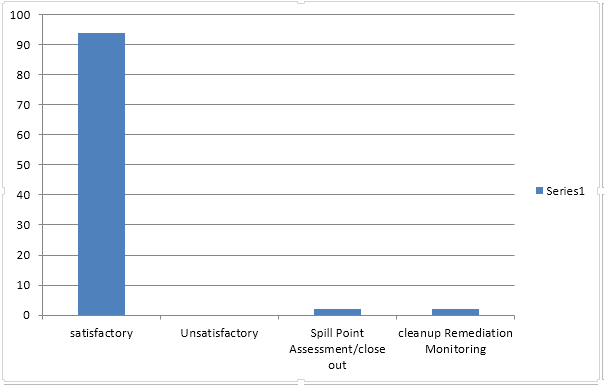
The post summary cleanup inspection of 2018 report by the Rivers State Ministry of Environment disclosed 94 satisfactory; two spill points assessment/closeout and two cleanup remediation monitoring.
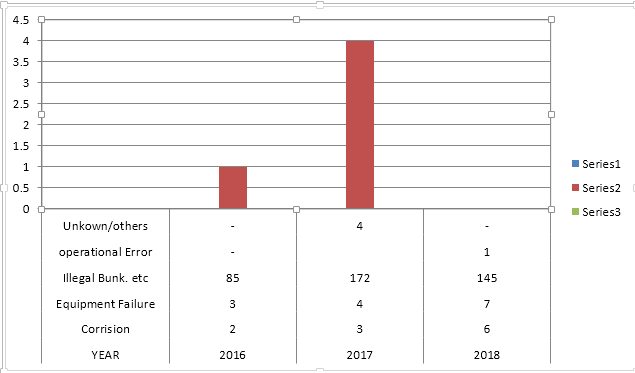
The ministry’s report from 2016-2018 shows that a total number of 375 incidents were caused by illegal bunkering, vandalisation, hacksaw cut, and drilled hole (sabotage) across Agip facilities in River State.
Agip caused about 75% of the incidents. Bright Abali, President, Ogba Youth Council believes that the oil company, in trying to save cost, uses obsolete equipment.
RIVERS STATE MINISTRY OF ENVIRONMENT REPORT ON AGIP OIL SPILL CASES
RECORDED SPILL CASES IN ONELGA JANUARY-NOVEMBER, 2018
Summary of Oil Spill cases From 2016-2018
2018 Summary of post cleanup inspection recorded as at November 20, 2018
Abali said that “some pipes are crossing the length and breadth of Ogba/Egbema LGA, they are long overdue, they are eroded, they are not serving the test of time’, he said.
For him, Agip lacks the capacity to put in place the actual global best practice of exploration.
“Go to the river side of Agip OML 61 and the neighbouring OML 58, you will see gas gushing out from the water, the people still drink from it, they do everything with the water, yet AGIP blames it on sabotage. They are not thinking of transforming flare to wealth,” Abali said.
This should all be blamed on the company’s failure to upgrade on the current global trends of exploration, he stated.
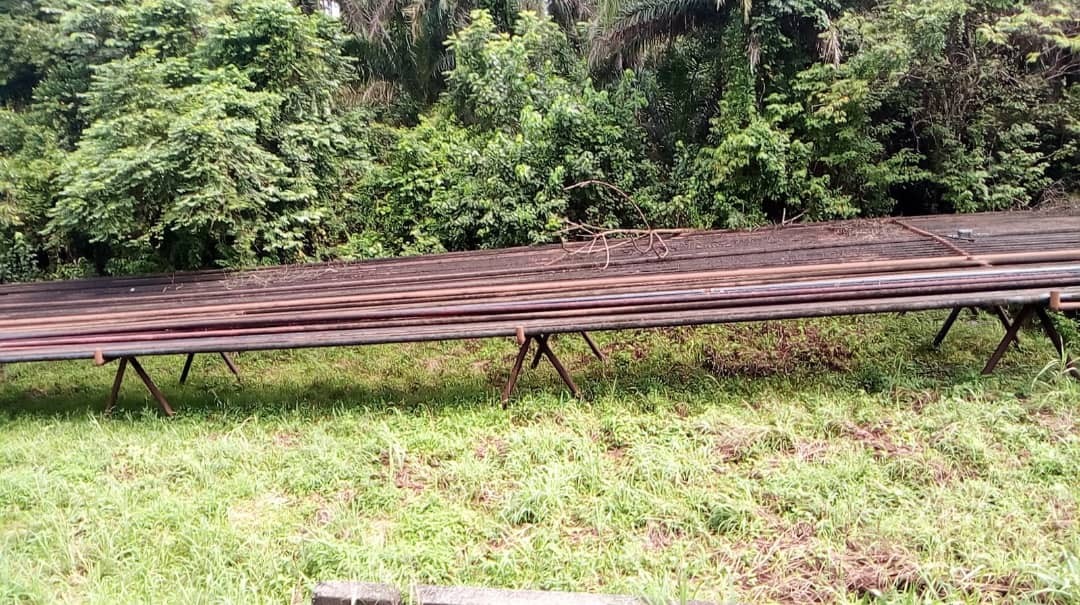
Indeed, when our reporter visited these communities, some oil and gas pipes were sited with rusty surface.
Agip Rusty oil and pipes. Photo Credit: Elfredah Kevin-Alerechi
A rusty and old oil pipe if not repaired can lead to equipment failure, loss of productivity, likely consequences of environmental degradation, oil leaks and thus oil spillage, said Mr. Kingsley Chibuzor Nwogbidi, Chairman, Nigerian Environmental Society, Rivers State branch.
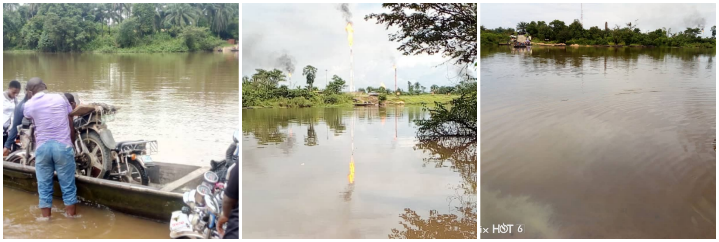
From Omoku town to Obiafor is about 30 minutes drive, but motorists have no option than to leave their cars at Omoku, then cross the Orashi River with a canoe to get to Obiafor. Those with motorbikes and bicycles cross with their bike inside the canoe and pay N200.
On her visit, the reporter started feeling some hotness in the eyes while crossing the Orashi River. She met a young petty trader and asked if her eyes itch her too and she replied, “madam, we are used to it. You are feeling it because this is your first time of coming to this area. However, I usually see darkness whenever I am cooking”.
Residents crossing the Orashi River. Across the river is Omoku town where gas flaring flaring is visible. Photo credit: Elfredah Kevin-Alerechi
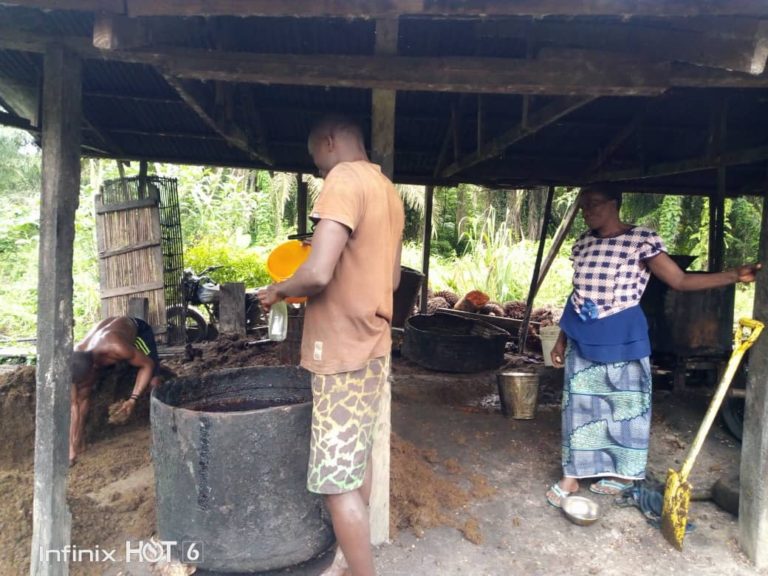
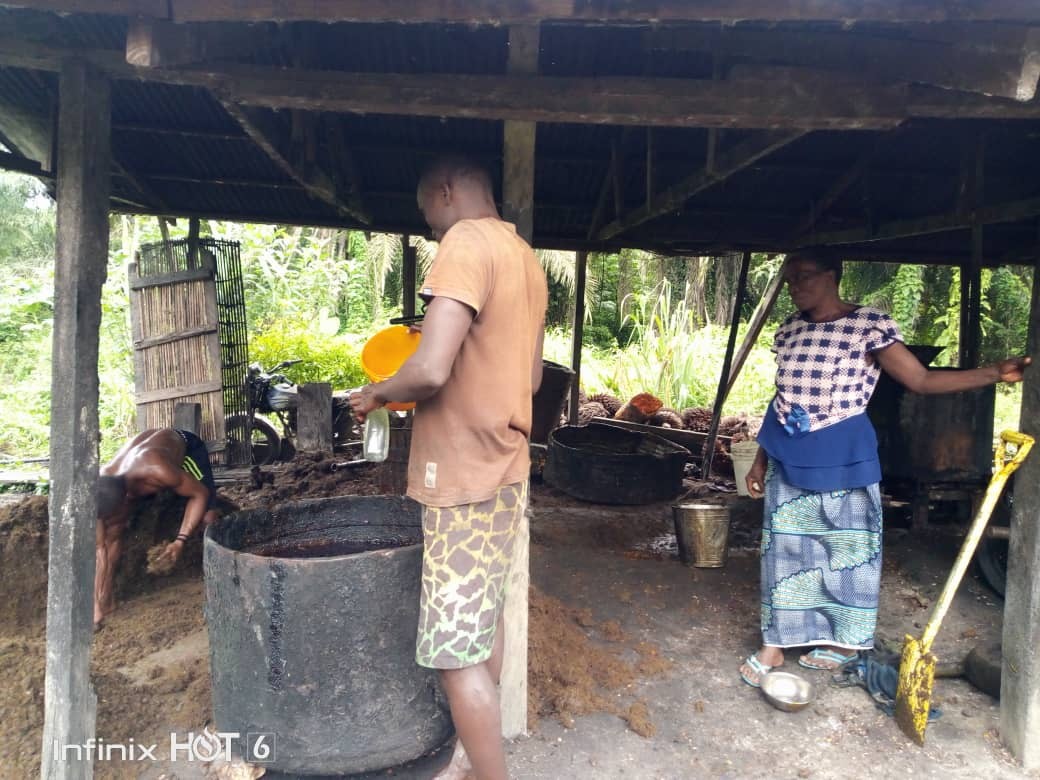
On the way to Obiafor, the reporter saw an old woman and her three boys in their palm oil mill who also spoke about the effect of gas flaring on residents.
“Each time I enter the bush with my children to cut palm fruits, our eyes are always dark”, said Mama Mercy, a palm oil miller
The chocolate complexioned woman, who resides at Otua community, has been doing her palm oil business for more than 32 years. Also, Mama Mercy, whose husband died 12 years ago, singlehandedly trained her nine children, though some dropped out of school due to finance.
The mother who cannot speak English lamented: “my challenge is the manner the smoke comes to spoil my roof. The smoke disturbs a lot. When we enter the bush to cut palm fruit, the smoke will cover our faces, we will be unable to see the palm fruit properly when cutting. The smoke affects me a great deal. When the smoke comes, I have to manage it. It sometimes makes me to cough, sometimes I can’t even breathe well.”
Mercy with her sons in her palm oil mill. Photo credit: Elfredah Kevin-Alerechi
EFFECTS OF OIL SPILLS IN ONELGA
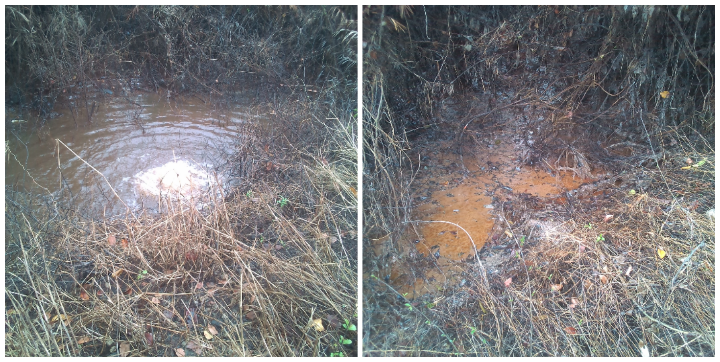
Just like the Ogoniland, livelihood seems to have shut down in Obiafor due to oil spills in the fish pond where community buy and sell fish from.
One of Agip’s major flow stations is located here. Inside the flow station is a family fish pond from which they catch fish for consumption and make profit .
Precious Osiagu, who buys fish from the pond, lamented how oil spills have affected her business, compelling her to send her children to public schools.
“We are the traders, we buy fish. The oil has spoilt the fish. We can no longer see fish to buy in the water. We are now idle here, no fish, because of the oil spills in the pond”, she said.
“Before the water was polluted, the fish was always big, we buy and make gain, but we no longer see fish here again. It has weakened our business, Osiagu, added.
The young, pregnant, pimpled – faced Osiagu lamented that the situation has impacted badly on her family.
“It is through this river we buy fish and sell and train our children, but now it has been polluted, forcing us to pull them out from private school, and we are planning to put them in government school, and you know they don’t teach very well in government schools.”
When caught, the fish would be dried for days before it will be taken to the market, but it cannot stay longer again.
“Before, when we buy the fish from the river, we will dry and keep it till whenever we want to go to the city to sell it, even if it is one week, it won’t go bad. But now, the fish gets spoilt quickly,” she complained.
When asked what she wants from government and Agip, she said; “I want them to come and see the women buying fish from the camp. They should clean the place to enable fish return back to the river and for us to continue managing the way we have been. Our husbands don’t have work,” she urged.
“We have been getting water from this fish pond before it was polluted. We still get water from it with style,” said Nkiru Ibeh, another fish buyer from the camp.
Ibeh, light complexioned and skinny, with dark spots on her body, said “we get water from the fish pond before the pollution, we still get water from it with style. But, now that other companies are in the community, we walk three miles to get the water.
SCIENTIFIC TEST OF THE WATER FROM OBIAFOR FISH POND
The laboratory analysis of the water samples from the fish pond by our reporter at a popular Agro – allied company in Rivers State, reveals that it is polluted with 5.47 pH against the acceptable pH value of drinking water.
The pH is the indicator for acidity and alkalinity and indicates when the water is good or bad for drinking. The normal required pH usual falls between 7-8pH, said EBINIMI JOE ANSA, Director, African Regional Aquaculture Centre.
Flowing surface waters such as streams, rivers, and creeks that are not polluted have a good pH range of 6.5 to 7.5, this range is good for fish in their natural habitats in Rivers State, Ansa added.
In 2010, 16 barrels of oil were spilled on our farm and till date Agip has not done any cleanup, said Eluozo Emmanuel, whose mother’s land was affected by the spill.
“The spills occur often, because the pipes have stayed for so many years. They don’t even care to do good cleanup and proper remediation”, he added.
This is contrary to the state Ministry of Environment 2018 post cleanup summary, which was 94% satisfactory with the cleanup done by Agip.
Emmanuel said that he was surprised when there was no compensation by AGIP or a cleanup, after receiving calls from the company to reduce the number of spills.
Emmanuel, whose mother still farms in the polluted land since there is no farm in Omoku town where she resides, added that “my mother still farms in the land, she has no other farm in Omoku, that is why we tell people that the land is a family land and not a community land”.
Emmanuel, who is married with children, narrated that there have been health issues due to gas flaring and pollution, which, according to him, are eye-related problems and cancer.
His words, “we have bad diseases which our old people do not have, even our roofs, we have coloured zinc here because of gas flaring and at the end we don’t benefit anything”
Incidentally while returning from Obiafor, our reporter ran into some Agip company staff amending some spoilt pipes.
When the reporter visited the farm where 16 barrels were alleged to have spilled, she could not enter as it was still full of water.
At about 10:30am one Tuesday morning in August 2019 in Okwuzi community, Ogba/Egbema/Ndoni Local Government, the morning sun was shining bright. Riding on a motorbike from Omuku town to Okwuzi, the reporter saw three pipes flaring gases, and her fixer informed he that the gas is flared every minute of every day all year round.
“This gas flaring is affecting us too much. I have suffered from catarrh, malaria, even my daughter has been having series of itching in her buttocks, pointing the little Ms Onuegbu, who has some black and pale spots”, said Mrs. Matthew Onuegbu
“Taking my daughter to the hospital is expensive and i cannot it afford now,” said Mrs. Onuegbu
“Gas flaring is one problem that has refused to go. We have been fighting against gas flaring for over two years now. The oil companies have continued to flare gas as if nothing happens”, said Elder Dandy, Executive Director of Niger Delta Initiative, also an indigene of ONELGA.
Elder dDndy is a clean environment advocate who works with several environmental non-profit organizations across the Niger Delta states.
For him, the problem of Okwuzi community is that Agip had influenced all the community leaders by giving them businesses which made it difficult for them to complain in spite of the impact of gas flaring and oil spillage on lives and property in their community.
“The problem now is that the community cannot take Agip to court, because the company has somehow bought the mind of the community by influencing the leadership. By having business dealings with the AGIP, it has become difficult for the community to speak out against the oil company’s operations” Elder Dandy said.
“Gas flaring is a real problem to the people of Okwuzi. Zinc on our roofs has changed colour, once you build house within two years the zinc would change, the rain is acidic,” he added.
Residents recalled that before the Nigerian Civil War in the late ‘60s, they fetched rainwater for drinking, but lamented that today rainwater cannot be used for anything. The water is completely black.
“There is an emergence of unknown diseases in our area here of recent, like the eye problem as you can see I am putting on glasses. I have been putting on glasses for over ten years, but my late uncles at 70s & 80s he was able to read newspapers without glasses. Today you see younger people of twelve- and fifteen-years using glasses,” Elder Dandy lamented.
“There is skin irritation all over the place and other respiratory challenges that can be associated with the gas flaring. Even now the heat wave has increased. The temperature of this area is far above the temperature of other areas where there is no gas flaring. Even our rivers are highly polluted because when it rains, the acid goes into the river even to the underground water”, he added.
Unfortunately for the people of Ogba/Egbema/Ndoni Local Government Area of Rivers State, the environmental debacle in Ogoni has eclipsed other problems areas state and Niger Delta in general. All the attention of Federal Government and international community is on the Ogoni axis but here also, people are feeling the impact but attention on the Ogoni case has caused a big neglect here, Dandy opined.
The oil companies are the ones who give employment to people and they are so influential in the society that people generally do not allow discussions on issues bothering their community and the company that employed them.
“The international community, multinationals, NGOs, federal government and individual should step out to other communities and come to our aid. We have no power to fight these big monsters. we have no voice. They control everything, there is anger among the few, we are helpless, that’s why we need external help,” Elder Dandy appealed.
According to a study carried out by Amadi Akobundu of the Geology Department, Federal University of Technology, Minna, gas-flaring constitutes a major source of water pollution in the oil producing region of Eastern Niger Delta. The results of the laboratory analysis of the water samples revealed that the water sources in the area have negatively impacted acid-rain and NO2, SO2 and CO2 from the burning gas.
HEALTH RISK OF GAS FLARING AND OIL POLLUTION
“When a car is parked outside for long and the acid rainfall on it, you will start seeing the colour defaced. When you compare it to humans, this is the same effects such water has on us especially when it has been used to cook,” said Daniel Onyetulem, Managing Director, Century Medicaid Services limited.
Onyetulem, a trustee at Stevenson Holistic Care Foundation, observed that these substances accumulate in the lungs, which starts to react.
He said that said precautionary method to reduce the impact of gas flare should be to “avoid acid rain, such water should not be used to cook or bathe. Avoid having contact with acid rain, do not allow it to touch you, avoid leaving around areas where gases are flared and boiling the water doesn’t mean you have treated the water”.
Respiratory tract infections are diseases that effects the nose, throats, oesophagus, while symptoms can look asthmatic. Some react adversely to the substance that is flared, sneezing, redness of the eyes, the persons becomes restless, which also result to excessive dry cough that is productive of any sputum.
WHAT THE LAW SAYS ABOUT ENVIRONMENTAL POLLUTION
In Nigeria, despite the plethora of laws dealing with pollution generally, when it comes to the issue of compensation for oil pollution, the only law that makes express provision for compensation of victims of such pollution is the Oil Pipeline Act CAP O7, LFN 2004.
Chima Williams, President Green Alliance Nigeria, who is also the Head of Legal Resources, Environmental Rights Action/Friends of the Earth Nigeria, also cited Sections 245 and 247 of Criminal Code Act Cap C39 LFN 2004, which makes provisions for prohibition and/or punishment for pollutions of various kinds, including that of petroleum, adding that the difference between them and the Oil Pipelines Act is that they see pollution from either criminal angles that should be punished by jail terms or be restituted by claims of damages or for compensation anchored on the ownership of land.
It is not the duty of everybody to know what the law says on every subject matter, therefore, victims of pollution of any kind should seek legal advice from those competent to know on their rights. Whether such pollution or polluting practices have breached their rights and if yes, what remedies are available to them and how can such be secured, he stresses.
He further calls for government and businesses that engage in polluting activities to follow principles of respecting Citizens rights.
“As every pollution impacts negatively on the rights of citizens in terms of breaching their rights to life, dignity of the human person, and right to live in an environment conducive for their development etc, one will advise both governments and business that engage in polluting activities to begin to follow the principles of respecting the citizens rights, protecting such rights and when in course of their operations such rights are violated, they must provide remedy”.
Problematic Agip
A letter dated October 7, 2019 sent to the Port Harcourt office of Agip on our findings has not been answered. The letter was duly submitted through the Public Affairs Department. When our reporter got to Agip offices in the Rivers state capital on October 7 at about 4.00pm, a security man told her the officers to receive my letter had closed and asked her to return the next day at 8.00 am.
When I got to the gate of Agip Company in Port Harcourt, a security officer asked me to open my bag I did and they searched the bag and directed me to go behind the security post and look for Room 4. When I got there room 4 was locked, I saw some persons carrying different foodstuffs into different cars outside the corridor, it looks like they are heading for an event, both old, and young men and women.
She went back the next day at 8.00 am and was told by a security man, Mr Ogu, to drop the letter into the postal box of the Public Relations Department, with an assurance that staff of the unit would pick it up. Mr Ogu however declined to sign or stamp and acknowledgement copy of the letter, claiming that Agip does not acknowledge letters.
In the letter, the reporter had request the oil company to speak on the allegations by the people of ONELGA on the constant oil pollution without cleanup and compensation, as well as the continuous flaring of gas, which the people say adversely affect their health business and the environment.
Has the NOSDRA been active enough to ensure proper cleanup and penalise defaulters?The National Oil Spill Detection and Response Agency (NOSDRA) is a government owned agency saddled with the responsibility ensuring compliance with environmental laws in the petroleum sector. Data obtained from the Nigeria Oil Spill monitor,www.oilspillmonitor.ng, a website run by NOSDRA to keep track of oil spills in the country estimated about 8134,81251 spilled areas in ONELGA
“The Act empowers NOSDRA to receive reports of oil spillages and coordinate oil spill response activities throughout Nigeria but does not empower the agency to penalise for oil spillage,” said Cyrus Nkangwung, Port Harcourt Zonal Director, in an official letter dated September 25, 2019, quoting section 6(2) and (3) of the NOSDRA (Establishment) Act No.15, 2006.
Most stakeholders opined that the agency has not done enough to protect the environment and the rights of residents of oil producing communities.
This Investigation was facilitated by the Wole Soyinka Centre for Investigative Journalism (WSCIJ) under its Report Women! Female Reporters Leadership Programme (FRLP) implemented with support from Free Press Unlimited.
ONLY three states including Lagos, Rivers, and Akwa Ibom can meet and finance their recurrent expenditure obligation with states-owned revenue without receiving the monthly allocation from the Federal Account Allocation Committee (FAAC).
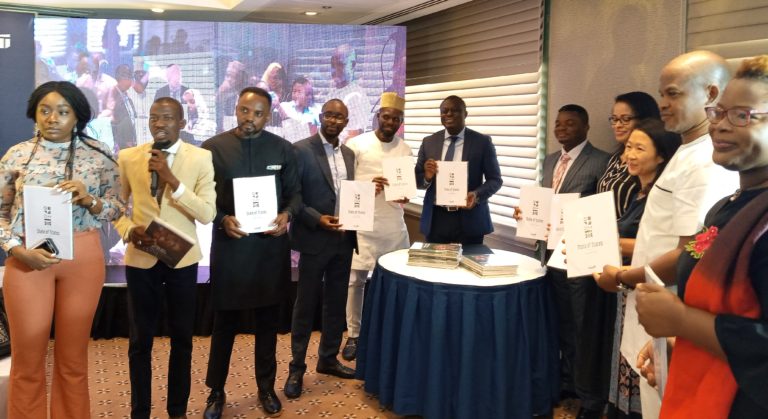
This was learned on Thursday, October 23 at the 2019 edition of the State of States report released by BudgIT, a civic organisation driven to make the Nigerian budget and public data understandable and accessible across every literacy span.
The State of States report that reveals the fiscal sustainability of Nigerian states is anchored on three key indices which are; Index A: states’ ability to meet their recurrent expenditures independently of the Federal Government (weighted average of 0.35 per cent), Index B: the state’s ability to meet their recurrent expenditures with both its internally generated revenue (IGR) and federal allocations (weighted average of 0.50 per cent), and Index C: how long it would take states to pay off their total debt stock (weighted average of 0.15 per cent).
The report shows that considering the ability of states to meet up with their recurrent expenditure obligation with their IGR, Value Added Tax (VAT), 13 per cent share of oil derivation paid to oil-producing states, states like Lagos with index 0.48, Rivers-0.73, and Akwa Ibom- 0.91 sit top in that index.
States like Kogi, Adamawa, Plateau, Taraba, and Osun with 4.34, 4.19, 3.60, 3.89, and 3.04 respectively as their indices on the ladder will have to rely so much on the federal allocation and also have to borrow to settle their recurrent obligations.
In the report, BudgIT stated that access to audited statements brought out some facts on the true state of recurrent expenditure in focus states.
“We discovered states, such as Delta, running huge recurrent expenditure reaching N200billion. Bayelsa, despite its size and population, has a high recurrent bill as high as N137billion, compared with Ebonyi with a recurrent bill of N30billion, Sokoto N38billion, Jigawa N43billion, Yobe N35billion etc,” BudgIT said in the report.
“However, we notice that Kogi lags behind due to its huge recurrent bill as at 2017, when it was still paying salaries for workers and also had high repayment bills for loans,” the report added.
BudgIT, however, said it believes that Nigeria needs to create incentives for states to expand growth and earning potential, thereby activating resources needed to improve the state of health, education, and access to opportunity.
It further said states can invest in their unique resources to boost their income by keeping their recurrent costs lean to free up more spending for social and economic infrastructure.
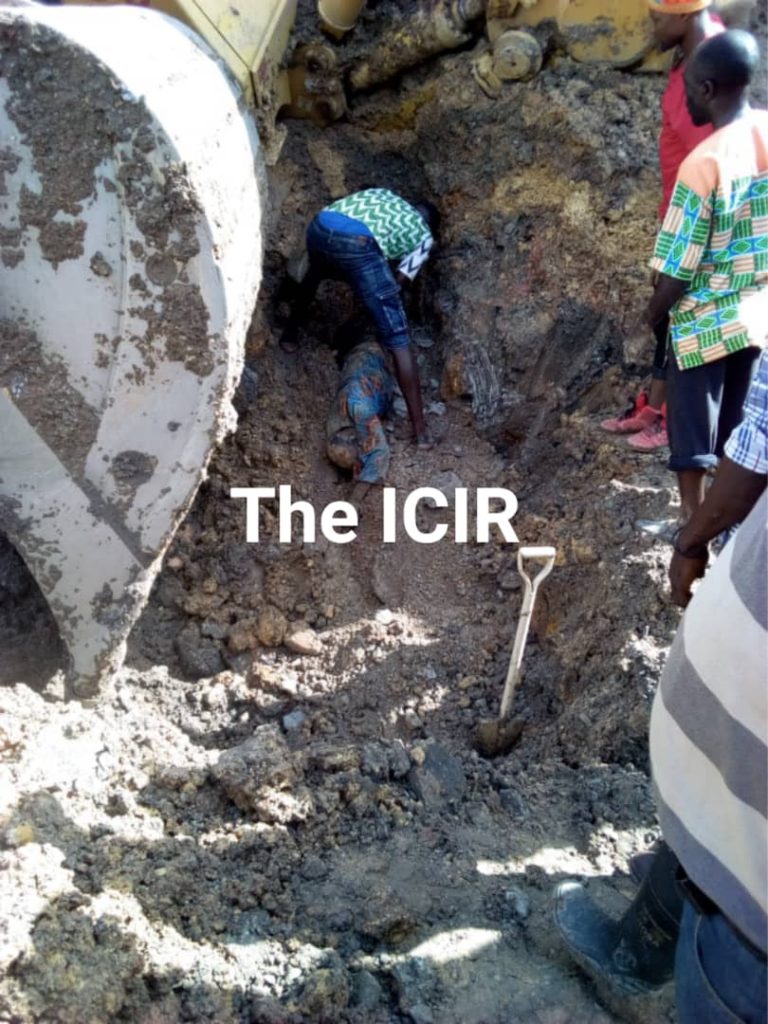
BENEDICT Etonu, a middle-aged man of about 50 years has been killed in a landslide that occurred at a Dangote Coal Mines Limited site located in Awoakpali Community, Ankpa Local Government of Kogi State, The ICIR can authoritatively report.
For almost 24 hours, Etonu was buried under mud—his body was found at about 2:28pm on Wednesday while the landslide took place at about 5 pm on Tuesday.
Two heavy-duty machines—a loader and bull-dozer were also covered by the landslide alongside the deceased, an eyewitness told The ICIR.
“Two excavators are currently working to exhume the body,” Fredrick Ahmadu, Awoakpali Community Representative to Dangote coal company informed our correspondent.
Narrating the incident, Ahmadu said the landslide occurred at about 5pm Tuesday evening while the deceased was trapped by excavated soil as he struggled to escape from the coal deposit site.
Location of the landlside where the Late Benedict Etonu was covered Photo Credit: The ICIR
Location of the landlside where the Late Benedict Etonu was covered Photo Credit: The ICIR
One of the heavy-duty vehicles that allegedly collpased with the late Benedict.
Photo Credit: The ICIR
The deceased staff of Dangote Coal Mining Limited, Benedict Etonu being taken to the mortuary almost 24 hours after he being covered in landslide.
Photo Credit: The ICIR
Late Benedict Etonu
Photo Credit: The ICIR
The deceased staff of Dangote Coal Mining Limited, Benedict Etonu being pulled out from dump almost 24 hours after the landslide
Source: The ICIR
Late Benedict Etonu
Photo Credit: The ICIR
“He was working as a dump man,”he said.
Describing late Etonu’s job as much of traffic warden, who controls the heavy-duty machines on where to dump excavated coals, the community representative said as of 1:30 pm on Wednesday his body was not found.
“Around 4:30 to 5pm, there is a machine called dumper coming towards his area. So, as he was controlling the vehicle on where to dump the sand, suddenly the ground opened where he was standing and he went in,” he recalled.
“He struggled to escape but the other heap of sand came down and covered him.”
According to Ahmadu, while the personnel of the Dangote mining company searched to remove the remains of the deceased in the mud, neither the police nor the Mines Inspectorate Department in the state were informed of the accident.
This is contrary to the provision of Part VIII, Section 84 (1) (a), (b) the Nigerian Minerals Mining Act (2007), which states that all operations should stop while the incident is reported to the police.
The Mining Act also states that such incident should also be reported to the Mines Inspectorate Department in the state – Kogi. After this, the incident will be probed by the Minister of Mine and Steel Development through a four-man panel of inquiry.
“The holder of mining lease or licence shall, if an accident occurs in any mine or in connection with the mining operations conducted under its lease, temporary title or licence granted under this Act involving loss of life or serious injury to a person, report the accident as soon as possible, with full particulars of the accident -:
“(a) to the nearest Police Station; or (b) to the office of the Mines Inspectorate Department in the State in which the accident occurred,” the Act states.
One of the heavy-duty vehicles that allegedly collapsed with the late Benedict. Photo Credit: The ICIR
“The whole staffs are mourning, the management too is mourning. So what we are doing now is to exhume the body.”
Adejoh Samuel, former Community Representative of Awoakpali also acknowledged the incident. He also narrated how the two heavy-duty machines – a dumper and a bulldozer sank with the deceased
“The dumper and the bulldozer fell inside with the man…and the sand buried them,” Samuel said.
As at the time he spoke with this reporter at about 12:35 pm, the company was still trying to exhume the corpse. “They only succeeded in removing one dumper around 12pm but the dozer is still there.”
According to him, some of the experts had to stay back from the site to avoid being lynched. But, he was not certain if the incident was already reported to the police.
The sad event both Ahmadu and Samuel disclosed has caused an uprising among the youths in the host community against the Dangote’s firm.
“I am going back to their office to meet my community boys so they won’t destroy things and keep them under control,” Ahmadu who spoke to this reporter on phone said as he ended the call.
The deceased 25-year-old daughter, Fadoje Etonu who spoke with The ICIR, expressed uncertainty on how her mother would take care of her six siblings.
She hinted that officials of the mining firm promised to visit the family of the deceased.
Dangote firm confirms incident
When contacted, management of the mining firm confirmed the incident. Though not much detail of what happened was provided.
“There was a landslide. We are trying to recover his body,” Hari Car, Senior General Manager of the firm told The ICIR.
“I cannot speak much on it, you can contact Alhaji Usman Jibrin, the coordinator of the mine.”
Car claimed the incident was reported to the Police Tuesday evening and also Wednesday morning. This contradicts the position of the Kogi State Police command which insisted that it was not informed of any accident on the mining site.
However, Williams Ovyeaya, Police Public Relations Officer, Kogi State Command did not answer repeated calls put to his line, neither did he return the calls.
But 10 minutes after receiving a series of text messages from this reporter, he denied knowledge of the incident he replied with a terse SMS that he was yet to receive such information.
“I have not received such information but I’ll find out,” Ovyeaya replied.
The site manager identified simply as Gowing was contacted but his line was placed on voice message all through the period.
Also, Usman Jibrin, the Mining Site Coordinator, who Car referred the reporter initially claimed ignorance of the incident when he was contacted.
“What happened,” he queried. The ICIR went further to brief him about the landslide incident and the victim, but he simply said, “your information is wrong”.
Later, he succumbed and said, “There was a landslide and he (the deceased) was standing uphill. There was no machine …..”. He went further to criticise initial claim of the reporter that the late Etonu was buried alive by sand and had not been found.
However, when asked if the deceased worker was alive, he shouted, “your information is wrong”.
“Please, I don’t know you. I can’t be discussing like this,” he stressed when further questioned if the incident was reported to the police and other appropriate authorities.
Again, The ICIR told him of picture evidence of the incident, then, he said, “Fine! use it. You can use it.” Thereafter, he advised the reporter to send his inquiry to the Corporate Affairs Department of Dangote Group.
Failed Response from Official Email to Dangote Group of Companies. Source: Olugbenga Adanikin, The ICIR
A mail sent to the official mailbox of the company was however not delivered as it was returned as a failed delivery.
When Jibrin was told of how an earlier email sent to the Dangote Group, Corporate Affairs Department – communications@dangote.com failed. But he simply said, “I am having a rest. I’m on the bed. I just woke up to pick your calls,” at about 12 noon.
Two phone numbers found in the media segment of the official website of Dangote Group, displayed for the public to contact the organisation were also unreachable.


 Police, Army ranked worst by most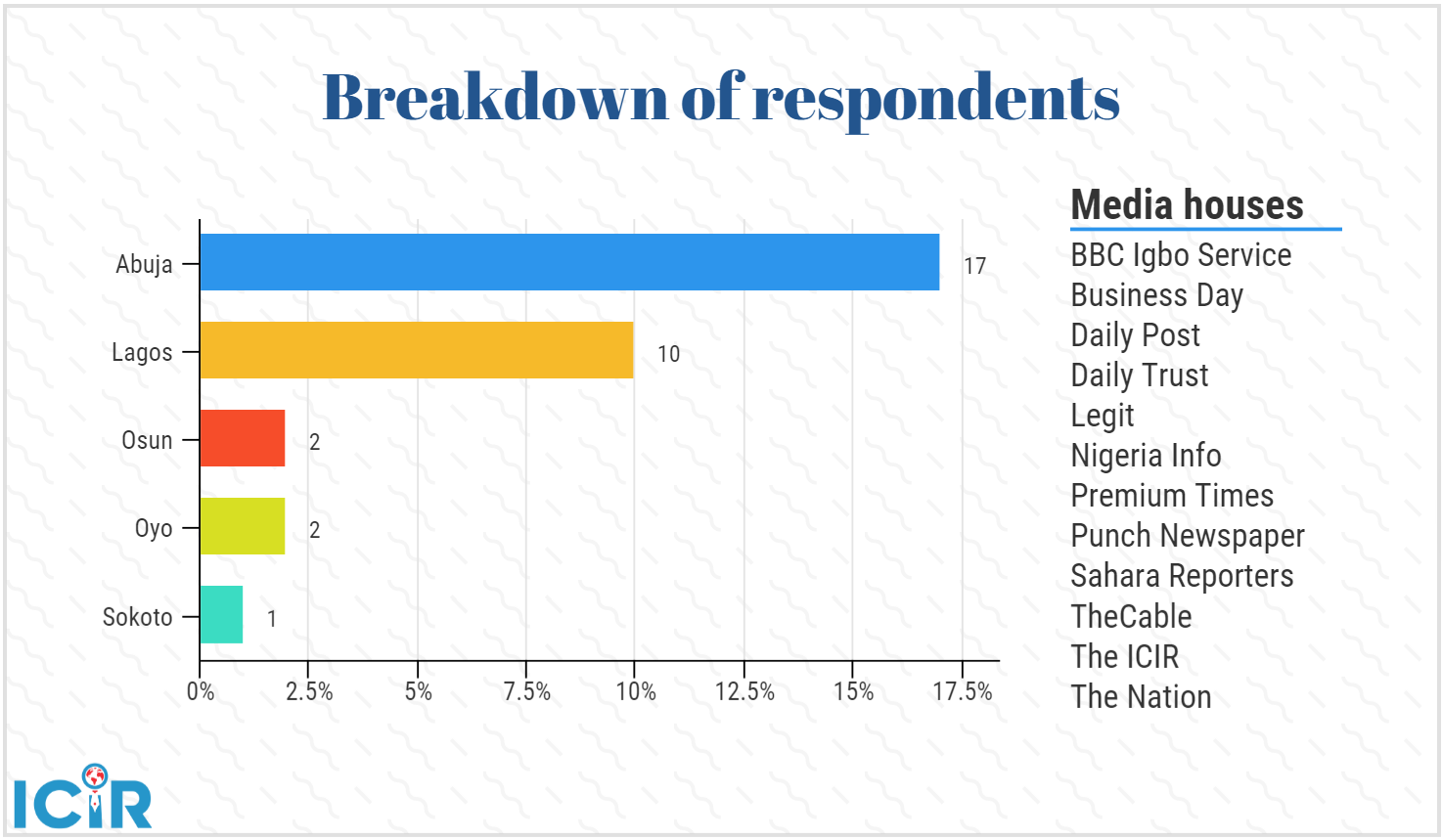

 Commonest problem: ‘They hardly answer calls’