A COALITION of Non Governmental Organizations is set to launch a campaign against jungle justice that is daily gaining ground in the country and across Africa.
The coalition comprising Devatop Center for Africa Development, Cleen Foundation and other civil society organisations said plans are on to organise a mass sensitization of Nigerians against unlawful killings of criminal suspects.
At a stakeholders meeting held in Abuja on Wednesday, Chairman, Cleen Foundation, Benson Olugbou stated that the idea of jungle justice was borne out of the demand of the people for justice due to failure of government to uphold its duty and responsibility to the citizen.
Olugbou explained that the campaign against jungle justice is aimed at reminding the government of its primary objective of securing lives and properties of every Nigerian.
“It increases lawlessness if people can just wake up and start to kill each other and it appears to show that there is failure of governance,” he said.
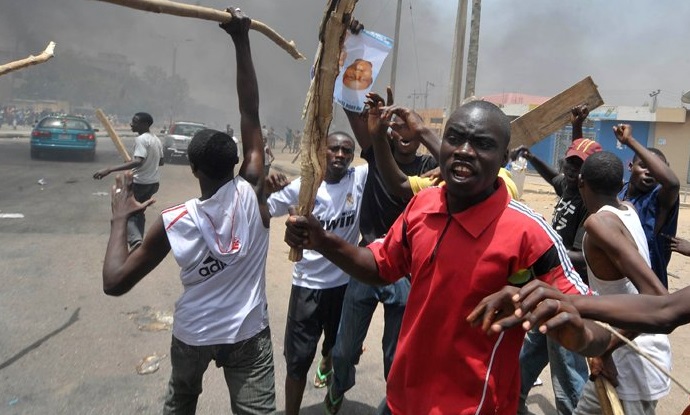
He lamented that there have been continued cases of jungle justice and extra-judicial killings in Nigeria, making reference to the recent killing of suspected one chance drivers in Abuja by angry mob.
Speaking on the need for the campaign, Osuigwe Joseph, chairman of Devatop Center for Africa Development, stated that jungle justice has so far been under reported in Nigeria.
Joseph stressed the need for synergy between stakeholders to curb jungle justice in the country.
According to him, the planned campaign would be held to commemorate the International Human Rights Day.
While speaking on the rationale behind ‘Red Card’, Joseph explained, “As used in football, the red card indicates dismissal of a footballer or player during a match, the red card is the same in the proposed campaign.”
James Ugochukwu, a representative of African Centre for Enterpreneurship and Information Development (ACEIDEV), lauded the campaign, stating that jungle justice seems to have become an African culture.
Ugochukwu referred to an incident of a military colonel in Ghana, who was seen jogging in an unfamiliar terrain with his holstered pistol asking for directions but was presumed to be a thief by members of the neighborhood who beat him to death.
This incident, he said reinforces the need to curb the spread of jungle justice across Africa, noting that if such fate could befall a military personnel, it could happen to anyone.
Goziem Onugha from Lawyers Alert stated that the issue of jungle justice is a circle stressing that those who carry out jungle justice are angry and feel the police is not doing enough.
CHIDO Onumah, the Executive Director of African Centre for Media and Literacy (AFRIMIL) has approached the Federal High Court, Abuja to sue the Department of State Security (DSS), and its Director-General Yusuf Bichi for violating his fundamental human rights.
In a motion filed on Onumah’s behalf by his Counsel, Moses Ideh, Bichi stands as the first defendant while the DSS is the second respondent.
“Compensatory damages in the sum of N100, 000, 000 only, to the applicant for the violation of his fundamental human rights,” the motion reads.
“Exemplary damages in the sum of N50, 000, 000 only to the applicant for setback, trauma, psychological and emotional distress experienced and still being experienced.”
This follows his unlawful arrest and detention by the operatives of DSS on September 29 at the Nnamdi Azikiwe International Airport as he returned from Barcelona, Spain, where he had gone to defended his PhD thesis.
In the suit, the author and former journalist recalled how he was arrested and detained by the secret police on his arrival from Spain at the Nnamdi Azikwe International Airport, Abuja.
He said the DSS of unlawfully held him from about 5pm to 10:30 pm on the said date without a prior court order.
Onumah maintained that the action contradicts Section 35 and 41 of the 1999 Nigerian Constitution as amended.
However, he said his T-shirts were seized during the arrest while he also demanded that a thorough investigation should be conducted on the officers either directly or remotely responsible in the act.
“Declaration that the arrest and detention of the applicant at the NAIA on the 29th of September, 2019 at about 5:00pm to 10:30 pm by officials and/or agents of the respondents without lawful cause and without an order of court constitutes a violation of his fundamental human rights to dignity of his person, person liberty, freedom of movement, and freedom of expression as provided in Section 34, 35 and 39 of the 1999 constitution of the Federal Republic of Nigeria as amended,” the motion reads in part.
“Declaration that the unlawful seizure of the applicant’s T-Shirt and coercion to write an undertaking never to wear the said T-shirt again by officials and/ or Agents of the respondents amounts to violation of his right to own property and his right to freedom of expression as contained in Section 30 and 44 of the 1999 constitution of the Federal Republic of Nigeria as amended.
“Declaration that the mental and physical trauma which the applicant had to endure during the period of time he was held in detention by officials and/or agents of the respondents constitutes a violation of his right to dignity of his person as provided in Section 34 of the 1999 constitution of the Federal Republic of Nigeria as amended.”
Other parts of the motion include, “an order of mandamus compelling the 1st respondent to carry out a thorough and in-depth investigation and prosecution of all its officers and/ or agents directly or remotely responsible for the applicant’s unlawful arrest and violation of his rights.
“A written unreserved apology from the respondents to the applicant to be published in two national dailies for the harassments and unwarranted mental and physical trauma meted on the applicant while in custody of the respondents.
“An order for immediate release of the applicant’s T-shirt.”
Aside from seeking reliefs, Onumah also did an affidavit narrating how he was confined to a space during detention at the DSS office and also coerced to write an undertaking against his wish not to wear any t-shirt with the inscription “We Are All Biafrans”.
“I was in custody of the respondents for a period of five hours 30 minutes before the respondents released me.
“During my period of incarceration at the respondents’ facility, my freedom of movement was restricted, my telephone and international passports were ceased and I was treated like a common criminal,” the affidavit partly reads.
The ICIR earlier wrote on the incidence, followed by an exclusive interview detailing the drama that ensued and how he was eventually taken from the Abuja airport to the DSS Headquarters, in the guise of protecting him from purported agitators.
THE Federal Executive Council (FEC) on Wednesday instructed the Minister of Finance, Zainab Ahmed, to begin the payment of the new minimum wage structure “on or before December 31, 2019”.
The Nation Newspaper reported that the Labour Minister Chris Ngige disclosed this resolution after the weekly FEC meeting held at the Presidential Villa, Abuja.
The minister also said the council approved that the payment should be effected from April 18, when President Muhammadu Buhari signed the amendment into law.
With Buhari in Sochi, Russia for a three-day Russia-Africa Summit, Vice President Yemi Osinbajo presided over the meeting.
The Trade Union side of the Joint National Public Service Negotiating Council (JNPSNC) had urged the government in a statement released on Monday to ensure all arrears of the minimum wage from April are paid “so as not to trigger off another avoidable round of agitation”.
According to The Nation, Aviation Minister Hadi Sirika also disclosed after the meeting that N1.7 billion was approved for the purchase and installation of communication equipment to be used at airport towers in Zaria and Katsina.
The contract, projected to be completed within eight months, is aimed at ensuring safety and efficiency.
Ogbonnaya Onu, the Minister of Science and Technology, said the council equally approved the use of methanol, a chemical used as fuel and derivable from natural gas, in local industries.
With the FEC’s decision, the chemical can now be used for cooking and as transportation fuel, as a way of reducing gas flaring.
Onu emphasised that methanol is a cheap and safe alternative which will not only curb environmental pollution but also reduce deforestation. Ensuring its use becomes widespread will be done with the support of the private sector, he said.
The council also approved a name-change for the Ministry of Communication, which is now to be referred to as the “Federal Ministry of Communication and Digital Economy”.
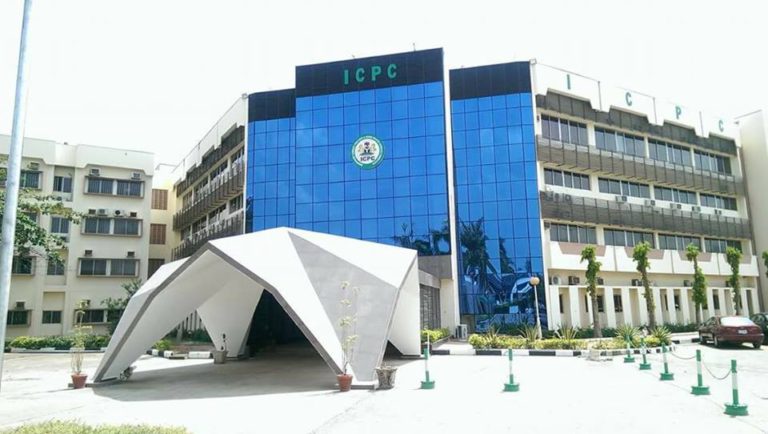
THE Independent Corrupt Practices and Other Related Offences Commission (ICPC) says it has arrested two suspects who specialise in forging school certificates at the University of Port-Harcourt (UNIPORT), Rivers State.
A statement by the Commission disclosed that the suspects – Onosemuode Roland and Jacobson Ubong Jonathan were nabbed through a sting operation successfully carried out by its operatives at the Choba Campus of UNIPORT.
According to the Commission, the suspects specialized in forging school leaving result, diploma and degree certificates.
it stated that ICPC undercover operatives approached Roland and requested him to produce an original Bachelor of Engineering Certificate in Chemical Engineering to aid in employment into one of the oil servicing companies which he agreed to do for the sum of N45, 000.
“Roland was arrested after producing forged degree certificate and on receiving the balance sum of N25, 000.00 marked money,” the statement read.
The ICPC said, subsequently, Roland volunteered a statement in the presence of one Atarhinyo Solomon Igho and a lawyer Dennis Enyi Nwokah, where he admitted the allegation of certificate forgery.
He also mentioned Jacobson Ubong Jonathan as a conspirator who was later arrested by ICPC operatives.
It noted that, with a further investigation ongoing in the matter, the suspects had been granted administrative bail.
“The suspects would be charged to court for allegedly committing offencesthat contravene Sections 15 and 25 of the Corrupt Practices and Other Related Offences Act, 2000,” the ICPC said.
FOLLOWING the fresh xenophobic attacks on Nigerians in Mpumalanga Province, South Africa on Tuesday, the Federal Government says the country’s Consul General was on top of the situation as part of the efforts to curb the attacks.
Chairman Nigerians in Diaspora Commission (NIDCOM), Abike Dabiri-Erewa said, in a statement issued by Head of Media Unit, Abdur-Rahman Balogun that government would ensure implementation of the early warning signal mechanisms recently signed between both countries to curb the attacks.
Dabiri said, “the Consul General of Nigeria in South Africa, Godwin Adama, is currently in Widbank, Mpumulanga, meeting with the highest police authorities where the crisis happened.
She assured that the situation was under control adding that further developments at this stage would be taken up at the Ministerial level, between the two Ministers of Foreign Affairs of both countries.
It will be recalled that President Muhammadu Buhari had on October 3 to 5, led a delegation to South Africa on a two-day state visit on the xenophobic attacks on Nigerians.
Series of agreements and Memorandum of Understanding (MoU) were signed by the two African states to cement the relationship and nip the hostilities in the bud.
However on Tuesday, it was reported that South African citizens resumed xenophobic attacks against Nigerians living in Mpumalamga area of the country leaving three people injured.
THE Lagos State Traffic Management Agency (LASTMA) says one person died in a multiple-car crash that occurred on the Otedola Bridge section of the Lagos-Ibadan expressway Wednesday morning.
The agency in a series of tweets said the accident involved a containerised truck and several cars.
This accident involves a containerized truck, a pickup and a high capacity bus as well as several cars. Casualties still trapped in the pickup. The road is totally blocked for now. Emergency agencies are on ground.@TrafficChiefNG@Gidi_Traffic@trafficbutter@lagostelevision
The accident caused heavy traffic on the road and also left travelers on the section of the highway stranded.
However, the details of the accident were sketchy as multiple sources including eyewitnesses said the accident claimed several lives and left some trapped, LASTMA confirmed one person dead so far.
According to the agency, the injured victims have been taken to various hospitals for treatment.
Other rescue team at the scene, include: Men of the Rapid Response Squad (RRS) of the Lagos State Police Command, Lagos State Fire Service, Federal Road Safety Ciro’s, FRSC, among others.
Photo source: Twitter
Otedola bridge has become notorious for fatal accidents in recent times. On September 20, 2019, a diesel tanker fell off while driving along the bridge.
While on October 12, 2019, a tanker with full capacity of 45000 litres of petrol fell off the same bridge. The fuel was immediately trans-loaded by Lagos State Emergency Management Agency to avoid explosion while causing major traffic.
Meanwhile, motorists have been urged to make use of alternative routes.
“Anyone going out of Lagos should take either Otedola under bridge or go through Ogba-Ojodu-Berger axis to connect the Lagos Ibadan Expressway and move on their journey,” LASTMA announced.
ABDUL Dogo, a judge of the Federal High Court Abuja has been kidnapped by unknown gunmen.
The Nation reports Dogo was abducted on his way to Akure from the capital city, Abuja on Tuesday.
The gunmen had reportedly demanded a ransom worth N50million for his release.
“According to a source, he was coming from Abuja when he was waylaid by the gunmen and whisked away by the hoodlums,” the newspaper said.
It said an official of the court and two of the lawyers who were in his court for the hearing of their cases had confirmed the abduction of the Judge.
Both Frank Mba, Force Public Relations Officer (FPRO) and Anjuguri Manzah, the Federal Capital Territory (FCT) Police Public Relations Officer (PPRO) were not immediately available for comments. Calls put across to Mba’s mobile phones were not answered while Manzah’s line could not be reached. The SMS sent to each of them were not replied when this story was being filed.
However, at the time of filing this report, the General Secretary, Nigerian Bar Association (NBA), Jonathan Taidi told The ICIR he was currently in Minna and had no knowledge of the abduction.
“I haven’t got any information on that. I’m in Minna at the moment. But lemme find out from my fellow national officers and I will get back to you,” Taidi said.
AMAKA Enemo retreated when the camera was pointed in her direction. Her bold, bright face was filled with dismay as she requested the device to be put away. Once that was done, she flashed a quick smile and proceeded to narrate the incident that left one of her colleagues, Joy Onyekachi, childless years back.
Onyekachi, a Nigerian sex worker, stepped out one evening to make quick cash while her baby lay on the bed hungry, waiting to be fed. The mother resolved to turn to transactional sex to get money for feeding and to buy items for her child but the night turned bad when she got picked up by policemen who arrested her for constituting ‘public nuisance’.
All her plea to be released in order to go attend to her baby fell on deaf ears and while she was locked up for two days, her baby left unwatched, struggled to survive in the small room in which it had been abandoned. By the time the mother was allowed to return to her life, she had lost her child and was left alone to deal with her loss.
“And you think it will be well for all these policemen and task force agents?” Enemo murmured curses in an almost bone-chilling tone.
Having worked as the national coordinator of the Nigerian Sex Workers Association (NSWA) for many years, Enemo has lived through horror fighting to protect the rights of her members and hers.
Between deep sighs, she painted a disturbing picture of the treatment meted out to sex workers by policemen and task force agents in the Federal Capital Territory, FCT.
Several women in sex trade have suffered varying degrees of inhumane treatments from task force agents. But majority of them are silent because of the stigma attached to sex work in the Nigerian society. ‘Ashawo’, a derogatory name for sex workers, is often hurled at these women in order to shame them into silence.
Someone like Vivian, a member of NSWA, swears that the insulting label hurts more than anything else.
Vivian’s experience with the FCT task force led her into the open arms of Enemo. She recounted how she struggled through school on a shoestring budget and later started sex work to eke out a living. It wasn’t long before she was arrested by Abuja task force and was detained for several hours until she begged a friend to bring money to bail herself.
“I prefer to be beaten up than to hear the derogatory comments and receive treatment passed by the task force agents after I was arrested. They made me question the worth of my life,” Vivian said, with her head bent down as she recalled the painful experience.
War against women
In April 2019, the Nigerian police in Abuja arrested over 100 women on the streets and paraded them as prostitutes. While in custody in Utako police station, most of the women claimed they were assaulted. They were also denied their fundamental human rights of getting legal representation, according to those who spoke to Legit.ng. None of them were released until after paying for bail.
One of the victims whose court affidavit was sighted by this reporter said she and her friend were picked up at a club in Gwarimpa on April 26. The victim, who cannot be named, said she was asked by men dressed in blue polo shirts and reflective jackets to follow them. She complied because she was scared of getting hurt.
Later, she and other ladies present at the club were taken outside and had their photos taken by the men. Later, they were pushed into a bus and taken to several other joints in Abuja, where other women were arrested without explanation as to why they were being arrested.
She said they were all taken to Wuse Zone 6, and witnessed police officers pay money to the men who earlier had picked them up before they were all transferred to Utako police station. At the station, about sixty (60) ladies were granted bail and released after paying some money. The victim stated that she and 10 others were left in the cell for days as they did not have money to pay the police officers.
While in the cell, the lady said in her affidavit: “a Criminal Records Officer (CRO) sprayed us with tear gas and left us coughing and struggling to breathe. I was physically assaulted by one of the officers who accused me of fighting with him the previous day.”
She also said that an NYSC corps member who had been picked up alongside with them was beaten with wire and baton and left injured.
Pamela Ibe, another victim of the raid suffered similar treatment. Ibe who only agreed to a meeting after getting permission from her lawyer expressed fear of being set up and rearrested stating that she was picked up by a female officer on the day of her arrest and couldn’t trust this reporter until her lawyer was reached.
In her case, she revealed that she was picked up by task force agents as she attended a friend’s birthday party at Delta Apartments in Abuja on April 26.
“I stepped out to get water downstairs and immediately I did, a woman held my hand and started dragging me. I asked her what happened and she told me not to worry that I should cooperate and follow her.
“When we got outside, I saw many people taking photos with their phones and I was dragged alongside other girls into a coaster bus. I tried to ask why I was being taken and one man told me to shut my mouth, that I had no right to speak.”
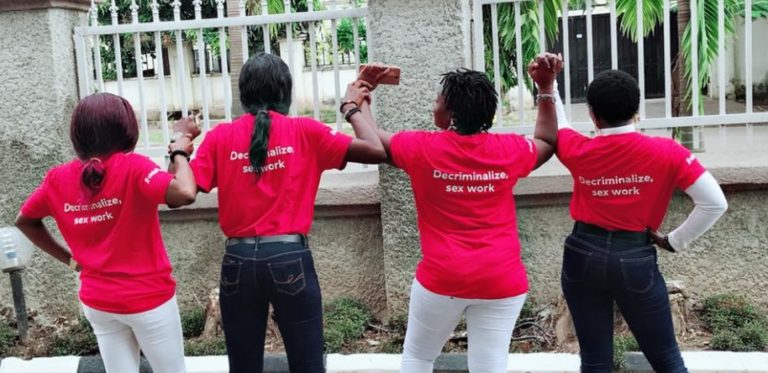
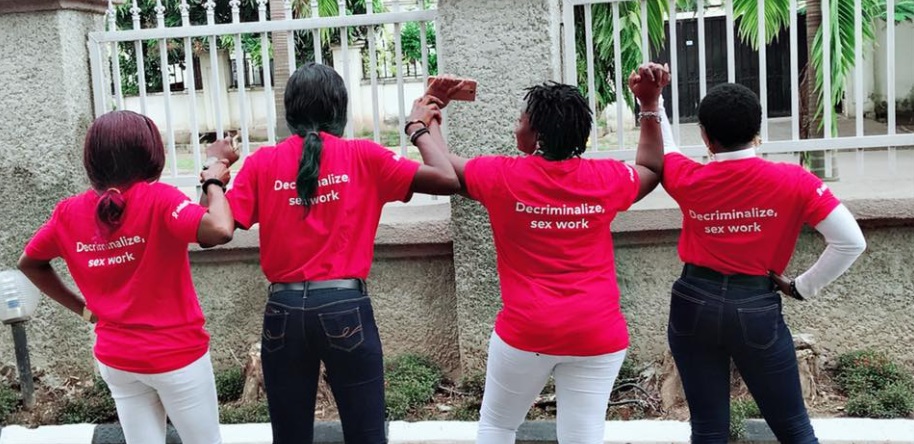
Members of NSWA also known as precious jewel demanding for freedom to do their work with pride
Ibe said that over 70 girls were arrested that night and taken to a place in Zone 6 where they had their names taken down and witnessed how police officers paid the task force agents money for picking them up.
“I was taken to a place in Zone 6 with other ladies who were picked up from different clubs and hangout spots in Abuja. When we arrived at Zone 6, they asked us to alight the bus and they counted and took down our names.
“After that, a man whom the task force agents were calling ‘oga’ came out and started paying money to the officers who picked us up. They all collected their money and left, then we were taken to Utako police station, we were over 70 in number.” recalled Ibe.
Within minutes of arriving Utako police station, Ibe recounted that some girls were bailed and released, while she and 10 others were left in a cell till the next day. “It was the first night of hell for me,” she described.
“At Utako police station, they put us in different cells and released some ladies on bail. I asked why they were being released but no one answered my question,” said Ibe.
While in the cell, Ibe, said that a female officer showed up and demanded to see the girls who had been released. When she was informed that they had been bailed and released, the officer vowed that the remaining girls instead would suffer. Her conversation with the DPO was overheard by the girls “ and we all feared for our safety while in the cell”.
According to Ibe, the police also took their belongings and they weren’t allowed to contact any of their relations. Later that day, she was visited by her sister who told her she saw the video of her being arrested along with other victims and recognised her from her dress and hair.
“They took my phone and belongings, I couldn’t reach any of my family members. It was later that day my sister showed up at the station. She told me she saw the video of us being arrested online and recognised me by my hair and dress,” said Ibe.
However the joy of seeing her sister who brought her a change of clothes was short-lived. Although she was allowed to collect the clothes, she was denied bail and her sister was sent away by the officers.
“My sister tried bailing me but they told her it wasn’t allowed because I and the other remaining ladies were picked up from ‘ashawo quarters’. They asked my sister to leave and told her no one had the right to bail me or the others,” Ibe told Legit.
After her sister was dismissed, she tried changing into clean clothes but a male officer who she identified as the ‘cell guard’ followed her into the room.
“I asked him to excuse me and let me change and he told me he had the right to guard me in the cell. I had no choice but to take off my clothes in his presence. When I took off my clothes, he tried touching my breasts and then I moved away and questioned why he wanted to touch my breasts.” said Ibe.
The cell guard also promised her that he would grant her bail if she allowed him to touch her.
“He then told me that if I wanted to be granted bail, I should allow him to touch me and I refused. He then stayed with me till I was done dressing u,” Ibe said.
In an attempt to find a way out of the cell, Ibe said she approached one of the officers and pleaded to be freed. But the officer instead became upset and slapped her. This triggered the other girls in the cell to revolt and demand their rights be respected. Angered by the audacity, two more officers joined and they started beating the girls.
“I later confronted another police officer and pleaded that he should let me go. I told him I had rights and if they had announced on radio or TV that no woman should step out on the night of our arrest, I would have obliged. I asked him why I wasn’t being granted bail and he slapped me. This triggered other girls to come together and start shouting that he had no right to slap me. Then two other officers came and they started beating us with wire and police baton stick.” said Ibe.
Loveth Yoko, another victim of the raid shared details of how she was abducted by the task force agents and made to suffer in the cell for three days. In her case, she was picked up from a club in Gwarimpa with many other girls and transported to Utako police station, where they spent three days before being taken to a makeshift court in an open field.
“They arranged their tables in a place that looked like a garden, an open field. One woman sat down as the judge and we were each made to pay N3,000 each for bail.”
Yoko revealed that she has been constantly harassed by the task force agents and their modus operandi sometimes was to sexually harass ladies and demand sex when refused, they then arrest girls at night and take them to the station to extort them for bail money.
“These task force agents, they will pick you up and be touching your bum bum. They will be asking for sex and when you refuse, they will take you to the station and force you to pay bail money.”
Yoko advocated that women should be allowed to live freely just like men do and not be subjected to harassment from security agents. She said she has mouths to feed and has to find a way to be there for her siblings.
“I have been a house help all my life, so I can choose whatever I want to do now. I want a better life for myself and I want to stand for my younger ones and contribute in my family. I have my freedom, I don’t need to be molested in my own country, I have my right. Women should be allowed to live freely like the men because they didn’t arrest any man,” cried Yoko.
Under the pretext of combating prostitution in the country’s capital, the FCT joint task force has abducted women numbering over 100 in 2019 alone. The Abuja Environmental Protection Board (AEPB) disclosed that the Federal Capital Territory Administration has empowered the AEPB in collaboration with the Nigerian Police to arrest, detain and prosecute any woman soliciting or offering herself for sexual service at night at any public place in the FCT.
In an interview, Oluwaseun Osowobi, executive director of Stand to End Rape (STER) Initiative, said there is a court injunction against the FCT joint task force’s mandate to remove commercial sex workers from the streets, noting that their actions contravene the law.
Similarly, Augusta Yaakugh, a human rights lawyer and program and legal officer of Rule of Law Development Foundation, a civil society organisation located in Abuja said “The FCT joint task force has been using a draconian approach in sanitising the streets of Abuja.
Augusta Yaakugh, Human Rights Lawyer
“There was gross human rights violation of all women arrested by the AEPB agents.”
In a bid to ‘sanitise’ the streets of the nation’s capital, AEPB’s methods of abducting women on the streets have also affected non-sex workers.
“They have created a mess and arrested women who have nothing to do with sex work. Just because some women were found in the club at night, they were picked up and the task force agents claimed that the telltale sign was because they were indecently dressed. Considering all the factors that are at play, this is just an attack against women as no man is being arrested in the same manner, for the same thing,” said Yaakugh.
A victim, survivor and fighter
Dorothy Njemanze had the demeanor of a scarred soldier. Tough and heavily built with a commanding tone, she shared with Legit.ng stories of how her path was chosen.
Dorothy Njemanze
At the tender age of eight, she was defiled by her neighbour’s houseboy and his friends who took turns to forcefully have their way with her. This, she said, planted a seed of fear and shame that would haunt her till she watched an episode of Oprah Winfrey’s show. Through the programme she realised she was not alone in her struggle to fight shame.
“I was sexually violated by my neighbour’s houseboy and his friends at age eight. I didn’t trust that it was okay to talk about the sexual violation, so I bottled it up and it became anger but when I started watching episodes of the Oprah Winfrey show, I was then able to label my feelings and I knew that I also felt disappointed and there was some degree of hopelessness as well,” said Dorothy with confidence.
However, just before she sprung to survival mode, as a young girl, she had grown up being taught to question and hate her circumstances. She suffered in an accident that left her with a bent index finger and earned her the nickname ‘bend bend finger.’’ This she stated beat her self-esteem and made her vulnerable towards the predatory arms of the houseboy, the one who first snatched her innocence and left her filled with anger and questions about justice.
As much as growing up was difficult for Njemanze on account of her experiences, the worst of it was to happen in 2012, when she was arrested by security agents in Abuja and branded as a prostitute for walking the streets at night.
She was picked up from the streets of Abuja alongside two others and they were branded as prostitutes, abused and assaulted.
“I was first violated by agents of the Abuja Environmental Protection Board (AEPB) agents in 2012. After I was picked up, they groped and fondled my breasts and one of the officers dipped his hands in my private part and tugged at my pubic hair.”
“I have been raped well over 20 times since the first time my neighbour’s house boy first touched me, they were all bad experiences but I found myself hating injustice and so, I turned the problem into a good problem. I have invested my all in helping people fight against what I experienced.”
Njemanze has spent adulthood fighting for children, women and people living with disabilities, who have experienced any form of sexual abuse, assault, as well as domestic violence. However, the effects of the violations she has suffered for being a woman still hunt her till this day.
“I still battle with depression and anxiety.” submitted Njemanze.
In the court affidavit sighted by this reporter, in defending its actions of abducting women from the streets and arresting Njemanze and her friends , the AEPB and Nigerian police stated:
“The Government of the Federal Republic of Nigeria, the FCT administration and indeed the international bodies in Africa are against commercial sex workers popularly called “ashawo” in Nigeria, as same constitutes a nuisance and a violation of the moral values of our African society.”
“That the Plaintiffs (speaking about Dorothy Njemanze and her friends) dress naked or half-naked by the roadside soliciting for men both interested and uninterested members of the public, including innocent infants.”
“That only an insane or an idle person can be in the street at 12 mid-night in the name of collecting signatures.”
In October 2017, the ECOWAS Community Court of Justice ordered the Nigerian government to award compensation to Njemanze and two other women, Justina Etim and Amarachi Jessyford, for the violation of their rights by security agents of the government but two years after the landmark judgement, the ladies are yet to be compensated and more women have fallen victim of rights violation.
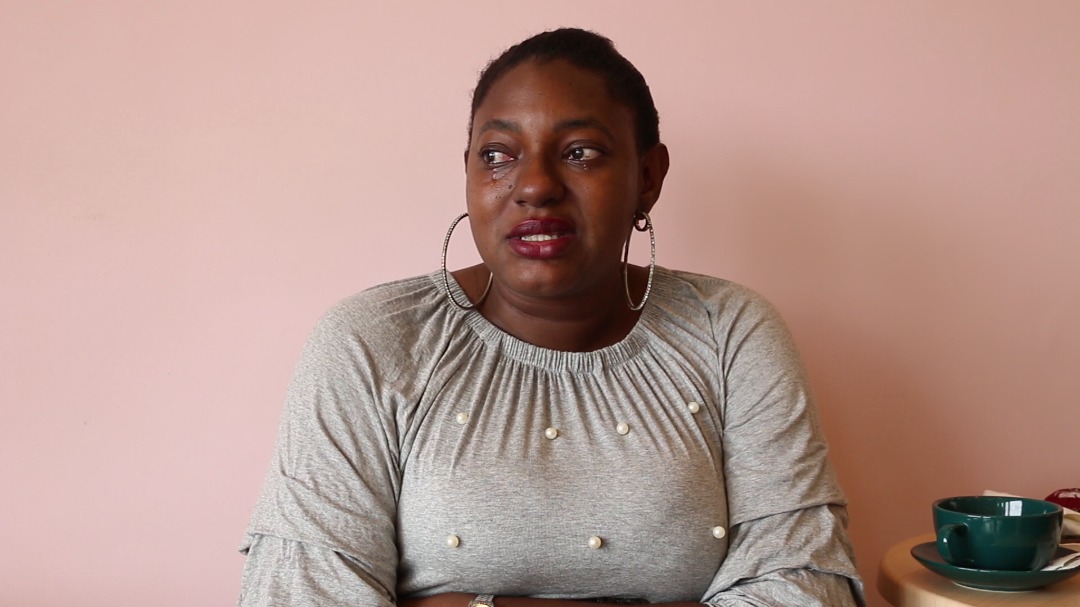
Dorothy Njemanze recounted her experience with AEPB task force amidst tears
Amidst tears, Njemanze expressed hopelessness as she revealed that she has lost everything following several attacks from the security agents of the government. She added that she has also received death threats and attempts have been made on
“I was targeted for assassination and I lost everything. Accommodation, feeding and everything became difficult.” She said.
Sex work: a right or a crime
Scores of women in Nigeria have been subjected to degrading treatment and treated like common criminals for being at certain places including nightclubs during the wee hours. According to Enemo, in April, 73 ladies were picked up on the streets of Abuja metropolis and marched to Old Parade ground, Area 10, where they were left for hours until their lawyer showed up to bail them with N3,000 each, making a total of N219,000.
“I had just returned to Nigeria from a trip when I started receiving several phone calls about my members being arrested. I immediately called our lawyer, who met the girls and bailed 73 of them with N3,000 each. The receipt they were given was issued from the Abuja Environmental Protection Board (AEPB),” said Enemo.
“There is nothing under the AEPB’s Act that empowers them, either by themselves or through the police or through any security agency in Nigeria, to arrest, detain or receive bail money from women on pretext that they are prostitutes,” said Deji Ajare, legal practitioner and coordinator at Sterling Centre for Law and Development.
Continuing, he said: “rather it is an anomaly. AEPB is an environmental organisation intended to preserve and maintain the quality of the environment but the AEPB has gone beyond sanitising the environment and has begun moral sanitation.”
AEPB’s lawyer and Abuja raid prosecutor, Barrister Eze, did not answer his calls and did not respond to sms sent to his mobile phone.
Chapter 532 of the Penal Code Act of the Federal Capital of Territory, 1990 criminalises prostitution and solicitation of prostitutes.
The law states: “An ‘Idle person’ shall include a common prostitute behaving in a disorderly or indecent manner in a public place or persistently importuning or soliciting persons for the purpose of prostitution.”
“The term vagabond shall include any male person who knowingly lives wholly or in part on the earnings of a prostitute or in any public place solicits or importunes for immoral purposes; and
“Whoever is convicted as a vagabond shall be punished with imprisonment which may extend to two years or with fine which may extend to four hundred and fifty naira or both.”
However, even as the Abuja law criminalises prostitution and solicitation of prostitutes, only women have so far been arrested. There is no record of any man being arrested for prostitution or for soliciting prostitutes.
There is no law which suggests that women seen on the streets at midnight or anytime thereafter, are necessarily idle persons or prostitutes. But many women have been arrested on this pretext and some have tagged it an attack against women.
“Their argument (referring to joint task force’s mandate of ‘sanitising’ the streets of Abuja) is a weak one in the face of the Nigerian Constitution that guarantees the freedom of association. Why are the men also not being arrested? The value chain here also has men on it. Why are they left out of the arrest as well?” remarked Sola Fagorosi, executive director, OneLife Initiative for Human Development, while speaking to this reporter in a Whatsapp interview.
All efforts to get a statement from Manzah Anjiguri, FCT Police Public Relations Officer for comments was futile. Manzah, who spoke to this reporter in a face-to-face meeting at his office said that he was unwell and had no energy to answer any questions. He instructed that the questions pertaining to this report be forwarded to him and promised to give a response upon approval from his boss. But he never did. Each time, Legit.ng called him, the Police PRO said he had not received a response from his ‘oga’ and could not respond to the questions without approval.
Discriminatory Laws
Sadly, there are laws in Nigeria that discriminate against the female gender and perpetuate ill-treatment from the opposite gender and society at large.
Section 55 (1) (d) of the Northern Penal Code states that “an assault by a man on a woman is not an offence if they are married if native law or custom recognises such “correction” as lawful, and if there is no grievous hurt.”
Under Section 241 of the Penal Code, “grievous hurt” includes emasculation, permanent loss of sight, ability to hear or speak, deprivation of any member or joint, destruction or permanent impairing of the powers of any member or joint, facial disfigurement, bone fracture or tooth dislocation.”
Under Section 353 of the Criminal Code, a person who unlawfully and indecently assaults a man is guilty of a felony and liable to imprisonment for three years. However, by virtue of Section 360 of the Criminal Code, a person who unlawfully and indecently assaults a woman is guilty of a misdemeanour and is liable to imprisonment for two years.
Women are held to a higher moral standard than their male counterparts and, in some cases, denied entrance and privileges to some places and things regardless of their class.
While visiting a club in Apo area of Abuja in July 2019, Amina Jibrin, an actress, model, and entrepreneur faced gender-based discrimination and was prevented from entering the club because of her outfit.
“The bouncer asked me who invited me, I responded that no one invited me and he stopped me from entering the club. So, I turned back to leave. I shared a post on my Instagram page about the club, it went viral and the manager of the club responded saying that I was indecently dressed and that’s why I wasn’t allowed into the club. I was wearing a shirt dress.” said Jibrin.
Many other ladies have suffered the same treatment when visiting some clubs or other hangouts in Abuja. Most of them reveal that they are either refused entry when alone or required to come with a man or group of men before they are allowed to be a part of the gathering.
“I haven’t really been refused entry into a club because I always go with a guy or in a group but I see how they treat other ladies who show up alone. They tell them there is no space inside the club or ask them if they are meeting anyone” says Uche Obumkaneme, a make-up artist residing in Abuja.
“Some of the bouncers at the club even ask ladies who come alone for sex just to be allowed in the club. It is always different when a girl comes with a man” continued Obumkaneme.
A club owner explains why some ladies are denied entrance into clubs
Ikechukwu Ranex, an Abuja club owner, agreed that some women are not allowed into his club when they are perceived to be sex workers aiming to find customers in the club. Often, this can cause problems, he said.
“We have to prevent ‘hustlers’ from gaining access to the club. They may cause mischief or embarrass high profile clients who are looking to have a good time. So it is better to nip it in the bud at the gate and not let the girls enter. If a girl is looking ‘razz’ and tattered, she won’t be let in but if she looks classy and smells nice, the bouncers know to let her in as it is part of their training.” emphasised Ranex.
The problem with this type of profiling is that it is “judgemental and discriminates against women generally because of the way they decide to dress or look, which should be their decision and nobody else”, a commercial sex worker observed.
Maputo Protocol
Nigeria is a signatory to several human rights treaties imposing obligations on the authorities to protect, respect and fulfill human rights for everyone within its jurisdiction, without distinction of any kind. Not only is the country a signatory to human rights appropriation treaties, it has also ratified most including the Convention on the Elimination of all Forms of Discrimination Against Women (CEDAW) and the Protocol to the African Charter on Human and Peoples’ Rights on the Rights of Women in Africa.
The Protocol to the African Charter on Human and Peoples’ Rights on the Rights of Women in Africa was drafted in 1995, adopted on July 11, 2003, and took effect on November 25, 2005.
The Maputo Protocol has its premise hinged on principles that arrest and eliminate all forms of discrimination against women. It also demands the participation of women in all areas of life.
Nigeria is one of the 49 African Union countries that is a signatory to the protocol and one of the 37 countries to have ratified the Maputo Protocol. Nigeria ratified the protocol on December 16, 2004, and deposited its articles of ratification on February 18, 2005.
However, almost two decades after ratifying the protocol, several articles provided in the agreement are still flouted by security agents of the government, even in the nation’s capital.
Articles 11 of the Maputo Protocol enshrines the principle of non-discrimination and calls upon participatory states to undertake appropriate institutional, legislative and relevant measures to eliminate all forms of discrimination against women.
The protocol also provides a guarantee for women’s right to dignity, right to integrity and security. The obligation of the Nigerian government by virtue of the protocol is to prohibit all forms of violence against women. However, the singular action necessary to activate the laws and promote the freedom and development of women is yet to be taken.
Laws as paper tigers
Laws have been passed and treaties have been signed by the Nigerian government in an attempt to show commitment towards halting the perpetration of violence and discrimination against women but as one step is taken forward, several are taken backward.
The Violence Against Persons Prohibition Act (VAPP) was enacted in 2015 but is yet to be domesticated in many states across the country. In fact, most provisions of the act are only recognised in the FCT, the nation’s capital, the same state where over 100 women were arrested and branded as prostitutes for being outside their homes in the night.
The VAPP Act is a rich law but it is only as rich and strong as the implementation says Fagorosi of OneLife Initiative for Human Development.
“The police and these law enforcement agents need to stop profiling women based on how they dress. They should keep their personal opinions to themselves. Besides the FCT has other pressing needs than hiding under the cover of darkness to perpetrate crime in trying to rid the city of women at night,” Fagorosi said.
Members of the Nigeria Sex Work Association in FCT
Njoku Chibuzor, spokesperson for Sexual Offences Awareness & Victims Rehabilitation (SOAR) Initiative expressed a similar view. According to him, laws have no power when enforcement agencies are weak.
“The truth is the law has no power as long as the enforcement agencies in this country are not working up to acceptable standard,” he said.
Editor’s note: Some names of victims in this report have been changed to protect their identity.
* This investigation is supported by the Institute of War and Peace Reporting and the International Centre for Investigative Reporting, ICIR.
In the third and final part of a three – part undercover investigative series, FISAYO SOYOMBO documents the soft side of his time in police cell and prison, and how prison, police and court officials conspired to abduct him after his cover was blown.
I hadn’t yet spent a full day at Pedro Police Station, Shomolu, Lagos, when I asked myself the question: “Who sent me?” But it was nothing new; I knew I would ask myself that question at some point during this investigation, and I knew too that it wouldn’t make me call it off. If you asked any hardcore investigative journalist, they would say the same of almost every daredevil story they have covered.
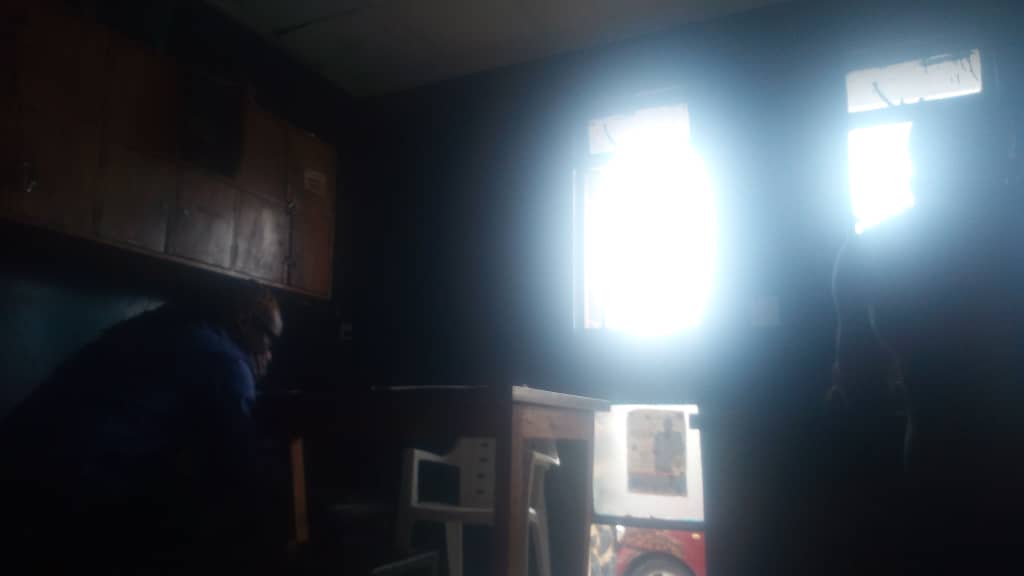
As I lay in that warm cell in the wee small hours of Tuesday July 9, it dawned on me that surviving the days ahead would require more than brawn. Five of us ‘suspects’ had crammed ourselves into that narrow, filthy cell, all wanting to get our bodies on that small mat but none fully succeeding. So, intermittently, one suspect pushed or snuggled into the other. The four of them were in deep sleep but I lay there wide awake. How could I sleep? To my immediate left was Uchenna, whose snores could dwarf the grunt of an elephant; and on my other side Austin, coughing so laboriously as though his heart was about to be flung out through his mouth, and in a manner predisposing cell mates to air-borne infections. The air was reeking of alcohol, too.
Back in the evening, one suspect had tipped a policewoman to help him buy two sachets of gin that he didn’t down until just before midnight. I looked at the cell gate again and it was firmly padlocked. There was no escaping; this would be my home for a few more days.
MY CELL MATE ‘RUNS MAD’
Two of the next three days proved tumultuous, even for the police officers.
It started over the night between Wednesday and Thursday, at about 1am. Three of us were in the entire cell, but only Uchenna and I shared the inner cell. Suddenly, he hit me in my deep sleep and asked me to look at a hole in one of the walls of the cell. “There’s an eagle in that place,” he howled, spilling a sachet of water in that direction. “Can you see it? That’s the eagle!”
It marked the onset of a two-day turbulence in the cell. Uchenna sprang up and began sprinkling water in all three rooms of the cell, casting and binding, shouting and crying out prayers. “Jesus is here, Jesus is here,” he screamed at a time. “Leave this place, you demon! No space for you here. I am no longer with you. I’m a new man now. Jesus is here!”
Uchenna went on somewhat schizophrenically for the next six to seven hours, punctuated only once by the arrival of Sunday and Japheth in the cell. The police officers ignored him altogether, but we, the suspects, were worried; we weren’t sure if he had run mad or if he was pretending, to force an unlikely release. By Thursday, it had become so unbearable the officers had to handcuff his left hand to the gate of an inner cell. It was a big shock to find out he had disentangled himself in a matter of minutes. He was re-cuffed but he again freed himself; this time, I caught him. He had signaled to Japheth to help him fetch a sachet of water; with this, he greased his hand and the handcuff, and boom, he was free again.
This time, the officers removed him from the cell gate and chained him in the inner cell proper, alongside his helper Japheth who was first blessed with a few smacks. Still, it didn’t deter Uchenna; it emboldened him to tacitly pray for the death of the officers, over the night.
“Kill them all. Fire, burn you. In the name of Jesus. Fire, fire, fire, fire, fire, fireeeeeeeeeeee,” he yelled at one time. “Jesus is here. I need the fire from heaven, the fire from heaven, the fire from heaven. Jesus, release it on me now. You did not disappoint Elisha, Elijah… I need your fire now to quench and destroy all the people tormenting me. Die in the name of Jesus! You die! Dieeeeeeeee!!!”
Japheth, on the other hand, was having a torrid time. The inner cell in which they were caged was mosquito-infested, due in part to the volume of water Uchenna had moistened it with. Even when he wasn’t caged, I’d furtively observed how Japheth frequently scratched his crotch region with great discomfort, sometimes even peeping into his dingy briefs to catch a glimpse of what was going on down there. Now in that inner cell, it worsened. “My body is rotting,” he screamed in a manner that broke my heart. “Please help me, please!”
His pleas were loud, persistent and touching. “Help me out!!!” he would say. ‘Who is there to help me out? My body is rotting. Help me out! Help me out!!!”
Even though he had rebuffed my repeated warnings not to pass water on to Uchenna, I felt pity for him. I would later crawl over to the cell to hand him an anti-mosquito cream smuggled to me earlier in the day. It helped a bit but didn’t entirely solve the problem.
It was such a relief to be taken out of the cell to the court on Friday morning and to Ikoyi Prison in the evening. When 46 new inmates, I think, arrived at the prison on Monday evening, I was stunned to spot Uchenna’s sparkling white teeth shining through from the crowd. He had become markedly lean and his laughter this time was shallow. How he got to prison, I still don’t know.
THE SNIPER CHALLENGE IS REAL
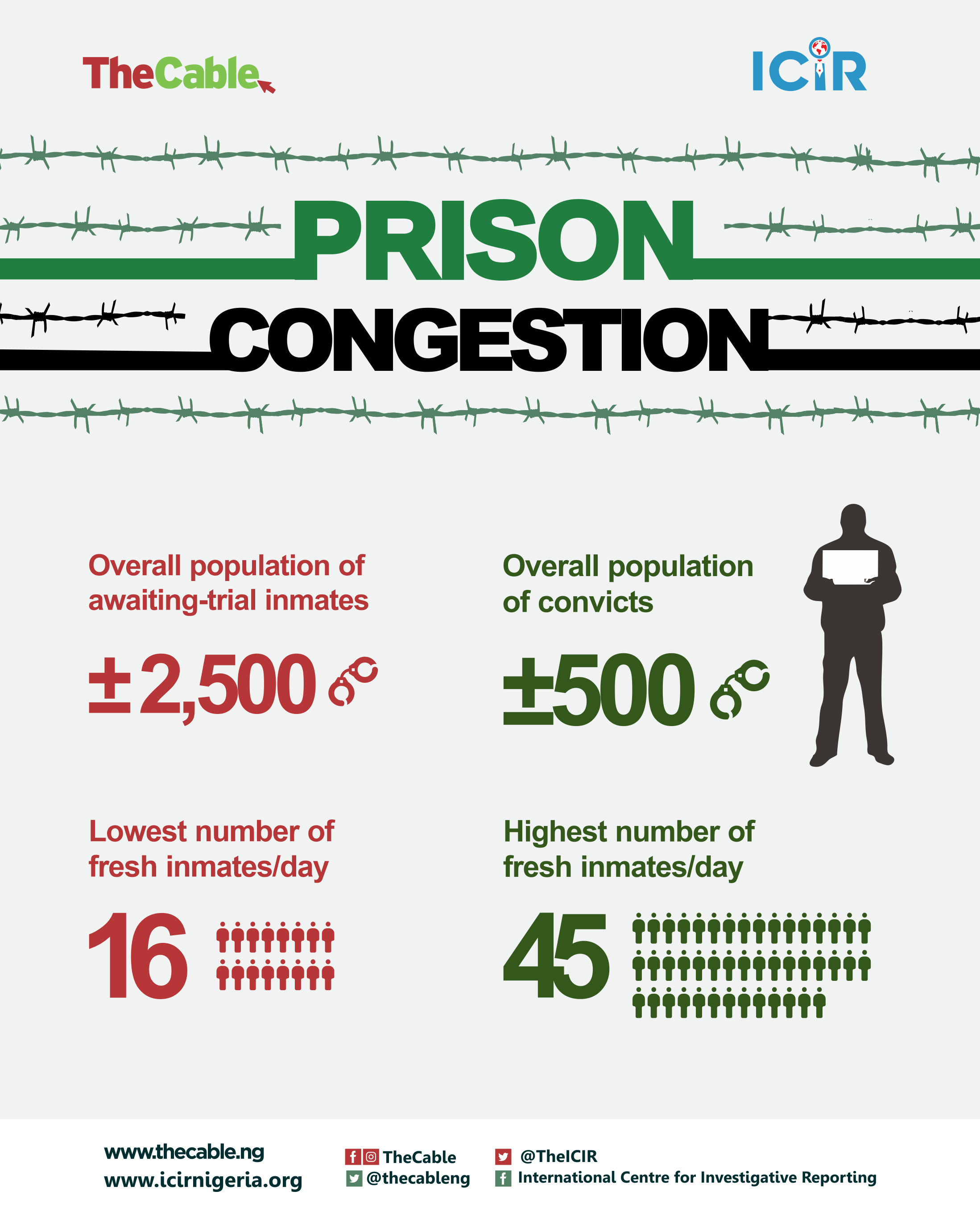
I was less than an hour old in prison when I discovered stories of cell congestion were not made up. Sixteen of us, I think, were taken in that Thursday. As is the practice with fresh inmates, we slept in the welcome cell. The cell always had its own base members, the number usually hovering between 10 and 15. The tradition was that stale inmates slept ‘comfortably’; they didn’t have to shrink their bodies into narrow spaces, even though they slept on bare floor with or without blankets and bed sheets. Only the four most senior inmates slept on bunks bearing threadbare mattresses. After the stale inmates had marked their territory in the room, estimated to about 20 by 16 metres in size, the rest of us were arranged like logs of wood on a trailer. None of us slept face down or face up; we all slept on our sides, one’s head positioned in north-south fashion, the other’s positioned south-north. If an inmate turned sideways, the next complained. Therefore, from time to time, the Section barked out orders resolving arguments from such tussles.
Little did we know we were lucky. The 45 inmates who arrived five days later had no such luck; they sat down all through the night! With the total number of inmates that night trumping 60, there was no chance for sleep. Instead, they were arranged in long rows in which an inmate sat in between the legs of the one behind him, and opened up his own legs for the one in his front to sit. As I would later discover, more than 3000 inmates inhabited a prison built for 800; of a higher consequence, the number of awaiting-trial inmates usually hovered beneath or just over 2,500, proving the slow dispensation of justice is a major contributor to prison congestion.
SUNKANMI IJADUNOLA… FROM BEATER TO PATRONISER
Sunkanmi Ijadunola
Over the course of my seven days in prison, it was, quite simply, too easy for me to separate the corrupt warders, who were in the majority, from the clean ones. The corrupt ones were usually pensive and jittery whenever they came in contact with me, and they were the ones who were most vicious during the initial attempt to unravel my identity. I could see the apprehension in the eyes of two of those filmed demanding and receiving bribes from me in court. The corrupt ones in the prison yard who didn’t appear in the videos were nevertheless furious, knowing it could have been them as well. The blameless ones wanted to know my mission quite alright, but they were calm and civil with me. No violence; their strategy was to engage with me and look out for any loopholes in my answers. Fair enough.
Assistant Chief Sunkanmi Ijadunola, for example, the word in prison was that he was one of the numerous warders for sale. And, boy, was he vicious with the cane and, latterly, the stick! If he was the only warder on duty, he would surely have beaten me to death! No question. I remember he flogged me from his office to the records office and back to another office just by the prison gate, where an apparently senior warder appealed to him to stop the beating and remove my handcuff. Rather than accede to that request, Sunkanmi claimed the key to the handcuff was in his office. With his hands and that cane, he continued the beating until we were back in his office; and in his office, he fetched the stick once again and continued hitting the joints of my legs, elbows and shoulders. And in all that period, my two hands were still handcuffed to my back. By the time he belatedly lifted the handcuff, he and some warders had trumped up some allegations against me and had succeeded in making some inmates believe I’d come to film them and expose them to the world. They had also alleged that I was plotting a jailbreak. I had a gang, they said, and I’d come to study the prison’s security architecture, film it surreptitiously and send it to my gang so we could finally return to set inmates free. Even while the beating was going on, I found those claims so hilarious my inner laughter knew no bounds.
All this was on Saturday morning. By evening when I finally revealed I was a journalist, I was stunned to see Sunkanmi transform from a ruthless beater to a barefaced patroniser. First, he asked if I would eat. He offered to buy the food but I knew it would be too dangerous to eat.
With the offer of food rejected, he bought me a stone-cold bottle of Pepsi. When it arrived, I checked the seal very painstakingly to be sure it hadn’t been previously opened. I drank it, knowing I could continue to endanger my life if I flatly refused every offer. In the six days that followed, Sunkanmi would buy me Pepsi on two more occasions. The arrogant man that he is, he just couldn’t bring himself to verbally apologise for his actions even though at least three other warders who didn’t lay a finger on me had profusely apologized for his indiscretion in taking the law into his hands. For Sunkanmi himself, the Pepsi was his way of saying ‘sorry’.
MOCKED BY INMATES
Ojo Olajumoke
Other inmates were still locked in their cells when Sunkanmi sent the Section of the welcome cell to fetch me. But at about the time he was completing the first round of beating, the convicted inmates were needed for a task. While they trooped out in their blue uniforms, I noticed from afar how they giggled and pointed fingers at me. I was sprawling on the ground with my hands chained back, but I looked at them eyeball to eyeball and listened to their snide remarks.
“I thought he was gay,” one of them said. “I heard he came here to record the prisoners and expose them to the public,” remarked another. Some said nothing but cast nasty glances at me and made funny gestures.
Still, I looked straight at them. I was full of pity for them, in fact. I knew I had committed no crime in practice, something not many of them could boast of. In the eye of the law, they were convicts, some left with many months to serve, others even years. They were stuck in there in the long term; I wasn’t. What irony that prisoners, convicted prisoners, were mocking a fresh inmate who would be granted bail and released in a matter of days!
But it wasn’t all gloom. One convict and an awaiting-trial inmate showed me compassion. “Bros, there’s a lot of sun here. Why not shift towards that side,” the convict told me as he swept the expansive ground. It was soothing in that moment, so I asked him for his freedom date, phone number and where I could find him afterwards. That day is faraway but when it comes I’ll find him. And I’ll hopefully be friends with him. The awaiting trial-inmate is now free; you already read about him in the preceding series.
‘HOUSE ARREST’ IN PRISON
Once the time came for me to admit I was a journalist, the warders huddled together to discuss their next line of action. I was isolated, like a bacterium from a colony, when I heard Sunkanmi scream from afar: ‘Hey, squat down there!” That bark, quite frankly, sums up the master-slave relationship that largely defines the handling of inmates, even awaiting-trial inmates, by warders. No inmate in his right senses, even if not yet declared guilty by the court, will approach a warder for a conversation sitting or standing. He first has to “squat down”! It’s the unwritten rule.
The warders’ deliberation soon morphed into a full-fledged meeting. One after the other, they filed into a room, but the meeting had barely taken off when the Comptroller of Prisons, Lagos Command, phoned in. “What is going on at Ikoyi Prison?” I would later learn he had asked. He had received a call from Abuja — the offshoot of my support team’s activation of the Plan B reserved for the unlikely event that my cover was blown. Shocked that the matter had reached Abuja in a little over an hour, the warders started to become friendly and courteous, almost obsequious, with me. Sunkanmi withdrew his squat-down order, asked me to sit in his office, asked if I wanted to eat (which I politely declined) and sent an inmate to fetch me a bottle of Pepsi. “Fisayo the big man!” he would later exclaim.
In the evening, after their apprehension had subsided, I was plucked from Cell D2 to the welcome cell. Their plan was to restrict me to that cell, and they were very strategic about it. Sunday morning, a warder whose name tag included ‘Ishiguzo’ was my first guest. I hadn’t even had a bath or brushed my teeth when he arrived. Ishiguzo engaged me for well over an hour — on issues ranging from politics to governance, love life, humanity and sex. No sooner had he left than Sunkanmi arrived. He stayed close to an hour. I jumped into the bathroom after his exit but before I was done, a third warder, Timmy, had asked after me. It wasn’t long before the strategy was laid bare before me: I was under house arrest by style. The plan was to take turns in engaging me, to such extent I couldn’t leave the cell without wondering who was already waiting for me. Still, I occasionally managed to wriggle my way out of the human cul-de-sac.
COMMUNICATION BY STYLE
My first days in the welcome cell were hellish. No inmate wanted to talk to me or come near me. At night or during the day when no warder was visiting, I lay alone in a corner. But when I did, it was with my eyes open; I wasn’t sure no inmate was considering attacking me. I didn’t blame them; a few warders had made them believe I was in prison to record them and circulate their photos and videos online. Of course that was false.
Soon, a lifeline presented itself. I noticed during Ishiguzo’s first visit how all the inmates listened in as we engaged. It became clear it was my clearest chance of explaining my mission to the inmates. From then on, whenever a warder showed up, I made sure not to always hand over the initiative to them. As the talks progressed, I always found a way to redirect them to my reason for coming to prison. On an occasion, I told them the real-life story of an acquaintance whose father died of heart attack, due to delay in the availability of an ambulance and the pot-hole ridden road leading to their estate in Ogba, Lagos. This was a stupendously rich man who carved out heaven for his family in that estate, but he was ultimately failed by his state. “No one — rich or poor, mighty or miniature — is immune from the consequences of a malfunctioning society,”
I chipped in. “It’s the reason I’m here. If the criminal justice system works effectively, everyone— policemen, lawyers, warders, even inmates — benefits. If it doesn’t, we all lose someway — because we’re all in this vicious cycle together. The only problem is that rather than enthrone a society that works for all, too many want a society that works for them — at the expense of everyone else.”
After hearing that, one warder gave me a long, unusually emotive look, then nodded in affirmation. “You are right,” he said. This warder — I won’t name him — was once a victim. He narrated the experience. One of his children arrived at birth several weeks premature, requiring mother and daughter to spend extensive time at a hospital. He visited every day, before and after work. He soon noticed how quickly the baby ran out of drugs he paid for through his nose, how drugs that should last three days were gone in just over one. He observed the hospital keenly and spotted a disturbing trend: the hospital was redistributing the drugs bought by some patients, among those who couldn’t afford them! This warder was distraught; he told me he felt cheated. I apologized to him for the unpleasant experience, though this didn’t colour my knowledge of his aversion to my mission in the prison.
So I asked him a question: “If I’d undergone an undercover visit to that hospital to expose the disguised robbery of some patients to treat others, would you have been unhappy with me, as you are now?”
He went silent, but his eyes were latent with penitence. He didn’t have to say it; I knew I had just won a convert.
THE THOROUGHBRED PRISON WARDERS
Warder
On Sunday evening, some 24 hours after my cover was blown, I was summoned to the building housing some offices, including those of the Assistant Chief and the Chief. I was taken into an office I’d never really taken notice of, welcomed by a burly but innocuous-looking man, dark in complexion and spotting a noticeable belly. A warder I was seeing for the first time instructed me to hold the recording devices found on me. He held a regular camera opposite me, wanting to take pictures. I quickly posed for the pictures so we could get down to business.
The dark man introduced himself as “Mr. John, sent from Abuja to Lagos with taxpayers’ funds” to investigate my matter.
“I’m sorry for disrupting your Sunday,” I said. “You probably should be resting or relaxing with your family.”
“Not a problem,” he answered with the kind of courtesy atypical of many of the warders I’d come across in prison in those three days.
He asked to hear my side of events. It was unarguably the longest single conversation I had with anyone in prison. I explained my interest in the criminal justice system and the justifications for my undercover method. “I wanted to experience what the regular guy gets to taste in police cell, in court, in prison,” I told him. “You’re never going to get this by talking to people; you have to taste it. And if the system is itself clean, no warder should lose sleep over my presence.” I told him some of my findings in undercover work, generally; I particularly recall saying how much it “grieves my heart” and “burns my skin” the extent to which Nigerians are short-changing their country for personal pecuniary reasons. “We’ll ruin this country someday if we continue this way,” I submitted. “We’ll bring it crashing to earth in a few decades.”
John proved himself a rare breed, a cut above all other warders I encountered. I noticed how he listened to me carefully, urged me to take my time, asked not to be distracted when some warders thought we were taking too long, asked his questions politely, and repeatedly asked for a description of the warder who spearheaded the beating and the others who witnessed it. He also asked to know the officers in the bribery video seized from me. “I apologise for the beating,” he said at some point. “That was an exception; not the norm. It is not in the character of the prisons service to take the law into its hands.”
We discussed a few other things I’ll keep confidential — because he won my respect. Not to say he was perfect. Although he repeatedly said he was from Abuja, lodged in Lagos on taxpayers’ account, I found out John was actually based in Lagos; he is the spokesman of the Prison Controller in charge of Lagos. Still, he retains my respect with his calmness and professionalism.
WHAT NIGERIANS CAN LEARN FROM PRISONERS
Violence
I witnessed a few interesting developments in prison, the most significant being the impressive levels of tolerance level in the welcome cell. At the welcome cell, everyone made way on the floor at or about 4:45am for Muslims to observe their call to worship and the prayer proper. Just before 5:30am, the Muslim leader would begin winding down the prayers “so that our Christian brothers can take over”. Whenever the Muslims prayed, no one dared murmur, much less talk. And it was the same during the Christians’ praise and worship, sermon and prayers. If Nigerians generally had this level of tolerance for people of divergent faiths and ethnicities, our peace and unity would be impregnable and boundless.
SHADILY RELEASED FROM PRISON, ABDUCTED BY POLICE
Police officer Badmus
My release from prison was complicated. The prison officials at Ikoyi desperately wanted my bail to sail through; the more I stayed, they reasoned, the higher the chances I could implicate them. But the ones in court, specifically the corrupt ones I filmed, preferred that I rot in jail. The latter group would then work closely with officials at the Magistrate Court, Yaba, to keep me back in prison. Therefore, what would have been a simple granting of bail was repeatedly frustrated. The court wouldn’t grant me bail after conditions had been met — until the intervention of senior judicial officers on Friday July 19. The court then granted me bail but a sinister plot was hatched.
Some court officials, collaborating with prison warders in court, alerted the Police to my release date and time. They only contacted my legal team hours after they’d notified the prison of my impending exit. Then the prison itself fast-tracked my release; the strategy was for me to be out of prison before the arrival of my people. And it worked. I stepped out of prison and had barely walked 50 metres when three gun-wielding policemen swooped on me, truncating my delirium at finally tasting freedom after eight dramatic days in prison that indeed seemed like eight weeks.
One corked his gun while the other two hooked me by the waist. I was still figuring out the confusion when two plain-clothed officers stepped forward from the rear, bearing a handcuff. I knew them. Crime Officer Badmus and Inspector Obadiah from Pedro Police Station. I slid my hands into the handcuff and watched Badmus pay off the Ikoyi prison policemen. He made for the same rickety bus with which we went to court the previous week, while Obadiah frisked me and bundled me in. My lips were static but I started to pray in my spirit.
What are they going to do to me? Kill me extra-judicially? Rope me into an existing crime in another police station? I was still drunk in thoughts when Badmus interrupted me with an instruction to Obadiah: “Search him very well to confirm he doesn’t have a phone on him.” It was then I knew I was in big, big trouble. Why the desperation to ensure I can’t reach anyone? This was a little before or after 5pm.
MIRACULOUS RELEASE
Police officer Obadiah
The sun was starting to set when we arrived at Pedro, where my repeated pleas to contact my lawyer were rebuffed. “If you have a phone on you, bring it out and call your lawyer,” Obadiah said, knowing I didn’t have one. “It is not our work to give you a phone to make phone calls.”
There were multiple signs that the decision was to commit me to cell that night. However, some 23 minutes before midnight, their hands were forced. I stepped out of the station in the most unpredictable of circumstances. What happened between my arrival at the station and my enforced release at about 11:37pm is only the stuff of movies. I’d watched similar plots unfurl in movies, without the knowledge it was possible in real life. It is an experience that cannot be sufficiently captured in journalese. You will read those details in a book — if I get the right backing and if I’m alive to tell it — but, until then, spare some thoughts — and prayers — for Nigeria. If I were a judge I would pronounce Nigeria’s criminal justice system ‘guilty as charged’, knowing, from this experience, that majority of its actors and gatekeepers are deserving of various lengthy times behind bars.
Note: This is the final part of the three-part series. Read Part 1 here, and Part 11 here.
* This investigation was published with support from Cable Newspaper Journalism Foundation and the International Centre for Investigative Reporting, ICIR.
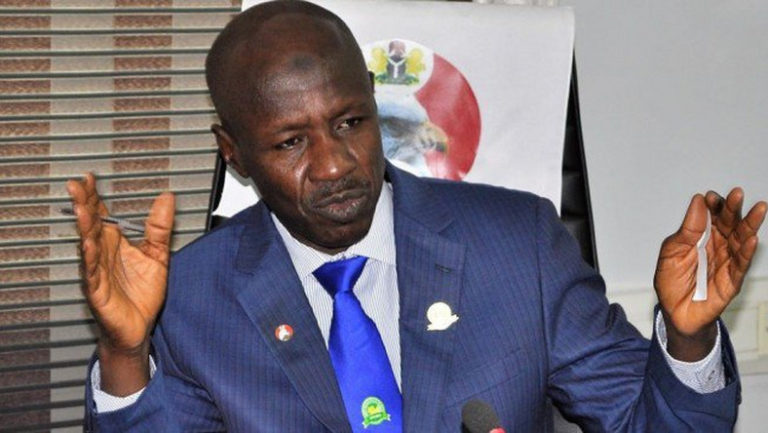
THE Acting Chairman of the Economic and Financial Crimes Commission, (EFCC) Ibrahim Magu on Tuesday, October 22, 2019 disclosed that the agency earned a record of 882 convictions between January and October this year.
Magu made the disclosure as he defended the Commission’s 2020 budget of N30.921billion before the Senate Committee on Anti-corruption and Financial Crimes.
Though the year has not ended, the conviction figure in the meantime, represents over 200 per cent improvement on the 312 convictions recorded last year.
Speaking further on the notable achievements of the Commission in the current fiscal year, the EFCC boss disclosed that between January and September 2019, the Commission made monetary recoveries on behalf of both the federal government and third parties in the following sums : N64,721,161,510.01 (Sixty Four Billion, Seven Hundred and Twenty One Million, One Hundred and Sixty One Thousand, Five Hundred and Ten Naira, One Kobo), $14,030,512.32 (Fourteen Million, Thirty Thousand, Five Hundred and Twelve Dollars, Thirty Two Cents), £4,644,493.00 (Four Million, Six Hundred and Forty Four Thousand, Four Hundred and Ninety Three Pounds), €53,325.00 (Fifty Three Thousand, Three Hundred and Twenty Five Euros).
Magu also noted the crucial role the Commission played in assisting the country secure a temporary reprieve in the $9.6billion Process and Industrial Developments Limited (P&ID) arbitral award against Nigeria by a UK commercial court, which he said followed the Commission’s investigation and consequent arraignment of P&ID Limited and P&ID Nigeria Limited on charges of fraud, intent to defraud and dealing in petroleum product without license, to which their representatives pleaded guilty to the charges, leading to a court closure of the companies and the forfeiture of their properties to the federal government.
He further revealed that the EFCC’s collaboration with the U.S. Federal Bureau of Investigation, FBI in a joint operation, tagged: “Operation Rewired,” which was a coordinated effort to disrupt Business Email Compromise (BEC) schemes, designed to intercept and hijack wire transfers from businesses and individuals, resulted in the seizure of nearly $2.4 million, and the disruption and recovery of approximately $14 million in fraudulent wire transfers
Impressed by the colossal recoveries, Chairman of the committee, Sulaiman Abdu Kwari said that the federal government should perhaps consider funding the nation’s budget with the Commission’s recoveries.
A member of the committee, Senator Dayo Adeyeye noted that the Commission was fighting corruption with all seriousness, and that Nigerians are pleased with its effort.
He suggested that a portion of the funds recovered by the EFCC be channeled to the commission to augment its running cost and further sued for an upgrade of the salaries of officers of Commission, noting that the work the Commission does exposes it staff to huge temptations.
“You are recovering money, and yet complaining of lack of money. I suggest you come up with proposal where some share of the money you recover will be channeled to you,” Senator Adeyeye stated.
Deputy chairman of the committee, Senator Aliyu Wamako decried the N201.13miilion the Commission earmarked for hiring of legal services as low and suggested an increment on the item.
The 2020 budget figure represents a 49.26 per cent increase over the N20.715billion approved for the Commission in the current year
The Commission’s 2020 capital expenditure budget is pegged at N2.321 billion, down from the current year’sN3.008billion. Magu noted that the capital expenditure budget “is a far cry from the Commission’s needs assessment and its strategic plan for 2020 and beyond.”
On capital expenditures, he disclosed that the Commission intended to commence the development of the permanent site of its training academy at Kwandare, near Lafia in an effort to further enhance its capacity.
The Commission’s other areas in need of substantial deployment of funds include: the take-off of the proposed EFCC Radio which it already has an operating licence; a complete rehabilitation of the Commission’s Lagos Zonal Office at Awolowo Road, Ikoyi; construction of permanent offices in Uyo, Benin, Makurdi and Ilorin zones, where the Commission is currently occupying rented properties.
As it is in the current year, next year’s overhead cost is pegged at N3.600billion. Given that only N1.500billion has been released out of the sum in the current year’s budget, Magu drew the attention of the Senate Committee members on the need to improve the Commission’s overhead cost funding in view of EFCC’s head office building maintenance, local travels and tours of its oficers, insurance premium (group life, fire & peril), legal services, motor vehicle fuel cost, publicity and advertisements.
The EFCC boss revealed that out of N20.715billion approved for the Commission in 2019, only a total of N11.098billion has been released, representing 53.57 per cent of total appropriation.
He further revealed that while zero naira has been released for the Commission out of the N3.008billion approved for its 2019 capital budget, N9.657billion has been released out of the N14.106billion, approved foritspersonnel cost and N1.95billion out of the N3.600billion approved for overhead, totaling N11.098billion, so far.