Home Blog Page 2267

New government taxes, rates and charges will increase inequality gap – CISLAC

0

CIVIL Society Legislative Advocacy Centre ( CISLAC), a transparency and accountability advocacy group,  has called for reforms on the Federal Government new fiscal policies unveiled recently by the Central Bank which it says does not take into account the economic position of Nigerians.  

Auwal Ibrahim Musa, Executive Director of the organisation in a press statement condemned the increase in taxes, rates and charges on good and services without plans on the part of the government to cut down the cost of governance and source funds from foreign investors and companies in the country awarded no or low tax remittances.

“As has been demanded by many Nigerians and groups, we call on the federal government to pay serious attention to widening the tax net rather than increasing the rate which will only place more burden on the few that comply already and still exempt the majority that does not pay taxes,” he said.

Stressing on the pact of the new increment in the Value Added Tax rate from five per cent to 7.5 per cent, Musa said the new policy neglect to take certain things into condition which is majorly the standard of living of the Nigerians, and strategies put in place to ensure accurate tax collections while eliminating corruption in the process.

“At the state level, there are no definite framework to tax the informal sector, these citizens of Nigeria who do their business at this economic level are only left at the discretion of the “man in power” at the state level as they are subject to any form of discretionary changes in the counts and rates of the taxes paid,” the statement read part.

In addition, the organisation called for more stringent measures through the use of Bank Verification Number (BVN), National Tax Policy with a feasible remittance estimation by the Federal Inland Revenue Services to be put in place as a measure of ascertaining tax remittances  as a device to curbing illicit financial transactions and tax evasion by companies and individuals in the country.

“We hope that the proposed measures can be effectively implemented to solve the revenue deficit in the country rather than an increase in rate which will only exacerbate poverty and hunger on the ‘ultimate burden-bearer’ – the poor and vulnerable.”

Prison Service Denies Plans To Arrest journalist, probes corruption allegations

0

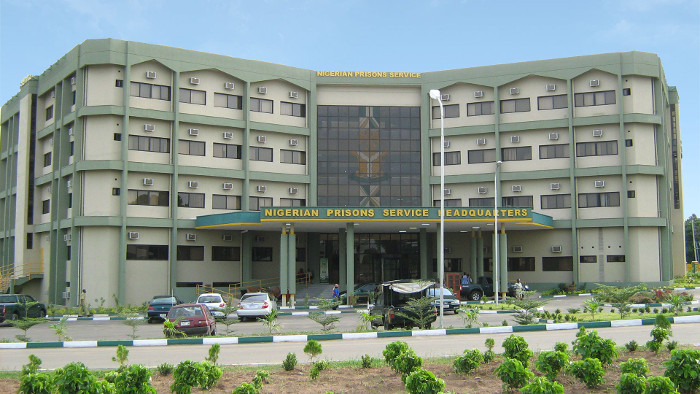
THE Comptroller General of the Nigerian Correctional Service (NCoS), Ja’afaru Ahmed, has denied that the Service plans to arrest Fisayo Soyombo, the investigative journalist who wrote an explosive undercover report on corruption in Ikoyi Prisons.

Rather, he said he had set up a panel to investigate the allegations contained in the investigative report, which alleged deep-seated corruption in the prison service.

Following the publication of the report, the second in a three-part series, which exposed the rot in the prison system, speculations were rife on Tuesday that the Service planned to arrest the journalist and charge him for espionage.

But, in a press statement released on Tuesday evening and signed by O.F. Enobore, Public relations Officer of the Service, Ahmed said that the agency never planned to arrest the journalist.

The Prison boss said in the statement that “the Service has no intention of arresting or harassing the journalist over his alleged findings.”

Rather, he observed that “investigative journalists are partners, who seek the development of the nation, and called for more of such findings aimed at reforming the institution for better service delivery.”

He stated further that the Service sees investigative journalists are partners, who seek the development of the nation and welcomed more such critical reports “aimed at reforming the institution for better service delivery.”

Ahmed also called for more constructive engagement with the media and the general public in order to strengthen the implementation of the Nigerian Correctional Service Act, 2019.

The investigative report, the second in a three-part series, which exposed corruption in the justice sector, spanning the police, courts and prisons, was published on Monday by TheCable and The ICIR, as well as other notable newspapers in Nigeria.

The statement said the CG on Tuesday “set up a high powered panel to immediately commence full investigations into the matter in order to establish the authenticity of the report, identify and bring the culprits to book if found guilty of the allegations.”

It added that the Service was ready to work with Nigerians to “actualize the policy objectives of transforming the Nigerian Correctional Service (NCos) into a modern reformatory institution that operates in line with best international practices.”

Last week, following the publication of the first part of the undercover report the Nigerian Police Force commenced an investigation into the alleged #PoliceBailForSale which occurred at Pedro Police station in Shomolu, Lagos state.

With the publication of the second part of the report,  public criticism has raised more outcry on the unruly and corrupt activities of prison officers and how the “court short-change the law, and the prisons are themselves a cesspool of the exact reasons for which they hold inmates.”

Speculations were rife on Tuesday that the prison authorities were angered by the report and planned to arrest the journalist. This generated a massive public condemnation both on social media with the hashtag #KEEPFISAYOSAFE trending on Twitter and Facebook.

The third and final part of the three – part undercover report is scheduled to be published on Wednesday.

Nigerian military targeted journalists’ phones, computers with “forensic search” for sources

0
By Jonathan ROZEN

HAMZA Idris, an editor with the Nigerian Daily Trust, was at the newspaper’s central office on January 6 when the military arrived looking for him. Soldiers with AK47s walked between the newsroom desks repeating his name, he told CPJ. It was the second raid on the paper that day; the first hit the bureau based in the northeastern city of Maiduguri, where Idris had worked for years.

The soldiers did not know what Idris looked like and his colleagues did not point him out, he said. Unable to find their target, they ordered everyone to evacuate and seized 24 of the paper’s computers. Idris simply filed out with everyone else. In Maiduguri, however, the military arrested Uthman Abubakar, the Daily Trust northeastern regional editor, with his two phones and computer, CPJ reported at the time. He was held for two days, interrogated about his sources for a report written with Idris about a military operation in the region, and then released without charge.“They took the devices to their computer forensics room,” Abubakar told CPJ. “They conducted some forensic search.”The Daily Trust raids are emblematic of a global trend of law enforcement seizing journalists’ mobile phones and computers—some of their most important tools. CPJ has documented device seizures around the world, from the United States to Slovakia to Iraq. In Benin, police copied data from the seized computer of Casimir Kpedjo, the editor of Nouvelle Economie newspaper, CPJ reported in April. And in Tanzania, during the detention of two CPJ staff in November 2018, intelligence officers took their devices and boasted about Israeli technology that could extract their information.

Forensics technology designed to extract information from phones and computers is marketed and sold to law enforcement agencies around the world. CPJ has found at least two companies that produce digital forensics tools—Israel-based Cellebrite and U.S.-based AccessData—operating in Nigeria, where CPJ research shows that security forces regularly arrest and interrogate journalists.

Recent Nigerian national budgets feature significant financial allocations to bolster surveillance and digital forensics capacities. From 2014 to 2017, the Nigerian government spent at least 127 billion naira (over US$350 million) on “surveillance/security equipment,” according to a 2018 calculation reported by Paradigm Initiative, a Nigeria-based digital rights group. “Evidence showed that these purchases were made for political reasons, especially by the then authorities in power to monitor their adversaries and political opponents,” that report said.

One of Nigeria’s major security concerns is the years-long conflict in the northeast against Boko Haram and splinter group Islamic State in West Africa Province (ISWAP). Hours before the raids on Daily Trust’s offices, the paper had published a report about a Nigerian military effort to retake six towns from Boko Haram. In a statement published on Facebook the next day, a Nigerian army spokesperson said the report had divulged classified information, “undermining national security” and contravening Nigeria’s Official Secrets Act.

Privacy is enshrined in Nigeria’s constitution, and law enforcement agents must obtain a judicial warrant to search computer systems under Nigeria’s 2015 cybercrime law. However, the 1962 Official Secrets Act gives sweeping powers for security forces to grant themselves warrants to search and seize all materials considered evidence, as well as arrest those suspected of committing offenses under the act.

On January 10, four days after the raids, Nigerian military investigators summoned Idris and Nurudeen Abdallah, the Daily Trust investigations editor, to question them about their sources for the report, which they refused to reveal, they told CPJ. Then the officers demanded their phones. “They said they want to scan it,” Idris told CPJ. “They said [they] just want to see the contents and then maybe the numbers of the people I talk to—I said no.” The officers told them a server for scanning technology was housed at the Office of the National Security Adviser, the president’s top security aide, Abdallah told CPJ. The journalists said they had not brought their phones, and refused several follow-up requests to return with them.

CPJ reached Sagir Musa, a Nigerian military spokesperson, by phone on October 9 and asked about the Daily Trust raids. Musa said he could not hear and asked to be sent a message before the line went silent; subsequent calls and messages went unanswered. Calls to Onyema Nwachukwudirector of defense information for the Nigerian military, also went unanswered.

An individual within Nigerian law enforcement told CPJ that security forces use Universal Forensic Extraction Device (UFED) and Forensic Toolkit (FTK) to retrieve information from devices. UFED is sold by the Israel-based company Cellebrite, which is owned by the Japan-based SUNCORPORATION, while FTK is sold by the U.S.-based AccessData Group. The individual agreed to speak to CPJ due to concerns about the technology’s possible misuse, but asked that their name be withheld for fear of reprisal.

Cellebrite’s website says their UFED product can “[e]xtract and decode every ounce of data within digital devices” and that their equipment is deployed “in 150 countries.” Company records stolen by hackers and reported by VICE News in 2017 suggest client relationships with Russia, Turkey, and the United Arab Emirates. U.S. federal law enforcement has also invested in the Cellebrite technology, according to government procurement information listed online and media reports. In Nigeria, “authorities seized [a drug lord’s] Samsung phone” during his arrest “and extracted and analyzed data from it using UFED,” according to a case study publicized on Cellebrite’s website.

Separately, Cellebrite’s UFED was used in Myanmar to “pull documents” from the phones of then jailed Reuters journalists Wa Lone and Kyaw Soe OoThe Washington Post reported in May 2019. Cellebrite said it required clients to “uphold the standards of international human rights law” or it may terminate their agreements, according to the Post’s report. Cellebrite’s terms and conditions state that products, software, and services are to be used “in a manner that does not violate the rights of any third party.”

CPJ reached Christopher Bacey, Cellebrite’s director of public relations, by telephone in mid-September to request clarification about the company’s sales in Nigeria, and if the company reviews countries’ human rights records or considers the rights of journalists to protect their sources. At his request, CPJ sent questions by email, but received no response before publication. Msao Koda, who works in Cellebrite sales for SUNCORPORATION, similarly requested questions by email in September and did not respond before publication.

Like Cellebrite, AccessData advertises FTK as a tool to identify information on “any digital device or system producing, transmitting or storing data,” including from web history, emails, instant messages, and social media. It also boasts capacity to “[d]ecrypt files, crack passwords, and build a report all with a single solution.”

In 2011, System Trust, a Nigeria-based digital security company, established a sales partnership through DRS, a South Africa-based cybersecurity company, to distribute AccessData technology, the Nigerian Vanguard newspaper reported at the time. System Trust CEO Philip Nwachukwu told CPJ by phone that the Nigerian security forces were not among his clients for their technology, but that he was not sure if AccessData had other business relationships in the country. He also emphasized that digital forensics equipment should be deployed ethically. “I can’t be a state actor and feel like I have the power, then go and invade the privacy of an individual,” he said.

Several CPJ calls to AccessData’s corporate headquarters in the U.S. were forwarded by an operator, then rang unanswered. Interview requests sent to two email addresses provided over the phone by people at their London and Frankfurt offices also went unanswered.

CPJ’s repeated calls to DRS in early October were forwarded to cybersecurity specialist Zach Venter. On one occasion, Venter asked that CPJ call back after 30 minutes. Subsequent attempts to reach him via phone and messages were unsuccessful.

Uthman Abubakar’s devices were returned shortly after his release from detention in Maiduguri, but it was nearly seven weeks before the 24 computers confiscated during the second raid were returned, Mannir Dan-Ali, Daily Trust’s editor-in-chief told CPJ. The paper would not be using them again, he said.

The ICIR obtained permission from CPJ to publish this article. For information on digital safety, consult CPJ’s Digital Safety Kit.

[Reporting from Abuja, Nigeria and New York]


Again, Police burst another torture centre in Zaria

AN eleven-year-old boy and ten others were rescued on Tuesday from two “torture centres” in Zaria, Kaduna State, by officials of the Nigeria Security and Civil Defence Corps (NSCDC). 

Aloysius Nnegha, NSCDC Deputy Commandant in Kaduna told journalists that the facilities identified as Limanchi Iya and Marmara Rehabilitation Centres were raided following credible intelligence information received on their illegal activities.

Eleven of them were all chained, including the 11-year-old boy. Nnegha noted that three people had died while in custody.

According to him, the victims were subjected to dehumanised condition, while some suffer from acute malnutrition.

The rescued victims were taken into the NSCDC office in the state. There, Kaduna Deputy Governor Hadiza Balarabe checked on them.

When contacted for comment by The ICIR, the state Police PRO, Yakubu Sabo, responded that he was in a meeting.

Some of the chains recovered from the facilities on Tuesday in Zaria, Kaduna. Photo credit: ChannelsTV.

Teusday’s raid would make it the fourth time, within a month, illegal reformation centres were exposed in Kaduna and Katsina states with nearly 1000 victims freed.

All the rehabilitation centres, numbering five shared similar conditions of  human rights abuse in common .

The victims were subjected to inhuman treatments that included sexual assaults and serious tortures.

On September 27, about 500 boys and men were rescued from a building in Kaduna. Three weeks after more than 300 children and youths were freed by the Nigerian Police from a small building called “reformation centre” at Sabon Gari area of Daura, Katsina State. 

This week, on Sunday, 147 people were also rescued from an illegal religious rehabilitation centre in Rigasa of Igabi Local Government Area, Kaduna.

Gambo Isa, Katsina Police spokesperson, told The ICIR after the rescue operation on October 14 that the idea of religious reformation centre is a tradition in the Northern part of Nigeria.

He noted that some parents often hand-over their wards to religious housing centre for reformation, when they engaged in any kind of misbehaviour such as drug addiction and stealing .

However, he stated that the police had been receiving reports concerning some centres violating the humanity of the enrolees that include sexual harassment,  lack of social amenities and some were chained on their legs and hands.

Sanwo-olu set to “totally destroy” 4,447 impounded motorcycles

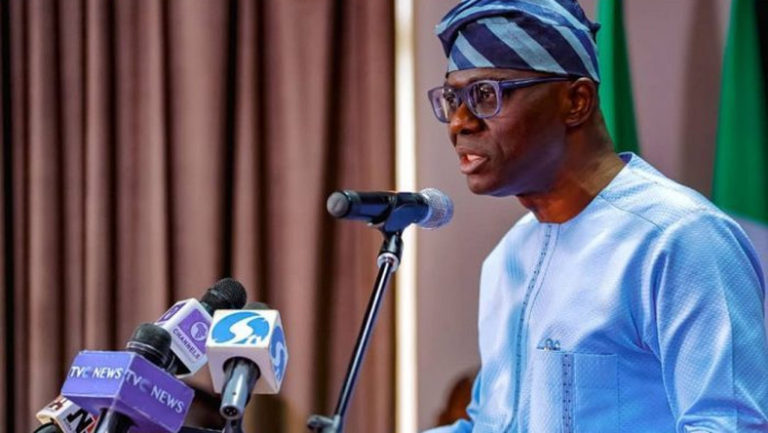
GOVERNOR of Lagos State, Babajide Sanwo-Olu is set to “totally destroy” 4,447 motorcycles impounded by the Lagos State Task Force.

Speaking to the News Agency of Nigeria (NAN), the Chairman of the Lagos State Task Force, Olayinka Egbeyemi disclosed that since the inception of Sanwo-Olu as Lagos State governor, the state government has been able to impound the motorcycles in the span of four months.

He said some of the motorcycles have been retrieved by their owners after the penalty and after six months, but the state government would seek for a court order to destroy the motorcycles that are still in their possession.

Egbeyemi said the Task Force usually crush the motorcycles through a company after which they are sold as scrap.

He mentioned that Sanwo- olu no longer want them sold as scrap after destruction but wants them completely destroyed.

“We have ordered crushing machines from abroad because the one in Epe is faulty, the new crushing machines will soon arrive and they will all be crushed,” he said.

The Task Force Chairman added that the cooperate commercial motorcycles in Lagos , Gokada, Opay and others will get the same treatment as no one is above the law.

He also said that traffic offenders fail to retrieve their motorcycles because of the likeliness of being sentenced to jail.

Egbeyemi noted that some of the motorcyclists came back for their motorcycles and were issued fine but most of them are usually hesitant because one of the penalties for driving against traffic is an option of one year imprisonment.

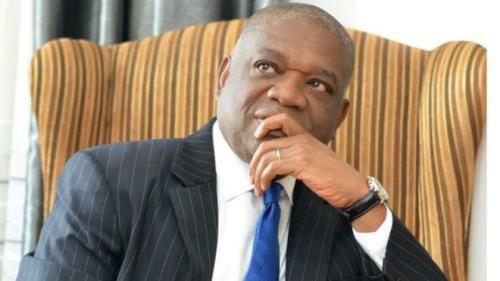
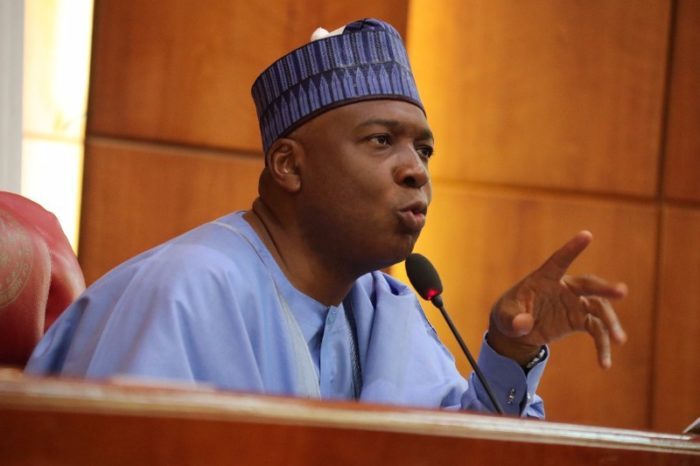
‘My lawyers will be approaching the court’… Saraki reacts to forfeiture order

SENATE president of the 8th Assembly, Bukola Saraki has reacted to the court’s order for the forfeiture of his properties in Ikoyi, says his lawyers will be approaching the court.

A federal High Court sitting in Ikoyi, Lagos State on Monday ordered for the forfeiture of Saraki’s properties in Ikoyi following an application through the Economic Financial Crimes Commission (EFCC) counsel.

Saraki in his reaction to the order stated that the court sitting in Ikoyi was not informed about the pending order of a federal high court in Abuja which restrained the EFCC from taking any steps regarding the Ikoyi properties pending the determination of a suit filed before the court.

In a statement made available on his official Twitter handle @Bukolasaraki, he wrote that he believes the court was also not made aware that the property in question formed part of the judgment of the court given on July 6, 2018 while he was the senate president.

He said that the Supreme Court has declared that the source of funds for the purchase of the court was not illicit as claimed by the prosecution, EFCC.

“The Supreme Court specifically referred to No 17a McDonald Road on pages 12, 13 and 26 of its judgement upholding the no –case submission made before the Code of Conduct Tribunal” he tweeted.

He expressed confidence that the order forfeiting his property to the government will be vacated  when the declaration of the Supreme Court on July 6, 2018 are brought before the court.

No, study does not show staring at women’s breasts prolongs lifespan …NAN shares two-decade-old hoax

A 20-year-old hoax suggesting that staring at female breasts has the effect of promoting longevity in men has been circulated by the News Agency of Nigeria, NAN, the government-controlled news wire service.

Other media houses also fell for the age-long hoax. Crediting NAN, news platforms including Premium Times and TheCable reported the “study” on Tuesday. Vanguard Newspaper, DailyPost, and many other web platforms have likewise shared the report in the same period.

The study is said to have been conducted over a five year period by “a German scientist, Karen Weatherby, and published in the New England Journal of Medicine”. The year it was published was not stated. After the scientist instructed 250 men to stare at breasts lustfully at least 10 minutes in a day and another group of 250 men to abstain from this, the report said, he concluded that the health of the first group of men improved significantly.


Read Also:

The study said men should stare at breasts for 10 minutes a day to improve the wellness of their hearts and to live longer.

“Sexual excitement gets the heart pumping and improves blood circulation. Gazing at breasts makes men healthier and engaging in this activity a few minutes daily cuts the risk of stroke and heart attack by half,” Weatherby was quoted to have said.

“We believe that by doing so consistently, the average man can extend his life for four to five years.”

However, the report has been debunked as far back as in May 2000, by Snope, a prominent fact-checking website launched in 1994.

“This has to be one of the ultimate male fantasies, second only to the notion that drinking beer and watching football makes one more intelligent. (Or maybe second only to the thought of being instructed by doctors to look at buxom women for five years straight, all in the name of science.),” the website wrote sarcastically.

“Watching busty females may indeed be good for a man’s health and add years to his life (by giving him something to look forward to, if nothing else), but men who want to make the case for engaging in this behaviour to their wives or girlfriends will have to do so without relying on the imprimatur of the medical community.”

Snopes further established that the study was never printed in the New England Journal of Medicine “or any other major medical journal” as claimed. It is, rather, a rephrased version of an article that has appeared at least twice (May 13, 1997, and March 21, 2000) on the Weekly World News, a popular tabloid that broke mostly fictional news in the United States between 1979 and 2007.

According to the Washington Post, “The Weekly World News was not one of those sleazy tabloids that cover tawdry celebrity scandals. It was a sleazy tabloid that covered events that seemed to occur in a parallel universe, a fevered dream world where pop culture mixed with urban legends, conspiracy theories and hallucinations. Maybe WWN played fast and loose with the facts, but somehow it captured the spirit of the age — and did it in headlines as perfect as haiku: ‘DEAD ROCKSTARS RETURN ON GHOST PLANE!’ ‘BLIND MAN REGAINS SIGHT AND DUMPS UGLY WIFE!'”

“The most creative newspaper in American history, the Weekly World News broke the story that Elvis faked his death and was living in Kalamazoo, Mich,” Peter Carlson, the Post’s staff writer, added.

“It also broke the story that the lost continent of Atlantis was found near Buffalo. And the story that Hillary Clinton was having a love affair with P’lod, an alien with a foot-long tongue. And countless other incredible scoops.”

Picture of the report has published by the Weekly World News. Credit: Snopes.

Snopes said though the tabloid “occasionally slips up and prints a true story”, it suspects the report on the positive effects of breast-staring belongs in the category of similar articles titled “‘HOW TO TELL IF YOUR DOG WORSHIPS SATAN!’ and ‘NEW REMOTE-CONTROL DEVICE GIVES WOMEN ORGASMS — AT UP TO 80 YARDS AWAY!'”

Another fact-check of the claim published in 2009 (and updated in May 2019) by LiveAbout described it as an “email hoax circulating since March/April 2000” and concluded that it is false.

“No such study was ever published in the New England Journal of Medicine,” wrote David Emery, an internet folklore expert and debunker of urban legends, hoaxes, and popular misconceptions.

“A search of the thousands of peer-reviewed articles contained in the National Institutes of Health medical journal database turns up zero items documenting the health benefits of staring at women’s breasts, and, for that matter, zero items authored by ‘Dr. Karen Weatherby’ (who does not exist, so far as I can tell).”

Alleged internet fraud: EFCC confirms arrest of Instagram big boy Mompha

0

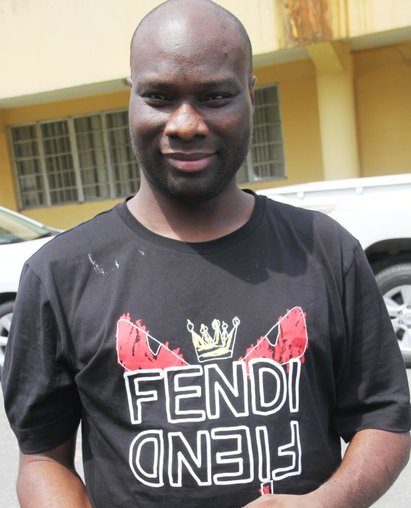
Dubai-based Nigerian Big Boy, Ismail Mustapha, popularly known as Mompha, has been arrested by operatives of Economic and Financial Crimes Commission (EFCC), for alleged involvement in internet – related fraud and money laundering.

Confirming the arrest in a statement released through its official Twitter handle on Tuesday,  EFCC said the suspect who is  a premium and first class customer of one of the popular international airlines, was arrested on Friday 18, October 2019 at the Nnamdi Azikiwe International Airport, Abuja on his way to Dubai Emirate following series of intelligence reports received by the commission.

The anti – graft agency also confirmed that five wristwatches with a total worth of over N20, 000, 000 were recovered from him when he was arrested.

The recovered wrist watches from Mompha. Source: EFCC Twitter

“Actionable cross border intelligence received from collaborative law enforcement agencies about his alleged involvement in the criminal activities further strengthened our suspicion”, EFCC tweeted.

According to EFCC operatives,  Ismaila, who allegedly perpetrates his fraudulent activities under the guise of being a Bureau de Change, BDC, operator, is always seen with his little son flaunting huge amount of foreign currencies on his social media platforms.

Further findings showed that the suspect is using BDC business he jointly owns with his siblings, as a decoy to launder his proceeds of crime.

However, the suspect has volunteered useful information to the operatives and has admitted to be reasonably involved in the first two cases he was alleged to be involved.

The suspects will soon be charged to court as soon as investigation is concluded.

Court orders temporary forfeiture of 23 properties linked to Maina

0

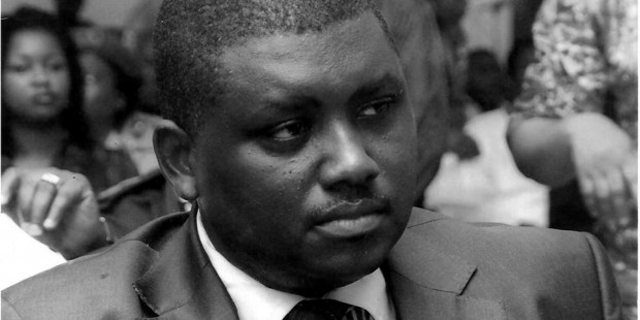
A Federal High Court in Abuja has ordered the temporary forfeiture of 23 properties linked to Abdulrasheed Maina, former Chairman of Pension Reform Task Team (PRTT). 

Justice Folashade Ogunbanjo, the presiding judge on case, gave the order while ruling on a motion filed by the Economic and Financial Crimes Commission (EFCC) on Tuesday.

The EFCC prayed the court to order temporary forfeiture of the properties linked to Maina situated in Kaduna, Borno, and Sokoto states, as well as the Federal Capital Territory (FCT), while it publish an advert in a national daily to give room for appeals by individuals or organisations that might have contrary pleas on the final forfeiture of the properties to make their case in court.

The anti-graft agency supported its motion with a 30-paragraph affidavit which it brought in pursuant to Section 17 of the Money Laundering Act.

Ogunbanjo granted the petitions of the anti-graft agency and ordered the EFCC to return to the court on November 19, for the mentioning of the case.

Maina and his 20- year- old son, Faisal, who had tried to evade arrest, were arrested by the  Department of the State Service on the request of the EFCC at the Pennsylvania Avenue Hotel, Utako, Abuja based on allegations that he had “mindlessly looted” the pension coffers of billions of naira  and other money laundering related issues during his tenure as the chairman of the PRTT.