THE budget of the Ministry of Niger Delta Affairs for 2020 has been rejected by the Senate Committee on Niger Delta for neglecting uncompleted capital projects in place of new ones.
The Committee’s chairman, Peter Nwaobishi, who is also the senator representing Delta North senatorial district made this known on Monday during a budget defence session led by Minister God’swill Akpabio.
The Niger Delta Affairs presented the budget of N25,910, 486,285 but Nwaobishi asked the Ministry to reappear before the Committee next Monday to re-defend the budget.
Explaining why the budget was rejected, Nwaobishi said the Ministry is afflicted by abandoned projects littering all over the nine states in the region.
“There is no state, I dare to say, that there is no local government where there are no abandoned projects in the Niger Delta. We cannot continue like that. With all the abandoned projects in the Niger Delta and we are talking about new projects; these new projects are designed to fail.
“Honourable Minister, we need to look at this budget again and we expect you to do your cleanup because the documents we needed were not supplied to us,” said Nwaobishi.
None of the Ministry’s projects has been commissioned by President Muhammadu Buhari in the last four years, he said.
Also, Enyinnaya Abaribe, senator representing Abia-South Senatorial District has expressed reservation over the disappearance of uncompleted projects in the budget
“I have been looking at the 2020 budget and have seen that many projects have been removed that is why the chairman said there are about 10 projects in the 2019 budget which have disappeared.
“If some work has been done on the budget as part of 2019 and some stretched from 2017 to 2018 and this one stretches from that what happened?” Abaribe asked.
He advised that the budget be reworked while taking into cognisance the missing uncompleted projects for inclusion.
Sandy Onor Ojang representing Cross River Central, complained of a situation where the capital “outlay is even lower than personnel and other costs.
“We must work together. A budget is not just a piece of paper or something theoretical. It must have a practical basis. So I think that this year, we should work together – all of us, all of us – in the interest of our country to make sure that this budget is truly a budget.
“If not it becomes a ritual to have us come and sit here. When there are no capital releases, what are we really talking about?
But the Niger Delta Minister appealed the lawmakers to join him to appeal the Minister of Finance, Budget and National Planning to increase the capital component of the ministry’s budget instead of rejecting the budget.
He noted that the 2020 capital budget of the ministry could not complete a 10kilometre road in the region.
“Again, there is nothing we could have done about the budget based on the fact that we are yet to receive even one naira for the capital project for 2019 that is still being processed in the Ministry of Finance, Budget and National Planning.
Akpabio while analysing the 2020 budget, stated that an average sum of N2, 626,705,599.00 is allocated to each of the nine states of the region based on the capital ceiling.
“This amount which is expected to cater for roads, environment, health, social inclusion and provision of water, which are priority needs of the people of the region, in accordance with the ERGP, cannot conveniently pay for a quality 10km road in any part of the States in the region, thus underscoring the inadequacy of the ceiling given to the Ministry.
“This gross inadequate funding has led over the years to the following: Plethora of abandoned/uncompleted projects. A protracted delay in project delivery, negative perception of the Ministry and loss-of-faith in the Federal Government by the people of the region, and difficulty in the realization of Mr. President’s vision for the region,” he said.
Speaking to journalists at the end of the session, Tayo Alasoadura, Minister of State for Niger Delta, said if the ministry was to capture all the projects identified as uncompleted, “very paltry amount of money would be allocated for each. And this, he added, “would not make sense and would be a budget designed to fail”.
“If we have 300 projects and you have money that can capture only 150 why put everything there and allocate a small amount of money that will not make any difference at the end of the day?,” said Alasoadura
Akpabio said he would visit the Ministry of Finance to see “whether it is possible to have capital released for this year.”
NEW Report from Watching the Votes (WTV), a project of YIAGA Africa, a civil society organisation revealed that the trend of vote-buying has commenced ahead of the gubernatorial election scheduled to hold on 16th November in Kogi and Bayelsa States.
The report says voters’ inducement was observed in at least one in every three Local Government Areas (LGAs) in Kogi as well as Bayelsa.
The affected local governments include Adavi, Okehi, Ankpa, Idah, Kabba/Bunu and Koton Karfe while and in Bayelsa state – Southern Ijaw, Ogbia and Sagbama.
The coalition had earlier deployed 48 Long Term Observers (LTOs) – in eight LGAs of Bayelsa and 21 LGAs in Kogi, to monitor pre-election activities in the concerned states.
“Buying and selling of PVCs is one of the predominant election malpractices recorded in 2019 general elections. As such, it was pertinent for WTV LTOs to continue to monitor cases of purchase of PVCs in their assigned LGAs,” the report advised.
“Findings from this observation period reveal that buying or selling of PVCs still exists. This was recorded as witnessed or heard by WTV LTO in both Kogi (Adavi, Okehi, Ankpa, Idah, Kabba/Bunu and Kogi K.K) and in Bayelsa state (Southern Ijaw, Ogbia & Sagbama)”.
The report is an outcome of the survey carried out by YIAGA Africa WTV from 19th September to 3rd October in both states.
The ICIR, during the 2019 General Election had reported prevalence of vote-buying and how the anti-graft agency, Economic Financial Crimes Commission (EFCC) arrested culprits in selected locations across the country.
The anti-graft body has also embarked on a sensitisation campaign against vote-buying across the geo-political zones.
But, the new report has stressed how vote-buying is prevalent in the two states ahead of the November 16 election.
“Generally, voter inducement was reported in at least 1 in every 3 LGAs of the 21 LGAs in Kogi state, and in all the LGAs in Bayelsa state. Reports on Buying and Selling of PVCs: The attempt to undermine the integrity of the electoral process was observed as reflected in the report indicating a replica of the ugly incidence in 2019 general elections.”
In terms of voters’ education, the LTOs reflected increased participation of the electoral commission, CSOs as well as the National Orientation Agency (NOA).
Specifically, the report identified special attention given to vulnerable members of the States such as women and people living with disabilities.
“The findings from Bayelsa state reveal that voter education activities were conducted by INEC, NOA and CSO in 80 per cent, 50 per cent and 85 per cent LGAs respectively, and in Kogi state, voter education activities were conducted by INEC in 58 per cent of LGAs, by NOA in 19 per cent of LGAs and by CSO in 65 per cent LGAs.
“Most notably, voter education messages are targeted at marginalized groups like women and People Living with Disabilities (PWDs) was poor across the states, however, this was measurable for youth (45 per cent by INEC and 60 per cent by CSOs in Bayelsa state and 12 per cent by INEC and 42 per cent by CSO in Kogi state).”
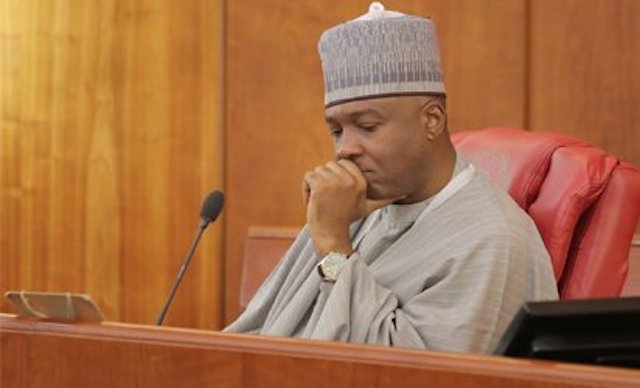
A FEDERAL High court sitting in Lagos on Monday has ordered that the properties of the immediate past Senate President of Nigeria, Bukola Saraki be forfeited to the Federal Government of Nigeria due to unlawful acquisition.
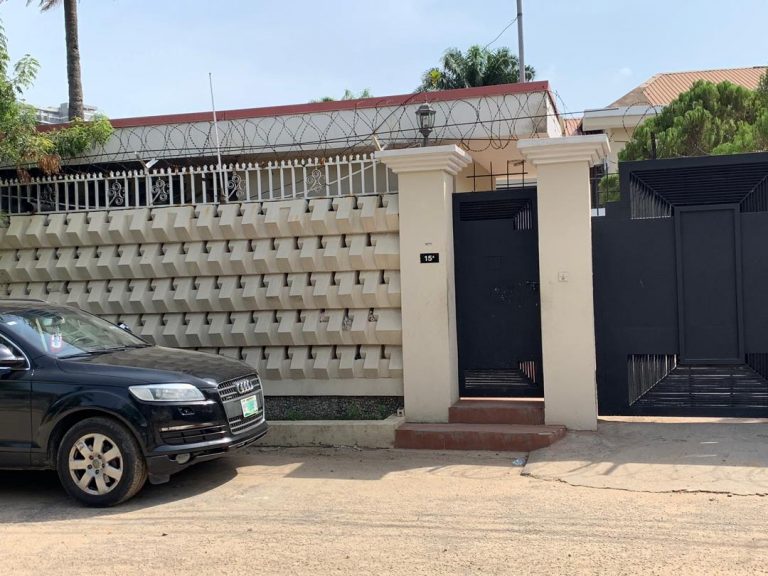
Economic and Financial Crime Commission through one of its counsel Nnaemeka Omewa approached the court to forfeit to the Federal Government Saraki’s properties in Ikoyi, Lagos state.
He alleged that Saraki acquired the properties through proceeds of unlawful activities.
Omewa prayed to the court to grant an interim forfeiture of the properties located at 17A McDonald Road, Ikoyi, Eti Osa Local government of Lagos State.
Saraki is alleged by the EFCC to have withdrawn over 12 billion in cash from the Kwara State Governmewnt account out of which some of the money was deposited into his domiciliary accounts in Access and Zenith banks through Abdul Adama, one of his personal assistants at different times.
While giving the order of the forfeiture, the sitting judge Mohammed Liman, read that “An order of this honourable Court forfeiting to the Federal Government of Nigeria landed property with appurtenances situate, lying and known as No. 17A McDonald Road, Ikoyi, Eti Osa Local Government Area of Lagos State found and recovered from the respondent which property is reasonably suspected to have been acquired with proceeds of unlawful activity”.
Liman also ordered that the EFCC publish the order in a national newspaper in 14 days so as to give room for anyone with interest in the properties to state why the properties should not be completely forfeited to the Federal Government of Nigeria.
While serving as the Senate President of Nigeria, Saraki was arraigned before the Code of Conduct Tribunal (CCT) over making an anticipatory declaration of assets as well as withholding information concerning his assets when he served as Kwara State governor between 2003 – 2011.
However, he was completely discharged of the case on July 6, 2018, by the CCT panel chairman, Danladi Umar who ruled that the evidence tendered by the prosecution was insufficient to make good the charges he was charged with.
GOVERNOR of Oyo State, Seyi Makinde said his administration is set to spend about 8 billion naira for expansion of the Iwo road interchange, but his decision has attracted condemnation from the opposition party, All Progressive Congress (APC).
Makinde during his visit to Adogba Central Mosque at Iwo- Road appealed to the congregation that the mosque would be demolished so as to give way for the re-construction of the road. But he assured the congregation that land will be provided for the construction of another mosque.
The project scheduled to be completed in eleven months would cost the Oyo State government nearly N8 billion, the governor has said.
However, APC has criticized the plan as a misplaced priority and a means to squander public funds.
In a statement signed by Ayobami Adejumo, APC Oyo State publicity secretary, Makinde administration is depicted as incompetent, with an avowed desire for mismanagement of public funds.
The opposition said there is no record of the presentation of the project at the state executive council meeting.
PDP in a swift response to APC’s attack released a statement signed by Oyo state PDP publicity secretary Akeem Olatunji, who said that the criticism of the APC is borne out of their disregard of the impact of the several manhour wasted due to traffic congestion at the interchange.
PDP described the APC’s reaction as a show of shame, noting that the immediate past governor, Abiola Ajimobi spent eight years “romancing” the Iwo Road problem.
“Let us place it on record that Iwo Road is not just a segment of a road located within the Oyo State capital, it is an interchange that has become the melting point of all travelers within Nigeria as it brings those coming from the North face-to-face with travelers across the South West, South-South and South-East as well”.
THE Nigeria Communications Commission has announced the partial disconnection of Glomobile from Airtel Networks Limited (Airtel) by October 28.
NCC made the announcement in a statement by it Director, Public Affairs, Henry Nkemadu, stating that the disconnection was in accordance with Section 100 of the Nigerian Communications Act 2003 and the Guidelines on Procedure for Granting Approval to Disconnect Telecommunications Operators.
NCC noted that GloMobile was notified of the application and was given the opportunity to comment and state its case.
The statement read, “the Nigerian Communications Commission hereby notifies the general public and subscribers of Glomobile Limited (Glomobile) that approval has been granted for the partial disconnection of Glomobile from Airtel Networks Limited (Airtel) as a result of non-settlement of interconnect charges.”
“Glomobile was notified of the application and was given an opportunity to comment and state its case. The commission, having examined the application and circumstances surrounding the indebtedness determined that the affected operator does not have sufficient reason for non-payment of interconnect charges.”
“The Commission has approved the Partial Disconnection of Glomobile by Airtel in accordance with Section 100 of the Nigerian Communications Act 2003 and the Guidelines on Procedure for Granting Approval to Disconnect Telecommunications Operators.”
“At the expiration of 10 days from the date of this notice, subscribers on the network of Glomobile will no longer be able to make calls to Airtel but will be able to RECEIVE CALLS.”
“The Partial Disconnection, however, will allow in-bound calls to the Glomobile network. Please note that this disconnection will subsist until otherwise determined by the Commission.”
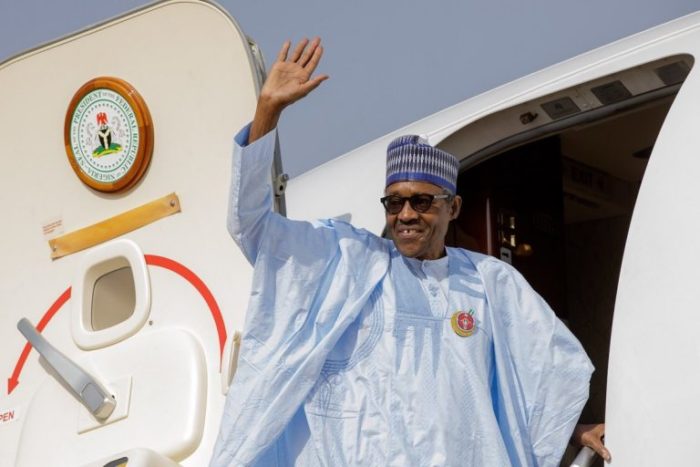
ON Monday, President Muhammadu Buhari departs the country for a three-day Russia-Africa Summit in Sochi, Russia. The meeting will focus on exploring and expanding opportunities in security, trade and investment, science and technology, and gas production, the presidency has said.
The Senior Special Assistant, Media and Publicity to President, Garba Shehu who made this known in a series of a tweet on Sunday, said the summit would hold from the 23rd – 25th of October.
According to him, the summit would bring fresh perspectives on some global issues and challenges like nuclear technology, energy development, digital transformation, environment, technical security, mining and steel, education, agriculture, infrastructure and development strategies.
“An African Business Forum, which will bring together African and Russian business leaders, will be held during the event to enhance Russian investments in Africa, and promote African business interest in the host country,” Shehu stated.
He said during the summit, Buhari would meet with President Vladimir Putin of Russia to further strengthen relations in security, trade & investment, while building a partnership to further enhance Nigeria’s huge gas potential, following Russia’s remarkable success in gas exportation
He noted that Buhari would be accompanied by some governors: Muhammad Yahaya of Gombe State; Bello Matawalle of Zamfara State and Kayode Fayemi of Ekiti State.
Also on the trip are the Minister of Foreign Affairs, Geoffrey Onyeama; Minister of Trade and Investment, Adeniyi Adebayo; Minister of Mines and Steel Development, Olamilekan Adegbite and Minister of State, Petroleum, Timipre Sylva.
“The President will return to the country after the summit,” Shehu said.
The committee headed by John Bayashea submitted its report to the Speaker of the House of Assembly, Mathew Kolawole who announced that the House of the Assembly after considering the reports, took the decision to impeach Achuba.
Achuba who defected from the People’s Democratic Party (PDP) to All Progressive Congress (APC) before he was sworn in as the Deputy Governor of Kogi state on February 9, was impeached over gross misconduct following several reports of a rift between him and the state governor.
Members of the state House of Assembly screened and confirmed the nomination of Onoja after which he was asked to take a bow before them giving way for the inauguration to take place.
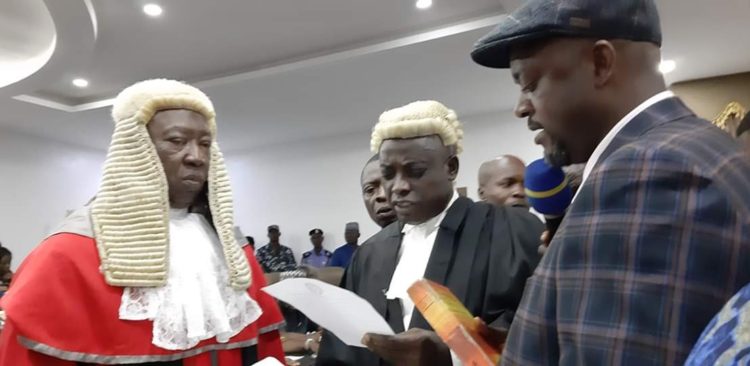
During the inauguration ceremony held at the state house in Lokoja, Onoja accompanied by his wife read the oaths as they were administered to him by the Kogi State Chief Judge.
Achuba has, however, described his impeachment as unconstitutional and that the impeachment process was contrary to section 181 of the 1999 constitution of Nigeria.
Edward Onoja being sworn-in as Kogi State deputy governor
Corroborating Achuba’s claim, the PDP through its National Publicity Secretary Kola Ologbodiyan, said the action has reduced the state to a butt of jokes among compatriots in other states.
“What it means is that Yahaya Bello can wake up tomorrow morning and shut down institutions of government, including the state legislature, the judiciary, and even the civil service and become a law unto himself,” the statement read.
However, two days before the confirmation of Achuba impeachment, Onoja had announced via social handle on twitter of his position as the new deputy governor of the state,
“I am handling over as chief of staff with confidence. Earlier this week I resigned from my post as the Chief of Staff to Governor Yahaya Bello of Kogi State.
“This is the requirement of law following His Excellency’s gracious nomination of my humble self as his running mate in the 2019 Kogi State Gubernatorial Elections.
“Today, my boss appointed Pharmacist Asuku Jamiu Abdulkareem, into the office I vacated. I wholeheartedly testify that my Successor as Chief of Staff is a proper fit for the office, having worked closely with me whilst we served His Excellency as Chief Of Staff And Director-General, Protocols respectively,” Onoja said.
In the second report of a three – part undercover investigative series, FISAYO SOYOMBO exposes how the courts short-change the law, and the prisons are themselves a cesspool of the exact reasons for which they hold inmates.
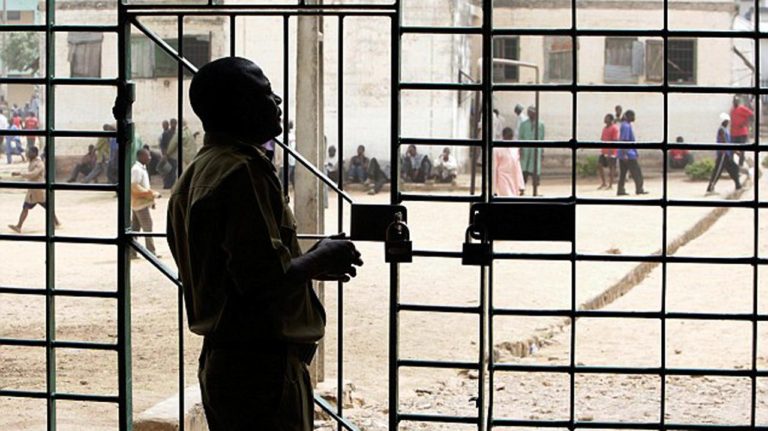
TOO many unforeseen obstacles had sprung up against me by the time I arrived at the gates of Ikoyi Prison, Ikoyi, Lagos, on July 12: I’d had my most tortuous night in the police cell; I had been messed up by the typically ruthless Friday evening Lagos traffic; I had arrived under the cover of darkness, which wasn’t the plan. Even the few things that went well would later come back to haunt me.
Proceedings were well underway at Court III when we stepped into the Chief Magistrate Court, Yaba, Lagos, after my extrajudicial detention for five consecutive days at Pedro Police Station, Shomolu. It was a little after noon — or thereabouts. A funny but very contentious matter was ongoing. The protagonist, a woman, was being tried for, allegedly, illegally selling a piece of land belonging to a former associate of hers. This woman — ostensibly in her late 50s or early 60s — claimed, vehemently so, that the complainant indeed owed her millions of naira in accumulation of unpaid earnings for executed projects. She sold the land because she had been instructed to, to defray the cost of her service, she said. But the prosecutor insisted otherwise, arguing that the sale was fraudulent. The woman, irritated and incandescent, embraced and perhaps enjoyed every window to have a go at the prosecutor. Once, the prosecutor got under her skin by scoffing at how two of her high-profile witnesses were deceased. “Excuse you!” the woman fired back in protest. “Are you suggesting I killed them? Is it my fault that you’ve been dragging me from one police station to another and from court to court for more than 10 years?”
The magistrate — a dark, soft-spoken, middle-aged man whose eyes often evaded the lens of his pair of glasses when talking — adjourned the matter, as expected. And after two or three other cases, mine was mentioned. His orders: remanded in prison custody, two sureties in like sum of N500,000 each, N150,000 to be paid into the Registrar’s account by each surety, sureties to be from father’s side of the family. Not long after, the court rose, to be followed by my preparations for a long and difficult journey to the prison.
PRISON WARDERS ASK FOR BRIBES RIGHT IN COURT
Before the authorities take my freedom away from me, the first thing they do is give me a final semblance of it by unfettering my hands from the handcuff, as is the custom. That was just before entering the dock. Minutes later, the same man who released the handcuff returns to hand me over to a policeman who, accompanied by Zainab Sodiq, the lady posing as my sister, leads me downstairs. First stop on the ground floor is the office of the prisons service. Manning it, comfortably sitting opposite the entrance, is a gun-wielding prison warder, legs waggling, whose shirt hangs loosely on the wall inside, leaving his trunk scantily covered by a singlet. Inside that office are three more warders. The next room is a holding cell — for momentarily detaining inmates until the arrival of the prisons bus that conveys them to Ikoyi. I expect to be led to the holding cell, but I am taken into the prisons office and encouraged to “take a seat”. What manner of magnanimity is this? I was wrong!
The three officers summon my sister. “You can have a look at that holding cell and see if it’s the kind of place a human being should stay,” one of them tells her with feigned sympathy. “Your brother can stay in our office but it will cost you N10,000.” My sister takes a moment to peep into the holding cell, then returns to bargain. The negotiating parties reach an agreement of N5,000, collected by the singlet-donning warder.
Money in the bag, the warders’ initial measured disposition turns happy-go-lucky; I notice the ease with which they regale one another with tales of similarly shady financial dealings. “The day Naira Marley was billed to be taken to prison, I was on this chair making cool money,” says one of them. “I made some good money, I won’t lie. Transfers were just going up and down.” Naira Marley, the hip hop artiste whose original name is Azeez Fashola, had been arraigned at a Federal High Court in Lagos on May 20 by the Economic and Financial Crimes Commission (EFCC), on 11 counts of alleged Internet and credit card fraud.
A second warder describes how he facilitated the payment of N300,000 to a senior colleague of his in Abuja, by a man who wanted to ‘smuggle’ all his three children into the employ of the Nigerian Prisons Service (recently renamed the Nigerian Correctional Service) during a recruitment “some years ago”. Though unqualified, all three were eventually employed by the service. It suddenly dawns on the warder that an ongoing promotion exercise in the prisons service offers him fresh opportunity for corrupt enrichment. “Let me quickly call the man; he may be interested in a deal to facilitate his children’s promotion,” he adds, running his hand through his breast pocket for his phone.
‘IF YOU HAVE YOUR MONEY, YOU CAN NEVER SUFFER IN PRISON’
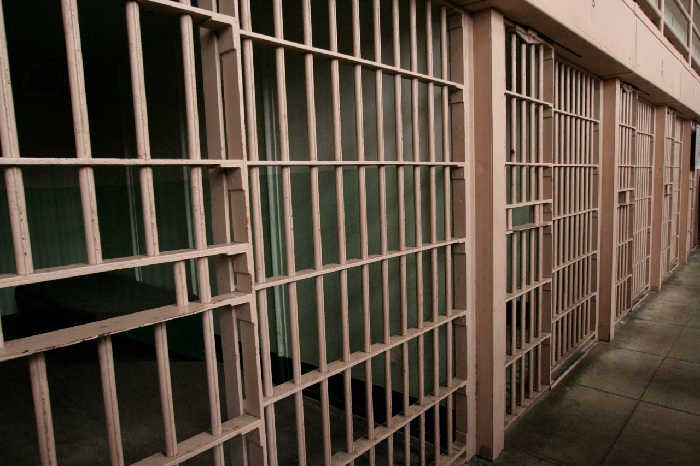
Holding Cell
Seeing the lack of restraint with which they discuss acts of bribery and corruption, I approach them for guidance on the allocation of accommodation in prison. Apparently, it’s a high-wire fraud involving prison officials in court and those in the yard proper.
“You can get a cell for N30,000,” one of the warders tells me. “You can also get for N100,000 or N150,000. You can even get a N1.5million cell.”
“A million and five hundred thousand?” I protest.
“Of course!” he insists. “When Ayodele Fayose was remanded in Ikoyi Prison, what kind of cell did you think he stayed in?” Fayose, the immediate past former Governor of Ekiti State, was remanded at Ikoyi Prison in October 2018 at the start of his N2.2billion fraud trial initiated by the EFCC.
Another warder cuts in. “Don’t worry, you can never suffer in the prison yard,” he says. “As long as you have your money.”
Patience, a third urges me. “The warders at the prison have warned us off striking deals with inmates while still in court,” he explains. “They’ve told us to leave them to push their own deals when the inmates get to the prison. So, when we get there, we will hand you over to the warders you will negotiate with.”
Emergency bail for sale by ‘the magistrate man’ and prison officials
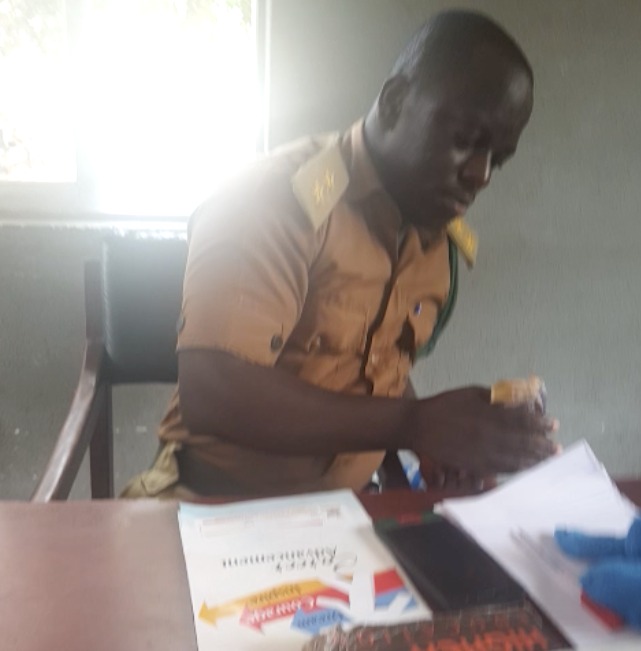
Warder Collecting Bribe
Minutes later, one of the warders — dark, mild-mannered and diminutive — walks up to me to ask if I’m making progress with my bail conditions. The question confounds me. Who makes progress on bail application within two hours of a court hearing?
“My lawyer is working on it,” I reply, “but it’s too early to know since it’s just a few hours ago we left court.”
“No, no; it doesn’t mean,” he says. “I have a lawyer in this court who will help you perfect your bail ‘today today’. In fact, you will not get to Ikoyi Prison at all; you will go home straight from here. He works in concert with the court authorities. I can call him right now and he’d be here any minute if you want.”
Stunned and curious in one breath, I nod in the affirmative. In a matter of minutes, the lawyer, ostensibly in his late 40s or early 50s, shows up. He speaks in carefully considered and restrained patches, sporadically wiping the lens of his glasses with a silky piece of cloth.
“What exactly is your offence?” he begins, then proceeds to hearing my bail conditions. He assures me that the problematic components of my bail requirements would be waived, but the process would cost me money.
“Did the Magistrate order you to pay any money to the Registrar’s account?”
“Yes. N150,000,” I say in error. It should have been N300,000 — at the rate of N150,000 per surety.
“Okay, that’s no problem,” ‘Mr. John’, as he introduces himself, says. “Can you make everything N200,000?”
I tell John I can’t. That’s a lot of money. Fifty thousand naira on top of the N150,000 is a lot of cash. But he disagrees. “You see, I am very close to the Magistrate,” he says. “I am very close to the man; therefore, we will waive many of these bail conditions for you.” We haggle for a while: N180,000, N170,000, N180,000. We eventually settle for N170,000.
John takes a quick look at his watch; it’s a little past 3pm. “Hurry and get the money. It’s almost too late already — why did you wait till this long?” he laments. “Today may or may not be possible. If you had mentioned it immediately the court rose, say around 2pm, I would have been able to totally guarantee you that you would go home today without ever reaching the prison.”
We exchange numbers and I promise to call, but I never do (The plan, really, is to end up at Ikoyi Prison.). Instead, I fold my secret device and tuck it away carefully. Yes, I’d taped all the conversations held inside the prison office in the court premises. The original plan was to put the device away before going to prison, then retrieve it afterwards. I had been told that there was literally nothing I wanted to smuggle into the prison that I couldn’t; I only needed to grease the palms of warders and they would fetch it for me. But with accommodation negotiations set to take place on arrival at the prison, I began to nurse the ambition of smuggling in the device outright at point of entry. This was not the original plan. But if it works out, I would obtain more evidence of prison-yard corruption. If it fails, I’m doomed. Big risk, I know. But I do it all the same.
Physical pain in exchange for digging the story
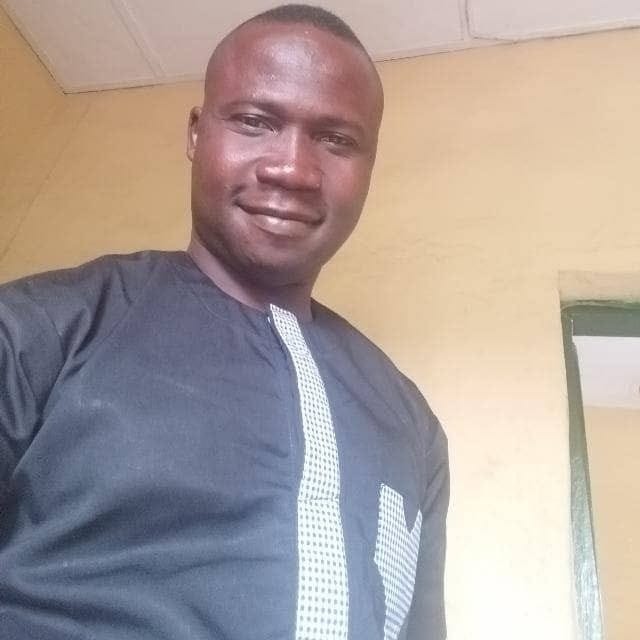
Sunkanmi Ijadunola, the Assistant Chief Warder
The prison warders do not quite know what to make of me when they find a hidden device on me, a supposed inmate, during the routine search at the entryway shortly after an Ikoyi Prison bus conveying the latest inmates pulled over at the prison gate. After a second, more thorough search during which nothing else is found on me, they hand me over to the ‘Section’ — a position occupied by the most senior convict in a cell — of the welcome cell. As I would later find out, this was under strict instructions: no phone calls, no out-of-cell movement, no frivolous interaction with inmates.
Very early the following morning, Sunkanmi Ijadunola, the third most senior warder in Ikoyi Prison, sends for me. They had seen the videos; they’d extracted the memory card from the device and watched footages of the five prison officials demanding bribes from me and the court official negotiating a premature bail with me. Sunkanmi, as he is widely known, asks me to confess: “Who are you and what is your mission here?” But he was asking the question a few hours too late. I’d spent half of the night deliberating on what to expect in the morning. I had imagined that in the best scenario, some senior official would have been thoroughly mortified by the sight of their bribe-demanding colleagues captured on tape, and would be keen to convince me about helping to further unravel the bad guys in the system. I didn’t deceive myself, though: this thinking was more or less illusory. I’d also thought that in the bad scenario, I’d be handed over to the Police; and in the worst, I’d be extrajudicially executed. After several hours of carefully considering all possibilities overnight, I resolved that even if they held a gun to my head, I would not disclose my true identity. I knew once I did, that was the end of the story. After five excruciating, emotionally and psychologically destructive days in a police cell, I wasn’t prepared to ruin everything so cheaply.
Seeing I am unwilling to offer any useful information, Sunkanmi, the Assistant Chief, accuses me of plotting a jailbreak. “You’re here to understudy the prison security so that you can send the videos to your gang members outside,” he says. “You’re planning a jail break. Or you’re working for Boko Haram; you’re a Boko Haram spy!”
I do not flinch. Instead, I stick to the original story line I’d preconceived to offer in the improbable circumstance that my cover was blown. At this point, Sunkanmi sends for a cane and orders me to remove my shirt and trousers, leaving only my singlet and boxer briefs. Then he descends on me. Three rounds of beating: the first with several lashes of the cane searing straight into my skin and leaving me with blood and blisters; the second in similar pattern, with my hands cuffed behind my back; and the last with a thick stick targeting the interior and exterior joints of my ankles, knees, hips, elbows and shoulders.
Still, I refuse to disclose that I’m a journalist. By enduring the beating, I succeed in buying myself at least another 24 hours of understudying the corruption seeping through the different layers of prison operations. Bearing the pain was worth it in the end; someone needed to expose the scale of criminal corruption going on in that prison.
The first benefit of enduring the pain is that I am still accorded the treatment of a regular inmate, therefore I am sent for registration and documentation. The documentation holds inside a building opposite the Assistant Chief Warder’s office. It’s a fairly big office with a small inner room littered with stacks of ragged files and paper, plus a narrow, hollow, open cell to the left where awaiting-documentation inmates sit without much latitude to stretch their legs. The inner room is manned by a warder easily noticeable by the ungracefulness of his chemical-bleached yellow skin. A light-skinned, heavily-built woman-warder spearheads the documentation process in the major office, assisted by three convicts. The documentation is both manual and digital, but to avoid compromising the security of the prison, I’ll skip the details. Prison warders are themselves the biggest threat to prison security, but I won’t aid them.
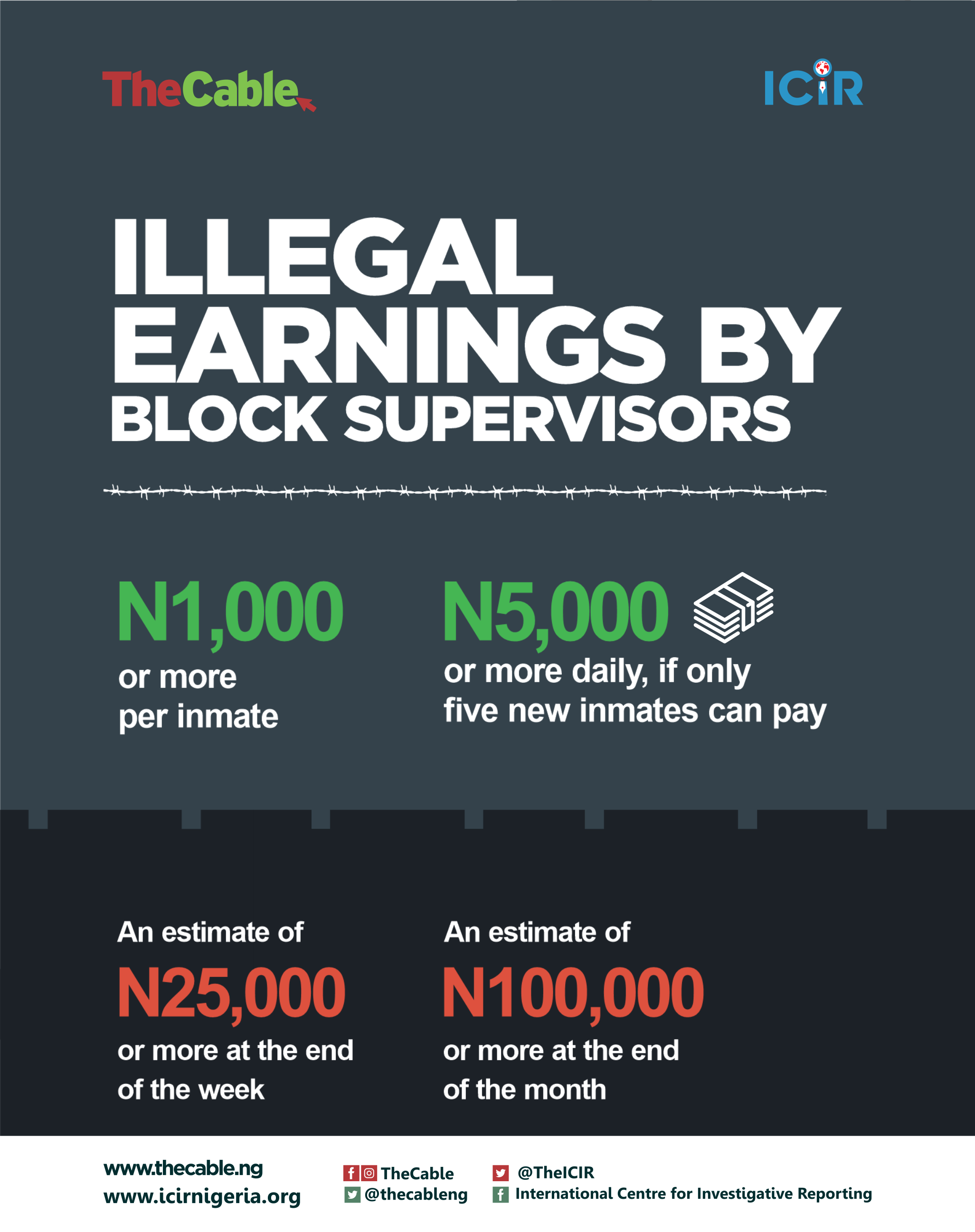
In the very final stage, a convicted inmate tells me to step forward for my cash. The procedure is always that an inmate turns in his possessions, including cash, at the gate. At the end of documentation, the money goes to the records department, from where he can retrieve a small sum every time it is required for a specific purpose. Just before I collect mine, one of the three convicts — they’re easily recognizable in their deep blue uniforms — whispers some instructions into my ears. “You will give that woman N1,000,” he tells me, “then you can have the rest.” It’s standard practice, I soon find out. Every inmate who comes in with cash must give up some of it at every registration point in bribes demanded through a proxy, but with the full knowledge of the receiving warder. It looks a small amount but by month end it could be some stash of notes in dubious earning. In my one week in that prison, there were 16 new inmates on the day with the least number of new inmates. One day, there were 45. If only five had enough cash to forfeit N1,000, that’s N5,000 daily, amounting to a little below or above N100,000 — depending on the number of court sittings in the month. Many honest, hard- working Nigerians do not even earn that!
I give up N1,000 of my N7,200 as instructed, and I receive a slip indicating my new cell will be D2 — that is, Block D Cell 2. I ask to be given the outstanding N6,200 but the convict tells me the money will be handed over to the warder overseeing the block — a happy-go-lucky albino who seemed very popular among inmates. Six thousand two hundred naira quickly becomes N5,200. Another N1,000 deduction, I am told, is to guarantee nobody in the cell lays hands on me. Again, if five inmates forfeit a thousand naira daily, that’s another N100,000 in corrupt earning by month-end. This is more than thrice the national minimum wage approved by President Muhammadu Buhari in April, but which still hasn’t taken off five months after!
Cover blown but too late to conceal corruption
IKoyi Prison
My stay at D2 is short-lived. Two members of my backup team show up as planned. They had been unable to reach me but they assumed all had gone well so far. With the extra scrutiny around me, it doesn’t take too long before they’re found out. It leaves me with no option but to admit I’m an investigative journalist and to fully disclose my mission. I just couldn’t see them endure the pain I had. This was a watershed moment in the investigation, as from then on, the prisons service bends over backwards to put its best foot forward while also eliminating my exposure to all ongoing ills. I remember overhearing a prisoner say even a death-row convict should still have the sense of self-worth to ignore the beans that was served that Saturday morning; but in my eight days at the prison, the warders ensure that I do not come in contact with the food served to inmates by the prison. The authorities relocate me from D2 to the welcome cell, with strict warnings never to leave the cell on my own under any circumstance.
Unfortunately for them, it was too little too late.
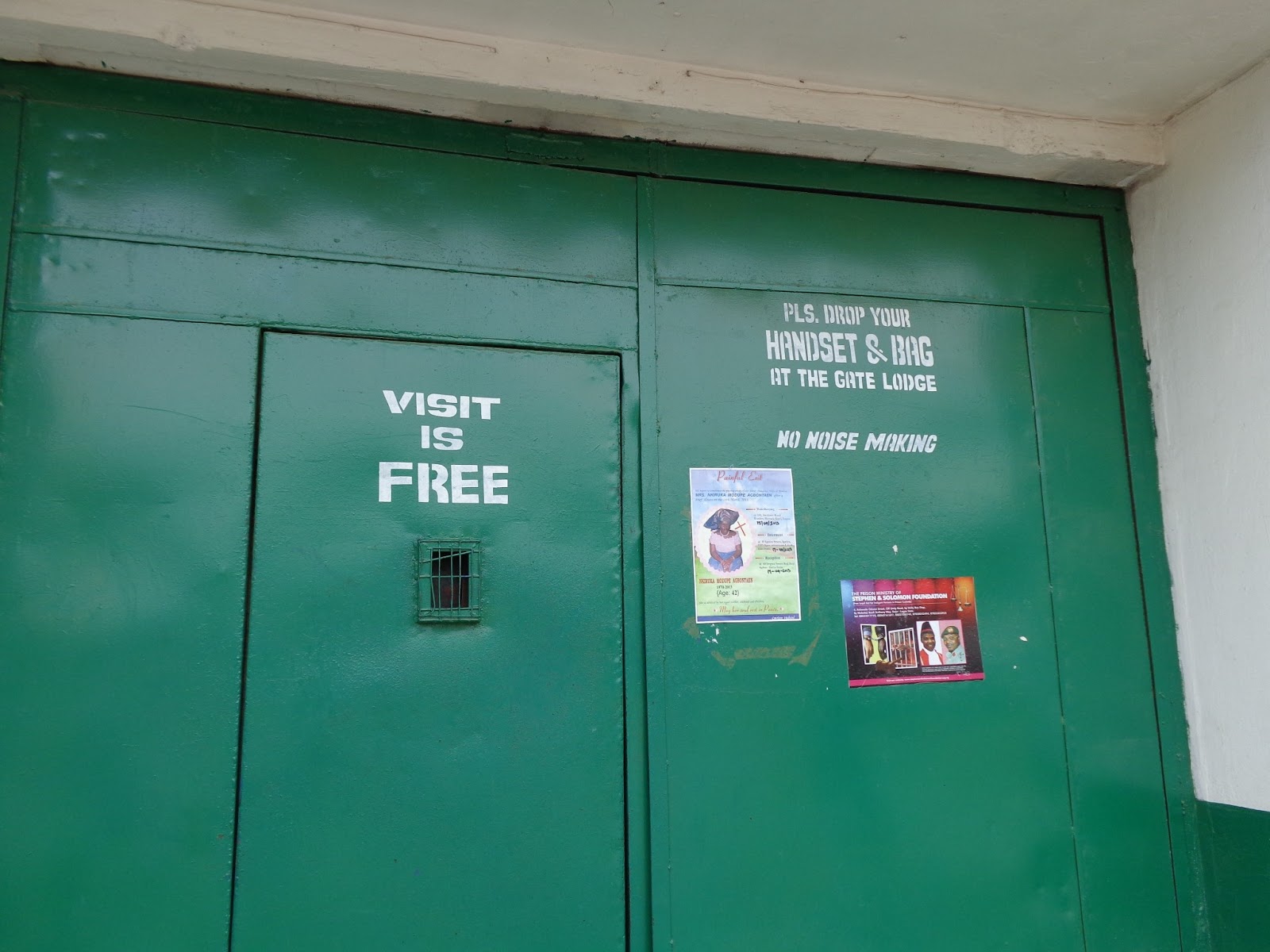
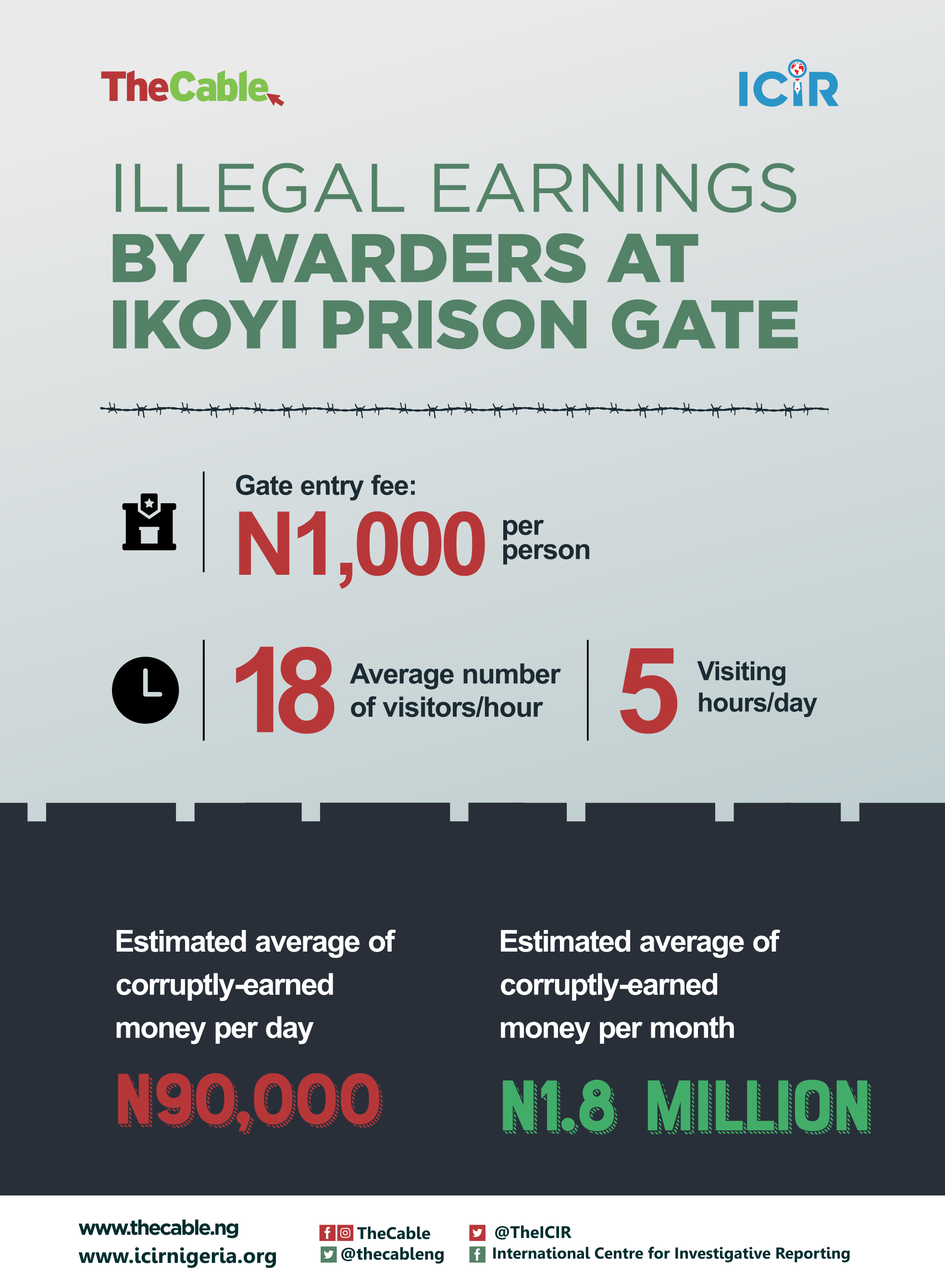
Before they knew who she was, one of my visitors had actually been made to pay a bribe of N1,000 at the prison gate before she could be allowed to see me, much like the setting at the police station. This wasn’t at the discretion of the visitor; it was no act of voluntary tipping. Rather, she was expressly asked to part with her money as a condition for access to me. On the surface, this looks a pittance, but not so when viewed in the context of the human traffic to the prison. On Saturday evening, I had managed to do a headcount of visitors: 18 of them in an hour. Do the math! This Ikoyi-visit corruption has grown in leaps and bounds, evidently; back in2016, a N200 bribe gave visitors access to an inmate. Not anymore!
Also, one of the few lawyers who visited me was nearly asked at the gate if he was willing to enter a deal to relocate me to a more enjoyable cell. “You look too clean for your client to be in D2,” a warder at the prison gate had told the lawyer, who, several years before his admission to the bar, had earned a reputation among colleagues for his clean shaves and bespoke suits. The warder waved the lawyer in, all smiles and niceties, and suspiciously keen to converse. Once a second warder turned up abruptly to announce the name of the client in D2, everything changed. The first warder slipped into jitters; his eyes became reddened, his face contouring into a frown. “You cannot sit there,” he said as the lawyer attempted to settle into a seat. “Come this way; remove your glasses; we need to thoroughly search you.”
N10,000 IS THE COST OF DELETING YOUR DETAILS FROM THE PRISON’S RECORDS
Until I was called to come receive my visitors, I made my every second in Block D count. Even before reaching the block, I knew I was on borrowed time. I was certain that it was only a matter of hours before I would have to reveal my true identity. So, in between registration, feeding and dispatch to D2, I mixed with inmates as often as I could. On one of those occasions, I overheard three inmates discuss a birthday celebration by a ‘Yahoo boy’ — Nigerian lingo for internet fraudster — in prison the previous week. “It was ‘lit’,” one of them said. A second, obviously the shortest-serving inmate of the trio, asked how some of the birthday items were smuggled in. “It’s the warders,” the third answered. “With N5,000 and above, most warders will help you smuggle anything you need into the yard.”
Elsewhere, I’d also run into a group of four inmates fielding questions from an inmate who was worried about the implications of his conviction. I was interested in it, knowing the consequences are long-lasting. Section 107(1)(d) of the 1999 Constitution of the Federal Republic of Nigeria (as amended) states explicitly that no person shall be qualified for election to a House of Assembly if “within a period of less than ten years before the date of an election to the House of Assembly, he has been convicted and sentenced for an offence involving dishonesty or he has been found guilty of a contravention of the Code of Conduct”. A similar provision in Section 137 (1)(e) makes it clear that a person shall not be qualified for election to the office of President if “within a period of less than ten years before the date of the election to the office of President he has been convicted and sentenced for an offence involving dishonesty or he has been found guilty of the contravention of the Code of Conduct”.
“What’s your business with that?” one of the inmates fires, irritated. “We will delete your name from the records. There will be no trace of you. Nobody will have any evidence that you ever came here, so forget whatever the implication is. My brother’s friend did it before and it cost him only N10,000. I’ll link you to the warder who did for him; he will help you too, but that will only be after you have regained your freedom.”
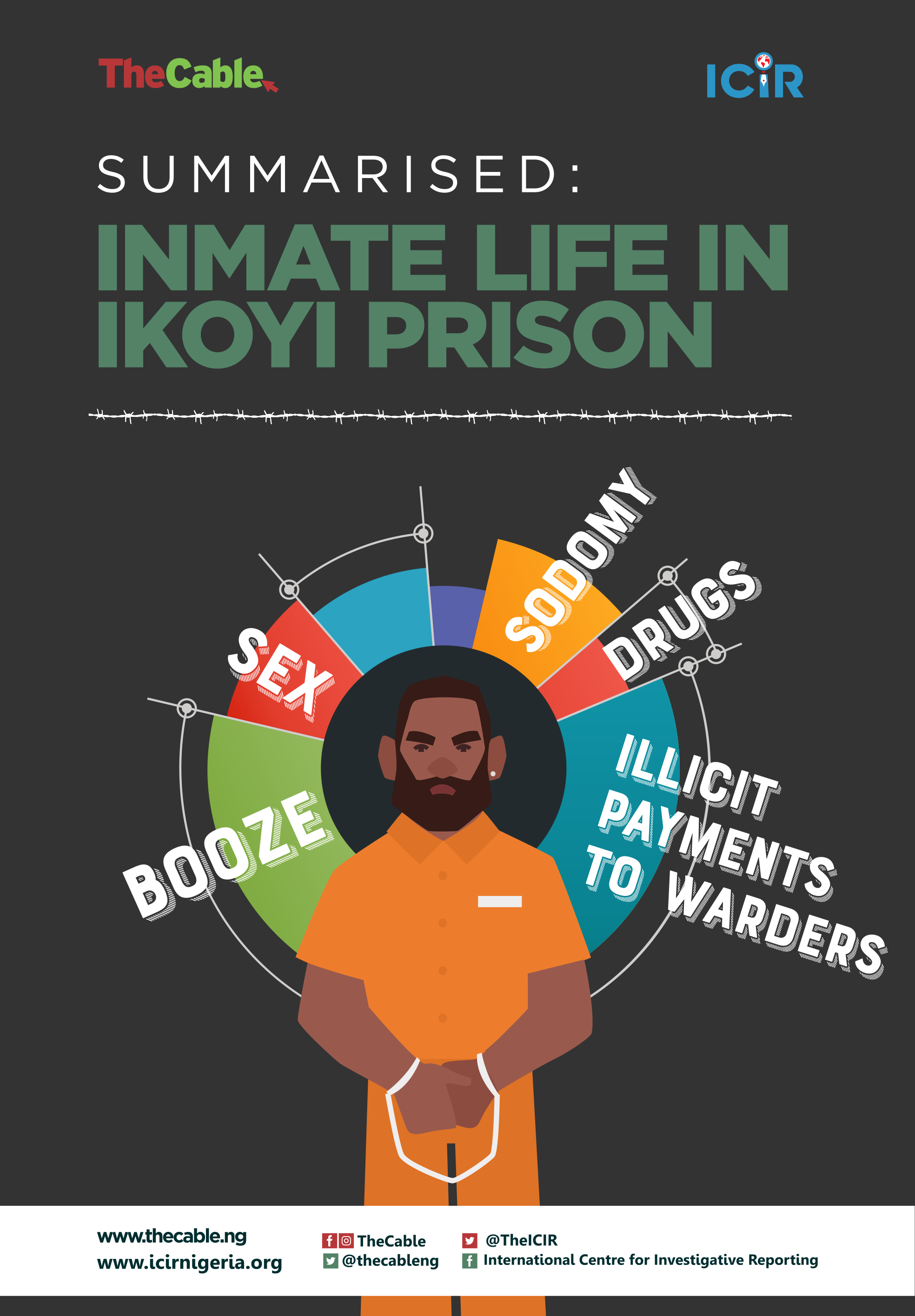
Sodomy, booze, sex and drugs…as long as you have your money
Colorado
While in prison, I’d exchanged contacts with an awaiting-trial inmate who had promised to reach out once he regained freedom. True to his words, he called on the day he exited Ikoyi Prison.
Weeks after, I drove about 340km out of Lagos to meet up with him.
“I saw how you were beaten up in prison and I didn’t want you to suffer in vain,” he says as we exchanged handshakes, each sizing the other up for elements of trust. “I’m going to help you by giving you additional information to what you already have. But this will be a very brief meeting, and this will be the only time ever you’d see me. That’s the best way for me to stay alive, because I know these bad guys will come after me if they trace any information to me.”
He explains that the special accommodation mentioned by the prison warders in court, which I was shielded from seeing, is called ‘Nicon Luxury’. It’s an apartment where inmates pay between N20,000 and N50,000 for a night’s sleep, plus access to cigarettes, drinks, Indian hemp, drugs and girls.
“The apartment has air conditioners, good couches and mattresses; meanwhile, 118 inmates are packed like sardines into one room that should normally hold 30 inmates. Those at Nicon are not only political prisoners or people of influence; just people who have the money.”
He describes the unfair world that the prison is, with only the poor truly imprisoned while the rich live fine.
“There is a lot of impunity in the prison,” he says. “An inmate, so long he is rich, can have almost everything, even sex. Inmates sleep with prostitutes. If you want to have sex, just tell the warders. They will bring a girl to the Nicon Luxury for you, set the two of you up; you f**k, you pay. It’s that easy,” he reveals.
“There is free flow of drugs in prison, which is impossible without the facilitation or compromise of warders. You’ll find Colorado [a hard drug] in huge sale; I took it myself. I paid just N5,000 each time I wanted it. Tramadol and refnol are sold, too, but Colorado is the highest in demand.
“Look at Vaseline, it is a very scarce commodity in prison but it is available at expensive rates for use in sodomy. At Ikoyi Prison, the powerful inmates sodomise the others, and it happens right under the nose of prison authorities. They know that these things happen. But, you see, the warders are the problem — because inmates do not have access to the outside world, and those coming from outside are screened from head to toe. Therefore, nothing can enter the prison without the knowledge of warders.”
Nothing like reformation or correction in prison
Nurudeen Yusuf
Despite the signing of the Nigerian Correctional Service Act 2019 into law by President Muhammadu Buhari, to reflect the new thrust of inmate reformation and correction, Nurudeen Yusuf, a Lagos-based legal practitioner and human rights activist, says any prison reforms that doesn’t kick off with warders is an “absolute waste of time”.
“With the sex, sodomy and abuse of drugs at Ikoyi and other prisons, there can be no reformation in the prison system. Under the law, inmates only have a right to one stick of cigarette a day, but look at the sheer availability of drugs to them,” he says.
“For instance, we got a guy out of Ikoyi Prison through our advocacy programme; we paid his bail sum of N100,000. We were shocked that he was desperate to go back. In less than three weeks, he got himself sent to prison — because of the big life he enjoyed there.
“The prison world is like an animal world. Inmates who have access to drugs, money and gadgets use that power to oppress the others. You see prisoners who have access to phones, they can extort outsiders right from inside the prison. Many prisoners convicted for fraud and murder are rich, and they live a big man’s life in there. Prisoners make cash transfers from their accounts while in prison.
“While in prison, inmates are supposed to learn new hands-on skills with which they can earn legitimate income after serving their time. But many of the workshop centres are not functioning, even in Kirikiri Maximum prisons; no materials, no resources to work with.”
Yusuf says he has had clients who were sodomised at Ikoyi Prison but the warders turned a blind eye because the victims were suspected Boko Haram members. “These people are innocent until proven guilty in court,” he noted. “Therefore, sodomising them is criminal; and this happens at almost every prison in the country.”
A 31-page piecetitled ‘Sodomy of Children in Maiduguri Prison and The ICRC Conspiracy of Silence’, released by imprisoned-for-life Independence Day bomber Charles Okah in March, details child prostitution, sodomy, abortions and even outright murder at the Maiduguri Maximum Security Prison, Borno State. Then Governor of Borno State, Kashim Shettima, subsequently set up a panel to investigate Okah’s claims, but its work was frustrated by Ja’afaru Ahmed, the Controller-General of the Nigerian Prisons Service and Sanusi Mu’azu Danmusa, the Maiduguri State Controller.
‘SET THE PRISONERS FREE, JAIL THE WARDERS’
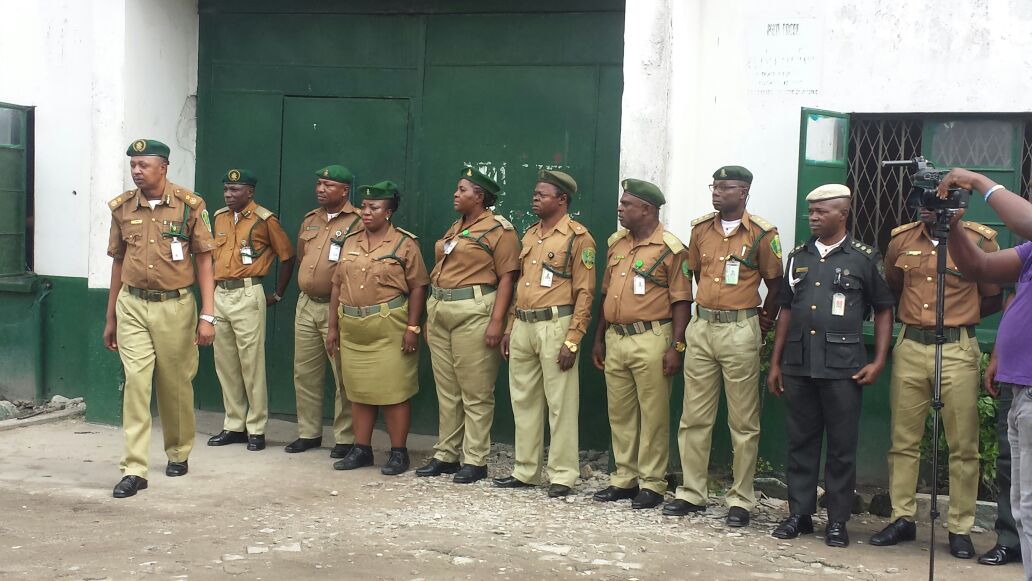
Ikoyi Prison Warders
Prisons in Nigeria, exist to“take into lawful custody all those certified to be so kept by courts of competent jurisdiction, produce suspects in courts as and when due, identify the causes of their anti-social dispositions, set in motion mechanisms for their treatment and training for eventual reintegration into society as normal law-abiding citizens on discharge, and administer Prisons Farms and Industries for this purpose and in the process generate revenue for the government”.
The NPS continues to fulfill all these basic functions, bar two — identify the causes of misbehaviour, and kick off treatment and reintegration to society. Incidentally, these two are the most important of the lot.
Yusuf worries that prison sentence is turning a catalyst for more crime rather than the deterrence it was intended to be. “The implication is that inmates have no remorse over the offence for which they have been convicted,” he says. “They are willing to commit more crimes. They have just become terrors unto the society, either in prison or out of it. If you have money, you can live the life of a governor while in prison. The only difference is that you don’t have freedom to go out of the prison.”
My ex-inmate-friend sums it up more chillingly. “I was convicted for fraud but I left the prison knowing I was a better human that many of those warders,” he tells me. “You see those warders, they’re the ones who should be in jail. They’re far more fraudulent than I was. Their freedom should be in my hands, not mine in theirs!
* This investigation was published with support from Cable Newspaper Journalism Foundation and the International Centre for Investigative Reporting, ICIR.
You may read the other part through the following links:
LAI Mohammed, the Minister of Information and Culture on Sunday restated commitment of the Federal Government to tackling fake news and hate speeches.
He told a group of online media publishers, Sunday in Lagos that a committee was already setup to implement the recommendations approved by President Muhammadu Buhari on the challenge of fake news.
Part of the recommendation, he stated is the upward review of the N500, 000 fine to N5, 000, 000 for the breach of hate speech regulation as well as full autonomy of the National Broadcasting Commission (NBC) to regulate the social media contents.
Describing hate speech and fake news as ‘Siamese twins of evil’, the Minister insisted that no responsible government would allow such to prevail in the society.
“Let me be clear: we didn’t think the issue will suddenly disappear, but we also didn’t think it will get worse, which is what it is now. In fact, it remains a clear and imminent danger to the polity,” says Mohammed, who is also believed to be a purveyor of fake claims and propaganda.
“No responsible government will sit by and allow fake news and hate speech to rule the airwaves, because of the capacity of this menace to exploit our national fault lines to set us against each other and trigger a national conflagration. That is why we will continue to evolve ways to tackle fake news and hate speech until we banish both.”
Government agencies such as the Department of State Security (DSS) and the Independent National Electoral Commission (INEC) have severally lamented about hate speech and its threat to democracy.
The ICIR has dispelled several fake reports made by politicians, businessmen and private individuals through its fact checks reporting.
The Minister also tasked the online publishers to support the nationwide campaign against the menace of fake news and hate speech.
According to a report by Channels, the committee is expected to also address the problem of monopoly in the broadcast sector.
“Let me be straight: No amount of attacks sponsored or otherwise will stop the implementation of the approved recommendations. And only non-patriots and anarchists will kick against measures aimed at putting an end to fake news and hate speech, especially in our broadcast industry.
“Only those who are guilty should be afraid of the efforts to sanitize the broadcast industry. Responsible broadcasters have nothing to fear. This is not a move to stifle free speech or gag anyone. But purveyors of fake news and hate speech should not expect to sleep easy.”
Meanwhile, the minister himself was exposed last year for selling a dummy to Nigerians about the ransom paid by the federal government to Boko Haram members who kidnapped female students in Dapchi, Yobe State.
‘’It is not true that we paid ransom for the release of the Dapchi girls, neither was there a prisoner swap to secure their release,” Mr. Mohammed told journalists in Maiduguri.
Contrary to this claim, the United Nations in a report confirmed that the Nigerian government paid a “large ransom.”
Mr. Muhammed has not denied that report since it was published more than a year ago.
KUNLE Adebajo of The ICIR and four other Nigerian journalists emerged winners in the 2019 West Africa Media Excellence Awards (WAMECA ) held on Saturday in Accra, Ghana.
The award themed “Social Media, Fake News and Elections in Africa” recognises exceptional journalists in the diverse field of journalism reportage within Africa while also celebrating and promoting media excellence in West Africa.
Adebajo emerged overall winner in the Telecommunication category to clinch the prize sum of $500 dollars for his report detailing the tardy response by federal ministries to email enquires from citizens, including journalists.
His investigation showed that out of the twenty-six addresses mailed, eleven were not available and of the fifteen which were valid, only three responded.
Other winners from Nigeria includes; Cletus Umoh Ukpong of the Premium Times who won the award for best investigative reporting and also won $500 dollars, Destiny Onyemihia of the Voice of Nigeria, VON, who emerged the overall winner for the Continental Journalism Award on AU Charter to win the prize sum of $2,000 dollars, Tunde Ajaja of the Punch also grabbed the $500 dollars prize for stories written on Business and Small Medium Enterprises.
Tobore Ovuorie of the Nation newspaper was the winner in the Human Rights category, with a prize of $500.
The event which started on October 17 held a two-day conference with panel discussions on protecting election integrity on the Internet, stopping fake news, accountability in journalism and other issues revolving around the media across the continent.
Amongst the editors, managers and influential media practitioners from across West Africa who deliberated on the different issues in journalism in the region was Dapo Olorunyomi, Publisher of the Premium Times, who expressed his dissatisfaction on the laxity of the Nigerian government to take action on corrupt practices perpetrated by the elite in the country.
He pointed out that although the country produced many journalism reports from the Panama Papers, it still remains the only country where nothing has been done by the government based on the findings in the illicit financial engagement by Nigerians indicted in the leak.
Journalists from the other West African states who came out on tops are Sama Jounwendsida Hugues Richard from Burkina Faso who was named the West African Journalist of the year,and Seriba Kone from Cote D’Ivoirewho won in the best anti-corruption category.