Guterres Antonio, United Nations secretary has warned that the UN may not have enough money to pay for staff salaries in the coming month if member states do not pay up what they owe.
Guterres said to make sure the General Assembly was held last month, several cut-backs on expenditures were made.
“This month, we will reach the deepest deficit of the decade. We risk … entering November without enough cash to cover payrolls,” said Guterres. “Our work and our reforms are at risk.”
The United States is the largest contributor – responsible for 22 per cent of the $2.85 billion regular budget for 2019, which pays for work including political, humanitarian, disarmament, economic and social affairs and communications.
Washington owes some $381 million for prior regular budgets and $674 million for the 2019 regular budget.
“The United States will be providing the vast majority of what we owe to the regular budget this fall, as we have in past years.”
“Overall the United States, as the largest contributor to the U.N., contributes roughly $10 billion annually in assessed and voluntary contributions across the United Nations system,” a US official from the U.S. mission said
Previously, Donald Trump, President of the United States has said Washington is shouldering an unfair burden of the cost of the United Nations and has pushed for reforms of the world body.
The US is responsible for nearly 28 per cent of the peacekeeping budget. However, Washington currently owes some $2.4 billion for peacekeeping.
U.N. spokesman Stephane Dujarric said 129 countries had paid their dues for 2019 so far, which amounted to almost $2 billion.
The top contributing countries are Ethiopia, India, Bangladesh, Nepal and Rwanda. They pay their troops according to their national salary scales and are reimbursed by the United Nations. As of July 2019, the United Nations paid $1,428 a month per soldier.
With the new financial set back the organisation might experience, Guterres said only essential travel is allowed, and some meetings may have to be cancelled or deferred.
U.N. operations in New York, Geneva, Vienna and Nairobi and at regional commissions will be affected.
U.N. peacekeeping missions are funded by a separate budget, which was $6.7 billion for 2019, and $6.51 billion for 2020 fiscal year which ended in June 30.
THE Nigerian Army on Saturday announced the capture of 10 suspected key Boko Haram members at Bitta in Gwoza Local Government Area of Borno State, as they tried to escape during an attack,according to a report.
Aminu Iliyasu, Nigeria’s Army Operations Media Coordinator, a colonel, disclosed this in a statement in Abuja affirming that the sting operation conducted by troops of the 26 Task Force Brigade, which led to the arrest of the suspects, was a success.
In his statement, he confirmed that some of the arrested members have been identified to have operated combat vehicles during the infamous Boko Haram attack on Gwoza in 2014.
“The arrested suspects include Shettima Mustapha Umar, Abba Buji, Alhaji Bukar Madu-(KAHID – a Boko Haram Terrorists’ equivalent of a Brigadier General), Ali Hassan (Boko Haram Terrorist Imam) and Alkali Laminu.
“Others are Bukur Mustapha, Buba Umaru (alias Black Uhuru) also a KAHID, Madu Nosobe, Mustapha Hussain and Umar Jeddum all from Bama LGA of Borno State.
“It is gratifying to note that one of the arrested suspects, Alhaji Bukar Modu is Serial 89 on the high profile Boko Haram leaders wanted list published by the authorities of the Nigerian Army,’’ he said.
Iliyasu said that the troops of the Nigerian Army had raised up the bar on their operations across the nation to checkmate the activities of criminals, and the operations have been yielding results.
He also said that troops of 1 Division Garrison Tactical Headquarters, Kaduna, intercepted suspected cattle rustlers and recovered 23 rustled cows in Birnin Gwari Local Government Area.
According to him, the army is making effort to identify the owners of the stolen livestock.
Iliyasu said five herdsmen complicit in the murder of one Haliru Yahaya on his farm in Birniwa in Jigawa State were arrested in a joint operation by the army and police.
The operations spokesman said the arrested suspects were currently in the custody of the Nigeria Police in Birniwa while troops maintain vigilance in the area to forestall escalation.
Armed robbers, kidnappers, vandals and oil bunkers were also arrested in Edo, Ondo, Ogun, Plateau, Delta and Rivers states in different operations of the army, Iliyasu said.
Dele Agekameh, a Nigerian veteran journalist and writer has died at the age of 60 after almost a decade battle with kidney disease.
The award-winning journalist before his death on Friday in Lagos was a columnist for top Nigerian dailies and former Senior Editor in TELL in 2004 before setting up Quicklink International Network, publishers of The Capitol International Magazine.
According to the family of the deceased, Agekameh was first diagnosed in 2010 before seeking medical advice in India in 2012, where he underwent surgery. However, the medical practitioners had advice a kidney transplant as a permanent solution to his complication.
The son of the deceased Fabian Agekameh said his father lost his life due to the horrible state of the Nigerian health sector. He said his father after running series of check-ups and being on dialysis both in Kidney Solutions, off Adeniyi Jones in Ikeja and Babcock University Teaching Hospital (BUTH) was transferred to Lagos State University Teaching Hospital LASUTH upon complications on Friday.
“According to his assistant who was with him, around 5 pm, the decision was taken to transfer him to a bigger hospital. Several calls were made for an ambulance to no avail until they decided to hook him up to oxygen and transport him with his personal car.
“After fighting traffic to get to Lagos State University Teaching Hospital, there was another issue getting him into the emergency ward, as nurses who were finishing their shift refused to attend to him, based on the account of those with him.
They reportedly said the doctor that could attend to him was busy and they should wait. He was still in his personal car, clinging to life when a doctor went out there to pronounce him dead, the son told Premium Times.
Fabian said although the doctors had pronounced his father dead on arrival, his driver and personal assistant insisted he was still alive after they had reached the hospital.
The body has been deposited at the LASUTH morgue while awaiting an autopsy.
Before his death, Agekameh wrote many investigative reports and one of them for which he was recognised exposed the network of a cross-border car smuggling business.
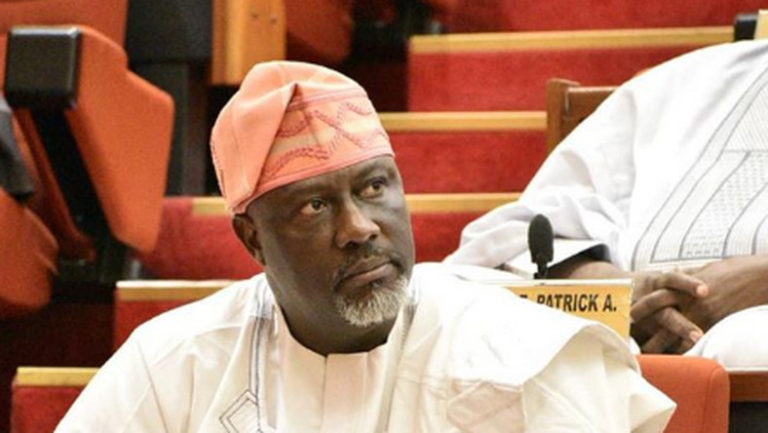
APPEAL court sitting in Abuja, on Friday sacked the Senator representing Kogi West, Dino Melaye and ordered a re-run of the election.
Dino Melaye appealed against the decision of the Kogi Election Petition Tribunal which ruled that the election that brought Melaye as a senator representing Kogi West for a second time in office be re-run.
Smart Adeyemi, the All Progressive Congress (APC) candidate approached the tribunal to nullify the election over the basis of over-voting, irregularities and non-compliance with the electoral act.
During the February 23 election in Kogi state, the PDP candidate Dino Melaye had 85,395 votes while APC candidate Smart Adeyemi had 66,092 votes.
However, the election has been nullified by the Kogi Election Petition Tribunal and the Appeal Court.
Dino Melaye also confirmed the news of his sack at the tribunal on his official twitter handle, urged his supporters to be law-abiding as they await the rerun of the election by November along with the Governorship elections of the state.
“I just lost my election at the Appeal Court and fresh election ordered. In all things, I give God the praise. He who started a good thing will definitely complete it. I ask my supporters to be law abiding as we shall always overcome. To God be the Glory,” he wrote.
Melaye and the PDP have been reported to be at loggerheads following his aspiration to contest as the gubernatorial candidate of PDP.
He expressed his displeasure at the primary elections after losing to Musa Wada as he also rejected the appointment as the Director-General of the Kogi State Campaign in 2019.
“Let me state categorically that I have turned down the position of Director-General of the PDP Kogi State Governorship Campaign Council. I wish PDP all the best. When truth is a casualty there is chaos,” he wrote on his twitter handle.
NOT less than 80,000 of Yellow cards that are issued to Nigerians as a proof of being administered with the yellow fever vaccine before travelling out of the country are now being sold in the markets and streets, without the travellers taking the vaccine, and causing the government to lose up to N200 million.
This was revealed in a report of an investigation carried out by Progressive Impact Organization for Community Development, PRIMORG, a civil society organization working in the areas of accountability and anti-corruption.
The report revealed that some top officials of the Federal Ministry of Health (FMOH) carted away some of the e-yellow cards printed by the Federal Government which are meant to be issued to individuals after they must have taken the vaccine at the designated clinics, airports and border posts.
The card which officially costs N2,500 is sold to prospective travellers at prices as high as N5,000 without taking the vaccine, thereby undermining the objective of the yellow fever immunization.
The government has been making efforts to recover all the stolen cards with little success.
A copy of the yellow card obtained by PRIMORG undercover reporter was marked B947006 bearing the Nigerian coat of arms and a scan code to verify the card’s authenticity while the medical detail in the card was pre-filled, indicating the type and milligram, the date and the official stamps of the “PORT HEALTH OFFICE, FMOH NIGERIA”.
Earlier in February, the federal government had approved the issuance of Yellow Card that could be read electronically to eliminate the incidents of forgery and sales of fake cards at designated locations.
Copies of the e-card obtained by Primorg reporter during the cause of the investigation. By the right is the one purchased at a black market. Photo credit: PRIMORG.
To kickstart the issuance of the new cards in April, the Health Ministry printed one million e-cards in two batches─ 500,000 copies each for the A and B categories. Government has hoped to make over N2 billion from the sales but as thousands were stolen, the projected revenue reduced and the yellow diseases increase.
“Some unscrupulous staff stole a chunk of the cards from batch B and began sales of it in the open market to travellers who do not go through the process of vaccination,” the report stated.
“We gathered that the Ports Services Unit has not exhausted the yellow cards in the Batch A category. But the containers housing batch B was violated and bulks of them stolen by some of the health officials who were mandated to keep them safe.
“It is believed that the cards at the black market will be worth more than N200 million,” said PRIMORG.
Though the government has identified those who cart away the printed cards, no serious actions have been taken against them.
An official that had stolen 11,000 cards at Kano was only removed from the issuing desk of the Port Health Services Unit of the Federal Ministry Health to another unit. That means the official carted away goods worth N27.5 million at the official price of N2,500.
“The incident in Kano has not been properly investigated as some of the indicted officials have tapped on high-level connections in government to silence the senior Ministry officials in Abuja to achieve a cover-up,” PRIMORG reported.
According to the World Health Organisation, Yellow Fever is a viral haemorrhagic disease transmitted by infected mosquitoes to humans. Symptoms of yellow fever include fever, headache, jaundice, muscle pain, nausea, vomiting and fatigue.
It could become deadly for individuals not vaccinated. It could affect the liver and the kidneys. It could also cause jaundice- yellowing of the skin and eye, dark urine and abdominal pain with vomiting. Bleeding could occur from the mouth, nose, eyes or stomach.
“Half of the patients who enter the toxic phase die within 7 – 10 days,” said WHO.
Meanwhile, the disease is prevented by vaccine. The vaccine provides effective immunity within 30 days for more than 99 per cent of people vaccinated.
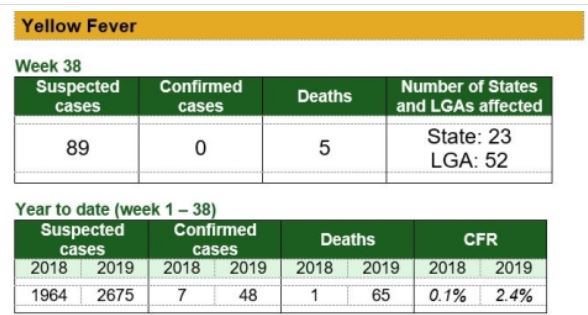
The cases of Yellow fever in Nigeria as of September 22, 2019. Credit: NCDC.
Nigeria has a high prevalence of yellow fever with an increase in 2019.
According to the weekly epidemiological report published by the Nigeria Centre for Disease Control for the Week 38 in 2019, Nigeria has recorded 2,674 suspected cases of yellow fever, and 65 of the people have died as against one death recorded in the whole of 2018.
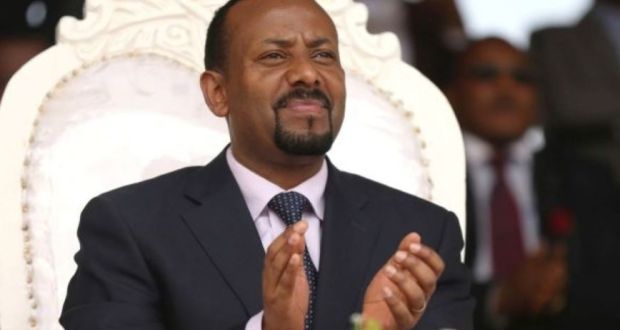
ON Friday, Abiy Ahmed, the prime minister of Ethiopia, was conferred the 2019 Nobel Peace Prize by the Nobel committee for his peacemaking efforts which ended twenty years of hostility between his country Ethiopia and Eritrea.
Ahmed, the first Ethiopian to be awarded a Nobel Prize was commended by the Nobel committee for his efforts in restarting the peace talks with Eritrea that ultimately resolved the crisis between the two countries.
“In Ethiopia, even if much work remains, Peace Laureate Abiy Ahmed has initiated important reforms that give many citizens hope for a better life and a brighter future. As Prime Minister, Abiy Ahmed has sought to promote reconciliation, solidarity and social justice,” the Nobel committee stated in a Twitter post.
The two nations have ethnic and cultural ties, but decades of animosity between them had torn families apart and worsened Eritrea’s isolation as a repressive country.
Over 100,000 people were estimated to have been killed in cross-border attacks between the two countries in twenty years.
A peace treaty was signed by both countries at a summit that took place between July 8-9, 2018 in Eritrea, leading to a gradual and beneficial friendship between both countries.
It is the second year in a row an African is being named as winner of the prestigious prize. Ahmed will become the 100th Nobel Peace Prize in Oslo, where he will receive the award in December.
The 2018 Nobel Peace Prize was jointly awarded to Nadia Murad and Denis Mukwege. Murad, a 26-year-old Yazidi woman, was honoured for her support towards women who survived sexual and domestic violence from Islamic State militants.
Mukwege is a Congolese gynaecologist, who was honoured for treating thousands of women and other victims of the violence in the Congo.
The Nobel committee said this year’s peace prize also honoured those who contributed to resolving the cross-border conflicts across East Africa.
With Nigeria’s porous borders and corrupt law enforcement officers, anyone can conveniently cross into and leave the country or smuggle in goods without having to answer questions or present relevant documents—until a border closure was announced in August.
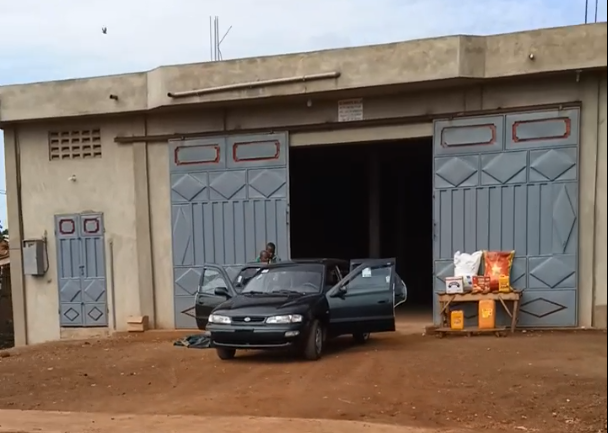
“OKAY, let us pray,” announces the cab driver. For years, the forty-something-year-old has safely conveyed passengers through the three-hour distance between Kanga, a border town in Benin Republic, and Abeokuta, Ogun State.
“In the name of Jesus… Thank you, father, that you have made this journey hassle-free for us,” he continues passionately, at the same time steering his old-model Mazda 626 through the untarred road.
“If we have committed any sins that may hinder our prayers from getting answered, father, holy spirit, forgive us. Make us holy. If there are forces, seen or unseen, that may want to sabotage today’s journey, forces of witches and ritualists, blood-spilling forces, in the name of Jesus, nip them in the bud. All enemies of progress on this path, go into oblivion! All spirits must bow in the name of Jesus!”
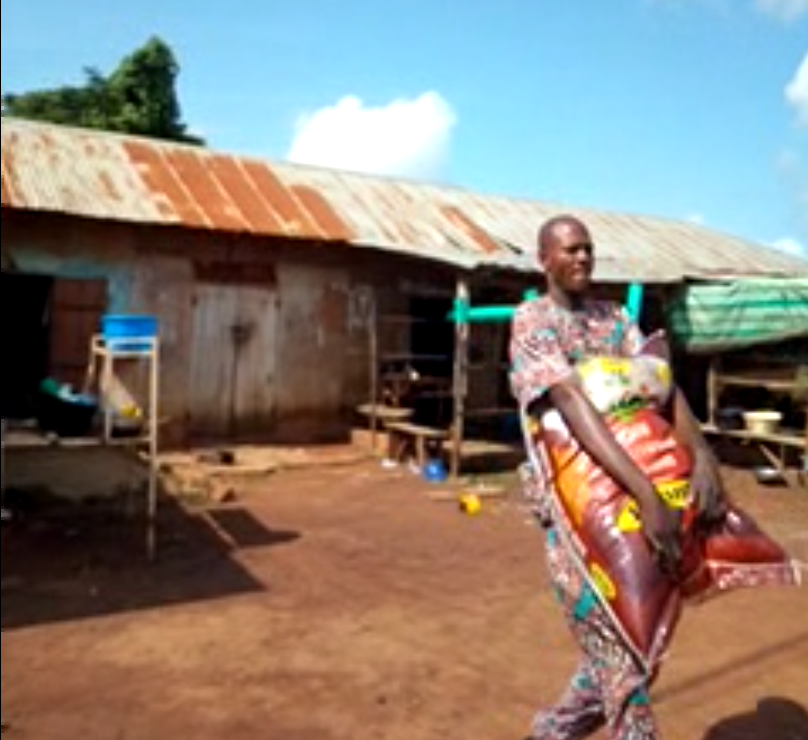
After four minutes of praying and mumbles of ‘amen’ from the passengers, the driver, whom many—including himself—simply prefer to call ‘pastor’, soon stops to receive one bag of rice, which he places in the trunk. “It is so I can have something to buy fuel with,” he explains with a smirk.
In 2018, President Muhammadu Buhari stated that rice importation has been cut by about 90 per cent and praised improvements in the local agricultural sector for this. The figures from the Thai Rice Exporters Association showed that while in 2015 the Asian country exported 644,131 metric tons (MT) of parboiled rice to Nigeria, this dropped to 58,260MT in 2016 and then 23,192MT in 2017.
Rice exports to Benin Republic, however, skyrocketed by an even greater measure within the same period.
Benin imported 805,765MT of rice in 2015, but this figure grew to 1,811,164MT as of 2017. This is in spite of the 2013 Benin Coarse Grains and Rice Report stating that the country only requires 385,000MT for local consumption. The bulk of the rice received into the francophone country—as admitted also by former agriculture minister Audu Ogbeh—is therefore smuggled into Nigeria.
‘Pastor’ struggles to move 50kg of rice to his trunk.
Rice smuggling is quite profitable and is done by many taxi drivers operating at the Ilara-Kanga park to make extra cash. According to one of the drivers, a bag of rice in Benin costs N9,700 while the selling price in Nigeria is as high as N17,000. The driver who smuggles it in from Ilara has an average cut of N2500 per bag.
But it is not only rice that is smuggled into Nigeria. Bringing in migrants without papers is another lucrative practice; and, usually, all goes well as long as the palms of border patrol officials are well greased. While a Nigerian coming into the country is asked to pay a fare of N1500, Beninese are charged as high as double that amount.
This reporter travelled to Bohicon, Benin Republic, on Thursday, August 8, and returned to Nigeria on Saturday, August 10, via the border at Ilara without an international travel passport. Yet, he was not queried anywhere along the road—despite the presence of numerous security checkpoints every few kilometres.
‘Pastor’ gripes that across the stretch of road there are six checkpoints manned by operatives of the Nigeria Immigration Service (NIS) and nine belong to the Nigeria Customs Service. There are a few other checkpoints too where we have officers of the Nigerian Army and Nigeria Police. In all, this reporter counted no less than 26.
N200 note: the new travel passport
In February 2018, Nigeria’s ambassador to Benin, Kayode Oguntuase, pointed out that there are 42 illegal checkpoints between the border at Seme and Mile 2, Lagos, and that security personnel at these places extort money from travellers. Transporters who ply the route have also complained of losing between N9,000 and N10,000 to extortion in trying to cross the border. But this problem is evidently not limited to the Seme cross-border route.
There seems to be a long-standing tradition between the smugglers and security operatives regulating how much the charge is per bag of rice or illegal immigrant. But this is subject to negotiation. ‘Pastor’ who picked up only a bag of rice has to pay officials of the NIS and Customs N200 at every stop.
On the other hand, policemen, whose checkpoints are closer to the Abeokuta end of the stretch, could be offered N100. One of them, at a checkpoint about 15 kilometres from Ogun State’s capital, had on a blue uniform with a name tag ‘Otu Rasheed’.
During the trip, while the driver always states correctly that he has only one bag of rice in the car, he is not as honest about the number of Beninese passengers. “I only have two Egun people [used generally to refer to migrants from Benin Republic],” he says at the third checkpoint. “The rest are Yoruba.” Whereas, a headcount he conducted at the start of the trip had established that there are two Yoruba passengers and four from the neighbouring country.
At another security checkpoint where a relative of his is on duty, the driver escapes paying by declaring he has only Yoruba passengers.
In many cases, the illegal exchange of money is not done under the table but so openly that passers-by also witness it. In one instance, a law enforcement agent, in fact, asks if there’s still room in the car for another bag of rice.
“Give me N300,” says the driver as he hands over a N500 note.
A law enforcement officer accepts bribe to overlook smuggling.
A law enforcement officer accepts bribe to overlook smuggling.
* * *
“Collect N200 from him,” an NIS official donning black tee-shirt and jeans cries at the fourth checkpoint. “Sefiu, I said collect N200 from him. He doesn’t have a choice.”
“I am not fighting with you, we are only doing our work,” he adds. “If you carry one bag of rice here, we’ll collect our money. The same thing if you carry 10.”
‘Pastor’ explains as he starts the engine that he recently conveyed the officer and insisted on charging him N2,000, the same fare paid by everyone else. The officer had since vowed to make all the money back through extortion.
“In smuggling rice, to enter Ilara there is simple. To move from Ilara to Abeokuta is where the problem is,” the driver says, to no one in particular.
Halfway into the journey, a few kilometres before we get to Obada Idi-Emi, the driver is lucky to be stopped by a generous official who has on a black long sleeve shirt with a blue collar.
“Don’t be angry sir, I was able to carry only Yoruba people today. I have one bag of rice too. Please, oga mi; this is what I have left. I still have to settle immigration,” the driver pleads.
After he is signalled to proceed, he goes on to brag about the importance of being cunning.
“My people, it takes wisdom,” he says with self-satisfaction.
“The bible says we should combine wisdom with faith and combine faith with knowledge. The operatives are ready to collect all you have with you. They don’t give any considerations. Don’t they know how many checkpoints we pass through before getting to their place?”
A motorcyclist tranporting several bags of rice crosses the border into the Nigerian territory at Ilara.
A border where business booms
A new arrival at Ilara, a border town between Nigeria and Benin, is likely to first notice two things aside that signposts are written in French language: huge trucks and warehouses at every turn. It is a goldrush and everyone is struggling to have a share, but this time the trending commodity is not a hoard of gold. It is rice.
The trucks are used to transport rice from the coastal city of Cotonou to the border communities, where warehouses of various sizes abound. The bags are then loaded on top of motorcycles and taken into smaller stores in Nigeria, from where the cabbie-smugglers take over.
Traders and drivers in the town are reluctant to share insights into how the business is run because of the fear of unknowingly implicating themselves. One of the big warehouse owners recently ran into trouble with law enforcement agents and had to pay in respect of eight truckloads of rice, narrates one of them.
A sales boy at a smaller shop, trying to wriggle out of the conversation, says the shop was just recently established and he doesn’t know much about the business.
“But if you check this route here,” he adds dramatically while pointing to his left, “there are a lot of magazines [trucks]. A lot!”
“If you go to the other end of the road too,” he says, now pointing to his right, “there are a lot of them. This untarred road leads directly into Nigeria.”
Bags of rice are offloaded from a huge truck and stored at a warehouse at Ilara-Kanga.
Nigerian govt. intervenes
In August, Nigeria partially closed its western border with Benin, triggering protests from the Economic Community of West African States (ECOWAS).
Though statistics from the World Agricultural Supply and Demand estimates suggest the country hardly produces half of its local consumption need, President Buhari has said the closure is meant to curb the “alarming” rate of rice-smuggling.
The recent reinforcement of border security, codenamed Exercise Swift Response, has according to the NIS led to many arrests of people attempting to come in through unlawful routes.
“The border is tight now,” remarks NIS spokesperson Sunday James in an interview with The ICIR. “Nobody enters into this country without a valid document and nobody exits the country without valid documents.”
He also explains that the agency has put in place standardised machinery to check excesses at the border. One of them is the migrant e-registration.
“We are registering all migrants residing in Nigeria whether regular or irregular,” he says.
“That is another way of controlling the entrance and exit of people into the country. And if within the country we are controlling non-Nigerians by virtue of registration, you should know definitely that anybody that is going to come from outside the country must go through clearance and checks.”
He says the project, flagged off on July 12, has documented a total of 4,733 of migrants as of Friday, September 6.
Foreigners generally have to get a visa before they can come into Nigeria, James explains, and then citizens of the ECOWAS member-countries “must come with valid travel documents: ECOWAS travel certificate and ECOWAS National Biometric Identity Card”.
That was, however, not the reality at the border weeks ago.
‘Pastor’, during a later phone conversation with this reporter, confirms it is now very difficult to smuggle in either bags of rice or foreigners.
“Rice can be transported from Cotonou to Ilara but getting it into Nigeria is very difficult. As a matter of fact, they don’t allow us to bring even one bag,” he laments.
He says there are however drivers who still smuggle in items. But they do this at great risk through the forest routes. If caught, the smuggled commodities would be confiscated. He tells this reporter that travel documents are also checked under present circumstances.
In his words, “If you are going to bring in anyone without a passport, it’ll have to be fayawo [through secret detours].”
‘Pastor’ is hopeful though that the borders will be re-opened soon and it will be business as usual.
“Even if it is one trailer-load of rice you need from Cotonou or half… We know how to do it without a problem,” he says confidently. “But I will advise we exercise some patience.”
* This investigation is supported by the Institute of War and Peace Reporting and the International Centre for Investigative Reporting, ICIR.
You may read the other parts through the following links:
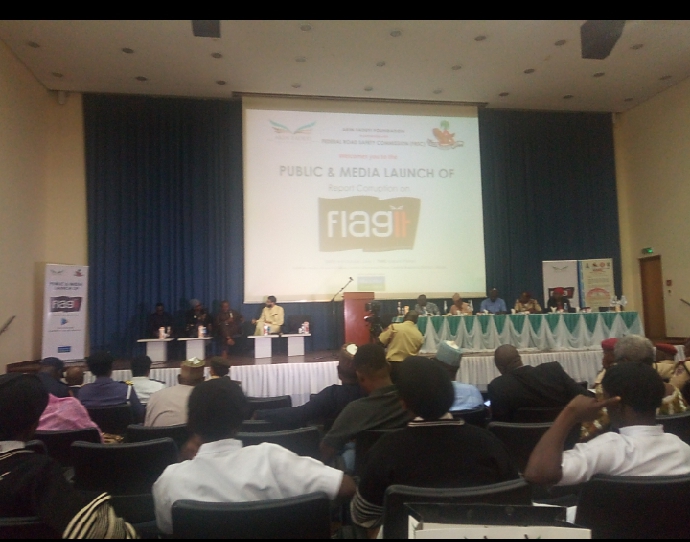
AKIN Fadeyi Foundation and the Federal Road Safety Corps (FRSC) on Thursday held the public and media launch of an anti-corruption application called FLAG IT on Thursday.
The launch which was held at the Shehu Musa Yar’adua Centre in Abuja was attended by dignitaries from civil society, government agencies and the press.
Vice President Yemi Osinbajo represented by the special adviser on rule of law, Rasheedat Waziri, said the initiative aligns with the vision of the Federal Government on the fight against corruption. Corruption, the VP said, slows down development goals in Africa.
The Corp Marshall of the Federal Road Safety Corps, Boboye Omoyemi during his address said corruption has occupied a large space in the country and that FRSC has been working on plans to ensure that the agency is rid of corruption.
“In terms of rescue services, this is one of the places that the FRSC has been receiving commendations, we have recovered millions of naira, pounds sterling and dollars from road accidents and no one has ever complained.
“Since my appointment, we have terminated the appointment of 72 staffs 52 are under trial and by the next meeting of FRSC board of directors, the board will confirm the disengagement of another 42,” he said.
He said the FRSC has a functional establishment unit, Servicom and desk office to work with the anti-corruption agencies like ICPC and EFCC.
A welcome address was delivered by the founder of the Cable, Chairman Board of Trustees, Akin Fadeyi Foundation, Simon Kolawole, who read the speech of Akin Fadeyi, the founder of Akin Fadeyi Foundation.
According to him, the Flag-It initiative is a measure to enhance accountability and report corrupt practices as well as excellent services.
“Earlier this year EFCC boss Ibrahim Magu said between 2015 and this year about 1.3 trillion naira has been stolen by 32 individuals and one third of the amount using world bank rate and cost can construct 500kilometer road, build close to 200 school, educate about 4000 child from primary to tertiary institution at 25 million per child, 20000 unit of 2 bedroom flat across the country.
“The culture of corruption that has been created over the years have become very difficult to fight, we must start by talking to the man in the mirror by asking what is my role in fighting corruption and building a Nigerian nation of our dream,” he reiterated.
He added that with this initiative, the fear of Flag-It will become the beginning of wisdom.
Kole Shettima, Director, Africa Office, MacArthur foundation appreciated the Akin Fadeyi Foundation and FRSC for the event. He mentioned how he read an article on Thisday that brought his attention to Akin Fadeyi Foundation, then he said they must look out for them to see whether they can support the work that they do. “I was inspired by the fact that they are challenging all Nigerians that they also have a responsibility for ourselves, our children and the nation.
“They are not just pointing fingers at the government but also at ourselves by saying that we as citizens have a responsibility to make this country what we want, its not just enough to look up to the president, governor or local government chairmen for their actions but we have a responsibility to do all we can to ensure a better nation.”
Chairman of the Presidential Committee on Corruption, Itse Sagey represented by Kelechi Amadi, said people are compelled to pay for the services they ought to get for free but this has not been possible because of corruption. The political economy of the nation has been producing overnight billionaires who are called leaders by the day, said Sagay.
Nigeria Representative of United Nations on Drugs and Crimes (UNODC), Oliver Stolpe lamented about how corruption is eating up Nigeria.
“In 2016, the UN and the National Bureau of Statistics (NBS) carried out a survey on bribery and it was found out that bribery is on high level in the country especially among traffic management agencies”.
Flag-it, therefore, is an important tool in the arsenal of the anti-corruption war he said.
During the Panel discussion which consisted of Ademola Henry Adigun, an oil governance consultant , Ramotu Umar Bako, head of influencing and public engagement at Oxfam, Auwal Rafsanjani, Executive Director, civil society legislative advocacy centre, Ajuri Nagale, Special Assistant to the president on public affairs and Chido Omonuah who was the moderator of the discussion, the panel opined that there is need for partnership between the government agencies, the civil societies, the media and as well as the private sectors.
Auwal Rafsanjani added that the fight against corruption should be institutionalized and should not be a personal thing so that when a government leaves, the anti-graft fight will not leave with it.
Dapo Olorunyomi, the publisher of PREMIUM TIMES spoke about furthering the role of investigative media in Nigeria’s search for accountability.
He stressed the need to nurture investigative journalism and how technology can help to drive it.
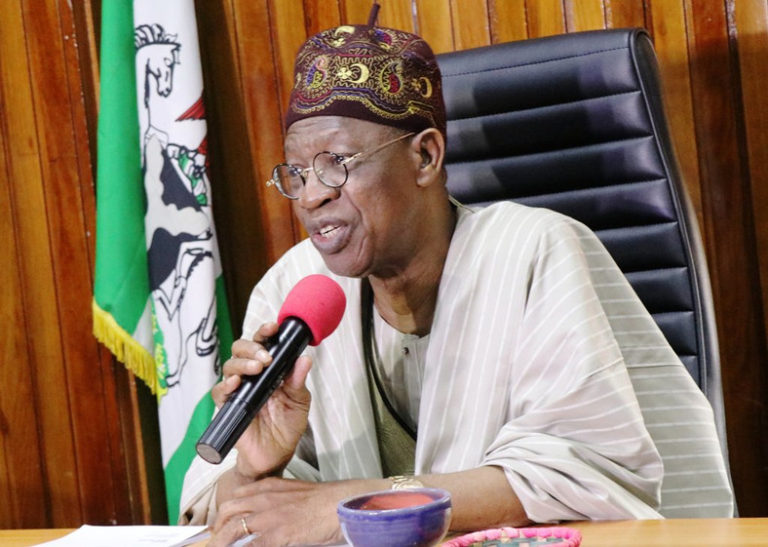
LAI Mohammed, minister of information and culture, in Abuja on Thursday, said online news platform will soon be regulated.
During the inauguration of a seven-man committee set up charged with the implementation of reforms in the National Broadcasting Commission (NBC), the minister said the committee is to implement recommendations supposedly approved by President Muhammadu Buhari.
Mohammed said the president has approved an amendment to the NBC act which would enable the committee license WebTv and radio stations, including foreign broadcasters beaming with wide reach or coverage that extends to the country.
“The terms of reference of the committee are as follows; To establish and publish a new regulation for the licensing of web and internet broadcasters/international broadcasters in Nigeria.
“To immediately commence work on all statutory, legal and regulatory framework for further legislative action on the review of the NBC act by the national assembly.
“To work out the modalities for a competitive and reasonable salary, wages and other welfare needs of the staff of the commission.
“To establish necessary protocols for the establishment or appointment of professionals or technocrats (non-partisan personality) to run the agency, and appointment into the board of the NBC.”
The minister said the president also approved the upward review of fines from N500,000 to N5 million for breaches relating to hate speeches and the upgrade of political comments as ”Class A” offence in the broadcasting code.
“I do not doubt that this committee, which comprises highly-experienced professionals and administrators, will carry out a thorough job that will reposition the NBC as an effective and efficient regulator,” he said.
The committee is comprised of Armstrong Idachaba, NBC director of monitoring (chairman); Godfrey Ohuabunwa, acting chairman of the Broadcasting Organisations of Nigeria (BON); J.K. Ehicheoya, director, legal services, ministry of information and Culture; Binta Adamu Bello, secretary, Association of Local Governments of Nigeria (ALGON); Ibrahim Jimoh, director of administration, FRCN; Agbo Kingsley Ndubuisi, NBC board member and Joe Mutah, chief press secretary, ministry of information and culture (secretary).
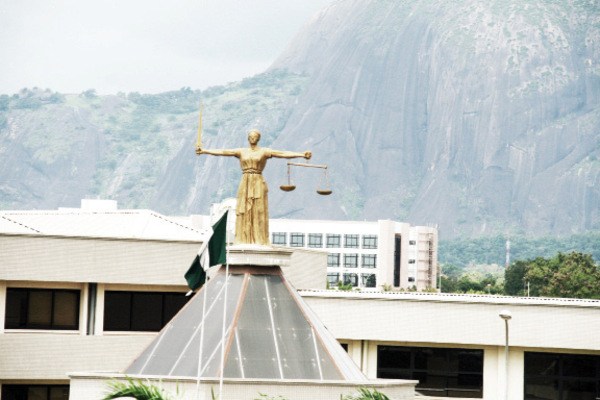
A Federal High Court sitting in Abuja on Thursday ordered the final forfeiture of N550 million and N51 million, identified as being proceeds of fraudulent practices belonging to Titus Okunrinboye.
The presiding judge, Justice Giwa Ogunbanjo granted the prayer of the Economic and Financial Crimes Commission, EFCC, to make a final forfeiture of the monies to the Federal Government.
The trio of Titus Okunrinboye, Vincent Odafen and Muara Muhammed Gambo are being prosecuted by the EFCC for allegedly operating companies, which were alleged to have been used to siphon public funds under the façade of contracts and consultancy.
In June, the EFCC had applied for interim forfeiture before Justice Giwa, who granted the application and stipulated that the Commission should place the application in a national newspaper.
Prosecution counsel, M.S. Abubakar, told the court that the Commission had complied with the judge’s stipulation by advertising the interim forfeiture application.
“We have complied and we’re now back to apply for final forfeiture and the affidavit in support of the motion on notice, as the defendant has not filed any counter,” he said.
Justice Giwa asked the prosecution counsel to serve the defendant the notice on the motion. He urged Abubakar to make sure that the account number filed by the prosecution for the forfeiture is thoroughly verified to be a Central Bank account number and must be supported with documents to ensure that where the funds would be transferred is a genuine federal government’s account before adjourning to October 10, 2019, for ruling on the final forfeiture application.
At the resumed hearing today, the prosecution counsel urged the court to grant EFCC’s prayers since there was no counter-affidavit against the application.
The motion on notice filed by the EFCC for the final forfeiture reads “A final order of this honourable court for forfeiture to the Federal Government of Nigeria of funds lying in the Zenith Bank Account No:208383581 (Okunrinboye Tomsin Titus).
“A final order of this honourable court for final forfeiture to the Federal Government of Nigeria of the funds lying in the Zenith bank account No. 1004702420(Okunrinboye Tomsin Titus). An order of this honourable court directing Zenith Bank to forthwith transfer the forfeited funds to the Central bank of Nigeria,” it reads.
Justice Giwa granted the request of the prosecution and placed an order, directing Zenith Bank to transfer the forfeited funds into the Cash Assets Final Forfeiture of the Central Bank of Nigeria.