Home Blog Page 2303

Paradigm Initiative opens entries for 2020 Digital Rights

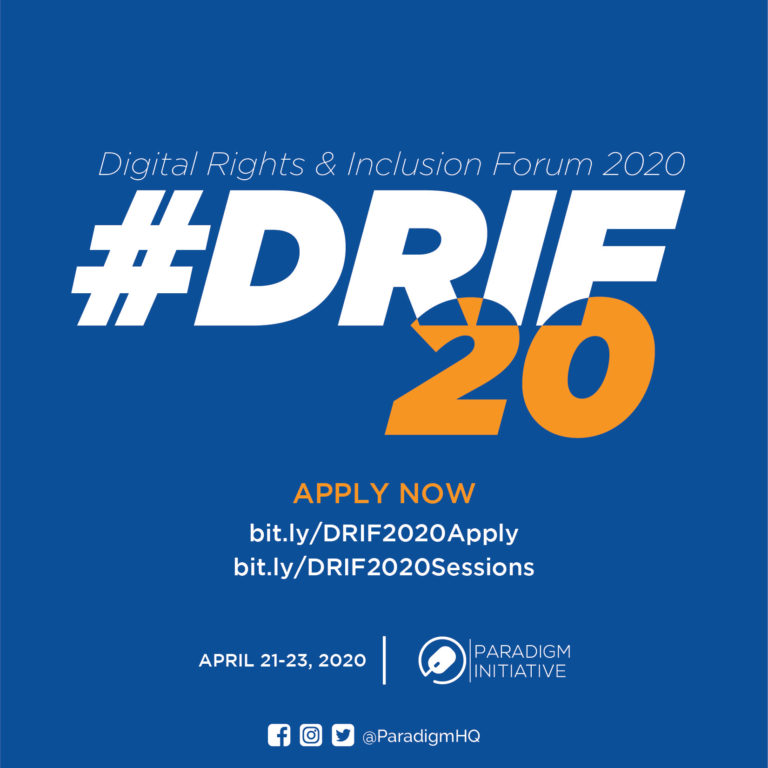
THE Paradigm Initiative says it has opened applications for the 8th Digital Rights and Inclusion Forum (DRIF).

A statement by Director of Programs at Paradigm Initiative, Tope Ogundipe confirmed the annual forum will hold between April 21 and 23, next year.

DRIF, according to her, is a platform for shaping conversations at the intersection of human rights, development and digital technologies in Africa.

The Forum, she explained, has in the past welcomed digital rights activists, telecommunications industry professionals, government officials with oversight functions, members of the academia and others.

Ogundipe said the venue of DRIF20 will be announced soon.

According to her,  the 2019 DRIF has expanded conversations from digital rights to digital inclusion themes, and the expansion ensures more audience is co-opted into the conversations.

“DRIF also ensures the most pressing issues are addressed, such as; affordable broadband access in Nigeria, the rising tide of internet shutdowns in Africa, increase in the uptake of biometric and surveillance technology on the continent or how mobile technology is shaping development in Africa.”

She said DRIF20 would feature conversations on some of the most important trends across all regions of Africa and beyond on the intersection of human rights, development, and digital technologies.

“DRIF20 would build on the success of DRIF19 held in Lagos, Nigeria, that attracted over 300 delegates from 38 countries who deliberated in 26 sessions,” she explained.

Program Officer, Digital Rights, Francophone Africa, Paradigm Initiative, Rigobert Kenmogne, added that DRIF20 affords ample space for conversations around digital rights and inclusion in East Africa.

“East Africa has been in the spotlight for developments in digital rights in Africa in recent years, particularly with Ethiopia regularly shutting down the internet, and with the high profile national identity scheme (Huduma) in Kenya,” Kenmogne said.

DRIF20 would provide an important platform for civil society and other actors from these regions to collaborate on effective responses to these regional themes, she said.

Selected delegates and side-session proposal organisers will be contacted after the close of applications on December 31.

DRIF is a bilingual forum that caters to a diverse audience with translation services provided in English and French.

Applications to attend #DRIF20 can be made via http://bit.ly/DRIF2020Apply while side-session proposals can be made via http://bit.ly/DRIF2020Sessions.

Court strikes out Sowore’s appeal against DSS detention

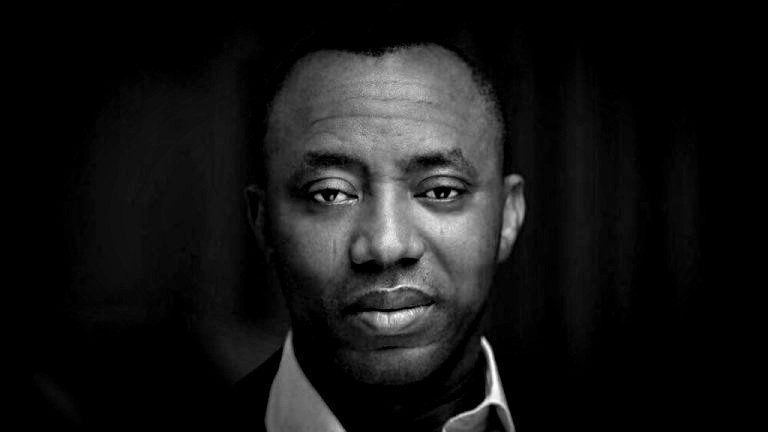
THE Federal High Court, Abuja, on Wednesday, has refused to grant the motion filed by Mr Omoyele Sowore, challenging his detention for 45 days by the Department of State Security DSS.

Justice Nkeonye Maha, who took over from Justice Taiwo Taiwo as the vacation judge declined all applications by Sowore’s Counsel, Mr Femi Falana, SAN.

Falana, who had earlier asked the court to set aside the ex parte order granted by Justice Taiwo, also applied for bail orally when Justice Maha rejected the application.

Justice Maha who stood on the ground of not having jurisdiction to review the decision by Justice Taiwo, noting that ruling of the vacation judge stated the matter would be heard on September 21.

The judge said she had no authority to proceed or review the judgment of her colleagues and that she would like to preserve the order of the court.

Sowore’s counsel, Femi Falana, disagreed with the judge’s position, noting that order 26 of the Federal High Court procedure stipulates that anyone affected by an ex-parte order can return to the same court to set it aside.

He said Sowore’s fundamental human rights were being violated with unnecessary detention and that Justice Maha has the right to hear and review the previous order.

It will be recalled that Justice Taiwo had in a ruling on an ex-parte application delivered on August 8, ordered Sowore’s detention for a period of 45 days to enable the Department of State Service (DSS) carry out and conclude its investigation of Sowore on allegations of instigating the public and seeking a change of the present administration through unconstitutional means.

However, Justice Maha hereby ruled that the case be referred to Justice Taiwo to properly air their grievances with his initial order.

Sowore, a former presidential candidate, was arrested by the DSS on Saturday, August 3, for calling for nationwide protests, tagged RevolutionNow, against the President Muhammadu Buhari-led government


G7 2019 summit: Why Nigeria was not invited

THE G7 2019 summit held in France between August 24 and  26 had come and gone. 

The G7 annual meeting is attended only by the heads of government from the seven permanent member states and two leaders of the European Union (presidents of the Commission and the Council). The G7 member states comprise France, Italy, Canada, Japan, Germany, the US, and the UK.

This year, France and current G7 President, Emmanuel Macron extended an invitation to non-G7 countries like India, South Africa, Australia, Chile, Egypt, Rwanda, Burkina Faso, Senegal, and Spain to participate.

The exclusion of Nigeria from the list of invited countries has caused a buzz on social media with speculations that  “misrule” of Buhari administration may have been the reason for the exclusion.

A popular tweet by Reno Omokri, a former presidential aide, claims that Nigerian President Muhammadu Buhari was not invited to the G7 summit due Buhari’s “misrule”.

However, a reverse image search of the picture in the tweet revealed that the picture was taken by Getty Images in 2017 at the G7 summit in Italy, thereby bringing the tweet and picture as misleading and not a recent picture. A FactCheck by the Guardian newspaper also debunked Omokri’s claim.

Nigeria was invited to the 2017 edition of the summit. Vice President, Yemi Osinbajo, then Acting President represented President Buhari who was on medical vacation in London. But Buhari attended the 2015 edition hosted by Germany between June 7 and 8, 2015.

Yemi Osinbajo, second from right with President Trump and other African Leaders that were invited to the 2017 summit
President Trump and Akinwunmi Adesina, President, AFDB at the G7 summit in 2017


The reason why non-G7 countries were invited

Inviting other non-G7 countries and its leaders to attend the annual summit has been a tradition over the past few years. These invitations are extended by the immediate G7 president and reflect the strategic interests of the host country.

According to the “a renewed format for the G7” published on Elysee of the French president’s office stating reasons for inviting partners for this year’s summit.

In times of massive “digital transformation and climate change”, France was keen to include more like-minded and democratic partners at this year’s G7. With this idea in view, four democracies — India, South Africa, Chile, and Australia — were invited to attend the G7 this year.

“With these four major democracies, we will work to strengthen the protection of fundamental freedoms at a time when digital technology and artificial intelligence are developing. We will propose tangible measures to protect the planet, focusing on the protection of biodiversity, the climate, and the oceans. Chile, which will be hosting COP25 in December 2019, will be a key ally in this context,” the statement in the format reads.

Another key aspect of Macron’s G7 presidency was his “African outreach” programme. According to the statement, African countries play a central role in the global fight against inequality.

In view of this, four African countries were invited to attend this year’s G7 summit — Burkina Faso, Egypt, Senegal, and Rwanda. In addition, the president of the African Union, Moussa Faki was also invited to this year’s summit. Faki is the former prime minister of Chad.

The other African country to be invited is South Africa. It has been invited both for its democratic credentials and its role in the African Union.

The leaders of the invited African countries hold key positions in the regional organisations in Africa.

Burkina Faso’s President Roch Marc Christian Kabore is chairing the 2019 Sahel G5 summit. Egypt’s President Abdel Fattah al-Sisi is currently chairing the African Union. Senegal’s President Macky Sall is chairing the state or government orientation committee of the New Partnership for Africa’s Development (African Union development agency NEPAD). And Rwanda’s President Paul Kagame chaired the African Union in 2018.

“Together, we want to find effective tools to ensure sustainable economic development in Africa, fostering the creation of jobs for young people and women’s entrepreneurship,” Elysee statement read.

ICPC proposes Electoral Offences Commission to handle vote buying and selling

THE Independent Corrupt Practices and Other Related Offences Commission (ICPC) says there is a need for the Electoral Offences Commission to investigate and prosecute electoral crimes, including the corrupt practice of vote-buying.

In a Policy Brief, Eradicating Electoral Corruption: Focus on Vote Buying produced by the Anti-Corruption Academy of Nigeria (ACAN), an arm of the ICPC, the Commission noted that stakeholders should take deliberate steps to emphasise prevention and deterrence in sanctioning offenders and in mobolising against vote-buying.

The brief which was presented to stakeholders in Abuja on Tuesday by the Chairman of ICPC, Bolaji Owasanoye, also proposed parameters for defining, reporting, sanctioning and popular mobilisation against vote-buying.

Explaining vote-buying, the document said it involves the exchange of money or any other thing that is of value to the recipient.

“Vote buying is not limited to transactional exchanges for votes but also includes vote brokerage and voter trafficking,” it said.

“The context in which the vote-buying occurs is such that is highly amenable to malicious and fictitious reports.”

It stressed that emphasis should be on credible reports that are supported by evidence, adding that such reports should be promptly processed by appropriate agencies and prosecutorial steps taken against the offenders.

In particular, the brief said, “as provided by the Electoral Act, candidates should be prosecuted for vote-buying where the vote-buying is done with the knowledge and consent of the candidate of the knowledge and consent of a person who is acting under the general or special authority of the candidate.”

Erring political parties, it noted, should also be charged as co-defendants in addition to prosecuting candidates.

On the role of the public in vote-buying, the Commission explained that the public needs to be properly mobilised against vote-buying.

“In educating and re-orientating the populace, it should be noted that there is a growing disposition and perception that it is acceptable for voters to collect money from vote buyers as long as voters do not go along with the demands or intentions of the buyers,” it explained.

“This belief is rooted in the cynicism that once public officials are voted into office, the legitimate expectations of the electorate will not be met by the public officials elected to serve. Hence, the cynical belief that is better to sell votes and thereby have parts of their expectations met in advance.”

The ICPC said citizens should be made aware that the disposition that it is justifiable or excusable to collect money from vote buyers fuels electoral corruption which in turn energises grand corruption which ultimately leads to poverty in all areas of public and private life.

Presenting the Policy Brief, the ICPC Chairman, Bolaji Owasanoye said it was important to note that vote-buying was not the only practice that bedeviled the electoral process.

“So the present focus on vote-buying does not exclude future work on dismantling other forms of corruption in the electoral process.

“The ICPC remains committed to working with all bona fide stakeholders in combating corruption in the country,” Owasanoye said.

EFCC-FBI Collaboration: $314,000, N373m recovered – Magu

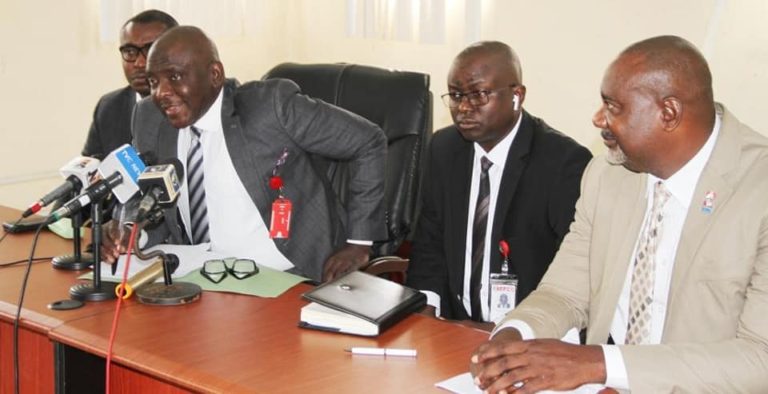
THE Economic and Financial Crimes Commission (EFCC), on Tuesday, said that it has recovered $314,000 and N373m ( N486m in all) from suspects in connection with the Federal Bureau of Investigation (FBI) probe.

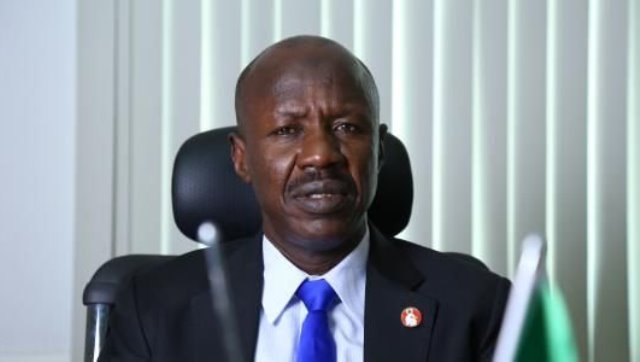
In a press statement issued through the commission’s official Facebook page , the acting chairman of EFCC Ibrahim Magu said that the collaboration between the Commission and the FBI, led to recovery of the funds.

He disclosed that while the sum of $314,000 had been recovered, the sum of N373m had been traced to various commercial banks by the Lagos zonal office of the Commission and that the recent joint operations coordinated by the Commission had yielded 28 arrests, adding that 14 suspects had been charged and convicted.

The EFCC Chair further stated that “nine of the suspects are currently undergoing trial, while five are still under investigations.

“Over 80 cases are still under investigation from the EFCC-FBI joint operations.”

Speaking during a media briefing in Lagos on Tuesday, August 27, 2019, Magu, who spoke through Mohammed Rabo, Zonal Head, EFCC, Lagos, added that, the Lagos zone of the Commission, prior to the collaborative efforts with the FBI, had independently launched a sustained operation on perpetrators of various computer-related frauds.

He said: “From 2018 to date, the EFCC had launched a sustained operation on perpetrators of various computer-related frauds, which resulted in over 200 arrests, 130 convictions and recovery of a large number of exotic cars and properties suspected to have been acquired through the proceeds of crime.

“We had independently launched intensive investigative actions against the infamous Yahoo yahoo boys culminating in various strategic raids and onslaught on their hideouts.

“Our efforts in this regard have recorded tremendous successes leading to a number of arrests, prosecutions, and convictions.”

Magu also called on the media to continue to lend a voice to the fight against economic and financial crimes, saying that “no one has the monopoly of knowledge of how the fight should be fought and won.

“All the critical stakeholders, particularly the media, must continue to collaborate and cooperate with us to make the fight a success.

“I urge you to continue to help us sensitise, mobilise and educate all the critical stakeholders to continue to support the fight against economic and financial crimes. We must collectively strive to achieve the Nigeria of our dream.”

It will be recalled that FBI had released a list of 80 persons – mostly Nigerians  for their alleged role in email scams in which Americans were duped of over $70m.


EFCC to youth corps: Hold your leaders accountable

IBRAHIM Magu, the acting Chairman of the Economic and Financial Crimes Commission (EFCC), on Tuesday, told members of the National Youth Service Corps (NYSC) and other youths across the nation to hold their leaders accountable.

This becomes imperative to ensure accountability and the right use of the country’s resources for the benefit of all, he said.

Magu spoke at the NYSC Orientation Camp, Kubwa, Abuja where he charged the youth to stop the blame game.

Represented by Ms. Rashidat Abdullahi, an officer in the Public Affairs Directorate of the Commission, the EFCC boss decried how corrupt elites in power allegedly denied Nigerians the greater good of governance by cornering the nation’s resources to themselves and their families.

He said there is an increasing number of youths in positions of authority who are not accountable and transparent in their ways.

“The youths have found fantastic ways to manipulate the system,” he added.

Magu reiterated the need for the development of idealistic and morally guided youths to step into positions of authority.

He called on the youths to shun acts of corruption such as cyber-crimes.

“The Commission has from January 2019 till date, secured over 700 convictions on cases bordering on money laundering, advance fee fraud, bank fraud and other economic and financial crimes.

“Despite this milestone, the Commission realises that enduring success in the fight against economic crimes, including corruption can only be achieved when all stakeholders embrace this important fight. One critical group of stakeholders are the youths”.

The EFCC has recently pledged to support the US government in the prosecution of 77 Nigerians accused of cyber-crime.

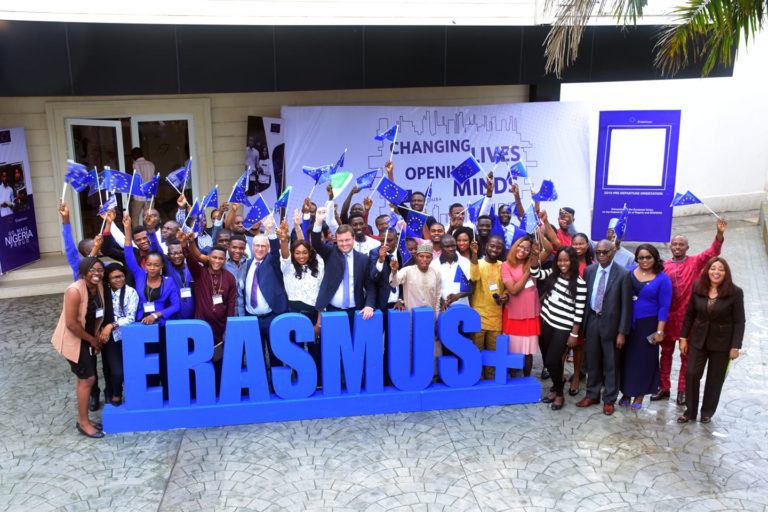
How Erasmus is helping Nigerian students achieve career goals

CYRIL Chukwudi Dim became a Professor of Obstetrics and Gynaecology at the College of Medicine, University of Nigeria, in 2014, only five years after his employment—a rare achievement, especially in Nigerian tertiary institutions.

He is also an honorary consultant obstetrician and gynaecologist at the University’s teaching hospital and the director of its Institute of Maternal and Child Health.

All of this did not happen with sheer luck. Chukwudi believes he owes much of his success to the European Union. In 2009, he received an Erasmus Mundus Scholarship to study Health Research Methods at the University of Copenhagen, Denmark; University College London, UK; and University of Bergen, Norway. He was awarded multiple degrees at the end of the programme.

“It was in fact a dream come true,” he says.

“During my senior residency training at UNTH Enugu, I gained admission into a health-related M.Sc. programme in the United Kingdom but I could not undertake it because of lack of funding. However, in 2009, my prayer was answered through the European Commission that offered me the Erasmus Mundus Scholarship for European Master of Science in International Health.”

If he is asked to describe the experience, Chukwudi has three ready words: unforgettable, positive, and life-changing. While delivering his inaugural lecture back in June, he described the scholarship as the springboard to his current professional status within the academia. He has since consistently encouraged his students and other eligible academics to apply for the postgraduate programmes under the scholarship.

Erasmus Mundus is a programme managed by the European Commission and launched in 2009 to support education, training, youth, and sport in Europe. One of the early phases, implemented between 2009 and 2013, had a budget of €1 billion, while the ongoing phase, tagged Erasmus+, which will last till 2020 has a budget of €14.7 billion.

The programme offers joint masters and doctoral programmes, including a scholarship scheme, as well as mobility flows of students and academics between European and non-European higher education institutions.

Between 2014 and 2018, Erasmus+ has awarded scholarships to 85 Nigerians out of 7,259 awarded worldwide and has funded the movement of 143 students and academics to Europe.

Oluwanisola Olotu, like Chukwudi, also had a huge career boost following the scholarship. The skills of networking, critical reflection and communication that he learnt were crucial in securing for him the position of a Global Mobility Intern at the Central and Eastern Europe Region of PwC, one of the Global Big Four companies.

But the scholarship was not merely an opportunity to get better career-wise, it also offered him the chance to learn new languages, meet new people, and understand other cultures.

“I spent my first week in Poland meeting a lot of people from different regions of the world. I became conscious of what it is to be “Black” in a typical white homogeneous society as there are rarely people from my continent or my race even in the university I attended,” Olotu says.

“This might be challenging to some, but for me, it presented a chance to embrace my culture while at the same time share and learn from other people. It was an eye-opening opportunity for me to learn, unlearn, and relearn a lot of things about other people’s cultures through cuisines, languages, arts, music, friendships, and histories.”

Joyce Anthonia Ojokojo, another beneficiary under the 2018/2020 programme, says the programme has advanced her intergroup relations, intercultural contact, and communication skills.

“Initiating contact with locals, professionals, and international students by joining associations, academic, social, and community events taught me lessons regarding accepting and adapting to the host’s cultures,” she adds.

“In answering the question, ‘Where are you from?’ my reply is now: ‘I am a global citizen’. Thanks to Erasmus, I more strongly than ever identify myself as a member of humanity prepared to act with extraordinary allies in tackling global issues like gender inequality, poverty, refugee crises, and climate change.”

Most of the Erasmus alumni testify to the conduciveness of the environment and the strong support system available to them during the programme. Olotu confirms, for example, that the tutors and colleagues he had also served as mentors who have helped shape his career path.

Ernest Ifeanyi Obetta, a 2016 Erasmus Scholar at the University of Valladolid Spain, recalls that employees of the International Relations office “were cooperative, helpful, and so wonderful that they organised a Christmas party for the scholars”.

“The Centre de Idiomas (Language Centre) arranged excursions for us to Madrid, Leon, and Palencia. The lecturers and students of the host university were also very wonderful as we always found help wherever we turned on any issue,” he notes.

“We had a good landlady who always cared for us and showed us around; and my Spanish lodge-mates, David and Alvaro, are the best of friends one could ever hope for on an international trip.”

Chinonye Onah who participated as far back as 2007 and received an M.Sc. in Geospatial Technologies in Spain, Germany, and Portugal describes the people at the Universitat Jaume as hospitable and the academics as rigorous. He was treated to lots of dinners, parties, and tours to Bennicasim, Barcelona, and Madrid. He also attended language classes in all the countries he studied.

“It is an experience that will be part of me for the rest of my life. It was a fulfilling adventure,” he concludes.

ENI, Italian oil giant discovers vast gas reserves in Nigeria

ENI, an oil major firm based in Italy, said that it has made huge gas and condensate discovery in onshore Niger Delta.

Eni through its affiliate, Agip Nigeria Oil Company (NAOC) said it made the find in the deeper sequences of the Obiafu-Obrikom fields, in OML61, onshore Niger Delta.

The Italian firm disclosed the finding in a statement released on its website, stating that the find amounts to about 1 trillion cubic feet of gas and 60 million barrels of associated condensate in the deep drilled sequences.

It also said the well can deliver in excess of 100 million standard cubic feet/day of gas and 3,000 barrels/day of associated condensates.

The statement read, “Eni, through its affiliate NAOC (Eni 20 per cent , operator, NNPC 60 per cent, Oando 20 per cent) has made a significant gas and condensate find in the deeper sequences of the Obiafu-Obrikom fields, in OML61, onshore Niger Delta.”

“The Obiafu-41 Deep well has reached a total depth of 4.374 m encountering an important gas and condensate accumulation within the deltaic sequence of Oligocene age comprising more than 130m of high-quality hydrocarbon-bearing sands.”

“The find amounts to about 1 trillion cubic feet of gas and 60 million barrels of associated condensate in the deep drilled sequences. The discovery has further potential that will be assessed with the next appraisal campaign.”

“The well can deliver in excess of 100 million standard cubic feet/day of gas and 3,000 barrels/day of associated condensates, and will be immediately put on-stream to increase NAOC’s gas production.”

“The discovery is part of a drilling campaign planned by NAOC JV and aimed at exploring near-field and deep pool opportunities as immediate time to market opportunities.”

“Eni has been present in Nigeria since 1962, with operated and non-operated production, development and exploration activities on a total of 30,049 square kilometers in the onshore and offshore areas of the Niger Delta. In 2018, Eni’s equity hydrocarbon production amounted to 100,000 boe/day.”

DSS, INEC seek legislation to check fake news

THE Department of State Security (DSS) and Independent National Electoral Commission (INEC) on Tuesday said the Federal Government may need to consider new legislation as part of efforts to curtail the spread of fake news.

He made this statement today in Abuja at an event organised by Centre for Democracy and Development, CDD.

“Why don’t’ we begin to look at the issue of legislation,” says Dr. Peter Afunanya, the DSS Public Relations Officer (PRO).

“In Japan, for instance, and some other countries, there is a common agreement by convention, even by legislation, their media do not report terrorism because, terrorist feed on publicity. Once you cut the oxygen of publicity, they become disinterested in their actions.”

Further justifying the rationale for the legislation, he asked, “why the average reporter or journalist takes interest in announcing the number of soldiers killed in a combat and they would not find it reasonable to announce how terrorist and Boko Haram members have been attacked, because he is afraid Boko Haram people would come and attack him…”

Afunanya, who insisted the DSS is a victim of the fake news syndrome, identified the false claim that Ibrahim El Zakzaky, leader of the Islamic Movement of Nigeria (IMN) and the former National Security Adviser (NSA) to ex-President Goodluck Jonathan, Sambo Dasuki died while in custody of the DSS.

However, he called for responsible actions from all stakeholders including traditional rulers, the National Union of Road Transport Workers (NURTW), Nigerian Union of Journalists (NUJ).

According to him, absolute law and absolute privilege don’t exist anywhere except for absolute responsibility.

“There are rights to demonstrations and protests, yes, but there are no absolute rights. You claim the right to freedom of movements but if there is a lawful curfew, that right of movement is restricted. Even rights to life, we do not have the right to take our lives not to talk of others. Understanding all of these will help us to be responsible citizens,” the DSS spokesman said.

In his remarks, Festus Okoye, INEC National Commissioner, also decried the negative impacts of fake news, especially during elections.

“I join the idea of the past speakers who called for legislation to regulate fake news,” he stated.

But Idayat Hassan from the CDD and Dr. Garba Abari, Director-General of the National Orientation Agency (NOA) said it would be difficult to gag the social media, but stressed that existing laws on cybersecurity and the penal codes should be well implemented.

NECO releases SSCE results, blacklists 18 supervisors

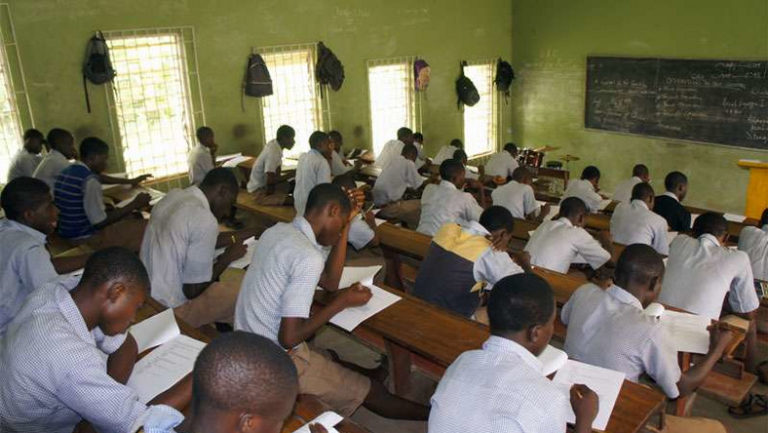
THE National Examination Council (NECO) says it has blacklisted 18 supervisors who took part in the conduct of 2019 Senior Secondary School Certificate Examination for their involvement in examination malpractices.

“A total of 18 supervisors were blacklisted for various offences ranging from poor supervision, aiding and abetting, connivance with non-candidates and so on,” said acting Registrar of NECO, Abubakar Gana, while announcing the results at the NECO Headquarters in Minna, Niger State on Tuesday.

Gana disclosed that the number of candidates involved in various forms of malpractices during the conduct of the examination increased with 40,630 cases recorded as against 20,181 cases recorded in 2018.

The reason for the increase in detection of malpractice, he explained was as a result of the use of biometric verification devices during the examination.

The Registrar also said the Council has sanctioned three schools in Kebbi, Oyo and Katsina states over various infractions committed during the examination, though he didn’t mention the names of the schools.

“Arising from the above, three schools one each in Katsina, Kebbi and Oyo states were recommended for de-recognition for two years for their involvement in mass cheating/whole centre cases,”  Gana said.

“In line with council’s zero tolerance for any form of examination malpractice, members of staff alleged to have behaved contrary to expectations are to face appropriate disciplinary measures once they fail to satisfactorily defend themselves.”

Speaking on the performance of candidates, the Registrar stated that the number of candidates who made five credits and above in English and Mathematics were 829,787, representing 71.5 per cent.

Gana said 984152 candidates representing 85.50 per cent made credit and above in English while 954,399 candidates made credit and above in Mathematics.

He added that a total of 1,041,986 representing 89.90 per cent made five credits and above irrespective of English and Mathematics, adding that the number increased by 0.5 per cent.

A total of 1, 163,194 candidates registered for the examination while 1,151016 candidates sat for the exercise including 161 visually impaired candidates.

Gana remarked that the June/July NECO exams was a success, noting that when compared to the 2018 exercise, there is an increase of 0.11 per cent in candidates who scored five credits and above.