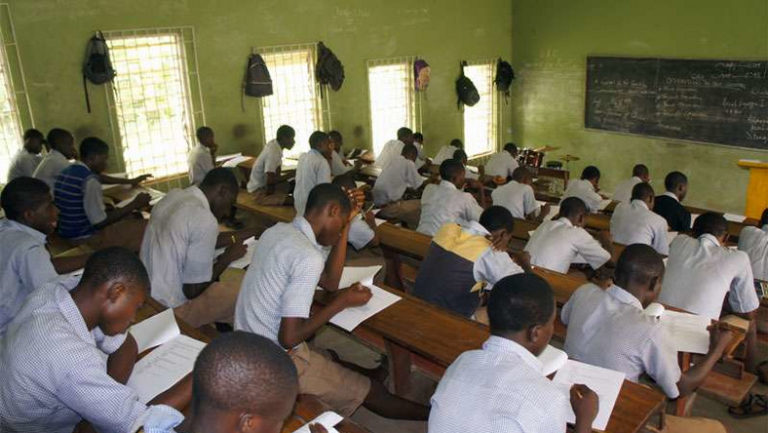
THE National Examination Council (NECO) says it has blacklisted 18 supervisors who took part in the conduct of 2019 Senior Secondary School Certificate Examination for their involvement in examination malpractices.
“A total of 18 supervisors were blacklisted for various offences ranging from poor supervision, aiding and abetting, connivance with non-candidates and so on,” said acting Registrar of NECO, Abubakar Gana, while announcing the results at the NECO Headquarters in Minna, Niger State on Tuesday.
Gana disclosed that the number of candidates involved in various forms of malpractices during the conduct of the examination increased with 40,630 cases recorded as against 20,181 cases recorded in 2018.
The reason for the increase in detection of malpractice, he explained was as a result of the use of biometric verification devices during the examination.
The Registrar also said the Council has sanctioned three schools in Kebbi, Oyo and Katsina states over various infractions committed during the examination, though he didn’t mention the names of the schools.
“Arising from the above, three schools one each in Katsina, Kebbi and Oyo states were recommended for de-recognition for two years for their involvement in mass cheating/whole centre cases,” Gana said.
“In line with council’s zero tolerance for any form of examination malpractice, members of staff alleged to have behaved contrary to expectations are to face appropriate disciplinary measures once they fail to satisfactorily defend themselves.”
Speaking on the performance of candidates, the Registrar stated that the number of candidates who made five credits and above in English and Mathematics were 829,787, representing 71.5 per cent.
Gana said 984152 candidates representing 85.50 per cent made credit and above in English while 954,399 candidates made credit and above in Mathematics.
He added that a total of 1,041,986 representing 89.90 per cent made five credits and above irrespective of English and Mathematics, adding that the number increased by 0.5 per cent.
A total of 1, 163,194 candidates registered for the examination while 1,151016 candidates sat for the exercise including 161 visually impaired candidates.
Gana remarked that the June/July NECO exams was a success, noting that when compared to the 2018 exercise, there is an increase of 0.11 per cent in candidates who scored five credits and above.
The United States Consulate on Tuesday has announced a higher fee for Nigerians applying for the US visa.
The consulate said that Nigerians will be required to pay for all applications for nonimmigrant visas in B, F, H1B, I, L, and R visa classifications. However, the issuance or reciprocity fee is different from the application fees as this will be charged in addition to the nonimmigrant visa application fee.
The fees, however, are non-refundable, and their amounts vary based on visa classification.
“The reciprocity fee will be required for all Nigerian citizens worldwide, regardless of where they are applying for a nonimmigrant visa to the United States.
“The reciprocity fee is required for each visa that is issued, which means both adults and minors whose visa applications are approved will be charged the reciprocity fee.
“The fee can only be paid at the U.S. Embassy or the U.S. Consulate General. The reciprocity fee cannot be paid at banks or any other location,” the statement read in part.
Under the new policy which is expected to come into full effect on Thursday, August 29, Nigerian citizens whose applications for a nonimmigrant visa are denied will not be charged the new reciprocity fee.
“The total cost for a U.S. citizen to obtain a visa to Nigeria is currently higher than the total cost for a Nigerian to obtain a comparable visa to the United States. The new reciprocity fee for Nigerian citizens is meant to eliminate that cost difference.
“Since early 2018, the U.S. government has engaged the Nigerian government to request that the Nigerian government change the fees charged to U.S. citizens for certain visa categories. After eighteen months of review and consultations, the government of Nigeria has not changed its fee structure for U.S. citizen visa applicants, requiring the U.S. Department of State to enact new reciprocity fees in accordance with our visa laws.”
THE Economic Financial Crimes Commission (EFCC) has denied the involvement of Abba Kyari, the Chief of Staff to the President in the ongoing investigation against the Head of the Civil Service of the Federation, Mrs. Winifred Oyo-Ita.
In a statement shared on its verified social media account, the Commission on Monday advised the public to disregard whatever information on the claim stressing that the probe is evidence-based.
It reads: “The attention of the Economic and Financial Crimes Commission, EFCC, has been drawn to reports by a section of the media, insinuating that the ongoing investigation of the Head of the Civil Service of the Federation, Mrs Winifred Oyo-Ita by the Commission was instigated by the Chief of Staff to the President, Alhaji Abba Kyari.
“The Commission wishes to state that there is no truth in these claims, and urges the general public to disregard the reports as the handiwork of mischief-makers.
“For the avoidance of doubt, investigation by the EFCC is evidence-based. Most often, they are triggered by petitions or intelligence. In the case of the HoS, Oyo- Ita’s investigation, it was prompted by intelligence received by the Commission.”
However, the Commission restated its commitment, stressing that the EFCC is an independent agency created by law to fight corruption without fear or favour in the discharge of its mandate, “the Commission does not take instructions from extraneous bodies neither will it lend itself to be used to settle scores by anyone.
“The Commission again wishes to appeal to the media to be circumspect in their reportage and not lend themselves to actions that could befuddle the activities of the Commission.”
PROFESSOR JIBRIN Ibrahim, Senior Fellow, Centre for Democracy and Development (CDD) on Tuesday warned the spread of fake news could pose a serious threat to Nigeria’s democracy and ignite hatred in the society.
Beyond that, the social media trend, he noted could also alter the entire electoral process through the use of social media platforms.
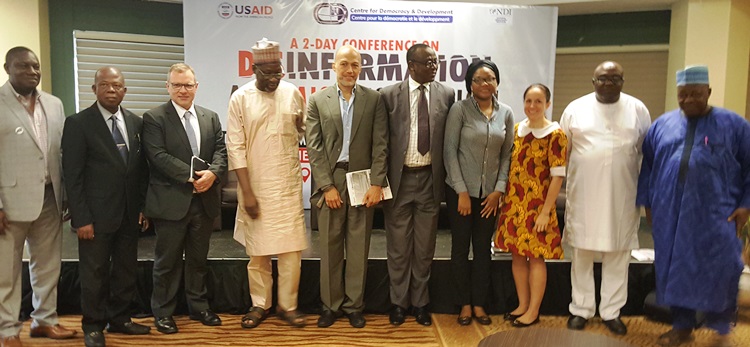
Ibrahim spoke at a 2-day conference on Disinformation and Misinformation organised by the CDD in partnership with the National Democratic Institute (NDI) and the United States Agency for International Development (USAID) Abuja.
The event had in attendance CDD Director, Idayat Hassan, Aubrey Mccutcheon, NDI Chief of Party, Prof. Deji Adekunle, visiting Research Fellow, Nigerian Human Rights Commission (NHRC), Beatrice Reaud, Democracy Officer, from the USAID among others.
Ibrahim emphasised that from the colonial days, Nigerian politics have been plagued along ethnic and religious lines, stressing that prior to the advent of the social media, there were narratives established by politicians in the minds of the electorate.
According to him, since the mindset have been created, manipulating the electorate becomes easier.
“Fake news is capable of affecting the electoral system and democracy. The social media, in particular, has a lot of responsibility for distorting information….promoting division and hatred in the society,” says Ibrahim.
The last US election which brought in Donald Trump, and the Brexit were cited examples, Ibrahim listed as two scenarios and products of fake news influence.
He said Nigeria has 14 million people on Whatsapp, 25 million on Facebook, 7 million on Twitter creating media contents, adding that the news circulated does not largely come from the authorities but from individuals. ….”so if the pastor or schoolmate I receive this information from are people I know, they share because they do not know the information is false.”
“The reality, however, about social media is that it is individual engaging based on things they have seen but that information is highly centralised and controlled by those, who, today have the responsibility of distributing the contents we see,” Ibrahim added.
He argued further that most of the social media platforms, especially Facebook is neither pro-democratic not anti-democratic but pro-profit.
“These technologies are just a good capitalist. The stories that tend to generate emotions are when the content is graphic or extremely graphic. So it generates movements or traffic. That is where we have found ourselves when a few companies control the information flow in the world in a way that generates strong emotion in people and that creates profit for them.”
In his remarks, Prof. Adekunle described fake news as a form of distraction caused by those in power to distract the people from the main issue of public interest.
He advocated the innovation of a new tool, especially on the part of Information Technology (IT) companies to develop solutions that could discourage misinformation through provisions of massive facts.
“It is so easy to clone profiles even on Facebook and these are being done cleverly by a lot of people,” says Adekunle.
“But let me say that there is a responsibility to verify and then validate but if you cannot verify, then don’t validate.”
“How about a tool that does not only dislike but also pronounces comments as false, and then shared automatically. So if you pronounce something as false, all your friends will see it. So I believe that this is one way all companies like Facebook can support the fight against fake news.”
He, however, emphasised that people lack the ability to verify information. Thus called for a tool to enable the masses verify and discredit false information.
As part of efforts to check the spread of fake news, The ICIR had reported several Fact Checks on false or misleading claims made by public officials during and after the 2019 election.
BIODUN Fatoyinbo, General Overseer of the Commonwealth of Zion Assembly (COZA), on Tuesday has been brought in by the police in Abuja for questioning over alleged rape of Busola Dakolo.
Dakolo, photographer and wife of musician Timi Dakolo had previously accused the preacher of having sexual knowledge of her as an underage teen while she was still a member of the church. Fatoynbo has since continued to deny the claim.
Frank Mba, Police Public Relations Officers, has confirmed the accused was in their custody and being interrogated.
“Yes, he is in our custody. We have done a whole lot of background investigations and spoken to a whole lot of people before now,” Mba said.
The PRO said that the police was not about to neglect or forget the case as some people have speculated. He claimed they were only trying to conclude investigations on their end before bringing Fatinyibo in.
“We were not in a hurry to bring him because we wanted to have enough background information that would be used in interrogating him. We have done an extensive investigation,” he added.
Mba said they might have to invite other people in as the case progresses.
IN August 2019 many news outlets reported that the world’s largest rainforest, the Amazon, was burning at an alarming rate.
The National Institute for Space Research (INPE) in Brazil, the country home to more than two-thirds of the forest, recorded over 70,000 fires across the region in 2019.
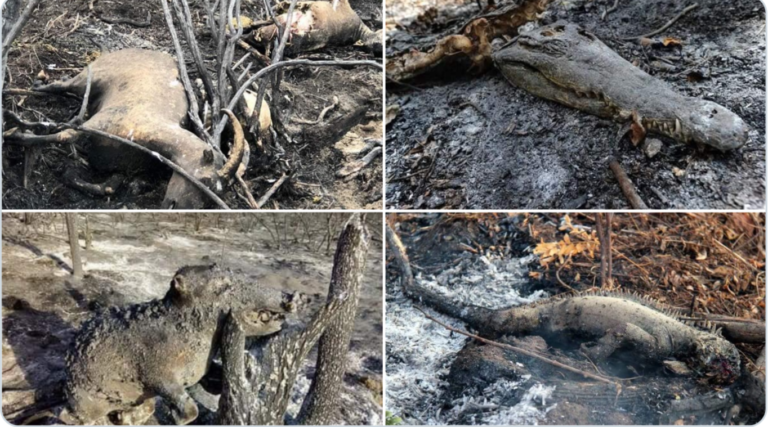
Many people have shared images of the fires and of animals killed in them on social media channels. But not all the burnt wild animals in the photos in circulation died in the Amazon.
In one popular tweet, shared over 3,700 times and liked by more than 4,200 users at the time of writing, a US woman shared four pictures of charred bodies of animals. She wrote that the photos showed “only few of that [sic] animals that have been affected by the fire. We must protect our wildlife #AmazonFire #PrayForTheAmazon”.
And in February 2019, Social Media Hoax Slayer reported that the fourth picture shows a lizard that died in a forest fire in Guatemala. The site linked to a May 2016 report by Prensa Comunitaria, a local news agency in the country, which credited the image to Telenoticias de Petén.
While the Amazon rainforest really is on fire, the four photos in this widely shared tweet are from much earlier time and elsewhere.
AMINA Mohammed, United Nations Deputy Secretary-General on Monday challenged the Nigerian youths across the globe to amplify their good deeds beyond individual success to overshadow other weaknesses.
She gave the advice at the launch of The Future Awards Africa (TFAA) held at Transcorp Hilton, Abuja themed: “The new Nigerian tribe”.
Describing the youths including those from other African countries as the generation of change-makers, she emphasised need to operate as a movement and support each other to realise personal goals.
“We have amazing youths doing great things everywhere. What we need to do is to amplify their voices and make it a movement, and not just a one-off or a shooting star.
“Now, more than ever before we need African youths to get active and use their greater awareness, education, and connectivity for a positive impact in our families, communities, schools, and the society overall,” says Mohammed.
“Let’s amplify the good things that we do so that we can crowd out the not-so-good things; if we put our attention on the good things, there is no stopping us. You are a generation of change-makers – innovators, entrepreneurs, etc., you have moulded your strong vision for a collective Africa, and I think that is really unusual.
“Challenge yourself and continue to empower fellow youths to achieve your full potential. As you lead and advance good governance in your various communities, remember to uphold values of shared responsibility, collectivism, accountability, obligation, and transparency.”
In addition, she advocated for unity among various socio-cultural and economic groups in the country.
According to her, Nigeria’s unity and diversity is its strength, and such should be embraced and explore the opportunities.
Citing the old national anthem as a reference, she noted that tribes and tongues may differ, “in brotherhood we stand and that was a really important part of what I feel we lost.
“While I will like to say more than brotherhood and sisterhood, I think the unity today is something we must need to talk about. It is our strength, our strength is in our diversity and it should not be what fragments us. It should not be what scatters us across opportunities that we have.”
In his remarks, the Minister of Youth and Sport, Sunday Dare identified the need to celebrate good deeds and reward great fetes. This, he noted would encourage other youths to do same and contribute meaningfully to national development.
Dare, however, announced plans to establish the Nigerian National Youth and Sports Award by 2020 to recognise young Nigerians making the nation proud at different aspects of life.
His words: “Further to this, we will push for the establishment and institutionalisation of the Nigerian National Youth and Sports Award, which we hope will commence in 2020.
“The award seeks to recognise and honour youth who have made astounding contributions in the areas of youth and sports development. In this way, we hope to project national icons that will not only inspire their peers but hopefully motivate and breed patriotism among them.”
It could be recalled that on August 23rd, the US announced a list of 77 Nigerians accused of internet fraud. Nigeria’s anti-graft agency, two days after disclosed its readiness to help the US prosecute the accused persons.
Earlier, Mohammed Yahaya, United Nations Development Programme (UNDP) Resident Representative expressed excitement on the milestones achieved by selected young Nigerians at different sectors of the economy.
But he called for consistency to ensure their dreams are realised.
“Every day, 33,000 Africans ended up in the job market and 60 percent of them don’t have a job,” Yahaya added.
Mr. Adebola Williams, co-founder of the TFAA, expressed similar views as the UN deputy director stressing that stories of Nigerians doing great exploits should be shared across board to overshadow the gloomy narrative.
“The TFAA has to go harder in telling the stories of innovation in our country. We must use our various platforms to tell the stories of great exploits by the Nigerian youths. We want to change the wrong perception of Nigerian youths.”
He, however, called for integrity on the parts of the youths, sincerity of purpose and commitments to change the wrong narrative about the nation.
Since its inception in 2008, 209 African youths have been awarded from 1,291 nominees in 25 countries.
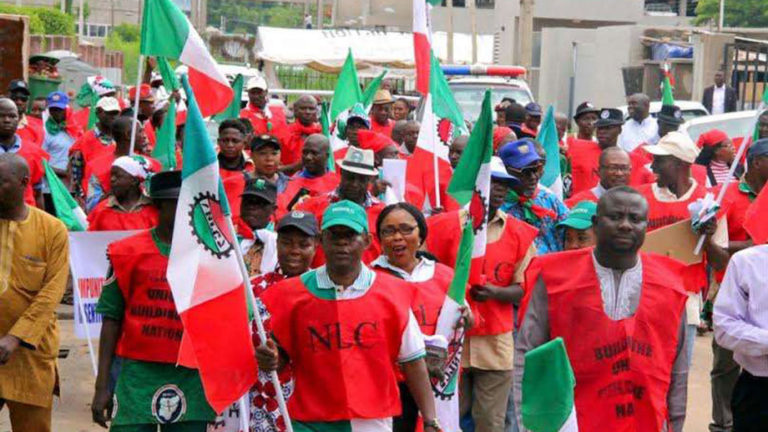
THE Nigeria Labour Congress (NLC) says it would convene a National Security Summit to dispassionately engage the current challenge of insecurity in Nigeria and proffer sustainable solutions.
The Congress also said it would hold rallies across the country to sensitise government and citizens on the need to urgently arrest the current drift in security.
These were contained in a communique issued at the end of the labour umbrella body’s National Executive Council (NEC) meeting held in Kano last week.
While appraising the security situation in the country, the workers ’union s noted that there has been an increase in the wave of insecurity in Nigeria especially as marked by a resurgence in kidnapping for ransom, armed robbery, communal clashes, and Boko Haram attacks.
In the document which was sent to The ICIR, NLC reiterated that the primary responsibility of government is the security of lives and property.
It called on government at all levels in the country to rein in the current resurgence in criminality and brigandage.
“The NEC called for improvement in the quality and quantity of policing deployed for the security of citizens and property,” NLC said.
The Congress also emphasized the need for improved intelligence gathering and the use of technology as being of utmost importance as effective measures in the fight against crime, brigandage, and terrorism.
It lamented the recent confessions of a recently arrested bandit who disclosed that helicopters dropped weapons for criminals, which it noted pointed to possible collusion between criminal elements and big-time financiers of criminality.
“The NEC also expressed worries over recent upsurge in attacks by Boko Haram terrorists who recently attacked three local governments of Gubio, Magumeri and Konduga in Borno North and the villages of Dille, Lassa, Ngurthlavu, Dagu, Yaffa, Maikadiri, and Kidlindila in Askira/Uba local government area of Borno South,” it said .
“The NEC also observed that most of the victims of the renewed security breaches in the country are workers and poor citizens. The NEC noted with alarm the impact of the rising wave of criminality on the lives of citizens and the socio-economic conditions in Nigeria particularly its consequences for the attraction and retention of foreign investment.”
Reacting to the delay in the implementation of the new national minimum wage, NLC said the government could no longer hide under protracted negotiations with workers in the public sector for consequential salary adjustment based on the new national minimum wage to delay the implementation of the new national minimum wage.
It insisted that the payment of the new national minimum wage should commence immediately, effective from the day it was assented to by President Muhammadu Buhari.
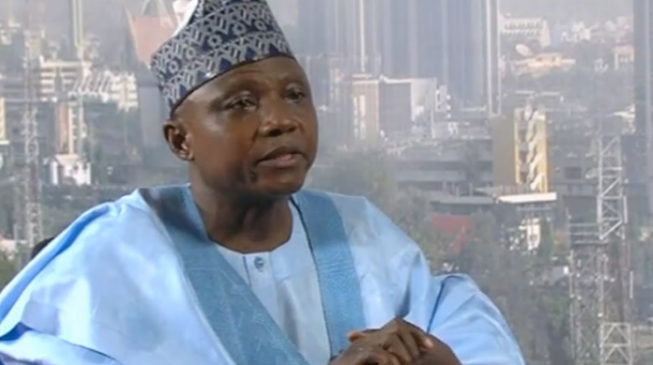
The Presidency has said the United States Federal Investigative Bureau (FBI) charges against 80 people, most of who are Nigerians, in a wide-ranging fraud and money laundering operation that netted millions of dollars from victims of internet con jobs was a double damage on every citizen of Nigeria.
The Senior Special Assistant to the President on Media and Publicity, Garba Shehu said this when he appeared as a guest on Channels Television’s Sunday Politics.
Garba also disclosed that the federal government is working on an executive order to tackle fraud and money laundering.
He said, “This is a double damage on every citizen of Nigeria. It is a big scare on all of us who go out of this country and are seen in this image that these our brothers have created.
“We will cooperate with international organizations, the government will generate and ask for new laws from the National Assembly and there will be new executive orders that will block some of these loopholes that are being exploited by some of our fellow countrymen to go out there and embarrass and blacklist the country.”
He also said the Federal government administration will work with all nations around the globe to fight criminality. If Nigerians are involved in this thing, well hard luck to them.
“The president will not stand in the way of the justice system. Every citizen that travels out of this country is expected to obey the laws of their host country. President Muhammadu Buhari is not one to excuse Nigerians from the laws of countries in which they reside.
“Therefore you will expect a more vigorous engagement with National Assembly. The laws will have to change, this has got to be tackled and if it will take executive orders, this will be strengthened very rapidly.”
Asked if there is direct communication between Nigerian and the American governments on the incident, the presidential media aide said: “Yes, the diaspora commission is there and the Nigerian government has taken position on this matter, it is cooperation all the way.
“I think every person with a modicum of common sense knows that the action of few Nigerians is not the action of all Nigerians. We are 200 million plus in the country and you are talking about 80 Nigerians in this case, they will face the justice system, if the Nigerian Government is expected to cooperate in anyway, extradition, if it meets the requirement of our laws, they will be assisted to ensure they face justice in that country.
“Nigerians are hardworking people all over the world, there are millions of our citizens out there earning legitimate living, they don’t deserve to be so tarnished.”
While Unity Schools principals budget millions yearly for perimeter fencing they are building in the sky, their supervising department remains the pillar behind the imaginary walls.
By Elijah Olusegun
Last November, former Education Minister Adamu Adamu made a dash to flaunt the accountability of his ministry and President Muhammadu Buhari administration. He gave a lowdown of the N7bn the ministry spent on beefing up security infrastructure in 104 federal government colleges across the nation in 2017 and 2018.
Reeling out the figures on cameras, he believed was the honest thing to do as the chief steward of the nation’s education sector.
“As far as I am concerned, the best and only way to be accountable to the Nigerian people is through the media,” he said at a press conference in Abuja. The minister also pointed out that opening up the book would ensure civic participation in the projects.
“Civil society groups and communities where these schools are located [will be able] to monitor the implementation of the projects,” he enthused.
His seeming candour inspired this investigation, but the finding showed that his claims are incongruous with reality.
The federal government colleges, also known as unity schools, and their supervising department, have built layers of bureaucratic bulwarks that no journalist or civil society group can penetrate. And inside there, a lot of things go on—things for which many of the school administrators will be hard put to account for.
Perimeter fencing is one of them. And it stands out in the on-going rot on two fronts: the federal government’s N7bn school security infrastructure initiative and the FGC annual capital projects.
A case in point: The Federal Government College, Odogbolu, Ogun, budgeted N180.9m in 2017, and N7.9m in 2018, totaling N188.8 million, for constructing a new perimeter fence, as part of its yearly capital projects. It invited tenders on one of those two occasions. But the school authorities would not welcome the media poking around to know what they spent the money on, compared to what is on the ground.
“We don’t talk to the press as civil servants,” one of the school’s vice principals, who said he had just been transferred there, told the National Daily. “You must get a letter from the ministry permitting you to come and interview us.”
That was a necessary excuse. But, really, at the FGC Odogbolu, a school sprawling over a swathe of land the size of three stadiums, there was nothing to say about the perimeter fencing project.
There was no new fence. No need for a new one, to begin with, let alone budgeting N188m for it in two years. The fence around the school perimeter had been there years before 2017. The profile of the walls close to the school gate, and even elsewhere, revealed a mix of decades-old and recent bricks.
Those living around the school told the newspaper that no construction took place around the perimeter fence in 2017 and 2018. It had been there for as long as they could remember.
“What the school has been doing is mend any part of the fence that breaks down,” a resident of Odogbolu explained. With a long, hard look, any observer would note the patches were not difficult to make out. And along the major road on the school premises, close to the gate, there were hundreds of clean cement blocks sitting in piles like six feet high. “It’s from there they take blocks for the fence-mending,’’ the resident added. The school used the blocks for any other construction too—not for mending the fence alone.
As a government ministry or department or agency, making a budget for what you don’t need—or spending the fund released on something other than it is proposed for— comes across as a financial sleight of hand. It is a breach of Section 18(14.3.1)(ii-ii) of the Public Procurement Act (PPA 2007) which ensures needs assessment, and identification of goods, works, and services come before financial planning. And, illegal as such procurement manipulation is, it is widespread in this aspect of Nigeria’s education.
FGC Odogbolu
The FGC Odogbolu administrators in those two years were not the only ones in the perimeter fencing budget game. There was a gang of principals—or directors, according to the civil service hierarchy—that might have shaved at least N277m off the slack they and the approving departments created from just the FGC fencing budgets.
In the southwest alone, no fewer than 14 principals had been proposing millions in their annual budgets since 2016, for constructing hundreds of metres of perimeter fences their schools already had. And when the federal government released the billions it claimed it did for school security infrastructure, many of the principals—at FGC Ogbomosho, Ikole Ekiti, Ikare-Akoko, Shagamu, amongst others—would only add a layer or two of blocks atop the old fence, especially the sections around the main entrance.
Other principals would just brick up clefts and cracks that age or impact or erosion made in the walls. Some, like the Ikare Akoko FGC, polished the outer parts of the fence and mixed some red ceramic blocks in patches all around.
That is all a prying eye is allowed to see—the glamour of the outside fence putting on a new complexion every year. Other details to prove the value for money spent on the perimeter fencing projects are an official secret, including the series of activities that came before the project—from need assessment to budgetary planning, bidding, contract awards, and projects execution. Even the notice boards that usually mark federal government project sites were not in place. The principals carried on as if they operated in a world where transparency to the media and taxpayers is a dirty word. And that confidence bolstered them up to make free with public funds by budgeting for a need already met.
The FGC supervising office, the Department of Basic and Secondary Education, also seems ready to play along in this. “You are chasing a shadow,” said the department’s media director, Ben Goong, as he declined the National Daily’s FOIA request and interviews for clarification on funds released and other details. Goong would only insist there was no corruption in the process.
The loophole
According to the Organisation for Economic Co-operation and Development (OECD), between 10 percent and 30 percent of government procurement is lost to corruption, In more transparent climes, that is. The rate in such government spending in Africa, especially Nigeria, is better imagined. Looking at the patterns of repetition and cost inflation in those years, it appears that the FGC perimeter fencing was not necessarily about security of the schools. It only presented an opportunity—for leakages. And most civil servants would not bat an eyelid if they had to dig their fingers in the till for handfuls of the budget surplus. The odds were in their favour, after all.
The Federal Ministry of Education, in 2016, just laid a blanket order: that all the 104 FGCs across the nation should strengthen their school security with CCTV cameras, modern gates, solar street light, and perimeter fencing. Making it part of its own capital projects, the education ministry’s between 2017 and 2018, budgeted N7bn for this and tagged it security infrastructure in FGCs.
Principals of at least 12 of the 17 schools in the southwest, however, cashed in on the broad directive. Alongside the multibillion-naira headquarters security infrastructure project for the FGCs, which included perimeter fencing, another perimeter fencing project kept coming up annually. This time, it was part of the FGCs own capital projects. Eight of the principals pushed theirs twice between 2016 and 2018.
The National Daily made effort to clarify whether the headquarters budget—and the perimeter fencing item of the security infrastructure project—are the same as the FGC’s perimeter fencing capital projects. There was no response from the authorities.
The minister’s order, which brought about this duplicity, was a knee-jerk response. It was made after Boko Haram abducted 276 schoolgirls at the Federal Government Girls College, Chibok, Borno, and killed 59 schoolboys at the Federal Government Boys College, Buni Yadi, Yobe in 2014. Securing public schools then became a hot potato in Nigeria and across the world. Many experts and big businesses bristling with Corporate Social Responsibility, CSR, dollars also weighed in on the discussion. An offshoot of that was the Safe School Initiative.
Former British PM Gordon Brown, in partnership with many multinationals, in Nigeria and abroad, came and launched the initiative in Abuja in 2014. A sum of $10m was floated to improve security in 500 public schools in the pilot phase of the initiative.
In spite of that, violence on school premises had risen higher by 2016. UNICEF said over 50 percent of school children were exposed to violence at school. The federal government, then, had to double its efforts. It began voting funds for perimeter fencing, along with other security measures, in public schools, from the primary level to the tertiary level.
According to Adamu, 69 of the FGCs got N5bn for perimeter fencing and other security projects in 2017, while 35 got about N2bn in 2018.
But, in his defense of the principals’ transparency, the Department of Basic and Secondary Education’s spokesperson gave the National Daily a different figure. “Security infrastructure were to be provided in terms of fencing, gates, and solar-powered streetlights, and CCTV cameras across 34 unity colleges,” Goong said in a text message he sent May 20.
No fence. More funds. More fraud
Those two years were not the first time perimeter fencing, among other security projects, would stick up in the budget. Under Adamu, FGCs budgeting for that line item dates back earlier, at least to 2016. Four of the 17 schools in the southwest were allocated funds same year, and in 2017. (Only three of the region’s unity schools—in Akure, Queens College in Lagos, Kings College also in Lagos—never bothered about perimeter fencing between 2016 and 2018.)
FGC, Ijaniki Perimeter Fence
Four of those that budgeted for fencing in 2017 also came back in 2018. That made it eight schools budgeting twice between 2016 and 2018—for constructing fences that had been standing there for decades. In the budget, some were tagged “new”, others, “on-going”.
For the 2016 budget, half of the fencing vote for each of the four schools was released, as part of the 2016 capital releases, according to a document by BudgIT, a public finance watchdog. For instance, the Ijanikin FGC got N7.4m of the N14.7m budgeted for its perimeter fencing in 2016. The FGC Ikirun got N7.5m of the N15m it budgeted; the one in Oyo got N10m of its N25.2m; the unity school at Ijebu Mushin got N8.4m of its N16.7 million approved in 2016. The budget values of the four schools added up to N75m. And about N33m was released for this.
By 2017, the Ijanikin project came up again as new, and its value rocketed up to N135.8m. Like Ijanikin, others—Ikirun, Oyo, and Ijebu Mushin—would later budget N140m, N17.9m, and N22 million respectively for the same fencing in 2017.
Six other FGCs—Ilesa (N24.5m, Ikare (N65.5m, Usi Ekiti (N204.5 m, Shagamu (N54m), Ogbomosho (N121.6m), Efon Alaaye (N24.6m)—budgeted once (in 2017 alone) for perimeter fencing.
So for perimeter fencing projects the FGCs themselves proposed in 2017, 14 of the 17 FGCs in the southwest budgeted N1.1 billion. The ministry would not confirm if the fund released for these was from the N5 billion the headquarters said it provided for the FGCs security infrastructure that year. Or if the fund was entirely the capital vote of the FGCs.
But the trend extended to 2018. The FGCs at Idoani, Ikole Ekiti, Ipetu Modu, and Odogbolu voted N70.9m, N23.7m, N43.7m, and N180.7m respectively for constructing perimeter fences in 2017. Somehow, the projects reared up in 2018, and, in that order, the four schools, again, budgeted N3.6m, N8.3m, N21.6m, and N7.9m.
The 2018 votes—adding up to N41.4m—were smaller compared to the preceding year’s. Most likely they were balances of the 2017 budgets. Which means the four schools got about N277m for the fencing projects in 2017—when their fences had been standing there over the years. The FGC Odogbolu’s was tagged new, and others’, on-going in the 2018 budget, though nothing new was going on in any of them at the time the National Daily investigated this. The total amount Adamu said the federal government spent on its own FGC security infrastructure project in 2018, across all the geopolitical zones, was N2bn.
BudgIT, however, told the National Daily these repetitions and variations are not enough to establish if anything went amiss. “That a line item is repeated in the budget may be of two reasons,” Olaniyi, an official of the organization said in a chat. “It may be a continuous project going on of which will be stated in the budget with the status ‘Ongoing’. A line item may also be repeated if money was not released for it in previous years.” Fund allocation and release, Olaniyi added, are two different things.
Granted. But six of the FGC principals, between 2016 and 2018, advertised no fewer than nine invitations for tender for perimeter fencing projects, amongst other capital projects. The principals of the FGCs at Ikirun and Ikole invited tenders twice each: 2016 and 2017; 2017 and 2018 respectively. That of Ijebu Mushin FGC did once in 2016, and the FGC Ikare Akoko, Ijanikin, Odogbolu invited tenders in 2017. Calling bidders for projects that stand no chance of getting funds doesn’t hint of transparency. Nor does an “on-going” fencing project, a mile-long fence for which N15m was budgeted in 2016 at the FGC Ikirun, but got N7.5m released same year, and still earmarked N140m in 2017 to complete the remaining 1,000m—a project that never began at all in those two years. Those the newspaper interviewed said the perimeter fence had been there before 2016. No construction was in sight, either.
If the N7bn the government claimed it provided in 2017 and 2018 was for the FGCs, the 14 federal government colleges in the southwest were supposed to have got N1.2bn, all together, based on their budgets for the fencing. But only the N33m released in 2016 as the FGC capital projects votes, before Adamu gave the 2016 order, can be verified.
The National Daily, through the International Centre for Investigative Reporting, ICIR, made a Freedom of Information Act request on May 7 to the supervising department of the FGCs. The request was for the details of funds released, the contractors involved, and the monitoring unit report on perimeter fencing contracts executed. Which was in line with the spirit and letter of the PPA that demands transparency in public procurement. But the department never granted the request as at the time of publishing the report.
And the school authorities that the newspaper met for interviews said they needed the Federal Ministry of Education’s nod to talk to a reporter. The newspaper also made FOIA requests made to the principals got no response, either. So it was difficult to establish if the N7bn Adamu claimed was released got approved for the projects, or the principals were only pushing perimeter fencing as their own annual capital budget rituals. Or, like BudgIT suggested, previous funds were not enough—a shop-worn excuse public agencies always like to give.
None of these is excusable, though.
The law regulating public procurement frowns at starting a project without adequate funds. In Section 16, subsection 4.2 (b), the PPA states: No procurement proceeding shall be formalized until the procuring entity has ensured that funds are available to meet the obligation…. This, if followed, could have prevented the contract repetition and cost inflation that characterised the perimeter fencing budgets in 2017 and 2018.
As the principals refused to open their books, a lot of things about the perimeter fencing remained in the dark—deliberately.
FGCO gbomosho Perimeter Fence
However, at least to the naked eyes, this is plain: there was no construction of new perimeter fencing which 12 of the 14 FGC principals included in their budgets; and only two FGCs had their fencing projects completed within the period Adamu said billions were released in 2017 and 2018 for the federal government-sponsored security projects in the 104 FGCs.
Clearly, there was no point for many of those schools proposing new perimeter fencing construction. Ten of the 14 FGCs that budgeted for this had had their fencing completed, standing years before 2017. Only two—the Usi Ekiti FGC, and the Oyo FGGC—recently completed theirs. The FGCs at Idoani (which budgeted N70.9m in 2017, and N4.6 million in 2018), and Efon Alaaye (N24.6m in 2017 only) remain uncompleted.
Banging your head against a brick wall
What many of the principals and the supervising department did with the huge windfall the budget repetition and inflation created— painting, chain-link wiring, additional layers of blocks, and patching—could not be marked up as construction. Not for such millions of naira in their budgets. That is if the funds were actually released.
The Shagamu FGGC, for instance, budgeted N54.6m in 2017 for constructing a perimeter fence. There was nothing to show for the money. Except for the three layers of blocks recently added to it, the fence standing there was old—as old as 2006. A commercial motorcycle rider told the newspaper he was among the labourers that worked there at the time. The principal then, Mrs. Agnes Owolabi, was later redeployed. The current principal, Mrs. Tofunmi Akanmo, was not around for an interview when the newspaper got there. And she did not respond to the FOIA request delivered to his secretary S.I. Owoade on June 20.
The difference between the Shagamu FCG and that at Ijebu Mushin, some 20 minutes’ ride from Ijebu Ode, Ogun, was the paint. On the outside, the co-ed school fence was glorious, painted light blue, setting it apart, with its ivory gate, from other buildings in the Ita Mogiri neighbourhood. But on the inside, the black-gray colour of the fence told the story of age. It had been standing there before 2016, when the school first appropriated N16.7m, and in 2017, N4.6m, for building a perimeter fence. The principal was not around when the National Daily went there for clarification—whether the N4.6m was the balance of the first contract sum for constructing a fence already standing. She didn’t respond to the questions and FOIA request the reporter left her through her secretary Mrs. Baderin.
The Ijebu Mushin FGC and three others—at Ikirun, Ijanikin, and Oyo—were the first to start the quest to fence up their schools in 2016. In spite of the half of the budget released to each of the schools, their principals still pushed for new perimeter fencing in 2017 when the old ones, which had been standing for years, remained—at least at the Ijanikin FGC, and that at Ikirun. It was only the Oyo FGGC that had more than 50 percent of the perimeter fence built with blocks that appeared newer than other parts. Which indicated it was completed, probably, between 2016 and 2018. The front was coated with milk color. Principal A.A. Ajisafe was not around when the newspaper got there for an interview. Her vice principal said they were not allowed to speak to the press. “Even if she was around, she would not grant any interview,” he said. (She didn’t respond to questions and FOIA request sent.) Like many others, the principal that was in charge in 2016, Mrs. Tolulope Olasusi, had been transferred. Her successor for the 2017 repeat budget, Mrs. M.A. Olodo, had equally moved.
Ajagbe, FGC,Ogbomosho
Olodo headed the Ikare Akoko FGC, Ondo, whose former principal proposed N65.5 million for fencing in 2017. The fence was patched all over with red blocks at the entrance. A stretch of the perimeter was a blend of black, grey, and ash. It had been there, too, before 2017, a member of the school’s non-teaching staff told the newspaper. He had been working there before and after the former director was transferred.
The transfer further strengthens the brick wall that shuts out any effort at accountability in this closed system under Basic and Secondary Education Department. Somehow, every window available for public searchlight has been draped with an iron curtain. Minister Adamu probably didn’t know this.
Many of the principals the newspaper sought out for clarification were not in school. Those that were refused to talk. Mrs. Olodo was on her school premises at Ikare Akoko when the National Daily got there April 29. But the security men at the gate insisted she was too busy to attend to the reporter, especially since she fixed no appointment for the interview.
At the Ogbomoso FGC, the principal was around. He only waited long enough to listen to the introduction to the perimeter fencing talk. After that, he just brought down the shutters. “Even if you are a journalist, I can’t talk to you,” said Mr. A. J. Agbaje. His school, with a glimmering gate painted yellow, was duly fenced up—and not just two years ago. ‘This fence has been there for many years,” a PTA teacher told the National Daily. And it was obvious. The walls across the breadth of the school, away from the front, were greying, overgrown with rampant weeds withering and blooming every year. There was a depression somewhere along the front. Water pooled there during rains, and that part of the fence always tore off, the teacher explained. Some repairs were going on there on April 25. And two layers of blocks were added to the old fence in some parts. That was about the most recent mortar-and-brick work that took place around the FGC’s perimeter. Under the school’s former principal, Hilda Onyekwere, a sum of N121m, in 2017, was voted for this patchwork—though it was tagged ‘construction’ of a perimeter fence.
Agbaje insisted they wouldn’t talk to newsmen. If he was even gentlemanly about his refusal, his counterpart at the Ilesa FSTC, Mrs. Akinbamijo I.O, was not. The introduction hardly ended before she shot back. “Is it your project?”
“It’s the federal government’s, ma.”
“And how is that your business?”
Her school, ringed with walls in gleaming green, along the Ilesa-Ijebu-Ijesa road, in Osun State, was among the 10 in the southwest that budgeted for perimeter fencing in 2017. Under Mrs. Usima Ejeh, who was the principal then, the college budgeted N24.6m—for a fence that had been there since the school started as a teacher training college. People who knew the institution well told the newspaper the fence wasn’t constructed in 2017 or 2018. “They only paint the walls every year,” a commercial motorcycle operator on that route told the National Daily.
Almost all the principals attempted some whitewashing of the perimeter fencing projects. Even the FGCs at Efon Alaaye and Idoani that are yet to complete their perimeter fencing did some makeover around the gate. For instance, the FGC Efon Alaaye, in Ekiti, is a girls-only school. It is carved out of the gradient of a hill at Oke Osun, on the outskirts, like ten minutes’ ride from the centre of the town. The fence, proposed in 2017 only, for N24.6m, stopped about 100 metres from the painted gate—on the left. At Idoani, too, sources within the school told the National Daily the perimeter fence had been there years before 2017. It was not completed yet. The gate was, however, painted, and rigged with CCTV cameras. Former Principal Oyinloye Yakubu, the reporter learnt, was in charge when the school first budgeted N70.9m in 2017—for 2700-meter perimeter fencing alone. The 2018 budget was N4.6 million. The new director, Mrs. E.J. Okaliwe, was not around the day the National Daily visited the school.
Like Idoani, the FGCs at Ikole Ekiti and Ipetu Modu also proposed twice—in 2017 and 2018—for the fences they already had.
At Ikole Ekiti, some of the staff that spoke with the National Daily said there was nothing like a federal government directive to improve security in the school. Going by observation, and what a teacher and a student said, the fence, too, had been there long before 2017. And no fencing took place in 2017, in the administration of the school’s former principal Kolawole Isaac—and none in 2018, under Mrs. K.I.A. Fashola.
Mrs. Akinbamijo, principal Ilesa FSTC
Mrs. Kehinde Borha was the principal when the Ipetu Modu FGC, in Osun, first budgeted N43.7 m in 2017. By 2018, under Mrs. Akinyemi T., the school came back again with the same project, for which the principal budgeted N21.6m. Nothing new happened in those two years—except a chain-link wire looped over the fence in 2018.
Historically, perimeter fencing wasn’t a problem in all these schools. And it has never been, at least in the southwest, since public schools started grappling with insecurity.
Since the beginning of Adamu’s administration, the earliest four colleges that took this perimeter fencing budgeting seriously—the FGCs at Ikirun, Ijanikin, Ijebu Mushin, and Oyo—started in 2016. As of then, fencing was never a need for them. They and many others in the southwest had their perimeter walls standing rock-solid, for years. The security staffs the newspaper spoke with in many of the FGCs said kidnapping or any kind of invasion was not a threat to the schools. People in those towns also confirmed this. The principals, like their host communities, know, too, that, down southwest, the frequency of school violence, especially kidnapping, is low. The criticality, if there is any incident at all, doesn’t even compare with what goes on in the northeast. Only three incidents have been recorded between 2016 and 2019 in the southwest: at the Nigeria-Turkish International School, Ogun; the Lagos Model College, Igbonla, Epe, Lagos; and the Babington Macaulay Junior School, Ikorodu, Lagos. None took place in any of the FGCs in the region. At least their perimeter fencing has been serving its purpose as the first layer of protection, old as the walls are.
That relative security in the region, then, puts at issue the motive for throwing money around, almost annually, for perimeter fencing. It also calls to question the darkness and silence around the projects procurement information.
The information silo and all the principals did—pushing budgets inflated for two years for perimeter fencing they didn’t need, and inviting bidders for projects for which they had no fund—may appear shady. It does—only in light of the PPA. To the FGC supervising department, the principals did no wrong. They were just by-standers. “It was the ministry that budgeted for and executed the security infrastructure contracts for the facilities and not the principals,” Goong told the National Daily. That is disputable.
True, procurement of a N7bn project, by law, is above the pay grade of even a minister. (And for the school principal or director, the approval threshold (limit) the law permits is below N100m.) The Federal Executive Council (FEC) sure has the approval authority for that threshold. And for such approval, the Bureau of Public Procurement (BPP) issues a certificate of no-objection to the contractor. But on the BPP list of all the FEC-approved projects in 2017, the N5bn security infrastructure project was not there. There was not any certificate of no-objection issued to any contractor, either.
Goong also told the newspaper he was part of the ministry’s tenders board that awarded the contracts. Yet he refused to grant any of the requests the newspaper made for clarification.
The FGCs, for their own perimeter fencing projects, had their own tenders boards. The principals stated this in their invitations for tenders for those years’ perimeter fencing projects. So the FGC principals were not necessarily the on-lookers Goong tried to make them in this perimeter fencing racket. They were co-travellers—if only for their refusal to be transparent about the procurement of their own capital projects.
Security gives way to conspiracy
That conspiracy by the region’s unity schools principals, in proposing, repeatedly, for perimeter fencing construction, ought to bother budget watchers. It appears the budgeting was hardly about security.
It was, most likely, about what might trickle down from state resources, those in financial management say. And that kind of sleaze is epidemic in Nigeria. “We believe that more than 60 percent of corruption issues in Nigeria are built and legalized in the budget,” Prof. Suleiman Aruwa, president of Nigerian Accounting Association (NAA), once said.
In 2017 alone, according to BudgIT, more than N500 billion of the year’s N7.44tr budget was primed for leakage. The conduits, it explained, included allocations for projects that had no location, no description. The 2018 budget also had its share of this leakage. The Media Rights Agenda and the Centre for Social Justice (CENSOJ) said about 5.43 per cent, N467.4 billion, of the expenditure proposed in the 2018 budget was wasteful. Eventually, all of these funneled down as free monies at the procurement level which, experts say, is fraught with coercion, collusion, and over-invoicing.
So in the FGC perimeter fencing funding, N277m wouldn’t be accounted for if the schools at Ikirun, Ijanikin, Odogbolu and Oyo had their 2017 funds released—either as their capital project funds or headquarters-sponsored. Because they had their fences long before 2016. In the same vein, all of the 14 schools would have had over N1bn of the amount in the approved budget unaccounted for (wasteful)—since 12 of them had their fences already.
Tenders, FGC Ijanikin
Tender FGC Odogbolu
The supervising department was not ready to release the budget and procurement data for these colleges to establish the fraud. The office of the accountant-general of the federation (AGF) also declined responsibility to make the information on funds it released in those three years available. Its Director of Funds Mohammed K. Usman, in a response to an FOIA request, said the office only cashbacks funds released to MDAs based on instructions.
In any case, that the principals had been budgeting annually, over more than five years, for ‘constructing’ fences already standing there, revealed fund was leaking.
The leakage, however, doesn’t surprise many budget watchers. Budgeting means little. “That a project is allocated for in the budget does not mean fund was released for it,” BudgIT said. Even when the fund is released, the process encourages no accountability and public scrutiny. In the last five years, only one year’s capital budget releases were published, line item by line item, in a document. “The last information that was sent to us on federal capital releases from Ministry of Finance was in 2016,” the NGO told the National Daily.
All this stonewalling by the principals, the Department of Basic and Secondary, and other government authorities makes reckoning more air-tight, and finger-pointing more difficult. Many budget-monitoring watchdogs and concerned Nigerians are now slow to bark—like they are in the FGC perimeter fencing—when they smell corruption in public procurement.
But a report by the Transparency International, on corruption in the education sector, is quick to scream. In the first Corruption in Education: Global Corruption Report 2013, Nigeria ranked the 7th on the barometer, 3.5 above the global average of 3.2. The report also identified procurement in ‘construction’ as one of many types of corruption in education.
Not much has changed since the report was published. And if anything will, the onus rest on leadership. “The ministries of education need to be the first to pursue corruption as an obstacle to high quality education,” the report stated.
That step, certainly, goes beyond grandstanding in the media, as Minister Adamu did last November. According to the TI, proactive disclosure of information in public interest is a basic step.
It is what the PPA also demands from the Basic and Secondary Education Department.
That demand has only become a problem to the FGC principals and the department.
This investigation was done with the support of the John D. and Catherine T. MacArthur Foundation and the International Centre for Investigative Reporting