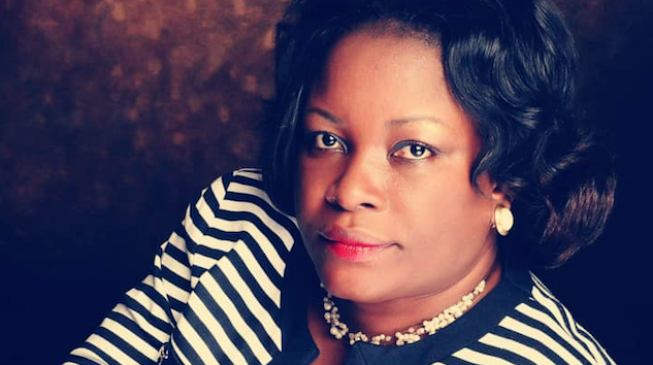
BARELY seven days after the Senate summoned the Nigerian envoy to South Africa on the alleged murder of late Elizabeth Ndubusi-Chukwu, a Nigerian, the South African government on Tuesday says the incident has been prioritised.
Mr Bobby Moroe, the South African Acting High Commissioner to Nigeria, disclosed that investigation has commenced, adding that video footage has been obtained from the hotel where she lodged after alleged initial reluctance by the hotel to cooperate.
An autopsy on the deceased proved that the late mother of two was actually killed, as she was reported to have died an unnatural death.
The late Ndubusi-Chukwu, who was the Deputy Director-General of Chartered Insurance Institute of Nigeria (CIIN), was killed last month in South Africa at the Emperor Palace Hotel, Johannesburg where she lodged while attending an international conference – African Insurance Organisation.
The death has however raised public outcry on the increasing Nigerian casualties recorded in South Africa. Unconfirmed reports further put the figure at 127 in the last three and a half years.
Governor Willie Obiano of Anambra State challenged the Federal Government to tackle the matter and unravel the ‘root’ cause, ‘no matter the cost‘.
The ICIR earlier reported the demands by Nigerians home and abroad for justice over the death. They also condemned the Federal Government’s slow response to activating investigation.
Former Chairman of the National Human Rights Commission (NHRC), Prof. Chidi Odinkalu, in particular, has tackled leadership of the Nigerian Diaspora Commission, chaired by Abike Dabiri-Erewa for being slow on the incident.
Lawyers under the aegis of the Anambra State Indigenous Lawyers Forum yesterday protested outside the premises of the South African High Commission in Victoria Island, Lagos over the killing.
Victims of rape hardly get justice in Nigeria. Oftentimes the miscarriage of justice happens because law enforcement officers compromise. ‘Kunle ADEBAJO reports.
“Sorry sir, this amount that they told me, I don’t have up to that o,” Nanpon Julius pleads after exchanging pleasantries and introducing himself. He is on the phone with Okokon Udo, a state prosecution lawyer working with the FCT Criminal Investigation Department, CID.
“How much do you have?” the lawyer asks in a deep, booming voice.
“I have N10,000 with me now. Someone gave me N5,000 and I’ve had N5,000.”
“Okay, bring it. But it won’t be enough, you’ll have to add another N10,000. Let’s work on something. I’m in the office,” Udo says hurriedly. For emphasis, he adds: “You go add another N10,000. Come, I’m in the office, ehn?”
JULIUS, a logistics officer for a food delivery startup in Abuja, discovered two months ago that his daughter, who is only three years old, has been defiled. She had complained of pains in her wee-wee (vagina) and checks at Maitama General Hospital revealed that her hymen is broken.
When he asked her who was touching her private parts, she answered “papa”. Papa is one of Julius’s neighbours, living on the floor directly above his at their residence in Katampe Extension.
Alarmed, he rushed to Gwarinpa Police Station to file a complaint. The police insisted on having test results from the Federal Staff Hospital. After the test, the doctor also confirmed injury on the hymen, but the test results would take three days before they are released.
On May 13, the police swiftly arraigned the suspect before the Upper Area Court, Zuba—nearly 30km away from Gwarinpa Estate. Oddly, this was before collecting the test results from the hospital, which were available later that day, and before speaking at all to the victim of the crime.
“They told the chief judge there’s no evidence on the case,” says Julius, who was also at the hearing. “And they didn’t investigate the matter. They took a statement from me and the witness I have, but they never questioned the girl to ask who molested her. There was nothing like that.”
Wanda Ebe, the founder of Wanda Adu Foundation, an NGO aimed at eradicating violence against the girl-child, was also at that trial. She tells The ICIR no one was at the court till past midday, though the proceedings were supposed to start by 9 am.
“The judge was not there, nobody was there,” she says. “We sat down there for hours. Nothing was happening. In fact, the cleaners started sweeping the courtroom by 11 am… before putting things in place one after the other. Then, taxi drivers were bringing in suspects on chains.”
Unsatisfied, and suspecting malpractice, Julius complained to the Centre for Transparency and Advocacy, which immediately contacted the Commissioner of Police. The COP, Bala Ciroma, then instructed that the case be withdrawn from the court for further investigation.
From incompetence to extortion
Things started to look good after the case’s withdrawal on June 19 and transfer to the state CID. A fresh investigation commenced soon after—in fact, the day after the hearing, June 20.
“They even came to my house and interviewed the girl; she mentioned ‘papa’,” Julius recalls.
“They asked who papa is and she described and pointed at him. They asked where he’s living. They climbed the stairs and she showed them his room. They were taking videos of everything. After that, they left. They said since I’ve given my statement and my number is with them, I should hold on, they would call me.”
But that is not all. Before the officers left, they asked for money—N5,000. They said N3,000 is to type a report, and N2,000 to cover transportation expenses. Julius gave it to them.
When he called three days later, he was told the case has been pushed to the legal department for additional investigation.
“On Friday [July 5], I had a call from one of the barristers at the legal department,” he says. “He said I should come [as] they want to charge the case to court. I rushed to meet him. Then he, Barrister Udo, told me that I should bring N40,000 for casefile and signing …the chief judge will sign, this and that.”
Udo then asked how much he had with him but Julius asked to get back to him as he was not expecting to pay.
“Yesterday [July 9], he started calling me for the money, I said I didn’t have anything yet and will get back to him; someone has promised me.”
Acting on the advice of his spiritual leader, Julius went to the National Human Rights Commission where he was told not to pay a dime as it isn’t constitutional.
Okokon Udo. Source: Facebook.
Confronted with the allegation, Udo neither admits nor denies it. “Is that the work of your NGO?” he asks among other questions.
“Shut up. Shut up. Listen to me,” he says after he is asked again if he solicited money from the complainant.
“Is that the work of an NGO to make enquiries from police? Because you work as a journalist, you have to ask me bullshit questions? Is that supposed to be the purview of your duty?” the lawyer adds before eventually ending the call.
Called minutes later, he says he is “doing something for his boss” and should be contacted later but does not specify when.
Justice to the highest bidder
In 2017 the United Nations Office on Drugs and Crime (UNODC) released a report done in collaboration with the National Bureau Statistics. The study found the criminal justice system to be the most corrupt sector in Nigeria. Police officers, with a prevalence rate of 46.4 per cent, are most commonly paid bribes, followed by prosecutors, and then judges and magistrates.
“The experience of corruption in encounters with public officials whose duty it is to uphold the rule of law can lead to the erosion of trust in public authority,” the report observed.
The 2019 Global Corruption Barometer Africa report released last Thursday by Transparency International also confirmed the Nigeria Police as the most corrupt institution while the judiciary is ranked third.
Having to pay to get through the process of criminal litigation, which is the sole responsibility of the state, means poor Nigerians who are victims of sexual violence may never get justice.
The ICIRreported in June how Yetunde, an officer at the Nigeria Police’s Gender Unit in Abuja, asked the father of two underage rape victims for N50,000 to mobilise policemen and track down the suspect. Another victim of rape who was directed to a police station at Obalende, Lagos in January 2018, and spoke to the paper says she had to pay N8,500 to fuel a vehicle in order to arrest the suspect.
Ebe says not only do law enforcement officers extort those who complain of rape, but they also accept bribes from suspects to sabotage the case.
“The whole justice system is messed up,” she says. “Everywhere there’s corruption. It is only the rich so to say who can actually pay lawyers to pursue their case and see the end of it. But then, how many children of the rich are even raped? Most cases of rape and child defilement happen to vulnerable people in rural communities.”
“I have had a case of child defilement where the victim’s father went to the police and the questions the IPO [Investigative Police Officer] was asking him were: Who do you know? Who are your family members? Who is going to help you out on this case? Do you have money to pursue the matter?” she narrates in a displeased tone, referring to Julius’s case. “And the man replied that he is just a delivery guy with a monthly salary of N25,000 to N30,000.”
She says when they got the COP to withdraw Julius’s case, the IPO, Christiana Gloria, was infuriated. The officers also mocked the complainant, whom they had stereotyped as poor and helpless.
“Ah, so you even know people in civil society? So you even have people who can speak for you?” she remembers them asking.
“Their disposition is to take advantage of poor people or the fact that you don’t have anybody to pursue the matter for you. They’ll rather connive with the suspect, who’ll bring peanuts, and they will push the case under the rug. It is all about interest and what they get.”
Gloria says she has nothing to do with the case again as it’s been transferred to the state CID. She declines to comment on how well it fared before the transfer but says she did what she was supposed to do. Also, she does not deny that the victim of the assault was not interviewed or that the medical report was not presented as evidence in court.
When we asked Anjuguri Manzah, spokesperson of the FCT police command, if they are aware of such practices and what actions they are taking to curb them, he directs The ICIR to Frank Mba, the police public relations officer. Mba, however, did not answer his call and has not replied a text message sent to him.
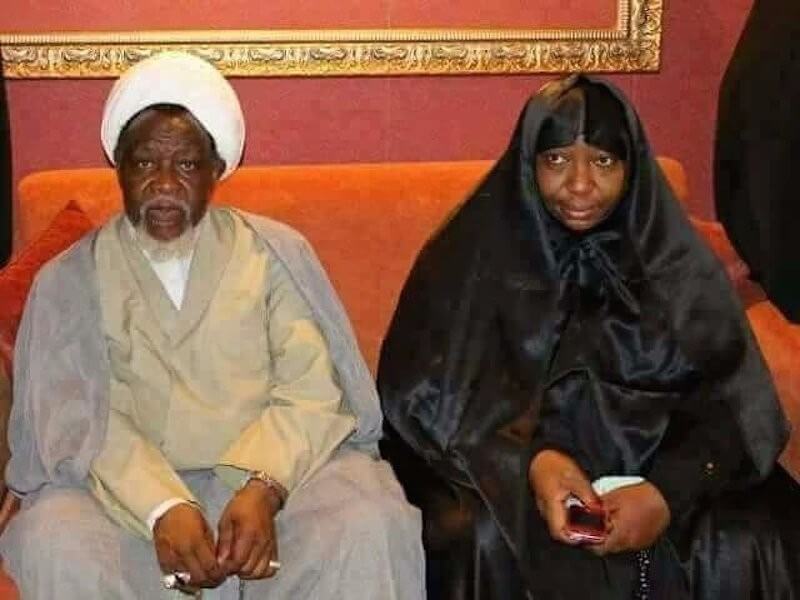
FOR the umpteenth time, Human Rights Lawyer and Senior Advocate of Nigeria (SAN), Femi Falana has advised the Federal Government to release the detained Shi’ites Islamic Group cleric, Ibrahim El-Zakzaky and his wife, Malama Zeinab El Zakzaky to avoid the likelihood of a fresh insurgency.
The lawyer asked for the cleric’s release for medical reasons, saying he already lost an eye.
“This nation cannot afford another war of insurgency which is being provoked by the contemptuous conduct of the federal government in the handling of the case of the El-Zakzakys,” says Falana in a report by The Nation.
In April 2017, Falana, in a public letter to President Muhammadu Buhari demanded the release of the cleric. The day coincided with the 500th day El Zakzaky and Zeinab have been in detention.
“In view of the commitment of your administration to end impunity in the country we urge Your Excellency to use your good offices to direct the State Security Service to release our clients from further incarceration in compliance with the orders of the Federal High Court.
“We also pray Your Excellency to direct the Nigerian Army to investigate and prosecute the military personnel responsible for the brutal murder of 347 members of the Shia Community at Zaria in December 2015,” the letter read in part.
“Should Your Excellency refuse to ensure compliance with the said orders of the Federal High Court we shall be compelled to embark on contempt proceedings against the Attorney-General and Minister of Justice as well as the Director-General of State Security Service. If the military personnel indicted by the Judicial Commission of Enquiry are not prosecuted we shall request the Special Prosecutor of the ICC to put them on trial for crimes against humanity.”
Two months after, the lawyer again petitioned the Vice President, Yemi Osinbajo also demanding for the release of his client.
In January 2018 Falana further demanded the release of the duo stressing that they were being held despite the Federal High Court order which ruled in their favour.
Meanwhile, in December 2016 the high court in Abuja ordered their releases from detention, saying the continued detention violates their rights and is against Section 35(1) of the constitution and the African Charter on Human and Peoples Rights.
Since December 2014 when the Islamic Movement of Nigeria (IMN) had a violent clash with the Nigerian military, the sect has repeatedly agitated for the release of their leader with the wife, while most of the followers were either shot, injured or arrested in the protests.
However, the Falana warned the sustained detention and killings of the El Zakzaky protesters by security operatives could unleash another form of insurgency the Federal Government has battled over the years.
According to him, over 1, 000 Shi’ite members were reportedly massacred by the military during the Kaduna incident, on order of the military chief over claims of an assassination attempt on the Chief of Army Staff, Lt. Gen. Tukur Buratai.
His words: “Without any autopsy or identification the slaughtered Shi’ites were given a mass burial in an unmarked grave in Mango village in Kaduna State. Even though the leader of the Shi’ites, Sheik Ibraheem Elzakzaky was not at the scene of the attack his residence was invaded by the rampaging troops two days later.
“The troops set the house ablaze, shot at Elzakzaky and his wife, Malama Zeinab Elzakzaky and killed three of their sons in cold blood in their presence. As if such barbaric assault was not enough the army arrested and held Elzakzaky and his wife in custody before handing them over to the State Security Service (DSS).
“At that stage, the houses of Elzakzaky and other leaders in Zaria were demolished by the Kaduna State Government on the orders of Governor Nasir El Rufai.”
Falana argued further that after the judicial commission of enquiry, set up by the state government to probe the massacre, it was established there was no plan to assassinate the COAS as claimed by the military.
File photo: The El-Zakzakys
According to him, findings by the commission showed that 347 Shi’ites were murdered by the military, an offence he said is against the Army Rules of Engagement and the Geneva Conventions.
“The detained Elzakzaky was prevented from responding to the allegations made against him and his group at the enquiry. But the judicial commission found that there was no plan by the Shi’ites to assassinate General Buratai.
“It was also revealed at the panel that 347 Shi’ites were massacred by the army in violations of the Army Rules of Engagement and the Geneva Conventions. Apart from condemning the brutal massacre of the Shi’ites, the judicial commission recommended that the culprits be prosecuted.
“Instead of implementing the recommendation by prosecuting the well-known murderers, the Kaduna State Government turned round to charge over 300 Shi’ites with the culpable homicide of a soldier who was killed by his colleagues during the attack.
“But the defence team convinced the Kaduna State High Court to free the Shi’ites as they were not involved in the commission of the offence. Accordingly, the charge was dismissed for want of evidence while the trial court proceeded to discharge and acquit all the defendants.”
“In particular, Elzakzaky has lost an eye while he is the process of losing the other one. The wife can no longer walk as a result of the gun wounds inflicted on her during the military attack of December 2015. Without adducing any reason whatsoever the federal government has ignored the recommendation of the physicians. The Shi’ites are currently protesting the refusal of the Buhari regime to release Elzakzaky and his wife from custody to enable them travel abroad to receive urgent medical treatment at their own expense.
“Elzakzaky must not be allowed to die due to medical neglect as it may provoke a crisis of monumental proportions. Therefore, the federal government should implement the unanimous resolution of the House of Representatives for the release of Elzakzaky and his wife without any further delay,” says Falana.
FOLLOWING the death of Kabiru Ismail, a top government official in Zamfara State, during last Sunday kidnap, Governor Bello Matawalle says he is meeting with his counterpart in Kaduna, Governor Nasir El-Rufai to ensure the safety of commuters across the states.
Matawalle disclosed this while reacting to the kidnap, which also involved abduction of the Director of Budget, Alh Hamza Salihu alongside a female passenger, who was reportedly shot at the leg and left in the pool of her blood at the crime scene.
Ismail, until his death was the Zamfara State Deputy Director in charge of budgets.
The officials were reportedly kidnapped near Kachia in Kaduna State while on their way to Akwanga, Nasarawa State on official function.
Yusuf Idris, Director-General of Press Affairs to the Zamfara State governor, in a statement in Gusau, confirmed the incident, stressing the governor’s resolve to address security officials in the state, with a view to apprehending the perpetrators and ensuring the release of the abducted.
“It is very unfortunate that while efforts are being strengthened to stop armed banditry, kidnapping, cattle rustling, and other crimes peacefully without any bloodshed, some bad elements who have chosen to remain unrepentant will still use security uniforms to stop and kidnap unsuspecting law-abiding citizens.”
There have been several reports of attacks, killings, banditry, and kidnapping in Zamfara in recent time.
In early March, about 113 people were reportedly killed in one week.
On 2nd June, the governor said the state might consider implementing death penalty law for armed banditry informants, after agitations from local vigilante groups for a death penalty for the bandits in the state.
The next day, Matawalle’s convoy was attacked along Lilo community, on the outskirts of Gusau while on his way to sympathise with victims of the previous attacks.
Thirteen days after, the governor met with security experts in Dubai to help address the insecurity situation in the state, yet cases of kidnapping, banditry, and cattle rustling have not ceased.
Data from the Council on Foreign Relations (CFR) Nigeria Security Tracker (NST) shows that between May 2015 to July 2019, 2,317 people have been killed only in Zamfara State. The data which captures the death incidents nationwide also revealed that 28, 637 casualties have been recorded in the country from May 2011 to date.
Meanwhile, the governor has expressed grief in the death of Ismail who lost his life in the hands of the kidnappers. He has condoled with the family of the deceased.
DATA from the Council on Foreign Relations (CFR), on Monday, showed that 28,969 Nigerians were killed from May 2015 till June 2019.
The data captures weekly the number of casualties, who lost their lives due to various causes, ranging from insurgency, herdsmen attacks, communal clashes among others.
Based on deaths by states represented on the maps, Borno State has the highest number of casualties, followed by Zamfara, Benue, Adamawa and Kaduna state respectively.
Deaths per month, however, showed that 6,323 causalities were recorded in the country from May to December 2015. In 2016, the number of casualties dropped to 5,763. The following year, specifically in 2017, it further declined to 4,618 while in 2018, deaths recorded rose to 6,565 people.
On Sunday, July 14 the ex-President Olusegun Obasanjo wrote an open letter to President Muhammadu Buhari, where he warned of imminent “dismemberment of the country,” if urgent action is not taken.
In the first half of 2019, the security tracker has recorded 5, 700 deaths, a figure higher than the combined number of deaths in 2018.
In January there were 1,077 casualties, 877 casualties were recorded in February, followed by 1,014 in March. In April, 1,072 deaths were recorded, 769 in May and 891 in June.
Due to an upsurge of insecurity in the country, the platform commenced monitoring of causalities on May 29, 2011, the very day former President Goodluck Jonathan was inaugurated to govern the country.
Similarly, some of the flash locations highlighted by the CFR were also reflected by the Armed Conflict Location and Event Data Project (ACLED), an international organisation which collects data on violence, fatalities and their locations across Africa, Europe, the Middle East and other regions of the world.
According to ACLED, 30, 805 Nigerians were killed between 2015 and 2019.
THE Securities and Exchange Commission on Monday announced that it has started to verify claims of 4,160 unpaid investors of an illegal investment scheme organised by Dantata Success and Profitable Company in Kano.
The commission in a press statement said the exercise is “sequel to the appointment of joint Administrators/Trustees for Dantata Success and Profitable Company by the Securities and Exchange Commission (SEC) pursuant to section 13 and 173 of the Investment and Securities Act, and consequent to an Order Exparte granted by the Federal High Court Kano.”
Reportedly, the company which was not registered used illicit strategies to solicit funds from unsuspecting members of the public by enticing them with returns of monthly interest on the investment of between 25 to 50 per cent, depending on the nature and type of the investment, thereby engaging in illegal capital market activities.
The company sold forms to prospective investors according to their investment plans ranging from N1,000 to N3,000, with the minimum amount investable being N50,000 and a maximum amount of N5m.
The verification scheduled to begin Monday would end on July 20, with 4,160 investors undergoing verification from 9:00 am to 4:00 pm daily.
“All unpaid investors are necessarily advised to attend in person as attendance by proxy is not acceptable.”
“Notice is hereby given to members of the investing public that invested in the entity’s illegal collective investment scheme to come forward for verification of claims.
“All unpaid DSPC Scheme investors are necessarily advised to attend in person as attendance by proxy is not acceptable. Claimants must bring along the following documentary evidence/information for the verification exercise:
The documents and proof of evidence of investment required for submission include Bank Teller, Bank Deposit Slip, Bank Online Transfer Advice, Completed DSPC Investment Form, E-mail/WhatsApp Correspondence and DSPC Payment Receipt.
Claimants are expected to bring the following means of identification: identity card, driver’s license, permanent voters card or international passport.
To complete the verification process, SEC also requests for detail of claimants’ Bank Account and Bank Verification Number (BVN).
The Commission had in February sealed off the premises of Dantata Success and Profitable Company in Kano and planned to commence a verification exercise for people who invested in the company.
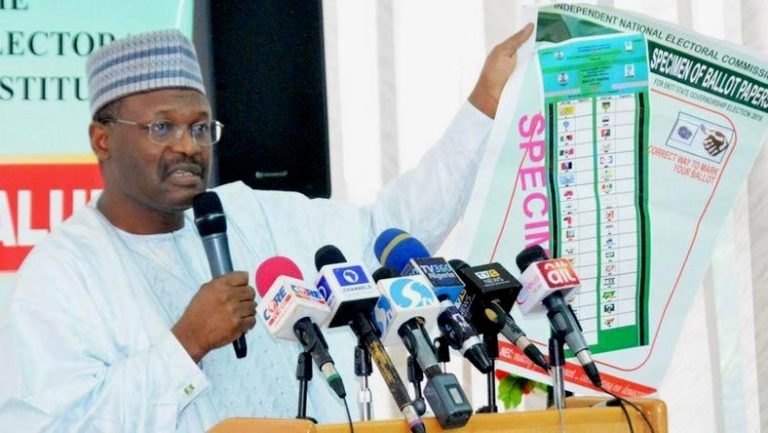
WHILE responding in April to a petition from the People’s Democratic Party (PDP) and its presidential candidate challenging the declared presidential electoral results, the Independent National Electoral Commission (INEC) had deniedrather suspiciously that it transmitted poll results electronically.
The commission has also said point-blank to the Presidential Election Petition Court, sitting in Abuja, that it does not have a central server. But this isn’t the only reason why it’s against the petitioners’ application to inspect servers, which they said INEC used in storing “database packets relating to accreditation of voters and transmission of results”.
A copy of the court’s ruling on the application delivered on June 24 and obtained by The ICIR details other arguments put forward by INEC.
It is against national security…
Yusuf Ustaz Usman, a Senior Advocate of Nigeria who led INEC’s team of five senior advocates and 10 junior lawyers, urged the court to dismiss PDP’s application on a number of grounds, including national security. It explained that these arguments were given for hypothetical reasons only; that is assuming a server indeed exists.
According to the court document, Usman submitted that “assuming without conceding that there is a server which the 1st Respondent [INEC] has denied and issues joined on that point by the parties, granting access to the server as requested by the Petitioners would amount to compromising the Nigerian Public Policy and National Security”.
In buttressing this point, INEC referred to sections of the Electoral Act (52, 54, and 125) and said the law’s intention is to protect the secrecy of voting and the rights of voters.
Another argument advanced by the electoral commission was that unless the Electoral Act is reviewed to make provision for technological instruments, “access to a server is not required for the proof of the petition”. This position, it said, was supported by the Supreme Court in a 2016 case between Abia State governor Okezie Ikpeazu and Alex Otti, 2015 gubernatorial candidate of the All Progressives Grand Alliance.
INEC also contended that the application violates a legal principle known as res judicata that states that the same matter cannot be decided on twice by the court.
Usman said the petitioners had earlier filed the same application before the tribunal seeking to access INEC’s central server and the court had refused to grant it.
He submitted that “a decision of a court or tribunal not appealed against remains subsisting and binding on all the parties” and added that the court lacks jurisdiction to entertain the same plea.
In a counter-affidavit also referenced in the court’s ruling, INEC maintained that Smart Card Readers were only used for voter authentication and that “it does not have the so-called central server, for collation and transmission of election results as described by the petitioners”.
“The 1st Respondent (INEC) asserts that no figures or votes collated during the 2019 presidential election were transmitted to any central server, and none was also aggregated in any server referred to as INEC RSLT SRV2019 whose physical address is 94-57A5-DC64-B9 as alleged by the petitioners. The said server is strange to the 1st Respondent,” the counter-affidavit also stated.
INEC further swore in its statement that its chairman nor any of its authorised spokesperson ever “stated that it was employing the system of electronic transmission of result to any central server as there was no central server for that purpose”.
Earlier reports by The ICIR, however, showed that many top officials of INEC confirmed right before the election that the commission planned to engage in electronic transmission of results to a server for transparency.
INEC chairman Mahmud Yakubu himself said in 2017 that the commission is pioneering and hopes to deploy “in the 2019 general elections a new platform for electronic collation and transmission of results.”
It was also established that N2.27 billion was budgeted by INEC for server-related procurement items, and not only was this money released it was also reported as spent by the commission.
It said in June that it would at the right time give an account of how it spent the money but has yet to do so nearly a month after.
PDP’s response
Senior Advocate of Nigeria Livy Uzoukwu, in a written address filed on behalf of the petitioners, said INEC “completely misconceived” their application. On the allegation of violating the res judicata principle, he explained that the motion ex parte filed and heard in March is totally different from the new application filed in May.
“It was also submitted that a distinction must be drawn between a motion ex parte wherein rights of parties have not been decided, and a motion on notice where parties are heard and a decision arrived thereon, on the rights of the parties more so that a relief refused in an ex parte application may be granted in a motion on notice.”
An ex parte decision, the senior counsel said relying on a 2017 Court of Appeal judgement, is not a final decision between the parties in a case.
On INEC’s argument that granting the application will compromise national policy and security, PDP said they did not demonstrate this point considering that their plea stated clearly the nature and extent of the data sought.
“It was further submitted that, on the contrary, if there is any national public policy that the court should be concerned with, it should be the transparency of the electoral process and the neutrality of the electoral umpire,” the court document noted.
INEC not alone in denying server’s existence
It is not only the electoral body that has maintained that there is no server in its statements before the election petition court.
President Muhammadu Buhari’s counsel also told the court “the whole idea of a server belonging to the 1st respondent only exists in the imagination of the petitioners”.
The lawyer representing the All Progressives Congress (APC) made the same submission using similar words.
The petitioners, in their response, said since the servers are in the custody of INEC, it is “strange and presumptuous” for the APC to claim they do not exist.
The court’s decision
The Presidential Election Petition Court, in reaching its decision, considered if it would meet the end of justice to grant the application even though the parties do not agree and issues have been joined on the existence of a central server.
“It will no doubt be out of place and justifiably clothe this court with the garb of bias if it proceeds to grant the reliefs as sought by the petitioners,” Mohammed Lawal Garba, a justice of the Court of Appeal, held.
“In other words, by so doing, this court would have delved into and resolved the contentious issues aforementioned at an interlocutory stage. The unpalatable scenario that will be created in the circumstance will be that this court has by implication agreed that there is a central server in the custody of the 1st Respondent and this court will be seen as having engaged in making an order that touches on the substantive matter.”
Thus, in order not to be guilty of “pre-judging a fundamental issue already joined by the parties”, Garba ruled, to the unanimous agreement of the four other justices, that the petitioners’ request for inspection was not granted.
IN fulfillment of his campaign promise to make public his asset, Governor of Oyo State, Seyi Makinde on Monday has declared his assets.
Governor Makinde is the first among the 36 governors in the country to have publicly declared his assets since their inauguration on May 29, 2019.
He has has in excess of N48 billion in both cash and properties.
Details of his assets as contained in the Code of Conduct Bureau form (CCB1) with the name Oluseyi Abiodun Makinde, was declared at the High Court of Oyo State, on May 28.
The assets declaration form, marked OYSE/2019/001 contained details of cash at hand, in the bank, landed properties (developed and undeveloped), household items, share and bonds owed by the Governor, his wife, Omini Makinde as well as his companies.
The Chief Press Secretary to the governor, Taiwo Adisa who made the asset declaration available to journalists explained that governor Makinde had cash at hand and in the bank worth N234, 742,296.01, as at May 28, 2019.
In dollar terms, the governor has cash valued at $30,056.99 as at the same date.
Properties, including the developed and undeveloped as well as household items indicated on the asset forms, showed that the governor is worth N2, 624,800,500(two billion, six hundred and twenty-four million, eight hundred thousand, five hundred naira as at the date of asset declaration.
In Dollar terms, the governor also declared properties, developed and undeveloped as well as household items valued at $4,400,000(four million, four hundred thousand dollars only.
In South African Rands, the governor declared buildings and household items worth four million, four hundred and fifty-seven thousand, five hundred and fifty-four and four South African Rands.
The houses declared by the governor included nine buildings in Nigeria, two in the United States of America and one in South Africa.
One of the properties in the United States is described as “jointly owned.”
The details showed the current value of Makinde’s companies stand at N48, 150,736,889 (forty-eight billion, one hundred and fifty million, seven hundred and thirty-six thousand, eight hundred and eighty-nine Naira), with 33, 730,000 units of shares as at May 28, 2019.
The governor also has existing Bonds (Eurobond) worth $3, 793, 500 as well as shares, debentures and other securities valued at N120,500,000(One hundred and twenty million, five hundred thousand naira).
The companies listed by the governor include Makon Engineering and Technical Services Limited; Energy Traders and Technical Services Limited; Makon Oil and Gas Limited; Makon Group Limited, Makon Construction Limited and Makon Power System Limited.
The asset declaration form indicated that his four companies have additional assets denominated as loan notes including Makon Engineering and Technical Services Limited(N1.7 billion); Makon Power System Limited(N148.4 million); Makon Oil and Gas Limited(N341 million); Energy Traders and Technical Services Limited(N1.159bn) totalling N3.389 billion.
Speaking with newsmen at the CCB office in Ibadan, Makinde said: “I came here to collect the photocopy of the form that I signed in fulfillment of the campaign promise to the people that I will declare my asset publicly and release the document to the public.
“I will encourage all the members of my cabinet to do the same thing but in as much they stay within the ambit of the law, I will encourage them to do the same.”
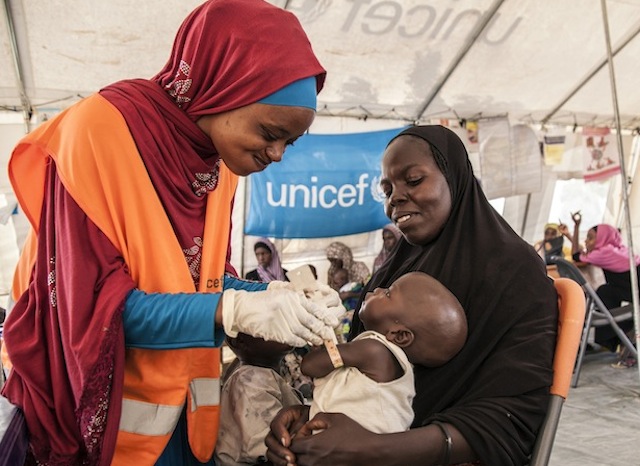
ABOUT 20 million children missed out on life-saving vaccines globally in 2018, while three million children live in Nigeria, according to new data from the World Health Organisation and the UNICEF.
The report published on Monday indicates that most unvaccinated children live in the “poorest countries and are disproportionately in conflict-affected countries” where almost half are in 16 countries. The countries include Nigeria, Afganistan, the Central African Republic, Chad, Democratic Republic of the Congo (DRC) and Ethiopia. Others countries are Ethiopia, Haiti, Iraq, Mali, Niger, Nigeria, Pakistan, Somalia, South Sudan, Sudan, Syria and Yemen.
The vaccines for a child’s immunisation are including doses of hepatitis B, measles, yellow fever, pneumococcal conjugate, diphtheria, tetanus and pertussis (DTP) vaccines. But WHO says more than one in ten children were unvaccinated in 2018. If these children do get sick, WHO says, they are at “risk of the severest health consequences, and least likely to access lifesaving treatment and care”.
It notes that ten countries account for 11.7 of the 19.4 million under and unvaccinated children in the world. “This list includes some countries with moderate coverage and very large birth cohorts, and other countries with substantially lower coverage,” WHO explains. The estimated number of vaccinated children have been calculated using population data provided by the 2019 World Population Prospects (WPP) from the UN.
Nigeria is the highest with the number of unvaccinated children globally. Credit: WHO
“Vaccines are one of our most important tools for preventing outbreaks and keeping the world safe,”said Tedros Adhanom Ghebreyesus, Director-General of the World Health Organization.“While most children today are being vaccinated, far too many are left behind. Unacceptably, it’s often those who are most at risk– the poorest, the most marginalized, those touched by conflict or forced from their homes – who are persistently missed.”
The health agency said countries need a 95 per cent coverage of immunisation to protect against outbreaks of vaccine-preventable diseases.
The data also shows that eleven countries were below 60 per cent in the coverage of the third dose of DTP. DTP is a combination of diphtheria, tetanus and pertussis (whooping cough) which are serious ailments but are preventable with vaccines. Nigeria is part of the 11, others include, Angola, Chad, the Central African Republic, Equatorial Guinea, Guinea, Samoa, Somalia, South Sudan, the Syrian Arab Republic, and Ukraine.
DTP3 coverage is calculated for children under one year of age.
On the measles vaccines, the UNICEF and WHO data shows that of the 774 local government areas in Nigeria, 283 have achieved 95 per cent coverage of the vaccine. In other words, 491 local government areas are yet to meet up with 95 per cent benchmark of vaccination coverage for measles in 2018.
An earlier report by UNICEF indicated that nearly four million Nigerian children under one year of age missed out on the first dose of measles vaccine in 2017.
“Measles is a real-time indicator of where we have more work to do to fight preventable diseases,” said Henrietta Fore, UNICEF’s Executive Director.
“Because measles is so contagious, an outbreak points to communities that are missing out on vaccines due to access, costs or, in some places, complacency. We have to exhaust every effort to immunize every child.”
According to a WHO report which calculated the under-five mortality rate in 2018, about 5.4 million children before reaching their fifth birthday. Also, a UNICEF report in September 2018 estimated that every five seconds, a child under the age of 15 dies. It noted that the majority of these deaths happen before a child clocks five years old. Access to immunisation, medicines, clean water, electricity, more health facilities and doctors could have prevented their deaths, UNICEF mentioned.
In Nigeria, it is estimated that one in ten children died before clocking five.
Faisal Shuaib, Executive Director of the National Primary Health Care Development Agency (NPHCDA) said in April 2019 that not less than 2,300 children under five years of age die daily in the country from preventable causes.
DESPITE its earlier stance, the Christian Association of Nigeria (CAN) has promised the Commonwealth of Zion Assembly (COZA) and its embattled pastor Biodun Fatoyinbo accused of rape by Busola Dakolo, wife to Nigeria popular artist Timi Dakolo, that the Christian body will always support the church.
“It is a pleasure being here. And I assure you we are with you and we will continue to be with you. We are in support of the church, we are in support of your pastor, we stand by him. The gates of hell shall not prevail and this church will continue to match forward,” said Rev. Israel Akanji, the CAN President of Federal Capital Territory.
On Sunday, the CAN chairman and another top official of the body in a solidarity visit to COZA said they were throwing their support solidly behind the general overseer come what may in his “times of trails.”
“How can I and the FCT chairman hear that one church that God has a plan and purpose for is going through this Jerusalem- Jericho road and then we will walk and walk away?
“We are here to let you know we are with you in prayers. The Lord will bring you out even stronger. Our pastor here by the grace of God will continue to be the voice of God to proclaim the whole nations of the world. We want you to know you are not alone, you have many brothers and sisters praying for you.” The second representative added amidst loud agog from the congregation.
However, weeks ago, Supo Ayokunle, CAN’s president, when contacted by newsmen distanced the association from the saga said the body does not interfere on internal- church matters but only intermediate on the inter-religious matters that concerns the church and the government only.
So CAN representatives went to COZA to show support for Biodun Fatoyinbo yesterday. Nigeria really is a "special" country lol pic.twitter.com/03ELk13XtP
Fatoyinbo, whom his wife Omodele fiercelydefended has stepped-down as pastor in the church till investigation on the matter is concluded. He had earlier in a press statement denied the rape allegation and called it an attack to the body of Christ.