AT least six soldiers including a colonel were killed in an ambush by suspected Boko Haram insurgents on Wednesday evening.
Multiple sources reported that the insurgents opened fire on the patrol vehicle carrying the soldiers in Jakana, close to the state capital Maiduguri, Borno State.
The insurgents were said to be those of Islamic State West Africa Province (ISWAP).
They launched the attack on the soldiers of the 29 Task Force Brigade who were on their way to Maiduguri from Damaturu, the capital of neighbouring Yobe State. The attack took place at about 6:20 pm.
The remains of the colonel and five others were taken to a Nigerian Army medical facility in Maiduguri.
After the ambush, the insurgents also attacked a military base just outside Jakana in seven trucks fitted with machine guns, engaging troop.
A reinforcement was sent from the 29 Task Force Brigade Headquarters in Benisheik to the outpost in Jakana.
The attack was however repelled by soldiers at the base, with the suspected Boko Haram fighters abandoning their weapons and one vehicle as they fled.
The Nigerian Army has not publicly announced the details of the attack.
In June, at least 28 soldiers were reportedly killed while the insurgents ransacked a military base in Gajiram, Nganzai local government area of Borno.
Boko Haram has been on a killing spree despite the Nigerian government’s efforts and claims that the war was in its last days.
Hundreds of soldiers have been killed since Boko Haram began focusing on military bases in July 2018, casualties that included at least six senior officers and commanders.
The Nigerian military has made inroads in curtailing the insurgent’s operations to three states which include Adamawa, Borno and Yobe. They’ve operated across Northern Nigeria including in the Federal capital, Abuja.
However, the Boko Haram group is still able to attack military and civilians in the three states where it currently operates.
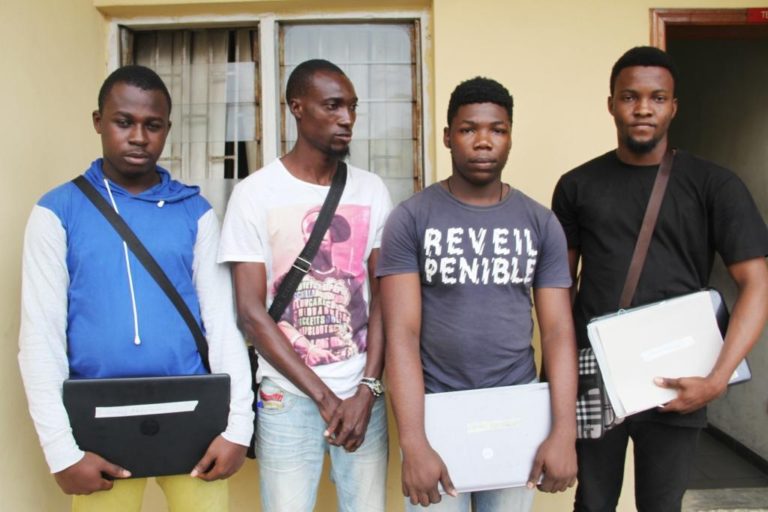
THE Economic and Financial Crimes Commission (EFCC) says it has arrested a Nigerian Immigration Service (NIS) officer, Adebimpe Kehinde, an Immigration Assistant over alleged involvement in passport racketeering.
A statement issued in Abuja on Thursday by the acting Head of Media and Publicity, Tony Orilade said its Lagos Zonal office arrested Kehinde alongside 14 other suspected passport racketeers on Thursday, at the Immigration Service Passport office, Alagbon, Ikoyi, Lagos.
Their arrest, Orilade explained followed intelligence reports received by the Commission leading to series of surveillance about their alleged criminal activities.
AS NIGERIA ranks the highest with the tuberculosis burden in Africa and the sixth-highest globally, International Organisations and Stakeholders in Nigeria have called for strong partnerships to end tuberculosis in the country.
This was the prominent appeal made at the ongoing two-day National Tuberculosis Conference holding between July 17 and 18 at the International Conference Centre, Abuja.
Giving the opening remarks, Lucica Ditiu who is the executive director of Stop TB Partnership in Geneva said tuberculosis is a huge problem in Nigeria. She said the tuberculosis problem is compounded as 75 per cent of people with the disease are left untreated in the country, thereby infecting others. Approximately, there are 418,000 Nigerians that come down with tuberculosis every year but only 118,000 cases are treated and diagnosed, leaving 300,000 which is 75 per cent of TB people untreated.
Tuberculosis (TB) is an airborne disease which means, it is spread person-to-person through the air. When persons with the TB cough, sniff or spit, they propel germs to the air. If a person inhales only a few of these germs, such a person becomes infected. While anybody could be infected, the most at risk are those suffering from other conditions that impair the immune system such as HIV, and the tobacco users.
“Every single person that is not diagnosed or treated can infect between 10 to 15 other people every year,” said Ditiu. “So we realise that unless we curtail it, this we keep growing.”
Ditiu also called on the media to provide more information about tuberculosis to the general public. She said Nigeria needs to fight tuberculosis problem by working with every stakeholder, not only by the doctors and nurses.
“TB is not complicated, though not easy. Nigeria must act fast. Everyone needs to know there’s a TB problem in Nigeria and it is a big one. So, what do we do to our problems? We face them not avoiding them,” explained Ditiu.
Stephen Mule, Chairman of the African Parliament and Kenyan parliamentarian, said Nigeria should deliberately invest on tuberculosis. He said the resources for the fight against the infectious disease is usually funded by donors. Mule asked for “clear domestic financing”. It is estimated that Nigeria needs $310m, almost N112bn, to bridge the tuberculosis funding gap by 2030.
“Donor funds are drying up,” he said. Adding that Nigerians should talk to their legislators as they have a vital role to play in the budget. “We must ensure that new members of the Nigerian parliament make domestic plans to fund tuberculosis. He tasked the legislators also need to speak up about the disease in their districts and constituencies.
Gidado Mustapha, global director of challenge TB project, in his own part, said the only way to move forward in the fight against tuberculosis is by decentralising the method.
“Nigeria is supposed to address the burden from the local government areas and then to the state government,” he said. He called for community awareness of the disease. By involving the grassroots, the burden of the disease would be reduced in Nigeria, said Mustapha.
The symptoms for the disease include the chest pains, fever, night sweats, weight loss, weakness, and cough (at times with sputum and blood). If a person coughs persistently for two weeks, such a person need to be tested of tuberculosis.
The National Tuberculosis and Leprosy Control Programme (NTBLCP) earlier said in March during the world tuberculosis day that the disease kills not less than 18 Nigerians every hour.
Nigeria burden is on the increase even as it has claimed the 1st position among the countries with a high burden in Africa, as against the 2nd position recorded in 2017, according to the global TB reports. Also, Nigeria has moved from 7th position to the 6th highest in the world.
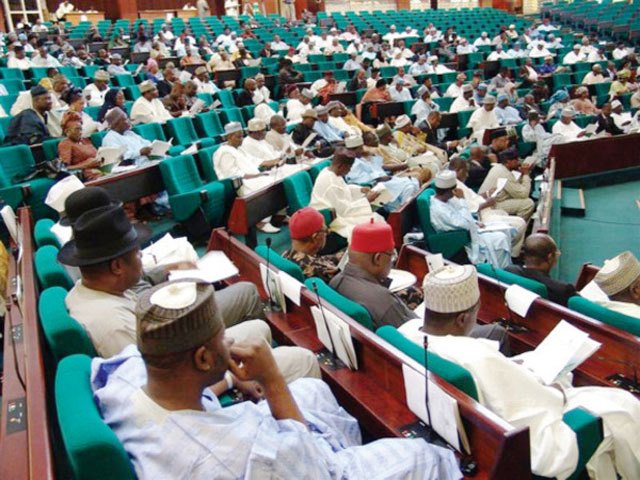
THE National Assembly (NASS) on Wednesday ordered Mohammed Adamu, the Inspector General of Police (IGP) and Yusuf Magaji, the Director-General of the Department of State Services (DSS), to shut down the Edo State Assembly and provide suitable security measures over alleged threat to the members-elect.
The House of Representative members also issued three conditions to the State governor, Mr Godwin Obaseki and the state assembly to comply with, otherwise, it would taking over responsibilities of the state lawmakers.
Among the conditions given to Obaseki is to announce a new day for the inauguration of the Edo Assembly.
The conditions are: “The Governor of Edo State, Mr Godwin Obaseki, in the interest of peaceful coexistence of the state, should issue a fresh Proclamation within one (1) week in line with section 105(3) of the constitution of the federal republic of Nigeria 1999 as amended, stating the date, and venue and publish in any National daily and television station.
“That all actions taken by the 7th Assembly members should be declared null and void pending proper inauguration.
“That members of the Edo State House of Assembly, both that have been inaugurated and those who have not been inaugurated should dissolve their faction in the interest of peace and stability of the House, with the view of moving the state forward…”
The resolution, according to reports, was part of the recommendations of the House of Representatives 13-member ad hoc committee on the Edo crisis, chaired by Abdulrasak Namdas and adopted by the House for consideration.
The Edo State Assembly has been in the news over the controversial inauguration of the state lawmakers-elect, and particularly, the Speaker.
About 48 hours after the ad hoc committee was set up, two All Progressives Congress interest groups, the Owan Renaissance and the Etsako Solidarity Front (ESF) accused the committee of being bias, stressing that the committee’s trip to Edo State was sponsored by one person.
But Namdas denied the claim with an assurance of the committee’s neutrality.
Despite that all the 24 lawmakers are from the APC, the rift between the governor and the APC Chairman, Adams Oshiomole also played out in the drama.
Seidu Oshiomole, one of the members-elect, believed to be related to the party chairman was also caught allegedly on tape reacting to how the 15 lawmakers-elect who opposed the state assembly inauguration are being funded in Abuja.
NIGERIA’s dependence on proceeds from crude oil revenues puts its economic survival beyond the post-oil economy in a precarious state.
This was revealed in a report titled “Economic disruption – How the energy revolution will affect Nigeria” released on Wednesday by SBM Intelligence, an organisation dedicated to the collection and analysis of information, basing its projections on the rise of alternative renewable energy.
The countries featured in the report were strategic global energy players namely Russia, Saudi Arabia, USA, India, Nigeria, Iran amongst others.
SBM Intel analysis stated in its report that Nigeria’s government failure to harness its prospects in the oil revolution and its lack of strategy to take advantage of the economic anxiety in the Gulf nations will make the country an economic liability rather than an asset.
“Fifteen years ago, the United States, US, was a top destination for Nigeria’s crude oil exports until it developed its shale oil production, today they barely buy anything from Nigeria, and India has replaced the US as Nigeria’s top energy importer.
“The energy market is competitive, Nigeria sells its petroleum without a clear strategy to make its top suppliers dependent on its petroleum exports. India and China are currently Nigeria’s most important trading partners. India for exports and China for imports, and there is sufficient room for growth in these relationships,” the report noted.
Shale oil is a high-quality crude oil that lies between layers of shale rock, or siltstone. Oil companies produce shale oil by fracturing the layers of rock that contain the layers of oil.
The US drive to increase its shale oil production had put Organisation of Petroleum Exporting Countries, OPEC’s “fragile five” namely Angola, Iran, Libya, Nigeria and Venezuela in an oil revenue shortfall as they could not endure a prolonged global decrease in the price of crude oil.
The report attributed the collapse in global crude oil prices spurred by shale oil production, had driven Nigeria into recession, which also increased it’s borrowing.
“Without major economic investments to show for all the borrowed sums, it means the debts will be much harder to repay,” the report said.
However, data from the Debt Management Office showed that Nigeria’s external debt stock had risen by 148 per cent since 2015.
The external debt had climbed from $10.32 billion in June 2015 to $25.61 billion in March 2019.
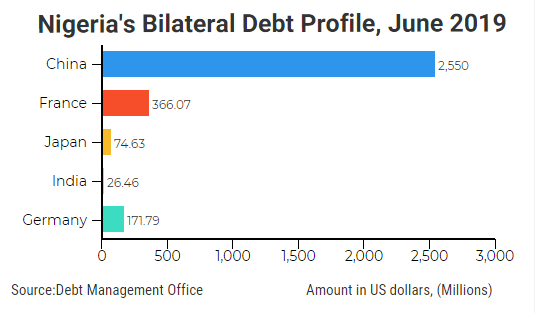
Nigeria’s highest lender is Eurobonds whose loan to the country is worth $10.87 billion, World Bank at $8.90 billion and China’s loans to Nigeria is currently estimated at $2.55 billion.
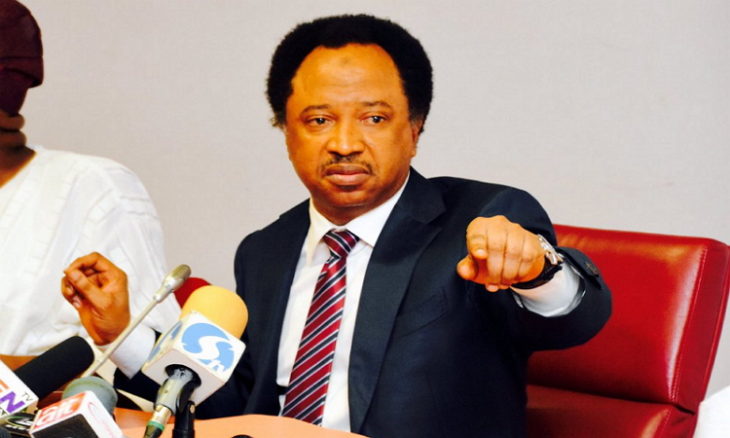
A FORMER senator, Shehu Sani says some Nigerian agencies in charge of emergencies and individuals in the presidency have turned the humanitarian crises in the Northeast to a profiteering industry.
“What we are witnessing besides genuine organisations that are helping in the Northeast, there are parasites who are profiteering from the crisis in the Northeast,” Sani who represented Kaduna Central Senatorial District in the 8th Senate said.
Sani said this has continued unchecked due to lack of transparency and accountability in the way funds are spent to assuage the sufferings of victims of the crisis.
“They have turned the humanitarian crisis into the humanitarian industry,” he added while speaking at a workshop on Forced Displacement held in Abuja on Tuesday.
The workshop with the theme: Rethinking humanitarian action in situations of forced displacement: Focus on Northeast Nigeria was organised by De Montfort University, Leicester.
While Sani did not mention any particular government agency or individuals cashing on the humanitarian crisis, he also indicted some top members of the presidency whom he said have been taking advantage of President Muhammadu Buhari to perpetrate corruption in the management of the Northeast crisis.
“A report that I presented two years ago painted a picture of the exploitation and plunder of helpless people by people holding positions of authority who are within the presidency,” he recalled.
“They capitalise on the president’s sympathy, concerns and interest of the Northeast and use it for their own personal benefit.”
He explained that the agencies bypass procurement laws during emergencies to shortchange the government and the victims.
“The law has made it easier in the case of national emergency or in the case of urgency, government agencies exploit the law or the act and they were able to bypass all the procurement laws and the checks and balances,” he said.
This, the former lawmaker said has “made it easier for them to simply write items, give themselves contracts and supply as long as these victims are there, nobody to ask a question.”
He said committees set up by the federal government to handle issues relating to emergencies operated without proper accountability.
“We had to travel to the Northeast to see the fraud perpetrated in the names of the victims. You will find out that they will write supply of food to IDPs N2million and then conference for IDPs N50million. I don’t really understand,” he explained.
Sani also fingered international donor agencies in the ongoing opaque operation concerning funds earmarked and released to address the humanitarian crisis.
“If we have to find a solution to this problem, what we need to do is to properly document what foreign donors are bringing into the country,” he said.
“There is no proper means by which we can know what they are bringing and where it goes. Does it go to the state government, does it go to the federal government or does it go to an agency of the government that already has captured that in its budget.”
He emphasised that the only solution to the problem is to ensure proper accountability in the way money is spent.
“Let us synergise and streamline the activities of government agencies and non-governmental agencies in finding a solution to this problem.”
Speaking earlier, the Project Lead for the workshop, Seun Kolade, explained that the workshop focused on how humanitarian actions can be redesigned around the affected people as the main actors and not just as recipients of aid.
He explained that the project intended to examine the extent to which the displaced population was drawing from the experiences and consequences of the insurgency and counterinsurgency.
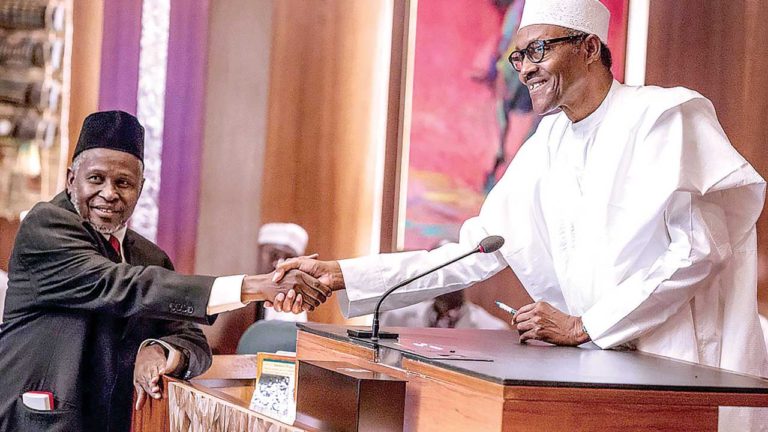
IBRAHIM Tanko Muhammad has been confirmed by the Senate as the substantive Chief Justice of Nigeria, CJN, six months after he was sworn-in by President Muhammadu Buhari to act in the capacity.
The House went into a closed-door session on Wednesday, following a motion by the Senate leader Abdullahi Abubakar, where it finally approved Muhammad’s nomination.
Senate President Ahmed Lawan had on Tuesday requested that the jurist’s curriculum vitae be shared among the lawmakers.
Muhammad was sworn-in on Friday January 25 at a brief ceremony at the Presidential Villa, following the suspension of the former CJN, Walter Onnoghen, accused of false assets declaration.
Tanko Muhammad, according to his profile provided by the Supreme Court, studied Law between 1976 and 1980 at Ahmadu Bello University, after which he graduated successfully from the Nigerian Law School in 1981. He obtained a Master’s degree in Law from the same institution in 1984, and then a doctorate degree in 1998.
He started his career in the judiciary as a Grade II Magistrate in Bauchi State and then rose through the ranks.
In 1990, he was appointed Chief Magistrate of the Federal Capital Territory High Court. From there, he became a Kadi of the Bauchi Sharia Court of Appeal, then Justice of the Court of Appeal, and then Justice of the Supreme Court of Nigeria in 2006.
He was, before his appointment as CJN, the second most senior Justice of the Supreme Court, ranking only below Walter Nkanu Onnoghen who was appointed to the court in 2005.
The Chief Justice of Nigeria is the head of the Supreme Court of the country. He is also, according to the constitution, chairman of the National Judicial Council and Federal Judicial Service Commission.
Onnoghen, the former CJN, was similarly not confirmed until about four months after he was sworn-in as acting CJN.
The delay had led to speculations that Buhari did not favour the idea of having a chief justice outside the Northern region.
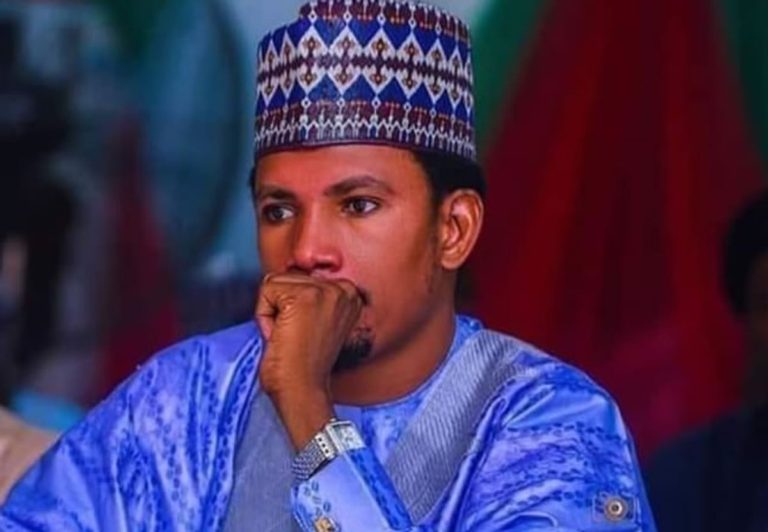
AN AD-HOC committee set up by the Senate to investigate the allegation of physical assault against Elisha Abbo, the lawmaker representing Adamawa North district, has said it would rather hold on till the court rules on the matter. But its request was rejected.
The bipartisan committee was set up on July 3 and was given two weeks to report back to the Red Chamber.
The committee chairman, Sam Egwu, however, said on Wednesday that the group needs more time to present its findings. He explained that the committee could not carry out its duty effectively as the parties invited, including Abbo, the Commissioner of Police, and victim’s lawyer refused to provide details because the matter is pending in court.
“We set out to do the investigation and in the course of that, we invited all the people that are involved,” he told the House.
“We invited our colleague and he made it clear to us that he was invited by the police and the case is already in court and therefore, it is sub judice.”
Egwu added that, because it is already before a court, “we want to wait until the court has taken their decision”.
Senate President Ahmed Lawan rejected this request and gave the committee an additional week to conclude its work.
“It is not our concern. We are not investigating criminal activities. We are investigating misconduct. The senate is not investigating what the police is investigating,” Lawan explained. “We can give you more time but we can’t stop our activities because the matter is in court.”
On July, Premium Times published a security camera footage that showed the Adamawa senator repeatedly slapping a woman at an adult toys store in Abuja. The event was said to have taken place in May, three months after the general election which he won as a senatorial candidate and a month to his swearing-in.
A report by The ICIR has also shed light on allegations of domestic violence and deliberate HIV infection of his former wife, Uche Eucharia Ojukwu, said to have led to her death in 2013.
Abbo was arraigned on July 8 at the Chief Magistrate Court in Zuba with two counts preferred against him. He pleaded not guilty and was granted bail, despite “profoundly apologising” on live television “with a deep sense of remorse and responsibility”.
On Tuesday, July 9, the lawmaker attended a sitting of the Senate ad-hoc committee where he refused to be questioned in the presence of journalists, with the explanation that the matter was in court.
Checks by The ICIR showed that the constitution empowers the National Assembly to investigate allegations of misconduct and it appears the law does not make an exception of cases under review by a court.
“Each House of the National Assembly shall have power by resolution published in its journal or in the Official Gazette of the Government of the Federation to direct or cause to be directed investigation into any matter or thing with respect to which it has power to make laws,” Section 88 states.
It further extends this power of investigation over the conduct of any person, authority, or government body that has the duty of executing or administering laws enacted by the National Assembly.
But such investigations cannot be conducted with the aim of meting out punishment. The purpose shall only be either to “make laws with respect to any matter within its legislative competence and correct any
defects in existing laws” or “expose corruption, inefficiency or waste in the execution or administration of laws within its legislative competence”.
The law provides that the House, in exercising its power, can procure all evidence and examine all witnesses relevant to the case. The House may also issue warrants to compel the attendance of witnesses and impose fines where there is a default.
Health is wealth. But quarry communities in Ogun are losing both to mining companies that are breaking everything, including the mining laws, Gbenga OGUNDARE reports.
A HUGE dose of entrenched ignorance and lethargy. That is about the only prescription anyone will need to live and remain unperturbed in Itokuland in Abeokuta, South-West of Nigeria. Life here, according to residents, is unbearable.
Everyday, the rural folks contend with regular blasts of explosives rocking their homes to the foundation, clouds of dust carrying granite particles, and jarring sounds of trucks moving all day long on the gravelly road that leads from Asun, in Obafemi-Owode Local Government Area of Ogun State, to the hinterland.
Itoku Baale, Elejigun, and many other villages lining the road owe their lives to 24 Hours Mining Company Limited, PWD, and four other companies blasting rocks and granite in that axis.
The villagers have nowhere else to go. And some eventually have paid the supreme price for their refusal to be uprooted from their native land.
Rasaki Soyoye was amongst those that granite dust has killed.
Chief Ariibi
“He coughed to death,” Alimi Ariibi, an 80-something-year-old man, told the reporter. He is the Baale of Elejigun, one of the communities near round-the-clock quarry operations.
Ariibi was smart enough to have identified the cause of the death of his kinsman as air pollution from unrelenting quarrying activities in their community. Other villagers just knew people were coughing or dying.
“But we can’t really tell what caused the coughing,” said an octogenarian who identified himself as Igbagbo. He is the Baale of Jagun, Orita Ijaye in Odeda.
Soyoye didn’t just drop dead. He actually took ill. Particles from mines are among the toxic pollutants the world Health Organisation classifies as ambient air pollutants. No fewer than 4.2 million people die annually around the world as a result of this. “Seventeen percent of all deaths and disease results from acute lower respiratory infection,” says WHO’s Department of Public Health, Environmental and Social Determinants of Health (PHE).
In Nigeria, air pollution kills 150 out of every 100,000, according to the 2016 report of State of Global Air.
Soyoye’s illness probably worsened because there was no clinic to take care of his failing health. The nearest community where there is a primary health centre is Obafemi, a 40-minute bike ride from the village.
Coughing resulting from inhaling dust-laden air is just one of the many ailments the villagers battle with. “We can’t even sleep because their motors go up and down every day and night,” Ariibi added.
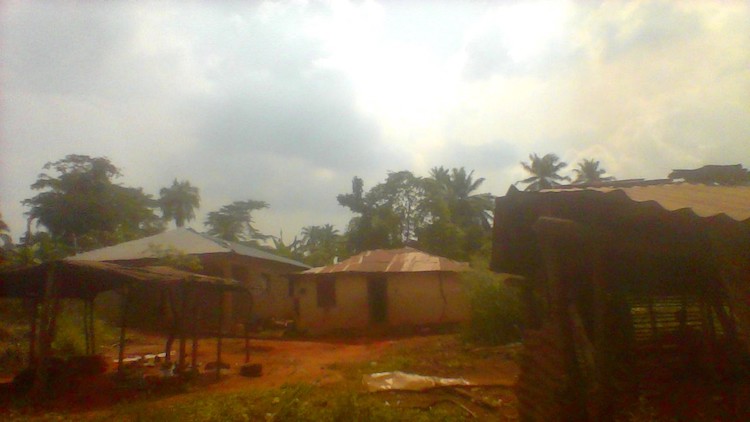
Elejigun is a ten-roof community of farmers. The women there outnumber the men. The older men who spent their youth in that village and had relished the freshness and calmness of their peasant life, sometimes are overwhelmed by a sense of nostalgia. Locating quarries in that area has turned their lives around—for the worse.
A number of the houses there are now heaps of rubble, decaying planks, rusty roofing sheets, and weeds, all covered in thick dust. Those still standing, including that of the late Soyoye, impaired by gaping cracks and thick fault lines, threaten to crumble any time soon.
Yet, whatever happens to the health and safety of peasants living at Elejigun and others does not bother the miners. It also appears that state and federal governments don’t care much either—despite the provision of the Mining Act that spells out responsibilities of a miner for the socio-economic wellbeing of its host communities.
The pain is heavy on the villagers, especially on their health.
“The quarries are putting us through a lot of suffering here,” griped Ariibi.
Elejigun
A state set on a hill
Ogun State is known for its rolling expanse of rocks and other solid minerals that abound in Nigeria.
The state, with its rural communities, has been one of the major destinations of miners, local and foreign, seeking the Golden Fleece buried in the jagged hills and laterite plains that are much of the landmass. Most of the investors are into quarrying, and the gold rush is largely towards the Odeda LGA and Obafemi-Owode LGA.
With its granite and other stone deposits, Odeda LGA alone, which has about 25 communities, is home to no fewer than 10 quarries. They are spread across villages like Itesi, Oguntolu, and others under Orile Ilugun; some are at Banja, Orita Ijaiye, and Odeda; others are at Mologede, Ososun, and Ayoyo.
These and other sites across the state spewed out 16 million metric tonnes of solid minerals in 2016. That was 38 percent of the total tonnes produced in Nigeria that year, making Ogun the leading producer of solid mineral in 2016, according to the National Bureau of Statistics.
The Southwestern state is also Nigeria’s largest producer of cement, grinding out 13 million metric tonnes annually.
But the life of the rural communities, especially those that have the misfortune of hosting quarrying companies, is nothing to compare with the amount of wealth mined out of their land. The resources in the underbelly of their land have rather become a curse.
Rights activists and environmental advocates have always criticized the investors and government for destroying the source of living of these rural dwellers.
Worse, the quarries are not just destroying the agrarian wealth of these communities; they are also ruining the health of the peasants and violating their well-being.
All that can ever be violated
Local laws, international charters, and principles of fundamental rights frown at this as it violates the rights of the people as recognised by the Nigerian Constitution, and as entrenched in the UN Guiding Principles on Business and Human Rights. It is also a violation of certain provisions of the Nigerian Mining Act.
Amongst other provisions for compensation, Section 116 and 117 of the Act that guides the activities of miners provides for a bill of responsibilities by the company to the host communities. The provision, known as the Community Development Agreement, lists out basic amenities the company and the community will draw up for the company to provide. Health care delivery is one of them. Others include school buildings, roads, skill acquisition programmes, electricity, SME kits, and so on.
“The Community Development Agreement shall be subject to review every five (5 )years and shall, until reviewed by the parties, have a binding effect on the parties,” subsection 5 of section 116 states.
This is different from corporate social responsibilities, said Eniolawu Olalekan, head, Geology Department at the OgunState Ministry of Commerce and Industry.
The law also makes the two parties develop an implementation and monitoring plan for those projects they agree on. So the CDA is more like a social contract document between the host community and the company. Any dispute following that, the law states, shall be referred to the Minister of Mines and Steel Development.
Itesi villagers
But from Itesi and Oguntolu, in Orile Ilugun, to Jagun and Oke Osun in Orita Ijaiye, down to Obete in Mologede, and Elejigun in Itokuland, none of the people knew about the CDA, not to talk of having one drawn up with the quarry operators when they came to start a business.
Some villagers do not even care at all for whatever goods are in store for them in the CDA. “How is it my business again getting into an agreement when the landowners have sold their land to the white men?” said a man who identified himself as chairman of Obete.
“Don’t waste your time telling us about the agreement. You see, we are fine. The quarrying does not affect us.”
Obete stands just a little farther than a kilometer from a quarry which bears no form of identification—like many others. Based on the 2013 records of the University of Ibadan researchers that looked into “Challenges of quarrying amongst rural dwellers in Odeda LGA, Ogun”, the quarry likely belongs to the Abuja-based Gilmor Construction Company which handled a water purification dam project in Ogun. And the village is one of the clusters of four communities in Mologede, along the Igbo Ora road.
By law, a community within a radius of one kilometre to a quarry must be re-settled by the quarry owner. Olalekan of the Ogun State Mining Ministry said it falls within the blast zone of the quarrying activities, and it is unsafe.
Yet the community leaders said they were just fine.
The Obete chairman’s devil-may-care attitude is not strange. The University of Ibadan researchers found out similar attitudes in their 2013 study across the Odeda quarry communities. Thirty-three percent of those interviewed were just as unconcerned about whatever impact the tremor and dust had on their health. They would not even attribute their ill-health to air pollution or anything.
In a sense, that coldness seems a façade for some kind of loyalty to the quarry owners.
It is, however, an eye-opener. It sheds more light on how the law, protective though, is rigged against the locals because of their ignorance—something the companies also exploit. It also reveals there are insiders the companies have kept sweet so the narrative can hardly nail the quarry owners for hazarding the health of the villagers.
How it works
At Itesi and four other villages under Orile Ilugun, there is one of such insiders: Patrick Owolese. He comes from Itesi, though he lives with his family in a small building of four rooms at Orile Ilugun—five minutes bike ride from Itesi. A green SUV was parked in front of the house on April 12 when the reporter met him for an interview. He also had some level of literacy because he brought out a tome of court papers when he was asked about the CDA document.
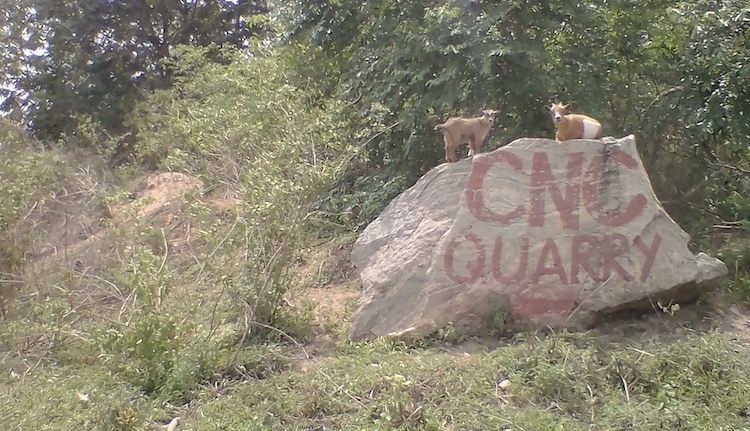
By rural standards, Patrick is a big shot. More so that he was the one that sold his family portion of the communal land to the company—CNC Quarry Nigeria Limited.
Whatever the amount of money that changed hands eight years ago when he leased the rocky land to CNC Quarry Nigeria Limited, —it didn’t enrich the larger family. Nor did the cash, which the villagers estimated at N10 million, better the lives of the communities. It is conceivable that this amount is all the villagers would ever get for the degradation of their environment and destruction of their sources of livelihood. The benefits in the CDA, the villagers assumed, have been factored into the lump sum which Patrick endorsed.
Other than its failure to renew its second five years’ plan of the 10-year lease agreement, which now landed both the community and the company in court, CNC is not a bad company, as far as some of the community leaders can tell. Patrick could even swear by his ancestors that the Chinese company has been fair enough to the communities. But older villagers and the youths at Itesi and Oguntolu think otherwise.
About 10 years of inhaling granite particles, feeling your heart pound as payloads of explosives go off now and then, and watching your relatives working on the quarry have accidents and die are no pleasant experiences. The locals believe, in their heart of hearts, the CNC owners are unfair to them.
Environmental health experts say some health conditions relating to mines, especially air pollution, have a latency period. Dust-related conditions, like asbestosis, for instance, take 10 years or more before showing any symptom. Ignorance of this makes it confounding to the villagers who know they are dying but can’t pinpoint what is killing them softly.
The UI researchers, in their survey, identified a number of illnesses common across the Odeda quarrying communities. A major symptom of pollution-related ailments noticed by the researchers was coughing, then asthma, rash, eye problem, and body ache. Some of the villagers could not link the sicknesses to the pollution in their environment. Instead, the villagers thought the diseases were acts of God.
As they advance, things get complicated. Granite dust banked up inside, according to occupational physicians, presents silicosis, tightness of the chest, respiratory problem, and heart problem. All of these are deadlier than runny noses and minor aches the victims experience early on in their exposure.
Not many of the villagers, however, seem interested in the pathogenesis of their health problems.
PaAkanni, a community leader at Itesi, said those dying amongst them show no worse signs than those of any sick human. “But what we are inhaling here is enough,” he said. “Who knows?”
The matron of the Primary Health Centre, Orile Ilugun, said the centre had no record of any respiratory health problems—or air-pollution-induced sicknesses—from the town and its neighbouring villages. Not because there is none, really. “They just don’t come here,” she told the reporter, adding they prefer to go to drug sellers in town.
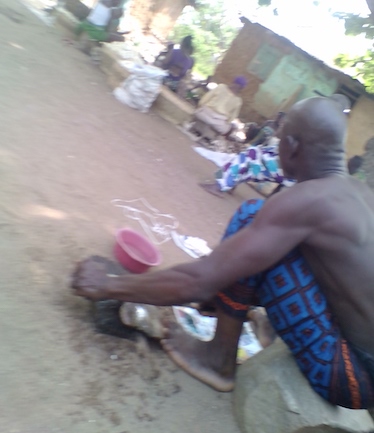
Ben Pharmacy
Akanni confirmed this to be true. Since there’s no clinic, community people usually go to get treatment from one Dr. Ben at Orile Ilugun.
Well, Ben didn’t exactly look like a doctor when the reporter met him. He was more of a village know-it-all as he sat amongst his friends in a shop across the road. He is educated, to be sure. He speaks good English, as good as any other southeastern Nigerian living in a Southwestern village. He is also friends with a CNC’s Nigerian manager whose name is Marsi.
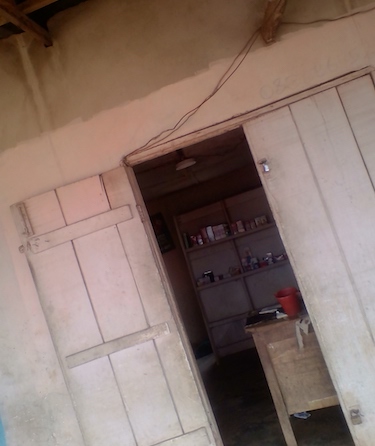
Ben’s drugstore, a small shop that had a quarter of its space partitioned with a wooden shelf, boasted of few drugs. The closed section might just be ideal for privacy if he had to give a shot of injection to locals he considered sick enough.
He said there had never been a case of respiratory problems resulting from inhaling quarry dust brought to him. “I don’t think those are common here,’ he said. “The Chinese owner of the CNC are actually trying,” he launched into an image-burnishing report. “They wet the road regularly. They give the communities scholarship. They give them bags of rice and money every Christmas.”
About the CDA that might have ensured the five communities had at least a clinic, Ben said that wouldn’t happen. “The heads of these families collect money from the Chinese and share it amongst themselves.”
The absence of a clinic for the quarry communities obviously creates a need. Meeting such needs brings Ben brisk business—at least those cases he can take on. But there have been emergencies a drug salesman like him cannot handle.
According to Akanni, a young man from Oguntolu who worked for the CNC was crushed by one of the company’s dumpers. He died before they could take him out of Itesi. His father, known as Baba Carpenter, a bedridden man of about 80, was still alive when the reporter sought him out for an interview.
He couldn’t explain well how it all happened and all that followed the incident. The villagers didn’t want to confirm or deny the story either. The reporter, however, gathered that he was offered N400,000 as compensation for losing one of his two children.
The chairman of Oguntolu, Lamidi Shotunde, a hoary-haired man in his 80s, lamented the neglect by the CNC. He explained how the tremor from rock blasting keeps tearing down their huts, and the toll the dust and blasts take on their health. “When our people eventually fall sick, they go to Odeda,” he said.
Oguntolu’s community leaders know neither about the CDA nor the possibility of a clinic, amongst other benefits, the agreement guarantees. So there was no forcing the issue. They have even concluded nothing good can come from CNC.
“Those people refuse to do anything as their blasting destroy our houses—now you are talking about the agreement and a clinic,” Shotunde said.
Another victim, Apostle Atanda, was amongst CNC’s truck drivers. He probably had had his gut scarred with hardened granite dust. At some point, he started coughing out blood. These were life-and-death situations worsened by lack of a single health facility in a cluster of no fewer than five communities. The villagers said no sick or injured worker is allowed to use the CNC clinic.
One of the Chinese owners of CNC who the reporter contacted by phone April 17 didn’t respond to the question on how the quarry owners have shown concerns for the health of the villagers. He gave no response either to the question of violating the Mining Act that provides for the CDA.
“I am not in Nigeria,” one of the directors identified as Jesse told the reporter. Pressed further, he disconnected the phone, leaving the caller at the mercy of a Chinese answering machine.
While Jesse is one of the known directors of CNC Quarry, its registered owners are Li Bin and Li Lin Lin, both living at 25, Xien Hu Village, Yun Yany County Chong, Qing, China. The company’s secretary,is, however, is a Nigerian: Mbalisi Charles, of Suite 4, Orji Kalu House, Jahi Road, BanexJunction, FCT, Abuja. The N10m-share capital business was registered in 2007, with the office address at 15, SerikiAro Street, Ikeja, Lagos. However, there is no quarry company in any of the apartments in that three-storey building. A Chinese travel agency just moved in sometime in May, according to a resident. Not much is known about the company’s annual report either. The last time CNC filed its annual report with the Corporate Affairs Commission, CAC, was 2012, two years after its registration.
This zero-sum contract is not just a CNC problem. It’s a custom among the quarry owners—from Odeda to Obafemi-Owode. There is nothing—not one brick of a structure—any of the over 50 companies put down for a clinic in any of the communities where they (miners) have hit pay dirt. They just got their licenses, paid the landowners some pittance, moved in, mined out the areas, made all the money, and left the environment and devastated the health of the communities.
Some even operate illegally. No fewer than 28 of the quarries registered by the Ogun cadastre office to operate in Odeda and ObafemiOwode LGAs carry on business with expired licenses.
FW San He Concepts, a Chinese companying quarrying granite, for instance, is still operating at Orita Ijaye, Odeda, with a license that expired in 2015. The company has another quarry in Obafemi-Owode.
Its owners are Hu Tianebg of 19-6-302, Penglai of Rd, Dinghai Area Zhoushan, ZheiJiang, China, and Fasiu Oke of 1/2, Onijoko Street, Off Abiola Way, Abeokuta, Ogun State. Oke’s shareholding was just N500,000 of the N10 million capital base.
Since its registration in 2007, it only filed its annual reports between 2008 and 2013.
From a detailed search at the Corporate Affairs Commission in Abuja, it’s apparent that all of these dodgy quarries are Chinese-owned. Except for 24 Hours Mining Company Limited. It’s a family business managed by Mahamoud Adamu resident at 6 Anthony Ukpo Crescent, Abraham Adesanya Close, Apo Legislative Quarters, Abuja. The quarry is a family business. It started with a share capital of N1m the Mahamouds raised when it was registered in 2011. Nothing more is known about the quarry. Not even its annual report, according to the report of a CAC search.
Annual reports do not only contain financial details of company assets and liabilities, but it also carries reports of its corporate social responsibilities and host community development activities. These reports would have shed more light on the CDA compliance—if they had been available.
Just as they slip off the grasp of the industry’s regulators and operate without any accountability to the authorities, so the miners also dodge their responsibilities to their hosts. These are small communities of peasants whose health and wellbeing, ravaged by quarrying, could have been improved had the community development agreement been drawn up and implemented.
Instead of taking the CDA seriously, the quarry owners would rather play do-gooders.
“They give each village two bags of rice, two gallons of oil, and N10,000 every Christmas,” Akanni said of CNC’s gifts to Itesi and Oguntolu communities whose combined headcount stands roughly at 300. He also admitted they gave them a borehole and offered their youth scholarship to the tune of N200,000 for 20 youth annually. It is like a windfall, and the entire community, youth, and adults, usually share it. “Some get N3000; some N2000,’ he said.
PWD, Gilmor, both construction giants, have stopped their quarrying operation since they finished the construction projects for which they needed stones. Oba Quarry Nigeria Ltd, which the villagers said belonged to former President Olusegun Obasanjo, has also left the site. But the impact of their quarrying and the sustained activities of the functioning 24 Hours, FW, and CNC cannot be wished away. None of them ever considered mitigating this impact on the health of the villagers. Nor did they draw up any CDA with their hosts.
“They don’t even care there are human beings here,” said a woman at Jagun whose baale denied they fell sick in that community. “Look at the water we drink here,” she pointed at a bucket half-filled with water the color of leaves.
Situations here and at Elejigun smack of recklessness by the FW and 24 Hours. The companies have never been in any way responsible to the villages, according to their leaders.
At least CNC and other companies that grudgingly gave boreholes and food items could label their gesture corporate social responsibility. The CSR, though, is no excuse for the quarry owners ducking the CDA—or even breaching its terms, supposing such agreement exists.
Being socially responsible is one good thing any quarry owner may choose to do, said Olalekan. “But the CDA is not negotiable.” Bigger companies that are more socially responsible still commit to community development agreements.
Blame the victims
Olalekan said that Lafarge, a cement giant in the state, is one company that has been a good corporate citizen going by its donations and social contributions to its host at Ewekoro. Even at that, he told the reporter, there were issues in their CDA that both had had to bring to the commerce and mines commissioner for settlement.
“That shows the Ewekoro community is enlightened enough to know about the CDA,” the geologist confirmed. Unlike those across the Odeda and Obafemi-Owode areas who were just getting to hear about it from the reporter.
“We have carried out enlightenment campaigns, telling them to always contact us when those foreign investors come so we can guide the host communities through the CDA process and other benefits,” he said. But the communities like to keep the government out of it; they want to keep the money investors initially pay them.
“There’s nothing we can do in such a situation where there’s no CDA, except they come to report it to us.” That’s not common, though. That is at the state level.
The Nigeria Extractive Industries Transparency Initiative (NEITI) can only watch as the quarry operators continue to plague unwary host communities. Enforcing Section 119 of the Mining Act is not the responsibility of the NEITI, but the Mines and Steel Development Ministry in Abuja, Orji Ogbonnaiya, Director of Communication at NEITI, told the reporter.
The Federal Ministry of Mines and Steel Development has cadaster offices across the nation to monitor mining activities. The officer at the Abeokuta office, one Engineer Ola, was said to be out in the fields when the reporter went there April 12. He didn’t answer questions sent later—on how the cadaster office is enforcing the CDA sections of the Mining Act, and whether the ignorance of the host communities should keep them in perpetual exploitation.
Ola merely thanked the reporter for the concern and observation.
“I am going to pass the information to my superior for necessary action,” he said in response to a text message sent to his phone line on April 17.
And the headquarters office, contacted earlier, would not respond to similar questions mailed to them, particularly on what can be done to help the communities who are ignorant of the CDA and its benefits.
It is clear the cadaster office is struggling to articulate its response to the questions. Which more or less means nothing is being done, and nothing may be done about the exploitation and suffering of the villagers.
That’s almost unthinkable. But it’s the reality discovered by the reporter. Communities like those visited by the reporter in the course of the investigation are off the radar of government in Abuja. Edward Opara, Director of Information at the Ministry of Mining and Steel Development, betrayed how clueless the federal authority is about the sufferings of the rural dwellers in Odeda and Obafemi-Owode LGAs.
When the reporter approached him with questions June 17, Opara simply owned up. He said the communities groaning under the terror of reckless miners in Ogun State are not known to him as the head of the press and public relations in the ministry. He, however, promised to take the issues to another director who can offer answers to the reporter’s questions.
Two weeks later, the reporter was still waiting for a response, despite a series of text messages as reminders.
“Sorry my brother, am in Jos for a week program. I will find out when I get back next week,’ he said in one of his replies.
Another week gone, Opara still didn’t have any explanation ready for the terror miners are unleashing on their hosts in Ogun. He wouldn’t even pick his calls either. On 3rd July, however, he eventually responded to a text message the reporter sent two days earlier.
“Good day my brother. The director in charge of the department wants to come there and see things to enable him take an appropriate decision. He needs the specifics,’ he wrote.
Public officers in Nigeria are notorious for evasive tactics if they do not have answers to question or are unwilling to provide any.
But if the federal regulator is slack in enforcing the mining law, how far can it go when it comes to charters like the UN Guiding Principles on Business and Human Rights? The principles mandate states to make laws and formulate policies that will be enforced to make companies live up to their responsibility in protecting human rights. Nigeria’s federal ministry of solid minerals has failed here.
And te regulatory failure is good for the quarry businessmen. By pressing home the ignorance of their hosts, they continue to break the mining law to increase their bottom line.
The victims, ultimately, have to take the blame for their suffering. And nobody is going to help them.
*This investigation was done with the support of Ford Foundation and the International Centre for Investigative Reporting, ICIR.
AFTER a three-story building collapsed in Jos, Plateau State capital, on Monday the National Emergency Management Agency (NEMA) has confirmed the death of 14 people, NAN has reported
Nurudeen Musa, head of the search and rescue operations of NEMA in the North-central disclosed the casualty figure on Tuesday.
The building collapse also took the life of the owner, Kabiru Nalele together with his two wives.
Apart from the 14 deaths, Musa said four people were injured and currently receiving treatment at the Plateau Specialist Hospital and Bingham University Teaching Hospital.
He said a joint rescue operation is being carried out by a team from NEMA, State Emergency Management Agency (SEMA), the International Red Cross and security agencies.
Residents of the area said the building collapsed occur after three days of heavy rains that rocked Jos North. When it happened, many people were reported to have been trapped by the ruins.
Building collapse leading to deaths and serious injury is becoming more frequent in Nigeria.
Earlier in March, a three-story building in Ita-faji, Lagos housing a nursery and primary school collapsed and claimed the life of 16 people, while many were seriously injured.
The collapsed building was reported to have been marked for demolition a number of times, but the demolition was not carried out until it came down on March 13.
Also in Portharcourt, Rivers State, a seven-story building under construction collapsed in November 2018 resulting in the death of several people. The building was said to have been constructed illegally.
A report published by the ICIR on March 22, confirmed that NEMA lacks heavy machinery needed for emergency rescue operations.