Home Blog Page 2330

UPDATE: FCT police to charge rape complaint to court days after report revealed extortion

THE Police Command of the Federal Capital Territory says it is ready to charge a complaint involving the alleged rape of a three-year-old to court, three days after The ICIR published a report establishing that the lawyer assigned to the case had made demands for money to move ahead with it.

It was gathered that the Criminal Investigation Department (CID) informed the victim’s father, Nanpon Julius, on Friday they are filing the case at the High Court of the FCT on Monday.

The police also said the Investigating Police Officer (IPO) in charge of the case file has been changed.

The ICIR reported on Tuesday that a lawyer working with the CID, Okokon Udo, asked Julius to bring N20,000 to “work on something”. He had claimed he needed the money to pay for the case file and get documents signed by various persons.

Julius had also previously given N5000 to policemen from the state command who visited his home to investigate his complaint. The money, they had explained, was meant to cater for transportation costs and typing of reports.

Julius’s daughter said she was abused by one of their neighbours, and medical reports from two hospitals have since confirmed that she was defiled. When he complained to the  Gwarinpa Police Station, he observed that the case was handled unprofessionally.

“They told the chief judge there’s no evidence on the case,” Julius narrated to The ICIR.

“And they didn’t investigate the matter. They took a statement from me and the witness I have, but they never questioned the girl to ask who molested her. There was nothing like that.”

‘Good, but not good enough’

Reacting to the information from the police, Wanda Ebe, founder of Wanda Adu Foundation, an NGO offering support to the sexual abuse victim, said though it is a welcome development, the state command can still do more in remedying the damage done.

She believes officers who have erred in handling the case should be relieved as they are still capable of influencing it behind the scenes.

“If clients are able to point out people that are trying to cover cases or protect the accused, then something should be done. Disciplinary action should be taken on such matters,” she said.

She narrated how one of the inspectors sent to obtain evidence at the crime scene and talk to witnesses visited her workplace a week after, with two pastors, to plead.

“I felt very insecure when one of the police inspectors accompanied a team of pastors to my place of business to have a conversation so that we can withdraw the case and settle out of court,” she said.

“That was the height. I felt very insecure because my place of business is an open place. Anything can happen. I don’t even know those pastors he brought to me. The police are not supposed to do that… I am not supposed to be exposed like that. I think it’s totally unprofessional.”

When the case was withdrawn from Zuba Upper Area Court and transferred to the FCT command, she said, they had expected that swift action will be taken.

She found it heartbreaking that it’s been over a month since the withdrawal and the case is still not in court.

“During the whole of one month, all we have been dragging was, ‘oh bring money for us to charge, bring for this, bring money for that, bring money for typing report, bring money for taking the accused back to the cell and all those dramatic things,” Ebe said.

“So, the whole process is slow. But since they’ve changed the IPO, I’m hopeful. I want to say I’m hopeful that something will be done. And I also wish that the police will stop asking for money for everything and tackle the real issues, and stop seeing every case as an opportunity to exploit people or extort money from people, whether rich or poor.”
Buhari not responsible for Zakzaky’s continued detention- Presidency

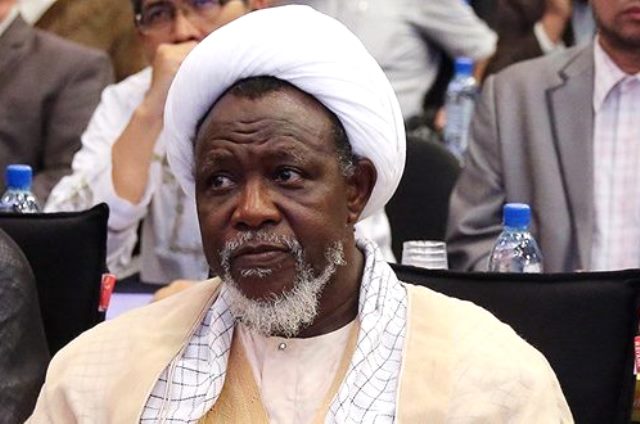
THE Presidency on Friday absolved President Muhammadu Buhari of any blame about the continued  detention of the leader of Islamic Movement of Nigeria (IMN), Ibrahim El-Zakzaky.

In a statement issued by the Senior Special Assistant to the President on Media and Publicity, Garba Shehu, the presidency argued that  El-Zakzaky is standing trial in Kaduna, noting that government at “the centre can be said to be clear of any alleged violations of court orders being trumpeted everyday.

“As far as this country’s Ministry of Justice is concerned, the case involving El-Zakzaky is no longer in its domain,” Shehu said in the statement.

“The Federal Government no more has hands in the matter and to that extent, the government at the centre can be said to be clear of any alleged violations of court orders as being trumpeted everyday.”

This was members of IMN  on Friday continued their protests in Abuja, defying a police order restricting civil protests in the Federal Capital City to the Unity Fountain in the central business district of the city.

Their leader, El-Zakzaky is facing trial in Kaduna arising from the clash between his followers and Nigerian soldiers in Zaria in December 2015, during which hundreds of the Shiites were reported killed.

Despite several court orders for his release on bail, he is still being kept in the custody of the State Security Service, to the anger of his followers who have been staging regular protests in Abuja.

The Presidency in the statement further cautioned Shiite members to desist from needless violent street protests and await the decision of the court in Kaduna where their leader is currently being tried.

It insisted that the issue of El-ZakZaky is before the court in Kaduna and his supporters should focus on his on-going trial instead of causing daily damages, disruptions and public nuisance in Abuja.

“It is wrong to be in court and resort to violence at the same time in order to get justice for anybody accused,” it said.

“The destruction of public property in the name of protest is not within the right of this group of Shiite members and no government anywhere would have tolerated a situation where any group would take over public roads in cities as they have done in Abuja and interfere with the rights of other citizens who are prevented from reaching their destinations.”

Speaking on the recent face-off between Shiite members and policemen at the National Assembly complex, the presidency noted that  “it is not within the rights of any group to enter protected public institutions such as the National Assembly by force to attack police and destroy public and private property.”

While advising members of the movement to embrace dialogue and eschew violence, it  appealed to them  to stop deliberate provocations that result in violence and fatalities and allow the trial of El-ZakZaky to take its course.


Action Against Hunger confirms death of driver, six others abducted in Borno

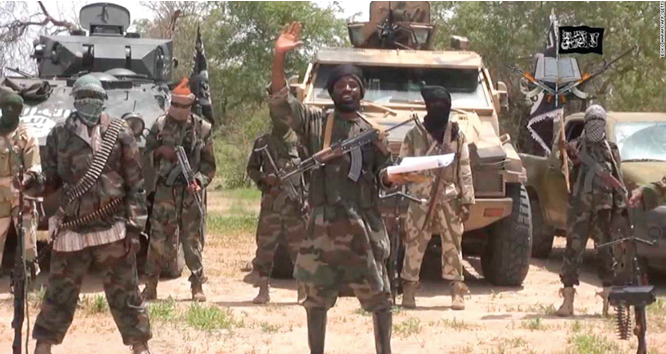
SUSPECTED Boko Haram militants killed a driver and abducted six others, working for an international aid organisation, Action Against Hunger, in a convoy to Damasak in Borno State, the aid agency confirmed on Friday.

After the attack on Thursday, the aid agency had declined to issue a response immediately after the attacks according to a Reuters report.

In a statement, Country Director of Action Against Hunger, Shashwat Saraf, said one staff of the humanitarian organisation was killed by the attackers, while six others are missing.

“We express our deepest condolences to the family of our driver and we extend our support to the family of our missing colleagues as well as others affected by this incident,” he said.

The organisation, Saraf added, “appealed to the media and the public to desist from circulating unverified information about the situation.”

He lamented that Action Against Hunger was deeply saddened by tragic incident noting that the affected aid workers were dedicated to providing life-saving assistance to individuals and families affected by the ongoing humanitarian crisis in the northeast of Nigeria.

“We are very concerned and want to ensure that they are safe and can be reunited with their families,” the statement reads.

There have been increasing cases of Boko Haram insurgents attacking staff of humanitarian agencies in their line of duty.

It’s over ten months after Saifura Ahmed, a UNICEF employee who was kidnapped alongside Hauwa Liman, was executed by Boko Haram in September, and Hauwa herself was killed on October 2018.

The Federal Government had been successful in negotiating the release of some Boko Haram hostages, including some of the Chibok schoolgirls, the University of Maiduguri lecturers, some policewomen abducted on their way to a colleague’s funeral, and abducted Dapchi schoolgirls.

But somehow, the government appeared helpless in the cases of Saifura Ahmed and Hauwa Liman.

Two other humanitarian workers still remain with the Boko Haram namely Alice Ngaddah, who was abducted in Rann alongside Hauwa, and Leah Sharibu, the Dapchi schoolgirl that was not released alongside her colleagues because she refused to convert to Islam.

Herdsmen: We can no longer allow Yoruba to be killed as chickens-Gani Adam

0

GANI Adams, the Aare Onakakanfo of Yorubaland has expressed his displeasure on the security challenges the South West is facing, saying, he is ready to fight as Yoruba people are not to be killed like chickens by the herdsmen.

Gani said he has realised that there are some forces behind the herdsmen activities in the Southwest.

“We can no longer allow our people to be killed like chickens. We can’t keep quiet while Yoruba are being killed like fowls,” he said.

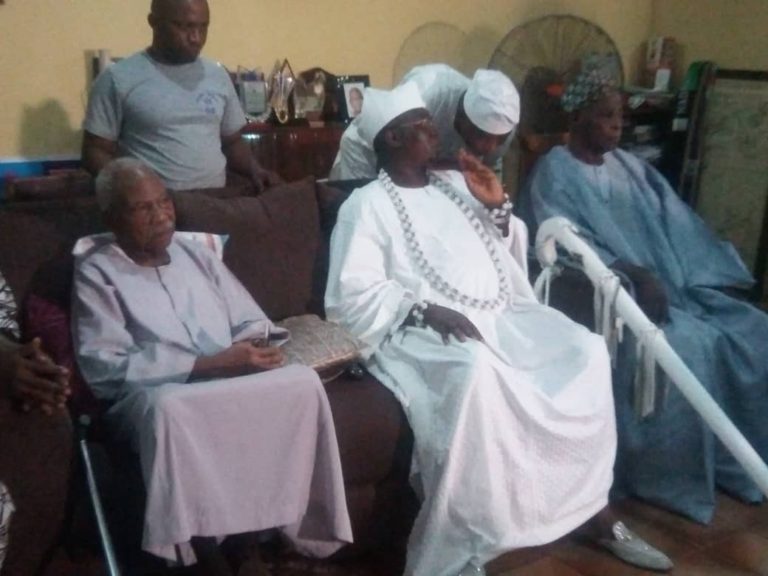
The Yoruba Generalissimo disclosed the information to journalists after a condolence visit to the 93-year-old Reuben Fasoranti who lost daughter last Friday to suspected herdsmen.

Fasoranti’s daughter, Olufunke Olakunri, was a 58-year-old mother with two girls. She had paid her father a visit in Akure, Ondo’s Capital but on her return journey to Lagos, she was killed between Kajola and Ore along Ondo-Ore road.

Outlining some forces responsible for the rampaging in the region, Gani mentioned “those who strike in the bush, those who issued statements to back them and those who are strategists and give instructions to those that strike” are all in business.

“How can ordinary Fulani herdsmen be holding AK 47? In our findings, the AK 47 rifle goes for about N1 million and with many bullets. So, we are looking beyond ordinary Fulani herdsmen,” he said.

He urged Yoruba people to stop “becoming a paper tiger”.

“Our problem in Yoruba land is that we do not prepare. We always react and when we tell our people to prepare, they employ a nonchalant attitude to it.”

He revealed that he had been meeting with stakeholders and various organisations to map out strategies that will complement efforts of the law enforcement agencies to protect Southwest.

“I can tell you authoritatively that we are meeting as a group and even as stakeholders to map out strategies that will help us to complement efforts of the law enforcement agencies. I have seen this signal. I have the information.

As he described it as a sensitive security situation, Gani said they operate within the ambits of the law. “That is one of the reasons we are being careful,” he added.

“We don’t want a situation we walk into their trap because we realize that this ugly incident is being coordinated beyond our own scene.”

Also, the Ooni of Ife, Oba Adeyeye Ogunwusi, met with President Muhammadu Buhari over the issue of insecurity in the region, saying the challenge is real.

“In the remote and rural areas of the southwest, most of the bushes are now occupied by strange people. We, therefore, decided to work with the government to fish them out,” he said.

Ogunwusi called for more federal apparatus for defence. “We don’t want war and we want to work with the government to bring peace.”

Nigeria seals deal with largest trading partner, to supply 10 per cent crude oil needs

THE Nigerian National Petroleum Corporation (NNPC) is set to supply 10 per cent of India’s crude oil demand in the face of competing demand for crude oil from other countries.

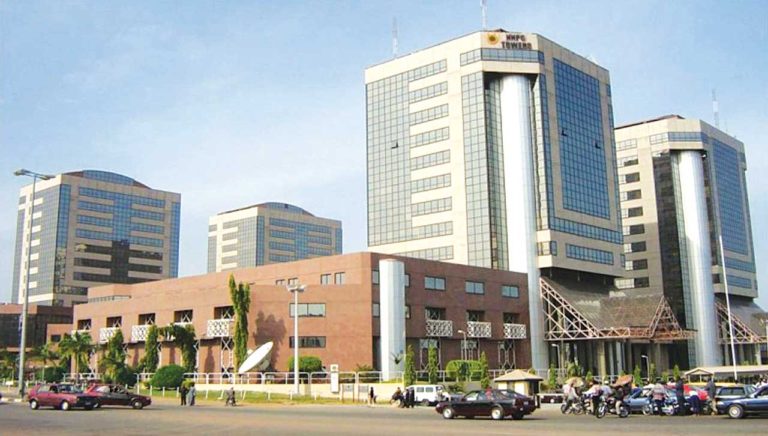
The Group Managing Director (GMD) of the Corporation, Mele Kyari, announced the country’s readiness to continue the supply of 10 per cent of India’s crude oil needs while speaking at the NNPC’s headquarters in Abuja  during a visit by the Indian High Commissioner to Nigeria, Abhay Thakur.

Kyari was confident of Nigeria’s support towards India’s energy security, with sustained efforts to strengthen the bilateral relations between both countries by agreeing to the clauses in the Memorandum of Understanding (MOU) with regards to energy.

“We are ready to have a robust engagement with the Indian trade team to provide a win-win energy scenario between us,” he said.

“Every trade opportunity that is available will be fully explored.”

India has replaced the United States as Nigeria’s top energy importer.

SBM Intel, an organisation dedicated to the collection and analysis of information, hinted in its 2019 energy analysis that Nigeria’s government is without a clearly defined strategy in its relationship with its economic allies which would make the country an economic liability rather than an asset.

“Fifteen years ago, the United States, US, was a top destination for Nigeria’s crude oil exports until it developed its shale oil production, today they barely buy anything from Nigeria, and India has replaced the US as Nigeria’s top energy importer.

“The energy market is competitive, Nigeria sells its petroleum without a clear strategy to make its top suppliers dependent on its petroleum exports. India and China are currently Nigeria’s most important trading partners. India for exports and China for imports, and there is sufficient room for growth in these relationships,” the report noted.

The NNPC boss, stated that India was a strategic market and NNPC would ensure that the current volume of crude oil supply from Nigeria to the country is secured for the collective interest of both parties.

He also noted that there were lots of untapped investment opportunities in the nation’s Liquefied Petroleum Gas and expressed the willingness of the NNPC to aggressively improve LPG infrastructure and consumption across the country.

The Indian High Commissioner to Nigeria thanked the management of the corporation for the recent renewal of the crude oil term contracts for three Indian companies and called for increment in the crude oil supply in view of the increasing energy needs of India.

Indian state-owned refiners tend to buy most of their crude on term contracts while their remaining requirements are sought via tenders.

However, the companies are Indian Oil Corporation, IOC,  Bharat Petroleum Corp Ltd and Hindustan Petroleum Corp Ltd.

Thakur said India was ready to provide credit line mechanisms and expertise to help NNPC revamp its widespread infrastructure across the country.

“India is prepared to offer Nigeria, and particularly the NNPC, a credit line mechanism to help her in the areas of refinery maintenance, construction, security, surveillance and anything possible,” he said.

In three months, FG spent N610.2b to service domestic debts, says NBS


The National Bureau of Statistic (NBS) says the Federal Government has spent a total of N610.2 billion in the first quarter of 2019 to service its domestic loans.

The NBC disclosed disclosed in its first quarterly report for 2019, which covers three months from January to March.

Nigeria’s domestic debts are currently pegged at N13.11 trillion in the first quarter of 2019, which was raised from the issuance of seven financial instruments.

This includes the Federal Government savings bonds with a total debt pool of N9.72 trillion, Federal Government savings bonds with N9.7 billion, Sukuk bond with N200 billion and Green bond with N10.69 billion.

Other instruments used by the Federal Government in raising its domestic debt were the Nigerian Treasury bills with N2.65 trillion, Nigerian Treasury bonds N150.98 billion and Promissory notes with N366.85 billion.

The report also revealed that the Federal Government had spent N120.91 billion on interest payments on the Nigerian Treasury bills.

A breakdown of the N120.91 billion shows that the sum of N74.14 billion was spent in January while February and March had N29.68 billion and N17.09 billion respectively.

For the Federal Government bonds, the report stated that N480.84 billion was spent servicing this debt component during the three months period.

A breakdown of the amount showed that N183.62 billion was spent in January, N125.65 billion in February while March had N171.57 billion.

Similarly, the report explained that for the Savings bond component, the sum of N347.91 million was spent on interest on this debt instrument. The interest was paid in this manner, N100.5 million in January, N92.51 million in February while March had N154.89 million.

SBM Intelligence, Nigeria’s leading geopolitical intelligence platform in its analysis in a recent report, advised the Federal Government against further borrowing without a commensurate investment in major infrastructures.

” The debt profile of Nigeria has doubled in the past four years and there is no apparent end in sight.
Meanwhile, there are no major infrastructure or economic investments to show for all the borrowed sums, meaning the debts will be that much harder to repay,” it stated in the report.


Poor public engagement, little oversight– Nigeria ranks low on budget transparency

THE International Budget Partnership (IBP) has ranked Nigeria low for lack of transparency and poor public engagement in the development and implementation of its national budget.

In the survey tagged Open Budget Index – the world’s only independent and comparative measure of budget transparency, the IBP scored Nigeria an abysmal 17 points out of 100 –substantially lower than the global average score of 42.

“Nigeria provided the public with scant budget information,” the IBP survey revealed.

It stated that Nigeria’s score of 13 out of 100 in public engagement, indicates that it provides few opportunities for the public to engage in the budget process. The mark is slightly higher than the global average score of 12.

The survey also assessed whether the Federal Government made eight key budget documents available to the public online in a timely manner and whether the documents present budget information in a comprehensive and useful way.

It equally showed that legislatures, supreme audit institutions, and independent fiscal institutions provided limited oversight during the budget cycle.

“At 56 out of 100, Nigeria aced the average global benchmark of 60, however, “This score reflects that the legislature provides limited oversight during the planning stage of the budget cycle and limited oversight during the implementation stage of the budget cycle,” the survey revealed.

Photo credit: International Budget Partnership

The research recommended that for Nigeria to improve its budget transparency, the government should publish a pre-budget statement, In-Year Reports, Citizens Budget online and in a timely manner.

It must aslo produce and publish a Mid-Year Review and increase the information provided in the Executive’s Budget proposal by providing more detail on expenditures and revenue

The IBP suggested an oversight upgrade which will include, holding legislative hearings on the formulation of the annual budget.

Doing this, it explained, members of the public or civil society organizations can testify adding that there must also be the establishment of formal mechanisms for the public to assist the supreme audit institution in formulating its audit program and to participate in relevant audit investigations.

Public participation as a factor towards social development the survey showed would increase if the Executive’s ensure that the budget proposal is provided to legislators at least two months before the start of the budget year.

It advocated for a creation of a legislative committee that will examine and publish reports on in-year budget implementation online while making provisions for the supreme audit institution to have adequate funding to perform its duties.

Finally, on the list of recommendation is the publication of reports of the independent fiscal institution on cost estimates of new policy proposals online.


Insecurity: Buhari calls for more collaborative efforts among Africa’s intelligence community

PRESIDENT Muhammadu Buhari intelligence community in Africa must work to curb illicit financial flow in the continent as a measure to address security challenges facing Africa.

President Buhari spoke on Thursday at the opening session of the 16th Conference of the Committee of Intelligence and Security Services of Africa (CISSA) which held in Abuja.

According to him, development and stability of the African continent had been sabotaged by illicit outflows estimated to be about $60 billion annually.

“Frankly, we may never know the true extent of the damage. Estimates, however, suggest that African countries lose over 60 billion US dollars annually due to illicit financial outflows, a staggering amount for a continent in dire need of development finance,” the president said.


READ ALSO:

“Corroborating this figure, a United Nations Report on ‘llicit Financial Flows and the Problem of Net Resource Transfers from Africa: 1980-2009,’ observed that during the period 1980 to 2009 between $1.2 trillion and $1.4 trillion was taken out of Africa. This figure is half of the current Gross Domestic Products of all the countries of Africa,’’ he added.

Buhari noted that the theme for the conference, “Illicit Financial Outflows from Africa and its impact on National Security and Development,’’ was most timely, and urged stakeholders from the intelligence community of the 52 African countries to create a template of risk factors and actionable strategies.

He added that they should give priority to examining the links between crime and instability on the continent.

The president also challenged the conference to put measures in place that would ensure terrorists and criminals were denied access to financial systems.

“Criminals and their collaborators cheat the system through various practices, including trade mispricing, trade mis-invoicing, tax abuse and evasion, as well as money laundering. Several unfair commercial agreements and illegal resource extraction by multinational companies, in cahoots with their local collaborators, also create routes for illicit financial outflows.

“As partners in the fight against crime and insecurity, you know that terrorist networks, organized criminal syndicates of drugs, arms and human traffickers and sundry hostile non-state actors are actively undermining the security and stability of our countries,’’ he added.

He said firm and unwavering action will be required to bring threats under control, noting that “any evasion of rules and regulations in ways that aid corruption in its various manifestations, including illicit financial outflows, must be vigorously fought and defeated.’’

“My role as African Union’s Anti-Corruption Champion brought me closer to appreciating more the devastating impact of corruption and illicit financial outflows on our continent,” Buhari said.


WHO declares Ebola outbreak in Congo a global emergency


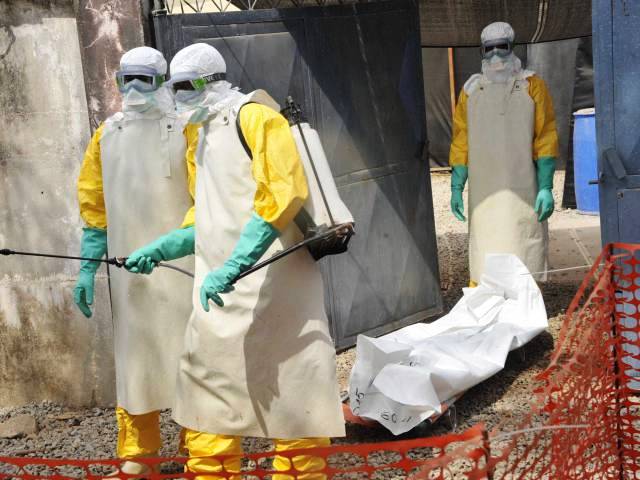
THE World Health Organisation(WHO) has declared Ebola virus disease (EVD) as a Public Health Emergency of International Concern (PHEIC) after the virus keeps spreading in the Democratic Republic of Congo (DRC).

The decision was reached at the  4th meeting of the International Health Regulations Emergency Committee on the Ebola virus disease outbreak in the DRC held in Geneva, Switzerland.

“It is time for the world to take notice and redouble our efforts. We need to work together in solidarity with the DRC to end this outbreak and build a better health system” said Tedros Adhanom, WHO director-general.

Adhanom said extraordinary work has been done for almost a year under the most difficult circumstances.

“We all owe it to these responders –coming from not just WHO but also the government, partners and communities — to shoulder more of the burden,” he added.

Ebola outbreak was declared in Congo in August 2018 and the outbreak has killed over 1,600 people in the country.

There have been an increase in the rate of victims in 2019 with about 12 new cases  being reported every day.

The WHO decision was spurred after the disease was detected in Goma this week. Goma is home to two million people in Congo and on the border with Rwanda.

It is also recognised as the gateway to Congo and the rest of the world.

Last month, a case of Ebola was reported in Uganda where two people were confirmed dead.

WHO had called a meeting to decide if it deemed a global burden. But after the emergency meeting on June 14, WHO said the situation was not a public concern.

“It was the view of the Committee that the outbreak is a health emergency in DRC and the region but does not meet all the three criteria for a PHEIC under the IHR,” WHO had concluded in June.

But the conclusion was reversed on Wednesday when Adhanom announced that the outbreak has been classified as a level 3 – the most serious – emergency globally.

However, WHO  said the transport routes and the border of the communities affected should not be closed.

“It is essential to avoid the punitive economic consequences of travel and trade restrictions on affected communities,” it noted

“It is important that the world follows these recommendations. It is also crucial that states do not use the PHEIC as an excuse to impose trade or travel restrictions, which would have a negative impact on the response and on the lives and livelihoods of people in the region,” said Professor Robert Steffen, chair of the Emergency Committee.

 The WHO also complained that it has insufficient money to tackle the problem.

There is a vaccine for ebola but in Congo, not everybody is vaccinated.

APC approves suspension of national vice-chairman

THE All Progressives Congress (APC) has approved the suspension of its national vice-chairman, Inuwa Abdulkadir.

Lanre Issa-Onilu, the party’s spokesperson, made the decision public through a press statement released on Thursday.

“The National Working Committee (NWC) of the All Progressives Congress (APC) has upheld the disciplinary actions of Magajin Gari ‘A’ Ward, Sokoto North Local Government, and the Party’s Sokoto State Executive Committee on the Party’s National Vice Chairman (North West), Inuwa Abdulkadir over anti-party activities,” Issa-Onilu said.

“The party organs in Sokoto State have earlier expelled Abdulkadir and passed on their recommendation to the NWC for ratification.”


READ ALSO:

He said the resolution to uphold the decision of the state’s party organs was reached at a meeting of the NWC held on Thursday at the party’s national secretariat.

“Abdulkadir failed to utilise the opportunity to defend himself before the disciplinary committee set up by the NWC to look into the various petitions received against certain members of our party,” the spokesperson added.

“Following the suspension of Abdulkadir, the NWC will subsequently forward the decision of the Sokoto State organs to the party’s National Executive Committee (NEC) for further actions.”

Abdulkadir had earlier said in a letter to the party that it would be improper for him to appear before the disciplinary panel as he already instituted a court case against the APC “arising from some false and malicious allegations touching on” his integrity.

In a different letter, he had also accused Issa-Onilu of making defamatory statements against him during interviews with the press and he had given the spokesperson seven days to retract them and apologise publicly.

The suspended official had been accused of working against the interests of the party in the last gubernatorial election in Sokoto State, where Aminu Tambuwal, candidate of the People’s Democratic Party (PDP), emerged the winner.