THE Nigerian Senate on Thursday resolved to summon the National Communications Commission (NCC) over weak performance in the area of poor registration of the Subscriber Identity Module (SIM) cards and dropped calls.
Ahmed Lawan, President of the Senate, also vowed to blacklist telecommunication operators in the country for poor services delivery, where necessary.
The decision came following a motion moved on the floor on the House over the increasing rate of dropped calls, among other unwholesome practices by the telecom operators.
They argued that Nigerians are being denied of their resources, thus sought refunds for cases of disrupted calls caused by the operators’ inefficiencies. Major mobile operators in Nigeria are MTN, 9Mobile, Airtel and Globalcom.
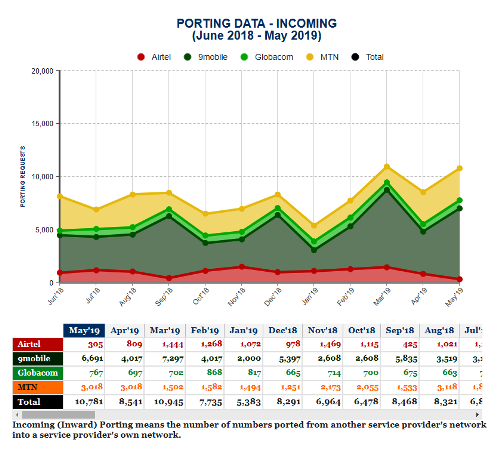
However, between June 2018 and May 2019, for instance, most Nigerian phone users ported from one telecom operator to another, usually as a result of poor services. In March 2019, 10,945 subscribers ported to another network while two months after, it reduced to 10, 781.
Data of Incoming and Outgoing SIM Porting Data Source: NCC
The NCC which is the regulatory agency for the industry has the mandate to issue licenses to telecommunication operators and also check all manners of irregularities in the sector.
As required by law – Section 89, Sub-section 3(d) of the Nigerian Communications Act (NCA 2003), the commission is expected to regularly monitor and report on the state of the telecom industry while operators are as well, obligated to provide such data for the purpose of the analysis.
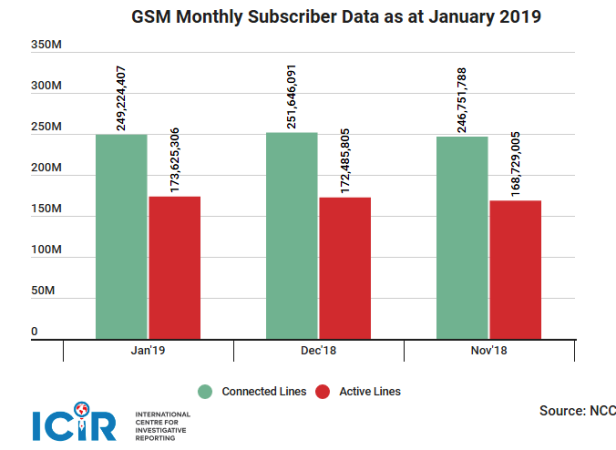
According to the NCC, as at January, there are 249, 224, 407 connected mobile lines in the country, but only 173, 625, 306 are active.
However, the decision to summon the NCC is because the Senate believes the agency has not lived up to its regulatory responsibilities, Channels has reported.
Meanwhile, this is not the first time the National Assembly will summon telecom operators. The 8th National Assembly also summoned the operators for poor services. The lawmakers indeed queried MTN on the allegation of profit reparation to the parent company in South Africa.
Lawan has pledged to take practical action on the matters this time.
THE Kaduna State House of Assembly on Thursday rejected the Commissioner nominee for Agriculture, Alhaji Aliyu Jaafaru, sent to the Assembly by Gov Nasir El-Rufai.
The nominee, who appeared before the assembly for screening was, however, rejected by the lawmakers due to his alleged criticism of the El-Rufai administration.
The Speaker, Alhaji Aminu Shagali, who presided over the plenary, said the rejection was as a result of his criticism against the present government on his social media handles since 2017.
Shagali said Jafaaru had been criticising one of the best policies of the present administration on education since 2017, hence the issue of disengagement of unqualified teachers in the state.
While quoting some of his posts, the speaker said “in your Facebook account, you said there was nothing like making Kaduna State great again.
“It is a deceptive clinch used by politicians to deceive the masses; we will make Kaduna great at the appropriate time.
“It is a responsibility for those who are truly sincere not for those who are inherently sarcastic.
“You also said El-Rufai must learn to tackle issues with a human face, you also said you are an advocate of change that goes to the root cause, not only the symptoms.
“You also said in the same post, stop comparing me with El-Rufai who thinks he is more intelligent than intelligence itself.
“You, however, said you are a humble human being that believes that all that glitter is not gold hence there is nothing authoritarian in insisting on the truth and never speak the truth.
“I detest insincerity as there are better ways of genuinely solving problems.”
Briefing journalists shortly after the plenary, the Chairman, Assembly Committee on Media and Public Affairs, Alhaji Tanimu Musa, said the rejection of the governor’s nominee was as a result of his criticism of the present administration.
He said: “The evil that men do live even after them, Jaafaru has been a critic of this administration on social media.
“He has been criticizing the government, so why did he want to work with the government you have been criticizing,” Musa said.
Other nominees screened include, Mr. Thomas Gyang – Commissioner for Planning and Budget, Alhaji Hassan Mahmud – Commissioner in the governor’s office for Riots, Damage, Rehabilitation and Resettlement and Alhaji Atiku Musa as Auditor General.
The House urged the auditor general to ensure that the audited account of each local government in the state was up to date.
Meanwhile, the speaker also announced that the Deputy Governor, Hajiya Hadiza Balarabe would serve as the acting commissioner for Health pending when the substantive commissioner was appointed.
GHANA is the latest country to be granted a visa-free status by the South African government, according to the SA Minister of Home Affairs, Hon. Aaron Motsoaledi.
While delivering his speech at the occasion of the Home Affairs budget vote Motsoaledi mentioned Ghana in the list of seven countries whose nationals will be permitted to enter South Africa visa-free.
Nigeria was conspicuously missing on the list despite the large volume of trade between the two countries. Nigeria is ranked 12th export destination for South Africa’s goods and is ranked 1st most important import source from Africa.
Out of the 193 countries that are member states of the United Nations, the Department has granted visa-free status to 75 countries, and 16 are in Africa, and 59 are from the rest of the world.
The new addition to the visa-free countries are: Qatar, United Arab Emirates, New Zealand, Saudi Arabia, Cuba, Sao Tome and Principe and Ghana.
The Minister promised to increase increase the number of people who process visas in Nigeria.
“We still have some homework to do for three countries whose combined populations make up close to 30 per cent of the world’s population i.e. China, India and Nigeria,” he said.
President Cyril Ramaphosa also has announced in June that he would accelerate the implementation of e-visa system.
“The e-visa system will advance deployment of immigration as a tool for economic development outlined in the National Development Plan,” said the Minister.
PRESIDENT Muhammadu Buhari has approved N5 billion for academic research in the country’s tertiary institutions.
Suleiman Bogoro, Executive Secretary of the Tertiary Education Trust Fund (Tetfund) made this known during the inauguration of a national research fund screening and monitoring in Abuja. He said the money was the highest since the establishment of the National Research Fund (NRF) in 2009.
Bogoro said the provision of the funds to scholars of tertiary institutions would allow them in conducting cutting edge research for the growth and development of the country.
He explained that the funds covered a series of disciplines including science, technology and innovation, as well as humanities and social sciences. As the money would be disbursed to academics by Tetfund through its NRF programme, Bogoro said the committee in charge would scrutinise research proposals’ application before recommending for grants.
He said the members of the committee were made up of seasoned academics of repute ready to devote their time and energy to critically review research proposals competing for the fund.
The Tetfund head urges the members to identify fundable proposals through various mechanisms for sponsorship.
Olufemi Bamiro, chairman of the committee, pledged to commence work in order to allow researchers to access the research funds promptly. He also vouched to provide outcomes that can move Nigeria to the next level of development.
Many scholars in Nigeria have consistently recommended that the government should release funds to tertiary institutions for research purposes. And when released, the funds should be monitored to avoid diversion.
NRF, according to Bogoro in 2015, was introduced to address the paucity of funds for research activities in tertiary institiutions.
INSTAGRAM recently announced the launch of a new feature on its app that would help counter social media bullying.
The video and photo sharing platform also owned by Facebook revealed that the company have employed the use of artificial intelligence to detect bullying and other harmful content in comments, photos and videos.
The new addition called ‘Restrict’ hide demeaning comments from the public, which would only be visible to the receiver.
“Restricted people won’t be able to see when you’re active on Instagram or when you have read their direct messages, said Adam Mosseri, Head of Instagram in a statement.
“Our mission is to connect you with the people and things you love, which only works if people feel comfortable expressing themselves on Instagram. We are committed to leading the industry in the fight against online bullying, and we are rethinking the whole experience of Instagram to meet that commitment.
“These tools are grounded in a deep understanding of how people bully each other and how they respond to bullying on Instagram,” the statement read in part.
The new feature is much more deliberate, allowing users to hem in their bullies, away from the rest of their followers and targeted teens as they are less likely to report online bullying even when they are the ones who experience it the most.
THE Nigerian Senate has called on the South African government to investigate the death of Elizabeth Ndubuisi-Chuwkwu, who before her mysterious death at a hotel in South Africa last month was the Deputy Director-General of the Chartered Insurance Institute of Nigeria (CIIN).
Nigerians travelling to South Africa need to be issued travel alerts, the upper legislative arm also told the Ministry of Foreign Affairs on Wednesday.
The lawmakers’ appeals were made after some deliberations on a point of order by Enyinnaya Abaribe, representing Abia-South Senatorial District and Minority Leader, on the need to investigate the professional icon’s death.
The late 53-year-old-mother had travelled to South Africa for the African Insurance Organisation (AIO) conference that ended on Wednesday, June 12 with a dinner programme. She had lodged at Emperor’s Palace Hotel and Convention Centre and scheduled to return to Nigeria on Thursday, June 13.
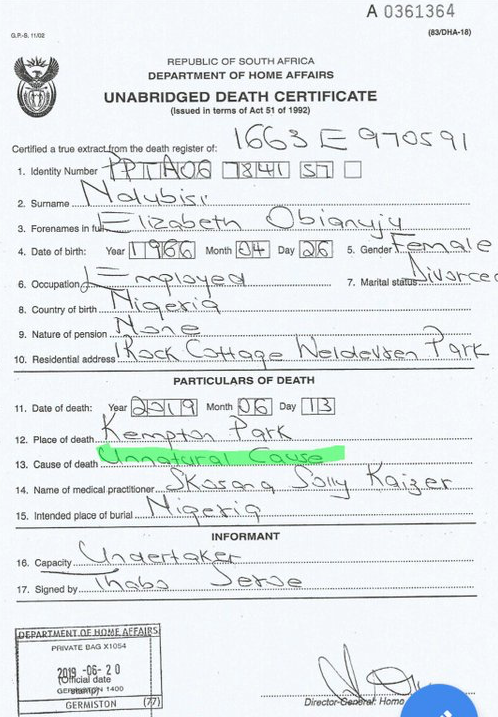
But she was found dead in her hotel room on that Thursday morning. Initially suspected to have died of cardiac arrest, an autopsy report later revealed she was murdered. The alleged murder was stated on the death certificate issued by South Africa’s Department of Home Affairs on June 20, noting she died of “unnatural causes consistent with strangulation”.
On Wednesday, the Nigerian Senate stressed the need for a prompt investigation to unravel the circumstances of her unfortunate demise.
Abaribe who presented the case said the insinuation that she died of cardiac arrest had been proved wrong following the autopsy report which indicated her death was unnatural and suspected to be murder. He added that the Department of Health of South Africa also confirmed on June 27 in a separate document that the CIIN boss was strangled to death.
The death certificate issued by South Africa’s Department of Home Affairs on June 20. Credit: The Cable
“In a curious twist, the hotel allegedly was reluctant to cooperate with the law enforcement agencies to unravel the circumstances surrounding her death. This is not the first time Nigerians have died in suspicious circumstances in South Africa,” said Abaribe.
Ifeanyi Ubah, representing Anambra South Senatorial District, urged the Senate to invite Nigeria’s Ministry of Foreign Affairs to explain what investigation has been done. He also said the Senate should send a “strongly-worded” letter to the South African government pursuing details of Nigerians that have been killed in their country.
Senate President Ahmed Lawan recalled how a corresponding case was debated in the eighth Senate and an ad-hoc committee sent to South Africa with a message that Nigeria was tired of the killings.
“We believe that the relationship between the two countries must be better. There must be respect for each other,” said Lawan.
“South African businesses flourish more than most Nigerian businesses. South Africans are safe and are protected in Nigeria. There is no need for any South African to take the life of a Nigerian or any citizen. Nigeria is a frontline state. We deserve respect and understanding.
“Our next set of contingents in the Pan-African Parliament must ensure that this issue is brought to the fore. We don’t take the law into our hands in the word of retaliation but we should not be taken for granted. We have taken these killings for too long and we are not going to take it anymore,” he said.
After much considerations, the Senate resolved to send a “high-powered delegation to the parliament of South Africa and express displeasure as well as ask their government to do something to stop the killing.”
The lawmakers also praised the federal government for taking action in seeking South Africa’s explanation of the death of Elizabeth.
The body of Ndubuisi-Chuwkwu had arrived in Nigeria and was kept in a mortuary in Asaba, Delta State. Her remains would be interred on July 25 in her hometown, Ihiala of Anambra state.
Dr GHAJI Bello, Director General of National Population Commission (NPoPC), on Wednesday, said the Commission would use electronic enumeration method to determine the actual population of Nigeria.
Bello said that Nigeria presently has an estimated population of about 198 million people, adding that the commission was determined to conduct a reliable and accurate census in the near future.
The Director-General spoke with the News Agency of Nigeria (NAN) in Abuja ahead of the World Population Day on Thursday.
He called on the Federal Government to support the commission to conduct a comprehensive and reliable census to ascertain the country’s actual population.“We arrived at the estimated 198 million after elimination of all the variables like mortality rates,” he said.
According to him, the commission will capture people’s fingerprints in the coming census using machines programmed to reject any double counting. The Director-General noted that another round of census was long overdue, 10 years after the last exercise was conducted in the country. Bello, who expressed confidence in the capacity of the commission to conduct accurate census, called on government to make it realisable. NAN reports that the 2019 World Population Day would be marked in Abuja on Thursday.
PRESIDENT Muhammadu Buhari might name his ministerial nominees this week, the Senate president Ahmad Lawal announced on Wednesday during a plenary session.
Over a month after President Buhari’s inauguration, Nigerians have been waiting for the list to be made public.
Senator Bassey Akpan representing Akwa-Ibom North-east had asked Lawan to compel President Buhari to carry out his constitutional duty on time.
“Based on our own calendar, I think we should be proceeding on our long annual vacation in the next two weeks and I also know that in line with your vision for a new Nigeria, you believe that we should return the country to January to December budget fiscal period.
“It means we have to put ourselves under pressure…There is a need for you to urge Mr President to send the list of ministerial nominees,” he said
Lawan assured the senators that the executive is working on the list and could transmit it before the end of the week.
“I think this is to inform this Senate that the executive arm is working hard to get the list to the Senate. I can imagine that before this week runs out, we could get the list. But I want to assure you that once we get the list, every senator here has shown the desire to stay long enough to screen and confirm the nominees in the interest of this country,” he said.
Buhari was re-elected four months ago, but the country has been without a sitting cabinet since the ministers serving during his first term stepped down in May.
In another development, the Senate asked its ad hoc committee to probe the recent Rivers State explosion and also extend its scope to last week’s pipeline explosion which occurred in Ijegun area of Lagos State.
The decision was arrived at due to the similarities and occurrence of the two incidents within the same period.
The senators observed a minute’s silence in honour of Nigerians who lost their lives in the Ijegun explosion. It also urged its Committee on Petroleum Resources when constituted, to intensify efforts on the Petroleum Industry Bill to discourage vandalisation of oil pipelines.
IN a court sitting today, Olubunmi Odeniyi, provost of the Ikeja branch, Nigerian Bar Association (NBA) has testified against Adesina Ogunlana and Yinka Farounbi, former chairmen of the branch whom the Economic and Financial Crimes Commission (EFCC) arraigned for stealing N20.1 million.
The commission disclosed this in a press release made available to journalists on Tuesday. The release was signed by Tony Orilade, the EFCC’s Acting Head of Media and Publicity.
Both Ogunlana and Farounbi were arraigned alongside Kappo Aderinola, a former Treasurer in May 22, based on a 30-count charge. The charges tantamount to conspiracy of committing felony, money laundering and stealing to the tune of N20, 100, 000, property of the NBA.
Farounbi functioned as Chairman NBA, Ikeja Branch between 2014 and 2016 with Aderinola serving as treasurer. Ogunlana was the branch boss between 2016 and 2018.
At the resumed hearing today, The NBA provost told the court that insurance premium funds paid by members of the association were not remitted to any insurance company during the administrations of the ex-NBA heads, contrary to their claims.
He said his investigation showed that both Farounbi and Aderinola, who were signatories to the accounts signed some cheques at different times without appropriate authorisation. While they also gave some cheques to Ogunlana, Farounbi’s successor, to cash fraudulently.
Continue in his testimony, Odeniyi said his claims were based on investigation he had carried out on the activities of the defendants. And he found out the abnormalities in the insurance premium funds during the tenures of the defendants.
But under cross-examination by the defence, Odeniyi clarified that his investigation was limited to findings on the insurance premium and not signing of cheques. And that he was not aware if Ogunlana signed some cheques after the expiration of his tenure as the chairman.
Another EFCC witness, Caroline Iwayoyanfe who is a former vice chairman, in her evidence narrated in the court that between 2016 and 2018, the executives rarely held meetings. When meetings held, she said there was never a time the defendants authorised the signing of any cheques or discussed such issues.
Iwayoyanfe noted that EFCC had called her to testify in court on the case.
“I was invited by the EFCC to talk and write regarding authorisation of some financial transactions and signing of cheques by the defendants,” she opened up.
“I went to the EFCC office and wrote a statement, informing the Commission that I know nothing about any authorisation of any transaction or signing of cheques carried out by the defendants.”
During cross-examination, Iwayoyanfe admitted that she was not aware of any payment to the first defendant’s account.
“The expenses of the Association were silently done by the second defendants,” she added.
Justice Mojisola Dada of the Special Offences Court sitting in Ikeja, Lagos, adjourned the case till Wednesday for the continuation of trial.
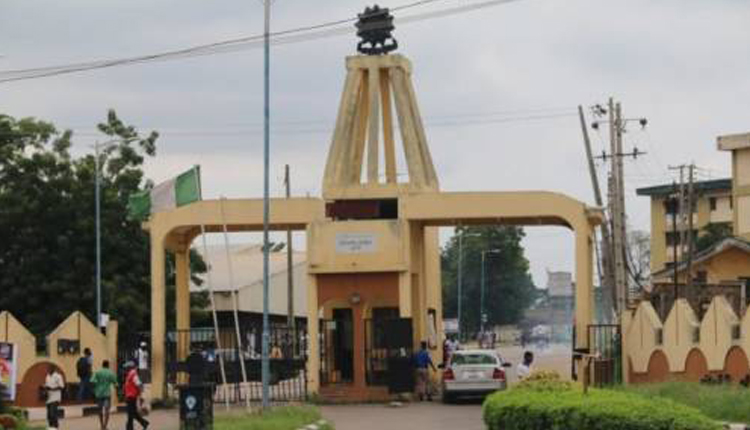
Aside cultism, extortion of students by the academic staffs of The Polytechnic Ibadan, Oyo state has been a major concern for a long time. But the story has been under-reported. In this part, Uthman SAMAD chronicles the corrupt practices of the academic staff of the institution revolving around extortion, sale of handouts at exorbitant prices and grade inflations amongst other rackets.
“BUYING handouts for this course is a prerequisite to passing your test, your ticket to entering for the exam. Pay to your group leader and he should bring the money to me. It’s just 1k [N1,000]”.
These were the exact words of Mr. Olubukola Adio during an early morning class of National Diploma II students of the Department of Mass Communication held in a one thousand- sitter lecture theatre of Ibadan Polytechnic in Oyo state.
Though the class was noisy, Adio’s message seemed audible enough for all the students in attendance as they all chorused their approval. This reporter waded through the teeming class of students to get a copy from the lecturer.
Adio who teaches Photography and photojournalism opened the boot of his Mercedez Benz 190 to hand over a bundle of handouts to the group leaders.
This reporter tried to pay Mr. Adio directly for the handout but was told by the head of the class in a low tone that the lecturer does not collect payment from individual students.
Sale of handouts is a norm at the Polytechnic Ibadan, and the practice has never been stopped by the school authorities or the Students’ Union, despite the fact that the management never approved of it.
According to one of the Students’ Union executives who pleaded for anonymity, the exco members frown at the sale of handouts, but none of them could confront the school authorities. Even when they do, by the time the executives are given their own share, everyone keeps quiet, he added.
The Polytechnic Ibadan was, established 48 years ago in Ibadan in the old Oyo State, with satellite campuses located in neighboring towns of Saki and Eruwa.
In 2014, the two satellite campuses became full-fledged institutions and renamed The Oke-Ogun Polytechnic, Saki and the Ibarapa Polytechnic, Eruwa respectively. Since then, different management has headed these institutions independently.
The Polytechnic, Ibadan is divided into north and south campuses and comprises five faculties housing 23 departments with over 19,000 students.
Buying of handouts as safe way to pass examination
Students who failed to buy handouts shared their experience with this reporter. Salam and Aderanti (last name withheld to protect them) narrated how they were sent out of the examination hall after they failed to buy a handout for one of their courses.
Salam, an HND 1 student of Public Administration recounts his experience while sitting for one of the exams during his final exam at National Diploma level.
“I have been seeing students talking about this in other departments but I was shocked when the lecturer was using handouts he sold to students as a pass into the exam hall,” Salam said.
“I begged this man for over thirty minutes out of the two-hour exam duration, until I had to run around to get the N1,000. I didn’t even get the handout, I just paid before I could be allowed to enter.
“We had always been told in classes whenever this man came that we should submit our assignments with the handout for grading. Those of us that didn’t buy the handout, our assignments were not collected, and we did not get a grade.
“This was during my ND1 second semester. We all thought it was a joke until we saw the reality when this man asked us to show our handout for the course before we could be admitted into the exam hall. My brother, we bought it all, and when there was no more handout to sell, the lecturer collected the money and admitted us into the hall,” Aderanti recounted her experience.
Also, a Public Administration student, Kabir, narrated how the Research Methodology lecturer came into the class and announced that no student would sit for his exam or test except such students purchase the Research Methodology textbook from him, and not from elsewhere, even though the school rule says that students should buy from the school bookshop.
“The lecturer made this declaration less than 3 weeks to the exam. Why not at the beginning of the semester if truly he loves us and wanted us to pass?
“They wanted to market the book indirectly because they know that the only way to do that is to force us to buy the textbook because no one will buy it after the exam. What they later did was that they forced us to buy the textbook from them. It was even a handout, but it was branded like a textbook. Our lecturer said without buying it, we were going to fail the course.
“Everybody was scared of failure at that time. But for me, I dared him that he should go on and do his worst. I could remember we sat for the exam at the 1000-capacity hall. When we got to the exam hall, surprisingly I was checked in, but others that didn’t buy the handouts were sent out of the hall.”
ND2 students of Mass Communication also confirmed that their lecturer, Mr. Adeniran told students to submit their assignment by a week after the exam, together with handouts for grading. This assignment costs 20marks.
Mr.Bamishaye Olatunji Abiodun, a junior lecturer of the department of Mass Communication teaches Newspaper Editing and Production and Public Relation Media and Methods.
When this reporter visited his office, he was caught telling one of his students that each handout for his courses attracts 20 marks.
Bamishaye Olatunji Abiodun, a lecturer at the Department of Mass Communication teaches Newspaper Editing and Production and Public Relation Media and Methods
This reporter witnessed how the ‘awoof’ 20 marks are awarded. Assignment question will be written on the first page of the handout of Public Relation Media and Methods by the lecturer. This means a student that fails to buy the handout will not be able to get the assignment question nor has the submission ‘grace’.
An investigation conducted across five departments of the institution confirmed this practice to be a norm.
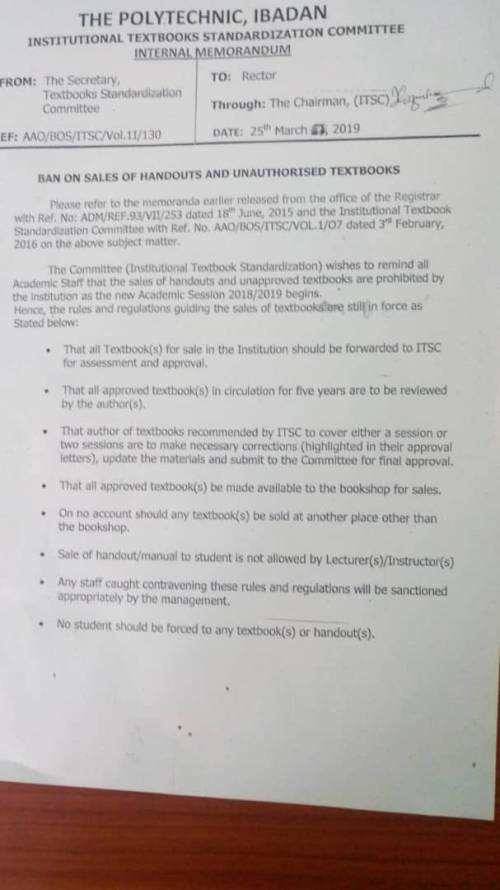
Investigation also shows that handouts are sold between N800 and N1, 500, and a student spends an average of N12, 000 on handouts in a semester, student sources told the reporter. And some of these mass- produced handouts are printed without reference pages or ISBN, but nobody cares. In an internal memorandum dated 25th of March 2019 with reference number AAO/BOS/ITSC/vol.11/130 signed by one Mrs. Agboola, the secretary of the Textbook Standardization Committee and sent to the rector through the chairman of the committee titled “Ban on sales of Handout and unauthorized Textbooks”, the institution prohibited the sale of handouts and textbooks.
Memo banning the sale of handouts in The Polytechnic Ibadan
It was also noted the approved textbooks by this committee should only be made available at the school bookshops and on no account should it be found anywhere else. The circular also shows that any staff that contravenes these rules and regulations will be sanctioned appropriately by the management of the institution as no student should be forced to buy any handout or textbooks.
But this is a good policy on paper because no lecturer has been sanctioned on account of handout sales, the students said.
Meet Ajao, the “Contractor”
Ajao, as popularly called by students, is a Mass Communication ND2 student of the Polytechnic. He is also the Public Relations Officer 2 of the student union, and popular among student especially for connection with lecturers across various departments.
This reporter met with Ajao and asked him whether he could help speak to a lecturer to upgrade his result in a computer course. The latter agreed and gave his number for future communication. Three days after, when this reporter called, he advised that the reporter should speak to the lecturer directly.
“Go and meet the woman, she is a close paddy, she said everyone should be coming to her.
“You will just buy the handbook we bought last semester again and you get your pass straight – abi wetin you want again?” Ajao said.
At the end of the discussion, Ajao promised to always help if the reporter runs into trouble with any of course in as much as he always cooperates.
How students pay for grade
On a Wednesday afternoon in June, this reporter joined a long queue of students who had problem with “Introduction to Computing”- a general course from the Department of Computer Science. The issues range from missing exam scores to omission of test scores.
“I have been here since 10 a.m., I don’t know those of us that have problem with this course are many,” a female student who was later referred to as Muibat by a colleague commented.
“You tell her your problem, you pay for the workbook and she pens down your name,” another student explained to her what to do when she is in Mrs. Ganiyu’s office.
Muibat was happy about the tip until she heard it would cost her double the amount paid for the same workbook. “I only have N200 with me now! I have been warned not to come home for this week again, I don’t know what to do right now,” Muibat lamented.
Hours later, the lecturer came out to say she would no longer attend to students by 2 pm. “Now you will have to take numbers. Only 15 persons will be allowed, the remaining will come tomorrow,” she said.
Without any means of identification, this reporter was counted as the number 7th person on the queue. When called in, “check your name on the list,” Mrs. Ganiyu instructed.
After two minutes checking for nothing in the list, the reporter told Mrs. Ganiyu that he couldn’t find his name. She then told the reporter to write his name with his matriculation number and pay to a lady by the corner in her office who was busy playing Bubble game on her Hot6 phone.
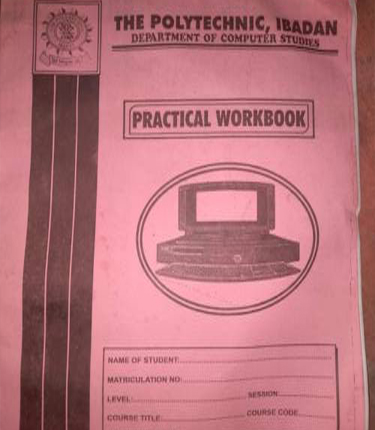
After writing a pseudo name and matric number, the reporter gave the lady by the door N500 as instructed by Mrs Ganiyu and collected a workbook. The 10-page practical handbook was sold N350 earlier in the semester.
A female student was also made to pay N500 to the woman by the office corner before she was given a workbook.
Workbook sold to students at N500 by Mrs. Ganiyu. Purchase of this workbook is a guarantee for higher grade
No Receipt, No File Submission
This is a popular phrase by the students of Poly Ibadan. Checks by this newspaper show that students are not allowed to submit registration form each semester until dues are paid in full.
Though school management has never made the payment of dues compulsory, students’ files will not be collected for submission except it contains all the receipts for the payment. This reporter observed the registration process and confirmed that forms are compulsorily submitted with receipts for various association dues.
A requirement for students registration issued by faculties
Section 40 of the 1999 Nigerian Constitution as amended states that membership of association and groups should be voluntarily and not by force as in accordance with the fundamental human rights.
The mandatory payment of fees and compulsory inclusion of association due proof of payment is, therefore, a breach of the constitutional provision.
A source confirmed to this paper that associations send part of their collection to the school management. “Don’t sweat on that. Even when I was here years ago, as a student, the system was like that. From a long time, there is these returns associations pay on accrued money to the management purse that’s why they continue to make It compulsory for students who want to submit his/her file,” the source said.
During submission hours at the Department of Mass Communication, this reporter was able to witness how the officer in charge emphasized the need for students to include all the listed receipts in their file.
Porous database
Aside this illegal collection by the academic staffs of the institution, this investigation also confirms the porosity of payers’ database in the institution.
Though tuition fee in Poly Ibadan is paid through the electronic portal, other dues are paid in cash. These dues range from students’ Union due, state of origin association due, the town of origin association due, religious organization association due, students’ departmental association due, students’ faculty association due, faculty association, amongst others. And some of the dues were paid for without proper accountability mechanism put in place.
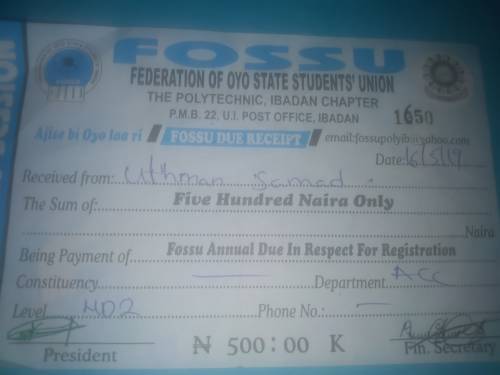
For instance, this reporter paid for the Association of Students Communicators, Department of Mass Communication (ASCOM) departmental due, Association of Students Communicators, Department of Mass Communication (ASCOM) Students’ Association due, Faculty of Financial Management Studies Students’ Association (FFIMSSA) due, Federation of Oyo State Students’ Union (FOSSU) due and Federation of Ibadan Students’ Union. These dues were paid by this reporter without matriculation number, only the payee name. And there was no database to validate the name of the payer.
Management denies, promises to investigate
In an interview with the Public Relations Officer of the institution, Mr. Soladoye Adewole he denied the management’s endorsement of selling handouts by the academic staff and distanced the management also from the compulsory payment of dues.
“It is illegal for anyone to sell handouts in The Polytechnic, Ibadan. And we have consistently maintained that and told students that if any lecturer sells or anybody attempts to sell, they should make a formal report. Even a memo was circulated to that effect. And this was made known to them during their matriculation orientation, that it is illegal for anybody to sell handout to them or intimidate them.
“I featured recently on inspiration FM and I told the whole world on the issue of the handouts in The Polytechnic. If they are doing that (students buying handout), that is stupidity, because the management had told them and insisted that they are not supposed to buy any handout from anybody.”
“I will be grateful if you can provide me with their information, they (lecturer) will be sent out of the system, this is very absurd. I can tell you we don’t know about this.”
When told about Mr. Bamishaye who grades assignments of only those who buy handout, Mr. Soladoye said: “This is very unfortunate; you have given me a name now, when I get to the office, I will investigate. The school knows nothing about the selling of handout?
When the reporter pressed further, he said: “I just told you now that it is illegal. You know they are not selling it for the management, they will not be selling it to the fellow lecturers nor the administrative officers, they are selling it to students and students have been told a thousand times ‘don’t buy handout from anybody’.
“If any lecturer has any academic material, the lecturer should submit such to the committee so that the committee ensures that they publish it as a book and any student that find it interesting will buy it and if not, it is not compulsory.”
However, while being quizzed about the management’s effort to halt the corrupt practices, the PRO, vowed that the management of Poly Ibadan would investigate the allegation of students.
“You are just giving me the information if I am able to investigate, the school will take action. Let me explain something to you, here in The Polytechnic, Ibadan, the students when they commit offense here, we have student disciplinary committee for it, also if a staff commits an offense, we have a disciplinary committee for senior staff and another one for junior staff. So nobody is above the law,” he said.
On the payment of arbitrary association dues, he said: “The institution has nothing to do with all these receipts like indigenous association receipt in student files. Nobody can force anybody to join any indigenous association.
“Apart from students’ union receipt, there’s no other receipt tenable in the file, all these religious body receipts and the likes are not made compulsory.
They are not supposed to pay because those payments have nothing to do with the institution. They are voluntary bodies. Either you pay the due or not, it is of no concern to the management.”
We are not selling handout- ASUP covers up for lecturers
One of the association receipts
A former executive member of the Academic Staff Union of Polytechnics, The Polytechnic, Ibadan branch who served during the last administration before being suspended by the management of the institution due to internal crises, said: “We are not selling handout. The Polytechnic, Ibadan is an institution of reputation and a first-class institution. The selling of handout has been abolished a long time ago.”
“I was a product of this institution, I was once a student here, even when I was a student, two or three decades ago no one sold handout.”
When he was shown proofs of lecturers selling handouts in the institutions, his position shifted, but not completely.
He said: “That’s very absurd! I don’t know about that. I am happy as an investigative journalist, you were able to say there are minimal or fewer cases of selling handouts in my department of Science Laboratory and Technology. Out of 12 disciples of Jesus Christ, there’s one Judas.
“If you have discovered anything or you have discovered any negative action, then notify the appropriate authority. I am telling you that there could be some black sheep among us but it is not every lecturer that sells handout. Our lecturers here are men of integrity. Majority of them that I know will not engage in such nefarious activities. I can’t claim ignorance of lecturers here selling handouts.”
Students Union sitting on the fence
The students’ union president, Akadiri Bayonle, has been evasive on allegation of academic corruptions in the institution. While on one side asserting that the lecturers sell handouts in the institution, he also denied being aware of it, hence contradicting himself.
He said: “I am aware of the fact that lecturers sell handout in some departments and not in some departments. What I mean is that it is not a general practice. I am not really aware of that at the National Diploma level. But I can tell you it doesn’t exist with us at the higher national level. The students’ union is not in support of it, and no lecturer should force any student to buy a handout.”
NBTE vows to investigate
The National Board for Technical Education, the institution that oversees polytechnics, monotechnics, and technical schools across the country, has frowned at the selling of handouts to students.
“The sale of handouts has been prohibited. That is why the Tertiary Education Trust Fund (TETFUND) has been giving them library intervention fund. So, there is no reason why they should sell handouts. No reason! It is not allowed. I can promise you the commission will take action. We will investigate and we will get back to you,” Masaud Adamu Kazaure, the NBTE secretary promised.
This report was done with support from Ford Foundation and the International Centre for Investigative Reporting, ICIR