Home Blog Page 2348

EU targets over 52,000 households in Yobe with €26m intervention

OVER 52,000 households will directly benefit from two new European Union (EU)-funded projects aimed at strengthening the recovery and resilience of internally displaced persons (IDPs) and other vulnerable groups in Yobe State.

“The EU has earmarked €26 million through its 11th European Development Fund for the projects, Kurt Cornelis, Head of Cooperation, EU Delegation to Nigeria said  on Tuesday at the launch of the project in Damaturu, Yobe State capital.

Cornelis said the projects will expand and deepen the already extensive EU humanitarian and development assistance to the many victims of violence and displacement in Nigeria’s North East while addressing some of the underlying drivers of violent extremism in Nigeria. Proven international implementing partners will execute the projects, over a period of three years.

The project, according to him, is being implemented by Mercy Corps’ Building Resilience in Complex Crisis (BRICC) and Save the Children.

He said Mercy Corps’ Building Resilience in Complex Crisis (BRICC) programme will increase the ability of over 26,000 households to cope with the shocks and stresses of conflict, climate change and complex crisis.

“The €14 million project  assigned to Mercy Corps’ will be implemented over a 36 month period  in Damaturu, Geidam, Gujba, Gulani, Potiskum, and Yunusari Local Government Areas to support men, women, and youth to meet their immediate early recovery needs and enhance their social protection outcomes,”Cornelis said.

Mercy Corps’ organisation is expected to engage with Yobe communities and local leadership to support and revitalize markets and livelihoods, enhance conflict mitigation systems, and create the conditions to facilitate systemic change.”

“In this way, the project will strengthen resilience capacities for communities, households and individuals in the long-term, and address the underlying causes of crisis,” he  said.

To implement this project, Mercy Corps will leverage its expertise in fostering resilience in complex environments both globally and in Northeast Nigeria, with Cooperazione Internationale (COOPI) and the Danish Refugee Council (DRC)’s strong track record of delivering relief and early recovery programs in Yobe State.

The EU chief further explained that Save the Children will strengthen early recovery, improved human development, social cohesion and resilience for over 26,000 vulnerable households and communities in Yobe State.

He said the project will do this through enhancing state government capacity to lead, oversee, strengthen and expand its social protection system and delivery of basic services, alongside increased state and community capacity to facilitate reconciliation and social cohesion.

“It will also help vulnerable households and communities in Yobe to become more resilient to recurrent shocks through financial support, and to have diversified livelihoods, through effective support for market recovery, skills development and enhanced state capacity to provide technical assistance,” he said
 

Emir advocates better salary structure for journalists

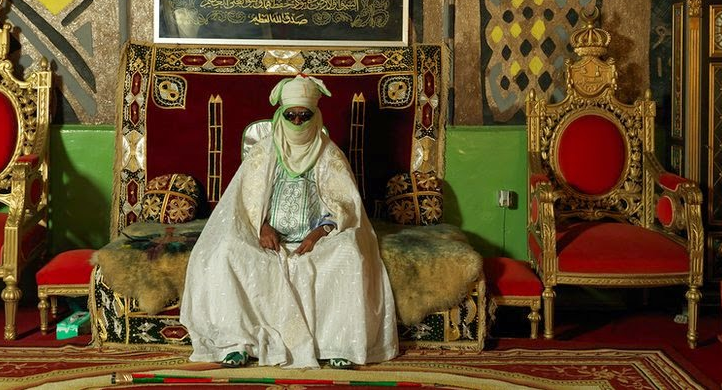
THE Emir of Katsina, Alhaji Abdulmumini Kabir, has urged the Federal Government to approve better salary structure for the Nigerian journalists.

Kabir stated this while receiving members of the Nigeria Union of Journalists (NUJ) Katsina State Council who paid him a courtesy visit on Wednesday at his palace.

“Newsmen should have a good salary package that will enable them to discharge their constitutional responsibilities effectively,” the monarch said.

According to him, the federal government in collaboration with the National Assembly should support journalists to have a good salary package in the country.

“Media practitioners deserve a good salary like other professionals that are working for the progress of the nation.

“If journalists are not well paid as currently being practised in the nation, they will be exposed to different kind of corruption and other unethical practices.

“How do you expect a journalist that has no salary or is being paid a paltry sum to live above board or avoid corruption,” the monarch asked.

The Emir, therefore, called on politicians, lawyers and human right activists to champion the crusade for the enactment of the law on media salary structure in the country.

Kabir disclosed that he had started the struggle for the introduction of the media salary structure and had approached President Muhammadu Buhari on the issue.

“As a concerned Royal father, I have spoken to the President to assist media practitioners with good welfare package in order to win the war on corruption,” he said.

Earlier, the state Chairman of NUJ, Buhari Mamman-Daura, commended the Emir for his frank approach to national and state issues without fear or favour.

The NUJ chairman said that media practitioners were proud of the monarch as he had always being there for them in terms of their professional callings and personal problems.

NAN

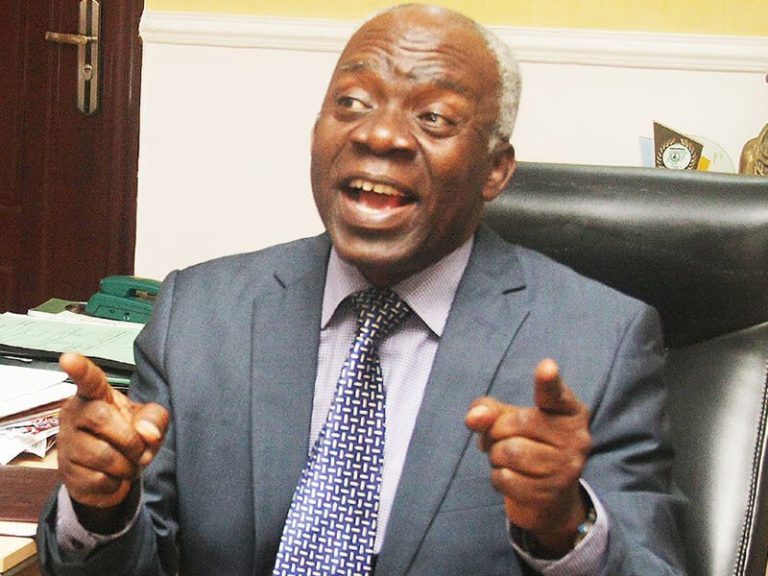
Falana: Corruption has ‘assumed dangerous dimension’ under Buhari

HUMAN Right Lawyer and Senior Advocate of Nigeria (SAN), Femi Falana on Wednesday said corruption has actually ‘assumed dangerous dimension’ under the administration of President Muhammadu Buhari.

The lawyer attributed this to what he described as ‘anti-people economic programme’ of the Federal Government, thus called for quick intervention of Civil Society Organisations (CSOs) in the country to partner the public and fight the menace.

He spoke in a keynote address titled ‘Involvement of Nigerian People in the Fight Against Corruption’ at Stakeholders Dialogue on Corruption in Nigeria organised by Action Aid Nigeria, in Kano.

“The role of the civil society in ensuring the effective fight against corruption and the implementation of the above recommendations cannot be over-stressed. In fact, both the UN Convention against Corruption and the African Union Convention on Preventing and Combating Corruption clearly articulate important roles for civil society in the fight against corruption,” says Falana.

“A good example of the role civil society can play is that currently being played by SERAP, a Nigerian based human rights, and anti-corruption NGO. But as corruption in Nigeria has assumed a dangerous dimension due to the anti-peoples economic programme of the government CSOs must link up with the people in combating the menace of corruption.”

Various reports have shown that the level of corruption is relatively indifferent compared with the past government especially ex-President Goodluck Jonathan administration.

While condemning the Code of Conduct Bureau (CCB) over its refusal to grant a Freedom of Information (FOI) request by Socio-Economic Rights and Accountability Project (SERAP) on the ground that asset declaration form is private information, the lawyer described the development as irrational.

According to him, “the Federal Government has also failed to show commitment to the fight against corruption by encouraging secrecy with respect to asset declaration by public officers. A few days ago, the CCB turned down the request made by SERAP for the release of copies of the declaration forms of former state governors and Presidents on the grounds that the declaration forms are private documents.”

However, he expressed optimism the CCB would reconsider its position and allow citizens to access the information in the declaration forms submitted to it by all public officers, considering the new policy of the Buhari administration to enforce effective asset declaration by public office holders.

Speaking on increasing insecurity and poverty, Falana emphasised that having managed the Petroleum Trust Fund under the Sani Abacha regime, Buhari should have no difficulty in investing the $321 million Abacha’s recovered loot to fix the crises of insecurity and unemployment.

He recalled that the federal ministry of justice and federal ministry of finance, as well as the anti-graft agencies, revealed the federal government recovered not less than N1 trillion from treasury looters and through the whistleblowing policy of the current administration.

“It is suggested that the sum of N1 billion be set aside for the establishment of a factory in each of the 774 local governments in the country while the balance should be allocated to the police to secure the country.

“…After all, the sum of $321 million from the Abacha loot is being distributed to the poor as dictated by Switzerland that illegally warehoused the loot for almost two decades,” Falana stated.

He argued further that, “Through the privatisation of public enterprises and assets including banks and other financial institutions the economy was taken over completely by foreign and local interest groups. Thus, the privatisation of public companies, commercialisation of social services, have increased poverty and income inequality in society.”

However, he called for a collective effort such as an alliance with progressive political parties, trade unions, women and youth organizations for the purpose of fighting together for the society where welfare and security of the majority of the people will be the primary purpose of government.

“To achieve the objective, popular forces should be prepared to challenge neo-liberal ideologues who are promoting poverty through the domination of the economy by market forces.”

UK advises citizens against travel to 21 states

THE United Kingdom has urged its citizens not to travel to certain parts of Nigeria as a result of insurgent activities, kidnapping, and general insecurity.

This warning is contained in a report by its Foreign and Commonwealth Office (FCO), which promotes the best interests of UK citizens by providing travel advice.

The report, last updated on Monday, particularly mentioned 21 states including Adamawa, Abia, Akwa Ibom, Bauchi, Bayelsa, Borno, Cross River, Delta, Gombe, FCT, Jigawa, Kaduna, Kano, Kebbi, Kogi, Niger, Plateau, Rivers, Sokoto, Yobe, and Zamfara.

“Terrorists are very likely to try to carry out attacks in Nigeria,” the report stated. “Most attacks occur in the northeast, particularly in Borno (including central Maiduguri and along access routes connecting the city to other major towns and along the Niger border, including in Damasak), Yobe (including the eastern LGAs bordering Borno State both north and south of the Damaturu road), and Adamawa States.”

“There have also been significant attacks in Gombe, Kano, Kaduna, Jos and Bauchi States and in the Federal capital, Abuja. The terrorist threat across eastern Yobe and Borno State is high, with frequent recent attacks. We continue to advise against all travel to Borno and Yobe States.

“You should avoid places where crowds gather, including political meetings, religious gatherings and places of worship, markets, shopping malls, hotels, bars, restaurants, transport hubs and camps for displaced people. Attacks could be indiscriminate and could affect western interests as well as places visited by tourists. Besides Abuja, other major towns and cities remain particularly at risk, including Kano and Kaduna.”

The FCO also noted that “there’s a high threat of kidnap throughout Nigeria”.

“Kidnaps can be motivated by criminality or terrorism and could be carried out for financial or political gain,” it said.

“The security environment in the northeast has deteriorated since 2018 and there is a heightened risk of kidnap. Kidnaps in the northeast have included humanitarian and private sector workers.

“There are also reports that Boko Haram and Islamic State West Africa (ISWA) are continuing to actively plan to kidnap foreigners. As well as in north-east Nigeria, this is believed to include some northern and middle belt states including Bauchi, Gombe, Kano, Kaduna, Niger, and Adamawa.

“If you’re working or travelling in areas where there is a Boko Haram or ISWA presence, especially in the north-east of Nigeria, you should be aware of the risk of terrorist kidnapping. There is also a high threat of criminal kidnap in the Niger Delta region and Kogi State.”

The report warned that travelling to these places is highly risky and will require a high level of security. Those working especially in northern Nigeria, the UK government said, need to have regularly updated security arrangements with their employers.

Court restrains Ganduje from acting on alleged corruption against Sanusi

A FEDERAL High Court sitting in Kano on Tuesday granted an order restraining Kano State governor, Abdullahi Ganduje, and the State Public Complaints and Anti Corruption Commission from acting on the preliminary report on alleged misappropriation of N3.4 billion by the Kano Emirate Council.

The order followed a suit filed on June 7, by Muhammad Mannir-Sanusi, Dan Buran Kano, seeking an order to restrain Ganduje, the Commission and the state Attorney General or their agents from acting on the preliminary report of the investigation.

Justice Obiara Egwuatu issued the restraining order and directed that the respondents be served through a publication in the Daily Trust newspaper and the Attorney General of the state.

He adjourned the case to June 28 for the hearing of the motion on notice.

The anti-corruption commission had on June 14, forwarded the preliminary report of the investigation in which it indicted the Kano Emirate Council, to the Secretary to the State Government for appropriate action by the state government.

(NAN)

Absence of Babachir’s counsel stalls trial

THE trial of former Secretary to the Government of the Federation (SGF), Babachir Lawal and three others could not go on today, June 18,  before Justice Jude Okeke of the Federal Capital Territory, High Court, Maitama, due to the absence of the lead defence counsel, Chief Akin Olujimi, SAN.

Lawal along with his younger brother, Hamidu David Lawal, one Suleiman Abubakar, Apeh John Monday and two companies, Rholavision Engineering Ltd and Josmon Technologies Ltd, are being prosecuted by the Economic and Financial Crimes Commission, EFCC on an amended 10-count charge, bordering on fraud, diversion of funds and criminal conspiracy to the tune of over N500 million.

Temitope Adeyemi, who held brief for Chief Olujimi, SAN, asked the court for adjournment, following Olujimi’s illness and absence.

According to Adeyemi, “The lead counsel in this matter is still indisposed as he had earlier told the court  and  has asked that I apologise for his absence in court and also ask for an adjournment to enable him be present in court.”

The prosecution counsel told the court that he was informed of the lead defence counsel’s illness and therefore will not oppose the application.

The judge noted that there was no document in support of the adjournment application to show that the lead counsel was indisposed, but that he was disposed to giving the “learned silk” the benefit of the doubt.

He adjourned the matter to July 4, 2019, noting that today’s was the  second adjournment  given to the first defendant’s lead counsel.

Lawan appoints Chief of Staff, SA on media

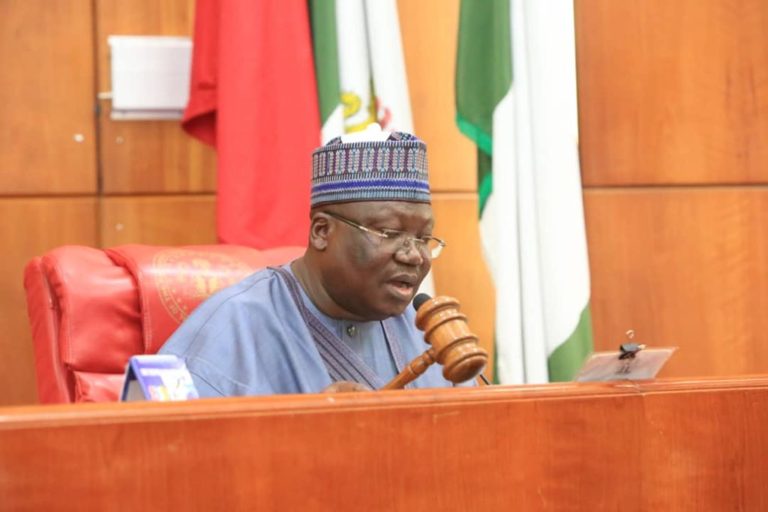
SENATE President Ahmad Lawan on Tuesday approved the appointments of  his Chief  of Staff, Babagana Muhammad Aji and Special Adviser on Media and Publicity, Festus Adedayo  into office in Abuja.

 Dr. Betty Okoroh, Special Adviser to the Senate President on Administration in a statement, said the appointments are with immediate effect.

According to the statement, Aji and Adedayo are needed by the Senate president in executing his planned legislative agenda, hence, their appointments were based on merit, experience, track record and competence.

Aji is currently an administrative coordinator of National Health Insurance Scheme Outreach Services.

He holds a Master Degree in Educational Planning and Administration, and Public Administration from the University of Maiduguri, Borno State.

His career kicked-off as an administrative assistant at the University of  Maiduguri  in 1987, and became a Registrar of the University in 1997. In 2016, he was appointed director, at the University of Maiduguri Teaching Hospital.

Adedayo, a member of Editorial Board of Tribune newspapers, holds a PhD degree in Political Communication from University of Ibadan.

Lawan, on June 13, set up a 12-man Ad hoc committee from six geo-political zones to communicate the welfare of the senators with National Assembly management, headed by Senator Abu Kyari.

The Senate president representing Yobe North district, was on June 11, declared and sworn-in as senate president of the ninth Assembly.


Northern Nigeria best place to do business – World Bank report

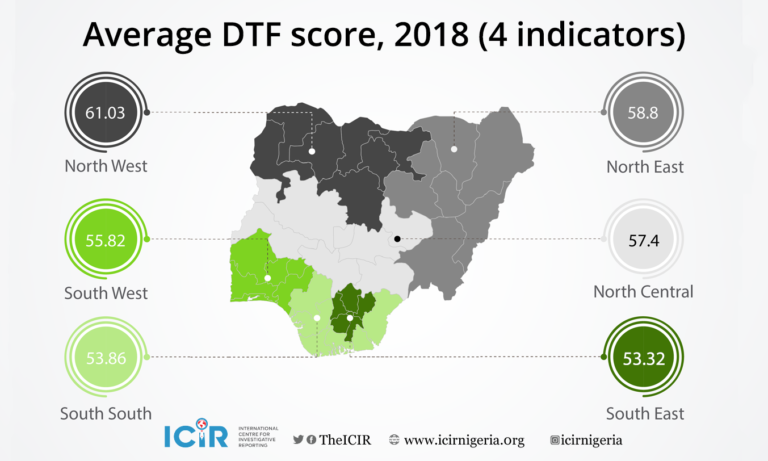
THE four years’ subnational series data on the Doing Business in Nigeria  (DBN) 2018 by the World Bank, comparing Business Regulation for Domestic Firms in 36 States and FCT Abuja with 189 Other Economies, has ranked the North West, North East and North Central top regions that proffer ease of doing business in the country.

The report analysed business regulations in Nigeria using four Indicators –ease of Starting a Business, Dealing with Construction Permits, Registering Property, and Enforcing Contracts.

Chronologically, North West at 61.03 per cent, North East 58.8 per cent, North Central 57.4 per cent aced the derived national average of 56.93 per cent whereas the South West; 55.82 per cent, South-South; 53.85 per cent and South East; 53.32 per cent hit below the national average.

Results arrived at from the indicators showed that it is easier to start a business in Abuja, however, on a state-to-state basis, data reveals that Kaduna state has the highest score of 65.97 per cent in terms of business regulations for domestic firms. In other words, Kaduna state offers the best environment for doing business.

Niger, Kano, Jigawa, Ekiti and Bauchi ranks higher in dealing with construction permits. Lagos and Rivers were ranked least states at 37 and 36 respectively.

While Kaduna and Zamfara, Jigawa, Abuja, Kastina emerged are top five states where registration of property is easy and cheap as against Rivers, Kebbi, Cross River and Rivers ranked worst states for ownership registrations.

Imo, Cross River, Anambra, Adamawa state ranked amongst the lowest state with enabling business environment for contract enforcement.

Ease of Doing Business_in_N… by on Scribd

Over the past four years, 29 Nigerian states have implemented 43 reforms across the four regulatory areas benchmarked, although 32 states had already implemented 77 reforms across the four regulatory areas benchmarked since the DBN 2010 study.

“It is encouraging to note that the private sector acknowledges the business environment reform agenda initiated at the Federal level is trickling down to several states.

“While these findings are encouraging, substantial variation remains across the country. Going forward it will be critical for the states to engage in peer learning and put in place the institutional mechanisms that will ensure continuous improvement and the sustainability of reforms,” said Rachid Benmessaoud, Country Director, World Bank Nigeria.

Although it is indicated that the gap between regions and states had started to shrink over the past eight years from 2004-2014, recent trends still show that despite an increase in the number of business reforms in the states, these reforms have been mostly in areas where the federal government has pushed for them.

Areas where it is up to the states to improve, such as property registration or construction permitting, have not moved as fast.

“On average, the stamp duty and the CAC registration fee together account for more than half of the total cost of starting a business, this fee ranges from N2,000 in Kebbi and Zamfara to NGN N100,200 in Gombe, making Gombe not only the most expensive state to start a business in Nigeria but one of the most expensive locations globally.

“Improving the business regulatory environment across Nigeria will be key to the country’s economic growth. Nigeria’s heavy dependence on oil has posed structural challenges that have made it difficult to achieve sustained growth, create jobs and reduce poverty,”  the World Bank report states.

Nevertheless, the DBN report purported ample opportunities remain for states, “if the country succeeds in diversifying its economy, the long-term prospects are positive, according to PwC’s projections, Nigeria has the potential to become the world’s 14th largest economy by 2050 and enjoy an average annual growth rate of more than 4 percent in the long run.”

EFCC secures interim forfeiture of N60m cash traced to ex-Zamfara SSG

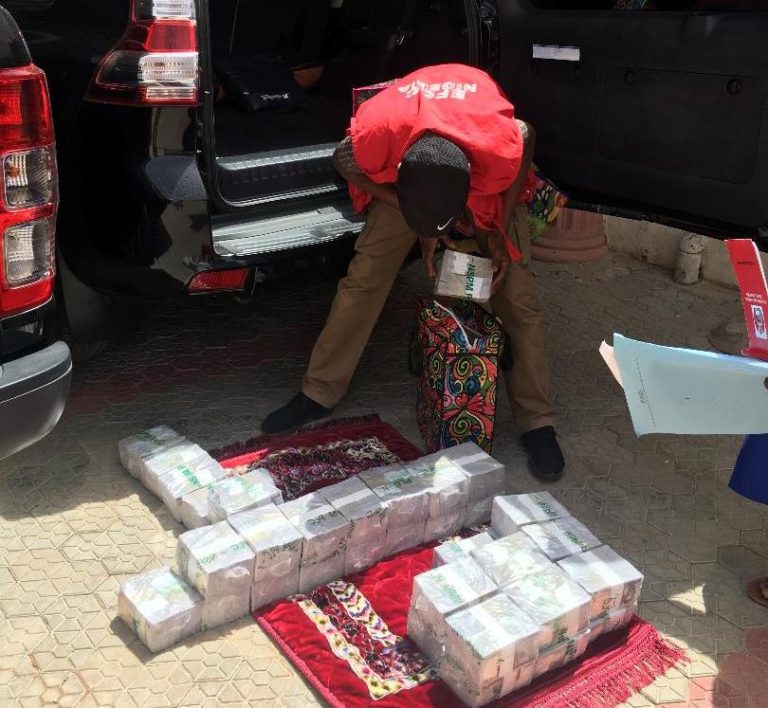
THE Economic and Financial crimes Commission, (EFCC) says it has secured an interim forfeiture of N60 million cash linked to a former Secretary to the Zamfara State Government, Abdullahi Muhammad Shinkafi and one Murtala Muhammad Shinkafi.

A statement issued in Abuja on Tuesday by Tony Orilade, acting head Media and Publicity at EFCC, said Justice Fadima Murtala of the Federal High Court, sitting in Gusau, Zamfara State, granted the order for the interim forfeiture of the money.

Orilade stated that the money was recovered in four ‘Ghana-must-go’ bags found inside a Black Land Cruiser Prado Jeep with registration No: DKA 67 PX (Kaduna), at No.145 Igala Hausing Estate, off By-pass road, Gusau.

Operatives of EFCC inspecting the seized N60m cash. Photo Credit: EFCC

He said the order was pursuant to a motion ex-parte dated June 13, 2019 brought by the EFCC.

Justice Fadima held that: “An interim forfeiture order of this honourable court is hereby granted, forfeiting to the Federal Government of Nigeria the money in sum of N60,000,000.00 (Sixty Million Naira) and a Black Land Cruiser Prado Jeep which are reasonably suspected to be proceeds of unlawful activity,” Orilade said.

The court granted the prayers in line with section 17(1)(3) of the Advance Fee Fraud and other Fraud Related offences Act, 2006; Section 44(2) (K) of the Constitution of the Federal Republic of Nigeria, 1999; Section 29 of the EFCC Establishment Act, 2004, and the provisions of Order 6 (5) (C) and 8 of the Federal High Court Civil Procedure Rules, 2009.

The order is pending the conclusion of investigations into the alleged money laundering offence.

Ihedioha suspends LGA chairmen, councillors in Imo

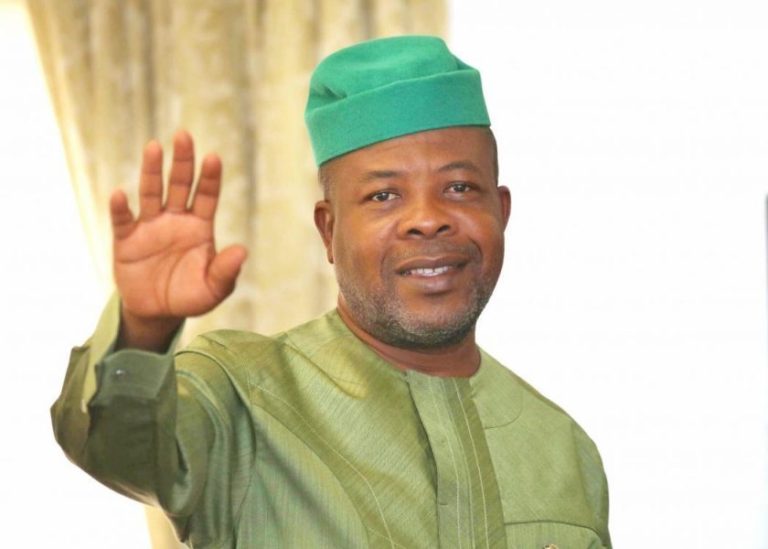
GOVERNOR of Imo Emeka Ihedioha has approved suspension of all political appointees in the 27 local government areas  (LGA)  and councillors in the state.

Ihedioha’s Chief Press Secretary Chibuike Onyeukwu on Tuesday in a statement said,  “The suspension is contained in the instrument signed by the Governor, pursuant to the recommendation made to him by the Imo State House of Assembly .

“This is following a resolution supported by a two-thirds’ majority of the State Assembly rendered on 6th June 2019, seeking their removal from office. The action is also in accordance with the provisions of S.7(1) of the Imo State Independent Electoral Commission Law and all other extant laws of the State.”

The governor, therefore, enacted an Interim Management Committees for six months, to manage the affairs of each local government

“Consequently, the Directors of Administration and General Services(DAGS)  of each Local Government have been directed to take over management, pending the confirmation of  Interim Management Committees by the State Assembly, ” the statement reads.

Those approved for suspension included the  Chairmen, Vice Chairmen, Councilors and political appointees of the local governments of Imo State.


In a similar development, the Governor approved the dissolution and removal of the chairman and members of the Imo State Independent Electoral Commission (ISIEC).

“The Commission will be reconstituted in due course to put in place the machinery for conducting a credible election into the local governments.”

The Governor further directed that these officers handover to the most senior civil servant in the Commission.”

Earlier in May, a motion for the immediate suspension of chairmen in the state was moved by Chika Madumere and was unanimously supported by all the lawmakers at the plenary.

Madumere accused the chairmen of failing to appear before the House for an explanation on their financial transaction in their various LGAs.

In June also, the Assembly suspended indefinitely the chairmen as well as the boards’ appointments made by the immediate past governor.

Furthermore, Ihedioha had reversed the decision of the former Governor Okorocha which converted the state polytechnic into the University Agriculture and Technology, Umuagwo.

Okorocha had elevated the polytechnic to a university status and appointed a Vice Chancellor at the twilight of his administration.