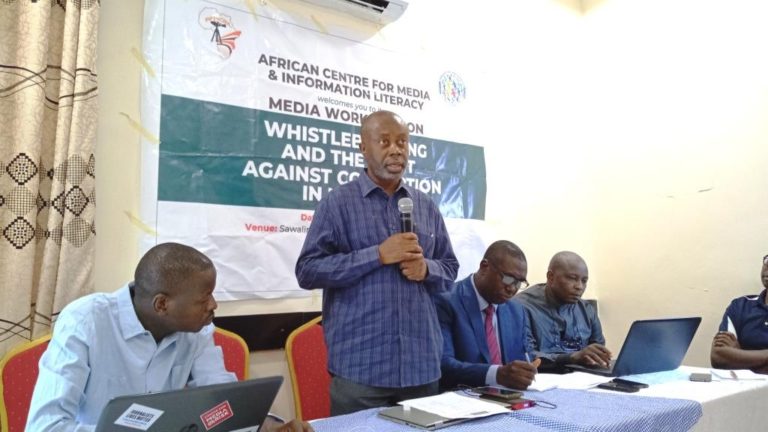
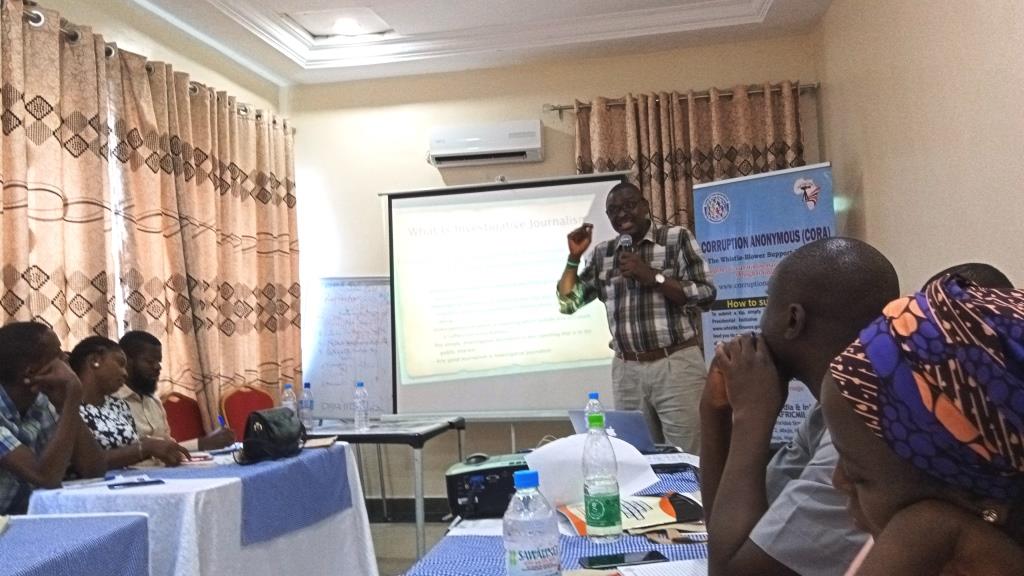
THE African Centre for Media and Information Literacy (AFRICMIL), on Monday, trained journalists on Nigeria’s Whistle-blowing Policy and how they can take full advantage of the policy in the fight against corruption.
The one-day workshop was held in Keffi, Nasarawa, and had in attendance journalists from broadcast, print as well as online media organisations.
AFRICMIL’s coordinator, Chido Onumah, while delivering his welcome address explained that the programme is organised as part of the centre’s Corruption Anonymous project, launched months after the Whistle-blowing Policy was announced in 2016.
The project’s aim, he said, is to create awareness about the policy, interrogate the process to ensure it works properly, and to ensure the protection of whistle-blowers from harassment and job loss.
“We felt that more needs to be done, that there is a need to have a very strong relationship between AFRICMIL, media practitioners, and the Presidential Initiative on Continuous Audit (PICA), which is the government agency that manages the whistle-blowing process,” Onumah said.
“We are here basically today to strengthen that partnership with the media, particularly in the area of protection, advocacy journalism: How do we report whistle-blowing cases, how do we work with whistle-blowers, how do we effectively use their stories, also how do we cover them in such a way that they are protected.”
Johnson Oludare, PICA’s Assistant Director, told the participants that numerous tips have been referred to the Economic and Financial Crimes Commission (EFCC) and other security agencies for further investigation.
He revealed that, between 2016 and 2018, PICA has saved up to N594 billion from whistle-blower prosecutions, reduction of non-regular allowances to the military and health institutions, oil marketers verification, as well as various personnel verification exercises. Also, investigations have been completed regarding 33 cases involving violation of the Procurement Act, and 58 involving violations of the Treasury Single Account (TSA) policy.
Oludare encouraged anyone wishing to blow the whistle to contact the agency either physically at the Federal Ministry of Finance, Abuja, or through email (whistle@finance.gov.ng) or telephone (09098067946).
Dayo Aiyetan, ICIR’s executive director, speaks on protecting whistle-blowers’ interests using investigative and advocacy journalism
Speaking on how the interests of whistle-blowers may be protected using investigative and advocacy journalism, the executive director of The ICIR, Dayo Aiyetan, said it is not enough to simply report stories without making sure they are impactful.
“In the past, I drew a line of distinction between my work as a journalist and advocacy, but now that our journalism is not achieving the purpose, I think we should step a bit forward, and—maybe not get directly involved in advocacy but—engineer those advocacy processes,” he said.
He pointed out that whistle-blowers often challenge policies and malpractices, in promoting the public interest, at great risk to themselves. He also compared how the United States of America protects whistle-blowers with how they are treated in Nigeria.
“I am sure that there are many people who would want to help us by blowing the whistle but when they think of even ten per cent of the repercussions, they’ll run,” he added. “We should all work towards a system that can protect them. But in the meantime, we should formulate ways and manners by which journalists can also help them.”
Other facilitators at the workshop were Aaron Kaase, a whistle-blower working at the Police Service Commission (PSC), and Abdulaziz Abdulaziz, AFRICMIL’s programme manager.
The Whistle-blowing Policy is a move by the federal government aimed at promoting openness, integrity, and accountability. It encourages the public to report breaches such as financial mismanagement, medical negligence, abuse of prisoners and so on while assuring them of protection from reprisals.
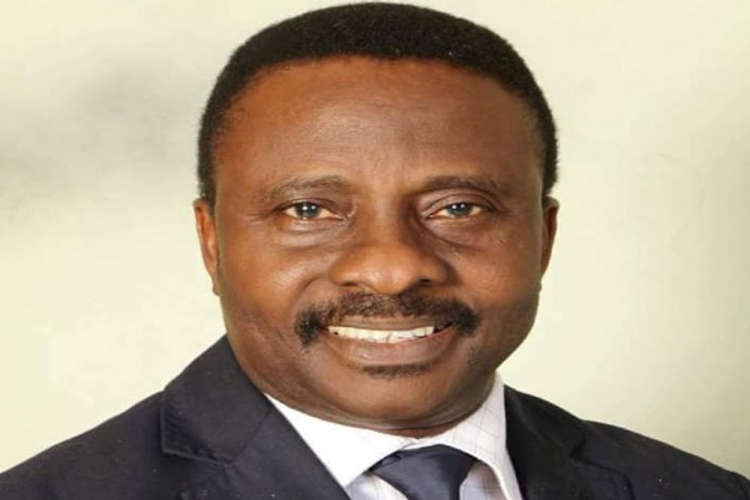
THE President of the Nigerian Baptist Convention, Rev. Supo Ayokunle, has been re-elected President of the Christian Association of Nigeria (CAN).
The result was announced on Tuesday by Bishop Matthew Kukah, Bishop of the Catholic Diocese of Sokoto, at the Ecumenical Centre, Abuja.
Ayokunle got 59 votes to defeat the runner up, Rev. Caleb Solomon-Ahima, President, Fellowship of Christian Churches in Nigeria, who got 44 votes.
Ahima, according to the CAN constitution, becomes the Vice President of the organisation.
Ayokunle was born on January 25, 1957, and hails from Isheke, Oyo in Oyo State. He has his first degree in Sociology from the University of Ibadan in 1983.
He had a Postgraduate Diploma in Education and a Master of Education (M.Ed) in Guidance and Counselling from the same university.
Ayokunle equally bagged a Master of Divinity in Theology (M.Div Th) from the Nigerian Baptist Theological Seminary, Ogbomoso in 1995 before proceeding to the United Kingdom to obtain a Master of Arts (MA) in Theology and Religious Studies from Liverpool Hope University.
He also obtained a Doctor of Philosophy (PhD) in Theology with an emphasis on liturgical studies.
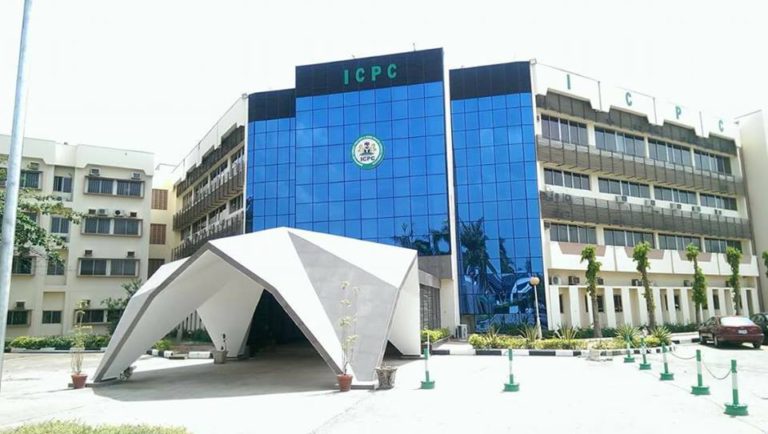
THE Independent Corrupt Practices And Other Related Offences Commission (ICPC) says it is set to commence tracking of its first phase of constituency projects in 12 states.
This was contained in a brief signed by the commission’s Public Relations Officer, Rasheedat Okoduwa, and made available to journalists in Abuja on Monday.
The News Agency of Nigeria (NAN) reports that the initiative launched on April 2, 2019, by ICPC, aimed at ensuring satisfactory execution of all constituency projects as well as obtaining value for money.
Members of the Steering Committee for the initiative included Nigerian Institute of Quantity Surveyors (NIQS), Budget Office of the Federation, and Office of the Accountant General of the Federation.
Other members are Premium Times, International Centre for Investigative Reporting (ICIR) among others.
According to Mrs Okoduwa, the first phase of the exercise will commence in 12 states across the six geo-political zones of the country.
“At least five projects have been identified for tracking in each state.
“The zones and states include North Central; Kogi and Benue, Northeast, Adamawa and Bauchi while others are Northwest, Sokoto and Kano.
“Southeast has Imo and Enugu, Southwest, Lagos and Osun; South-South, Akwa Ibom and Edo.”
THE sparkling, yet dark world of entertainment called Gidan Drama or Yan Solo business continues to flourish across the country through the use of forced labour, torture, human trafficking, abuse and rape by owners.
The operators do all these to make quick and high profits but offer little hope and delusion for the so-called artists who are mostly, vulnerable girls.
Yet, all this is taking place without the knowledge of the Nigerian government and agencies like the National Law Drugs Enforcement Agency (NDLEA), National Agency for the Prohibition of Trafficking in Persons (NAPTIP), and the National Human Rights Commission of Nigeria (NHRCN).
The inhuman activities of the Gidan Drama are also carried out right in the presence of some police and military personnel.
Aside from supporting the criminal activities of Gidan and securing their locations, security personnel go to the extent of owning some of the Gidan Drama/ Solo Theaters.
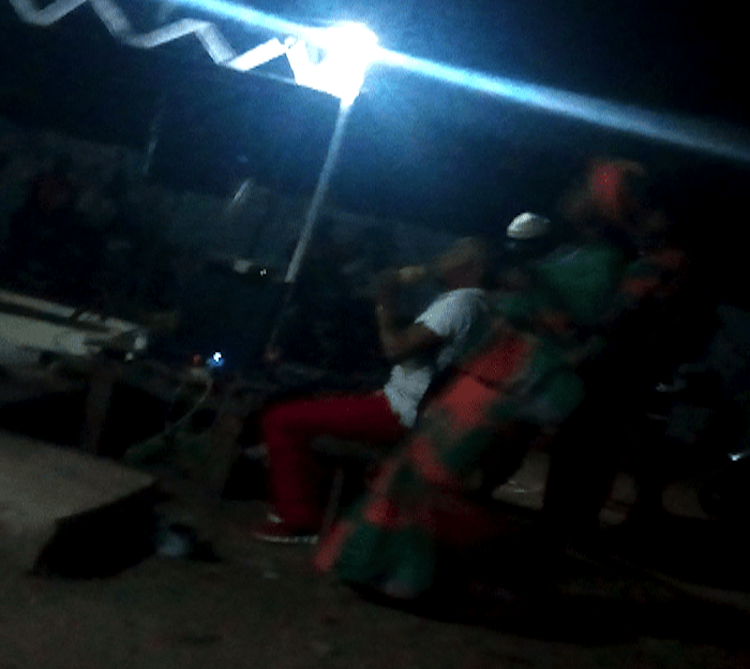
At Gidan Baban Bariki in Lafiya, Nasarawa State, while the artiste Nafisa Ajo was performing, the owner of Gidan Drama, hails two police personnel for the roles and efforts they played in protecting the interest of Gidan Drama/Solo.
“I must recognise the presence of some police officers in our midst. In the whole of the country, police remain our friends and we thank you all for the protection you guys are given us. At the time when all the Gidans are under the police attacks in Lafia, you guys protected us from harassment and also worked it out in such a way that we give ‘returns’ to the office,” he said.
In White T-Shirt: Chairman, Baban Bariki Gidan Solo at Akurba Lafia Nasarawa State.
Ajo in Hausa means occasions where friends and well-wishers celebrate someone by offering gifts.
But at Gidan Drama, Ajo is another means of revenue generation for the patrons who use female artists as a tool of extracting cash from spectators.
Every girl has a day set aside for her Ajo.
Investigations revealed that the celebrant has to undergo a series of degrading treatments in the form of punishment, like squatting, kneeling, sitting on the floor and carrying a chair on the head as well as sitting on the chair till the end of the show.
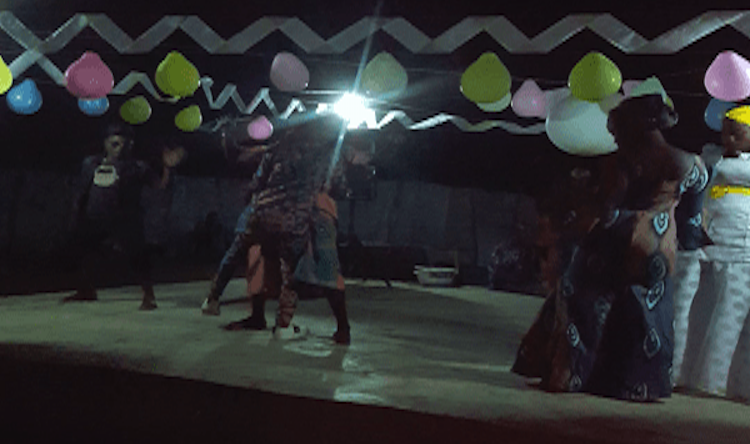
Solo Artists dance at Akurba, Gidan Baban Bariki
The more the task, the more the MC solicits funds from the celebrant’s friends and well-wishers. People drop cash to save their friend and colleague from punishment until when she is finally asked to take a seat.
While Nafisa, a 19-year-old Solo artist is undergoing her own tasks, other girls are not left out. One of the spectators pays N300 to paint Brigit (one of the artistes) face with used engine oil.
The MC stops the music and calls out Brigit before the audience, and after the count of ten, he orders for the paint of her face with used engine oil.
Another spectator pays N500 to wet all the girls on the stage with sachets of water. The MC interrupts the music and orders for sachet water, and after a count of ten, he calls the girls one after the other and points at the specific positions he wants them wet.
The painting and wetting is part of the tradition. It can happen to anybody, once there is money involved, but this depends on the level of Gidan Drama and the status of girls.
Gidan Drama and Solo business commands high profits and low-risk, hence all manner of people, including security personnel run the ring.
Commenting on the involvement of security personnel, a retired Deputy Superintendent of Police DSP and former Divisional Police Office DPO says Gidan Soja, a popular Gidan Drama at Maraba, in Karu Local Government of Nasarawa State, belongs to serving military personnel.
He said 80 per cent of the activities in Gidan Soja (Drama) are illegal and full of criminal activities.
The former DPO attributed some of the criminal activities happening in the area to the ownership of Gidan Drama by a security man and in connivance with other security operatives.
He highlighted some of the activities of Gidan Drama and explained that Soja is not the only person that has Gidan Solo at that area, says because of his personality the area became one of the most dangerous places in Maraba.
According to him, the activities of the Gidajen (plural form of Gidan) Drama in that area resulted in so many loss of lives and property worth millions of naira.
“At no time will you not see cases of killings, stealing, fighting or injury, I am aware that more than fifty people have died in that area, it’s all about gangsterism. If I talk to that girl no one from any other group or outside should talk to her. They can easily kill that person for dating the same girl. So, men have their group as well as women too,” he said.
The retired DSP further explained the effect of security involvement in the criminal activities of Gidan Drama/ Solo.
“Because of the involvement and participation of some of the security people, in particular, the military, the police officers on duty failed to do their job.
He said some of the girls are married but run away from their matrimonial home, while some are underage, adding that unwanted pregnancy is not an obstacle because there is a place reserved for pregnant women.
According to the former DPO, most of the girls at the Maraba Gidanji Drama are drug addicts, prostitutes and susceptible HIV/AIDS infection.
“Buying, selling and the use of drugs is free at those places.”
The ex-security man mentioned one Buba as the major drug dealer in the area. According to him, he (Buba) is a popular person and does his business unchecked.
He called on the government to ban the activities of Gidan Drama/Solo in the country which according to him, contribute to the spread of insecurity in the land.
The Commissioner of Police in Nasarawa State, Mr Ademola Emmanuel-Longe, when contacted to speak on the challenge of the security situation in Maraba Gidan Dramas and the entire area, said he needed time to get a clearance from the Area Commander.
But when the reporter later called him, he refused to answer calls or return the calls.
Investigation revealed that most of the criminals operating in Maraba, Karu Local Government of Nasarawa State find refuge in Gidan Drama.
Solo Artists dance at Akurba, Gidan Baban Bariki.
A mother of one of Solo artistes in Maraba, Maryam Abdullahi expressed bitterness at seeing her daughter being abused at Gidan Drama.
She said the day she met her daughter at one of the Gidan Drama in Abuja, she collapsed and was later admitted at the hospital due to shock.
Narrating her experience, she said the owners at the end of every show lined up the girls on the floor and asked them for Kudin Wanka (dressing allowance) which was put atN1, 500, and if the girl could not pay, she would be given out to any spectator who could pay, and those who fail to get someone that could pay would be bathed with dirty water or have a drink poured into her inner pants and everyone would be asked to call her Karfa – worthless girl.
The grieving mother said the owners of Gidan Solo use juju (black magic) to control the girls.
She said that an old food seller at former Nyanya Gidan Drama confided in her that “the owners of Gidan Solo in Nyanyan used to come early or late in the night, along with some people believed to be juju priests”, adding that “they do some incantations and dig holes and bury substances under the theatre. Any time they went out they came back with girls and the moments they enter the house no amount of disgrace or abuse will make them leave”.
The woman said she tried her best in order to bring back her daughter but to no avail. “Even if she comes back home, it is only for a short period”.
She called for the ban of Solo activities in the country and urged President Muhammadu Buhari, his wife Aisha Buhari to look into the plight of the many innocent and underage girls that are in bondage in Gidan Solo.
“They should see the girls as their daughters,” the mother said.
A staff of Kaduna State Ministry of Youth, Sport, Art and Culture and member of the state Cultural Troupe, Mallam Mohammed Auwal, said the idea of punishing an artist for not realizing enough money was not part of the Solo entertainment initiated by Lilisco (originator of Solo in 1999) in Kano.
He said what Lilisco started then as (Solo) at Tarauni Gidan Drama and later moved to Sani Abacha Youth Centre where he was only miming and dancing to songs from Kannywood film industry.
“I don’t know where the artists begging for money and punishment came from,” he said.
Mallam Auwal who happens to know the originator of Solo blamed the owners of Gidan Drama for subjecting and forcing the girls into prostitution.
He said the situation where girl-entertainers are asked to source money from the crowd and failure to realise a particular amount would be punished is bizarre.
He added that Lilisco is seriously regretting what he started (Gidan Solo) has turned out to be a menace to the society.
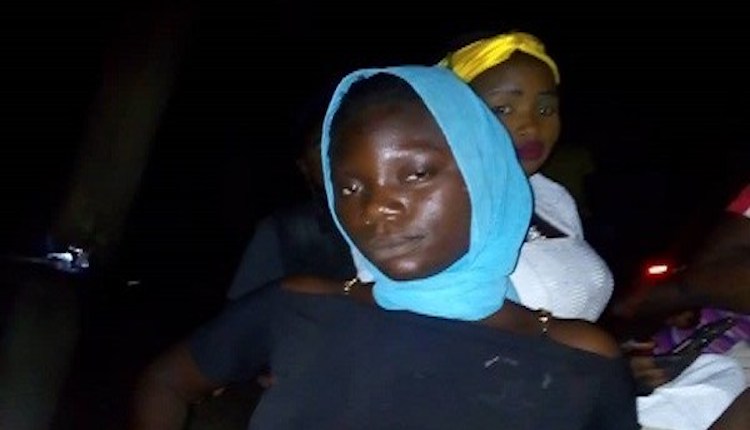
Brigits a Solo artiste outside Gidan Baban Bariki
A comedian and veteran artist in Kannywood film industry, Musa Alhassan, popularly known as Kalla, called on the government to urgently ban activities of Yansolo in the country.
He said no serious country in the world would watch its youth being misled by miscreants without doing anything about it.
Kalla, who also performs stage drama at one of the Gidan Drama in Kaduna, said the government and relevant stakeholders must regulate the activities of the operators of Gidan Drama/Solo
The artiste, who has more than a hundred film appearances to his name and still performs stage drama, described the activities of Gidan Drama as modern-day slavery.
“Due to the absence of checks from the authorities, the owners are left on their own to enslave young, vulnerable girls. So the girls involved need to be rescued to have a better future”.
He described Gidan Drama as one of the non-formal sectors that is fast-growing, spreading across the country and engaging so many youths, precisely women at their prime age; and that calls for government attention.
Kalla said that by so doing, it would increase government revenue, as well as the owners’ and the artists’.
The artiste also frowns at some of the activities in Gidan Drama. For, example, Yan Dramas are artists that do the local dance (Koroso) and Hausa stage drama at Gidan Drama, while Solo artists are young men and women who specialise in copying dance and miming of songs from Kannywood soundtrack. Kalla said this practice violates copyright law.
For Producer and publisher at the Kannywood film industry and Film Magazine, Alhaji Yakubu Lere.
A pioneer of Kannywood film industry and former Managing Director of Kaduna State Media Corporation, Alhaji Yakubu Lere, said Solo business is not part of the film industry they built. He said the so-called Solo artistes perform in secrecy.
A pioneer of Kannywood film industry, Alhaji Yakubu Lere
According to him, unlike drama artists, they are known and being invited to perform at occasions. He said people like Dan Ibro, Maryam Indomie and Kalla as well as others were products of Gidan Drama.
Alhaji Yakubu explained that problems emanating from the Gidan Drama/ Solo phenomenon are the collective failure of the family, society and government.
He lamented that parents have relinquished the responsibility of protecting their children and thus exposed them to easy manipulation by unscrupulous people.
Alhaji Yakubu called on the government to reduce poverty, which forced many young girls to patronise Gidan Drama as many see it as a possible end to poverty.
He further tasked government agencies to regulate activities of Solo and urges the society to collaborate by assisting in providing information on the nefarious activities of the organisation.
The Deputy Director Department of Art and Culture, Kaduna State ministry of youth Sports, Art and Culture, Alhaji Abubakar Ilu, said the introduction of a solo entertainment by the Gidan Drama has made the ministry not to renew the registration of Gidan Drama in the state, pending the outcome of the General Meeting between the Ministry and owners of Gidan Drama.
Alhaji Abubakar said Solo is not in any way part of the Northern and Hausa tradition, adding that there is no government that would not welcome new innovation, but it has to be in accordance with the culture and the law of the land, and in a way that would not affect the wellbeing of the citizenry.
“The ministry registers the Gidan Drama as drama houses, but Solo is now taking the centre stage in almost all the houses. So, we suspended and refused to renew their registration. We have to sit together and deal with this phenomenon called solo”.
He said the ministry has designed new rules and regulations that every Gidan Drama/Solo must meet up with before registration.
Responding to the issue of the use of underage girls, the deputy director said the ministry frowns at it and that it recently shut down one Gidan Drama for that reason.
He reiterated the government’s readiness to sanitise the system and noting that the ministry would collaborate with security forces and embark on general patrol of the Gidan Drama house in the state.
Solo Artists outside Gidan Baban Bariki.
Solo Artiste outside Gidan Baban Bariki
He called on the youths to engage in a decent job rather than depend on earning a living at Gidan Solo.
“Unlike drama that has no limited years of practice, dancing (Solo) has an age limit, he reiterated.
The Public Relation Officer, National Human Rights Commission, Hajiya Fatima Agwai says based on the Radio Nigeria findings, the Gidan Drama/ Solo establishment is running an organized force labour, torture, inhuman and degrading treatment, trafficking, violation of the Rights of the Child- Child Abuse as well as Rape in the name of entertainment.
She said the commission needs to investigate the allegations, therefore referred the reporter to the Department of Women, Children and Vulnerable Groups.
When contacted, the Director of the department Mr Henry Obey was not in the office on two different occasions, that he was attending a seminar in Abuja.
Trafficking, sex and global index
Since human trafficking is a high profit and a low-risk business that allows traffickers to generally operate with impunity, traffickers go to any length of keeping their victims isolated so that the crime is not discovered.
Global Slavery Index of (2018) Report shows that Nigeria is a primary source, transit and destination country when it comes to human trafficking. The nation is ranked 32/167 of the countries with the highest number of trafficked persons, estimated at 1,386,000.
And NAPTIP reports that the average age of trafficked children in Nigeria is 15 years.
NAPTIP added that 75 per cent of those who are trafficked within Nigeria are taken across states, while 23 per cent are trafficked within states.
Only two per cent of those who are trafficked in 2016 are taken outside the country, according to the federal agency. It is the third most common crime in Nigeria after drug trafficking and economic fraud, according to a UNESCO report.
According to 2016 Global Slavery Index Report, there are 834, 000 Nigerians who are victims of modern slavery. Of this figure, a huge number are recruited from rural areas within Nigeria’s borders − women and girls recruited for involuntary domestic servitude and sexual exploitation.
According to the Nigerian Immigration Service Command in Katsina, which shares a border with the Niger Republic, 12 suspected human traffickers were arrested and 93 victims rescued between January and December 2018.
Even though the federal government and its agencies are making efforts to curb the menace, the efforts have not reduced the incidents of human trafficking and sex slavery in the country.
In April, the NAPTIP said it rescued 3,500 victims of human trafficking from only two states: Edo and Delta.
Our reporter tried to get NAPTIP to react to the findings in both Lagos and the Headquarters in Abuja. The South West Zonal Commander Mr David Atokolo asked to allow the agency to investigate some of the allegations. Also, at the Headquarter in Abuja, the NAPTIP spokesman, Josiah Emerole declined to comment on the matter says until the agency investigations are concluded.
But while the nation worries about the trafficking of girls across borders, the sex trafficking industry known as Gidan Drama and Solo goes unnoticed by the authorities. Worse still, it keeps blossoming.
* This investigation was supported by the Ford Foundation and the International Centre for Investigative Reporting, ICIR.
THE European Union (EU) says from 30 recommendations made after the 2015 general election monitoring, only four were considered by the President Muhammadu Buhari-led government while 26 others were ditched.
Among those dropped was the amendment of the Electoral Act, believed to be capable of promoting transparency in the nation’s electoral process, the report notes.
Other discarded recommendations were transparent result processes, protection of media freedom, improved measures for more women participation in politics among others.
Notable Nigerians had on several occasions clamoured for the passage of the 2018 Electoral Act (Amendment) bill which was eventually passed by the National Assembly.
“In 2015, the EU EOM made 30 recommendations. Of these, four were implemented, including two priority recommendations. These included the introduction of continuous voting rather than the cumbersome procedure of voters being accredited in the morning and voting in the afternoon. In addition, time limits were established for pre-election day petitions. The other two relate to continued biometric identification checks during polling, and scrutiny by civil society,” the report says.
“Other recommendations from 2015 were not implemented. These included a more transparent results process, stronger measures for parties to promote women, and provisions for protections of media freedoms and plurality. The Electoral Act (Amendment) Bill, if assented to, would have increased the number of recommendations implemented as it included many positive measures including provisions on results transparency.”
The report, which detailed another set of 30 recommendations, revealed that Nigeria has the lowest rate of women in parliament in Africa, with the number progressively decreasing since 2011.
It stated further that, during the 2019 elections, number of women in the National Assembly fell below five per cent.
Among other issues, the EU 2019 election monitoring team, headed by Maria Arena, however, identified prosecution and sack of the former Chief Justice of Nigeria (CJN), Walter Onnoghen, less than a month to the election, as one of the perceived notable actions of destroying the judicial independence and defeating the essence of separation of power.
According to the report, suspension of Onnoghen did not also follow due process, divisive and has weakened the hope of developing the electoral process.
“Three weeks before the original election date, the president suspended the chief justice of Nigeria. This had an inhibiting effect on the judiciary. It was seen by many as undermining security of tenure, damaging judicial independence and compromising the division of powers.
“The suspension did not follow due process, was divisive, and undermined confidence in the electoral process and opportunity for remedy. He was later subject to compulsory retirement by the National Judicial Council. The chief justice has a key role in deciding the Supreme Court bench for hearing final pre-election appeals as well as governorship and presidential petitions.”
The Mission further blamed INEC for consistently failing to prosecute electoral offences, thus caused all forms of impunity.
The election observers, who covered all the 36 states and the Federal Capital Territory (FCT), gave verdict that the poll was marred with irregularities.
THE Bauchi State government has postponed the Inauguration of the state 9th Assembly to Thursday.
The acting Clerk of the Assembly, Alhaji Umar Gital, announced the postponement in a statement issued to News Agency of Nigeria (NAN) in Bauchi on Monday.
Gital said the state government regretted the inconvenience the postponement of the inauguration earlier scheduled for Monday might have caused invited guests.
NAN reports that the 8th Assembly was dissolved on June 14 with the expectation of inauguration of the 9th assembly on Monday.
Gital, who confirmed that the inauguration would now take place on Thursday, at the state Assembly Chambers, said that “ all inconveniences are highly regretted, please”.
Meanwhile, the state Chapter of the All Progressives Congress (APC) had faulted the postponement of the inauguration of the Assembly.
The State Secretary of the party, Alhaji Bako Hussaini, in a statement sent to NAN, said Nigeria’s constitution did not confer power on state governor to postpone the exercise.
Hussaini described Gov. Bala Mohammad’s alleged action as undemocratic, null and void.
He added that APC had a clear majority in the 9th Assembly in the state with 22 members as against the ruling PDP’s 8 members.
“The APC leadership in the state will not fold its arms to allow the ruling party do anything contrary to the Constitution of Nigeria,” he said.
KADUNA and Katsina are the states with highest number of kidnap suspects arrested in the last four weeks, the Inspector General of Police (IGP), Mohammed Adamu has said.
Kaduna State recorded the highest number of arrested kidnap suspects with 101 suspects followed by Katsina State with 79.
Adamu stated this on Monday during the monthly meeting of the IGP with police management team and other senior police officers at the Force Headquarters, Abuja.
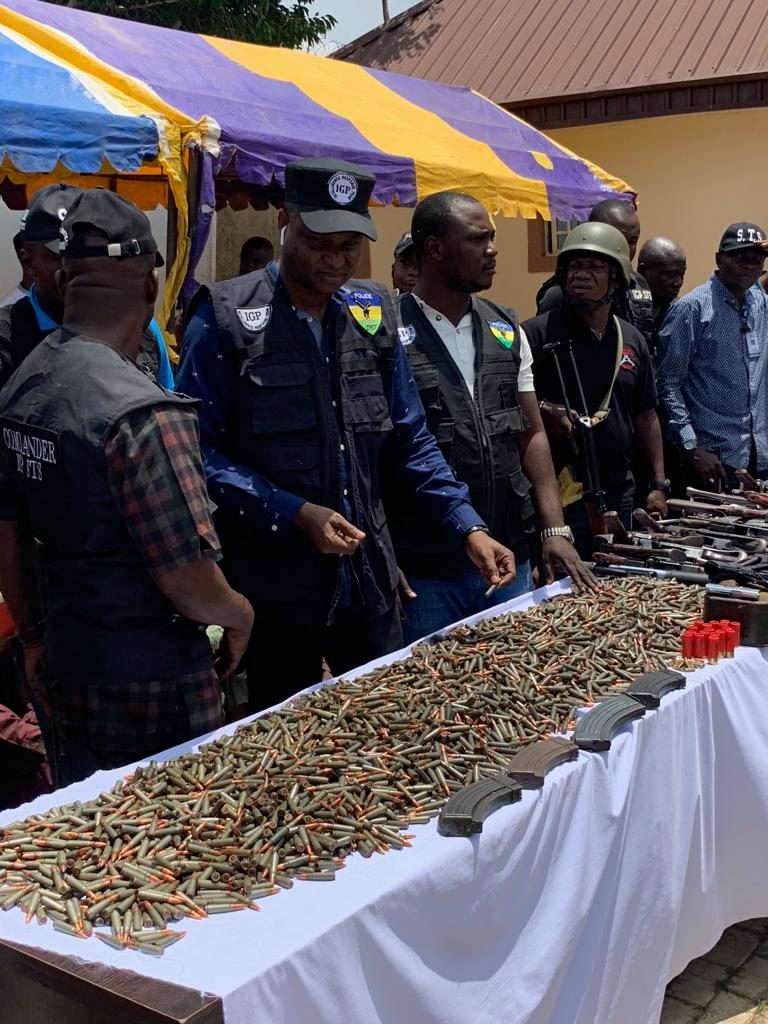
He said the operatives of Operation Puff Adder have in the last four weeks arrested 920 suspects for kidnapping, armed robbery, murder and cultism.
The IGP explained that 424 of the suspects were arrested for kidnapping, 44 for murder, 276 were for armed robbery while 176 were for cultism.
Adamu also said 77 stolen vehicles were recovered across the country by operatives of Operation Puff Adder.
“Sequel to the launch of Operation Puff Adder in all the States of the Federation and other security strategies recently emplaced to address internal security threats, a total number of 424 kidnappers were arrested between 10th May 2019, and 14th, June, 2019,” he said.
“The highest number of 101 kidnap suspects was arrested in Kaduna State, followed by Katsina State with 79 arrests.”
He added that 54 suspects were apprehended in Nasarawa State and 32 in Taraba State.
Speaking on murder suspects arrested, the police chief said a total of 44 murder suspects were arrested during the period under review, with the highest number of seven in FCT and six in Kano State.”
Also, he said 276 armed robbery suspects were arrested within the same period with the highest number of 38 in Edo State, followed by 25 in Nasarawa State and 23 in FCT.
On recoveries made, the IGP said, “A total of 10,860 ammunition of various descriptions and calibre were recovered while a total of 301 firearms including a rocket launcher, AK47 assault rifles, pistols and locally made gun, were similarly recovered from criminal elements across the country, with the highest number of 80 in Katsina State, followed by Edo State with 26 and Kaduna State with 25.
Suspected cultists arrested 176 across the country while 77 stolen vehicles were recovered by operatives nationwide between 10th May, 2019 and 14th June, 2019, with the highest number of 29 in FCT,” he said.
The IGP said that the successes were recorded as a result of the cooperation of members of the public and the sacrifices, courage, zeal and exceptional dedication of police officers.
He emphasised that the crime rate in the recent times has been on the decline in contrast to the previous months.
THE National Bureau of Statistics’ Inflation Report has disclosed that the Consumer Price Index increased to 11.40 per cent in May from 11.37 per cent recorded in April.
The report which was released in Abuja on Monday on the NBS official website noted that the figure was at 0.03 per cent points higher than the 11.37 recorded in April in the period under review.
The increases, according to the Bureau, were recorded in all Classification of Individual Consumption by Purpose divisions that yielded the headline index.
On a month-on-month basis, the headline index increased to 1.11 per cent in the period under review by 0.17 per cent points from 0.94 per cent recorded in April.
The report also cited; “percentage change in the average composite CPI for the 12 months’ period ended May over the average of CPI for the previous 12 months’ period.
However, the CPI was measured at 11.30 per cent in the period under review, indicating a 0.01 per cent decline from 11.31 per cent recorded in April.
The CPI measures the average change over time in prices of goods and services consumed by people for day-to-day living.
MOHAMMED Morsi, former Egyptian president who was ousted by the army in 2013, has died in court, state TV says.
The 67 year-old-Morsi was said to have died after collapsing during a court session where he was facing episionage charges on Monday in Egypt.
Morsi was inaugurated in June 2012 as Egypt’s first democratically elected president, but he was overthrown in July 2013, a year after he took office. Morsi was unseated by a military coup led by his defence minister, Abdel Fattah el-Sisi. Fattah had been ruling Egypt since then while Morsi had remained in custody.
After his removal from power, Egyptian authorities launched a crackdown on his supporters and the Muslim Brotherhood.
The hearing in the capital, Cairo, was related to charges of espionage emanating from suspected contacts with the Palestinian Islamist group Hamas, according to state television.
In 2015, Morsi was sentenced to death after being convicted of colluding with foreign militants – from the Palestinian Islamist movement Hamas and Lebanon’s Shia Islamist Hezbollah movement – to organise a mass prison break.
However, after some international organisation campaigned against the move, the death sentence was quashed in 2016 by Egypt’s highest court of appeal.
Executive Director, Middle East and North Africa Division of Human Rights Watch, Sarah Leah Whitson tweeted that the news of Moris death is “terrible but entirely predictable. She said the government failed to “allow him adequate medical care and fewer family visits. ”
The Human Rights Watch was just finalizing a report on his health, she tweeted.
THE Speaker of the House of Representatives, Femi Gbajabiamila, on Monday in Abuja, inaugurated three committees entrusted with the responsibility of ensuring the smooth take-off of proceedings in the House.
The committees, constituted on June 13, are the Selection Committee headed by the Speaker, and ad-hoc committees on Welfare and Media chaired by Wale Raji (APC-Lagos) and Khadijat Abbah-Ibrahim (APC-Yobe), respectively.
The welfare committee is expected to allocate offices and make sitting arraignments for members while the ad hoc committee on media will interface with the public on behalf of the house.
The selection committee will decide on selections of members and chairmen of standing committees of the house.
Gbajabiamila said that though the tasks were enormous, the committees were expected to discharge their duties within the next seven days.
The speaker said that he and the Deputy Speaker, Idris Wase would go round to inspect the work done three days to the resumption of the House on July 2.
Responding, Rep. Henry Archibong (PDP-Akwa Ibom), a member of the welfare committee, promised that they would deliver on the mandate given to them.
Archibong thanked the speaker for hitting the ground running after his election and entrusting the members with the responsibilities.
He disclosed that the members were happy that Gbajabiamila emerged as the speaker and were ready to work with him for the progress of the assembly and the entire country.