Home Blog Page 2357

CDD to hold symposium as Nigeria celebrates 20 years of uninterrupted civil rule 

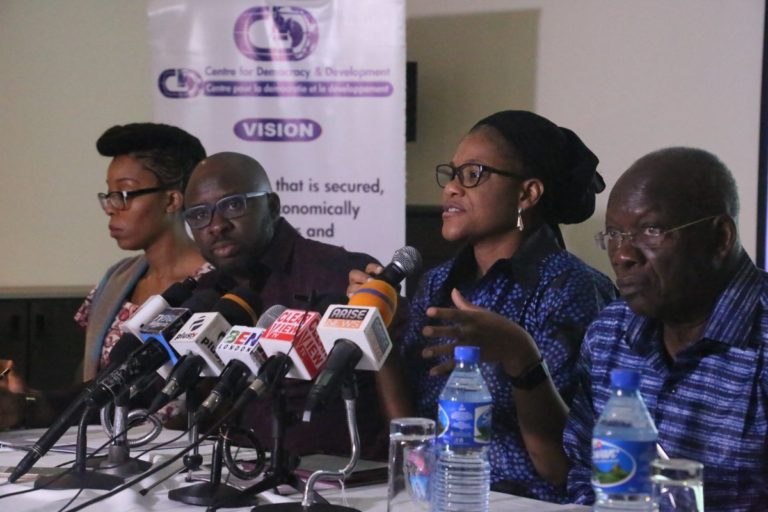
IN celebrating two decades of Nigeria’s return to civil rule, the Centre for Democracy and Development (CDD), a nonprofit organisation, is organising a symposium to reflect on how far the country has come.

The one-day event will be held in Abuja on Tuesday, June 11, the Centre stated in a press release signed by its director, Idayat Hassan.

It will be chaired by Adebayo Olukoshi, professor and director of Africa and West Asia office of the International Institute for Democracy and Electoral Assistance (IDEA).

A keynote address, titled “A Reflection on the 20 Years of Democracy in Nigeria”, is scheduled to be delivered by Mahmud Jega, deputy editor-in-chief of the Daily Trust Newspaper.

The panellists invited to discuss the topic How Best to Sustain Democratic Rule include Hafsat Abiola-Costello, president of the Women in Africa (WIA) Initiative; Ayisha Osori, executive director of the Open Society Initiative for West Africa (OSIWA); Onyinye Ough,  executive director of Step Up Nigeria; and Julius Ihonvbere, professor and former special adviser to former president Olusegun Obasanjo.

Other guests include the Aminu Tambuwal and Kayode Fayemi, governors of Sokoto and Ekiti states respectively.

According to the release, the event also presents an opportunity for CDD to celebrate the 10th and 2nd anniversaries of the death of Tajudeen Abdul-Raheem and Abubakar Momoh, two of its founding fathers.

“This year, 2019, marks the twentieth anniversary of Nigeria’s return to civilian rule and the country’s longest uninterrupted run on democracy since independence. This is a milestone for Nigeria, considering her 58 years of independence have only experienced democracy between 1960-1966, 1979-1983 and proudly now 1999-2019,” Hassan said.

“Between 1999-2019, the country has conducted six consecutive elections with some forms of improvement in election administration. The twenty years have witnessed an increase in the numbers of political parties, a rise of startups and civic techs, youth demography, opening civic space, some forms of infrastructure development, separation of powers and human rights.

“However, the twenty years have not been without challenges; they include the ethnicisation of politics, ethno-religious conflicts, corruption, poverty, insecurity, shrinking democratic space, booming population, amongst others.

“The questions on the mind of Nigerians at the moment is mostly how do we consolidate democracy such that the delivery of public goods and services shall be a right for all citizens and not a privilege. What practical steps do we take to sustain a longer run of democracy with all the variables suggesting otherwise and how do we collectively as a nation achieve a Nigeria we want?”

The CDD was registered in Nigeria in 1999 as a research, advocacy and capacity building organisation with focus on policy advocacy, democratic governance, human security, people-centred development, and human rights.

BPE denies fresh verification of ex-PHCN staff

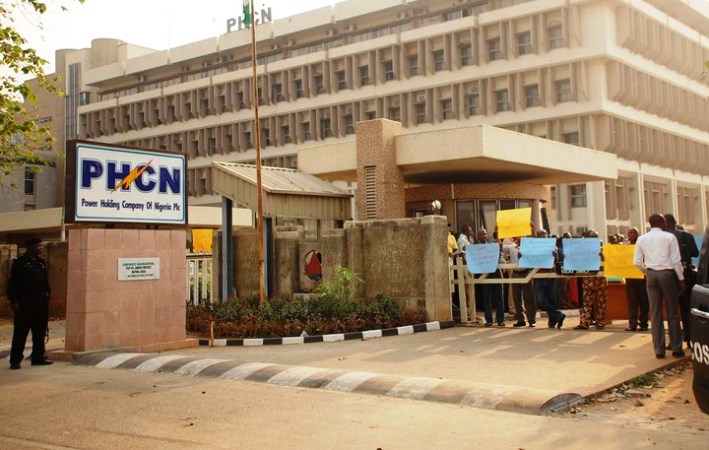
THE Bureau of Public Enterprises (BPE) on Thursday denied conducting a fresh verification exercise for former staff of the defunct Power Holding Company of Nigeria (PHCN).

Amina Tukur, BPE Head of Public Communications, revealed this on Thursday  in Abuja in a rejoinder titled “Re-BPE-Notice to all disengaged staff of ex-PHCN staff.”

The Federal Government had earlier disbanded the old PHCN through the BPE, functioning as the Power Generation Companies (GENCOs), Distribution Companies (DISCOS) and the Transmission Companies of Nigeria (TCN).

The United Labour Congress (ULC), as at 2018 still recognises 48,000 as the number of sacked PHCN employees with no reference to new verification.

She stated that the BPE has a reputation of publicising its verification exercise especially with the knowledge of the relevant labour union such as the National Union of Electricity Employees (NUEE) and the Senior Staff Association of Electricity and Allied Companies (SSAEC).

“For the avoidance of doubt, the BPE is not conducting another verification exercise for the defunct staff of the PHCN and is not in any way connected with the purported verification by the group,” says Tukur.

“It must be noted that each time the Bureau carries out verification of former staff of the defunct PHCN, adequate publicity is carried out with the involvement of the NUEE and the SSAEC. But in the purported verification by the group these are absent.

“BPE wishes to dissociate itself from the purported verification and warns all former staff of the PHCN and the general public to beware! To be warned is to be forearmed!”


African Union suspends Sudan over military crackdown

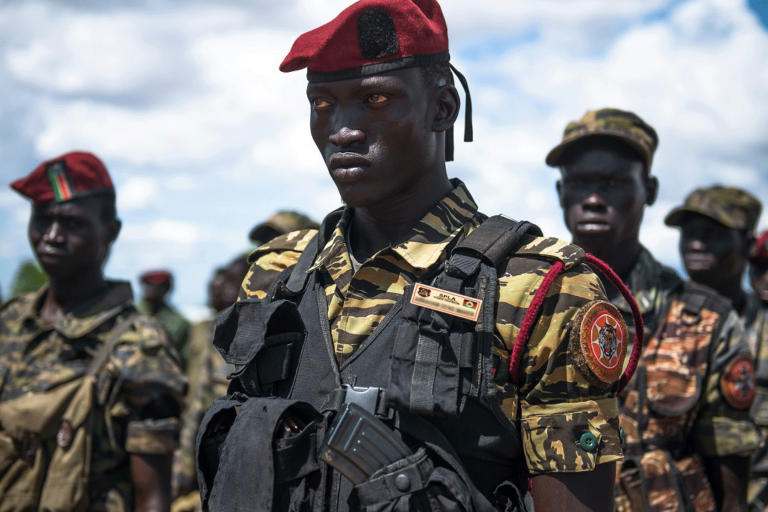
THE African Union (AU) has suspended Sudan‘s membership days after the military launched a brutal crackdown on protesters that killed dozens of people in the country.

The AU’s Peace and Security Department said in a post on Twitter on Thursday said that Sudan’s participation in all AU activities would be suspended with immediate effect – “until the effective establishment of a civilian-led transitional authority,” which it described as the only way to “exit from the current crisis”.

The announcement followed an emergency meeting by the AU in Addis Ababa, Ethiopia, after the violent dispersal of a protest camp in the Sudanese capital, Khartoum, began on Monday.

At least 108 people have been reportedly killed and more than 500 wounded.

While the Central Committee of Sudanese Doctors (CCSD) alleged that over 40 bodies were pulled from the river Nile on Tuesday and taken to an undisclosed location by the Paramilitary Rapid Response Force (RSF)

Sudan’s pro-democracy leaders have vowed to continue their campaign of civil disobedience until the Transitional Military Council (TMC) –which has ruled Sudan since long-time leader Omar al – Bashir was overthrown in a coup in April- is removed and killers of protesters brought to justice.

In addition, the Sudanese Professional Association on Thursday urged protesters to block main roads and bridges to “paralyse public life” across the country in retaliation for the military crackdown.

The United Nations on Thursday pulled all non-critical members of staff from Sudan amid concerns over violence amidst plans for Abiy Ahmed Ethiopian Prime Minister arrival in Khartoum on Friday to launch mediation efforts.

Health bills the 8th National Assembly failed to pass

AS today marks end of the term for the eighth National Assembly, The ICIR  highlights major health bills that could have improved health status of Nigerians which the lawmakers failed to pass.   

The 8th National Assembly comprising of the House of Representatives and the Senate was inaugurated on 9th June 2015 and will officially terminate on Saturday 8th June. The 9th Assembly would be inaugurated on Tuesday, June 11, as proclaimed by President Muhammadu Buhari.

The health bills which the Assembly failed to pass include the followings:

Mental Health Bill

One of the bills that could significantly improve the mental health of Nigerians is Mental Health bill, sponsored by Ahmadu Abubakar, a senator representing Adamawa South. The bill seeks to provide for the enhancement and regulation of Mental Health and Substance Abuse Services. It also aims to protect persons with Mental Health challenge and to establish the National Commission for Mental and Substance Abuse Services, for effective management of mental health in Nigeria.

But the bill has only passed the second reading. In fact, other bills addressing mental health issues during the eighth Assembly were not fully debated.

In 2015, a bill sponsored by Senator Kashamu Buruji, a  Peoples Democratic Party’s member representing Ogun East Senatorial District, was struck out at the first reading in October 2015. The bill titled, “Mental Health Bill 2015,” aimed at tackling the source, causes and effects of mental sicknesses. A similar bill named  HB 554: Nigeria Mental Health Bill and sponsored in 2016 by Samuel Okon Ikon was read only once in June 2016.

However,  the assembly also failed to repeal a 60-year-old lunacy act.

Campaign Director of Mentally Aware Nigeria Initiative (MANI), Jolaade Phillips told The ICIR on the 2018 World Mental Health Day that if the Mental Health Bill is enacted, the rate of stigmatization and discrimination against the illness will reduce.

“As a country, we should have a Mental Health Act if we want to improve the status quo,” he said.

Sickle Cell Bill

Currently, Nigeria has the highest sickle cell prevalence in the world, yet there is no legislation to control and manage the disease in the country.

A bill called Sickle Cell Anemia (Prevention, Control and Management) Bill was sponsored by Senator Sam Egwu, representing Ebonyi North, Ebonyi State was first read on December 3, 2015. The second reading was two years after – April 5, 2017.

The bill afforded intending couples an opportunity to attend a special clinic to carry out blood genotype tests and receive counselling based on the results.

The bill was referred to the Senate Committee on Health, but since then nothing has been heard of the bill and the Committee report is yet to be submitted.

Similarly, a bill titled “SB 414: The Compulsory Haemoglobin-Genotype Screening Test, 2017″ was sponsored by two senators, Ahmed Salau Ogembe and Ovie Omo-Agege. The bill seeks to provide for compulsory Haemoglobin-Genotype screening test before a marriage conducted under the Marriage Act and before registration of new births. The objectives of the bill include avoiding anxieties, pains and deaths associated with the disease, as well as to improve the lives of citizens who live with it.

After its first and second reading held in 2017, the bill was transferred to Senate Committee on Health. The Senate has been awaiting the committee report till date.

Nigerian Health Watch had written in 2017  that making genotype testing compulsory would improve the lives of the people living with the disease.

Lifestyle Bill

This bill was sponsored by Abubakar Yunusa Ahmed, a member of the House of Representatives in 2018 for the prevention of lifestyle diseases. The objective of the bill is to prevent lifestyle diseases through the regulation of the sale, consumption and advertisement of unhealthy processed foods, drinks and beverages which are high in calories, sugar, saturated salt and sodium.

Lifestyle is key to the quality of health.  According to a journal published on the National Center for Biotechnology Information (NCBI), health and quality of life are correlated to lifestyle,

“The relationship between lifestyle and health should be highly considered. Problems like metabolic diseases, joint and skeletal problems, cardiovascular diseases, hypertension, overweight, violence and so on, can be caused by an unhealthy lifestyle,” the journal stated.

But the bill that seeks to regulate the consumption of certain foods, drinks and beverages in order to reduce the prevalence of diseases associated with lifestyle has not made it to the third reading.

According to Policy and Legal Advocacy Centre Plac, an organisation that works to strengthen democratic governance and citizens’ participation in Nigeria, the bill was read the first and the second time in February and July 2018 respectively, it was then referred to the committee on healthcare services. Till date, the committee is yet to submit a report.

DPR withdraws licenses of six oil blocks over ‘legacy debts’

ON Thursday, Nigeria’s petroleum regulator Department of Petroleum Resources, DPR, announced the revoking of six oil bloc licences belonging to five oil firms in a bid to address the nation’s legacy debts.

The directive which was issued in a statement by the industry regulator is coming on the heels of the Federal Government’s resolve to take an aggressive stance to “recover legacy debts” that are owed the country by oil companies. It also includes rescinding licenses of oil blocs that are not being actively developed.

Legacy debts refer to debts that were incurred and inherited as part of an asset.

The Federal Government withdrawals of the five Oil Mining Licenses, OML, and one Oil Prospecting Lease, OPL, in the onshore, shallow water and deepwater Niger Delta basin was due to alleged non-payment of royalties.

The assets affected include OML 98 controlled by Pan Ocean Oil Corporation, OMLs 120 and 121, held by Allied Energy Plc, now Erin Energy which is currently bankrupt, OML 108, owned by Express Petroleum & Gas Company Limited, and OML 110 held by Cavendish Petroleum Nigeria Limited.

The notice also said oil prospecting license, OPL 206 was revoked. It was previously held by Summit Oil International, a company owned by the family of late Moshood Abiola. 

However, the Pan Ocean Joint Venture, JV, in OML 98 has control of only six fields.

In February, the Nigerian National Petroleum Corporation, NNPC, had sent a letter to companies through its debt-collection arm, citing what it called outstanding royalties and taxes for oil and gas production.

Royal Dutch Shell, Chevron, Exxon Mobil, Eni, Total and Equinor were each asked to pay the central government between $2.5 billion and $5 billion, according to reports.

A total of 42 oil block licences held by some international and indigenous operators is due to expire this year, according to data obtained from the DPR.

The renewal of the licences is expected to boost government revenue and encourage more investment in Nigeria’s oil and gas industry.

Eighth National Assembly to be terminated by Saturday, June 8, declares Buhari

LAWMAKERS of the eighth national assembly will cease to enjoy the powers and privileges that come with the elective offices by the midnight of Saturday, June 8, according to a presidential proclamation.

Mohammed Sani-Omolori, clerk to the national assembly, to whom the proclamation letter was addressed confirmed receiving the document to journalists on Thursday.

Another letter also transmitted to the clerk states that the ninth assembly will commence officially on Tuesday, June 11.

“I just want to confirm that I have received a proclamation from the President of the Federal Republic of Nigeria,” Sani-Omolori told reporters.

“One, on the dissolution of the eighth National Assembly, the other one on the convening of the first session of the ninth National Assembly. The proclamation of the dissolution of the eighth National Assembly takes effect from 12 midnight of 8th June.

“By implication, from eighth of June by 12 midnight, the eighth National Assembly stands dissolved. Similarly, the ninth National Assembly will be inaugurated and first sitting will be held on Tuesday 11th of June by 10 a.m. in the National Assembly complex.”

Sani-Omolori also clarified that the document is separate from a previously circulated correspondence, dated May 30, from the president also claiming to dissolve the assemblies but which was not addressed to any official.

Last Thursday, the Senate had concluded its business session and adjourned till today for its valedictory session.

According to the orders of the day for the House of Representatives, the session will feature valedictory speeches by selected lawmakers and caucus leaders, speeches by principal officers including the speaker and his deputy, a goodwill message, an appraisal of the assembly’s legislative agenda by Clement Dakas, professor and dean of law at the University of Jos, valedictory handshakes, as well as an adjournment ‘sine die’ (indefinitely) by Femi Gbajabiamila, the chamber’s House leader.

The eighth assembly was inaugurated on June 9, 2015.

94 percent of  African children live where air quality is not measured – UNICEF report

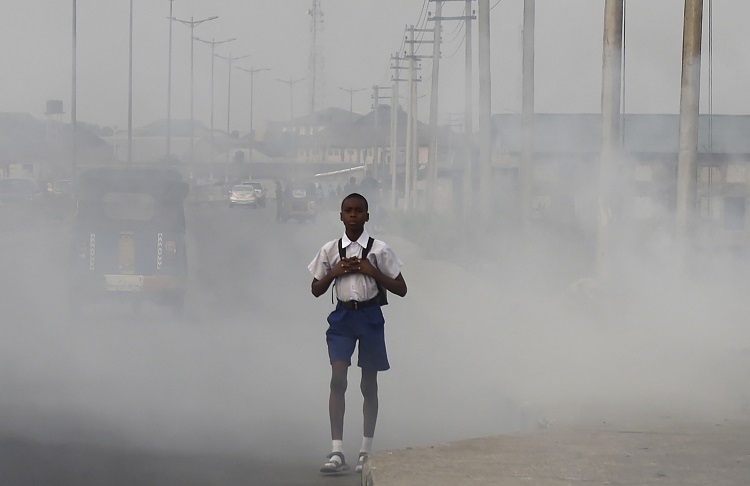
ABOUT 94 percent of children in Africa live in areas with no reliable means of measuring air quality, according to a new UNICEF report released on 2019 World Environment Day.

The report titled “Silent Suffocation in Africa” measures the population of children living near reliable ground-level air quality monitoring stations. It notes that air pollution is a growing challenge in the continent, affecting the poorest children the most.

Only six percent of these African children live in areas where air pollution is reliably measured at ground-level that provide real-time data on the quality of air they are breathing. But in Europe and North America, 72 percent of children live where air pollution is fully measured, 43 percent in Asia and 25 percent in South America.

Since air pollution is not monitored in Africa to the same extent as other parts of the world, UNICEF notes that African countries are not only potentially underestimating the severity of the impact but might also be underestimating its scope.

According to the State of global air report published by the Health Effects Institute in August 2018, Nigeria is among the countries with deadly air quality. This is as a result of the environmental hazards combined with extreme pollution sources like crop burning generator and vehicle fumes.

And a World Health Organisation report of 2016 noted that Onitsha, Kaduna, Aba, Umuahia were among four of the 20 African cities with the worst air quality in the world.


Air pollution is a major killer of children. For babies and young children, breathing particulate air pollution is extremely harmful to their health and development. As this can cause permanent damage to brain tissue and lungs.

The UNICEF report analysed that deaths from outdoor air pollution in Africa have increased 57 percent over 27 years, from 164,000 in 1990 to 258,000 in 2017. A recent study that was included in the report estimates the economic cost of premature deaths from outdoor air pollution across Africa to be $215bn

“without ground-level monitoring stations that reliably measure air quality, Africa’s children are increasingly at risk of unwittingly breathing air that is toxic for their health and brain development, and the ability to devise effective responses is greatly compromised,” the report read partly.

For instance, it said that “ultrafine pollution particles can enter the bloodstream, travel to the brain, and damage the blood-brain barrier, which can cause neuro-inflammation.”

Other types of pollution particles, such as polycyclic aromatic hydrocarbons, can damage areas in the brain that are critical in helping neurons communicate, the foundation for children’s learning and development.

“Air pollution is a silent killer of children. And in Africa especially, we know the problem is severe, we just don’t know how severe,” said Henrietta Fore, UNICEF Executive Director.

“Reducing children’s exposure to pollutants – and therefore reducing the damage to children’s health and early brain development – begins with a reliable understanding of the quality of air they are breathing in the first place.”

Apart from human being dying, air pollution also impacts ecosystems that are vital to livelihoods and health, as well as food crops.

UNICEF urges African governments, including Nigeria, to put in place permanent and high-quality ground-level monitoring stations as public goods. When combined with satellite imagery, such stations would form the backbone of a system that would help improve the reliability of less precise monitoring stations that capture variations across cities”.

It includes that reliable ground level data helps to better capture the daily or hourly fluctuations in air quality. “Monitoring also helps to identify sources of pollution, shaping public health policy, and informing action and interventions that target the most affected,” UNICEF notes.

The Agency also tasked the governments to invest in renewable sources of energy to replace fossil fuel combustion and provide affordable access to public transport. It also calls more green spaces in urban areas and creates better waste management options to prevent the open burning of harmful chemicals.

To prevent children’s exposure to air pollution, the report identifies that countries should plan the urban cities to make sure major sources of pollution are not located near schools, clinics or hospitals.

“If toxic air is stunting our children’s development, it is stunting our societies’ development as well. All governments should take the necessary steps to make sure we know exactly what we are putting into the air and what it is doing to our children’s health and well-being,” said Fore.

NSCDC arrests suspected Boko Haram bomb materials supplier

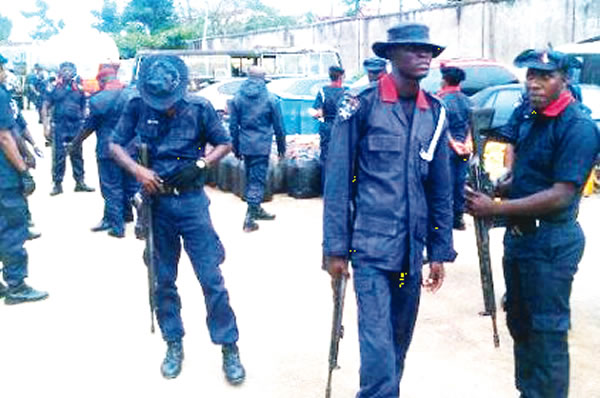
OPERATIVES of the Nigerian Security and Civil Defence Corps(NSCDC) in Borno on Wednesday, confirmed the arrest of one Aliyu Muhammed, a 24-year-old suspected Boko Haram Improvised Explosive Device(IED) logistics supplier in Maiduguri.
The Commandant of the corps, Ibrahim Abdullahi, disclosed this in an interview with the News Agency of Nigeria, NAN, in Maiduguri.
Abdullahi said that the suspect was nabbed by men of the command on April 25, following intelligence report while he was on his way to supply bomb materials for Boko Haram terrorists.
He said that preliminary investigation conducted by the command revealed that the suspect supplied mobile phones battery, wrist watches as well as laptop computers used for setting off IEDs designed to inflict massive casualties.
” The suspect who pretends to be a tricycle operator in the town has executed many missions for the insurgents.
“He also operates several bank accounts, where he receives funds for Boko Haram in the last six months.
“He usually receives large sums of money from the Republic of Chad, through a third party account number to avoid being detected.
“We have so far tracked dozens of his transactions especially at commercial money transfer centres within Maiduguri,” he said.
The NSCDC commandant said Mohammed and his colleagues have played different roles in masterminding various attacks, in worship centres, market places in Maiduguri and environs.
Abdullahi reiterated the commitment of the command toward complimenting efforts of the army, police and other sister agencies in the counter-terrorism campaign in the Northeast.
“The command had within the past two years arrest more than 25 Boko Haram insurgents, comprising of female suicide bombers, commanders and collaborators in Maiduguri.
“The command had, through the dispute resolution department encouraged more than 40 terrorists to lay down their arms and accepted meaningful rehabilitation and reintegration through the Operation Safe Corridor window opportunity provided by the government,” he said.
He added that the suspect would be handed over to the 7 Division Garrison of the army for further interrogation and profiling.
(NAN)

FACTCHECK: Bayelsa govt claims it is least indebted in South-South, but that is false

THE Bayelsa government on Saturday said it remains the least indebted among the states of the South-South region, but The ICIR has found the claim to be inaccurate. The available fact indeed shows that Edo holds the record.

Mr Daniel Iworiso-Markson, Commissioner for Information in Bayelsa who made the statement in Yenagoa did not, however, disclose the debt profile of the state.

He said the state’s debt profile as released by the Debt Management Office was moderate because of the frugality and judicious management of state resources by Gov. Seriake Dickson.

And several media reports have circulated the false claim.

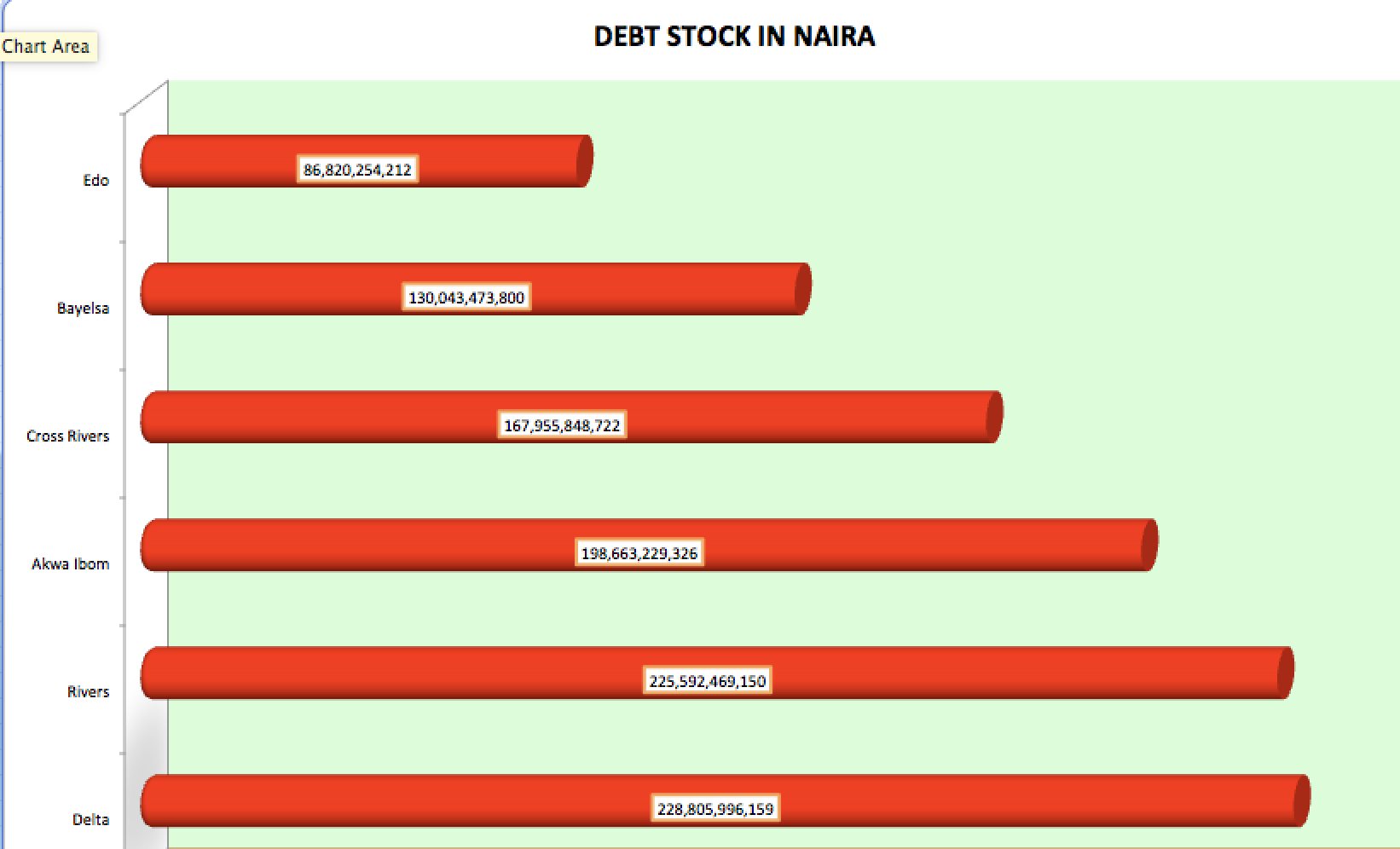
The ICIR’s fact-check has however shown that Bayelsa domestic debt stock as at Dec.31, 2018 stood at N130.04 bn and ranks the 7th among the most indebted, according to figures on the Debt Management Office (DMO) website.

According to the DMO, for states in the South-South region, Delta was 2nd in the country with debt of N228,80 bn, Rivers 3rd with N225.59 bn debt, Akwa Ibom followed on the 4th position with N198.66 bn.

Source: DMO

Also, Cross River ranked 5th  on the list of the most highly indebted states in Nigeria with N167.955 while Bayelsa was ranked 7th with N130.04 bn while Edo was 8th on the list with N86.82 bn, the least indebted in the Niger Delta region.

Among all the 36 states including FCT, Yobe state is the least indebted state with a total debt of N27.7 billion followed by Katsina, N30.8 billion.

The commissioner said the government inherited a bond of N120 billion from the Chief Timipre Sylva-led Administration at inception in 2012 and would complete repayment in June.

The commissioner noted that Dickson should be commended for keeping the debt status of the state low in spite of the various big-ticket projects in the critical sectors that were successfully executed and ongoing in the state.

He recalled that the state government recently completed the Bayelsa International Cargo/Passenger Airport at a cost of N65 billion aside the multi-billion projects in education, health, agricultural sectors.

The commissioner said that Sylva and members of the APC who have been making false claims about the debt profile of the state had a responsibility to tell Bayelsa people what they did with the N120 bn loan they left behind.

“It is worthy of note that the Bayelsa still remains the least indebted state in the whole of the South-South region.

“This is in spite of the massive projection execution that has taken place since 2012 when the Restoration Government took over.

“The debt status of the state is modest because of the prudent and judicious management of state resources by the Governor in spite of the several completed development projects in the state.

“By this month, we will finish paying Chief Timipre Sylva’s bonds which is about N120 billion which of course, he didn’t use for anything.

“When such people make claims, they should be reminded that they have a duty to tell Bayelsans what they did with N120 billion they foisted on the state,” Iworiso-Markson said.

Nigerian state remains highly secretive under Buhari despite commitment to open government

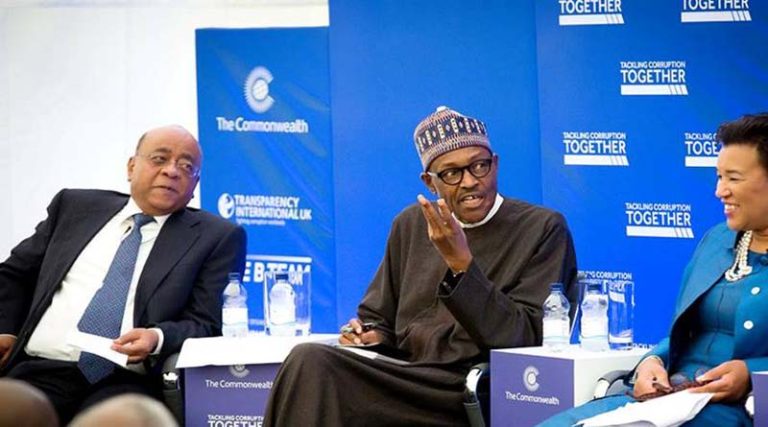
IN May 2016, barely a year after the commencement of his first term in office, President Muhammadu Buhari in London committed Nigeria to joining Open Government Partnership initiative.

Two months after the promise, Nigeria formally became a member by signing the OGP agreement. But since then, there has been no significant improvement in the transparency and accountability level of public institutions under Buhari.

The majority of government agencies instead operate well under the radar, making deals worth billions of dollars away from public scrutiny, as the media have reported.

And even when the Freedom of Information Act is invoked to obtain access to public records, many Ministries, Departments and Agencies (MDAs) do not comply.

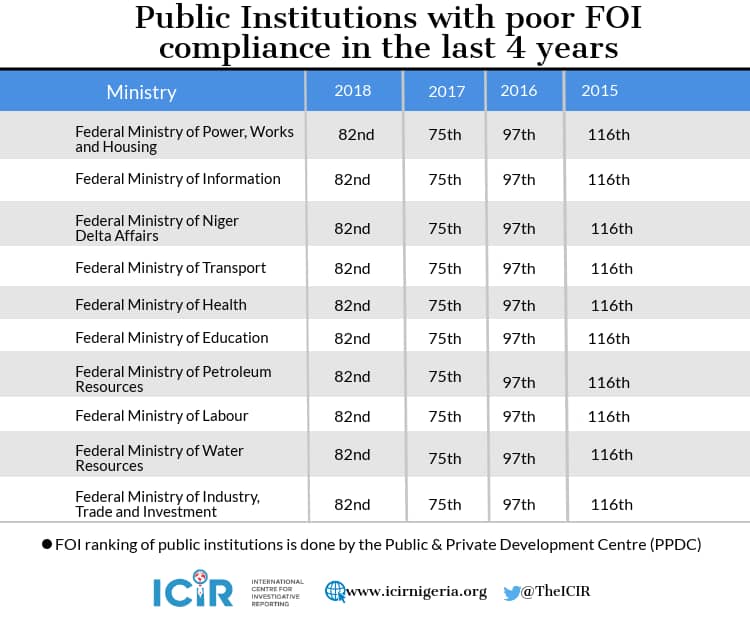
According to the FOI ranking carried out by Public and Private Development Centre among 187 public institutions, over a hundred agencies of government neither disclosed information proactively nor responded to FOI requests in 2018. In fact, only 12 agencies had a good record of FOIA compliance, the rest were either poor or worse.

In the previous years, the records were as woeful.

It is no surprise though. According to the Bureau of Public Service Reforms (BPSR), less than 30 per cent of the MDAs have functional websites to publish public records and less than 25 per cent have functional telephone numbers and e-mail. And those that have websites hardly upload useful public records on their platforms.

This situation explains the dismal scorecards of public institutions in Nigeria concerning FOIA compliance.

Section 29 of the FOI Act mandates every public institution to submit its annual report on or before February 1 of each year to the Attorney General of the Federation (AGF) on all applications of FOI request they received.

But only 73 out of 900 public institutions submitted the report in 2017, representing only 8.1 per cent compliance with the provision of the act.

In 2016, over 90 per cent of the MDAs violated Section 29 that mandates submission of the report on every February 1.

That year, The Guardian sent FoI requests to 50 agencies asking for documents/records that show that submission of the report on February 1 had been complied with in addition to the trend of compliance since May 28, 2011, when the FOI Act was promulgated.

Within seven days of the receipt of The Guardian’s application (as required by the Act), only four agencies replied, while two others called to ask for re-routing the application to ‘appropriate units’.

Similarly, between June 2018  and May 2019, The ICIR has filed 53 FOI requests, but only 17 were responded to.

Secrecy around public bookkeeping in Nigeria

In July 2018, The ICIR on behalf of LeaksNG sent FOI requests to a number of government agencies, asking for detail of stamp duty remittances by Deposit Money Banks and other financial institutions.

Banks and other financial institutions since January 2016 have been mandated to charge their customers N50 on every transaction from N1000 and above in accordance with the provision of the Stamp Duty Act of 2009.

This remittance, according to unverified reports, has reached N20 trillion, but the details of the collected fund are shrouded in secrecy.

The LeaksNG, a coalition of Nigerian newsrooms, acting on a tip-off that some powerful individuals may have been siphoning the fund for personal use, wanted to know where the money is kept and thus started to ask questions.

Letters were sent to the Central Bank of Nigeria (CBN), Office of the Secretary to the Government of the Federation (OSGF), Nigerian Postal Service (NIPOST), and the Nigeria Inter-Bank Settlement System (NIBSS) PLC.

But none of the agencies provided the information requested.

The OSGF denied having information about the fund despite that it was fingered as one of the agencies that formulated the policy. It rather advised that the FOI application be directed to the Federal Inland Revenue Service (FIRS).

“The Office is of the view that the Federal Inland Revenue Service (FIRS) has a greater interest and is the custodian of the information sought and therefore would be in a better position to provide same,” the acting legal adviser at OSGF, J.O Obule, wrote in a letter dated 9th August 2018.

But FIRS, in its response, would later shift responsibility to Nigerian Postal Service, NIPOST.

“We regret to inform you that FIRS does not collect Stamp Duties from NIPOST. Therefore we ask that the above request be directed to NIPOST,” Ike Odume, the FIRS Director of Legal Services, the FIRS wrote in a letter dated 5th November 2018.

Also, when NIPOST eventually responded on the 19th November 2018, nearly four months after the request was sent, it wrote “…There was never a stamp duty revenue collection account by NIPOST between 2010 and 2016…

“However, in January 2016, pursuant to the directives of Central Bank of Nigeria directing Deposit Money Banks to start deducting N50.00 stamp duties from the eligible transaction, a dedicated account was opened and domiciled with the Central Bank of Nigeria. The Nigerian Postal Service has no authority to disburse the fund as it is meant for the three tiers of Government. Thus, the appropriate office to direct your enquiry to is the Central Bank of Nigeria (CBN) who is the custodian of the account.”

And the CBN, in a letter dated 6th November 2018 and signed by Mrs R.J Monguno, put paid to the FOI request.

“The information you requested is a subject matter of a suit before Supreme Court of Nigeria and is therefore subjudice,” she wrote.

Till date, none of these government agencies has further provided information about the stamp duty contributed by millions of Nigerians, even after their disregard was made public.
Notorious violators of FOI

One of the agencies that have little or no regards for the freedom of information law is the Code of Conduct Bureau. The agency keeps a written declaration of all public officers concerning their properties, assets and liabilities, and those of their spouse (if not a public officer. In 2018 the agency is ranked among the worst in FOIA compliance by PPDC.

The ICIR on January 16, requested the Bureau to provide details of assets declared by all cabinet members in the Buhari administration. But it wrote back after a month declining to grant the request because, according to the letter, the term and conditions for such request have not been yet prescribed by the National Assembly. The letter further states that FOI law has exempted the assets declaration of public officers.

A week later, Saturday PUNCH newspaper made a similar request and was turned down for the same reason.

The Bureau gave a similar insipid response in October 2015 when a civil society group,  the Advocate for Peoples Rights and Justice, filed an FOI request demanding the assets declaration forms of the heads of both the CCB; the Code of Conduct Tribunal; and Nasir El-Rufai, the governor of Kaduna State (while he was the FCT minister)

Though The ICIR has instituted a court action against the Bureau, it is yet uncertain how long the process will last.

Another notorious violator of FOI is the Nigerian National Petroleum Corporation (NNPC). Human rights activist lawyer, Femi Falana, SAN in March 2018 requested the corporation to provide information on the amount of money spent on petrol subsidy and turnaround maintenance of refineries.
But the NNPC, despite that the federal government has a controlling interest in it and it is utilising public funds to provide public services, declined to make the information public.

The response goes thus, “We regret to inform you that the NNPC is not in a position to provide any information or document as your request is incongruous with, unsupported by or outside the scope and purview of the Freedom of Information Act. Be informed that the FOI Act is not applicable to the NNPC because it is not a public institution within the meaning of Section 31 of FOIA.”

A pro-democratic civil organization, Anti-Corruption and Integrity Forum had also unsuccessfully requested the NPPC to provide information on crude oil swap and offshore processing agreement (OPA). The case has been in court since 2017.

Other notorious ministries include the Ministry of Information, Federal Ministry of Power, Ministry of Health and so on.

The Deputy Director FOI Unit Federal Ministry of Justice, Benjamin Okolo, whose office coordinates the implementation of FOIA, has at public function described the situation as “unfortunate”. But he also confessed that there was nothing his office could do to make the agencies show greater transparency since the law does not prescribe how defaulting institutions should be sanctioned.

Ironically, the Ministry of Justice, mandated to monitor FOIA compliance, has also denied response to FOIA request made by The Cable Newspaper Journalism Foundation (CNJF). The online paper requested information on the engagement of lawyers for the recovery of stolen funds by Sani Abacha, a former military ruler.

The Cable Foundation had written to the office of the AGF in respect of a report on the repatriation of $321 million stolen by Abacha, asking to know why the office of the AGF hired another set of lawyers to do a job that had already been completed by Erico Mofreni, a Swiss lawyer engaged by Nigeria since 2000. It also requested a copy of the 2014 agreement that led to the withdrawal of the prosecution of Abacha’s son, Mohammed.

But the ministry stonewalled until the matter is taken to the court on 10th January 2018.

Former President Goodluck Jonathan signed FOIA bill into law on 28th May 2011  with the expectation that law would promote transparency and accountability in government, giving citizens access to public records and government. But the law has since then remained a paper tiger. And with the signing of OGP by President Buhari, Nigerians were optimistic that the initiative would encourage the implementation of FOIA; that change is yet to happen. Rather the government continues to operate in secrecy that makes it difficult for the Nigerians and the press to join anti-corruption fighting machine of Buhari administration.

The Acting Director-General, Bureau of Public Service Reforms (BPSR), Mr Dasuki Arabi said: “The denial of access to information and attendant widespread ignorance in the society does more harm than any harm that could possibly arise from granting access of information to members of the public.”

But the message is yet to gain the attention of public servants working in Buhari government, therefore making the operation of the present administration yet opaque, despite the public pledge of the president three years ago in London.