Home Blog Page 2443

Nigeria to rake in NGN67.7b in one year from tobacco taxation- Report

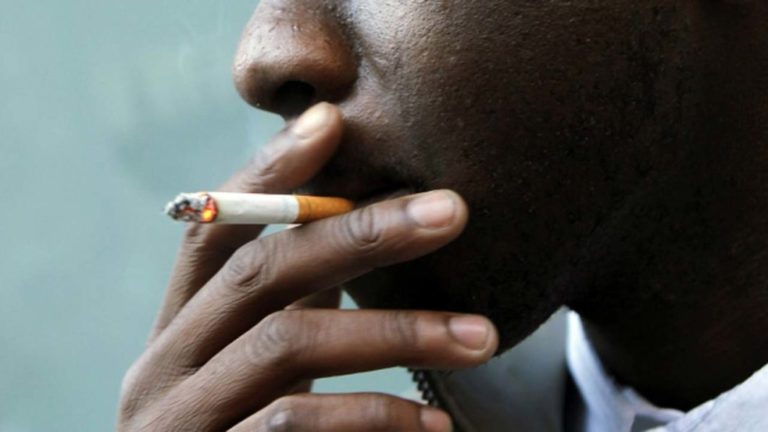
THE Federal Government of Nigeria will rake in as much as N67.7 billion (US$187 million) over a one year period from the new taxation policy on tobacco in the country, a report has revealed.

The report, authored by Grace Onubedo and Precious C. Akanonu, both Senior Research Fellow and Research Fellow at Centre for the Study of the Economies of Africa (CSEA), Abuja was the outcome of a study by the Centre titled “ A Scoping Study of Nigeria’s Tobacco Market and Policy.

In June 2018, the new tax policy on tobacco kicked off.  According to the Federal Government, the new excise duty rates would spread over a three-year period from 2018 to 2020 in order to moderate the impact on prices of the products.

Under the new rates for tobacco, in addition to the 20 per cent ad-valorem rate, each stick of cigarette will attract one naira specific rate per stick; that is N20 per pack of 20 sticks in 2018.

In 2019, tobacco will attract two naira specific rate per stick or N40 per pack of 20 sticks.

By 2020, tobacco would begin to attract N2.90 kobo specific rate per stick or N58 per pack of 20 sticks.

The Centre commended the government for this move as “a step in the right direction,” but noted that duty remains below the standard recommended by the World Health Organization (WHO).

CSEA study highlighted that support for tobacco taxation increases by 17 per cent, if earmarking is introduced, especially among smokers.

“Most of the respondents view tobacco taxation and earmarking as a means to help smokers quit and improve the wellbeing of citizens,” the report said.

“In terms of the wellbeing, respondents prioritize earmarking for public health programmes including treatment of tobacco-related diseases, and social programmes for poor households (such as cash transfers).”

It revealed also that all other government parastatals support adding tobacco revenue to the pool of government revenue except the Ministry of Health.

What 50 per cent of  N67.7 billion can do for the health sector

 Nigeria currently has one of the lowest budget allocations to the health sector. The AU’s Abuja declaration of 2001, stipulates that 15 percent of the national budget should go to the health sector, but Nigeria only allocates 3.9 percent of total budget to the health sector in 2018.

This implies that government spends a meager sum of N1,888 on each citizen’s health care need for the whole year.  This reflects negatively on Nigeria’s health indices; the WHO ranks Nigeria 187th out of 191 countries in terms of health care delivery.

Following the arguments of pro-earmarks, earmarking tobacco revenue ensures a continuous, regular source of funding that are not subject to annual budgetary review.

From the CSEA’s stakeholder analysis, 25percent -50 percent of tobacco tax revenue is proposed as the earmarking benchmark. Applying 50 percent to N67.7billion expected revenue would yield an additional N33.9billion of earmarked revenue to the health sector over a one-year period.

This will result to 9 percent increase to the sum allocated for citizen’s health care. Similarly, earmarking tobacco taxes can provide a sustainable source of financing for tobacco control. In 2017, about 0.028 per cent of the Federal Ministry of Health budget was allocated for setting up tobacco control unit (TCU) in 2017. However, the TCU received no funds in 2018 due to the ministry’s budget constraints.


Different strokes: Cold snaps kill dozens in America but Australia records hottest ever weather

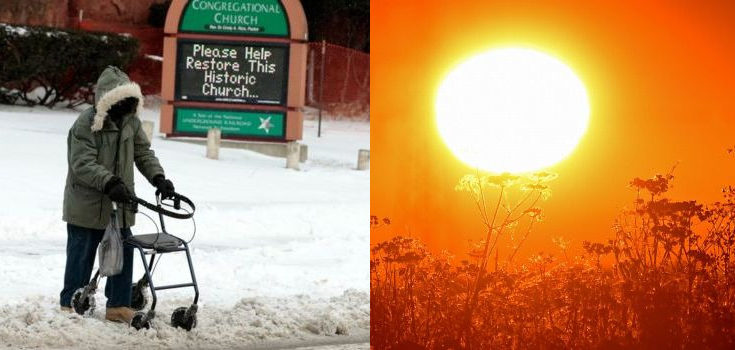
EXTREME weather conditions have been the source of major concerns for various countries around the world, though for contrasting reasons. While extreme cold in the United States of America has claimed dozens of life, extreme heat is doing same in Australia.

The BBC reports that at least 21 people have died in one of the worst cold snaps to hit the US Midwest in decades. Ninety million people – a third of the US – have seen temperatures of -17 degrees Celcius or below. About 250 million Americans have experience sub-zero conditions, the report added.

A 60-year-old homeless woman was found dead in an abandoned house in Lorain, Ohio. Also, an 18-year-old student was found unresponsive a short walk from his dormitory on Wednesday and later died in hospital. Some people were found dead a short walk away from their homes.

Reports say the present weather conditions could cost the US billions of dollars. In 2014, a similar polar freeze cost the country an estimated $5 billion according to a CBS News report.

Conversely, Australia recorded its hottest month ever in January, with average temperatures exceeding 30 degrees Celcius for the first time, another report by the BBC read.

The heat has caused wildfire deaths, bushfires and a rise in hospital admissions. Several wildlife species have also suffered, with reports of mass deaths of wild horses, native bats and fish in drought-affected areas.

Even the Australia Open, one of the five major Tennis tournaments, was affected as play had to be delayed several times due to severe hot weather.

Australia has increasingly endured hotter summer temperatures. Last year Sydney experienced its hottest day since 1939, with a maximum temperature of 47.3 degrees Celsius.

“The warming trend which has seen Australian temperatures increase by more than one degree in the last 100 years also contributed to the unusually warm conditions,” said Andrew Watkins, a climatologist.

Parts of eastern Australia suffered their worst drought in recent history last year, while thousands of Australians fled their homes when bushfires swept through Queensland in November.

Officials have confirmed that 2018 and 2017 were Australia’s third and fourth-hottest years on record respectively.

Scientists say more drastic weather changes are to be expected across the world as a result of climate change and global warming. Natural disasters such as floodings, earthquakes, wildfires, tornadoes and volcanic eruptions are happening at a more frequent rate than ever, experts say, warning that efforts should be intensified to tackle climate change.

OPINION: Why should governments open up their data?

0

By: Ani, Nwachukwu Agwu


RUNNING 21st century governments by the “old rules” is reinforcing information asymmetry, inefficiency in public service, inequality and ultimately poverty. In 2016, the eight richest people in the world had as much money as the bottom 50 per cent of humanity – that’s three-and-a-half billion people. And of those eight, six were infotech billionaires.

The world can no longer feign indifference on the pricelessness of public data in this age. Like these infotech billionaires, governments are stewards of public data and money. Their responsibility is allocating same to priority sectors in the society and policy-making. If data is so priceless, why then is the unsustainable concentration of power and wealth (data) in the hands of few individuals and government?

Technological advancement such as computer, internet and airplane has not only demystified global challenges (e.g. transportation) to the point that one could fly from New York to London in six hours or less; technology has made governance and public policy increasingly participatory and interactive. It is believed that such interaction will ultimately result in more democratization of decision-making, getting citizens more involved in the allocation of state resources for public good. Democracy requires transparent decisions; so that citizens are aware of what is decided and how much money is being spent on which purposes.

In developing economies, e.g. Nigeria, one phenomenon driving political instability and economic stagnation is corruption. Stakeholders are unanimous that the incidence of corruption is unacceptably high and that open government – opening up government data and public processes, is the antidote. The importance of data-driven transparency is indisputable in combating corruption because corruption thrives in atmospheres of opaqueness and secrecy. Incontestably, transparency counteracts corruption and sharp practices in government circles.

A fundamental concept for understanding open government is information asymmetry. Information asymmetry is a situation in which one party has more information than another, for instance, when a government has more information than its constituents. One of the reasons why governments open their data is to reduce information asymmetry, but completely overcoming this is often not realistic. Somebody who is inside the system on a daily basis will always have more knowledge than outsiders do. However, easy access and a clear presentation of information are often necessary. By that, we can see a clearer picture, but completely bridging the information asymmetry is virtually impossible.

The second point why we should open up government data is civic participation and engagement. Among other forms of centralized governments, one distinctive characteristic of democracy is citizens’ voice or civic participation. Citizens can never be able to properly engage their elected or public officials without data or information about what is happening inside government institutions. World over, a military dictator can always build roads; primary healthcare centres; potable water supply; etc., but at any instance, military dictators lack legitimacy because they rule by the barrel of a gun. Ruling by the barrel of a gun is a measure of primitiveness.

Article 21 of Universal Declaration of Human Rights reads that: “The will of the people shall be the basis of the authority of government; this will shall be expressed in periodic and genuine elections which shall be by universal and equal suffrage and shall be held by secret ballot or by equivalent free voting procedures.” Fundamentally, access to relevant public data inevitably guide electorates during elections, guaranteeing credible electoral outcomes among nations. Undoubtedly, under democracies where voices are present, human rights are best protected.

So there is relationship between open government, legitimacy of governments and trust. The importance of easy access to public data as a way of building trust is captured in open government ambitions. Commitments to open government should show that governments are not hiding anything from citizens. In the circumstance, the public can see how the government is functioning, and influence its working where necessary. For example, viewing how budget is spent and thereafter suggesting alternative ways of spending the budget better.

Challenging the status quo

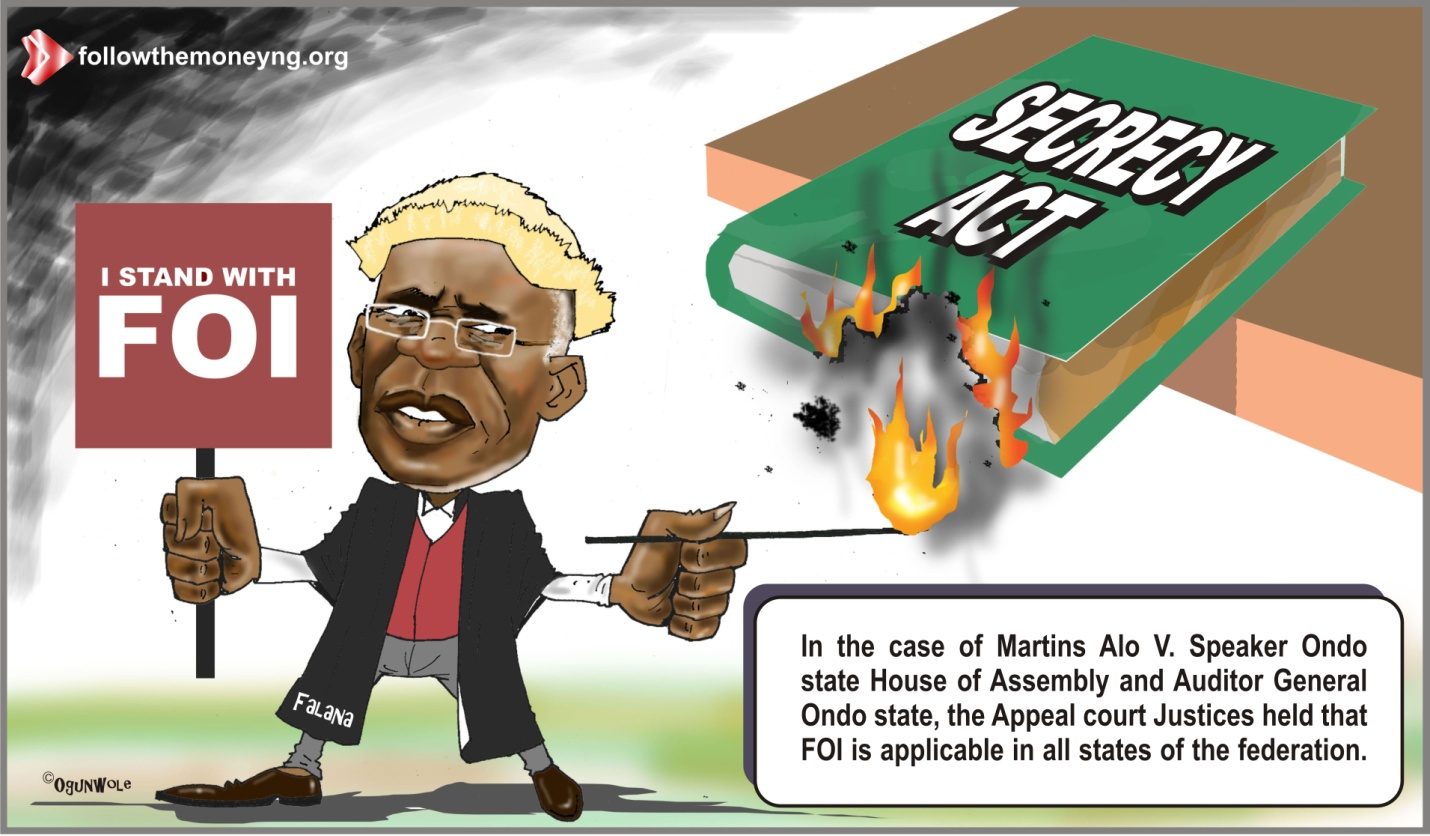
For five decades (1962–2011), Nigeria operated a horrible law – Official Secret Act, which provided for the protection of official information from public interaction or scrutiny. The Act imposed restrictions upon public servants concerning disclosure of certain “privileged” information. Thus, for 50 years, Nigerian political environment was more or less a “black box” – citizens living in information blackout.

In the same year (2011) that Open Government Partnership (OGP) was launched, Nigerian government enacted a revolutionary law – Freedom of Information Act (FOIA), providing for free access of public information to citizens. The act also provides for the protection of personal privacy, protection of serving public officers from adverse consequences when they disclose certain kinds of official information without authorization. The Nigerian FOIA is considered a game-changer in the country’s long push for openness, transparency and accountability.

No more Secrecy Act in Nigeria; it belongs to the past.

Global efforts at opening up government-controlled data for public participation and engagement birthed a multilateral initiative – OGP.  In September 2011, on the sidelines of a UN General Assembly meeting, Heads of State from 8 founding governments (Brazil, Indonesia, Mexico, Norway, Philippines, South Africa, United Kingdom, and the United States) endorsed the Open Government Declaration. The OGP aims to secure concrete commitments from national and sub-national governments to open up government data and processes, empower citizens, fight corruption, and harness new technologies to strengthen governance among member states.

How civic organisations are disrupting service delivery using FOIA and OGP

For many years in Nigeria, corruption and cultures of opacity meant that resources meant for development were frittered away. According to a UN report, roughly $4.6bn is spent on bribes in Nigeria each year. Poor transparency and accountability have allowed corruption to flourish, but these civil society groups are trying to change the opaque environment.

Empowered by the provisions of OGP and FIOA, governments are under intense pressure to intensify fights against corruption; sharing more information about the way federal ministers or commissioners are managing public resources and increasing civil participation in public decision-making. A host of civic organisations: Follow The Money, Tracka, PPDC, SERAP etc are harnessing new technologies to strengthen governance especially at the grassroots. The activities of these above-named organisations are examples of how citizens (activists) can be part of the solution of nation building in a fragile or failing democracy. Therefore to increase civic participation, promote transparency, and strengthen accountability; governments must open up public data – hitherto administered in secrecy, for public perusal, consumption and ownership.


This article was first published in Apolitico, United Kingdom, in December 2018. It was authored by Ani Nwachukwu Agwu, Rural Development Specialist at Connected Development/Follow The Money, Abuja. He may be reached at nwachukwuani@gmail.com.

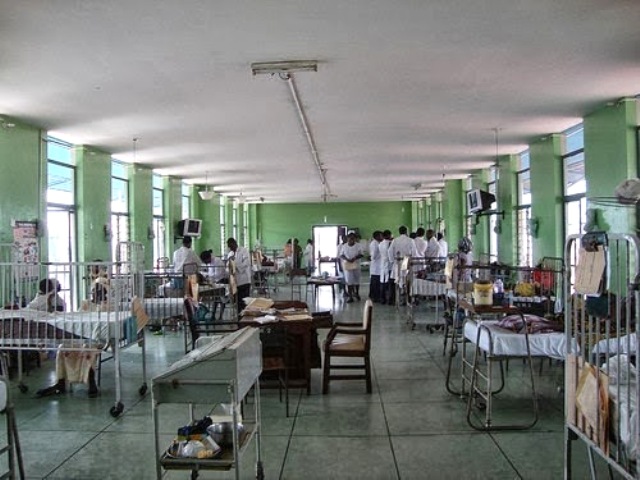
Kogi governor announces vacancy for doctors, after many leave state

FOLLOWING the mass exit of medical doctors from Kogi State Government Hospitals, Yahaya Bello, the state governor, said vacancies for doctors are now opened in the state.

Haruna Saka, Kogi commisioner for health disclosed this on Friday in Lokoja in reaction to the departure of some health workers from the state’s civil service under the administration of Bello in the past three years, NAN reported.

The state governor granted approval to the Governing Boards of Kogi State Hospitals Management Board (KSHMB) and Kogi Specialist Hospital, Lokoja (KSSH) to employ more doctors.

According to the Nigeria Medical Association, there were over 88 medical doctors who had left the state public service, in the three years’ administration of Bello. The situation made  NMA to  appeal  to the state government on Monday to fight the trend on health workers leaving Kogi state public service.

The NMA said the government could tackle the issue by addressing some situations which included:  the payment of outstanding salary arrears of doctors and other healthcare workers; implementation of the corrected CONMESS. The association also advised the government to issue out promotion and annual step increment.

The health commissioner, however, on Friday said that doctors left because they secured federal government jobs.

“It has been a recurring trend to see doctors leave state public service once federal government opportunity presents itself …,” he said.

Saka added that bulk of doctors who left had secured post graduate training in Federal Government’s teaching hospitals.

“Doctors who have intention of undergoing postgraduate training usually migrate towards federal service because till date, only very few states have the capacity to train resident doctors,” he explained.

The health commissioner concluded that new doctors to be employed would receive welfare packages which included interest free loan facilities to help the doctors acclimatize to the state.


Arraignment of former NIA boss, Oke stalls as he fails to show up in court

THE planned arraignment of the former Director General of the Nigeria Intelligence Agency (NIA), Ayodele Oke, and his wife, Folashade, has failed as both defendants were absent from court on Friday.

The Economic and Financial Crimes Commission had filed a four-count charge bothering on money laundering and abuse of office against Oke, following the discovery of a large cache of cash in a luxury residential apartment alleged to have been bought by his wife in Ikoyi, Lagos State.

Oke had claimed that the money belongs to the NIA and that it was approved for the agency by former President Goodluck Jonathan to be used for some covet security operations.

However, an investigative panel headed by Vice President Yemi Osinbajo found Oke guilty of some wrongdoing with regards to the development and recommended that he should be removed from office.

Nothing was heard about the case again until the EFCC announced on Wednesday that criminal charges have been filed against Oke and his wife at the Federal High Court, Lagos, and that they will be arraigned on Friday.

One of the charges against the former NIA boss read: “That you, Ambassador Ayodele Oke, Mrs Folashade Ayodele Oke, on or about the 12th day of April 2017, in Lagos, within the jurisdiction of this Honourable Court, indirectly conceded the sum of $43,449,947.00 (Forty-three million, four hundred and forty-nine thousand, nine hundred and forty-seven United States Dollars) property of the federal government of Nigeria in Flat 7B, No 16 Osborne Road, Osborne Towers , Ikoyi Lagos, which sum you reasonably ought to have known formed part of proceeds of an unlawful act to wit: criminal breach of trust, and you thereby committed an offence contrary to section 15[2][a] of the Money Laundering (Prohibition) (Amendment) Act 2012, and punishable under section 15[3] of the same act.”

Oke was also accused of laundering another $1.658 million, as well as the sum of $160,777,136.85 which he converted to his personal use by using it to purchase the Osborne Tower apartment.

The EFCC had listed 13 witnesses it intends to call during the trial, including persons who had received almost $300 million from the Central Bank of Nigeria and delivered to Oke.

An EFCC prosecutor told journalists at the court premises on Friday that the commission would issue a statement on the development later in the day.

Meanwhile, there are reports that Oke and his wife have jetted out of Nigeria, purportedly on a medical trip to Europe. A report published by TheCable Thursday quoted reliable sources as saying that the couple left Nigeria weeks ago.

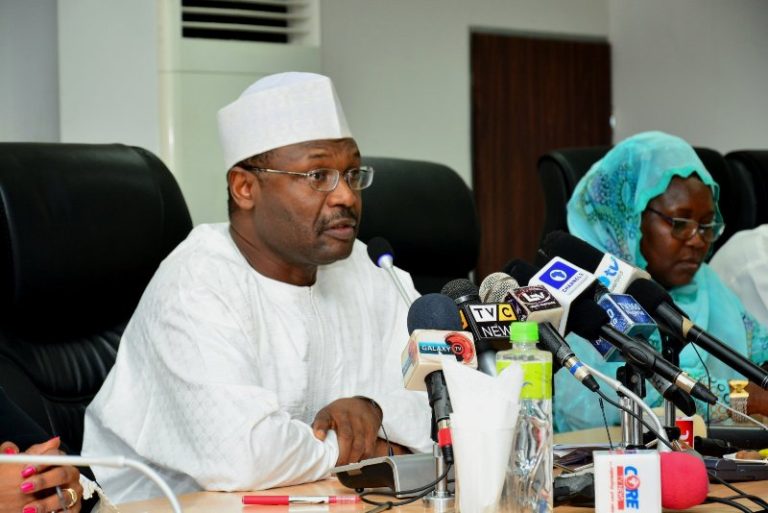
Group tasks INEC on credible election

AS general election draws closer, the Interfaith Dialogue Forum for Peace (IDFP) has called on the Independent National Electoral Commission (INEC) to display independence and be impartial in the conduct of the elections.
IDFP made the calls in a communique jointly signed by its co-chairmen,  Ishaq Kunle Sanni and  Sunday Onuoha. The communique was issued at the Forum’s General Assembly meeting held yesteday  in Abuja.
The Forum also expressed concern over the security situation in the country and urged the Federal Government to scale up their efforts to arrest the situation as the 2019 general elections draw closer.
It particularly  stressed that the FG should beef up security especially in areas ravaged by conflict and ensure that no citizen is disenfranchised owing to prevailing security challenges.
While further calling on the  government to engage in massive sensitisation ahead of the polls, it  charged Nigerians to embrace peace and eschew violence before, during and after the elections.
On the role of political, religious and traditional leaders and other  stakeholders in the conduct of the elections, the Forum noted that they should be careful in their choice of words to avoid heating up the polity.
It added that the security agencies should be unbiased and remain neutral while discharging their duties during the  general elections, noting that stakeholders such as religious bodies, civil society organisations, town unions, youth groups have critical roles to play to douse the palpable tension and ensure hitch free elections.
“That politicians should see election as a platform to serve the people and should not instigate violence in the process,”  the Forum said.
It also encouraged the media to privilege  peace journalism in their reporting of all national issues and especially on the  general elections.
The general elections are scheduled to hold on February 16 and February March 2.
The Interfaith Dialogue Forum for Peace (IDFP) was established as a national interfaith and intercultural dialogue platform through funding and facilitation of the International Dialogue Centre (KAICIID)), Vienna Austria.
It was formally inaugurated on  January 16, 2017 in Abuja Nigeria with 100 Christian and Islamic leaders evenly divided. The Sultan of Sokoto and the President of the Christian Association of Nigeria are the Patrons of the IDFP.

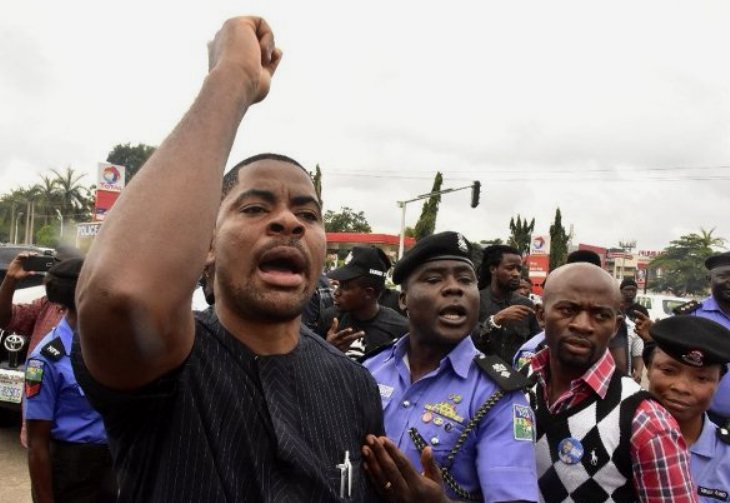
50 days in hell: We must not forget Deji Adeyanju

0

ONE thing is certain; tyranny will always have cheerleaders.  When Adolf Hitler was asphyxiating Jews in death chambers, there were people who cheered him on.  When General Sani Abacha was drawing blood from all who opposed him, there were people who kissed his bloody dagger, and even worked for him to become “eternal” president.

Deji Adeyanju has been in the fiery pits of hell for 50 days now.  Anyone who has been to a Nigerian prison knows that it is not fit for swine. This man, a lone voice of opposition, is languishing in prison for only daring to look in the eye of the cliques of doom.

Initially, he was arrested and arraigned on farcical charges at a magistrate court. He spent a week in Keffi prisons and was released. Unfazed, he resumed his activism, but the government rustled up extinct charges, of which he was discharged and acquitted, and hounded him into Kano prisons. And there he has been.

His case was up for bail-hearing on Wednesday, but the government threw spanners into the wheel. The regime crocheted another charge bordering on conspiracy and attempt to commit culpable homicide; all in a desperate bid to keep him in the gulag and fork his tongue.

I can say, there is a deliberate attempt to exploit the weaknesses of the judiciary to keep him locked up.

Deji is not without flaws. I may not agree to his approach to activism, but he is the most consistent voice of opposition today. Really, the “social media activism space” is not the same without him.

And with the regime’s impassioned interest in keeping him shut out of the public, I have come to realise that Deji is the third most feared Nigerian after Dasuki and El-Zakzaky. Tyranny fears dissent, courage and “opinion”.

Deji is a victim of state terrorism; a prisoner of conscience. It is not surprising that some persons are endorsing this state-sponsored assault on a citizen. There will always be enablers of dictatorship, as I said earlier. But I know those who are against this inequity are more than those who are for it, or who are indifferent about it.

It is true the saying, if a regime wants you, they will get you. But it is also true that no regime lasts forever. Nigerians survived Abacha, they will survive President Buhari.

We must not forget Deji. We must not let tyranny win.

Fredrick is a public commentator, he tweets @FredrickNwabufo.

Health workers meet to decide on resuming industrial action

THE Joint Health Sector Unions (JOHESU) is holding a meeting on Thursday to decide on whether or not to resume the suspended nationwide industrial action.

JOHESU had embarked on strike action in April 2018 but suspended it six weeks later following an understanding between the union and the of the federal government. The truce, at the time, was brokered by the Senate President, Bukola Saraki, who pleaded to the health workers to return to work.

However, Ogbonna Chiemela, the union’s national vice chairman, said the government has since abandoned the agreement.

A two-week ultimatum issued by the union for FG to revisit its promises elapses on Thursday and the meeting is for the many unions that make up JOHESU to decide the way forward.

“The meeting will determine the format of the strike and how it should go,” Chiemela, told Premium Times on Thursday.

“We gave 15 days’ ultimatum to the government to call us so we can start negotiations and be on the same page. They have not invited us.

“The law provides that during the period of an ultimatum, it’s the responsibility of the government to invite the aggrieved party to a meeting but they (government) have acted as if the ultimatum was not given them. We heard nothing from the federal ministry of health, the parent body.”

Chiemela said that the government did not pay them for the period they embarked on strike in 2018 even though they had adhered to all labour laws before embarking on the strike. He said perhaps that is the tool government was banking on to call their bluff this time around.

“The government in their usual spirit has kept quiet and maybe they are still relying on their old tactics of no work no pay. That will never deter us from asking them to do the needful,” Chiemela said.

“Two months salaries were not paid then but we are not deterred. We are willing to go on strike again in as much as it is a call for justice and fair play. We are ready to make more sacrifices for what is due us. Besides, that (two months salary) has not gone down the drain. It is one of the things we are asking for in the ultimatum, it is part of our demand.”

The umbrella body, JOHESU, comprises Medical and Health Workers Union of Nigeria (MHWUN), National Association of Nigeria Nurses and Midwives (NANNM), Senior Staff Association of Universities, Teaching Hospitals, Research Institutes and Associated Institutions (SSAUTHRIAI), Nigeria Union of Allied Health Professionals (NUAHP) and Association of Medical Laboratory Scientists of Nigeria.

Their demands include a harmonised salary structure with that of medical doctors, raising the retirement age for health workers from 60 to 65, payment of salary arrears, among others.


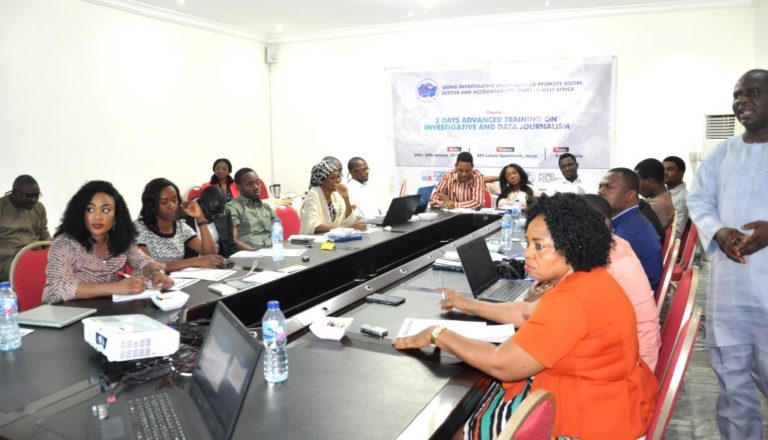
ICIR trains reporters at advanced data, investigative journalism workshop

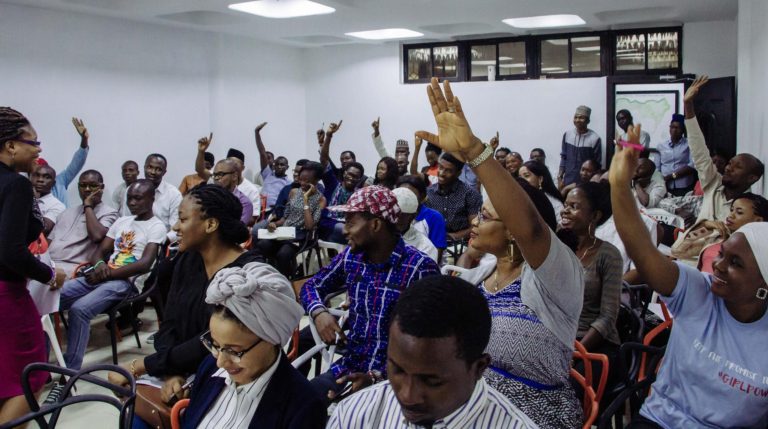
JOURNALISTS  from across Nigeria gathered in Abuja for a two-day advanced training on investigative and data journalism that lasted between January 29 and 30.

The workshop, organised by the International Centre for Investigative Reporting, ICIR, is funded by the Ford Foundation and is the last in a series of training programmes under a project aimed at promoting social justice and accountability in West Africa.

The participants were selected from a range of both private and government-owned media organisations within and outside Nigeria, and are expected to report indepth stories related to the project’s focus.

During the various sessions, they were trained on forensic interviewing techniques, fact-checking, pitch writing, data reporting and visualisation, generating story ideas, and story-specific security tips.

Giving his opening remarks, Executive Director of The ICIR, Dayo Aiyetan, said the centre has had good experiences in implementing the project, citing the example of beneficiaries who have won awards for funded stories.

He also said deliberate efforts were made to involve media organisations owned by the state because it is a misconception that their employees cannot work on investigative reports under certain themes.

“Many journalists in government media houses say you can’t criticise government, but our work here is not to criticise government,” he said.

“Our work is not about just criticising. If government appropriated six billion naira to fix roads in the Southeast for example, and contractors and public officials steal the money, if the lady from FRCN does a story about that, does it not help the government? It’s supposed to help government. That’s the way I think we should all look at this.”

He added that another aim of the project is to encourage collaboration between different media organisations, as well as journalists and civil society organisations.

Musikilu Mojeed, Editor-in-Chief of Premium Times and one of the facilitators at the training, lamented the lukewarm attitude of state-based reporters towards indepth journalism and the fact that irregularities in various states of the country are usually exposed by non-residents.

“So when I find reporters coming from states,” he said, “I always find that very impressive, hoping that they will use the training when they get home.”

“The reason we are in so much problem is the quality of governance at the state level. In fact, the federal government is far better in terms of accountability and openness,” the award-winning Editor-in-Chief added.

Other facilitators at the event included Ajibola Amzat, Editor of The ICIR, and Damilola Ojetunde, a data analysis and visualisation expert.

Damilola Ojetunde takes participants through a practical data mining and visualisation class. Credit: The ICIR

The Social Justice and Accountability project is a two-year programme that kicked-off in June, 2017. It was established to build the capacity of reporters on investigative data journalism and provide sufficient resources for them to report on illicit financial flows and tax matters.

It also forges a collaboration between the media and civil society organisations in amplifying social accountability issues to ensure more meaningful and enduring impact.

Private sector-driven economy, automated public service… Atiku’s ideas for a new Nigeria

IT was the turn of former Vice President Abubakar Atiku, presidential candidate of the Peoples Democratic Party (PDP), and his running mate, former Anambra State Governor, Peter Obi, to appear on ‘The Candidates’ on Wednesday to try to sell themselves to Nigerians.

‘The Candidates’ is a town hall event designed to get top presidential aspirants of various political parties to explain to Nigerians why they are best suited for the job and should be voted for come the February 16, 2019 presidential election.

On why Nigerians should vote for him, Atiku said he is the most experienced and most qualified of all the presidential aspirants as he has a proven track record in job creation and resource management. He added that he is the candidate for the future.

ON ALLEGATIONS OF CORRUPTION

Atiku denied all allegations of corruption dating back to how, as a serving officer of the Nigeria Customs Service, he allegedly floated a company that was into clearing and forwarding thus conferring an unfair advantage to himself.

He explained that what happened at the time was that he took advantage of the indigenisation policy when the military government at the time allowed serving public officials to acquire shares in some foreign companies that were already operating in the country. Atiku said it was legal at the time to do so, and that the freight company which later metamorphosed into ‘INTELS’ was already in existence and was not founded by him.

He also denied that the company was granted a monopoly to operate in all the major ports in Nigeria. “There was nothing like a monopoly,” he said. “We had competitors and we still do.”

Atiku also explained that though the name of one of his wives was mentioned in a money laundering and bribery case in the United States of America, no charge has been brought against her ever since therefore nobody can accuse her of any wrongdoing.

He said if his wife had been found wanting in any way, given the thoroughness of the US justice system, she should have been prosecuted. He added that his wife still travels to America regularly.

Speaking on the several negative commentaries against him by his former principal, Olusegun Obasanjo, Atiku pointed out that the former President has since recanted and has endorsed him as the best candidate for the job. Besides, he added, “I am the most investigated politician by Obasanjo. If he did not find me guilty, that means I committed no wrong”.

Obi also denied allegations that he invested Anambra State’s money into a brewery that now yields interest for his family business. He explained that having facilitated the foreign brewery’s entry into Nigeria, the company approached him and offered him 15 per cent stakes, but that he instead accepted 10 per cent on behalf of the Anambra government, and that the $30 million state money he invested into the brewery is now worth $100 million. Obi boasted that no governor in the history of Nigeria, left even 10 per cent in the state’s treasury of what he left in Anambra State’s treasury on leaving office.

ON ANTI-CORRUPTION

Atiku said he would work with the saying that “prevention is better than cure”, hence his administration would focus on measures that could prevent public officials from being exposed to incidences of corruption.

To achieve this, he said he would focus on automating the public service, as it is done in many other developed economies like the United Arab Emirates, where one can apply for anything from the comfort of his room and get that thing sorted out. According to Atiku, the elimination, as much as possible, of personal, face-to-face contact between public officials and service takers, would go a long way in curbing corruption.

Atiku also said his administration would brainstorm with the legislative and judicial arms of government to find a solution to the delay in Nigeria’s justice system so that justice would be seen as being done. He noted that a situation where some of the court cases instituted when he was vice president are still ongoing in court today is unhelpful.

Atiku also said his government might consider an amnesty for officials who were found to have embezzled public funds in the past. He said the method worked in Turkey and some other European countries, where the government granted amnesty on the condition that the monies be brought back to the country and invested in critical aspects of the economy.

Adding to this, Obi said it is better to have an amnesty where somebody brings back monies he took from the government and reinvests it into the economy than for one who has stolen government money to join the ruling party and have his sins forgiven.

Atiku added that his administration would consider creating an Election Fraud Commission to tackle all forms of election malpractice which, according to him, is another form of corruption.

ON PLANS FOR THE POOR

Atiku said he has a robust agricultural policy which is contained in his manifesto and which is designed to empower farmers to be more commercially oriented. He said the Anchor Borrowers Programme of the current administration is “fake” and only impacts on just a few farmers.

ON THE ECONOMY

Atiku said his administration would focus on a private sector driven economy, which has worked all over the world. He said he would lower corporate taxes to encourage investors to come in and set up businesses and employ citizens.

According to him, it is like a cycle; lowering taxes could mean a reduction in government revenue, but when the jobs are created, unemployment and dependency rate would be lowered, and the citizens who have been employed would pay taxes.

He agreed with the interviewer that he is the second largest employer of labour in Adamawa State, behind the state government, hence he intends to translate this track record to the national level.

ON FARMERS/HERDERS CLASHES

Atiku said his administration would carry out massive public enlightenment programmes to try to sell the idea of “feeding lots” to the herders. This he said would greatly reduce the herders’ crisis which, according to him, dates back to the time of Prophet Mohammed.

He said the idea of feeding lots would not only ensure that our cattle producing more milk and beef, but it would also create employment opportunity as companies manufacturing animal feed would come to invest in Nigeria.

He also promised to look into some of the laws banning grazing of cattle across the states, to ensure that such laws do not go against the constitutionally guaranteed rights of citizens to move around or reside in any part of the country they chose to.

ON EDUCATION

Atiku said he would improve the Universal Basic Education Act and make it an offence for states or local government areas to mismanage funds allocated to them for education development.

ON SECURITY

Atiku promised to look into the complaints of lack of adequate equipment and welfare for the soldiers who are taking part in the counterinsurgency operations. He said he would be willing to investigate the allegations of corruption in the hierarchy of the Nigerian military, as well as ensure that underperforming officers are sanctioned appropriately. Atiku promised to deploy “the right kind of political leadership, and the right kind of military leadership” in combating the Boko Haram crisis.

Speaking on the clashes between soldiers and members of the Shiite Islamic sect, Atiku said the army ought not to have any role to play in the situation. If some people are rioting, Atiku said, it was the work of the police to deal with such situations, not the army. He also promised to carry out an independent investigation into the allegations of human right abuses against Nigeria’s security agencies by groups such as the Amnesty International.

ON HEALTH

If voted into power, Atiku promised that his administration would attract more private investment into the health sector, while backing that up with commensurate government intervention in order to make quality healthcare affordable to all.

Finally, asked whether he would accept the result of the election should he lose, Atiku’s reply was “why not”.

“If the elections are adjudged to be free, fair, and credible, why not? I have lost elections before and I admitted.”