Home Blog Page 2444

Soyinka says Buhari and Atiku worthy of absolute rejection

0

NOBEL Laureate Wole Soyinka says he will not be voting for the duo of President Muhammadu Buhari or Abubakar Atiku in the upcoming election as he finds the two candidates “worthy of absolute rejection”.

Soyinka said this during an interactive session termed Citizen Forum 2019, stressing that it is time for an overhaul of the status quo in the Nigerian political sphere.

“It is time for a totally new direction, and when an alternative emerges, we will give the candidate our backing,” he said.

“For the avoidance of doubt, let me make my position quite clear because I don’t want any ambiguity; I, Wole Soyinka, will not be voting for either the two so-called contesting parties. I find both of them worthy of absolute rejection.”

Soyinka stressed that his position was for a new direction and that he was not interested in a comparative assessment of the candidates.

He said he was not the only concerned citizen with like views as there are ongoing coalition meetings among some of the young presidential candidates in Abuja and Lagos that would produce a consensus candidate at the end of the negotiations.

“As I’m speaking, there is a coalition having its meeting in Lagos from which they hope to produce a consensus candidate. There is another group meeting in Abuja, also at the end would send us their consensus candidate,” he said.

“Things have been going on quietly in the background to try and change the direction of this nation in a very positive way and to make the public understand that they do not have to be enslaved permanently to the old discredited order. It is my sole business in this election.”

Soyinka also advised the citizens to not just cast votes, but to vote in a creative format that would yield the desired result.

“I don’t believe in what is called negative vote which means, for me, throwing your vote in a wastebasket, I believe instead in a creative vote, not a protest vote, not a negative vote but a creative vote.

“And a creative vote means that the will to at least sow a seed through your vote that will germinate eventually. The pace of germination is beyond the control of everyone, but it is never too early to make a beginning.

“It has happened before in other societies, when a dark horse emerges from nowhere and trumps all the political juggernauts caterpillar and so on with their performers, worthless, their capacity for violence and treachery,” Soyinka said.

“When a dark horse emerges from nowhere and trumps all the political juggernauts caterpillars and so on with their performers, worthless, their capacity for violence and treachery,” Soyinka said.

Was Atiku’s Abuja home besieged by the DSS pre-election 2019?

A number of online publications have claimed that leading opposition presidential candidate, Abubakar Atiku, was on Wednesday, January 30, besieged by members of police and men of the Department of State Services in his Abuja residence. 

The claim was first made by Hope for Nigeria and later duplicated by Facebook pages Dailymail Gist and Atikulated.

In four hours, the post had been shared on Hope For Nigeria’s Facebook page 499 times with 153 comments while the other pages had lesser interaction. Hope for Nigeria has 682,285 followers.

Upon investigation, CrossCheck Nigeria, a collaboration of newsrooms in Nigeria which includes The ICIR,  found the claim to be false and a deliberate hoax for the following reasons:

  1. At the time of the report, Atiku was meeting with businessmen in Lagos whereas the story alleges that he was sieged in his Abuja home.

  2. The report claimed that the ex-VP tweeted about the incident whereas a crawl on Atiku’s Twitter page over the last 24 hours has no such information.

  3. The Hope For Nigeria web article completely plagiarizes an April 23, 2018, Vanguard report titled, ‘Police, DSS take over the residence of Senator Dino Melaye’.

  4. The image used in the story first appeared online in January 2016 when the EFCC sealed Sambo Dasuki’s house.

Investigated CrossCheck Nigeria

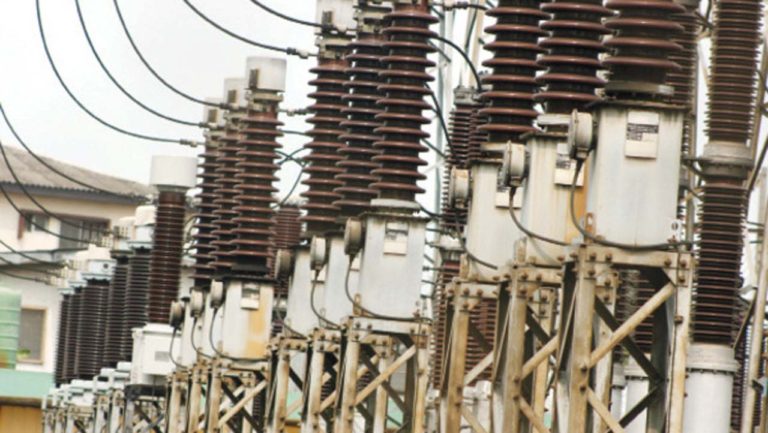
FACT CHECK: Has electricity generation worsened or improved since 2015? We verified

NIGERIA’s top two political parties apparently disagree on how much electricity the country is currently generating compared to four years ago when the Buhari administration started.

Speaking in August, the Minister of Power, Works and Housing, Babatunde Fashola, said the power sector was no longer where it used to be three years ago when “power generation was the main problem of Nigeria”.

“We were distributing averagely 2,690 megawatts of electricity to Nigerians, but today, that story has changed, distribution has risen to 5,222 megawatts, an all-time national high,” he said at the fourth edition of the Ministry’s retreat for top directors, heads of units and chief executives of agencies and parastatals.

“Transmission has reached 7,000 while generation has reached 7,000. The problem has not finished but all we can say is that, we have made progress,” he added.

Also, in May 2018, while highlighting its many achievements, the presidency stated that its Transmission Expansion and Rehabilitation Programme “has resulted in a 50 per cent expansion in Grid Capacity since 2015, from 5,000MW to 7,125MW as at December 2017”.

In contrast, the opposition People’s Democratic Party, which ruled between 1999 and 2015, has disputed these claims in a recent press statement released by Phrank Shaibu, its presidential candidate’s Special Adviser on Public Communications.

“Talking of infrastructure, despite an ‘investment’ of over N1 trillion by the Buhari-led APC administration in infrastructure, the nation’s roads have become death traps and power generation has actually dipped from 4,949 megawatts PDP left in 2015 to less than 3,500 megawatts even though Buhari’s handlers consistently claim that 7,000 megawatts is what is currently being generated,” he said.

What the statistics really say

The Nigeria Electricity System Operator, a subsidiary of the Transmission Company of Nigeria which operates the transmission system, has been making daily operational reports on electricity generation data publicly available. The reports date back to April 9 2014, and have been uploaded on the agency’s website nearly every day since then.

Each report states the peak and lowest generation of the previous day, the national peak demand forecast, installed generation capacity (of all generating plants), available generation capacity, current transmission capability of all high voltage substations (also called transmission wheeling capacity), network operational capability, peak generation ever attained, among other data.

For clarity purposes, installed generation (or nominal) capacity is the “intended full-load sustained output of a facility such as a power plant and available generation capacity is the amount of electricity a generator produces over a specific period of time, which may vary due to planning, conditions at the power plant or fuel costs.

Also, current transmission capability refers to the maximum amount of electricity transmission lines can transport from the grid to distribution lines, which then wheel to the final consumers; and then the network operational capability shows the actual amount of power consumers can get “per time from the industry through the Distribution Companies”.

[infogram id=”neso-daily-operational-report-1hxj48qpqnqq4vg?live”]

It was observed that while the generation from day to day fluctuates easily (making it difficult to evaluate progress based on a day’s figures), other data hardly changed over the years. The national demand forecast which was 14,630MW in 2014, was revised to 17,720MW in March 2016, 19,100MW in February 2017, 22,900MW in October 2018, and then 23,000MW the following month.

Installed generation capacity and available capacity, which initially were 11,165MW and 7,139MW respectively, remained the same over the years, but increased to 12,910MW and 7,652MW in the last week of January.

Network operational capability which has always been 5,500MW increased to 6,500MW in October, 2018, and then 7,500MW in January. In the same period, current transmission capability suddenly rose from 7,000MW to 7,500MW, and then 8,100MW.

The ICIR mined the reports for 60 days, mostly for the first day of each month from April 2014 to January 2019, and observed the trend in actual energy generation under the governments of both the People’s Democratic Party and the All Progressives Congress.

On May 29, 2015, when Muhammadu Buhari was sworn in as President, the average power generation was 2,948MW (with 3,155MW as the peak generation and 2,741MW as the lowest). On the other hand, on Monday, January 28 (under this administration), the average amount of power generated was 4,056MW, having an increment of 1,108MW compared to what was handed over by the previous government.

Also while 3,313MW is the average energy generated for the 13 months of PDP for which data is available, under the present administration the figure has risen to 3,727MW — a difference of 414MW. 

The peak generation ever attained has also increased under the present administration. It was 4,517MW in 2015 when APC came to power but has gradually increased to 5,222MW since December 2017. This, in other words, means that generation has never been up to 7,000MW as claimed in some quarters.

NESO Daily Operational Repo… by on Scribd

Conclusion

The claim of the PDP that “power generation has actually dipped from 4,949 MW in 2015 to less than 3,500 MW” is false. The average power generated as at May 29, 2015, stood at  2,948 MW,  while the average electricity generated as at 2018  by the current administration was 3,313 MW.

Today, these figures have increased to 4,056 MW and 3,727 MW, respectively — a difference of 1,108 MW and 414 MW.

Improvements have also been recorded in the country’s installed generation capacity (from 11,165 megawatts to 12,910 megawatts), available capacity (from 7,139 megawatts to 7,652 megawatts), network operational capability (from 5,500 megawatts to 7,500 megawatts), and transmission wheeling capacity (from 7,000 megawatts to 8,100 megawatts).

It is also not true, as claimed by the APC government and the party’s loyalists, that power generation has increased to 7,000 megawatts. The highest that has ever been recorded is 5,222 megawatts, and even this has not been sustained.

15 months after, EFCC files charges against Babachir Lawal, Ayo Oke

THE Economic and Financial Crimes Commission (EFCC) has filed separate corruption charges against the former Secretary to the Government of the Federation, Babachir Lawal, and the former Director General of the National Intelligence Agency (NIA), Ayodele Oke.

The development is coming more than 15 months after both officials were ousted from office by President Muhammadu Buhari in October 2017.

Lawal was charged alongside his company, Rholavision Engineering Limited, and three others, namely: Hamidu David Lawal; Sulaiman Abubakar; and Apeh Monday. Another company, Josmon Technologies Limited was also joined in the 10-count charge.

A senate ad-hoc committee, headed by Shehu Sani, accused Lawal of breaching public procurement regulations when he, as chairman of the Presidential Initiative on the North East (PINE) awarded dubious contracts running into hundreds of millions of naira to a company that he owns.

But Lawal denied the allegation, saying that he had long resigned his directorship of the company before taking up the appointment as SGF.

But following a public outcry, President Buhari set up a three-man panel, headed by Vice President Yemi Osinbajo to investigate the issue. It was the Osinbajo panel that recommended that Lawal should be removed from office.

Lawal was briefly arrested by the EFCC in January 2018 but was later released on administrative bail.

Ayo Oke, for his part, was accused of complicity in the huge amount of money that was discovered by the EFCC in a residential luxury apartment in Ikoyi, Lagos State.

Oke claimed that the money totalling $43,449,947, £27,800 and N23,218,000, belongs to the NIA and was approved for the agency for some “major but covert security projects” by former President Goodluck Jonathan.

The money discovered by the EFCC in a residential apartment in Ikoyi, Lagos.

The EFCC had said that the operation leading to the recovery of the huge cash was based on intelligence received from a whistleblower.

Oke, together with his wife, was charged with a four-count charge of money laundering and abuse of office. They will be arraigned before Justice Aneke of the Federal High Court in Lagos on February 1, 2019, while Babachir Lawal will be facing his trial at the Federal Capital Territory High Court.

Court orders anti – graft agency to return N228 million to APC guber candidate, others

0

A Federal High Court sitting in Jalingo on Wednesday ordered the Economic and Financial Crimes Commission, EFCC, to refund N228m it forcefully collected from the APC governorship candidate, Sani Danladi, Senator Joel Ikenya and ex-Speaker of Taraba State House of Assembly, Mark Useni.

The order must be complied with within 72 hours, the court ruled.

The EFCC had charged Danladi along with Joel Ikenya and Mark Useni to Court, for conspiracy and violation of financial regulations. They were alleged to have collected the said sum as part of monetary inducement, to influence the outcome of the 2015 general election.

Justice Stephen Pam delivered the judgment in a case filed by the EFCC against Ikenya, Useni and Danladi. He asserted that the EFCC could not provide the court with substantive evidence against the defendants and urged the Commission to desist from infringing on the rights of innocent citizens.

“The prosecution did not provide this court with concrete evidence to nail the defendants.

“The EFCC is hereby ordered to refund the sum of N228m which the Commission received from the defendants,” the judgment reads.

Senator Ikenya applauded the court for allowing the rule of law to prevail in the matter, describing the court as the last hope of common man.

“The entire charges were an abuse of court process. By this ruling, the EFCC should learn to allow the rule of law to prevail,” he said.

In a statement released by the EFCC through its acting spokesperson, Tony Orilade, the anti-graft agency expressed displeasure with Justice Pam’s ruling and promised to appeal the decision.

“The decision of Justice Pam that the charges against Danladi, and the others “lacked merit”, is indeed, worrisome and tragic.

“The Commission has therefore resolved to appeal the ruling because the EFCC believes that the judgment is a travesty of justice,” the statement reads.

Again: Tanker explodes at Ojo, Lagos killing several bystanders

ANOTHER tanker has exploded in Ojo, Lagos just three weeks after an explosion occurred in the same area, killing many people nearby. The tanker was reported to be a fuel tanker loaded with 33,000 litres of petroleum.

This is not the first record of tanker explosions in Ojo, Lagos particularly along the Mile 2/ Badagry expressway, Barracks bus-top. Earlier, was the January 7th tanker explosion on the same spot.

The fuel truck was reported to have fallen and went aflame when it got to the notorious part of the Mile 2/Badagry expressway.

An unconfirmed number of people were reported to have lost their lives in the fire accident, while several vehicles were touched.

Eyewitnesses have blamed the accident on the bad spot of the road, where the accident occurred previously, according to reports.

The destination of the truck conveying petroleum is yet unknown.

JAMB to UNIBEN: We will be asking you to apologise to Nigerians over extortion


THE Joint Admission and Matriculation Board (JAMB) says it would be demanding an apology from the authorities of the University of Benin over the breach of a code guiding the registration of candidates for the 2019 Unified Tertiary Matriculation Examination (UTME).

The JAMB management announced on Monday that it had suspended nine Computer-Based Test (CBT) centres including that of UniBEN for violating the registration code for 2019 UTME.

In a swift reaction, however, the university management said that the JAMB was in haste with its conclusion without proper investigation.


READ ALSO:


“It is not proper for JAMB to withdraw our access without proper investigation of the accusation. For clarification, University of Benin is not vending JAMB PINs. We only attend to candidates who have their pins and they pay only N700,”said Michael Osasuyi, the spokesperson for the university in a statement.

But in a statement Fabian Benjamin, Head, Public Affairs at JAMB, said the exam board would be left with no option than to demand an apology from the university after it denied charging above the approved N700 for registration besides the statutory N3,500 examination fee.

It refuted the comment that the conclusion was done hastily and without proper investigation.

“The Registrar of the Board being a former Vice-Chancellor was shocked and more disturbed with evidence of the extortion of candidates by the University CBT centre,” it said.

While urging the university to do a thorough investigation to identify the “bad eggs’ involved  the shameful episode before further development, JAMB reiterated that “an apology shall be required …if after the denial, the evidence is adduced to prove the infraction committed on the ground of a highly respected institution as University of Benin.”


Unarmed man shot at close range in Benin was a suspected kidnapper, Police explain

A video clip went viral on the social media on Tuesday showing security agents − initially thought to be policemen − shooting a man at close range, but the Nigeria police have explained that the man was a suspected kidnapper.

The incident which was said to have occurred in Benin, Edo State, was captured on camera by a bystander who then uploaded the video on the social media.

The video showed some men lying flat on the ground with the security operatives pointing their guns at them, while another of the security men was seen dragging a third man towards where the others were lying down, a voice was heard shouting an order “fire am” and a gunshot sound was heard, shooting him at close range.


READ ALSO:

The terrified bystander that was capturing the event, apparently without the notice of the security operatives, could be heard whimpering “Jesus” as the man that was shot lay on the ground.

The unarmed suspect lying on the ground after being shot at close range by the security operative.

Reacting to the video, the police through its Twitter handle said the incident was being investigated and that anyone with valuable information should get across to the authorities via their social media platforms.

We’ve viewed a viral video purported to be Police officers and an alleged gunshot sound. Video said to be the shooting of an unarmed man in Benin-City today. Investigation has been launched, tracking No. PCRRU908001. Please contact us if you’ve additional info,” the tweet read.

However, later on Tuesday, at about 9:21 pm, the police tweeted that the incident had been looked into and that the operatives in the video were not policemen.

It has been established that the armed men in the viral video are not officers of the Nigeria Police but operatives of a sister security agency,” the tweet read.

“All the men rounded up in the video are members of a violent kidnap for ransom syndicate who were tracked down to the said location.

“Media stations in Edo state are currently giving the arrest a wide publicity.”

In another tweet, Abayomi Shogunle, an Assistant Commissioner of Police and the head of the Police Public Complaint Rapid Response Unit, explained that it is not unlawful to use firearms to arrest a suspect for a crime allegedly committed using a gun.

If you don’t want to be shot at during an arrest then don’t use a gun to commit the crime. IT’S LAWFUL for law enforcement agencies to use firearms to effect the arrest of an unarmed suspect who takes to flight during arrest for a crime s/he used a gun to perpetrate,” he wrote.

Though the tweet did not disclose the security agency whose operatives carried out the operation, many who had commented on the video when it was first shared on Tuesday said they appeared more like men of the State Secret Service (SSS) also known as the Department of State Services (DSS).

However, Premium Times quoted Peter Afunanya, spokesman of the DSS, as saying that though he has not seen the video, the men narrated in the video could not have been DSS personnel.

“I haven’t seen such video, but it is not DSS. It couldn’t have been, we don’t operate like that. DSS operates within the law, we are not rascally,” Afunanya was quoted as saying.

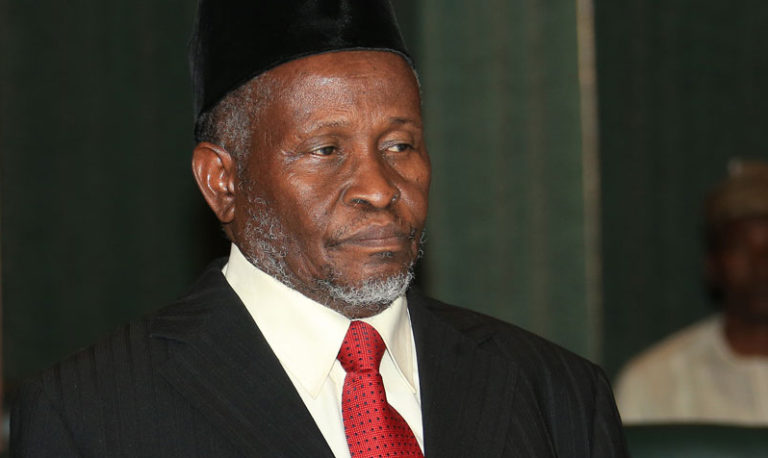
New acting Chief Justice, Tanko Muhammad did attend law school and was called to bar

WIDELY shared videos and posts have claimed that the new acting Chief Justice of Nigeria (CJN), Ibrahim Tanko Muhammad did not attend law school and was not called to bar.

Fact-checks by CrossCheck Nigeria, a collaboration of newsrooms in Nigeria which includes The ICIR, confirm that the claims are false.

According to the Nigerian Constitution (231), a person must be called to bar before he or she can practice as a legal practitioner in Nigeria.

According to Muhammad’s profile on the websites of the Supreme Court and the National Judicial Council, he studied law at Ahmadu Bello University, Zaria from 1976-1980 and then at the Nigerian Law School where he was called to bar in 1981.

On January 28, a video shared by the Facebook page “Maiyegun’s Diary Politico”, carried a caption reading: “Buhari appointed a Sharia court judge who was never called to bar or attended law school as Chief Justice of Nigeria.”

In the video a man, protesting President Muhammadu Buhari’s appointment of Muhammad on January 25, claimed that the new Chief Justice was “not even a lawyer” and “had not been called to bar.”

The video has been viewed more than 37,000 times and shared more than 2,400 times. A Facebook page called “Hope For Nigeria” also posted the video which has been viewed more than 4,000 times.
Several posts have repeated the claims.

CrossCheck Nigeria also spoke with a former chairman of the Nigerian Bar Association, Ikeja branch, Barrister Monday Ubani concerning the claim. He said: “A lawyer cannot become a magistrate if he or she wasn’t called to bar.” Muhammad began his judicial career as a Magistrate in 1982 with the Bauchi State Judiciary.

Muhammad also served as a Khadi (Judge) of the Sharia Court of Appeal, Bauchi State from 1991-1993.

According to the Nigerian Constitution (276), a person is not qualified to hold office as a Khadi of the Sharia Court of Appeal of a State unless he is a legal practitioner in Nigeria.

A factcheck by The ICIR also reveals how it is not true that Tanko was promoted to the Supreme Court based only on his background as an Islamic scholar.

Investigated CrossCheck Nigeria

FACT CHECK: Can a non-lawyer become Supreme Court Justice? And is Tanko a non-lawyer?

DURING a protest held in Abuja on Monday by lawyers, one speech stood out. A legal practitioner, who has been identified as Okere Kingdom Nnamdi, delivered a passionate speech that was caught on tape by reporters.

Nnamdi described as a “constitutional aberration” the appointment of Ibrahim Tanko Muhammad to the Supreme Court of Nigeria and his recent assignment as the Acting Chief Justice.

“There are so many lacunas in the 1999 Constitution,” he said. “That same constitution will tell you that an Islamic scholar from a Sharia Court of Appeal can be promoted to the Supreme Court of Nigeria, not minding that he was not called to the Nigerian Bar, that he didn’t read law, because he is an Islamic Scholar.”

“That was how the likes of Tanko Muhammad came to the Supreme Court. Let him tell us his enrolment number. Every Nigerian lawyer that is called to the Nigerian Bar that attended a university and the Nigerian Law School has an enrolment number. He does not have any,” he alleged.

Nnamdi, a graduate of Imo State University and Founder of Kingdom Human Rights Foundation International, also urged the federal government to follow the due process of the law, and not be found guilty of ethnic bias. He asked: “Is the office of the Chief Justice of Nigeria reserved for the people of the North? Are we a federal republic of Northern Nigeria?” The video of his speech in the last 24 hours has gained traction in social media platforms.

But what does the law say?

The 1999 Constitution of the Federal Republic of Nigeria regulates basic issues about the judiciary and contains numerous provisions concerning superior courts of record — from the Customary Court of Appeal of a State to the Supreme Court.

Section B, Part II, Chapter VII of the document talks about the Sharia Court of Appeal of a State and what qualifies a person for appointment to the office of a Kadi.

“The appointment of a person to the office of a Kadi of the Sharia Court of Appeal of a State shall be made by the Governor of the State on the recommendation of the National Judicial Council,” says Section 276(2).

Sub-section (3) adds that “a person shall not be qualified to hold office as a Kadi of the Sharia Court of Appeal of a State unless – (a) he is a legal practitioner in Nigeria and has been so qualified for a period of not less than ten years and has obtained a recognised qualification in Islamic law from an institution acceptable to the National Judicial Council; or (b) he has attended and has obtained a recognised qualification in Islamic law from an institution approved by the National Judicial Council and has held the qualification for a period of not less than ten years; and (i) he either has considerable experience in the practice of Islamic law, or (ii) he is a distinguished scholar of Islamic law.”

In other words, a person may be qualified either as a legal practitioner, with at least ten years of experience, or he has a degree in Islamic law approved by the NJC with experience of the same number of years.

The same liberty does not, however, apply when it comes to appointments in courts higher up the ladder. So, even though an Islamic scholar with no law degree may become a kadi at the state level, he cannot be appointed to the Court of Appeal or the Supreme Court of Nigeria.

Section 238 states that a person cannot be lawfully appointed as a Court of Appeal Justice “unless he is qualified to practice as a legal practitioner in Nigeria and has been so qualified for a period of not less than twelve years”.

Section 231 makes a similar provision regarding the Supreme Court, stating instead that the candidate must have practised as a lawyer for “a period of not less than fifteen years”.

The expression, legal practitioner, is defined by the Legal Practitioners Act as one entitled to practise as a barrister or as a solicitor, further stating that “a person shall be entitled to practice as a barrister and solicitor if, and only if, his name is on the roll” (that is, he or she has been called to bar).

It, therefore, means that to become a Justice of either the Court of Appeal or the Supreme, a person must have graduated from a law faculty, passed the bar examinations, and be entitled to practice as a barrister and solicitor in Nigeria.

Is Tanko a non-lawyer or a mere Islamic scholar?

Tanko Muhammad, according to his profile provided by the Supreme Court, studied Law between 1976 and 1980 at the Ahmadu Bello University, after which he graduated successfully from the Nigerian Law School in 1981. He obtained a Masters degree in Law from the same institution in 1984, and then a doctorate degree in 1998.

He started his career in the judiciary as a Grade II Magistrate in Bauchi State and then rose through the ranks. In 1990, he was appointed Chief Magistrate of the Federal Capital Territory High Court. From there, he became a Kadi of the Bauchi Sharia Court of Appeal, then Justice of the Court of Appeal, and then Justice of the Supreme Court of Nigeria in 2006.

He is the second most senior Justice of the Supreme Court, ranking only below Walter Nkanu Onnoghen who was appointed to the court in 2005.

Conclusion

It is not true that “an Islamic scholar from a Sharia Court of Appeal can be promoted to the Supreme Court of Nigeria” though he did not study Law nor was called to bar. It is also not true that Tanko was promoted to the Supreme Court based only on his background as an Islamic scholar.