Home Blog Page 2445

30,000 Naira minimum wage finally endorsed by House of Representatives

AFTER debates by stakeholders including the Nigerian Labour Congress and the Council of State, the House of Representatives has finally resolved today that the minimum wage stays at N30, 000.

As a fallout of the third reading of the minimum wage bill, the members of the House of Representatives collectively came to a conclusion that the minimum wage should be N30, 000.

It is recounted that the N30, 000 minimum wage was suggested by the tripartite  committee President Buhari set up to look into the minimum wage matter.

In the executive bill tendered to the lawmakers, Buhari had consented to the N27, 000 proposed by the Council of State contrary to the committee’s recommendation of N30, 000.

The Council of State had met to counter the proposal, offering that workers should be paid N27, 000.

The legislature has now ruled in consonance with the tripartite committee’s report and recommendation.

With about a 66 per cent increase, Nigerian workers now graduate from 18,000 minimum wage to N30, 000 minimum wage. This is no doubt compensating but still a far cry from what counterparts in other parts of the world enjoy, statistics show

Corruption level remains same, despite Buhari’s anti-graft war, says Transparency International


DESPITE President Muhammadu Buhari’s administration’s claim to be fighting corruption, the country’s Corruption Perception Index (CPI) for 2018 has not changed from what it was in 2017.

In a newly released 2018 CPI by the Transparency International, Nigeria still scored 27 as it did in 2017.

The country however moved up in the ranking from 144 to 148 out of 180  countries surveyed.

“With a score of 27, Nigeria remained unchanged on the CPI since 2017. Corruption was one of the biggest topics leading up to the 2015 election and it is expected to remain high on the agenda as the country prepares for this year’s presidential election taking place in February,” Transparency International said.

Between 2011 and 2018, Nigeria has scored 27 points four times —twice under former President Goodluck Jonathan and twice under the current administration.
2011: 24, 2012: 27, 2013: 25, 2014: 27, 2015: 26, 2016: 28, 2017: 27 and 2018: 27 respectively.

The Transparency International however, listed Nigeria, Angola, Botswana, South Africa and Kenya as all important countries to watch, given some promising political developments.

“The real test will be whether these new administrations will follow through on their anti-corruption commitments moving forward,” it said in a statement.

“Nigeria’s Buhari administration took a number of positive steps in the past three years, including the establishment of a presidential advisory committee against corruption, the improvement of the anti-corruption legal and policy framework in areas like public procurement and asset declaration, and the development of a national anti-corruption strategy, among others.”

Transparency International said, “these efforts have clearly not yielded the desired results. At least, not yet.”

According to the 2018 Index, Angola scored 19 points showing an increase of four points since 2015, while South Africa scores 43 though remains unchanged on the CPI since 2017 because under President Ramaphosa, the administration has taken additional steps to address anti-corruption on a national level, including through the work of the Anti-Corruption Inter-Ministerial Committee.

In all, Transparency International said this year’s Corruption Perceptions Index (CPI) presents a largely gloomy picture for Africa – only eight of 49 countries score more than 43 out of 100 on the index.

“Despite commitments from African leaders in declaring 2018 as the African Year of Anti-Corruption, this has yet to translate into concrete progress,” it said.

Seychelles scores 66 out of 100, to put it at the top of the region. Seychelles is followed by Botswana and Cabo Verde, with scores of 61 and 57 respectively.

At the very bottom of the index for the seventh year in a row, Somalia scores 10 points, followed by South Sudan (13) to round out the lowest scores in the region.

The organisation said the 2018 Corruption Perceptions Index (CPI) shows that the continued failure of most countries to significantly control corruption is contributing to a crisis of democracy around the world.

“With many democratic institutions under threat across the globe – often by leaders with authoritarian or populist tendencies – we need to do more to strengthen checks and balances and protect citizens’ rights,” said Patricia Moreira, Managing Director of Transparency International.

“Corruption chips away at democracy to produce a vicious cycle, where corruption undermines democratic institutions and, in turn, weak institutions are less able to control corruption.”


Ambode is in power yet he is powerless… Nigerians on moves to impeach Lagos gov.

THE social media has been agog since the news broke on Monday evening about moves by the Lagos State House of Assembly to impeach Governor Ambode.

The state lawmakers are alleging that Ambode has already started spending money from the 2019 budget which is yet to be scrutinised and passed into law by the assembly.

However, many Lagos residents believe that there is more to the impeachment moves than meets the eye.

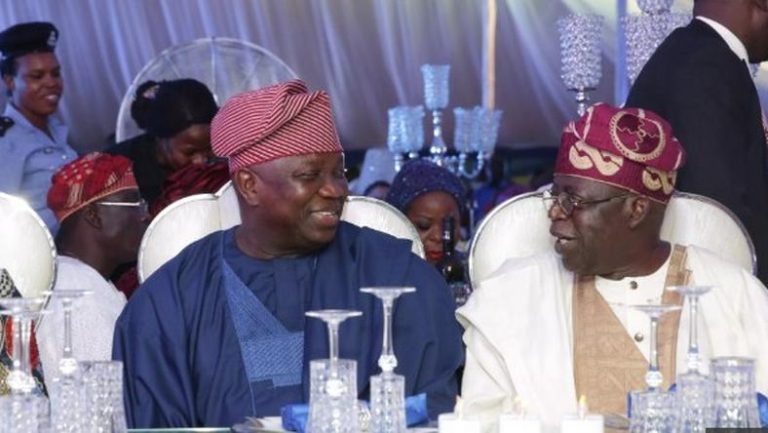
Ambode has fallen out of favour with Bola Tinubu, a former governor of the state who is still believed to be a kingmaker of sorts.

Already, Ambode will not be returning for a second term as Lagos State governor, having lost the All Progressives Congress’ governorship primary election to Jide Sanwo-Olu who had Tinubu’s backing. It is not yet clear what led to the discord between Ambode and Tinubu.

On the social media, there have been varying opinions over the development in Lagos as many described the state as a monarchy of sorts that is being administered by one man behind the scene.

Others described Ambode as a man in power yet remains powerless, while some wondered why the state assembly is in a hurry to remove a governor who has barely three months more to stay in office.

One Ogechi Obiora tweeted: “Looks like the powers that rule Lagos State are done with Akinwumi Ambode and have decided to turn him into a political wreck! They want him to be another Femi Pedro.”

Femi Pedro was Tinubu’s deputy governor between 2003 and 2007, but he fell out with his principal when he wanted to succeed him as governor. Having moved from one party to another in his quest to become governor, all to no avail, Pedro mended fences with Tinubu in 2013.

Another Twitter user, BlackBlogger sounded very sure that Ambode must have done something really wrong to incur Tinubu’s ire. “One of the reasons Tinubu has so much political goodwill is due to the fact that he is not an irrational political force. He is intelligent, patient and has a way of balancing his interest and that of his grassroots followers. I think Ambode crossed the line behind closed doors,” the user wrote.

This was supported by another post by a handle with the username ‘Root’. The post read: “Ambode‘s hands are not clean. That is why Tinubu’s puppets in the Lagos State House of Assembly have enough dirt on Governor Ambode to bring him down.”

But of all the tweets, it was one Babatunde Osunlaja that best captured the ongoing drama in Lagos politics. He wrote simply, “It’s possible to be in power and still be powerless”.

Global environmentalists, CSOs kick against privatisation of water sector

ENVIRONMENTALISTS from India, Philippines, United States and other nations of the world, on Tuesday converged in Abuja to demand access to water as a human right.

The group which comprises of several Civil Society Organisations (CSO) kicked against planned privatisation of the water sector, especially in Lagos State.

There have been reported cases of International Financial Corporation (IFC), World Bank Group visiting Lagos state, last year indicating interest to allegedly invest in the state’s public water sector, through Public Private Partnership (PPP) model.

On 7th January, the IFC announced a Memorandum of Understanding (MoU) to support the Lagos State government to improve municipal infrastructure and increase revenues.


READ ALSO:

However, the idea was confronted by Environmental Rights Action/ Friend of Health Nigeria (FoEN), with support from international allies to protest against the proposed public partnership agreement in the water sector.

Philip Alston, United Nations Special Rapporteur on Extreme Poverty and Human Rights, during his remark at the National Summit on Human Right to water, described the move as unacceptable as it is against the human right principle. He said access to water should be promoted and its affordability must be prioritised.

The event is themed Nigeria’s Water Emergency: From Resistance to Real Solutions against Corporate Control.

Alston called on the Lagos State government among others to ensure human right principle is considered in its efforts to provide potable water to the people.

“Some principles as comfortability, transparency, acceptability and accessibility should be key elements for any decision making to water supply provision. So I call on the governments to ensure they honour the human rights of water and sanitation principles as the key guidance to any decision making in Lagos.”

Members of the US Congress in the course of the campaign also supported the advocacy in solidarity against privatisation of the state water sector.

In January 2015, the World Bank announced that it was terminating its discussions with the Lagos Water Corporation (LWC).

Dr Otive Igbuzor, Executive Director, African Centre for Leadership, Strategy and Development (Centre LSD), in his keynote address, titled, “The Nigerian Water Crisis and the Imperative of Rights-Based Solutions,” canvassed for access to water right describing water as a necessity to human survival.

According to him, 59 million Nigerians, out of the estimated population of 186 million lack access to clean water.

He said 59, 500 children under five die every year due to poor water and sanitation.  Igbuzor attributed the problems among other infrastructural decay to deceit on the part of the government

“Water is very important for life and human survival. But the challenge is that the poorest of the poor do not have access to clean water and sanitation. There is a global water crisis and a Nigerian water crisis.

“The Nigerian water crisis is exacerbated by the crisis of the Nigerian state. The Nigerian State has gone beyond mediating the competing interest of the elite groups or being an instrument of the ruling class to become an instrument of deception. The end result of a dysfunctional and deceitful Nigerian state is that there is a crisis in all the sectors: Political, economic, social, educational, health, water etc.”

However, he recommended a change of attitude, promoting visionary and committed leadership to build a society where there is justice, equity and prosperity.

“The water crisis cannot be solved in isolation. It requires the resolution of the crisis of the Nigerian state,” he added.

Rev. Nnimmo Bassey, Board Chairman, ERA/FoEN also lauded the campaign, Our Water, Our Right.

He said beyond the state level, the Nigeria Integrated Water Resources Management Commission Bill currently at the National Assembly allegedly promotes privatisation of the water sector, which according to him, does not recognise water as a human right.

“The Our Water, Our Right coalition stood firm in opposing anti-people sections of Lagos Environmental Law. The media has remained a strong ally of the movement and this is very much appreciated.”

Recognising water deficit and significant water access in the country, President Muhammadu Buhari in November 2018 declared a state of emergency in the water supply, sanitation and hygiene sector.

The president admitted the grave impact of water shortage, stressing that 46 per cent of all water schemes is non-functional, thus the need for drastic action.

 

CODE gets INEC accreditation to monitor 2019 general elections

CONNECTED Development (CODE), a civil society organization working to increase transparency in government, has been accredited by the Independent National Electoral Commission (INEC) as one of the independent observer groups in the forthcoming general elections.

Speaking on the development on Tuesday, the Chief Executive of CODE, Hamzat Lawal, who will also serve as the Head of the Observer Mission, pointed out that “the foundation and success of democratic forms of government starts with credible elections guided by the active participation of relevant stakeholders, resulting in the legitimacy of elected governments”.

He said that CODE has regularly deployed resources in observing elections; with experience in Kenya in 2013, Nigeria in 2015, and the United States of America in 2016 

Lawal called on all Nigerians to shun acts of electoral malpractices such as selling their votes and engaging in violence during voting. These he said could impede the credibility of the elections. 

The INEC National Chairman, Mahmood Yakubu, had explained that having election observers at polling units helps to increase the transparency of the process and provides useful feedback mechanisms for strengthening electoral procedures.

“Election observers do not interfere with the electoral process; they observe, take note and provide reports to improve election processes. They are present to allay fears and doubts of voters who may think their votes will not count due to their preemptive notions of elections in Nigeria,” he stressed.


The ICIR partners with CODE on various projects.

Buhari, APC disowns Okorocha’s son-in-law at Imo APC rally

THE national leadership of the All Progressives Congress and President Muhammadu Buhari have urged the people of Imo State to vote only for the candidates of the party in the forthcoming election, thus refuting the purported coalition between the party and any other in the state.

The Governor of Imo State, Rochas Okorocha has been fronting his son-in-law, Uche Nwosu, to succeed him, but when he could not win the APC governorship primary election, he dumped the party and joined the Action Alliance (AA).


READ ALSO:

But still bent on ensuring that his son-in-law becomes the

next governor, Okorocha − himself an APC senatorial candidate − continues campaigning for him while working against the APC governorship candidate, Hope Uzodinma.

During previous APC functions, Okorocha would tell his supporters that though Nwosu is running on the platform of the AA, “he is APC at heart”.

However, speaking during Buhari’s campaign rally at the Dan Anyiam Stadium in Owerri, on Tuesday, Adams Oshiomhole, the National Chairman of APC, asked the party supporters to disregard the idea of supporting any other governorship candidate asides from Uzodinma.

“We have no other candidate except Senator Hope Uzodinma,” Oshiomhole announced as the crowd cheered in jubilation, while Okorocha looked on with a grin.

When President Buhari mounted the podium, after reeling out his administration’s achievement upon which he was relying to seek for a second term in office, he urged all APC supporters in Imo State not to allow “intra or inter-party (squabbles) to remove your senses of responsibility”.

He then went on to raise Uzodinma’s hand “as the APC candidate” saying “I wish us the best of luck, you and me”. Later, in what appeared more like an afterthought, Buhari also raised Okorocha’s hands asking the people to vote for him in his senatorial ambition.

It has been a drama of sorts in the Imo State chapter of the APC which is currently divided into two factions, one led by Okorocha and the other by Uzodinma.

Following Okorocha’s insistence on campaigning for his son-in-law who is a member of another party, the Uzodinma-led APC faction announced that the governor has been suspended for engaging in anti-party activities. In response, the Okorocha-led faction also said it was suspending Uzodinma for the same reason. None of the suspension was ratified by the party’s national leadership.

Zamfara insecurity: State govt. declares 3-day prayer, fasting, Quran recitation

THE Zamfara state government has declared a three-day intensive fasting and prayer session, to be accompanied by the recitation of the entire Quran by Muslim clerics and teachers, as part of efforts at curbing the insecurity challenges in the state.

The state is currently besieged by kidnappers and bandits who terrorise residents as well as travellers almost on a daily basis.

Speaking during a press conference on Tuesday, the state’s Commissioner for Local Government and Chieftaincy Affairs, Bello Dankande, said the government is exploring all the options open to it in ensuring that security is boosted in the state.

Dankade said some measures adopted by the government, such as the law against logging and illegal sale of petrol, have yielded positive results so far.

“We believe that the fast and prayers will facilitate Allah’s intervention for both the safety and success of our security men and bring the ugly situation to an end,” the News Agency of Nigeria quoted the commissioner as saying.

“These three days of fasting is voluntary to everybody because we are all either directly or indirectly affected by the situation.

“We are also soliciting for the intensive reading of the complete Holy Qur’an by Islamic scholars and their students to invoke Allah’s help.”

According to Dankade, “the ban on wood logging and illegal sale of petrol had greatly frustrated the activities of bandits as the law had affected their food supply, fuel, among others”.

Zamfara State is governed by Abdulaziz Yari, who also doubles as the Chairman of the Nigerian Governor’s Forum.

This is the second time the governor would publicly rally his people for prayer to address either social or medical problems.

In April 2017, when an outbreak of cerebral meningitis was killing hundreds of people in Northern Nigeria, Yari said it was due to the sins being committed by Nigerians that God decided to punish the populace by sending a type of meningitis that has no vaccine.

“What we used to know as far as meningitis is concerned is the type A virus. The World Health Organization (WHO) has carried out vaccinations against this type A virus not just in Zamfara, but many other states. However, because people refused to stop their nefarious activities, God now decided to send Type C virus, which has no vaccination,” Yari was quoted as saying.

“People have turned away from God and he has promised that ‘if you do anyhow, you see anyhow’ that is just the cause of this outbreak as far as I am concerned.

“There is no way fornication will be so rampant and God will not send a disease that cannot be cured.”

However, after a public backlash, including by the former Governor of the Central Bank of Nigeria and current Emir of Kano, Sanusi Muhammad, Yari’s spokesman, Ibrahim Dosara, clarified that the governor merely “enjoined all Nigerians to embrace prayers, as God who is aware of the outbreak of the ailment surely has the antidote for it”.

Later, while speaking at another event, he insisted that he stood by his words and that ” if people do not change, God will not change for them”.

The meningitis outbreak of 2017 claimed the lives of 1,166 persons across 24 states in Nigeria. Zamfara was the worst hit and together with Sokoto and Katsina made up about 87 per cent of deaths from the disease at the time.

Onasanya, UK-based MP jailed for lying in over speeding case

FIONA Onasanya, a Member of the UK Parliament (MP), representing Peterborough has been sentenced to a three-month jail term for lying when the Police issued her with a speeding ticket.

Onasanya, born to Nigerian parents, denied being the driver of a Nissan Micra, after being captured by a speed camera in July 2017 at Thorney, Cambridgeshire.

The MP, (36) who was voted into the parliament June 2017 under the Labour Party (LP), has barely spent six weeks in the parliament before committing the crime.

According to evidence filed against her, she had driven at 41mp in a 30 mph zone and was as well texting while driving.

David Jeremy QC, the prosecutor told the court that Onasanya lied “persistently and deliberately,” to escape prosecution.

In his remarks, the presiding judge, Mr Justice Stuart-Smith chastised her saying, “You have not simply let yourself down, you have let down those who look to you for inspiration, your party, your profession and parliament.”

Besides, Onasanya had earlier connived with her sibling Festus Onasanya to claim responsibility of being behind the wheel, a lie she pushed on from November 2017.

He was also sentenced to 10 months jail term after admitting to altering the course of justice.

As a result, the Labour Party already suspended her membership while the Conservatives, the opposition party are calling for her resignation from the parliament stressing that, ‘she cannot possibly represent her constituent from prison’.

Christine Agnew QC, a lawyer noted that, “regardless of the sentence, it will have a disastrous effect on every aspect of her life and career, a career she has worked very hard for.

“She has already been expelled from the LP. At the moment, she continues as an independent MP and the reason for that is it is her only income.

“It is highly likely as a result of today’s sentencing hearing that she will lose her seat as an MP.

“It is a very public fall from grace. She will inevitably be struck off as a solicitor.”

NJC issues seven-day ultimatum to Onnoghen, acting CJN to respond to petitions

0

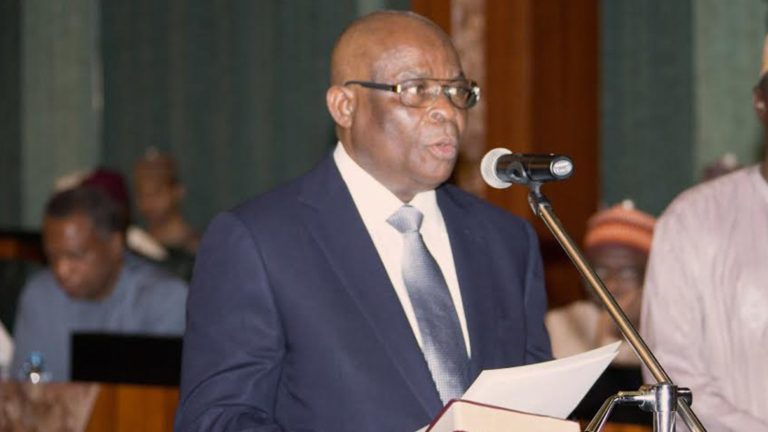
THE suspended Chief Justice of Nigeria has been issued a seven-day ultimatum by the National Judicial Council, NJC, to respond to a petition filed against him.

Onnoghen was suspended for non-declaration of assets by President Muhammadu Buhari who claimed he acted on the order of the Code of Conduct Tribunal (CCT).

The acting Chief Justice of Nigeria, Ibrahim Muhammad, was also asked to respond to a separate petition within seven days for allegedly contravening NJC rules.

He was accused of making himself available to be sworn in as acting CJN without the approval of the NJC.

The NJC stated in a communique released at the end of its emergency meeting on Tuesday that it received two petitions against Muhammad and one against Onnoghen. And a fourth petition was written against the chairman of the Code of Conduct Tribunal, Danladi Umar.

The governing body of the judiciary referred the petition written against Danladi Umar, the Code of Conduct Tribunal (CCT) chairman, to the Federal Judicial Service Commission (FJSC).

The FJSC, under whom Umar is employed, will address the petition and refer it to NJC to take appropriate action.

NJC is due to reconvene on February 11, 2019, to discuss further actions against the country’s top legal luminaries.

The emergency meeting was presided over by Umaru Abdullahi, former president of the court of appeal, following the absence of both Onnoghen and Muhammad.

The NJC director of information, Soyi Oye, released the statement below after the meeting.

THE NJC’S RESOLUTION

“The National Judicial Council held an Emergency Meeting today and considered four (4) petitions filed at its Secretariat. The petitions are Petition against Hon. Mr. Justice W.S.N. Onnoghen, GCON by Zikhrillahi Ibrahim of Resource Centre for Human Rights & Civil Education; Petition against Hon. Mr. Justice Ibrahim Tanko Muhammad, CFR by Centre for Justice and Peace Initiative; Petition against Hon. Mr. Justice Ibrahim Tanko Muhammad, CFR by Olisa Agbakoba, SAN, OON; and Petition against Hon. Danladi Yakubu Umar, Chairman, Code of Conduct Tribunal by Centre for Justice and Peace Initiative.

“Council referred the petition against Hon. Danladi Yakubu Umar to the Federal Judicial Service Commission (FJSC) which is the appropriate constitutional body empowered to deal with it.

“In line with its procedure, Council also forwarded the petitions against Hon. Justices W.S.N. Onnoghen, GCON and I. T. Muhammad, CFR to them for their responses.

“In view of the gravity of the matters involved, Council abridged the usual response period from fourteen (14) to seven (7) working days for the Hon. Justices to respond.

“Hon. Mr. Justice W. S. N. Onnoghen, GCON, and Hon. Mr. Justice I.T. Muhammad, CFR recused themselves from the meeting. Consequently, Council elected Hon. Mr. Justice Umaru Abdullahi, CON, former President of the Court of Appeal as Interim Chairman to preside over the meeting.

“Council will reconvene on the 11th February 2019.”

Soji Oye, Esq

ASUU STRIKE: Youths take campaign for resumption to social media

NIGERIAN youths have resorted to a social media campaign over the strike action by the Academic Staff Union of Universities (ASUU) which has disrupted academic activities in major federal and state universities in the country.

The campaign tagged #endasuustrike trended all day on Twitter on Monday.

Since November 5, 2018, Nigerian lecturers have been on strike over several issues, including better funding for universities, non–implementation of previous agreements, non-payment of earned academic allowances, salary shortfalls and pension matters.

In November, the National President of ASUU, Biodun Ogunyemi said the struggle was for the students’ good. He called on all Nigerians to join ASUU in putting pressure on the federal and state governments to pay adequate attention to all the academic institutions to avoid “a total collapse of the educational sector.”

But as the strike continues to linger, the students have continued to cry out to the federal government and ASUU to show more commitment to ending the indefinite strike. In its 84th day on Monday (or 12 weeks), the students say only remains a week to make up a normal semester.

Joe Solomon, a Twitter user tweeted that the future of Nigeria has been home wasting their time and lives.  “We can’t be the future by staying at home and doing just nothing,” he said.

Another user Favour Onyeoziri expressed how millions of youths’ lives have been on hold. He tweeted: “Already 3 months’ strike, that is the life of millions of Nigerian youths put on indefinite hold.”

Also, a tweet by Nwanne Erica lamented on how she has been delayed. “I should have been preparing for the first-semester examination but ASUU is on strike. Please, I don’t want a delayed future,” she lamented.

Similarly, several have cried out that they were tired of staying at home, doing nothing.  A user tweeted how the on-going strike could disenfranchise a lot of students in the forthcoming general elections. She said that students who got their permanent voters card in school are now at home.