MINISTER of Labour and Employment, Chris Ngige, says the federal government has released the sum of N163 billion to Nigerian universities from the Tertiary Education Trust Fund (TETFund) as part of efforts to end the ongoing strike embarked upon by the Academic Staff Union of Universities (ASUU).
However, Biodun Ogunyemi, the National President of ASUU, said the strike will continue as there were some important areas in the proposal they made to the government that have not yet been addressed.
Speaking to journalists after the meeting on Monday, Ngige said that the debts owed to ASUU by the government date back to 2009, but that the present administration is committed to clearing them.
”Today we have agreed to fund revitalisation. Government has released from TETFUND account about N163 billion. The meeting will reconvene at the instance of ASUU. FG is not weak in the negotiation. The strike is not slipping out of our hands,” Ngige said.
”We did not take a long time than we anticipated. We have other commitments but the important thing is that we have made substantial progress. We have reached some agreements in seven areas.
”If you aggregate the total amount of money involved, it is beyond N50 billion. We are paying in several compartments and these are debt from 2009 to 2012. We have started defraying the earned allowances there and released N15.4 billion for shortfall in the payment of salaries.”
But according to Ogunyemi, the ASUU President, the strike has not been suspended, “discussions will continue at a later date. We are going back to our members for further consultation.”
”Revitalisation is central to our academic work. Unless that area is addressed, our members will still have issues,” Ogunyemi said.
“We are not demanding for N50 billion, we are saying that the minimum that FG can release to reactivate revitalisation fund is N50 billion.”
In 2013, the federal government signed a memorandum of understanding with ASUU to release the sum of N1.3 trillion within the space of five years for the revitalisation of government-owned universities.
The money was supposed to be released as follows, 200 billion in 2013, N220 billion 2014, N220 billion 2015, N220 billion in 2016, N220 billion in 2017 and N220 billion in 2018.
The Goodluck Jonathan administration released N200 billion in 2013, but no other release has been made since, leaving a shortfall of N1.1 trillion which ASUU insists FG must release before the strike would be called off.
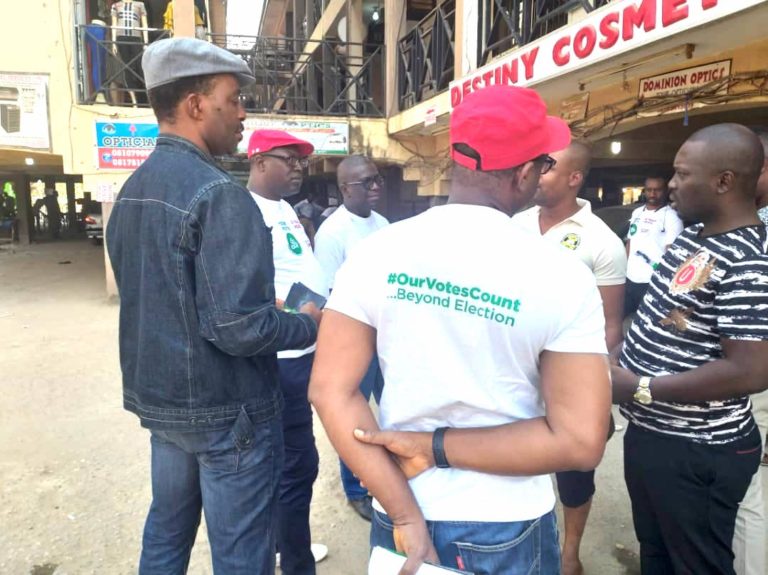
THE National Association of Seadogs aka pyrate confraternity has on Saturday, January 19, embarked on the last leg of an advocacy campaign to sensitize Nigerians resident in the Federal Capital City, Abuja, about their civic duty to participate in the 2019 general elections.
The awareness campaign known as Our Votes Count (OVC) falls under the association’s Citizen Summit project, which is organised annually.
Last Saturday, OVC was taken to the Area One Motor Park and Area One Shopping Complex in Garki where NAS members of Sahara Deck distributed fliers and educated the people on how to collect their Permanent Voter Card ahead of February 16 election, and vote.
The deadline for the PVC collection is February 8, according to the INEC.
Speaking ahead of the awareness campaign, the NAS national vice president northern Nigeria, Frank Okafor, said the Citizens Summit is embarked by the NAS to facilitate dialogue between Nigerians and their leaders with a view to holding the leaders accountable to the people, and OVC is an initiative specially designed to encourage citizens’ participation in election.
The Chapter President of NAS, Sahara Deck, Stanley Nwodo, emphasised the need for free, fair and violence-free election across the country.
Citizens’ votes matter a lot, if Nigeria must secure the future of its younger generation, he told The ICIR.
The vice president of the Sahara Deck, Victor Ofili encouraged all Nigerians to come out en mass and vote in February.
“When you don’t vote, you can’t complain.”
The previous “Our Votes Count” awareness campaigns were carried out in August and December 2018 nationwide.
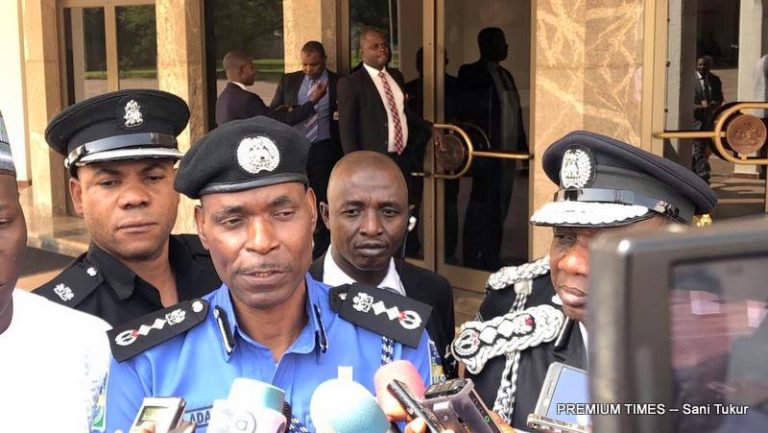
Mohammed Adamu, the Acting Inspector General of Police, has ordered the immediate disbandment of the Federal Special Anti-Robbery Squad (SARS), Special Investigation Panel (SIP) and Special Tactical Squad (STS) set up by former IGP Ibrahim Idris.
He announced this on Monday at his inaugural conference with commissioners of police and other senior officers in Abuja.
Based on the new directive, Adamu said SARS will now operate under the state’s commissioner of police while the Force headquarters unit would be under the Deputy Inspector General, Federal Criminal Investigation and Intelligence Department.
He said the rearrangement was in line with new comprehensive reforms in ethics, mode of operation, and control accountability mechanism being put in place by his administration.
Adamu has also set up a Special Election Investigation Team (SEIT) with the responsibility of investigating and prosecuting electoral offenders.
The IGP Special Investigation Panel and IGP Special Tactical Squad were established by the former IGP, Ibrahim Idris, who also centralised the operations of SARS into Federal SARS.
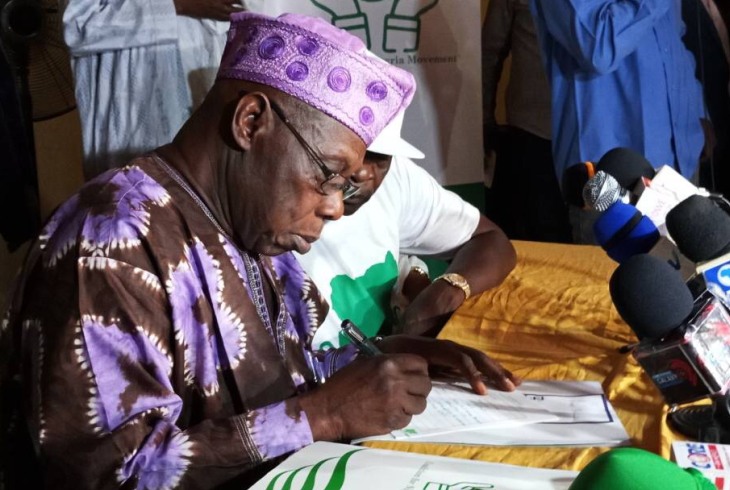
FORMER President Olusegun Obasanjo is again in the spotlight of Nigeria’s political space, this time with another scathing criticism of President Muhammadu Buhari.
Coming less than one month to another general election, Obasanjo’s statement titled “Points for action and concern” is a follow up to his previous ‘special press statement‘, published in January 2018, in which he accused Buhari of gross nepotism and passing the buck among other things.
Obasanjo was one of the elder statesmen whose endorsement and support came in handy during Buhari’s successful presidential campaign in 2015.
Prior to that period, precisely on December 11, 2013, the Nigerian media was awash with Obasanjo’s open letter to then President Goodluck Jonathan, titled “Before it’s too late“. Obasanjo said he was forced to write an open letter because, among other things, Jonathan had not acknowledged nor replied any of the “four or more letters” he had written to him in the past.
There are striking similarities between Obasanjo’s letter to Jonathan in 2013 and his recent missive to the Buhari administration.
Firstly, and perhaps most significantly, is that Obasanjo likened Nigeria’s current political situation to the Abacha era. The only difference is that under Jonathan, he warned that ” we are gradually getting into the situation we fell into as a nation during the Abacha era”, but he was quite emphatic that with Buhari, “another Abacha Era is here”.
“Today, as in the day of Abacha, Nigerians must rise up and do what they did in the time of Abacha. Churches and Mosques prayed. International community stood by us Nigerians. I was a beneficiary and my life was saved. Well-meaning Nigerians took appropriate actions and made sacrifices, some supreme, some less than supreme but God had the final say and He took the ultimate action,” Obasanjo noted.
Secondly, just like he did Jonathan in 2013, Obasanjo also expressed disappointment that Buhari could not deal with the Boko Haram insurgency as he promised he would.
“Boko Haram more in action and nobody should deceive Nigerians about this. Boko Haram is stronger today militarily than they have ever been. Boko Haram has also been empowered by the Nigerian government through payment of ransom of millions of dollars,” Obasanjo wrote.
“This administration has reached the end of its wit even in handling all security issues, but particularly Boko Haram issue, partly due to misuse of security apparatus and poor equipment, deployment, coordination and cooperation.”
Again, like in 2013 when Obasanjo warned Jonathan that “the Nigeria President must be above ethnic factionalism”, he has also accused Buhari of sacrificing “national interest on the altar of nepotic interest”.
Eventually, the 2015 general election came and went, but Jonathan did not return as President, a development many had said had a good deal to do with Obasanjo’s open letter criticising his administration.
Many have tried to wave Obasanjo’s criticism of the present administration aside, describing him as an attention seeker and one who wants things always done his way. But there is no denying the fact that all the candidates that have won the presidential election in Nigeria since 2007, had enjoyed Obasanjo’s endorsement.
It is yet to be seen whether Obasanjo’s withdrawal of support for Buhari will cost the latter the second term he so craves.
Obasanjo has been at daggers drawn, politically, with Atiku since their tenure ended in 2007. It was Obasanjo that first claimed that Atiku could not travel to the US as he has a money laundering case against him there. At a different interview, Obasanjo remarked that even God will not forgive him if he supports Atiku.
However, all that appears to be in the past now. Obasanjo has not only mended fences with Atiku, but had also referred to him as Nigeria’s incoming president. Whether this will be enough to win him the coveted presidential position will be determined on February 16.
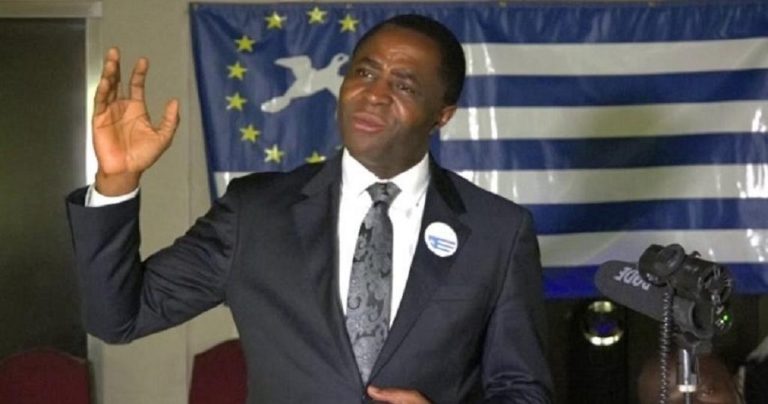
AN Abuja Federal High Court Judge, Hon. Justice A.I.Chikere has rescheduled hearing in the case brought by Sisiku Julius Ayuk Tabe and nine other Southern Cameroonian leaders challenging their abduction at NERA Hotel, Abuja on January 5th, last year.
When the team of lawyers led by Femi Falana, (SAN) Abdul Oroh and five Cameroonian lawyers stormed the court, they were informed that Justice Chikere had traveled to Lagos to attend a seminar.
The case was adjourned to Monday, 28th January, 2019.
The court was besieged by family members from Zaria, Kano Makurdi, Yola, Katsina, Calabar and Uyo.
Many Southern Cameroonian refugees in Abuja wearing #JUSTICE4NERA10 also besieged the court.
Secretary General of the Nigeria Labour Congress (NLC) Peter Ozo-Eson expressed concern about the abduction and deportation of the leaders who are mostly university professors, trade unionists and lawyers.
Ozo-Eson said the NLC and its affiliate organizations like the Nigeria Union of Teachers (NUT), Academic Staff Union of Universities (ASUU) and the Trade Union Congress (TUC) would mobilise their membership to attend the next hearing and campaign for the release of NERA 10.
The lead counsel from Cameroon, Barrister John Fru Nsoh expressed disappointed that the adjournment was not communicated to the lawyers early enough.
” This is at great expense to us. It is not fair, to us and our clients who are languishing in a maximum security prison in Cameroon,” he said.
Sisiku Ayuk Tabe was arrested in January 2018 in Abuja for engaging in a clandestine meeting against Cameroonian authorities.
SINCE the uncontrolled logging of rosewood for export mostly to China began in the Upper West Region of Ghana some three years ago, the impact is being felt in the mostly farming communities. Communities have started reporting erratic rainfall patterns, storms, poor harvests and bushfires.
“Here we don’t have the rules that govern concessions, where one can only harvest wood from allocated concessions like in other parts of Ghana where timber is harvested. In this area, people harvest whatever, and wherever they can find rosewood,” says Michael Asante a small-scale timber harvester operating in the Upper West Region of Ghana.
He adds, “Here, while the local people don’t know the value of the rosewood, no company operating in the area has permit to cut down trees; they only have permits to collect.”
There is currently a ban on felling rosewood trees in the region, but there is evidence the law is being violated – fresh trees are being cut, and not many offenders are facing the law.
Asante who says he has been in the timber business for more than 10 years, believes that at the current rate of harvesting, rosewood will be gone from the region in three years, and he has a plan ‘B’. “I will move to other tree species or go into stone quarry,” he beams.
Asked where all the wood is exported to, he said; “China.”
In Ghana, however, timber resource allocation and harvesting are regulated by the Timber Resources Management Act, Act 547 of 1998 and the related Regulation LI 1649 of 1999.
Impact on the environment, agriculture and livestock
Illiasu Tafa, the Assemblyman of the Kassana and Chinchan electoral area near Tumu, who is also a farmer, says they haven’t been having good rains since the logging began some three years ago and peaked.
“The Chinese are cutting fresh trees, we are not happy, but we can’t stop them. We even fear future generations will lose out as a result,” he says.
Another farmer in the community, Shaibu Seidu in his early 30s who in the past had mobilized the youth of the community to resist the logging said they failed to stop the logging because they didn’t get the support of their leaders.
“We mobilized, got the assistance of the police and went into the bush to drive out the loggers, but we didn’t get the support of our leaders,” he added.
Seidu said they used rosewood leaves as fodder to feed their livestock, but that has become scarce now because of the massive logging.
Asked who are responsible for cutting the trees, Musah Abdulai, who is the Youth Chief of Tokali in the Wa West District said, “Our leaders are behind it, so I can’t mention names.”
“We walk for miles to find fodder for our livestock,” says Yusif Kodimah, another farmer.
“Because of the presence of the rosewood merchants, tractor owners don’t work for farmers any more. The rosewood merchants pay more and so they choose to convey logs, rather than work on farmlands,” Kodimah added.
The competition favours the wood merchants because they are paying GH¢2000 per load while farmers pay GH¢90 per farm unit ploughed.
Another farmer who owns a tractor, Fuseini Kanton, says however, that he has turned down offers from the merchants to rent his tractor. “I refused to rent my tractor to them to convey rosewood, I don’t support their activities,” he said.
But as the activities of the loggers intensify, farmlands have become vulnerable to other forms of risks – including invasion by cattle herders looking to feed their herds.
“We are forced to keep vigil on our farms to keep away the cattle that come to feed on our maize because they can’t find rosewood leaves to feed on,” Kodimah said.
The farmers also shared frustrations about abandoned rosewood branches causing fires on their farms. The Upper West Regional Director of the Environmental Protection Agency (EPA) Mrs Zenabu Wasai-King has been reported in the news saying bushfires have reduced soil fertility, destroyed farm produce, lowered general agriculture and therefore threatening food security in the region.
“As they drag the felled logs on our farms, the effect loosens the soil and causes flooding anytime it rains,” Kanton said. Kanton and his colleague farmers in Tumu say they have noticed that since the logging intensified, the rainfall pattern has changed.
“Rainfall has become erratic, top soil and nutrients in the soil are being washed away and gullies are developing on our farms as a result of the activities of loggers. Now one has to apply lots of fertilizer to crops,” Yusif lamented.
Mohaaden Bayor, in his late 50s has lived and farmed in Tokali all his life. Pointing to the roofs of some buildings he said: “Since the logging intensified, we have started experiencing storms in this village. Look at those roofs,” he signaled, “they were ripped off by strong storms. We didn’t use to experience anything like that, but because the rosewood trees have been cut, the village has no windbreaks anymore.”
Farmers and their crops don’t also have shades when the sun is hot and blazing.
“Our crops have no shades anymore, and when the sun is hot, we farmers, can’t find shades to shelter from the heat,” says Siita Adama.
The massive logging has led to loss of trees that otherwise were serving as windbreaks. With the rosewood gone, the village of Tokali is now exposed to storms.
Rainfall data
To ascertain the complaints about rainfall patterns, ghanabusinessnews.com obtained rainfall data from the Ghana Meteorological Agency and analysed it. While Meteorologists say the massive logging in the region might not necessarily impact rainfall patterns in the area, they did state that it is a possibility.
The 10-year data shows that between 2014 and 2017 there has been a decrease in the amount of rainfall in Wa and Babile – Babile is the town closest to Tumu. The Agency doesn’t have a station at Tumu, and so we used the data from Babile.
Between 2008 and 2013, Wa recorded more than 1000 milliliters of rain, but from 2014 to 2017, the rainfall volume decreased to average 850 milliliters. It however increased to above 1200 in 2018.
Villagers in Tokali also say the rains when they do come sometimes cause floods in their farms.
Low harvest
The farmers are complaining of low harvests. Siita says he now harvests two or two and a half bags of maize per acre from his farm. “Before things changed,” he says, “I used to harvest at least four bags.”
This claim was corroborated by all the other farmers in the other communities.
When the Chinese came
The Chinese have always been in Ghana. But their presence was hardly felt beyond Chinese movies, until they got involved in natural resource exploitation – the involvement of the Chinese in illegal gold mining in Ghana is well documented. Until they started exploiting rosewood, local people knew nothing about the export value of the tree. Locally, rosewood is known as Krayie/Kpatro, the name commonly used for the exploited timber from the species Pterocarpus erinaceus belonging to the family – Fabaceae– Papilionoideae. The Chinese buyers refer to it as Kosso.
Traditionally, local people used it in the production of high quality charcoal and for building their homes. Rosewood occurs in six regions of Ghana – namely Ashanti, Brong Ahafo, Northern, Volta, Upper East and Upper West regions.
But the story of rosewood in the country dramatically changed when on April 19, 2007 Ghana signed a deal with the Chinese government to build the 400MW Bui hydropower dam in the Brong Ahafo Region. 500 Chinese workers arrived in Ghana to start construction of the dam in December 2009. To clear the area for the dam, the government permitted the removal of trees, including economic trees, and that was when the Chinese found the rosewood species and began exploiting them for export to China.
While there are no official figures, the number of Chinese citizens in Ghana’s Upper West Region at any point in time is estimated around 150. Local people say they are financing and supplying chainsaw machines and other wood processing equipment for local tree hunters.
China’s lust for rosewood is growing
Rosewood
The exploitation of rosewood happens across West Africa.
Records of a Briefing for the 66th meeting of the Convention on International Trade in Endangered Species of Wild Fauna and Flora (CITES) standing committee in January 2016 stated that a year-by-year comparison of Chinese import data indicates that West Africa has experienced a wave of boom-and bust Hongmu (rare and valuable “red wood” used primarily for antique-style furniture in China) trade cycles. The first country affected by increased rosewood exploitation was Gambia (2011-12), followed by Benin (2012-13) and Côte d’Ivoire (2013-14), Ghana (2013-14) and Nigeria (2014-15).
Hongmu exports from West Africa have grown more than 1,000 fold between 2010 and 2015. West Africa is now the world’s leading hongmu-producing region by volume. The main species is Pterocarpus erinaceus, known as “Kosso,” found in the dry forests of West Africa, where the unsustainable harvest increases the risk of desertification. In Senegal’s Casamance region, the rosewood trade has fueled rebel activities through the smuggling of Kosso to neighboring Gambia.
According to the Environmental Investigation Agency, the expanding trade has driven successive boom and bust cycles all over the world, marked by unsustainable harvest, multiple legal violations (theft, smuggling, corruption), and violence in source countries. As it decimates native stocks of rare and valuable species across the tropics at an unprecedented rate, this trade represents a challenge for the CITES and its Parties.
The hongmu industry has expanded massively over the past decade. Hongmu log imports into China have increased by 1,300 per cent from 2009 to 2014, accounting on average for 10 per cent of Chinese log imports by value from 2009 to 2015.
China’s hongmu industry is composed of 30,000 companies generating domestic retail revenues of over $25 billion, and has benefited from generous government incentives.
Demand for rosewood in China has grown exponentially over the past 15 years, from 144,500m3 imported in 2000 to over two millionm3 in 2014. After a brief slowdown in 2015, the demand went up once again in 2016 despite a general economic slowdown in China and the government’s anticorruption campaign. Logs, which provide little value-added in source countries, account for approximately 80 per cent of overall hongmu imports. During the first half of 2016, China imported on average the equivalent of 350 hongmu logs per hour.
The Agency’s data shows that Ghana is the second largest source of rosewood to China in West Africa, after Nigeria.
Rosewood exports from Ghana to China
China’s lust for natural resources in developing countries is well documented, the Chinese are known to have literally invaded Ghana and then unleashed ferociously an unprecedented wave of uncontrolled illegal mining in the country, digging for gold and polluting water bodies around the country. What is yet unknown to many Ghanaians is the invasion of the savannah woodlands in search of and harvesting of rosewood – particularly in the poorest region in the country – the Upper West Region.
Available data from the Forestry Commission shows that by the year 2013 the volume of rosewood exports from Ghana rose to 40,999 cubic meters from 125 cubic metres in 2005, with China alone being the leading importer. The data shows that in 2011, China imported 96 per cent of all rosewood produced in Ghana. China imported 3,611 cubic meters of the total 4000 cubic metres of rosewood produced in Ghana.
The Commission’s 2017 data shows that two companies, one of them a company with a Chinese name were the only two on record to have exported rosewood to China. Time Concepts Ghana Limited exported a total 397.364 cubic metres and Dong Li Trading Company Limited, also exported the same amount of rosewood to China. The exports earned the country a total of €505,447.00.
Ban on rosewood harvesting
The unrestrained harvesting of rosewood and the obvious impact it potentially has on the fragile ecology of especially the savannah regions of the country compelled the government to ban the harvesting of the species. Already, there have been five bans. But soon, an excuse was found to lift the bans at each point.
Since the lifting of the ban, rosewood exports from Ghana have spiked, making rosewood the second highest volume of wood species exported from Ghana after teak, according to data from the Timber Industry Development Division of the Forestry Commission.
In the Upper West Region however, since July 2017 a ban on rosewood harvesting has been in force. But it doesn’t appear to be fully enforced. The excuse to “collect lying and confiscated wood is being used to fell trees that are later passed as lying wood,” says Salifu Issifu Kanton, the Executive Director of Community Development Alliance, Ghana and resident of Wa.
A contractor who has been licensed to only ‘collect’ also tells ghanabusinessnews.com that more than collection is being done, as some contractors, he claims, who are licensed to only collect are cutting fresh trees.
Michael Asante, whose company, Lord of Kings is licensed to do only “collection”, says only four companies have been licensed to ‘collect’ rosewood in the Bulenga community, a community of some 4800 people near the Upper West Regional capital of Wa.
Asked about the situation, the Assemblyman for Bulenga, Nurideen Suglo says he is unaware of harvesting of rosewood in his community. Feigning ignorance, he said, “We have no economic trees here, only shea trees.”
But when he was asked about rosewood, Suglo said they have only few and even those are being cut. Asked who are cutting the trees, he said he doesn’t know because he is not involved.
“We didn’t know about rosewood, until the companies came around in 2016 and said they have permits to harvest them,” he said.
Asked if he has seen what the permits authorize the companies to do, Suglo said he hasn’t seen the permits.
“Because I am not involved, I don’t know,” he said. But he went on to say some communities are allowing the companies to fell rosewood.
“In 2016, the timber companies came around and claimed they have permits to fell the trees, but I haven’t seen any permit myself,” he adds, while pointing out that some communities are allowing uncontrolled felling of rosewood, but because he is not involved, he doesn’t know the extent, but he is aware of the consequences of the indiscriminate tree felling.
“Some of us are worried about the effect on rain patterns; we also fear our children will grow and not get to see these tree species. We also used them to roof our houses, but now not easy to find,” he said.
According to Suglo, his efforts to know which companies are involved in the tree felling and calls on the authorities to stop giving out permits have been unsuccessful.
“The community is not benefitting; only individuals are benefitting from the activities. If they want community involvement, they should involve us,” he says.
According to Kanton, 23,000 rosewood trees have been felled, but the Upper West Regional Manager of the Forestry Commission, Isaac Adonteng disagrees.
Interviewing Adonteng while posing as an independent researcher in forestry, because public officials won’t very often speak freely to journalists on matters of public interest, he said harvesting of rosewood in the region is being done at sustainable levels.
“The reserves are not at risk,” he said. He adds that it is rather population expansion, demand and fires off the reserves on farmlands that are the causes of deforestation,” he said.
He points out that charcoal production for commercial exports is also contributing to deforestation.
Adonten said the ban on rosewood is still in force. But he accused local people of hiding behind farming activities to fell rosewood trees.
In September 2017, the Upper West Regional Security Council cancelled the permits of 24 companies licensed to salvage rosewood when it was found that they were cutting down trees.
While the Upper West Region is losing its resource of rosewood trees to China, it has little to show for it. It is still the poorest region in Ghana.
The Upper West is the poorest region in Ghana
Districts of the Upper West Region. (Source: Wikipedia)
The Upper West region is the poorest in Ghana, and has very little to show for feeding China’s insatiable desire for rosewood. Rosewood exports from Ghana didn’t start until 2005, and exports have surged since then, largely driven by demand from India and China, and the Upper West Region is contributing some of its rosewood.
According to the Ghana Living Standards Survey Round 6, the incidence of poverty and poverty gap are not evenly distributed in the country’s administrative regions. The Greater Accra has a very low level (5.6 per cent) of poverty incidence, which is 18.6 percentage points lower than the national rate of poverty. The three northern regions, which comprise mainly savannah areas have very different levels of poverty incidence.
“More than four in every ten persons are poor in Upper East (44.4 per cent), increasing to one in every two in the Northern region (50.4 per cent) and seven out of every ten in Upper West (70.7 per cent),” it says.
Rosewood harvested from Tumu and surrounding communities
Documents obtained by ghanabusinessnews.com, shows that between February and April 2018, 12 companies using a total of 173 trucks have collected 5.4 million square meters of rosewood, earning the state stumpage revenue of GH¢649,200. While this shows official government revenue from rosewood harvesting, ghanabusinessnews.com obtained receipts showing that local traditional authorities and youth organisations earn revenue from the loggers. They charge fees to allow the loggers to move the harvested woods to Ghana’s port of Tema. Inquiries from the Regional Coordinating Council however indicated that the practice by the local authorities is unlawful.
The receipts from youth organisations and traditional authorities, serve as a licence to move illegally felled wood out of the region to the ports for export.
Officials look the other way
The huge revenue derived from the trade by the state seems to account for the lukewarm attitude of public officials in enforcing the ban on rosewood harvesting which is still in force in the Upper West Region.
While action has been taken in some instances, there is a general lack of enthusiasm in curbing illegal logging of rosewood. Court documents obtained by ghanabusinessnews.com shows that five persons engaged in illegal logging were arrested and arraigned before court. They all pleaded guilty and were sentenced to various fines by the Tumu District Magistrate Court as at November 2018.
Moses Luri, the Executive Director of the CSO, Social Initiative for Literacy and Development Programme (SILDEP) believes that the Forestry Commission knows there are no woods lying in the forests to be salvaged and yet it continues to issue permits to companies to salvage them.
Luri argues that government is motivated by the revenue from the rosewood business to look the other way.
He, however, suggests that the government should promote rosewood seed and treat the resource just as it treats cocoa.
Officials of the Regional Coordinating Council who say they were not authorized to speak on the matter and therefore wouldn’t go on the record, confirmed that the loggers come to the area with permits from the Forestry Commission Head Office in the country’s capital, Accra, claiming they are authorized to collect, but they end up cutting and “there is little we can do,” the officials said.
When ghanabusinessnews.com reached out to the CEO of the Forestry Commission, Mr. Owusu Afriyie, also known as ‘Sir John’ in political cycles by phone and text messages, he did not respond to a request to hear their side of the story.
“These areas are the food basket of the region, because they have some improved vegetation. These are the areas with some tree cover – rosewood. But now the rosewood is being completely cut, and they are even moving to other tree species including one known as pauper,” says Issifu Kanton.
Even though Kanton, says advocacy has been going on, he thinks the lack of political will has slowed down acts to stop the indiscriminate felling of the rosewood.
Invasion of forest reserves
During long treks through farms, we discovered freshly cut rosewood waiting to be moved, and stumps of freshly cut wood. Some can’t be exported or used because they are not matured and others have hollows – timber companies leave them rotting on operation sites. Local people are allowed to collect some to produce charcoal.
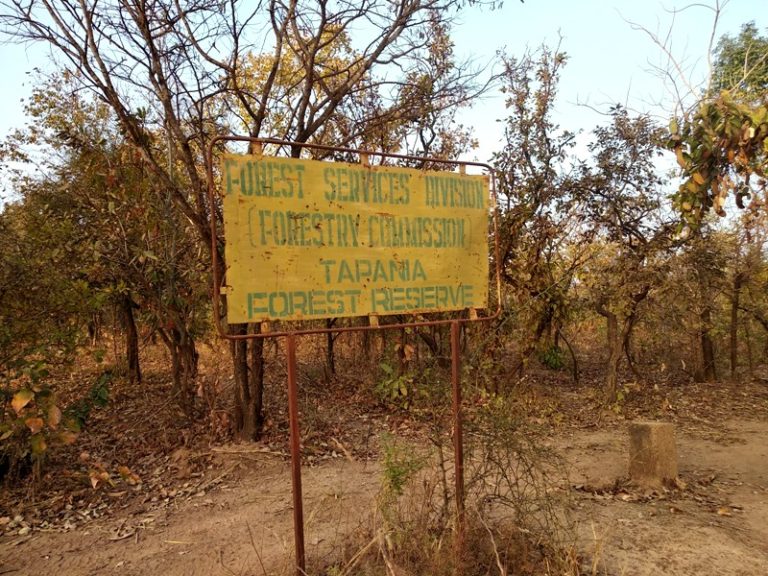
The Tapania Forest Reserve near Tumu hasn’t been spared. Despite a sign saying Tapania Forest Reserve, loggers have invaded the forest and cut as many matured rosewood trees in sight. In the middle of the reserve are scattered rosewood stumps.
CITES and other measures
Senegal and Nigeria, in responses to the indiscriminate felling and export of rosewood in these countries have worked to get rosewood included in CITES. Nigeria, for instance, through CITES has suspended trade in rosewood.
Ghanaian authorities have said a number of times that as a medium-term measure to control further harvesting of rosewood, arrangements were being made in collaboration with CITES and civil society organisations to introduce a quota system that will regulate how much rosewood was exploited at a given time.
Authorities also say a policy on Tree Tenure and Benefit-sharing for trees outside the forest was being discussed to motivate farmers to resist the illegal exploitation of rosewood and other tree resources on their farms and to stop speculative felling by illegal loggers.
While authorities tinker around for a pragmatic response, it appears the harvesting of rosewood, especially in the fragile ecological zones of the Upper West will continue.
This investigation by ghanabusinessnews.com was funded by Ford Foundation and the International Centre for Investigative Reporting, ICIR.
A TOTAL of 241 articles by student journalists was entered for the 2019 Youth Digest Campus Journalism Awards which held over the weekend at the Nicon Luxury Hotel, Abuja.
Out of these, 30 entries were shortlisted from which 15 emerged winners in the various categories, including Maryam Abdullahi of Usmanu Danfodiyo University, Sokoto, who emerged the Campus Journalist of the Year. Abdullahi had earlier been announced the winner of the Gender Equality category.
Also from the same institution, Ibrahim Adeyemi won the Editor of the year award, while Alfred Olufemi and Adejumo Kabir, both from Obafemi Awolowo University, won the Investigative Journalist and Photojournalist awards respectively.
Moshood Abiola Polytechnic (MAPOLY) Press went home with the Pen Club award, and a student of the institution, Oluwatobi Odeyinka, also won the Opinion Writer award.
Other winners include Yusuf Akinpelu – University of Ibadan, and Mercy Adekola – Adekunle Ajasin University, Ondo. They received the News Reporter and Broadcaster of the Year awards respectively.
Prizes for the Features Writer and Entertainment Reporter of the year went the ways of Ekpali Joseph from the University of Nigeria, Nsukka; Daud Adebayo, Editor of UNILORIN Watch; and Abdulhamid Abdullahi Aliyu, Bayero University Kano respectively.
The categories of Book Author, Social Media Influencer and Upcoming Writer awards were given to Aondover Eric Msughter – Bayero University, Kano; Fatima Abbas – Kashim Ibrahim College of Education, Maiduguri; and Abdulsalam Mahmud – Fati Lami Abubakar Institute of General Studies, Minna.
Emmanuel Ayamga of Ghana Institute of Journalism (GIJ) completed the list of 15 awardees as he clinched the Sports Writer award.
The Director-General of National Council for Arts and Culture (NCAC), Otunba Olusegun
Runsewe promised each of the awardees five yards of tie and dye and a sum of N10,000 for sewing the cloth, and the overall winner, 10 yards of tie and dye in addition with a sum of N20,000.
Also, AbdulAziz AbdulAziz, winner of the Investigative Journalist of the Year Award at the 2018 Wole Soyinka Centre for Investigative Journalism promised each of the awardees N5,000.
In addition to the job opportunities offered to the finalists by the Civil Society Legislative Advocacy Centre (CISLAC), the Editor of the International Centre for Investigative Reporting (ICIR), Ajibola Amzat, also declared internship opportunities for the prize winners.
The 30 shortlisted campus journalists received a sum of N10,000 each.
Campus journalists at the award ceremony
The Campus Journalist Awards is the brainchild of Youths Digest, a sister platform of Image Merchants Promotions Limited, that celebrates excellence in campus journalism.
Speaking during the event, the convener of the award, Gidado Shuaib, called for quality mentorship for campus journalists.
“Established journalists should try and come around to share relevant tips and information with campus journalists in other for them to become better.”
He also emphasised the need to fund investigative journalism produced by campus journalists.
The organisers of Campus Journalism Award also announced a partnership with CISLAC to create a ‘Campus Journalism Dialogue’ in the six geopolitical zones of Nigeria.
“We intend to empower student journalists and secure their welfare,” Olanrewaju Oyedeji, spokesperson of the Initiative, said.
“The Dialogue will provide a golden opportunity for talented campus journalists to receive professional mentorship from seasoned journalists, acclaimed writers, and academia.”
Former Minister of State for Defence, Musiliu Obanikoro, on Monday, confirmed in his witness testimony to Justice Mojisola Olatoregun of the Federal High Court sitting in Ikoyi, Lagos how in 2014, he gave various sums of money to a former governor of Ekiti State, Ayodele Fayose, who is being prosecuted for an alleged N2.2 billion fraud.
Fayose was arraigned along with his company, Spotless Investment Limited, on October 22, 2018 on an 11-count charge bordering on fraud and money laundering to the tune of N2.2 billion.
He is facing trial in connection with N1.299 billion and $5.3 million out of the N4.65 billion slush funds allegedly shared by the Office of the National Security Adviser, ONSA, through a former minister of state for defence, Musiliu Obanikoro.
Obanikoro who was led in evidence by the prosecuting counsel, Rotimi Jacobs, SAN, pleaded “not guilty” to the charges and was granted bail in the sum of N50 million with one surety in like sum.
Speaking to the court, he said “In June 2014, when we were approaching the gubernatorial election in Ekiti State, I received a call from Mr. Fayose wanting to know if there was any message from the office of the then National Security Adviser, NSA, Col. Sambo Dansuki (retd). But I said ‘no’ and promised to get back to him
“I later confirmed to him that a message had come from the Office of the NSA.
“Prior to that time, I had a responsibility of maintaining the account for the security of Lagos State.”
In his further evidence, the former Minister confirmed receiving a sum of N200 million on June 5, 2014, and another sum of N2 billion on June 16, 2014, out of the imprest from the ONSA.
When asked what he did with the money, he said, “I called Fayose to ask him how he wanted the money to be remitted.
“Fayose told me that I should change the Dollars into Naira.
“I actually wanted to say that Diamond Bank should remit the Naira equivalent to their Bank in Ekiti.
“But the manager said they could not do that in Ekiti because they did not have such capacity.
“On June 17, 2014, a sum of N560 million was transferred to him.
“I instructed the bank manager to bring the money to Akure, and it was brought through the private wing of Ikeja, Lagos Airport.
“The money was loaded into two aircraft.
“Mr. Fayose had earlier informed me about Mr. Biodun Agbele, whom he described as his contact person to take delivery of the money.
“Then, I sent Agbele and the Bank manager to Spotless Hotel in Ekiti.”
He also told the court that there was a phone conversation on another occasion to deliver another huge sum of money to Mr. Fayose three days to the Ekiti State election.
He added that: “The money, again, was from the NSA imprest.
“There is a young man called Kareem Taiwo, who was working for the government on security issues.
“He was the one I told that we had a very serious security issue in Lagos around that time.
“But I don’t think I want to divulge the reason for the security account through which the monies were issued.”
When he was asked if he wrote a statement with the EFCC, he answered in the affirmative, saying, “Yes, I was outside the country for about one year. I was in America.
“That is why I reported to the EFCC directly to avoid embarrassment when I returned home”.
Justice Olatoregun adjourned the matter to February 4, 5 and 6, 2019 for cross-examination of the witness.
STAFF workers at the Tertiary Education Trust Fund (TETFund) are seen cheering today in a newly released video as Suleiman Elias Bogoro steps into the agency’s building in Maitama, Abuja.
“Welcome sir, welcome. We are happy. We are happy,” said one of the audible employees.
Bogoro has just been reinstated as the Executive Secretary of TETFund, according to a press statement released by the Federal Ministry of Education on Monday.
“A statement from the Office of the Honourable Minister of Education, Adamu Adamu, said, the reinstatement of Prof. Bogoro is with immediate effect, with the same terms and conditions as it were in his previous appointment and as stipulated in the TETFund staff conditions of service,” said the release, signed by Ben Bem Goong, the Ministry’s Deputy Director of Information.
Jubilation at TETFUND after the sacking of Dr Baffa Bichi who was replaced by Prof Bogoro. May our downfall never be celebrated like this, Amin. pic.twitter.com/CzbID2biJg
Prior to this reappointment, Bogoro occupied the same office between April 2014, and February 2016. He was sacked by the present administration alongside 25 other Directors-General. Having spent less than two years in office, this made him the shortest serving head in the agency’s history.
In August 2016, Abdullahi Baffa, who has now been replaced, took up the reins of the organisation.
The ICIR also gathered that all staff working with Baffa have been instructed to return to their former offices.
Baffa had said on Thursday that his administration has achieved a 93.5 percent improvement in how tertiary institutions access the fund. He explained that this is as a result of the introduction of the Access Clinic and Budget Defence sessions that opened up processes pertaining to the fund.
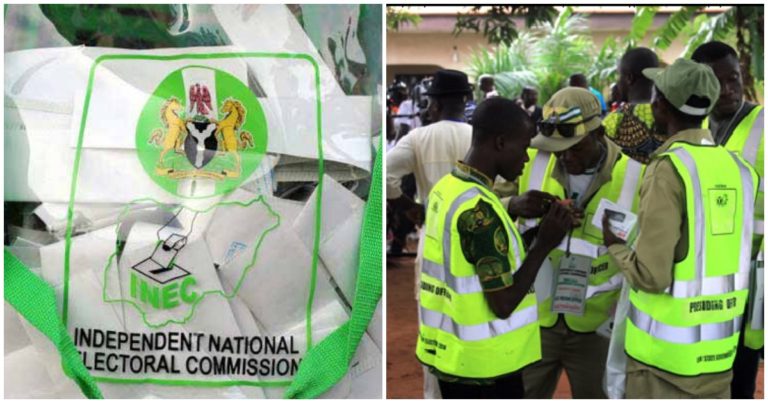
THE Independent National Electoral Commission (INEC) says the All Progressives Congress (APC) will not participate in the Rivers State governorship election.
Festus Okoye, INEC Commissioner, in a public broadcast on Sunday said the Commission is acting based on a court ruling.
“The facts on the ground as of today is that the Federal High Court Port Harcourt Judicial division, delivered two judgements and said that the APC will not participate in the elections and that the logo of the APC or any of the candidates of the APC will not appear on the ballot papers on election day and INEC has fully complied with this particular directive,” he said.
Okoye said that the Commission is acting based on existing facts and can only change its position if there is a new ruling by a higher court which would enable the party to partake in the states’ election.
He equally debunked claims by some quarters that there might be plans to postpone elections in some parts of the country.
“If anything arises as we proceed towards the 2019 elections, we will deal with that particular eventuality.
“But as at today, the reality is that the APC will not participate in the elections, the elections will go on and it won’t be postponed.
“The PDP forwarded the name of a candidate to the Independent National Electoral Commission as the candidate of the political party. INEC accepted the name of that candidate. During the period of substitution, the candidate was not substituted, therefore, the candidate’s name will appear on the ballot on Election Day.
“The only basis for the removal of any candidate from the list as at today is death”.
“We have released the final list for presidential and National Assembly elections and there wouldn’t be any change anymore,” Okoye said.


 To ascertain the complaints about rainfall patterns, ghanabusinessnews.com obtained rainfall data from the Ghana Meteorological Agency and analysed it. While Meteorologists say the massive logging in the region might not necessarily impact rainfall patterns in the area, they did state that it is a possibility.

 During long treks through farms, we discovered freshly cut rosewood waiting to be moved, and stumps of freshly cut wood. Some can’t be exported or used because they are not matured and others have hollows – timber companies leave them rotting on operation sites. Local people are allowed to collect some to produce charcoal.