Home Blog Page 2454

The debaters, Buhari’s middle finger and Atiku’s own goal

0

By ‘Fisayo Soyombo

OBY Ezekwesili, Kingsley Moghalu and Fela Durotoye must have woken up on Sunday morning feeling a measure of resentment towards Nigerians. Quite thanklessly for them, these are the same Nigerians whose votes they seek.

At Saturday night’s presidential debate, Ezekwesili spoke about her determination to lift 80million Nigerians out of poverty. She talked about removing barriers in the way of service-sector operators, as well as disrupting the current patterns of Nigerian politics and breaking the country’s perpetual cycle of leadership deficit. Moghalu harped on the importance of focusing on a holistic strategy for expanding small business and employment opportunities in the rural areas, and of electing a President who understands the economy.

With the exception of “I want a Nigeria where the son of nobody can become somebody without the help of anybody”, which made him sound like a motivational speaker rather than a presidential material, Durotoye made some interesting propositions, too, such as creating 30millions jobs by investing heavily in agriculture, housing and road construction.

Yet, more than 24 hours after the debate, the major conversations have been about the absentees — President Muhammadu Buhari and Atiku Abubakar — rather than the performance of the trio. How riled Ezekwesili, Moghalu and Durotoye must be — even if they won’t admit it — that their presence at the debate is being undermined by the relentless talk about the absentees. This development has clear implications; I will come back to that.

On the back of an error-strewn showing at APC campaign rallies all week, we have to extol the political innocence of anyone who expected Buhari to turn up at Saturday’s debate. In Kogi on Wednesday, Buhari slipped; were it not for the vigilant hands of his entourage, we might have had to deal with the ugly sight of our President sprawling on the floor. Apart from physically slipping, Buhari also made a slip of the tongue, claiming to have assumed office on May 19, 2015, whereas it was May 29. In Kaduna on Friday, he tripped; had a chair not be somewhere in sight, the President might have ended up on the deck. On Thursday in Delta, Buhari bizarrely described Great Ogboru, the APC governorship candidate, as the “governortorial candidate” — a phenomenal linguistic invention he made after first calling Ogboru “presidential candidate” and subsequently “senatorial candidate”. The same day, he also mixed up the dates he was Petroleum Minister, giving it as 1978-79 instead of 1976-78. Put in the mix his underwhelming showing at Wednesday’s town-hall interaction during which Vice President Yemi Osinbajo was largely his saving grace, and there was no way Buhari would be debating. His advisers who shielded him from the debate did their job well. Their selfish gain, though, is Nigeria’s loss. We will come back to this, too.

Conversely, Atiku’s 59th-minute-of-the-eleventh-hour withdrawal is a spectacular own goal — not so much because of the missed opportunity but because of the unintended exposure of the egotistical agenda oiling the electioneering machinery. Perhaps Atiku didn’t realise it, he didn’t necessarily need Buhari at that debate. The President may be his biggest obstacle to the presidency but the debate was no referendum on the Buhari administration. It was a forum for him to sell himself to the Nigerian electorate — to again defend himself against his popular perception as corrupt, his US trip and, more importantly, his plans for creating jobs, revitalising the economy and restructuring the country, three important anchors of his campaign. Anyone who has ever heard Atiku speak extempore will agree that he has never been found wanting in communicating his agenda for Nigeria. On Saturday, he proved even he had underestimated himself. Big, big missed opportunity.

Atiku’s explanation of the walkout has left a bitter taste in all our mouths. His explanation of coming for a “presidential debate, not a candidacy debate”, and his allusions to Buhari’s unavailability to defend himself, is self-damaging. Apparently, Atiku came for a presidency debate, not a presidential debate. Atiku considers Buhari’s absence “a slight on ALL of us and our democracy” but doesn’t think his own absence carries exactly the same significance? In any case, it is hypocritical of him to censure Buhari for skipping the debate. Olusegun Obasanjo, whose running mate he was, did not debate in 1999. Atiku is not on record anywhere to have publicly condemned it, or to have persuaded him otherwise in private. Buhari refused to debate in 2015 yet Atiku was one of his biggest backers; had Buhari given him front-line recognition in his government after his ascent to power, perhaps Atiku would be here today defending a debate-shy Buhari for 2019. But karma can be vicious, and Atiku can have no complaints.

Atiku has since clarified that his only condition for attending a debate is Buhari’s attendance. There is no denying that Atiku has always wanted to be President. He tried in 1992 without luck; he has tried again every election season since 2007. But his current attempt is evidently laced with vendetta; it is his chance to avenge his consignment to political oblivion by a man whose presidency he immensely contributed to securing. Vendetta and ego are two of the potentially numerous unedifying sub-themes of the Atiku presidential aspiration.

Coming back to Buhari, this isn’t the first time an incumbent President will be shunning the debate. Umaru Musa Yar’Adua skipped it in 2007; Goodluck Jonathan skipped the first of the two major debates in 2011 (leaving the contenders to boycott the second, which he participated in alone). But this is the time we must be most worried — because Buhari’s absence wasn’t completely occasioned by arrogance, but also by senility and the necessity to avoid a calamity. A President who can’t sit at a two-hour debate without embarrassing himself cannot last another four years without shaming us all.

The presidential candidates of the alternate political parties, with whom I kicked off this conversation, must be wondering why their performances have assumed lesser significance to the absence of ‘Butiku’, as coined by Ezekwesili. The answer is simple: 2019 is still about PDP and APC. It won’t continue forever, hopefully, but they have a say in how quickly the PDP-APC hegemony will be broken. May 29, 2019 may not witness the swearing in of a Moghalu, Ezekwesili or Durotoye as President, but not long after, we will know if they’re opportunistic presidential aspirants or they’re truly here to stay. We will know if, by 2023, these alternate parties would have recognised the need to fuse into a third force to be represented by only one but supported by all of them. We will see if they dismember their campaign teams or expand them over the next four years to build that structure that will count against them at the polls next month.

I have said it before and I will restate it: 2019 is already a lost opportunity for Nigeria. A second Buhari presidency is very likely, Yet Buhari, no matter how well-intentioned he is, is no longer in charge of even his own cabinet, much less the country. His coming back, if it happens, will be catastrophic. An Atiku presidency remains a probability; if it happens, the PDP looters already hovering over him will spearhead it. One potential consequence is that our treasury will be afflicted by kwashiorkor. And the alternate parties? Their debate can’t even overshadow the absentees — how do they hope to win?

Soyombo, former Editor of the TheCable and the International Centre for Investigative Reporting (ICIR), tweets @fisayosoyombo.

2019 election will be rigged by Buhari, Osinbajo is a conspirator… key messages in Obasanjo’s letter

THE central message in the open letter by Olusegun Obasanjo, former president, is that the 2019 general elections, more specifically presidential election, will be rigged in favour of President Muhammadu Buhari.

The other issues he raised in the letter were to buttress his belief that Buhari has failed as a president and can only be re-elected by subverting the will of Nigerians through rigging.

But the rigging is not just about Buhari because the Vice President Yemi Osinbajo, once a pastor from a respected church, has become co-plotter in the plan to rig the election by sharing N10, 000 to traders, a disguise for vote-buying.

Though not unusual of Obasanjo, his “Point for Concern and Action” open letter that he released on Sunday, summed up his belief that the only way Buhari could stay in Aso Rock beyond May 29 is through rigging of the election.

And Obasanjo strongly believed that Buhari had perfected his rigging plans through the Independent National Electoral Commission (INEC), security agencies and meddling with the judiciary. All in all, INEC is already compromised by the ruling party, according to the former president. And he is already privy to how INEC will rig the election for Buhari.

Here is the rigging arrangement, according to Obasanjo:  “expect incidences of deliberately contrived, broken or non-working voting machines or card readers, confusion of voters as to their voting stations, inadequate supply of voting materials to designated places, long line to discourage voters and turning blind eyes to favour the blue-eye political party of INEC because the Commission’s hands will be tied to enable hatchet men and women to perform their unwholesome assignment.

“The transmission and collation of results are subject to interference, manipulation and meddling. If the INEC’s favourite political party wins with all the above infractions, the result will be conclusively declared and if not, there will be a ‘rerun’, the result of which is known before it is carried out.”

To justify that he did not make up this rigging plan, Obasanjo quoted what he might have considered as INEC chairman’s Freudian slip.

“The INEC was asked if the Commission was ready for the election and if it expects the election to be free, fair and credible,” Obasanjo wrote.  “The INEC man is reported as saying in response, ‘we are ready with everything including the results!’”

He actually insisted that he was not making up this allegation because INEC already tested the rigging pattern during the recent Osun governorship election and would likely repeat the same tactics in the presidential election.

Obasanjo has uncovered other rigging plans and these are how they will be done: “His henchmen are working round the clock in cahoots with security and election officials to perfect their plan by computing results right from the ward to local government, state and national levels to allot him what will look like a landslide victory irrespective of the true situation for a candidate who might have carried out by proxy presidential debate and campaigns.

“The current plan is to drape the pre-determined results with a toga of credibility. It is also planned that violence of unimaginable proportion will be unleashed in high voting population areas across the country to precipitate re-run elections and where he will be returned duly elected after concentration of security officials as it happened in Osun State.”

Buhari is planning to do all these things because he is like Sani Abacha, the infamous dictator who once imprisoned Obasanjo. That is, the president is a lot more like power-drunk and hungry Abacha because “Buhari has intimidated and harassed the private sector, attacked the National Assembly and now unconstitutionally and recklessly attacked and intimidated the Judiciary to cow them to submission.”

However, the most disappointing person for Obasanjo in the Buhari’s evil scheming to erode Nigeria’s democracy is Yemi Osinbajo, a pastor who has become a pawn in Buhari’s desperate power game. He could not process how someone, as enlightened as Osinbajo is, could be sharing N10,000 to traders in the name of empowerment. But then the whole arrangement was part of the massive rigging by Buhari because the traders are asked to provide their permanent voters card number before getting the money.

“What an act by a Senior Advocate of Nigeria lawyer, number 2 man in the Executive hierarchy; and what is more, a pastor of one of the Christian movements led by a revered, respected and upright church leader, Pastor E. A. Adeboye. Osinbajo must have gone for, ‘if you can’t beat them, join them’. A great pity indeed and which makes people ask the questions, “Any hope?” Yes, for me, there is hope.”

For Obasanjo, the hope lies in resisting Buhari and his band of election riggers. Not only that Nigerians should stop Buhari in his road to perdition but the international community should help Nigerians to stop desperate Buhari from destroying the country for his greed.

“Such measures can vary from denial and withdrawal of visas from the people concerned and from their families to other more stringent measures including their accounts being frozen and taking them to International Criminal Court, ICC, if violence emanates from their action or inaction.”

He warned that “Nigeria must not be allowed to slip off the democratic path nor go into anarchy and ruin,” because “no individual nor group has monopoly of violence or gangsterism. And we must not forget that in human interaction, reactions are normally greater than action, though opposite.”

For Obasanjo, Buhari is not only dangerous but he has sinned beyond redemption. “It is no use, at this juncture, to keep lamenting about the failure, incompetence, divisiveness, nepotism, encouragement and condonation of corruption by Buhari administration as there is neither redeeming feature nor personality to salvage the situation within that hierarchy,” he said.

Obsanjo wondered by Amina Zakari, Buhari’s relative by marriage, would be assigned to be in charge of INEC’S collation centre, if not that Buhari is hell-bent on destroying Nigeria’s democracy. “Otherwise, it will be difficulty to deny the rumour that she is being assigned to Collation Centre for one duty only – to write out figures that are not results of the voting in the field on fake results sheets without water mark or on genuine results sheets which she will have access to as a Commissioner.”

As Buhari has perfected his rigging agenda, Obasanjo believed that the president needed to clear one more obstacle by weakening the judiciary. That is why Buhari is intimidating the Chief Justice.

“President Buhari and his hatchet men in the coming election think that the judiciary must be primed in their favour. Hence, the Chief Justice of Nigeria, Justice Walter Samuel Nkanu Onnoghen, has been harassed and prosecuted for non-declaration of his assets without following the Constitution and the law, just to make him conform or set him aside for a Buhari man to take over or act, as President Buhari and his people believe no stone should be left unturned to rig Buhari in.”

Obasanjo, a self-praised democrat, thinks that Nigerians should believe in God and stand strongly to oppose Buhari’s rigging. “Tough times do not last forever, but tough people invariably survive tough times,” he said.


35-year-old man rapes neighbor’s four-year-old girl

0

By Damilola Banjo

TAOFEEK Egunleye Babajide, a 35-year old man, is currently held in the custody of the Nigeria Police Force for allegedly defiling a four-year-old girl at Oriokuta in Ikorudu area of Lagos state.

Babjide was arrested by policemen from Owutu police station in Ikorodu on Saturday, January 19, following the complaint made on the same day by the little girl’s father, identified simply as Abdul to protect the underage girl.

On Thursday, January 17, the suspect lured the girl with biscuit into a toilet where he allegedly had carnal knowledge of her, the father said.

“She (the victim) said it happened when she went to ease herself at the mosque behind the Arabic school,” Abdul said. The suspect told the young girl he would buy her biscuit, and took her to the toilet, open her vagina and started licking it. She also said he inserted his fingers into her…”

Abdul narrated that the toddler first complained of leg pains when her mother was bathing her on Friday, January 18, but later in the day, when she saw Babajide, she remembered and informed her mother that he had removed her pants when she went to Arabic school on Thursday.

“She did not make the report immediately on Thursday,” he said. “Maybe the guy threatened her not to tell anyone but the next day when her mother was bathing her, she complained about pains in her leg.”

“Her mother asked her what happened but she said she fell down. Later in the evening when she saw some laborers in the same street we were, she called her mother’s attention: ‘mummy, mummy, see the man who pulled off my pants yesterday’”

Her father further explained that she was taken to the hospital for a checkup and it was confirmed that she had been defiled.

“Her mother then pulled her aside in other not to scare her and asked her how it happened. She narrated the story to her mother. Her mother then called me because I was not around. I told her to go to our family doctor to confirm if it was true before raising an alarm. The doctor confirmed that it was true,” Abdul said.

Following the confirmation from the clinic, Abdul proceeded to file a complaint against Babajide at Owutu police station where he had been kept for interrogation since Saturday.

The officer in charge of the case at Owutu police station confirmed that an arrest was made and that the culprit is currently undergoing interrogation.

He, however, said the station has requested that the child be examined at a government-approved hospital.

“We have told them to go and test the girl so that we can be sure. I have given medical paper for the child so that we can confirm. Whether there was actual penetration so that we can know the next step to take.

“Once we confirm, it is either we charge him to court or refer the case to the gender department of the state command. We don’t compromise or settle such a matter. But the case is still under investigation; we are waiting for the outcome of the test so that we know the next step to take.”

The suspect has been sick since he was brought into the station; he was not released because of the sensitivity of the case, the IPO said.

But he might be released today, Monday, January 21, 2019, so that he can seek medical attention, as it is unlawful to keep a sick man in detention, the policewoman added.

#10YearChallenge: Nigeria then and now

IF you have been on the internet in the last couple of weeks, you would have come across the #10YearChallenge on social media.

It’s a challenge which involves people posting up then-and-now pictures of themselves from 2009 and 2019, to show how much you’ve changed. Millions have taken part, including social media influencers such as  Joe Abah, former DG, Bureau of Public Service Reform (BPSR), Yemi Kale, Statistician-General, National Bureau of Statistics (NBS), among others.

As for purpose of the challenge, it doesn’t really have one, other than it is just a bit of fun, or to remind us of our  look in the past.

However, in this 10-year challenge, The ICIR will do a flashback of 10 selected key national socio-economic parameters, showing where we were as a nation years back and where we are now. These parameters include; unemployment rate, ease of doing business, corruption perception index, global terrorism index, foreign direct investment, the percentage of debt service to the national budget, investment on education and health, poverty index, inflation rate and ranking of Nigerian universities among the top 1,000 universities in the world.

Unemployment rate

According to the 2011 Socio-Economic Report, put together by the NBS, unemployment rate as at 2009 was 19.7 percent. It increased to 21.1 percent in 2010 and 23.9 percent in 2011.


READ ALSO:

As of Q3 2018,  unemployment Rate in Nigeria has increased to 23.1 percent from 22.70 percent in the second quarter of 2018. Unemployment Rate in Nigeria averaged 12.31 percent from 2006 until 2018, reaching an all-time high of 23.10 percent in the third quarter of 2018 and a record low of 5.10 percent in the fourth quarter of 2010. The total number of people classified as unemployed, which means they did nothing at all or worked too few hours (under 20 hours a week) to be classified as employed increased from 17.6 million in Q4 2017 to 20.9 million in Q3 2018.

Ease of Doing Business

Nigeria dropped by a spot in the latest World Bank Ease of Doing Business ranking for 2018, released by the global financial institution.

According to details of the report, of the 190 countries ranked by the World Bank, Nigeria ranked 146 in 2018, dropping by a spot from its 145th position in 2017. The report noted that Nigeria made starting a business easier by reducing the time needed to register a company at its corporate affairs commission and introducing an online platform to pay stamp duty.

In its 2009 report, of the 181 countries ranked, Nigeria ranked 118, this     a drop in four places (114) compared to its 2008 report.

Global Terrorism Index (GTI)

Institute for Economics & Peace (IEP), an independent body dedicated to shifting the world’s focus to peace as a positive, achievable, and tangible measure of human well-being and progress in its latest report     Global Terrorism Index 2018: Measuring the impact of terrorism, ranks Nigeria number three out of 163 countries as being most terrorised. In other words, Nigeria is the third most terrorised country in the world after Iraq and Afghanistan.

The 2018 GTI report is the sixth edition of such report, so The ICIR could not lay hand on the 2008 report. However, to improvise, The ICIR will use the Global Peace Index (GPI), another report published by the same Institute for Economics & Peace is a report that ranks about ranks 163 independent states and territories according to their level of peacefulness.

The GPI which is the world’s leading measure of global peacefulness measured the state of peace using three thematic domains: the level of societal safety and security; the extent of ongoing domestic and international conflict; and the degree of militarisation.

Nigeria ranks 148 out of 163 countries in the world peace ranking according to its report in 2018. Compared to its 2008 ranking, Nigeria ranked 129 out of 140 countries it ranked then.

Corruption Perception Index (CPI)

The report of the Transparency International in 2017 revealed that perception of corruption in Nigeria worsened between 2016 and 2017

Nigeria ranked 148 out of 180 countries assessed in 2017 on the perception of corruption, the index, showed that out of 100 points signaling maximum transparency and no corruption, Nigeria scored 27 points.

The 2007 report was almost the same as that of the 2017 report. In 2007 CPI, Nigeria ranked 147 out of 180 countries. It scores countries on a scale from zero to ten, with zero indicating high levels of perceived corruption and ten indicating low levels of perceived corruption, Nigeria scored 2.2 points.

Foreign Direct Investment (FDI)

Foreign direct investment (FDI) is an investment made by a firm or individual in one country into business interests located in another country. Generally, FDI takes place when an investor establishes foreign business operations or acquires foreign business assets, including establishing ownership or controlling interest in a foreign company.

According to the United Nations Conference on Trade and Development (UNCTAD), a focal point in the United Nations System for investment and enterprise development in its report, World Investment Report 2018: Investment and New Industrial Policies, put FDI of Nigeria at $3.5 billion. The report noted that the figure fell by 21 percent compared to what the FDI was in 2016 ($4.4 billion).

The 2008 report revealed that Nigeria had the highest  FDI inflow in Sub-Saharan Africa. It shows that Nigeria alongside South-Africa and Egypt both had inflows of above $3 billion.

Percentage of Debt servicing to the National Budget

Debt service is the cash that is required to cover the repayment of interest and principal on a debt for a particular period.

In 2009, the federal government earmarked N284 billion to service debt. This represented 9.3 percent of the total national budget of N3.049 trillion. The  N8.82 trillion 2019 budget proposal submitted to the national assembly for consideration and passage by the president has about N2.26 trillion to service debt. If passed, this indicates that 25.6% of the national budget would be used to service debt.

Investment in Education and Health

Investment in Education and Health has been recognised as one factor that is responsible for good human capital development and is considered an important determinant of economic growth.

A global study on countries’ investments in health care and education carried out by the Institute for Health Metrics and Evaluation (IHME), United States, ranked Nigeria 171 out of 195 countries sampled.

Going by budgetary allocation, Nigeria has continued to be defaulters to international agreements it entered into especially in the health and education sector.

For education, the United Nations Educational, Scientific and Cultural Organization, UNESCO recommended 15 percent to 20 percent as the international benchmark for education funding. However, for both 2009 and proposed 2019 budget, the federal government has never gone beyond seven percent education funding. It was 7.4 percent in 2009 and now 7.02 percent in the proposed 2019 budget.

For health, eighteen years ago, Nigeria and other member-state of the African Union agreed to allocate 15 percent of their annual budget to the health sector, Nigeria has continued to be a serial defaulter of this agreement. The ICIR had earlier reported this.

In 2009, N154.6 billion was approved for the ministry of health, a percentage of 5.1 percent of the total budget, while in the 2019 proposed budget, if passed, the federal government earmarked N365.7 billion representing just 4.1 percent of the national budget as against 15 percent recommended by the ‘Abuja Declaration’.

Poverty Index

A report by The World Poverty Clock shows Nigeria overtook India as the country with the most extreme poor people in the world in 2018. India has a population seven times larger than Nigeria’s. As of 20 January,  91 million Nigerians now living in extreme poverty represents nearly 46.4 percent of its estimated 195 million population.

In 2009, according to the Nigeria Poverty Profile Report 2010, a report which emerged from the  Harmonised Nigeria Living Standard Survey (HNLSS) conducted by the NBS with support from the World Bank, DFID (UK) and UNICEF pegged absolute poverty at 62.6 percent.

Inflation rate

Inflation which indicates the rate at which the average price level of a basket of selected goods and services in an economy increases over a period of time. According to NBS, the Consumer Price Index (CPI) which measured inflation increased to 11.44 percent (year-on-year) in December 2018 from 11.28 percent recorded in November 2018. In 2009, the inflation rate of the country was 13.9 percent as at the last quarter of the year.

Nigerian Universities rating among top 1,000 universities in the world

According to the webometric ranking of universities in 2018, it shows that no Nigerian university is ranked among the top 1,000 universities in the world. Only the University of Ibadan ranked 1,076 few numbers away from 1,000 and only 10 Nigerian universities made the top 100 universities in Africa. The Universities are, University of Ibadan-12th; University of Nigeria-37th; Obafemi Awolowo University-39th; Covenant University-42th; Ahmadu Bello University-61st; University of Lagos-62nd; University of Ilorin-67th; University of Port-Harcourt-71st; Federal University of Technology, Minna-78th and Federal University of Technology, Akure-79th.

In 2008, no Nigerian university made the top 5,000 not to talk of the top 1,000. Only two Nigerian universities made the top 100 in Africa. They are; the Obafemi Awolowo University and the University of Ibadan.


ActionAid Nigeria names ICIR reporter journalist of the year

0

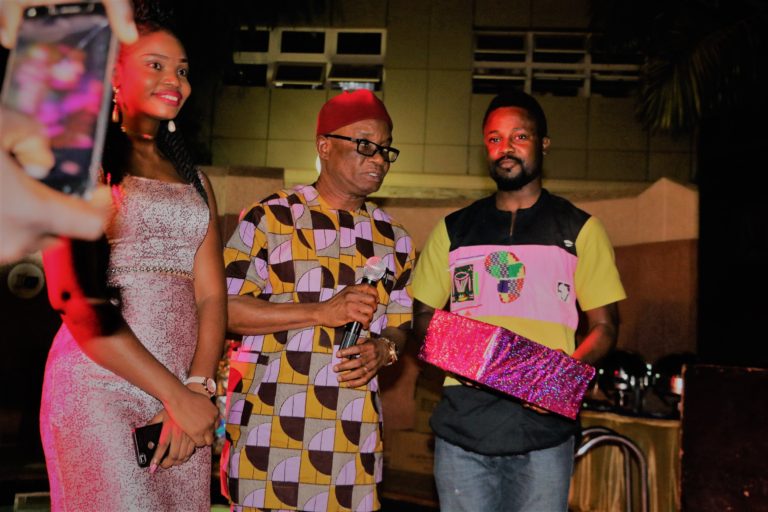
AN INVESTIGATIVE  journalist with The International Center for Investigative Reporting, Abuja, Olugbenga Adanikin has been announced by ActionAid Nigeria as the most outstanding journalist of the year in 2018.

Adanikin was named the winner in the male category of the award at a dinner held at Ibeto Hotel, Abuja on Friday.

His entry examined the plight of rural farmers in the country who official records show that, 100 milling centers were built in their various communities to ease the production of locally milled rice but his piece revealed that the milling plants were non – existent.

Three months after his report, the Federal government approved the disbursement of the rice processing machines to the affected rural areas.

The entries for the award were praised by the jury for the extensive fieldwork, consultation with experts and provision of evidence-based investigative stories which uncovered a form of injustice and resulted in positive actions that benefitted vulnerable groups.

Journalists based in Abuja, who are active members of the Journalist Against Poverty Platform, a coalition of journalists working to amplify voices of vulnerable groups and promote social justice through their style of reporting were considered for the inaugural award.

ActionAid and its partner – Journalists Against Poverty (JAP) empower journalists through counterpart funding to examine the damage of corruption, social injustice, and poverty have done to the country and its citizens, and lead the campaign against the vices through their writings.

Arit Effanga of CTV Abuja, was named the winner in the female category.

At the event, MacJohn Nwaobiala, a member of ActionAid Nigeria’s Board of Trustees commended the winners and urged them to remain committed to the ideals of ActionAid worldwide which involves transparency, accountability, equity and justice for all.


Saturday’s presidential debate was a discredited event- Sowore

THE presidential candidate of African Action Congrss (AAC) ,Sowore Omoyele says the presidential debate held Saturday night in which he was excluded by the organisers, Nigerian Election Debate Group (NEDG) and Broadcasting Organisation of Nigeria (BON), was a discredited debate.

Sowore told The ICIR in an interview on Sunday that the debate was discredited because candidates like him were not given the opportunity to participate.

“I have preference for a debate that is robust. My expectation was for all candidates to come for the debate especially the major political parties so that we can tell the story of their failure to the Nigerian people,” he said.


READ ALSO:

“The people that I wanted to debate with ran away. They cannot defend their history, they can’t defend their programmes, and they can’t defend their characters. They ran away. But the good news is that whether they showed up or not, the debate took place it’s just that the debate was not a credible debate.”

His supporters protested his exclusion Saturday in front of Congress Hall of Transcorp Hilton Hotel, Abuja, venue of the debate.

He also accused the organisers of the debate of shielding the already discredited Nigerian system by not allowing other candidates to be part of it.

According to him, the debate should be allowed to be handled by credible people.

“They are shielding the establishment. That’s what they are trying to do. And the people they are trying to shield refuse to show up and that was a discredited debate,” Sowore said.

He argued that there should be several debates, backing calls for a legislation that will make it compulsory for people who want to become Nigerian president to be forced to participate in at least three debates.

“You can’t lead a country without talking or debating on the future of the country. People want to hear from you. These platforms are ways people can hear from you, clearly understand your manifesto, your agenda and sometimes even your character.”

“That was not achieved yesterday because the people who should have been there were not given the opportunity to be there and those who were probably ought not to be there were smuggled there so that they won’t challenge the status quo,” Sowore lamented.

Speaking on the absence of President Muhammadu Buhari and the presidential candidate of Peoples Democratic Party (PDP), Atiku Abubakar, the AAA presidential candidate likened them to “two fathers who stole their kids’ dinner and that of NEDG/BON -recruited-to prevent the kids from holding them to account.”

He said the “thieving fathers went missing from the dinner table and NEDG/BON had eggs on their faces.”

Only Oby Ezekwezili, presidential candidate of  Allied Congress Party of Nigeria (ANCP), Kingsley Moghalu presidential candidate of Young Progressive Party (YPP) and Fela Durotoye of Alliance for New Nigeria party took part in the debate,

Organisers of the debate were not immediately available for comment on the exclusion of Sowore from the debate.

Why the idea of NEDG/BON debates must be permanently killed

0

By Tope Fasua

THERE is only one question to ask; why would Nigeria have three presidential candidates debating ideas on its most popular platform in the year 2019, when it had 11 candidates debating ideas and showing the country what they had to offer in 2015? It cannot be that the political space has shrunk, can it?  No, it expanded instead, what with the licensing of many more political parties and the scramble for the number one seat in the land by many a new entrant.

Could it be that Nigeria’s population has reduced and the NEDG/BON people couldn’t find people to debate? Or perhaps that someone in that organization believes Nigerians no longer need ideas – maybe because past ones were never used? What justification can we find, for a deliberate, unilateral, arrogant, cavalier, shrinking of the space for expression by an organization which has ‘Nigeria’ in its name, however, formed?

The infamous, lopsided, and fraudulently-put-together debates of the 19th of January have come and gone.  Three candidates attended, even though the debate was apparently not for them. Any of the candidates could as well leverage on their appearance and the unmerited prominence it affords them (all but one in my view).  It will be their good luck. But there is no honour in being featured on a dishonourable and fraudulent platform. As alluring as it may seem, the three candidates who showed up at the debate, were in effect used as props, to prop up the waning integrity of the NEDG platform (pun unintended).  It came to pass that they were used to try and purchase legitimacy where there is none.

The real aim of the NEDG this time is to make what should be a pan-Nigerian concern, into a simple Buhari/Atiku affair. Both men have largesse to disburse. Buhari currently holds the purse. There is money to be made for the masquerades behind NEDG/BON if they played the game right and gave Buhari a soft landing.  Atiku also has money and some say he stands the highest chance of upstaging Buhari.

What NEDG and its masquerades have no right to do, is to prejudge an election, to predetermine an election for people, and summarily lock out other legitimate parties that had something to say. The NEDG has no right to unilaterally preserve secured positions for the APC and the PDP; the two infamous political parties, conjoined at the brains, that has turned Nigeria into a complete basket case over 20 years.  They know better. They were warned, but they went ahead anyway… with the usual impunity for which Nigeria is now globally recognized.

And for this reason, the idea of an NEDG/BON debate should be permanently killed and forgotten, its promoters should be openly shamed, and they must never be allowed to try and wangle their ways back into the consciousness of the people of this country whether in 2023 or anytime before. NEDG should henceforth be known as a contraption that threw Nigerian people under the bus, opened us all to insult, worked hard to maintain a terrible status quo or even a reversion to a despicable status quo ante, and probably positioned for pecuniary benefits even if the country is going to the dogs. They couldn’t be bothered.

For emphasis, I have been vocal about this travesty. Why would nine presidential candidates debate in 2003, eight in 2007, five in 2011, 11 in 2015 and then three, just three, in 2019? Are we no longer running a democracy? Do the people no longer matter? How else can people be represented when the political space is shrunk by a single debate organizer which decides to pander to the whims of paymasters, puppet masters, moneybags, godfathers or custodians of raw power?

The NEDG today epitomizes and symbolizes the plunging of Nigeria into mediocrity in all spheres. Its conduct shows that even private entities have been dragged down into the mire of impunity by their public dispensers of largesse. Given the fact that the fame and success of that arrangement is an agglomeration of everybody’s efforts, and indeed the investment of emotions by everyone over the years, it should now be stated that NEDG – The so-called ‘Nigerian’ Elections Debate Group, is the number one enemy of the Nigerian people because it has actively shut out the voices of the people, and deprived them of much-needed hope, catharsis, expression, variety of ideas, and even a much-needed intellectual entertainment via the debates.

I place it on record that I wrote to INEC extensively on this and I retain all acknowledgements. I believe INEC advised NEDG to ensure ALL POLITICAL parties were given a level playing field as required by the law of the land, but INEC was defied or ignored. That will also be determined in court, because I have let INEC know that this is a first salvo towards the rigging of the next elections, and we shall proceed to court with INEC as a party to this charade.

NEDG/BON is not an entirely private entity because BON itself contains ALL federal and state government broadcasting agencies – radio and TV – which are funded with taxpayers’ money. Therefore my right and the rights of all other candidates and indeed all right-thinking Nigerian has been summarily breached.  It behoves on NEDG to be extra careful but I reckon they started to feel above the laws of the land, just like many people in government now conduct themselves.

The charade of a debate and the ensuing drama played to the favour of those of us who were cheated, some of whom are exploring redress through our cumbersome judicial architecture. NEDG/BON and its promoters were fawning over Atiku/Buhari thereby apparently putting down and devaluing the candidacy of all else – including the 3 poor fellows who eventually attended and were almost called houseboys and housegirls by those who refused to go.

The genuflection of NEDG/BON blew up in its face. First Buhari sent Professor Sagay to say he will not be debating with political neophytes, lightweights and toddlers. Then Atiku got to the venue, sized up the three candidates in attendance and chose to ignore them. He said he came to debate with Buhari and Buhari alone. Between he and Buhari they rubbed salt into the injury of Nigerians and insisted that the elections are all about them, and not about poor Nigerians whose lives need to be urgently improved. I believe it is a moment of shame for a discredited platform called NEDG. For me, the way it turned out was a victory for the downtrodden, and the war for the reclamation of the soul of our nation has just begun.

The ideal scenario if NEDG/BON had any iota of respect for Nigerians, or any desire for a better nation, would have been to organize a very transparent process, and ensure that as many who express interest in debates are invited. It’s not a big deal to plan an elimination process. They could even make the money to fund it through a process of paid voting.  If political parties have swollen to 91, from 24 in 2003, and candidates have risen to 73 (though more than 40 are placeholders), from 14 in 2015, they ought to know that something tectonic has shifted in our political terra firma.

No organization, no King Kong, can stand in the way of what has been unleashed and not be obliterated. If NEDG was anywhere near honest and refused to capitulate the usual cowboy-hood that has seized many things Nigerian lately, they would have organized series of debates and entertained the people intellectually, and helped greatly to elevate the quality of public discourse. But no, not them. The contraption is populated with people who Nigeria will do best to relegate in a dark, distant past. They will still hear from us.

NEDG could have served Nigerian people. But it chose this time, to sell its soul to the Buhari/Atiku axis of mediocrity.

Tope Fasua is the Presidential Candidate of the Abundant Nigeria Renewal Party (ANRP – THE COMPUTER PARTY)

Nigerians give ‘red card’ to Atiku, Buhari for shunning debate

THE long-awaited debate for the top presidential candidates in the 2019 general election has come and gone with the two top candidates, Muhammadu Buhari and Abubakar Atiku boycotting the event, causing dismay among the electorate.

Both men avoided the debate, despite a nearly two-month notice.

While Buhari said he had a busy schedule on Saturday, Atiku, who had flown into the country from the United States of America, was at the Transcorp Hilton venue of the debate but left when it became obvious Buhari would not attend.

During the debate, the three other presidential candidates namely, Kingsley Moghalu of the Young Progressives Party, Fela Durotoye of the Alliance for New Nigeria, and Obiageli Ezekwesili of the Allied Congress Party of Nigeria, described the absence of the septuagenarian duo of Atiku and Buhari as a confirmation that both men have little or no role to play in the future of Nigeria.


READ ALSO:

But outside the debate hall, many Nigerians made their feelings known using the easiest means they could – the social media.

Thousands of posts were made on Facebook and Twitter as Nigerians described the actions of Atiku and Buhari in boycotting the debate as disgraceful and disrespectful.

One of such tweets, by Dipo Awojide, whose username is @OgbeniDipo, read: “Ezekwesili – present, Durotoye – present, Atiku – absent, Buhari – absent, Mogalu – present. Disgraceful and disrespectful for Buhari and Atiku to have ignored this debate.”

Another tweet by one Shina Peller described the boycott as an “insult” on Nigerians.

Many others, however, believe that Atiku is the worst loser as he blew an opportunity to warm his way into the hearts of many Nigerians as the leader who really cares about them.

Amadi Chima, a member of Atiku’s Peoples Democratic Party (PDP) could not hide his disappointment. “Sir Atiku,” he wrote, “we asked you to walk away if PMB sends a surrogate to the debate NOT if he didn’t show up. Today was an opportunity to speak directly to the Nigerian people on your programs away from the jamboree and charade of rallies.

Another popular Twitter user, Segun Awosanya (@segalink), wrote: “Is Atiku running to beat Buhari or Running for President of the Federal Republic Of Nigeria? The people know that Atiku may not be as articulate as the trio of Moghalu Kingsley, Fela Durotoye, Oby Ezekwesili, or as ruthless as Omoyele Sowore, but showing up side by side with these ones count.”

Hundreds of other Nigerians have condemned Buhari and Atiku on Facebook for failing to participate in the long-awaited debate.

But while the anger and tantrums continue about how the so-called political elites do not care a bit about the ordinary Nigerians, on Twitter user, Kemi Lala Akindoju, asked an important question. She said: “I hope this anger on Twitter streets will translate to REAL votes. How many of us here saying we are disappointed in Atiku and Buhari have collected our PVCs?”

2019 Election: Moghalu, Ezekwesili, Durotoye debate, as Atiku, Buhari chicken out

IT was a battle of the newcomers as Kingsley Moghalu, a former Deputy Governor of the Central Bank of Nigeria (CBN) and candidate of the Young Progressives Party (YPP), Obiageli Ezekwesili, a former Minister of Education contesting on the platform of the Allied Citizens Party of Nigeria (ACPN), and Fela Durotoye, a business and leadership consultant, flying the flag of the Alliance for New Nigeria (ANN) squared off against one another at the 2019 presidential debate which held at the Transcorp Hilton Hotel in Abuja, on Saturday.

The two other top presidential candidates that were supposed to be at the debate − the incumbent President, Muhammadu Buhari of the All Progressives Congress (APC) and former Vice President Abubakar Atiku who is running on the platform of the Peoples Democratic Party (PDP) − boycotted the event, citing rather flimsy excuses.

The three candidates, asides taking turns to criticise Buhari and Atiku for disregarding Nigerians and refusing to take part in the election, also discussed what their respective policies and programmes would be should Nigerians vote any of them into power come February 16.

ON THE ECONOMY

Moghalu noted that the economic development of Nigeria is dependent on a drastic change in the political system in the country. “We cannot fix the economy if we don’t fix our politics,” he said.

He said that Nigeria as a country does not have an “economic philosophy”, saying that “we will have to decide whether we are a capitalist country or a socialist country” and “what type of capitalism we are practising”.

Moghalu promised to invest in skill education as a means of boosting the economy and making funds available for the youths via a N1 trillion venture capital fund he intends to set up, to enable young people have access to capital to set up small businesses and drive employment.

For Durotoye, his administration will focus on three main sectors which, according to him, are the most crucial to economic development and diversification. They are: “Agriculture, housing construction, and road construction.

Durotoye said only 35 per cent of Nigeria’s arable land is being used at present for the purpose of Agriculture. He said his government would drive that statistic up to 50 per cent, and by so doing, getting about 30million more people into the labour force.

Talking about the poor housing, road, and power infrastructure in Nigeria, Durotoye regretted that about 108 million Nigerians are homeless and that the country has a power sector that is crippling businesses. All these will change if he wins the presidency.

On her part, Ezekwesili said her administration plans to lift 80 million Nigerians out of poverty by enhancing their productivity so that they can earn more. This can be done by investing in women, as according to Ezekwesili, research has shown that when you make an input in women, they oftentimes outperform their male counterparts by as high as 40 per cent.

Another means of ending poverty, Ezekwesili said, is by removing the bureaucratic bottlenecks in the services sector.

COST OF GOVERNMENT

Moghalu said his government would move redundant civil servants to the security sector, pledging to recruit 1.5 million policemen and women in his first four years in office. He also promised to introduce a programme to help some civil servants move to other “productive engagements” or into the private sector. “Within two years, my government will bring the cost of recurrent expenditure down to 50 per cent,” he said.

Ezekwesili said she would work with the Steve Orosanye report on the rationalisation of the bureaucracy because it contains largely all that needs to be done to end some “illegalities” that is overburdening Nigeria’s workforce. She also said that her government would ensure increased productivity by fixing people in their areas of competence. The private sector would lead the economy, Ezekwesili promised.

Durotoye’s plan is more dramatic; he promised to be the first president that rides in a bus alongside his cabinet members, rather than driving in a convoy of numerous vehicles. He also promised to increase Nigeria’s revenue generation through taxes. Nigeria, he said has about the lowest tax to GDP ratio in the world – six per cent. Civil service reforms also topped Durotoye’s agenda for cost-effective governance.

ON ICT

The three candidates’ remarks centred on how young people would be empowered through education and other incentives to use technology as a tool to drive innovation and economic development.

Moghalu, however, was more direct, saying he would create incentives for young Nigerians to take their start-ups closer to the rural areas, thus making technology available to the many Nigerians dwelling in rural areas.

ON TERRORISM/INSURGENCY

Moghalu said his main strategy would be to fight corruption in the Nigerian military, which he said is the major factor fuelling the insurgency in the North East. He also said he would remove the procurement of military hardware from the hands of private contractors, so as to ensure that only quality military hardware are made available for our armed forces.

Durotoye promised to prioritise the institution of effective leadership in the nations security makeup. Also, proper training, better equipment and a robust welfare package for the security personnel would be top priority so that by so doing they would be convinced that Nigeria is a country worth fighting, and even dying for. On Boko Haram, he said his government would try to change the ideology that fuels terrorism as

Ezekwesili, on her part, said that she would firstly, send a very sharp message “that there is a new sheriff in town”, by ensuring that there is a consequence for every act of savagery committed in the country. Her government would also create a SWAT team, “made up of the best brains in town” to focus on eradicating terrorism.

All three candidates also spoke about investing in proper intelligence gathering to boost security.

ON INTERNAL SECURITY

Durotoye said his government would invest in drone technology to ensure 24 hours real-time monitoring of Nigeria’s vast borders. He promised to work with residents in border communities and make them see the need to contribute to border security by reporting illegal movement of foreigners into their communities. Also, agencies in charge of border control − would be better equipped.

Moghalu said his attention would be focused on the Nigeria police force as “Nigeria does not have a police force in any reality that is close to anything we know in the civilised world”.

“My government will invest heavily in creating a 21st-century police force,” and the focus will not only be on recruitment but also on training and equipping the force.

He said that Nigeria has a ratio of 175 policemen to 100,000 people, which is a far cry from the United Nation’s recommendation of 300 or 400 policemen to 100,000 people.

ON EDUCATION

Ezekwesili pointed out that education is one vehicle that can transport the child of the poor into the middle class and upper class, hence her administration would be prioritising early child care education. She admitted that Nigeria’s education sector requires comprehensive reforms at all levels − basic, secondary, and tertiary − and that the key reforms would be in the curricula.

The former education minister said her government would also focus on technical and innovation education and massive training and equipping of teachers.

Durotoye said his government would ensure that only the best quality of teachers, who are committed to the success of their students, are allowed in classrooms. Also, teacher specialisation would be encouraged to put an end to a situation whereby a single teacher takes students on several subjects.

Durotoye also promised to upgrade education infrastructure across the country so that schools would be environments that are conducive for learning.

Moghalu first said his government would increase the budgetary allocation to education from the present seven per cent to 20 per cent in his first year in office, and the bulk of it would be on capital expenditure as opposed to what is obtainable currently.

Asides from promising free secondary education, Moghalu also promised to refocus education in Nigeria to pay more attention to ICT, vocational training, and entrepreneurship.

ON HEALTH

Moghalu said he would move the health budget up to 15 per cent in accordance with the Abuja declaration of 2001. He promised to set up a “world class” medical facility in all the six geo-political zones of the country, as well as working to ensure that the billions being spent by Nigerians annually on medical tourism are saved.

Ezekwesili promised to revitalise and expand access to the National Health Insurance Scheme to include persons without jobs. She also promised to look into the challenges in the health sector driving Nigeria’s brightest medical experts out of the country.

Durotoye said he would collaborate with state and local governments to deliver quality and accessible primary healthcare to the citizens, especially as that is the closest to the majority of Nigerians. Durotoye said other health professionals would be trained and deployed to man the PHCs as opposed to medical doctors.

He also promised free healthcare for persons below the age of five and above the age of 60, as well as for pregnant women. All these he said would be funded from the monies saved from cutting down the cost of governance, and also from public-private partnerships.

ON NATIONAL INTEGRATION

Moghalu promised to run a government where “no one is above the law and there are no sacred cows”. He said his administration would be based on equity and respect to the rule of law, as these are ingredients that drive integration.

He pledged to address the issue of perceived marginalisation of a particular section of the country which has resulted in, for instance, the Biafra secessionist struggle in the South East.


120 days after, Buhari yet to act on Shittu’s NYSC scandal

IT has been over 120 days since it was uncovered that President Muhammadu Buhari’s Minister of Communication, Adebayo Shittu, did not take part in the mandatory one-year national service for all Nigerian citizens who graduated from the University before the age of 30.

The report detailing Shittu’s NYSC skipping scandal was published by Premium Times on September 20, 2018, exposing how the minister had graduated from the department of law in the then University of Ife (now Obafemi Awolowo University, Ile-Ife) at the age of 25.

He was born, March 23, 1953, graduated from Ife in 1978 and from the Nigerian Law School, Lagos in 1979.

Shittu admitted that he did not take part in the NYSC scheme, but claimed that he thought his first political post after graduation could suffice as national service.

According to him, he contested and won a seat in the Oyo State House of Assembly immediately after his graduation from the law school, and that he believed serving as a state legislator is also the same thing as serving the country in the NYSC.

Minister of Communication, Adebayo Shittu

Shittu’s NYSC scandal was uncovered by Abdulaziz Abdulaziz, the same reporter who unearthed the case of certificate forgery involving the former Minister for Finance, Kemi Adeosun.

Adeosun who graduated from a foreign university before the age of 30, did not take part in the NYSC as required by law, rather she procured a fake NYSC certificate and was parading same as the original. She has since resigned from her post and returned to her base in the UK, after explaining that she did not know that the certificate given to her was fake.

Section 2 (1) of the NYSC Act mandates all Nigerians who earn degrees or higher national diplomas from tertiary institutions in Nigerian and abroad (effective 1972/73 session) to participate in the scheme.

Skipping the compulsory national service is an offence under the NYSC law and it is punishable with up to 12 months imprisonment. Also, employers are mandated by law to always request NYSC certificate of national service from employees as part of the conditions for hiring.

Those exempted by the law are those who graduated after their 30th birthday, persons with national honours and individuals who serve in the military and intelligence organisations. Shittu does not fall into any of these categories.

However, in outright violation of the NYSC Act, Shittu has held many top offices both in the executive and legislative arms of government in the federal and state governments.

Aside from being a state lawmaker, Shittu has also served as the Oyo State Attorney General and Commissioner for Justice, as well as a member of the Oyo State Judicial Service Commission.

At the time the NYSC scandal story broke, Shittu was preparing to run for the governorship position in Oyo State, but his party, the ruling All Progressives Congress screened him out citing his non-participation in the mandatory one-year national service as reason.

Even at this, President Buhari still did not see the need to act on Shittu’s clear violation of the NYSC Act.

Meanwhile, Shittu said he has gone to court to seek clarification on whether his joining the Oyo State Assembly immediately after leaving law school does not amount to national service.