Home Blog Page 2471

Osinbajo, Obi, others spar at vice presidential debate

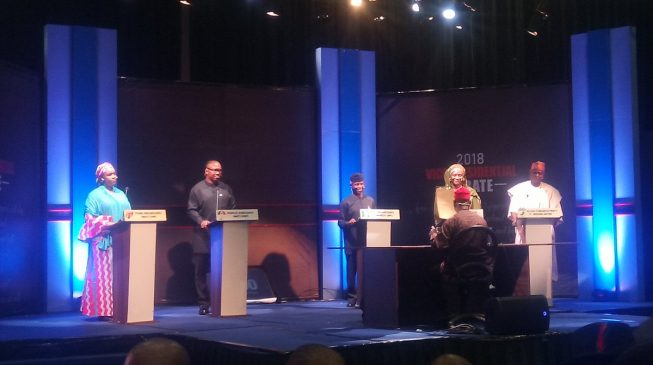
THE vice presidential debate ahead of the 2019 general election kicked off at 7 pm on Friday with Vice President Yemi Osinbajo of the ruling All Progressives Congress (APC) going head to head against Peter Obi of the Peoples Democratic Party (PDP).

Among the topics that came up during the debate were the issue of the war against corruption, petrol subsidy, diversification of the economy, the Continental Free Trade Agreement etc.

Vice Presidential candidates of the Allied Congress Party of Nigeria (ACPN); Alliance for New Nigeria (ANN); and Young Progressives Party (YPP), Ganiyu Galadima, Khadija Abdullahi, Umar Getso, respectively, also took part in the debate.

On the war against corruption, Obi said the Buhari administration was going about it the wrong way. He said the economy is almost brought to a standstill in the guise of fighting corruption.

“You cannot shut down your shop because you are pursuing a thief,” Obi said. He noted that almost all economic indices in the country are down from what they used to be in 2015 when the APC took over power.

In response, Osinbajo said given the massive corruption that has happened in the country in the past, the fight against corruption demanded the thoroughness which the present administration is giving to it.

He noted that all the international economic organisations were unanimous that corruption is the major hindrance to development and growth in Nigeria, hence the zeal with which the Buhari administration is combating it.

On the issue of subsidy, Osinbajo admitted that the government is still paying some sort of subsidy but that the subsidy “is being taken from the balance sheet of the NNPC”.

He maintained that “subsidy helps” and that once it is removed, the price of almost everything will shoot up. “Subsidy is useful now,” Osinbajo insisted.

But Obi disagreed, saying that what the Nigerian government is subsidizing at the moment was “inefficiency”. He said there is an average of 2 million cars on Nigerian roads, and as such subsidizing petrol does not make much economic sense.

He also said that prices of goods and services could remain stable if petrol subsidy was removed and the government in power does the right thing.

On economic diversification, Obi said when voted into power, he and Atiku’s government would focus on industrialization and manufacturing as that is what drives almost all the developed economies of the world.

He pointed out that countries like China, Malaysia, and Indonesia, has the manufacturing sector contributing over 40 per cent to their Gross Domestic Product (GDP), while in Nigeria, out of the over N19 trillion being owed commercial banks, less than three per cent went to Small and Medium Enterprises (SMEs).

To this, Osinbajo responded that the Buhari administration has set up SME hubs in about 20 states of the federation to boost small businesses. He also pointed out that the government has set up independent solar power plants in various markets across the country also as a means of encouraging small and medium businesses. Examples of the markets where solar power plants had been established are the Ariara Market in Aba, Abia State, and the Sabon Gari market in Kano, Kano State.

On the refusal of the Buhari administration to sign the Continental Free Trade Agreement (CFTA), Osinbajo said the Nigerian government was being careful not to sign any agreement that could hurt its economy.

He noted that even the Manufacturing Association of Nigeria (MAN) rejected the agreement, alongside some other professional bodies in the country.

“We are a private sector-driven economy,” Osinbajo said, “the Continental Free Trade Agreement could kill local industries.”

But Obi said if the PDP was voted into power, it would sign the agreement.

On foreign policy, almost all the candidates agreed that Nigeria’s foreign policy will focus more on economy and security, but Obi said a PDP government will not keep borrowing the way the APC administration is currently doing.

HATE SPEECH: El-Rufai to arrest popular Abuja pastor for inciting violence in Kaduna

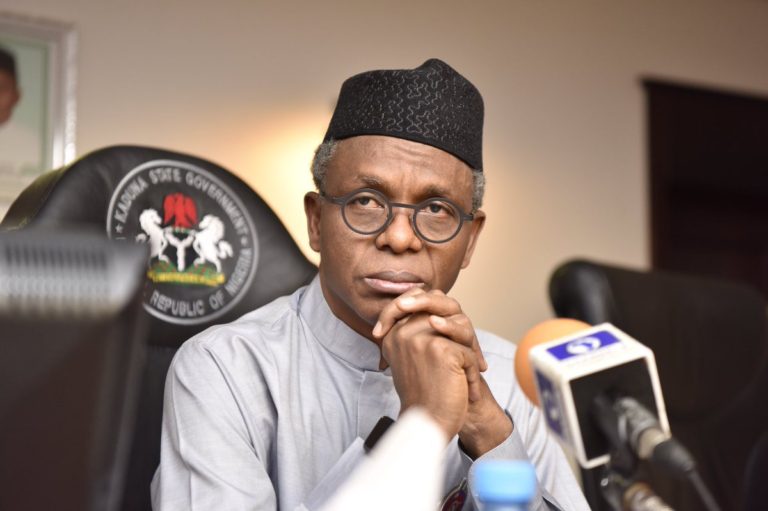
GOVERNOR of Kaduna State, Nasir- El-Rufai, says he has lodged a complaint with the Inspector General of Police, Ibrahim Idris, over inciting comments made by “a pastor in Abuja” suggesting that he (El-Rufai) has a hand in the kidnap and murder of traditional ruler in the state.

El-Rufai said this when the Minister of Information and Culture, Lai Mohammed, paid him a courtesy visit in Kaduna on Thursday.

He said the message by the pastor was what led to the recent violence in the Kasuwan Mageni area of Kaduna where 22 persons were killed.

“The story circulating was that I invited the chief to a meeting and told him that his chiefdom will become an emirate and he disagreed with me and when he was abducted, it was implied that I arranged the abduction. This is what started the crisis and it is totally false,” El-Rufai told Lai Mohammed.

“I have never invited any chief except when they write to see me. I can depose him (the traditional ruler). Why will I threaten him? I can abolish his chiefdom or emirate under the law.

“But this was the story circulating and it raised tension and many people were killed.

“There was a clip going round, a pastor in Abuja that said I was the one that arranged the abduction and murder of the Agom of Kachia. I have filed a complaint to the IG. We intend to bring him to Kaduna to try him.

“The clip was circulated in Kaduna and he is in Abuja, we will get him. We know the agents of this kind of careless statements and what is most unfortunate is that the guiltiest people are the people that we assume should be responsible, pastors, imams and very important people in the society.”

Though he did not mention the pastor’s name, El-Rufai was ostensibly referring to Paul Enenche, owner of Dunamis church, one of the biggest Pentecostal churches in Abuja, with branches across the country.

Pastor Paul Enenche

A video of one of Enenche’s preaching went viral on the social media, showing the pastor saying that the deceased traditional ruler was kidnapped on his way back from a meeting called by the governor.

In that video, Enenche said that according to the news reports he heard, some Christian chiefs in Kaduna State were told “that all their chiefdoms were to come under Emirates”, but the late chief said no.

“He was the most vocal, the most aggressive. He said no, we are Christians, we are ruled by our own first class chiefs. We don’t come under the rule and title of another religion,” Enenche narrated in the video.

“Then tension started, in his community — they called the place Kasuwa Mageni or so — they killed almost 200 people in one hour, by terrorist agents.

“Then the governor summoned him and others for some peace talk on how to resolve the issue. On his way back from the governor’s invitation, he was kidnapped. Is it not a wonder to find out who kidnapped him? His police orderly killed, four of his personal security killed.

“He was abducted with his wife, his wife was later released. A few days later his body was dropped on the Abuja – Kaduna highway. The first class chief of a people. It’s like pouring insult and excreta on the face of such a people. And anybody is going to ask ‘who was the one that killed such a person?'”

In the not-too-distant past, El-Rufai had arrested and later sued a reporter with Vanguard Newspaper, Luka Binniyat, as well as a popular entertainment businessman, Audu Maikori, owner of Chocolate City, for allegedly authoring and sharing fake news of a Fulani herdsmen attack in Kaduna State respectively.

NEDG explains criteria for selecting candidates for election debate

THE Nigeria Elections Debate Group (NEDG) has explained that the process that led to the invitation of just five presidential and vice presidential candidates for the 2019 election debates were transparent and people-based.

The explanation followed protests from several quarters after names of notable candidates were conspicuously missing from the list of would-be debaters.

Political parties whose candidates were invited for the debates include Atiku Abubakar of the Peoples Democratic Party (PDP); Muhammadu Buhari of the All Progressives Congress (APC); Oby Ezekwesili of the Allied Congress Party of Nigeria (ACPN); Fela Durotoye of the Alliance for New Nigeria (ANN), and Kingsley Moghalu of the Young Progressives Party (YPP).

However, Omoyele Sowore, publisher of Sahara Reporters and candidate of the African Action Congress, protested his exclusion from the debate and threatened legal action against the organisers.

Sowore also accused the Chairman of the Broadcast Organisation of Nigeria (BON), John Momoh, who is also the Chairman of Channels Media Group, owners of Channels Television, of deliberating leaving his name out of the list.

But in a statement issued on Friday by the Executive Secretary of NEDG, Eddie Emesiri, the group said there was no external influence in choosing the five political parties to participate in the debates, adding that the parties were chosen via an independently administered online polls and surveys.

“Considering the vast number of contending parties, the decision to limit to five parties was taken at the beginning of our process to ensure ease of management for the debates,” Emesiri stated.

“All the stages of the selection process were focused on political parties, taking into consideration the importance of national spread and diversity. Focus was not on specific individuals or candidates.

“We wish to emphatically state that the NEDG and BON were not influenced or induced by anyone to include or exclude any political party from the debate.

“We understand the disappointment of some political parties who would have wished to see their candidates share their visions for the country at the Debates.

“However, Nigerians have spoken through the multi-stage process and we urge all Nigerians to respect their choice as we abide by the outcome of the independent party selection process.”

The debate for the vice presidential candidates of the five selected parties will hold on Friday by 7 pm, and is expected to be aired live on all BON affiliated media organizations, while the presidential debate will hold on January 19, 2019.

Lawmaker sponsors bill to have federal character apply in service chief appointments

0

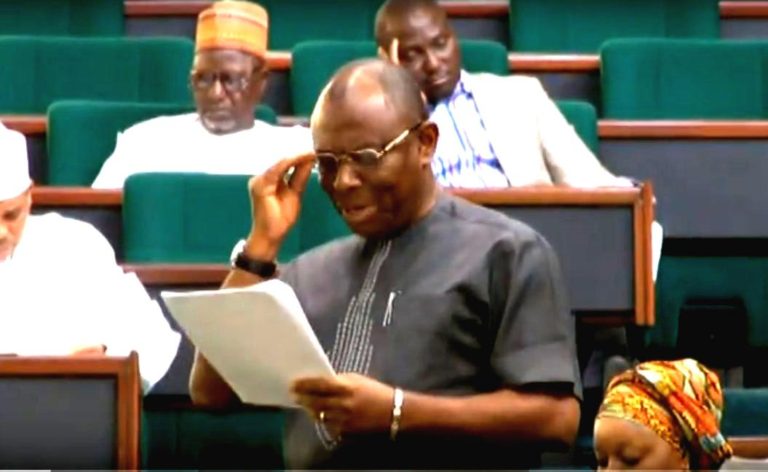
AWAJI-Inombek Dagomie Abiante, a member of the House of Representatives representing the Andoni/Opobo/Nkoro constituency of Rivers State, has taken steps to end the argument on how service chiefs should be appointed.

Abiante, who is also the Vice Chairman of the house’s Committee on Navy, sponsored a bill with one objective: the amendment of Section 18 of the Armed Forces Act of 2004 to ensure that the country’s geo-political zones are fairly represented in the appointment of heads of the Armed Forces.

The one-paged document, which was uploaded on the National Assembly website in November, seeks to add a fifth sub-section to the provision as follows:

“Without prejudice to the powers of the President under this Act, the President shall observe the principle of Federal Character as enshrined in the Constitution of the Federal Republic of Nigeria 1999 as amended, when appointing Service Chiefs for the Services that make up the Armed Forces of the Federal Republic of Nigeria.”

Service chiefs, according to the 2004 Act, refer to the Chiefs of Army, Navy and Air Staffs, “in whom the command of the Army, Navy and Air Force, as the case may be, and their Reserves shall be vested”.

The law guiding “the principle of federal character” is section 14 of the 1999 constitution, contained under the “fundamental objectives and directive principles of state policy” — a peculiar part of the constitution which is not, by itself, enforceable in any law court.


READ ALSO:

While sub-section three deals with the federal government, sub-section four stipulates the same principle for state and local governments.

The former states: “The composition of the Government of the Federation or any of its agencies and the conduct of its affairs shall be carried out in such a manner as to reflect the federal character of Nigeria and the need to promote national unity, and also to command national loyalty, thereby ensuring that there shall be no predominance of persons from a few States or from a few ethnic or other sectional
groups in that Government or in any of its agencies.”

The substantive law guiding the armed forces does not say any consideration needs to be given to the nominees states of origin before they are appointed. Rather, it only says, in appointing the service chiefs “as he thinks fit”, the president may consult with the Chief of Defence Staff.

He may also consult with the Force Council, but the law further states that no one can probe whether there was any consultation or what happened during the process of consultation.

Many, including former president Olusegun Obasanjo, have criticised President Muhammadu Buhari’s appointment of security chiefs, labelling it as lopsided in favour of the Northern region.

Chairman of the Federal Character Commission, Shettima Bukar Abba, has however argued that federal character principles are not applicable in the appointment of service chiefs.

“Security issues are not issues of federal character,” he said, “they are issues of federal character at the recruitment level.”

He added: “For example, if a Major General goes to war and dies and he is from Borno, does that mean a Major General from Borno should replace him? These are security issues and they go through certain processes and promotion, if you subject them to federal character at the top level you are creating mediocrity in security issues.”

Court sacks Duke as SDP presidential candidate a day after his running mate resigned

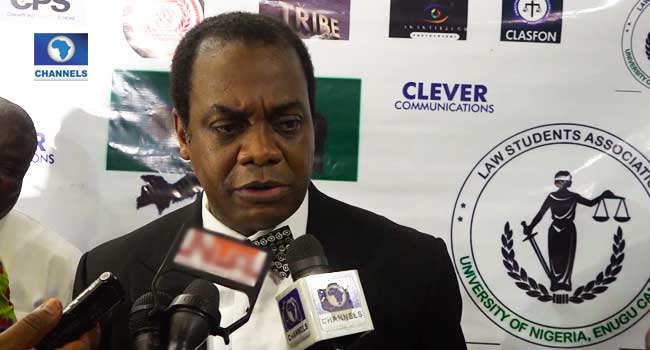
A Federal Capital Territory High Court, in the Maitama District of Abuja, has nullified the emergence of the former Governor of Cross River State, Donald Duke, as the presidential candidate of the Social Democratic Party (SDP).

This is coming a day after Duke’s running mate, Mohammed Junaid, resigned.

Justice Hussein Baba-Yusuf, who gave the judgement on Friday, ruled that the former Minister of Information, Jerry Gana, ought to have been declared the winner of the SDP presidential primary election conducted on October 6, and not Duke.

According to the result of the primary election as announced by the SDP, Duke polled 812 votes while Gana had 611.

But Gana challenged the election result in court, asking that he be declared the party’s presidential candidate in accordance to the party’s constitution which stipulates that the National Chairman and the presidential candidate cannot come from the zone.

Also joined as respondents in the case were the SDP as a party, the National Chairman, Olu Falae; the National Secretary, Shehu Gabam; Chairman of the party’s  Presidential Screening Panel who is also the Deputy National Chairman (South) of the party, Tunde Adeniran; and the Independent National Electoral Commission (INEC).

Justice Baba-Yusuf, in his ruling, agreed with Gana, that since Falae, who is SDP’s National Chairman, is from the South, Duke — from the same zone — cannot be the party’s presidential candidate.

“In this instance, the party’s Chairman, Chief Olu Falae, is from the South and Duke is from the South too; the law is clear; there is nothing to write in-between. The law has crystallised that political parties should abide by the regulations which they have made by themselves,” Baba-Yusuf ruled.

“The claimant laid sufficient evidence to have the judgment in his favour; it is a clear violation of the party’s constitution; the court cannot wave right over illegality.”

The judge declared Donald Duke’s 812 votes null and void and ordered SDP to forward Gana’s name to the INEC as the party’s flag bearer for the 2019 presidential election.

He also ordered Duke to stop parading himself as the party’s flag bearer for the election.

Duke’s former running mate, Junaid, had stepped down on Thursday and was replaced by Shehu Musa Gabam, who is also SDP’s National Secretary.

Alfa Mohammed, the party’s National Publicity Secretary, said the development was for strategic reasons, adding that Junaid stepped down voluntarily and has signed all the necessary INEC forms to perfect the substitution process.

Donald Duke’s running mate resigns,replaced by Shehu Gamba

0

Junaid Mohammed, has resigned as vice presidential candidate of the Social Democratic Party, SDP, according to a report.

On 22, October 2018 Donald Duke, the Presidential candidate of the SDP, announced Junaid Mohammad, from Kano State in the North West, as his running mate.

Junaid, who is a strong critic of President Muhammadu Buhari, said his decision to step down was because of the “many hassles of the SDP.”

Junaid Mohammed is a well known academic who has also graced the political arena. He has served in several capacities at both the federal and state levels, including the House of Representatives between 1979 and 1984.
He explained that he also turned in his resignation as deputy national chairman of the party but insists he is still remains a member of the party.

“I also resigned as deputy national chairman. I have written to Chief Olu Falae and Mr. Donald Duke. However, I have not resigned from the party,” he said.

The National Publicity Secretary of the SDP, Alfa Mohammed, who gave the confirmation on Thursday in Abuja, said that the substitution had been in the works.

The Social Democratic Party (SDP) has formalized the substitution of its 2019 Presidential Candidate’s running mate, Dr Mohammed Junaid with Alhaji Shehu Musa Gabam, who is also the National Secretary of the party.

He said that Junaid’s substitution was subjected to deliberation at the party’s leadership level which he was a member.

Mohammed said the consensus was that Junaid should step down as running mate to the SDP Presidential Candidate, Donald Duke, for strategic reasons.

“Hence, as a genuine party man, he voluntarily stepped down and thereafter signed all the Independent National Electoral Commission (INEC) forms required to perfect the substitution process.

“He remains one of our highly respected leaders the party is proud to have.

“Meanwhile, the substitution which was done long ago now has Shehu Musa Gabam from the North East as our vice presidential candidate,” he said.

Appraising the Police Reform Bill 2018

0

By Abdul Mahmud and Okechukwu Nwanguma

SPEAKING recently at the Dialogue Session organized by the Abuja-based Policy and Legal Advocacy Center (PLAC) on the ‘Bill for an Act to Repeal the Police Act and Enact the Police Reform and other Related Matters’, the Deputy Majority Leader of the Senate and Bill’s sponsor, Senator Bala Na’Allah remarked that “the Nigeria Police Force is always criticized for not delivering on their responsibility; as a party that promised to leave Nigeria more secure than it met it, we decided to initiate this reform”.

“We are not comfortable with the situation where only a few get good security, while the larger population is left at their own peril… We discovered that the structure of the Nigeria Police Force will never give it the kind of efficiency and effectiveness that it requires to be able to secure the population of Nigeria”.

Two principles -the principle of interest and the principle of representation- that make legislating remarkably profound are immediately discerned in the remarks of Senator Na’Allah; and it is both principles, including the principle of legality, we shall come to it later, that form the basis of this appraisal.

Lawmaking process in a nascent democracy is a complex process, even if not more complex in a nation-state with a broken polity and unstable legal order. The legislature is central to the making and unmaking of laws and its influence on the development of law and the legal system is thus profound as it regulates the process of legislation and manages the births of laws.

The legislature doesn’t make laws for the sake of it; the legislature makes laws because as the representative assembly of the people, its essence – the lawmaking powers – not only coheres with the powers of the people but also corresponds with their interests. So, for us, it is in the process of lawmaking that the interests of the people and the legislature converge and representation finds greater resonance.

It is the principle of interest and representation which underlines lawmaking we now turn.

The Police Bill and the Principle of Interest and Representation

The legislature, as one part of the people’s will that is transferred into the will of the state, deliberative and representative, is always corresponding to, mirroring and reflecting the people. The point, here, is that every legislative activity is driven and shaped by the interests of the people, so much so that the legislature not only represents the interests of the people but also expresses the will of the people. So, when the Police Reform Bill is proposed by its sponsor in a manner that seeks to “secure the population of Nigeria”, it is merely highlighting how legislation affects the people’s interests and the effect it has on the interests of the larger population generally.

The principle of interest, which lies at the heart of lawmaking, when applied, distinguishes the legislature as the assembly for democratic legislation. This is essentially so because it is the purpose of the legislature to promote the interests of the electorates as part of its broader purpose of representation.

Senator Na’Allah captures this essential point when he remarked that “the Nigeria Police Force is always criticized for not delivering on its responsibility; as a party that promised to leave Nigeria more secure than it met it, we decided to initiate this reform. We are not comfortable with the situation where only a few get good security, while the larger population is left at their own peril… We discovered that the structure of the Nigeria Police Force will never give it the kind of efficiency and effectiveness that it requires to be able to secure the population of Nigeria”.

But what to us isn’t lost to the Senator is the fact that it is in lawmaking that the interests of the people and representation by the legislature is embodied. Professor Jeremy Waldron reinforces our point in his brilliant seminal, ‘Representative Lawmaking’, thus: “legislation even on morally significant matters- matters of individual rights, for example- is never just the embodiment of principle.

Principle may be in the background, but each piece of the legislation must be framed so that technical provisions, with their attendant definitions, procedures, exceptions, and administrative clauses will actually have the effect of promoting principle the public thinks are morally important… For these reasons one might value the array of persons in the legislature acquainted with all walks of life, all types of interests and different experiences in the community.

If the community is geographically diverse, for example, with different conditions in the north compared with those in the south, then one would value the presence of legislators from both ends of the country; if there is diversity of interests as between town and country, again, one would value the presence of the people from rural and urban sectors. If there are differences and conflicts between the interests of the workers and the interest of their employers, then one would want labour unionists as well as oligopolists in the legislature and so on”.

The point here is: representation (read the legislature) helps aggregates interest the same way that lawmaking enhances interests.

Further, let us illustrate the point we make in the foregoing with this example that we are too well familiar with. When Senator Na’Allah remarked that “only a few get good security, [while] the larger population is left at their own peril”, he was merely inferring the larger population of the youths who for many years were at the peril of the killer officers of the Special Anti-Robbery Squad (SARS) until a certain Segun Awosanya came along with the EndSARS campaigns. Ostensibly, from reflection, it thus appears that Senator Na’Allah’s Police Reform Bill is a response to the agitations of the youths, giving credence to the view that representation is the “simplifier of interests and assimilator of subjects”.

 The Principle of Legality in the Age of Gender Rghts

In her well-publicized piece, ‘Reviewing the Police Act with Gendering Lens’, Nneka Egbuna argued that “the Police Act with its Regulations and Force Orders which govern the internal and external workings of the Nigeria Police Force reveals alarming discriminatory regulations and workplace practices which reinforce gender discrimination in the 21st century.

For instance, the language in the entire Act is not gender sensitive- throughout the document; all police officers are referred to as ‘men’. Force Order No. 60 ( for Traffic Training Course) for example, states that “candidates selected should be men of intelligence …”; Regulations 42 (3) of the Nigeria Police Force Regulations, 1968 which is attached to the current Police Act mentions that a female candidate for the Police Force should be unmarried; Regulations 118-128 countries nation even more discriminatory provisions for women who want to be enlisted into the police as follows:- women who wish to be enlisted into the police must not be pregnant and must be unmarried”.

While Ms Egbuna’s argument centers around the discriminatory nature of the Regulations and Standing Orders of the Nigeria Police Force, there are two points clearly discernible in her piece. First, that Sections 46 and 47 of the Police Act, 2004, which deal with Regulations and Standing Orders, don’t sufficiently provide protection for fundamental rights enshrined in the Constitution of the Federal Republic of Nigeria, 1999.

Ms Egbuna is right, the Police Act, an Act of the Parliament, provides no protection for gender rights; in fact, it provides legal shield for gender discriminatory Regulations and Standing Orders and obviates the plausibility of the principle of legality being applied to them.

Second, that empowering Act such as the Police Act, 2004, cannot authorize restrictions on constitutional rights, including gender rights, if it is not the intention of the legislature to restrict such rights.

Ms Egbuna’s view is that the current Police Act, particularly Sections 46 and 47, which deals with the “Power to make Regulations and Standing Orders”, doesn’t provide legal requirement that all Regulations and Standing Orders must be consistent with the fundamental rights chapter of the Constitution of the Federal Republic of Nigeria 1999. The point she makes in effect is that Regulations and Standing Orders made pursuant to the Police Act, 2004 must not only pass the principle of legality test, but must be doubly subject to what we call the gender rights review and the scrutiny of the legislature.

So what do we mean by the principle of legality? Simply put, the principle of legality is rule if interpretation which construes legislations, and for our purpose, the Regulations and Standing Orders- made pursuant to the Police Act, 2004, as being consistent with fundamental rights chapter of the Constitution of the Federal Republic of Nigeria, 1999; a presumption that the legislature would ordinarily not infringe rights, without expressing its intention to do so in clear and unambiguous words.

According to Lord Hoffman ( see: R v Secretary of State for the Home Department; Ex Parte Simms (2000) 2 AC 115), the principle of legality ….”means that the parliament must squarely confront what it is doing and accept the political cost. Fundamental rights cannot be overridden by general or ambiguous words.

This is because there is too great a risk that the full implications of their unqualified meaning may have passed unnoticed in the democratic process. In the absence of express language or necessary implication to the contrary, the courts therefore presume that even the most general words were intended to be subject to the basic rights of the individual”.

While the principle of legality is an interpretive rule employed by the courts, “where the legislature, or a statute, including subsidiary legislations, fails to express its intention with unmistakable clarity, to protect fundamental rights by strictly or narrowly construing a statute, as the Supreme Court held in Abacha v Fawehinmi (2000) 4 SC, our argument here is that in enunciating the Police Reform Bill 2018, the sponsor of the Bill clearly makes sense of the power of this principle when he inserted fundamental rights safeguards into the Bill- as we shall see in the paragraph below.

As if Senator Na’Allah understands the dangers of subjecting the legislature to political ridicule, or to the risks that ambiguous statutes and subsidiary legislations pose to the legislature, without providing legal protection for rights, or, too, the dangers of passing a Bill that would invariably provide legal shield for discriminatory Regulations and Standing Orders, he frames the Police Reform Bill 2018 in a manner that recognizes the principle of legality within a framework that is consisistent with the Constitution of the Federal Republic of Nigeria, 1999.

Good news. Here’s how the Police Reform Bill 2018 encapsulates the principle of legality: “The Police Force or other persons shall not, in the performance of his or its functions under the Act, Regulations or Standing Orders made pursuant to this Act, discriminate against any person on the basis of gender as provided under Section 42 of the Constitution”.

The Bill further provides that “an officer who on reasonable grounds believes that an order given to him by a superior officer is unlawful, is not bound to comply with the order and shall immediately make a report in such form as shall be provided by the Police Force for that purpose”.

Finally, there can be no better way of adhering to the principle of legality in the Age of Gender Rights than inserting the framework for promoting fundamental rights in a Bill that seeks to reform the Nigeria Police Force that is notorious for abusing the fundamental rights of Nigerians.

As stated in the objectives of the Bill, we all desire “a more efficient and effective Police Force that is based on the principles of: accountability and transparency; and protection of human rights and fundamental freedoms”, don’t we?

*Abdul Mahmud and Okechukwu Nwanguma are Police Reform Campaigners.

If I get re-elected, hard work will be rewarded adequately -Buhari

0

PRESIDENT Muhammadu Buhari has inaugurated “Together Nigeria’’, a  support group for his 2019 election and assured supporters that hard work and loyalty would be adequately rewarded. curiously, the President made a similar promise in 2015 which has not been yet fulfilled.

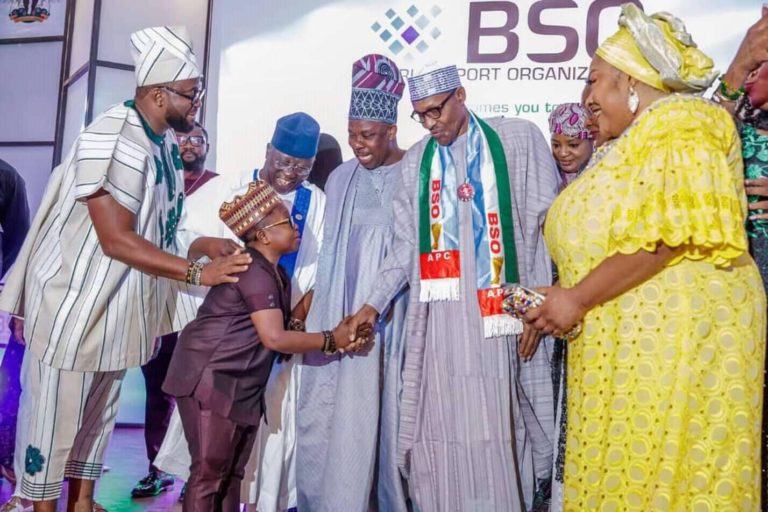
The event was organised in Abuja on Wednesday by the Buhari Support Organisation made up of celebrities doubles as an advocacy group for the re-election of the president come 2019 presidential elections.

Buhari, in his statement at the event, expressed his gratitude to the group and promised supporters that despite his inability to please everyone in the past years, efforts will be made to reward loyalty and adequately reward hard work.

“I would like to assure you that this time, hard work and loyalty will be rewarded adequately.’’

He said the event calls to mind the political struggle and support he has been enjoying from the group.

“This once again gives me further encouragement, hope, and optimism in our political journey,” Buhari said.

He endorsed the plan put in place by the Buhari Support Organisation to reposition the organisation and strategise towards success in the next election and beyond.

Buhari also expressed his gratitude to the celebrities and urged them to keep doing more towards sensitising the public about the good works of the government. He also appreciated the Nigerian celebrities for their contributions in upgrading the image of Nigeria globally.

“I would like to thank our celebrities for projecting the image of Nigeria globally and your contributions to our entertainment industry,’’ he said.

President Buhari has been criticised by even members of his inner circle for allegedly “forgetting” some of the people that worked for his electoral victory in 2015.

The most recent of the criticisms came from the wife of the President Aisha Buhari, who recently during an event, said that only one or two people were calling the shots in Buhari’s presidency despite the fact that many people worked for his victory.

In 2015, Buhari, then the presidential candidate of the All Progressives Congress (APC) promised, among other things, to “assist Nollywood to fully develop into world class movie industry that can compete effectively with Hollywood and Bollywood in due course”.

“I will support the creative and performing arts with the necessary environment whereby our great entertainers do not end their lives in abject poverty as is currently the case,” he pledged.

But a Nollywood director who spoke with The ICIR on Thursday that many of these promises were not fulfilled by the president, as there was no capacity building for the film practitioners, neither were they supported in terms of grants. 

He, however, explained that Nollywood is divided into Kanywood and Nollywood, and that Buhari met with the Kannywood leadership sometime in October.

“He has done nothing to get the support of Nollywood, just as I have not heard of anything he did for Nollywood, so if anybody is supporting him, maybe is on the basis of what they have seen that I myself, I am yet to see,” he said.

EFCC slams 59-count charges on Okupe for failure to return N120 million

0

THE Economic and Financial Crimes Commission has filed 59 charges against a former Senior Special Assistant to the President on Public Affairs, Doyin Okupe for his inability to return N120 million he allegedly received from the Office of the National Security Adviser.

The charges border on money laundering and criminal diversion of public funds after receiving about N120 million which he should have known that the fund formed part of the proceeds of an unlawful activity of Col. Mohammed Sambo Dasuki. The  National Security Adviser at the time, and thereby committed an offence contrary to Section 18 (a) of the Money Laundering (Prohibition) Act, 2011 (As amended in 2012) and punishable under section 15 (3) of the same Act.

Okupe, who served under former President Goodluck Jonathan from 2012 to 2015, admitted on social media that he received N10 million monthly from the former National Security Adviser, Col. Sambo Dasuki (rtd.) based on the instructions of President Goodluck Jonathan.

According to a statement by Okupe, the money was meant for a programme on the Nigerian Television Authority, NTA known as ‘Insight’ to showcase the achievements of Goodluck Jonathan.

“The initial N50 million was approved by the President to be paid to me from his security vote. N10 million was to furnish my rented living apartment and another N10 million for my office. The balance N30 million was approved as take-off grant,” he said.

“The N10 million I received from the Office of the National Security Adviser monthly was to run my office, pay salaries of staff, which includes overheads, expenses for our numerous press conferences, paying for publications in newspapers, magazines, local and foreign, television programmes, bulletins, and media consultants who assist and facilitate our work. I had about 23 staffers, 11 were graduates out of which five were master’s degree holders.

“The second N50 million was approved again by Mr. President when I reported to him that the monthly allowance had been cut from N10 million to N5 million and that I was no longer in position to keep running a one-hour NTA network programme called ‘Insight’ which was aired 9-10am every Friday.

“We paid NTA about N1.2 million monthly for airtime. Two presenters were paid N600, 000 monthly. The lead presenter on Insight earned N400,000 and the second presenter earned N200,000. Total N600,000.

“We paid for tapes and editing per programme. Besides we also pay honorarium for guests either directly or in form of hotel bills for those outside Abuja, or transportation.

“This cost averagely N500,000 weekly or about N2 million monthly. We spend about N4m monthly on the programme. Mr. President promised to help with the expenses. About a few months later when we had incurred some debts the NSA sent me this N50m which was to cover the cost of the programme for 12 months”.

However, Mr. Sola Atere, who was the Executive Director (News) of the NTA, denied that the station received any money from Okupe.

According to him, the programme was done free of charge as part of the station’s Corporate Social Responsibility.

Atere said initially, the programme, ‘Insight’ was anchored by external persons but subsequently NTA presenters took over.

“Two external persons anchored the programme at the inception but midway, they were not forthcoming. So, NTA presenters were detailed to anchor it. No money was charged for production and transmission of the programme,” he said.

Okupe will be arraigned before Justice Ijeoma Ojukwu of the Federal High Court, in Maitama, Abuja.

Senator proposes creation of Northwest Dev. Commission

0

JIBRIN Barau, the senator representing Kano North district, has sponsored a bill seeking to establish the North West Development Commission to fast-track progress in the region. 

The bill’s first reading on Thursday is coming 18 years after the Niger Delta Development Commission (NDDC) was established, 14 months after President Muhammadu Buhari assented to the creation of the North East Development Commission (NEDC), and a day after the Senate passed a bill to establish the South East Development Commission.

The new legislative instrument will be bringing the number of regional development commissions to four if it scales through.

“The first business of the day is the presentation of the bill standing in the name of senator Jibrin Barau for the North West Development Commission (Establishment etc.) Bill 2018,” Senate leader Ahmed Lawan said while introducing the bill. He chuckled as a number of other lawmakers joined him.

Presiding over the sitting was Ike Ekweremadu, Deputy President of the Senate.

The NDDC was created to bring an end to insurgency and militancy in the Niger Delta and the NEDC was established to respond to the humanitarian crisis resulting from terrorist activities among other violent clashes, but the background to the new bill is not immediately clear.

Upon studying the first three instruments that passed through the legislature, it was discovered that the last two were modeled after the NDDC (Establishment etc.) Act, 2000. The only major change is the names of the commission’s member-states. All other sections, including one guiding financial provisions, are largely the same.

As his phone number was switched off at the time of this report, The ICIR could not reach Barau to confirm the content of the bill and why he believes the North West also requires intervention in the form of a development commission.

The newly introduced bill by the senator is not yet uploaded on the National Assembly website.