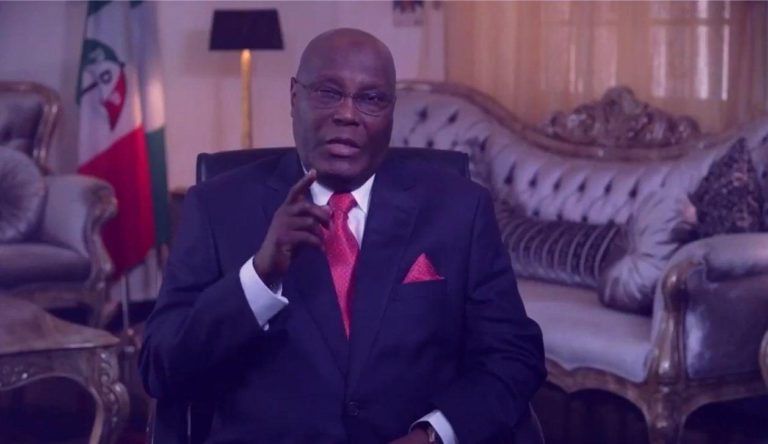
Atiku Abubakar, presidential candidate of the People’s Democratic Party (PDP), has backtracked on earlier claims about the total number of workers captured under his payroll.
While unveiling his manifesto, tagged ‘Atiku’s Plan: Let’s Get Nigeria Working Again’, during a live session on Facebook on Monday, the former vice president said his companies presently have a staff strength of 50,000.
“To me, leadership is having the discipline to commit to one’s goals until they are a reality,” he declared. “I have succeeded in running my private enterprises, which now employ 50,000 Nigerians, because I believe in policies and I have the discipline to stay with them until they become reality.”
This figure is, however, much less than what was quoted earlier in November by Mohammed El-Yakub, Managing Director of Gotel Communications, Atiku’s Adamawa-based media organisation.
El-Yakub had told the press that his boss has approved the payment of a new minimum wage of N33,000 for “all categories of workers on the former VP’s payroll”, who number “over 100,000”.
Likewise, Reno Omokri, former former aide to ex-President Goodluck Jonathan and a supporter of Atiku’s presidential bid, said in October that the PDP candidate has employed 50,000 Nigerians through just three of his many companies.
“The All Progressive Congress is silly to say Atiku must list jobs he created,” he tweeted. “Their focus should be jobs @MBuhari created.”
“Let me humor them. From just American University of Nigeria, Faro, Rica Gardo & Standard Microfinance, Atiku created 50k jobs, to mention a few. APC, list Buhari’s jobs!”
The ICIR found in a recent report that it is unlikely Atiku has up to 100,000 Nigerians working under him, taking into consideration the staff population of various multinational companies including the Dangote Group, Royal Dutch Shell PLC, and ExxonMobil which employ 30,000, 92,000 and 69,600 people across the globe respectively.
Atiku, in his speech, also said the primary focus of his manifesto is to get Nigeria working again.
“However, I’m not here to tell you how I will get Nigeria working again,” he added. “Instead, I will like to tell you how we will get Nigeria working again together. I am strongly of the view that I’m just one Nigerian, and one Nigerian cannot be as wise as all Nigerians. That is why I will offer an inclusive leadership. Atiku Abubakar is 100 percent for 100 percent of Nigerians, 100 percent of the time.
“It is my desire to run for the office of the president of the federal republic of Nigeria not because I have a bagful of promises, but because I am prepared to lead. Over the last eighteen months, I have worked with the best experts Nigeria has to offer to come up with policies and plans that when implemented will get Nigeria going in the right direction.
“This is my plan to get Nigeria working again. A plan that will give Nigerian workers a living wage. A plan that will give Nigeria’s youth a world-class education. A plan that will empower Nigerian women, reduce maternal mortality and increase their financial stability. A plan that will cater for the elderly so our people are not afraid of growing old. A plan that will invest in our failing infrastructure. But above all this is a plan that will create jobs because in my many travels across our great nation, the one thing I constantly hear is that our people need jobs.”
He also vowed that, if elected, he would be proactive in attracting investments to support 50 million small and medium-scale enterprises across with the aim of doubling the size of the country’s GDP to 900 billion dollars by 2025. These investments, he said, would also create a minimum of 2.5 million jobs annually and lift at least 50 million people from poverty in the first two years of his administration.
“My team and I will also help create jobs by innovating flagship programmes such as the National Open Apprenticeship Programme through which we shall enhance the capacity of master craftsmen and women to train one million new apprentices every year,” the presidential candidate said.
“Our national innovation fund and SME venture capital fund initiative will provide stable and sustainable long-term support to aspiring entrepreneurs. My plan to restructure Nigeria will lead to a vast increase in the internally generated revenue both for the federal government and the states.”
SUSPECTED thugs stormed the Akwa Ibom State House of Assembly this morning preventing lawmakers from gaining access into the assembly building.
This development is reportedly connected with a court order declaring the seat of Idongesit Ituen, a member representing Itu constituency vacant.
Ituen was recently sacked as a member of the state assembly by the federal high court in Uyo on November 14. The court judgement followed his defection from the Peoples Democratic Party (PDP) to the All Progressives Congress (APC).
Luke Onofiok, the speaker of the Akwa Ibom House of Assembly, had a few days ago restrained Ituen from attending plenary.
The speaker who was one of the defendants in the suit seeking a court injunction to declare Mr Ituen’s seat vacant got their request granted by the court.
The court injunction reads “An order of court restraining the Speaker of the Akwa Ibom State House of Assembly or any other person acting on his behalf (including the staff of the House of Assembly) from further recognising Hon. Idongesit Ituen as a member of the Akwa Ibom State House of Assembly.”
The PDP alleges that the attack is masterminded by the All Progressive Congress (APC) to stall the activities of the legislators following the decision of the court.
A tweet by the official handle of the PDP reads: “The Akwa Ibom State House of Assembly (AKHA), premises is under heavy attack by members of @OfficialAPCNg thugs.
We therefore call on the @PoliceNG and other security agencies to move in quickly to restore peace and order in the State. We believe the Police will bring the perpetrators to book as we advise members of the public to stay away from the AKHA and its environment.#AKHAUnderAttackpic.twitter.com/ILaOPyADfj
For two days last week, students of the International School, Ibadan, did not take classes; and it was not down to an industrial action. Well, students of the parent institution — the University of Ibadan (UI) — are at home as well. The plight of UI students is understandable: the Academic ‘Strike’ Union of Universities (ASUU) is on one of its trademark industrial actions as part of its never-ending funding feud with the government. But ISI students experienced a disruption in academic activity due to a needless, in fact irritating, bickering over the propriety of hijabs in a school environment.
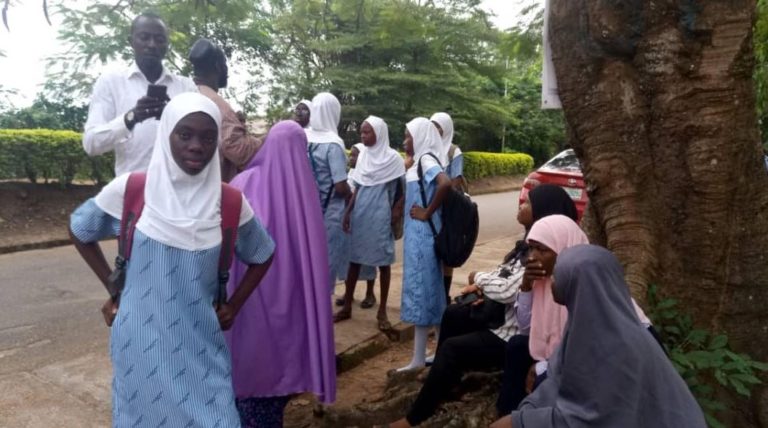
For a while, some parents of Muslim pupils of ISI had been trying to convince the management to allow hijab wearing in the school but the management was unwilling to discuss. Frustrated by the continuous snob, the parents took laws into their hands. On November 9, writing under the name International School Muslim Parents’ Forum (ISMPF), they notified the school of their decision to enforce their desire. Three days later, on Monday November 12, some of these parents called their wards to the ISI car park and distributed hijabs to them. The Principal, Mrs Phibean Olowe, sighted them, and instantly ended the ongoing school assembly. The school was shut, technically, for two days, but since resuming, the hijab-donning pupils have not tasted classes. On Wednesday, they were allowed in but locked in the library; on Thursday and Friday, they were turned back altogether.
The Muslim parents argue that their right to hijab comes from the Nigerian Constitution’s recognition of the freedom of association and religion. But the position of the ISI Court of Governors, chaired by the Deputy Vice Chancellor (Administration) of UI, Professor Abideen Aderinto, is clear. The current dress code will be maintained; ISI is a private school with its own rules; a 55-year-old dress culture will not be upended. The real issues, though, are deeper.
I have read yes and no arguments on the use of hijabs in ISI, but I still haven’t heard — perhaps I haven’t been voracious enough exactly why this apparel is important to the Muslim. What does the hijab represent? Does it harm a Christian, pagan or traditionalist? Does it unsettle the learning environment?
I have been fascinated by the 31st verse of the 24th chapter of the Quran, known as Surah An-Nur (the light), which justifies the use of the hijab:
And say to the believing women that they should lower their gaze and guard their private parts; that they should not display their beauty and ornaments except what (must ordinarily) appear thereof; that they should draw their khimār over their breasts and not display their beauty except to their husband, their fathers, their husband’s fathers, their sons, their husbands’ sons, their brothers or their brothers’ sons, or their sisters’ sons, or their women, or the slaves whom their right hands possess, or male servants free of physical needs, or small children who have no sense of the shame of sex; and that they should not strike their feet in order to draw attention to their hidden ornaments.
I honestly cannot understand the opposition to an apparel that does nothing other than encouraging modesty, humility and sexual purity. For context: I’m Christian; so I have been, so will I forever be.
One underlying reason for the anti-hijab sentiment among some Christians is the feeling that Muslims are trying to dominate Christians. They will deny but if you’re looking for them around you, they are the ones who say hijabs can’t be worn so long nuns or priests aren’t allowed to show up in school in their religious attires. Yet it’s an argument that falls flat before it has ever been shot — because they compare a mere apparel with a full-fledged attire. Religion is no competition; Christians and Muslims shouldn’t be in a battle to outdo each other. If you look further, these people will tell you ISI Muslim parents should take their wards to an Ansar-ud-Deen or Nawar-ud-Deen school. But until a Muslim parent has taken his ward to a St. Peter’s College or a Catholic secondary school, he has done no wrong. ISI is a secular school, hence both Christians and Muslims should be welcome.
I have studied the much-vaunted ISI rules and regulations, and I’m still at a loss how hijab wearing violates the document. The document states clearly how students should be dressed. More importantly, it lists the adornments/ornaments that should not be found on a student. These include attachments, wigs, weave-on, bangles, necklaces, chains, rings, dangling earrings, jeans, pencil trousers, and slim-fitted shirts/trousers. Nowhere in that document is the hijab mentioned; tellingly, what this means is that the document is dated and in need of some remodelling.
With ISI standing firm on its rejection of hijabs and Muslim parents also unyielding, it appears the matter is destined for a court. My bet is that ISI would lose — the Muslims can indeed lay claim to a violation of a fundamental right of theirs. Section 38 (1) of the Constitution states:
Every person shall be entitled to freedom of thought, conscience and religion, including the freedom to change his religion or belief, and freedom (either alone or in community with others, and in public or in private) to manifest and propagate his religion or belief in worship, teaching, practice and observance.
Section 42 adds:
A citizen of Nigeria of a particular community, ethnic group, place of origin, sex, religion or political opinion shall not, by reason only that he is such a person:- (a) be subjected either expressly by, or in the practical application of, any law in force in Nigeria or any executive or administrative action of the government, to disabilities or restrictions to which citizens of Nigeria of other communities, ethnic groups, places of origin, sex, religions or political opinions are not made subject;
If the ISI Muslim parents get lawyers who are able to substantially argue the violations of these sections by the rejection of hijab-wearing pupils from the school, they have a case. In any case, there are encouraging precedents to suggest how such a case would be decided. Firdaus Amasa caused quite a stir in December 2017 when she insisted on wearing the hijab to her Call to Bar ceremony. The University of Ilorin law graduate was denied entry to the venue and, by extension, the legal profession. However, the Body of Benchers — the professional body concerned with the admission of prospective students into the Nigerian Law School — subsequently approved the use of the Islamic apparel. Amasa eventually attended her Call to Bar in July 2018. A similar case in Lagos public primary and secondary schools could potentially end in an Amasa-esque manner. A Lagos High Court had initially held that denying pupils the chance to wear hijab does not infringe on their constitutional rights. However, this judgement was upturned by the Appeal Court in July 2016. Only last week, the state government wrote schools to remind them hijabs remain allowed until the final determination of the matter by the Supreme Court.
What is happening in ISI is a manifestation of the level of ethnic, religious and associational intolerance not only in the wider University of Ibadan campus but in the society itself. The UI that should be championing freedom of speech and association has banned student unionism for close to two years now. Nothing more than management’s intolerance for dissenting student voice! Its Student Union Building is currently lying fallow. Even the non-political associations in that building, including the Union of Campus Journalists (UCJ), were chased out of their offices like petty thieves — without the chance to pick up just a piece of paper from their archives. That’s the same UCJ that has produced numerous high-grade journalists who have distinguished themselves nationally and internationally. I worry that without a secretariat to run its activities, without the chance to at least retrieve documents containing its rich history, UI risks inflicting a wedge between past and current generations of campus journalists. Long and short, UI is already writing the obituary of campus journalism. Nigerian journalism will suffer the primary damage, while the larger society won’t escape the knock-on effect.
Back to ISI, Nigeria as a heterogeneous country. With 250 ethnic groups who speak more than 250 languages, plus a multi-religious makeup that includes the highest population of Muslims in sub-Saharan Africa, we must stop expecting to look into any secular gathering and see a homogeneously-dressed audience, for example. Yes, look into an ISI and see clusters of neatly-worn hijabs over school uniforms. This is the reality of our diversity; we cannot run away from it. ISI is trying to, but it will be short-lived; the permanent solution would be for ISI to discuss with Muslim parents on how hijabs can be worn neatly, sizable and uniformly such that our religious diversity is represented without compromising the uniformity expected of pupils’ appearance.
Soyombo, former Editor of the TheCable and the International Centre for Investigative Reporting (ICIR), tweets @fisayosoyombo
Tuesday, 20th November 2018 has been declared public holiday by the Federal Government to mark the Eid-El Maulud celebration.
Sunni Muslims observe the Prophet Muhammad’s birthday on the 12th day of the Islamic month of Rabi’ al-Awwal while Shi’a Muslims mark it on the 17th of the same month.
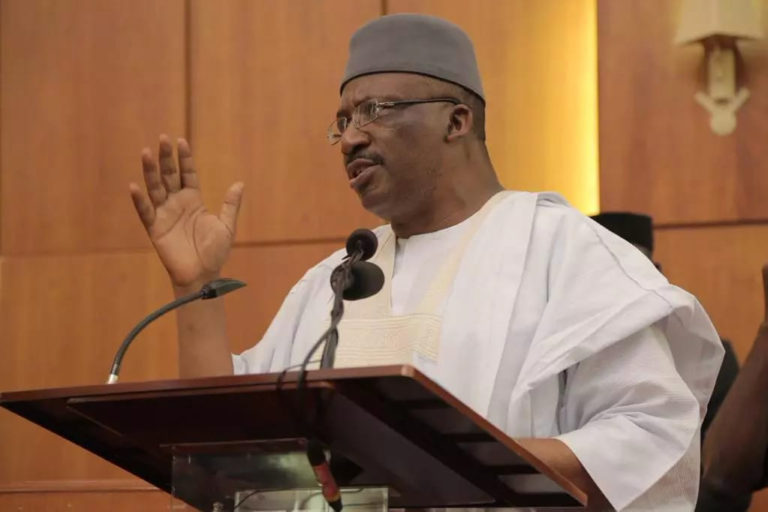
The Minister of Interior, Lt Gen (rtd) Abdulrahman Dambazau made the declaration on behalf of the Federal Government.
In a statement signed by the permanent secretary Dr. M.B Umar, he urged all Muslim faithful to avail themselves with the prophet’s teachings which border on piety, charity, tolerance and peaceful co-existence, among others.
He implored all Nigerians to uphold these virtues, with a view to surmount the current national challenges facing the country, Gen. Dambazau assured that the Federal Government remains committed to the unity of the country and as such, will put adequate structures on ground towards ensuring that the forthcoming general elections are credible, free and fair.
PRESIDENT Muhammadu Buhari on Sunday has launched his campaign for the 2019 presidential election, themed ‘Next Level’.
In the speech delivered at the launch, Buhari listed his achievements in the past three and a half years, as well as his plans for Nigeria if he is elected for the second term.
The president said his administration has worked hard to fulfil promises made, laying the foundation for a strong, stable and prosperous country for the Nigerians despite the difficulty.
Among the achievements listed by the president is the liberation 17 Local Government Areas in the northeast from the grip of the insurgency, curbing the restiveness in the Niger Delta, catalysing economic growth, job creation, and broad-based prosperity.
Buhari also scored his government high on broadening investment on agriculture as well as executing the National Social Investment Programmeough which, according to him, has provided direct support to over 13 million Nigerians, especially the unemployed youth, children, the weak and vulnerable as well as small and medium businesses, among others.
He promised to consolidate on economic security and future prosperity of Nigerians.
“Nigeria, more than ever before, needs a stable and people-focused government to move the agenda for our country forward. Join us on this journey to the Next Level of a prosperous, strong and stable Nigeria!,” Buhari said.
Meanwhile, the presidential candidate of the Peoples Democratic Party (PDP), Alhaji Atiku Abubakar, has described the ‘next level’ campaign by the Buhari campaign organisation as vague on policy and big on promises.
He said without a concrete policy, these ‘next level’ promises are nothing more than next level propaganda which Nigerians care nothing about because the people are now interested in proper agenda.
The statement reads: “Reading through the presentation, we note that it [Buhari’s speech ]is very vague on policy and very big on promises. Promises are cheap.
“Anyone can make promises and indeed, President Muhammadu Buhari and the All Progressives Congress (APC) did make quite a number of promises which they either denied or did not fulfil, such as the promise to create three million jobs per annum and to equalise the value of the naira with the dollar.”
READ FULL TEXT OF BUHARI’S SPEECH
Four years ago, we promised Nigerians real change – in what we do and how we do it. Nigerians sent a clear message in the last election, and our platform offered a new, ambitious plan for a secure, prosperous and corruption-free country. We have worked hard to fulfil our promises – and while the road may have been difficult, over the last three and a half years, we have laid the foundations for a strong, stable and prosperous country for the majority of our people. Foundational work is not often visible, neither is it glamorous – but it is vital to achieving the kind of country we desire. Judging by the prior depth of decay, deterioration and disrepair that Nigeria had sunken into, we are certain that these past few years have put us in good stead to trudge on the Next Level of building an even stronger nation for our people.
First things had to come first.
We were a nation at war – but we delivered on our commitment to secure the territorial integrity of our nation in the face of a raging insurgency that devastated many parts of the North East. We liberated 17 Local Government Areas from the grip of the insurgency. Brokering and sustaining peace in the Niger Delta has also been crucial to stabilising the polity. Despite the difficult circumstances presented by weak oil prices and reduced oil production, we delivered on our commitment to make public investments to spur economic growth, job creation, and broad-based prosperity. Agriculture continues to expand our economic base, as do our investments in deficient infrastructure across the length and breadth of this nation. We implemented a responsible and transparent fiscal plan for the challenging economic times that saw us doing more even with lesser oil revenues. Grand scale corruption perpetrated at the highest level of government is now a thing of the past, just as the Treasury Single Account (TSA) has made it more difficult for ministries, departments and agencies to exercise the unrestrained liberties that helped foster a climate conducive to corruption. The nation’s wealth is now being invested in capital projects to expand infrastructure and connect people, goods and opportunities by rail, road and air. Also, the Federal Government supported state governments with bailouts that enabled them to pay workers on their payroll.
We took an unprecedented step towards creating a fairer and more equitable society by implementing Africa’s biggest social investment programme. Through the National Social Investment Programme, we are providing direct support to over 13 million Nigerians who need it by giving relief and assistance to unemployed youth, our children, the weak and vulnerable as well as small and medium businesses. But even as we lay the foundation for a stable and prosperous nation, we acknowledge there is still much to do. The Next Level of effort focuses on job creation across various sectors. From an enlargement of the N-Power programme to investing in technology and creative sector jobs to agriculture and revolutionising access to credit for entrepreneurs and artisans, there is scope for over 15 million new jobs. The march away from a mono-economy must continue with our industrialisation plan coming to fore. With specific plans underway to exploit the comparative advantage of the geopolitical zones and different states by developing 6 Industrial Parks and 109 Special Production and Processing Centres (SPPCs) across each senatorial district, our incremental move away from oil dependence is assured. In addition, our development of the Special Economic Zones will quickly concretise our Made in Nigeria for Export (MINE) plan. To sustain food production and value addition, our mechanisation policy for agriculture will make tractors and processors easily accessible and available for farmers across Nigeria. We will continue a wide scale training policy, prioritising technology to reach the demography of young people within the productive sector on a massive scale even as we create jobs and growth within our economy.
We believe that our people who are still in poverty have a direct way out and up through our expanded National Social Investment Programme. We believe we can implement the painstaking and comprehensive policy and work we have done to bring an end to the perennial conflict between farmers and herders – a conflict which is heightened by a struggle for land, water and pasture and the effects of climate change and every now and then, opportunistic and cynical manipulation by political actors. We are implementing a blend of measures that ensure that justice, order, modernisation and new economic paradigms emerge.
Perhaps our biggest ambition yet is the overhaul of our education sector. Every child counts – and simply, whatever it takes to prepare our teachers, curriculum and classrooms to attain the right educational goals that grow our country, will be done. We will remodel 10,000 schools every year and retrain our teachers to impart science, technology, engineering, art and mathematics using coding, animation, robotics to re-interpret our curriculum. We know that to succeed, moral integrity and conscience must continue to form the dominant character of our nation and its leadership. Corruption is an existential threat to Nigeria. Despite the gains we have made in closing the gates, we know that there is still much ground to cover to stop systemic corruption. We are committed to deepening the work we started this first term such that the nation’s assets and resources continue to be organised and utilised to do good for the common man. The next four years will be quite significant for our country. Nigeria is faced with a choice to keep building a new Nigeria- making a break from its tainted past which favoured an opportunistic few. Our choices will shape us – our economic security and our future prosperity.
Nigeria, more than ever before, needs a stable and people-focused government to move the agenda for our country forward. Join us on this journey to the Next Level of a prosperous, strong and stable Nigeria!
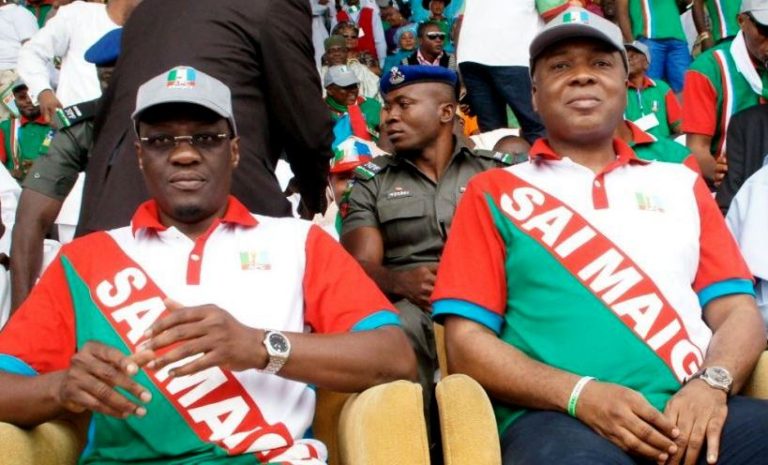
PRESIDENT of the Senate, Bukola Saraki has revealed how in 2015 he bribed electorate to win votes for President Muhammadu Buhari, while campaigning for his election as the president of the country.
In a leaked audio clip where Saraki was addressing some youths in Ilorin, Kwara State capital, he recalled how he offered millions of naira to voters in 30 of the 36 states of the Federation to secure votes for President Buhari during the election.
The authenticity of the voice in the in the leaked clip could not be immediately ascertained.
The Special Assistant on New Media to Saraki, Oluwole Onemola, in a statement, described the clip as a “doctored recording.”
In the 33-minute and 56-second audio clip, the Senate President spoke of how he was moving with the presidential candidate of the All Progressives Congress (APC) from one state to another and up to the last day to the election giving instructions to banks to release money to ‘settle’ electorate.
“What is happening from the top, use me as an example, in 2014 to 2015, we moved out of PDP and carried APC issue on our heads. We went round and there is no state in Nigeria that I didn’t campaign for Buhari,” he said in the video that was recorded in Yoruba language majorly.
“Up to the time we were conducting election in 2015, I was still with him from Tuesday, Wednesday, Thursday and Friday to the Saturday that is the election day, out of 36 states, 30, 30 I paid for the election; those that took N300million, those that N400million and those that took N200million. The only six states which I don’t know anything is South West.
“There is no other state I didn’t spend money. I was calling banks on phone.”
Saraki also said he left the ruling party because, despite investing hugely into the electoral campaign of President Buhari, there was nothing to show for it by him and his state, Kwara State particularly in the areas of federal appointments.
He said his thought “was that once we finished doing that and won the election,”the majority of his people from Kwara State would be given federal appointments.
“If you remember, I used to joke with them that all of you will follow me to Abuja. That some of them will be MDs of agencies either road maintenance, NITDA, NPA among others.
“Because I know, if a son of Kwara State is even just ED [director ] of UBEC, I know the kind of work he can sign from his desk either N1million or N2million. But for the first time, when you have a President of the Senate, even a speaker cannot appoint a cleaner. I’m not talking about board appointment, that’s different where someone is appointed a director, that is non-executive.–who just collect money per sitting.”
The video which was first tweeted by Kayode Ogundamisi, a public commentator and blogger on Friday, November 16, has since gone viral on the social media.
Saraki lamented that the last three and a half years of President Buhari’s administration were not easy noting that some of the causes were “human factors” as well as the will of God, adding that his agenda has been how to ensure the growth of youths.
“I agree that the last three and a half years were not easy at all.”
“Now what has changed in the last three and a half years, some are human-based factors, majority of them, for me, I see as divinely designed by God because you are saying yours comparing the time I was governor to now, and wondering that all the youths who are struggling, I know it is not good.”
“What is going on, what is our benefit from this government as youths, or what did we benefit in the last three and a half years, “Saraki asked.
He bemoaned his ordeal in the hands of the administration during which he said: ” I went to court 1, court 2, court 3, court 4; for three and half years!”
The Senate President has been in a running battle with the leadership of APC since he won the Senate President seat against the wish of the party’s top echelon in 2015.
Despite all the efforts we made and what we have been through, what they rewarded us within the party (APC) was the result from the top that you are experiencing, the difficulty.
“If you look at the agencies they appointed executive positions, what do you want me to say? Or when you labour and spend billions and things fall in place…even if you aren’t going to offer us appointments, let us have our peace.”
He told his audience he never deceived them, adding that his agenda was to ensure the growth of the youth in the state through ‘empowerment’.
The Senate president urged PDP members in Kwara State to work for the success of the Peoples Democratic Party (PDP) presidential candidate, Atiku Abubakar even as he vowed to ensure that Buhari is not re-elected as the president of the nation in 2019.
According to him, many of those who worked for the ruling APC have since regretted their actions, citing examples of politicians who invited him into the party ahead of the 2015 general elections like the Ogun State Governor, Ibikunle Amosun; and Zamfara State Governor, Abdulaziz Yari.
When The ICIR called Mr. Yusuph Olaniyonu, he referred the reporter to Mr. Onemola, SA Online Media to the Senate President. “Speak to Mr. Onemola, he has reacted on behalf of the Senate President. He has my approval to react.”
Onemola, on his Twitter handle, said the audio clip was probably part of the mix of manipulations that APC decided to employ for today’s bye-election in four Local Government Areas in Kwara South.
“For the record: we always restrain from responding to inconsequential issues that we can otherwise ignore. However, in order to put this issue to rest so that we can move on to real issues, these are the facts:
“The audio recording that is being circulated online by known anti-Saraki henchmen is a doctored recording. It was probably part of the mix of manipulations that APC decided to employ for today’s bye-election in four LGAs in Kwara South,” he said
Meanwhile, the Socio-Economic Rights and Accountability Project (SERAP), has sent an open letter to the Chairman Independent National Electoral Commission (INEC), Mahmood Yakubu, requesting him to “promptly, thoroughly and effectively investigate allegation that Saraki spent between N200m and N400m in every state, except the six South-West states, to influence the outcome of the 2015 elections APC.
THE CIA has concluded that Saudi Crown Prince Mohammed bin Salman personally ordered the killing ofJamal Khashoggi, despite the Saudi government’s denials that the prince was not involved, according to The Washington Post.
TheCIA’s conclusion is based on a recording provided by the Turkish government and other evidence, including American intelligence, among them a phone call between the prince and his brother who is the US ambassador to the United State, the senior US official told CNN on Friday.
The ambassador, reportedly acting on the order of the prince, told the late journalist that he would be safe to go to the consulate in Istanbul and get divorce papers he applied for, in order to complete marriage procedure with his Turkish wife.
US intelligence officials also believe an operation such as the one leading to Khashoggi’s death would not have happened without the knowledge of bin Salman.
The CIA’s disclosure is the most categorical statement linking the crown prince to the killing.
But a Saudi Embassy spokeswoman has described claim in the CIA’s assessment as false.
“We have and continue to hear various theories without seeing the primary basis for these speculations.”
President Trump who has described Saudi Arabia as “spectacular ally” is yet to make comment on the report.
Khashoggi was a contributing columnist with The Washington Post before his assassination in October 2 at the Saudi Consulate in Istanbul, Turkey by a 15-man gang.
“We have not seen flooding like it occurred this year,” said most victims of the recent flooding incident in the North-central part of Nigeria. The disaster is reported to have afflicted hundreds of thousands of Nigerians across different states, leaving many dead and many more displaced. For four days, The ICIR‘s ‘Kunle ADEBAJO visited Niger and Kogi states including the FCT, some of the worst-hit areas, to feel the pulse of the direct victims. In this two-part report, he shares how what is seen as an act of God coupled with the actions and inaction of government has driven various communities to starvation, homelessness and despair.
AT past three in the afternoon, after observing the Moslem Friday prayer, Shuaibu Sidi Alli rides through a vast expanse of farmland on his old, black Jincheng bike. The narrow, sometimes bushy, path leads to his village, Adabode, one of the over 60 communities affected by flood in Kogi Local Government Area.
With his home wrecked by the flooding incident of 2012, Alli no longer lives in Adabode, but he still farms in the small village until September. Now, his farm was among several hectares of rice and cassava plantation laid to waste by the recent flood.
During a visit to the village, one could see what used to be a delightful stretch of green crops, now a dull sight of brown, slender stems, wilting corn ears and collapsed sheds. “All these areas are cassava farms,” Alli said as we drove past a desolate piece of land. “The flood swept everything away,” he mutters.
The people of Adabode community, because of their closeness to the Niger River, are among the most affected whenever there is flooding. And they suffer neglect from the government when it comes to rehabilitation efforts.
After the 2012 flooding disaster which left 2.1 million Nigerians displaced, the local government guesthouse along Okparake Road, which was under construction at the time, was given to displaced persons as shelter. Some of the displaced, including Alli and the community chief, whose houses were destroyed decided to seek refuge in the guesthouse, while others went back home.
In September, when the waters swept across the town with greater force, the guesthouse once again became a place of refuge for most residents of Adabode. But not only is the space extremely insufficient; the government does not recognise the shelter as an IDP camp and therefore did not provide relief materials to the IDPs.
He said the people have never received anything from the government since the last flooding. Their farmlands have all been destroyed. And the shelter is inadequate to accommodate the displaced. “We are here suffering,” Alli laments.
The guesthouse, consisting of four bungalows with rooftops the colour of desert sand had no ceilings, doors or windows. The displaced persons occupying the buildings have had to cover it themselves using aluminium roofing sheets, wood and sacks. In the period immediately after the flood, as many as fifteen to twenty people could share a single room before dispersing at daybreak in search of food.
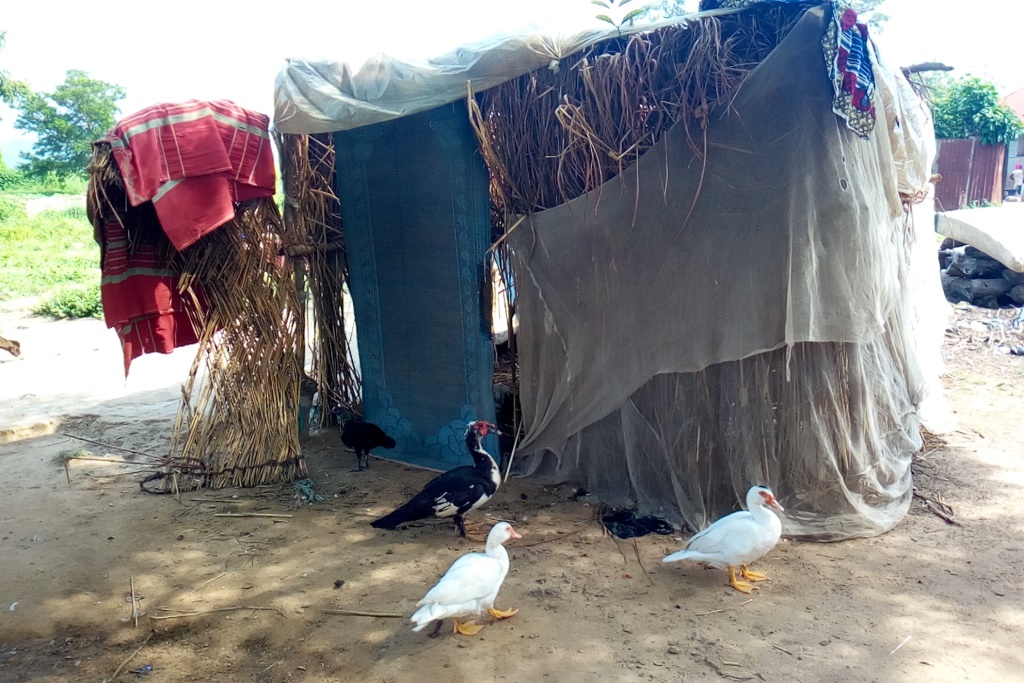
Asides the bungalows, the displaced people have also built a contraption made of wood, mats and palm fronds to serve as shelter. Women of varying ages were seen lounging around the open space as children appeared amused by the sight of a visitor.
One of the makeshift sheds where displaced persons sleep at the Adabode camp, Kogi state.
“We have no food, money” — IDPs cry out, despite approved N3b
On September 16, the National Emergency Management Agency (NEMA) announced that N3 billion has been released to it by the Federal Government to respond to flood disasters in many states.
According to Mustapha Maihaja, the agency’s Director General, the sum was approved by President Muhammadu Buhari for the first stages of preparedness and response disaster mitigation, and this has motivated NEMA to immediately swing into action.
About a week after this declaration, Vice President Yemi Osinbajo also paid Koton-Karfe a visit in September to sympathise with flood victims and assure them of the federal government’s support.
“I am here to look at what has gone wrong and what has happened,” he said. “Land and properties are underwater and after this period when the water recedes, that is really when the hard work begins because those who have lost farmlands need to be restored somehow and need to be compensated including those who have lost houses and property.”
He also said in the following weeks, the government should have been able to assist the victims in returning to their homes and farmlands, and added that it is the duty of the federal and state governments to ensure people are adequately catered for.
Nearly two months after this reassurance, the victims say the government has done very little to alleviate their pain. The need to survive forced many out of their various camps to the marketplace, begging for alms.
“We have many difficulties at the camp,” says Suleiman Musa, 72.
He spoke about accommodation and feeding problem. He said they are yet unable to harvest anything from their rice and maize farms, and as a result have no means to feed themselves or earn income.
“The flooding brought starvation for us … We are in hunger. Our children have all been sent away from school. No food, not to talk of school fees.”
Suleiman says though they hear on the radio that food items will be brought for flood victims; their community is always excluded while other villages get a share. He also recalls that the government promised, in 2012, to allocate land to occasionally house victims of the flood but nothing has been done about this till date, “that is why we are just hanging around.”
Idris Musa Kareem, an IDP from Irenodu ward who spoke to The ICIR, says his ward is one of the worst-hit and cannot be accessed till date unless with the help of a boat. He says the residents have been unable to access relief materials meant for victims till date, also alleging discrimination.
Muhammad Adamu also confirms that there is an unequal treatment of communities in the local government as materials brought for distribution don’t ever go round.
“We need help,” he pleads. “The little government donated to us has finished. Now, we are in hunger. As we go, there is nothing like foodstuff. Nothing again, even on the farm.
“We are hungry. They should help us more so that when we are going for this dry season farming, we will be able to get something to last us. If we have something to manage till that time, we will be very happy.”
Muhammad also laments how some of the IDPs’ children have dropped out of school and their homes have fallen to ruins. He prays the government to assist with fishing nets so that they can feed their family.
“We are in hunger”: Suleiman Musa, IDP, Konton-Karfe, Kogi State
Billions of farm products lost to the flood
The remote communities of Kogi Local Government are not the only places submerged in water while the flood lasted. The deluge also affected communities skirting the Lokoja-Abuja Highway where farmlands and houses are completely destroyed.
The principal of Government Science Secondary School in Koton-Karfe, Muhammed Usman Adamu, and an indigene of Akpako community showed the reporter around the area to observe the level of damage caused by the flood.
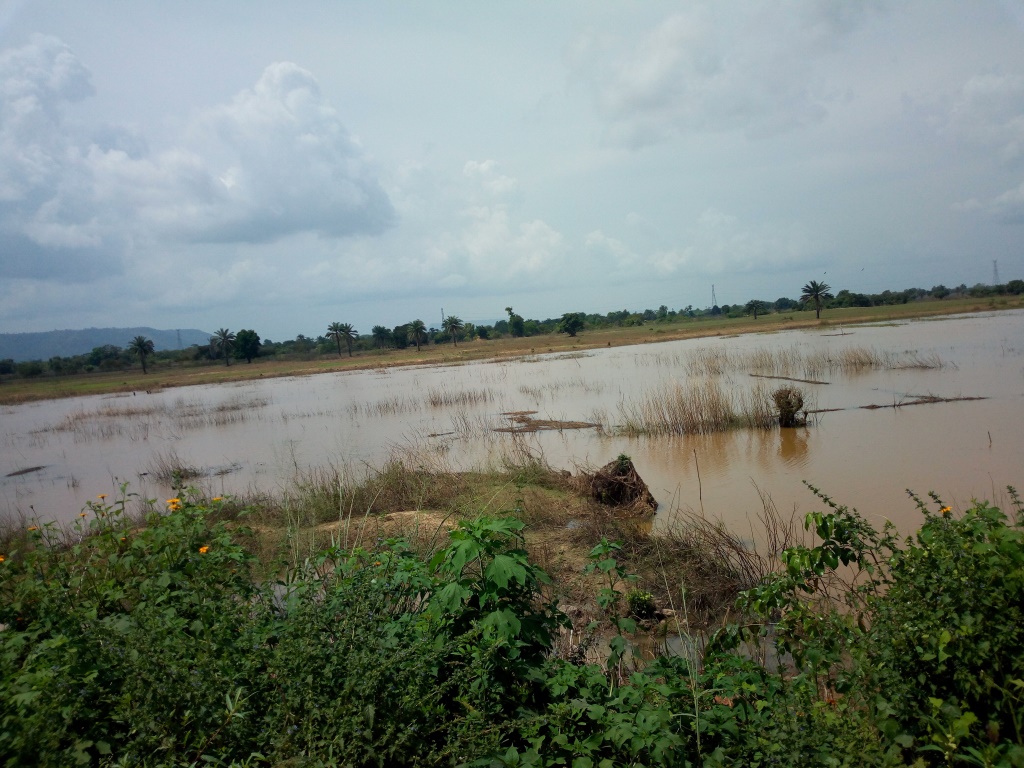
A vast pool of water left by the receding river could still be seen on the land surrounding the Murtala Muhammed Bridge. The land ordinarily serves as a farm for the planting of rice.
“This happened in six wards of the local government,” says Muhammed. “It’s happening also at South East, Girinya, up till the Muye Area. Most of the crops were not ready for harvest before the flood came; and the farmers lost billions of naira. This is just a segment. If you look at the other side, across the road, you’ll see another section of the farmland extending as far as you can see.”
Apart from farmlands, other properties such as houses and machines also were damaged by the flood.
Gimba Abdullahi, a security guard at one of the residences, tells The ICIR a motorcycle parked within the compound stopped working following the flood. For over a month, occupants had to move to the adjoining storey building.
Muhammed commends the governments for coming to the aid of IDPs, but expects more than what was offered. According to him, the government intervention during the 2012 flooding was better.
Traces of the flood still visible on a large expanse of rice farmland in Koton-Karfe, Kogi State
Motorcycle damaged by 2018 flooding disaster in Koton-Karfe. Kogi State
One of the houses by the expressway completely engulfed in water during the flood
Relief items pocketed by local authorities?
One of the community leaders in Adabode, who prefers to remain anonymous for the fear of attack, tells The ICIR that the vice president donated a sum of money to Koton-Karfe during his September visit, which was not accounted for.
“Till this very moment, we have not heard anything from the local government administrator or the Emir about that money,” he says disappointedly.
“And when we even asked,” he continues, “they were deceiving us that Osinbajo packed phones inside two bags for us. They never disclosed it was money, but those who know the details, including a local chief close to the monarch, said it was money.”
He also says people were threatened with arrests should they report that Osinbajo came to the town empty-handed. According to him, unlike his predecessor, the incumbent Ohimegye of Igu Kingdom, AbdulRasaq Isa-Koto, has not treated the communities fairly.
The Ohimegye, he says, claims there are 66 affected communities in area though the total number is only 45 “so that the money they get will be for that number and the rest will be for them”. In one instance witnessed by him, he adds, His Royal Majesty directed that a Hilux vehicle be filled with relief materials and driven to the palace. According to him, a similar vehicle was also filled up for one Hajia Salamatu Iyami Tatu, a local women leader.
“The day before Osinbajo came,” the community leader further alleges, “we were mobilised to go and sleep there so that when he comes, he’ll see that we have made a camp. But these are people you do not care for until the day Osinbajo is to come so that you’ll exploit them, and that’s just what happened.
“Akpaku people refused to come there. There is a day the governor was passing by, he dropped for them N3 million. The local government administrator ordered the chief to give him the money, and that one yielded. That occurrence provoked the Akpaku community, and that’s why they refused to join others at the emergency camp. They said even if Osinbajo drops anything, they will not be considered for anything and it’s true.”
A philanthropist from Fidelity Bank also donated mosquito nets to the communities through the Emir, he narrates, but the nets were instead sold at a rate ranging from N1800 and N2000. One of those who bought the net at the latter price was his younger brother, who had attempted handing it to him after purchasing. “They said where is the evidence that said this thing is donated free.” He advises organisations and government agencies donating subsequently to deal directly with the people.
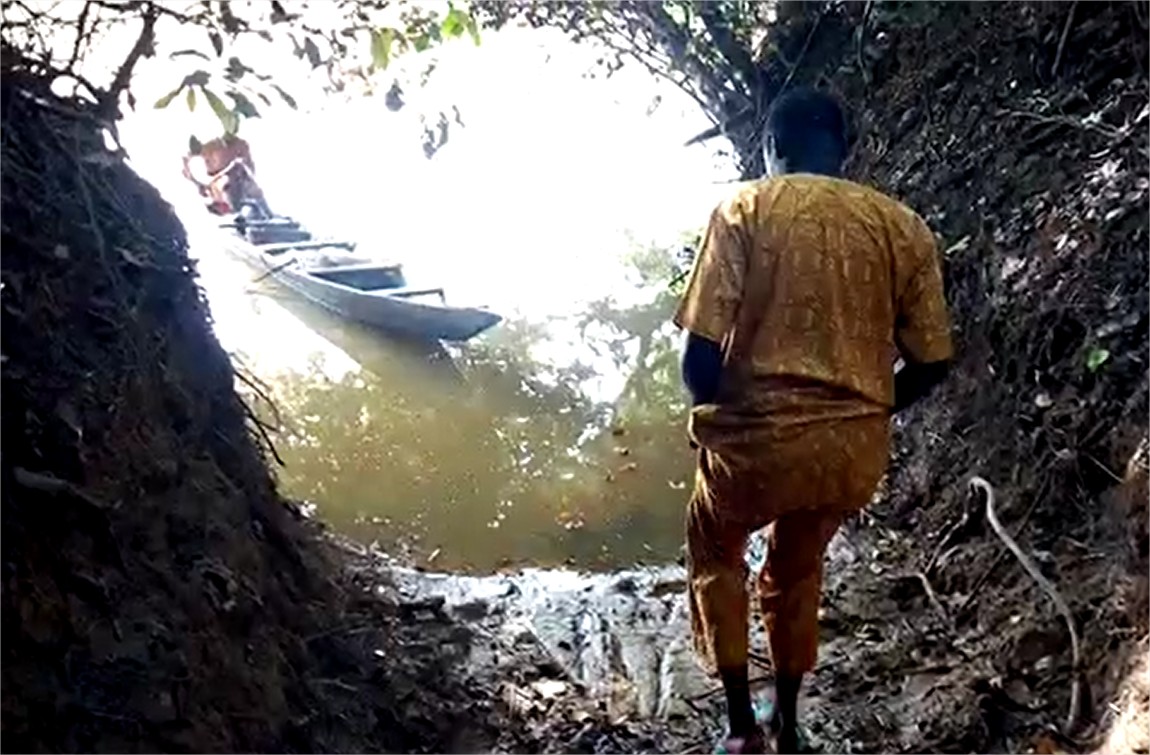
The route leading to Adabode is still not accessible except with a boat
The sidelined community of Adabode
Adabode is one of the communities in the local government which can still not be accessed except through a canoe. Though with an original population of close to a thousand, only a handful men presently live there. Others, explains Adams Alli, one of the few who remain, have gone to seek succour in Jamata.
“It is because of what to eat we ran back to this place,” Fatima Alli, Adams’ wife, adds.
Adabode is littered with several traces of what used to be complete buildings, now dilapidated.
In one of such cases, caused by past flooding, the owner of the destroyed structure, a family man with two wives and six children, decided to pick up the zinc roofing sheets and join them together for a temporary abode.
Leaders of the community complain about total inattention from the government. They host officials on a yearly basis but have never benefited from various rehabilitation attempts.
“This is not the first time our community will be flooded; but we don’t see anything,” Yinusa Mohammed laments. “Just as you’ve come, others have also come in the past; but nothing comes out after the visits. The government has done nothing for us. Nothing.”
“Look at where this man sleeps,” he adds, referring to Shuaibu Usman Dakko and pointing to a nearby tent made with torn fabric and sticks. “Even politics, all of us do it. There is no party without a presence in our village and we vote frequently, but we don’t get anything from the government.”
Effects of flooding on Adabode Community, Kogi LGA
Effects of flooding on Adabode Community, Kogi LGA
Effects of flooding on Adabode Community, Kogi LGA
Effects of flooding on Adabode Community, Kogi LGA
Effects of flooding on Adabode Community, Kogi LGA
Effects of flooding on Adabode Community, Kogi LGA
Effects of flooding on Adabode Community, Kogi LGA
House built by the owner using the zinc roofing sheets of the old one ruined by flood
The village Madaki, Yusuf Kaisa, corroborates Yinusa’s observations, lamenting that members of the community no longer have sufficient food to eat.
“We need help,” he pleads. “Government should help us, because as we are now it is only God that can help us. There is no food; we don’t have anywhere we can look for food. Every five days we go to buy garri, elubo [yam flour]… after we have hustled and entered bush to hunt. Even money is difficult to get now. We need government to help us because of God … because of God.”
Fatima, who is also the village’s women leader, protests how the leaders and residents of urban areas took advantage of the community. “When disaster comes”, she says, “they’ll be crying for us, but the moment help comes, they’ll just hijack it. Before you get to town, they’ll say the materials have already been distributed.”
Ebagi: A border community no one bothers about
While Kogi may be the greatest loser to the tragedy of flooding due to its geographic location, losses are not exclusive to the state. An hour drive away from Koton-Karfe is the area council of Abaji which welcomes travellers into the Federal Capital Territory (FCT).
Buried deeply in this local government is a community known as Ebagi, roughly 10 kilometres away from Pandagi. It has a population of close to 2000; and it is one of the oldest communities around according to residents, as people, most of them full-time farmers, have lived there for many decades.
The community has a health centre, which conducts periodic immunisation for children, a primary school, and a litter of houses, mostly built using mud bricks. The flooding incident of 2018 has left their massive farmlands devastated. The volume of the water was such never before experienced by most adults.
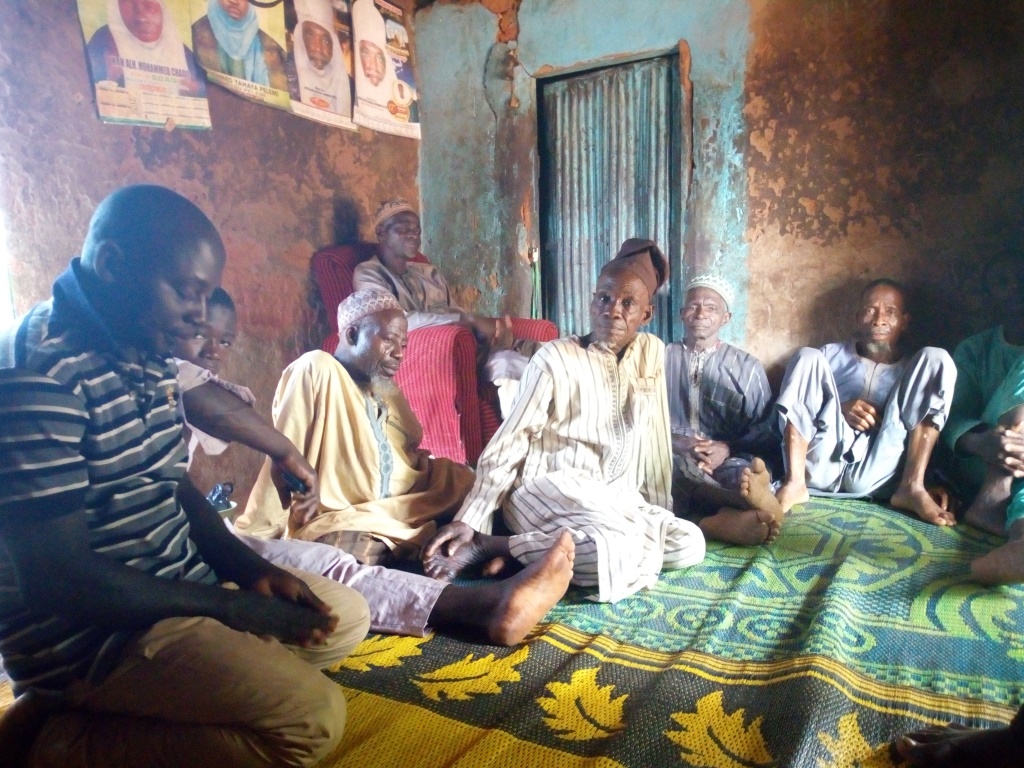
Community leaders during a meeting at the residence of the Etsu of Ebagi
At a meeting with twelve community leaders at the Etsu of Ebagi’s home, Shuaibu Lara who started school in 1976 says he has not seen flooding of this nature since his birth.
“This year’s flood is the worst,” Abdullahi Suleiman, a young man from the community, agrees.
“Because where the river used to come and stop, it didn’t stop there,” he explains. “We’ve never experienced something like this before. The river has finished all our properties.”
Muhammed Chado, one of the oldest in the room and the only one reclining on an armchair instead of a mat, is the village head. Speaking in a Nupe dialect, Chado appeals to the government to assist the community through the supply of food and building materials as the village is back to ground zero with the destruction of their crops.
Some of the buildings in the village, especially the mud houses, collapsed under the weight of this year’s downpour. Only a few brick buildings are left standing, some under construction, but the majority of the people cannot afford such a luxury.
“Most of our farms are by the riverbank, that’s why we’ve been greatly affected,” says Suleiman, who took this reporter on a tour of the village where the flood has wrecked havoc. “We could not pick anything. The farms were completely submerged for over a month between August and September.”
A spread of river sand is seen across several metres of land, formerly used for the planting of crops ranging from plantain, cassava to rice; and two middle-aged “irrigation farmers”, one of them holding a sack and manual trap, make efforts to manage the damage caused.
After a few minutes of walking, we come across a wooden store where harvested crops are temporarily kept by various farmers. Major cracks on the cement floor are the effect left by the deluge. But that’s not all; farm products including cassava, maize and plantain, stored in the shed before the flood were also destroyed. A ravaged canoe rests outside the store. According to Suleiman, there used to be two. The second had been swept away.
Suleiman says, are agricultural products running into tens of millions of naira as well as five months of hard work were lost to the disaster because the planting season had started sometime in April. A report has been sent to the government from the village and, in September, a delegate from the local government had been there to assess the damage.
“But up till now, we have not heard anything from them,” Suleiman confirms in a forlorn tone.
A thick spread of river sand is seen across several metres of land
Several hectares of rice, plantain and cassava farmlands lie in ruins
Damage caused by heavy downpour in Ebagi, Kogi State
Damage caused by heavy downpour in Ebagi, Kogi State
“You cannot see the Ohimegye”
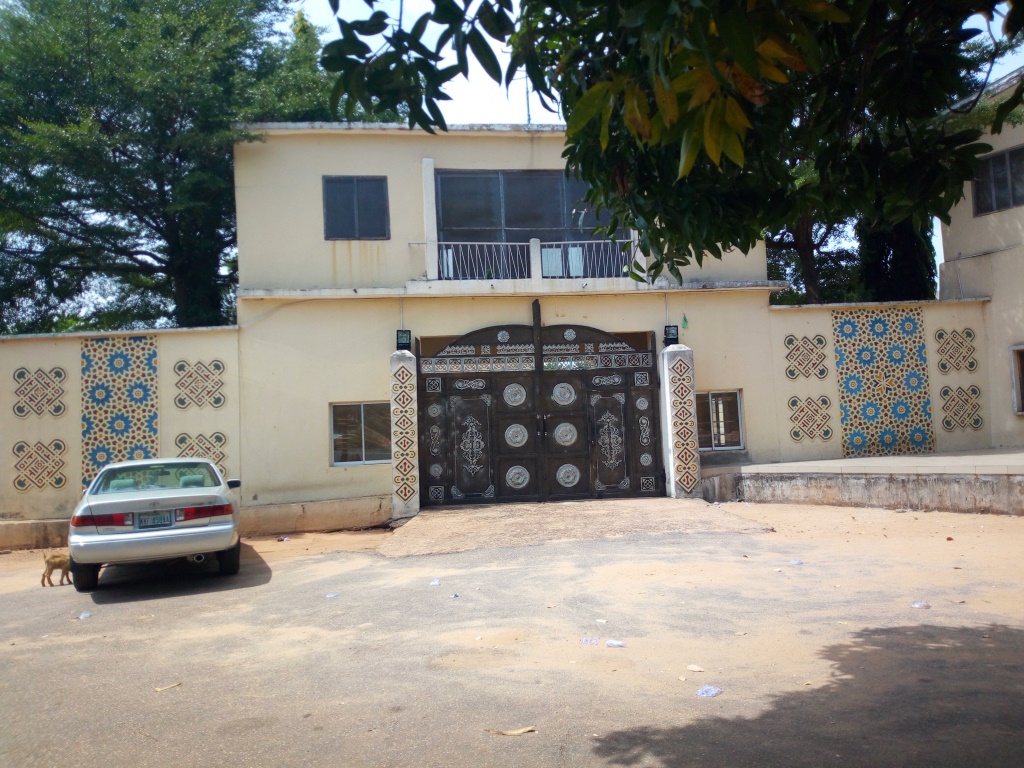
One of the most influential rulers in the Koton-Karfe community is the Ohimegye of Igu, Abdulrazak Gambo Isa Koto, ruler of what is said to be one of the oldest kingdoms in North Central Nigeria and the cradle of Egbira civilisation.
His palace is fenced with tall, elaborately decorated walls and an iron gate. It is also protected by a number of palace guards wearing a traditional uniform of bright red and yellow colours. At the time of visit, a politically themed lecture, amplified with loud speakers, seemed to be ongoing.
After asking to see the Ohimegye and making it clear the visit is about the recent flooding, this reporter was asked to wait outside and was eventually told he could not.
“You didn’t inform us you were coming,” explains a middle-aged man dressed in an overflowing white kaftan.
“That is the way we do things here,” he continues. “You have to inform us formally. You would have written, then we would give you date. What if he is not prepared? Honestly, you have to inform us first. There has to be prior notice.
“You should have written us on your letter head so it will be on record. You understand; it is not a place that you can just walk in and say you want to see His Royal Highness. He will not allow that.”
“He will not welcome you,” he adds, repeating the statement twice for emphasis.
Ohimegye’s palace, Koton-Karfe, Kogi State
FEMA: We have not started distributing relief materials
A look through the website and social media accounts of the FCT Emergency Management Agency (FEMA) appear to suggest that little or no action has been taken in reaction to incidents of flooding in the country’s capital territory.
The website has not been updated in 2018 except in September “as a result of earth shakings around some settlements in Abuja – FCT”. The only public statement released by FEMA and related to flooding is a tweet of September 11, acknowledging the death of one person and advising that people adhere to early warnings to avert loss of lives and property.
Some communities in the FCT were ravaged by flood disaster killing one person. We advised that people should strictly adhere to the early warning issued to avert loss of lives & Property. pic.twitter.com/kEUyoVvrwd
FEMA Director-General, Abbas Idriss, declined comment on how the agency intends to rehabilitate flood victims in the FCT. Instead, he directed the reporter to meet with Rachael Alkali Y., the agency’s Director of Relief and Rehabilitation.
Alkali in turn asked that the reporter be taken to see another official of the agency, who said he does not know whether an assessment has been carried out in Abaji and called in yet another employee for possible answers.
“We are working on so many things now,” said the other employee, who declined to provide his name because he does not want to be quoted.
“I was there last Friday, in the area council. You know government thing is a process. There are so many things. So, we are on it. And you can see the proactiveness, I was there on Friday and that was where I did all my work,” he added with hesitancy.
He said though there are “so many interventions” that were supposed to take place, the communities have yet to receive any relief materials. He added that Kwali and Abaji are the two primarily affected area councils, with many smaller communities tucked under them.
He replied in the negative when our reporter asked if he knows how soon the distribution of materials will take place.
“When I’m not the government,” he said. “I work with them, that it is. I have a minister, a director-general, a director. It is their work I’m doing, and I have been proactive. There’s a push to get things done. When? I don’t know. How soon? I hope soonest because it is overdue.”
Meanwhile, a document sighted by The ICIR, signed by FEMA’s Social Welfare Officer, Shuaibu Usman, and written to the Director of Relief and Rehabilitation, provides what it calls a follow-up update assessment on flooding in the FCT.
The document, dated November 12 2018, confirms that IDPs in the capital territory need the distribution of relief materials and says most of them are unwilling to return to their home states because of safety concerns. It also states that there is a “visible presence of IDPs” at various settlements in Abaji, and recommends the provision of food and non-food relief materials to those affected.
Silence from VP, Kogi govt.
On November 6, The ICIR contacted Laolu Akande, Senior Special Assistant to the Vice President Yemi Osinbajo on Media and Publicity, to confirm how the federal government intends to keep the vice president’s promises made during his visit to Koton-Karfe.
He did not answer calls or reply to text message.
Likewise, Kingsley Fanwo, director-general on media and publicity to Yahaya Bello, governor of Kogi State, neither answered calls nor responded to texts sent to his phone on November 8.
FORMER Governor of Rivers State, Peter Odili, has sued the former Chairman of the National Human Rights Commission (NHRC), Chidi Odinkalu, for allegedly defaming him in a new book he co-authoured.
The book titled “Too Good To Die: Third Term and the Myth of the Indispensable Man in Africa” which was written by Odinkalu and Ayisha Osori, tried to unravel what led to the failure of the notorious third term agenda of former President Olusegun Obasanjo.
But Odili, in the suit filed by his lawyer, Kanu Agabi, said the book have earned him public ridicule and scorn. He said that as a recipient of numerous local and international awards, there was no way he could have been involved in the numerous crimes Odinkalu and Osori accused him of in their book.
For instance, the book narrated the story of the late Harry Marshal, a politician that was assassinated shortly after he fell out with Odili. The book cited a letter that Marshal wrote to the police at the time to report the many violent attacks against his party, the All Nigerian Peoples Party (ANPP). Marshal, in the letter, said that the attackers were thugs loyal to Odili and were being supported by the police.
The book also claimed that the bulk of the funds which Obasanjo used to canvass for his failed third term bid were supplied by Odili and Adamu Muazu, who at the time were the Governors of Rivers and Bauchi States respectively.
Odili demanded that Odinkalu and Osori pay him N1 billion in damages, as well as a published apology and an end to further publication of copies of the book.
When contacted, Odinkalu said he could not react to the development as he was not aware of the suit.
Osori and Odinkalu are currently working with the Open Society Initiative West Africa (OSIWA) as the Executive Director and Senior Legal Officer respectively.
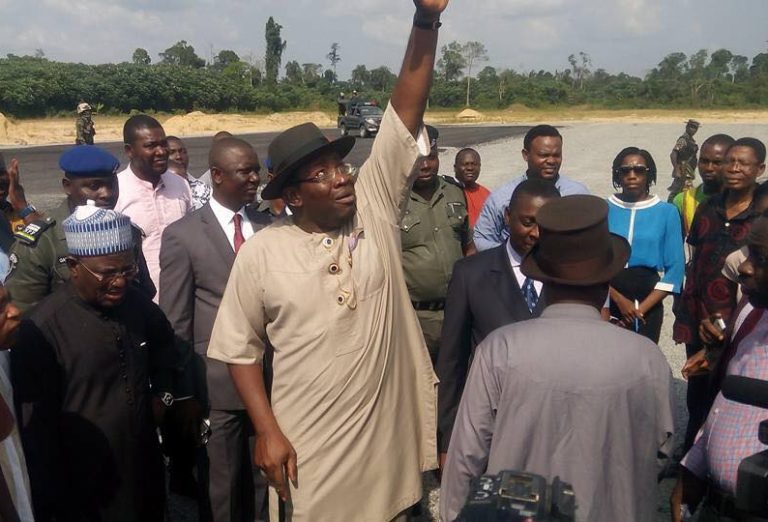
THE Bayelsa State chapter of the All Progressives Congress (APC) has described the state airport project being undertaken by the Seriake Dickson administration as a “cesspit of fraud”.
Doifie Buokoribo, the Publicity Secretary of the APC in Bayelsa State, made the allegation in a statement, saying that the project “is a fraudulent scheme put up by Governor Seriake Dickson to facilitate the syphoning of state funds”
Buokoribo said the cargo airport project has no economic value to the state and that the total cost has been over bloated.
He said the governor borrowed N40 billion from a bank to begin work on the project, but the same governor, during a visit to Amassoma community in Southern Ijaw Local Government Area, told the people that the sum of N80 billion has so far been spent on the project.
Buokoribo said the N80 billion loan, when added to the N32 billion interest it will accrue, “the cost comes to N112 billion”.
“It is clearly the most expensive airport project in Nigeria, as none of the 26 owned by the Federal Government or the eight owned by States is near that figure,” the statement read.
“The Bayelsa International Airport project does not make any economic sense. A total interest of N32 billion (to be serviced within eight years) is a crippling repayment burden to the State.”
The Bayelsa APC spokesman further alleged that the conceptualization of the Airport was faulty as it leaves the airport without a standard road network or connecting rail system.
Dickson responds
In a statement forwarded to the ICIR on Friday by the Bayelsa State Commissioner of Information, Daniel Iworiso-Mackson, the state government said: “it would only take a band of unconscionable political desperadoes to criticize the well conceptualized and effectively executed Bayelsa International Airport”.
He urged the public to disregard the APC which, according to him was being manipulated by Timipre Sylva, former Governor of the State.
However, Iworiso-Mackson did not address any of the allegations raised in the APC statement.
The Bayelsa Cargo airport was scheduled to be commissioned by President Muhammadu Buhari in August this year, as announced by the State Government in July, but that did not happen.
At the time, the airport was said to be 95 per cent completed, as the runway and terminal were already in place.
How much does a new airport cost?
The ICIR does not know the total cost of the Bayelsa Airport project. Calls to Iworiso-Mackson were not answered, and when a text message sent to him asking for the information, he simply referred to the press statement already quoted above.
However, in April this year, the Minister of State for Aviation, Hadi Sirika, told a joint National Assembly committee that it would cost an upward of N67 billion to construct a second runway for the Abuja International Airport.
It is not clear how long the proposed new runway will be, but the Bayelsa Airport runway is said to 3.5 kilometres long. Assuming the new Abuja airport runway will be the same distance as that of Bayelsa, the cost could be higher given the location.
In April 2017, the Prime Minister of Dominica Republic, Roosevelt Skerrit, said it would cost the country $220 million to construct a new international airport. That is about N67.1 billion, using the official rate of N305 to $1.
According to africanaerospace.aero, several airport projects are springing up across Africa, each estimated to gulp hundreds of millions of dollars.
Rwanda is constructing the Bugesera International Airport at $818 million, the construction to split the Blaise Diagne International Airport in Dakar, Senegal, into two phases, is expected to cost $560 million, Tanzania’s new US$300 million terminal is due to open in June 2019, while the Zambian government is planning to spend US$500 million in airport construction projects in Lusaka.




![Kogi flood victims who lost everything are still homeless, broke despite govt. promise… [1]](https://www.icirnigeria.org/wp-content/uploads/2018/11/IMG_20181102_121337-e1542011318231-boost-768x455.jpg "Kogi flood victims who lost everything are still homeless, broke despite govt. promise… [1]")