Home Blog Page 2489

How do we plan without data? Nigerians ask as NBS bemoans lack of funds to carry out unemployment survey

NIGERIANS have expressed worry over the non-release of the 2018 unemployment data by the National Bureau of Statistics (NBS), but the head of the bureau, Yemi Kale, said lack of funds was stalling the process.

The last time the unemployment data was released was that of the third quarter of 2017, and it showed that Nigeria’s unemployment rate stood at almost 19 per cent (18.8 per cent precisely), the highest since 2010.

It also showed that the unemployment rate has more than doubled since 2015 when President Muhammadu Buhari took power. It’s been more than one year now since that data was published.

Many say the Buhari administration is deliberately refusing to release the current unemployment data because the figures must have increased further, which would be bad news for an administration that claims to have done so much especially with regards to job creation and reducing unemployment, and is using that as a basis for seeking a second term in office.

Graph of the unemployment figures in Nigeria as at Q3 2017. Graph by Bloomberg.com

On Monday, a Nigerian whose Twitter username read simply as ‘Chxta’, took the issue to the social media when he tweeted the following: “These are facts: Under this government, Nigeria’s economy has shrunk. Under this government, unemployment has doubled from 9.9 per cent in mid 2015 to 18.8 per centin Q3 2017. Since then, no more unemployment reports. They will try to distract you, but eye on the ball. We are worse off.”

Chxta (whose real name was later revealed by Yemi Kale as ‘Cheta’) was supported by Boasan Omofaye, a popular business journalist and broadcaster who currently heads the business desk of Channels Television. Omofaye tweeted that the government “dare not release our quarterly unemployment report”, adding that “by the time Trader Moni is well circulated, you will see the millions of new jobs figures that would be rolled out.”

To the above tweets, Yemi Kale, the Director General of the NBS, replied that there was no politics in the non-release of unemployment so far in 2018, but that the process was being stalled because of lack of funds.

“Nobody is calling me to manipulate any data or not to release any data. The work can’t be completed due to budgetary releases. It’s not hard to confirm when last we got data funding and how much,” Kale tweeted.

Kale went on to try to justify FG’s inability to make funds available to his agency. He said “there are other equally or even more important work competing for same limited funding. I assume when funds are available we will be funded”.

NBS Budget

In the 2018 budget, the NBS was allocated a total of N1.38 billion for capital expenditure. This is about N300 million higher than the N1.03 billion that was budgeted for the Bureau’s capital expenditure in 2017.

Out of the 2017 capital budget, about N815 million or 79.1 per cent was released to the NBS, and all was spent, according to documents from the office of the Accountant General of the Federation.
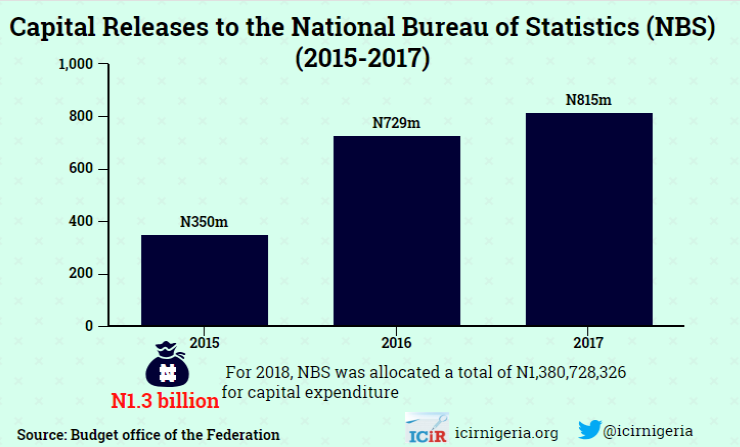
The figures also show that the NBS got almost all its budgetary allocation for capital expenditure in 2016 – N729.6 million out of the budgeted N730.3 million–, and all of the N350,000,000 capital allocations in 2015.

The ICIR is not certain how much that has been released to the NBS so far in 2018, as the fiscal year just commenced with the signing of the appropriation bill into law in July.

What is more important than data?

Assuming Yemi Kale is right that lack of funds was stalling the undertaking of critical researches to generate accurate data to aid government’s policy and decision making, Nigerians are asking what higher priorities the government have that trumps the generation of accurate data?

“All works are important but some are ‘more important'”, tweeted a user by the name Earthtribeboy. “Without data, we’re like the blind. We can’t know which sector is doing well and which needs help. Ministers can’t develop job policies,” he added.

Another tweet by AfricaUpdates read: “This is very alarming. Lack of funding to such a vital part of the Government. So how does the Government even plan without having or using reliable Data from its main statistics body? You wonder if the lack of funding is by design in order to allow the graft to flourish.”

And yet another Twitter user wrote: “Timely release of such important data contributes to improved investor confidence for one. Policymaking without crucial data is like running blindfolded. This makes you wonder what the government has been using as a guide for its policy decisions.”

Perhaps, it was the tweet by one Ayo Alabi that offered a more believable reason as to why the NBS lacks funds to carry out its responsibilities.

He wrote: “We know you cannot manipulate figures. But any average person on the street knows unemployment is on the rise and NO JOBS are being created under this government. If the government is creating jobs, they will definitely be eager to release the figure (and fund your agency).”
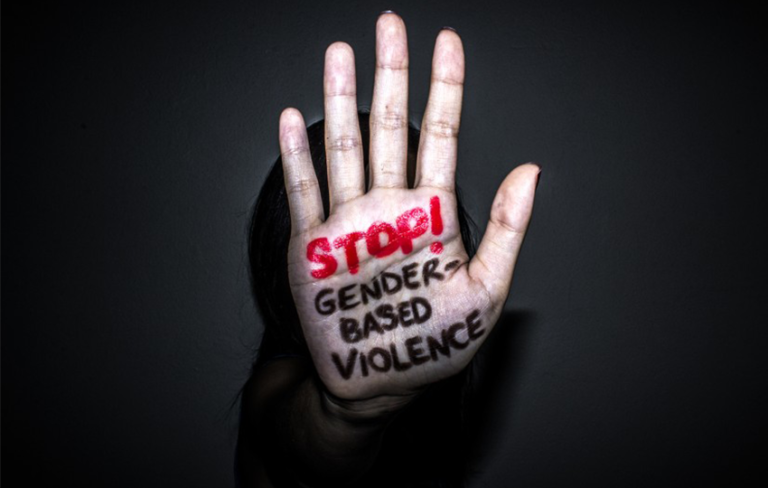
Group urges involvement of adolescent boys in combating gender-based violence

THE fight against Sexual and Gender-Based Violence will yield greater results if teenage boys and young adults are engaged in the campaign, says Chinyere Eyoh, the Executive Director of the Sexual Offences Awareness and Victims Rehabilitation Initiative (SOAR Initiative).

Eyoh made this known at a training workshop in Abuja which is part of SOAR’s project aimed at engaging adolescent boys to end sexual and gender-based violence (SGBV). The project is being organised with support from the International Centre for Investigative Reporting (ICIR) with funds from the Institute for War and Peace Reporting (IWPR).

The workshop focused on building participants’ knowledge around SGBV, gender norms/roles and unequal power relations which have been revealed as root causes for the prevalence of gender-based violence.

A cross section of participants at the workshop

Participants at the workshop were made up of male teachers selected from various public and private schools in the Federal Capital Territory (FCT), as well as some youths. They are expected to mentor and provide support to their male students who will, in turn, be mobilised and empowered to advocate and campaign against the menace of SGBV.


READ ALSO:


“SGBV will end when men and boys, who have power and decision-making ability tilted in their favour, play an active role in denouncing the actions of some men who commit sexual violence against women and children,” Eyoh said.

Also speaking at the workshop, the Consultant Coordinator of the University of Abuja Law Clinic, Chima Madu, took participants through an interactive session on Human Rights, SGBV and the laws in Nigeria.

This was intended to increase the knowledge of the participants on the existing laws and how these laws can be engaged in addressing SGBV. Provision for access to justice and psychosocial support has also been put in place for boys who will disclose abuse during the project.

Also in attendance at the workshop were the Deputy Director, Gender, of the FCT Education Secretariat, Rashida Apahade, and Nafisat Kote, from the FCT Universal Basic Education Board. They both gave their support for the project and stated that it is long overdue since most intervention projects which partnered with schools against sexual violence focused on the girl-child.
Apahade further encouraged the teachers present to give their personal commitment in ensuring that schools in the FCT are violence-free.

Fake news and propaganda are APC’s trademarks… ASUU replies Fayemi

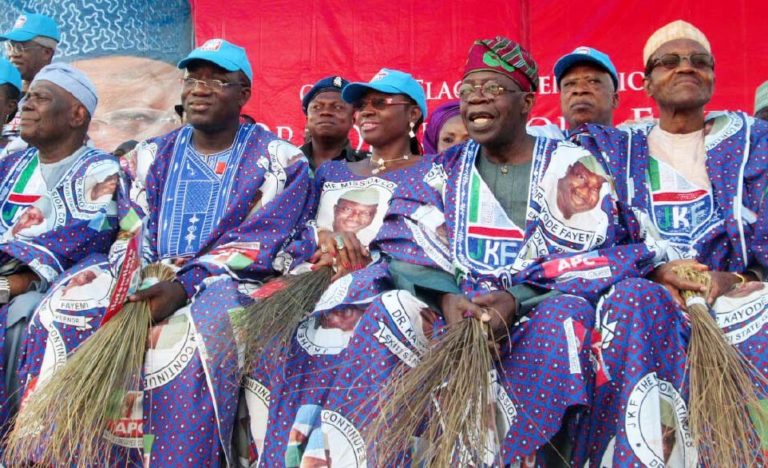
FOLLOWING the remarks by the Governor of Ekiti State, Kayode Fayemi, that some Nigerian professors earn higher than the N500,000 he earns as a state governor, the Academic Staff Union of Universities, has said that fake news and propaganda have become the trademarks of the ruling All Progressives Congress (APC).

Fayemi, who is currently in France having accompanied President Muhammadu Buhari to the Paris Peace Summit, made the comments during the President’s interaction with Nigerians resident in the country.

He said ASUU must understand that they cannot get everything they are demanding from the federal government, adding that the Buhari-administration has done more for ASUU and the Nigerian Education sector.

“Ask yourself what was the average wage in the university system before. A university professor earns more than me as a governor. My salary as a governor is N500,000. Most university professors earn about the same amount if not more,” Fayemi said.

However, Deji Omole, Chairman of ASUU, University of Ibadan chapter, described Fayemi’s remarks as false, daring the Governor to return to the classroom as a lecturer if he feels professors earn better than he does.

“It is sad that someone living on state resources with his family and countless aides with juicy salaries will not be circumspect in thought,” Omole stated.

“Fake news and propaganda have been the trademark of the ruling APC. Fayemi’s utterances revealed the mental state of those ruling us.

“We challenge him to publish what a professor earns as salary and allowances and what governors earn and allowances.

“If lecturers earn more than governors, why did Fayemi run away? Fayemi should tell the world how much he spent on capital grants to EKSU during his first sojourn in office. Nigerians should ask him why he failed to pick up the appointment offered him as an associate lecturer by the University of Ibadan.

Omole clarified that “no newly promoted professor earns N500,000 monthly”, adding that a professor may earn that much “after 10 years of becoming a professor and this includes all allowances”.

He also reiterated that though ASUU members are demanding the backlogs of salary arrears owed them since 2010, the demand was not, and has never been the main issue for their agitation.

“We are more concerned with a revitalised University that is adequately funded to attract foreign scholars,” Omale said.

“Fayemi should attract an international professor and offer to pay him $1500 per month and let us see how many of them he can bring to Nigeria.”

Meanwhile, the National President of ASUU, Biodun Ogunyemi, has said that the Union is willing to continue negotiating with the federal government in order to find a solution to the ongoing strike which began on November 5.

A meeting between representatives of ASUU and the Minister of Education, Adamu Adamu, was scheduled for 1 pm on Thursday.

Abaribe, two others to pay N100 million each for failing to produce Nnamdi Kanu

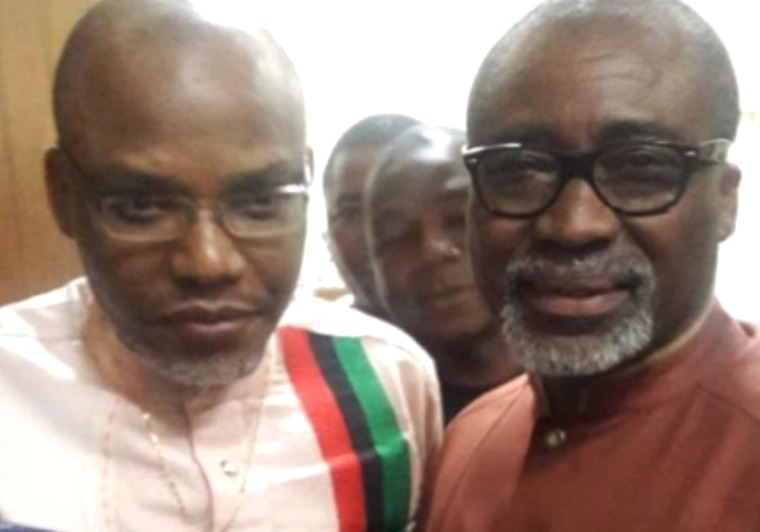
JUSTICE Binta Nyako of the Federal High Court, Abuja, has ordered the people that stood as sureties for Nnamdi Kalu, leader of the proscribed Indigenous People of Biafra (IPOB), to pay the N100 million bail bond for failing to produce Kanu to complete his trial.

Kanu was facing treason and terrorism charges before Justice Nyako, and was granted bail in April 2017 on health grounds. As part of the bail conditions, Kanu was required to produce three sureties who would sign a bail bond of N100 million which they would stand to forfeit should the accused person jump bail.

One of the sureties must be a senior highly placed person of Igbo extraction such as a senator, the second must be a highly respected Jewish leader since Kanu said his religion is Judaism, and the third surety must be a highly respected person who owns landed property and is resident in Abuja.

Kanu was subsequently released on bail and the following persons stood surety for him: Enyinnaya Abaribe, the Senator representing Abia South Senatorial District; Ben El-Shalom, a Jewish priest, and Tochukwu Uchendu, an accountant.

However, Kanu’s whereabouts have been unknown since September 2017, when Nigerian soldiers allegedly raided his home in Umuahia, the Abia State capital, following the proscribing of the IPOB by the federal government.

The soldiers had allegedly gone to forcefully arrest Kanu, who at the time had serially breached all his bail conditions, but the attempt failed, and since then nobody seems to know the whereabouts the IPOB leader.

At the resumption of Kanu’s hearing in October 2017, Abaribe, one of the sureties, asked the court to remove him as one of the sureties to the accused person, but the trial judge declined the request, asking him rather to ensure that Kanu is present in court on the next adjourned date.

When the case came up again for hearing on Wednesday, Only Uchendu was present in court. Abaribe and El-Shalom were only represented by their counsels, and this did not go down well with the trial judge.

Justice Nyako said she would have ordered for the arrest of the sureties, but had to change her mind because of the presence of one of them in court. She, however, ordered that the three must forfeit the N100 million bail bond they signed to secure Kanu’s release.

“Before you take anybody on bail, you must ensure it is a person you can vouch for and a person you can produce in court. Even if Mr Nnamdi Kanu is in Israel or he is in Saudi Arabia, that is not my business.

“I am not interested in the fact that they found Mr Nnamdi Kanu. You can talk from today till tomorrow, but they will forfeit the bail bond,” Nyako told one of the counsels for the sureties.

After much pleadings from the counsels, Justice Nyako agreed that the forfeiture order would last for just six months. The case was subsequently adjourned to March 26 and 27, 2019.

Akindele, former OAU sex-for-marks lecturer opts for plea bargain

RICHARD Akindele, a Professor at the Accounting Department of the Obafemi Awolowo University (OAU), Ile-Ife, who was accused of demanding sex from one of his students, Monica Osagie, in order to give her a pass mark, has agreed to a plea bargain with the Independent Corrupt Practices and Other Related Offences Commission (ICPC).

According to ICPC’s spokesperson, Rasheedat Okoduwa, Akindele will be arraigned at the Federal High Court, Osogbo, on Monday 19th November, 2018, on a 3-count charge bordering on abuse of office and conferring an undue advantage on himself.

“The 57-year-old professor has asked for plea-bargain having admitted guilt. He also cited ill-health as a factor that may make him unable to stand the rigours of prison life, notifying the Commission through his lawyer, Omotayo Alade-Fawole,” Okoduwa stated on Wednesday.

Akindele pleaded that his plea-bargain be considered, especially as he was already serving a punishment for his offence having been sacked by the OAU.

The ICPC had accused Akindele of using his position as a lecturer to demand for sexual benefit from Osagie in order to fraudulently upgrade her result in a course which she supposedly failed in 2017; a crime which is contrary to Sections 8 (1) (a) (ii), and 18 (d) of the Corrupt Practices and Other Related Offences Act, 2000 and punishable under the same sections.

One of the counts reads: “That you, Professor Akindele, on or about the 16th day of September, 2017 at Ile-Ife did corruptly ask for sexual benefits for yourself from Ms. Monica Osagie on account of favour to be afterwards shown to her by you in the discharge of your official duties as a lecturer in the Department of Management and Accounting, Obafemi Awolowo University, to wit; altering her academic grades in the course with code MBA 632- Research Method from fail to pass; and thereby committed an offence contrary to and punishable under Section 8(1)(a)(ii) of the Corrupt Practices and Other Related Offences Act, 2000.”

In her statement on Wednesday, the ICPC spokesperson recalled how Akindele’s victim, Osagie had granted an interview in September, saying that she had no confidence in the capacity of ICPC to give her a fair hearing, but the commission promised that it would get to the root of the matter and also publish same in national dailies.

REPORT: Living with diabetes in Nigeria — full of difficulties, complications

A NEW day has just started. Aliu wakes up, puts on the light and sits up to check his feet thoroughly. This is a daily ritual of a diabetic patient. Then he noticed a small blood clot on the left foot, and went straight for a medical check-up.

Getting to the hospital, his doctor told him the foot had to be amputated urgently. That is the only way he could live, his doctors said as a matter of fact.  Nearly 80 per cent of people who have diabetes will eventually die of clot-related causes, according to expert.  At that time, Aliu was left with no other option than to accept his fate.

It was a decision to live the rest of his life on the wheelchair.

The following day, the fifty-four-year-old Aliu had his left foot amputated, spending nearly N3 million for the surgery.

In an interview with The ICIR, five months after the surgery,  Aliu said he sometimes forgot he no longer has his left foot and attempts to engage in some activities. But when he remembers he is now handicapped state, he feels helpless. “The loss hinders my movement,” he said.

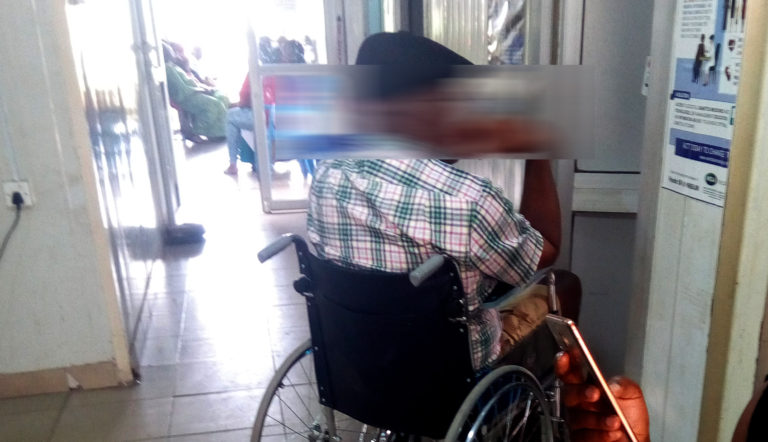
During one of his visits to the diabetes clinic of Federal Medical Centre in Jabi, Abuja, Aliu’s daughter gently wheeled him into the hall.  The remaining of his left leg, wrapped with a brown bandage, was dangling above the footrest,

He told The ICIR he was diagnosed with type 1 diabetes when he was fifty years old. Type 1 diabetes, also known as insulin-dependent diabetes, is a chronic condition in which the pancreas produces little or no insulin by itself.

His doctors had told him that diabetes is genetic. If someone has a family of diabetes, a member of that family is at a very high risk of getting diabetes, especially the type 2  which is highly hereditary.  But Aliu’s case is different. His was triggered by a lifestyle that was less than healthy.   He told The ICIR that he had indeed enjoyed himself consuming too many sweet stuff.

“Though I don’t take beers, I take a lot of sodas. I am sweet-coated with a little exercise,” Aliu said, with a short laugh.

Aliu wheeled out of diabetes clinic at FMC, Jabi after meeting with his doctors on November 6.

Now he spends more than N22,000 on the medications every month to maintain his health. A daily diet of insulin and other drugs keeps his heart beating.

Another patient of diabetes at FMC, Tunji, said he has been treating the disease since 2005 when he was 50 years old.

Thirteen years ago, Tunji woke up in the middle of the night to urinate, not once but four times. Throughout the day,  he visited the restroom more frequently than the usual.

At first, he thought maybe it was just a natural thing at that period. But after some days of abnormal urination, he became more concerned.

Days after, another sign showed up. He had gone to use the restroom of his master bedroom more frequent than usual. His wife who had noticed the frequency of his visit to the loo asked:  ‘Are you feeling okay?’”

“I said ‘yes, I am, why?’”  “You are losing weight, you are urinating more than the usual, so I think you should go to the hospital,” Tunji recalled during an interview with The ICIR.

Though he said he did not have a heavyweight, he had thought that his little weight then was natural. But his wife’s concern got him to become more worried.

After he came to the hospital, following some medical tests, Tunji was diagnosed with a type 2 diabetes. The type 2 diabetes is more common than type 1. It occurs when the body becomes resistant to insulin or doesn’t make enough insulin.

The now 63-year-old Tunji said he takes his doctors’ advice at heart. He said he has modified his lifestyle and engaging more in physical activities. “I jug everyday and I have been taken my medication well with the doctor’s prescription,” said Tunji.

He lamented how he could have used the money he usually spends on treatment for something much better. “Saving the money in bank alone would have to give me a rich bank account,” Tunji said.

Diabetes means the high level of blood glucose or sugar in the body, according to the World Health Organization (WHO).

Diabetes is a chronic disease that occurs either when the pancreas does not produce enough insulin or when the body cannot effectively use the insulin it produces.

Insulin helps control blood glucose levels by signalling some cells like liver, muscle and fat cells to take in glucose (sugar) from the blood. When the body has had enough energy, insulin signal the liver to take up glucose and store it. So that there will be a normal sugar level in the bloodstream.

For people living with diabetes, access to affordable treatment, which include the daily use of insulin, is critical to their survival, according to  WHO.

Diabetes is a major cause of blindness, kidney failure, heart attacks, stroke and lower limb amputation, and it is prevalent in middle- and low-income countries such as Nigeria.

Diabetes in Nigeria, who is at risk?

According to the International Diabetes Federation (IDF), an estimated number of 1.7 million people had diabetes in Nigeria in 2015.

“The lifestyle of many Nigerians encourages diabetes,” Janefrances Chukwu, a consultant endocrinologist of FMC, Jabi in Abuja told The ICIR.

Janefrances said our lifestyles which mainly rest on the food we eat can trigger diabetes, and that many Nigerians eat “more of fried and over processed food” which need to be stopped and be replaced with “more of natural food.”

The consultant added that physical exercise should be a part of every Nigerian’s life. “A lots of us are indoor most of the times,” she said. “It is important to do some kind of exercise at least thirty minutes a day.” Engaging in those exercises, according to the doctor, would help burn some glucose (energy) in the body.

Similarly, during the 2018 Sanofi Diabetes Summit, Olufemi Fansamade of the Lagos University Teaching Hospital (LUTH), Idi-Araba, Lagos, said Nigerians are becoming less active.

“So many schools don’t even have a playing field and many pupils and students attend extra lessons, on getting home again they do homework,” Fansamade said.

He said most children would even spend more time playing games on phones and laptops rather than engaging in outdoor activities.

“So, we are becoming less physically active and that is reflecting in the increase in weight of children and adults, leading to increased rate of diabetes and hypertension,” the LUTH doctor said.

The FMC consultant endocrinologist said there are some people who are highly vulnerable to having diabetes. These include the people who have a relative with diabetes, the women who have diabetes during their pregnancy and those who are obese.

She added that any Nigerian who is above forty years of age is at high risk of diabetes. Also, people who have a history of hypertension could also have diabetes.

Janefrances said some of the symptoms of diabetes at the early stage, included unusual urination, excessive thirst and reduction in weight, while some patients walk around with no symptoms at all.

With shadowy-like symptoms, she said it is very important for all Nigerians to go for a regular check-up, especially to conduct the test of sugar level in the blood every three months.

But when the blood sugar has become very high, the consultant said many would have nausea and start to vomit which will cause weakness of the body. At that point, some could lose consciousness.

As diabetes could lead to other chronic diseases like loss of sight, kidney failure and heart disease, the endocrinologist encouraged patients to follow their doctors’ advice to prevent complications.

She said diets modification, increase in exercise, taking of medications as recommended are the best to live as a diabetic patient. Also, Janefrances said the patients should take feet checking as a daily routine, as well as the checking their blood sugar. The patients also need to do regular eye examination.

The consultant said the disease has become a large financial burden on the patient.  “They need to buy their medications, they need to eat the right food and they need to check their blood sugar hence a need for a glucometer and strips,” she said.

While the National Health Insurance Scheme covers some of the drugs, some were not covered. “Diabetes patients have to pay out of their pockets to get some medications,” the endocrinologist said.

And this is partly the reason why the number of diabetes patients increases in Nigeria, experts have said.

FACT CHECK: Oby Ezekwesili’s claim on out-of-school children is inaccurate

OBY Ezekwesili, the presidential candidate of the Allied Congress Party of Nigeria (ACPN) says that from the year 2000 till date, Nigeria has never reduced the number of out-of-school children except the period she was the minister of education between 2006 and 2007.

The former vice president for the World Bank’s Africa region added that in the 10 months that she was the minister of education, the number of out-of-school children reduced by nearly 500,000.

“In just 10 months, we dropped the number by almost half a million, but the moment I left the ministry of education in 2007, the number immediately jacked up by almost two million. And it has never dropped again since then,” she wrote.

Ezekwesili, who was the minister of education between June 2006 and April 2007 during the administration of former President Olusegun Obasanjo, made these claims on Twitter on Tuesday.

Available data contradicts her claim

Based on the data from the UNESCO Institute for Statistics, it is true that Nigeria recorded the highest reduction in the percentage of out-of-school children in 2007 but it is false that it was the only time the country did so since the year 2000 as Ezekwesili claimed.

UNESCO Institute for Statistics is the official data agency of the United Nations Educational, Scientific and Cultural Organisation (UNESCO).

Although UNESCO Institute for Statistics started recording the percentage of out-of-school children across countries since 1973, the data for Nigeria began to be kept from 1999 to 2010. Other countries have up to 2016 in the data-set by UNESCO Institute for Statistics.

Nigeria recorded a steady decrease in the percentage of out-of-school children from the year 2000 to 2007. The percentage, however, shot up from 28.4 per cent in 2007 to 35.1 per cent in 2008. But it reduced to 34 per cent in 2009 and 2010.

According to UNESCO Institute of Statistics, “children out of school are the percentage of primary-school-age children who are not enrolled in primary or secondary school. Children in the official primary age group that are in pre-primary education should be considered out of school.”

Which records were Ezekwesili referring to?

Ezekwesili did not answer her phone calls on Tuesday. A text message was subsequently sent to her, requesting that she should refer The ICIR to the “records” that back up her claim. She replied the text message on Wednesday morning and asked that an e-mail address be sent to her. An e-mail address was quickly sent to her but she has not sent any e-mail. After about five hours, she was reminded about sending the records that support her claim to the e-mail address. She has not responded.

The same request was tweeted at her, as she is very active on Twitter. She is yet to reply the tweet.


Questionable number of out-of-school children

On October 4, at the Northern Nigerian Traditional Rulers Conference on out-of-school children pre-conference in Abuja, Bello Kaigara, director of social mobilisation in the Universal Basic Education Commission (UBEC) claimed that the number of out-of-school children had risen from the usually quoted figure of 10.5 million to 13.2 million.

The ICIR fact-checked this claim by UBEC and found that the director based his claim on a non-existent data source.  His claim was based on Nigeria Demographic Health Survey (NDHS 2015) but there was never such a thing as NDHS 2015. The last NDHS was published in 2013. The survey is usually conducted at five years interval. Again, previous NDHS did not collect data on out-of-school children.

The figure of 10.5 million out-of-school children had been the most popular since the Unicef, the UN children’s agency, made the suggestion.

Unicef, however, told Africa Check that the number came from UNESCO’s Institute for Statistics database, using 2010 data. UNESCO said that it had based the 2010 figure on enrollment statistics from Nigeria’s education ministry. The age distribution was then estimated using data from a 2011 survey by the National Bureau of Statistics (NBS).

UNESCO later revised the 10.5 million to 8.7 million out-of-school children in 2014, because the UN Population Division had produced new population estimates for that year, UNESCO explained to Africa Check.

Moreover, the 2016/2017 Multiple Indicator Cluster Survey (MICS), the fifth of its kind in Nigeria, indicates that 27.2 per cent of 33, 647 sampled children were not attending any of preschool, primary and secondary school.

All in all, the number of out-of-school children in Nigeria is based on estimation. The actual figure of out-of-school children is often arrived at by extrapolating the percentage of out-of- school children from the estimated population of school-age children in the country.

Conclusion

Ezekwesili’s claim is inaccurate. She wrote that “from the year 2000 till today – that is a period of 18 years – the only time that the number of out-of-school children in this country reduced was when I was education minister”. Available official records do not support her claim.

The percentage of out-of-school children kept decreasing from 1999 to 2007, according to data from the UNESCO Institute for Statistics. Ezekwesili was the minister education between June 2006 and April 2007.


Does Obono-Obla’s assets recovery committee have powers to arrest?

OKOI Obono-Obla, the controversial Chairman of the Special Presidential Investigation Panel on the Recovery of Public Property, has insisted that his panel arrested Hope Uzodinma, the Senator representing Orlu Senatorial District of Imo State, for alleged corruption.

This is in spite of a court ruling stating that the panel can only investigate alleged corruption cases, but lacks the powers to prosecute suspects or confiscate assets.

Obono-Obla had ‘boasted’ to newsmen on Monday that his panel “arrested” Uzodinma at the Abuja Airport on Sunday, after the lawmaker had evaded them for a long time.

Uzodinma was later released midnight on Sunday, but he told journalists that he was not arrested, but rather was being set up by the Imo State Governor, Rochas Okorocha.

But Obono-Obla insisted that Uodinma was arrested and was only released partly because “we do not have a detention facility”.

Speaking to Vanguard newspaper on Monday, Obono-Obla said: “The man was arrested. He was arrested, yesterday, (Sunday) at the airport about 8:30 pm by our operatives and he was kept there till about 12 midnight before he pleaded that he should be allowed to go and we conceded because we don’t have detention facility.”

Obono-Obla said his committee allowed Uzodinma a one-day respite because he complained that his blood pressure was high, and “we don’t want him to die”.

“If he fails to report tomorrow (Tuesday), then we will take it up,” he said.

Power to arrest

The Special Presidential Investigation Panel on the Recovery of Public Property was set up pursuant to the Recovery of Public Property (Special Provisions) Act of 1983, and nothing in that act empowers the panel to arrest any suspect. In fact, the word ‘arrest’ does not feature in the Act.

The Recovery of Public Property Act confers three powers on the panel, namely: the power to issue search warrants, the power to search properties under investigations, and the power to avoid artificial and other transactions. 

The Act, however, made it clear that the panel can exercise its powers only when a court of competent jurisdiction gives it the go-ahead.

The Act also empowers the panel to investigate someone who is not a public officer, but who is “related to, or otherwise connected with a public officer (and) appears to have acquired assets far in excess of any income from his known or ostensible means of livelihood”.

In a recent judgment, a five-man panel of Appeal Court justices, led by Hussein Muhktar, ruled that the presidential panel on asset recovery “cannot clothe itself with the clothes not given to it by the Act that established it”.

“The provision of the Act is unambiguous and not confusing. The powers of the panel are to conduct an investigation on any officer who has corruptly enriched himself of breached the code of conduct. No power or authority is conferred on the panel to prosecute offenders,” Justice Muhktar ruled.

It is not clear then, on which authorisation or legislation the Obono-Obla-led panel is relying on to arrest suspected corrupt public officials, or to detain them.

Insurgency worse than Boko Haram is imminent if… Sanusi warns

THE Emir of Kano, Muhammadu Sanusi, has warned that Nigeria could witness an insurgency worse than Boko Haram in the near future if nothing was done to fix the country’s economy and check its growing population.

Sanusi, said this during the opening of a 3-day International Conference on insurgency and the Boko Haram Phenomenon, in Kano on Tuesday. He pointed out that poverty, which is a direct consequence of a bad economy, is the root cause of insurgency in the West African sub-region, especially Nigeria, and if the government fails to regulate the demographic increase, then more violence will be inevitable.

“In the next 20 years, Nigerian youth population would grow to almost 100 million of youth, men and women between the age of 20 and 40,” Sanusi said. “What are they going to do? Is the civil service or banking industry going to employ them?

“Now, if we don’t build on the economy and the demographic explosion not addressed, the Boko Haram insurgency would be a child’s play in the next 20 years.

“So, we need to have that conversation, the fertility rate, lack of investment in education, drug problem as well as a look at its causes. This would make a great impact in the effort to find a lasting solution in the northeast and the country as a whole,” he said.

Since assuming the position of the Emir of Kano, Sanusi, who was the immediate past Governor of the Central Bank of Nigeria (CBN), has consistently made a case for a better education for children, especially girl-children in Northern Nigeria. He has also been outspoken against issues such as poor nutrition, child marriage, child labour and female genital mutilation, among others.

Earlier in October this year, at an event in Ibadan, the Oyo State capital, Sanusi said Nigeria would continue to be the poverty capital of the world if the government continues to carry on the way it is going.

“If every country continues its present trajectory, by 2050, 80 per cent of all the poor people in the world will live on the African continent. But, that is not the frightening thing. One half of this 80 per cent will be in Nigeria and the Democratic Republic of Congo. Two countries will account for 40 per cent of all the poor people in the world and Nigeria will therefore remain the poverty capital of the world,” he said.

African governments using laws to stifle internet freedom – Report

MANY African governments have rolled out legislation and policies which enforce privacy violations, infringements to freedom of expression, access restrictions and hurt other digital rights, a report has revealed.

The 2018 edition of the Digital Rights in Africa report by Paradigm Initiative was released at the Internet Governance Forum in Paris on Tuesday, November 13.

The report titled “Legislating Restriction: How African Governments Use Restrictive Laws,” is the third edition of the Digital Rights in Africa report.

‘Gbenga Sesan, Executive Director of Paradigm Initiative, said “The 2016 and 2017 editions focused on Internet Shutdowns and Citizens fightback against digital rights abuses.

“The 2018 edition focuses on how governments across Africa have transitioned from solely brutal tactics of arrests, Internet and social media app disruptions, and imprisonment to more refined, subtle and apparently “legal’’ approaches – or those that supposedly respect the “rule of law’’ – in stifling digital rights in Africa.”

According to the report, there are only 23 countries with data protection legislation in effect on the continent, whereas data protection has become a crucial foundation for life in the digital age and the successful working of the digital economy.

The report reveals that, governments in the Democratic Republic of Congo, Egypt, Morocco, Tanzania and beyond, have started to roll out legislation and policies which enforce privacy violations, infringements to freedom of expression, access restrictions and hurt other digital rights.

Tope Ogundipe, Director of Programs at Paradigm Initiative, said “Our 2018 Digital Rights in Africa Report takes a look at this trend across Africa and discusses the way forward for civil society as we continue in the fight for digital rights and freedoms on the continent”.

The report highlights eight countries across North, East, West and Central Africa where critical developments in the legal or policy space have conspired to hurt digital rights.

These countries are Egypt, Morocco, Nigeria, and Benin. Others are Uganda, Tanzania, Cameroon, and the Democratic Republic of Congo. The 48-page report is published in English and French and is available for free download on the Paradigm Initiative’s website.

The report also bemoans the role certain actions of China, Russia and the United States have impacted on rights in other rights in African countries.

The report indicates that, “The surprise withdrawal of the United States from the United Nations Human Rights Council is another stark symptom of the strange times we are in.

“Beyond the United Nations Human Rights Council, the United States has lost some of its moral authority as an arbiter and defender of global human rights as a result of happenings within its own borders. These developments have emboldened hitherto repressive, but hesitant, state actors into acts that brazenly attempt to restrict human rights online and offline.

“The increasing influence of China and Russia in global affairs is definitely changing perceptions about the thresholds of what is acceptable or not in human rights standards. Even more so, it would seem many African countries have begun to borrow a leaf from repressive foreign governments’ playbooks for violating digital rights,” the report continued.

It also laments the slow passage of laws with the potential to uphold digital rights, noting that, “…States across the continent rush towards the passage of legislation which violates digital rights, simultaneously, they have either refused to implement calls for the enactment of legislation which protect digital rights or have introduced delays in the passage of such laws and policies.