Home Blog Page 249

Group announces travel fellowships for Climate Change Conference

THE Climate Change Media Partnership (CCMP), led by Internews’ Earth Journalism Network (EJN) and the Stanley Center for Peace and Security, is pleased to announce the COP30 CCMP Reporting Fellowship Programme for journalists from low and middle-income countries interested in covering the 30th United Nations Climate Change Conference of the Parties (COP30).

Hosted this year by Brazil, the conference is scheduled to take place in the city of Belém from November 10-21, 2025, with the World Leaders’ Summit on November 6-7.

Applicants must have a good command of English to participate in the fellowship activities and provide a letter of support from an editor, producer or supervisor who can confirm that their news reports will be published or broadcast in an established media outlet.

Journalists from Latin America, the Caribbean, Africa and developing Asia are invited to apply for this programme.

The CCMP will cover non-refundable economy-class airfare, accommodation, meals, travel medical insurance and ground transportation costs related to fellowship participation.

Organisers will also facilitate the press accreditation process and provide logistical support relating to the trip. Please note that the process of obtaining any necessary visas is the fellow’s responsibility, though the CCMP will reimburse visa costs.

The fellowship programme will support at least four virtual fellows from the Pacific Islands. Virtual fellows will be supported by a media trainer who will participate in a number of online activities.

The deadline for the submission of the application is July 15, 2025. Interested applicants can apply here.

Lagos government reacts to demolition of Obi’s brother’s property

0

THE Lagos State Government has said it had no hand in the controversial demolition of a property belonging to a brother of the Labour Party presidential candidate in the 2023 general elections, Peter Obi.

The state government stated this in a statement issued by the Commissioner for Information and Strategy, Gbenga Omotoso, on Thursday, June 26.

“The Lagos State Government is compelled to address the recent allegations made by Mr. Peter Obi regarding the demolition of a property belonging to his brother.

“We wish to categorically state that the Lagos State Building Control Agency (LASBCA) or any other agency of the Lagos State Government did not carry out the said demolition,” the government said.

It explained that the Special Adviser on eGIS & Urban Development, Olajide Abiodun Babatunde, who oversees LASBCA, confirmed that the agency had no hand in the demolition exercise.

“We find it disturbing that Mr. Peter Obi would make such allegations without verifying the facts, especially given the proximity of the local government elections,” added the government.

The government said it was committed to the rule of law, assuring that any individual or group found guilty of lawless acts would be held accountable.

It urged the public to disregard Obi’s claims and believe in its efforts to maintain order and ensure the safety of all residents.

The government said it had directed the Permanent Secretary, Office of Urban Development, Gbolahun Owodunni Oki, to initiate a full investigation through LASBCA into the matter.

“The investigation will help clarify the circumstances surrounding the demolition and ensure that any necessary actions are taken,” it noted.

Besides, the government pledged its commitment to inclusivity, safety, and transparency. It assured all residents, regardless of political affiliation, of their right to live and work peacefully in the state.

The ICIR reported Obi raising the alarm on the demolition of the property located at 57, Oduduwa Crescent, Ikeja GRA, Lagos, on Tuesday, June 24.

Obi expressed concern over widespread human rights abuses in Nigeria, noting that he had been among the victims of human rights abuses in the country.

“I know what I have been going through as a person in abuse of my human rights just because I contested a presidential election, which I have legitimate rights to do.

“So I imagine what small business owners, regular citizens, and vulnerable communities face every day,” the former Anambra State Governor had said.

Reacting to how his brother’s property was pulled down in the heart of Lagos without legal justification, he had wondered if such a level of lawlessness could happen to someone with a registered company and legitimate means; what hope would the ordinary Nigerian have?

He posited that any society where lawlessness overrode the rule of law will not be a haven for investors.

Court sentences Timileyin Ajayi to death by hanging for killing ‘corper’ Salome Adaidu

0

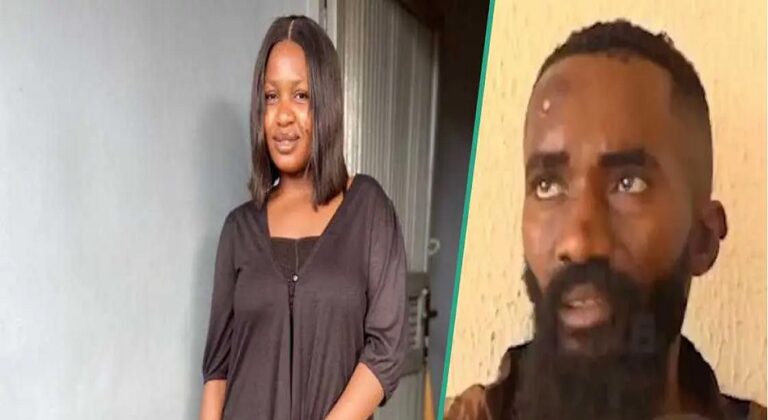
THE High Court in Lafia, Nasarawa State, has sentenced Oluwatimileyin Ajayi to death by hanging for the murder of a National Youth Service Corps member, Salome Adaidu.

In a judgment delivered on Thursday, June 26, the judge, Simon Aboki, found Ajayi guilty of culpable homicide, having killed and dismembered the victim.

Ajayi was convicted on a one-count charge of culpable homicide, punishable under Section 221 of the Penal Code of Northern Nigeria by death.

The ICIR reported that Ajayi, who lived in the Pablana area, was caught around Angwan Bako near the Kaja Estate in the New Karu LGA when conveying the severed head of Salomey to an undisclosed destination on a commercial motorcycle, popularly known as ‘okada’. 

Consequently, an angry mob descended on him, and upon receiving information about the incident, the Commissioner of Police in Nasarawa State directed police personnel to move to the scene immediately.

 “They raced to the scene and rescued the suspect from being lynched. The suspect was then taken to an undisclosed hospital for treatment. A follow-up investigation led to the execution of a search warrant at the suspect’s residence, where the remains of the lady who was later identified as Eliojo Salomey, 24 years old of Yanyan, FCT, Abuja, and a serving corps member, were recovered,” the Nasarawa police spokesperson, Nansel Ramhan, said in a statement sent to The ICIR on of Monday, January 13.

Ajayi, who was arrested on January 12 while attempting to dispose of Salome’s severed head, confessed to killing her during his parade at the Nasarawa State Police Command headquarters in Lafia.

 He claimed his actions were fueled by jealousy and accusations of infidelity. “I killed her because we don’t have each other all the time. She was cheating. I don’t have any regrets because life is reciprocal,” he said.  

Akeredolu’s widow calls Olowo of Owo ‘Baby Oba’

0

THE immediate past First Lady of Ondo State, Betty Akeredolu-Anyanwu, has referred to the Olowo of Owo, Oba Ajibade Ogunoye, as a “baby oba”.

She made the remark in an emotional video shared on her social media handle, as she sat beside her late husband’s graveside in Owo on Tuesday.

In the three-minute, 16-second video, she accused the revered first-class traditional ruler of betraying her late husband. She also claimed that the Owo people had destroyed the progress they made together.

“Darling, I’ve always known you to love your people to pieces; this is your Owo people. But look at what they’ve done to you. They didn’t blink an eye in rubbishing you, rubbishing your memory, rubbishing your legacy,” she said.

She also alleged that her late husband had single-handedly installed the monarch during his tenure as governor.

“As they claim, spearheaded by Olowo of Owo, whom you single-handedly (installed). This is a known fact. It’s no longer a secret. You single-handedly installed that baby Oba” she said. 

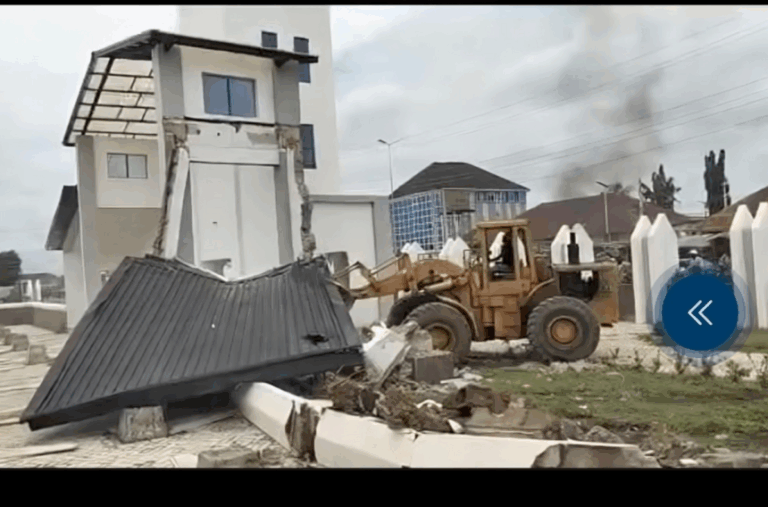
The ICIR reports that Governor Lucky Aiyedatiwa’s administration ordered the demolition of the cenotaph built by former governor, the late Oluwarotimi Akeredolu, a senior advocate, in honour of the victims of the deadly 2022 St. Francis Xavier Catholic Church massacre in Owo, following a complaint from the Olowo of Owo.

The late governor’s family, his former aides, the Catholic Church, and the Olowo had disagreed over the reasons adduced for the cenotaph’s destruction.

A viral video circulating online shows bulldozers tearing down the monument and adjoining structure where the names of the slain worshippers were inscribed, drawing public outrage and rekindling painful memories of the gruesome massacre.

Akeredolu-Anyanwu also described Aiyedatiwa as an ‘enabler’ of the demolition, adding that the exercise was carried out to settle political scores.

The former First Lady maintained that nobody was buried at the cenotaph, emphasising that it was purely constructed to honour the dead.

The monument was located directly in front of the Olowo’s palace. Some people in the ancient town believe that erecting a structure honouring the dead near the palace violated  Owo tradition.

There are also claims that the land had been taken from a family in the town by the Ondo State Government for road construction. The land was eventually not used for the project, and the family pleaded with the late Akeredolu to restore its land.

While the family wanted the land back, reports claimed the Olowo also desired the land since it was close to his palace. The ICIR could not independently verify these claims.

Olowo claims responsibility for demolition

Meanwhile, the Olowo-in-Council released a statement on the demolition to absolve the state government of any blame for the exercise. Part of the statement reads, “In view of the public reactions generated by the demolition of the Memorial Park supposedly built in honour of June 5, 2022, murderous attack victims at St Francis Catholic Church in Owo, the Palace wishes to say unequivocally that the request for this action was at the instance of His Imperial Majesty, Olowo of Owo and the entire good people of the kingdom.

“It must be made clear that the decision to site the structure in that particular location was resisted by the Olowo-in-Council and frowned upon by the people of the community when it was being conceived by the government of the late Governor, Arakunrin Rotimi Akeredolu, SAN.

 “All advice to the late governor that celebrating the dead in any guise around the palace is not in conformity with the age-long culture and traditions of Owo was defiantly dismissed, even at a time a protest was made by concerned Owo youths and stakeholders to that effect, which the then governor disregarded. The above position of the palace is vindicated by the enthusiasm shown by the Owo people and the deluge of commendations across sundry media platforms in support of the demolition.”

More attacks on Olowo by Akeredolu’s widow

Attacking the Olowo further, Akeredolu-Anyanwu said, “The Oba that doesn’t want a so-called cemetery, but that’s not a cemetery. There’s one behind his house. He sleeps with the dead. All the Olowos of Owo, where were they buried? Were they not buried in that place he’s living? Look at the hypocrisy!”

She vowed to fight and protect the legacy of her late husband.

The ICIR reports that Akeredolu, a former President of the Nigerian Bar Association (NMA) died on December 27, 2023, after a prolonged battle with cancer. He led the state for about six years, and he was the second Owo indigene to lead Ondo State, following Michael Adekunle Ajasin (1979-1983)

Akeredolu died barely a year after he buried his mother, Lady Evangelist Grace Akeredolu.

He was succeeded by his deputy, Lucky Orimisan Aiyedatiwa. Several reports indicate that Aiyedatiwa’s and Akeredolu’s camps were not on good terms in his last months on earth.

Aiyedatiwa’s camp saw the late governor as unwilling to relinquish power while battling for his life.

Rather than stay in the state, the late governor spent weeks in his home in Ibadan, Oyo State, after returning from Germany, where he received treatment.

Shortly after Aiyedatiwa took over power, many of Akeredolu’s appointees resigned from the government.


Tinubu to sign 4 tax reform bills into law today

PRESIDENT Bola Tinubu will sign four major tax reform bills into law today,  Thursday, June 26, in a ceremony at the Presidential Villa.

The event will mark what officials say is a new era of transformation in Nigeria’s tax system.

The bills,  passed by the National Assembly after months of consultations with stakeholders, aim to streamline tax collection, reduce business compliance burdens, and boost government revenue generation.

Special Adviser to the President on Information and Strategy, Bayo Onanuga, announced the planned signing on Wednesday in a statement titled ‘President Tinubu signs four tax bills into law tomorrow.’

“When the new tax laws become operational, they are expected to significantly transform tax administration in the country, leading to increased revenue generation, improved business environment, and a boost in domestic and foreign investments,” Onanuga said.

The four pieces of legislation are the Nigeria Tax Bill, the Nigeria Tax Administration Bill, the Nigeria Revenue Service (Establishment) Bill, and the Joint Revenue Board (Establishment) Bill.

Senior government officials will witness the signing, including the Senate President, Speaker of the House of Representatives, Senate Majority Leader, House Majority Leader, and chairmen of both chambers’ Finance Committees.

Also attending are the Chairman of the Governors Forum, Abdulrahman Abdulrazaq of Kwara State; the Chairman of the Progressives Governors Forum, Hope Uzodinma of Imo State; Finance Minister Wale Edun; and Attorney General Lateef Fagbemi.

The Nigerian Tax Bill aims to merge the country’s tax laws into a single, unified system.

According to the Presidency, “By reducing the multiplicity of taxes and eliminating duplication, the bill will enhance the ease of doing business, reduce taxpayer compliance burdens, and create a more predictable fiscal environment.”

In addition, the Nigerian Tax Administration Bill will create uniform procedures for tax collection across federal, state, and local governments, replacing the current patchwork of different systems.

The third bill will replace the Federal Inland Revenue Service with a new Nigeria Revenue Service, consequently giving the tax collection agency greater independence and expanded powers, including collecting non-tax revenue.

The Joint Revenue Board (Establishment) Bill will set up formal cooperation structures between different levels of government and create oversight bodies, including a Tax Appeal Tribunal and Office of the Tax Ombudsman.

Senate passes N1.48trn Rivers 2025 budget

THE Senate has passed N1.485 trillion 2025 appropriation bill for Rivers State.

The budget estimate was passed during plenary on Wednesday, June 25,  after lawmakers considered the report of the Senate Ad-hoc Committee on Rivers State.

The bill seeks to authorise the issuance of N1,485,662,592,442 from the consolidated Revenue Fund of Rivers State for the fiscal year ending December 31, 2025.

The ICIR reported that President Tinubu had sought the Senate approval for the bill, two months after he suspended the state House of Assembly and the Governor, Siminalayi Fubara.

Senate President Godswill Akpabio announced the approval following a voice vote after the bill scaled its third reading.

Accordingly, the Senate leader and chair of the Ad hoc Committee, Opeyemi Bamidele, presented the report and outlined a budget framework targeting urgent needs in infrastructure, education, healthcare, agriculture, and security under the emergency administration.

The budget breakdown shows that N120.8 billion is earmarked for debt servicing, N287.38 billion for recurrent (non-debt) expenditure, while N1.077 trillion will be invested in capital projects.

In his submission, the senator representing Bauchi Central, Abdul Ningi, expressed reservations that the state had a deficit of N147 billion for pensions.

He urged the Senate Ad-Hoc Committee to conduct more rigorous oversight to ensure that the funds reach the rightful pension beneficiaries without delay.

“I’m delighted that the committee has made this handsome provision of N50 billion. I could see my reservation on a very rich state like Rivers having a deficit of N147 billion, rightly enumerated by the committee,” he said.

“A lot of people are dependent on this pension and gratuity, and when you see a deficit of N147 billion, a sum of N50 billion is good enough, but let the committee see it as a priority — making sure that that money is out, then disbursed to the beneficiaries promptly,” he added.

No senator objected to the revised budget estimate during the debate.

The bill now awaits presidential assent and subsequent implementation.

Recall, on  June 11, Ibok-Ete Ibas, sole administrator of Rivers, while briefing the senate, said the budget included provisions for Siminalayi Fubara, suspended governor of the state, and other political officeholders.

It would be noted that in anticipation of the eventual return to constitutional order, the draft budget retains provisions for the offices and functions of suspended political actors, some of whom have already drawn on allocated resources in the first quarter and are expected to resume their duties at the expiration of the emergency period.

Electricity Act: Abia gets NERC approval to regulate electricity market

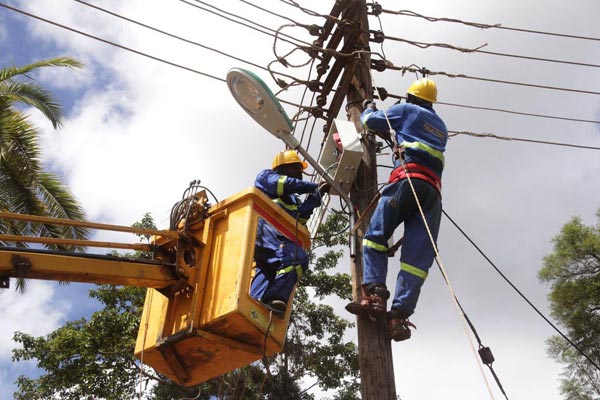
ABIA State government on Wednesday, June 25, obtained the Federal Government’s approval to regulate its electricity market, making it the 10th state to do so under the Electricity Act 2023.

The Nigerian Electricity Regulatory Commission (NERC), which announced this development on its  social media account, stated that it had transferred regulatory oversight to the newly established Abia State Electricity Regulatory Authority (ASERA)

The NERC said the move followed Abia’s compliance with the constitutional and legal requirements for such a transition.

“In compliance with the amended Constitution of the Federal Republic of Nigeria (CFRN) and the Electricity Act 2023(Amended), the Nigerian Electricity Regulatory “Commission” has issued an order to transfer regulatory oversight of the electricity market in Abia State from the Commission to the Abia State Electricity Regulatory Authority (ASERA),” the commission stated.

The statement noted that the government of Abia State complied with the conditions precedent in the laws, duly notified NERC, and requested the transfer of the interstate electricity market in Abia State.

This development places Abia alongside Imo, Enugu, Ekiti, Ondo, Oyo, Edo, Kogi, Ogun, and Niger States, each of which now exercises local control over their electricity markets.

As part of the transition, the Enugu Electricity Distribution Company (EEDC) is required to create a subsidiary-EEDC SubCo, within 60 days to manage intrastate electricity supply in Abia.

The SubCo must also obtain a distribution licence from ASERA.

To this end, NERC has directed that all related transfers must be concluded by December 24, 2025.

Notably, the  Electricity Act consolidates all legislation dealing with the electricity supply industry to provide an ideal institutional framework to guide the post-privatisation phase and encourage private sector investments in the sector.

The primary aim of the Act, as stated in its first section, is to create a comprehensive legal and institutional framework to guide the Nigerian electricity supply industry (NESI).

The ICIR reported that states are firming up control of regulatory oversight of electricity business in their respective territory with the support of the (NERC).

This development followed the latest transfer of regulatory oversight of the Enugu electricity market to the Enugu Electricity Regulatory Commission (EERC) by NERC.

The states’ control came on the heels of the Electricity Act 2023, signed by President Muhammadu Buhari and later amended by President Bola Tinubu.

The Act removed power generation, transmission, and distribution from the exclusive legislative list, effectively ending the federal government’s sole jurisdiction over these areas.

Nigeria risks deepening inequality by 2030, says SEC DG

The Director-General of the Securities and Exchange Commission (SEC), Emomotimi Agama, said Nigeria could either leverage its demographic dividend or face increasing inequality by 2030.

Agama expressed his concern at the United Capital Asset Management Investment forum in Lagos on Wednesday, June 25.

He explained that the country needs to harness its demographic dividend to advance financial inclusion through investments by 2030 for national survival or face deepening inequality.

The ICIR reports that the demographic dividend refers to the economic growth potential that can result when a country’s population has a larger proportion of working-age individuals compared to dependents, children, and the elderly.

In his keynote address titled, ‘Advancing Financial Inclusion through Investments: Bridging
Nigeria’s Knowledge and Wealth Gap’, the SEC DG stressed that Nigeria must harness its demographic dividend to boost investment.

“Our theme, Advancing Financial Inclusion through Investments, is not aspirational; it is foundational to national survival.

“We stand at a pivotal moment. By 2030, Nigeria can either harness its demographic dividend or face deepening inequality. The knowledge-wealth gap is not merely an economic challenge; it is a moral imperative,” Agama said.

According to him, the term inclusion should be reframed as active financial involvement, where access meets empowerment, and capital becomes a tool for transformation.

He believes that closing the financial inclusion gap could lift 700,000 Nigerians from poverty.

“Nigeria has a great population, yet we have a tiny drop of this number of persons involved in the capital market. That’s one reason for poverty, because we are running from money. We have to do something. Our market capitalisation is an opportunity to do something, we all have.

“We need to change the narrative and move the market forward. We must reach out to make a difference. We are committed to protecting investors and developing the market. Our goal is to do the right thing no matter whose ox is gored. We will work by the principles of fairness and equity to change the market. We will provide a fair ground for everyone to aspire,” Agama said.

He noted that MTN Nigeria’s share offering drew 150,000 new investors – 75 per cent women, 85 per cent under the age of 40.

To bridge the gap, Agama recommended a four-pillar strategy, which includes democratisation of financial knowledge, catalysing MSME investment channels, blended finance vehicles, and partnership with the Bank of Industry (BOI) to de-risk loans for women-led SMEs.

“We need to educate people about finances. As we drive this market, we do so for a purpose. I encourage everyone to be the disciples and the apostles. Getting this market to move is a deliberate action,” Agama added.

The ICIR reported in the previous week that investors in the Nigerian stock market have gained nearly N10 trillion since the beginning of the year as the market capitalisation appreciated to over N70 trillion.

The positive sentiment has seen increasing participation of domestic investors, which in April accounted for approximately 83 per cent of total market transactions, significantly outweighing foreign investors’ participation, which stood at just 13 per cent, according to the Nigerian Exchange Limited’s latest data.

Police clash with protesters in Nairobi, other Kenyan cities

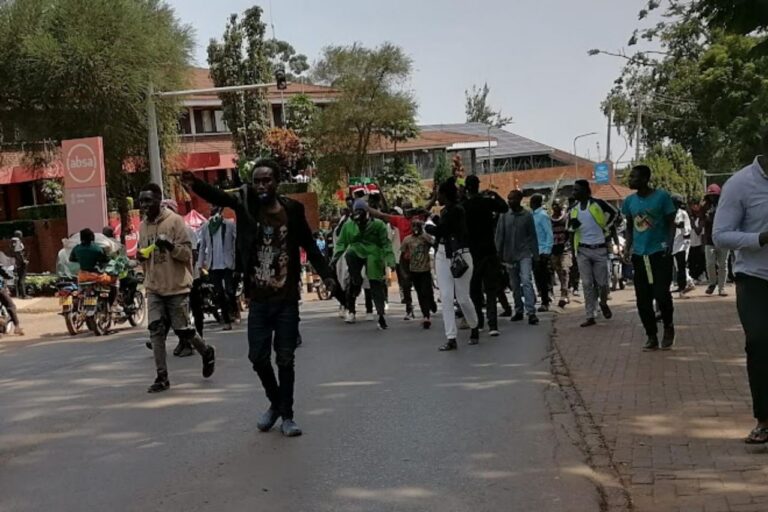
POLICE clashed with thousands of protesters across Kenya’s capital, Nairobi, and other major cities on Wednesday,  June 25.

The protests marked one year commemoration of anti-Finance Bill demonstrations, which began at the country’s Parliament last year and spread to different parts of the country.

The ICIR reported that many protesters were killed in the country last year, with aggrieved citizens demanding for the resignation of President Williams Ruto.

Eight people were killed on Wednesday following the clash between the police and the protesters, according to the BBC

Doctors and human rights groups reported that at least 400 others were injured.

The country’s youth trooped into the streets en masse to honour the victims of the 2024 protests but they met stiff resistance from the police,.

Meanwhile, the Kenyan government had banned media coverage of the protests. 

In a directive issued on Wednesday, the Communications Authority of Kenya (CAK) warned media outlets against broadcasting the protests, citing constitutional and legal justifications.

The directive, signed by the Director General of the Communications Authority, David Mugonyi, reminded media houses of their responsibilities under current broadcasting laws.

The authority cited Article 33(2) and Article 34(1) of the Constitution, along with Section 46I of the Kenya Information and Communications Act of 1998.

“This is therefore to direct all television and radio stations to stop any live coverage of the demonstrations forthwith. Failure to abide by this directive will result in regulatory action,” the government warned.

Schools and businesses have been closed for fear of violence, even though the Police warn against attempts to storm the President’s Office and Parliament.

2027: Obidient Peoples Party, 109 others seek INEC registration

THE Independent National Electoral Commission (INEC) said it had received letters of intent from 110 associations seeking registration as political parties ahead of the 2027 general election.

The chairman of the electoral body, Mahmood Yakubu, a professor, disclosed this on Wednesday, June 25, during INEC’s second quarterly consultative meeting with media executives in Abuja.

The commission said as of June 23, it had received letters of intent from 110 associations seeking to register as political parties and was processing the requests according to the law and guidelines.

“We have acknowledged all requests received so far except six of them received recently, which will be done before the end of the week,” the INEC chairman stated.

He promised that the commission would treat all requests equally, regardless of whether the promoters were ordinary or prominent citizens.

The INEC leader dismissed allegations of compromising independence, citing similar claims in 2013.

He noted that all but six of the letters received had been acknowledged and would process the remaining ones by the end of the week.

He also informed that the handbook containing the 2022 Regulations and Guidelines for Political Parties was available on the commission’s website.

Besides, he announced that a list of the 110 associations, including their details, would be published on the commission’s website and social media platforms for transparency.

Yakubu said the commission was prepared to conduct pending by-elections and resume continuous voter registration across the country.

“The commission met yesterday and we are finalising the details of the two activities, which will be made public in the next 24 hours,” he added.

He also said the primaries for the Area Council elections in the Federal Capital Territory were ongoing and scheduled to conclude on June 30..

Some of the associations that are seeking registration as a political party include Key of Freedom Party (KFP), Absolute Congress (ABC), All Grassroots Party (AGP), Congress Action Party (CAP), United Social Democrats (USDP) and National Action Congress Party (NACP).

There are also Great Alliance Party (GAP), New Nigeria Congress (NNC), United Peoples Victory Party (UPVP), Allied Conservative Congress (ACC), Peoples Freedom Party (PFP),, All Nigerians’ Party (AND), Abundant Social Party (ASP), Citizens Party of Nigeria (CPN), National Freedom Party (NFP) and Patriots Party (PP).

The list also includes the Accelerated African Development Association (AADA), Obidient Peoples Party (OPP), the Movement of the People (MOP), Peoples National Congress (PNC), the African Union Congress (AUC), Alliance of Patriots (AOP), Socialist Equality Party (SEP), About Nigeria Party (ABNP), and African Reformation Party (ARP)