NIGERIA hopes to leverage on the opportunity presented by the ongoing Africa Investment Forum (AIF) in South Africa to attract funding for several critical infrastructural projects, including the Brass fertilizer project and the geometric hydropower project, among others.
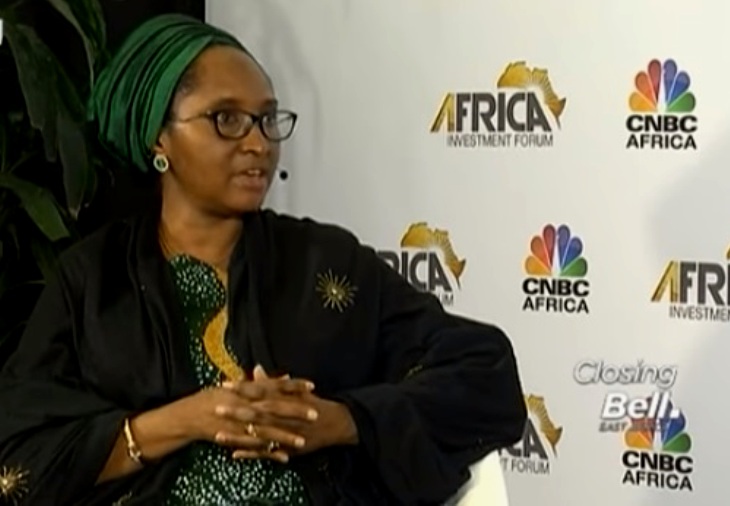
Minister for Finance, Zainab Ahmed, said this during an interview with South Africa’s CNBC Television, on the sidelines of the AIF which isorganisedby the African Development Bank (AfDB).
Ahmed explained that the Muhammadu Buhari administration launched the Economic Recovery and Growth Plan (ERGP) focus lab, from which it was able to harvest potential investment of about $22 billion. Out of this sum, projects worth about $10 billion were almost already to be commenced, but required “just a little push”, she said.
“So, part of what we hope to achieve in this three-day session is to crystalise financing for six of those projects. One of them is the Brass fertilizer project and there’s also the geometric hydroelectric power project, and four others.
“It is important to us because the power projects bring about a potential for us to the oviate the power deficit that we have in the country. The brass fertilizer project, on the other hand, expands the already existing fertilizer production capacity that we already have in our country. Even though we have up to 22 fertilizer plants that are producing but there’s still a gap.
“So it’s important for us that the deals for these two projects especially are closed within these three days, and we hope that that will happen. If it does, it becomes a very big boost for our economy.”
Ahmed described the AfDB as Nigeria’s bank, pointing out that the country is the largest investor in the AfDB, alongside South Africa.
“AfDB is our bank,” she said. “Together with South Africa, we are the largest investors in the AfDB, and we are looking to invest even more.
“It is a business that is doing very well, we are very happy with the progress that the AfDB is making and therefore we are situating ourselves to invest even more.
“AfDB has become a catalyst of growth; when Nigeria went into recession, it was AfDB that was the first that provided budget support to Nigeria. And then the World Bank said, ‘okay, we would also do this’, and other people followed.
“It became a catalyst for us and today we still ascribe one of the reasons why we were able to come out of recession quickly is because of the support that our bank, AfDB provided.”
Ahmed also commended the current president of the AfDB, Akinwumi Adesina, for the positive innovations he brought to the Nigerian agricultural sector during his time as the Minister of Agriculture during the presidency of Goodluck Jonathan.
These solid foundations, Ahmed said, has positioned the Agric sector as one that is currently contributing about 23 percent to Nigeria’s Gross Domestic Product (GDP) with huge potentials for more.
“We are building on the good foundations that Dr. Akin Adesina had laid. He started a fundamental change in the agricultural sector, a lot of very transformative things,” Ahmed said.
“We are looking at agriculture not just for feeding the nation, but as a business that is already contributing significantly to our GDP. Today agriculture contributes about 23 percent to the GDP and the potential is huge.
“There are more and more people going into agriculture at different levels, but especially at the processing value chain, which is where 70 percent of the value is,” she said.
“As government, we are putting in place policies to support those businesses, to provide financing to them, to support them when they are going to borrow, we have risk sharing schemes.”
THE need to maintain integrity by journalists and media practitioners in the country is the way forward for the Nigerian media to effectively carry out its obligations of holding the government accountable to the citizens.
This was the thrust of a one-day programme organised by the Civil Society Legislative Advocacy Center (CISLAC), in collaboration with Transparency International (TI), for journalists in Abuja on Thursday.
The programme centered on how to monitor and report corruption and money laundering issues in Nigeria. It was aimed at increasing public and political awareness about anti-money laundering mechanisms to effectively prevent, report and punish the laundering of corrupt proceeds in the country.
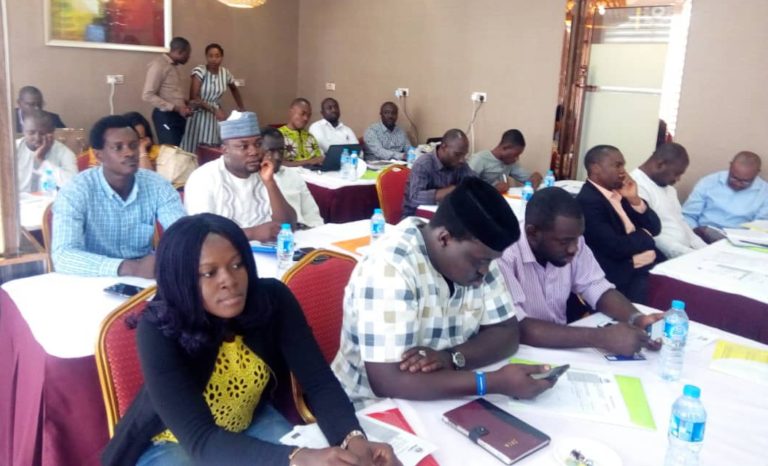
With the theme, “Enhancing investigative and reporting skills of journalists in combating Money laundering/Corruption in Nigeria”, the event had over 30 Nigerian journalists in attendance, selected from across the country.
Participants at the event were unanimous that the welfare of journalists should be prioritized in order to get rid of some unprofessional conducts that have come to characterise the practice of journalism in Nigeria, the most notorious being the ‘brown envelope’ syndrome.
In a presentation titled ‘Money laundering and illicit financial flows in Nigeria’,Gloria Okwu, CISLAC’s Programme Officer, emphasised the need for journalists to familiarize themselves with the anti-corruption laws in the country to effectively combat corruption.
She said, “journalists need to be aware of the ICPC act and the position of the law on corruption issues to be able to effectively fight corruption.”
Also speaking at the event, the CEO of Center for Financial Journalism, Ray Echebiri, said the poor remuneration of journalists can, in most cases, be traced to poor revenue generation by several Nigerian media houses.
He said there is a need for media organisations to seek innovative ways of diversifying their resources in order to increase revenue generation, which will translate into better welfare for workers.
“The Nigerian media finds it difficult to support the welfare of journalists because it depends on advertorials for revenue generation but to thrive they have to diversify,” Echebiri said.
“The Economist, for instance, has little space for adverts but they have a publishing arm and are into different businesses so they can afford to pay their journalists very well.”
He also urged the journalists to employ the use of open and legitimate practices to obtain information without infringing the rights of the subject involved in their investigation.
During the event, a panel was set up to further to deepen discussion on the responsibility of journalists in investigating corruption. The panelists included Diego Odey, Niyi Solewe of BudgIT, Amos Abba of The ICIR, and Martin Ayibakuro of the African Network for Environment and Economic Justice. The interactive session centered on the ethical responsibility of journalists in maintaining transparency in the Nigerian media space.
Also, Ronald Mutum, a reporter with Daily Trust and recipient of the Transparency International’s one-month fellowship to London to enhance his knowledge on defense budgeting and procurement, spoke of his experiences in London and provided tips on how to obtain information from law enforcement agents.
The National President of the Nigerian Union of Journalists (NUJ), Chris Isiuguzo and Jessica Ebrard from Transparency International Secretariat in Berlin, both of whom spoke via video call, commended the initiative.
THE vast majority of Nigeria’s top universities either do not have official electronic mailing addresses or do not actively use them in responding to enquiries and requests, The ICIR has discovered.
A report published in May by The ICIR already established that the e-mailing culture among federal universities in the country is still very poor as only 13 out of 15 schools to whom enquiries were sent eventually responded.
Expanding the scope of the study, The ICIR again mailed an enquiry to universities on Tuesday, October 9 ― this time to 38 federal, 36 state and 43 private universities reported in 2017 to be among Nigeria’s best. Asides the total of 114 institutions on this list, close also to what may be obtained from the latest Webometric Ranking, the National Open University of Nigeria (NOUN), Nigeria Defence Academy (NDA), and Nigerian Law School were also included as part of the recipients.
Essentially the enquiry, presented to be from a doctoral candidate to aid ongoing research, requested for the current population of the schools, with a breakdown according to the number of students and staff strength. “If possible, I wish to also find out if the institution is residential and the percentage of students who benefit from available infrastructure for accommodation,” the e-mail added.
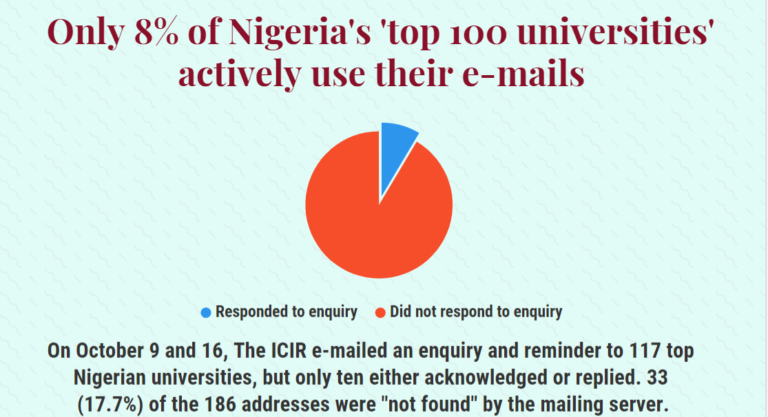
This enquiry was sent to a total of 186 e-mail addresses belonging to 117 institutions; and a week later, on October 16, a reminder was sent to the addresses.
Only 10 responded, acknowledged mail
Out of the over one hundred universities to which the enquiry was sent to , responses came from only ten (10) ― that is 8.5 percent.
The universities that were among the first set to respond include Redeemer’s University, Federal University of Petroleum Resources, Baze University, University of Ilorin, American University of Nigeria, Ekiti State University and Ladoke Akintola University of Technology.
Forty minutes after the e-mail was dispatched, Ipenko Ademola, Redeemer’s University’s Principal Assistant Registrar, sent a response directing the reporter to the school registrar. The latter, in his response, asked for the purpose of the request and a “letter of introduction to the effect” ― though the information asked for ought to be publicly available.
After an hour and half, Kennedy Ebakata, Special Assistant to the Vice Chancellor of the Federal University of Petroleum Resources, replied to say the enquiry “has been forwarded to the Registrar for appropriate action”. For Baze University, no worded response was received but Oshioreamhe Aghedo, the school’s Dean of Students, was copied by the general contact address.
The following day, October 10, the Vice Chancellor of University of Ilorin sent a response, likewise directing the reporter to the registrar or the university website. The registrar, who was part of the original recipients, however had no reply.
Daniel Okereke, the Executive Director of Communications and Publications, American University of Nigeria (AUN), also replied on October 10, giving answers to all enquiries. Total population of students, he wrote, is “slightly above 1,040 (Graduate 156, Undergraduate Above 900)” and for staff, nationals are 1,082 (as at September 2018) while expats are over 80.
He also said, “The institution is residential with about 98% of students on campus.” AUN’s Director of Communications, Innocent Nwobodo, also replied on October 19 to redirect the enquiry to the school’s Office of Institutional Research & Effectiveness, which he said had been copied and was equipped to address the questions.
The Examinations and Records Department of Ekiti State University also responded on this day, advising that the mail be directed to the Vice Chancellor. The school’s VC, however, did not respond to a mail sent to him on October 16.
Oddly, in its response on October 11, Ladoke Akintola University of Technology (LAUTECH) said, to get a response, the reporter “will have to make it formal by writing an official letter of request to registrar through your HOD”.
LAUTECH: “You will have to make it formal by writing an official letter of request…”Redeemer’s University asked for the purpose of the request and a “letter of introduction to the effect” ― though the information asked for ought to be publicly available
Following the reminder of October 16, four additional replies were received. One was from another official of AUN, Abba Tahir, Vice President for University Relations, who politely apologised for a belated reply and gave the assurance that his colleague would “package the required information and revert back”.
As promised, on October 19 and 24, his colleague, Amina Yuguda, responded with figures of total student and staff population.
Amos Kolo, Registrar at the Federal University of Technology, Minna (FUTMinna), sent in a response on October 26, with a two-page attachment signed by Jacob Yisa of Exams and Records Unit.
According to the document also dated October 26 and which was printed and scanned to answer the enquiry, the school has an undergraduate population of 19,355, a postgraduate population of 2584, a staff population of 2357, and the hostels accommodate a total of 2712 students.
Ife Oluwole, Deputy Registrar at the Federal University of Technology, Akure, also sent a response on the same day as FUTMinna. Writing on behalf of the Vice Chancellor, Joseph A. Fuwape, Oluwole said: “Kindly find below the information you requested for: student population 2017/2018 academic session: undergraduate- 17,505, postgraduate – 3,937, staff population – 2,461. The university is residential. About 10% of the student population benefit from the available residential bed spaces.”
Finally, on October 29, Bingham University, a private university founded in 2005 by the Evangelical Church Winning All (ECWA), also replied with a detailed breakdown of the current population of academic staff and students. It stated among other things that there are 238 members of academic staff, 2906 undergraduate students and 44 postgraduate students, 98 percent of whom reside on campus. The mail was signed by Nuhu Gado.
Soon after the first e-mail was sent out, an automatic response was received from Benue State University’s server, thanking the reporter for contacting the institution and assuring that the “mail is received with thanks and shall be treated urgently”. No urgent response has, however, been provided three weeks after.
Though not all the replies were helpful, only the aforementioned ten institutions provided responses at all to the enquiry. Out of the ten, four are federal universities, two are state universities, and four are private universities.
In other words, only 10.5 per cent of federal universities, 5.5 per cent of state universities, and 9.3 per cent of private universities responded. No response was received from the other 109 universities that were also e-mailed.
33 addresses ‘not found’
Soon after the enquiry was sent to the 186 addresses extracted from the various school’s official websites, the mail delivery subsystem declared 17.7 percent of the addresses as “not found”.
“The email account that you tried to reach does not exist,” said the automatic reply for 33 addresses, which belonged to 22 universities.
The other nine schools have other addresses on their sites that are valid. They are: University of Ilorin, University of Abuja, Usman Dan Fodio University, Federal University of Technology Akure, University of Agriculture Makurdi, Federal University Lokoja, Baze University, Al-Qalam University and Kebbi State University of Science and Technology.
Five of six addresses belonging to the University of Agriculture, Makurdi, returned mailer daemons and for Usman Dan Fodio University, it is four out of five.
13 universities are without e-mail addresses
The ICIR also observed during the period of the study that 13 of the universities have no official e-mail addresses on their websites; and out of these, at the time of report, seven had contact forms as an alternative means of communication.
The 13 are: University of Jos, Federal University Dutsin-Ma, Delta State University, Federal University Otuoke, Benson Idahosa University, Lead City University, Joseph Ayo Babalola University, Crawford University, Igbinedion University, Caleb University, Federal University Lafia, Bauchi State University, and Wesley University of Science and Technology.
With countless crucial but broken links, pictures that would not load and a design that is not user-friendly, the website of the Federal University Dutsin-Ma is deficient. The “contact us” page button is one of the numerous site navigations that are not functional.
That of Delta State University, which has no link stated as contact page, is beset with similar problems. It was also observed that Lead City University has as many as 17 telephone numbers stated on its homepage but not one email address.
A look through the website of Joseph Ayo Babalola University revealed that it has neither an official email address nor a contact form. For the Federal University, Lafia, established in 2010, the website did not load when it was checked on October 6. It is, however, now stated to be “under construction by Directorate of Management Information System (MIS)”. Most of the links are still broken, including the student portal, and the contact page has neither phone numbers nor an email address.
In May, The ICIR conducted a similar but smaller investigation that involved 15 federal universities. The email sent to these universities was titled “Enquiries on Post Graduate Programme and Financial Contribution” and requested for the university’s fee structure as well as unique benefits of enrolling in the post graduate programme.
It also said the writer intended “to give a small donation to the institution to advance its research projects and ICT presence”, and asked for the best means to do this.
Not much has changed, five months after this report. The six universities observed then to have invalid addresses on their websites still do: University of Ilorin, University of Abuja, Usman Dan Fodio University Sokoto, Federal University of Agriculture Abeokuta, University of Ibadan, and Federal University of Technology Akure.
Out of the 15 schools, only Federal University of Technology, Akure, and the University of Nigeria, Nsukka, responded in the first study. This figure dropped to one in the second as no response or acknowledgement was received from the University of Nigeria.
Unlike in the first report, however, the official address of the University of Ilorin Vice Chancellor acknowledged The ICIR‘s enquiry and offered guidance on how an answer may be sought.
Comparing South Africa and Nigeria
Compared to Nigerian universities, South African tertiary institutions appear to be doing much better when it comes to response to electronic enquiries. On Monday, November 5, the same enquiry sent to local universities was sent to 25 top South African universities, according to UniRank, a leading international higher education directory.
Out of the 59 addresses curated, three returned mailer-daemons ― this is 5 per cent, compared to Nigeria’s 17.7 per cent. Six of the universities have auto-responders, to assure the sender the message has been received. This is 24 percent, compared to Nigeria’s 0.85 percent.
Also, as many as eleven replies were received in total, representing 20 per cent response rate. The responses came from that five universities: University of Pretoria, University of Witwatersrand, University of Capetown, Stellenbosch University, and Nelson Mandela University.
The ICIR also observed that many of the South African universities have detailed contact pages, containing phone numbers and e-mail addresses of key officials as well as all faculties.
It is noteworthy that this result is in spite of the fact that only four days have passed since the enquiry was sent, while Nigerian universities had over three weeks. Also, unlike in the local experiment, no reminder has been sent to the South African institutions.
One of the replies from University of the Witwatersrand, Johannesburg
Missed grants, admission offers … effects of nonchalance
Oluwaseun David Adepoju, Lead Facilitator at TECHmiT AFRICA, who spoke to The ICIR observed that postgraduate admissions and scholarship grants have been lost due to the lacklustre attitude of universities to electronic mails, and added that there is no excuse for not using the 46-year-old technology.
“From my recent experience with a public university in south west Nigeria, I discovered that the university had all the corporate emails on the university website for the sake of just having them listed,” he recounted.
“I sent mails to three of the addresses on the website and all of them bounced back to me as mailer daemons. This situation is an indication the mails have not been used in a long time. Many university graduates have lost postgraduate admissions abroad because their university in Nigeria could not reply the mail sent from these universities abroad to confirm their documents. What a sad reality.”
He recommended that ICT units of various universities should assign a number of email accounts to each worker in the unit to facilitate responsiveness. “This will add immensely to the image the university has in the international community,” he said.
Other Nigerians have also narrated, in reaction to a report by The ICIR, how the technical shortcoming has affected them ― from someone whose admission into a Norwegian institution was cancelled because University of Ilorin did not attend to a request for certificate confirmation to another whose friend had to buy fuel and data bundle for officials at the Federal University of Technology, Owerri, before they could attend to a mail concerning him.
It is however, notably, not only universities which hardly acknowledge and respond to e-mail enquiries. Public institutions in Nigeria are generally observed to be disconnected from the addresses and telephone numbers stated on their official websites. Some, in fact, fail to update their physical addresses months after they have relocated.
A recent report by The ICIR established that 20 out of 24 federal ministries in the country do not respond to enquiries sent to their official addresses. 11 of the 26 email addresses extracted from their websites were found to be invalid. The Ministries of Education, Information and Culture, and Science and Technology, do not have official e-mail addresses on their websites and fail to reply enquiries sent through listed contact forms.
NUC keeps silent
The National Universities Commission (NUC), set up by the federal government to ensure quality higher education, has not responded to The ICIR‘s question on how it plans to make Nigerian universities more ICT-compliant in a digital era.
Ibrahim Yakasai, the commission’s director of press invited our reporter to his office but was not available at the agreed time of visit and for several hours. Calls to his phone have since not been answered and texts sent to him have yet to be replied.
THE Consumer Protection Council (CPC) has warned Nigerians to be careful and parboil their beans extensively before consuming as there is credible intelligence that some retailers use harmful chemicals to preserve beans from being attacked by insects.
This warning was contained in a statement signed by the Director General of the CPC, Babatunde Irukera, on Friday.
Irukera stated that the CPC has confirmed that some traders, “mostly in the open market are using a pesticide, 2.2-dichlorovinyl dimethyl phosphate (DDVP) compound, otherwise marketed and known as “Sniper” to preserve beans, and more particularly to eliminate or protect from weevils”.
Sniper, according to Irukera, can be harmful when human beings are unduly exposed to it “by inhalation, absorption, direct skin contact or ingestion”. He explained that though the traders may not have intended to endanger lives by lacing their beans with the chemical, there exists the “risk of injury on account of consumption of beans exposed to, or treated with Sniper”.
Irukera cautioned traders on the dangers of using unauthorised chemicals to preserve food items. He however pointed out that cooking significantly reduces the risk of exposure from pesticides “as most are diminished under extended periods of direct heat in excess of 100 degrees”.
“The best possible caution is to avoid subjecting food items to pesticides (that are) not in accordance with prevailing food safety regulations,” he said.
An official of the Consumer Protection Council confirmed to The ICIR that the statement, which has already gone viral on the social media, was indeed issued by the Council’s DG.
In March 2017, three persons, said to be siblings, were arrested in Lagos for allegedly lacing their beans with ‘sniper’in order to keep away insects. Their shop was also sealed by the authorities. But a fresh video is currently being circulated on the social media showing some people purportedly using the chemical to preserve beans from insects.
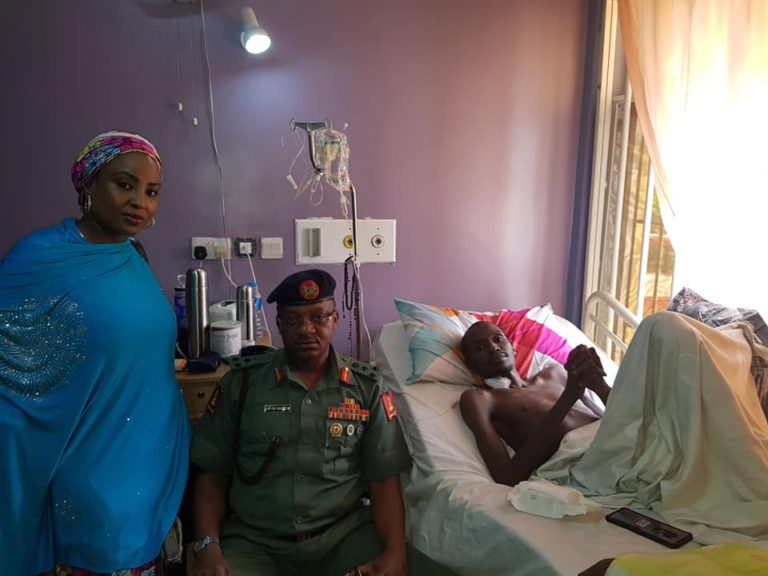
THE Nigerian army has urged the public to disregard reports on the social media saying that Zakari Sani, the Captain that was injured in an ambush in Benue State, has been abandoned and was not being adequately taken care of.
According to the Defence Headquarters, Sani “was badly wounded” when he was “ambushed alongside other soldiers in Benue State while on operation whirl stroke”. The incident occurred on Tuesday, November 6.
Several reports on popular social media platforms claim that the army has refused to fly the wounded officer abroad for better medical treatment.
One of such messages posted on Twitter by a handle with the username ‘Diamond Heart Foundation’. It read: “I’m afraid we are in a wicked country! Those so-called leaders are in haste to fly to foreign hospitals for minor ailments. But here is a captain who faced enemies, sacrificing his life (and) family’s happiness for Nigerians, has been abandoned in one bangabanga hospital.”
The tweet, which was posted on Thursday, was shared alongside a graphic picture of someone, purported to be Captain Sani, whose stomach – torn open, down to the groin region – was badly sutured.
This is regardless of the fact that the army authorities had explained that Sani was receiving the best medical treatment available in the country and will be transferred abroad if it became necessary.
In a statement shortly after the incident, the Acting Director of Defence Information, John Agim, explained that right from the moment Sani was involved in the ambush in which he was wounded, the army has ensured that he got the best of care.
“The officer was badly wounded and was evacuated to Benue State University Teaching Hospital, Makurdi where he was initially stabilised and later evacuated to Ceda Crest Hospital in Abuja for higher management outside of the operations theatre,” Agim, a Brigadier General, stated.
“Ceda Crest Hospital is one of the best hospitals in the country as at today. The team of doctors and other medical staff including expatriate are attending to the officer whose situation though serious is getting better by the day.
“He has undergone several medical procedures which have helped to stabilise him further. The Chief of Defence Staff has placed Medical Surveillance on the officer for eventual medical evacuation outside the country.”
Agim further explained that in standard medical practice, foreign medical evacuation cannot happen without the consent of the doctor that is administering stabilisation treatment to the patient, “otherwise the intended objective may not be achieved when the patient is evacuated abroad”.
“If Captain Zakari (Sani) had been hurriedly taken out of the country without the stabilization treatment, according to the medical advice, the outcome may not be certain,’ he said.
“The general public is hereby informed that Captain Zakari Sani’s treatment is consciously administered for his best interest. He is to undergo some medical procedures after which, he will be stable for any other treatment abroad as necessary.
“Nigerian military takes the health of its personnel seriously and would do anything to sustain the health and vitality of all, in order to be fit to defend the territorial integrity of our great nation.”
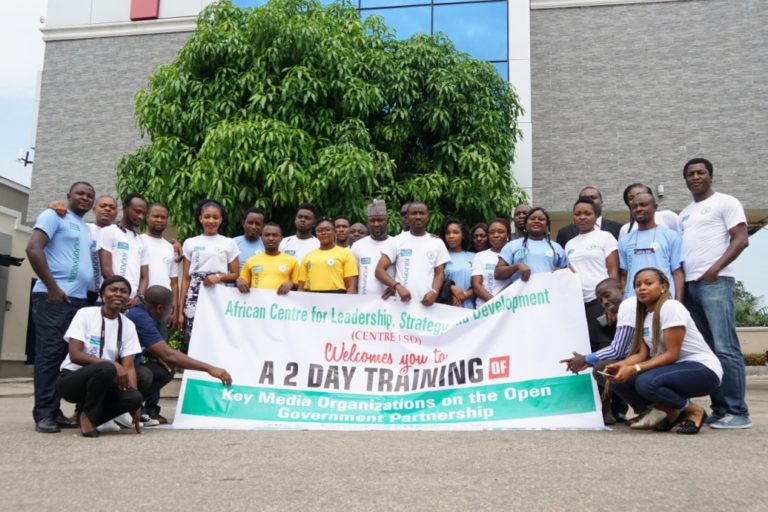
THE African Centre for Leadership, Strategy and Development (LSD) has brought together journalists and members of the civil society on two-day training on Open Government Partnership (OGP).
The training which was held on Wednesday and Thursday at Idrinina Hotel Lokongoma, Lokoja, in Kogi State focused on the role of the media and advocates in strengthening transparency in governance.
The International Centre for Investigative Reporting, Premium Times, Radio Nigeria, The Guardian, Silverbird TV, PTV, ThisDay, News Agency of Nigeria (NAN), among others were part of the media organisations represented.
Joshua James, the lead media OGP in Kaduna State, said the media play critical role in ensuring good governance.
“While we cannot formulate policies we can make the government to formulate relevant policies,” James said. “The media should in its functions be a feedback mechanism between the government and her citizens.”
He urged journalists to deepen their understanding on critical national policies and programmes by partnering with civil society organisations (CSOs) and government agencies in utilising available local resources.
Journalists during one of the training sessions had the opportunity to identify some challenges and solutions to reporting OGP-related issues.
Uchenna Arisukwu, Programme Coordinator of LSD, said the OGP is a global platform for reformers, which the media is part of.
He said: “Part of our function is to sensitise the media on the role they have to play in OGP so that they can effectively play their role as watchdogs of the government and bring about transparency. In totality, OGP is about openness.
“OGP is expected to make Nigeria a better place if all is implemented. I dare to say that from all the policies and programmes of government OGP, stands, unique and, if you ask me, revolutionary because it is co-creation between government and CSOs. It cuts across all the strata of the Nigerian state and on different issues.
“So if we are able to sort out corruption, we are like 75 per cent done with our problems and OGP is thriving around transparency and accountability. So when the system is open to probes, it will greatly reduce corruption in Nigeria.”
Arisukwu noted that OGP serves as an instrument of accountability to the citizens. “Because the government has promised accountability and openness, it will enable the common man to hold the government to the promise of openness, accountability, and transparency.
“They need to understand how to apply the wonderful principles of OGP and how they can apply it to their lives and support it to succeed in Nigeria. OGP for me is the shortest route to Nigeria’s transformation if well implemented.”
Participants at the training
Julian Osamoto, a journalist from Kapital F.M Abuja, told The ICIR the training has exposed her to the core essence of OGP.
“I learnt that the OGP is an instrument of accountability and transparency. I have been hearing of OGP but I didn’t know I could be a stakeholder. This training has actually shown me that I have been indirectly applying OGP but with this knowledge, I have grasped that I can do more,” said Julian.
Akintunde Babatunde, Programme and Research Officer with the Premium Times Centre for Investigative Journalism (PTCIJ) also noted the training is a necessary reinforcement process.
“The training has reinforced my belief that the media that can hold government accountable in a bid for government to be more transparent should be a major part of the pushers and implementers of the OGP,” he said.
According to Adedoyin Ojosipe, Media and Advocacy Officer at the African Centre for Media and Information Literacy (AFRICMIL), the training served as a platform that calls media practitioners to action while pointing out that though the concept of OGP is not new to the media, it has been a role played indirectly by the media.
“Holding government accountable, informing government on the plight of the masses and doing solution based reporting has been a part of media objectives,” Ojosipe said. “However, training has only created a re-awakening on why we need to up our reports in community development, making our leaders more accountable and making the masses buy into co-creating and co-owning a transparent process that can lead to improvement in their standard of living.
OGP is a coalition of equal partners from civil societies, stakeholders and the government, focused on improving transparency, accountability, citizen participation and responsiveness to citizens through technology and innovation to foster transparency.
At the International Anti-Corruption Summit organised by the government of the United Kingdom in May 2016, President Muhammadu Buhari affirmed his commitment to strengthening anti-corruption reforms through implementing programmes aimed at exposing corruption, punishing the corrupt and providing support to the victims of corruption, and driving out the culture of corruption.
This commitment led to the sourcing for avenues to deepen institutional and policy reforms which led to Nigeria joining the OGP in July 2016 as the 70th country.
The organisation was founded in 2011 by 8 countries namely: U.S, United Kingdom, South Africa, Indonesia, Brazil, Norway, Mexico, and the Philippines. It currently has 79 member nations and sub-national governments including Nigeria, Ghana, Kenya, and Malawi.
The partnership is voluntary with domestically-driven initiatives. OGP is a community of people who identify local issues and proffer local solutions to these issues according to the international standards and then proffer solution to the issues.
Although voluntary, member states must meet some eligibility criteria’s of which there are fiscal transparency, declaration of assets, citizen engagement, and access to information.
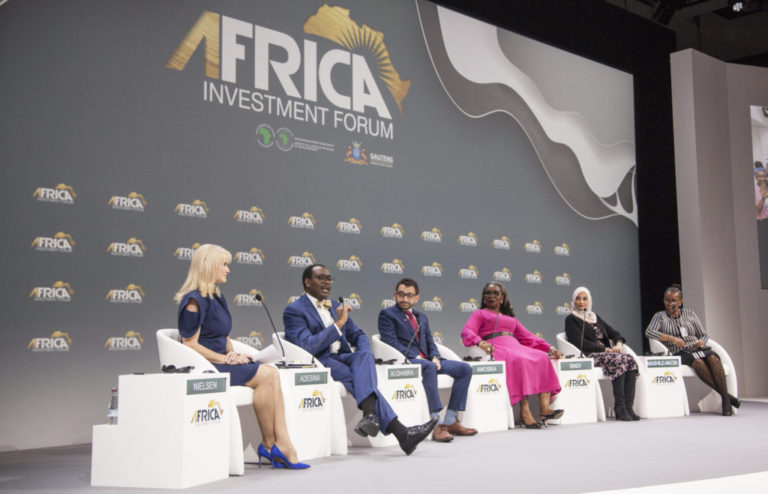
PRESIDENT of the Africa Development Bank (AfDB), Akinwumi Adesina, says Africa’s economy would grow in leaps and bounds if the same resources invested in men were invested in women.
Adesina, a former Minister of Agriculture in Nigeria, said this during a session on “Investing in Women for Accelerated Growth” at the inaugural edition of the Africa Investment Forum (AIF) which kicked off in Sandton, South Africa, on Thursday.
He said the AfDB has adopted policies that are specifically targeted at making funds available to more women in the continent so as to rejig the economy.
“If the world today has the same resources for women that it has for men, you would be able to increase the GDP of the world by 26 percent. And in the case of Africa, that GDP will go up by an additional 12 percent. So it makes sense, economic sense, to invest in women,” Adesina said.
“That is where the challenge really is, the women don’t have access to finance. If you look at the financing gap that women have, it is roughly anything around $42 billion in terms of financing businesses for women in Africa today.
“Take agriculture, that is probably another $12 billion gap for financing for women.”
“Women, we know, payback on their loans; 98 percent payback on their loan. So, what sense does it make that you are telling me that you are not going to be lending to women that payback 98 percent of their loans?
“Women pay back their loans, we have to develop new financing instruments that allow us to lend more to women, not based on collateral, because there is nothing better than the collateral of your repayment rate.
“Let us rejig and tune the financial market towards women, and that is why for us at AfDB, everything we do is to make sure that we do that.
“We give quite a lot of financing to women through intermediary financing institutions, and we hold banks accountable to what the do for women.”
Adesina also called for more proactive solutions to the challenge of non-availability of funds for women. One of such solutions, he said, is the Affirmative Finance Action for Women in Africa (AFAWA) which seeks “to change the financial system to be able to lend more to women and de-risk lending to women businesses through guarantee facilities.”
President Cyril Ramaphosa of South Africa declared the AIF open on Thursday; four other African Heads of States attended the opening ceremony namely: Alpha Conde of the Republic of Guinea, Macky Sall of Senegal; Nana Akufo-Addo of Ghana and Sahle-Work Zewde of Ethiopia.
Other top government officials across Africa to grace the event include Nigeria’s Vice President, Yemi Osinbajo; prime ministers of Rwanda and Cameroon, Edouard Ngirente and Philémon Yang, as well as ministers representing the Kingdom of Morocco, Cote d’Ivoire, Tanzania, Niger, and Gabon.
The theme of the AIF is “Putting women at the heart of financial systems”.
PRESIDENT Muhammadu Buhari has declared a state of emergency on Nigeria’s water sector, assuring that his administration will do more to ensure that the supply of clean water across the country is improved.
He said this while inaugurating the National Action Plan for the Revitalization of Water Supply, Sanitation and Hygiene (WASH) Sector at the State House, Abuja, on Thursday.
Buhari described Nigeria’s low global rating regarding WASH as unacceptable, stressing that a lot needs to be done differently to change the narrative.
”We cannot and will not continue to allow these preventable occurrences to decimate our population,’’ Buhari said.
“Access to piped water services which was 32% in 1990 has declined to 7% in 2015; access to improved sanitation has also decreased from 38% in 1990 to 29% in 2015. Our country now ranks No 2 in the global rating on Open Defecation as about 25% of our population are practicing open defecation.
“WASH services at the rural areas are unsustainable as 46% of all water schemes are non-functional, and the share of our spending on WASH sector has been declining from 0.70% of the GDP in 1990 to about 0.27% in 2015 which is far below the 0.70% at the West African regional level.
“The Sustainable Development Goals (SDGs) targets (6.1 & 6.2) for WASH are even more demanding as they require WASH services to be provided in adequate quantity and quality on premises at affordable prices.
“This cannot be achieved if we continue with ‘a business as usual’ approach. (And) It is on this premise that I fully endorse the decision taken at the meeting of the Federal Executive Council in April this year to declare ‘a State of Emergency on our WASH Sector’.
”I call on all State Governments to complement this effort by according the sector similar recognition to enable us work together to achieve the SDG targets for WASH by 2030.”
President Buhari said his administration has done a lot to revitalise the water sector, including “approving the 15-year road-map developed for the sector”.
”The transformation being witnessed in the sector since then is highly commendable,” he said.
”I have no doubt that the on-going initiatives including the implementation of the Partnership for Expanded Water Supply, Sanitation and Hygiene (PEWASH) in the Ministry will take the water sector to improved performance and supply, thereby meeting the national aspirations as well as the SDGs.”
NIGERIA’S Minister of Information and Culture, Lai Mohammed, says that the federal government spends a total of N3.5 million every month to feed Ibrahim El-Zakzaky, leader of the Islamic Movement in Nigeria (IMN), also known as the Shi’ite Islamic sect.
Mohammed made this claim while addressing State House correspondents after the Federal Executive Council (FEC) on Wednesday, a video clip of which was captured by Oak TV and has gone viral on the social media.
“The issue of where he (El-Zakzaky) is, let’s keep it off record, (but) it costs the federal government about N3.5 million every month to feed him,” Mohammed said.
“Honestly, these are the facts. I asked, I asked,” he insisted. “We don’t want to inflame passion because this is a very sensitive matter, but that is the situation.”
While this is not a fact-checking report as The ICIR is not privy to the information that may be available to the Minister, this is rather an attempt to juxtapose Mohammed’s claim side by side with available facts and try to make sense of it.
The Facts
El-Zakzaky, together with his wife, was arrested and taken into custody on December 15, 2015. This means that they have spent about 34 months in detention. And if Mohammed’s claim is anything to go by, the federal government has spent about N119 million on their feeding.
Another fact is that the Federal High Court, Abuja, had ruled that the continued detention of El-Zakzaky and his wife without trial was unconstitutional and a violation of their fundamental human rights. The court ordered the Department of State Service (DSS) to release them and also asked the federal government to pay them N25 million each in damages, as well as provide an accommodation for them in any Northern State of their choice.
The Economics
The Muhammadu Buhari-administration has prided itself as a very prudent government. However, if the information by Lai Mohammed is to be taken seriously, then it does not appear federal government has been that prudent in the case of El-Zakzaky.
If the government had complied with the court judgement and released El-Zakzaky and his wife, it would have paid the couple N50 million only in damages, and perhaps, another N5 million maximum to secure accommodation for them, and that would be it. Deduct N55 million from the N119 million purportedly spent so far in just El-Zakzaky’s feeding (asides medical expenses), and the government would have saved about N64 million, which could have been used for other government programmes.
What is Zakzaky being fed?
Regardless of the fact that the Nigerian currency has depreciated in recent times and currently exchanges at N305 to one US Dollar at the official market, and about N360 per dollar at the parallel market, N3.5 million remains, no doubt, a huge amount of money.
So, assuming Lai Mohammed is right, and El-Zakzaky actually consumes food worth N3.5 million every month, what could he possibly be eating?
According to figures by the National Bureau of Statistics, a bag of rice, Nigeria’s number one staple food, sells for about N18,000 in the open market, and a kilogram of yam sells for N280. Therefore N3.5 million would purchase about 194 bags of riceor 12,500 kilograms of yam.
A live cow sells for between N100,000 and N300,000, depending on size, according to prices gotten from online shopping platforms, meaning that N3.5 million can purchase between 12 and 35 cows.
Who can eat all that in one month?
Reactions on social media
Of course, many Nigerians, including some core Buharists (as supporters of President Buhari refer to themselves) believe that the information minister was not being very factual. At present, the name ‘Lai Mohammed’ is the number one trending issue on Twitter as many continue to bare their minds on the minister’s latest controversy.
“So I saw Lai Mohammed during an interview saying (the) Buhari (administration) spends 3.5 million in feeding El-Zakzaky monthly. Please are they feeding the Man with gold rice and diamond beef? They’re keeping him in custody as their leakage for siphoning funds,” tweetedZain Ameen.
Another Twitter user wrote: “N30K is enough to feed a family of 4 for a month.” – Chris Ngige, Minister of Labour & Productivity. “It costs FG N3.5m to feed ElZakzaky for a month.” – Lai Mohammed, Minister of Information & Culture. These people don’t value us.”
Yet another tweet from a handle with the username Concerned Nigerians read: “It costs the Nigerian government N3.5m per month to feed ElZakzaky. – Lai Mohammed. Dear Lai Mohammed, there’s a valid court order that says Zakzaky should be released. Why wasting taxpayers money feeding a man that should be fending for himself?”
The federal government has launched a number of campaigns against “fake news” and the Minister of Information and Culture, Lai Mohammed, has been the major driver of the campaigns. However, many have expressed concerns that some of the minister’s remarks are hardly believable. This was captured in a short tweet by one ‘Kellz’ who asked a question on Thursday: “Do people still believe Lai Mohammed?”
Oak TV Apologises
The Ministry of Information and Culture posted a tweet on Thursday, claiming that Oak TV has apologised and “regrets” the “error in its reporting regarding a conversation with the Minister of Information.
The letter of apology by Oak TV also stated that “all the team members involved have been sanctioned”.
It is not exactly clear what error Oak TV was referring to in its apology letter, but Premium Times is reporting that Lai Mohammed had made the remarks off the record, hence it would be ethically wrong for Oak TV to have made the information public.
But it is also morally and professionally wrong for a government official to give misleading information to journalists in the guise of being off the record.
The letter of apology as tweeted by the Ministry of Information and Culture.
TWO weeks after a report by The ICIR establishing that most federal ministries pay little or no attention to e-mail enquiries, the Office of the Secretary to the Government of the Federation (OSGF) has responded.
An enquiry was sent to 24 ministries, including the OSGF, on October 3 and then a reminder was sent to same addresses a week after on October 11, to confirm, among other things, “if the ministry or any department under it has recently put out a call for job application”.
Three weeks later, 20 of the recipients, including the OSGF, did not respond to nor acknowledge receiving this enquiry. Some, in fact, have no official e-mail addresses or contact pages on their websites.
On Thursday, 36 days after the e-mail was sent and 15 days following the publication of the story, the OSGF has finally provided a response.
“Hello Adekunle,” read the message, which was not signed with a name. “Thank you for your mail. Please always check Federal Civil service Commission (FCSC) for anything concerning federal Government Ministries and its MDA’s employment Federal Civil Service Commission.”
“Remember, government does not charge money for employment or anything related to that,” it added.
OSGF’s responnse to enquiry with e-mail address supposedly used by scammers
The ICIR noted that the office, in replying, used the same e-mail address to which the enquiry was sent, which Segun Adetola, OSGF’s Assistant Press Director, had said does not belong to the office.
“This is not our e-mail,” he had said after the same one on the office’s contact page was sent to him.
He had added: “Looks like one of those that the scammers are using. However, I need to meet you before releasing our mail address.”