Home Blog Page 2492

ANALYSIS: How does FG spend N3.5m monthly on Zakzaky’s meals as claimed by Lai Mohammed?

NIGERIA’S Minister of Information and Culture, Lai Mohammed, says that the federal government spends a total of N3.5 million every month to feed Ibrahim El-Zakzaky, leader of the Islamic Movement in Nigeria (IMN), also known as the Shi’ite Islamic sect.

Mohammed made this claim while addressing State House correspondents after the Federal Executive Council (FEC) on Wednesday, a video clip of which was captured by Oak TV and has gone viral on the social media.

“The issue of where he (El-Zakzaky) is, let’s keep it off record, (but) it costs the federal government about N3.5 million every month to feed him,” Mohammed said.

“Honestly, these are the facts. I asked, I asked,” he insisted. “We don’t want to inflame passion because this is a very sensitive matter, but that is the situation.”

While this is not a fact-checking report as The ICIR is not privy to the information that may be available to the Minister, this is rather an attempt to juxtapose Mohammed’s claim side by side with available facts and try to make sense of it.

The Facts

El-Zakzaky, together with his wife, was arrested and taken into custody on December 15, 2015.  This means that they have spent about 34 months in detention. And if Mohammed’s claim is anything to go by, the federal government has spent about N119 million on their feeding.

Another fact is that the Federal High Court, Abuja, had ruled that the continued detention of El-Zakzaky and his wife without trial was unconstitutional and a violation of their fundamental human rights. The court ordered the Department of State Service (DSS) to release them and also asked the federal government to pay them N25 million each in damages, as well as provide an accommodation for them in any Northern State of their choice.

The Economics

The Muhammadu Buhari-administration has prided itself as a very prudent government. However, if the information by Lai Mohammed is to be taken seriously, then it does not appear federal government has been that prudent in the case of El-Zakzaky.

If the government had complied with the court judgement and released El-Zakzaky and his wife, it would have paid the couple N50 million only in damages, and perhaps, another N5 million maximum to secure accommodation for them, and that would be it. Deduct N55 million from the N119 million purportedly spent so far in just El-Zakzaky’s feeding (asides medical expenses), and the government would have saved about N64 million, which could have been used for other government programmes.

What is Zakzaky being fed?

Regardless of the fact that the Nigerian currency has depreciated in recent times and currently exchanges at N305 to one US Dollar at the official market, and about N360 per dollar at the parallel market, N3.5 million remains, no doubt, a huge amount of money.

So, assuming Lai Mohammed is right, and El-Zakzaky actually consumes food worth N3.5 million every month, what could he possibly be eating?

According to figures by the National Bureau of Statistics, a bag of rice, Nigeria’s number one staple food, sells for about N18,000 in the open market, and a kilogram of yam sells for N280. Therefore N3.5 million would purchase about 194 bags of rice or 12,500 kilograms of yam. 

A live cow sells for between N100,000 and N300,000, depending on size, according to prices gotten from online shopping platforms, meaning that N3.5 million can purchase between 12  and 35 cows.

Who can eat all that in one month?

Reactions on social media

Of course, many Nigerians, including some core Buharists (as supporters of President Buhari refer to themselves) believe that the information minister was not being very factual. At present, the name ‘Lai Mohammed’ is the number one trending issue on Twitter as many continue to bare their minds on the minister’s latest controversy.

“So I saw Lai Mohammed during an interview saying (the) Buhari (administration) spends 3.5 million in feeding El-Zakzaky monthly. Please are they feeding the Man with gold rice and diamond beef? They’re keeping him in custody as their leakage for siphoning funds,” tweeted Zain Ameen.

Another Twitter user wrote: “N30K is enough to feed a family of 4 for a month.” – Chris Ngige, Minister of Labour & Productivity. “It costs FG N3.5m to feed ElZakzaky for a month.” – Lai Mohammed, Minister of Information & Culture. These people don’t value us.”

Yet another tweet from a handle with the username Concerned Nigerians read: “It costs the Nigerian government N3.5m per month to feed ElZakzaky. – Lai Mohammed. Dear Lai Mohammed, there’s a valid court order that says Zakzaky should be released. Why wasting taxpayers money feeding a man that should be fending for himself?”

The federal government has launched a number of campaigns against “fake news” and the Minister of Information and Culture, Lai Mohammed, has been the major driver of the campaigns.  However, many have expressed concerns that some of the minister’s remarks are hardly believable. This was captured in a short tweet by one ‘Kellz’ who asked a question on Thursday: “Do people still believe Lai Mohammed?”

Oak TV Apologises

The Ministry of Information and Culture posted a tweet on Thursday, claiming that Oak TV has apologised and “regrets” the “error in its reporting regarding a conversation with the Minister of Information.

The letter of apology by Oak TV also stated that “all the team members involved have been sanctioned”.

It is not exactly clear what error Oak TV was referring to in its apology letter, but Premium Times is reporting that Lai Mohammed had made the remarks off the record, hence it would be ethically wrong for Oak TV to have made the information public.

But it is also morally and professionally wrong for a government official to give misleading information to journalists in the guise of being off the record.

The letter of apology as tweeted by the Ministry of Information and Culture.

OSGF replies email enquiry with ‘address used by scammers’ two weeks after ICIR’s report

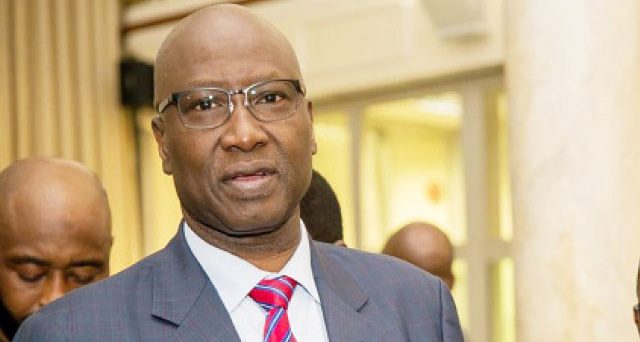
TWO weeks after a report by The ICIR establishing that most federal ministries pay little or no attention to e-mail enquiries, the Office of the Secretary to the Government of the Federation (OSGF) has responded.

An enquiry was sent to 24 ministries, including the OSGF, on October 3 and then a reminder was sent to same addresses a week after on October 11, to confirm, among other things, “if the ministry or any department under it has recently put out a call for job application”.

Three weeks later, 20 of the recipients, including the OSGF, did not respond to nor acknowledge receiving this enquiry. Some, in fact, have no official e-mail addresses or contact pages on their websites.

On Thursday, 36 days after the e-mail was sent and 15 days following the publication of the story, the OSGF has finally provided a response.


READ ALSO:

“Hello Adekunle,” read the message, which was not signed with a name. “Thank you for your mail. Please always check Federal Civil service Commission (FCSC) for anything concerning federal Government Ministries and its MDA’s employment Federal Civil Service Commission.”

“Remember, government does not charge money for employment or anything related to that,” it added.

OSGF’s responnse to enquiry with e-mail address supposedly used by scammers

The ICIR noted that the office, in replying, used the same e-mail address to which the enquiry was sent, which Segun Adetola, OSGF’s Assistant Press Director, had said does not belong to the office.

“This is not our e-mail,” he had said after the same one on the office’s contact page was sent to him.

He had added: “Looks like one of those that the scammers are using. However, I need to meet you before releasing our mail address.”

Read the original report:

REPORT: Information, Foreign Affairs, Science … 20 ministries you should not bother e-mailing

Red Card Movement tweets after one month of inactivity, announces Ezekwesili’s resignation

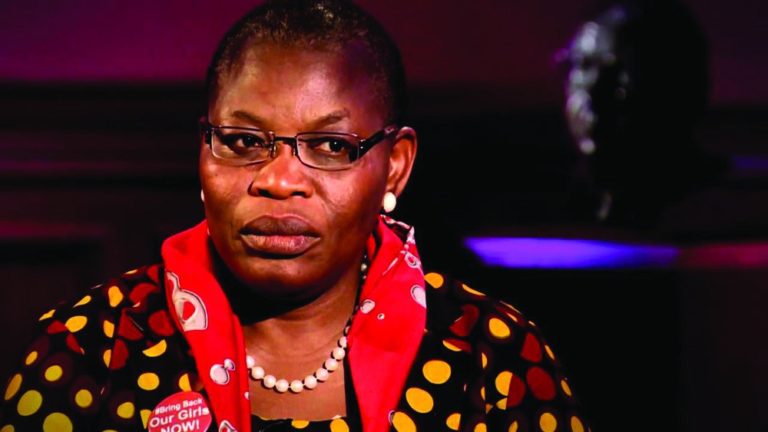
THE Red Card Movement, citizens’ political mobilisation founded by Oby Ezekwesili, has tweeted after one month of inactivity.

“Our Convener, Dr Oby Ezekwesili, has stepped aside from the membership & leadership of the RCM. This follows her decision to participate in the political process- contesting for the position of the Nigerian President. The new Co-chairs are Dr Tony Akabuno & Nkiruka Omorotionmwan,” the movement announced on Twitter.

The ICIR had earlier in a report observed that the movement had not tweeted since October 7 that Ezekwesili announced her candidacy for the 2019 presidential election.

The movement’s Twitter’s account which used to make an average of 11 tweets per day had been dormant since October 7 until yesterday that it retweeted a story about Ezekwesili’s resignation.

Ezekwesili founded the movement in January with the goal of mobilising Nigerians to vote against the All Progressives Congress (APC) and the Peoples Democratic Party (PDP) in the 2019 general elections.

The movement was formally launched on April 18 in Abuja. It had a promising head-start, creating a website and social media accounts as well as launching the movement in some states. It, however, became inactive after Ezekwesili joined the presidential race.

While the Red Card Movement stopped tweeting, a new Twitter account (@RunObyRun), created after she announced her presidential candidacy, became very active and was making an average of 32 tweets per day as of October 30.

As the Red Card Movement announced new leaders, it is not clear whether it is still on course to mobilising up to 30 million Nigerians to register to vote as promised when the movement was launched.

The latest tweets by the movement pointed out that, “The RCM is a well-grounded citizens’ Movement with a well-defined vision and mission. It will continue to execute its agreed mandate by mobilising citizens, to collectively strengthen our democracy.

“We therefore urge all RCM members, to stay engaged and resist any narrative that the choice for 2019 elections is between Incompetence and Corruption. Nigeria deserves better and we must all stay committed to birthing the New Nigeria of our dream.”


Women make history in US midterm elections by winning over 100 congressional seats

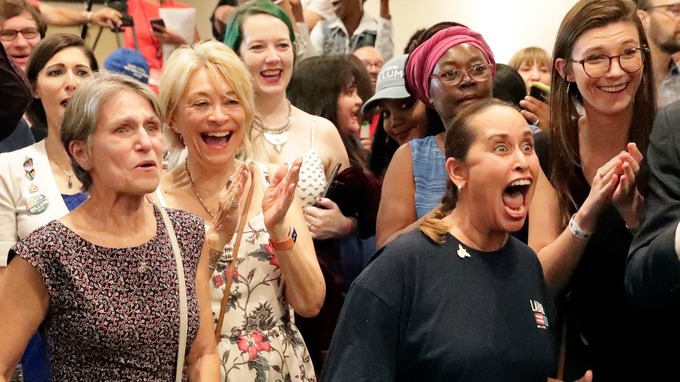
THE 2018 midterm elections in the United States of America has seen women winning more seats in the legislative arm or government than at any other time in the country’s history.

These include women from across age, racial and religious divides.

237 women ran for the House as major-party candidates this year, according to data compiled by The Associated Press, out of which about 101 won, breaking the previous record of 85 women.

“This is the year of the woman, and the fact that women were willing to put themselves on the line is important, whether they’ve been Republicans or Democrats,” said Donna Shalala, a first-time candidate, who won a House seat to represent the State of Florida.

Another victorious female candidate, Ayanna Pressley, who became the first black woman elected to Congress from Massachusetts, described her victory as historic.

“I know for a fact [that] none of us ran to make history, we ran to make change. However, the historical significance of this evening is not lost on me. The significance of history is not lost on me,” she said.

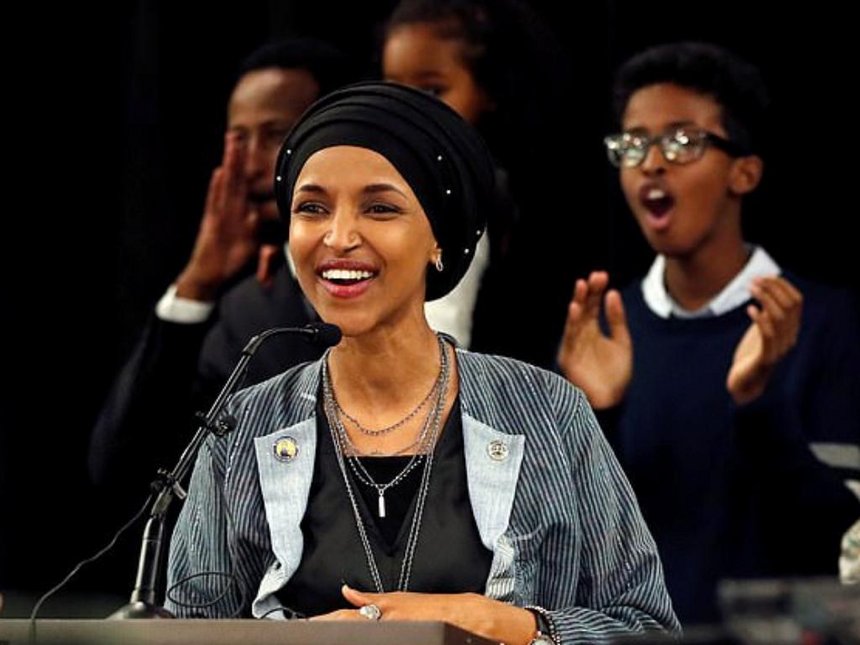
Minnesota’s Ilhan Omar became one of the first two Muslim women to be elected to Congress.

Other women whose victories had some historic significance include Sharice Davids, a Democrat from the State of Kansas, who became one of the first two Native American women elected to the United States legislature; New Mexico’s Deb Haaland is the other.

Also, two Muslim women will be heading to the U.S Congress for the first time ever: Minnesota’s Ilhan Omar, and Michigan’s Rashida Tlaib, both of whom won by resounding margins. The U.S Congress currently has only two lawmakers who identify as Muslim and both of them are men.

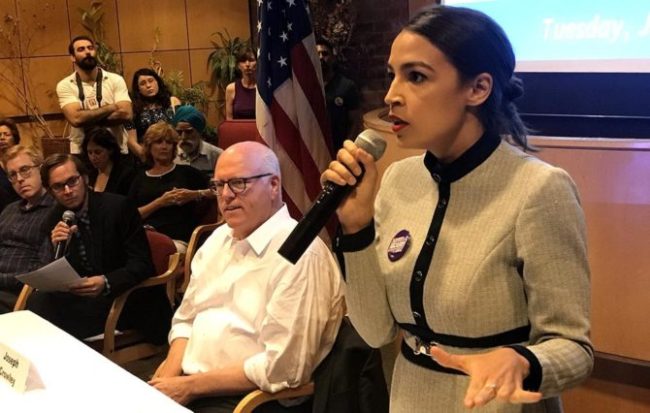
Alexandria Ocasio-Cortez, 28, won the New York Congressional seat, thus becoming the youngest person ever to be elected to Congress.

Twenty-eight-year-old Alexandria Ocasio-Cortez , from New York, became the youngest person ever to be elected to the U.S Congress. A little over a year ago, Ocasio-Cortez was working as a bartender, but she pulled a major surprise when she defeated the incumbent congressman Joe Crowley, who has been in the Congress for 20 years, during the Democratic primary election.

With just a little above hundred women in the U.S Congress made up of about 450 members, gender activists say a lot still needs to be done to ensure gender parity in the two legislative chambers of the country.

Meanwhile in Nigeria, only seven out of the 109 members of the Nigerian Senate are women, while out of the 360 members of the House of Representatives, only 23 are female. It is unlikely that the number of female legislatures in Nigeria will increase after the 2019 general election.

Senate cuts budget of MDAs to fund 2019 elections

THE Senate has cut the budgetary allocations to 30 ministries, departments, and agencies (MDAs) of the federal government in order to make funds available for the 2019 general election.

The lawmakers gave the approval during the Senate plenary on Wednesday, unanimously resolving that a total of N121 million out of the N242 billion budgeted for the 2019 election should be deducted from the combined allocations of the MDAs, while the other half should be sourced from the service-wide votes.

Chairman of the Senate Committee on Appropriation, Danjuma Goje, presented the motion at the floor of the senate, pointing out that the election could not be funded entirely from the service-wide votes as earlier approved.

“The Senate is aware that because of some obvious and imminent issues of national socioeconomic importance, the virement/supplementary request cannot be implemented as earlier approved,” Mr Goje said.

However, Dino Melaye, the lawmaker representing Kogi West Senatorial District, raised an objection saying that the money budgeted for the Nigeria Police during the election (N27.3 billion) was too much. But Goje reiterated that the amount is justified, and besides, the election budget have already been passed.

“The only thing different from what we passed on the 16th of October is the source of funding,” Goje explained.

“Initially, the source of funding was to come from the service-wide votes but now we reduce the weight by half. That has to come from the MDAs.  

“The submission, by Mr President, for the police was over 30 billion. It was the appropriation committee that reduced it by three billion.”

 See the list of the MDAs from which funds were moved to fund the 2019 election below: 

Court denies El-Zakzaky bail application

THE bail application of Ibrahim El-Zakzaky, leader of the Islamic Movement in Nigeria (IMN) filed by his counsel has been denied on Wednesday at a court hearing in Kaduna State.

This denial of the bail was declared at Kaduna State High Court where the hearing of the case was held.

Gideon Kurada, the presiding judge said the accused El-Zakzaky and his wife have not shown any substantial medical evidence to grant them bail in their written application.

The judge ordered that the accused couple should remain in the custody of the Department of State Services (DSS) throughout the period of their trial.

The matter has been adjourned to January 22, 2019, for accelerated hearing.

El-Zakzaky and his wife have remained in the custody of the Department of State Services (DSS) since December 2015 following a clash between the IMN and soldiers of the Nigerian Army.

They were first arraigned on May 15, after two years of detention without a fair hearing.

The IMN leader is facing trial over allegations of culpable homicide, unlawful assembly, and disruption of public peace, among other charges.

The Shiite group regularly hold protest concerning the continued detention of their leader, Ibrahim El-Zakzaky who has been held by the Department of State Services (DSS) since December 2015, in spite of a court judgment ordering his release.

Many of the protests have been met with harsh treatment from the police and other security agencies that usually dispersed the crowds using tear gas and water cannons, and sometimes, live bullets.

Samuel Ogundipe: Court adjourns case to January 30, 2019

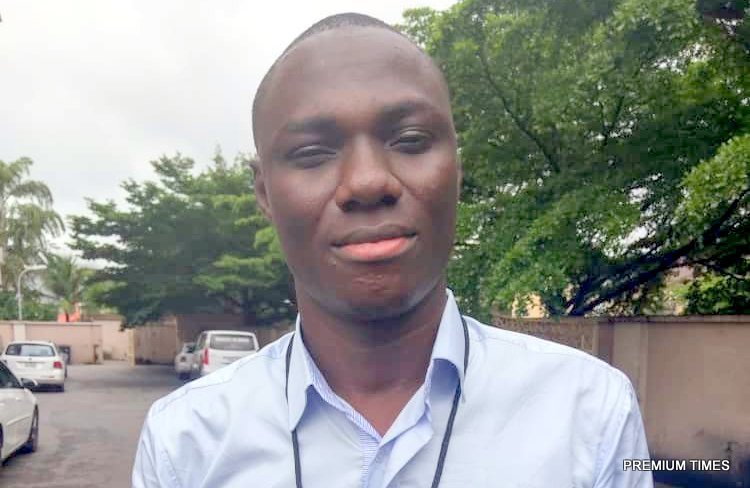
THE Kubwa Chief Magistrate’s Court in Abuja has adjourned the trial of  Samuel Ogundipe, a journalist with Premium Times, who was charged with stealing classified government documents.

Ogundipe was arrested on August following the publication of a story he authored about the report submitted to Vice President Yemi Osinbajo (then Acting President) by the Inspector General of Police (IGP) Ibrahim Idris over the investigation of the former Director General of the Department of State Services (DSS).

The report was based on the findings of the police regarding the blockade of the National Assembly premises by men of DSS on August 7.

Ogundipe was invited to the Police Headquarters and was detained after he allegedly refused to reveal his source. This led to a massive protest by members of the media community, civil society groups, and ordinary citizens, but the police used tear gas to disperse the protesters.

Ogundipe was subsequently charged to court and was granted bail in the sum of N500,000. The case was adjourned to November 7 for hearing.

However, when Ogundipe and his counsel got to court on Wednesday, they learnt that the case has been adjourned to January 30, 2019, as the Magistrate, Abdulwahab Mohammed, was said to be attending to an urgent matter at the Federal High Court, Abuja.

The court clerk also said that the prosecutor had sought for an adjournment because he was attending to another case elsewhere.

Ogundipe’s case is just one out of the several instances where security officials detain journalists for no other reason but carrying out their lawful responsibilities, only to charge them to court on trumped-up charges after a public outcry.

Before and after pictures Jones Abiri who was arrested by the DSS in July 2016 released in August 2018.

Another example is Jones Abiri, a journalists based in Yenagoa, Bayelsa State, who was arrested and detained by the DSS for over two years on allegations of terrorism.

Abiri, who was arrested in July 2016, was eventually charged to court in 2018, having spent two years in detention. He was arraigned before a magistrate court in Wuse District of Abuja, a court that has no jurisdiction to entertain terrorism charges.

He has since been released on bail.

Seven questions for Nigeria’s next Mr or Madam President

0

By Olumayowa Tijani

THE year 2018 is a great time to be alive. No one, in 2008, could have predicted what is happening in the world today; Donald Trump running the show in the United States, Britain breaking away from Europe, a 39-year-old winning the French presidential election. It is what it is.

Nigeria has not been left out of the fireworks; in 2008, no one could have predicted that Nigeria would run into a recession, especially after surviving the 2008/2009 global economic crisis — the world’s worst economic crisis since the great depression.

We may not also have been able to predict in 2008, that Nigeria will not be able to boast of one world class refinery in 2018. But here we are, this is the 2018 we all spoke of in 2008. In this 2018, Oby Ezekwesili is running for president. The old faces of Muhammadu Buhari and Atiku Abubakar are also in the same race. Need I speak of the Kingsley Moghalu, Omoyele Sowore, Fela Durotoye, and over 60 others.

I must confess, that the build-up to this election, which I also consider the election of our lives (dodging the fact that every four years is the election of our lives) is seeming better than previous years. We seem to be talking more about the issues than the persons — when compared to 2015.

In the light of issue-based campaign, I have seven issues the candidates should address if they must become Nigeria’s next president.

Subsidy madness

I cringe every time I see politics trumping sound economics. In a country like Nigeria, cringing has become my default, because this happens on a daily basis. And for subsidies, I have become aware of this anomaly since 2010. The Jonathan-led admin was going to remove it totally, but the Nigerian Labour Congress (NLC) and many Nigerians opposed it, and we ended up with half measures.

It was one of the greatest economic mistakes in Nigeria’s history. You can ask me why privately. Buhari promised to end the menace, but today, subsidies are now disguised in under and over recoveries, bleeding government of valuable revenue.

Atiku has said his government will sell a litre of petrol for N90. This means Atiku believes, the subsidy must stay. Ezekwesili has called out his “economic ignorance”. But to stay or to go, every candidate should show us their plan for petrol subsidies and possibly, their templates for achieving whatever they promise in this regard.

Side Note: It is foolish economics for government to subsidise rail services, which were built with loans crying for repayment. Presidential candidates must address this.

Education is still the passport to the future

There is a problem in Nigeria’s future, and that is the problem of education. If today we have over 13 million children out of school, it means tomorrow, we have over 10 million new adults who have no education. Lack of education has monumental consequences.

We just need to look at Zamfara, Borno, Lagos, and Anambra. Then match their human development indices with the level of education, and we would have our clear examples. Nigeria’s next president must have a clear direction on where education should be in 2020.

For every child left behind, there’s a problem sent ahead.

Poverty as our nickname

Oby Ezekwesili, who in my opinion has the fattest credential in the race has said she would lift 80 million Nigerians out of poverty. Today, there are 88 million Nigerians living in poverty, and based on current realities, that number may hit 90 million before elections are over in February.

Poverty breeds corruption, insecurity, and virtually all the vices Nigeria faces as a nation. Therefore, dealing with poverty should be top of the list for any candidates. Atiku also knows, this, and he’s running with the tagline: Atiku means jobs. Taglines and promises will not be enough, show us your how and when.

As the incumbent, Buhari needs to do the same, show us what you have done, and what you will do to lift Nigerians out of poverty!

Ogoni still in agony

It has been two years since the government of the day flagged off the Ogoni CleanUp and promised better life for the people of Niger Delta. Today, the story remains the same. Ken Hensaw, the executive director of We The People, speaking at the oil and gas roundtable hosted by Connected Development (CODE) and Oxfam, said anyone who dies at 35 in the heavily polluted areas of the Niger Delta goes home with the tag “a life well spent”.

Funerals have created an industry in the region, yet life is going on in every part of the country. Nigeria’s next president must address the issues around pollution in the Niger Delta. The United Nations Guiding Principles on Business and Human Rights must also be domesticated and implemented. We signed unto it for a reason, we must bring that home.

Ogoni, and every Niger Delta life matters.

Civil service surgery

Nigeria has a bloated civil service. No one is politically brave enough to face the topic and transform the civil service by performing a massive corrective surgery on it. It has continued to weigh us down as a country. We spend 70 percent of our budget on recurrent expenditure.

If Nigeria will develop. This must change. Someone must have the political guts and balls to make the tough decisions because N30,000 minimum wage won’t pay itself.

Healthcare

In Nigeria, we are scared of sickness; we live in perpetual fear of medical facilities. Too bad or too expensive. Everyone is a nurse or doctor. If you run an unexpected temperature, you have malaria. If you have a headache, take paracetamol. If you have cancer, we consider it a death sentence.

All these has to stop. Healthcare has to improve in Nigeria, and Mr or Madam Next President, we need to see your plans for our pains.

Rule of law

Disregard for the rule of law is worse than corruption, the US envoy to Nigeria said a few weeks ago. Borrowing his words, I’d say, neglecting the rule of law is the worst form of corruption. If we must score goals in development, we must have a goal post that doesn’t shift.

The laws must be the laws, the umpire must be respected, and her or his words must be final! Nigeria’s next president, who could be the current president, must respect the sanctity rule of the rule of law.

Follow ‘Mayowa on Twitter and other major social media platforms @OluwamayowaTJ


Governors will not be bullied into paying N30,000 minimum wage, says NGF

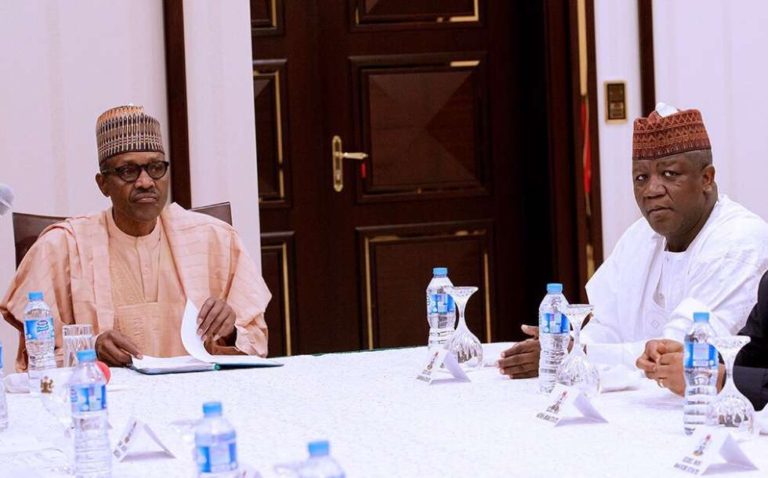
ABDULRAZAQE Bello-Barkindo, Head of the Media and Public Affairs Department of the Nigeria Governors’ Forum (NGF) says Governors will not be bullied into accepting the N30,000 new national minimum wage.

Bello-Barkindo said this on a live television programme on Wednesday, accusing the organised labour of always “demanding for more money” every election period.

The tripartite committee for the review of the national minimum wage submitted its report to President Muhammadu Buhari on Tuesday, recommending a new minimum wage of N30,000. A draft bill to that effect will be sent to the National Assembly for passage into law.

But the NGF spokesman said the governors will meet and decide on how much to pay as minimum wage, each according to the revenue available to him.

“The governors are going to do the rational thing, but they are not going to harken to being bullied and being told what to do or what not to do just because labour said so,” Barkindo said.

Barkindo further lambasted labour’s constant demands for wage increase without a commensurate effort to see that Nigerians who lost have their jobs still maintain a decent living.

“I challenge labour to tell me how many people that have been sacked from their jobs that are on their payroll, that they are taking care of their families’ health care issues, taking care of their children’s school fees, and helping people to live a normal life after being sacked,” he said.

“Corruption in this country is existing because labour has not found a formula to keep people secure in their jobs and out of it.

“Whenever they (organised labour) make accusations against governors, I just laugh, because these are people who don’t even think beyond going on strike. They don’t think beyond asking for more money. This is ridiculous.”

During the negotiation for a new minimum wage, the Chairman of the NGF and Governor of Zamfara State, Abdualaziz Yari, said the governors had agreed to increase the minimum wage from the current N18,000 to N22,500, an increase of just N4,500. But even the federal government rejected the idea.

Yari, at the time, explained that some states were finding it difficult to pay workers’ salaries even at the current minimum wage of N18,000 and that some were paying 35 or 50 per cent of salaries.

“The problem of states is the capacity to pay what is agreed. As we are talking today we are struggling with N18,000. Some of the states are paying 35 per cent, some 50 per cent and still some states have salary arrears. So it is not about only reviewing it but how we are going to get the resources to cater for it,” Yari said at the time.

However, Barkindo explained that the N22,500 suggested by Governor Yari, is just a threshold that governors cannot go below, not the highest amount they are willing to pay.

“Anybody who can afford to pay more than that can pay. It’s not like that’s the only thing they are going to pay to everybody, no. Other governors who have the capacity to pay more will pay more, but nobody is going to pay more than 50 per cent of his revenue as salary for as long as these negotiations subsist.”

Committee on new minimum wage recommends N30,000 to federal government

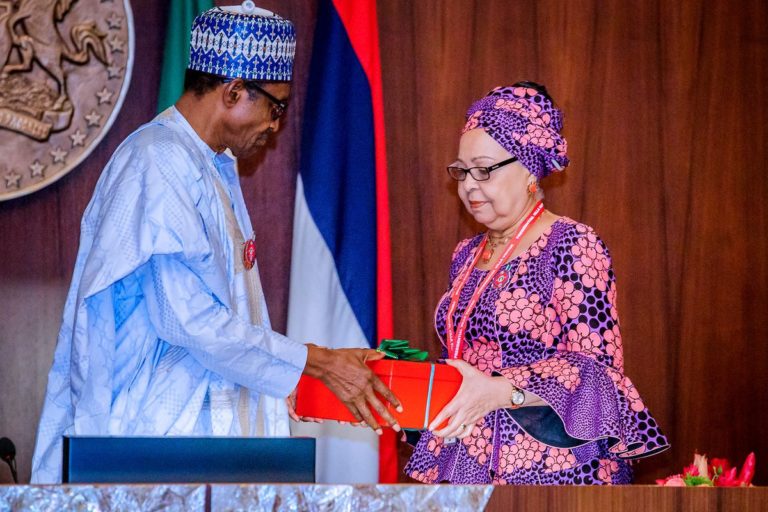
THE tripartite committee on the review of the national minimum wage has submitted its report to President Muhammadu Buhari, recommending that the sum of N30,000 be adopted as the new national minimum wage.

While presenting the report to the President on Tuesday,  chairperson of the committee, former Head of Civil Service of the Federation, Ama Pepple, noted that the government representatives on the committee had suggested N24,000, the panel recommends N30,000 as the new National Minimum Wage of the country”.

She also said the committee has drafted a bill on the new minimum wage to be considered by the Executive the consideration of the government.

In response, Buhari commended the committee for its works and reiterated his commitment to having a new national minimum wage as soon as possible. He assured that the bill will be conveyed to the National Assembly without further delay.

Buhari, however, urged workers not to allow themselves to be used as political weapons.

The organised labour, comprising the Nigerian Labour Congress (NLC) and the Trade Union Congress (TUC) had suspended the industrial action it had planned to begin on Tuesday. Ayuba Wabba, National President of the NLC, said the strike was suspended after a meeting of the minimum wage committee on Monday.