Home Blog Page 253

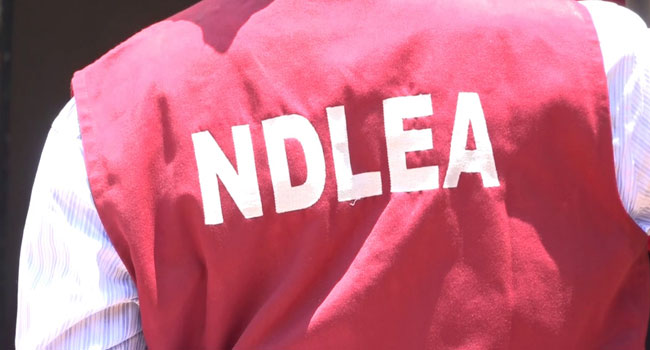
NDLEA nabs woman heading to India ‘for surgery’ at Lagos Airport with cocaine

0

A 43-YEAR-OLD makeup artist, Adekoya Mary, has been arrested by operatives of the National Drug Law Enforcement Agency (NDLEA) at the Murtala Muhammed International Airport (MMIA), Ikeja, Lagos, while allegedly attempting to smuggle 2.2 kilogrammes of cocaine hidden in her luggage.

The NDLEA said she claimed she was travelling to India for fibroid surgery.

The arrest took place on Monday, June 16, following actionable intelligence, the agency said in a statement on Sunday.

According to the statement issued by the NDLEA spokesperson, Femi Babafemi, Adekoya was placed under discreet surveillance and allowed to check in her luggage before being intercepted at the boarding gate of her Qatar Airways flight heading to India via Doha.

Babafemi added that a search of her suitcase revealed two large parcels of cocaine expertly concealed within its walls.

During interrogation, the suspect admitted that the trip was merely a cover for drug trafficking, revealing that she engaged in the act for financial reward.

“When her luggage was searched, two large parcels of cocaine weighing 2.20kg were found concealed in the walls of the suitcase she was carrying. In her statement, she claimed she embarked on the trip for financial benefits but under the pretext of going to India for surgery to remove a fibroid from her stomach.

“Further investigation revealed the suspect was recruited and funded by a drug baron currently at large, Akeem Ayinde Adekanbi, who owns Rockford Hotel located in Sango area of Ogun State, while he lives at Igbe Laara in Igbogbo area of Ikorodu, Lagos state”, the statement added.

Similarly, at a courier company in Lagos, operatives of the NDLEA’s Directorate of Operations and General Investigation intercepted a consignment of sewn female dresses stuffed with 1.3kg of Loud, a potent strain of cannabis, destined for Bahrain on June 19.

Babafemi also disclosed that on the same day, at another courier firm, officers uncovered 850 grammes of cocaine hidden inside cloth hangers in a package bound for Australia.

In Bauchi State, Babafemi said the NDLEA operatives arrested Ibrahim Galadima, 37, and Ibrahim Muhammed, 28, along the Bauchi-Darazo Road on June 16, seizing over one million opioid pills, including tramadol, diazepam, and exol-5.

He added that on June 17, 38-year-old Bishir Isyaku was arrested at Gwargwaje along the Kaduna–Zaria Expressway with 14.2kg of cannabis (skunk) hidden in two sacks of charcoal, along with seven cartons of rubber solution weighing 198kg.

In Abuja, NDLEA operatives arrested Murtala Adamu, Ahmed Ismai’l, and four others during raids on June 18 at Karu Abattoir and Torabora areas of the FCT. Items recovered included 6.9kg of cannabis and 59 grams of methamphetamine.

At the Kano Command, the NDLEA spokesperson noted that officers also arrested several suspects on June 19 along Zaria-Kano Road, including Umar Hamisu, 19, and Dahiru Abdullahi, 32, with 56.2kg of cannabis. Others caught included Obiwuru Henry with 23,720 tramadol capsules and 1,400 ampoules of pentazocine; Abubakar Modu with 36.6kg of cannabis; and Abdulkadir Muhammed with 32kg.


Tinubu orders military to track Borno suicide bombers, demands probe into Kano explosion

0

PRESIDENT Bola Tinubu has ordered the armed forces to track down terrorists responsible for the suicide bombing that killed 10 people in Konduga, Borno State.

He also ordered a probe into the explosion that killed five people and injured 15 others in Kano.

He condemned the Borno attack and described it as cowardly.

In a statement on Sunday, June 22, by his Special Adviser on Information and Strategy, Bayo Onanuga, Tinubu expressed sadness over the incident and urged security agencies to act swiftly.

“President Bola Tinubu has expressed anguish over the suicide bombing in Konduga, Borno State, at the weekend. The president mourned those who lost their lives, describing the attack as cowardly.

“He urged security agencies to double their efforts in routing remnants of the Boko Haram insurgents who resort to attacks on soft targets as a diversionary tactic,” the statement read.

The ICIR reported that the Borno State Police Command confirmed the attack, which took place around 10 p.m. on Friday, June 20, at a local eatery. The command’s spokesperson, Nahum Daso, said several others were injured.

Tinubu also extended his condolences to the government and people of Borno and directed the National Emergency Management Agency (NEMA) to support survivors of the attack.

Reacting to the Kano explosion, the president sympathised with the bereaved families and those injured in the attack, which occurred on Saturday at a scrap metal factory.

The ICIR reports that the Kano State Police Command released a statement on the explosion through its Deputy Public Relations Officer, Hussaini Abdullahi, a deputy superintendent of police.
Abdullahi said the command received a distress call from Ibrahim Udazu, the Marketing Manager of Yongxing Steel Company located along Ring Road, Mariri Quarters in Kano, about an explosion that occurred in the factory premises.
According to him, the Commissioner of Police in the state, Ibrahim Adamu Bakori, immediately led the command’s team of Explosive Ordnance Disposal (EOD), Chemical Biological, Radiological and Nuclear Wears Personnel to the scene and secured the premises to avert further damages.
“The scene was immediately cordoned off to restrict access as cautionary measure, and the police EOD Personnel professionally recovered seven suspected devices without hurts.
“Preliminary investigation reveals that the explosion occurred from a truck loaded with scraps from Damaturu, Yobe State, while offloading at the company’s premises. As a result, fifteen people sustained varying degrees of injury and were immediately rushed to Aminu Kano Teaching Hospital. Regrettably, five of the victims died while receiving treatment.”
The state commissioner of police directed a detailed investigation into the explosion and urged the public to remain calm, be vigilant, and cooperate with the police to get to the root cause of the incident.

Joseph Chu’ma Otteh: the man who changed human rights enforcement in Nigeria

0

By Chidi Anselm ODINKALU

THE legal career of Joseph Chu’ma Otteh, whose mortal remains were committed to earth on 20 June 2025, could easily have been different. He graduated from the Faculty of Law at the Obafemi Awolowo University (OAU) in Ile-Ife in 1988, very much one of the best students in the set.

In 1989, Joe enrolled as a lawyer in Nigeria. He had every opportunity to deploy his prodigious talents and considerable skills in the pursuit of personal fortune and no one could have begrudged him. Instead, he chose the path of legacy and impact through the pursuit of an unpredictable career in the defence of the excluded and marginalised.

As a lawyer, Joe worried about two intractable and inter-related problems: delay in justice delivery and judicial performance. His intellect and temperament were well suited to high judicial service. For someone who did not seek nor pursue a judicial career, however, his preoccupations were startling because ultimate control over the solutions to these issues lay in the hands of the judges, or so it was thought.

Early in his legal career, Joe chose to do something about these issues and he travelled around the world to prepare himself for that purpose, learning about models fit for adaptation in Nigeria. In pursuit of answers, he undertook two programmes of graduate studies in law, one at the University of Lagos in Nigeria and another at the New York University (NYU) in the United States of America. In between both programmes, in 1994, he also researched the same issue as a Research Fellow at the Danish Centre for Human Rights in Copenhagen, Denmark.

Three years earlier, in 1991, just fresh from completing his National Youth Service scheme, Joe had joined the staff of the Civil Liberties Organisation (CLO). There, he began his career as a lawyer to the under-privileged and under-represented in Nigeria whose encounters with justice were defined by the twin blights of exclusion and delay. For these people, entry into the court system was sometimes attainable but exit from it was almost always intractable.

For context, this problem probably predated Frederick Lugard’s Amalgamation of 1914. In a memorandum to Frederick Lugard dated 11 February 1914, Edward Speed, the first Chief Justice of post-Amalgamation Nigeria, lamented that “the greatest enemy to the efficient administration of Criminal Law is delay.” It was to the redress of this century-old problem that Joe dedicated his professional life.

Joe realised he could not do this alone. So, in 1999, he founded Access to Justice as an organisation dedicated entirely to figuring out how to contribute to alleviating the twin problems of judicial (lack of) performance and delay in the legal process in Nigeria. The few lawyers who had adverted to this before him seemed to believe that the way to redress delay in litigation was to litigate more cases. They would file cases on behalf of specific victims of delay believing somehow that they could jump the queue of institutional dysfunction by inflicting more dysfunction on it.

Joe’s genius lay in his capacity for patient diagnosis. He saw this as a problem of judicial administration and court management. The answer, he believed, lay in working with the judges to re-design case management and judicial throughput. To address this, Joe invested patiently in cultivating the attentions of the Chief Justice of Nigeria (CJN) at the time, Mohammed Lawal Uwais, who died earlier this month. He was successful in persuading the Chief Justice Uwais to grant consent for a pilot project in monitoring the performance of judges.

Over a period of one year, monitors would record the way the judges ran their courts, documenting such minutiae as when they began sitting; how long they did; the number of motions, trials, cases that they did and the number of rulings, judgments and orders that they produced. The report was to be submitted to the CJN with whose authorisation, under the initial proposal, it was to be issued after he must have reviewed it. The information captured from the pilot was so troubling, the Chief Justice was reluctant to make it public.

Joe was disappointed but not deterred. He repurposed the report into persuading the Chief Justice to endow the National Judicial Council (NJC) with a capacity to monitor judicial performance, an advocacy in which he achieved limited success.

But his ultimate revenge lay elsewhere. As CJN in December 1979, Atanda Fatayi Williams had enacted the Fundamental Rights (Enforcement Procedure) (FREP) Rules to govern litigation for the enforcement of the fundamental rights guaranteed in Chapter IV of Nigeria’s Constitution. As a cottage industry in claims for fundamental rights grew in the quarter century thereafter, the desire to simplify access to remedies through the FREP Rules became subverted. Delay became chronic and some judges fixated on using the rules to achieve judgment without delivering justice.

Joe believed the only way to change this was to reform and re-enact the FREP Rules and he spent a decade persuading a succession of CJNs that this needed to be done. In this mission, he was relentless. In 2009, Joe finally persuaded Chief Justice Idris Legbo Kutigi to enact the revised FREP Rules. It is a revolutionary piece of work that advertises the full range of Joe’s acuity.

The 2009 FREP Rules could easily be called the “Otteh Rules” because Joe drafted them. Through those Rules and in them, Joseph Otteh wrote his own epitaph long before his earthly tour of duty ended on 28 March 2025.

The 2009 FREP Rules clearly set about fixing the major issues that Joe had diagnosed as the major afflictions that made redress of human rights violations in Nigeria difficult. Three things stood out. First, it addressed clearly the issue of standing to sue or locus standi in human rights cases. Second, it makes it an obligation for courts to “in a manner calculated to advance Nigerian democracy, good governance, human rights and culture, pursue the speedy and efficient enforcement and realisation of human rights.” Third, the 2009 FREP Rules require judges to also “proactively pursue enhanced access to justice for all classes of litigants, especially the poor, the illiterate, the uninformed, the vulnerable, the incarcerated, and the unrepresented.”

This was the constituency to whom Joe devoted his professional life. His convictions and deep thoughtfulness, intellect, integrity, industry, empathy and honour were formed early. Joe was the son of teachers who found virtue in advancing dignity, service, and faith with enlightenment. His Dad, an economics teacher from Okporo in then Orlu Division of Imo State, built life in Agbor in the old Mid-West.

Born 18 October 1965, primary school commenced for Joe at the end of the civil war at the Agbor Model School. His high school began in the famous Edo College in Benin-City in 1977, ending in 1982 at the Ika Grammar School in Agbor, where his Dad served also as the Vice-Principal.

As Africans, the investment in rituals of naming have rich symbolism. When Joe was born, his parents summed up their hopes and beliefs in the name that they gave to the first of their seven children, “Chu’ma” (God knows). It was a confession of total submission to the Almighty. It is also the one consolation that we are left with at his passing.

Most lawyers retail their skills, and are content to do their cases. Joe did his law wholesale. He took charge of upstream lawyering and chose to deploy his skills in building institutions, transforming how they are run, and taking hope to the poor and excluded. Untimely as his passing is, Joseph Chu’ma Otteh has left us with the most durable and consequential impact any professional could hope for in the FREP Rules 2009. He is survived by his mum, Adanma; his wife, Ogechi; their children – Chidimso, Samantha, and Ikechi; and siblings.

A lawyer and a teacher, Odinkalu can be reached at chidi.odinkalu@tufts.edu 

World leaders react to US attacks on Iran nuclear sites

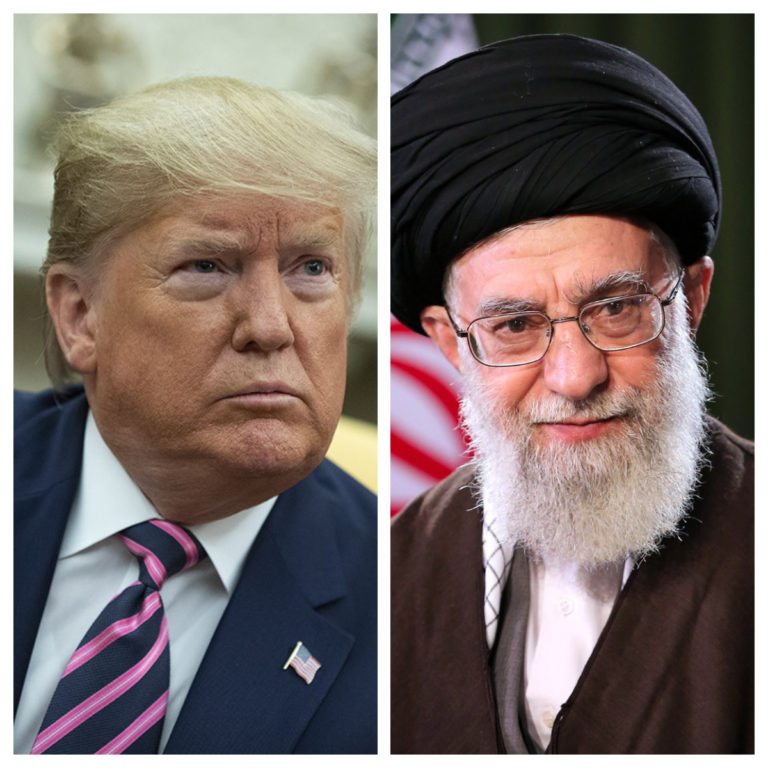
WORLD leaders have reacted to the United States’ (US) airstrikes on three Iranian nuclear sites early Sunday morning (Iran time), with reactions ranging from applause to condemnation. 

The US senator from Vermont,  Bernie Sanders,  at a rally in Oklahoma on Sunday, blasted President Donald Trump’s decision to bomb Iran and bring the US into Israel’s war with Tehran.

Sanders broke the news to the crowd in Tulsa, which began chants of “no more war.”

“I agree,” Sanders told the crowd. “Not only is this news that I’ve just heard alarming… it is so grossly unconstitutional. All of you know that the only entity that can take this country to war is the US Congress. The president does not have the right.”

While most Republican leaders and other members backed Trump’s decision to bomb Iran’s key nuclear enrichment sites, at least two GOP lawmakers broke ranks, joining Democrats from across the political spectrum in arguing that the strike was unconstitutional without prior Congressional approval.

 A member of the Republican Party and representative for Kentucky’s 4th congressional district, Thomas Massie, responded to Trump’s social media announcement of the strikes by stating, “This is not Constitutional.”

Earlier, last week, Massie introduced a bipartisan resolution aimed at blocking any US military action against Iran unless Congress explicitly authorises it through a formal declaration of war or a specific Authorisation for Use of Military Force (AUMF).

Israel applauds Trump’s decision

“Congratulations, President Trump. Your bold decision to target Iran’s nuclear facilities with the awesome and righteous might of the United States will change history… History will record that President Trump acted to deny the world’s most dangerous regime the world’s most dangerous weapons.” Israeli Prime Minister Benjamin Netanyahu said. 

Similarly, British Prime Minister Keir Starmer opined that Iran’s nuclear programme was a grave threat to international security.

“Iran can never be allowed to develop a nuclear weapon, and the US has taken action to alleviate that threat. The situation in the Middle East remains volatile, and stability in the region is a priority. We call on Iran to return to the negotiating table and reach a diplomatic solution to end this crisis,” Starmer said.

More condemnations for Trump

Iran Foreign Minister Abbas Araqchi wrote on X, “The United States, a permanent member of the United Nations Security Council, has committed a grave violation of the UN Charter, international law and the (nuclear Non-Proliferation Treaty) by attacking Iran’s peaceful nuclear installations.

“The events this morning are outrageous and will have everlasting consequences. Each and every member of the UN must be alarmed by this extremely dangerous, lawless and criminal behaviour. In accordance with the UN Charter and its provisions allowing a legitimate response in self-defence, Iran reserves all options to defend its sovereignty, interests, and people.” 

Venezuela Foreign Minister Yvan Gil also condemned US aggression against Iran and demanded an immediate cessation of hostilities. 

“The Bolivarian Republic of Venezuela firmly and categorically condemns the bombing carried out by the United States military, at the request of the State of Israel, against nuclear facilities in the Islamic Republic of Iran, including the Fordow, Natanz, and Isfahan complexes,” Gil said.

Cuban President Miguel Diaz-Canel said the US action constituted a dangerous escalation of the conflict in the Middle East. 

“We strongly condemn the US bombing of Iran’s nuclear facilities, which constitutes a dangerous escalation of the conflict in the Middle East. The aggression seriously violates the UN Charter and international law and plunges humanity into a crisis with irreversible consequences,” he stated.

UN, Japan, others call for restraint 

Meanwhile, Japan, the United Nations and other countries have called for de-escalation and diplomacy.

Japanese Prime Minister Shigeru Ishiba expressed concerns while addressing reporters. 

“It is crucial that there be a quick de-escalation of the conflict. We are closely monitoring the situation there with grave concern.” Ishiba said.

New Zealand Foreign Minister Winston Peters said, “We acknowledge developments in the last 24 hours, including President Trump’s announcement of US strikes on nuclear facilities in Iran. Ongoing military action in the Middle East is extremely worrying, and it is critical that further escalation is avoided. New Zealand strongly supports efforts towards diplomacy. We urge all parties to return to talks. Diplomacy will deliver a more enduring resolution than further military action.”

In the same vein,  the Australian Government and the Mexican Foreign Minister called for urgent dialogue and de-escalation to end the conflict.

The UN Secretary-General, Antonio Guterres, said in a statement, “I am gravely alarmed by the use of force by the United States against Iran today. This is a dangerous escalation in a region already on the edge – and a direct threat to international peace and security. There is a growing risk that this conflict could rapidly get out of control, with catastrophic consequences for civilians, the region, and the world.

“I call on Member States to de-escalate and to uphold their obligations under the UN Charter and other rules of international law. At this perilous hour, it is critical to avoid a spiral of chaos. There is no military solution. The only path forward is diplomacy. The only hope is peace.” 

The ICIR reported that Trump boasted of his country’s military after bombing three Iranian nuclear sites.

In what came to many as a shock, Trump joined Israel’s onslaught against Iran despite repeatedly saying he would decide whether the US would join the conflict within two weeks.


Favour Ofili ‘dumps’ Nigeria for Turkey

0

NIGERIAN sprinter and 150m world record holder, Favour Ofili, has reportedly changed her sporting nationality to Turkey, barely three months before the 2025 World Athletics Championships in Tokyo.

A Jamaica-based sports journalist, Kayon Raynor, made the claim on X on Sunday. He said ‘impeccable’ @TvjNewscentre sources confirmed the claim.

According to him, Ofili attributed her decision to missing out on the Tokyo 2020 Olympics and the failure of the Athletics Federation of Nigeria and the Nigeria Olympic Committee to register her for the 100m event at the last Olympics in Paris.

“Ofili stated that the Nigerian Athletics Federation caused her to miss the Tokyo 2020 Olympics after they did not confirm her number of doping control tests, and then missed competing in the 100m at the Paris Olympics after they did not enter her for the event. She was sixth in the 200m final.

Meanwhile, Ofili is still officially listed as a Nigerian athlete on her World Athletics profile.

The 22-year-old is among the Nigerian athletes who have secured qualification for the World Championships scheduled for September 13 to 21 in Tokyo.

In May, she made headlines at the Adidas Atlanta City Games by setting a new 150m world record of 15.85 seconds, surpassing the previous 16.23s record held by Olympic champion Shaunae Miller-Uibo.

As of the time of filing this report, she has yet to react to the claim.

Trump boasts of US military pre-eminence after bombing Iran nuclear sites

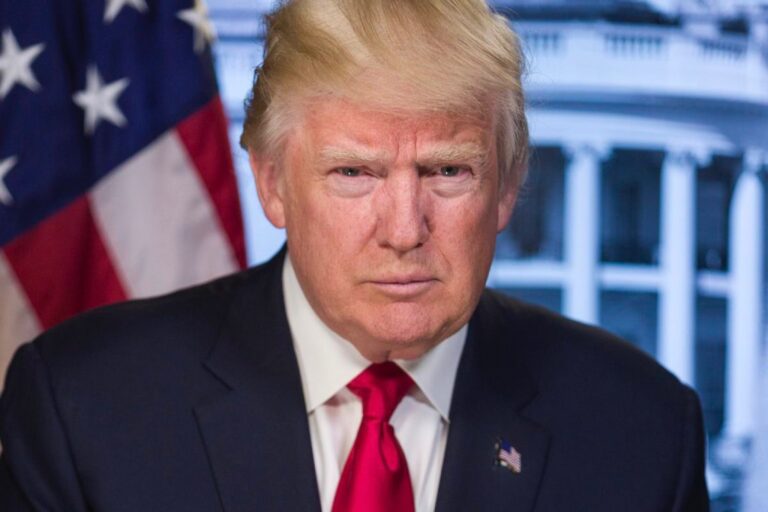
UNITED States (US) President Donald Trump boasted of his country’s military after bombing three Iranian nuclear sites on Saturday.

In what came to many as a shock, Trump joined Israel’s onslaught against Iran despite repeatedly saying he would decide whether the US would join the conflict within two weeks.

He wrote on his Truth Social account shortly after the attack: “We have completed our very successful attack on the three nuclear sites in Iran, including Fordow, Natanz, and Esfahan.

“All planes are now outside of Iran air airspace. A full payload of bombs was dropped on the primary site, Fordow. All planes are safely on their way home. Congratulations to our great /American warriors. There is not another military in the world that could have done this. Now is the time for peace! Thank you for your attention to this matter.”

On Saturday, multiple US B-2 bombers appeared to be airborne and heading west from the US. B-2 bombers are the only aircraft that carry the larger bunker buster bombs.

Except for a ground assault or a nuclear strike, Iran’s underground uranium enrichment facility at Fordow is believed to be vulnerable only to American bunker-buster bombs.

Trump wrote further on his Truth Social that “There will be either peace or there will be tragedy for Iran. Remember, there are many targets left. Tonight was the most difficult of them all by far, and perhaps the most lethal.

“If peace doesn’t come quickly, we will go to those other targets with precision, speed and skill.”

US officials said that their country had between 40,000 and 50,000 troops stationed in the Middle Belt, who are expected to be put on high alert after the strikes.

Meanwhile, Israel’s Defence Ministry said it had elevated its state of alert further, cancelling all educational activities, gatherings and workplaces, except for essential sectors.

It expressed delight with the US involvement in the conflict.

The ICIR reports that Trump’s decision comes after more than a week of strikes by Israel on Iran that aimed to systematically weaken the country’s air defences and offensive military capabilities, while damaging its nuclear enrichment facilities.

Addressing the nation at the White House following the attack, Trump said that Iran “must now make peace” and that “if they do not, future attacks will be far greater and a lot easier.”

With his decision to bomb Iran’s nuclear facilities, Trump has broken his long-standing promise to steer clear of direct military involvement in major foreign conflicts.

In the days leading up to the bombing, Trump announced he wavered between issuing military threats and calling for renewed negotiations in a bid to pressure Iran into agreeing to dismantle its nuclear programme.

A senior White House official stated that once Trump became convinced that Tehran had no intention of pursuing a nuclear agreement, he concluded that launching the strikes was “the right thing to do.”

Trump gave the go-ahead once he was assured of a “high probability of success,” the official said.

The ICIR reports that this move represents the most significant foreign policy gamble for Trump, having avoided major international crises during his first term, Trump now finds himself deeply entangled in one just six months into his second term.

Possible retaliatory actions by Iran include shutting down the Strait of Hormuz, a critical global oil route, targeting US military bases and allies in the Middle East, intensifying missile attacks on Israel, and mobilising proxy groups against American and Israeli interests around the world.

A former Middle East negotiator who served under both Democratic and Republican administrations, Aaron David Miller, warned that such actions could spiral into a broader and longer-lasting conflict than Trump anticipated, reminiscent of the “forever wars” in Iraq and Afghanistan, which he once criticised as “stupid” and vowed never to repeat.

“The Iranians are seriously weakened and degraded in their military capabilities. But they have all sorts of asymmetric ways that they can respond… This is not going to end quickly,” Miller said.

Meanwhile, Iran has repeatedly denied building nuclear weapons, saying its programme was for purely peaceful purposes.

EFCC arrests Benue governor’s aide for alleged sextortion, cyberbullying

OPERATIVES of the Makurdi Zonal Directorate of the Economic and Financial Crimes Commission (EFCC) have arrested Mkor Aondona, the Special Adviser to Benue State Governor Hyacinth Alia on Documentation, Research, and Planning, for alleged sextortion and cyberbullying.

The EFCC revealed this in a statement on Saturday, June 21, noting that Aondona was arrested on Friday in Makurdi, following a petition by some female students who accused him of unethical and criminal behaviour involving sexual exploitation, cyberbullying and blackmail.

“The petitioners alleged that Aondona was routinely recruiting slim and attractive girls for ushering jobs and insisted on sexual favours as a condition for selection.  

“Based on this, they became vulnerable to having sexual affairs with him, but unknown to them,  he had videos of every sexual act without their consent and was always threatening to leak the videos if they refused to continue having sex with him”, the EFCC said.

The organisation added that Aondona was also accused of sharing explicit videos of the girls across multiple messaging platforms. The videos were recorded without their knowledge and consent, according to the commission. 

“Some of the videos are said to be in circulation. The suspect will soon be charged in court,” the EFCC vowed. 

The ICIR reports that Human Rights and Gender Rights Activist, Ukan Kurugh, had petitioned the Benue State governor on June 13, calling for an immediate investigation into the allegations. 

“Your Excellency, we write with grave concern regarding disturbing reports of a public official using fraudulent government recruitment as a cover to sexually exploit young women in our state. Multiple credible sources confirm this individual.

“Dr. Mkor Aondona Donatus, Special Adviser to the Governor on Documentation, Research, and Planning, has been falsely claiming authorisation from your office to recruit ushers for government events, when no such official recruitment programme exists through this channel” Kurugh wrote.

Kurugh said that the scheme involved approaching female students and graduates under the pretence of offering legitimate ushering opportunities. 

“Young women were reportedly selected based primarily on physical appearance, with preference given to those deemed ‘slim and attractive’, while others were excluded for being ‘chubby’.

Kurugh noted that victims report being lured into private meetings where they were pressured for sexual favours in exchange for jobs. 

“Most alarmingly, several young women have come forward with evidence that this official secretly recorded intimate videos and took nude photographs of them without their consent during these encounters.

“One particularly harrowing case involves a victim who refused further advances. She has provided proof that the official threatened to leak her secretly recorded nude videos and photographs unless she complied with his demands. These materials were sent to her via WhatsApp and then quickly deleted in an apparent attempt to avoid leaving evidence, though she managed to preserve some of this digital proof,” he stated.

While urging the government to implement strict vetting procedures for anyone claiming to recruit on behalf of the state, the activist urged the governor to provide protection and psychosocial support for all victims.

“We further urge the Benue State Government to publicly assure citizens that justice will be served in this matter and that no individual, regardless of position, is above the law”, he stressed.

Claim that Nigeria’s vice president earns ₦12 million annually is TRUE

AN X user, @naija_pr, has shared a claim that Nigeria’s vice president, Kashim Shettima, earns a total sum of N12 million naira annually including salary and allowances.

The claim posted earlier on April 27, 2025 and shared alongside a collaged image of Shettima and N1000 notes, read: Nigerian Vice President earns ₦12,126,290 annually, including allowances — FG.”

It has garnered over 1 million views on X (formerly Twitter) with over 10,000 likes, more than 1,400 comments and over 1,200 likes as of June 19, 2025.

Even though the X user attributed the source of information to the Federal Government of Nigeria, many users in the comment sections expressed significant doubt about its accuracy citing the nation’s current economic realities including inflation, among other factors.

Recall that the claim was earlier debunked on April 28, 2025 by the Foundation for Investigative Journalism (FIJ), saying it was misleading. Our penchant to ensure accurate reportage of information in public space forced The FactCheckHub to seek the truth behind the VP’s annual earnings from government coffer.

CLAIM

Nigeria’s Vice President earns 12 million naira annually including salary and allowances.

THE FINDINGS

Checks by The FactCheckHub show that the claim is TRUE, as records of the Revenue Mobilisation, Allocation and Fiscal Commission (RMAFC) confirmed.

The document obtained from RMAFC showing the annual remuneration of Nigeria’s vice president, following an FoI request. SOURCE: RMAFC.
The obtained from RMAFC showing the annual remuneration of Nigeria’s vice president, following an FoI request. SOURCE: RMAFC..

Before we sent a Freedom of Information (FoI) request, The FactCheckHub reviewed the records of the RMAFC which is constitutionally responsible for determining the remuneration packages for political, public, and judicial office holders in Nigeria, including the President, Vice President, governors, and state and federal lawmakers.

As such, we looked at the timeline of salary reviews which have been influenced by various economic and political factors. We found that there have been reviews from the year 2000 till 2023.

For instance in 2000, RMAFC recommended a remuneration package, which was enacted as the Certain Political, Public and Judicial Office Holders (Salaries and Allowances) Act, 2002.​ Similarly, a subsequent review in 2007 led to the Amendment Act of 2008, which remains the prevailing legal framework for official salaries till date.​

But in 2009 and 2015, multiple attempts were made to review the remuneration packages for political and public officer holders. In 2009, a downward review was proposed due to declining national earnings, but it was not passed into law. Similarly, the 2015 review was not endorsed by the Nigerian presidency or National Assembly.

In June 2023, RMAFC announced a proposed 114% salary increase for the President, Vice President, governors, lawmakers, and judicial officers. The commission stated that the new salaries would be effective from January 1, 2023, pending legislative approval. Till date, it has not been officially approved.

This necessitated our FoI request to RMAFC, the government agency in charge of remuneration packages for political and public officer holders, to ascertain the current salary package of Nigeria’s Vice President as of April/May 2025.

The FOI request was then filed at the Office of the Accountant General of the Federation (AGF) and the RMAFC. After few weeks of following up the letters, the AGF responded and redirected our request to the RMAFC. Weeks after, the RMAFC responded with a letter and the official gazette showing the current earnings of the nation’s vice president. This tally with the X user’s assertion.

Additionally, we tried narrowing down the original source of the claim attributed to the Federal Government. When our researcher conducted an advanced keyword search on Google, it led a to a report published by LegitNG on April 27, 2025 and titled “Salary and Allowance of Nigerian Vice President as Approved by FG. The report referenced a RMAFC publication dated 2007-2009.

In conclusion, although there were few upward reviews of salary package for political and public officer holders after the Amendment Act of 2008, none was finally approved or acted upon by the government.

THE VERDICT

The claim that Nigeria’s Vice President earns ₦12 million annually is TRUErecords exclusively obtained by The FactCheckHub from the RMAFC confirmed the amount.

This report is republished from the FactCheckHub.

NNPCL spokesperson, Femi Soneye resigns

THE Chief Corporate Communications Officer of the Nigerian National Petroleum Company Limited (NNPCL), Olufemi Soneye, has resigned.

This was contained in a statement he shared on his Facebook handle on Saturday, June 21.

In the message, Soneye appreciated the support he received from his colleagues in shaping and promoting the NNPC Ltd brand over the past 20 months.

He explained that his decision to step aside was to enable him to focus more on his family and attend to pressing personal responsibilities.

“I extend my heartfelt gratitude to you all for the unwavering support, professionalism, and genuine commitment you’ve shown in helping to shape and amplify the NNPC Ltd story over the past 20 months.
“Your role in building a vibrant and effective communications presence for our national energy company has been nothing short of invaluable. I wish to inform you that I have stepped aside from my role as Chief Corporate Communications Officer of NNPC Ltd.
“This decision will allow me to devote more time to my family and attend to personal responsibilities that now require my closer presence,” the statement read.

Soneye described his time at NNPCL as a profound honour, saying it was a privilege to serve the company and the nation while contributing to the ongoing transformation of the organisation.

He expressed gratitude for the trust reposed in him and the chance to work with professionals within and outside the organisation.

Soneye was appointed in October 2023. He replaced Garba Muhammad, who was appointed in August 2021 during a management reshuffle.

His exit comes at a time when the NNPCL is under intense scrutiny and faces growing concerns over a lack of transparency in accounting for the funds it generates. Probes are currently being launched into its alleged shoddy activities by the National Assembly and the nation’s anti-corruption bodies.

The ICIR reported on Thursday, June 19, that the Senate Committee on Public Accounts, during an investigative session with a team from NNPCL, raised concern over the N200 trillion unaccounted funds in the audited financial statements between 2017 and 2023.

Soneye’s exit also follows President Tinubu’s decision to replace Mele Kyari with Bayo Ojulari as the Group Chief Executive Officer (GCEO) of the NNPCL.

Egypt, South Africa varsities outrank Nigeria in global rankings

0

NO Nigerian university made it to the top 1,000 in the latest Quacquarelli Symonds (QS) World University Rankings released on June 19..

Only three of about 300 Nigerian universities, namely University of Ibadan (UI), University of Lagos (UNILAG), and Ahmadu Bello University (ABU) Zaria,were included in the rankings.

The UI and UNILAG maintained positions within the 1,001–1,200 band, while ABU appeared in the 1,201–1,400 category.

The QS World University Rankings, released annually by Quacquarelli Symonds, evaluate universities using eight key metrics: academic reputation, employer reputation, faculty-to-student ratio, citations per faculty, international faculty ratio, international student ratio, international research network, graduate employment outcomes, and sustainability.

Despite their longstanding reputations and large graduate output each year, Nigerian universities still lag behind in critical areas like research production, international partnerships, and graduate employability, key factors that significantly impact global university rankings.

In contrast, Egypt topped the list in Africa with 20 universities featured in the 2026 rankings, followed by South Africa with 11, and Tunisia with four.

Ghana and Morocco each had two universities listed, while Kenya, Libya, Sudan, Uganda, and Ethiopia had one each.

Notably, only South African universities managed to secure spots within the top 300 globally, with the University of Cape Town ranked at 150th and the University of the Witwatersrand at 291st.

QS World University Rankings 2026: Global Top 10

1. Massachusetts Institute of Technology – United States
2. Imperial College London – United Kingdom
3. Stanford University – United States
4. University of Oxford – United Kingdom
5. Harvard University – United States
6. University of Cambridge – United Kingdom
7. ETH Zurich – Swiss Federal Institute of Technology – Switzerland
8. National University of Singapore – Singapore
9. University College London – United Kingdom
10. California Institute of Technology – United States