Home Blog Page 260

Nigeria urges caution amid Israel’s ‘preemptive’ strike on Iran

0

NIGERIA has called for caution in the ongoing Israel, Iran conflit leading to Israel’s preemptive strike on Iran.

The ICIR reported that Israel launched large-scale strikes on Iran on Friday, June 13, claiming it targeted nuclear sites, ballistic missile production facilities, and senior military commanders as part of a broader operation aimed at preventing Tehran from developing a nuclear weapon.

This was revealed by Israeli military spokesperson, Effie Defrin, a Brigadier General, who said Iran had launched about 100 drones towards Israeli territory in retaliation, which Israel was intercepting.

Iranian media and eyewitnesses reported explosions, including at the country’s primary uranium enrichment site in Natanz, as Israel declared a state of emergency in anticipation of potential missile and drone attacks.

The International Atomic Energy Agency (IAEA) stated on Friday that there was no increase in radiation levels at the Natanz nuclear site, citing information provided by Iranian authorities.

Iran’s elite Revolutionary Guards corps said its top commander, Hossein Salami, was killed, and state media reported the unit’s headquarters in Tehran had been hit.

Several children were killed in a strike on a residential area in the capital, it said.

Defrin said 200 Israeli fighter jets took part in the strikes, hitting more than 100 targets in Iran.

Iran’s Supreme Leader, Ayatollah Ali Khamenei, condemned the attack, accusing Israel of unleashing its “wicked and bloody” hand in a crime against Iran.

He warned that it would face “a bitter fate” in return.

Nigeria in a response to the attack in a statement by the spokesperson of the Ministry of Foreign Affairs, Kimiebi Imomotimi Ebienfa, calls for the cessation of hostilities and urges both parties to exercise utmost restraint in the interest of regional and global peace

The Government of the Federal Republic of Nigeria expresses its grave concern and calls for an immediate cessation of hostilities and urges both parties to exercise utmost restraint in the interest of regional and global peace.

According to the statement dated Saturday June 14, the continued cycle of retaliation not only endangers civilian lives but threatens to plunge the broader Middle East into further instability, with implications for international security and economic development.

“As a nation deeply committed to the principles of peaceful coexistence, non-aggression, and multilateral diplomacy, Nigeria calls on all involved to prioritise dialogue over confrontation. We urge the international community, particularly the United Nations Security Council, to intensify efforts toward immediate de-escalation and to provide a platform for constructive engagement,” the ministry stated.

Nigeria reiterates that military action is not a substitute for negotiation.

It added that the path to lasting peace lies in diplomacy, mutual respect, and adherence to international law.

“Nigeria stands ready to support all genuine efforts aimed at de-escalating tensions and promoting peace in the region,” the statement added.

Fresh attacks claim 26 lives in Benue communities

0

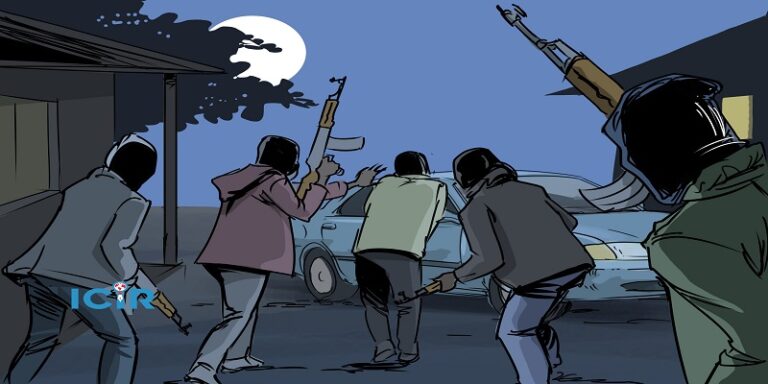
FRESH attacks on two local government areas of Benue State have resulted in the death of 26 persons.

Reactions as Agric ministry declares three-day fasting, prayers for food security

0

THE Federal Ministry of Agriculture and Food Security has announced a three-day fasting and prayer programme, seeking divine intervention for the country’s agricultural sector.

According to an internal circular dated June 11 and seen by The ICIR, Adedayo Modupe, Director of Human Resource Management at the ministry, said the spiritual exercise aims to seek God’s guidance in advancing Nigeria’s food security agenda.

Modupe said all members of staff  the ministry are expected to observe the fasting and be part of the prayer sessions.  “This is to invite all staff of the federal ministry of agriculture and food security to a solemn prayer session for God’s guidance and success in supporting the government’s efforts to achieve food security,” the circular reads.

“The theme of the session is ‘Divine Intervention for Protection and National Development’.

“The prayers will hold at Conference Hall ‘B’ of the FMAFS headquarters in Area 11, Garki, Abuja, from 12:00 p.m. to 12:30 p.m. on each scheduled date.”

According to the circular, staff are expected to come fasting on Monday, June 16, and continue on June 23 and June 30.

Nigerians have however, expressed concerns of this approach saying fasting and prayer cannot end food security without action and political will by the government.
For instance, a Nigerian JohnBull Igwe commented, “While nations are embarking on mechanised agriculture, Nigeria’s ministry of agriculture is raising internal circular asking its staff to “come fasting to pray to God for food security”. I’m sure they will be calling on the “God of Israel” and Allah the “God of Iran” who are busy fighting missiles war.”

Another Nigerian, Ojo Hadiza reacted, “The honorable Minister want us to pray against food insecurity in Nigeria. The honorable Minister knows the problems. I encourage all Nigerians to take their farming serious. It is high time to f


arm now not to only pray.”

Grief as Lagos council chairman dies after prolonged illness

0

THE Executive Chairman of Oto-Awori Local Council Development Area, Musibau Asafa, has passed away after a prolonged illness.

His death, which has plunged the LCDA into mourning, was officially confirmed in a statement released on Facebook  Saturday by his Chief Press Secretary, Bodunrin Ayodele.

The statement whicj did not specify the exact date of his passing reads: “Oto-Awori Local Council Development Area is in mourning following the passing of its Executive Chairman, Prince Musibau Adekunle Asafa.

“Prince Asafa, a respected politician, leader and dedicated public servant, succumbed to a prolonged illness, leaving behind a legacy of service and commitment to the people he served.”

A close family source said Prince Asafa passed away after a prolonged battle with illness. The source said despite the best efforts of medical professionals, he could not recover, leaving his family, friends, and colleagues in deep sorrow.

As the news of his death spreads, tributes and condolences  have started pouring in from well-wishers, community leaders, and government officials who had the opportunity to work with him.

The Executive Chairman of Somolu Local Government Area, Abdul-Hamed Salawu, through  social media accounts on Saturday  condoled with Oto-Awori LCDA over the chairman’s demise.

The post reads, “The executive chairman of Somolu Local Government, Abdul- Hammed Salawu, has sent the condolences of the Executive, Legislature, Management and the people of Somolu Local Government to the people of Oto- Awori LCDA and APC family, over the painful demise of Prince Musbau Adekunle Asafa, the executive chairman of Oto- Awori LCDA.

“May his gentle soul rest in perfect peace.”

Freedom of expression, assembly remain threatened in Nigeria – Amnesty International

0

AMNESTY International (AI) Nigeria has declared that freedom of expression remains under threat across Nigeria.

This was disclosed by the chairman of the board of trustees of AI Nigeria, Auwal Ibrahim Musa Rafsanjani, while speaking at the first-ever membership annual general meeting of the organisation in Abuja on Friday, June 13.

Rafsanjani expressed unease over the deteriorating state of human rights and persistent abuses across Nigeria.

He said journalists, human rights defenders, and digital activists are regularly harassed, threatened, and arbitrarily detained simply for exercising their right to speak out.

“Freedom of expression remains under threat. The right to peaceful assembly is also under sustained attack,Rafsanjani said.

He emphasised that while civil society continues to back reforms, the National Assembly must legislate on a robust framework that not only protects citizens’ rights but also addresses long-standing gaps in Nigeria’s human rights space.

Rafsanjani urged the National Assembly to take critical legislative action to protect and foster human rights in the country amid growing concerns over insecurity, shrinking civic space, and repression.

“We call on the National Assembly to provide a legislative framework that strengthens human rights protections and addresses existing gaps,he added.

Rafsanjani also revealed plans for deeper collaboration with Amnesty International Ghana and other West African branches to strengthen regional advocacy, particularly through the Economic Community of West African States (ECOWAS).

He added that the AGM provides a platform for reflection, dialogue, and forward-looking action.

He said Amnesty Nigeria is committed to ensuring that its work is grounded in the realities of Nigeria’s human rights landscape while inspiring change across the African region.

Speaking at the occasion, the AI’s Country Director, Isa Sanusi, asked the government to fulfil its constitutional responsibility of safeguarding the rights and pride of its citizens.

Sanusi stated that the government’s responsibility is to respect the Constitution and protect human rights. He emphasised that while it’s not their role to protect human rights, they will continue to hold the government accountable.

He stated that despite ongoing issues like police brutality, unlawful killings, and insecurity, which have claimed hundreds or thousands of Nigerian lives, they remain hopeful that things can improve if those in power act responsibly and uphold the rule of law.

He criticised the government’s track record, drawing parallels with past administrations.

The ICIR reported in April 2025 that AI Nigeria slammed the attacks by Nigerian security forces on protesters in Port Harcourt, Rivers State, and Abuja.

AI also condemned the attack on protesters in Damaturu, Yobe State.

The global human rights organisation described the attacks as alarming and unacceptable.

AI, in a statement released on its X handle on Monday, April 7, said it is deeply concerned by security forces’ attacks on protesters.

“Amnesty International is deeply concerned by security forces’ attacks on protesters in Abuja and Port Harcourt. Protesters and journalists were beaten in Port Harcourt.

“In Damaturu, Yobe State, 4 activists have been unlawfully arrested. These atrocities are unacceptable & must be investigated,” the group tweeted.

Human trafficking: NAPTIP, DIA bust syndicate, free 20 victims

0

THE National Agency for the Prohibition of Trafficking in Persons (NAPTIP) and the Defence Intelligence Agency (DIA) have busted a human trafficking syndicate and freed 20 victims.

The operatives also arrested three suspects during the raid.

A statement issued by NAPTIP spokesperson, Vincent Adekoye, in Abuja on Friday, June 13, said the 20 victims were trafficked from  Equatorial Guinea and Togo to Nigeria for various forms of labour exploitation.

The operatives said the arrested suspects are believed to be members of an organised illicit network working in Nigeria.

Adekoye noted that the operation, which was carried out in the Federal Capital Territory (FCT), Nasarawa, and Osun, targeted criminal cells and their bigwigs.

Adekoye added that the arrest of the suspects was a result of the directive by the Director-General of NAPTIP, Binta Adamu-Bello, to increase surveillance within border communities across the country.

He said the action was to halt the activities of some suspected crime syndicates who are believed to have entered Nigeria from particular African countries.

“NAPTIP has also strengthened collaboration with sister law enforcement agencies and partners to nip the unwholesome activities of the criminal gangs in the bud,” he stated.

Adekoye said the rescued victims confessed they were lured by the syndicate with promises of well-paying jobs in Nigeria.

According to him, the victims had documentation processed for travel, but instead of going to Europe, they were exploited for labour in Nigeria.

In a similar development, Adekoye said NAPTIP, in collaboration with the Nigerian Embassy in Senegal, rescued a Nigerian human trafficking victim from Dakar.

He said that the victim arrived at the NAPTIP Lagos command, Ikeja, after a close shave with death at the hands of traffickers in one of the remote villages of Senegal.

According to the NAPTIP spokesperson, the victim was lured to Senegal with promises of a job as a hairstylist and makeup artist, but discovered her employer, ‘Madam Rose’, was involved in child and sex trafficking.

She was subsequently forced into prostitution and when she refused to comply; he said her employer confiscated her identification documents and threw her out, leaving her unable to move freely or return home.

“She was left stranded somewhere in Kidira, Senegal. She reported that her trafficker is diabolical and has been tormenting her mentally and emotionally to the point where her sanity is at risk,” Adekoye said.

The NAPTIP D-G, Adamu-Bello, while speaking on the action, noted that the  arrest of the traffickers and rescue of the victims was a consideration of a growing synergy between law enforcement agencies.

She said the operation was strategic and targeted at the transnational organised criminal elements that are now making Nigeria an attractive human trafficking destination.

“These operations will be a continuous exercise, and we are also focusing on other parts of the country to rid the nation of all activities of these criminal syndicates,” Adamu-Bello emphasised.

According to her, the total number of victims rescued and received from neighbouring countries by NAPTIP within the past week is now 21.

The ICIR reported in May that the Nigeria Police Force (NPF) said it apprehended two suspected internationally wanted criminals involved in transnational crime operations.

The suspects, Felix Omoregie, alias ‘Eghosa Johnson Omoregie,’ and Okwudili Sabastine Ezeje, were arrested in separate operations across Nigeria in connection with human trafficking and armed robbery, respectively.

A statement by the NPF spokesman, Olumuyiwa Adejobi, on Wednesday, May 7, stated that Omoregie, who is a suspected ringleader of a human trafficking syndicate, was arrested in Benin City, Edo State, following a concerted intelligence operation.

Just one man survived the Air India crash. What’s it like to survive a mass disaster?

0

By Erin Smith, La Trobe University

VISWASHKUMAR Ramesh, a British citizen returning from a trip to India, has been confirmed as the only survivor of Thursday’s deadly Air India crash.

“I don’t know how I am alive,” Ramesh told family, according to his brother Nayan, in a video call moments after emerging from the wreckage. Another brother Ajay, seated elswhere on the plane, was killed.

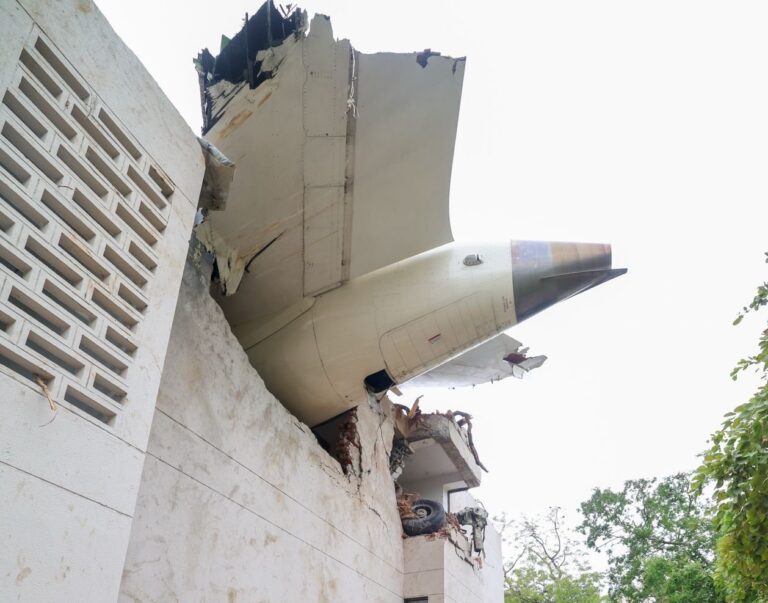
The Boeing 787-7 Dreamliner crashed into a medical college less than a minute after taking off in the city of Ahmedabad, killing the other 229 passengers and 12 crew. At least five people were killed on the ground.

Surviving a mass disaster of this kind may be hailed as a kind of “miracle”. But what is it like to survive – especially as the only one?

Surviving a disaster

Past research has shown disaster survivors may experience an intense range of emotions, from grief and anxiety to feelings of loss and uncertainty.

These are common reactions to an extraordinary situation.

Some people may develop post-traumatic stress disorder (PTSD) and have difficulty adjusting to a new reality after bearing witness to immense loss. They may also be dealing with physical recovery from injuries sustained in the disaster.

Most people recover after disasters by drawing on their own strengths and the support of others. Recovery rates are high: generally less than one in ten of those affected by disasters develop chronic, long-term problems.

However, being a sole survivor of a mass casualty may have its own complex psychological challenges.

Survivor’s guilt

Survivors can experience guilt they lived when others died.

My friend, Gill Hicks, spoke to me for this article about the ongoing guilt she still feels, years after surviving the 2005 bombings of the London underground.

Lying trapped in a smoke-filled train carriage, she was the last living person to be rescued after the attack. Gill lost both her legs.

Yet she still wonders, “Why me? Why did I get to go home, when so many others didn’t?”

In the case of a sole survivor, this guilt may be particularly acute. However, research addressing the impact of sole survivorship is limited. Most research that looks at the psychological impact of disaster focuses on the impact of disasters more broadly.

Those interviewed for a 2013 documentary about surviving large plane crashes, Sole Survivor, express complex feelings – wanting to share their stories, but fearing being judged by others.

Being the lone survivor can be a heavy burden.

“I didn’t think I was worthy of the gift of being alive,” George Lamson Jr. told the documentary, after surviving a 1985 plane crash in Nevada that killed all others on board.

Looking for meaning

People who survive a disaster may also be under pressure to explain what happened and relive the trauma for the benefit of others.

Vishwashkumar Ramesh was filmed and interviewed by media in the minutes and hours following the Air India crash. But as he told his brother: “I have no idea how I exited the plane”.

It can be common for survivors themselves to be plagued by unanswerable questions. Did they live for a reason? Why did they live, when so many others died?

These kinds of unaswerable questions reflect our natural inclination to look for meaning in experiences, and to have our life stories make sense.

For some people, sharing a traumatic experience with others who’ve been through it or something similar can be a beneficial part of the recovery process, helping to process emotions and regain some agency and control.

However, this may not always be possible for sole survivors, potentially compounding feelings of guilt and isolation.

Coping with survivor guilt

Survivor guilt can be an expression of grief and loss.

Studies indicate guilt is notably widespread among individuals who have experienced traumatic events, and it is associated with heightened psychopathological symptoms (such as severe anxiety, insomnia or flashbacks) and thoughts of suicide.

Taking time to process the traumatic event can help survivors cope, and seeking support from friends, family and community or faith leaders can help an individual work through difficult feelings.

My friend Gill says the anxiety rises as the anniversary of the disaster approaches each year. Trauma reminders such as anniversaries are different to unexpected trauma triggers, but can still cause distress.

Media attention around collectively experienced dates can also amplify trauma-related distress, contributing to a cycle of media consumption and increased worry about future events.

On the 7th of July each year, Gill holds a private remembrance ritual. This allows her to express her grief and sense of loss, and to honour those who did not survive. These types of rituals can be a valuable tool in processing feelings of grief and guilt, offering a sense of control and meaning and facilitating the expression and acceptance of loss.

But lingering guilt and anxiety – especially when it interferes with day-to-day life – should not be ignored. Ongoing survivor guilt is associated with significantly higher levels of post-traumatic symptoms.

Survivors may need support from psychologists or mental health professionals in the short and long term.The Conversation

Erin Smith, Associate Professor and Discipline Lead (Paramedicine), La Trobe University

This article is republished from The Conversation under a Creative Commons license. Read the original article.

Crude oil price rises over 7% after Israel attacks Iran

GLOBAL oil prices jumped over 7 per cent for the first time in over four months on Friday, June 13, after an Israeli attack on Iran.

Brent crude, the global oil benchmark, rose by 7.92 per cent to $74.85 a barrel at 2.00 West Africa Time (WAT), from $69 a barrel the previous day.

This is the first time since January 2025 that crude oil prices have risen significantly.

Similarly, United States (US) West Texas Intermediate (WTI) crude increased by 8.2 per cent to $73.61.

It also marked its highest increase since January 21.

The rise occurred after Israel launched a barrage of strikes against oil-rich Iran, sparking Iranian retaliation and raising worries about a disruption in Middle East oil supplies.

The ICIR reported that Israel announced targeting Iran’s nuclear facilities, ballistic missile factories, and military commanders, as part of a prolonged operation to prevent Tehran from building an atomic weapon.

It also said Iran had promised a harsh retaliation for the attack.

According to Reuters, the National Iranian Oil Refining and Distribution Company confirmed that its oil refining and storage facilities remain undamaged and fully operational.

With oil prices reaching multi-month highs, the global commodity’s value is close to Nigeria’s 2025 budget benchmark of $75 per barrel.

The ICIR had reported that declining crude oil prices below the benchmark portend risk in the implementation of the 2025 budget.

This is even as analysts are concerned that declining crude oil prices could compel the government to explore alternative funding sources for the 2025 budget.

Reuters quoted an analyst at Saxo Bank, Ole Hansen, as saying that “no energy installations have been impacted by the Israeli strikes, so unless Iran decides to drag other nations, especially the U.S., into the conflict, the risk of a supply disruption remains low and should over time reduce the risk premium.”

There are also worries that Iran could pay a heavy price for the blockage of the Strait of Hormuz, which it and its neighbours rely on to ship oil to Asian markets.

Iran’s economy heavily relies on the free passage of goods and vessels through the seaway, as its oil exports are entirely sea-based. Finally, cutting off the Strait of Hormuz would be counterproductive to Iran’s relationship with its sole oil customer, China,” it also quoted analysts with JP Morgan as saying.

An economist and former deputy governor of the Central Bank of Nigeria (CBN), Kingsley Moghalu, noted that Israel’s attack against what it claims are Iran’s nuclear facilities raises the stakes in an already anarchical international society.

“It raises the question of whether this meets the test for preemptive self-defence in international law. That doctrine of customary international law establishes a right of a sovereign to launch a preemptive attack against another if the attacker believes it is under an “imminent” threat of being attacked by another,” Moghalu, who is the current President of the African School of Governance (ASG), commented on his X handle.

Global airlines cancel flights after Israel strike Iran

0

GLOBAL airlines have cancelled flights to Tel Aviv, Tehran, and other Middle East destinations, or rerouted planes, on Friday, June 13, as airspaces shut following Israeli strikes on Iran.

FlightRadar data showed airspace over Iran, Iraq, and Jordan was empty, with flights directed towards Saudi Arabia and Egypt instead.

About 1,800 flights to and from Europe had been affected so far on Friday, including approximately 650 cancelled flights, Reuters cited Eurocontrol.

The closure of airspace by Israel, Iran, Iraq, and Jordan came after Israel hit Iranian military and nuclear facilities.

The ICIR had earlier reported that Israel on Friday said it targeted Iran’s nuclear facilities, ballistic missile factories and military commanders at the start of what it warned would be a prolonged operation to prevent Tehran from building an atomic weapon.

Israeli military spokesperson, Effie Defrin, a Brigadier General, revealed the attack, stating that 200 Israeli fighter jets took part in the strikes, hitting more than 100 targets in Iran.

He also hinted that Iran had launched about 100 drones towards Israeli territory in retaliation.

Following the incident, Emirates, the Middle East’s largest airline, said it had cancelled flights to and from Iraq, Jordan, Lebanon, and Iran after Israel launched the strikes.

Also, Qatar Airways, the country’s national carrier and one of the Middle East’s largest, said it had temporarily cancelled flights to Iran and Iraq due to the current situation in the region.

Air France said it was suspending its flights to and from Tel Aviv until further notice following the closure of Israeli airspace.

“Air France is closely monitoring the situation in the Middle East in real time,” a spokesperson for the French airline told Agence France-Presse (AFP), adding that “the safety of its customers and crews is its absolute priority,” The Guardian quoted.

Air India diverted or called back 16 flights between India and London and cities in Canada and the United States due to the emerging situation in Iran.

According to aircraft tracker Flight Aware, the New Delhi-Vienna and Mumbai-London flights were about to enter Iranian airspace when Israel launched its attack, forcing the planes to turn back to their origin.

In the United Arab Emirates, Abu Dhabi Airport warned, flight disruptions are expected through Friday as a result of the Israeli strikes.

Dubai’s airport also reportedly announced flight delays and cancellations due to the closure of airspace in Iran, Iraq, and Syria.

I can’t believe I escaped death, says lone survivor of Air Indian crash

VISWASH Kumar Ramesh, a 39-year-old only survivor of the Air India flight that crashed on Thursday, said he had yet to understand how he cheated death. 

The ICIR reported that an Air India plane with 242 people onboard crashed into a building moments after taking off from Ahmedabad Airport on Thursday,  June 12.

It burst into flames immediately, with the inferno killing all on board, except Ramesh.

Hours after the crash, footage surfaced online showing a man with facial injuries and a bloodstained shirt. Limping slightly, he walked to an ambulance on his own and told the surrounding crowd he had come “from inside” the plane.

“I still can’t believe how I got out alive,” Mr. Ramesh said on Friday, June 13, in an interview from his hospital bed with India’s state broadcaster, Doordarshan. “I thought I was also about to die.”

Ramesh, whose seat number was 11A, said it was a miraculous escape from a tragedy that claimed the lives of others on board the ill-fated flight.

He recalled that just five to ten seconds after takeoff, the plane felt ‘stuck,’ as if struggling to gain speed, then it crashed while seemingly trying to accelerate.

He said the front of the plane crashed into an open area after hitting several buildings, while the tail became lodged in a structure later identified as the dining hall of a medical college.

Ramesh said he unbuckled his seatbelt after the crash when he spotted a chance to escape. It’s unclear whether he had to open the emergency exit next to him or if it had already been forced open by the impact.

“When my door broke, I saw there was some space that I could try to get out,” he said, adding, “The other side, people couldn’t get out, as it was crushed against a wall.”

The ICIR reports that at first, Ramesh’s survival seemed almost impossible as officials said the crash was so devastating that most victims were burned beyond recognition.

But by evening, Air India confirmed there was one survivor receiving treatment in the hospital and India’s Home Minister, Amit Shah, later visited him.

Ramesh, a British citizen, was heading back to England after a vacation in India with his brother Ajay, according to their younger brother Nayan. Ajay, who was listed as sitting in seat 11J on the right side of the plane, did not survive the crash.

Shortly after the crash, Ramesh made a video call from near the wreckage to his family in Leicester, assuring them he was alive, his younger brother said.

At their home, grief over Ajay’s death mixed with disbelief and relief that Ramesh survived.