GUNMEN have launched fresh attacks on two local government areas (LGAs) of Benue State.
The attack, which occurred in Apa and Agatu LGAs in the troubled state, reportedly left scores of people dead.
Media reports showed that in the EdikwG’Icho community in Apa LGA, three youths lost their lives when they were ambushed and killed.
Two of the victims were said to hail from Edikwu-Echo, and the third was from Ugbokpo.
In Agatu LGA, a native of Odejo, Sunday Dutse, was reportedly killed along the Odugbeho-Ogbaulu road.
Dutse, a younger brother to a former chairman of the local government, was reportedly sacked from his community during an earlier attack and had been taking refuge in Ogwule-Kaduna, also in Agatu LGA.
These attacks came shortly after top military leaders, including the Chief of Army Staff (COAS), Olufemi Oluyede, visited the state and promised to restore peace.
The ICIR reports that following earlier deadly attacks on Gwer West and Apa LGAs, the COAS moved to the state in a strategic push to curb the escalating violence.
According to the News Agency of Nigeria (NAN), the COAS was accompanied by Principal Staff Officers (PSOs) and other senior army officials for an on-the-ground security assessment.
Oluyede had ordered additional deployment of troops and logistics to the state to pursue and dismantle criminal groups operating in the state.
According to Daily Trust, at least 270 people have been killed in the state in the last two months.
Meanwhile, The ICIR reported that the state Governor Hyacinth Alia alleged that some politicians serving in the National Assembly financed the recent attacks on the state.
The governor, however, did not name the politicians but hinted that an interim report from a judicial panel he set up revealed that many big names were involved.
He vowed to take up the matter as soon as he received the full report in the coming week.
Efforts to get detailed information concerning the recent attack were unsuccessful, as the spokesperson of the Benue State Police Command, Anene Sewuese, did not respond to messages and calls sent to her line over the killings.
MID last year, I had the privilege of taking a session for members of my church community called “Navigating the Marketplace”. This is because my Church is a centre for integrated human development and aims to build every aspect of our lives, even though our spiritual growth takes preeminence.
After reviewing the session, I think it is important to share some key points from the session here. A lot of it has to do with the current drivers of value, the skills that dominate and the gaps in our education system in Nigeria and what to do to equip yourself and give yourself a chance.
The landscape of work has evolved dramatically over the past few centuries, with the most significant shifts occurring as we move from the Industrial Age into the Information Age—and beyond. While the traditional educational system was designed to prepare students for factory and office-based roles, today’s rapidly changing job market demands a more adaptable, skill-based approach.
In the session, I delved into how the workforce has transformed, particularly focusing on the impact of this evolution on employment and wealth generation. Let’s explore some of the insights shared in what I believe was a thought-provoking session.
The transition: Industrial Age to Information Age
For centuries, the Industrial Age defined work and productivity, emphasising mass production and repetitive tasks. During this period, educational systems were built to create workers capable of fulfilling specific roles in factories and offices. Fast forward to today, and the world is now firmly in the midst of the Information Age, where technology, knowledge, and globalisation dictate how work is done.
The shift from manual labour to knowledge-based work has altered the entire nature of employment. The skills required for success have evolved, and employees are expected to be more adaptable, innovative, and tech-savvy than ever before. While many employers still focus on experience, the need for specific technical skills and the ability to learn new ones has become paramount.
Outdated educational systems
One of the most pressing issues I highlighted was the outdated nature of traditional educational systems. While schools and universities still focus largely on theoretical knowledge, they often fail to prepare students for the practical, ever-changing demands of the modern workforce. Today’s employees must go beyond textbook knowledge—they must cultivate critical thinking, problem-solving, and soft skills to thrive.
We need a reevaluation of our approach to education, and a shift toward skills-based learning that focuses on preparing individuals for the dynamic needs of the job market. Instead of relying solely on a formal degree, individuals must become proactive in their skill development, using online courses, self-directed learning, and mentorship to stay relevant.
Value over employment
One of the most important takeaways from the session is the idea that employees must shift their mindset from being jobholders to value creators. In the modern economy, job titles no longer define one’s worth—value does. Employees are expected to demonstrate how their contributions directly impact the success of an organisation.
Employers are no longer responsible for making employees wealthy. The wealth and career success of individuals are largely determined by the value they bring to the table. By focusing on the skills that matter most in the workplace and seeking ways to continuously improve, individuals can position themselves as indispensable assets to any organisation.
Wealth generation: The realities
The notion that employers will “make” their employees rich is a misconception. While many workers still equate job security with wealth, the truth is that wealth generation is deeply connected to the value one provides. Wealth is more likely to come from individual skills, entrepreneurship, and adaptability—rather than relying on an employer for compensation.
Entrepreneurship, innovation, and self-investment are key drivers of financial success. In an age where the traditional career ladder is no longer as stable as it once was, individuals must embrace the idea of building their path to financial independence through continuous learning, skill acquisition, and taking advantage of new opportunities.
The need for continuous learning
In a world where industries and job roles can become obsolete overnight due to technological advancements, the importance of continuous learning cannot be overstated. The need for individuals to adopt a growth mindset—constantly seeking new skills, staying informed about industry trends, and being willing to pivot when necessary cannot be overemphasised.
This self-investment in education and professional development is crucial for anyone hoping to remain relevant in today’s job market. Whether it’s taking courses in emerging technologies, developing leadership skills, or honing emotional intelligence, professionals must be committed to lifelong learning.
The power of interpersonal skills
While technical skills and knowledge are essential, interpersonal skills are what truly set top performers apart. In today’s collaborative work environment, being able to communicate effectively, manage relationships, and demonstrate emotional intelligence are critical to success.
Employers are looking for individuals who not only excel in their technical abilities but also possess strong interpersonal skills. The ability to work well with teams, navigate conflicts, and inspire others will continue to be in high demand in the workplace.
Taking control of your career
The final message of the session encourages individuals to take control of their career paths by understanding the evolving nature of work and actively shaping their professional journey. The landscape of work is not static, and the sooner employees recognize that their future is in their hands, the better positioned they will be to succeed.
This involves setting clear career goals, building a personal brand, and networking with key individuals in your industry. Successful careers are built on a combination of hard work, adaptability, and strategic thinking.
Conclusion
It’s time to let go of outdated notions of job security and embrace a career model where self-investment, value creation, and continuous learning are the keys to success. By doing so, you can build a sustainable career that not only adapts to change but thrives in the face of it.
The Federal Government is expected to lose $4 million from a World Bank loan after failing to meet auditing standards on key revenue reforms affecting the Federal Inland Revenue Service(FIRS) and the Nigeria Customs Service (NCS).
The fund formed part of the $103 million Fiscal Governance and Institutions Project, a public financial management initiative financed through a credit facility from the International Development Association (IDA).
According to the World Bank’s restructuring paper dated June 2025, the revenue assurance audit covering the FIRS and Customs from the 2018 to 2021 financial years was assessed as not achieved because the reports submitted did not meet international auditing standards.
“Revenue assurance audit of Main Income Generating Agencies, including the Federal Inland Revenue Service and the Nigeria Customs Service for FY 2018 – 2021, with an allocation of $ 4 million.
“These intermediate results to be implemented by the Office of Auditor-General of the Federation were assessed as not achieved by the Independent Verification Agent because the reports submitted for verification did not meet the requisite international auditing standards,” the document stated.
The ICIR reports that the failed audit was one of the 10 performance-based conditions under the project that the government could not deliver before the closing date of June 30, 2025. As a result, the Federal Ministry of Finance(FMF) formally requested the cancellation of $10.4 million in project funds.
“The FMF has requested cancellation of $0.9m of unused funds for Technical Assistance and $9.5 million, which is the amount allocated to 10 Performance-Based Conditions, which will not be achieved by the close of the Project on June 30, 2025,” part of the document reads.
The breakdown further shows that $ 4.5 million was tied to the uncompleted Revenue Assurance and Billing System, while $ 1 million was allocated to the development of a National Budget Portal.
According to the document, the Budget Office of the Federation, responsible for the portal, did not submit any evidence of achievement. In addition, $0.9 million in technical assistance funding was left uncommitted and has also been cancelled.
The document further reads, “The proposed change is to cancel the $10.4 million, constituting $9.5 million for PBCs that will not be achieved and verified by the closing date, and $0.9 million uncommitted funds from the technical assistance component.”
This latest adjustment follows an earlier restructuring in June 2024, when $ 22 million was dropped from the original $ 125 million envelope, bringing the project down to $ 103 million. With the new cancellation, the total funding now stands at $92.6 million.
The Fiscal Governance and Institutions Project, approved in June 2018 and effective from May 2019, was designed to improve the credibility of public finance and national statistics through reforms in revenue administration, budget transparency, and data systems.
Although the government missed key targets, the project recorded progress in other areas, including revenue performance. According to the World Bank, non-oil revenue was 153 per cent of the budgeted target in 2024, up from a baseline of 64.9 per cent in 2018.
The bank attributed the increase to the unification of Nigeria’s exchange rate, improved tax administration via the TaxProMax system, and reforms that automated revenue remittances from ministries and agencies.
Other areas of progress include the launch of the Electronic Register of Beneficial Owners by the Corporate Affairs Commission, which now covers about 40 per cent of registered businesses, and the publication of a National Asset Registry and financial reports by the Ministry of Finance Incorporated.
The final disbursement on the project is projected at $96.04 million, which represents 93 per cent of the pre-cancellation total of $103 million.
The ICIRreported an earlier prediction by the World Bank, which projected that poverty in Nigeria would increase by 3.6 percentage points by 2027.
This projection is from the World Bank’s Africa Pulse report, released during the Spring Meetings of the International Monetary Fund (IMF) and the World Bank in Washington, DC.
The report paints a troubling outlook for poverty reduction in Nigeria, highlighting that despite some recent gains in economic activity, particularly in the non-oil sector during the last quarter of 2024, structural issues related to resource dependence and national fragility were likely to hinder progress.
On the heels of these concerns, the $4 million loss, some analysts say, is a huge indictment of the much-touted economic reforms of the President Bola Tinubu-led Federal Government, with growing concerns over rising debts and burdensome taxes on Nigerians.
“This is a time we should be getting all the goodwill we need to fund developmental projects and grow the economy. We cannot afford to be losing concessionary funds at this stage,” a development economist, Celestine Okeke, told The ICIR.
HUMAN rights lawyer Femi Falana has expressed concern that the policy reforms of President Bola Tinubu are making life better only for the rich, while worsening the plight of the masses.
Falana, a senior advocate of Nigeria (SAN), criticised Tinubu’s economic reforms when he appeared on Monday, June 9, edition of Channels Television’s Politics Today.
He stressed that the past two years of Tinubu’s administration have left many Nigerians struggling to survive under difficult economic conditions.
“For members of the government—and I’m talking of top officials—it’s been very rosy. One of them was singing a week ago that things are getting better.
“Of course, for the rich, the bourgeoisie, things are getting better. But for the masses of our people, things are getting tougher because they are going through an excruciating economic crisis,” Falana said.
President Tinubu came into power on May 29, 2023, and has initiated some critical reforms.
However, his economic policies, notably the fuel subsidy removal and exchange rate unification, have driven up energy prices, transport fares, food costs, and the costs of other goods and services.
Stressing on these policies and how their implementation has left Nigerians in hardship, Falana noted that Tinubu had repeatedly appealed to Nigerians for patience and promised that his economic reforms would eventually lead to national prosperity.
“In fairness to the President, on many occasions, he has asked Nigerians to bear with him, to exercise patience, that our economic programme will lead to prosperity.
“Whether you believe that or not is another matter, but the government itself realises that there is a crisis in town, that people are hungry, that many are about to withdraw their children from school because of the rigid implementation of neoliberal policies dictated or endorsed by the IMF and World Bank,” he pointed out.
A former Anambra State Governor and Labour Party presidential candidate in the 2023 elections, Peter Obi, had recently criticised Tinubu’s administration policies.
In his criticism, Obi offered ways on how he would have implemented the policies on the fuel subsidy removal and exchange rate unification, The ICIRreported.
LABOUR Party presidential candidate in the 2023 elections, Peter Obi, said he would have removed fuel subsidy in a structured and organised manner, unlike the approach adopted by the current administration.
He also said he would have adopted the same structured approach in exchange rate unification(naira devaluation).
Obi spoke on Monday, June 9, with Arise Television about his stance and the step-by-step implementation of the policies, which he agreed were necessary.
“I have consistently maintained that I would have removed the fuel subsidy. If you go to my manifesto, it’s there.
“I would have done it in an organised manner. There was nothing wrong with the removal of the subsidy. What is wrong is the haphazard way in which it was announced and implemented. Everybody knows that the subsidy regime was a solution to criminality. There was a lot of corruption, which they needed to get out of,” Obi said.
He noted that the government promised to remove fuel subsidies and save money to discontinue borrowing and have available funds to invest in critical areas of development.
He, however, questioned the specific sectors the government had put in the subsidy savings.
“With all these things, billions saved, where is it? Where is it invested in those critical areas of development?” he queried.
He stressed further that there was nothing wrong with floating or devaluing the naira, but that the government should have done it when it could boast of having productivity.
“What devaluation or floating does is that your currency becomes, in terms of value, low. You attract investment. Your products become more marketable. But where we are unproductive, you have nothing to sell. So it’s a double whammy. So in all this, I would have done the same thing in an organised manner,” the banker-turned-politician, maintained.
Commenting further on his approach to subsidy implementation, Obi said he would have tackled the criminality associated with it, which he asserted takes over 50 per cent of the issue.
“And then, whatever we’re able to save from it, have a specific place for it for investment.”
“We will have to have a national plan where all the accrued resources from the subsidy removal will be put into,” he further said.
“It is not just something you say, oh, we’re sharing it the way we used to share every other money. No, we should be able to put it in critical areas of development.”
Obi stressed that the promise of the removal of the subsidy has not yielded the expected result, stressing that what people want to see is where the funds are invested.
“It’s a very clear thing. We’re not the only country that has done that before in an organised manner,” he said.
On how he could have approached naira devaluation, Obi maintained that he would have done it in an organised manner.
He said he would have focused on ensuring that the country ramped up production in agriculture, manufacturing, and everything, while gradually implementing naira devaluation.
He argued that even in the so-called currency devaluation, “there was criminality as well.”
“I came from a background of business, banking, everything.So, I know everything that is associated with criminality in all these things, which you can be tightening while trying to do a gradual evolution,” he noted.
Commenting on how he would have improved productivity in the economy, Obi remarked that he could have tackled insecurity to enable increased agricultural productivity.
Lamenting that the network of roads across the country is no longer motorable, he suggested, “You face those roads first and use your resources to secure a country.”
He asked, “Will you provide a road to your village
when you cannot drive to your village? No!
He explained further that if the government acknowledged that insecurity is a problem, Nigerians can’t go to the farm, and there is an electricity challenge, then it should use the resources to deal with those issues.
President Bola Tinubu, on May 29, 2023, declared the fuel subsidy removed, and in July, the Central Bank of Nigeria floated the naira.
These twin policies have further pushed Nigerians into hardship, stifling businesses and the country’s economy. The ICIR has repeatedly been spotlighted.
TWENTY-seven years after the death of former military ruler General Sani Abacha, his widow, Maryam Abacha, has claimed that funds left in the nation’s treasury by her husband were looted by subsequent Nigerian leaders.
In a TVC interview aired on Sunday, June 8, to mark the anniversary of Abacha’s death in office in 1998, the former First Lady dismissed long-standing accusations that her husband embezzled billions of dollars during his rule from 1993 to 1998.
She, instead, alleged that Nigeria’s political elite squirrelled the public funds her husband left behind and had continued to blame her husband to mask their own theft.
She questioned the credibility of those accusing her husband of looting, asking for evidence such as signatures or official documentation proving the funds were illegally moved abroad.
“Who is the witness of the monies that were being stashed? Did you see the signature or the evidence of any money stashed abroad? And the monies that my husband kept for Nigeria, in a few months, the monies vanished. People are not talking about that,” she said.
She claimed that the narrative surrounding the funds linked to Abacha had been deliberately distorted.
She further questioned whether ethnicity, religion, or regional bias played a role in the persistent criticism of her late husband.
“Why are you blaming somebody for something? Is that tribalism or a religious problem? Or what is the problem with Nigerians? I pray for Nigerians. I pray for all of us.
“I pray that we should have goodness in our hearts. We should stop telling lies and blaming people. Why are we so bad towards each other? Because somebody is a northerner or a southerner, somebody is a Muslim or a Christian, or somebody is nice.”
She also criticised the media, urging journalists to educate and inform the public rather than “bastardise people.”
The ICIR reports that Abacha ruled Nigeria between 1993 and 1998, following a military coup that ousted the interim government of Chief Ernest Shonekan.
His regime, widely seen as authoritarian, was marked by human rights abuses, the jailing of pro-democracy activists, and the execution of critics such as Ken Saro-Wiwa.
The late Abacha, who died in office on June 8, 1998, has been accused by successive Nigerian governments and international agencies of embezzling billions of dollars and stashing them in foreign accounts.
The recovered loot, often referred to as ‘Abacha loot,’ has been repatriated from countries namely Switzerland, the UK, and the US, with over $3.6 billion reportedly returned to Nigeria since 1999.
Among the funds was $723 million returned to Nigeria from Switzerland in 2023.
However, Abacha’s wife said her husband had no links with the funds.
While responding to comments about a relatively stable economy under her husband’s leadership, she suggested that Nigerians were manipulated into believing falsehoods about her husband.
“So, where did he steal the money from? So where would he have stolen the money from?” she asked. “And because Nigerians are fools, they listen to everything.”
The former First Lady further called for national unity, adding that no individual, past or present, is bigger than the country.
“Babangida doesn’t make Nigeria alone. Abacha does not make Nigeria alone. Abiola and everybody, nobody is big enough for Nigeria. Even the single man on the street is very important. We are all human beings, for goodness’ sake. All these wahala (troubles) should stop.”
THE Socio-Economic Rights and Accountability Project (SERAP) has called on President Bola Tinubu to urgently caution and direct the Minister of the Federal Capital Territory, Nyesom Wike, to immediately withdraw his threat to shut down 34 foreign embassies in Abuja due to unpaid ground rents.
The SERAP made the call on its X handle on Monday, June 9, warning that shutting down the embassies contravened Article 22 of the Vienna Convention on Diplomatic Relations.
The FCTA had revealed that the foreign missions were among the properties that had not paid their ground rents since 2014, with the affected diplomatic missions collectively owing N3,662,196.
Wike had on May 26 ordered the FCTA officials to commence sealing the 4,794 properties that were revoked due to non-payment of ground rent, spanning between 10 and 43 years.
President Bola Tinubu had intervened, granting a 14-day grace period, which ends on Monday (today), to affected property owners to settle their outstanding obligations.
The Director of Lands at the FCTA, Chijioke Nwankwoeze, revealed that defaulters would be required to pay penalty fees ranging between N2 million and N3 million, depending on their location.
Chijioke listed the defaulting embassies which include the Ghana High Commission Defence Section (N5,950); Embassy of Thailand (N5,350), Embassy of Côte d’Ivoire (N5,500); Embassy of the Russian Federation (N1,100); Embassy of the Philippines (N5,950); Royal Netherlands Embassy (N5,950); Embassy of Turkey (N3,350), and the Embassy of the Republic of Guinea (N5,950).
There are also Embassies of Ireland (N500), Uganda (N5,950), Iraq (N550), Zambia High Commission (N1,189,990), Tanzania High Commission (N6,000), German Embassy (N1,000), Embassy of the Democratic Republic of Congo (N5,950), Embassy of the Bolivarian Republic of Venezuela (N459,055), Embassy of the Republic of Korea (N5,950), and the High Commission of Trinidad and Tobago (N
The list includes Embassy of Egypt (N5,950), Embassy of Chad (N5,950), Sierra Leone Commission (N5,900), High Commission of India (N150), Embassy of Sudan (N5,950), Embassy of Niger Republic (N500), and Kenya High Commission (N5,950), Embassies of Zimbabwe (N500), Ethiopia (N5,950), and Indonesia (Defence Attaché), which has an outstanding balance of (N1,718,211).
Others are the Delegation of the European Union (N1,500), Embassy of Switzerland (N5,950), Royal Embassy of Saudi Arabia (N5,950), China’s Economic and Commercial Counselor’s Office (N12,000), South African High Commission (N4,950), and the Government of Equatorial Guinea (N1,137,240)
However, SERAP in its call, highlighted that Article 22, paragraph 1, of the Vienna Convention states that “the premises of the mission shall be inviolable”.
“Article 22, paragraph 3, of the Vienna Convention sets out that “the premises of the mission, their furnishings and other property thereon and the means of transport of the mission shall be immune from search, requisition, attachment or execution,” it added.
The ICIRreported that FCTA sealed off the headquarters of the Peoples Democratic Party (PDP) in the Wuse district of Abuja, including other private and public buildings such as the headquarters of the Federal Inland Revenue Service (FIRS), the Nigerian Security Printing and Minting Company, Nigerian Postal Service, and the Power Holding Company of Nigeria (PHCN)T on Monday, May 26.
The FCTA listed 4,794 properties, which it said it revoked for non-payment of ground rent, some for over four decades.
PRESIDENT Bola Tinubu’s Senior Special Assistant on Public Affairs, Aliyu Audu, has resigned.
In a letter dated June 8 and addressed to the president through his Chief of Staff, Femi Gbajabiamila, Audu said his resignation took effect immediately.
“I remain deeply grateful to you, Mr. President, for the opportunity to serve my fatherland under your visionary leadership. It has been an honour to contribute to the public communication efforts of this administration,” he wrote.
Audu appreciated Tinubu for the opportunity to serve in his government. He also thanked the former Special Adviser on Media and Publicity, Ajuri Ngelale, who nominated him for the role.
He did not state the reason for his resignation.
Tinubu approved Audu’s appointment on October 9, 2023, following his nomination on August 26, 2023.
He is the second appointee to resign from the government in recent months. The Special Adviser on Political Matters, Hakeem Baba-Ahmed, resigned in the first week of April.
The ICIR reports that Ngelale resigned from Tinubu’s government on September 7, 2024, citing the need to attend to family issues.
Tinubu clocked two years in office on May 29. The ICIR reports that politicians are revving up plans for the 2027 poll, in which the president may seek re-election for the second and final term.
I have spent the last decade in the media, much of it navigating the precarious terrain of accountability journalism in Nigeria. But nothing quite prepares you for the moment your newsroom becomes the headline.
In May 2024, The International Centre for Investigative Reporting (ICIR)was not breaking the news, wewere the news. Dayo Aiyetan, The ICIR’s Executive Director and Nurudeen Akewushola, an investigative reporter, responded to what the police described as a “fact-finding invitation” at the Nigeria Police Force – National Cybercrime Centre (NPF-NCCC). Accompanied by legal counsel, they entered the facility. Noon came. Then 3 p.m. Then 6 p.m. And they still had not returned. Their numbers were not reachable.
This is Nigeria, where journalists cannot walk into police stations without apprehension. Here, the Cybercrime Act – repealed in part but still being wielded – has been weaponised over and over to intimidate the press and other critical voices.
Last year, Femi Falana, human rights lawyer and a Senior Advocate of Nigeria (SAN), noted that it was illegal for security agencies to arrest journalists for cyberstalking, noting that Section 24 of the Cybercrime Act 2015 which had criminalised ‘cyberstalking’, ‘insult’, ‘causing annoyance’, ‘sending offensive messages’, ‘criminal intimidation’, and ‘causing annoyance’, had been repealed.
During this year’s World Press Freedom Day, editors in newsrooms across the country who spoke with The ICIR highlighted the Cybercrime Act as one of the most dangerous instruments against press freedom.
“Many Nigerian journalists have been arrested by the police on ridiculous charges like cybercrime. What does journalism have to do with cybercrime? asks Chikezie Omeje, the Africa Editor, Organized Crime and Corruption Reporting Project (OCCRP).
“The Cybercrime Act has proven effective in stifling press freedom,” adds Aminu Naganye, Editor at WikkiTimes, an outlet that has been repeatedly harassed. At one point, the online newspaper closed its physical office and the publisher, Haruna Mohammed Salisu, was forced to relocate due to persistent threats by the authorities.
L-R: The ICIR’s Executive Director Dayo Aiyetan and Nurudeen Akewushola.
The ICIR participated in a media-wide campaign calling for the release of detained journalist Daniel Ojukwu. I helped print the banners on behalf of The ICIR: #FreeDanielOjukwuNow. We marched to Louis Edet House, the Nigeria Police Force (NPF) Headquarters. Ojukwu, a journalist with the Foundation for Investigative Journalism (FIJ), had spent ten days in custody – some of them incommunicado, it was unsurprising when FIJ’s News and Features Editor, Joseph Adeiye, tells The ICIR how vaguely worded laws like the Cybercrime Act are increasingly used to target journalists.
“Revealing stories and accountability reports are often labelled defamatory,” says Adeiye. “Reporters are taken in for weeks or months of unnecessary questioning, all in a bid to intimidate them.”
Back to the police invitation to The ICIR
Working in the media accountability space, we know how quickly these situations escalate. We feared the police invitation to The ICIR would.
After six long hours, we issued a press statement about our inability to reach our Executive Director and reporter. Finally, Aiyetan was released. But not Akewushola. Perhaps they assumed he’ll be easier to break being young, early-career, not yet “battle-worn.” But at The ICIR, we stand by our reporters. So Aiyetan stayed behind.
Eventually, after mounting public pressure and calls from concerned stakeholders, I received a call. It was from the president of International Press Institute (IPI) Nigeria Chapter, Musikilu Mojeed: “Nurudeen has been released, on bail.” It was 9 p.m.
As the Editor, I informed the newsroom and our partners, including civic actors and the press. Those of us who stayed behind finally headed home. But this was only half the battle.
Akewushola was shaken by the incident. “I was destabilised for days,” he states. “Overwhelmed by the reality that I could have ended up in prison simply for exposing wrongdoing. The experience made me question how safe journalists are in this country and of course, press freedom generally”.
The toll journalism takes on family and friends is often not spotlighted. The impact of harassment on accountability journalism affects more than just the journalist; it ripples outwards. Akewushola’s family was traumatised. “Seeing them so distressed because of my work added a heavy emotional burden,” he says.
WikkiTimes publisher, Salisu had once echoed the same, “My work is attracting sorrow to my family, and I worry about them.”
Akewushola had planned to travel home for Eid. He never did. His bail conditions required him to remain available for questioning.
“I had taken a leave so that I would be able to travel home for Eid, but I couldn’t because it’s part of the conditions for my release to be around and come back if they summon me,” he explains.
He learnt something from the ordeal. “It taught me I wasn’t alone in the struggle,” he reflects, “My newsroom, civil society, and other media organisations all stood by me.”
The ICIR became the story itself as our Executive Director, Dayo Aiyetan, and young reporter Nurudeen Akewushola responded to a “fact-finding invitation” at the Nigeria Police Force – National Cybercrime Centre (NPF-NCCC). Image generated using AI with prompt from Bamas Victoria
Before the police invitation, The ICIR had published an investigation into police housing fraud. Former Inspector General of Police Solomon Arase, then Chairman of the Police Service Commission (PSC), was named in the investigation. He threatened a lawsuit. Corpran Limited, the developer involved, attempted to stop the publication. When the police invitation for questioning came, it was vague. We asked for specifics about the petition. None was given. We suspected the connection. Our sources confirmed it. Aiyetan and Akewushola later did too.
Days later, Arase weaponised his office to announce a lawsuit through the Police Service Commission’s spokesperson, Emeka Ani, a move Aiyetan described as an abuse of office.
“The investigative report that irked Mr Solomon Arase and the lawsuit he purports to have filed [as of then The ICIR had not received formal notification] are his personal business and have nothing to do with his position as PSC Chairman, and is a blatant abuse of office,” Aiyetan states.
Aiyetan was dismayed that Arase was using the police and its agencies to hound The ICIR, its reporter and editors for a story in which the interest of the police and its property were being protected while noting that the police should be investigating the former IGP instead of “harassing journalists for doing their job.” As such The ICIR petitioned President Bola Tinubu and asked for his removal. Days after, Arase was removed.
The ICIR is currently in court with Arase, and also the developer Corpran Limited. This is the other half of the battle.
This is not The ICIR’s first brush with Strategic Lawsuits Against Public Participation, (SLAPPs). In two years, the Centre has faced at least seven cases. “It’s not because our reports are false – we’re rigorous in our investigations,” Aiyetan says, “but people use lawsuits to punish us. It’s vendetta. It’s intimidation. They want to waste our time, drain our resources.”
And they do.
“Just two suits – from the same person – one filed in Abuja, one in Lagos, have cost us over N5 million,” Aiyetan reveals. “Without partners helping with legal fees, we wouldn’t survive.” The ICIR has gotten financial support from Media Defence, an international media organisation that provides legal support to journalists, citizen journalists and independent media across the world. It has also gotten other forms of assistance from the Yar’Adua Centre Joint Civic Defence Fund.
The suit in Abuja suit has been dismissed.
Since the Arase suit, The ICIR has received multiple threats of lawsuits. Some have escalated into court cases. The most recent was filed in Kaduna by the Executive Secretary of the National Board for Technical Education (NBTE), Idris Bugaje following The ICIR’s investigation into allegations of financial recklessness at the organisation.
What should have been a routine verification which included taking pictures in a public space, became a full-day event when ICIR News Editor went on fact-finding. Image generated using AI with prompt from Bamas Victoria
Legal intimidation is not the only weapon. Sometimes, it’s physical.
In December 2023, The ICIR’s News Editor, Marcus Fatunmole, went to Eagle Square in Abuja to fact-check claims that had gone viral. A video in circulation had claimed that the government was refurbishing second-hand buses to use for a proposed intervention. The video gained traction because of President Tinubu’s promises on June 12 and October 1, Democracy Day and Independence Day, respectively, that his government would procure and deploy high-capacity buses across Nigeria to alleviate pains due to his government’s removal of fuel subsidy.
It should have been a routine verification which included taking pictures in a public space. But he was detained for six hours by the private security guards and police, verbally harassed, threatened to delete the images, and only released after the intervention of civic actors like the Coalition for Whistleblowers Protection and Press Freedom (CWPPF) and The ICIR leadership.
“The experience affected me mentally because I lost my productive time to a baseless matter,” Fatunmole says, while noting that it disrupted the newsroom work for the day.
Earlier, in April 2023, The ICIR journalist, Sinafi Omanga, was beaten while discreetly trying to document a case of jungle justice on two men accused of stealing a mobile phone. A man in military uniform and a woman, who identified themselves as soldiers of the Nigerian Army, led the mob action causing him bodily harm.
His eyeglasses were broken, his N5,000 was stolen, and he was forced to pay N4,000 to his attackers, which he did by calling a colleague to make the transfer.
“Upon destroying my eyeglasses, my eyes became the primary target for their punches,” he says. In a separate interview, Omanga spoke about the helplessness he felt at that moment and how it became a defining moment, especially when he noticed a police van passing without intervening.
Even though he got days off, received medical attention and was refunded what was lost by The ICIR, Omanga says, the physical and financial pains are nothing compared to the trauma.
“I became scared of doing my job, especially when it involves the use of a camera. To this day, I still worry about my safety when on the field, especially with a camera. Suddenly, journalism feels so risky to me,” he notes.
In April The ICIR journalist Sinafi Omanga was beaten while discreetly trying to document a case of jungle justice on two men accused of stealing a mobile phone. Image generated using AI with prompt from Bamas Victoria
Also, in September 2023, the Federal Road Service Commission (FRSC) officials attacked Mustapha Usman, another journalist with The ICIR while documenting an altercation with a female driver.
“About five of them surrounded and attacked me,” he says. They seized his press ID card and took it to their office which was nearby. It took the intervention of the Corps spokesperson to get them to release his ID.
These violations of freedom of the press negatively impact journalists, particularly the young or new entrants into the business, as it makes them rethink their career choices and the stories they want to report on.
“The truth is that immediately after the incident, I found myself more cautious and hesitant when covering stories involving law enforcement”, Usman states.
Usman has a fear of law enforcement agencies, particularly the police. He has documented and reported in-depth cases of harassment, “I know how brutal and unprofessional some can be,” he says during a recent interview with The ICIR.
The ICIR’s Executive Director was not spared from physical assault. On February 25, 2023, during the general elections, he was assaulted in Gwagwalada by political thugs. They tore his clothes, stole his phone, wallet, car keys and other documents. Some of these he was able to recover due to the efforts of Hamza Sadiq, a Chief Superintendent of Police (CSP) whom he described as “a committed, passionate officer.”
The price of accountability reporting for us has been marked by bruises, blood, legal costs, and mental strain, but there have been allies and support. Saidu Muhammed Lawal, the Managing Partner of Spectrum Legal Services, which has represented The ICIR on several SLAPP cases says “SLAPP cases are usually filed by high-ranking public holders who are embroiled in accusations of corruption.”
He adds, “in some cases, there is an effort to get an injunction restraining the civil society organisations from publishing anything in relation to the public office holder even before the case is heard.”
Busola Ajibola, a Deputy Director at the Centre For Journalism Innovation & Development (CJID) and one of the coordinators of the Coalition for Whistleblowers Protection and Press Freedom (CWPPF), was present when Fatunmole was detained and also during the meditation with FRSC after Usman’s assault. Responding to the question about what justice looks like for the Nigerian press, she says: “Justice means making sure the perpetrators of SLAPPs do not win or get to censor the media. It should be criminal when powerful individuals intentionally set out to censor the press.”
Achieving this, she says, requires a multifaceted approach, including having broader conversations with the judiciary. To this end, Ajibola says CJID has partnered with global organisations, and they give support which includes reviewing and tightening newsroom processes by pointing out aspects that might leave them vulnerable to SLAPP and other legal threats.
“We are in conversation with the Nigerian Bar Association (NBA) since 2024, the partnership will allow us to seek pro bono support from the public interest litigation arm of NBA across the country”, she adds.
She calls for a national legal support fund for newsrooms. “We are advocating that newsrooms come together and institute a legal support fund. Something that can be accessed in time of emergency.”
But poor funding has been a challenge for many newsrooms in Nigeria, which Omeje of OCCRP notes constitutes journalism’s major threat. He however adds that aside from ensuring reports are fair and accurate, newsrooms should also consider insuring themselves against SLAPPs.
Responding to The ICIR question on what kind of support is available to newsrooms facing press freedom violations, the Committee to Protect Journalists (CPJ), says “CPJ’s Emergency Response Team provides financial and non-financial support to journalists following an incident related to their journalistic work. This sometimes includes legal help.”
It adds that the partners with other organisations to help journalists with legal needs and is a member of the Legal Network for Journalists at Risk (LNJAR), which coordinates support to media facing legal threats.
The body, which promotes press freedom worldwide, also notes that “Journalists in Nigeria are regularly prosecuted and face legal harassment for their work. This underscores the need for lawmakers to prioritise reforms that decriminalise defamation and ensure journalism is not criminalised.”
The Nigerian Constitution guarantees press freedom in Section 39 but offers no shield from its consequences. Journalism in Nigeria is like walking a tightrope across a minefield. You never know which report triggers the next lawsuit, the next arrest, and the next beating.
The Tinubu administration has on different occasions pledged to uphold the freedom of the press whether adversarial or complimentary, all eyes are on them to walk the talk. While we wait, we continue to have newsroom leaders helpless and having to tell young reporters that getting arrested, harassed comes with the territory.
This report was produced by ICIR in collaboration with the Centre for Journalism Innovation and Development (CJID) as part of a project documenting issues focused on press freedom in Nigeria.
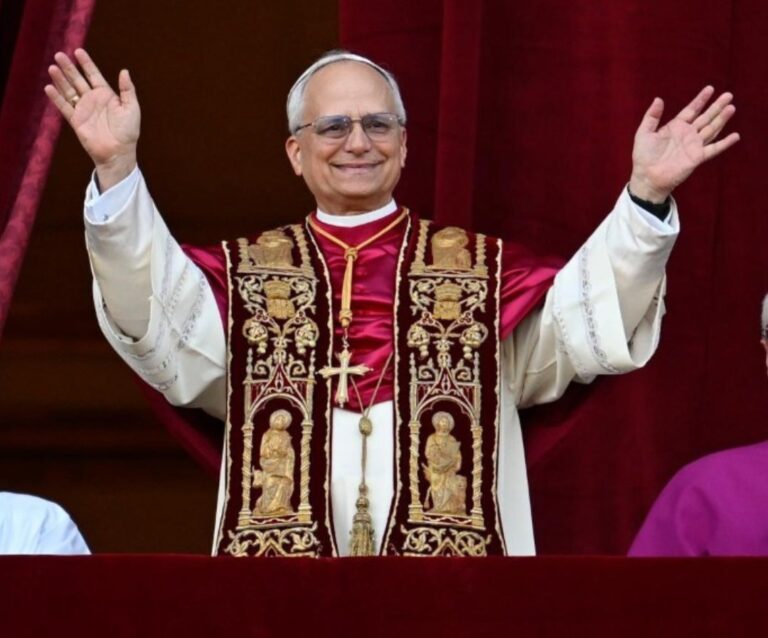
POPE Leo XIV on Sunday, June 8, urged believers to reject what he described as an exclusionary mindset, which he linked to the rise of nationalism globally.
Although he didn’t mention any specific events or leaders, his message emphasised the need for openness, calling on people to open borders within their hearts and minds.
The homily, delivered during a Pentecost Mass in St. Peter’s Square, came a month after the Chicago-born Robert Prevost became pope. Before the service, the 69-year-old pontiff greeted an estimated 80,000 worshippers as he toured the Square in his popemobile under sunny skies.
“The church must open the borders between peoples and break down the barriers between class and race. People must move beyond their fear of those who are different. The Holy Spirit breaks down barriers and tears down the walls of indifference and hatred.
“Where there is love, there is no room for prejudice, for security zones separating us from our neighbours, for the exclusionary mindset that, tragically, we now see emerging also in political nationalisms,” he said.
Pope Leo XIV did not directly address physical borders in his message, but his emphasis on breaking down walls and barriers seemed to allude to policies like those of United States President Donald Trump, who has taken a hard stance against illegal immigration.
He also emphasised that the Holy Spirit provides a remedy for broken relationships tainted by distrust, prejudice, or the desire to control others.
The Pope referenced recent instances of femicide, saying that such violence often stemmed from relationships driven by domination and power imbalances.
Addressing the impact of technology, Leo warned that while people are more digitally connected than ever, many are becoming increasingly isolated. He described this phenomenon as a paradox of constant online presence without genuine human connection, where individuals are surrounded by others but still feel alone.
Since his election in May, the pope has consistently called for unity and reconciliation and has expressed readiness to mediate international conflicts. This included his first official phone call with Russian President Vladimir Putin, as part of efforts to foster peace.
Throughout his messages, Pope Leo has maintained a strong focus on breaking barriers and building understanding between individuals and nations.