Home Blog Page 2645

Shekau ‘set to release videos on Chibok girls and NAF helicopter’

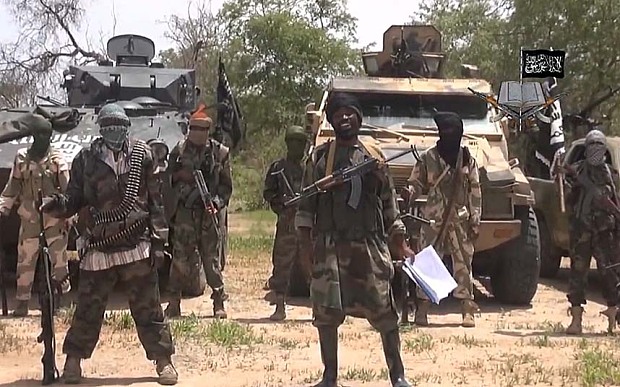
Boko Haram is planning to release fresh videos about the abducted Chibok schoolgirls and the Nigeria Air Force helicopter that crashed last week, says Ahmed Salkida, a journalist with extensive knowledge and coverage of the insurgents.

Salkida made this known on Friday via his verified Twitter handle.

“Sources close to the Shekau led-terror group (Boko Haram) say they shall be releasing a string of videos on the abducted Chibok girls, Police wives and crashed helicopter,” Salkida wrote.

Salkida said Boko Haram claims to have gunned down the helicopter “amid unrelenting push by the Army”.

Authorities of the Nigeria Air Force announced that one of its helicopters suffered a mishap on Monday, January 8, but said no life was lost in the incident.

“The incident which occurred today, (Monday), 8 January 2018, resulted significant damage to the helicopter; there was however, no loss of lives as a result of the incident,” Olatokunbo Adesanya, NAF’s Public Relations and Information, had said in a statement .

“The Chief of Air staff, Air Marshal Sadique Abubakar has immediately directed the constitution of a board of inquiry to determine the exact cause of the incident in line with global best practices.”

That same Monday, Sani Usman, Director of Army Information, issued a statement claiming that “Boko Haram terrorist group factional leader, Abubakar Shekau, is in a terrible state of health and not much a threat as he is now a spent horse, waiting for his Waterloo”.

Usman also said that “Abu Mus’ab Albarnawiy, (another factional Boko Haram Leader) who has been busy deceiving and recruiting gullible persons, especially misguided youths into his fold, will soon be captured”.

Days earlier, on January 4 precisely, the Army had said troops of Operation Lafiya Dole carried out a successful offensive on the insurgents, killing many of them and rescuing dozens of captives, among whom is Salomi Pagu, one of the kidnapped Chibok schoolgirls.

The Army has a history of releasing statements that have been contradicted by the protagonists of the incidents, the most recent being its disputed claims on the casualty tolls of a Boko Haram attack on a World Food Prograame (WFP) convoy and another on UNIMAID lecturers and NNPC staff prospecting for oil in Borno State.

‘Are we a shithole country?’ — Botswana queries US ambassador over Trump’s ‘irresponsible’ comment

0


The Government of Botswana has queried the Ambassador of United States of America to the country over comments attributed to Donald Trump, which described African countries as “shithole countries”.

According to a statement by Botswana’s Ministry of International Affairs and Cooperation, the US Ambassador was asked to “clarify if Botsana is regarded as a ‘shithole’ country, given that there are Botswana nationals residing in the US. and that some… may wish to visit the US”.

“The Government of Botswana is wondering why President Trump must use this descriptor and derogatory word when talking about countries with whom the US has had cordial and mutually beneficial bilateral relations for so many years,” the statement read in part.

The current US Ambassador to Botswana is Earl R. Miller, according to the website of the US Embassy in Gaborone, the capital of Botswana.

“Botswana has accepted US citizens within her borders for so many years, and continues to host US guests and senior government officials, including a congressional delegation that will come to Botswana by the end of this month; that is why we view the utterances of the current American President as highly irresponsible, reprehensible and racist.

“Botswana calls of SADC (Southern African Development Community), the African Union and all other progressive nations across the world to strongly condemn the comments made by President Trump.”

Trump allegedly made the remarks in the White House when some members of the US Senate came to brief him on a newly-drafted immigration bill being considered by a bipartisan group of senators.

“Why do we want all these people from Africa here? They’re shithole countries … We should have more people from Norway,” Trump was quoted as saying.

The White House did not deny Trump’s comments but explained that the President supports immigration policies that welcome “those who can contribute to our society”.

The United Nations condemned the comments attributed to Trump, with Rupert Colville, UN human rights spokesman, saying: “There is no other word one can use (to describe the comments) but racist.”

“You cannot dismiss entire countries and continents as ‘shitholes’, whose entire populations, who are not white, are therefore not welcome.”

El-Rufai: It’s impossible to retrain mere illiterates… these teachers are gone


Nasir el-Rufai, Governor of Kaduna State, says the over 21,000 unqualified teachers sacked recently by his administration are “mere illiterates” who have no business being teachers in the first place.

He was responding to critics suggesting that instead of sacking the ‘unqualified’ teachers, the state government should retrain them.

Those that are suggesting retraining have not read our various statements on this issue. This administration of the APC in Kaduna State has already spent N650m on in the last two-and-a-half years since we took office,” el-Rufai said on Thursday night during on interview with Channels Television’s News at 10.

“We have trained teachers, we have brought funds from the global partnership for education to train teachers. But you cannot train an illiterate to be a teacher.

“If a person is a mere illiterate, you cannot train him to be a teacher. You can only train someone who has the basic skills to be better. The situation we have in which people cannot answer questions that Primary Four people can answer, it means that they are incapable of being trained. Those that are talking about training do not get it.

“These ones that are going are untrainable. They can do something else with their lives, and we will do everything to give them the opportunity to do so but not teaching.

“Some that were hired even with NCE certificates, some even with degree certificates in education, failed the test which is a big shock to me because we posted these test (results) online for everyone to see the questions that those so-called teachers were failing; just to make the point that these people are beyond redemption.

“We cannot train them to be teachers. We can train them to do something else – absolutely, but not teaching. They are not qualified to teach.”

The Nigeria Labour Congress (NLC), led by Ayuba Wabba, its National Chairman, embarked on a massive protest in Kaduna on Thursday to register displeasure with the teachers’ sack, but el-Rufai said he expected such resistance.

“We knew there would be a resistance but for us, education is one of the foundational components of building a modern society and we are not going to compromise on the quality of education and the quality of education relies on the quality of the teacher more than any other tool or infrastructure,” he said.

We have already taken second, third and fourth looks at this situation. We have studied what previous governments have tried to do and there is no going back.

“I have absolutely no doubt in my mind that we are not going to reverse our decision; these teachers are gone, we are going to employ new teachers.

“The process of testing and interviewing the 25,000 teachers we are hiring to replace the 21,780 that we have fired is on, and we are going to go ahead with it.

“As I said, it is the children of poor and ordinary people of Kaduna State that go to public schools. We are committed to ensuring that they get decent public education as I got it when I was growing up in Daudawa in Katsina State.

“I went to a public school and I got decent education. I was orphaned at the age of eight but I got free, basic education and that is why I am where I am. I intend, at whatever price, at whatever cost, to bequeath that to children of ordinary people in Kaduna State. There is no going back.”

Why reporting terrorism is an unsavory beat in Nigeria

0


By Ahmad Salkida

A beat reporter provides much more than the what, who, when, where and why of reporting his or her corner of the world. If the reporter is good, indeed diligent at what he does, it shows in the steps he takes to go beyond the superficial, delves in deeper, enriching the reader, the viewer and the public who are invested with the right to know.

Journalism is a service that promotes understanding of issues. That was what I aspired to be when I started my journalism career over 17 years ago. When I started with the ‘Boko Haram’ story, in July 2006, the group was only known and mostly referred to as ‘Almajiren Mallam Mohammed Yusuf,’ or the followers of Mohammed Yusuf, I also aimed at making a mark.

In Nigeria, at a time when beat reporting, “a genre of journalism that can be described as the craft of in-depth reporting on a particular issue, sector, organization or institution over time,” is at its lowest form. A group of Nigerian editors summoned me last year “out of concern for my well-being” asking that I quit what they called my “fixation with terrorism reporting”. Strangely this was not long after I had similar meetings with a section of security officials that asked me to quit writing and tweeting.

According to these acclaimed professional journalists, my fixation on conflict reporting in the Lake Chad basin, a territory eclipsed by terrorism, climate change and famine, bordering four countries, Nigeria, Niger, Chad and Cameroon, was counterproductive. These editors advising me were actually doing this, according to them, with every sense of responsibility, to save me from my “chosen path of self perdition”.

Many people, especially journalists, have called me arrogant, Boko Haram sympathizer, Boko Haram spokesperson, borderline journalist, and have also referred to my professional doggedness as “Salkida complex.” Why all these, you may ask? Because I chose to focus on a single beat 10 years into my journalism career.

My reports frequently brought out the positions of primary sources that often rendered inaccurate generally held beliefs about such subjects. As a reporter, I believe that growing sources in strategic platforms is critical in obtaining information that can make a difference in reporting as well as to society. This has played out serving the greater purpose over the years in my reporting career. I became the first reporter to cultivate a high level network of sources within the insurgency and my reports warned of impending danger long before the crisis sprang out of control.

Theophilus Abbah, one of my former editors and currently the Programme Director, Daily Trust Foundation, a platform that provides data solutions and journalism training, assured that I was on the right path and did not need to be swayed by the cynical comments about me in the public domain. Politicians keen on selling new narratives and those eager to defend their strongly held turf took sides over the revelations that my reports made.

When the pressure became unbearable and I self exiled in the UAE, the same politicians who sided with my revelations and rode on the back of those revelations to power, began to treat my work as the most inimical and criminal activity. They even declared me a wanted person before the law.

Mr. Abbah recounts to me that “in 1999, he was at the Indian Institute of Mass Communication (IIMC) in New Delhi for a training in Development Journalism. One of the instructors was a journalist with Times of India. He had covered the Indian parliament for 40 years as at 1999. He was so knowledgeable about the Indian parliament that he could analyse trends in the legislature and predict how they would turn out. He was more experienced than many Indian lawmakers, and many sought his opinion on contemporary issues.”

Emeka Mba, former Director General of NBC, warns that for Nigeria to make its mark, it needs reporters with a quality sense of “professional rigor and insight.” Farooq Kperogi, a Professor of Journalism based in Atlanta, spoke on the little appreciation of specialized reporting within the media in Nigeria, “I haven’t conducted a formal study to be able to make definitive pronouncements, but anecdotally, it seems to be the case that journalists are not allowed to stay in a beat for an extended period. US journalists tend to stay longer in their beats than Nigerian journalists. It’s true, though, that even in the US there are occasions when editors think it’s desirable to pull some reporters off a beat, usually when such reporters are getting too cozy with the people they’re supposed to report, when they, as it were, “go native,” that is, be so immersed with their sources that they lack the critical reportorial detachment required to report adequately.”

Was it possible that I at any point got cozy with people involved in what I reported? Not likely, because the ones always complaining were those in power and who had the wherewithal to make any reporter get adequately cozy and native, added to the supporting bands of journalists on the payroll of these politicians that kept pushing the narratives of the politicians.

What many do not know is, I have been threatened by the insurgents 13 times since 2011, most recently on the 4th of January 2018, when a key leader of the so-called Islamic State warned me over my tweets that referred to the group as ‘Boko Haram.’ In 2011, I published an article “Tasking the bases of Boko Haram Islamic Faith,” while I was still a reporter with the Blueprint newspaper’s resident in Maiduguri, the article was critical of their ideology, it didn’t go well. In 2016 in the middle of efforts to free the Chibok school girls captives, where I was playing a critical role, I quoted one of the group’s leaders anonymously where he was critical of suicide bombings in the mosques and IDP camps. The group declared that my blood had become something deserving of them to spill and thereafter shot off all communications with me.

I was interrogated by the Nigerian military on several occasions over the course of my duty, they didn’t in any of these instances find anything to hold against me. I desire to be well-versed in the language(s), issues and developments in the Lake Chad region. I want to be judged by the breadth of my knowledge, as someone who reports with integrity as well as with intensity on the issues I choose to zero in on.

Sadly, the authorities who seem determined to jeopardize my career trajectory would neither allow me access to the Lake Chad region and it even got ridiculous when I was not allowed to travel to Biu to bury my mother.

This article by Ahmed Salkida was first published on salkida.com. He can be reached via contact@salkida.com or @ContactSalkida

Tears aplenty as Benue mass-buries more than 80 slain by herdsmen


It rained tears in Markudi, the Benue State Capital, on Thursday as victims of the recent herdsmen attacks in the state were buried.

Trucks conveyed dozens of coffins to the ground where a funeral service was held for deceased – more than 80 of them – most of whom were killed in an attack by armed herdsmen on January 1 and 2.

Offices, schools, banks and markets were closed, as Samuel Ortom, the State Governor, declared a work-free day in honour of the victims.

Ortom also declared a three-day mourning period for victims of the attacks.

Residents of the state expressed sadness at the unfortunate attacks, and called on the Federal Government to ensure the protection of lives and property of the people.

Some say they remain apprehensive as nobody knows when the next attack will happen, given that this is not the first herdsmen attack in the state.

“We are mourning today; we still don’t know tomorrow,” Thomas Shima, one of the residents who attended the funeral service, told NAN.

Ortom has accused a faction of the cattle breeders association called ‘Miyetti Allah Kautal Hore’ of orchestrating the massacre.

He said the group had threatened to oppose the anti-open grazing law, which was recently signed into law in Benue State.

Speaking after an audience with Buhari, Ortom said he informed the President that the “leadership of Miyetti Allah Kautal Hore had earlier threatened (the state) and I accused them directly”.

“Since June last year, I have been writing to the leadership of security agencies, that these people are a threat to our collective interest and they must be dealt with,” Ortom said.

“They must be arrested and prosecuted because we cannot allow impunity to continue to thrive.”

President Muhammadu Buhari had ordered Ibrahim Idris, Inspector General of Police, to relocate to Benue State and personally coordinate the operation to apprehend the killer herdsmen.

Video Credit: TheCable

In major cabinet reshuffle, Ambode sacks three commissioners


Akinwumi Ambode, Governor of Lagos State, has shown three former commissioners the exit door in a major cabinet reshuffle on Thursday.

Five new commissioners were also named.

The sacked commissioners are Adebimpe Akinsola, Femi Odubiyi and Anifowoshe Abiola; while the newly-appointed ones are Hakeem Fahm, Ministry of Science and Technology; Ladi Lawanson, Ministry of Transportation; Segun Banjo, Ministry of Economic Planning and Budget; Olayinka Oladunjoye, Ministry of Commerce and Industry and Hakeem Sulaiman, Communities and Communications.

According to a Statement by Tunji Bello, Secretary to the Lagos State Government, the move is aimed at creating “a new vigour and vitality for service delivery”.

The new commissioners will undergo a screening process by the State House of Assembly before fully assuming their duties.

All the other commissioners were redeployed to other ministries while special assistants to the governor were assigned new portfolios.

They include Rotimi Ogunleye, from the Ministry of Commerce and Industry to that of Physical Planning and Urban Development; Steve Ayorinde, from Ministry of Information and Strategy to Ministry of Tourism, Arts and Culture; and Babatunde Durosinmi Etti, from Ministry of Wealth Creation to Ministry of the Environment, among others.

Benjamin Olabinjo, former Special Adviser to the Lagos State Governor on Commerce and Industry, is now the Special Adviser on Civic Engagement, while Kehinde Joseph moved from Special Adviser Civic Engagement to become Special Adviser Housing.

In the same vein, Deji Tinubu, Special Adviser Sports, now becomes Special Adviser to on Commerce and Industry, while Anofiu Elegushi moves from Special Adviser Transport to become Special Adviser, Central Business District.

Maimuna Aliyu pleads not guilty to fraud charges, gets N10 million bail

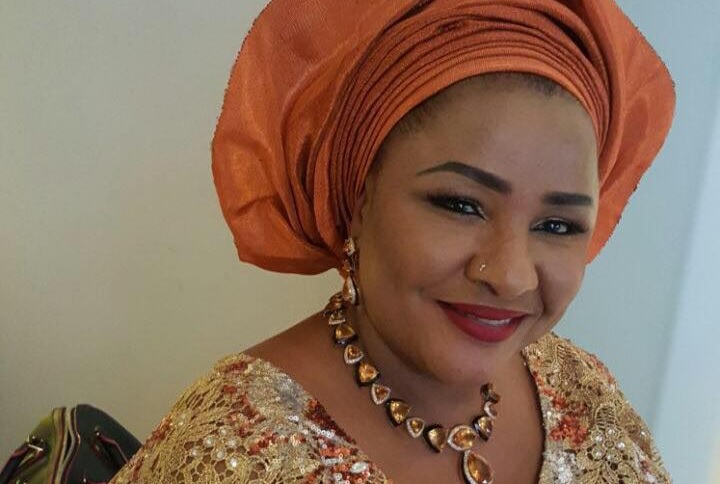
Maimuna Aliyu, former Executive Director of Aso Savings and Loans Plc, has pleaded not guilty to a three-count corruption charge brought against her by the Independent Corrupt Practices and Other Related Offences Commission (ICPC).

Aliyu, whose nomination into the board of ICPC was stepped down after the ICIR reported that she was being investigated for corruption by the same commission, was arraigned before Justice M. A. Nasir of the FCT High Court, Jabi, Abuja, on Thursday.

She was accused of defrauding Aso Savings and Loans Plc, a microfinance bank, of a total of N57 million.

The ICPC alleged that Aliyu “used her position as the Executive Director of Aso Savings and Loans Plc, to confer corrupt advantage upon herself when she received the sum of N57million, being the proceeds of the sale of three plots of land in Jahi District, Abuja, and failed to remit the said amount to Aso Savings”.

Aliyu is also accused of making false statement to ICPC officials, “thereby contravening the provisions of Sections 19 and 25 of the Corrupt Practices and Other Related Offences Act”.

She pleaded not guilty to all the charges, and Joe Gadzama, her counsel, urged the court to grant her bail on self-recognition and also on the basis that she is a first offender.

But the presiding Judge, in her ruling, granted the accused bail in the sum of N10 million and two sureties in like sum who must also be resident within the jurisdiction of the court.

The matter was adjourned to March 12, 2018, for commencement of hearing.

Aliyu is facing another charge, alongside Maryam Sanda, her daughter, who is accused of stabbing her husband, Bilyamin Bello, to death in November 2017. She was joined in the suit on allegations that she tampered with the crime scene before investigators arrived.

Sanda, the alleged murderer, has been remanded in prison and the case adjourned to February 5, 6 and 7 for continuation of hearing.

Letter to a Nigerian voter — give that red card with your story

0


By Timi Olagunju

Over the past years, I have had the rare privilege of observing two sides of the leadership pendulum; military leadership and democratic leadership. I remember June 12, 1992, when, below our house, I saw people stand in a long queue in front of SDP (Social Democratic Party) to exercise their fundamental human rights to vote.

I grew up listening to my grandfather talk about his political life during Awolowo, when he served as Constituency Party Secretary. But like many of my peers, I never really had the opportunities my grandfather had, and never really saw democracy practised fully for until 1999.

Unlike most kids, I was raised by my mother later in life, and we didn’t have all but we had love. I remember at age 10, when things were rough and I had to sell ice-cream on the streets of Akoka. I remembered those times when I had to serve as the Acting Editor of St. Finbarrs’ College Editorial Board, and as Acting Library Prefect for a while.

Fast-track through the university, I remembered when I ran for Chairman, Nnamdi Azikiwe hall, University of Ibadan, and the first news that came out from the Press was that I was too young to lead the largest undergraduate hostel and consequently provide leadership for the university. In fact, the exact title was “Timi is Timid”. Stereotyping me because of my so called “chronic youth” compared to those who lead before me.

Despite all that, I emerged in that election victorious by a landslide victory, through a campaign of love, and I was eventually nominated for the UI ‘JCI’ award for outstanding leadership of Halls and Faculties, as well as the awarded the Hon. Chris Asoluka Award for Most Politically Productive Student in the University of Ibadan and the Professor H.O. Nottidge Award for Selfless Leadership, after my tenure.

Little did I know that my childhood circumstances, academic training, and leadership engagements, built in me a consciousness and hunger for empathetic leadership. It built in me a passion for advocating institutional opportunities (and security) for the young, the elderly, and vulnerable.

This has influenced my work as a lawyer, development practitioner, and leader for nine years. For me, gathering the fire of my story within me and boldly working to run for the House of Representatives (in a moneybag-driven polity) in the coming elections (and shaping the conversation) is how I intend to give my bold “RED CARD” to all that isn’t deserving for Nigeria and Nigerians.

But this is not about me, it is also about you. This is your story too – a story through the unknown, the disappointments, and the successes. That story is what the new Nigeria needs. That story is what you need to not only get your PVC but also join political parties from the ward and local government levels.

You might say, well, “politics not me”, but if you are tired about the options political parties throw at us to choose from, especially the major ones, then join and get more people joining. By the time we all get resourceful people into the leadership at the party levels, then we are one step closer to getting a new leadership for a new Nigeria; the sort of leadership that will do away with colonialist thinking and embrace an African-centric strategic thinking and policies.

Interestingly, such leadership will have to come from a critical mass of emerging young leaders starting with you and me.  Although, I believe the emerging leaders must come from a blend of the young and the old; mostly from the young, energetic, and innovative. I do not believe in generational shift alone, rather, I believe in generational co-mingling, where the young and old support a new Nigeria through innovation and experience respectively.

The leadership we had after independence did not engage our colonialist programming and process of development; whether in politics, education, or even as little as it sounds ‘our formal clothings’. For example, imagine the economic and creative benefit to the fashion industry in Nigeria, if after independence, Nigeria had abolished the mundane wearing of suits and tie (in a sunny weather) inherited from the colonialist, and embraced traditional Nigerian attires, as part of the official and corporate clothing. Further imagine the economic benefits of re-designing our education, our style of government, and our laws.

Therefore, if you desire a new Nigeria, give a “RED CARD” by getting involved and supporting those getting involved. Let the story of suffering, pain, discrimination push you! For Nigerians in the diaspora, why not find ways to support us against the money bags. Our collective resources can trump and triumph over their ill-gotten resources in the coming elections. You can support and make donations to my electoral campaign on votetimi.com/donate and let’s make it happen together.

Timi Olagunju, a technology lawyer and design thinking consultant, is an aspirant for the Federal House of Representatives, Ibadan North Constituency. He can be reached on timithelawgmail.com or on www.voteTimi.com, Twitter/Instagram: @timithelaw.

Witness narrates how Justice Ngwuta hid cash in his house before DSS raid

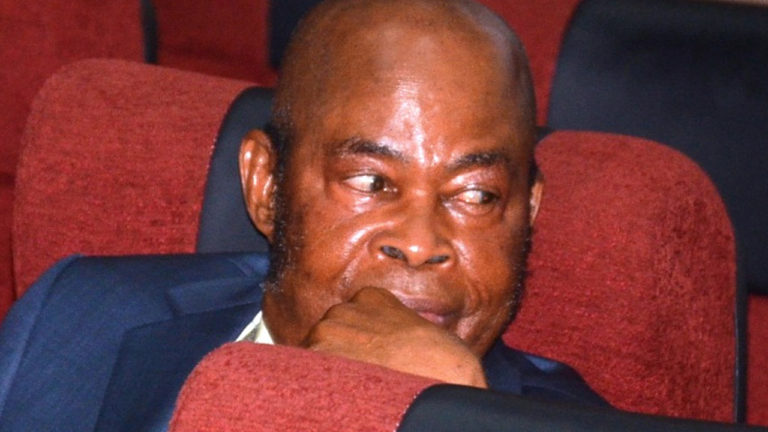
The corruption trial of Sylvestre Ngwuta, a Justice of the Supreme Court, continued on Wednesday with a prosecution witness narrating how Ngwuta instructed his boy to remove incriminating evidences from his house in Abakiliki, Ebonyi State, before law enforcement agents could search the place.

Ngwuta is one of the judges whose residences were raided by operatives of the Department of State Services (DSS) in October 2016.

He was accused of corruption and arraigned before Justice John Tsoho of the Federal High Court, Abuja, and was granted bail  in the sum of N100 million.

At the resumption of trial on Wednesday, Ibrahim Ndakpoto, a prosecution witness, tendered the sum of N4 million before the court, being money allegedly recovered from Ngwuta’s house in Abakiliki.

Ndakpoto, a DSS official, told the court that Ngwuta had called one of his boys named Linus Chukwuebuka and instructed him to remove all the cash and exotic vehicles in the building so that nothing would be found there should the authorities decide to conduct a search.

“Chukwuebuka told me that Justice Ngwuta called him and asked him to go to his bedroom and remove the documents and the bag containing the money and hide them because if the DSS should lay eyes on it, he would be in trouble,” Ndakpoto said.

“He also told us that Ngwuta asked him to move some cars, a BMW, a Wrangler jeep and a Hummer jeep and that he further asked him to disappear afterwards so that he will not be arrested.”

Justice Tsoho ordered that the money tendered as evidence be counted right there in the courtroom to ensure that it was complete.

The case was adjourned till Thursday, January 11, for continuation of hearing.

After his house was raided, Ngwuta wrote an open letter to Mahmud Mohammed, then Chief Justice of Nigeria, accusing Rotimi Amaechi, Minister of Transportation, and Ogbonnaya Onu, Minister of Science of Technology, of orchestrating his ordeal.

Ngwuta said Amaechi and Onu had vowed to get back at him for his refusal to cooperate with them and pervert justice in some electoral cases that he presided over.

Fayose encourages local hunters to ‘defend’ Ekiti people against herdsmen


Ayodele Fayose, Governor of Ekiti State, has directed hunters in the state to defend Ekiti and its people against the marauding and killer herdsmen.

After meeting with the hunters on Wednesday in Ado Ekiti, the state capital, Fayose tweeted that he would not run to Abuja for help over the problem of the herdsmen.

Rather, he said he had told the local hunters not to take laws into their hands but to defend Ekiti and its people.

“On the herdsmen’s menace, I met with local hunters in Ekiti State today and charged them to protect the people since I won’t run to anyone in Abuja for help that is not available. They must not take laws into their hands, but they should defend Ekiti & its people,” Fayose said.

Reacting to the attack on Mopol 13 in Benue State, where two officers were killed, he wondered whether those who carried out such dastardly act could be regarded as herdsmen.

“Just now, we heard news of the herdsmen attacking the camp of Mobile policemen, Mopol 13 in Benue, killing two officers by slitting their throats. Do you call people who could invade the camp of mobile policemen in a guerilla manner & overpower armed Mopol mere Fulani herdsmen?

“What is happening in Benue and other middle-belt States is more than a strive between herdsmen and local farmers, it has gotten to the level of terrorism and ethnic cleansing. FG must act now.”