Home Blog Page 2647

No more ’empathy’… 150 Borno doctors issue 21-day strike ultimatum


A total of 150 medical doctors in Borno State have issued a 21-day ultimatum to embark on an indefinite strike over non-payment of allowances by the government.

The doctors are those in the employ of the Borno State government, Bukar Abbagana, Chairman of the Medical Doctors Association in the state disclosed this on Monday at a press conference.

The association, he explained, unanimously resolved to embark on industrial action following failure of the state government to settle backlog of unpaid allowances.

Abbagana was quoted as saying that the government owed over N300 million arrears of skipping allowances to 150 doctors in the past four years.

He said that the association had not joined the nationwide strike before now, based on humanitarian gesture and security challenges in the state.

“Doctors out of loyalty and empathy for the people, refused to down tools with the belief that the state government will extend similar gesture to them,” he said.


READ ALSO:


“Four years down the line, there was no single acknowledgement for the correspondences to the government, and all avenues for dialogue were exhausted.”

He said the association issued a 21-day ultimatum between January 8 and February 5 to enable the state government meet their demands.

Abbagana disclosed that the association had registered members in secondary and primary health facilities in the state.

He noted that the association was mindful of the grave consequences of such industrial disharmony on the people, and called on individuals and organisations to prevail on the government to avert the strike.

Malami tries — and fails — in court mission to stop Senate from probing Maina’s recall


Abubakar Malami, Attorney-General of the Federation, has asked the Federal High Court in Abuja to stop the Senate from further investigating the circumstances that prompted the reinstatement of Abdulrasheed Maina, former Chairman of the Pension Reforms Task Team.

According to court papers seen by TheCable, Malami is arguing that the Senate lacks the competence and legitimacy “to investigate the employment, attendance at work, disengagement, reinstatement and or promotion of a civil servant”.

Malami is believed to have kick-started the series of actions that culminated in Maina’s recall. This was attested to by Winifred Oyo-Ita, Head of Service of the Federation, during a hearing by the House of Representatives into the matter.

But Malami has consistently denied authoring or accenting to any letter requesting or approving the reinstatement of Maina.

Malami’s recent law suit follows the decision of the Senate to begin its own probe into the Maina recall saga.

In the suit, Malami asked the court to declare “that the National Assembly lacks the legislative competence to investigate the employment, attendance at work, disengagement, reinstatement and or promotion of a civil servant which are matters exclusively within the purview of the Federal Civil Service Commission under the Constitution of the Federal Republic of Nigeria1999 (as amended)”.

Malami maintained that “the power of investigation vested in the national assembly by section 88 (1) of the Constitution of the Federal Republic of Nigeria 1999 (as amended) is limited and such that can only be exercised within the confines of Section 88 (2) of the Constitution of the Federal Republic of Nigeria 1999 (as amended)”.

As the chief law officer and Minister of Justice of the Federation, Malam said he is “bound to ensure compliance … with the express or implied contents of extant Judgements and Orders of competent courts in Nigeria”.

“The defendant (i.e. the Nigerian Senate) cannot constitute itself into a quasi-appellate court, tribunal or panel with a view to reviewing any executive action taken in compliance with the adverse judgment in the said Suit No: FHC/ABJ/CS/65/2013,” he said.

However, the ex parte motion was stuck out by Justice Binta Murtala Nyako, who went ahead to order the applicant‎ to put the National Assembly on notice as there was no urgency to grant it.

The motion on notice will now be heard on January 15.

Maina is currently wanted by the Police and EFCC over allegations of pension fraud amounting to over N100 billion.

He is believed to have fled to Dubai in 2013, remaining there until last year when he was secretly recalled and reinstated into the civil service.

Following an uproar from the public over the controversial reinstatement, President Muhammadu Buhari ordered that Maina’s sack.

He also ordered the office of the Head of Service to explain in writing how and why Maina was reinstated in the first place.

The explanation had since been submitted to the Presidency but nothing else has been heard of it.

Meanwhile, Maina has released a number of video clips from his hiding place, asking Buhari to provide an appropriate atmosphere to enable him come forward with the real truth behind the pension fraud saga.

Is God venting his anger on Buhari through Tunde Bakare?

0


Sooner or later, Tunde Bakare, fiery preacher and founder of The Latter Rain Assembly, will be running for president. This may be 2019 or 2023; it may even be 2027. After all, the man himself stated that in asking him to run, God had told him it would be done “at the appointed time”.

Still, we know Bakare is unlikely to run in 2027. By then he would be 73 — one more than President Muhammadu Buhari’s age when he assumed office in 2015. Given his Nigeria-needs-an-energetic-President comment in the heat of Buhari’s lengthy medical trip to the UK in 2017, and given his reputation as man of integrity whose word is his bond, we can mathematically calculate Bakare’s presidential chase to happen before 2027.

We can’t expect it to be 2023, either. If that was the plan, he would have ‘tarried a while’ before regaling the public with details of his private conversation with God, especially knowing that the man to whom he was vice presidential running mate in 2011 is all but set to seek re-election next year. By inference, in 2019, Bakare will (assumption purely mine) contest against the man he once described as “carrying a dimension of grace that if you deal with him, and betray him, you pay with your life”. A potential Buhari-ally-turned-opponent? What a twist!

GOD MUST BE LIVID
Bakare’s announcement of God’s mandate for him to run has been greeted with skepticism from no less a quarter than his immediate constituency, the Christendom. Many have asked: did God actually nominate the pastor as a future presidential aspirant? Some even quoted Bible passages — such as John 18:36, John15:19 and Luke 4:43 — supposedly separating religion from politics. But really, no one should doubt that God spoke to Bakare; no one — because God must be terribly wicked not to be worried about the state of the country under Buhari; God must be heartless not to be angry about the sufferings of his people in the hands of a man who was welcomed to office by enough goodwill to last a generation of presidents. If God is real, and he is not discussing the future of this country with some of his servants (if they exist), then there can no longer be any hope for Nigeria.

Take, for instance, the series of brutal killings in Benue State. Herdsmen have struck at least three of the seven days so far in the new year, killing close to 100 and displacing 40,000, yet it makes no meaning for the President to personally visit the state, have firsthand assessment of the crisis and offer soothing words to families of victims. His supporters would argue that his visit would not revive the dead, but nothing is more reassuring to the bereaved than seeing the country’s chief security officer visit affected zones and physically pledge his determination to halt the loss of lives. Meanwhile, the same President could embark on a train ride from Rigasa to kakuri, on the outskirts of Kaduna, to commission new rail vehicles for the Kaduna–Abuja train service. He chose an inanimate project — transport, business — over human life, and God must be livid.

SEARCHING FOR THE RIGHT LEADER
God must be tired of Buhari; and if in his wish for a better Nigeria he indeed chose Bakare, he probably must have figured an answer to the power of Nigerians to self-implode, to use their hands to alter their destiny for the negative. This is because majority of the electorate will never judge Bakare on the merits of his leadership strengths versus weaknesses but on the basis of his religion. His popularity with the pulpit will work against him when it matters most; there will always be talks that a Bakare presidency is an attempt to Christianise Nigeria. But is Bakare the kind of President Nigeria needs? Absolutely.

Ironically, his number-one disadvantage is also his strongest asset. Anyone who has founded or worked at a start-up will understand that building The Latter Rain Assembly to the internationally-acclaimed Christian centre it is today is no mean feat. What he lacks in political office holding he gains in honing his leadership experience over decades of raising his church.

Bakare’s passion for Nigeria is contagious — that kind of infectiousness neither Buhari nor Goodluck Jonathan can boast of. He is the kind of leader who can inspire hope. You can feel it every time he speaks. Should a Bakare receive half the goodwill Buhari had in 2015, he is the kind of leader who can double it up by stirring the people to believe this country can still be useful to its citizens.

He is a man who cannot be bought. Time after time, he has proven this. In 2010 when President Goodluck Jonathan offered a $50,000 ‘transport fare’ of a bribe to the visiting Save Nigeria Group (SNG), Bakare and co turned it down. In 2014, shortly before he turned 60, Coscharis Motors (believed to be acting on Jonathan’s instructions) sent him a Rolls Royce Phantom, but he rejected it, saying: “I saw a button. They said: ‘It is an umbrella, sir. It is on every door in case it is raining, you just push it and the umbrella comes out.’ I said: ‘Na wa o.’ Then I said: ‘Oya, leave this place.’ Where is the road that I will ride it upon? My heart is not in things like this.”

If truly we say we are tired of corrupt leaders, tired of seeing the same old faces who have dominated our political space for decades, of leaders lacking in integrity and moral presence, of ex-PDP-turned-APC leaders or ex-APC-turned-PDP leaders, of humble political-office aspirants who become arrogant after ascent to power, then we must, with a very open mind, welcome the likes of Bakare to the race. There are no guarantees that he would win; he admitted that much himself when he said God told him to “run”; he never said God assured him of victory.

Whether Bakare wins or not, his potential entry to the presidential race is big evidence of God’s anger that Buhari has ultimately flattered to deceive. This may help Buhari to take a long, hard look at himself and make the most of his remaining 16 months in office. Or it may mean that should he be booted out of office in 2019 on account of his poor performance, he would look back at a moment like Bakare’s ‘declaration of presidential ambition’ and say to himself: “God gave me a sign”!

Soyombo, Editor of the International Centre for Investigative Reporting (ICIR), tweets @fisayosoyombo

Hassan, a captain in the league of Abu Ali, ‘killed by Boko Haram’


The Nigerian army has lost another outstanding soldier in the ongoing counter-insurgency operation in the North East. He is Munir M. Hassan, a Captain.

According to Ahmad Salkida, a journalist who has covered the Boko Haram insurgency over the years, Hassan was killed on Friday during an offensive against the insurgents, alongside some other soldiers.

Salkida said Hassan belonged in the class of the late Abu Ali, the brave Army Colonel who was killed in battle in November 2016.

“The ongoing ‘Operation Deep Punch,’ the NA (Nigerian Army) lost some personnel amongst whom is Capt MM Hassan of the artillery corps based in Damboa,” Salkida tweeted on Sunday.

“He was a brave, disciplined and a highly motivated Officer; that earned him the title — Sarkin Yakin Damboa by colleagues and the civil population.

“Capt Hassan was killed two days ago. His end is ‘being mourned all over the theatre’ as he was always assigned ‘difficult tasks’ to different areas to assist soldiers.

“Military sources confirm the insurgents are witnessing ‘unprecedented pressure’, with the operation Deep Punch.

“He is in the same league with Col. Abu Ali. Capt. MM Hassan is a soldier’s soldier. His colleagues pay tribute and local residents described him as ‘kind and humble’.”

Capt. Hassan in a handshake with Kashim Shettima, Governor of Borno State

The Army has not issued an official statement on the current development, though pictures of Friday’s attack on the insurgents were shared on its Twitter handle.

The army described the operation as recording tremendous successes, but it said nothing about the casualty toll on its side.

“Gallant troops a dealt decisive blow on the Boko Haram terrorists by inflicting heavy casualty on them and capturing the … high calibre weapons and equipment from the Boko Haram terrorists in Sambisa Forest,” the army tweet read.

‘Eagle-eyed’ troops ‘kill’ Don Wanni, ‘mastermind’ of Rivers New Year’s Day slaughter

The Nigerian Army says it has killed Prince Idibia, also known as Don Wanni, who is believed to be behind the New Year’s Day attack in Omoku, Rivers State, where at least 23 were killed.

Aminu Ilyasu, spokesman of the 6 Division Nigerian Army, Port Harcourt, made this known in a statement on Sunday, narrating how Don Wanni had relocated to Enugu after the attack.

Ilyasu recalled that security operatives had raided Don Wanni’s Port Harcourt residence in November, but he managed to escape, leaving behind several arms, ammunition and charms, which were recovered by the authorities.

Following intelligence information, a combined team of soldiers and operatives of the Department of State Security (DSS) traced the suspect to the neighbourhood in Enugu where he had settled among unsuspecting citizens.

According to the statement, Don Wanni was already planning another attack in Omoku, from his new base in Enugu, before luck ran out on him.

“Don Wanni masterminded the despicable New Year Day’s mayhem in Omoku in which he led his notorious gang of criminals to murder 23 peace-loving citizens of Omoku when they were returning from Cross Over Service at about 1:30am on Monday 1st January 2018,” the army statement read in part.

“Intense surveillance activities on him and his gang by the Department of State Services (DSS) Rivers State Command revealed that after committing these atrocities he relocated to a neighbourhood within Enugu Town in Enugu State where he rented an apartment and started living among unsuspecting neighbours within the community.

“From the relative safety of his newly-rented apartment, Don Wanni was already perfecting plans to wrought another mayhem in Omoku, in which he was to attack churches, schools, Army and Police locations and the residences of the generality of the already traumatized people of Omoku.

“However, following his successful geo-location to his new Enugu neighbourhood hideout by the DSS Rivers State Command, a combined team of troops of 82 Division Nigerian Army Enugu and personnel of DSS Rivers State Command raided the hideout to arrest him and his other accomplices.

“Incidentally, on sensing that the combined team was closing in on his residence, Don Wanni, his second-in-Command (Ikechukwu Adiele) and another gang member (Lucky Ode) attempted to escape through the back exit of the apartment and were shot down by the eagle-eyed troops in the process.

“One of them died on the spot while the other 2 who sustained gunshot wounds eventually died while being evacuated for medical attention.”

The statement added that their bodies were brought back to Port Harcourt and handed over to the Rivers State Police Command for further action.

When the police raided Don Wanni’s home in November, items found there included 10 human skulls and decomposing bodies.

In June 2016, Don Wanni, and his cult group laid down their arms and accepted the amnesty declared by Nyesom Wike, the Rivers State Governor, but they later reneged and went back to crime.

Also in November, there were rumours that Don Wanni was killed in a shootout between his gang and members of the local vigilante group known as OSPAC, but it turned out to be a mere farce.

Jonathan, Buhari, or Obasanjo — who initiated Abuja-Kaduna rail project?


There has been a brouhaha of sorts over the initiator of the Abuja-Kaduna rail project that was commissioned by President Muhammadu Buhari in July 2016.

This recent round of controversy followed Buhari’s train ride from Rigasa to Kakuri, on the outskirts of Kaduna, where he commissioned Nigeria’s first inland dry port on Thursday.

Before the train trip to Kakuri, Buhari had commissioned additional rail vehicles acquired for the Abuja-Kaduna rail route.

Ben Murray-Bruce, a serving senator belonging to the Peoples Democratic Party (PDP), tweeted that Buhari should thank former President, Goodluck Jonathan, for putting the rail project in place.

“I hope President Buhari remembers to say thank you to former President Jonathan for the train ride he enjoyed in Kaduna. Some of us haven’t forgotten that that achievement was ENTIRELY the handiwork of the Jonathan government. Nigeria should give honour to whom honour is due,” Bruce wrote.

But Nasir El-Rufai, Governor of Kaduna State, fired back almost immediately, saying that it was former President Olusegun Obasanjo, not Jonathan, that conceived and began the project.

El-Rufai went a step further by saying that at the time the Abuja-Kaduna rail project was commencing, Bruce was busy “organising beauty contests”, while Jonathan was just a Deputy Governor.

“Wrong Distinuguisnhed Senator! The Obasanjo administration which Jonathan was not part of, designed, raised the financing and started the EPC of the Lagos-Kano dual track-standard gauge rail system, and the Abuja Light Rail. Yar’Adua-Jonathan stalled both projects for two years!

“There is nothing to debate. Facts cannot be debated. Opinions are free. While the Obasanjo administration was conceiving the rail modernization programme, Sen Ben-Bruce was organizing beauty contests and Jonathan was a deputy governor. I am not cluelessly common-sensical!”

However, Shehu Sani, senator representing Kaduna Central, said there had never been any rail project begun by any President, leading to or from Kaduna, except the one initiated by Jonathan.

“I was born in Kaduna,I live in Kaduna, I represent Kaduna. There was never any modern rail project in Kaduna or from Kaduna except the one started ‘to near completion’ under GEJ (Goodluck Ebele Jonathan) and now completed by the PMB (President Muhammadu Buhari) Government. If there was any under any other Government, perhaps it was invisible.”

Though Sani is a member of the ruling All Progressives Congress (APC), as is El-Rufai, it is common knowledge that both men are sworn political foes.

SO WHAT IS THE TRUTH?

In February 2016, when the senate committee on the FCT, led by Dino Melaye, the committee Chairman, went on an oversight function to the site of the Abuja-Kaduna rail project, contractors handling the project told the committee that it was the Obasanjo administration that awarded the contract in 2007.

However, Etim Abak, Project Manager of the Chinese company handling the construction, said the contract was awarded without any structural design or memorandum of understanding between the two parties.

Abak told the lawmakers that the $841.645,898 million contract was signed by El-Rufai, who was the then FCT Minister, and that the completion period was 48 months.

“The contract was awarded based on conceptual design and estimates were not properly done. There was no formal design submitted and rail bridges and crossover bridges were not captured in the contract,” Abak was quoted as saying.

However, it was Jonathan’s government that almost completed the rail project, as he took train ride himself in May 2015, days before his handover to Buhari, during an inspection tour where he expressed optimism that the Buhari administration would complete it.

“I emphasised the need for train system in terms of developing an effective mass transit in any nation. Of course, this government is leaving on the 29th. The incoming government will definitely continue because this is a noble project to Nigerians especially residents of the FCT,” Jonathan said at the time.

It is now left for Nigerians to decide who is right between Murray-Bruce, El-Rufai and Shehu Sani.

Cattle-ranching is an attack on Fulani culture

0


By Fredrick Nwabufo

I am as angry as everyone else regarding the killing of innocents in Benue state by herdsmen. In fact, days ago, I expressed my disappointment in the government owing to its reluctance and silence in the face of the killings, in a social media piece.

I wrote: “In Nigeria, national security is often supplanted by ethnic security. What is considered as a security threat by one administration may be treated with levity by another administration.

“The ethnic and religious background of the leadership determines to a large extent its response to any caustic issue. This is why the Jonathan administration played possum with the Boko Haram crisis because it believed the insurgency was a problem created by the north to make the country ungovernable for him.

“Now, herdsmen have been on a resolute killing campaign since the Buhari administration came on board. But the government has done nothing, absolutely nothing to check them, except for occasional appeals to families of victims not to carry out reprisal attacks.

“In fact, this government has refused to name the killers. At best, it will call the killings a farmer-herder clash. And you wonder how the killing of 50 innocents in Benue by herdsmen is a clash.

“I understand that the thinking of the government is that herdsmen are being labelled as killers (by opposition elements and those who hate Buhari) because the president is Fulani.

“The fact is President Buhari’s deodorisation of the herdsmen menace gives vent to the suggestion that it is all a family affair.”

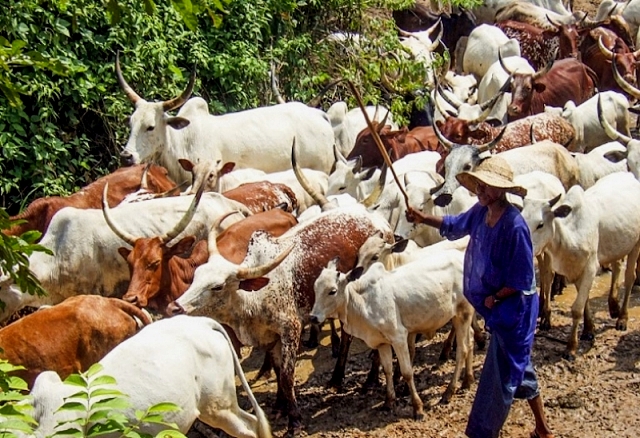
However, I ask for the thawing of citizens’ animus against Fulani pastoralists. The recent attacks have spawned trenchant calls for cattle-ranching and for an end to nomadic herding. I will explain briefly why we must proceed with caution.

Not all herdsmen are Fulani, but nomadic herding is an “eternal” heritage of the group. It is not just an occupation for the Fulani, but a tradition steeped in a long history and culture. This is the reason suggestions of cattle-ranching will always be rejected by them.

We must realise that, for the Fulani, nomadic herding is not an economic alternative, but a sacerdotal pursuit. Compelling them to set up ranches without understanding that the idea itself is a “culture shock” will not do any good.

Tradition dies hard, but it dies anyway. The Fulani could switch to cattle-ranching in the future, but I doubt it will be by compulsion or by heavy mental and verbal bombardment.

If the Fulani will ranch cattle; they must be educated as to the whys and wherefores of it, and not coerced. They must also be given time to shed the old tradition and to assimilate a new one.

As it is, herdsmen have become pariahs in the country. Some ethnic groups would want them far removed from their area. This should not be the case. In fact, demonising them will only escalate the current crisis. We should condemn the attacks, but we must not make an enemy of Fulani herdsmen.

Fredrick is a journalist. You can reach him on Twitter: @FredrickNwabufo; Facebook: Fredrick Nwabufo

Nigeria ‘secretly signs’ $20bn nuclear power contract with Russian company


The Nigerian government has signed a multi-billion dollar contract with Rosatom, a Russian nuclear company, to establish four nuclear plants in the country.

If completed, the power plants are expected to contribute a combined 4,800 megawatts to Nigeria’s electricity generation by the year 2035.

According to a special report by Premium Times, the $20 billion (about N6 trillion) contract was signed at a meeting between officials of Rosatum and the Nigeria Atomic Energy Commission, NAEC, which held in Dubai, United Arab Emirates, in October 2017.

“Anton Moskvin, Vice President for Marketing and Business Development, Rosatom Overseas (a subsidiary of Rosatom), and Simon Mallam, Chairman of NAEC, signed the agreement on behalf of Rosatom and Nigeria respectively,” the report read.

“The development of nuclear technologies will allow Nigeria to strengthen its position as one of the leading countries of the African continent,” Moskvin was quoted as saying.

“These are the projects of a large scale and strategic importance, that will determine the relationship between our two countries in the long term.”

HOW SAFE IS NUCLEAR POWER

Experts say Nuclear Power exploration has been problematic all over the world, much less in an under-developed country like Nigeria.

“First thing that comes to mind when nuclear is mentioned is radioactive wastes, our concern is, judging by the experience in fossil fuels, that we might be heading towards an environmental disaster,” said Akinbode Oluwafemi, Deputy Director of the Environmental Rights Action/Friends of the Earth Nigeria (ERA/FoEN).

“We don’t have confidence in using nuclear energy to solve our energy needs, there are safer alternatives like solar and wind.”

Similarly, Lia Simes, a Finnish journalist, is of the opinion that Nigeria’s electricity is very unstable to support a nuclear reactor.

“Nuclear power plants need good electricity grid – they cannot use the electricity they produce, but they need a lot of external electricity and so you have to constantly – non-stop – feed electricity to the reactor,” Simes said.

“It is risky, dirty and expensive. Nobody knows how the wastes will be managed in the future.”

The most recent nuclear power accident took place in 2011 in Fukushima, Japan. Following the disaster, Japanese authorities shut down the country’s 54 nuclear power plants.

As of 2013, the Fukushima site remains highly radioactive, with about 160,000 people forced to evacuate from their homes; they still living in temporary housing, and some land will be unfarmable for centuries.

Experts say the difficult cleanup job will take 40 or more years, and cost tens of billions of dollars.

Another cause for concern is the secrecy that surrounds the signing of the contract agreement, as those who should know say the Nigerian government has intentionally withheld necessary information about the issue.

“How was the choice of Rosatom arrived at?” queried Philip Jakpor, Spokesperson of the ERA/FoEN.

“Where will the funds to build the $20 billion nuclear plant come from?”

“No media or civil society consultation on this project. From the little research we have done, even Rosatom have a very bad safety record,” added Oluwafemi

NAEC SAYS NO SAFETY CONCERNS

When Premium Times contacted Simon Mallam, Chairman of NAEC, he said there were no safety concerns regarding the nuclear project, explaining that the only challenge facing the agency was paucity of funds.

“The issue is not that they (radiation) are dangerous to workers or people living there, radiation sources will not fly, but the key thing is to keep the source in its particular condition,” Mallam said.

“We are gradually improving and we are hoping that with releases of more funds, we’ll be able to do one or two things.”

He added that “our overhead cost in the last two, three years is less than N12 million monthly, for all the headquarters and all these (nuclear) centres, you have to manage it”.

“Last year (2016) we had an overhead of only eight months, this year (2017) we have had only six months. So there is no magic we can do.”

Mallam also said Nigeria recently signed a similar nuclear power contract with a Chinese company and that NAEC will study both contracts to know which of them would be more beneficial to the country.

Read the complete report here.

Atiku accused of being ‘biggest financier’ of association of Fulani herdsmen


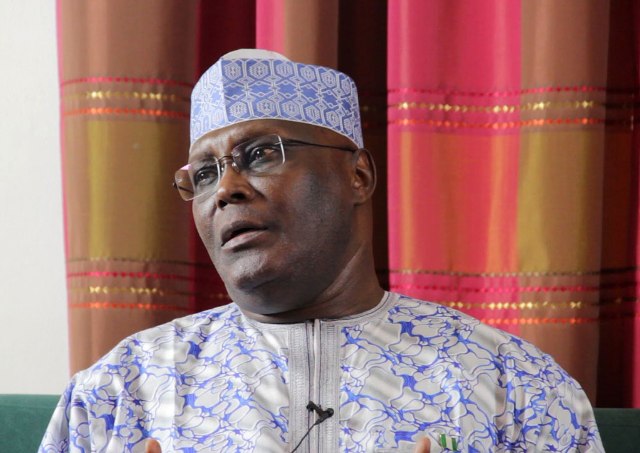
Paul Unongo, Chairman of the Northern Elders Forum, says Abubakar Atiku, former Vice President, is the biggest financier of the Miyetti Allah Cattle Breeders Association of Nigeria (MACBAN) — a group of “very rich Nigerians” who hire and arm herdsmen to take care of their cattle.

Unongo is of the opinion that Atiku should be able to call the rampaging herdsmen to order, especially given that he (Atiku) is a title holder in Tiv land — the most dominant ethnic group in Benue State.

Speaking during an interview with The Punch, Unongo said he was sure of his claims, as Atiku had told him personally when they were still in talking terms.

“I am aware that the most powerful person in Miyetti Allah is Alhaji Atiku Abubakar, who wants to be the next President,” Unongo said.

“If they are fighting for power and Atiku wants to create problems for Buhari, I don’t know. There are so many possibilities.

“The most powerful person who finances the Miyetti Allah is Abubakar Atiku and he is a prince of the Tiv Court.

“The Tivs gave him a traditional title, meaning ‘the biggest shade of  the Tiv people’. This implies that the Tiv people should be able to run to Atiku who will protect them.

“This is the man who heads Miyetti Allah and is the greatest financier of this organisation. He has more cattle than anybody in Miyetti Allah.

“It is an establishment of the big people, a very rich group of Nigerians and they pack small boys to take their cattle all over the place and then buy all these arms to give herdsmen to go and kill people, and the government is doing  nothing!

“I know, I got my facts partially from him regarding Miyetti Allah, when I used to talk to him.”

Unongo said that he had tried to meet Atiku face to face to discuss the issue but the ex-VP has proven difficult to reach.

“Have you tried to see a ‘big man’ before?” Unongo queried the reporter. “I don’t like to wait at people’s doors.

“If you’re in government, yes, but when you’re not in government, it  shouldn’t be so hard to see you. Atiku is my younger brother and he should come to me.

“Anytime you go to his place, the people around him think you are there to collect money that they are sharing. So, I decided that I would not disgrace the NEF. I am not belittling him, but he is no longer in power and I deserve some respect.”

ATIKU DENIES

However, when contacted, Paul Ibe, Atiku’s media aide, said his Principal never belonged to MACBAN even though he is a “proud” Fulani man.

Ibe added that Unongo was merely trying to please the powers at the centre who made him a board Chairman in 2017.

“Yes, Waziri Atiku Abubakar is a Fulani and is proud to be one as he has never hidden that fact. However, the Waziri is a thoroughly detribalized Nigerian who would never favour one ethnic group over another,” Ibe said.

“Let it be known that though Waziri Adamawa is Fulani, he is not a member of Miyetti Allah Cattle Breeders Association of Nigeria nor has he ever been a member. He has also never discussed about that group with Chief Paul Unongo.

“Having said that, it has not escaped our notice that Chief Paul Unongo is the Chairman, Governing Board of Nigerian Educational Research and Development Council, a position he was appointed to in April of last year.

“Understandably, Chief Unongo would be very grateful to those who gave him such a position and may feel it is his duty to attack and sully those in their bad books.”

Ibe added that Atiku wants the government to carry out a thorough investigation into the killings in Benue, “and that anyone found culpable be made to bear the full weight of the law”.

Six herdsmen arraigned in court for ‘killing’ 20 farmers in Benue


The Benue State Police Command has arraigned six Fulani herdsmen over alleged involvement in the killing of 20 farmers in Akor village, Guma Local Government Area of Benue State.

The suspects were arraigned before Isaac Ajim, presiding Magistrate of the Makurdi Chief Magistrate Court 1, in the state capital.

Also, the police arraigned one Ibrahim Adamu, another herdsman who allegedly violated the Open Grazing Prohibition Law, which had already taken effect in the state.

Adamu was arrested on December 28 while grazing openly with about 70 cows along Naka road in Makurdi, alongside one Hassam Musa, who was said to have fled the scene.

Soon after the herdsmen attack of January 2, the police said about 17 persons had been killed. However, the death toll rose to 20 after three more persons died at the Benue State University Teaching Hospital.

Samuel Ortom, Governor of Benue State, blamed the attacks on the inability of security agencies to live up to their responsibilities.

“This is unfortunate. The security agencies of this country are aware of what is happening in Benue,” Ortom lamented.

“We must rise up; Nigerians must rise up; the Federal Government must rise up to protect us because this is not right.

“They [FG] own the security apparatus. The ones that are here are doing their best but there should be more and that is what we are calling for.”

There had been mass killings in Benue, Rivers, Kaduna and Kwara States, less than five days into 2018, highlighting the rising insecurity in the country.