Home Blog Page 2655

VIDEO: It’s a baby boy for Nigerian migrants who fell in love at Libyan cell

Two Nigerians, Stephen Ekhiator and Mabel Emmanuel, met at a migrants’ detention camp in Libya and fell in love with each other. Today, they have a son together.

Ekhator narrated to BBC Africa how he had tried several times to cross the Mediterranean sea into Italy but could not succeed.

“You cannot determine your wife to be, or where you can find her. It can just happen suddenly,” Ekhiator said.

“He [his son, David] was born inside the deportation camp. We were in the deportation camp together when she [his wife] was giving birth.

“I felt bad; every day I cried. I couldn’t even eat. I must say Libya is a prison, a life where there is no freedom.

“I have tried [crossing the sea] five times; I failed. Twice my boat capsized on top of the sea. What I will tell people that want to go (to Libya) is, ‘never even think about it.'”

Ekhiator then burst into a song in pidgin English: “Who no go no go know, who no go no go wetin we see.” Then he adds: ”That’s how we always sang it in the deportation camps.”

Thankfully, however, Ekhiator and Mabel are part of the migrants who were recently repatriated to Nigeria following the intervention of the International Orginisation for Migration (IOM)

Watch the video below, courtesy of BBC Africa:


My client has been paid and he didn’t run mad, says Ikoyi whistle-blower’s lawyer

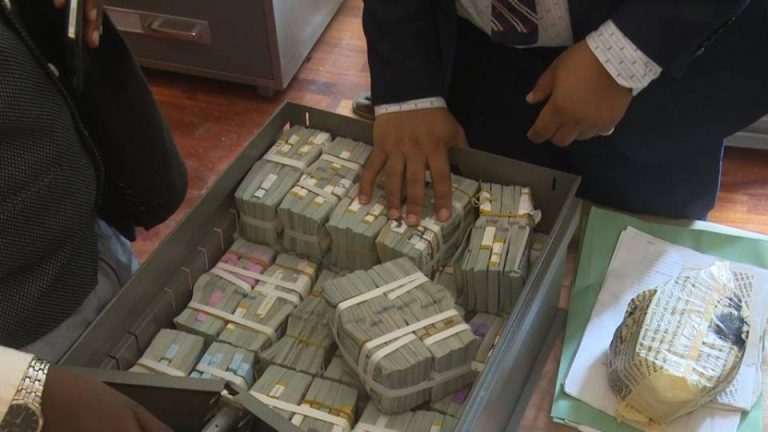
Yakubu Galadima, the lawyer of the whistle-blower who provided information that led to the recovery of about N13 billion from a residential apartment in Ikoyi, Lagos, says his client has received the first tranche of his reward by the Federal Government.

Galadima told journalists that his client did not run mad on receiving his payment, contrary to the predictions of Itse Sagay, Chairman of the Presidential Advisory Committee on Anti-Corruption (PACAC).

Sagay had said that FG delayed payment of reward to the whistle-blower because he could have run mad if such huge amount of money was paid to him at once.

Galadima also said the whistle blower travelled out of the country hours after receiving part of the N421m reward.

“My client confirmed to me that he had received a credit alert from the Federal Government. He travelled out of the country this morning (Wednesday morning).

“He has been paid the first installment but there were many tax deductions. Yes, we are happy.

“I will give you details later but I can confirm now that he has received some money. As you can see, my client did not run mad as predicted by Prof. Itse Sagay.”

Galadima praised the government for keeping its promise, adding that the payment of the reward to his client signifies government’s commitment to the whistle-blower policy.

A couple of weeks ago, Kemi Adeosun, Minister of Finance, had said the money for the payment of reward to whistle blowers had been approved.

She said the money would be paid directly into the whistle-blower’s account and not that of his lawyer or anybody else’s.

Adeosun also said that all the taxes accruable on the amount would be paid directly into the account of the state government where the beneficiary resides.

In April this year, the EFCC recovered huge sums of money in local and foreign currencies – totaling N13 billion – from flat 7bn, Osborne Towers, Ikoyi, Lagos State, following an intelligence from a whistle-blower.

Ayodele Oke, former Director-General of the National Intelligence Agency (NIA), laid claim to the money saying it belonged to the agency.

According to Oke, the money was approved for the NIA by President Goodluck Jonathan in 2015 to enable it carry out some “covet operations”. But Oke could not satisfactorily explain how and why the money ended up in a residential apartment allegedly owned by his wife.

Attempts to arrest Oke last week was unsuccessful, as DSS and NIA operatives stationed at his Maitama, Abuja residence refused to cooperate with the EFCC personnel that came for the operation.

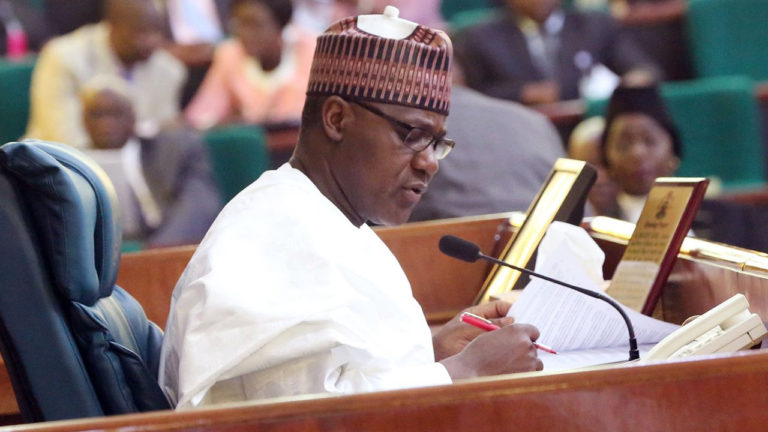
In biography written by Momodu, Dogara addresses budget padding allegations

Yakubu Dogara, Speaker of the House of Representatives, says he never interfered with the 2016 budget or tried to exact undue influence on the House committee on appropriation, then headed by Abdulmumin Jibrin.

Dogara made this known in his biography — A Reed Made Flint — written by ace journalist Dele Momodu, a copy of which was obtained by TheCable newspaper ahead of its public presentation scheduled for December 26.

Sometime in July 2016, shortly after he was removed as Chairman of the appropriation committee, Jibrin began making series of allegations against Dogara and three other principal officers of the House: Yusuf Lasun, Deputy Speaker; Alhassan Doguwa, Chief Whip; and Leo Ogor, Minority Leader.

Jibrin alleged that the four lawmakers illegally inserted phantom projects worth hundreds of billions of naira into the 2016 budget.

He was later suspended from the House for 180 legislative days after he refused to withdraw the allegations.

But in his biography, Dogara said he never even knew what was in the budget, as he trusted that the appropriation committee, under Jibrin’s leadership, was competent enough to handle the budget.

“My kind of nature is not the kind that insists on breathing down your neck, having given you an assignment,” Dogara was quoted as saying in the book.

“So, attempting to interfere in everything committees are doing was not my line. I believe in giving everyone considered competent enough to handle posts to thrive in them.

“I don’t believe in making my colleagues feel distrusted. I give you that freedom to do your work. Having trusted you, I will not bother you too much. I never went to Jibrin to ask for anything in the budget. Never! Even once!”

“Occasionally both leadership of the Senate and the House would meet and ask [Danjuma] Goje [Chairman of the Senate Appropriation Committee] and Jibrin to give the position of things, how discussions on the 2016 Budget were going on, how they were doing and so on and so forth.

“But I gave him absolute free hand to operate. He did that up to a point that the Budget was written and compiled I hadn’t seen anything.

“I didn’t know what was there. As a matter of fact I didn’t even know the kind of projects that he has included for me or any other person in the Budget.

“I was even in London when they submitted the details to the President for his assent. It was only after I got back home that Jibrin brought the details of the budget to me for the very first time.

“Absolutely, I had no hand, no prior meeting with the committee. I didn’t sit with them at the secretariat to say ‘Oh, include these projects for me. You must do this. You must do that.’ Never! Even for a day.”

Dogara admitted that Jibrin, who had supported Femi Gbajabiamila in the run-up to the election of the House Speaker, later defected to his team and supported him 100%.

“I will say that although Honourable Abdulmumin Jibrin wasn’t with our team initially, he later supported me 100%, wholeheartedly. Luckily his secretariat wasn’t far from ours and he was handy.”

Dogara, however, added that people had warned him that “it is suicidal to entrust such an important post (of appropriation chairman) to such a man” as Jibrin, but he never listened.

SETBACK: Anti-NGO bill records zero support during public hearing

The Non-Governmental Organizations Regulatory Commission (Establishment) Bill has suffered its first major setback, recording zero support during Wednesday’s public hearing at the House of Representatives.

The bill, which was introduced by Umar Buba Jibril in June 2016, had passed the first and second readings despite several protests by NGOs.

At the hearing on Wednesday, Peter Akpatason, Chairman of the House Committee on Civil Society Organisations and Development Partners, asked the audience whether anyone supported the bill but no one answered in the affirmative.

Outside the national assembly complex, a crowd of protesters comprising members of the civil society and NGOs bore placards and chanted songs urging the House to kick out the bill.

Speaking at the hearing, Hassan Kukah, the Catholic Bishop of Sokoto Diocese, said he decided to lend his voice to the call for the withdrawal of the NGO bill because he was convinced that there are existing laws that already captured everything the bill seeks to achieve.

“I stand with civil society very firmly,” Kukah said. “We have enough laws already to cover every sphere of the country.

“The intentions might be right but I think we can channel our energy to other things.

“Without civil society, democracy will be in danger in Nigeria. We have so many laws covering what this bill is seeking to do.”

The NGO bill has been roundly criticised by many Nigerians who believe it was a sinister move by the legislature to gag civil society organisations.

Among the major opponents of the bill is Chidi Odinkalu, former Chairman of the National Human Rights Commission (NHRC), who has written extensively and produced video clips to sensitise Nigerians on the dangers of allowing the bill get passed into law.

Akpatason promised that his committee would make its recommendations to the House in plenary without prejudice.

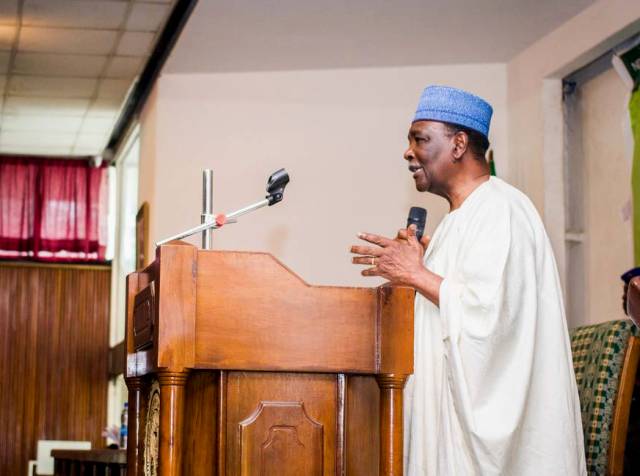
I almost moved Nigeria’s capital to Jos, admits Gowon

Yakubu Gowon, former Military Head of State, says he almost relocated Nigeria’s capital from Lagos to Jos, Plateau State, after his administration first mulled the idea in 1974.

Speaking at an exhibition organised to mark the 26th anniversary of the relocation of the capital to Abuja, Gowon regretted that he was not the one who eventually completed the movement.

He said the choice of Jos as a capital city appealed to him because of the beauty of the city, but he thought that Nigerians would have seen the decision as sentimental.

Gowon became Head of State in 1966 after the murder of Aguiyi Ironsi in a bloody coup d’etat. He was, however, overthrown in 1975 in a bloodless coup that ushered in Murtala Mohammed.

“I had powers to make Jos, and not Abuja, the capital of Nigeria but refused to do so because I was not prepared to be clouded by sentiments and selfishness,” Gowon said at the event, titled ‘From Dodan Barracks to Aso Rock’.

“One of the places I saw that attracted me was somewhere in Plateau. Those of you who know the place, especially close to Jos Forest, will agree that the area is beautiful and I thought that place was beautiful for the capital city.

“But I did not make that choice because I would have been accused of parochialism and favoritism, because it was very close to the original place where I come from.

“I must look at other places, the search for a new capital took me round the North-west, and in my state, I continued to look for other places. When I came to Abuja, I was attracted.”

However, it was not until December 12, 1991, under the regime of Ibrahim Babangida, that the relocation of the Nigerian capital from Lagos to Abuja was completed.


READ ALSO:


CLOSE-UP: Itodo, Odeogbola, the Nigerians short-listed for Global Teacher Prize

Two Nigerian teachers, Itodo Anthony from Gateway Excel College Otukpa, Benue State, and Ayodele Odeogbola from Abeokuta Grammar School, Ogun State, are among the 50 teachers shortlisted from across the world for the 2018 Global Teacher Prize.

The award, which comes with a $1 million prize money, was set up by the Varkey Foundation “to recognize one exceptional teacher who has made an outstanding contribution to the profession”.

ITODO, UK MASTER’S DEGREE HOLDER WHO TEACHES IN A VILLAGE
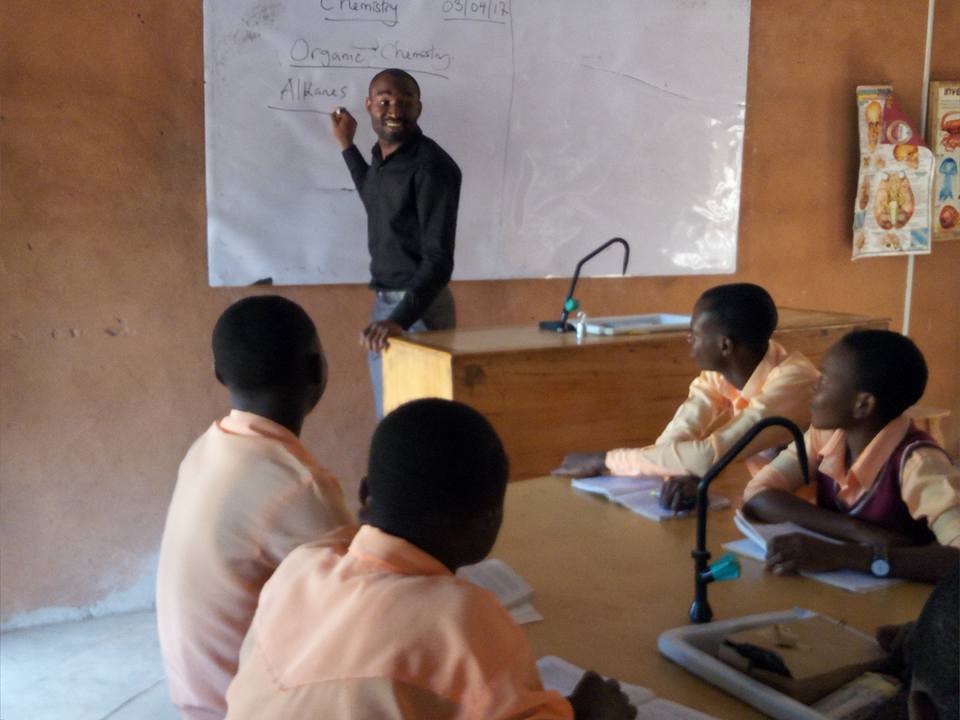
A young man who had his first degree in Petroleum Engineering at the University of Port Harcourt, and went ahead to Study Reservoir Evaluation and Management for his Master’s at Heriot-Watt University, Edinburgh Campus, Itodo Anthony is a Chemistry/Physics Teacher at Gateway Excel College, Ogeneago Otukpa, a small rural school in Benue.

Not many people understood why Anthony would get a Master’s degree from a UK university and end up teaching in a village for “peanuts”.

His mission is to elevate the teaching profession to a place of pride, to say with his own life that the profession is a noble one whose value is not tied to how much we earn.

In class, he introduces positive values from other parts of the world to broaden their view of life.

In May 2017, Itodo founded New Frontiers Youth Forum, a community-based organisation for the youth. This organisation welcomes membership from young people aged 13 to 35 , and the aim is to raise an army of young leaders who will act as positive change agents within the community.

Itodo is an exceptionally brilliant, multi-award-winning essayist. But his number-one strength is that he is a young man who breathes teaching. An avid Facebook user, majority of his posts are about his pupils and the teaching profession. He is reputed for consistently soliciting funds for indigent students, for prizes to endow awards of excellence for his outstanding pupils, for driving the kind of technology that simplifies teaching and eases learning for students.

ODEOGBOLA USES TECHNOLOGY TO IMPROVE STUDENTS’ OUTCOME

A graduate of Tai Solarin University of Education, with more than 10 years of experience in teaching in public-sector education, Odeogbola has an unparallelled passion for technology, innovation, and global best practices to transform the Nigerian education system.

Ayodele, who teaches STEM (Science, Technology, Engineering and Mathematics) Education and Global Studies at Abeokuta Grammar School, Ogun State to pupils aged 11 to 15, is passionate about developing his students to become future leaders and stakeholders in the world.

Rather than teach the same thing in the same way to all, he adapts his methods to match the different needs, potentials and learning paths of each pupil.

“For every human challenge in the new world we live, there is always a technological solution,” Ayodele believes.

He has brought technology industry experts into his classroom, and linked his class using Skype and social media to peers in schools in India and Lebanon.

Ayodele was nominated among the world’s best teachers in the Microsoft’s 2014 class of Mentor Schools and the Inaugural Class of Expert Educators.

In 2012, he was first runner-up in the category ‘Teaching as Innovator and Change Agent’ at the Microsoft Global Partners in Learning Forum.

“I hope to make a difference in education in Nigeria. There is not a lot of budget for education in the country, but I believe that access to technology can level the playing field for children from all backgrounds,” he said.

A total of 30,000 nominations were received from 173 countries of the world, out of which 50 persons were initially shortlisted.

The winner will be announced at the Global Education and Skills Forum in Dubai, the UAE, on March 18, 2018.


EXTRA: Mother and son called to bar one day apart

A rare story dream come true has seen two members of the Nwadiogu family being called to the Nigerian Bar just one day apart.

Uchechi Nwadiogu was already a level-15 civil servant as a court registrar when she decided to return to the university to pursue her girlhood dream of becoming a lawyer.

Coincidentally, her admission to study law at Abia State University, Uturu, coincided with that of her son Bernard, to study the same course at the Nnamdi Azikiwe University, Awka, Anambra State.

She narrated to BBC Pidgin how she had applied for law during her younger days, but was offered English Language instead.

All attempts to switch over to her course of first choice did not succeed, so she decided to finish her English programme while not discarding her dreams of becoming a lawyer someday.

After her first degree, Uchechi got married and started raising a family, and it appeared her dream may never be realized.

But as fate would have it, she summoned enough conviction to return to the classroom and even graduated top of her class. She was called to the Bar on Tuesday, while her son’s holds on Wednesday.

Describing the development as “dream come true”, Uchechi urged young people not to give up on their dreams as no time is late to pursue one’s passion.

“Young people must not limit themselves,” she told BBC pidgin. “Some people limit themselves, and if you limit yourself you will be limited.

“If I had limited myself, perhaps saying I’m already a level-15 civil servant, I won’t be a lawyer today.

“Some people may ask me what I’m still looking for, but I realized I could still achieve greater things and become better than I am presently. So everyone must always strive to improve as there is no limit to improvement.”

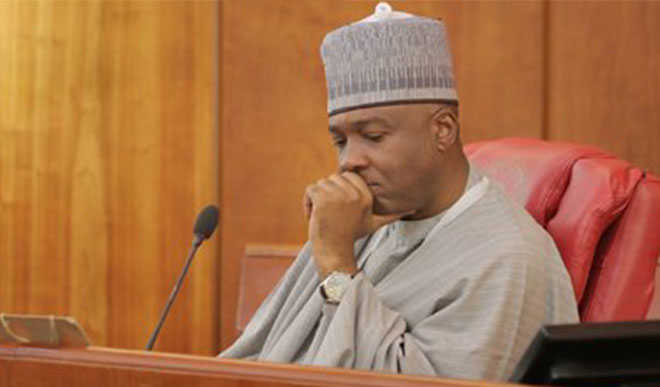
CASE REVIVED: Appeal Court sends Saraki back to CCT

The Court of Appeal sitting in Abuja has sent Bukola Saraki, Senate President, back to the Code of Conduct Tribunal (CCT) to answer to three counts of false assets declaration brought against him by the office of the Attorney General of the Federation (AGF).

A three-man panel led by Justice Tinuade Akomolafe-Wilson gave the ruling on Tuesday, saying the EFCC had done enough to prove the three charges beyond reasonable doubt.

However, the court struck out the other charges against him.

In September 2015, Saraki was charged with a 13-count charge bothering on false assets declaration and operating foreign accounts while still a public officer — offences he allegedly committed during his tenure as Governor of Kwara State.

He denied the allegations and initially refused to appear in court, saying the charges were politically motivated as a result of the internal rift within the APC prior to his emergence as Senate President.

Saraki became the first serving Nigerian public servant to be docked in any Nigerian court

However, Danladi Umar, Chairman of the CCT, issued an arrest warrant against Saraki, forcing him to eventually attend the next hearing.

After series of drama, including numerous adjournments and a Supreme Court judgement ordering temporary suspension of the trial, Saraki was arraigned in February 2016 and he pleaded not guilty to the charges, which, at the time, had been amended to 16 counts. It would later be further amended to 18.

Saraki thus became the first high profile serving Nigerian political office holder to be docked in any Nigerian court.

During the trial, the prosecution team called witnesses and presented documents that showed that Saraki operated several foreign bank accounts while he was Governor of Kwara State, contrary to the provisions of the law.

But after the prosecution had closed its case, Saraki’s cousel, Kanu Agabi, a former AGF, filed a no-case submission, arguing that the prosecution had not done enough to establish a prima facie case against his client.

This application was upheld by Umar, the CCT Chairman, who discharged and acquitted Saraki of the 18-count charge against him.

However, the federal government went to the Court of Appeal to challenge the judgement of the CCT and on Tuesday, the court struck out 15 out of the charges, but said the FG had proved beyond reasonable doubt that Saraki had a case to answer on three of the charges.

Meanwhile, a statement by issued by Saraki’s media office said he would challenge the Appeal Court judgement to the Supreme Court.

European countries, especially Italy, complicit in torture of migrants, says AI

A Libyan Coastguardsman counting the number of migrants who had just been intercepted at sea on their way to Italy. Zawiya Jun 6, 2016. © TAHA JAWASHI. Source: Amnesty Int’l

European governments are knowingly complicit in the torture and abuse of tens of thousands of refugees and migrants detained by Libyan immigration, says Amnesty International.

The International Organisation for Migration (IOM) identified 416,556 migrants in Libya, more than 60% of whom are from sub-Saharan Africa. Thirty-two percent are from other North African countries while 7% are from Asia and the Middle East.

These migrants are held in detention centres run by the Libyan Department for Combating Illegal Migration (DCIM), in appalling, inhuman conditions.

“Hundreds of thousands of refugees and migrants trapped in Libya are at the mercy of Libyan authorities, militias, armed groups and smugglers often working seamlessly together for financial gain,” says John Dalhuisen, Amnesty International’s Europe Director.

“Tens of thousands are kept indefinitely in overcrowded detention centres where they are subjected to systematic abuse.

“European governments have not just been fully aware of these abuses; by actively supporting the Libyan authorities in stopping sea crossings and containing people in Libya, they are complicit in these abuses.”

According to a report published by AI on Tuesday, European countries, “particularly Italy” have pursued and supported several polices aimed at making it more difficult for migrants to cross the Mediterranean Sea into Europe.

“Firstly, they have committed to providing technical support and assistance to the Libyan Department for Combating Illegal Migration (DCIM), which runs the detention centres where refugees and migrants are arbitrarily and indefinitely held and routinely exposed to serious human rights violations, including torture.

“Secondly, they have enabled the Libyan Coast Guard to intercept people at sea, by providing them with training, equipment, including boats, and technical and other assistance.

“Thirdly, they have struck deals with Libyan local authorities and the leaders of tribes and armed groups – to encourage them to stop the smuggling of people and to increase border controls in the south of the country,” the report read in part.

Libyan coastguard, aboard of boat donated by Italy, fails to deploy its rigid-hulled inflatable boat (RHIB) to help migrants and refugees. Fifty people are estimated to have died at sea as a result of this interception at sea. Only five bodies were retrieved. 6 November 2017 © L Hoffman/Sea Watch. Source: Amnesty Int’l

Describing further how the Europe-sponsored slavery runs in Libya, the AI report stated: “Refugees and migrants intercepted by the Libyan Coast Guard are sent to DCIM detention centres where they endure horrific treatment. Up to 20,000 people currently remain contained in these overcrowded, unsanitary detention centres.

“Migrants and refugees interviewed by Amnesty International described abuse they had been subjected to or they had witnessed, including arbitrary detention, torture, forced labour, extortion, and unlawful killings, at the hands of the authorities, traffickers, armed groups and militias alike.

“Dozens of migrants and refugees interviewed described the soul-destroying cycle of exploitation to which collusion between guards, smugglers and the Libyan Coast Guard consigns them. Guards at the detention centres torture them to extort money.

“If they are able to pay they are released. They can also be passed onto smugglers who can secure their departure from Libya in cooperation with the Libyan Coast Guard.

“So far in 2017, 19,452 people have been intercepted by the Libyan Coast Guard, taken back to Libya and immediately transferred to detention centres where torture is rife.”

The report stated that between 2016 and 2017, the Libyan Coast Guard has increased its capacity, due mainly to support from EU member states.

Libyan Coast Guard officials are known to operate in collusion with smuggling networks and have used threats and violence against refugees and migrants on board boats in distress.

“One immediate way to improve the fate of refugees and asylum seekers in DCIM centres would be for the Libyan authorities to formally recognise UNHCR’s mandate, sign the Refugee Convention and adopt an asylum law,”  said AI’s John Dalhuisen. “The automatic detention of migrants must also stop as that is when the worst abuses occur.”

Falana: Nigeria cannot afford to scrap SARS, it is NOT possible

Femi Falana, outspoken human rights lawyer, says although the efforts of anti-Special Anti-Robbery Squad (SARS) protesters are commendable, the Nigerian state cannot afford to scrap the squad.

Speaking on Tuesday while appearing on Channels Television’s ‘Sunrise Daily’, Falana, however, also said the department should be “totally overhauled”, as its current composition is unconstitutional in a civilian government.

“The Nigerian new colonial state cannot afford to scrap SARS; it is not possible,” he said.

“We have an increasing wave of armed robbery, kidnapping terrorism and other serious violent crimes which the regular police personnel have not been trained to curb or combat. Therefore, we are going to have SARS but it has to be totally overhauled.

“With due respect to those protesting against SARS and calling for its proscription, while their efforts are commendable, they must be made to appreciate the fact that the law has taken care of all their concerns.

“What we are therefore required to do is to ensure that the laws are enforced which has made it illegal to detain a Nigerian without taking him to the court in a place like Lagos or in the rural areas beyond 48 hours.”

He described SARS as a legacy of the several military regimes that had truncated the country’s democracy in the past.

“You must remove the soldiers in SARS and retrain the Police among them. You re-orientate them because they still behave as if they are under military dictatorship, because SARS is a legacy of military dictatorship,” he added.

“As it is constituted, it is partly illegal under a civilian and democratic dispensation. Under the constitution, the duty of maintaining internal security, law and order in Nigeria is vested exclusively in the Police.

“SARS is constituted by armed troops, soldiers and police personnel all over the country. Every state government maintains the SARS in the country and these state governments have not bothered to find out what this body is doing in terms of law enforcement, combating armed robbery and performance in terms of respecting the rights of the Nigerian people.”