Home Blog Page 2670

UPDATED: Buhari backs El-Rufai’s education reforms, flags-off retreat for FEC members

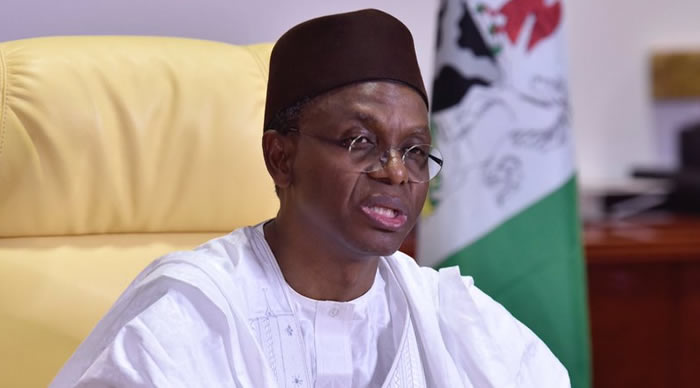
President Muhammadu Buhari has commended Nasir El-Rufai, the Governor of Kaduna State, for the “important reforms” he has introduced into the state’s education sector.

Buhari gave the commendation when he flagged off a special retreat for members of the Federal Executive Council at the State House in Abuja on Monday.

He said the retreat is aimed at preparing the participants on how to better tackle the numerous challenges facing the nation’s education sector.

According to a post on Buhari’s verified twitter handle, experts from government agencies, civil society organisations and development institutions have been invited to facilitate the retreat.

Speaking at the opening of the retreat, Buhari said that Nigeria “is facing numerous challenges in education and all other sectors as a result of historical abuses, mindless impunity and corruption is not news to anyone”.

“With an estimated 13.2 million children out of school, high illiteracy level, infrastructural deficit and decay, unqualified teachers, and inadequate instructional materials, to mention some of the challenges, we can clearly see the effect of decades of neglect that the education sector has suffered,” Buhari said.

“We are determined to turnaround the sector for the better. We are already making appreciable progress in this respect.

“This summit must therefore, among other things, sharpen our strategies for addressing the challenges of basic and secondary education, teacher training and professional development; technical and vocational education.

“The significance of this summit is obvious. We cannot progress beyond the level and standard of our education.

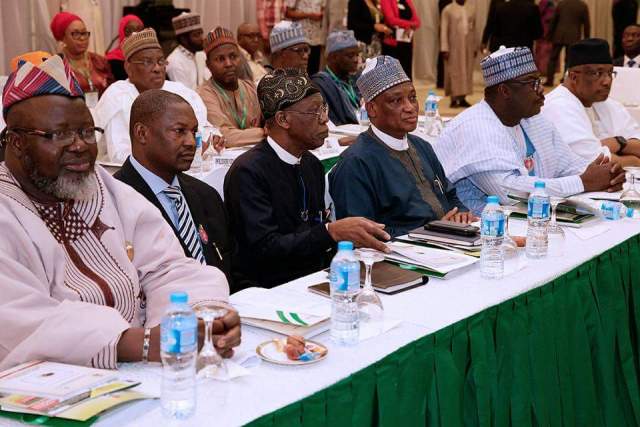
A cross section of the ministers taking part in the retreat

“Today, it is those who acquire the most qualitative education, equipped with requisite skills and training, and empowered with practical know-how that are leading the rest.

“We cannot afford to continue lagging behind. Education is our launch-pad to a more successful, more productive and more prosperous future.

“This administration is committed to revitalizing our education system and making it more responsive and globally competitive.

“One of the primary roles of education is to build and sustain individual and society’s development. It renews and improves the economic, social, political and cultural aspects of any nation.

“Education upgrades the living standard of citizens and enables people to become better and more productive citizens. It is a human right that creates a safe, healthy and prosperous society.

“It changes the visions and perspectives of individuals, enhances critical decisions and improves democracy. Indeed education is paramount and necessary requirement for all-round development.”

The Kaduna State Government said it is going to lay off more than 20,000 teachers who failed to pass a Primary four pupils’ examination which they were required to take as part of a competency test.

However, the move has set the State government against the organised labour as the leadership of the Nigerian Labour Congress has vowed to oppose the decision to sack teachers.

Why I drove Nnamdi Kanu home from prison, Gov aspirant explains

Osita Chidoka, former Minister of aviation, says he offered to drive Nnamdi Kanu home after he was released from Kuje Prison because he wanted to serve as bridge between the angry youths of the South East and the Federal Government.

Kanu, Leader of the now proscribed Indigenous People of Biafra (IPOB), was accused of treason and detained by the Department of State Services (DSS) between October 2015 and January 2016 when he was charged to court.

He was remanded in Kuje Prison in the Federal Capital Territory until April 2017 when he was granted bail on health grounds.

After fulfilling his bail conditions, Kanu was led home like a hero in a convoy led by Chidoka and some other Igbo leaders.

However, Kanu failed to abide by conditions on which he was granted bail and his release almost led to a state of emergency in the south east region.

Presently, his whereabouts remain unknown.

But Chidoka, who is running as a governorship candidate under the United Peoples Party (UPP) in Anambra State, said it was not to gain political popularity that he offered to drive Kanu home after he was released.

He gave the explanation at a political debate organized for all the contestants in the Anambra State governorship election scheduled to hole on November 18.

“If it was a popularity contest, I’m sure that other candidates would have gone for it,” Chidoka said.

“The issue is the fundamental philosophy of the right of individuals in a democracy to freely express themselves within the laws of the country.

“Once we have that right as enshrined in our Constitution, I believe we must respect it and if anybody violates the terms of our Constitution or our laws, then the law should take its course.

“The law took its course on him (Kanu). He got bailed from a court. I now participated in ensuring that the bridge of communication between the angry young people in the South East and the rest of the country is a burden I believe I bear as a young minister.

“As a young former Chief Executive of the Federal Road Safety Corps, I believe I serve as a beautiful bridge; I serve as that bridge that connects the dreams of Nigeria with the people of Ndi-Igbo.”

Enyinnaya Abaribe, a member of the Senate who was one of the three persons that stood in for Kanu before he could be released, had regretted his actions.

Abaribe said the disappearance of Kanu had put them into trouble as the court would hold them responsible.

At the resumption of Kanu’s trial in October, Abaribe informed the court that he wanted to withdraw as Kanu sureties, but the court said he would have to forfeit the N100 million bail bond he deposited as part of the bail conditions.

Why women may not become military chiefs in Nigeria

President Muhammadu Buhari has ratified the National Defence Policy 2017 (Revised); Harmonised Terms and Conditions of Service Officers 2017 which is set to end the admission of female cadets into the combatant course of the Nigerian Defence Academy (NDA).

With this, chances of a woman becoming the Nigerian Chief of Army Staff (CAS) may have been foreclosed.

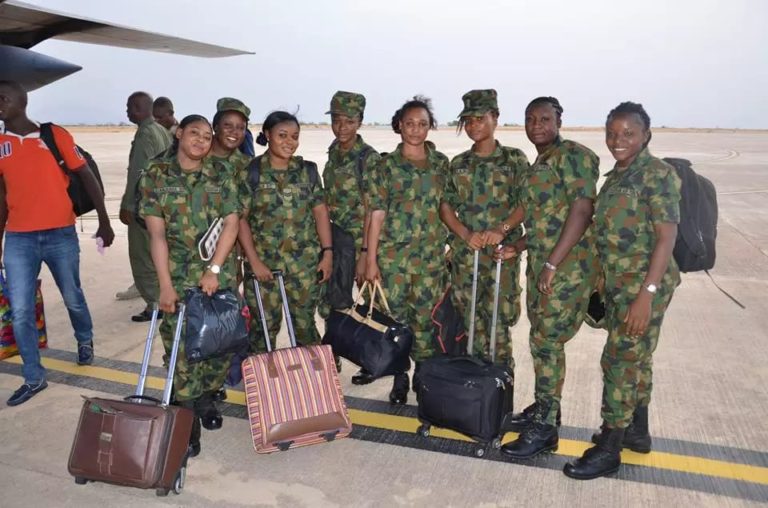
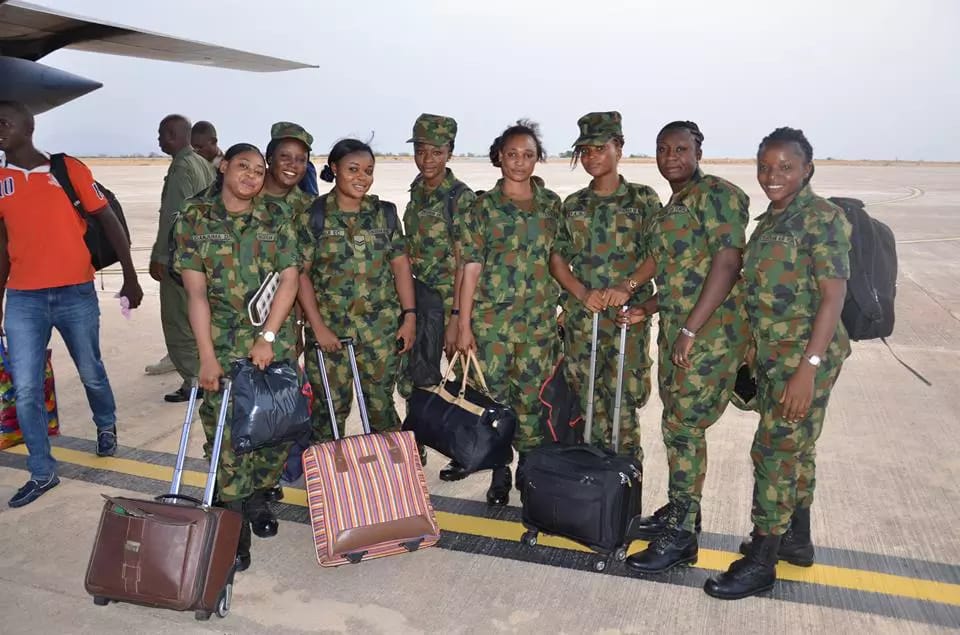
In 2011, a set of 20 females, nicknamed Jonathan Queens, were first admitted into the course in Nigeria’s premier military officer training institution during the former President Goodluck Jonathan’s administration.

According to The Punch, the recommendation to “Phase out the training of female regular combatant cadets,” was made by the Armed Forces Council (AFC) which was inaugurated by President Buhari last week.

The report quoted an anonymous serving General in the Nigerian Army as saying that the military took the decision due to complaints from some unnamed northern Muslim leaders.

The source explained that there were various types of commissions in the Armed Forces namely: Regular Combatant Commission, Short Service Combatant Commission, Direct Regular Commission, Direct Short Service and Executive Commission.

“It is only the Regular Combatant Commission that can give an officer the opportunity to aspire to head any of the services or rise to become the Chief of Defence Staff, while the others have limited career path. If the military is able to scrap this programme, women will never be able to head any of the arms of the Nigerian military,” he said.

“The northern Muslim leaders want to prevent a situation where one day, a woman will lead the army and give orders to men.”

Incidentally, it was reported in 2013 that of the first 20 female cadets, only one Muslim, Fatimah Saleh, enlisted. She had also stated that her “Arabic school teacher” had advised her against joining the army.

The general said those pushing for the scrapping of the programme had convinced the President that women were not doing well in the programme.

He said, “When we started the training of female cadets in 2011, we never thought it would be successful. When the first set of women cadets graduated from the academy last year, women won three awards, including the best award in the navy category.

“A female cadet, C. Lord-Mallam, won the Navy Gold award which is the highest in the navy category. The Army Silver award, which is the second highest in the army, went to a female cadet, K. O Dayo-Karim. The Air Force Silver award was also won by a female cadet, O. S Ijelu.

“However, some northern conservatives were not happy about it because most of the female cadets are either Christians from the South and northern minority groups or Muslims from the South and Middle Belt.

“Dissatisfied with how things are turning out, the northern Muslim leaders lobbied the military authorities to stop the programme for women.”

The general described the recommendation as an attempt to reverse the gains of the past, adding that it was a setback in the push for gender equality.

He revealed that many of the female cadets were outperforming their male colleagues, adding that their achievements were being suppressed by the military hierarchy.

The general said, “I was informed that the women were trained just like the men were trained. They were not given any preferential treatment. Two of these female cadets beat their male counterparts to win placement at the United States Military Academy in West Point and they are doing well.

“It is unfortunate that while the western world and even other African nations are progressing, Nigeria is going backwards.”

In 2010, the then President, Goodluck Jonathan, had ordered the military to allow females interested in becoming combatant officers of the Nigerian armed forces to be admitted into the NDA for the first time ever.

Adetokunbo Kayode, the then Minister of Defence, had said other countries in Africa were “already doing it and they are not better than us.”

He had said, “Presently, we have female armoured tank drivers, female Para-troopers, jumpers, and so on. We want to have strong, virile armed forces devoid of discrimination.”

Expatiating on the new directive, the minister had said, “As you are all aware, the Nigerian Armed forces have always had openings for female officers. However, these have always been limited to non- combat duties, thereby limiting their career path irrespective of their competence or skill.

“To redress this obvious anomaly and in line with the conviction of the President that every Nigerian, irrespective of gender or any affiliation, should be given equal opportunity to excel in his or her chosen field of life, Mr. President has directed the immediate enlistment and training of female regular combatant commission officers into the Nigerian armed forces.”

However, the Defence Headquarters, Abuja, failed to comment on the revised harmonised terms and conditions on Sunday.

 John Enenche, a Major General and Director of Information, did not pick his calls, and a text message sent to his line had yet to be replied to as of press time.

Also, Sani Usman, the Director, Army Public Relations, could not be reached for comment on Sunday.

However, a military source said the revised harmonised structure, if it saw the light of the day at all, would not affect the NDA admission for 2018.

“The NDA has already begun receiving applications for the 70th regular course since October 20, 2017. The application, which will run till February 2018, is open to both male and female Nigerians.

“So, there is no going back on what the NDA has started. It will be a public disaffection if the military reneges on what it has advertised and we are a professional arm and cannot do that.’’


READ ALSO:

El-Rufai’s teachers and Shehu Sani’s labour unions

0

For as long as one is the Governor of Kaduna State and the other is obsessed with unseating him, Nasir el-Rufai and Shehu Sani will never see a coin from the same side. No, scratch that. So long el-Rufai sees a coin from a certain side, Sani can never see it from the same.

Ordinarily, this is not our problem — the masses, I mean. For those of us who hail not from kaduna and are not interested in the politics of the north-western state, el-Rufai and Sani can continue feuding for as long as they desire. After all, political disagreements are often not about the people but about the selfish interests of who gets what. But no longer can we ignore the el-Rufai-Sani feud. Their problem has become our problem.

As everyone probably knows already, el-Rufai is trying to sack 21,700 primary school teachers who failed a test that should have been passed by the average Primary 4 pupil. Think of ‘sack’ here as a ‘Future Definite Tense’ — because if you know a thing or two about el-Rufai, from his days at the Bureau of Public Enterprise (BPE) and the FCT ministry, these teachers are as good as gone. Even his son Bello confirms this, saying recently: “Let me do what I have no power to do, which is speak for my father. He will not relent or change his mind on this action no matter what.”

El-Rufai is like that; he operates like a soldier: there’s nothing like ‘come’ after ‘go’.

This is neither a strength nor a weakness in itself; it’s always a question of context. It can be a weakness when he is wrong — such as when, out of blind loyalty to President Muhammadu Buhari, he talks about ongoing efforts by a group of Buharists (whatever that means!) to ensure that Buhari (as though he has earned it) runs in 2019 when his current tenure has been blighted by long absences from work and a litany of unfulfilled electoral promises. But when he is right, such as is the case with his current effort to reposition primary education in Kaduna, then el-Rufai’s stubbornness is more than a strength; it is a refreshing dose of rarely-seen political will in Nigeria’s public space where political correctness, not competence, is the pre-eminent primer of job-related decision-making.

TACKLING A PROBLEM FROM ITS ROOTS

The Nigerian education system is a mess. Very few people would disagree, but employers of labour are the best placed to narrate the shocking details. There will always be a few shinning lights — self-motivated people who defy the system to rise beyond the standards of their formal education. But, generally, job tests and interviews are the spots where the obituary of the Nigerian education system is constantly being rewritten.

Many times when we talk about the “falling standard of education”, we focus on tertiary institutions of learning, forgetting that if the primary and secondary levels are weak, no magic can happen at the tertiary level. El-Rufai has done well to deviate from the norm and hit the problem at its roots. When a teacher cannot spell “malaria”, misspells “typhoid” as “typhart”, misspells “cough” as ‘cought” or defines ICT as “Introduction to Communication Technology”, we all have to be worried about the calibre of “tomorrow’s leaders” we’re raising. And when such teachers hit the streets in protest, hoisting banners such as one that reads ‘Examination is not the true test of knowledge’ despite themselves overseeing exams roughly once every four months, we all should be hiding ours heads away in shame. But some people cannot be bothered, one being Shehu Sani, the senator representing Kaduna Central at the National Assembly.

SANI, NUT, NLC

In all these, Sani is “standing firmly” with the Nigeria Labour Congress (NLC) and the Nigeria Union of Teachers (NUT) “100 percent” on their protests last week in an attempt to force the hands of the state government. Despite stiff opposition from majority of his social-media followers, Sani has been defiant. His arguments, in his exact words, are basically three: Any examination conducted for teachers not by Teachers Registration Council of Nigeria is invalid; making public 10 answer scripts out of over 21,000 answer scripts makes no sense to any reasonable and rational mind; while people outside of Kaduna are made to believe that it’s about ‘quality education’ or ‘next generation’, the people of Kaduna know better about the truth behind the façade.

The last two reasons do not at all merit a discussion, but there is some truth in the regulatory responsibilities of the TRCN. However, even that argument spotlights TRCN’s complicity in the rot. Beyond organising and collecting money for its professional qualifying examinations, TRCN has been anonymous in any painstaking effort to sanitise the education system since its establishment more than two decades ago. Given the TRCN’s slumber, nothing precludes the state government from its own intervention.

Sani, NUT and NLC are not the only ones in the opposition camp. Also in it are those who do not want 22,000 people to lose their jobs overnight. How would these teachers and their families survive without a job? Valid concern but invalid conclusion. Any normal human being should be saddened by the prospect of such huge job loss but the lives of millions of pupils will be ruined if left at the mercy of such misfiring teachers. Rather than indulge in pity party, the about-to-be-sacked teachers should take up the option of reapplying for their job. They have a few weeks, probably months, to rehabilitate themselves ahead of the oncoming recruitment examination — retraining teachers with such huge elementary deficiencies can’t be the state government’s headache.

EL-RUFAI DREAMS OF RECRUITING 25,000 ‘QUALIFIED’ TEACHERS. SERIOUSLY?

El-Rufai deserves ovation, not opprobrium, for his bold move even if, by law, he cannot mass-sack the teachers in question. Respected lawyer Jiti Ogunye has already explained how the teachers can be disengaged from service without breaching the law.

But there is an important question no one seems to be asking: from where does el-Rufai hope to harvest 25,000 “qualified” teachers? Apparently not Kaduna State. To expect quality teachers of that number is to underestimate the rot he is trying to tackle or to neglect its causes. He is well on course to eliminate the cronyism, nepotism and ‘man-know-man-ism’ that helped the endangered teachers to a job they did not merit. But still in place are the mediocrity-rewarding quota system and catchment area guidelines for admission into tertiary institutions, which gift education opportunities to not necessarily the best students, and the federal character principle that sometimes hands teaching and lecturing jobs to the least qualified candidates. Therefore, prospective Kaduna teachers who accessed education not because they were qualified to, or who were taught by lecturers that weren’t the most qualified to, cannot be as “qualified” as el-Rufai might be expecting.

This still doesn’t invalidate the governor’s efforts. He is treading where others failed. Adams Oshiomhole attempted it in Edo State without success. He was forced to reverse the sack of 936 teachers, while the planned sack of several thousands more ended up a mere bluff. But Oshiomhole did that in his second term, when, by political calculations, he could risk the people’s uprising.

Nasir el-Rufai is attempting this audacious reform in his first term; and given the enormous voting power wielded by teachers, to whom the larger civil service workforce is sympathetic, el-Rufai is toying with his reelection prospects in 2019. One thing is clear: Nigeria would be a better place with more leaders of his ilk — governors and presidents who act out their convictions even at the expense of their political capital.

We will also do well to limit the leadership opportunities available to the likes of Shehu Sani — people to whom political warfare supersedes societal advancement, people who wouldn’t hire Kaduna’s “typhart” and “coughting” teachers to train their own kids but can side with the NLC and NUT if it depletes the armoury of their political opponents.


Soyombo, Editor of the International Centre for Investigative Reporting (ICIR), tweets @fisayosoyombo

Wike, Amaechi’s security details clash in Port Harcourt


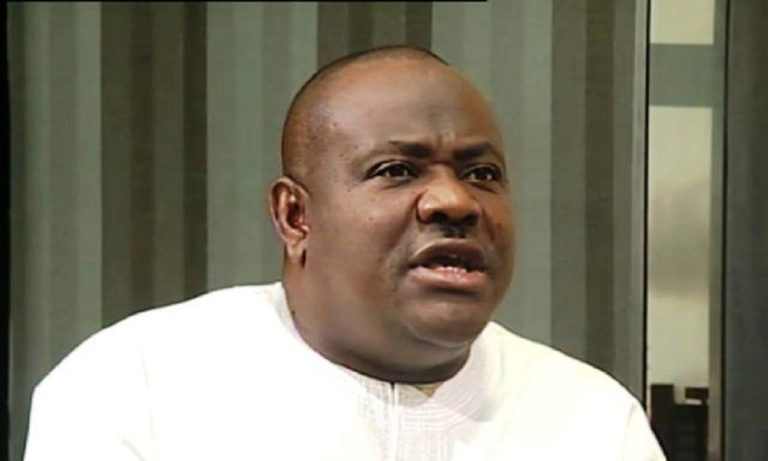
Security operatives attached to Nyesom Wike, Governor of Rivers State and those of Rotimi Amaechi, Minister of Transportation, clashed in Port Harcourt, the Rivers State capital on Saturday.

The altercation was said to have occurred while Wike was on an inspection tour of some ongoing projects in the capital city.

Describing the incident, Wike’s Simeon Nwakaudu, Special Assistant on Electronic Media, said it was a deliberate assassination attempt on the Governor.

Nwakaudu said the attack was led by Amaechi’s Aide-De-Camp and the Rivers State commander of the Special Anti-robbery Squad of the Nigerian police.

“The SARS personnel and soldiers in the minister’s convoy mowed down the governor’s escort rider and attacked the policemen in the pilot car,” Nwakaudu alleged in a statement he issued late on Saturday.

“Mr. Seimeikumo Debewari, Aide – De- Camp to the Minister of Transportation, Rotimi Amaechi , supervised the attack , which led to the damage of cameras held by journalists.

“Mr. Debewari is the same police officer who assaulted members of the Rivers State House of Assembly in the fracas of 2014.

“Also, the Commander of Rivers SARS, Mr. Akin Fakorede, who received the minister of transportation at the Port Harcourt International Airport and accompanied him on his trip, took part in the attack.

“The minister of transportation had over 50 SARS personnel, soldiers and mobile policemen in his motorcade.

“However, while the SARS officers stepped down to assault the security personnel of the governor, the soldiers remained in their vehicle watching the scene.”

Nwakaudu added that the attack did not deter Wike from continuing with the inspection.

However, Amaechi said it was Wike’s security details that had pulled guns on him and vandalised his car.

According to a statement issued by his Media Office, Amaechi described Wike’s claim of an attempt on his life as a blatant lie.

“In a blatant show of naked raw power, the Minister of Transportation, Chibuike Rotimi Amaechi , this afternoon narrowly escaped being shot by security men attached to the Governor of Rivers State, Nyesom Wike,” the statement read.

“His car wasn’t that lucky though. The car was vandalized and left with a broken side mirror.

“Accompanied by cars of many of his supporters, the minister’s black SUV was intercepted and blocked at the junction by the security motorcycle outrider attached to Wike after two cars had passed through.

“One of the two cars conveyed security men assigned to protect the minister in Port Harcourt .

“Suddenly, security men attached to Wike’s convoy surrounded the minister’s car, threatening to shoot him.

“They hit the car, tried to smash the windscreens, windows and broke a side mirror.

“All through this attack, Amaechi remained calm inside the fortified vehicle. Wike also stayed inside his vehicle.

“The minister eventually passed through after the intervention of the security team on the ground to protect him in Port Harcourt.

“However, when Governor Wike got to the point where the incident occurred after Amaechi’s vehicle had gone, his security men blocked the road again, and thoroughly beat up a policeman attached to Amaechi in Port Harcourt. The policeman’s rifle was also taken from him.”

But Nnamdi Omoni, the Rivers State Police Public Relations Officer, confirmed that there was no assassination attempt on anyone, describing the incident as a mere altercation between the security details of Wike and those of Amaechi.

Omoni also said that the State Police Commissioner had ordered that policemen involved in such altercation should be arrested.

Probe Okorocha’s ‘N1b erections’, SERAP tells anti-graft agencies

Socio-Economic Rights and Accountability Project, (SERAP) has asked Muhammad Isah, acting Chairman of the Code of Conduct Bureau (CCB) and Professor Bolaji Owasanoye, acting Chairman of Independent Corrupt Practices and Other Related Offences Commission (ICPC) to investigate Rochas Okorocha, Governor of Imo State over alleged abuse of office and conflict of interest.

Particularly, SERAP wants the anti-corruption agencies to “jointly investigate allegations of incompatibility and/or apparent conflict of interest situation, and abuse of office involving Okorocha in connection with the exercise of his public functions and leadership of the Rochas Okorocha Foundation”.

The organization said that “such investigation would help to improve public confidence in public authorities, and minimize the risks of bad government by public officials”.

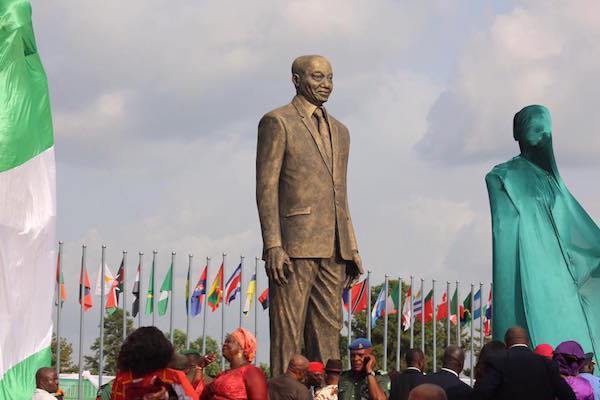
In a petition dated November 10, 2017, signed by Adetokunbo Mumuni, SERAP Executive Director, the organization expressed “serious concern that Governor Okorocha may have spent over N1 billion of public funds to build statues of South African President Jacob Zuma and Liberian President Ellen Johnson-Sirleaf”.

It noted that “the spending on statues and apparent misuse of public resources may have violated constitutional provisions and international standards on code of conduct for public officers. The initiatives cannot be justified under any circumstances whatsoever, especially at a time when Imo state is unable or unwilling to pay teachers’ salaries and pensioners’ entitlements”.

The petition copied to Ibrahim Magu, acting Chairman of EFCC reads in part: “Inviting Zuma and Johnson-Sirleaf to attend the opening of his Foundation and then ‘honouring’ them with statues suggest abuse of office and apparent conflict of interest situation, as such acts were undertaken by Governor Okorocha in the exercise of his public functions to presumably promote and advance the commercial and other interests of the Foundation.

“SERAP believes that rather than serving the common interest of the public, spending over N1 billion possibly of public funds on Zuma and Johnson-Sirleaf in the context of their participation in the opening of the Rochas Okorocha Foundation would seem to put Governor Okorocha in a conflict of interest situation.

“SERAP notes that the Nigerian Constitution 1999 (as amended) and UN Convention against Corruption to which Nigeria is a state party prohibit conflict of interests and set ethical standards for public officers.

“Indeed, both the Constitution and the Convention require public officers to abstain from all acts that may compromise the exercise of their public office and functions, or are inconsistent with their entrusted positions.

“Public officers also must discharge their public duties truthfully and faithfully, abide by the constitutional code of conduct, observe the primacy of public interest, and not allow their personal interest to influence their official conduct.

“The CCB and ICPC should carry out joint investigation in collaboration with the EFCC of the allegations of conflict of interest, abuse of office and apparent misuse of public funds by Governor Okorocha.”

SERAP also urges the CCB and ICPC to prosecute Governor Okorocha after leaving office if there is relevant and sufficient admissible evidence of abuse of public office against him.

“Conflict of interest represents a situation where the person exercising a public function has a personal interest of patrimonial or commercial nature, which could influence the objective fulfilment of the duties incumbent on public officers under the Constitution and international standards.

“Conflict of interest arises from a situation in which a public official has a private interest which is such as to influence or appear to influence the impartial and objective nature of his or her official duties in order to promote private interests, which would be contrary to the public interest,” SERAP explained.

“According to reports, Governor Okorocha recently hosted two African presidents—South African President Jacob Zuma and Liberian President Mrs Ellen Johnson-Sirleaf and built statues in Owerri to ‘honour’ them. The statues reportedly cost over N1 billion to build.

“Further, a Memorandum of Understanding between the Zuma Foundation and the Rochas Foundation was signed, while Mrs Johnson-Sirleaf visited the newly established Rochas Foundation College of Africa (ROFOCA).”

Jonathan: Nigerians want me back…but I have moved on

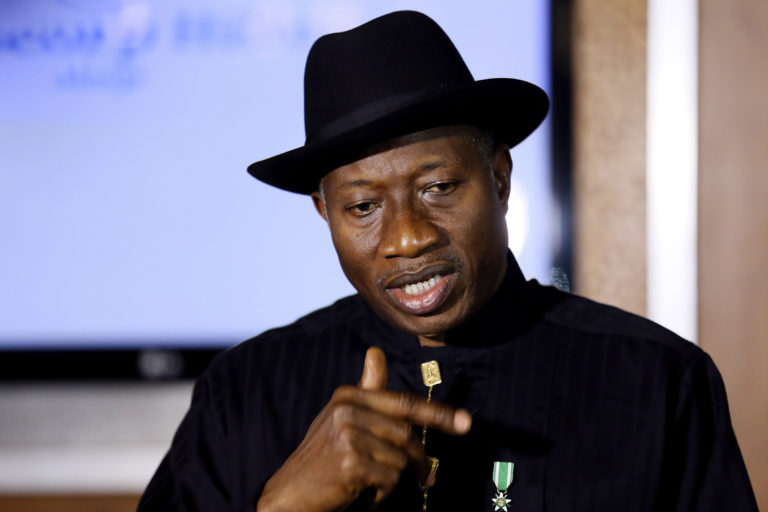
Goodluck Jonathan, former President of Nigeria says he has been under pressure from Nigerians who are asking him to recontest the position of the president in 2019 after his exit in 2015.

But Jonathan who said this in a recent interview with Dele Momodu, publisher of Ovation Magazine says he doubts the possibility of his coming back to contest as Nigerian president.

“I’m not God but I sincerely doubt the possibility,” he said.

“People come to me every day saying they want me back. I’m always moved to tears whenever I go out and see the huge crowds shouting GEJ, we want you, even in the north.”

Though the former president said he is always moved to tears when he sees huge crowds shouting ‘GEJ we want you back’, he disclosed that reflections on his achievements and mistakes make him sober.

“Instead of getting swollen headed, I actually reflect on my achievements and mistakes and feel humbled and feel very sober…

“I have never been a man of inordinate ambition. I’m a man of very modest means. I hardly travel because of the logistical costs. I’ve played my part and I have moved on.” Jonathan said

No law stops me from marrying policewoman, says IGP

0

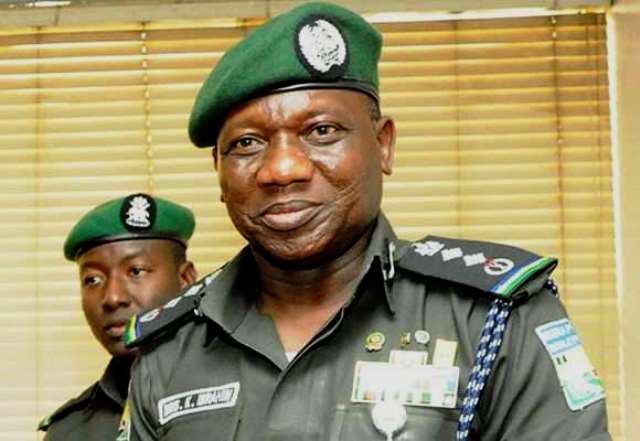
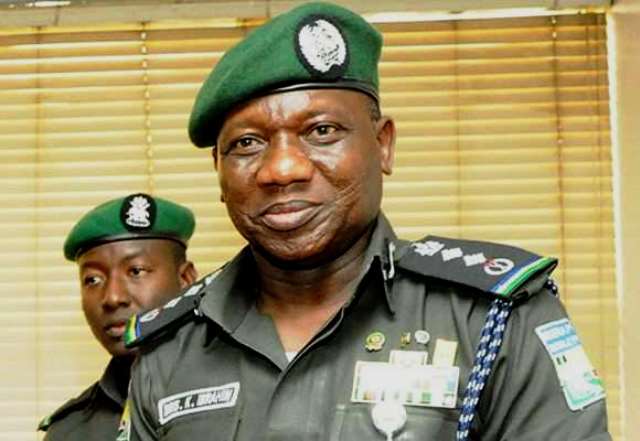
Ibrahim Idris, Inspector-General of Police, says there is no law that prevents him from marrying a serving female police officer.

He stated this in response to Isa Misau, the lawmaker representing Bauchi Central Senatorial District, who accused him of having an affair with a junior female colleague.

Punch reports that the response was contained in a written defence, Idris presented through his lawyer, Alex Iziyon (SAN), to the Senate ad-hoc committee investigating the allegations against him by the senator.

Idris, who earlier declined the committee’s invitation due to pending court cases over the matter, appeared before the Senate panel on Wednesday, accompanied by Iziyon and the Special Assistant to the President on National Assembly Matters (Senate), Ita Enang.

He specifically asked the senator to cite a section of the law that prevents him from having romantic relationship with a policewoman.

The police boss recalled that Misau’s father married the lawmaker’s mother while in service.

On the allegation that Idris was having affairs with two female officers who also got questionable promotions as a result, Iziyon said, “This allegation is laughable and showed lack of understanding of the provisions of the Police Act and regulation.”

The Inspector-General of Police challenged the senator to cite the section of the Police Act and Regulation which forbids a police officer from marrying another police officer.

“Until he (Misau) brings such section of the Police Act, it will amount to discussing the Inspector-General of Police’s private life, which ordinarily should not have been entertained on the floor of the Senate,” Iziyon stated.

“It might be appropriate to remind the senator, whose mother retired from the police as an Inspector of Police and a father who retired from the police as an Assistant Inspector-General of Police, that the Inspector-General of Police is a Muslim, and according to Islamic Law, can marry four wives provided he can love them equally.

“The senator also alleged that the Inspector-General of Police is in a relationship with one Corporal Amina whom he claimed was promoted from the rank of Corporal to an Assistant Superintendent of Police within 12 months.

“This allegation is false and the senator is under obligation to give the full particulars of the female police (officer), where she is serving and her duty post. It is not possible to promote a corporal to the rank of an ASP except the officer has attended an in-service cadet course.”

EFCC reacts to whistle-blower allegations

0

The Economic and Financial Crimes Commission (EFCC) says Ibrahim Magu, chairman of the commission, was misunderstood on the payment of reward to the person who gave the information that led to the recovery of huge cash at a luxury apartment in Ikoyi, Lagos.

“What Magu said at the 7th session of the council of state parties to the United Nations Convention Against Corruption in Vienna, Austria, was that citizens should be encouraged to embrace whistleblowing because of the incentives attached,” a statement by Wilson Uwujaren, EFCC spokesman said.

“To illustrate this, he stated that the gentleman who provided the information that triggered the huge recovery at Osborne Towers in Ikoyi was already a millionaire based on the incentive in the whistleblower policy where information providers are entitled to between 2.5 and 5 percent of the recovered sum.”

The EFCC said it was not even directly involved in the payment of whistle-blowers. “Magu never said that the young man has been paid. The commission is not even directly responsible for the payment of rewards to whistle-blowers.”

The claim by Magu that the whistle-blower had become a millionaire had generated controversy with the revelations that the man had not been paid a dime.

Yakubu Galadima, the lawyer to the whistle-blower said his client has not been paid despite several efforts made to get the man’s reward.

Galadima said instead of paying the whistle-blower, he had been called a “mad boy” by the EFCC and detained at the psychiatrist hospital.

The Federal Government had in December 2016 adopted a policy on whistle blowing to encourage citizens to report financial and other related crimes to relevant authorities.

According to the policy, whistle-blowers whose revelations lead to the recovery of money are entitled to as much as five percent of the recovered sum.


Buhari: I will ‘look into’ allegation of lop-sided appointments

President Muhammadu Buhari says he has directed that a list of all heads of parastatals be submitted to him without delay.

Femi Adesina, Special Assistant to the President on Media and Publicity, quoted Buhari as saying this when he received a delegation of Christian Leaders, led by Samson Ayokunle, the President of the Christian Association of Nigeria (CAN).

According to a statement issued by Adesina, Buhari promised CAN leaders that he would look into the claims of lopsided appointments in his administration.

“On the question of one-sided appointments, we will look at it. I have given instructions that a list of all heads of parastatals be submitted to me and I know they will not delay in doing that,” he said.

Buhari also said his administration would reform the police and judiciary as both institutions are critical to the security and stability of the nation.

“We need a good police force and judiciary to really maintain the legitimacy and the confidence of the populace in governance,” he said.

Buhari also met with leaders of the Jama’atu Nasril Islam, led by Khalid Aliyu, Secretary-General of the Islamic group.

The promise to review presidential appointments is coming few days after the Presidency released a list it claimed was the “full list” of all appointments made by Buhari in response to a report that more than 80 out of 100 appointees of the President were from the North.