Home Blog Page 2686

Tackling corruption in Nigeria through whistle blowing

0

By Chido Onumah

I crave your indulgence to preface this speech by reiterating what all of us already know: that corruption is the number one enemy of our country, and, therefore, the main reason Nigeria remains underdeveloped. It is generally agreed that corruption is the canker that is destroying the foundation of our society and that if no drastic measures are taken to deal with it, we would, very soon, have no country to speak of.

At the African Centre for Media and Information Literacy (AFRICMIL), a not-for-profit organization dedicated to advancing media and information literacy, training and advocacy, as well as promoting accountability and good governance, we have for long been deeply worried by the growing damaging effects of corruption in the country.

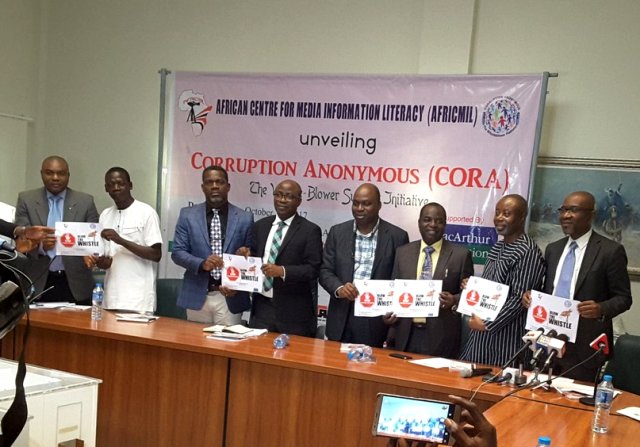
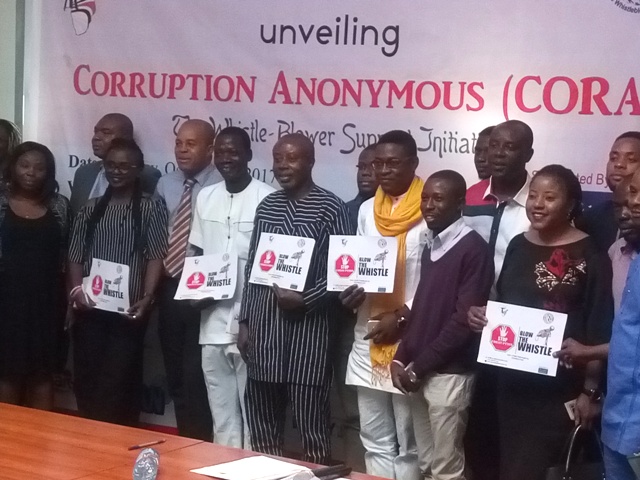
As a civil society organization, it is our belief that we can play a vital role in challenging the unremitting incidence of corruption in Nigeria. And we see in the whistle-blower policy of the federal government the opportunity to weigh in in a more significant way in our earnest desire for a corruption-free society. This was the thinking that went into the robust intervention we have tagged Corruption Anonymous (CORA), a project supported by the MacArthur Foundation.

Perhaps, not many of us realize that we have a constitutional duty to provide information or help law enforcement agencies in the discharge of their duties. The Nigerian Constitution enjoins every citizen in Section 24(d) to make positive and useful contribution to the advancement, progress and well-being of the community where he or she resides; and in Section 24(e) to render assistance to appropriate and lawful agencies in the maintenance of law and order.

AFRICMIL believes that government on its own cannot win the war against corruption without the input of the citizens. Corruption Anonymous is, therefore, focused on mobilizing citizens as the critical factor of success in the anti-corruption campaign through whistleblowing.

Corruption Anonymous seeks to do three basic things (1) to build confidence and support for the whistleblower initiative of the federal government; (2) advocate for proper implementation of the policy, and institutionalization of the guidelines; (3) reinforce the safety and protection of citizens who dare to blow the whistle on acts of corruption. But Corruption Anonymous will do more. Apart from serving as a platform for citizens to engage in whistleblowing and interrogating the workings of the whistle-blower policy, CORA would provide the tools for the media to enhance its investigative work.

To achieve its goal of popularizing whistleblowing and making Nigerians see the need to adopt it as a strategic tool for reducing corruption, AFRICMIL has lined up a series of activities some of which include the public launch of CORA, creating awareness through media and civil society engagements, stakeholders’ forum and periodic training for agencies of government, as well as a series of focused public education in cities across the six zones of the country.

So far for the whistleblower policy, it is safe to say it has been a success. Whistleblowing has added a fresh impetus to the anti-graft war. In less than a year of its inauguration, it has led to the recovery of staggering amounts of looted funds, thus proving to be an effective and reliable mechanism for combating the one singular vice that seems to have permanently arrested the development of Nigeria since independence.

As of June 2017, N11.6bn had been recovered and about N375.8m paid to 20 whistleblowers. Going by figures available to AFRICMIL courtesy of the Presidential Advisory Committee Against Corruption (PACAC), by June 5, 2017, total communications received by the Federal Ministry of Finance, which is the implementer of the policy, was 2,150. Of these, 128 came through the Ministry’s website that receives reports (www.whistle.finance.gov.org); 1,192 was through phone calls (08098067946); 540 through SMS and 290 by Email (whistle@finance.gov.ng).

Total number of tips received was 337, out of which 29 was classified and 308 unclassified. 53 of these tips came through phone calls, 105 through SMS, 120 through the website and 59 through Email. 205 tips from 205 agencies were classified as actionable. Within two months, by the middle of August, total communications received by the Ministry of Finance through the various channels rose from 2,150 to 5000, representing 43% increase, while actionable tips jumped from 205 to 365, representing 56.2% increase. More than half of the actionable tips received, according to the Minister of Finance, Mrs. Kemi Adeosun, were from public servants.

But AFRICMIL believe a lot still needs to be done. In about nine months of its engagement with the whistleblower policy, it has noted three issues that should be of great concern to well-meaning citizens as they pose serious threat to the survival of whistleblowing in Nigeria.

One is the lack of awareness of the whistle-blower policy. Take a walk around town and ask Nigerians, chances are that nine out of ten would not have heard about the policy much less have any idea of how to submit tips. The second is the glaring absence of commitment to the safety and protection of whistleblowers. Unfortunately, as we have observed, public servants face one form of victimization or the other for disclosing wrongdoings in their various offices. And finally, the refusal, in most cases, of anti-corruption agencies to act diligently on reports made to them by whistleblowers. Most of those who are reported are often left to walk free and never invited for questioning, much less suspended from office as the public service rules recommend.

But for the role of AFRICMIL and that of other civil society groups and the media, an Assistant Director in the Ministry of Foreign Affairs, Mr. Ntia Thompson, who was unjustly sacked for reporting fraud in his department, would not have been reinstated. And when he was recalled, Thompson, who was head of Servicom, was redeployed to the library. Presently, Corruption Anonymous is engaging the Minister of Power, Works and Housing, Mr. Babatunde Fashola, whose office supervises the Federal Mortgage Bank of Nigeria, on the case of Mr. Murtala Ibrahim of the audit department of the bank who was sacked on May 8, 2017, for also blowing the whistle on fraud in the bank.

We can’t emphasize enough the fact that whistleblowing can only make the desired impact and survive if whistleblowers enjoy full protection from persecutions of any kind, and those against whom reports are made are punished for their crime. So, it is important, going forward, that the usual fear nursed by potential whistle-blowers that their safety may be compromised, or that they could be short-changed (where there is a recovery) and officials in the agency responsible for managing and implementing the policy may undermine the rules of the system, among other things, is addressed.

In conclusion, I wish to observe that the whistle-blower policy is one of the significant things that have happened to the fight against corruption in our country. We hope we can all lend it our maximum support and encourage our fellow citizens to blow the whistle to reduce corruption to its barest minimum in our country.

Onumah is coordinator, African Centre for Media and Information Literacy. He gave this speech at the unveiling of Corruption Anonymous (CORA), the civil society whistleblower support initiative, October 12, 2017.

IGP begs court to stop Senate from investigating him

Ibrahim Idris, the Inspector General of Police has approached an FCT High Court asking it to bar the Nigerian Senate from investigating him.

Bukola Saraki, the Senate President, had set up an ad-hoc committee to probe allegations of corruption and abuse of office made against Idris by Isah Misau, the senator representing Bauchi Central Senatorial District.

The committee is to be chaired by Francis Alimikhena, with members including Joshua Lidani, Binta Garba, Duro Faseyi, Nelson Effiong, Obinna Ogba, Abdul-Azeez Nyako and Suleiman Hunkuyi.

Misau, a retired police officer, had alleged that Idris rakes in N10 billion monthly (N120 billion annually) in illegal payments to provide police escorts to wealthy Nigerians as well as top companies in the country.

Idris was also accused of impregnating a serving police officer before hurriedly organising a secret wedding for her. Misau also accused Idris of appointing officers from his Nupe ethnic group as commanders to almost all the mobile police formations in the country.

But in the application file by Chris Ogolu, his legal counsel, Idris asked the court to restrain the senate committee “from inviting him, sitting, conducting any hearing on the allegation, discussing or making any report in respect of the planned investigation pending the determination of his suit”.

“The applicant (Idris) is a law-abiding citizen and has fundamental right to dignity of person under Section 34 of the Constitution of the Federal Republic of Nigeria (1999) (as amended), and Article 5 of the African Charter on Human and Peoples Rights (Ratification and Enforcement) Act,” Ogolu stated in the application.

“The applicant occupies a hallowed office as the Inspector-General of Police in Nigeria and is thus in charge of all police officers in Nigeria.

“One Senator Isa Misau, a member of the 2nd respondent (Senate), while raising a matter of urgent national importance, had sometime between September and October 2017, alleged that the applicant instituted roadblocks across Nigeria with the purpose of extorting money from unsuspecting motorists.

“The said Senator, while commenting on his motion, equally alleged that the applicant collects illegal fees by way of security protection given to corporate organisations, eminent citizens and oil companies running into billions of naira.

“The said Senator equally rained a personal attack on the person of the applicant that the applicant is having unwholesome relationship with the female officers in the force.

“Without the first respondent (Saraki), having regard to the relevant constitutional requirements in respect of the 2nd respondent’s role in investigations of allegations, he, in reaction to these frivolous allegations, quickly constituted a committee consisting members of the 2nd Respondent to look into the matter.”

“The act of the first respondent in constituting the committee is ultra vires, unconstitutional, null and void.

“The said committee so constituted is acting ultra vires, unconstitutional, null and void.”

This is coming a few days after the office of the Attorney General of the Federation and Minister of Justice filed two separate court cases against Misau over his allegations against Idris.

Misau was also sued for forgery of vital documents which he presented to the Independent National Electoral Commission (INEC) during the 2011 and 2015 general elections.

UCH resident doctors give 10-days ultimatum strike notice

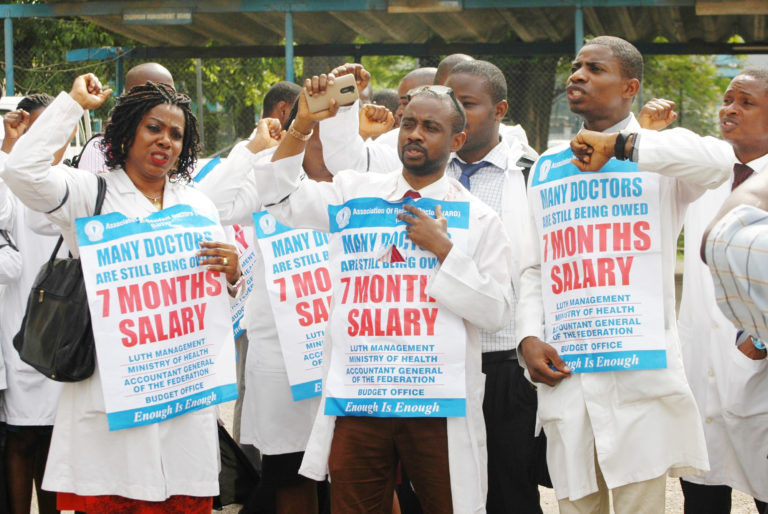
Resident doctors at the University College Hospital (UCH), Ibadan have issued a 10-day strike notice to the hospital management.

This is coming barely a month after the National Association of Resident Doctors (NARD) suspended its nationwide strike.

Segun Olaopa, President of the UCH branch of NARD, who disclosed this development at a news briefing on Friday, noted that the association has held several meetings with the hospital management but they have not yielded any positive outcome.

“It has become imperative to draw the attention of the press to the brewing issues in UCH. These issues if not addressed, may impact negatively on the existing industrial harmony at the hospital,” Olaopa said.

“These issues include: non-payment of our September salary, 28 per cent shortfall in August salary, 2016 shortfalls of 11 months till date and work overload due to management’s refusal to employ new residents.

“Presently, the number of residents stands at 525; this has reduced to 454, as some of them have completed their residency. By this October, 40 among us will also finish the residency.

“The implication of this is that the remaining few residents are given work overload and this should not be; management should employ more residents to make the workload easy and to achieve maximum productivity.

“Resident doctors’ accommodations need to be rehabilitated. The conditions of those flats are nothing to write home about. We implore management to do the needful in order to avert another strike.”

Part of the outcome of the dialogue which led to the suspension of the nationwide strike by NARD was that the Federal Government would ensure immediate release of funds to pay the doctors’ backlog of salaries, but it appeared that has not been the case so far.

Let my mother rest in peace, Patience Jonathan tells Magu

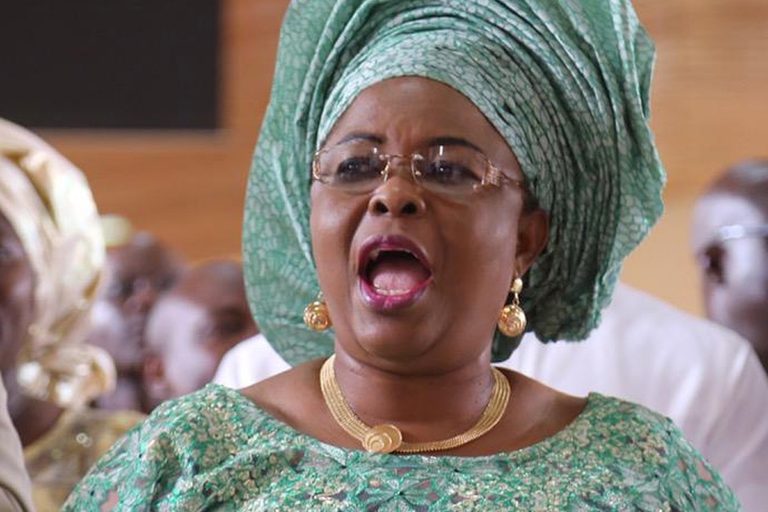
Patience Jonathan, wife of former President Goodluck Jonathan has asked  Ibrahim Magu, Chairman of Economic and Financial Crimes Commission (EFCC) to allow the soul of her late mother  rest in peace.

This was contained in a statement by Belema Meshack-Hart, Chief Press Secretary to the former First Lady, in reaction to allegations by the EFCC that it traced N2.1 billion to Magel Resort Ltd, a hotel which was owned by her late mother, Charity Oba.

“The former first lady had no dealings with the hotel until the demise of her late mum after which the hotel was handed over to her with the presentation of the death certificate of her mum,” Meshack-Hart said in a statement.

“This can be confirmed by Zenith Bank. Mrs. Patience Jonathan does not own Magel Resort Ltd. neither did she open the hotels account with Zenith Bank. The late mother of the former first lady should be allowed to rest in peace.”

While also reacting to allegations by the EFCC that she used her foundation Aruera Reachout Foundation, to launder stolen money, Patience said her foundation treated over 700 children and adults with heart-related ailments at the tune of over N3.5 billion.

According to the statement, she said her foundation “is a non-governmental, not-for-profit organisation established in 2006” and had a medical unit which sponsored the treatment and surgery of children and some adults with heart conditions.

“Till date, over 700 children have benefited from the Aruera Reachout Foundation, this alone cost the foundation billions, it is not news that the logistics involved in the treatment of heart disease cost over N5 million per child,” Meshack-Hart stated.

“This demonstrates the caring and maternal nature of Nigeria’s former first lady. God has used her as an instrument to positively touch the lives of some of our nation’s sick children, to make them healthy and happy through the appropriate medical intervention.

“It is now strange and sad that the EFCC will allege that such foundation only existed to launder funds.

“The many sick children that would have died but now live a happy life will stand as testament against the baseless propaganda and shameless allegation of the EFCC.

“It is worthy of note that the foundation which is duly registered by the CAC is free to receive donations from reputable individuals and organisations for its projects just like any other NGO.”

Patience also rejected ownership of a $12 million Diamond Bank account which the EFCC allegedly traced to her.

“For avoidance of doubt Mrs. Patience Jonathan does not have $12,831,173 domiciled in Diamond Bank as alleged by the EFCC. Anyone with proof should provide evidence and take advantage of the whistle-blower policy,” the statement read.

Customs intercepts 27 ‘smuggled’ Toyota Hilux cars in Abuja

The Nigeria Customs Service says it has seized 27 Toyota Hilux vehicles from two open car stands in Abuja over suspicion that the cars were smuggled into the country.

Aminu Dangaladima, a Deputy Comptroller-General of Customs, made this known during a press conference at the headquarters of the Service in Abuja.

Dangaladima said the operation was carried out by the NCS compliance team following credible intelligence report.

“On Wednesday 10th October 2017, based on credible intelligence, operatives of NCS Compliance Team went to two open car stands along Kubwa express-way in the Federal Capital Territory and evacuated 27 Toyota Hilux pick-up vehicles suspected to be smuggled into the Country,” Dangaladima said.

“These vehicles have estimated duty paid value (DPV) of over N432,000,000 million.

“We urge the owners of these vehicles to come forward with valid Customs clearance documents otherwise they will be liable to Seizure and subsequent Forfeiture to the Federal Government in-line with laws of the land.”

Dangaladima recalled that Hameed Ali, the Comptroller-General of Customs, had briefed the press about the interception of 18 exotic vehicles in Abuja, 13 of which were bullet proof.

“The Service under his (Ali’s) leadership will enforce the powers given in the Customs and Excise Management Act (CEMA) effectively,” Dangaladima said.

“For the avoidance of doubt, what we are doing is in-line with the provisions of Sections 147 of Customs and Excise Management Act (CEMA) Cap 45, Laws of the Federation of Nigeria 2004 (power to search premises), Section 158 of CEMA, Cap 45 Laws of Federation of Nigeria (power to patrol freely).

“It must also be understood that being in possession of smuggled items is an offence under Section 3 of Customs and Excise (special penal and other provision) Act Cap 47 Laws of Federation of Nigeria 2004.”

With regards to the hundreds of pump action guns seized by the customs at the Tin Can Island Port in Lagos, Dangaladima said more progress is being recorded.

“More arrests have been made and the CGC will be on the entourage of Mr. President to Turkey for sideline bilateral meeting with the Turkish Customs Authority,” he said.

“This is with the aim to permanently deal and put an end to such deadly importation coming from Turkey.

“NCS under the on-going reforms has continued to improve in all aspects, especially in the areas of suppression of smuggling.

“The idea that one can comply with laws of other countries and contravene Nigerian Laws on arrival here can no longer be tolerated.

“NCS will continue to contribute its quota to National economic development and security.”

Osinbajo says what he approved for NNPC were financing loans not contracts

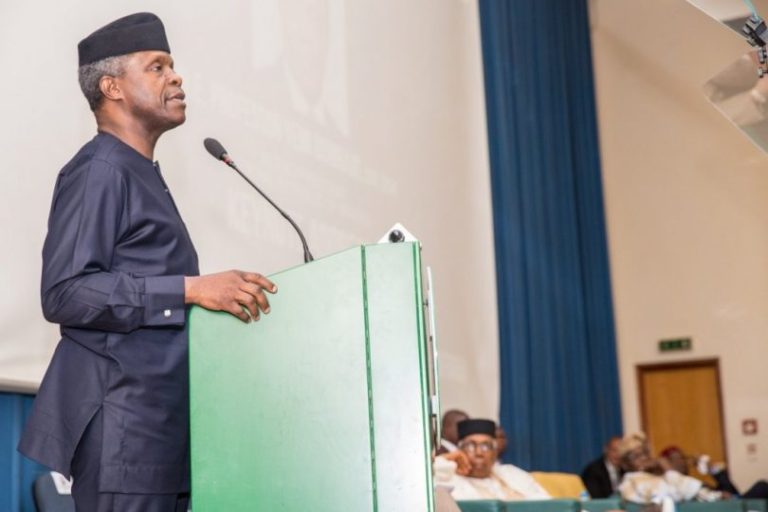
Vice-President Yemi Osinbajo says he only approved NNPC’s financing loans when President Muhammadu Buhari was away on medical vacation, and not contracts as was widely reported in the media.

Laolu Akande, Osinbajo’s media aide, made this known in a statement he issued late on Thursday.

Akande quoted Osinbajo as making the clarifications in Bonny, Rivers State, after the groundbreaking ceremony of the Bonny-Bodo Road project.

“These were financing loans. Of course, you know what the Joint Ventures are, with the lOCs (International Oil Companies) like Chevron that had to procure.

“In some cases, NNPC and their Joint Venture partners have to secure loans and they need authorisation to secure those loans while the President was away.

“The law actually provides for those authorisations. So, I did grant two of them and those were presidential approvals, but they are specifically for financing joint ventures and they are loans not contracts,” Osinbajo was quoted as saying.

In a series of tweets earlier on Thursday, Akande wrote: “In response to media inquiries on the NNPC Joint Venture financing arrangements, VP Osinbajo, as Acting President, approved the recommendations after due diligence and adherence to established procedures.

“This was, of course, necessary to deal with huge backlog of unpaid cash calls which the Buhari administration inherited, and to incentivise much-needed fresh investments in the oil and gas sector.”

However, this was reported in the media as an admission by Osinbajo that he actually approved some contracts for the NNPC, hence the need for the clarification.

Ibe Kachikwu, Minister of State for Petroleum Resources, had written a memo to President Muhammadu Buhari, complaining about acts of “insubordination” by Maikanti Baru, the group Managing Director of the NNPC.

Kachikwu accused Baru of unilaterally taking important policy decisions, including appointments to key positions and award of contracts, without consulting the Board of the NNPC of which he (Kachikwu) is the chairman.

But the NNPC issued a statement denying the allegations and insisting that Baru had complied with laid down procedures in all his activities as the head of the corporation.

Nigeria spends less than one percent of its GDP on healthcare, says World Bank

Jim Yong Kim, President of the World Bank Group, says the Nigeria spends less than one per cent of its Gross Domestic Product (GDP) on healthcare.

Acknowledging that the fall in the price of crude oil in the international market has adversely affected the Nigerian economy, Kim advised President Muhammadu Buhari to invest more on human capacity development which is certain to ensure sustainable economic growth in the long run.

Kim noted that at Buhari’s request, the World Bank is focusing majority of its activities in Northern Nigeria, a region he admitted has been very difficult to work in.

“You know, in my very first meeting with President Buhari he said specifically that he would like us to shift our focus to the northern region of Nigeria and we’ve done that.  Now, it has been very difficult. The work there has been very difficult,” Kim said during a press conference in Washington, United States of America.

“I think Nigeria, of course, has suffered from the dropping oil prices. I think things are just now getting better.  But the conversation we need to have with Nigeria, I think, is in many ways related to the theme that I brought to the table just this past week, which is investment in human capital.

“The percentage of the Gross Domestic Product that Nigeria spends on healthcare is less than one percent.

“Despite that, there is so much turbulence in the northern part of the country, and there is the hit that was taken from the drop in the oil prices.

“Nigeria has to think ahead and invest in its people. Investing in the things that will allow Nigeria to be a thriving, rapidly growing economy in the future is what the country has to focus on right now.

“Focusing on the northern part of Nigeria, we hope that as commodity prices stabilise and oil prices come back up, the economy will grow a bit more. But very, very much important is the need to focus on what the drivers of growth in the future will be.”

Kim also said that the World Bank is investing in human capital development across the Africa continent so as to prepare it for the next phase of economic growth.

At a separate press conference in Washington, Christine Lagarde, Managing Director of the International Monetary Fund, IMF, said though Sub-Saharan African countries, including Nigeria, has recorded some economic growth recently, it was too small considering the potential of the countries in the region.

“The Sub-Saharan Africa is one region of the world where growth is suboptimal. Those countries grow at an average growth of 2.5 per cent. That is too low for the demographic expansion of the region,” Lagarde said.

She added that the IMF will meet with Finance Ministers and central bank governors from the region to brainstorm on how they could boost and stabilise economic growth.

ANTI-CORRUPTION: See something, say something, Magu urges Nigerians

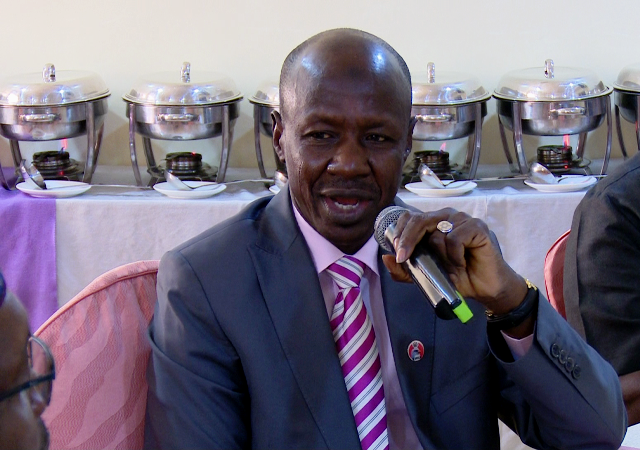
Ibrahim Magu, Acting Chairman of the Economic and Financial Crimes Commission (EFCC) says Nigerians have no choice than to always blow the whistle over any act of corruption.

Magu said this on Thursday in Abuja during the launch of Corruption Anonymous (CORA), an anti-corruption initiative of the African Centre for Media and Information Literacy (AFRICMIL).

Represented at the event by Osita Nwajah, Director of Public Affairs in the EFCC, Magu expressed delight that Nigerians are taking advantage of the whistle-blower policy of the federal government not just because of the benefits to be enjoyed but because many have seen the need to join forces with government in fighting the menace.

“I am glad to report that Nigerians have so far been very responsive, despite the unholy alliance of the corrupt who are fighting back seriously,” Magu said.

“Nigerians from all walks of live have seen reasons why this war must be fought collectively and why corruption must be brought to its knees and those who feed in its temple are stooped and punished.

“This goodwill and prayers and support of Nigerians continue to give us the strength needed to push this war.

“Through this window, we have seen many Nigerians whose motivation was not just to benefit from the recoveries as promised by the federal government, but the satisfaction of having to see that what was ill-gotten has been recovered for the good of all.”

Magu pointed out that so far, the whistle-blowing policy had led to the recovery of “N527,643,500; $53,222,747; GBP 21,222,890 and Euro 547,730″.

He commended AFRICMIL “for taking interest in this important aspect of the war against corruption”.

Chido Onumah, Executive Director of AFRICMIL, said his organisation took up the CORA project as its own contribution to rid Nigeria of the scourge of corruption.

Onumah however said government must demonstrate its willingness not only to reward whistle-blowers but also to ensure that they are protected from intimidation and persecution as this will encourage more people to volunteer information to appropriate authorities.

“What we really think is key is the protection of whistle-blowers and that’s one particular area that is very close to our hearts as far as this project is concerned,” Onumah said.

“If whistle-blowers feel they won’t be protected, there will be no basis for them to blow the whistle.”

Onumah narrated the story of Ntia Thompson, a staff of the Ministry of Foreign Affairs, who was removed from office for exposing acts of corruption.

According to Onumah, Thompson was later recalled after series of intervention by AFRICMIL, but he was posted out of his original department to the Library section “until eventually he was frustrated out of the ministry.”

He also mentioned the case of Murtala Ibrahim, who was sacked from the Federal Mortgage Bank of Nigeria for blowing the whistle and is yet to be recalled despite all efforts by AFRICMIL.

“He (Ibrahim) hasn’t been recalled but we are hoping, we’ve written to the Minister, we’ve done a number of other things and we’ll keep following up,” Onumah said.

“The media also should help in this regard by bringing their issues to public attention. This can be the basis for further investigative reporting.

“The more the public understands what’s going on, the more the agencies and institutions of government that are responsible know that the public is aware of what is going on and as such we will be able to put pressure on them to act.”

The event was also attended by Bolaji Owasonoye, Acting Chairman of the ICPC, representatives of the Ministry of Justice, Public Interest Lawyers League (PILL) and the Nigeria Extractive Industries Transparency Initiative (NEITI).

Nigerians can follow the initiative on tweeter @CORANigeria using the hashtag #blowthewhistlenaija.

US says it will become a ‘permanent observer’, no longer member of UNESCO

0

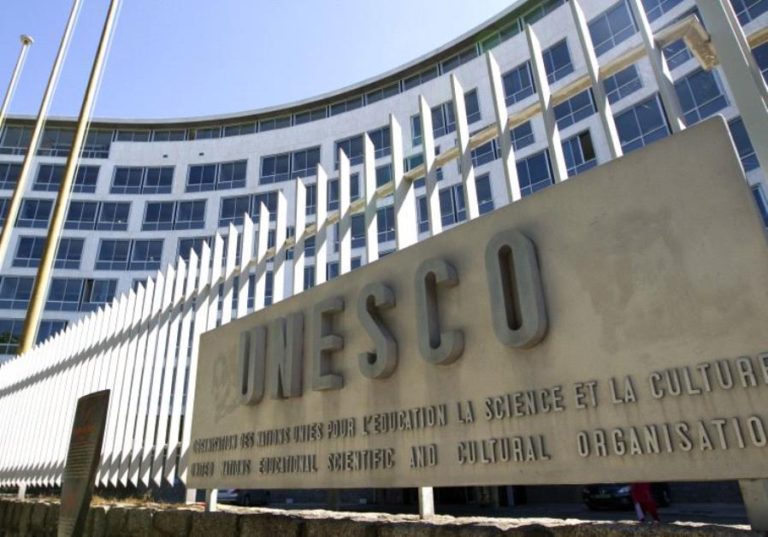
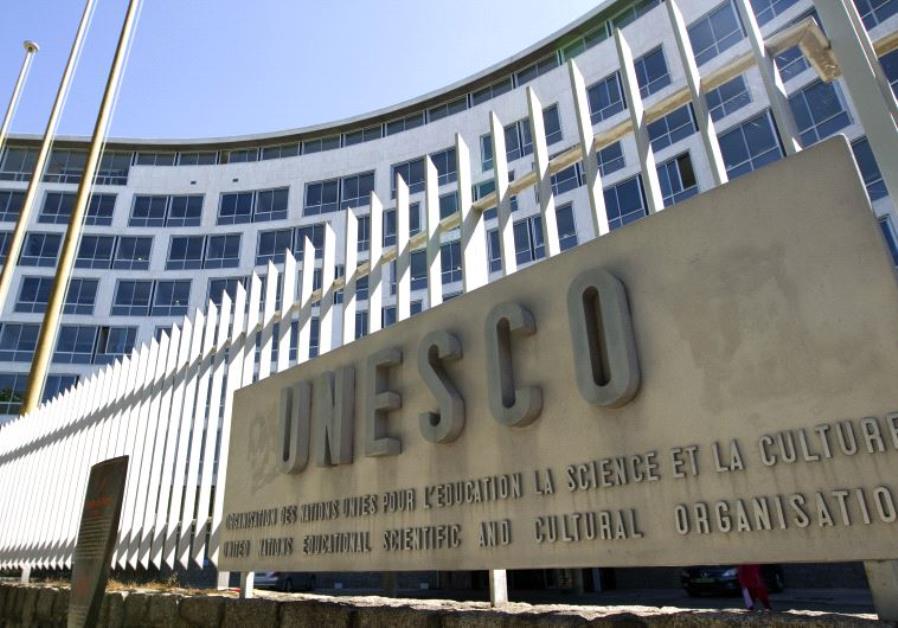
The United States has notified the United Nations Educational, Scientific and Cultural Organisation (UNESCO) that it is pulling out to assume a stance as a “permanent observer”, instead of an active member of the organization.

Heather Nauert, US State Department spokeswoman, said the country would establish an “observer mission” to replace its representation at the Paris-based agency.

The country cited UNESCO’s “anti-Israel bias” as its reason for pulling out of the organization.

The US was irked in 2011 when UNESCO granted Palestine full membership of the body, despite opposition from Israel, a close ally of the US.

In a statement on Thursday, Nauert said the withdrawal is to take effect by December 31, 2018.

“This decision was not taken lightly, and reflects US concerns with mounting arrears at UNESCO, the need for fundamental reform in the organization, and continuing anti-Israel bias at UNESCO,” the statement read.

“The United States indicated to the director-general its desire to remain engaged with UNESCO as a non-member observer state in order to contribute US views, perspectives and expertise on some of the important issues undertaken by the organization, including the protection of world heritage, advocating for press freedoms and promoting scientific collaboration and education.”

This development comes as UNESCO vote to select a new director general this week.

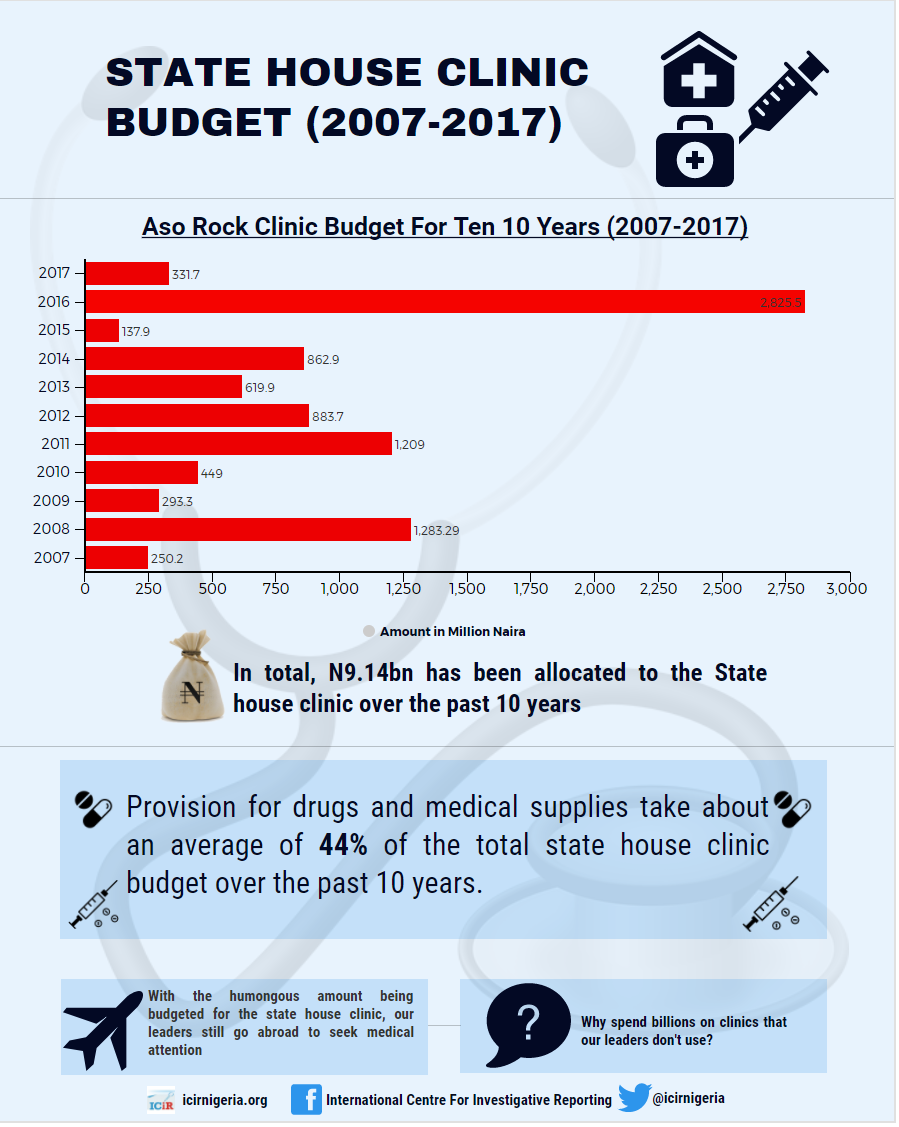
State House Clinic got N9.14bn in 10 years,yet no paracetamol, syringes

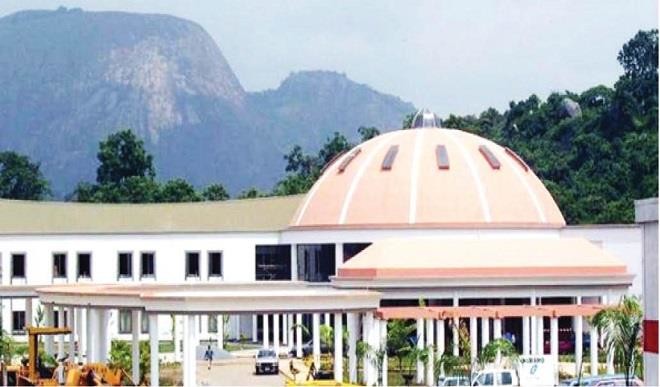
Over the years, it has become a norm, or some unwritten law, for members of the first family in Nigeria to embark on frequent trips abroad to receive medical attention.

This is in spite of the fact that every year, billions of Naira are allocated to the State House Clinic.

On Monday at a stakeholders meeting on Reproductive, Maternal Nutrition, Child Advocacy and Health Nutrition (RMNCAH+N), Aisha Buhari, wife of President Muhammadu Buhari, said that the state hospital could not boast of a single syringe on her visit to the hospital.

Last week, Zahra Buhari, daughter of the president, had purportedly made same observation via her Instagram handle, calling out Jalal Arabi, the Permanent Secretary of the State House clinic, whom she claimed not provide ordinary Paracetamol despite a budget of N331.7million allocated to the state clinic.

Following the comment made by Mrs. Buhari, Daniel Bwala a Legal Practitioner said that the Aso Villa Hospital is “a scam”.

“If a place is called a hospital and it does not have the basics like syringe and hand gloves, you do not have a hospital then, it is a scam,” Bwala said.

He also said that the N3.1billion allocated to the state hospital can be used to construct a world class hospital, depending on the size.

Budgetary allocation to the state house clinic for 10 years (2007-2017)

A look at the budgetary allocations to the State House clinic in the last 10 years show that higher percentage of funds has been for the procurement of drugs and medical equipment but this has not translated into improved service delivery.

Every year members of the first family as well as senior government officials travel abroad in search of medical treatment.

Between November 2009 and February 2010, Umaru Yar’ Adua, former President of Nigeria, spent three months outside the country on medical tourism, despite the fact that the sum of N449 million was allocated to the State House clinic in the budget. Sadly, Yar’Adua passed on in May of 2010.

In August 2012, Patience Jonathan, wife of former President Goodluck Jonathan, travelled to Germany for medical treatment, spending almost three months.

Throughout Jonathan’s tenure, between 2011 and 2015 a total sum of N3.71 billion was budgeted to the State House clinic.

Then enter the change era of President Buhari, who had promised during his campaign to “ban medical tourism by politicians”.

But Nigerians were dealt a rude blow when Buhari announced in February 2016 that he was embarking on a 10-day medical trip to London to treat an “ear infection”.

This is in spite of the N3.1 combined billion budgetary allocation to the State House clinic for 2016 and 2017, higher than the allocation to all the tertiary healthcare centres in the country combined.

Buhari left again in January 2017 and came back in March, spending almost 50 days in what was supposed to be a 10-day leave. Yet again, Buhari jetted off to London in May and returned in August, creating a new record as the Nigerian President that has spent the longest straight days outside the country.

Just last week, the news broke that Anthony Awnukah, Minister of State for Education, is in the United States receiving treatment for an undisclosed illness.

Meanwhile, Nigerian doctors and health workers continually embark on strikes because of non-payment of salaries and poor working conditions. Every year, thousands of newly graduated doctors travel out of the country, to the US and UK especially, in search of ‘greener pastures’, and there seems to be no end in sight to the embarrassment that the Nigerian health sector has become over the years.