Home Blog Page 2692

Nnamdi Kanu’s followers have entered ‘one chance vehicle’, says Nigerian Army

The Nigerian Army says the people following Nnamdi Kanu, Leader of the Indigenous People of Biafra, have entered a one chance vehicle.

“One chance vehicle” in the Nigerian parlance means finding oneself in a bad situation without any means of escaping.

Sani Usman, Director of Army Public Relations, said this during a two-day media conference on military’s enhancement of human rights.

Usman said Kanu took advantage of his eloquence to deceive many people into buying into his propaganda, which was his sole means of livelihood.

Reiterating that the army have no knowledge of Kanu’s whereabouts, Usman insisted that Kanu’s family and his lawyer know exactly where he is hiding.

“There was an allegation that somebody (Kanu) went into hiding. Now, I can’t remember the day but in an interview on Channels TV, one of Nnamdi Kanu’s younger brothers said that he was in hiding and he knew where he was,” Usman said.

“And one lawyer came up that he has taken the Chief of Army Staff to court. Now, who gave you the brief?

“You said you do not know where he (Kanu) is. Now, who gave you the brief? And the media is asking us where is Nnamdi Kanu?

“Why not ask the man that said so who gave him the brief to take people to court when he does not know where the man is?

“That is why those people following him have entered into a one-chance vehicle. This is somebody standing trial in a criminal case.

“Sometimes, whether we like it or not, we want to stand against the truth. But no matter how long, the truth will come to pass on October 17. This is an individual without a means of livelihood.

“I can speak eloquently. So what? If I can speak like him; I can also have my own group, that’s exactly what is happening.

“So, what is the essence of our education as a people? You know that somebody is in a criminal case, and you believe in him.”

Kanu is currently facing treason charges before Justice Binta Nyako of the Federal High Court, Abuja, alongside three others: David Nwawuisi, Benjamin Madubugwu and Chidiebere Onwudiwe.

He was granted bail on health grounds with stringent conditions which he has serially breached, but his co-accused were all denied bail and are currently in Kuje Prison in Abuja.

The next adjourned date for the trial is October 17, but as things stand currently, nobody knows whether Kanu will show up for the hearing as his whereabouts remain unknown.

Stop suffering the righteous and protecting the wicked, Fayose tells FG

Ayodele Fayose, the Governor of Ekiti State, says the Muhammadu Buhari-led Federal Government is one that suffers the righteous and protects the wicked.

Fayose said this on Thursday at Ado-Ektiti, the State Capital, during the celebration of the 2017 World Teachers’ Day.

He lamented that teachers in the state could not be paid their salaries because the EFCC is still holding the State’s Commissioner for Finance and the Accountant General over allegations of misappropriation of bailout funds.

“Those who want to be in governance should have the interest of the people at heart,” Fayose said.

“Not like today, the righteous are suffering (and) there is protection for the wicked. Today, my teachers can’t get paid because of the EFCC arrested my Commissioner for Finance and my Accountant General.

“If they are fighting Fayose, let them fight me. Don’t suffer Ekiti people. You can take my salary if you like, because I won’t stop talking.

“They should look at the plight of these teachers and if they want to do anything they should charge them (the arrested persons) to court. What is right is right.”

Fayose also said that the federal government should understudy Ekiti State so as to learn how to put the nation’s education back in shape.

Ekiti State has emerged tops in the number of candidates that passed the National Examination Council (NECO) Senior Secondary Certificate Examination (SSCE) in 2017.

“There’s no pride. They should come and see. What are we doing differently? Why are we coming first? How did we move from number 35 to number 1?” Fayose said.

“We must be doing something right. The Federal Government too can learn from states. There should be a peer review that should represent the interest of the people more.

“We are doing a lot, we are at the back of our teachers. We listen to them. I pick their calls, when they call me I listen to them. When their children and wards are getting married I’m always part of it. When they are taking chieftancy titles I’m part of it.

“I do not relate to them like teacher-governor relationship. I pick calls, I reply text messages, if can’t do it now I do it later because everybody is important.”

Fayose has declared his interest to run for the 2019 presidential election under the platform of the Peoples Democratic Party, PDP, in spite of the party’s zoning arrangement.

It was during his declaration ceremony in September that the EFCC arrested his Toyin Ojo, Fayose’s Finance Commissioner and Yemisi Owolabi, his Accountant General.

Both men were arrested “following their refusal to honour previous invitations for interrogation in relation to pending investigation on the misuse of bail-out funds by the Ayodele Fayose administration”, read a statement that was later issued by the EFCC.

Osinbajo: Our administration has been fair to all segments of the country

Vice President Yemi Osinbajo says the administration of Muhammdau Buhari has been fair to all segments of the country.

Osinbajo said this on Thursday in Abuja at an event organised by the Situation Room, a civil society organisation.

He said that allegations of marginalisation by the federal government are usually based on perception as facts point to the contrary.

“This government in its decisions and appointments has been fair to all segments of the country,” Osinbajo said.

“On national unity, we need to accept that in a good number of cases, we’re not looking at facts, just perception.”

For instance, Osinbajo explained that ministers are classified as senior or junior, noting that all but one of the ministers from the South East region Nigeria are senior ministers.

Osinbajo also answered questions on various issues that are currently trending in the polity. Issues like the forthcoming Anambra governorship election, the anti-corruption campaign, the menace of Fulani herdsmen, involvement of young people, etc.

He reiterated that the federal government will not interfere in the electoral process or use the security agencies to take sides during election.

On the war against corruption, Osinbajo said: “Yes, our anti-corruption policy is somewhat reactive, but we are also proactive, e.g. through the TSA.

“It is not business as usual, and there are layers and layers of accountability. The Whistleblower policy is proactive.

“I am amazed that civil society is so silent on the anti corruption fight, that there is so little outrage about it. There are hardly any serious activists in the anti-corruption space! I was involved in groups like Integrity.

“Civil Society should be demanding that those who have been named and shamed remain named and shamed!”

Commenting on the issue of youth participation in governance, Osinbajo said that government must remove all barriers that inhibit young people from taking part in politics “but ultimately, people themselves have to show interest”.

UNICEF sets three ambitious goals for Nigeria on early childhood development

Primary one pupils at Government Primary School, Afikpo, Ebonyi State

Two years of free pre-primary education, six months of paid maternity leave, and four weeks of paid paternity leave are the three policies that UNICEF says the Nigerian government must implement to reverse the poor physical and mental growth of children in the country.

Nigeria currently has only one year of free pre-primary education, three months of paid maternity leave, and no paternity leave at all.

At the national Early Childhood Development (ECD) conference in Abuja last week, the UN children’s agency lamented that critical national policies have failed to provide enough foundation for children’s growth.

As Unicef is proposing new policies, the previous ones it helped Nigerian government to develop have not been implemented, otherwise the appalling physical and mental growth status of the children would have been improved upon.

Pre-primary education is an aspect of ECD that has been neglected by government and left for the private sector and development partners.

Ten years ago, Unicef supported the development of the national policy for integrated ECD in Nigeria.

After six years of inaction on the policy by the government, Unicef helped the Federal Ministry of Education to develop the guidelines for implementing the policy in 2013.

One year later, Unicef supported the Nigerian Educational Research and Development Council (NERDC) to develop one-year primary school education curriculum and also supported the development of teacher’s guild for one-year pre-primary school education curriculum.

In 2015, Unicef supported the Federal Ministry of Education to develop the early childhood development standards for Nigeria.

Unicef in 2016 developed ECD teaching methodologies with a focus on Reggio Emilia and other child-centred approaches.

Last week, Unicef gathered ECD specialists from around the world for a three-day conference to tell the Nigerian leaders the importance of investing early in every Nigerian child and to understand that early years matter.

But for the government, investing in early childhood education does not really matter.  While the Federal Ministry of Education will spend N205.8 million to purchase three exotic Toyota LC V8 2016 model at the rate of N68.6 million each, it will spend just N7.2 million for all the activities to improve early childhood education this year.

Part of the N7.2 million earmarked for early childhood education will also be used to fund capacity building for caregivers across the states of the federation.

With this meagre budget for pre-primary education, any significant effort to improve early childhood education will still fall on Unicef and other non-governmental organisations.

Early childhood education as stated in the national policy on education covers the pre-primary school (day-care and nursery) until a child reaches the official school age of 6 years to start primary school.

As important as this formative education is in a child’s cognitive development, only 35 percent of children who are within three to five years are attending an organised early childhood education programme.

Nigeria’s poor status in early childhood education is largely caused by the northern part of the country where enrolment has remained extremely low. In Yobe and Sokoto states, less than 5 percent of eligible children are attending organised early childhood education programme. Apart from Kaduna State, the rest of the 12 states in the northwest and northeast have less than 20 percent of the children attending early childhood education. Meanwhile, in the southern Nigeria, more than 80 percent of the children are attending early childhood education. Ekiti, Imo, Enugu, and Anambra states have more than 90 percent of the children enrolled in pre-primary education.

“Investing in Early Childhood Development including services to support caregivers, quality pre-primary education and good nutrition will help to secure healthy and productive future generations in Nigeria,” says Mohamed Fall, Unicef representative in Nigeria.

During the conference, Unicef launched its new global report on ECD, Early Moments Matter for every child.

“The early moments of life offer an unparalleled opportunity to build the brains of the children who will build the future. But far too often, it is an opportunity squandered,” the report says.

“For nations, the price of not investing in early moments is children with poorer health, fewer learning skills and reduced earning potential. It is a weaker economy and a greater burden on health, education and welfare systems. It is intergenerational cycles of disadvantage that hinder equitable growth and prosperity.”

Swadchet Sankey, Unicef education specialist told the ICIR that investment in pre-primary education is substantially lacking in Nigeria, stressing the need to increase awareness among parents, teachers and government.

“They need to invest more money in training teachers, adding the right curriculum, the right materials,” Sankey says.

“You go to some schools; they only supply books for their primary. It’s like they are just an addendum. Even supervisors when they go to supervise, they hardly enter the pre-primary. When they are training teachers, they only teach the primary school and JSS or they will involve some of the pre-primary but the training they are giving them is not relevant to what they should be doing.”

The evidence is very clear: children who have access to quality pre-primary education do better in primary school and they earn more as adults compared to those who have not had the chance to go through quality pre-primary education.

But the hurdle is convincing an unwilling government that it is better to invest in early childhood education than buying exotic vehicles for officials of the ministry of education.

Anyway, progress is being made as Sunny Echono, the Permanent Secretary of Ministry of Education, pledges that 5 percent of universal basic education intervention fund will now be dedicated to developing the early childhood education.

MONKEYPOX: 10 things you need to know

Residents of Bayelsa State, South-South Nigeria, has been thrown into panic following an outbreak of a disease suspected to be monkeypox.

Medical experts say samples taken from patients have been sent to the World Health Organisation’s reference laboratory in Dakar, Senegal, but they sounded optimistic that the samples will return positive.

“When that (the test result) comes out, we will be sure that it is confirmed. But from all indications, it points towards it,” said Ebitimitula Etebu, Bayelsa State’s Commissioner of Health.

Coming at a time the country’s health sector is facing myriad of challenges, Nigerians cannot afford for this outbreak to get out of hand.

So here are a few things to know about the disease and tips on how to stay safe, especially for people in the Niger Delta region:

ORIGIN

The monkeypox virus was first identified in the State Serum Institute in Copenhagen, Denmark, in 1958 during an investigation into a pox-like disease among monkeys.

But it was first identified in humans in 1970 in Zaire (now known as the Democratic Republic of Congo) in a 9 year old boy in a region where smallpox had been eliminated in 1968.

WAS DIAGNOSED IN THE US

In the spring of 2003, monkeypox cases were confirmed in the Midwest of the United States of America, marking the first reported occurrence of the disease outside of the African continent.

Most of the patients had had close contact with pet prairie dogs.

INFECTION

Infection results from direct contact with the blood, bodily fluids, or cutaneous or mucosal lesions of infected animals.

Human infections have also been documented through the handling of infected monkeys, rats and squirrels, with rodents being the major reservoir of the virus. Eating inadequately cooked meat of infected animals is a possible risk factor.

TRANSMISSION

Transmission occurs primarily via droplet respiratory particles usually requiring prolonged face-to-face contact, which puts household members of active cases at greater risk of infection.

Transmission can also occur by inoculation or via the placenta (congenital monkeypox). There is no evidence, to date, that person-to-person transmission alone can sustain monkeypox infections in the human population

Secondary, or human-to-human, transmission can result from close contact with infected respiratory tract secretions, skin lesions (open wounds/injuries) of an infected person or objects recently contaminated by patient fluids or lesion materials.

DURATION

The incubation period (interval from infection to onset of symptoms) of monkeypox is usually from 6 to 16 days but can range from 5 to 21 days.

Monkeypox is usually a self-limited disease with the symptoms lasting from 14 to 21 days.

SYMPTOMS

The infection can be divided into two periods:

The invasion period (0-5 days) characterized by fever, intense headache, lymphadenopathy (swelling of the lymph node), back pain, myalgia (muscle ache) and an intense asthenia (lack of energy);

The skin eruption period (within 1-3 days after appearance of fever) where the various stages of the rash appears, often beginning on the face and then spreading elsewhere on the body.

The face (in 95% of cases), and palms of the hands and soles of the feet (75%) are most affected.

RISK FACTOR

People living in or near the forested areas may have indirect or low-level exposure to infected animals, possibly leading to subclinical (asymptomatic) infection.

The case fatality has varied widely between epidemics but has been less than 10% in documented events, mostly among young children. In general, younger age-groups appear to be more susceptible to monkeypox.

DIAGNOSIS

Monkeypox can only be diagnosed definitively in the laboratory where the virus can be identified by a number of different tests.

The differential diagnoses that must be considered include other rash illnesses, such as, smallpox, chickenpox, measles, bacterial skin infections, scabies, syphilis, and medication-associated allergies.

TREATMENT/VACCINE

There are no specific treatments or vaccines available for monkeypox infection, but outbreaks can be controlled.

Vaccination against smallpox has been proven to be 85% effective in preventing monkeypox in the past but the vaccine is no longer available to the general public after it was discontinued following global smallpox eradication.

PREVENTION

In the absence of specific treatment or vaccine, the only way to reduce infection in people is by raising awareness of the risk factors and educating people about the measures they can take to reduce exposure to the virus.

Regular hand washing should be carried out after caring for or visiting sick people.

Reducing the risk of animal-to-human transmission. Efforts to prevent transmission in endemic regions should focus on thoroughly cooking all animal products (blood, meat) before eating.

Public health educational messages via the media – broadcast, electronic and social – is highly advised.

Healthcare workers and those treating or exposed to patients with monkeypox or their samples should consider being immunized against smallpox via their national health authorities.

This information is culled from the website of the World Health Organisation: www.who.int

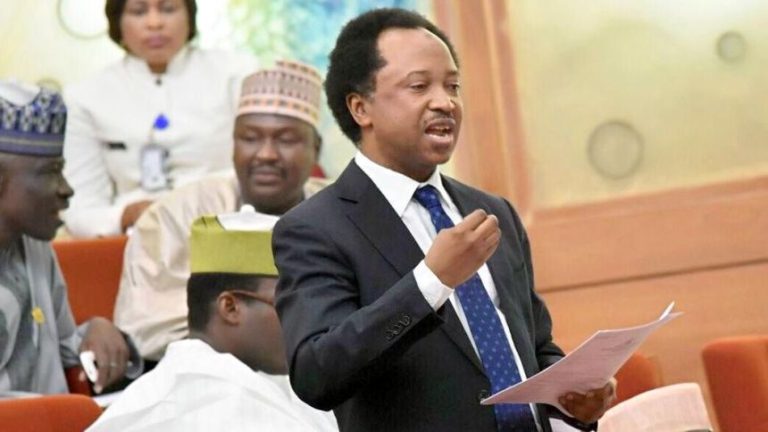
Shehu Sani: Kachikwu’s letter proof of a govt within Buhari’s govt

Shehu Sani, senator representing Kaduna Central at the National Assembly, says the leaked memo written by Ibe Kachikwu, Minister of State for Petroleum Resources, to President Muhammadu Buhari is proof that there exists a government within the administration.

Sani expressed this opinion on Wednesday while speaking on Channels Television’s ‘Politics Today’.

He said there was no reason why it should be very difficult for a minister to have access to his principal, as Kachikwu claimed in the memo.

He also said that the recent development, if not properly handled, could “stain” the integrity for which Buhari is known.

“The content of that letter and the allegations raised also raise a number of issues, not only about the NNPC but about the whole structure of governance that exists today,” Sani said.

“If a Minister of State can outright say it’s been difficult for him to access channels through which he can present his issues, I think there is a system disconnect there.

“And it is simply giving credence to the fact there exists a government within the government. There are individuals that have formed a shield, a cycle….

“Kachikwu’s letter, and I think the issue that it raised in every possible way, is pointing to the fact that there is a cycle of powers within powers itself.

“In some cases, they call them kitchen cabinet, but this is not kitchen cabinet. This is about some persons who have surrounded the President and are exercising powers to themselves and to their advantage and also manipulating power for their own personal interest.”

Sani, however, said Buhari may not be aware of the issues raised by Kachikwu in the memo, otherwise he would have taken action.

“I am of the firm belief that if he is aware of this he would have taken action,” Sani said.

“And if he is not aware of this and this has been brought to the public fore, then he can now take action on it. But if he says he will not take an action on this issue, then it will certainly stain the integrity of the administration.”

Also speaking on the issue, Akin Osuntokun, former Managing Director of NAN, said for Kachikwu to put down such weighty allegations on paper against Baru, it means the rot in the NNPC is 20 times worse than currently perceived.

“If Mr Kachikwu can put what he has put into writing, the implication is that what is happening is 20 times worse,” Osuntokun said.

“The man (Kachikwu) put it in writing, he said so, that there is nepotism happening. He went to the extent of saying that contracts were irregularly awarded, being inflated and all that, these are serious allegations.

“And the gravity of it is that it is somebody who knows, he is an insider, it is his job.

“Shehu said they are investigating, will he (Kachikwu) be telling a lie against himself? I was Managing Director of the News Agency of Nigeria, if I write about that, that is authoritative.”

Osuntokun said the NNPC is vulnerable to corruption and the best approach will be to privatise it.

“Anybody who wants to seriously fight corruption in Nigeria should privatise NNPC. The government should completely be absolved of the management of that place,” he said.

“Let them get the tax or royalty or whatever at the end of the day.”

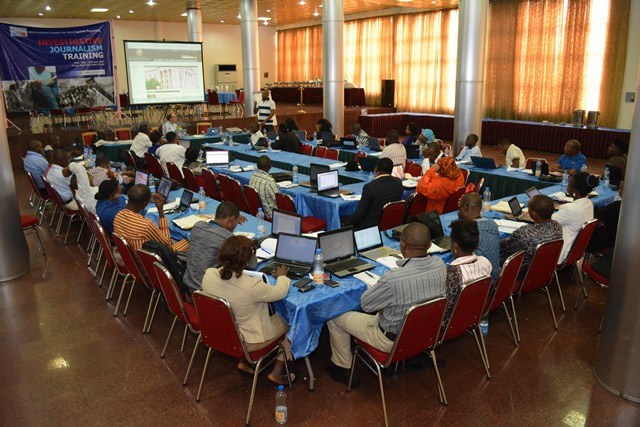
CALL FOR APPLICATIONS: ICIR’s specialised training for journalists

0

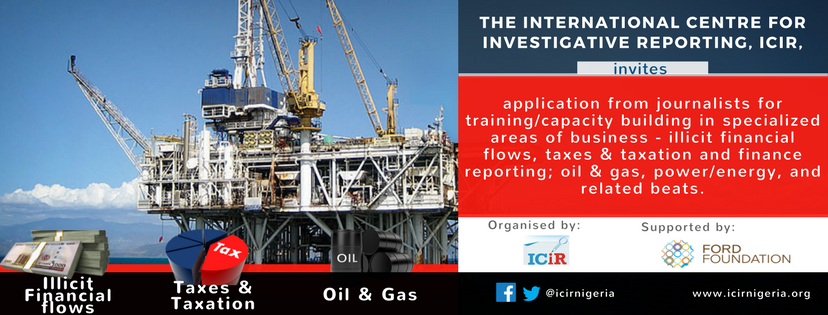
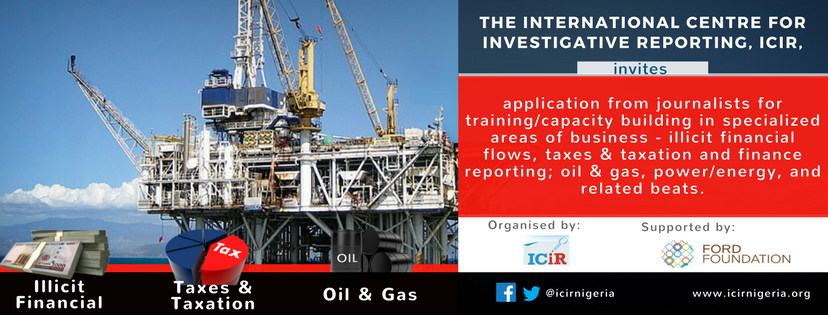
The International Centre for Investigative Reporting (ICIR) is inviting applications from journalists for training/capacity building in the specialized areas of business — illicit financial flows, taxes & taxation and finance reporting — oil & gas, power/energy, and other related beats.

The project, supported by Ford Foundation, will enhance participants’ knowledge about these sectors and build their skills on investigative reporting and data journalism.

After the training, the project will also provide funding for the journalists to work with the ICIR to undertake investigative reporting on the aforementioned critical sectors of the economy.

Applications, therefore, are requested from qualified journalists from the print, online and electronic (Radio & Television) media who cover these beats and are passionate about investigative journalism.

Applicants must have a minimum of three years’ experience as a practising journalist and must be working with (attached to) a media house.

Application for this training is online. Any other mode of application other than the online application will not be accepted. Only shortlisted candidates will be contacted.

Qualified female journalists are highly encouraged to apply.

Deadline for application for this training is October 19, 2017

NOTE: Application for this training is free. The Centre will not charge any applicant for registration.

Please click here to apply.


Tanzanian president slashes own salary to $4,000/month — lower than top govt officials’

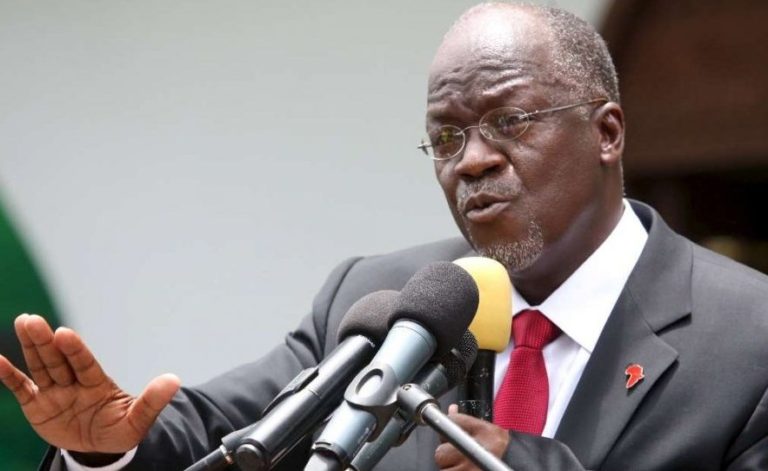
John Magufuli, Tanzanian President, has readjusted his monthly earnings to 9 million Tanzanian shillings ($4,000), making him one of the lowest paid African leaders as he pursues a much-criticised policy of deep public spending cuts, according to Reuters.

In a speech to local officials in the capital on Tuesday, Magufuli said his government had slashed salaries of executives at state-owned companies at 15 million Tanzanian shillings ($6,700) a month — more than his own.

“They can leave if they don’t want it,” he said, lamenting that abuse of public funds was “rampant” at state firms, and that he had rejected requests from some local officials to more than double their allowances but he could not do so while many citizens lack access to water, health care and electricity.

Since taking office in November 2015, Magufuli — nicknamed ‘The Bulldozer’ — has cut government spending by imposing measures such as restrictions on foreign travel for government officials and the removal of “ghost workers” from the state payroll.

Some critics say his cost-cutting measures are excessive and argue they could undermine growth in East Africa’s second-biggest economy, and some have slowed investment in critical sectors such as mining.

Magufuli’s salary is a fraction of that of other African leaders. He has no other publicly-.known sources of income and his government said last year it plans to submit a parliamentary bill that would prohibit public leaders from engaging in business to avoid conflicts of interest.

By contrast, Kenya’s president earns a monthly salary of around $14,000. Jacob Zuma of South Africa is paid around $20,000 monthly, following a salary increase by parliament in 2015. Since 2009, Zuma has been embroiled in numerous scandals and allegations of abuse of office, including more than $500,000 of improper state spending on security at his private home.

Others with more modest pay include President Muhammadu Buhari of Nigeria, who took a 50 percent pay cut when he took office in May 2015. The annual presidential salary was previously set at 14.1 million naira, which in mid-2015 was the equivalent of $70,000.

Reps order police to forcefully bring Magu to panel on Patience Jonathan’s petition

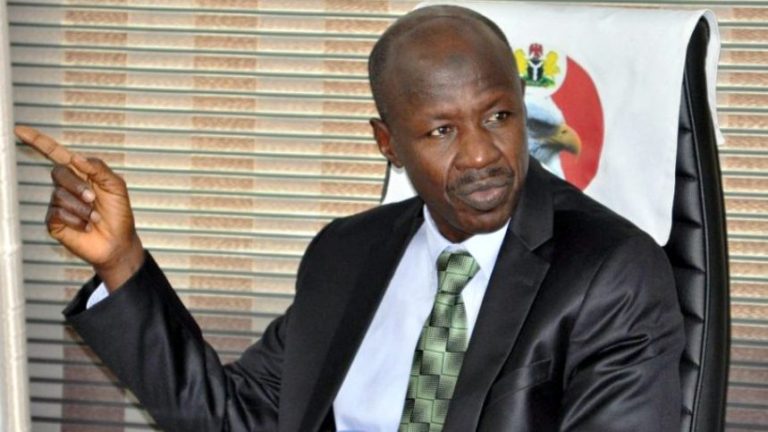
The House of Representatives committee on Public Petitions has issued a bench warrant on Ibrahim Magu, Chairman of the Economic and Financial Crime Commission (EFCC).

The warrant was issued following Magu’s refusal to honour an invitation by the committee over a petition by Patience Jonathan, wife of former President Goodluck Jonathan.

The former first lady had written the lower chamber, alleging that the EFCC and other security agencies in the country had subjected her and her family to unwarranted harassment.

According to the House committee, four letters of invitation were sent to Magu, with acknowledgement copies as evidence, but he deliberately absented himself from three separate hearings on the matter.

The motion for the bench warrant was moved by Kingsley Chinda, a Rivers State lawmaker, and seconded by Brown Randolph, also from Rivers.

“It’s not only for the workings of this committee but for any other institutional body,” Chinda said.

“‎ So I move that the EFCC chairman be issued a bench warrant to appear before this committee to explain his role so that we can conclude this investigation.”