Home Blog Page 2691

Six years after, only two Nigerian security institutions obey FOI Act

Seember Nyager

Despite the passage of Freedom of Information (FOI) Act by the National Assembly six years ago, Nigerian security institutions are still hoarding information relating to procurement process, the Public and Private Development Center (PPDC) has said.

According to the 2017 FOI compliance ranking for security sector organisations conducted by PPDC, only the Police Service Commission and Nigeria Security and Civil Defence Corps (NSCDC) complied with the FOI Act, 2011 benchmarks.

The two security organisations came first and second respectively in the ranking of 12 security organisations which included the Nigerian Immigration Service, Office of the National Security Adviser (ONSA), Defence Headquarters, Military Pension Board, Defence Intelligence Agency and National Defence College,

Others were Federal Ministry of Defence, Federal Ministry of Interior, Nigerian Prison Service and Federal Fire Service.

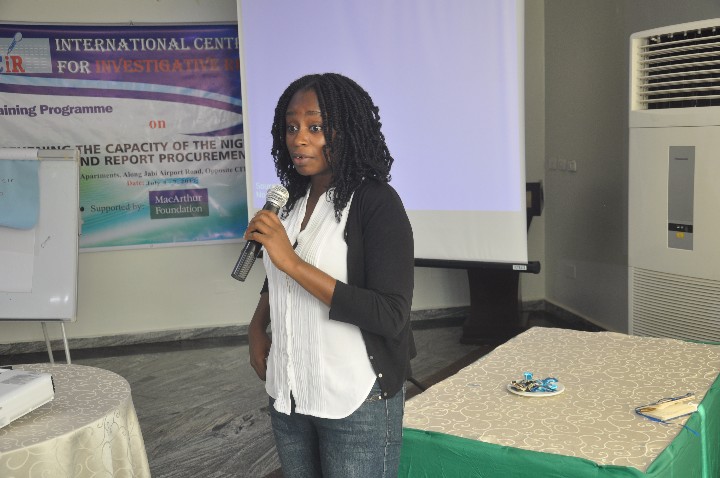
Speaking at the third edition of the ranking, Seember Nyager, Executive Director of PPDC, explained that the ranking was based on an assessment of levels of access to procurement related information from the 12 security sector institutions.

She said the ranking, since 2014 has been used extensively for advocacy and has contributed immensely to the responsiveness of public institutions to FOI requests.

“Specifically, information on procurement plans, procurement processes and capital expenditure was sought,” she said.

“The FOI rankings build on two previous editions of annual rankings. This is the aim of the rankings; that procurement related information would be liberated and made as coherent as possible; and in a way that enables increased efficiency in public service delivery.”

The institutions were ranked based on benchmarks for disclosure within the Nigerian FOI Act, 2011; which are proactive disclosure, responsiveness to requests for information and level of disclosure to requests for information.

Based on proactive disclosure which is further divided into full proactive disclosure, partial proactive disclosure and no proactive disclosure, none of the institutions were proactive in disclosure of procurement information.

Nyager explained that proactive disclosure is obtained where information on the procurement plans and capital expenditure of a public institution is found on their website. Based on this, an institution scores 22 points for full proactive disclosure, 17 points for partial disclosure and no point for no disclosure.

She said: “Where a part of this information is found, partial disclosure applied. Where there is no disclosure of procurement related information on the website of the public institution, there is no proactive disclosure.”

While noting that where there is no full proactive disclosure, she said, “request for information is made”, and responsiveness to request for information is ranked based on response within seven days which scores 20 points, response within 14 days which attracts 15points, response within 15 days which scores 10 points and no response which attracts no point.

On the level of disclosure to requests for information, an institution score 22 points for full disclosure, 17 points for partial disclosure and no point for no disclosure.

In the public institutions category, 163 of the 166 institutions assessed were not complying with the FOI Act, 2011 requirement for disclosure of procurement plans, processes and public expenditure.

Bureau of Public Service Reforms (BPSR) which came first last year retained the position, while Infrastructure Concession Regulatory Commission (ICRC) and Independent Corrupt Practices and Other Related Offences Commission (ICPC) came second and third respectively.
Biafra agitation is a case of sour grapes and bad sportsmanship, says Jigawa governor

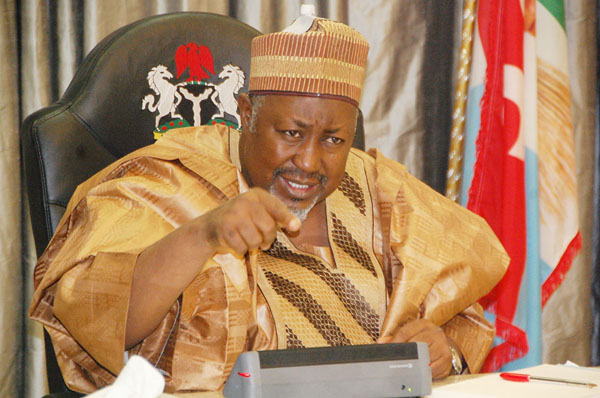
Abubakar Badaru, Governor of Jigawa says those agitating for the division of Nigeria should get their acts together and participate in the political dispensation, instead of heating up the polity.

In an interview with Daily Trust, he said some of the agitators were active politicians who lost elections.

“Some of them were active players in the politics of yore, some contested elections and lost,” Badaru said.

“I have seen some that were advocates of tenure elongation at some point in time.

“My take is that it’s all a case of sour grapes and bad sportsmanship. Instead of heating up the polity, let them get their acts together and participate in the political dispensation, then they can articulate their positions within the ambit of the law and the constitution.”

The governor wondered why the agitation gained momentum in the administration of Muhammadu Buhari.

He also questioned the justification for the agitations, noting that anything done outside the ambit of or in contravention of the law is illegitimate.

He asked: “Where were the agitators before the advent of this administration? Was the previous government so repressive and brutal that they couldn’t voice out their aspirations?

Badaru urged Nigerians to focus on what they have in common rather than their differences.

“We should sanitize the political space and do away with politics of ethnicity and religion, and focus on issues, not sentiment.

“We must evolve a system that ensures quality leadership is appreciated and respected so that meritocracy takes root, and we can begin to celebrate leaders with national outlook and exemplary vision and capacity.

“Today, no matter how good you are, political and ethnic considerations will be used to denigrate you and pull you down. You can imagine a situation where a leader’s illness is being celebrated in the name of politics. This is sad.”

UNCOVERED: UK properties belonging to APC chieftain, former head of state

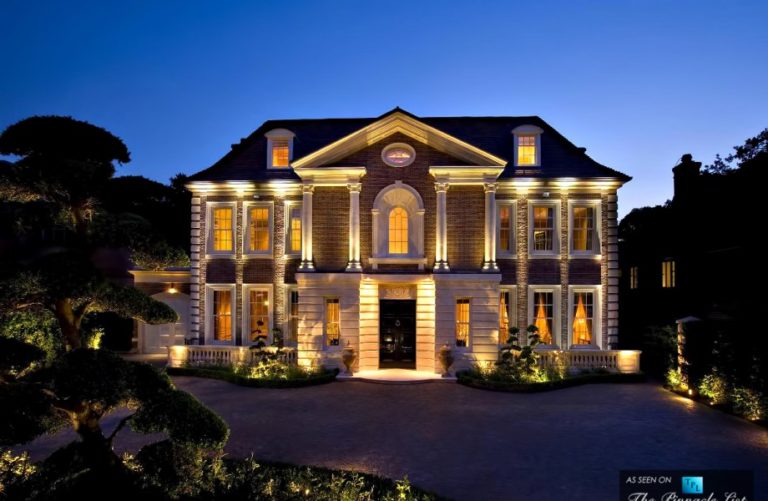
Luxury mansion in the UK used to illustrate the story

Five ‘powerful’ Nigerian politicians, including a current chieftain of the All Progressives Congress, APC, and a former Head of State, bought choice properties worth millions of pounds in the UK using proxy companies, investigation has revealed.

The findings by PUNCH follows an earlier investigations by ClampK, a group of anti-corruption campaigners, which revealed 10 multimillion-pound properties owned by Nigerian politicians in the United Kingdom.

A video clip of the findings have been trending on the social media as it was reported by international media organisations, including the BBC, Al Jazeera and AFP.

According to The Punch, the properties were linked to two top lawmakers, one of whom is also a chieftain of the All Progressives Congress; a former military Head of State; a late military Head of State; and a retired senior military officer, who is also a serving government official.

Journalists were able to get the costs of seven out of the 10 properties while the costs of others were not available.

The seven properties are valued at £15,785,000 or approximately N6,345,570,000 (using the Central Bank of Nigeria’s official rate of N402).

Further breakdown shows that the properties are worth: £5, 650, 000; £4,250,000; £2, 900,000; £850,000; £830,000; £820,000 and £485,000, respectively.

The luxury properties were acquired by proxy in order to hide the identities of the true owners.

According to authentic documents seen by journalists, one of the properties linked to an APC chieftain cost £4,250,000 (apart from other rents that had been paid on the grant of the lease).

One of the properties, belonging to one of the “powerful” Nigerians was purchased at the cost of £5, 650, 000 and was paid for on October 4, 2011. Another choice property was acquired by a firm on behalf of a former military Head of State, while yet another property was registered with a company’s name as the owner.

A luxury property at Kensington West Blythe Road, was also linked to one of the powerful Nigerians, and another located in Peterborough was linked to a top lawmaker in the Peoples Democratic Party (PDP).

The documents were made available to Punch by HM (Her Majesty’s) Land Registry in London.

Many international anti-corruption campaigners believe that the UK subtly encourages the misuse of public funds.

According to Rachel Davies of Transparency International, there were 40,000 land titles in London owned by companies based in many jurisdictions.

This means that when the properties were bought, the owners didn’t need to have a land registry to reveal who they really were “and so the land registry, the police, and the local residents do not know who they are”.

A source in the diplomatic community in the UK, who pleaded anonymity, also corroborated Davies’ position.

He, however added that though, the UK law enforcement agencies had been “secretive” about their activities; there were reasons to believe that they were “in the process of building a more expansive prosecution against a former Minister of Petroleum Resources, Diezani (Alison-Madueke),” who is believed to be under investigation.

But the general belief of anti-graft campaigners is that the UK government had failed to show enough commitment and political will to investigate and expose politically-exposed Nigerians using the foreign country as a haven to hide stolen funds.

“The UK government doesn’t have the resources or the political will to pursue a broad range of investigations into the high-end property holdings of politically-exposed Nigerians or suspected kleptocrats from around the world,” said Matthew Page, a consultant and former Nigeria specialist at the US State Department.

“Government officials may be looking into a handful of the most high-profile examples, but they are doing little to tighten the laws and close the loopholes that help the world’s treasury looters buy posh homes in London.

“Many of us are concerned that the UK government is losing interest in stopping kleptocrats using the country’s property market, corporate structures, and financial system to launder and spend stolen money.

“I suspect UK officials see these kinds of financial activities as a necessary evil, that is, a much-needed alternative source of revenue that will help offset the negative economic and fiscal effects of Brexit.”

AWOLOWO STATUE: Ambode did a bad job, says Odia Ofeimum

Odia Ofeimum, Personal Secretary to Obafemi Awolowo, the late Premier of the Western Region of Nigeria, says the Awolowo Statue which was unveiled by Akinwumi Ambode, the Governor of Lagos State, in September, was a bad job.

Ofeimum said the representation in the 20-feet statue was not that of the Awolowo that he knew and worked with closely for many years.

According to Ofeimum, everything about the statue was wrong, from the fact that Awo was taller than the one depicted in the sculptor, to the fact that he wore more of buba than agbada and never wore laced shoes.

“Somebody else would have to do another (Awo statue) one day and I don’t think it is fair to Ambode to be remembered as the man who did a bad Awo statue,” Ofeimum said during an interview with the Punch.

“Awolowo is taller than the person sitting down there, and you can feel it very quickly when you see the fellow.

“That was the first thing that hit me when I saw it and I thought if this man was standing, what would he look like?

“Even if the artist did not know Awolowo at all, he could still present a perfect picture.I don’t think it is good the way it is, and it is too bold an effort not to be done well.

“Whoever did it had a great feeling, but that artwork is not a representative of a great feeling. Therefore, it does need to be redone.

“If they don’t do that, it’s like teaching students wrong history because when you look at it, what you see is not the history.”

Hamza Ata, the sculptor who created the statue had explained that the sitting position in which Awo was depicted was to create an impression of someone who was thinking, but Ofeimum disagrees.

“A man who is doing serious thinking won’t appear like that,” he said.

“No. Your limbs would be free, not folded or crossed; he wouldn’t wear a cap while thinking and he would have looked relaxed.

“That is not a thinking posture. He’s like a man asked to say ‘cheese’ (laughs).

“In any case, you don’t present a public figure in that manner; you present him as a public figure that he was. A true Awo statue must be a standing one , and with the V-sign.”

Ofeimum noted that the statue, if not corrected, will become a thing of mockery rather than honour for the great Awolowo.

“I mean, it is not nice. Very many school children would go to that statue and say, ‘they say the shoe is too big, let us go and look at it’, as a joke,” he said.

“I cannot remember ever seeing Awolowo with a laced shoe. I can’t remember, ever. No.

“I look back and I try to figure it out, but no, I couldn’t remember any such moment.

“And it’s not just about the kind of shoes, it’s also in relation to the rest of the body. That shoe is a bit overdone; too big.

“When Awolowo was campaigning, he hardly wore Agbada. He wore a Buba and Soro and a very simple pair of shoes, usually shoes that matched the dress.

“But, there was a way Awolowo looked when he wore Agbada  this one didn’t quite look like that.”

Ofeimum said that such a project ought to have been contracted to an artist that knows his onions and not merely to patronise some acquaintance.

“I think by now, Lagos State should have a proper public art policy, which requires more than just the award of a contract, it should also involve a process of crosschecking and ensuring that what is provided is good enough for public consumption.

“I’ve seen many public artworks and it would seem some people just think if you have a friend and you want to help him to make money, you give him a job, but you create eyesores all over the place and it is not fair.

“I heard somebody bragging that nothing would be done about it. Fine. Another person would still do a proper sculpture that would make the other one look like something for the garbage.”


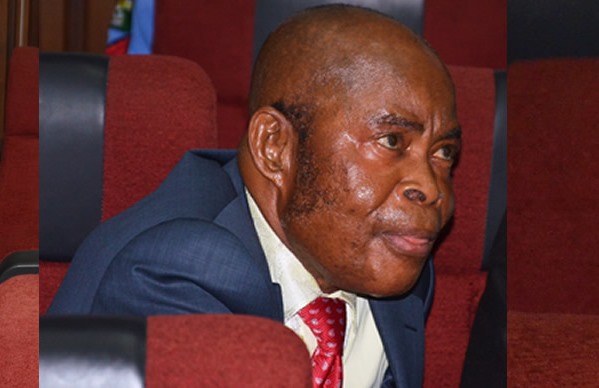
Ngwuta deceived NIS to acquire two valid standard passports, witness says

The Nigerian Immigration Service (NIS) says Sylvester Ngwuta, suspended Justice of the Supreme Court deceived it into issuing him two similar standard international passports in contravention of the immigration Act.

Ngwuta was among the seven senior justices whose houses were raided by operatives of the Department of State Services (DSS) in October 2016.

Multiple travel passports were alleged to have been recovered from his house, as well as huge sums of money in local and foreign currencies.

He was initially arraigned in November 2016 before Justice John Tsoho of the Federal High Court, Abuja, on a 16-count charge bordering on corruption, abuse of office and breaches of the Immigration Act.

The charges were later reduced to 12 counts in March 2017, and later increased to 13 counts in May.

At the resumption of hearing on Friday, Tanko Kutana, a senior immigration officer, who is also one of the prosecution witnesses, told the court that Ngwuta had deposed to an affidavit to support his claims that he misplaced his old passport.

Kutana said the NIS was not in a position to doubt the claim and subsequently issued Ngwuta a new passport, based on the strength of the affidavit.

“My Lord, the new passport was issued to Justice Ngwuta by the Immigration Service, having been convinced that he actually lost the first one,” Kutana said.

“The service replaced the lost passport because it had no cause to doubt the affidavit evidence deposed to by the defendant when he reported the loss of the document.”

However, Kutana said the service was taken aback to discover that the defendant was using the two passports stamped with visas simultaneously.

“The forensic report shows that the defendant, Ngwuta, was using the two standard passports interchangeably, at the time of his arrest on October 7, 2016 by the operatives of the Department of State Service.

“We would not have been here if the defendant had returned the recovered passport to the service when he found it,” Kutana said, adding that the action violated immigration law.

He said it was outright illegality to have and use two standard passports with similar registration number interchangeably.

Kutana confirmed that four diplomatic passports and two standard passports were found in Ngwuta’s possession, but he said none of the six documents were forged.

“I did the analysis on the six passports to determine whether there was forgery and by the time I concluded my analysis of the passports I found no evidence of forgery in any of them,” he said.

Kutana also agreed that there could be circumstances under which a citizen may have more than one passport, but it did not include having two similar ones as was the case with Ngwuta.

Section 1, sub-section 1(a) of the Immigration Act (2015) states: “A person who has, holds or is in unauthorised possession of more than one valid standard Nigerian Passport … commits an offence and is liable on conviction to imprisonment for a term of ten years or a fine of Two Million Naira or both.”

After a cross-examination of the witness, Justice Tsoho adjourned the case to October 20 for continuation of hearing.

Ngwuta is also facing separate false assets declaration charges at the Code of Conduct Tribunal (CCT) in Abuja.

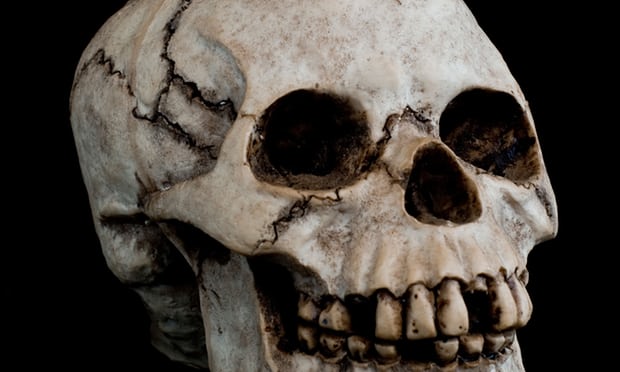
1000 human skulls from Africa resurface in Germany

Germany has launched a two-year study to determine the origins of more than 1,000 human skulls, mostly from Rwanda, brought to Europe during the colonial era for racial “scientific” research, AFP reports.


Billed as an important first step to understanding the skulls’ provenance the study could one day lead to their return to east Africa.

“We’re now looking at the circumstances surrounding the origins of these skulls,” said Hermann Parzinger, head of the Prussian Cultural Heritage Foundation, which is leading the project.

“And then, we will decide together with the origin countries what would be the appropriate way [to resolve the issue]”, he added.

US museum ‘storing remains of Namibian genocide victims’

The skulls were shipped to Germany by expedition forces around 1907-08 for the anthropologist Felix von Luschan, who was studying human development.

But over the decades – and as Germany lurched into two world wars – the collection was moved into deep storage.

In 2011, Berlin’s Charite hospital finally turned the skulls over to the Prussian Cultural Heritage Foundation, which runs most of Berlin’s museums, libraries, archives and research institutes.

Bernhard Heeb, who is leading the research project, said the skulls were in “very poor condition” when the foundation received them, and years were spent cleaning them, putting fragments together, building up an inventory and sorting them geographically.

Most paperwork documenting the skulls had been lost, and researchers’ best clues were notes written on the bones themselves.

The majority of the skulls are marked as stemming from Germany’s former East African colonies, including 986 from Rwanda, 41 from Tanzania, four from Burundi and 54 others are simply marked East Africa.

“What we will do now is to form a network with our colleagues in Tanzania, Rwanda, Burundi to research the origins of these objects together,” said Heeb.

Rwandan ambassador Igor Cesar said Kigali had been unaware of the human remains until 2016.

“One hundred years have gone by without us knowing about this at all,” he said.

“When one hears 1,000 skulls, the first question is: how come? How could one get 1,000 skulls?,” he said, noting that there were no cemeteries in Rwanda at that time, and that bodies were buried near family homes.

Asked if Kigali would make a demand for restitution, Cesar said it was “too early”.

“The skulls are here, they’re not going to go away. They have waited 100 years. Our interest at the moment is to know the history behind these skulls. And when we know exactly what that is, we will think about how best to deal with it.”

Germany has in recent years handed back 20 skulls belonging to indigenous Namibians.

The skulls were among an estimated 300 taken to Germany after a slaughter of indigenous Namibians during an anti-colonial uprising in what was then called South West Africa, which Berlin ruled from 1884 to 1915.

The skulls gathered dust in the German archives until 2008, when public broadcaster ARD reported that they were still at the Medical History Museum of the Charite hospital, and at Freiburg University in the southwest. The publicity prompted Namibia to seek their return.


READ ALSO:

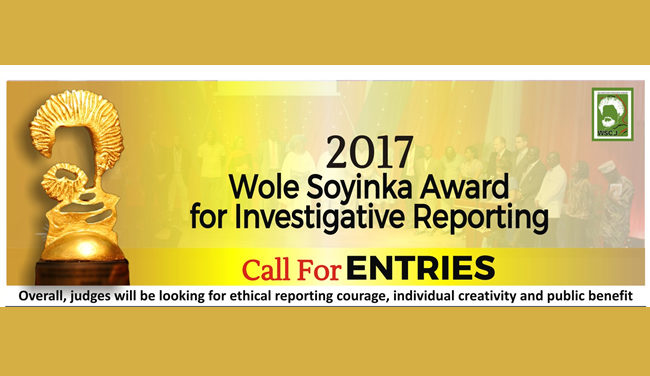
CALL FOR APPLICATIONS: 2017 Wole Soyinka Award for Investigative Reporting

The Wole Soyinka Centre for Investigative Journalism (WSCIJ) is calling for applications for the 12th edition of the Wole Soyinka Award for Investigative Reporting.

The award is open for Nigerian journalists or team of journalists with stories published between 4th October 2016 and 3rd October 2017.

This award seeks to honour outstanding reports from the print, online, photo, editorial cartoon, television, and radio categories in general.

Submitted reports must involve in-depth coverage of clandestine activities on public and or corporate corruption, human rights abuses, or on regulatory failures in Nigeria.

This year’s award will also include a special prize for reports on agriculture and food security to serve as encouragement to reporters covering the Agric sector.

This special category is as result of WSCIJ’s partnership with Oxfam, an international organisation dedicated to working to end the injustices that cause poverty.

Entries will be assessed by a panel of Judges made up of media experts and related professionals with good understanding of investigative reporting.

Criteria for judgement includes, quality of investigation, evidence, human rights elements, ethical reportage, courage, individual creativity, public interest, impact and quality of presentation.

Interested journalists must submit the reports on or before 4pm on October 26, 2017.

Online categories should be emailed to entries@wscij.org, while all other entries must be delivered to the Wole Soyinka Centre for Investigative Journalism office, Second Floor, No 18A Abiodun Sobajo Street, Off Lateef Jakande Road, Agidingbi, Ikeja, Lagos.

Lara Owoeye-Wise, a member of the Board of Trustees of ICIR, is the only female winner of the award in the TV category (2006), while in 2016, Fisayo Soyombo, the current Editor of the ICIR, then working with TheCable, emerged winner of the online category.

He was also proclaimed the 2016 WSCIJ-Nigerian Investigative Reporter of the Year.

UPDATE: After meeting with Buhari, Kachikwu keeps silent

The meeting between the President Muhammadu Buhari and Ibe Kachikwu, Minister of State for Petroleum, at the State House has ended with Kachikwu keeping sealed lips on the outcome of the meeting.

The meeting lasted about 1hour and 20minutes, but the Minister, who arrived the State House at about 11:40 am for the meeting declined comments when approached by State House Correspondents.

The closed door meeting between Buhari and Kachikwu came on the heel of his allegations of insubordination and humiliation against Maikanti Baru, Group Managing Director of the Nigerian National Petroleum Corporation (NNPC).

He had alleged that the NNPC boss had repeatedly sidelined and disrespected the board of the national oil firm, which is chaired by the minister of state.

According to a memo that was leaked to the media, Kachikwu had informed Buhari that Baru unilaterally approved the award of contracts worth over $25 billion without any approval from the NNPC board.

This came a day after the NNPC announced a massive shakeup which affected 55 management staff, and Kachikwu said neither he nor the board had any idea about the appointments, stressing that it wasn’t the first time changes would be made without the board’s input.

“It is in the spirit of service and absolute belief in your leadership and integrity that I have, after one year of tolerating these disrespectful and humiliating conducts by the GMD, decided to bring these to your attention,” Kachikwu wrote.

He called on the President to intervene and “save the office of the Minister of State from further humiliation and disrespect by compelling all parastatals to submit to oversight regulatory mandate and proper supervision”.

Meet the new members of CBN’s Monetary Policy Committee

Thursday’s announcement of Aishah Ahmad, as a nominee for the post of Deputy Governor in the Central Bank of Nigeria (CBN) has been described by many Nigerians as a welcome development.

The 40-year old Ahmad (she will be 41 on October 26), once approved by the Senate, is expected to assume her new responsibilities with a rich resume and experience.

President Muhammadu Buhari also asked the Senate to confirm the appointment of four others into the Monetary Policy Committee (MPC) of the CBN in accordance to relevant sections of the CBN Act.

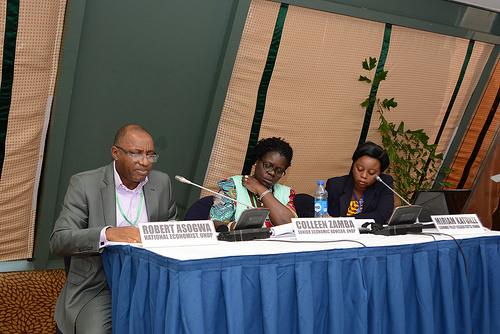
They are: Adeola Adenikinju; Aliyu Sanusi; Robert Asogwa and Asheikh Maidugu.

The MPC is the highest policy making committee of the CBN and its mandate is to review economic and financial conditions in the economy and to determine appropriate stance of policy in the short to medium term, among others.

So here are the profile of each of the newly appointed members of the CBN’s MPC.

AISHA AHMAD

Ahmad is currently the Executive Director (retail banking) at Diamond Bank Plc. A consummate professional with about 20 years of banking experience in international and local financial insititutions.

She is also the chairperson of the executive council of Women in Management, Business and Public Service (WIMBIZ), a non-profit organisation founded in 2001 which key focus is to improve the capacity of women to aspire to leadership positions in the workplace and in business.

Ahmad, from Niger State, North-Central Nigeria, replaces Sarah Alade, former CBN Deputy Governor, who retired in March this year.

She will resume at her new post immediately after Senate’s confirmation.

ADEOLA ADENIKINJU

Adenikinju is a Professor of Economics in the University of Ibadan, Oyo State, Nigeria. His research interests include Petroleum and Energy Economics, Macroeconomic modeling, and Economic Development Issues.

He has consulted for many international and local organizations including the European Union, United Nations, the Nigeria Liquefied Natural Gas Company (NLNG), The African Economic Research Consortium, ECOWAS, the World Bank, and the National Data Bank, among others.

Adenikinju was one of the Consultants that prepared the First Perspective Plan for Nigeria. He is also involved in the United Nations Project Link that makes economic projection for the Nigerian Economy.

He was a Senior Special Assistant to the President, Office of the Chief Economic Adviser to the President between 2010 and 2011.

ALIYU SANUSI

Aliyu Rafindadi Sanusi is an Associate Professor of Economics at the Ahmadu Bello University, Zaria, Kaduna State. He also holds a Masters Degree in International Business from Lancaster University Management School, where he also obtained his PhD in Economics.

Sanusi was a former Special Assistant to the Chief Economic Adviser to the president of the Federal Republic of Nigeria. He has also served in a number of Federal Government Committees.

He has consulted for a number of Local and International Organisations, including Heinrich Boll Foundation, Adam Smith International (ASI) as well as Nigeria Infrastructure Advisory Facility (NIAF) which is sponsored by the UK Department for International Development (DFID)

Sanusi’s area of research interest is applied econometrics with applications to monetary economics, international economics and macroeconomics.

ROBERT ASOGWA

Robert Asogwa holds a doctorate degree from the University of Nigeria, Nsukka. His area of specialty is macro economics.

Asogwa is currently a consultant with the United Nations Development Programme (UNDP).

ASHEIKH MAIDUGU

Asheikh Maidugu is currently a Director at the Federal Inland Revenue Services. He obtained his Bachelors Degree in Economics from the University of Maiduguri, Borno State, Nigeria.

He also holds a Masters Degree in Money, Trade and Finance from the same University and a Ph.D holder in Development Economics and International Development from Usman Dan Fodio University, Sokoto.

Maidugu was a senior lecturer at the University of Maiduguri between 1994 and 2007 before proceeding to the Debt Management Office in Abuja where he served as the Chief Operations Officer.

In 2010, he moved to the FIRS and was in charge of coordinating the development of the Corporate Plan of the Service, as well as monitoring the implementation of the annual plan.

Buhari, Kachickwu in closed-door meeting

President Muhammadu Buhari and Ibe Kachikwu , Minister of State for Petroleum Resources, are currently in a closed door meeting at the State House, Abuja.

The meeting is about Kachikwu’s allegations of insubordination and humiliation against Maikanti Baru, Group Managing Director of the Nigerian National Petroleum Corporation (NNPC).

The Minister arrived the State House at 11:40am on Friday.

He had alleged that the NNPC boss had repeatedly sidelined and disrespected the board of the national oil firm, which is chaired by the minister of state.

The minister, in a leaked letter, had informed Buhari that against the rules, some over $25bn contracts were never reviewed or discussed with him or the board of NNPC.