Home Blog Page 2709

LIke ASUU, resident doctors begin nationwide strike

Patients currently receiving treatment in government-owned hospitals may be in for a hard time as the National Association of Resident Doctors (NARD) began an indefinite nationwide strike on Monday.

This is after a meeting between the doctors and the federal government failed to yield any meaningful result.

In a brief statement issued after a meeting that ended in the early hours of Monday, the doctors said the strike would not be called off until government accedes to all their demands.

“Rising from our NEC meeting, which started by 7pm yesterday and ended 3am today, NARD has resolved to reject the promissory offer from Government, and proceed on total and indefinite strike action until all items in her demand list for strike action are resolved by Government,” read the statement, signed by Onyebueze John, the association’s National President.

Chris Ngige, Minister of Labour, had met with the leadership of NARD on Saturday and had told journalists after the meeting that the doctors had agreed to suspend the proposed strike.

But the doctors later denied this, saying no decision was reached at the meeting.

Teaching hospitals across the country are expected to be the worst affected by the strike.

Meanwhile, the ongoing nationwide industrial action by the Academic Staff Union of Universities (ASUU) has entered its third week and it appears no end is in sight though negotiations between the government and ASUU are expected to continue after the Sallah holidays.

EXCLUSIVE: ICPC charges Sa’ad Alanamu, 2nd rejected nominee, to court over ‘N5m kickback’

Sa’ad Alanamu, the second of two rejected nominees to the board of the Independent Corrupt Practices and other related offences Commission (ICPC), has been charged to court for corruption.

Court papers seen by the ICIR show that Eze Ijezie Sunny, a lawyer, filed an eight-count charge against Alanamu on behalf of the Attorney General of the Federation (AGF).

Salman Sulaiman and Namylas Nigeria Ltd were named as defendants in the suit.

Alanamu and Maimuna Aliyu made the list of 14 ICPC board appointees announced by Vice President Yemi Osinbajo in August, but it was later alleged that both were tainted and on the verge of being charged to court for their alleged involvement in various corrupt acts.

The ICIR had exclusively reported at the time that Alanamu was being investigated on corruption charges allegedly committed while he headed several institutions in Kwara State, while Aliyu had a longstanding case of abuse of office, misappropriation and diversion of public funds against her.

While Aliyu was charged to court on August 24, Alanamu’s case was filed exactly a week later.

Alanamu is being accused of using his position as Chairman of Governing Council and Chairman of Tenders Board of Kwara State Polytechnic, Ilorin, to collect a ₦5m bribe from Sulaiman and Namylas Nigeria Ltd as condition for awarding a contract to the company.

The offence contravenes Section 19 of the Corrupt Practice and Other Related Act, 2000.

The charges against the trio, according to court documents, read: That you Saadu Ayinla AlaAMU (M), on or about 11th February, 2015 or thereabout, at Ilorin used your position as Chairman of Governing Council and Chairman of Tenders Board of Kwara State Polytechnic, Ilorin, to confer corrupt advantage upon yourself when you received the sum of 5,000,000 (Five Million Naira) through your First Bank Account from Salman Sulaiman (a.ka. Saliman Sulaiman) and Namylas Nigeria Ltd. As a result of the contract awarded to Namlyas Nigeria Limited in Kwara State Polytechnic, where you were employed as Chairman of Governing Council and Chairman of Tenders Board, and you thereby committed an offence contract to and punishable under Section 19 of the Corrupt Practice and Other Related Act, 2000.

That you Saadu Ayinla Alanamu (M,) on or about 11th February , 2015 or thereabout , at Ilorin did receive monetary benefit for yourself when you received the sum of 5,000,000 (Five Million Naira) through your First Bank Account from Salman Sulaiman (a.k.a Sliman Sulaiman) and Mamlyas Nigeria Ltd as a result of the contract awarded to Chairman of Governing Council and Chairman of Tenders Board, and you thereby committed an offence contrary to Section 10 (a) (i) and punishable under the Section 10(a) (ii) of the corrupt Practices and Other Related Offences Act, 2000.

That you Saadu Ayinla Alanamu (M,) on or About 11th February 2015 or thereabout, at Ilorin did receive monetary benefit for yourself when you received the sum of 5,000,000 (Five Million Naira) through your First Bank Account from Salman Sulaiman (a.k.a Saliman Sulaiman) and Namylas Nigeria Ltd as a result of the said Namylas Namylas Nigeria Limited winning a contract in Kwara State Polytechnic where you were employed as the Chairman Of Governing Council and Chairman of Tender Board, and you thereby committed an offence contrary to and punishable under Section 10(a) (ii) of the Corrupt Practices and  Other Related Offences Act, 2000.

That  you Saadu Ayinla Alanamu (M) on or about 11th February 2015 or thereabout, at Ilorin did receive monetary benefits for yourself when you received the sum of 5,000,000 (Five Million Naira) through your First Bank Account from Salman Sulaiman (a.k.a Saliman Sulaiman) and Namylas Nigeria Ltd as a result of the contract awarded to Namylas Nigeria Ltd in Kwara State Polytechnic where you were employed as the Chairman of Governing Council and Chairman of Tenders Board, and you thereby committed an offence contrary to section 8(1)(a)(i) and punishable under Section 8(1)(a)(ii) of the Corrupt Practices and Other Related Offences Act,2000.

That you Saadu Ayinla Alanamu (M), on or about 11th February 2015 or thereabout, at Ilorin did accept gratification of the sum of 5,000,000 (Five Million Naira) through your First Bank Account from Salman Sulaiman ( a.k.a Saliman Sulaiman) and Namylas Nigeria Ltd as a reward for performing an official act, to wit your duties as the Chairman of the Tenders Board, and you thereby committed an offence contrary to Section 18 (b) and punishable under Section 18(d) of the Corrupt Practices and Other Offence Act, 2000.

That you Salman Suliman (a.k.a SALIMAN SULAIMAN) (M), on or about 11th February 2015 or thereabout, at Ilorin did corruptly give monetary benefit to Dr. Saadu Yinla Alanamu, Chairman of Governing Council and Chairman of Tenders Board, Kwars State Polytechnic, through your company Namlyas Nigeria Ltd.’s Guaranty Trust Bank Account, the sum of 5,000,000 (Five Million Naira) for acting in his official capacity as Chairman of Tenders Board, Kwara State Polytechnic in the award of contract to the said Namylas Nigeria Limited in Kwara State Polytechnic where he was employed as the Chairman of Governing Council and Chairman of Tenders Board, and employed as the Chairman of Governing Council and Chairman of Tenders Board, and you thereby committed an offence contrary to Section 9(1)(a0 and punishable under Section 9(1)(b) of the Corrupt Practice and Other Related Offences Act, 2000.

That you Salman Sulaiman (a.k.a SALIMAN SULAIMAN) (M), on or about 11th February 2015 or thereabout did, without lawful authority or reasonable excuse offer the sum of 5,000,000 (Five Million Naira), through your company Namylas Nigeria Ltd to Dr. Saadu Ayinla Alanamu the Chairman of Governing Council and Chairman of Tender Board of Kwara State Polytechnic as a reward for his using influence in procuring a contract for Namylas Nigeria Ltd in Kwara State Polytechnic, and you thereby committed an offence contrary to Section 22(1)(a)(i) and punishable under Section 22 (6) of the Corrupt Practice and Other Related Offences Act,2000.

That you Namylas Nigeria Ltd, on or about 11th February 2015 or thereabout, at Ilorin did corruptly give monetary benefit to Dr, Saadu Ayinla Alanamu, Chairman of Governing Council and Chairman of Tenders Board, Kwara State Polytechnic, through your Guaranty Trust Bank Account, the sum of 5,000,000 (Five Million Naira) for acting in his official capacity as Chairman of Governing Council and Chairman of Tenders Board, and you thereby committed and offence contrary to Section 9(1)(a) and practices and Other Related Offences Act,2000.

The Diezanis and Dasukis within Buhari’s government

0

Diezani Alison-Madueke is currently the poster girl for President Muhammadu Buhari’s war against corruption. Throughout this year, no name has been more associated with the Economic and Financial Crimes Commission (EFCC) than the former petroleum minister’s.

The allegations against her are numerous and the figures being mentioned humongous. From Lagos, to Abuja, Port Harcourt, United States and the United Kingdom, the EFCC alleged that Diezani possessed properties and cash that were proceeds of corruption. The scale of it all looked destined to be lost in the figures — until the EFCC took up the gauntlet to pile all of Diezani’s “loot” into a rare opinion piece by two staff of its public affairs directorate titled ‘DIEZANI ALISON-MADUEKE: What an appetite!’

In the piece, the EFCC said a search of one of Diezani’s palatial residences in Abuja “turned up boxes of gold, silver and diamond jewellery, worth several million pounds sterling”. In all, N47.2bn in cash and $487.5m in properties had been traced to the former minister.

Of the lot, the courts have empowered the government to take ownership of a $37.5m (N11.75bn) property on Banana Island, Ikoyi, sums of US$2.74m and N84.5m found in Rusimpex USD account No. 1013612486 domiciled in Zenith Bank Plc, N23.4bn and $5m (about N1.5bn) in various Nigerian banks, N9bn allegedly laundered for her by some bank officials, another N34bn traced to her, and over $100m traced to the accounts of several Independent National Electoral Commission (INEC) staff allegedly bribed by Diezani to compromise the 2015 general election. To recover all that Diezani has allegedly stolen and bring her to book, the EFCC will have to convince a court to declare her guilty. Judging by how poorly EFCC has recently fared in court, there are no guarantees that Diezani, if she is guilty — and it’s hard to imagine ALL these allegations are made up — won’t walk away free.

FROM DASUKI TO DIEZANI

Diezani’s ignominious status is one she inherited from Sambo Dasuki, former National Security Adviser. In the early days of the Buhari administration, Dasuki was the poster boy of the anti-corruption crusade. On August 31, 2015, Buhari had inaugurated a 13-man committee to audit the procurement of arms and equipment in the armed forces and defence sector between 2007 and then. The first revelations from the committee were damning.

The committee put total extra budgetary interventions in the period at N643.8bn. It observed that out of 513 contracts awarded at $8.4bn, N2.2 trn and €54,000, 53 were failed contracts, amounting to $2.4bn and N13.7bn. It “discovered” that payments to the tune of N3.9bn were made to a single company by the former NSA without documented evidence of contractual agreements or fulfilment of tax obligations to the FG. Dasuki was accused of awarding “fictitious and phantom contracts” to the tune of N2,2bn, $1.7bn and €9.9m. Also, the former NSA was alleged to have directed the Central Bank of Nigeria to transfer $132.1m and €9,9m to the accounts of Societe D’equipmente Internationaux in West Africa, UK and US for “unascertained and undocumented purposes”. For all these, Dasuki is only three months away from spending two consecutive birthdays in prison. Like Diezani, for him to be punished for his alleged indiscretions, a court must pronounce him guilty. It hasn’t yet happened in almost two years; no one knows when it will — or if it ever will.

Three things are striking about Buhari’s treatment of the Dasuki case. One, when he ordered the ex-NSA’s arrest on November 18, 2015, he was only in possession of an interim report submitted by the probe committee. The committee had yet to complete the full probe. In fact, the committee submitted its final report (the third) in July 2016 — eight months after Dasuki’s arrest (A second report was submitted earlier in January.). Two, Buhari ordered Dasuki’s arrest immediately, on the same day he received the interim report.

Finally, Buhari did a fine job of weighing Dasuki’s alleged crime against the sufferings of IDPs in the north-east. “Interestingly, it was noted that the amount of foreign currency spent on failed contracts was more than double the $1bn loan that the National Assembly approved for borrowing to fight the insurgency in the North East,” Femi Adesina, his spokesman, said in the statement announcing Dasuki’s arrest.

Buhari echoed the same thoughts at his first presidential media chat in December 2015. Asked why his government was ignoring the bails granted by courts to Dasuki, and Nnamdi Kanu, the Biafra campaigner, Buhari readjusted his seat and raised his voice. He wouldn’t hide it that this was a particularly touchy matter for him.

“Technically, if you see the type of atrocities those people committed against the country, if they jump bail…,” he answered. “The former President just wrote to the Governor of Central Bank and said give N40 billion — 40 billion to so, so, so, and you give him bail to go and see a doctor in London, when you have 2 million people in IDP camps. Half of them don’t even know their parents. What kind of country do you want us to run?”

THE UNRESOLVED MULTI-MILLION-NAIRA GRASS-CLEARING CONTRACT

These three reasons are exactly why it is hard to comprehend Buhari’s hesitation to take decisive action on Babachir Lawal, the suspended Secretary to the Government of the Federation (SGF). Of the SGF’s many sins, there has been attention — deservedly so — on one: the award of a N570m contract by Lawal’s Presidential Initiative on Northeast (PINE) to Josmon Technologies Ltd, a briefcase company, to cut grasses in Yobe State. Curiously, Josmon made cash deposits of N10m into the account of Rholavision Engineering Ltd, Lawal’s company, 20 times from March and September 2016. This particular N10m-in-20-places transaction is particularly suspicious because Section 10 of the Money Laundering Act 2011 (as amended) mandates banks to report single corporate transactions beyond N10m; the pattern of the payment suggests a premeditated attempt to evade the notice of the law.

But there’s a bigger allegation against Lawal: PINE could not account for N2.5bn meant for IDPs. Meanwhile, Lawal’s only public defence was that he resigned from Rholavision much earlier, in 2015 rather than 2016; he has offered no tangible defence for the rest of the N2.5bn other than accusing the senate of trying to pull him down. Lawal also said the senate didn’t seek his testimony before inviting him. When he was eventually invited, he simply vanished.

A panel set up by Buhari in April came up with a report on May 7 — same day the President travelled abroad for medical treatment. Buhari took formal delivery of the report on August 23; almost two weeks after, nothing has been done on the report, which also covered the probe of Ayodele Oke, suspended Director-General of the National Intelligence Agency (NIA), who reluctantly admitted ownership, on behalf of the agency, of the sums of $43.4m, £27,700 and N23.2m found by the EFCC at a private residence in Lagos.

Where is the swiftness with which Buhari ordered Dasuki’s arrest? And why isn’t Lawal’s alleged offence receiving similarly expedited action? Why hasn’t Adesina issued a press statement on the content of the probe report? If Lawal and Oke have been found innocent, they should be reinstated. If guilty, they should also go the Dasuki way. Being political appointees, both men can be immediately prosecuted in court. But unlike the case with Dasuki and Diezani, Buhari does not need to await a conviction before serving them as deterrents to other corrupt elements in government; the message will be well-received once he permanently strips them of their offices.

Like Tam David-West, the widely respected former Petroleum Minister, said in May, “a lot of people around Buhari are very corrupt and until he kicks them out of his government, the country cannot move forward”. David-West knew what he was saying.

In late 2015, for example, there were grumblings in a certain parastatal because a minister had withheld a certain percentage of its allocations. In this same Buhari government! Last week, Isah Mishau, the senator representing Bauchi Central at the National Assembly, accused Ibrahim Idris, the man Buhari picked as Inspector-General of Police (IGP) in June 2016, of collecting bribes, “ranging from N10m to N15m” from commissioners of police, state mobile commanders and Special Protection Units (SPU) commanders, for favourable postings. Buhari didn’t seem to take notice of it, or he was simply uninterested.

To enhance the credibility of his anti-corruption war, Buhari must not spare corrupt people within his own administration. Caveat, PDP apologists: this is not a piece to latch on to in disparaging the anti-corruption efforts of the current government. The corruption that took place particularly during the Goodluck Jonathan administration is monumental; the arrest and prosecution of looters, if done within the provisions of the law, is welcome. It is incredibly important, for the present, that past looters are brought to book. But it is more important, for the future, that current looters do not escape justice in the name of sanctifying the APC government. Unless anyone thinks the present is more important than the future, Buhari must seek out the Diezanis and Dasukis in his government, and make sure they also suffer the fate of yesterday’s looters.

Soyombo, Editor of the International Centre for Investigative Reporting (ICIR), tweets @fisayosoyombo

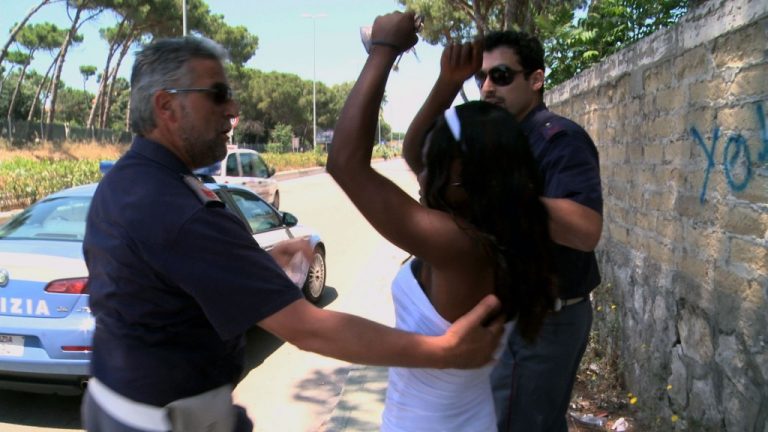
Mental disorder high among Nigerian prostitutes in Italy — and juju is to blame

0

Italian psychiatrists and psychologists are struggling to help free Nigerian women forced into prostitution in Italy, according to the Guardian UK.

Psychologists in hospitals across Sicily say they are witnessing a growing mental health crisis among Nigerians who have been persuaded to leave their traffickers by the authorities or NGOs.

At the Vittorio Emanuele Hospital in Catania, 20 Nigerian women are being treated by the psychiatric department – double the number last year.

The psychologists say that while they understand the women’s psychotic episodes, hallucinations, panic attacks, insomnia and fits to be the physical signs of post-traumatic stress disorders, the women themselves see them as victims of juju punishment for leaving their traffickers and breaking their oaths. The psychiatrists admit they are at a loss to know how to help the women.

“It is pointless trying to say that these curses are not real, these women need to believe in a treatment or solution and there is an impenetrable wall between our two belief systems,” says one of the psychiatrists. “Our approach of western psychology is virtually useless in these cases.”

The report says juju curses are potentially keeping tens of thousands of Nigerian women under the control of human traffickers across Europe.

According to the report, the abuse of religious and cultural belief systems in Nigeria has proven a deadly and effective control mechanism for traffickers involved in the recruitment of women destined for the sex trade in Europe.

Before leaving Nigeria, many of them would have been made to undergo traditional oath-taking ceremonies involving complicated and frightening rituals often using the women’s blood, hair and clothing. These rituals – which have become known as the “juju” – bond the woman to her trafficker and to any debts she will incur. The rituals make it clear that failure to pay off those debts will result in terrible things happening to the woman and her family.

A hugely profitable and well-organised criminal industry has been operating between Italy and Nigeria for more than two decades but the UN’s International Organisation for Migration says it has seen an almost 600% rise in the number of potential sex trafficking victims arriving in Italy by sea over the past three years.

In 2016, more than 11,000 Nigerian women reached the landing points in Sicily, with more than 80% of them victims of trafficking and destined for a life of forced prostitution on street corners and in brothels across Italy and Europe.

Prosecutors say that the juju’s hold over the women is hindering their fight against the traffickers. “Because of the juju, Nigerian women become the perfect victims of sexual slavery,” says Salvatore Vella, a prosecutor in Agrigento.

“Gangs know they can trust them, they know women are not going to report them to the police because they are afraid of the consequences for breaking the juju. And this makes our investigation harder.

It is almost impossible to find witnesses among Nigerian prostitutes because of the ritual. Maybe one in 20 is ready to speak out. The rest of them are stuck in a wall of silence and fear.’’

The report says the influence of a handful of West African self-styled Pentecostal priests and traditional healers who are claiming to exorcise juju spells is now on the rise.

A Ghanaian priestess in the Pentecostal Church of Odasani in Palermo claims to have been freeing the Nigerian women under the juju curse.

“Nigerian women come to me for help, they have bad spirits that have been put inside their bodies by people who want to make money from them,” says the self-proclaimed prophetess as she prepares to start her service.

“The spirit is forcing them to remain in a life of prostitution. When they come to Europe and realise they can’t live this life, they come to me and I help free them of this juju forever.”

Arewa: Hausa have had only one head of state yet they don’t scream marginalisation

Murtala Mohammed

Anthony Sani, Secretary-General of the Arewa Consultative Forum, says the Hausa ethnic group has produced only one head of state in the country’s history yet it does not claim to be marginalised the way the Igbo ethnic group does.

Sani, who said this in an interview with Punch, added that there are over 371 ethnic nationalities in the country that have not enjoyed access to the federal government like the Igbo has.

He also advised the Igbo political and religious elders to rein in on Nnamdi Kanu and his secession agitation in order not to be seen as tacitly supporting hate speech, which has been the major characteristic of the recent Biafran struggle.

“I find it very difficult to share the view that the south-east is the most marginalised,” he said.

“We better note that since 1970, the Igbo have been part and parcel of the federal government, as the vice president; senate president; speaker of House of Representatives; secretary to Government of the Federation, coordinating minister, ministers, governor of the Central Bank of Nigeria, service chiefs and as national chairman of the ruling party.

“The south-east held sway under Jonathan for five years. For them to still play victim may be understood but not acceptable.

“Nigeria has about 371 ethnic nationalities, most of which have not enjoyed ingress to the Federal Government compared to the Igbo.

“The Hausa, whom the Igbo malign so much, have produced only Gen. Murtala Mohammed as head of state who ruled for only six months and died in the same circumstances like the Igbo’s Gen. Aguiyi-Ironsi, who also ruled for six months. Yet, the Hausa do not play the victim of marginalisation like the Igbo.”

Sani agreed that Nnamdi Kanu and the IPOB have the right to “demand anything under the law”, but he warned that the demands should be devoid of hate languages.

“Hate speech is a serious issue that is capable of splitting the country through avoidable conflagration or war,” he said, “yet, Igbo leaders have tended to tacitly endorse the hate speech by the Indigenous People of Biafra through their reticence until very recently – and despite their knowledge of dire experiences of civil war,” he said.

“There are countries where agitations for the split have taken place without the resort to the use of foul language and hate speech as we have experienced with IPOB.

“We have Catalonia in Spain, Quebec in Canada, and Scotland in Britain. Why should there be hate speech that is capable of incitement?

“I believe the Igbo should note that the certain benefits of our togetherness in a big country are far more than the uncertain gains of the split.”

My first wife hails from Calabar, says man who gave Igbo quit notice

Shetima Yerima, President of Arewa Youth Consultative Forum (AYCF), who issued a quit notice to south-easterners resident in the north has revealed that he has nothing against the Igbo.

“A lot of my friends are Igbo people. I have nothing against the Igbo,” The Sun quoted him as saying. “It did not end there; let me also demonstrate that to you; my first wife is from Calabar, the old south-eastern region. We have two kids. I have a good relationship with the Igbo.”

Yerima, who reiterated that the quit notice belongs to the past, as the objective has been achieved, also urged relevant authorities not to overlook anyone who violates the suspension of the quit notice, which has already been rescinded.

He stressed that Nnamdi Kanu, leader of the Indigenous People of Biafra (IPOB), who has rejected the suspension of the quit notice, was not speaking for the majority of the South east people.

“Did I do it for him or in the interest of the country? His rejection of the suspension of the quit notice is not important to me,” he said.

“What we did was to demonstrate that we have a culture. We give respect to our elders and it was to ensure that the country remains together. The country is above anybody. On that basis, his acceptance or not is not important but I know that he also is not speaking for the Igbo. It is a minority view of few people making all sorts of noise.

“It is not really important to me and I do not want to join issues with them. Nigeria is above everybody and I stand on the path of one united country. We have to build a nation that we can call our own.”

When asked about some other northern youth would who have ignored the withdrawal, he said: “Nobody would do anything. Anybody who does anything, we make sure that the authorities arrest the person. We are in charge.

“Nobody should be scared of anything. Our youths are reasonable; they are known to respect one another; we listen to our leaders unlike some other parts of the country. But having said that, you can be rest assured that there is no cause for alarm.

“So, let Nigerians be rest assured that nothing would befall anybody by God’s grace and we are working towards that and we would give the government the maximum support. Our brothers across board, we would make sure that no evil would befall them. That is the position of things.”

The past and present ‘wahala’ of decree 34 of 1966 (Part 1)

0
Aguiyi Ironsi, former Nigeria Head of State

By Eric Teniola

Of all Decrees enacted in Nigeria, none is more controversial than Decree No 34 of 1966. It was promulgated on May 24 1966 by then Head of State Major General Johnson Thomas Umunnakwe Aguiyi Ironsi(1924-1966) . It was called Unification Decree while some critics at that time labelled it, as De-unification Decree.

It was the Decree that started the death of Regionalism-an issue which is still generating controversy as of now. Although the then Head of State, General Yakubu Gowon, repealed the Decree 34 on August 31 1966 through Decree 9, a large portion of the Decree is still effective till today.

General Gowon further compounded it by promulgating Decree 14 of 1967 which broke Nigeria into twelve states and provided for Military Governors for each state. With Decrees 34, 8 and 14 regionalism was finally buried.

On assumption to power, General Ironsi promulgated the Constitution (Suspension and Modification) Decree 1966.Decree No 1 Dated 17 January 1966 but not published in the Official Gazette until 4th March 1966. He then issued public order Decree No 33 dated May 24 1966 which dissolved eighty-one political associations and twenty-six tribal and cultural associations.

At the early stage of his tenure, he appointed a three-man advisory team made up of  Chief Francis Nwokedi, a Permanent Secretary, Dr. Pius Charles Nwabafor Okigbo(1924-2000) and Colonel Patrick Anwunah, who later became Chairman and Head of the orientation Committee at that time.

He replaced the then Attorney-General and Minister of Justice, Dr. Taslim Olawale Elias (1914-1991) with Chief Gabriel Chike Michael Onyiuke(SAN), former Director, Public Prosecution, Eastern Nigeria(1960-1965) who is from Nimo in the present Anambra state.

In a speech to the Nation on January 28 1966, he denounced the evils of the Abubakar Tafawa Balewa regime and outlined necessary reforms. ”All Nigerians”, he declared,” want an end to regionalism. Tribal loyalties and activities which promote tribal consciousness and sectional interests must give way to the urgent task of national reconstruction. The Federal Military Government will preserve Nigeria as one strong nation.” He then went on to promise “administrative reforms” and referred specifically to several matters in which regional as well as personal interests were known to have had decisive influence. These were official appointments, public investments, and the universities. He promised that”in the public services, efficiency and merit will be the criteria for advancement”. That industrial development would be “coordinated to avoid wasteful duplication of industrial projects”, and that the universities would be “re-orientated to serve the genuine interest of our people”.

Immediately after the speech two Governors kicked against the proposal. They were, Major General David Akpode Ejoor(83) who is from Ovu in the present Delta State, then serving as the Military Governor of the Mid-Western region and Major General Hassan Usman Katsina(1933-1995), who was then serving as Governor of the Northern region.

Lt. Col. Chukwuemeka Odumegwu Ojukwu(1933-2011),Military Governor of Eastern Region welcomed the decree while Lt.Col. Francis Adekunle Fajuyi(1926-1966),Military Governor of Western Region never commented on the promulgation of the decree.

Lt-Col Ejoor was reported as saying that the ’National Government’ set up by the army was the prelude to ‘the reintroduction of a unitary form of government’ and insisted that it would create future problems. Shortly afterwards the Supreme Military Council announced that a senior government official, Mr. Nwokedi, had been asked to consider and to report to the Supreme Military Council on the establishment of ‘an administrative machinery for a united Nigeria’ and the ‘unification of the Public Services and Judicial Services’.

In his own speech on February 19 at the Kaduna Airport, the Governor of Northern region, Lt-Col. Hassan Katsina said he was not aware as a member of the then Supreme Military Council on the modalities of the proposed National Government. ”Am afraid the egg is about to be broken”.

On February 21 1966, General Ironsi again addressed the nation on the issue, he said “On the question of the political future of the country, the experiences and mistakes of the previous governments in the Federation have clearly indicated that far-reaching constitutional reforms are badly needed for peaceful and orderly progress towards the realization of our objectives. I have already touched on some of the major issues involved in recent broadcast to the nation. It has become apparent to all Nigerians that rigid adherence to ‘regionalism’, was the bane of the last regime and one of the main factors which contributed to its downfall. No doubt, the country would welcome a clean break with the deficiencies of the system of government to which the country has been subjected in the recent past. A solution suitable to our national needs must be found. The existing boundaries of governmental control will need to be re-adjusted to make for less cumbersome administration’.

As a follow up on May 25, General Ironsi promulgated the Constitution (Suspension and Modification)(No. 5) Decree 1966. Decree No. 34(the ‘Unification Decree’).

After the promulgation, the country was thrown into turmoil and crisis which led to demonstration particularly in many parts of Northern Nigeria at that time. On his return to Kaduna on May 27, Col. Hassan Katsina was besieged with demands for an explanation. It was feared that in a unified service Northerners would be at a disadvantage. It was no consolation that the Decree provided for the delegation of appointments and promotions, except the most senior, to Provincial Civil Service Commissions.

With its authority challenged and shown to be weak, at least in large parts of the North, the National Military Government had little option but to proffer its assurances and to explain its actions. The Supreme Military Council met on 7 and 8 June 1966 and issued the following statement:

“the public must not be led to confuse the Military Government with government by a civilian regime under a constitution approved by the people. Nobody will expect the present Military Government to cease to function until new constitution has been approved or to be compelled to operate the old system of government with its obvious weakness. It cannot be too seriously emphasized that the Military Government while in office can only run the government as a military government under a unified command. It cannot afford to run five separate governments and separate services as if it were a civilian regime. Final decisions on the territorial structure of the country and the public services will be matters for the Constituent Assembly and the referendum”.

The Supreme Military Council also decided that General Ironsi should invite traditional rulers from all parts of the country to a meeting to be held in Lagos as soon as possible and that the Military Governors would immediately summon similar meetings in their own Regions. This was presumably an attempt to improve the channels of communications. There had in fact already been a meeting of Northern Emirs and Chiefs in Kaduna on 4 June and the Military Governor had been given a list of grievances and recommendations to take to Lagos. The Emirs and Chiefs met again on 16 June to receive General Ironsi’s reply.

Sadly on 29 July 1966, General Ironsi and the Military Governor of Western Region, Lt. Col. Francis Adekunle Fajuyi were murdered in Ibadan during a meeting with the traditional rulers from all parts of the country.

Eric Teniola, a former director at the Presidency, stays in Lagos.

States, individuals spend N136.5bn on Hajj despite recession


Nigerians have spent at least N136.5bn this year to perform Hajj in Saudi Arabia, according to Punch.  

The huge amount of money was spent by both individuals and state governments for Hajj despite the current recession in the country.

Information made available by the National Hajj Commission of Nigeria (NAHCON) shows that at least 91,000 Nigerians joined over 1.7 million other pilgrims to perform the religious obligation in Saudi Arabia.

The average travelling cost for each pilgrim as approved by NAHCON is N1.5m. Therefore, 91,000 Nigerians would have spent a minimum of N136.5bn on the Hajj exercise, with substantial part of it coming from public purse provided by state governments.

The report says that Katsina, Bauchi, Plateau and Sokoto states sponsored people on Hajj this year.

Although going on Hajj at least once in a lifetime is one of the five pillars of Islam, the Quran described it as a religious obligation that is meant for the faithful who can afford it.

State governments also sponsor Christians on pilgrimage to Jerusalem although it is not a religious obligation like Hajj.

Aminu Masari, Governor of Katsina State, recently disclosed that his administration had been subsidising Hajj exercise for Muslims with N1bn annually.

Similarly, the Bauchi State Government spent over N262,650,000 as subsidy on the state’s Muslim pilgrims to this year’s Hajj.

Also this year, the Plateau State government went back on its 2015 decision to stop sponsoring pilgrimage but the state government reportedly sent 616 Muslims for the 2017 Hajj.

The Sokoto State Government had spent N91m to sponsor 90 Islamic clerics to the lesser Hajj in June.

Last year, Taraba State spent N288.5m to sponsor about 166 persons on Hajj.

In 2014, the Borno State Government said it had spent about N500m to secure good accommodation and welfare for 2,645 pilgrims to Mecca, and that 300 Saudi Riyals (N30,000) was given to each of them to enable them slaughter rams during Hajj.

In 213, the Niger State Government said it had spent about N5.1bn in the previous six years to subsidise Muslim and Christian pilgrimages to Mecca and Jerusalem respectively.

In 2016, the federal government subsidised the cost of pilgrimage for 65,167 by giving the pilgrims the privilege of a concessionary rate of N197 to a dollar as the official exchange rate was N318.9 to a dollar.

The report notes that the sponsorship of pilgrimage is increasingly becoming a subject of controversy, with the dwindling economic fortune of the country and the subsequent resolution by some states including Niger, Lagos, Kaduna and Kano to abolish it.

Punch quoted Lukman Abdurraheem, President of the Muslim Congress Nigeria, as describing the state sponsorship of the Hajj exercise as fraudulent.

He said it is wrong to use taxpayers’ money to send people on pilgrimage, adding that most states were using the exercise to steal state resources.

“We believe that state sponsorship of Hajj is a fraudulent practice,” Abdurraheem said.

“If you go by what the Holy Quran says, we should only visit Kaaba (a building at the centre of the Sacred Mosque in Mecca, Saudi Arabia) if we have the means to do so.

“The government doesn’t have to sponsor Muslims on Hajj; its role is to provide good roads, electricity, potable water and other social amenities. States are only using pilgrimage sponsorship to steal money.

“Any religious person will tell you it’s wrong to use taxpayers’ funds to send people on pilgrimage. That’s why I commend states like Lagos for stopping it.”


Dangote: Stop linking me with 2019 presidential election, I am NOT interested

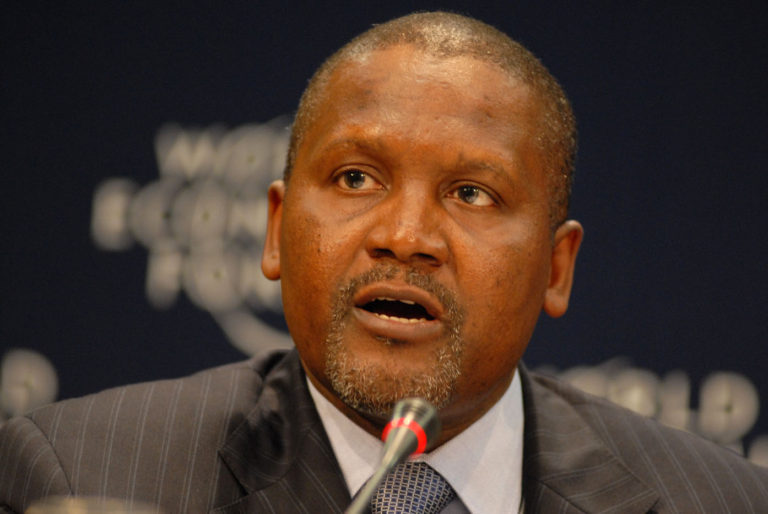
Aliko Dangote, Africa richest man and billionaire businessman, has declared that his passion is to create jobs for Nigerians and not to enter politics.

Dangote, President/Chief Executive Officer (CEO), Dangote Group of Companies, specifically warned that nobody should set him on a collision course with President Muhammadu Buhari and the ruling All Progressives Congress (APC).

He stated this while reacting to a newspaper report that the People’s Democratic Party (PDP) and its leaders were mounting pressure on him to contest for the 2019 presidential election on its platform.

But Dangote has made it clear that his primary interest, which he had always made known to everybody, is business with the goal of providing jobs for millions of people in addition to wealth creation.

“I am an entrepreneur; my passion is to create jobs for Nigerians and not otherwise,” he said.

He also disclosed that those who are jealous of his success in business are the ones desperately trying to link him with the 2019 presidential election.

“I am not interested in politics and this is authoritative. No member of any think tank committee has contacted me. People should stop dropping my name for the 2019 presidency,” he said.

“This whole thing is an attempt by people who do not like me. They are doing all these with a view to putting me on a collision course with President Muhammadu Buhari and the ruling party. They are people who are jealous of the successes I have so far recorded in business.

“My passion is for business development, provision of jobs and wealth creation, not politics.

“I have never shown interest in politics. I’m not interested in politics. I am not a politician. My passion has always been business and business.

“Buhari is like a father to me. Nobody should try to set me on a collision course with President Buhari. That will not work. I have high regard and respect for the President. For emphasis once again, I am not a politician. I can’t and won’t confront President Buhari.”

He stated that they should leave him out of any high wire politics and horse trading.

“I also seize this opportunity to warn name droppers to desist from their infamous act. They should stop using my name for politics. They should not set me on collision course with President Buhari and the government in power”.

“By the time the ongoing Dangote refinery in Lagos and the sugar projects come on stream fully, there will be a great positive development and thousands of jobs created that will change the narrative in the country. That is my passion”.

Police vow to ‘immediately enforce’ any judicial order against Kanu

The Nigerian Police Force says any judicial pronouncement on Nnamdi Kanu, leader of the Indigenous People of Biafra (IPOB), on account of the breach of his bail conditions will be swiftly enforced.

Jimoh Moshood, Force Public Relations Officer, said this in a chat with journalists on the activities of the IPOB group in the South East, adding that nobody is above the law.

The federal government had approached the federal high court in Abuja, asking for the revocation of the bail granted to Kanu since he has violated the conditions.

Kanu is currently under trial alongside three others on charges of treason. He was granted bail on health grounds on April 25 and among his bail conditions was that he was not to be seen in a group of more than 10 people, nor should he grant interviews.

But Kanu has been attending IPOB rallies, granting interviews to local and international media and, most recently, inaugurating what he called Biafran Secret Service (BSS).

Moshood confirmed that more riot policemen as well as personnel from other departments of the police have been deployed to the South-East, especially Anambra State, where the IPOB has threatened to prevent the forthcoming governorship election from holding.

“We have made additional deployments, particularly in Anambra State, because of the upcoming governorship election and also to other south-east and south-south states to ensure that IPOB did not actualise its threat of stopping the election,” he said.

“So also, any pronouncement from the court would be strictly enforced, irrespective of the persons involved. Nobody is above the law, so any court pronouncement would be enforced by the police.

“We are strictly monitoring the situation for any eventuality from the court, since there is an ongoing judicial process.

“We are not leaving anything to chance. We are to ensure there is law and order and any pronouncement from the court would be strictly enforced. We are watching the situation closely. We have made enough deployments and we are going to act appropriately.”

There are insinuations that Kanu has been placed under surveillance to prevent him from escaping should the court order his re-arrest, but Moshood would not confirm that.

He also refused to say exactly how many policemen that had been sent to the south-east, saying it was against the Force’s policy.

Meanwhile, the IPOB had released a statement last weekend in which it promised to resist any attempt to re-arrest its leader, Kanu.

The statement which was signed by Emma Powerful, the group’s spokesman read in part: “IPOB wishes to notify the public about the illegal and undemocratic moves by the Federal Government, led by President Muhammadu Buhari, to re-arrest our leader, who committed no crime known to the laws of the Nigerian state.

“Before Buhari decides to make a move to arrest our leader, he must first go to court to obtain an order or else it will be resisted by millions of IPOB members.”