Home Blog Page 2710

South African police kill another Nigerian — at least the 118th in two years

0

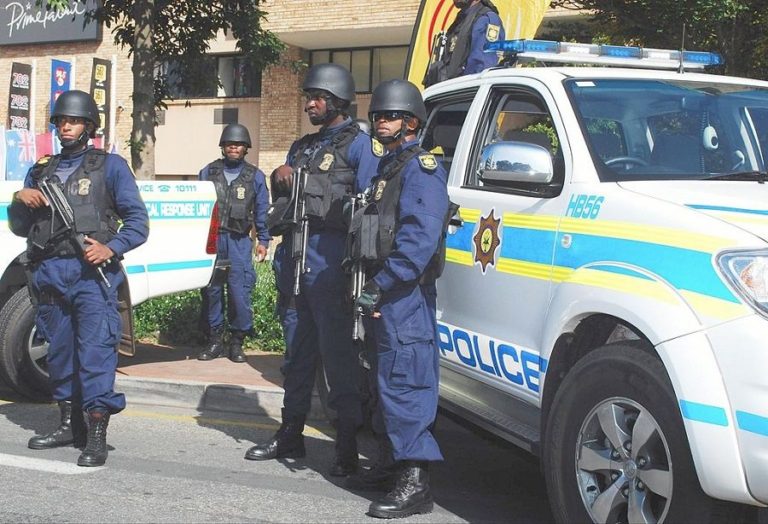
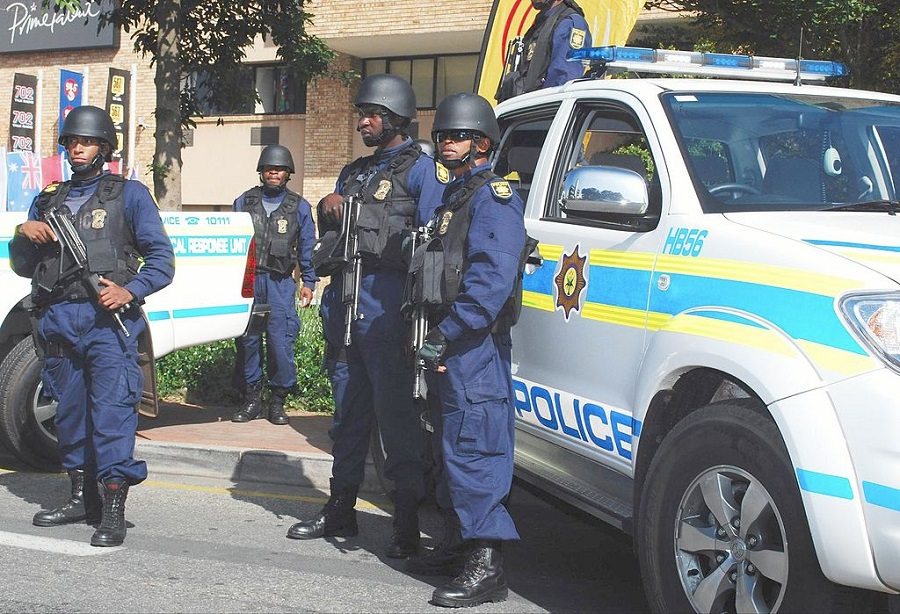
Kingsley Ikeri, a Nigerian, has been killed by the police at Vryheid town in Kwazulu Natal Province of South Africa for allegedly carrying drugs.

The Nigeria union in South Africa confirmed this to NAN on Friday..

Within the past two years, over 100 Nigerians have been killed by the South African police.

According to Bartholomew Eziagulu, Chairman of the Nigerian union in the province, the 27-year-old businessman was allegedly tortured to death by the police.

He said the union’s investigations revealed that the police arrested the deceased and a friend on suspicion that they were carrying hard drugs.

He said while interrogating him, the police used plastic to cover his face to extort information from him.

“In the process, they suffocated the deceased. When the police took him to the hospital, he was confirmed dead,” he said.

Adetola Olubajo, Secretary-General of the union, said the national secretariat had been informed about the death of the Nigerian.

He said the body had informed appropriate Nigerian authorities and the police in South Africa.

A senior diplomat from the Nigerian Consulate in Johannesburg visited Vryheid on a fact-finding mission, accompanied by some members of the union and other Nigerians.

As of February, a total 116 Nigerians had been killed in South Africa through extrajudicial means in the last two years, according to Abike Dabiri-Erewa, Senior Special Assistant to the President on Foreign Affairs and Diaspora.

Seven in 10 of the killings were carried out by the South African Police.

The presidential aide disclosed this sometime in February when she met with Lulu Louis Mnguni, the South African High Commissioner to Nigeria, in Abuja.

Last month, Uchenna Eloh, a Nigerian based in South Africa, was strangled to death by South African policemen who suspected that he had illegal drugs on him.

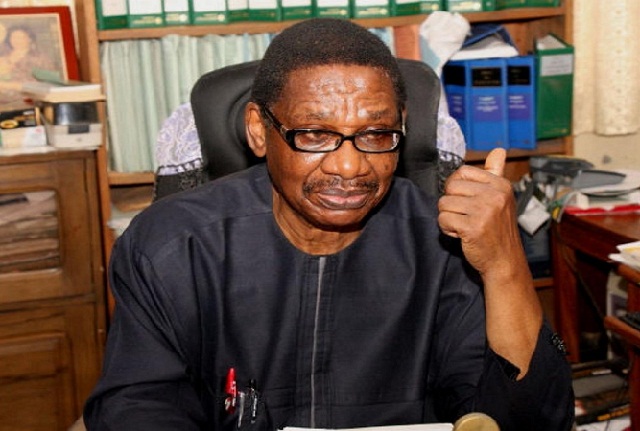
INTERVIEW: There’s no question that there’re some corrupt people in anti-corruption agencies, says Sagay

0

A Next Edition team comprising Victoria Ibanga, Editor in-Chief; Dominik Umosen, Associate Editor; Yusuf Mohammed, Correspondent; and Asian Nkutt, Marketing Executive recently interviewed Itse Sagay, a Professor and Chairman of the Presidential Advisory Committee against Corruption (PACAC).

In the interaction, which lasted over an hour and was made available to the ICIR, the fiery lawyer spoke about the insistence of the presidency that no one else but Ibrahim Magu will be EFCC Chairman, the federal government’s war against corruption, and the presence of corrupt people, whom he said were being found out, in anti-corruption agencies.

Excerpts:


As the chairman of the Presidential Advisory Committee against Corruption (PACAC), would you say the government has made significant progress in the fight against corruption?

I wouldn’t just say significant, but tremendous progress has been made. There is a tendency to focus on the number of convictions. That’s a mistake. There are so many aspects of the fight against corruption. One area in which we have been overwhelmingly successful is that of assets recovery. We have made a lot of assets recovery. I’m sure, as journalists, you will know the assets we are talking about. We were just talking about Diezani a few days ago. From her alone, what has been recovered is almost a billion dollars altogether.

We are talking about a billion dollars, not even naira. $447 million is a lot of money. There is also the money she used in bribing various electoral officials, about $43 million. The list is endless. That’s that.

There are so many others. The anti-corruption agencies and the judiciary have been empowered. Their capacity has been improved. The PACAC has engaged in a lot of capacity building programmes for judges and for the anti-corruption agencies. For example, we engaged judges themselves as the facilitators. Judges who are very experienced in corruption prosecution, and we have been exceptionally upright in terms of integrity and principles. They were the ones we used for the programme. Then when it came to the higher courts, Court of Appeal and Supreme Court, we brought people from all over the world. People from Britain, Canada, Ghana and so on.

That has been done and there are also new ideas. For example, the whistle blower policy was introduced by us and it has been very successful and as you know, there is a Whistle-blower Bill before the National Assembly. There is a Special Crimes Court Bill before the National Assembly. Then we have looked at the whole idea of accumulating a lot of money and assets in a haphazard manner and Nigerians have been asking what happened to the monies that have been recovered so far, which we thought was a reasonable demand. There has been a central assets management and recovery committee headed by the minister of finance. It is actually supervised by the Vice President but the head is the minister of finance.

All these monies are being kept in a particular account. There are two types of recovery, those that are permanent and those that are temporary. The two have to be separated. When it is still temporary, the government cannot touch it because its fate has not yet been decided. It is just that the forfeiture is to protect the prospective defendant from using it. There are so many publications and manuals now assisting the anti-corruption war. We have the corruption prosecution manual, which was designed by the PACAC to help the anti-corruption agencies strengthen their prosecution of the corruption case.

Basically, the most important thing it does is to encourage team work. When a case is being investigated, the investigator usually is a Police-trained person. He may not be a lawyer, so he may not know what to look for which constitutes the ingredients of the crime. We have proposed and they have accepted to attach a lawyer who will be in the prosecution team and will be guiding them on what to look for. And then there is a higher committee that reviews whatever is being done at intervals until there is the satisfaction that we have a strong case. There are so many things we have done. It would be very difficult for me to go into all of them.

There is also a plea bargain manual now, which is very strict on how plea bargaining should be managed. It is not the idea Nigerians have that somebody would steal billions and then return half of it. It is a graded thing. For example, if you plead guilty before the trial starts, you are going to get a softer landing than the one who allows the trial to get to the end of the prosecution case. And what is conceded is reasonably small.

Based on your explanations so far, does that invalidate the claim that the war on corruption is targeted at opponents of this administration?

This is our response. Who are the people who handled money and resources? It is not the present government. Of course, a few who were in PDP did handle and some of them have been taken to court. You have seen the case of Saraki, which backfired because of challenges we had with the judiciary, which is another major problem. But basically, the people who are in opposition now were the ones who handled our economy. We have seen the case of Diezani and some of these military chiefs. Alex Badeh and co who sent poor soldiers to the war fronts without arms and pocketed the money that was voted for the arms. Those are the ones the searchlight has been beamed on. Those who have managed our resources in the last 16 years are the only ones who can be held accountable. The people in power now have not had that opportunity. Of course, it has to be selective because there is nothing to hold members of government on.

There is a feeling that whoever runs from whichever party to the APC automatically becomes a saint and no longer looked at with suspicion by the current dispensation, do you agree to that?

I don’t agree to that. In fact, personally, I am against people jumping ship because it is so obvious they are looking for all sorts of favours. But luckily for us, Mr. Magu does not recognise anyone’s face. If you think you looted the ministry, agency or whatever body you handled and you think that by jumping to the APC, you are free; it is the worst mistake the person would make. There are quite a number of those who crossed over who are being prosecuted right now. I don’t want to mention names not to embarrass them.

But we need to know them so it wouldn’t look like the government is only targeting members of the opposition?

It is a good idea but I don’t want it to come from me. I would have wanted it to come from the EFCC. There are many of them who are even supporting the government strongly now. One thing I want to add, which is not really appreciated, is that fuel subsidy scam has ended. As at the time this government came in, over N380 billion had been stolen over fuel subsidy. That is the end of it. Nobody is trying it anymore when a ship was somewhere in the West Indies and then you say you are supplying petrol to the government. That is no longer happening. It was draining us.

Let’s talk about due process. You were one of the vocal defenders of rule of law and due process in governance. But it seems you have somewhat shifted ground?

Why do you say so?

You supported the raid on the homes of some of the judges last year and due process wasn’t followed

Yes, I did. The DSS obtained a warrant to search those premises, so they followed due process. And if anybody says they went in the dead of the night, what happened in America to one of Trump’s campaign team managers? They went to his house early in the morning around 6 O’clock and woke him because they had a warrant. The law does not stipulate time and it is the agency that wants to exercise the warrant that thinks of the best time to do so because if they go at the wrong time, if you tell someone I am coming with a warrant tomorrow morning, you are not going to meet anyone there. If you do it in daytime when the people are not in, there may be disadvantages there because you are required to be present for you to take an inventory and for them to say yes or no when you are entering a room or the other.

Basically, there was nothing wrong. People were so disturbed because they were judges. But I look at it from a different angle. I think more is demanded of judges than ordinary people like you and me because we entrust them with our faiths, so to speak. No anti-corruption war can succeed without judges who are committed to it. So if the judges too are deep in corruption, you just kiss the anti-corruption war good bye. I need to add that majority of our judges are honest. They have integrity but a few who are corrupt, who are in powerful positions, are frustrating the anti-corruption struggle and there is need to get them out of position, to ensure they do not interfere in the process.

Like I said, judges get a lot of respect and honour from society because of their position, so if they degrade themselves to the level of ordinary people, they will be treated like ordinary people. We all go to court, we bow, we say, ‘My Lord’, we pray for a ruling, we use all sort of words which indicate their superiority compared to us. And if you see where he sits, you have to look up. It is all deliberate to give him an image, which everybody will respect as the man whose word is law. Once he says something, that’s the end. You can only appeal. You cannot argue with him. A man with such totalitarian authority, respected by society, placed on a special pedestal, if he brings himself down, it is such a let down to the whole society. In fact, it needs a harsher punishment. The ordinary man steals a goat in the village and they cut off his hand immediately.

Our President was away for over 100 days. He made a promise he would stop public officers from traveling abroad for medical treatment when he assumed office in 2015. How do you react to a situation where he has been out for more than 100 days?

Well, I am not sure he said he would stop public officials from going abroad for treatment. I think he would make it more stringent. That’s the impression I had because there are some cases that you can’t treat here. Now coming to the President, he is also Head of State. He is the symbol of this country. Can we afford for him to die? That is the issue. When you think of the consequence if something happens to him. Look at the case of Yar’Adua and remember the confusion it caused in this country. We can’t afford that. So anything that can be done to restore his health for him to come back and continue his work as the head of this country, we should do it. We should make an exception in his case. There is nothing wrong with that. The country will lose more if anything happens to him. Yes, money is being spent but if anything happens to him, the cost would be more. I think we owe a duty for the sake of our country to give him the best medical treatment the world can afford.

Don’t you think that as a public figure Nigerians should know his health condition?

It is a very debatable issue and for me, I don’t disagree with those who insist but I want you to know the cultural difference between an African country and a European country. In America, of course, in Britain, that’s the first thing they will announce. This man is down with so and so. This is his condition and the hospital he is being treated in and this is the procedure he will go through. But in our own society, we seem to hide this from society. I think with time, we will overcome it. Probably it would have been better if it had been announced but I can understand the background we are coming from that is making them hesitant.

Even with the cat-and-mouse relationship between the legislature and the presidency in some regards, particularly on corruption issues, do you agree there is merit in the allegation we are fighting corruption war using people with dirty hands? There are allegations that the heads of some of these agencies are not clean. Are you aware of these allegations?

Yes, we have received petitions. You know the way Nigerians behave and I don’t blame them. We are basically a think tank making provision for empowering the anti-corruption agencies, but Nigerians want us to be directly involved. People see us like we are a prosecution agency. They send petitions to us, so what we have done is create a section for petitions, decide which agency it should be sent to and monitor it. In the process, we have seen quite a number of petitions against the agencies themselves and we forwarded it to them and said look, what are your response to these things and they responded. But in the process, a few things have come out. Below the head, there are some people in the middle who are involved in acts of corruption. Some of them are being found out and are being sacked but there is no question that within the anti-corruption agencies there are those who are corrupt. Whenever they are discovered, some through whistle blowers, some through their agencies, they are shown the way out.

Can you tell us why the government is insisting on giving the EFCC job to Ibrahim Magu despite the face-off between the Presidency and the Senate?

We may not want to admit it, but integrity is a rare phenomenon in this country.

Are you saying he is the best we have?

He is the best we know. We know that he can’t be bribed. We know no one can approach him. That is why he is so unpopular with the National Assembly. Right now, as I am speaking, he is investigating over 20 of them.

Irrespective of party affiliation?

Yes, irrespective of the political party. I need not mention that. For instance, take a look at former governors, both APC and PDP. They are all being investigated. And there is concrete evidence on the grounds of major misuse of public funds. They are being investigated and nothing will shake him. He has been approached and he has completely defied every attempt to make him succumb to all these blandishment of money and threat and so on. When you are able to identify someone like that, it is a terrible risk to use the argument that there are many Nigerians because you don’t know what the next person would do. He is the best we have at the moment. We are sure that he can’t be bribed, no one can influence him and he has no fear of anybody no matter their position. That is why we are supporting him right from my own low level to the high level of the vice president and the president.

But you are aware it was the DSS, an agency under the Presidency that sent a report to the Senate that stopped Mr. Magu’s confirmation?

I don’t want to comment on that but it is a very sad case. Let me put it like that. Very sad.

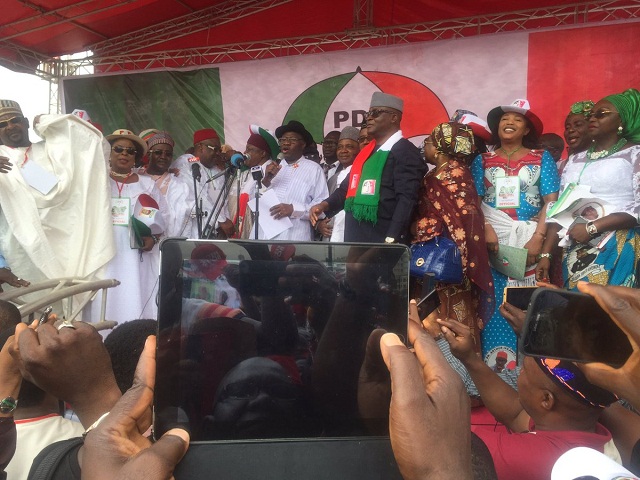
Diezani is your best legacy, APC says of PDP’s 19th anniversary

The ruling All Progressives Congress (APC) says the opposition Peoples Democratic Party (PDP) has nothing to celebrate on its 19th anniversary other than its legacy of gross corruption, typified by Diezani Alison-Madueke, former Minister of Petroleum Resources.

The party said this while replying a statement issued by the PDP on Thursday on the commemoration of the 19th year of its founding.

Among other things, the PDP had accused the APC-led federal government of destroying the independence of the country’s major anti-corruption agencies: the Economic and Financial Crimes Commission (EFCC) and the Independent Corrupt Practices and other related offences Commission (ICPC).

The PDP said the EFCC and ICPC were created during its 16-year reign to curb the menace of corruption in the country.

In the statement, signed by Chinwe Nnorom, PDP’s Head of Publicity Department, the party claimed to be the only viable, prosperous and most visionary political party in Nigeria.

“The PDP administration established two major anti-corruption agencies, the Economic and Financial Crimes Commission and the Independent Corrupt Practices and other related offences Commission to curb the menace of corruption in the country,” it said.

“These efforts reduced corrupt practices and further increased the confidence of foreign investors that resulted in huge investment inflows into the country.

“The APC-led government of today has destroyed the independence of these agencies with their selective approach of using ‘deodorants’ when APC members are involved and ‘insecticides’ when it concerns the PDP members and other Nigerians.”

In reply, however, the APC said it was rather unfortunate that the PDP has no iota of shame after looting Nigeria to almost a standstill.

Bolaji Abdullahi, APC’s National Publicity Secretary, said evidences were abound as to how the PDP almost crippled Nigeria with massive looting of the country’s resources.

“Instead of saying our party has destroyed EFCC’s independence, they should contradict the billions of naira, dollars and pounds recovered from its members who held positions of authority in the past,” Abdullahi said.

“If they want to lay any claim to moral superiority, they should refute evidence adduced by the EFCC about the recovery so far made, then we can talk.

“Let them challenge the verdict of a competent court of our land which recently ordered the permanent forfeiture of property and billions of naira in cash belonging to Diezani Alison- Madueke.

“If they can successfully challenge all these, then they can speak. As for them returning to power, Nigerians are now wiser.”

Similarly, Okoi Obono-Obla, Special Assistant to the President on Prosecutions, described the PDP as “chronically and scandalously corrupt”.

“The PDP does not have any argument because since the APC government came on board, the EFCC has become so efficient.

“In the first quarter of this year, the EFCC secured more than 200 convictions and recovered over N400bn.

“How much was recovered by the EFCC when the PDP was in government or when Goodluck Jonathan was in office?

“The PDP should shut up. The PDP was chronically and scandalously corrupt to the extent that one minister stole the equivalent of the allocations of 19 northern states in four years.

“Up to $20bn was unaccounted for. The foreign reserves were deflated. The late President (Umaru) Yar’Adua left $48bn in the foreign reserves; all the money was deflated. So what is the PDP talking about.”

Itse Sagay, Chairman of the Presidential Advisory Committee Against Corruption (PACAC), advised the PDP to mark its 19th anniversary with sober reflection instead of making empty boasts.

According to Sagay, the major thing to remember about the PDP is that Alison-Madueke was one of its products.

“I am disappointed in the PDP. If they are celebrating 19 years, they should celebrate with caution and give the nation an assurance that they would not bring such negative impact on our nation again and they have turned a new leaf.

“They destroyed our economy; their greed was overwhelming. If you look at Diezani for instance, there is no day that goes by that money is not recovered from her.

“In Thursday’s papers, it was reported that the EFCC had recovered about half a trillion naira from these people.”


READ ALSO:

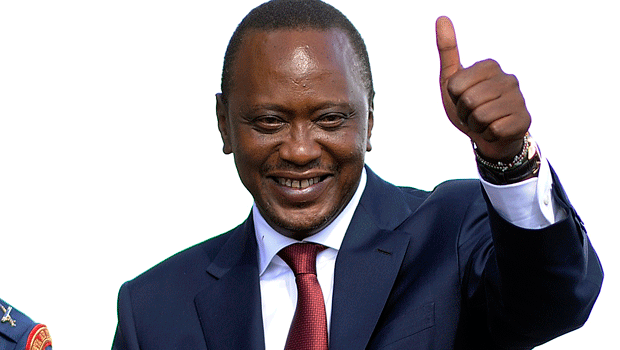
Kenya’s supreme court invalidates Kenyatta’s victory at presidential election

The Kenyan Supreme Court has declared the results of last month’s presidential election “invalid, null and void” and ordered the election to be re-run within 60 days.

“The presidential election which held on August 8 was not conducted in accordance with the constitution,” said David Maraga, ruling in favour of the opposition, which challenged the declaration of President Uhuru Kenyatta as the winner.

Maraga said this was a majority decision, with two judges dissenting.

The shock ruling was a rare example of a poll result being overturned, with Maraga saying the election commission (IEBC) “failed, neglected or refused to conduct the presidential election in a manner consistent with the dictates of the constitution”.

He validated opposition leader Raila Odinga’s argument that there had been “irregularities and illegalities”, notably in the transmission of election results.

Maraga said this had compromised the “integrity of the entire presidential election”.

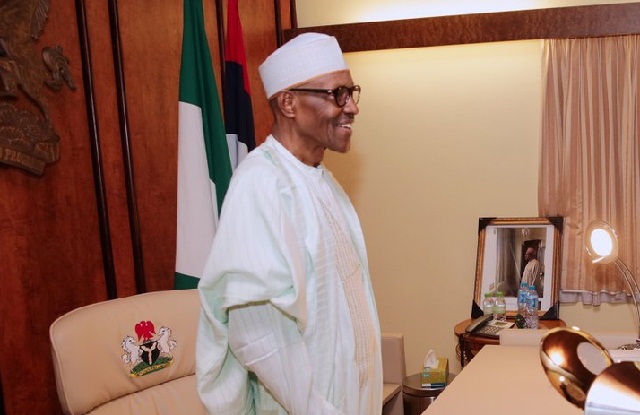
In Eid-el-Kabir message, Buhari urges Nigerians to emulate Prophet Ibrahim

President Muhammadu Buhari says Nigeria will make rapid progress on all fronts if citizens re-enact the exemplary virtues typified by Prophet Ibrahim.

In his message to Nigerians on the Eid-el Kabir celebrations, Buhari urged everyone to keep prejudice aside and work to foster the bonds of unity among one another.

The President, who is currently in his hometown, Daura, in Katsina State, promised that his administration will not rest on its oars “until Nigerians see the country of their dream”.

He commended Nigerians who fervently prayed for him while he was away in the United Kingdom on medical treatment.

“Indeed your fervent and sincere prayers, which cut across religion, political and ethnic divides, has energised me to re-dedicate myself and this administration to the task of building a great Nigeria,” he said.

“On the joyous occasion of this year’s Eid-El-Kabir celebration, I appeal to all Nigerians to rise against the odds, keep our prejudices aside and strengthen the bonds of friendship and unity to keep our country together.

“For Muslims all over the world, this celebration is to commemorate the trials and triumph of Prophet (Abraham) Ibrahim.

“As we celebrate, I sincerely believe that our nation can make rapid progress on all fronts if we re-enact the exemplary virtues, typified by Prophet (Abraham) Ibrahim, through his sacrifice, patience, steadfastness, generosity and obedience to Allah’s command and constituted authority.

“We must learn to see ourselves as brothers and sisters from the same heritage, who must come to terms with the African proverb that ‘a family tie is like a tree, it can bend but it cannot break.’”

Buhari also congratulated Nigerian Muslim faithful who are currently in Saudi Arabia to participate in this year’s Hajj.

The federal government had already announced Friday and Monday as public holidays to mark the Sallah celebrations.


READ ALSO:

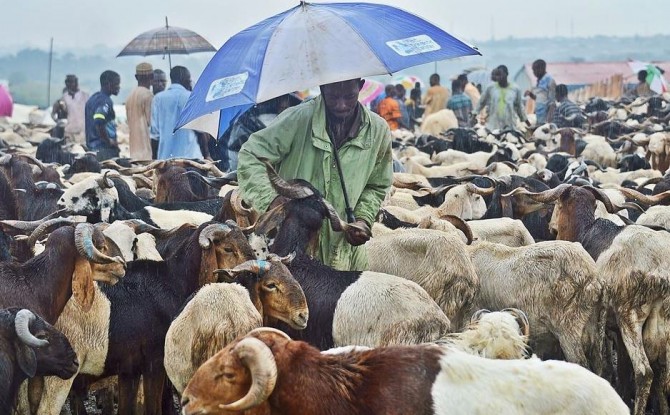
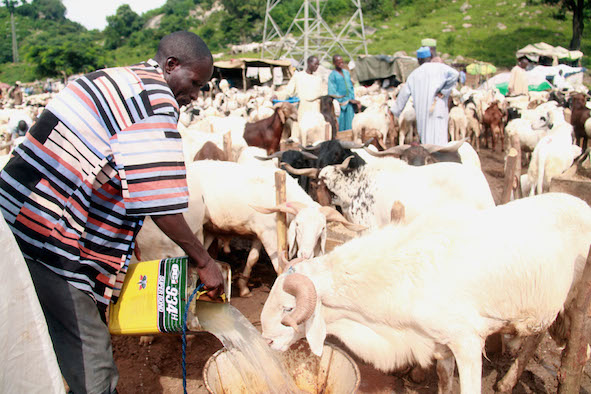
The costly side of Sallah

Prices of food commodities have continued rising despite low patronage from customers, with just a day to the annual Eid-el-Kabir celebration by Muslims.

Speaking with the ICIR, Sahid-Sahid, a vegetable trader at Wuse Market, attributed the high prices of goods to the impending Sallah celebration, noting that certain goods that used to sell at cheaper rates had become more expensive.

We dey buy a basket of tomatoes before for ₦8,000 but now e don reach ₦11,000. Things don cost,” Sahid said.

Also speaking, Aliyu Alidawudah, a cloth trader at the same market, lamented the low rate of patronage, which he attributed to the coming celebration.

“Business is going normal, but not like before,” he said. “Most people have travelled and some don’t want to enter the market because of the rush.”

He also said that most people already got the things they needed for the celebration way earlier in the month, in anticipation of a possible increase in the prices of commodities.

“Unfortunately the prices of things have skyrocketed considering the rate of dollar,” said Al-Amin, a trader at the Abuja GSM village.

“There is really no difference in the prices of commodities between this year and the previous Salah celebration because I bought two rams for ₦80,000 — almost same as last year.”


Adamo, a butcher in the market, blamed the low rate of patronage on the state of the economy, saying sales were a lot better before now.

“As the country is now, everything is hard; people have not been coming as they used to in the past,” he said.

“Before, even people who were travelling came to buy meat; this place was always filled up. But this time around, it is different.”

He further said that the price at which butchers purchased beef had become higher, although that of mutton remained the same.

While others lamented the low rate of consumer patronage, it is actually a period of boom for yam sellers, who applauded the market situation as they have been recording speedy sales.

“I came with about 30 tubers and I have just few remaining,” one told the ICIR. “I’m done for today, so I’m going home.”


READ ALSO:

Odinkalu: Nigeria has over 120,000 lawyers but still relies on UK to try ex-govs/ministers

Chidi Odinkalu, former Chairman of the National Human Rights Commission (NHRC), is unhappy with the prosecution of high-profile corruption cases abroad in spite of the numerous human resources in the country’s judiciary.

Odinkalu urged Africa to start taking its institutions seriously and not always look abroad for “salvation”.

He said this on Thursday during an interview on Twitter with a group called the Pan African Citizens Network, PACIN.

Odinkalu expressed sadness that Africa has refused to totally let go off our “histories of colonial government and post-colonial authoritarianism [which] were built on denial of our agency”.

“Democratisation depends on civic agency but you can’t achieve that overnight. You need investment in education,” he said.

“Instead, our rulers are investing in infrastructure of election rigging supported and reinforced by electoral tourism. So, when Kenya voted recently, John Kerry [the Former US Secretary of State] was in a haste to certify the results before the facts were clear.

“But John Kerry is not Kenyan. He was an electoral tourist. If he believed [the way] Africa thinks, he’d have behaved different. Surely, if facts were the same, John Kerry wouldn’t behave in, say, France or even India like he did in Kenya.

“Take Nigeria, it has over 120,000 lawyers but to try corrupt former governors or ministers, it looks to London. Or when you talk of criminal jurisdiction for African courts, folks tell you Africa can’t try its leaders.

“We can’t keep exporting our problems to the world and expect the world to see us as capable.”

Diezani Alison-Madueke, former Minister of Petroleum Resources, who has been accused of gross looting of funds, could face trial in the United Kingdom.

it was the same for James Ibori, former Governor of Delta State, who was convicted in the UK and served a five-year jail term for corruption and money laundering before returning to Nigeria.

“We have to take our own regional institutions seriously, not always see salvation from beyond. That means investing in knowing how they work, building partners among them and using them,” Odinkalu said.

“Look at ACPHR (African Commission on Human and Peoples’ Rights), it’ll be 30 years in November yet it’s received barely 500 cases in that time.

“A yearly average of 16 cases from 55 countries gives u 0.29 case per country per annum, right? That average suggests Africans are not using the institution for what it was meant.”

Odinkalu implored Africa to realise that “our problems are neither unique nor fate. We can overcome them with organised effort”.


READ ALSO:

Ethiopia bids to take over Nigeria’s largest airline, Arik

Ethiopian Airlines, which is wholly owned by the Ethiopian government, has made an offer to the federal government to take over the management of Arik Air, Nigeria’s largest airline.

Esayas Weldemariam , Director of International Service at the Ethiopian Airlines Group, confirmed the takeover plan to CNN.

“We have outlined our terms and conditions to the Nigerian government and we are waiting to see if they agree,” WoldeMariam said. “We are capable and desirous of handling the airline.”

He said the Ethiopian Airlines submitted a formal offer to take over Arik after the Nigerian government opened a bid.

“Following the bid opened by the Nigerian government, we are negotiating to secure management contract of Arik Air,” he said. “We are bidding with other airlines, if we agree on the negotiations, we are ready to go and take over the management.”

Following the failure to service its debts and pay employees’ salaries, Arik Air was taken over by the Asset Management Corporation of Nigeria (AMCON) in February.

With Nigeria not having a national carrier, Arik Air, being the largest private airline in the country, has been serving as the unofficial national carrier.

Ethiopian Airlines is one of the fastest-growing and most profitable carriers in Africa.

The airline reported a 10 percent increase in revenue to $2.4 billion for 2015/16, with a 70 percent rise in profits, and passenger numbers climbed 18 percent to 7.6 million.

Ethiopia is pursuing ambitious development at home, with the $345 million expansion of Addis Ababa’s Bole International Airport.

Ethiopian Airlines also manages Asky Airlines in Lome, in a joint ownership with the Togo government, and the Malawian Airlines, also jointly with the government.

The airline currently has a fleet of 92 aircrafts, flying to 104 international 19 local destinations.

Ethiopian Airline currently operates direct international flight to Lagos, Abuja, Kano, Kaduna and Enugu airports


Read Also:

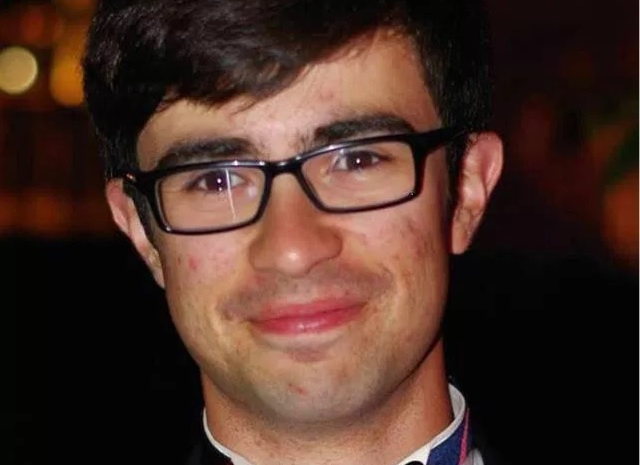
Golfer, chorister, genius… Ochoa, the 23-year-old Oxford PhD student who committed suicide


Twenty-three-year-old Rafael Ochoa was a PhD student when he committed suicide in April 2016, and an inquest into his death has revealed that intense pressures from his Computer Science degree and upcoming sporting competition forced him to jump in front of a moving train.

Ochoa was studying intensively and training hard for a tournament with the university golf team when he started to suffer from anxiety.

Who exactly was Rafael Ochoa?

PRECOCIOUS STUDENT

Ochoa was from Bilbao in Spain. At 17 years, he secured admission to study engineering at the University of Cambridge, graduating with a First Class in 2015.

The same year, he proceeded to the Oxford University for his master’s degree. He also graduated with distinction in Computer Science.

In 2016, Ochoa began his PhD in Computer Science and was expected to complete the programme in 2021, aged 27.

Unfortunately, he committed suicide in the first year of his PhD, ending a brilliant academic journey that many students could only dream of.

Stephen Faulkner, the Dean at Keble College in Oxford where Ochoa was studying, described him as an excelling student who earned “very positive reports and was actively involved in the university golf club”.

DEVOUT GOLFER AND ACTIVE CHORISTER

Ochoa was not just an excellent student, he was a devout sportsman and an active choir member.

He was a captain of the Divots team, the men’s second team, of the Oxford University Golf Club. The challenge of preparing for the golf tournament, in addition to academic pressure, were the cause of his suicide.

He was a cox at the Sommerville Boat Club in Oxford. When he was an undergraduate at Cambridge, he was a member of Emmanuel boat club.

Ochoa also loved to sing. He was a member of the Hertford College Chapel Choir. At Cambridge, he was a member of Emmanuel Music Society.

HOW HE KILLED HIMSELF

Narrating how Ochoa committed suicide, a report by the Telegraph said he jumped into a moving train.

In the early evening of April 26, 2016, he was pictured on CCTV standing on a platform at Appleford railway station.

At 20.24pm, he jumped in front of an oncoming train passing the station at 25 to 30mph and died instantly from traumatic injuries to the base of his skull.

The driver, James Scholes, said he had seen a young man with dark hair stand very close to the edge of the platform as the three-carriage train was approaching the station.

“I sounded the horn, and when I saw him jump I hit the brakes,” Scholes said. “I can affirm the man’s actions were intentional.”

Later that day, officers from Thames Valley Police entered Ochoa’s flat and found a number of letters in his room that suggested he was going to commit suicide.

“Rafael Ochoa came to Oxford University in 2015 to study towards a DPhil in computer science following a successful undergraduate career at Cambridge,” Jonathan Phillips, Warden of Keble College, said in a tribute said.

“He studied first at Somerville College, then moved to Keble College in 2016 after he won a scholarship here. His supervisors reported his research was going well and he also engaged in a wide range of activities outside academic work.

“The university, the Department of Computer Science and the colleges to which Rafael belonged are all deeply saddened by the loss of a very talented and engaging student. We extend our deepest sympathies to his family.”

STRUGGLING WITH ANXIETY

Ochoa had told his doctor that he was having anxiety over his academic deadline and sporting competition but he promised his doctor that he would not commit suicide.

The doctor, therefore, prescribed diazepam, a drug that reduces anxiety problem.

He had a history of mental health problems, having previously suffered from anxiety in 2011 when he was undergraduate in Cambridge and reported similar symptoms.

Unfortunately, this drug could not save him, although its traces were found on him after an autopsy was conducted.

GROWING PROBLEM

A report by the Times notes that suicide among college students in the UK has been increasing over the years, the number of deaths by suicide in England and Wales increasing by 50 per cent in the past decade.

Universities across the UK are also recording a 50 per cent rise in demand for mental health services.

In April, a third-year student at Bristol University became the fifth current student thought to have committed suicide in only six months. Last year, the University of York had five student suicides in a year.

It has also been disclosed that half of all call-outs to ambulances at universities were to attend cases of self-harm or suicide attempts.

The ONS, in figures that were published last year, found that more than 100 students a year had taken their own lives between 2009 and 2015. In 2015, a total of 134 students killed themselves, the highest number since records began.

Fayose: Buhari is endorsing the sufferings of Nigerians… and this is painful

Ayodele Fayose, Governor of Ekiti State, has accused President Muhammadu Buhari of endorsing the sufferings of Nigerians.

At a meeting with Godwin Emefiele, Governor of Central Bank of Nigeria (CBN); Kemi Adeosun, Minister of Finance and Udoma Udoma, Minister of Budget and National Planning, Buhari had expressed delight over the “improvements” in the economy.

But in a statement on Wednesday, Fayose said it was clear that the President had lost touch with real economic situation of the country.

“How can a President who has spent more time abroad than he spent in Nigeria be telling Nigerians that he is satisfied with the sufferings of the people? It is like the President endorsing the sufferings of Nigerians and this is painful,” read the statement issued on his behalf by Lere Olayinka, his spokesman.

“That President Buhari, who met exchange rate at N197 to $1, said that he is pleased with the economy when exchange rate is now N370 to $1 is a clear indication that the government is being run on his behalf.

“The National Bureau of Statistics (NBS), in its unemployment report for the fourth quarter (Q4) 2016, said 3.67 million Nigerians became jobless in one year and that the number of unemployed Nigerians rose from 7.51 million at the beginning of October 2015 to 11.19 million at the end of September 2016.

“The same NBS said in its June 2015 to May 2016 National Corruption Report that over N400 billion was paid as bribes to public officials in Nigeria in one year (June 2015 – May 2016). Yet, they will tell Nigerians that they are fighting corruption when indeed, corruption is thriving under the All Progressives Congress (APC) government of president Buhari.

“As at May 29, 2015 that Buhari became President, a bag of rice was less than N8,000; a bag of rice is about N18,000 now. More than 25 states cannot pay workers’ salary regularly owing to dwindled revenue from the federation account, and someone is telling Nigerians that the economy is doing well?

“It is clear that the President has lost touch with real economic situation of the country. Even a two-year-old child knows that there is hunger in the land, Nigerians are hungry, they are suffering and telling them that all is well is like adding salt to their injury.”