Home Blog Page 2717

South African police strangle Nigerian to death for ‘drug peddling’

South African police strangle Nigerian for alleged drug peddling

Uchenna Eloh, a Nigerian based in South Africa, has been strangled to death by South African policemen who suspected that he had illegal drugs on him.

Kanayo Onwumelu, Chairman of the Western Cape chapter of the Nigerian union in South Africa,  told NAN that the late Eloh was a native of Ezeagu, in Enugu State.

“At about 11.00 a.m. South African time on Wednesday, a Nigerian, Uchenna Emmanuel Eloh, popularly known as “Monkey’’, was killed by a South African police officer,” NAN quoted him as saying over the phone.

“He was walking out of his house toward the bus station when a police van stopped to search him, suspecting that he might be in possession of illegal substance.

“Three policemen accosted Eloh, one of them by the name Williams, held him on the neck suspecting that he swallowed a substance, while another police officer held him by the legs until he started foaming and suffocated to death on the spot.”

Onwumelu said that this was not the first incident of such killing of innocent Nigerians by the South African police.

“We have reported similar killings to the South African government and Nigeria High Commission in South Africa and nothing was done to bring the culprits to book,” he said.

“We want the Nigerian Government to intervene to stop this brutality against innocent Nigerians and stop killing Nigerians out of hatred, racism or xenophobia.”

Also, Ikechukwu Anyene, President-General of the Union of Nigerians in South Africa, confirmed the incident, adding that government of both countries must show more commitment in tackling the problem.

“Our government needs to do something urgently to make it clear that Nigerian lives matter,” Anyene said.

“We have made suggestions on what can be done, but it is now clear to us that the endless talks cannot yield any positive result.”

He also said that the union had engaged a lawyer to take up the case against South African Police Service “but this kind of legal service should form part of consular services to provide legal services to victimised Nigerians”.

Anyene said that the police had opened an inquest into the case.

Bello, Kogi governor, ‘converts’ major street to entrance of his new house

Kogi Governor, Yahaya Bello converts major road to personal residence, says the people should be grateful

Yahaya Bello, Governor of Kogi State, is at the last stage of completing his personal mansion in Okene, for which he had to convert parts of a major street to serve as the entrance.

This is in spite of the fact that many of the civil servants in Kogi State are still being owed between three and six months’ salary arrears.

According to The Cable, the massive building is located on Mahmoud Atta street, GRA Okene.

However, residents of the area are complaining, albeit in hushed tones, that the development has disrupted their normal way of life and increased discomfort.

One of the residents who spoke under the condition of anonymity described the development as “a big shame”.

“He has converted the main street entrance to his private entrance and is creating another entrance for lesser mortals like us,” the resident lamented.

“A governor converting a public road to a private and exclusive road for himself. This is a big shame.”

The make-shift foot path constructed for public use
The makeshift foot path constructed for public use

But Kingsley Fanwo, the Governor’s spokesman, said the people should rather be grateful that Bello had made alternative arrangement for them.

He said: “Some of these issues are not the way we see them. The point is that if he is building a house and the structure is affecting the road network and he is giving the people a better road, they should be grateful.

“It’s not as if he is obstructing the road and he is not doing anything about it. It’s not that he is flexing his power as governor. He has been considerate enough to give them a better road.”

Fanwo denied that his principal was using state funds to finance the construction of his personal building, noting that Bello was already a “billionaire” and owned property all over Nigeria before becoming Governor.

“About why he is building a house when he is owing civil servant, we have responded to this over and over again,” Fanwo said.

“Also, I want you to know that this governor was a very successful businessman before he was elected. By all standards he was a billionaire before he became governor.

“He has houses all over Nigeria before he became governor. He has businesses that were blossoming before he was elected.”

Kogi State civil servants have cried themselves hoax at the non-payment of their salary arrears for several months.

One of the workers said Bello was “playing politics” with their salary payments.

“What he has been doing is that in an office, he would pay some and leave out others,” the civil servant said, asking not to be named.

“I have not been paid for six months, but some of my colleagues are being owed three months, some just a month. Under this kind of arrangement, how do you calculate the number of months that Yahaya Bello is owing?”

But Fanwo claimed that the current administration owes just the month of July, as Bello had directed that no political office holder should get salary until civil servants have been paid.

“As I am speaking to you, what the state government is owing as of today is July salary. You can confirm from civil servants in the state,” he said.

“We have paid till June and the governor has already given a directive that no political office holder should be paid before a civil servant.

“As I am speaking with you, I have not received my July salary because they have to pay the civil servants first.”

Judges and police are the highest bribe takers in Nigeria, NBS study reveals

Bribery is part of administrative procedure in Nigeria, NBS survey reveals

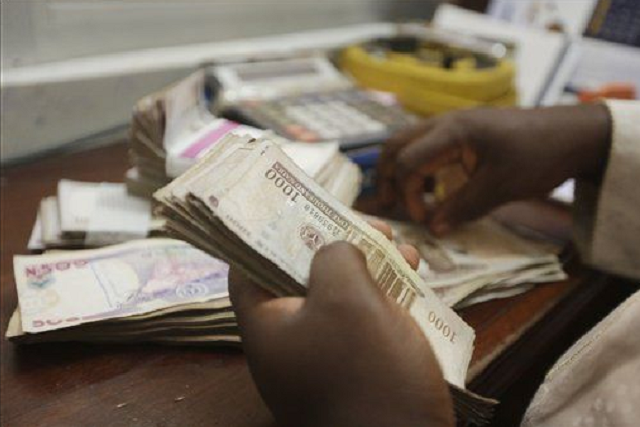
A survey by the National Bureau of Statistics (NBS) has indicted “law enforcement agents such as the police and judiciary workers such as judges and magistrates” as the highest takers of bribe in Nigeria. 

It also indicates that 32.3 percent of Nigerians had to pay some form of bribe to public officials between June 2015 and May 2016.

According to the survey, released late Wednesday, a total of N400 billion was received in bribes by public officials within the period in review.

“With such a large portion of public officials initiating bribes, which are paid upfront, it seems that many public officials show little hesitation in asking for a kickback to carry out their duty and that bribery is an established part of the administrative procedure in Nigeria,” the report read.

“Taking into account the fact that nine out of every 10 bribes paid to public officials in Nigeria are paid in cash and the size of the payments made, it is estimated that the total amount of bribes paid to public officials in Nigeria in the 12 months was around N400bn, the equivalent of $4.6bn in purchasing power parity.

“This sum is equivalent to 39 per cent of the combined federal and state education budgets in 2016. The average sum paid as a cash bribe in Nigeria is approximately N5,300, which is equivalent to $61 – PPP.

“This means that every time a Nigerian pays a cash bribe, he or she spends an average of 28.2 per cent of the average monthly salary of N18,900.”

The survey also showed that almost 70 per cent of the bribes were paid before any service was rendered. It also added that though money is the most important form of bribe payment in Nigeria, there are other forms including “provision of food and drink, the handing over of valuables or the exchange of another service or favour”.

Majority of the bribes were paid “to speed up or finalise an administrative procedure that might otherwise be delayed for a long period or even indefinitely”; the second largest proportion of bribes is paid “to avoid a fine through frequent encounters with police”, while 13 per cent of the bribes are paid “to avoid the cancellation of public utility services”.

According to the report “law enforcement agents such as the police and judiciary workers such as judges and magistrates were the highest takers of bribe in Nigeria”.

“Police officers are the type of public officials to whom bribes are most commonly paid in Nigeria. Of all adult Nigerians who had direct contact with police officers in the 12 months prior to the survey, almost half paid the officers at least one bribe, and in many cases, more than one since police officers are also among the three types of public officials to whom bribes are paid most frequently in Nigeria,” the report read.

“At the same time, the average bribe paid to police officers is somewhat below the average bribe size.

“Although fewer people come into contact with judiciary officials than with police officers over the course of the year, when they do, the risk of bribery is considerable: at 33 per cent, the prevalence of bribery in relation to prosecutors is the second highest, closely followed by judges and magistrates.”

Others include “car registration/driving licence officers; tax and customs officers; road traffic management officials; public utilities officers and land registry officers”.

Boko Haram originally wanted to rob the school, not abduct us, say freed Chibok girls


Federal Government To Rebuild Chibok School, Empower Women, YouthsA diary written by abducted Chibok Secondary School girls who were among the 82 recently released by Boko Haram claims the original intention of the insurgents was to rob the school — not abduct the girls.

According to diary, unveiled in an exclusive report by Reuters, life in the Sambisa involved “regular beatings, Koranic lessons, domestic drudgery and pressure to marry and convert”.

The girls wrote in the diary that their abduction by the terrorists, which has become a global issue, was accidental.

The secret diary, written by more than three of the abducted girls when they were in Sambisa, revealed that their mass abduction was the accidental outcome of a botched robbery.

While recalling the events of the night of their kidnapping in April 2014, Naomi Adamu one of the writers of the secret diary, described how Boko Haram had not come to the school in Chibok to abduct the girls, but rather to steal machinery for house building.

Unable to find what they were looking for, the militants were unsure what to do with the girls.

Arguments swiftly ensued.

“One boy said they should burn us all, and they (some of the other fighters) said: ‘No, let us take them with us to Sambisa (Boko Haram’s remote forest base) … if we take them to Shekau (the group’s leader), he will know what to do,” Adamu wrote.

Reuters said the authenticity of the diaries, written by Adamu and her friend Sarah Samuel, could not be verified.

The diaries shed light not only on the horrors the girls endured under Boko Haram, but their acts of resistance, and their staunch belief that they would one day go home.

The girls said they started documenting their ordeal a few months after the abduction, when Boko Haram terrorists gave them exercise books to use during Qoranic lessons.

To hide the diaries from their captors, the girls would bury the notebooks in the ground, or carry them in their underwear.

Three of the other Chibok girls also contributed to the undated chronicles written mainly in passable English, with some parts scribbled in less coherent Hausa.

“We wrote it together. When one person got tired, she would give it to another person to continue,” Adamu, 24, said from the state safe house in the capital, where the girls are being kept for assessment, rehabilitation and debriefing by the government.

The girls’ spirits remained intact, as they devised amusing and mocking nicknames for the fighters, the diaries show. Yet cruelty and brutality were ever present.

When five girls tried to escape, the militants tied them up, dug a hole in the ground, and turned to one of their classmates.

The jihadists handed her a blade and issued a chilling ultimatum: ‘cut off the girls’ heads, or lose your own’.

“We are begging them. We are crying. They said if next we ran away, they are going to cut off our necks,” Adamu wrote.

On another occasion, the militants gathered those girls who had refused to embrace Islam, brought out jerrycans and threatened to douse them in petrol then burn them alive.

“They said: ‘You want to die. You don’t want to be Muslim, we are going to burn you,” read the diary entry.

As fear set in, the militants cracked into laughter — the cans contained nothing but water, the girls wrote.

One of the most striking excerpts illustrates the pervasive fear spread by Boko Haram in Northeast Nigeria, where the group has killed 20,000 people and uprooted at least 2 million in a brutal campaign that shows no signs of ending soon.

During their captivity in the Sambisa forest, some of the Chibok girls escaped and ended up in a nearby shop where they asked the owners for help, as well as food and water.

“The girls said: ‘We are those that Boko Haram kidnapped from (the school) in Chibok,'” Adamu wrote. “One of the people (in the shop) said: ‘Are these not Shekau’s children?'”

The shop owners let the girls stay the night.

But the next day they took them back to Boko Haram’s base, where the girls were whipped and threatened with decapitation.

Despite being flushed with relief at her own freedom, Adamu worries about her closest friend and co-author, Samuel, who is still with the group, having married one of its militants.

“She got married because of no food, no water,” Adamu said from the government safe house in Abuja.

“Not everybody can survive that kind of thing,” she added. “I feel pained … so pained. I’m still thinking about her.”

 

SPOTTED: Salihu Yakubu wants to lynch Charly Boy — and 244 people are behind him

Salihu Yakubu
Salihu Yakubu

If Salihu Yakubu had his way, Charles Oputa, renegade entertainer better known as ‘Charly Boy’ or ‘Area Fada’, would have been dead by now.

It almost happened on Tuesday, though — only that when Charly Boy was attacked at Wuse Market there were a few people who were not thinking like Yakubu.

Charly Boy was attacked at the market by northern traders opposed to his #OurMumuDonDo protests demanding the resignation or return of President Muhammadu Buhari from the UK, where he has been receiving treatment since May 7.

Although traffic wardens fled from the scene of the violence, south-eastern traders at the market came to his rescue, before security agents mobilised to prevent what was threatening to degenerate into a Hausa-Igbo crisis.

Salihu Yakubu 2

When Saharareporters posted its report of the attack on its Facebook page, it drew lots of comments, with Yakubu’s arguably the harshest.

“I wish I was there, let me lynch Charlyfool and Co to death.” Yakubu said. “I love Buhari and nobody can ridicule or humiliate my hero, Nigeria’s Messiah, Mohamadu Buhari.”

Strangely, 244 people (as of 5pm when the ICIR took a screenshot) had expressed support for Yakubu’s wish by using either of Facebook’s ‘like’ and ‘love’ buttons.

Yakubu’s comment also sparked a heated exchange of counter-comments from other users of the social media platform, with both supporters and opponents of the comment using unprintable words to advance their points.

Hopefully, security agents are on the alert.

Reuters: Osinbajo can’t take decisions without clearance from Buhari or Abba Kyari

Osinbajo walking a tightrope to avoid offending Buhari – Reuters

Acting President Yemi Osinbajo is practically walking a tightrope in his running of government affairs in order not to appear disloyal to his principal, Muhammadu Buhari, who has been away from the country for the past 100 days.

This is according to a report by Reuters, an international media organization.

The report claims that Buhari still has a strong grip on the issues back in Nigeria, as Osinbajo has to get a clearance from him or “his Chief of Staff”, Abba Kyari, before making any major decision.

“Buhari has kept a grip on power despite his medical leave, and the more business-friendly Osinbajo has been reluctant to challenge him,” the report says.

“This has gone as far as him flying to London to get permission for personnel changes.

More than three months after leaving Nigeria, it remains unclear when Buhari will return, despite his remarks about his desire to resume work.

“But even from far-away London Buhari and his aides have restrained Osinbajo.”

The report further said that the Acting President and his aides often hold meetings at the presidential villa “but he still seeks approval from Buhari or his chief of staff”.

“He (Osinbajo) is so scared to offend President Buhari to the extent that he takes no major action without consent from him through phone,” Reauters quoted an anonymous presidency official as saying.

The official also claimed that Osinbajo’s brief visit to London last month was “to get Buhari’s approval to appoint two ministers who had been already cleared by parliament”.

“As a Christian lawyer from southern commercial capital Lagos, he (Osinbajo) is walking a tightrope to avoid policies that may annoy Buhari and his inner circle, who are mainly Muslim northerners,” it further stated.

An unnamed presidential adviser was quoted as saying that “the chief of staff and his team are working alongside Osinbajo on the understanding that [he] will not run in 2019”.

“The election cycle is the last two years of an administration,” it said. “As we enter the election the issue of mutual trust becomes crucial because nobody wants to be ambushed.”

Gunmen attack EFCC headquarters, leave death threat for investigator


EFCC vehicle
Bullet hole in a vehicle after the raid. Photo credit: SaharaReporters

Unknown gunmen on Wednesday attacked the head office of the Economic and Financial Crimes Commission (EFCC) in Abuja on Wednesday, leaving a death threat for one the commission’s investigators named Ishaku Sharu.

According to a statement issued after the attack by Wilson Uwajaren, spokesman of the EFCC, the incident occurred at about 5 am, but the gunmen were repelled by security men at the premises.

“The group of heavily armed bandits invaded the office at about 05.00 hours and began shooting into the premises, damaging vehicles parked in the premises in the process,” the statement read.

“However, the attack was repelled by guards on duty. The hoodlums escaped in a getaway vehicle but not without leaving a message.

“A white envelope dropped by the fleeing attackers was found to contain a death threat addressed to Ishaku Sharu, a senior investigator with the commission.”

Uwajuren explained that Ishaku is the head of the foreign exchange malpractices fraud section of the EFCC and and he is the officer “in charge of corruption investigation involving several politically exposed persons and retired military brass hats”.

He also recalled that the attack came “few weeks after another investigator, Austin Okwor, was shot and wounded by unknown assailants in Port Harcourt, Rivers state.”

The zone 7 office of the EFCC where the attack took place “houses the commission’s AMCON desk, procurement fraud and foreign exchange malpractices sections”.

Uwajuren said the incident has been reported to the police for further investigation.

VIDEO: Charly Boy suspends resume-or-resign protest, says ‘we’ve made our point’

Charly Boy suspends Resume-or-resign protest, says ‘We’ve made our point’

Charles Oputa, popularly known as Charly boy, has called off the resume-or-resign protest after protesters clashed with pro-Buhari supporters on Tuesday.

An ethnic crisis was narrowly averted after Charly Boy was attacked by a group of northern youth when he took his #OurMumuDonDo protesters to Wuse Market, Abuja.

The pro-Buhari Youths threw rocks at the 66-year-old, who was eventually rescued by another group of south-eastern youth.

It took the prompt intervention of security operatives for the situation to be brought under control, but two cars belonging to Charly Boy were destroyed while some people sustained injuries.

Consequently, on Wednesday morning, Charly Boy addressed his fellow protesters, saying he was suspending the protest as their point had been made.

“My brothers and sisters, I’ll like to say thank you for a good job well done; and to say to my fellow comrades, we’ve made our point, let Nigerians judge,” he said.

“Let Nigerians do the needful, do the right thing. And on this note, permit me, my fellow comrades, to say that we’ve come to the end of this particular sit-out.

“We need to go and re-strategise because there are a lot of things that are wrong with our country. There are a lot of topics we want to take on full blast.

“But we are still insisting and we will always insist that either Mr President returns or he resigns.”

Watch the video below, courtesy of Sahara TV:


SERAP asks ICC to probe OBJ, Jonathan, Yar’Adua govts over ‘staggering’ power sector corruption

0

Darkness

The Socio-Economic Rights and Accountability Project (SERAP) has asked Fatou Bensouda, Prosecutor, International Criminal Court (ICC), to investigate allegations of corruption in the Nigerian electricity sector during the tenures of three former presidents.

In a statement released on Wednesday by Timothy Adewale, Deputy Director, SERAP asked Bensouda to use her “good offices and leadership position to investigate whether the allegations of widespread, systematic and large-scale corruption in the electricity sector since the return of democracy in 1999 and under the governments of former presidents Olusegun Obasanjo, Umaru Musa Yar‘Adua and Goodluck Jonathan in Nigeria amount to crimes against humanity within the jurisdiction of the International Criminal Court, and to prevail on the Nigerian government to surrender all suspected perpetrators for trial by the ICC”.

“Allegations of corruption in the electricity sector in Nigeria have had catastrophic effects on the lives of millions of Nigerians, akin to crimes against humanity as contemplated under the Rome Statue and within the jurisdiction of the Court,” the organisation said.

“The Rome Statute in article 7 defines ‘crime against humanity’ to include ‘inhumane acts causing great suffering or injury,’ committed in a widespread or systematic manner against a civilian population. The common denominator of crimes against humanity is that they are grave affronts to human security and dignity.

“Therefore, the staggering amounts of public funds alleged to have been stolen over the years in the electricity sector create just these consequences. Crimes against humanity are not only physical violence; allegations of corruption in the electricity sector hold a comparable gravity, which the Prosecutor should examine and thoroughly investigate.”

SERAP noted that the elements that need to be established to prove a crime against humanity under article 7(1)(k) of the Rome Statute are that, the perpetrator inflicted great suffering or serious injury by means of an inhumane act; that the perpetrator was aware of the circumstances, and that the act was committed within a widespread or systematic attack on a civilian population; and that the perpetrator knew of that link.

“The consequences of allegations of corruption in the electricity sector are similar to those of the offences in article 7(1). Corrupt officials and corrupt contractors in the electricity sector know well that their conduct is criminal and injurious, and the denial of human dignity coupled with a radical breach of solemn trust, aggravate their alleged crime,” it said.

“SERAP considers these allegations of widespread and systematic corruption in the electricity sector as amounting to crimes against humanity and therefore clear violations of the provisions of the Rome Statute of International Criminal Court.

“SERAP believes that these allegations have given rise to individual criminal responsibility of those suspected of perpetrating corruption in the electricity sector, as entrenched in the Rome Statute of the International Criminal Court.

“SERAP considers the apparent failure of successive governments and high-ranking government officials to prevent widespread and systematic corruption in the electricity sector as amounting to complicity under the Rome Statute. SERAP therefore believes that the widespread and systemic nature of large scale corruption in the electricity sector fits the legal requirements of a crime against humanity.”

Noting that that allegations of corruption in the energy sector have resulted in the epileptic and interrupted supply of electricity and corresponding deprivation and denial of the citizens’ access to quality healthcare, adequate food, shelter, clothing, water, sanitation, medical care, schooling, and access to information, it asked Bensouda to: “Urgently commence an investigation proprio motu on the allegations of widespread and systematic corruption in the electricity sector since the return of democracy in 1999, with a view to determining whether these amount to crimes against humanity within the Court’s jurisdiction.

“In this respect, we also urge you to invite representatives of the Nigerian government to provide written or oral testimony at the seat of the Court, so that the Prosecutor is able to conclude since available information whether there is a reasonable basis for an investigation, and to submit a request to the Pre-Trial Chamber for authorization of an investigation.

“Bring to justice those suspected to be responsible for widespread and systematic corruption in the electricity sector in Nigeria.”

In its ‘From Darkness to Darkness: How Nigerians are Paying the Price for Corruption in the Electricity Sector’, launched on August 9, SERAP alleged that “the much-publicised power sector reforms in Nigeria under the Electric Power Sector Reform Act of 2005 is yet to yield desired and/or anticipated fruits largely due to corruption, regulatory lapses and policy inconsistencies.”

It said that between 1999 and 2015, more than N11 trillion meant to provide regular electricity supply for the country was squandered under the administrations of Obasanjo, Yar’Adua an Jonathan.

Power, works and housing ministry gets third minister

Ministry of Power, Works and Housing gets third Minister

A third minister has been deployed to the Ministry of Power, Works and Housing to join Babatunde Fashola, the substantive Minister, and Baba Shehuri, the Minister of State.

This was made known by Laolu Akande, spokesman of Acting President Yemi Osinbajo, on Wednesday, via his Twitter handle.

Akande said Osinbajo had allotted portfolios to the two newly appointed ministers — Stephen Ocheni and Suleiman Hassan — who had been sworn into the Federal Executive Council on Wednesday July 26.

“There are now two ministers of state in Power, Works and Housing Ministry,” Akande said.

Suleiman Hassan is the new Minister of State for Power, Works and Housing, which was orignally three different ministries until the current administration came to power.

Ocheni, on the other hand, was named Minister of State for Labour and Employment, the same office held by the late James Ocholi.