Home Blog Page 2718

Gunmen attack EFCC headquarters, leave death threat for investigator


EFCC vehicle
Bullet hole in a vehicle after the raid. Photo credit: SaharaReporters

Unknown gunmen on Wednesday attacked the head office of the Economic and Financial Crimes Commission (EFCC) in Abuja on Wednesday, leaving a death threat for one the commission’s investigators named Ishaku Sharu.

According to a statement issued after the attack by Wilson Uwajaren, spokesman of the EFCC, the incident occurred at about 5 am, but the gunmen were repelled by security men at the premises.

“The group of heavily armed bandits invaded the office at about 05.00 hours and began shooting into the premises, damaging vehicles parked in the premises in the process,” the statement read.

“However, the attack was repelled by guards on duty. The hoodlums escaped in a getaway vehicle but not without leaving a message.

“A white envelope dropped by the fleeing attackers was found to contain a death threat addressed to Ishaku Sharu, a senior investigator with the commission.”

Uwajuren explained that Ishaku is the head of the foreign exchange malpractices fraud section of the EFCC and and he is the officer “in charge of corruption investigation involving several politically exposed persons and retired military brass hats”.

He also recalled that the attack came “few weeks after another investigator, Austin Okwor, was shot and wounded by unknown assailants in Port Harcourt, Rivers state.”

The zone 7 office of the EFCC where the attack took place “houses the commission’s AMCON desk, procurement fraud and foreign exchange malpractices sections”.

Uwajuren said the incident has been reported to the police for further investigation.

VIDEO: Charly Boy suspends resume-or-resign protest, says ‘we’ve made our point’

Charly Boy suspends Resume-or-resign protest, says ‘We’ve made our point’

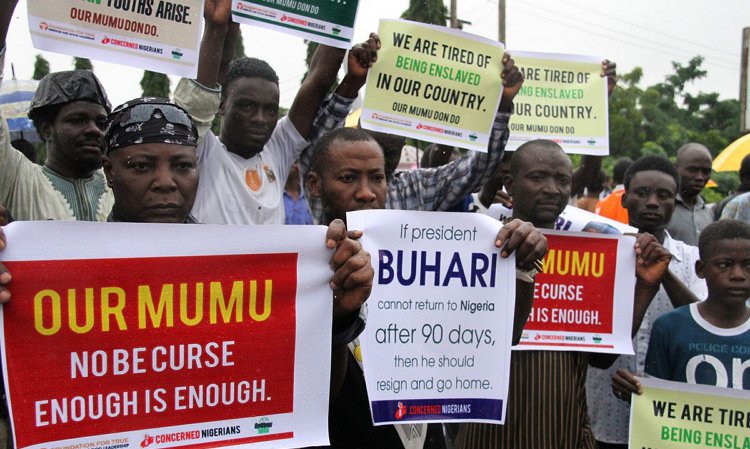
Charles Oputa, popularly known as Charly boy, has called off the resume-or-resign protest after protesters clashed with pro-Buhari supporters on Tuesday.

An ethnic crisis was narrowly averted after Charly Boy was attacked by a group of northern youth when he took his #OurMumuDonDo protesters to Wuse Market, Abuja.

The pro-Buhari Youths threw rocks at the 66-year-old, who was eventually rescued by another group of south-eastern youth.

It took the prompt intervention of security operatives for the situation to be brought under control, but two cars belonging to Charly Boy were destroyed while some people sustained injuries.

Consequently, on Wednesday morning, Charly Boy addressed his fellow protesters, saying he was suspending the protest as their point had been made.

“My brothers and sisters, I’ll like to say thank you for a good job well done; and to say to my fellow comrades, we’ve made our point, let Nigerians judge,” he said.

“Let Nigerians do the needful, do the right thing. And on this note, permit me, my fellow comrades, to say that we’ve come to the end of this particular sit-out.

“We need to go and re-strategise because there are a lot of things that are wrong with our country. There are a lot of topics we want to take on full blast.

“But we are still insisting and we will always insist that either Mr President returns or he resigns.”

Watch the video below, courtesy of Sahara TV:


SERAP asks ICC to probe OBJ, Jonathan, Yar’Adua govts over ‘staggering’ power sector corruption

0

Darkness

The Socio-Economic Rights and Accountability Project (SERAP) has asked Fatou Bensouda, Prosecutor, International Criminal Court (ICC), to investigate allegations of corruption in the Nigerian electricity sector during the tenures of three former presidents.

In a statement released on Wednesday by Timothy Adewale, Deputy Director, SERAP asked Bensouda to use her “good offices and leadership position to investigate whether the allegations of widespread, systematic and large-scale corruption in the electricity sector since the return of democracy in 1999 and under the governments of former presidents Olusegun Obasanjo, Umaru Musa Yar‘Adua and Goodluck Jonathan in Nigeria amount to crimes against humanity within the jurisdiction of the International Criminal Court, and to prevail on the Nigerian government to surrender all suspected perpetrators for trial by the ICC”.

“Allegations of corruption in the electricity sector in Nigeria have had catastrophic effects on the lives of millions of Nigerians, akin to crimes against humanity as contemplated under the Rome Statue and within the jurisdiction of the Court,” the organisation said.

“The Rome Statute in article 7 defines ‘crime against humanity’ to include ‘inhumane acts causing great suffering or injury,’ committed in a widespread or systematic manner against a civilian population. The common denominator of crimes against humanity is that they are grave affronts to human security and dignity.

“Therefore, the staggering amounts of public funds alleged to have been stolen over the years in the electricity sector create just these consequences. Crimes against humanity are not only physical violence; allegations of corruption in the electricity sector hold a comparable gravity, which the Prosecutor should examine and thoroughly investigate.”

SERAP noted that the elements that need to be established to prove a crime against humanity under article 7(1)(k) of the Rome Statute are that, the perpetrator inflicted great suffering or serious injury by means of an inhumane act; that the perpetrator was aware of the circumstances, and that the act was committed within a widespread or systematic attack on a civilian population; and that the perpetrator knew of that link.

“The consequences of allegations of corruption in the electricity sector are similar to those of the offences in article 7(1). Corrupt officials and corrupt contractors in the electricity sector know well that their conduct is criminal and injurious, and the denial of human dignity coupled with a radical breach of solemn trust, aggravate their alleged crime,” it said.

“SERAP considers these allegations of widespread and systematic corruption in the electricity sector as amounting to crimes against humanity and therefore clear violations of the provisions of the Rome Statute of International Criminal Court.

“SERAP believes that these allegations have given rise to individual criminal responsibility of those suspected of perpetrating corruption in the electricity sector, as entrenched in the Rome Statute of the International Criminal Court.

“SERAP considers the apparent failure of successive governments and high-ranking government officials to prevent widespread and systematic corruption in the electricity sector as amounting to complicity under the Rome Statute. SERAP therefore believes that the widespread and systemic nature of large scale corruption in the electricity sector fits the legal requirements of a crime against humanity.”

Noting that that allegations of corruption in the energy sector have resulted in the epileptic and interrupted supply of electricity and corresponding deprivation and denial of the citizens’ access to quality healthcare, adequate food, shelter, clothing, water, sanitation, medical care, schooling, and access to information, it asked Bensouda to: “Urgently commence an investigation proprio motu on the allegations of widespread and systematic corruption in the electricity sector since the return of democracy in 1999, with a view to determining whether these amount to crimes against humanity within the Court’s jurisdiction.

“In this respect, we also urge you to invite representatives of the Nigerian government to provide written or oral testimony at the seat of the Court, so that the Prosecutor is able to conclude since available information whether there is a reasonable basis for an investigation, and to submit a request to the Pre-Trial Chamber for authorization of an investigation.

“Bring to justice those suspected to be responsible for widespread and systematic corruption in the electricity sector in Nigeria.”

In its ‘From Darkness to Darkness: How Nigerians are Paying the Price for Corruption in the Electricity Sector’, launched on August 9, SERAP alleged that “the much-publicised power sector reforms in Nigeria under the Electric Power Sector Reform Act of 2005 is yet to yield desired and/or anticipated fruits largely due to corruption, regulatory lapses and policy inconsistencies.”

It said that between 1999 and 2015, more than N11 trillion meant to provide regular electricity supply for the country was squandered under the administrations of Obasanjo, Yar’Adua an Jonathan.

Power, works and housing ministry gets third minister

Ministry of Power, Works and Housing gets third Minister

A third minister has been deployed to the Ministry of Power, Works and Housing to join Babatunde Fashola, the substantive Minister, and Baba Shehuri, the Minister of State.

This was made known by Laolu Akande, spokesman of Acting President Yemi Osinbajo, on Wednesday, via his Twitter handle.

Akande said Osinbajo had allotted portfolios to the two newly appointed ministers — Stephen Ocheni and Suleiman Hassan — who had been sworn into the Federal Executive Council on Wednesday July 26.

“There are now two ministers of state in Power, Works and Housing Ministry,” Akande said.

Suleiman Hassan is the new Minister of State for Power, Works and Housing, which was orignally three different ministries until the current administration came to power.

Ocheni, on the other hand, was named Minister of State for Labour and Employment, the same office held by the late James Ocholi.

IDP camps have become death traps, laments Norwegian Refugee Council

NRC.pic

The Norwegian Refugee Council (NRC) is worried that Internally Displaced Person (IDP) camps in north-eastern Nigeria have become death traps.

Following Tuesday’s multiple suicide bomb blasts that killed 27 and injured 83 outside a camp sheltering displaced people in Konduga, Maiduguri, Borno State, NRC urged the Nigerian military to tighten security around displaced people.

It noted that attacks on civilians sheltering in displacement sites were on the rise, worsening an already dire situation for people on the brink of famine in north-east.

“We need to see the Nigerian government stepping up to protect civilians in displacement camps. It’s their primary responsibility,” Ernest Mutanga, NRC’s head of programmes in Nigeria, said.

The international humanitarian organisation warned that more communities are becoming vulnerable to Boko Haram attacks, and towns previously considered safe for civilians were also coming under attack.

According to NRC, 190 security incidents involving civilians were reported in July — a figure that was substantially more than the total combined for May and June. Also of note was an increase in the number of attacks on sites sheltering displaced civilians.

“On 23 July, a suicide bomber killed three people and injured 17 others in a displacement (IDP) camp in Borno State,” Mulanga continued.

“The same day another suspected female suicide bomber was shot dead by the military as she tried to climb a perimeter wall surrounding an IDP camp.

“Five days earlier on 28 July, five people were killed and six wounded in Dikwa town when two suicide bombers detonated explosives in an area sheltering displaced families. Dikwa town was previously considered safe from the time the Nigerian military took control of it a year ago.

“Camps sheltering innocent families fleeing war should be places of refuge. But instead they are turning into death traps. Armed groups in this conflict are pushing people from one hell into another.”

NRC said insecurity was hampering the humanitarian response.

“NRC staff had to temporarily suspend operations in Mamenti area of Maiduguri City in June because of threats from armed groups. Hundreds of people did not receive food, clean water and hygiene support as a result,” it said.

“The arrival of the rainy season has worsened access to communities, already causing flooding in multiple areas. Heavy rains are preventing helicopters from landing, and cutting road access.

“NRC has had to have cranes accompany some truck deliveries of aid into displacement camps, as the small feeder roads are often flooded. This substantially increases the costs of aid delivery.

“Northeast Nigeria is already experiencing a widespread food crisis, with food security experts forecasting a rise in the number of people facing crisis, emergency and famine conditions from 4.7 million to 5.2 million by the end of the month. This includes 50,000 people forecast to be affected by famine-like conditions.”

It pointed out that the worsening situation in Nigeria comes as aid organisations prepare to mark World Humanitarian Day this week on 19 August, and called for better protection of civilians targeted in conflict.


Obiano boasts: I’ll win Anambra election because there’s no one competing with me

Willy Obiano

Willie Obiano, Governor of Anambra State, says he is confident of winning the forthcoming governorship election in the state by a landslide.

Speaking on Tuesday evening during an interview on Channels Television’s ‘Politics Tonight’, Obiano boasted that he has no challenger in the election, adding that his achievements in his first term are enough to win him a second tenure.

Earlier on Tuesday, he had been unanimously adopted the sole candidate of the All Progressives Grand Alliance (APGA) in a primary held by the faction of the party led by Ike Oye.

The other APGA faction, whose leader is Martin Agbaso, described Obiano’s candidature as an exercise in futility.

But Obiano maintained the election in November would be mere formality.

“Our achievements so far will speak for us,” he said. “I am going to win the election with a landslide because there’s nobody competing with me.”

Obiano further said that his administration restored security in Anambra State, as “kidnappers and criminals held sway” prior to his assumption of office.

These comments are coming despite the attack by gunmen on a Catholic Church in Ozubulu on August 6 where 13 worshippers were killed.

Another attack occurred close to an Assemblies of God church in Onitsha, the biggest commercial city in the State, on Sunday, resulting in the death of two persons, including a policeman.

Also, Nnamdi Kanu, the leader of the Indigenous People of Biafra (IPOB), had called on citizens of Anambra to boycott the election unless the federal government announces a date for a referendum on Biafran independence.

Aside Obiano, many other political heavyweights in Anambra are gunning for the governorship seat.

They include Andy Ubah, a serving senator; Osita Chidoka, former Corps Marshall of the Federal Road Safety Corps (FRSC) and former Minister of Aviation and Yul Edochie, popular Nollywood actor and son of Pete Edochie.

27 killed, 83 injured as Boko Haram strikes near Maiduguri

0
Bomb
Photo: File copy

At least 27 people have died and another 83 are wounded after Boko Haram suicide bombers struck in Konduga, near Maiduguri, capital of Borno State.

According to Reuters, a woman bomber blew herself up and killed 27 others at a market in the village of Konduga, near Maiduguri, the epicentre of the conflict between government forces and the Islamist Boko Haram insurgents.

Quoting a village head and an official from the Civilian Joint Task Force (JTF), it said two suicide bombers also blew themselves up at the gates to a nearby refugee camp, killing nobody but injuring many.

How attack on Charly Boy nearly sparked a Hausa-Igbo crisis at Wuse market


Charly Boy

Charly Boy and his men entered Wuse market, Abuja, mid-morning on Tuesday but what ensued afterwards was a clash that eventually assumed ethnic dimension.

Charly Boy has been leading a protest against President Muhammadu Buhari to either resume or resign.

Market3
Garden opposite Wuse Market

Witnesses told the ICIR that Charly Boy rode into the market on a power bike, accompanied by two cars. When he alighted, people started gathering around him.

Within few minutes, a huge crowd had formed around him and he started addressing them. While Charly Boy was still talking to the crowd, some people started throwing sachet water at him and shouting “Sai Baba” in apparent support of Buhari who has been abroad on medical vacation for 100 days.

One of the witnesses said the men who were throwing water went ahead to grab and tear Charly Boy’s shirt. Those attacking him were identified as “Hausa boys”.

Another witness said Igbo traders intervened to free Charly Boy from the crowd and he was able to escape with the aid of his power bike.

The irate men then vented their anger by vandalising the two cars left behind by the entertainer. This created pandemonium, which led to the closure of the market.

Market1
Some of the traders

Witnesses said the market was closed and the so-called Hausa boys gathered by the entrance of the market, chanting “Sai Baba” and making anti-Igbo comments.

“The Hausa boys started throwing stones at Igbo traders who were in a garden opposite the market,” the witness, a trader, said. “The Igbo responded by throwing the stones back at them.”

With this unfolding violence, people started running away to different directions.

A man was said to have been critically wounded by the stones and the police rushed him to hospital. Many others were wounded.

‘TRAFFIC POLICEMEN RAN AWAY’

Market2
An injured man

Witnesses said when the exchange of stones became intense, the traffic wardens at the market junction ran away, saying they did not have guns to confront the rising violence.

It was confirmed that three policemen accompanied Charly Boy to the market, but they were unable to do anything.

The witnesses said other policemen who had guns were at the entrance of the market at the start of the violent exchange of stones, but they were probably outnumbered to do anything, thereby leaving the situation to degenerate.

When the ICIR arrived the scene, a crowd was advancing from the market towards Berger Junction, some of them wielding sticks.

A reinforcement of policemen and officials of the Nigeria Security and Civil Defence Corps (NSCDC) eventually quelled the violence.

With just N1,000, you can help Destiny Trust send 100 homeless children to school


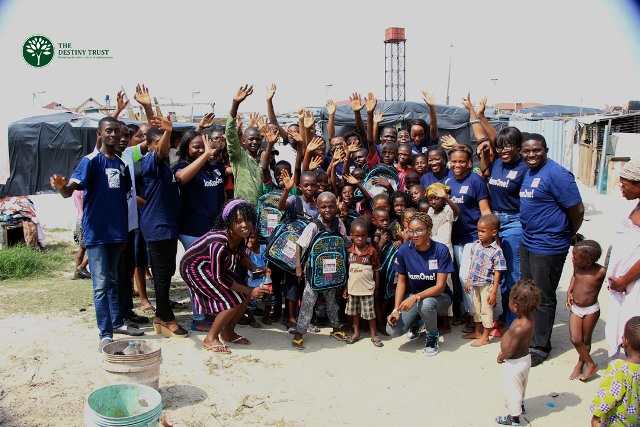
Marwa 2017 outreach

Destiny Trust, a social intervention providing education, rehabilitation and empowerment to homeless children, has launched a crowdfunding campaign tagged ‘1000HelpingHands’ to raise money to put 100 out-of-school and homeless children to school in the next academic session.

According to a statement released by Bukky Shaba, Campaign Coordinator, on Tuesday, proceeds of the crowdfunding will also be used to support the feeding, healthcare and education of rehabilitated homeless children who are under the Trust’s continuing care and supervision at its residential learning and rehabilitation centre in  Ibeju-Lekki, Lagos

The Trust urged the public to give as little as N1,000 this one time so that the kids in its care and up to 100 others still on the streets can go to school in September.

According to Shaba, in the last one year, the centre has provided shelter to up to 20 children, served as a community centre to children in its host community who come in for afterschool assistance and served about 32,850 meals to both resident children and visiting children.

She explained that 1000 Helping Hands is symbolic for having as many people as possible give towards an important cause of safeguarding the future of kids who otherwise might become a menace to the society.

Marwa

In the 2016 round of the fundraising, the Trust raised a total sum of N1,972,379 from donors mainly on social media channels.

“Although this was a significant shortfall in the funding target, donors in the 2016 round enabled the Trust’s intervention which benefitted 100 children comprising of children who were newly enrolled in school and others who were assisted to go back to school,” she said.

“They were indigent pupils who only required minimal financial support to buy uniforms, school bags and writing materials to go back to school and benefit from the government’s free education programme.

“The Trust also upgraded school facilities and expanded classroom capacity at the Lagos Model School, Marwa which accommodated a majority of the beneficiaries.”

Shaba explained that the 2017 fundraising would help the organisation to bring value to the lives of the vulnerable children.

“We are building a community of 1000 good citizens who will commit to giving at least N1,000 monthly for a period of one year,” she said. From our experience, little acts of kindness in this manner can make a big difference in securing the future of the children.”

Donations are received through the Trust’s account: The Destiny Trust Projects, GT Bank Plc, 0209963873.

Donors can also use a safe and convenient online payment platform following the link, www.paystack.com/pay/1000Hands

Aside providing education, rehabilitation and empowerment to homeless children, Destiny Trust also runs a learning and rehabilitation centre for street children at Bogije, Ibeju-Lekki, Lagos.

It commenced its activities on August 11, 2012 with an initiative tagged ‘The Kuramo Intervention Project’ —  a specific intervention targeted at providing education, healthcare, food, shelter and guidance to homeless children at Kuramo Beach and Bar Beach.


READ ALSO:

Traffic wardens flee as Igbo traders rescue Charly Boy from lynching

Charly Boy attacked at Wuse market

Charly Boy, popular musician and leader of the #OurMumuDonDo protest, would have been lynched on Tuesday when he visited Wuse market, Abuja, but for the intervention of Igbo traders.

Charly Boy, whose real name is Charles Oputa, has been protesting against President Muhammadu Buhari’s continued stay in London on medical vacation for the past 100 days.

It is exactly unclear why he went to the market but his small group of protesters had been outnumbered by the much larger pro-Buhari group that also gathered at the Unity Fountain.

A witness who spoke with the ICIR said Charly Boy was already a known face at the market by both Hausa and Igbo traders.

“He often visited and would give us money from time to time,” the trader, who asked not to be named, said.

“But because he had been leading a protest against Buhari, many of the Hausa suddenly started to dislike him. They attacked him today.”

He said were it not for Igbo traders who trooped to the scene of the attack in defence of one of their own, ‘Area Father’, as he is fondly called, might have been lynched.

“The Igbo traders saved him,” he said. “Without them, something terrible would have happened to him, because even the traffic wardens around here all ran away when the trouble started, saying they didn’t have guns”.

The police subsequently intervened in restoring peace to the area and the market was shut down.