Home Blog Page 2728

Oslo and the north-east reconstruction

0


By Kole Shettima

The world converged on Oslo on 24th February 2017 in solidarity with the people of the Northeast of Nigeria and the Lake Chad Basin region who were, until recently, under the threat of Boko Haram annihilation. The conveners of the Oslo meeting, who put the figure of Nigerians living in the affected areas as no fewer than 26 million, underscored the gravity of the situation.

According to their report, “The Humanitarian Response Plans identify 10.7 million people in need of life-saving assistance in the most affected areas in Cameroon, Chad, Niger and Nigeria. Over 7 million people are struggling with food security, with children representing a majority of those in need. About 2.3 million people are displaced, a number that has tripled over the last two years”. Boko Haram is estimated to have killed more than 20,000 persons but the unofficial number is much higher. Also, this number doesn’t include those killed by security agencies and BH in unidentified mass graves.

Even though the target was $1.5 billion, it is indeed heartwarming that more than $672 million was raised in pledges. The hosts, the Norwegians, are the biggest supporters.  The Nigerian government is expected to commit $1 billion.

When fully operational, the funds will help meet immediate humanitarian needs as well as long-term development and reconstruction purposes. The Borno State Government, the epicenter for the conflict, has a Ministry for Reconstruction, Rehabilitation and Resettlement. Other states governments are using similar frameworks to improve the quality of lives of their citizens.  However, I am very concerned that the passion for uplifting the people of the northeast and the Lake Chad Basin region hasn’t allowed for an opportunity to reflect on the concept of ‘development’ being promoted by governments and international agencies.

Historically, the people of the region have some of the worst indicators in terms of maternal mortality, girls’ education, literacy, status of women, infrastructure and poverty among others. The situation has been worsened as a result of years of Boko Haram violence. That explains why we need to ask some salient questions as we seek to move forward: Did the gaps in previous ‘development’ initiatives contribute to the rise and growth of Boko Haram? Are there things we did wrong in key sectors such as education, health, housing, and agriculture that might have contributed to the structural problems that led to the insurgency? How has ‘modernization’ undermined ‘development’?

While I cannot claim to have answers for any of those posers, I am nonetheless uncomfortable that we are ‘doing development’ as before even without asking whether we are on the right course. And if we conclude that we are, that must be based on deeper reflections.

As things stand today, literacy in the North east region is dismal. The West African Examination Council (WASC) result for this year is evidence of the poor quality of education with all the states in region among the worst ten. But it is also no surprise. In Borno State, for instance, more than half of the children of school age are roaming the streets while about 60% of the schools have been closed.

However, we cannot blame Boko Haram for all the problems. Even before the insurgency, the educational situation was a mess. Northern Borno in particular was worse. Fewer than 10 students scored five credits with English and Mathematics in the years preceding the Boko Haram insurgency.

Given the foregoing, the question we should ask is whether it makes sense to rebuild these schools without considering other models or processes of education with the kind of results posted in recent years. The important question here is: Should we continue to follow the same curriculum and the process of education delivery that enabled less than one percent of the student population to qualify for university education?

What is more worrying is that the situation was not always like that in the region. I was fortunate to attend school partly because of the influence and authority of traditional and religious institutions. They had a supervisory role over schools and parents were fined if they refused to send their children/wards to school or withdraw them once enrolled. I know of communities that migrated from the jurisdiction of our Mai to neighboring states because they refused to send their children to school.  In those days, the Chief Imam used to visit primary schools as a symbol of support. Unfortunately, ‘modernity’ and administrative restructuring has eroded their roles.

Today, schools are under the supervision of local government authorities and the ‘elected’ officials only visit their capitals at the end of the month when salaries are due. These absentee officials also don’t have their children in any of these schools. So, they really do not care about whether or not the children at the local level have any education. Therefore, the quality of monitoring is compromised by indifference and corruption.

If we must change the narrative, we should begin from the curriculum of our schools. Clearly, we cannot produce the leaders of tomorrow based on yesterday’s manual. The world is moving to skill and activity-based education and for us to provide 21st century skills to our young people, our thinking must also change. We want young people to be able to ask questions rather than take everything they hear from their teachers as the gospel truth, which is a path to extremism. What can we salvage from the days of craft schools and women teachers college? Should we adopt or adapt a national curriculum?

I am well aware that many parents clamor for curriculum that provides Islamic and secular education. That accounts for the popularity of alternative schools like ‘Baba Buji Modern Tsangaya School Bolori’; ‘Mallam Goni Garba Buzu Tsangaya’; ‘Future Prowess’, and ‘El-Kanemi School of Theology’ among others. But against the background that millions of children are out of school in Nigeria, doesn’t it make sense to adopt a hybrid curriculum that meets both the desire of parents and the needs of the 21st Century? This will enable the region to leverage the opportunity of reconstruction and ‘development’ to take on board the needs of the region.

Going forward, it is very clear that governments will be unable to provide education for all the children out of school and the private sector can make a great contribution. The best approach would be for governments and development partners to consider bulk grants to private proprietors, rather than worry about rebuilding every infrastructure, which has not helped. There are even models that we can reference.

The former Governor of Anambra State, Mr. Peter Obi, returned schools to missionaries and supported them with financial resources for several years. The state is the better for it today in terms of the performance of the students. Therefore, the current situation is an “opportunity” to rethink our approach to education in the region. Focus, innovation and political will are the tripod upon which the options adapted should stand and grow the region’s human capital base.

These should be scaled up and replicated in forms that meet the deficits in content/curriculum and outputs; low grade human capital. Innovation is needed to respond to the region’s peculiarities while the conflict is transiting to fragile peace. These will be indexed among other things by a departure from the norm to allow for aggressive drive for girl child education and women empowerment. This is particularly critical to reconstruction because gender is implicated in the underdevelopment and structural problems of the region.

The structural discrimination of females underscores the structural problems of the region. On every indicator the status of women is appalling: age at marriage, maternal mortality, girls’ education, political representation, rate of divorce, employment, access to health care and other social services, and finance and capital.

However, there are several questions still begging for answers: How about if we conceptualize development with gender inclusion and empowerment as the central focus? What kind of programs and projects will be prioritized? How do we have projects that challenge gender stereotypes? Do we want to continue funding knitting; sewing and soap making projects that reinforce these stereotypes? For sure, a definite departure is needed to expose and incentivize women to ‘venture’ into technology as a tool for organizing and access to entrepreneurship opportunities for growing new and high yielding economic activities.

Related to gender inequality is the fact that the gap between the rich and poor is increasing, and those who are poor in the region are experiencing three bas: kasuwu ba (no business), kra ba (no education) and bare ba (no farming). The Boko Haram violence has worsened inequality in the region. The reality also is that those who have access to resources have become richer even within the insurgency ravaging the region. For instance, in the midst of over 50,000 orphans in Maiduguri are newly built and freshly painted buildings, SUVs and other bullet-proof vehicles. The humanitarian economy has contributed to a colony of rich amid a vast ocean of the poor. The business of livestock and fishing is now the monopoly of major actors to the conflict on both sides.

Problems of accountability are being raised around many of the projects implemented by national and international agencies in the North East. Probably the most pronounced is the suspension of the Secretary to the Government of the Federation over allegations of corruption. Many other agencies are not much better. International organizations are being accused of spending significant funds on themselves rather than on the victims.

I am of the view that the situation in the Lake Chad region provides us an opportunity for a new beginning as we need a new framework for development. If the past contributed to the emergence of Boko Haram, why then must we spend the scarce resources of the good people of other countries to perpetuate structural inequality and underdevelopment? Did someone not say that a classical definition of insanity is to continue doing the same thing and expect different results?

I am hoping that the fact that Norway is leading the pack in Human Development Index (HDI) and the Northeast region which could have been amongst the bottom five in HDI if it were a country should influence our thoughts on ‘development’.

The North East recovery and development must be a model that elicits confidence and all the critical stakeholders have a moral obligation to do the right thing. The approach therefore needs to be radical enough to stimulate a reawakening where all the actors agree that a return to the status quo ante is not an option.

Shettima, director of the MacArthur Foundation, wrote from Abuja. The views expressed are his and not that of his employers.

Magu: Banks create enabling environment for looters, that’s why they want to take NFIU away from EFCC


Ibrahim Magu, acting Chairman of the Economic and Financial Crimes Commission (EFCC), says major financial institutions in Nigeria are behind the move of the senate to separate the Nigeria Financial Intelligence Unit (NFIU) from the EFCC.

Wilson Uwajuren, Public Relations Officer of the Commission, quoted Magu as saying this when he received a delegation from the International Monetary Fund (IMF).

Magu also alleged that banks in Nigeria were creating a favourable atmosphere for looters to conceal their ill-gotten wealth, adding that the senate plans to install a former managing director of one of the banks as head of the NFIU when it is eventually separated from the EFCC.

“I don’t trust the financial institutions. They create an enabling environment for thieves to loot our money,” Magu was quoted as saying.

“That is why they are fighting to remove the NFIU from us. They want to use a former managing director of a bank to head the NFIU.”

The senate had twice rejected Magu’s nomination by the President as substantial head of the anti-corruption commission.

The senate had asked President Muhammadu Buhari and the executive arm of government to withdraw Magu’s nomination based on a controversial Department of State Services (DSS) report indicting him of frolicking with persons of questionable character.

On Thursday the senate passed a bill seeking to establish the Nigerian Financial Intelligence Agency (NFIA) as a separate body from the EFCC. The bill was passed just four legislative days after it was first sponsored in the chamber by Chukwuka Utazi, Chairman of the Senate Committee on Anti-corruption.

The powers and funding of the EFCC will be greatly reduced if the bill is also passed at the House of Representatives and the NFIU is eventually separated from the EFCC.

The senate said it gave the bill accelerated consideration in order to prevent the expulsion of Nigeria from the Egmont Group of financial intelligence units.

The Egmont Group is an international gathering of over 132 financial intelligence units, which helps in monitoring international money laundering activities.

It recently suspended the NFIU, which is under the EFCC, because of its lack of autonomy and absence of a proper operational framework.

Kanu: I control the people 100 per cent… no gov election in Anambra on Nov 18


Nnamdi Kanu, Leader of the Indigenous People of Biafra (IPOB), says the November 18 governorship election in Anambra State can take place only if the federal government gives him a date for referendum for the people of the South East to decide whether to still remain part of Nigeria or not.

Kanu said that as long as government at the centre refuses to accede to the people’s demand for a referendum, not only will the Anambra governorship not hold, no other election will hold in the South East going forward.

“There will not be any election in Anambra on the 18th of November 2017, and there won’t be any going forward until they give me a date for a referendum,” he said.

“They know what to do, it is very simple. They should convene a meeting, I attend or I send my representative and they give us a date. That is very simple. That is the only way we can have elections.”

The Ohaneze ndi Igbo, the recognised pan-Igbo body, had distanced itself from Kanu’s call for boycott of the election, but Kanu said he does not need the group’s endorsement.

“I’m not (bothered about the Ohaneze) because the people are with us. We control the people 100 per cent. And come to Anambra on the 18th of November 2017, the whole world will be amazed,” he said.

On the possibility of the proposed election boycott leading to breakdown of law and order, Kanu said things will not degenerate to conflict as the IPOB is a non-violent group.

“Where on this earth have you ever found self-determination resulting in any form of conflict?” he asked.

“Only in Nigeria, because those in the political class are not educated enough to understand or distinguish between self-determination and war. They don’t mean the same thing.

“Referendum does not mean the same thing as war. If there is war, we still have to sit round the table to discuss, ultimately. If there isn’t any war, we still need to discuss.

“Things cannot go on this way. The status quo can no longer hold. I can assure you that the people will listen to us and they will not vote.

Indonesia admits error in 2016 execution of Nigerian drug convict


A year after Humphrey Jefferson Ejike Eleweke, a Nigerian, was executed for drug trafficking, the Indonesian Ombudsman has admitted that there was “maladministration” in the execution.

According to Jakatar Post, Ninik Rahayu, Ombudsman Commissioner, told a press briefing on Friday that there had been “negligence and discrimination practised by the Attorney-General’s Office and the Supreme Court” in relation to Eleweke, who was executed in Central Java on July 29, 206, for drug crimes.

This corroborates Eleweke’s claim, before his execution alongside three others, that they were marked for death because they “are black people”.

“The Indonesian government just hate us, they want to kill us because we are black,” Eleweke had said.

Ninik said the execution of Eleweke did not comply with regulations. The execution took place while the convict was seeking clemency, she said.

Indonesia’s 2002 law on clemency stipulates that the execution of those seeking clemency cannot be carried out before the issuance of a presidential decree in relation to the appeal.

Another sign of maladministration, Ninik said, was that the Supreme Court was guilty of discrimination by rejecting a case review appeal filed by Eleweke without “a proper explanation”.

Eleweke was one of four drug convicts executed on July 29 last year, along with countryman Michael Titus Igweh, Indonesian Freddy Budiman and Senegalese Seck Osmane.

Attorney-General Muhammad Prasetyo said earlier this year that the government was mulling over carrying out a fourth batch of executions under the administration of President Joko Widodo.

Widodo refused to grant clemency to Eleweke and others despite appeals from the international community.

UPDATED: Kidnapped Lagos schoolboys released in faraway Ondo


Six students of Lagos State model college, Igbonla, who were kidnapped in May by unknown gunmen, have regained their freedom.

A source close to the Lagos State government told the ICIR that the boys were released in Ajakpa Community, Ese Odo Local Government Area of Ondo State and were already on their way to Lagos.

Their release followed negotiations between the abductors, parents of the kidnapped students and Government officials from the South-West region.

The boys, whose names were given as Peter Jonah, Isiaq Rahmon, Adebayo George, Judah Agbausi, Pelumi Philips and Farouq Yusuf, had spent a total of 64 days in captivity, having been abducted on May 25.

Details of their release were still unclear as of the time of this report but police sources told journalists that no ransom was paid to secure their freedom.

This is contrary to the lamentation of the students’ parents two weeks ago that a total sum of  N31 million had been paid to the kidnappers as ransom yet their children were not released.


READ ALSO:


Boko Haram has returned to Sambisa Forest, air force confesses


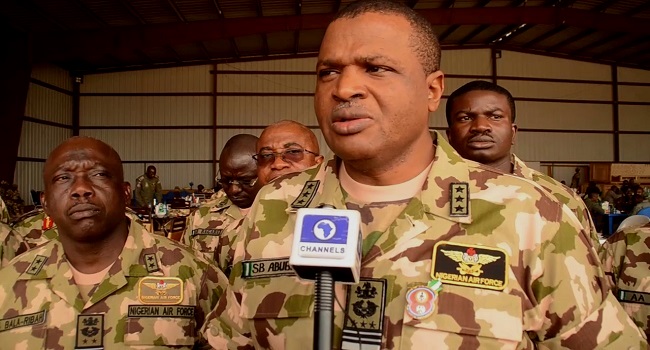
The Nigerian Air Force (NAF) says Boko Haram insurgents have returned to Sambisa Forest, Borno State, from where they were dislodged in December 2016.

Tajudeen Yusuf, Commander of the Air Component of Operation Lafiya Dole, made this known in Yola, the Adamawa State capital, on Friday while briefing newsmen on the progress of the counter-insurgency operation.

Yusuf said NAF fighter jets and attack helicopters had carried out 108 attacks on Boko Haram hideouts between April and July this year.

“There have been sightings of a few Boko Haram activities in the Sambisa general area, particularly in Parisu, hence, the air component conducted significant ISR missions in the Sambisa general area,” he said.

“On July 3, an air interdiction mission was conducted on Alagarno Camp. Several solar panels were seen on buildings in the location, which indicated that it was being used as a Command and Control facility.

“Intelligence surveillance and Reconnaissance reports through the second quarter of 2017 indicated a gradual return of the Boko Haram terrorist activities to the Sambisa Forest.

“The NAF conducted air interdiction missions with the F-7Ni, Alpha jets, L-39ZA, Mi-17 and the Mi-35M attack helicopters to neutralise the Boko Haram terrorist targets within the theatre.

“A total of 108 air interdiction sorties were conducted from April to June 2017.”

Yusuf however added that the rainy season had greatly hampered the operations of the military, as most times, flights had to be delayed or cancelled on account of poor weather.

On Thursday, Mansur Dan-Ali, Minister of Defence, also admitted that the rainy season had taken a negative toll on the counter-insurgency operations.

“The rainy season is a difficult moment for us,” he had said. “We cannot dominate the environment like what we did during the dry season but effort is geared towards regaining our areas.”

Fayose has no respect for elders, says Oyegun


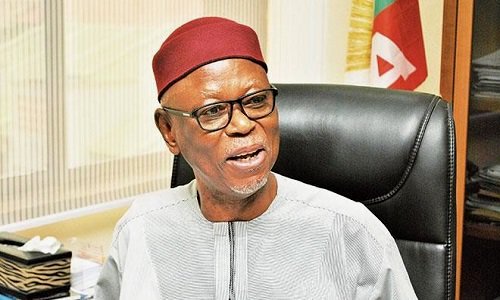
John Odigie-Oyegun, National Chairman of the All Progressives Congress (APC), says he cannot join issues with Ayodele Fayose, Governor of Ekiti State, over his numerous uncomplimentary remarks about President Muhammadu Buhari’s ill-health.

Odigie-Oyegun said this on Thursday during an interview with journalists on the recent trip of some APC chieftains to London to visit the ailing President Buhari.

“I hate to comment on anything the Governor of Ekiti State says because when people have taken leave of common decency, our basic cultural upbringing,” Odigie-Oyegun said.

“When people cease to have respect for elders and cease to have respect for the fact that an elder statesman who is also President of this nation is going through a health challenge and seek to make fun of it, and seek to say things that are so totally unbecoming, it is really not worth commenting on.

“But I am glad that even Peoples Democratic Party (PDP) governors went there and thank God nice sober people, they were very excited at the pace of recovery of Mr. President. I hope that finally, even for the most hardened of political adversaries that common sense and common decency will finally prevail.”

Odigie-Oyegun reiterated that Buhari has fully recovered but is merely observing rest “to build up his energy, to build up his stamina”.

“The President is going to come back and he is going to face the responsibilities for which the people of this country have elected him,” he said. “I am glad to say he is recovering beautifully.”

When asked what issues they discussed with the President, Odigie-Oyegun said the visit was basically “a courtesy call”.

“We had quite a good chat, quite a good meal. As you could see, he was still his old jovial self,” he said.

“He had so many questions about events back home, just wanting of course to get our own perspective of things which we did. I thoroughly enjoyed the visit and I came away very happy.”

For proscribing ASUU, NLC threatens Yahaya Bello with ‘national action’

0


The leadership of Nigeria Labour Congress (NLC) says Yahaya Bello, Governor of Kogi State, is risking a “national action” by proscribing the Academic Staff Union of Universities (ASUU) in the state.

In a protest letter to Bello signed by Ayuba Wabba, its President, over the proscription of the university lecturers’ union over their seven-month strike in protest against unpaid salaries, allowances and pensions, NLC said the hasty and ill-advised action contradicts all known and extant national and international laws and conventions, noting that as the governor, he has no right to ban a union.

According to the labour body, trade unions as independent workers organizations are neither under the control of the state government nor registered by it.

“According to ILO Convention 87 on Freedom of Association and Protection of the Right to Organise, which has been duly ratified by the country, workers   shall have the right to organize and form trade unions, and “public authorities shall refrain from any interference which would restrict this right or impede the lawful exercise thereof”, and the unions “shall not be liable to be dissolved or suspended by administrative authority,” it said

It argued that the Convention is not only reinforced by ILO Convention 98 on the Right to Organize and Collective Bargaining, but buttressed and domesticated by the 1999 Constitution which states unequivocally in Section 40 that every person shall not only be entitled to freely assemble or associate, but in particular, shall “freely form or belong to trade unions and other associations for the protection of his interests”.

NLC noted that the contravention of these laws by Bello amounts to a violation of ILO Conventions and the Constitution of the Federal Republic of Nigeria as well as an abuse of the fundamental human rights of the lecturers in Kogi State.

“Your action is also a representation of the height of impunity and high-handedness that has, unfortunately characterized governance in Kogi State since your assumption of office”.

While urging him to reverse the proscription of the union, the Congress said a non-reversal will provoke a serious national action in the state.

“We are afraid to state that such precipitate actions are capable of exacerbating the already fragile social and industrial relations atmosphere in the state. And although we do not intend a threat, the non-reversal of this abhorrent and repugnant decision will inevitably provoke a serious national action in the state.”

CLOSE-UP: Jeff Bezos, book seller, son of teenage parents, the world’s richest man


Jeff Bezos, founder of Amazon, on Thursday overtook Microsoft’s Bill Gates to become the world’s richest person as the rise in the value of Amazon leapfrogged his fortune to $91bn compared with Gates’ wealth of $90bn.

But how much do you know bout him?

SON OF A CHILD BRIDE

Bezos was born as Jeffrey Preston Jorgensen on January 12, 1964, in Albuquerque, the largest city in the US state of New Mexico. His mother, Jacklyn Gise was in high school and 17 years old at the time of his birth.

The marriage between his father, Ted Jorgensen, and mother lasted less than a year. They were both teenagers. When Bezos was four years old, his mother remarried to Miguel Bezos, a Cuban who immigrated to the United States alone when he was 15 years old. He later changed his surname to his stepfather’s name.

Bezos grew under his stepfather, who worked as an engineer for Exxon. He later attended the prestigious Princeton University and bagged a Bachelor of Science (B.S.) degree in electrical engineering and computer science. After graduating from Princeton in 1986, Bezos worked on Wall Street in the computer science field. He then worked on building a network for international trade for a company known as Fitel. He also worked at Bankers Trust and later joined Internet-enabled business opportunities at a hedge fund company.

‘DESTRUCTIVE CHILD WITH COMPUTER BRAIN’

Bezos was quite handy. As a child, he loved to dismantle and fix mechanical and electronic devices.  When he was a toddler, he dismantled his crib with a screwdriver. His interest in scientific and technological proficiency continued to grow as he once rigged an electric alarm to keep his younger siblings out of his room. He turned his parents’ garage into a laboratory and engaged in other scientific activities around the house. Even at the university, he continued his scientific exploits as he was elected the President of the Princeton chapter of the Students for the Exploration and Development of Space.

THE GOOSE THAT LAYS THE GOLDEN EGG

Bezos started his first business, the Dream Institute, an educational summer camp for fourth, fifth and sixth graders when he was in high school. But not until 1994 when he quit his job and moved to Seattle to start Amazon.

He started Amazon from his garage with a few employees and he began developing software. They expanded operations into a two-bedroom house, equipped with three Sun Microstations, and eventually developed a test site. After inviting 300 friends to beta test the site, Bezos opened Amazon.com, named after the meandering South American River, on July 16, 1995. He sold books before its business lines expanded into a wide range of other products such as clothes, electronics, toys and more through major retail partnerships. Amazon captured the global mood for online shopping as Amazon now accounts for 43% of everything sold online in the US.

A BILLIONAIRE WHO WRITES THE SAME LETTER EVERY YEAR

As Amazon’s success soared, the company went public in 1997, leading many market analysts to question whether the company could hold its own when traditional retailers launched their own e-commerce sites but Bezos had his faith in the bigger future and put it in a letter to the shareholders.

According to Guardian UK, in each annual financial report, Bezos reprints the letter he sent to shareholders in 1997, when Amazon floated on the stock market.

“The letter lays out Bezos’s approach to business and running Amazon. He pledges to focus on the long term and being the market leader, ‘rather than short-term profitability considerations or short-term Wall Street reactions’. He knows those reactions well, having worked on Wall Street for a hedge fund before founding Amazon.”

Bezos has repeatedly told shareholders, analysts and staff that it is still “Day One” for the company, despite the fact that it accounts for 43% of all online sales in the US, and his office at Amazon’s headquarters is located in a building called “Day One”.

His 2017 letter began with an explanation of what “Day Two” would be for Amazon. “Day Two is stasis,” he wrote. “Followed by irrelevance. Followed by excruciating, painful decline. Followed by death. And that is why it is always Day One.

“To be sure, this kind of decline would happen in extreme slow motion. An established company might harvest Day Two for decades, but the final result would still come. I’m interested in the question ‘How do you fend off Day Two? What are the techniques and tactics? How do you keep the vitality of day one, even inside a large organisation?’”

The best way to protect the company, he said, is “obsessive customer focus”.

INVESTING HIS AMAZON’S FORTUNE IN OTHER BUSINESSES

Bezos made headlines worldwide on August 5, 2013, when he purchased The Washington Post and other publications affiliated with its parent company, The Washington Post Co., for $250 million. During the US election campaign, Donald Trump accused Bezos of using the Washington Post for “political influence” and said Amazon was “getting away with murder, tax-wise”.

Bezos has also invested in space travel through Blue Origin, a company he founded in 2000. He invests in businesses through Bezos Expeditions, an investment fund that has bought shares in other successful internet startups, such as Airbnb, Business Insider, and Uber.

GAY SUPPORTER

Bezos believes in gay marriage. Together with his wife, MacKenzie, Bezos pledged $2.5m to supporters of gay marriage in Washington State as part of a referendum campaign in 2012.


Boko Haram attacks have made life precarious, says Amnesty International


Amnesty International (AI) has said that Boko Haram terrorists group must end its campaign of vicious and unlawful killings and abduction, which have increasingly made life precarious.

In a tweet on Thursday, the international human rights organisation said the spate of attacks and abductions by the insurgents shows the highest level of impunity and determination to sustain their reign of terror.

“Boko Haram must end its campaign of vicious and unlawful killings and abductions that increasingly make life precarious,” it said.

“Once again we strongly condemn #BokoHaram’s brazen lack of respect for the sanctity of life that lead killings in the recent days.”

It added that BokoHaram had been unleashing terror, killing, burning, maiming and destroying since 2009.

“When will this reign of terror end?” it asked.

Amnesty International recalled its documentation of the insurgency, a report titled ‘Our job is to shoot, slaughter and kill’: Boko Haram’s reign of terror in north east Nigeria’, which was released in April 2015.

This came after a team of Federal Government’s experts on oil exploration at Lake Chad Basin were abducted by the terrorists on Tuesday.

The bodies of 48 members of the team have been brought to the University of Maiduguri Teaching Hospital (UMTH).