Abdulmumin Jibrin, suspended member of the house of representatives, says reports of his sack emanated from “a dubious character and known fraudster who is neither the chairman of my party at the local government level nor a part of the party executive at the state level”.
In a statement on Thursday evening, Jibrin said his expulsion was yet another round of character assassination orchestrated by politicians who feel threatened by “our anti-corruption crusade.”
He described it as the handiwork of “hired hacks” who are bent on sabotaging the anti-corruption campaign of the Muhammadu Buhari-led administration.
The Kiru/Bebeji lawmaker also pointed out that the party’s leadership at the state or national level are not aware of the development, adding that the so-called party chieftain who made the announcement was “a known fraudster who is neither chair of my party at the LG level nor a state party Exco”.
Jibrin said: “My attention has been drawn to a false claim attributed to some mischievous impersonators that I’ve been expelled from my party, the All Progressives Congress, at the Local Government branch.
“This report, I’ve gathered, came from a dubious character and known fraudster who is neither the chairman of my party at the local government level nor a part of the party executive at the state level. The party is not even aware of this impersonation making the rounds in the media.
“This is yet another round of character assassinations from career political antagonizers who are perpetually threatened by our advocacy for transparency in public service and political leadership.
“Recall that I honored the invitation of the EFCC in a bid to shed light on the cases of corruption by some principal officers of the house despite dissuasions by these saboteurs of my party’s change agenda and stand against corruption. They wished I did not honour the EFCC invite.
“The initiators of this false claim of my expulsion by my party are hired hacks engaged by some corrupt politicians in Abuja to distract me.
“I wish to remind the public, and especially the media, that this report is false and did not originate from my party, the APC.
“I have a cordial relationship with my party the APC and we have been working hand in hand to actualize our agenda for a better Nigeria.”
Two United States of America Congressmen John McCain and Tim Kaine say the decision of President Donald Trump to cut aid to developing countries, including Nigeria, is “a penny-wise and pound-foolish error that will shift even more of the burden for stabilizing the world to the US overburdened armed services”.
In a memo to the Congress on Thursday, titled: ‘Memo to Congress: Don’t Cut Foreign Aid’, McCain and Kaine remarked that unwise budget cuts to effective, desperately needed assistance programmes would make it harder to make America safer.
“They will deprive the world of the full array of American political and moral leadership when it has never been more needed,” they argued.
“We urge the administration and our colleagues in Congress not to make that mistake.”
The Trump administration announced in March that it planned on reducing the diplomacy and foreign aid budget by 28 per cent in the next fiscal year while increasing funds for military programmes and preserving Israel’s current $3.1bn (£2.4bn) security aid package.
The Congressmen said “instability is spreading around the world”, noting that every day brings new reports of armed conflicts, acts of terrorism, humanitarian crises, and historic numbers of refugees and displaced peoples.
They further contend that development assistance programmes by the US government support military and diplomatic efforts to address these many crises, and help prevent conditions that lead to political instability and radicalisation.
In their opinion, America would be worse for such decision if taken as it currently spends less than 1 percent of the federal budget on foreign assistance.
“Just a decade ago, most of our aid was given in response to natural disasters. Today, 80 percent of our assistance provides relief and promotes stability in conflict zones and states on the verge of collapse,” they said.
“There are U.S. Agency for International Development programs in many of the countries most plagued by terrorism, including Afghanistan, Pakistan, Nigeria, Mali, Yemen and Somalia. We’re saving lives and creating partners to help address the instability that produces the threats our military risks life and limb to fight.
“Mindful that 95 percent of the world’s consumers live outside the United States, we also serve our economic interests by helping others. Government support for the efforts of great organisations such as Save the Children, which works to protect the health of impoverished women and children in developing countries, or Catholic Relief Services, which offers critical humanitarian aid to those in need in times of major emergencies, is a decent, moral act on our part. At the same time, by helping reduce poverty in those societies, we’re encouraging economic growth and raising individual earning power, which in turn can open new markets for American goods and services.
“Half of the world’s fastest-growing economies are in Africa, where Americans have helped many societies address disease, natural disasters and poverty. By improving their plight, we improved opportunities for our exports and investments.
“Of course, with annual spending deficits and a large national debt, Americans must be wise about where we invest our resources. But concerns over our fiscal condition and the taxes required to sustain it have encouraged some people to assume mistakenly that our assistance to other nations is too expensive to continue at present levels.
“In reality, we spend less than 1 percent of the federal budget on foreign assistance. During the Reagan administration, we spent twice what we do today. President Ronald Reagan, fiscal and defense hawk that he was, understood that helping other nations overcome their challenges was a much less expensive way to prevent and subdue threats to our interests than risking our soldiers’ lives to defend them.”
John McCain is a Republican senator from Arizona while Tim Kaine is a Democratic senator from Virginia.
The All Progressives Congress(APC) says it has expelled Abdulmumin Jibrin from the party for indiscipline and disrespect to duly constituted authority.
Jibrin, lawmaker representing Kiru/Bebeji Federal Constituency of Kano State, is currently serving a one-year suspension from the house of representatives over the allegations of budget padding he levelled against Yakubu Dogara, Speaker of the house, and other principal officers of the lower chamber.
He is also “barred from positions of responsibility in the house until the end of the 8th assembly”.
On Thursday, chairman of Bebeji local government chapter of the party, announced Jibrin’s sack from the party, saying: “The party will not condone indiscipline and disrespect to leaders or duly constituted authority. We hereby inform the world that Jibrin has been expelled from our great party.”
When the house suspended Jibrin in September 2016, it said he had breached legislators’ privileges.
The latest setback for Jibrin’s political career comes three days after the Economic and Financial Crimes Commission (EFCC) invited him to volunteer more information on his allegations of corrupt practices and abuse of powers against Dogara and co.
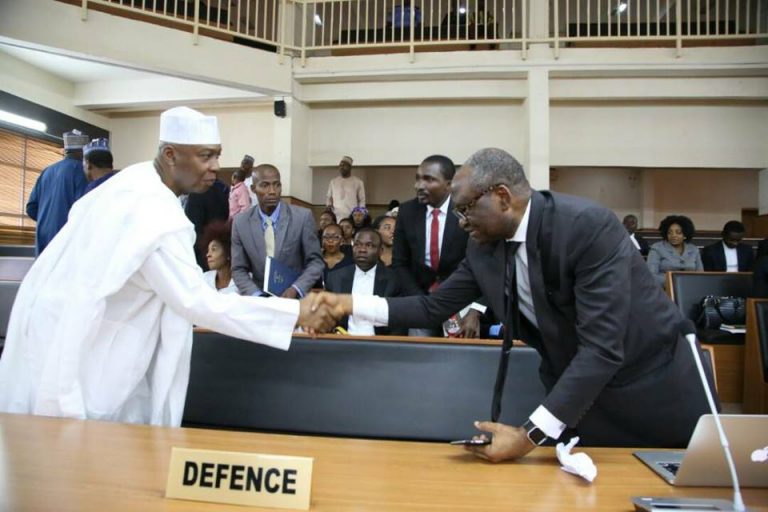
On Wednesday, the Code of Conduct Tribunal (CCT) discharged and acquitted Bukola Saraki, President of the Senate, of an 18-count charge of false assets declaration.
Saraki’s acquittal has been largely received with shock from the public, but here are eight reasons why the case was never destined for a different outcome.
ALLEGATIONS WITHOUT DILIGENT WORK
Michael Wetkas, a detective of the Economic and Financial Crimes Commission (EFCC), often made grave allegations against Saraki but fumbled for words when cross-examined by the defence counsel. In November 2016, he said Saraki borrowed money from GTB to buy a piece of property in Lagos only to claim that the money was from the sale of rice and sugar.
It was an allegation that appeared to suggest that it was the Kwara State government, not Saraki, that footed the repayment of the loan. However, when the defence asked him if he at any time saw the account of the Kwara state government, Wetkas said: “I was not the one investigating Kwara state government.”
Asked if he had any evidence that the state government refunded the loan, he answered: “I can’t give a direct answer to this.”
He who alleges must prove, don’t they say?
LATE-COMING PROSECUTING WITNESS
Sometime in March 2016, Saraki’s trial for the day was delayed for hours. Reason? Wetkas, the principal witness, the one who was supposed to be proving Saraki’s guilt, was nowhere to be found.
Danladi Umar, Chairman of the Tribunal, stood down the trial, first for two hours and later for one more, before it eventually kicked off.
Body language to everyone in court, including Umar: the prosecuting team was unprepared for the case.
ALLEGATION WITHOUT VERIFICATION
In stating the rules of assets declaration on its website, the Code of Conduct Bureau ((CCB) notes: Also NOTE that all declarations made by declarant are subject to VERIFICATION by the Officers of the Bureau authorized on that behalf.
Meanwhile, Section 15 Subsection 2 of the Code of Conduct Bureau and Gribunal Act states: Any statement in any declaration that is found to be false by any authority or person authorised in that behalf to verify it, shall be deemed to be a breach of this Act.
Clearly, some verification ought to have been carried out before the filing of charges against someone deemed to have breached the Act.
However, when asked on April 21, 2016, if the CCB interrogated Saraki on the charge under discussion, Wetkas answered: “Not to my knowledge.”
ALLEGATIONS WITHOUT EVIDENCE
In May 2016, Wetkas admitted that there was no evidence to show that Saraki did not declare a piece of property in London.
Saraki’s counsel had said he saw in the charge sheet something on mortgage redemption but nothing on purchase of property. “Is there current evidence that shows the location/description of the properties referred in count 11,” he had asked.
“There is none,” Wetkas replied.
The counsel probed further: “I cannot see any signature or anything to show who prepared this document. Do you have anything to show?”
Wetkas answered: “There’s no signature.”
CAVING IN TO PRESSURE
So many times during the trial, it did seem Saraki’s counsel was adept at waiting for the charges to be read and then turning the heat on Wetkas. On many occasions, Wetkas caved in under pressure. Consider the following conversation between him and Paul Usoro (SAN), Saraki’s lawyer.
Usoro: “The function of the implementation committee does not include numbering of streets. Does it?
Wetkas: “I don’t know that.”
Usoro: “You do know that the committee does not deal with private property?”
Wetkas: “Yes. It only deals with government property.”
Usoro: “Why did you go to the Lagos Land Registry?”
Wetkas: “For verification of property at 15A and B McDonald, Ikoyi, Lagos.”
Usoro: “Are you aware that Lagos state government does not keep title deeds of federal government property?”
Wetkas: “I don’t know.”
Usoro lawyer: “Your inquiry to Lagos Land Registry, how was it?
Wetkas: “It was in writing.”
Usoro: “Was the property in the reply of the registry?”
Wetkas: “I can’t recall.”
Usoro: “Did you check with them if they have a record of the property?”
Wetkas: “I didn’t check.”
Usoro: “Did you come across any document saying that the defendant bought personally the property in the course of your investigation?”
Wetkas: “There was none.”
‘BURNT EVIDENCE’
In April 2016, Wetkas said documents that were evidence of transactions in Saraki’s foreign account were burnt.
Responding to a question from the defence counsel on some fund transfers from Sarakis GTB account to his alleged American Express bank account, Wetkas said: “Several telexes from American Express Bank and facts are here from the bank (GTB).
“All the transfer requests made by the investigating team to provide information was an offshoot of a debit transaction that was already consummated on that account, which showed that the bank carried it out.
“There is no doubt that the transaction was actually carried out by American Express Bank. There were also police report and an affidavit, which they (GTB) swore to, to show that some of the documents were burnt. There is an affidavit and I believe it was a fire outbreak.”
PETITION WITHOUT PREPARATION
On April 19, Wetkas tendered “Exhibit 11″, a petition by the Kwara Freedom Network alleging corruption against Saraki. But cross-examined by Kanu Agabi, Saraki’s lead counsel, Wetkas had no clear answers to all the questions.
Asked if he confirmed that local government funds were being illegally deducted as alleged in the petition against Saraki, he said: “Not part of the investigation I carried out.”
Asked: “Do you know whether the petition was addressed to the Code of Conduct Bureau (CCB).”
He answered: “I don’t work for the CCB. I wouldn’t know.”
Asked: “In terms illegal transfer of funds by the accountant general, was he invited?”
He answered: “I cannot say because I was not the one in charge of this.”
Asked: “Did you meet with the members of Kwara Freedom Network?”
He answered: “It was not part of my investigation.”
Asked: “In the course of your work, did you come upon any document in which members of this network were called upon to justify their petition.”
He answered: “I was involved in this investigation in 2014; the petition was in 2012.”
Asked: “Have you read the petition?”
He replied: “I only perused through it.”
Asked: “When you tendered this document, did it occur to you that you will be questioned?”
He replied: “This is not the aspect I investigated. Someone more competent than me will talk about it.”
Asked: “Did your perusal show that the asset declaration of the defendant was the issue.”
Wetkas: “I can’t remember seeing that.”
BUNGLED PROSECUTION
In April, Rotimi Daodu, the prosecuting counsel, asked for an adjournment of the trial because his next witness was unavailable. It was adjourned to April 18 for continuation of trial.
On April 18, Daodu presented the same plea, and Umar granted it. Seven days later, it was the same story. The matter was moved to May 4; and on May 4, Daodu still couldn’t produce the witness, prompting Saraki’s legal team to take advantage of the situation by filing a no-case submission
MEANWHILE…
Saraki hired the senior advocates in the land to defend him. These were the likes of Joseph Daodu (SAN); Kanu Agabi (SAN), a former Attorney-General of the federation (AGF); KK Eleja, Paul Usoro and Paul Erokoro, all SANs. And some of these lawyers once went to court with not two or three more lawyers but 100! All these were telltale signs of where the pendulum would eventually swing.
A total of 72 computer based test (CBT) centres have been axed by the Joint Admissions and Matriculation Board (JAMB) from taking part in its organised matriculation examination.
Forty-eight of the CBT centres were blacklisted for serious technical deficiency, extortion, organised examination malpractice and other damaging infractions while the remaining 24 were only suspended for a year.
Ishaq Oloyede, Registrar of JAMB, disclosed this in Abuja on Wednesday at the end of an enlarged management meeting of the Board held to review various reports submitted by all stakeholders after the conduct of the 2017 Unified Tertiary Matriculation Examination (UTME).
According to him, the meeting approved the suspension and de-listing of the 72 CBT centres after distilling the reports. He said meeting also approved the cancellation of the results of 1,386 candidates found culpable of examination malpractices and 666 others who engaged in multiple examinations.
Oloyede, who revealed that the board registered 1,722,236 candidates for the 2017 UTME – highest in the history of JAMB – also noted that results of 57,647 candidates were cancelled for “induced malpractice”.
But these candidates, he stressed, would be given an opportunity to attend a rescheduled examination fixed for July 1, 2017.
His words: “The meeting approved the following: the cancellation of results of 1,386 candidates found culpable of examination malpractices and the results of 666 candidates for multiple examinations. The cancellation of results of 57647 candidates in centers induced malpractice.
“And this 57,647, it does not mean that they committed examination malpractice. They would be given the opportunity because there was massive malpractice in the centres where they participated but they were not caught.”
Bukola Saraki, President of the Senate, says he harbours no grudge against anyone, “regardless of the role they might have played in the persecution that I had endured in the last two years”.
In a press statement in reaction to his acquittal of false asset declaration by the Code of Conduct Tribunal (CCT), Saraki recalled that he had said at the beginning of the trial that he would clear his name.
He said that after “undergoing the crucible of a tortuous trial”, his vindication should ordinarily call for celebration. However, he warned his supporters to refrain from any “unbridled triumphalism” because the challenges confronting the country are enormous and do not allow for wanton celebration.
THE FULL STATEMENT
Today, June 14, 2017, the Code of Conduct Tribunal sitting in Abuja discharged and acquitted me on a case of false declaration of assets, which started in September 2015.
You would recall that at the beginning of the trial, I maintained that I will clear my name. The conclusion of this trial has vindicated my position. With the outcome of this case, our faith is renewed in our courts and our hope is restored that the judiciary in our country could indeed provide sanctuary for all those who seek justice.
I thank the Almighty Allah, the ultimate Judge and the repository of all powers. He alone has brought about this victory.
I am immensely grateful to all my colleagues in the National Assembly for their abiding support. All through my trial, they demonstrated their strong conviction about the choice we all decided to make two years ago.
I thank members of my family for their unflinching support. I thank all friends and supporters back home in Kwara State and across the length and breadth of our country for their prayers and their sacrifices. My gratitude also goes to all members of my legal team for their tireless efforts to ensure the cause of justice is served.
After undergoing the crucible of a tortuous trial, my vindication today calls for celebration. It is my belief however that if there should be any celebration at all, it should be a celebration of the hopes that this judgment gives us as citizens that despite all the challenges that we face as a country, we are well on our way to building a country where the innocent needs not be afraid. I therefore urge all my supporters to refrain from any unbridled triumphalism.
The challenges that our country faces today are enormous and do not allow for wanton celebration. Instead, we should all reflect on the significance of this moment and what it meant for our democracy.
On a personal note, I harbour no grudge against anyone, regardless of the role they might have played in the persecution that I had endured in the last two years. I believe that If my trial had in anyway given hope to the common man that no matter the forces arraigned against him, he can still get justice in our courts, then my tribulation had not been in vain.
Once again, I thank my colleagues in the 8th Senate for standing firm. Regardless of the distraction of my trial, we have achieved more as legislators than the previous Senates. Now that this distraction is over, we can even achieve so much more. We must now proceed from here with greater vigour to deliver on the expectations of Nigerians and show that this 8th Senate can indeed play a central role in improving the quality of lives of our people.
Lastly, I thank all the gentlemen of the press for your abiding interest in this case, which I believe had contributed in no small measure in ensuring that truth and reason ultimately prevailed. Dr. Abubakar Bukola Saraki, CON President of the Senate
As Boko Haram vestiges keep launching attacks in remote villages in Borno State, teachers and students in Chibok village have resorted to self-defence against the insurgents by joining the civilian Joint Task Force (JTF), ICIR has been told.
According to Bukky Shonibare, a co-convener of Bringbackourgirls (BBOG) advocacy group who just returned from the village, Chibok teachers and students now arm themselves in classrooms with locally-made guns.
“I just returned from Chibok just this last Saturday and I saw how girls and boys got educated under what looked like a war zone. You have the head teacher and teachers carry gun. They had no fences around the school,” she told ICIR during the opening of the Cedarwood Academy for Girls in Abuja.
“A lot of those children don’t have writing materials, no school bags, English is a challenge. You can’t communicate with them in English simply because there are no qualified teachers to teach them.
“Some of these teachers have become part of the vigilante and because they are part of the vigilante group, they have to secure their schools because there are fences around.
“The students need security. This is a war zone and it means that the insurgents can penetrate at any point in time. Seeing that tells you that for some of these children, they also need to be secured.”
Chibok community in Borno State came to limelight when in the night of April 2014 when 276 female students were kidnapped from the Government Secondary School in the town.
Speaking on the plight of the girl child in accessing education in Nigeria, Shonibare said concerted efforts must be made to give equal opportunities to both the male and female child.
“It is imperative to know that the issue of the chibok girls actually opened the eyes of Nigerians and the world at large to the plight of the girl child, especially in the northern Nigeria.
“What that portends for us is the fact that education for some people means life. Some people somewhere are actually seeking education at the possible expense of their lives. These girls actually went to school and were abducted from the school. And when you look at that it tells you the risks that some girls have to face.
“There are evidences that girls have been advanced sufficiently, compared to the male child and compared to men. We see that exemplified in gaps in pay, in opportunities that girls can access. The passion for me is to ensure that there is a level play field for both girls and boys. When you are educating a male child, you should also educate the girl child to ensure that the same capacity that exists for boys exists for girls” she siad
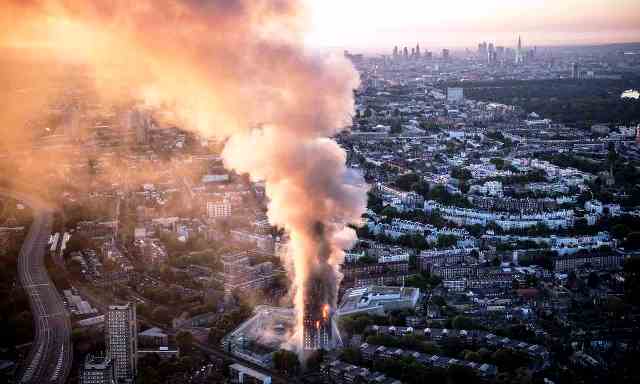
The fire that hit the 24-storeyed Grenfell Tower in West London early on Wednesday may have killed at least six and injured more than 50, but a few people survived due to the desperate measures of the people around them.
An eye witness, Samira Lamrani, said she saw a woman try to save a baby by dropping it from a window “on the ninth or 10th floor” to waiting members of the public below.
“People were starting to appear at the windows, frantically banging and screaming,” Mail Online quoted her as saying.
“The windows were slightly ajar, a woman was gesturing that she was about to throw her baby and if somebody could catch her baby. Somebody did, a gentleman ran forward and managed to grab the baby.
“My daughter’s friend said she observed an adult who made some sort of homemade parachute and tried to lower himself out of the window.
“The more I looked up, floor upon floor. Endless numbers of people. Mainly the kids, because obviously their voices, with their high pitched voices — that will remain with me for a long time. I could hear them screaming for their lives.”
A resident who did not want to be named said he was lucky to be alive.
“I heard a neighbour’s smoke alarm and thought nothing of it,” he said. “I only realised something was wrong when I heard a neighbour shouting. I’m lucky to be alive and lots of people have not got out of the building.”
He told the UK Guardian: “I’ve lost everything I own. I’m standing here in everything I’ve got.”
Several people are feared dead in the incident and more than 50 have been rushed to five different hospitals for treatment.
Dany Cotton, London Fire Commissioner, said: “I am very sad to confirm that there have been a number of fatalities. I cannot confirm the number at this time due to the size and complexity of this building. It would clearly be wrong for me to speculate further.”
But CNN later reported that six people had been confirmed dead so far in the incident.
Another survivor, Siar Naqshabandi, lives on the third floor with his brother and had been out when the blaze took hold.
“I came back at about 1.45am and saw the building was on fire. I rang him [his brother] and said, get out.”
Naqshabandi has more family living on the 23rd floor and an uncle is still missing.
“They were telling people not to leave the building,” he said. “I told them to get down. They said we’re not allowed to get out.”
David Benjamin, who was staying at his girlfriend’s flat on the 4th floor, told the BBC he was asleep when he heard banging. He got up to investigate and heard neightbour shouting “fire! fire!”.
Thinking he and his girlfriend might be safer inside the flat, he went back in and phoned another neighbour who told him to flee immediately.
“We put on our trainers and went outside and saw people running, there was thick smoke. Our neighbour said to get out so we rushed out and rushed down the stairs.”
Assed Baig, a journalist, shared a video on Twitter sent to him by a resident of the tower who managed to escape the inferno.
A resident sent me this video they took when they escaped the building around 1:30 am pic.twitter.com/WdNMQpa2Mv
Another man who fled from the 17th floor said he was alerted to the danger by the arrival of fire engines.
“We saw the fire engines, so we were looking outside at what’s going on. There was no fire alarms anywhere, because we don’t have a kind of integrated fire system – it’s just everyone’s house for itself.”
Below is what the building looked like at the light of day:
It is not known yet what may have caused the fire but Britain has come under three terrorist attacks in recent times.
London Mayor Sadiq Khan said “there will be great many questions as to the cause of this tragedy and I want to reassure Londoners that we will get all these answers.”
Contrary to the information given to the public by Isaac Adewole, the Minister of Health, that Nigeria is prepared to contain any outbreak of the Ebola virus, investigations by ICIR have revealed otherwise.
Following the re-emergence of Ebola in a northern village in the Democratic Republic of Congo in May, fears have spread across Africa on the possibility of another Ebola epidemic.
The last outbreak in West Africa killed more than 11,000 people, with the largest casualties recorded in Liberia. The virus was introduced to Nigeria by Patrick Sawyer, a Liberian-American, who came in on July 20, 2014 through the Murtala Muhammed International Airport, Ikeja.
Sawyer died five days later but he had set off a chain of transmission that infected a total of 19 people, out of whom seven died.
The latest outbreak of the disease has reportedly killed three persons in the DR Congo and health authorities in the country are trying to track down 125 others who may have been exposed to the virus.
In his reaction to the fresh outbreak of Ebola in the DR Congo, Adewole had said the country was prepared to contain any outbreak, stressing that screening and surveillance were ongoing at all entry ports in the country.
Adewole also disclosed that there were designated health facilities close to entry ports in Lagos and Abuja.
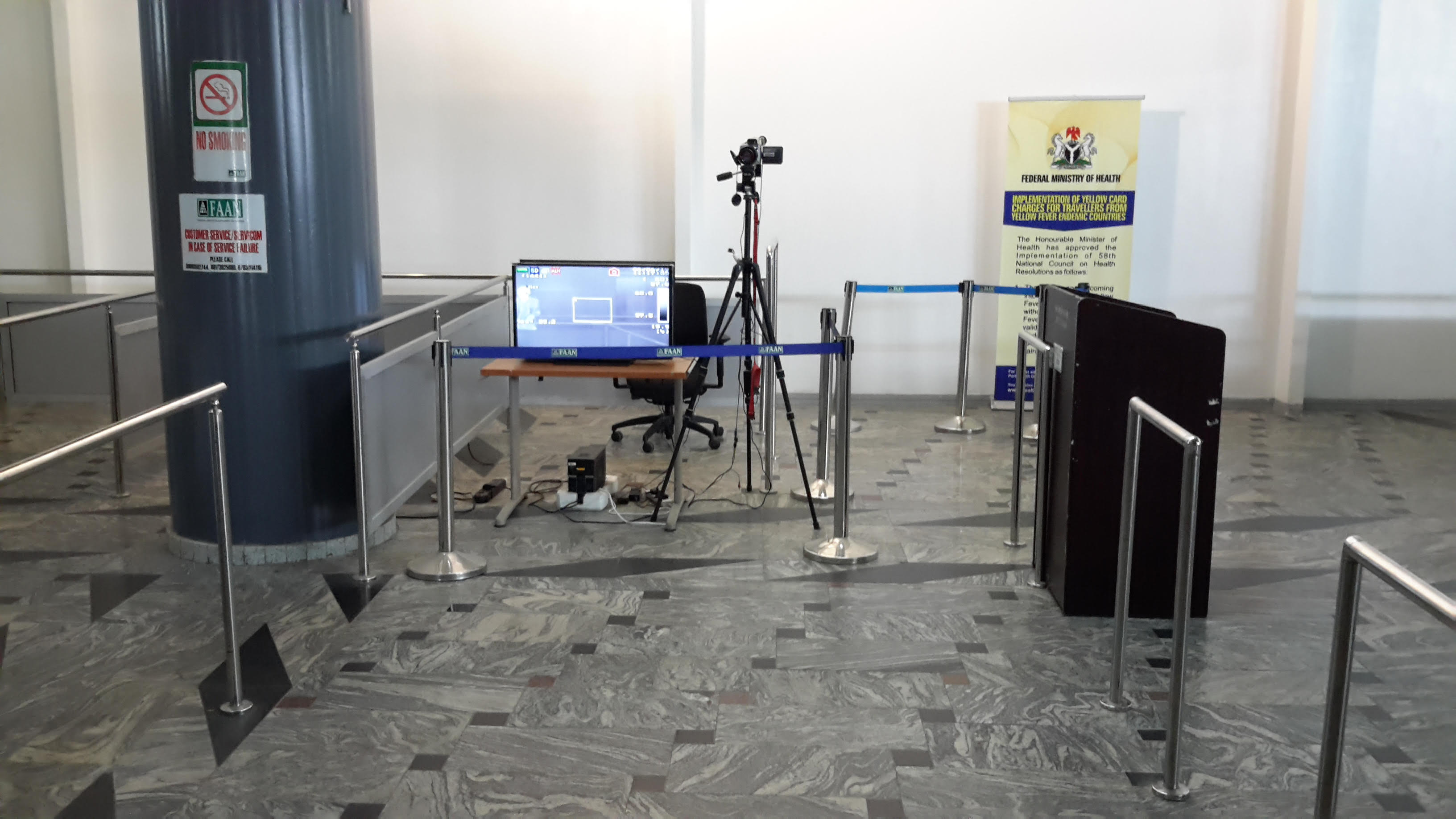
While our reporter confirmed the installation of Infrared Thermal Imagining Scanners at the Murtala Muhammed Airport, Ikeja and the Nnamdi Azikiwe International Airport Abuja, for the screening of passengers entering and leaving the country, we found no evidence of preparations to treat victims or contain an outbreak.
One sophisticated thermal scanner each has been installed at the departure and arrival foyers of the Nnamdi Azikiwe Airport to gauge passengers’ temperature. If a passenger’s temperature is above 37.5 °C, he or she is asked to step aside and taken into the Port Health office for further checks to determine whether it is a case of infectious disease, including Meningitis and Ebola.
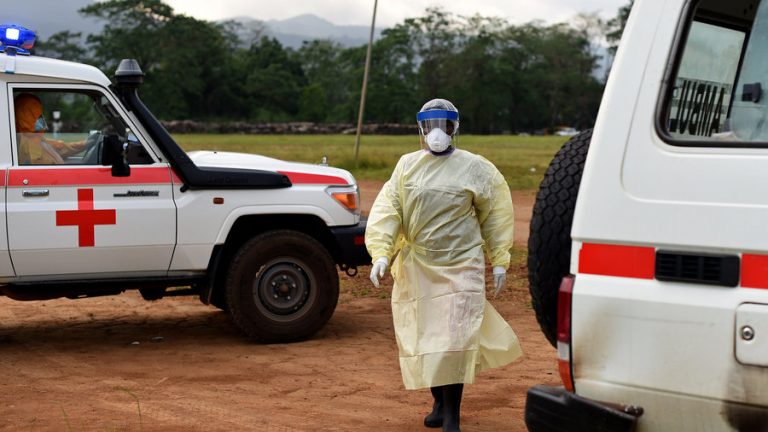
According to a senior doctor at the Port Health office at the Nnamdi Azikiwe International Airport, Abuja, if there is a suspected case of Ebola, the World Health Organisation (WHO) is notified while the patient is isolated and taken to a designated facility.
Asked where the designated facility for Ebola is located in Abuja, he called a staff to find out. The staff said the facility was located in Zuba.
‘ZUBA HOSPITAL NOT BUILT TO ADMIT EBOLA PATIENTS’
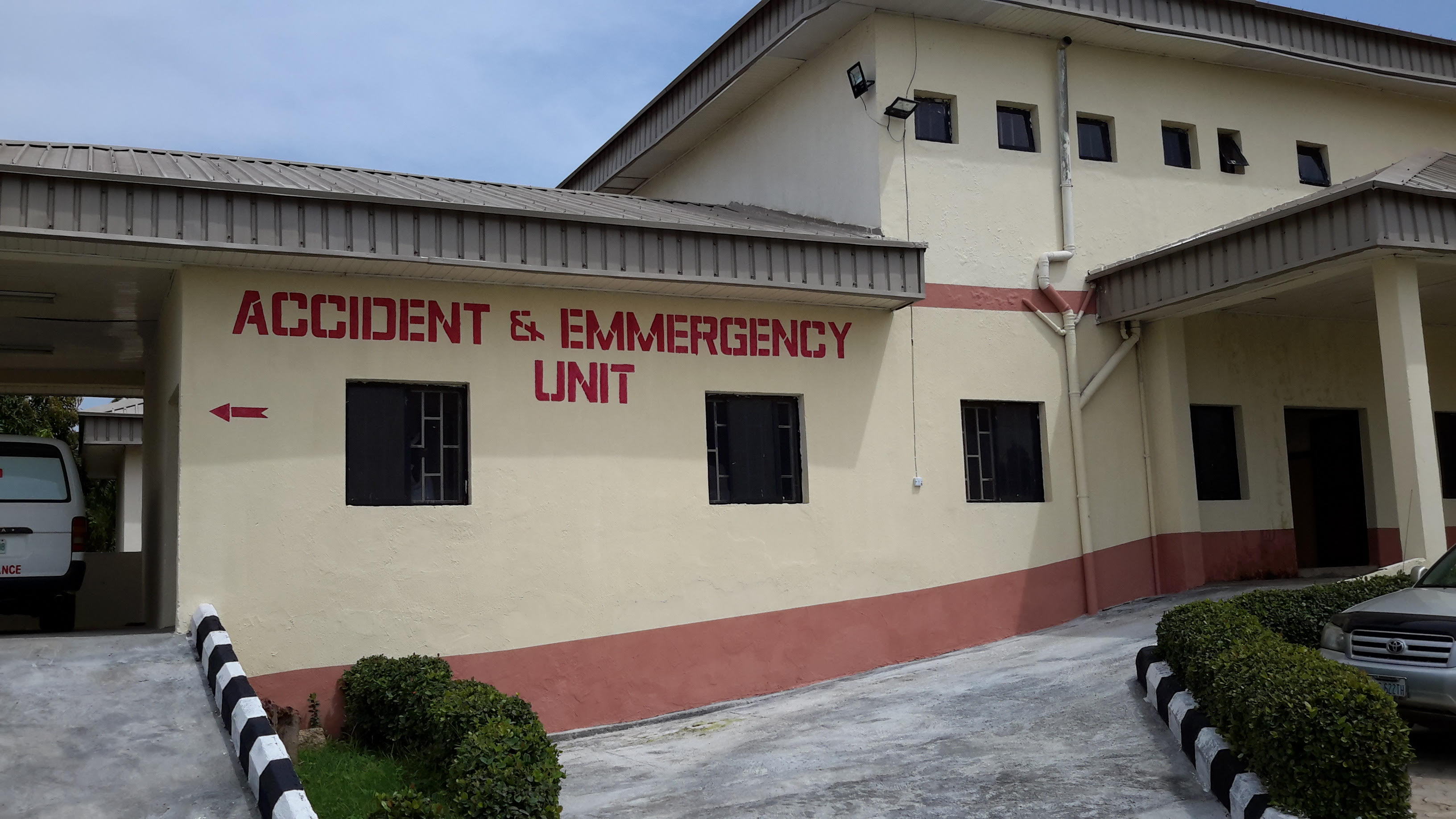
The accident and emergency unit at the hospital
Zuba Cottage Hospital is located along Gwagwalada Road, less than 10 kilometres from the airport. It must have been chosen for its proximity to the airport.
But when our reporter visited the hospital, there was no indication of its designation as treatment centre for Ebola patients or anyone suffering from a communicable disease.
It is a two-storeyed facility built since 2009 but recently renovated for use as a General Hospital for Zuba and surrounding communities. There are five wards in the hospital, each with six bed spaces for patients, but there were no patients in the wards when our reporter visited on Thursday June 8.
Only the accident section seemed functional, as nurses were seen going in and out of it.
A senior nurse told ICIR that the hospital had not been informed that it could be used for isolation and treatment of Ebola patients.
“We are not aware of that. But you cannot even bring an Ebola patient to a hospital like this that serves as a General Hospital,” she said.
“It is not built to admit such patients, as the wards are not well-ventilated enough to keep a patient with an infectious disease, not to talk of the likes of Ebola.This is the only hospital in the whole of Zuba and it serves Zuba and about four or five other communities surrounding it. If you bring Ebola patient here where will you take the other patients to?”
Our reporter gathered that the hospital has no facility, including seats, for patients and has less than 10 nurses who were deployed from other hospitals just last month. Due to lack of personnel and facility, the hospital is unable to admit patients.
Officials of the FCT Health Secretariat and the Federal Ministry of Health were said to have visited the hospital last month and told the management that the facility would be used for the treatment of “sick passengers” from the airport. The source said there was no mention of Ebola in the conversations.
HOW KUJE COMMUNITY OPPOSED ISOLATION CENTRE
It was initially speculated that a section of the Kuje General Hospital would be used to isolate patients in the event of an Ebola outbreak, but leaders of the community were said to have opposed the move. This is probably why the issue of Ebola did not come up in the discussion with the management of Zuba hospital.
Clearly, nearly four years after the outbreak of Ebola in Nigeria, and several weeks after another outbreak in the DR Congo, authorities in the country are yet to have facilities and personnel in the right places to contain any fresh outbreak.
In August 2014, Bala Muhammed, the then FCT Minister, stated at a public function that the General Hospital, Kuje, in Kuje Area Council, had been designated as a treatment Centre for cases of the Ebola virus infection. He said the hospital was chosen because it would be easy for the people to access and that a ward would be isolated at the hospital for quarantine and surveillance of potential cases.
He added that adequate infrastructure and equipment would be put in place to manage affected persons and guard against the spread of the virus. But after the community kicked against the decision, nothing was done to have an alternative facility.
TOUCH-AND-GO SCREENING AT MMIA
Thermal scanner at the Abuja airport
In Lagos, Nigeria’s commercial capital, the story is the same. Signs at the Murtala Muhammed International Airport, Lagos, show little seriousness on the part of the Nigerian authorities, to tackle the disease.
There is no attempt to sensitise passengers at the airport about Ebola. There are no flyers/posters at the departure and arrival halls of the airport, or jingles warning passengers about the danger posed by the disease.
On May 31 when our reporter visited the airport, there was no notice in the departure lobby for intending travellers to be wary of the virus, neither was there at the arrival section. It is only in two of four toilets at the departure hall that a notice titled ‘Integrated Response to Public Health Emergency in Nigeria: Quick Facts About Ebola Virus Disease’ is seen on the wall.
At the arrival hall, in the male toilet tagged 0009, opposite Maverick Business Services, the hand dryer had broken down and what currently serves as hand dryer is a giant fan. The Integrated Response to Public Health Emergency in Nigeria notice about Ebola is missing there. Overall, in the five toilets at the airport visited by the reporter, only in two were toilet papers available while some of the facilities in most of the toilets were in bad shape.
A staff at the Port Health Services a the Lagos airport, who pleaded anonymity, said the agency, which operates under the Federal Ministry of Health, has a team of environmental and medical officials who screen passengers at the airport and that so far, no Ebola virus has been detected. She said the health centre at the airport has the capacity to handle any health challenge arising from Ebola.
Our reporter spoke to two different returnees to the country — a man and woman. While the woman said she was subjected to Ebola test on arrival at the Murtala Muhammad Airport, the man said he did not undergo any such test. The man’s view aligns with that of Chris Ajaero, a Lagos-based journalist who returned from a nine-day trip abroad on Sunday, May 28, 2017. Asked whether he was subjected to Ebola test before and after returning to Nigeria, Ajaero said no.
“I didn’t fill any form at the Murtala Muhammed Airport Lagos over Ebola when I travelled from Nigeria to Ahmedabad, India, recently to cover the annual meetings of the African Development Bank,” he said.
“I was also not subjected to any screening or medical test by the medical personal throughout the journey. On my way back to Nigeria, (in the plane) I was given a form to fill pertaining to whether I had contact with anyone with such health challenges and I completed the form but on arrival at the airport, there was no medical personnel to collect it and no official requested for it.”
Unlike the Murtala Muhammad International Airport, however, there is no screening or any kind of public notice or enlightenment at the local wing of the Murtala Muhammed Airport. Passengers went and came without any kind of screening and all the screening equipment that surfaced at the airport when the country battled with the disease, were gone.
Interestingly, there is evidence of awareness about Ebola at the Nigerian Ports Authority, Lagos Port Complex, Apapa right from the gate where a banner informs visitors about the deadly virus. A notice on doors at a medical unit at the administrative building in the complex directs enquiries about the disease to a medical staff while flyers about the virus are available at the Port Health Services unit visited by the reporter.
IGNORING A FATAL DISEASE
A medical staff told our reporter that a meeting was called on June 1, more than two weeks after reported Ebola outbreak in DR Congo, to discuss the Ebola threat and how to respond.
Agnes Olapade, the Chief Nursing Officer, Port Health Services, at the complex, also said there was a meeting aimed at raising awareness about Ebola.
“Last week Friday, we had a seminar to make people aware that though Ebola is not in Nigeria, it poses danger. A handbill was shared to people that came for the seminar. We gave health talk on it and showed people how to go about personal hygiene.“
In line with that, Olapade said people coming and leaving the country are subjected to test, and that there is collaboration between the various government agencies at the port to ensure Nigeria is free from Ebola. She advised Nigerians to ensure that they maintain high personal hygiene, as a way to keep the disease at bay.
Ebola is one of the world’s most fatal and rare diseases yet to have any reliable cure.
If there is an Ebola outbreak in Nigeria today, it is not unreasonable to believe that the fire-brigade approach of 2014, which encouraged corruption, may be replayed. At the peak of the Ebola crisis on August 8, 2014, the president, in a press release signed by Reuban Abati, announced the release of N1.9 billion as a Special Intervention Fund for the management of Ebola.
The fund was for the strengthening of efforts to contain the virus such as the establishment of additional isolation centres, case management, contact tracing, deployment of additional personnel, screening at borders, and the procurement of required items and facilities.
But nothing of such happened as the then Minister of Health, Onyebuchi Chukwu, denied that the fund was for Ebola management. He said the money approved by the president was for the federal ministry of health to buy operational vehicles, drugs and other items.