Home Blog Page 2878

Lawmakers Summon NYSC DG Over Corps Member’s Death

0

lawmakers-summon-nysc-dg-over-corps-members-death


Director General of the National Youth Service Corps, NYSC, Sule Kazaure, has been summoned by members of the House of Representatives to explain the circumstances that led to the death of a corps member at the Kano State NYSC orientation camp.

This followed a motion raised by Olufemi Fakeye, an Osun State lawmaker, the state where Ifedolapo Oledepo, the deceased corps member hails from.

Fakeye in his motion noted that the demise of the 26-year-old Oledepo, a first class graduate of Aviation and Transport Management from Ladoke Akintola University of Technology, was avoidable.

According to him, the deceased corps member took ill a few days after arriving at the Orientation Camp and promptly reported the condition to camp authorities. But adequate attention was not given to her as the authorities initially thought she feigned the sickness in order not to take part in the routine strenuous exercises which is part of camp activities.

Fakeye further said that the deceased was eventually admitted to the camp clinic but it appeared the camp clinic was not properly equipped.

“The camp clinic may not have been adequately equipped, as the late Ifedayo was reportedly given some “Placebo” and later injected with some substance, following which a lot of rashes manifested all over her body and her tongue became twisted,” he said.

Contributing to the motion, majority leader of the House, Femi Gbajabiamila, said that the NYSC management should partner with the state governments to construct  well-equipped medical facility in each of the orientation camps in the federation.

Gbajabiamila also suggested that all Corps members must be enrolled under a health insurance scheme for the duration of their service year.

He advised that the expenses for the above improvement to the NYSC scheme should be contained in the 2017 budget.

The lawmakers however suggested that corps members should be allowed to take adequate rest at the orientation camps and that the rigours of camp exercise be relaxed.

Policemen, Soldiers Arrested For Rape In IDP Camps

0


Displaced women in Maiduguri receiving care

Two policemen, three soldiers, one Prison Service official, one Air Force personnel, a staff of Borno State Ministry for Agriculture and two members of the Civilian JTF have been arrested for sexually abusing women and girls in Internally Displaced Persons, IDP, camps in the North east

The Inspector-General of Police, IGP, Ibrahim Idris disclosed this at the IGP Conference on Tuesday in Abuja.

Speaking for the police, the Inspector General said that after investigations, any policeman found guilty of any offence would be dismissed and taken to court for prosecution.

Idris said police would liaise with the Army and Air Force and other agencies to make their personnel available for a thorough investigation.

“We are going to conduct a thorough investigation and if anyone is found guilty we will dismiss him then take him to court,” he said.

The IGP said the police had put in place mechanisms, which included the deployment of female police officers to IDP camps, to check future occurrences.

A report by the Human Rights Watch, HRW, indicating that Nigerian government officials and security agents sexually exploit women and girls in IDP camps in October forced President Muhammadu Buhari to order a full investigation into the sexual abuse allegation.

Buhari’s order was a bold step as the previous government had consistently denied such allegations.

The HRW report stated that government officials and others including, camp leaders, vigilante groups, policemen, and soldiers, have raped and sexually exploited women and girls in IDP camps, adding that the government has not done enough to ensure that the victims have access to their basic rights and services, or to sanction the abusers.

HRW said it documented 43 cases of rape and sexual exploitation of women and girls living in seven IDP camps in Maiduguri.

“Four of the victims (said) that they were drugged and raped, while 37 were coerced into sex through false marriage promises and material and financial assistance,” the group stated in its report

“Many of those coerced into sex said they were abandoned if they became pregnant. They and their children have suffered discrimination, abuse, and stigmatization from other camp residents,” it added.

However, most of the findings of the HRW were a confirmation of an investigative report published by www.icirnigeria.org on January 19, 2015 on the rampart cases of rape and child trafficking in IDPs camps across the North east.

The story “Grim Tales Of Rape, Child Trafficking In Displaced Persons Camps”, chronicled sad tales of rape told by victims and some aid workers in the IDPs camps but it was dismissed by the government, which said that there was no evidence even after setting up an investigation panel.

The www.icirnigeria.org story of nearly two years generated a lot of anger, particularly among international humanitarian agencies, forcing the government to set up a probe panel comprising members from the Department of State services, DSS, National Emergency Management Agency, NEMA, National human Rights Commission, NHRC, Journalists against Disaster, JAD, among others.

However, even on the first day of its assignment, chairman of the committee, Bilikis Mohammed Abdullahi, a deputy director in the Directorate of State Services, DSS, declared that there was no evidence of rape in the camps visited.

Not surprisingly, the panel in its report, which has never been made public, said that there is no evidence to prove such cases of sexual abuse in the camps.

Also read:

No Evidence of Rape In IDP Camps

NEMA Officials Work Against Probe Of Rape In IDP Camps

NEMA Launches Probe Into Allegation Of Rape, Child Trafficking In IDP Camps

Police Recruitment:  8500 Applicants Successful

0

police-recruitment-8500-applicants-successful


The Police Service Commission, PSC, has released names of 8,500 successful applicants for recruitment into the Nigeria Police Force.

The employment is part of the Federal Government’s 10,000 policemen recruitment programme.

The successful applicants included 500 cadet Assistant Superintendents of Police, 500 cadet Inspectors, and 7,500 constables.

A statement issued in Abuja on Tuesday by the commission’s Head of Press and Public Relations, Ikechukwu Ani, said that names of the successful applicants had been uploaded on the websites of the commission and the Nigeria Police Force.

He disclosed that the commission had also concluded the recruitment of 80 per cent of the 1,500 specialists into the force.

Ani said that the commission had shortlisted applicants who applied under some disciplines that required further professional and expert interview.

He pointed out that the disciplines included engineering, laboratory science and community health.

Ani said that the exercise was based on merit, federal character and geographical spread, adding that all successful candidates went through the required processes.

“These include state screening which involved the screening of credentials of the candidates and physical screening such as height, sight, chest, etc,” he said.

He said that the commission electronically received a total of 911,438 applications comprising 262,462 for cadet ASP, 211,832 for cadet inspector and 437,144 for constable.

“A total of 338,250 applicants were later shortlisted, also electronically, and invited for screening at the state commands of the Nigeria Police Force.

“This figure was made up of 44,684 shortlisted for cadet ASP, 87,736 for cadet inspector and 205,830 for constable.

“This process was followed through from command to zone and finally, the national level, where the successful candidates were selected,” he said.

He said that the commission was guided by its enabling law, recruitment guidelines and the federal character as enshrined in the constitution.

Bill For Establishment Of Christian Court Passes Second Reading

0
Speaker of the House of Representatives, Yakubu Dogara

A bill seeking to create an appeal court to try cases pertaining to the Christian faith has passed for second reading at the House of Representatives on Tuesday.

The bill, which was sponsored by Istifanus Gyang, from Plateau State,as well as eight other lawmakers, is aimed at amending the 1999 Constitution to include the creation of the Ecclesiastical Court of Appeal of the Federal Capital Territory, FCT, and the various states of the federation.

The bill also stipulates the functions, jurisdiction, qualifications, appointments and tenure of office for the judicial officers to man the courts if established.

Leading a debate on the bill, Gyang said the proposed amendment was in line with the provisions of Section 37 of the Nigerian constitution, which guarantees freedom of religion and association.

Speaker Yakubu Dogara referred the bill to the special ad-hoc committee on the review of the 1999 Constitution for further action.

Proponents and supporters of the bill are of the opinion that since there is a provision in the constitution for a Sharia Court, which deals on matters relating to the Islamic religion, it was only fair that a similar court be created for Christians.

Christianity and Islam are the two major religions in Nigeria.

Military To Re-Open Maiduguri-Baga Road As Normalcy Returns

0

military-to-re-open-maiduguri-baga-road-as-normalcy-returns


The military would reopen another major transit road in Maduguri, the capital of Borno State, on December 24 as the anti-terrorism war records more successes.

This was made known on Tuesday by Habib Kekeno, the Caretaker Chairman of Kukawa Local Government Area of Borno State, during an interview with the News Agency of Nigeria, NAN.

The Maiduguri/Baga road has been closed since November 2014 by the military after the town of Baga suffered five major attacks from Boko Haram insurgents.

Kekeno noted that the continued closure of the road has had serious adverse effects on fishing and other socio-economic activities for which the town was hitherto renowned.

“It is hard to believe that Baga used to be a lively trading centre of 200,000 people where merchants would travel to sell cattle, leather goods and trade in fresh produce,” the LG boss said.

He added that though more than 2,000 fish traders and marketers were still producing fish in Baga, they however lacked access to transport their produce to Maiduguri.

Kekeno said: “I went to Baga about 21 times and I can tell you that I have met our fishermen who stocked about N4 million fish, but do not have access to bring them into Maiduguri.

“Baga was the largest producer of fish in the Sub-Saharan Africa. Its fishermen bordered from Niger, Chad, Cameroon and some other countries.

“Before the insurgency, more than 300 lorry loads of fish are transported to Maiduguri and other parts of the country in a week. But now, no single truck comes from Baga.”

Kekeno explained that Borno State is blessed with water bodies and a variety of fish species.

“Borno get its fishes from Damboa Dam, Aloa Dam, River Yobe, others from Chad Republic, but there is no access road leading to these places anymore,” he said.

President Buhari To Present 2017 Budget Next Week

0

president-buhari-to-present-2017-budget-next-week


President Muhammadu Buhari has indicated that he will present the 2017 budget before the National Assembly on Wednesday, December 14.

This was contained in a letter read by Senate President, Bukola Saraki during Tuesday’s plenary on the floor of the Senate.

Part of the president’s letter read: “I wish to formally address a joint session of the National Assembly on the 2017 budget and our quest to get the country out of recession”.

Recall that last week, the Federal‎ Executive Council, FEC, had approved the 2017 budget, which is estimated to be N7.02trn.

The budget was prepared using an oil benchmark of $42.5 per barrel.

The senate has considered the Medium Term Expenditure Framework, MTEF, which is a precursor to the budget.

It had earlier rejected the initial Medium Term Expenditure Framework, MTEF, document sent to it by the executive, describing the document as ‘empty’.

Senate Leader, Ali Ndume accused the Minister of Finance, Kemi Adeosun, and that of Budget and Planning, Udoma Udo-Udoma of refusing to provide details of the document.


Read also:

France Names New Prime Minister As Former PM Resigns

0
Incoming French Prime minister Caseneuvo
Incoming French Prime minister Bernard Cazeneuve

French President Francois Hollande on Tuesday named former interior minister, Bernard Cazeneuve, as the country’s new Prime Minister until a new president is elected next May.

The shake-up was prompted by the resignation of former Prime Minister, Manuel Valls, who announced on Monday that he would seek to run for president next year.

President Hollande himself announced last week that he would not seek a second term.

Cazeneuve will essentially be a caretaker prime minister ahead of the election, in which the far-right National Front Party hopes to cause an upset similar to this year’s anti-establishment votes in Britain, the United States and Italy.

Reacting to the development, Jean-Marie Le Guen, France’s minister for parliamentary affairs and an ally of Valls, said: “The world has changed drastically in a matter of months … with what happened in the United States, Brexit and what has just happened in Italy.

“The extreme right is on the threshold of power. The right is more brutal than anything we’ve ever seen.”

Italian voters rejected in a referendum at the weekend constitutional reforms proposed by Prime Minister Matteo Renzi, forcing him to step down and raising fears that the euro zone’s third biggest economy faces a period of political instability.

Valls, 54, formally resigned in a meeting with Hollande at the Elysee Palace on Tuesday.

As interior minister since April 2014, Cazeneuve, 53, has had to deal with a spate of deadly militant Islamist attacks that have killed more than 230 people since January 2015 and overseen a period of emergency rule imposed in their wake.

He was previously Europe minister and budget minister.

A lawyer by training, Cazeneuve is nicknamed ‘the Cardinal’ by his own staff and by detractors on account of a cool and sometimes frosty manner.

Polls so far suggest the Left faces humiliation in next year’s presidential election after five years in power. Hollande himself is more unpopular than any French president in over half a century.

Pollsters have for months predicted that the presidential battle in the second-biggest euro zone member will boil down to a duel between conservative candidate Francois Fillon and Marine Le Pen, head of the anti-immigrant National Front.

Le Pen hopes to capitalize on a mood that has seen voters reject political elites to back Britain’s exit from the European Union and elect Donald Trump as U.S. president, though polls suggest she would lose a run-off against Fillon.

The election takes place in two rounds next April and May. Valls will first have to win his party’s ticket by winning a primary in January, where he faces a tough contest against more traditional leftists.

An Ifop-Fiducial opinion poll published on Tuesday as the new prime minister was named echoed previous ones that suggested no candidate from the Socialist party would make it to the runoff of the presidential election on May 7.

The poll had Valls scoring only 10 percent in the April 23 opening round and, like other polls, had Fillon going into a second-round duel against Le Pen that he would win.

Hollande’s office said that Cazeneuve would be replaced as interior minister by Bruno Le Roux, who until now was head of the Socialist Party group in the lower house of parliament.


Read also:

DPR Seals Erring Petrol Stations In Sokoto, Kebbi States

0

dpr-seals-erring-petrol-stations-in-sokoto-kebbi-states


The Department of Petroleum Resources, DPR, has sealed up 19 fueling stations in Sokoto and Kebbi states for allegedly selling petrol above the approved pump price of N 145.

The Sokoto operations Controller of the department, Mohammed Makera, made this known during a chat with newsmen in Sokoto on Tuesday.

Makera said that out of the affected fueling stations, 11 are located in Sokoto State while eight were in Kebbi.

18 of the petrol stations were said to be owned by independent marketers, while one was run by a major oil company.

Makera said that the stations were sealed because almost all them were allegedly selling petrol at between N 148 and N 150.

He added that they were each fined N 100,000 per pump as well as placed on a two-week suspension.

The DPR controller reiterated that officials of the department would ensure that the unsuspecting motorists were not cheated by the marketers.

He also assured Nigerians that there would be adequate supply of petroleum products to effectively cater for the yuletide period, urging motorists to desist from panic buying.

Groups Demand Release of Ethiopian Opposition Leader, Merera Gudina

0
merera-gudina
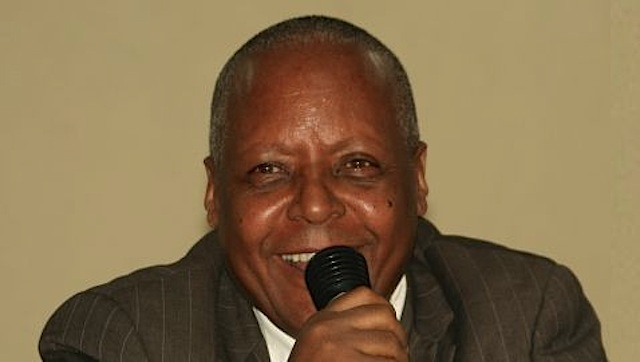
Ethiopian opposition leader, Merera Gudina

Pro – democracy groups around the world are demanding the release of Ethiopian opposition leader, Merera Gudina who was arrested over a week ago and continues to be detained by authorities.

The World Movement for Democracy, which promotes democracy around the world, in an alert issued on Monday demanded Gudina’s release and expressed alarm at the Ethiopian government’s “escalating crackdown on dissent.”

The movement rallied democracy groups around the world to call on Addis Ababa to release the opposition leader and “to respect the human rights of its people”.

Gudina, a prominent scholar and leader of the of the Oromo Federalist Congress, OFC, was arrested at his home in Addis ababa on November 30, the same day he arrived the country from a foreign trip.

The deputy chairman of the OFC told Reuters that the politician “arrived in Addis Ababa on Wednesday morning from a trip to Brussels, where he met members of the European Parliament.

He added, “Police arrested him in his house the same day in the evening. We haven’t been given reasons behind his arrest.”

On his trip to Belgium, Gudina testified before the European Parliament about human rights abuses in his country.

At the hearing on November 9, Gudina testified alongside Berhanu Nega, an exiled opposition figure and leader of Patriotic Ginbot7, G7, labeled a terrorist organisation by the government, and athlete Feyisa Lilesa, whose solidarity gesture at the 2016 Rio Olympics raised the profile of the protests in Ethiopia’s Oromia Region.

After almost a year of violent protests, the government declared a six-month state of emergency in October, which allows the authorities to restrict opposition activities and impose curfews.

Article 2 of the emergency laws, under which Gudina is being held, forbids communication by citizens with those the government terms “banned terrorist organisations and anti-peace groups”.

The state of emergency was declared in reaction to protests, which started among the Oromo, Ethiopia’s biggest ethnic group region over a land issue but have spread to the Amhara, the country’s second largest ethnic group.

Ethiopia has a record of repression, particularly against the media and has jailed many journalists in controversial circumstances.

In April, 2014, in an apparent crackdown on the media, the government arrested nine journalists on allegations of working for foreign human rights groups and using social media to cause instability in the country.

While an international outcry followed the arrests, Getachew Reda, an adviser to Prime Minister Hailemariam Desalegn told Reuters that the journalists were arrested for criminal activity.

“These are not journalists. Their arrest has nothing to do with journalism, but with serious criminal activities,” he said.

“We don’t crack down on journalism or freedom of speech. But if someone tries to use his or her profession to engage in criminal activities, then there is a distinction there” Desalegn added.

Journalists and bloggers have also been arrested since the state of emergency took effect.

Lily Mengesha, an Ethiopian journalist described the state of emergency as a continuation of the government’s escalating attacks on media freedom and human rights in the country that “will not deliver needed stability.”


Nigerian Government Bans Importation Of Vehicles Through Land Borders

0
Vehicles at a Nigerian port

The federal government has banned the importation of vehicles through land borders.

A statement released on Monday by the Nigeria Customs Service said the ban will take effect in January 1, 2017.

The ban is in line with a new prohibition order issued by the federal government that restrict importation of both new and used vehicles through sea ports only.

In the statement signed by customs spokesman, Mr. Wale Adeniyi, importers of vehicles through the land borders were advised to utilize the grace period up till December 31, 2016, to clear their vehicle imports landed in neighboring ports.

It should be recalled that the federal government recently disclosed during an automotive industry forum that it would ban the importation of vehicles through land borders and enforce the presentation of road-worthiness certificates on such vehicles from their countries of origin before allowing them into the country.

The Director-General, National Automotive Design and Development Council,  Aminu Jalal said that it was a means of controlling the influx of used vehicles, popularly called ‘Tokunbo,’ into the country.

This restriction on importation of vehicles follows that of rice whose imports have been banned through the land borders since April 2016.