LinkedIn has revealed the top ten skills that can land you a lucrative job in 2017. These skills are in high demand by employers.
Each year, LinkedIn releases an annual list of the skills employers need most in candidates.
According to LinkedIn, the Global Top Skills of 2016 list reveals several trends about the global job market.
First the demand for marketers is slowing because the supply of people with marketing skills has caught up with employers’ demand for people with marketing skills.
However, the demand for skills on cloud computing and data mining is on the increase. LinkedIn explained that these skills are in such high demand because they’re at the cutting edge of technology. Employers need employees with cloud and distributed computing, statistical analysis and data mining skills to stay competitive.
LinkedIn pointed out that for the first time ever, data presentation, which is visualizing data, makes the list of top ten skills. It explained that because of statistical analysis and data mining holding strong again this year, employers need employees who can organize data so it is easy for people to understand.
A plane carrying 81 people, including a top Brazilian football team, Chapecoense FC, has crashed on its approach to the city of Medellin in Colombia.
Police earlier said that five people survived the crash but a statement by club said a sixth survivor was later found.
The team was due to play in the final of the Copa Sudamericana, against Medellin team Atletico Nacional.
The first leg of the final of the cup, South America’s second most important club competition, was scheduled for Wednesday, but has now been suspended.
Management of the football club issued a brief statement saying: “May God be with our athletes, officials, journalists and other guests travelling with our delegation.”
It said it would refrain from any further statements until it had assessed the extent of the crash.
But vice-president of the club, Ivan Tozzo, told a sport television station that “there are a lot of people crying in our city, we could never imagine this. Chapecoense is the biggest reason for joy here.”
One of the survivors was confirmed as Chapecoense defender Alan Ruschel.
Reports suggest that at least two other footballers – goalkeepers Jackson Follman and Danilo – may have survived, as well as physiotherapist Rafael Gobbato.
The team, from the southern city of Chapeco, was promoted to Brazil’s first division in 2014 and reached the final last week after a victory against Argentina’s San Lorenzo.
The British Aerospace 146 short-haul plane, operated by Bolivian charter airline Lamia and carrying 72 passengers and nine crew, crashed in Cerro Gordo in the municipality of La Union.
According to a Colombian airport press release, it had reported an electrical fault to the control tower.
Medellin’s Mayor Federico Gutierrez described it as “a tragedy of huge proportions”.
Poor weather meant that the crash site, in a mountainous area, was only accessible by land, and later Medellin airport that the rescue operation had been suspended.
There was no fire on impact, which appears to have increased the chances of survivors being found.
Incumbent governor of Ondo State, Olusegun Mimiko, of the Peoples Democratic Party, PDP has sent a congratulatory message to the Rotimi Akeredolu, the winner of the governorship election held in the state last Saturday.
In a statement issued by his Chief Press Secretary, Eni Akinsola and made available to newsmen in Akure, the state capital, Mimiko said “it behoves on me as Governor of Ondo State to congratulate the Governor-elect, Mr Rotimi Akeredolu (SAN) and wish him success in the challenging task of governing our dear state.”
“It is incumbent upon me as Governor to facilitate smooth transition between my government and the incoming one. I will, to this end, provide the ambience for a smooth and seamless transition process,” the governor stated.
Mimiko, while expressing appreciation to the people of Ondo State, also promised to continue to provide quality leadership until his handover date.
He said: “I use this medium to express my sincere appreciation to all our citizens for the very peaceful manner in which they conducted themselves throughout the election period.
“I will not waiver in providing needed leadership to our dear state till the last day of my term.”
He called on the people to continue to work hard to sustain the peace that has been witnessed in the state for the past seven years.
It is surprising that Mimiko who is from the PDP will congratulate the APC governor-elect, when the national leadership of his party has openly rejected the election results.
In a statement released on Monday by the PDP national publicity secretary, the party called on the Independent National Electoral Commission, INEC, to cancel the exercise.
It also urged the party’s candidate in the election, Eyitayo Jegede, to challenge the entire electoral process in the court of law.
Mimiko’s actions by hurriedly congratulating Akeredolu may lend further credence to the speculations that he is planning to dump the PDP for the ruling All Progressives Congress, APC.
Recall that the outgoing governor won his first term election on the platform of the Labour Party, before decamping to the PDP during his campaign for the second tenure.
He was recently accused of planning to join the APC after he had gone to welcome President Muhammadu Buhari when he visited the state for the Ondo APC campaign rally.
He however denied the reports, insisting that the gesture had no political undertone as he was merely following protocol by going to personally welcome the number one citizen of the country.
Zimbabwe has launched its own currency for the first time since the country’s dollar was abandoned seven years ago amid rampant inflation.
The bond note, which is worth one US dollar is raising fears of a return to the ill-fated local dollar.
The US dollar has been Zimbabwe’s main currency since 2009.
When the introduction of the new notes was first announced in May, it fueled some of the biggest protests in a decade against President Robert Mugabe.
But the government said it was issuing the bond note to tackle a worsening cash shortage.
It hopes the cash substitute, which is legal tender in Zimbabwe but is not valid outside the country, will halt the flow of US dollars going overseas.
Initially, an amount worth $10m is being introduced into circulation in two and five dollar denominations.
Business groups have welcomed the move as a way of boosting economic growth.
However, major opposition parties, workers and civil society groups are planning further protests this week.
And in the run-up to the notes’ release, Zimbabweans queued for hours to withdraw their US dollars amid fears the bond notes would not be able to keep parity.
The Reserve Bank of Zimbabwe has always refrained from referring to the new bond notes as currency.
But For ordinary Zimbabweans, memories of the collapse and demise of the Zimbabwean dollar in 2009, and the hyperinflation that caused its destruction, still rankle.
However, there were few alternatives for the Reserve Bank as the economy is experiencing a chronic shortage of US dollars, which has been the main currency of use for the past seven years.
If the current experiment with bond notes even looks like taking a step backward to the hyperinflation of seven years ago, not only will the economy’s very survival be in jeopardy, so too will the government’s.
Zimbabwe’s central bank has assured people the notes’ release will be controlled, including weekly withdrawal limits of $150 worth.
Under a proposed law, anyone found guilty of defacing the notes could face up to seven years in prison.
An egg cost 50 billion Zimbabwean dollars in 2008, a loaf of bread cost the same as 12 brand new cars would have cost ten years previously as inflation rates reached 231,000,000%.
To keep up with the rising prices, a 100 trillion dollar note was issued – enough for a weekly bus ticket – before the Zimbabwean dollar was eventually scrapped in 2009.
Nigeria will on November 29 join the growing list of African countries that have launched Anti-Child Marriage Campaigns.
Fifteen African countries have launched such campaigns aimed at stemming the tide of child marriages in the continent.
The countries are : Ethiopia, Ghana, South Africa, Sierra Leone, Senegal, Niger, the Islamic Republic of Gambia, Malawi, Zimbabwe, Eritrea, Zambia, Chad, Burkina Faso, Mali and Madagascar.
The federal government has finalized arrangements for the kick-off of the campaign to stop the menace of child marriage and other related harmful traditional practices across the country.
Minister of Women Affairs and Social Development, Aisha Alhassan made this known during a media briefing on Monday in Abuja, saying that the campaign will be launched on Tuesday, November 29, at the Sheraton Hotel in Abuja.
She said the move was borne in keeping with the resolution reached by African leaders during the 25th African Union Ordinary Session of Heads of State in June 2015, take practical steps in addressing the issues of child marriage and other harmful traditional practices.
Alhassan said: “One of first practical steps is a vigorous campaign to end child marriage which will be launched tomorrow Nov. 29 at the Sheraton Hotel.
“Global communities and Nigeria in particular are increasingly recognizing child marriage as a serious challenge, both as a violation of human rights and a hindrance to key developmental outcomes.”
The minister lamented the fact that most African countries were faced with the challenges of child marriage which robbed girls or children of their childhood, education, health and future.
She referred to a report by UNICEF to the effect that 15 million children are married off every year globally with devastating consequences on their general well being.
“This is very disturbing as it is further revealed that 15 out of the 20 countries with the highest rates of child marriage in the world are in Africa.
“Fifteen African countries have so far launched the campaign to end child marriage.
“The countries are Ethiopia, Ghana, South Africa, Sierra Leone, Senegal, Niger, the Islamic Republic of Gambia, Malawi, Zimbabwe, Eritrea, Zambia, Chad, Burkina Faso, Mali and Madagascar,” Alhassan said.
The minister called on the media, development partners and other stakeholders to do more in ensuring that girls are protected from child marriage and other forms of violence.
Minister of Information and Culture, Lai Mohammed, has called on state governments to encourage and support movie producers by providing incentives and creating the enabling environment for the creative industry to thrive in their respective states.
Mohammed made this call in Abuja after witnessing the premiere of a movie titled ‘My Name is Kadi’.
He said the reason he attended the movie premiere in person was to further buttress the need to encourage and support the movie industry, especially to put into action the promises so far made by the federal government to strengthen the creative sector.
The minister said though government at the centre already has plans on ground for the growth of the movie industry, “I think the state governments should encourage such film-makers also by giving them access to grants to help them because this (Movie Production) could be very expensive.”
“The state governments will also help by establishing cinema houses to show these films,” he said.
Mohammed noted that if properly harnessed through regulatory and legislative framework, the film industry has a huge potential to contribute significantly to the development of the economy.
He said: “If you look at the GDP of California, which is largely dependent on the Creative Industry, it’s about the sixth in the world. Go to Mumbai in India and other cities, the Creative Industry is the bedrock of their economy.
“The good news here is that the artists, the film-makers, the musicians have gone far ahead and are today in a domineering position globally.”
The Minister said the government is working with some development partners to provide data and statistics that will encourage the private sector to key into the Creative Industry by investing and making profit.
He however observed that one of the challenges faced by the movie industry in Nigeria is that it’s largely unstructured, hence the government is creating a self-regulatory mechanism through the establishment of the Motion Picture Council of Nigeria, MOPICON, to organise and properly structure the industry.
On the issue of piracy, Mohammed said that his ministry and that of Justice are partnering to curb piracy, noting that the punishment for piracy needs to be stringent enough to discourage the unwholesome practice.
“We must protect the intellectual property of our artists. We have laws already in place but there are some people who are of the view that the punishment is not stringent enough,” the Minister noted.
He also harped on the need to discourage Nigerians from patronizing pirated products through advocacy to create awareness on the dangers of piracy to the nation’s economy.
The Peoples Democratic Party, PDP, has said that it rejects the result of the Ondo State governorship election held last Saturday and wants the Independent National Electoral Commission, INEC, to cancel the exercise.
This was contained in a statement issued on Monday by the party’s National Publicity Secretary, Dayo Adeyeye, which also accused INEC of “advanced election rigging” in the Edo and Ondo States elections.
The PDP maintained that last Saturday’s election in Ondo State did not reflect the will of the people and has directed its candidate in the exercise, Eyitayo Jegede to challenge the process in court.
“INEC has however graduated from Inconclusive Elections as seen in Kogi, Bayelsa, Osun, FCT, Imo, Nassarawa and some other previous by-elections in the Country to ‘Advanced Election Rigging’, as in the cases of Edo and Ondo states Gubernatorial Elections,” the statement read.
According to the statement, the APC took advantage of the hardship it had inflicted on the people, “which have indeed made all Nigerians virtually beggars in their own country”, to engage in massive buying of votes even while security agents watched.
“It is common knowledge that the APC agents openly bought votes of the electorates in the full glare of security operatives who did nothing to prevent such dastardly violation of the Electoral Law,” Adeyeye stated.
“In view of the fact that the Election was blatantly manipulated from the beginning to the end to favour the APC, we vehemently reject the results of the November 26, 2016 gubernatorial election in Ondo State.
“The election and all actions leading to it fall short of laid down principles guiding conduct of elections in Nigeria.
“We have instructed our candidate and the Ondo State Chapter of our party to proceed to the tribunal to challenge the outcome of the election.
“We call on the judiciary to redeem Nigeria’s image on this matter as we request for the total cancellation of the election in Ondo State,” the statement concluded.
South African President, Jacob Zuma, is facing yet another threat to his presidency with a renewed call by three of his cabinet members for him to stand down.
Derek Hanekom, the Minister of Tourism, was the first to raise a motion in the country’s ruling ANC, calling for a vote of no confidence on the president.
Two other cabinet ministers are understood to be backing Hanekom’s proposal, they are: Health Minister, Aaron Motsoaledi and Public Works Minister, Thulas Nxesi.
President Zuma has survived several similar votes in the parliament but this is the first time the ANC will formally discuss his position.
Zuma has increasingly come under criticism over corruption allegations, with a recent report highlighting his links with the wealthy Gupta family.
Analysts say this could shape into the toughest battle of Zuma’s career.
Earlier this month, an investigation by the country’s anti-corruption watchdog said a judicial inquiry should be set up to further investigate allegations of criminal activity in Zuma’s government.
The investigation found evidence that the Guptas, a business family with links to Zuma, may have wielded undue political influence over the appointment of ministers.
Both Zuma and the Guptas have denied any wrongdoing.
Codeine is now commonly abused by many young women in Northern Nigeria
This is the second and concluding part of this report by ICIR Editor, Tajudeen Suleaiman, on the worrying trend of young women in Northern Nigeria getting hooked on drugs and its possible future implications.
According to the 2015 annual report of the National Drug Law Enforcement Agency, NDLEA, the North west topped the table of arrests for drug related offences for that year, with a total of 2,205 persons, beating the South west which recorded 1,785 arrests. The North central followed with 1,605 while the South south, South east and North east recorded 1,380, 979 and 824 respectively.
But out of a total of 2,205 people arrested on drug charges in the North west, only 38 were females – the least, compared to other zones, especially South south which led with a total of 269 females.
But this is because the arrests were made largely for trafficking and use of narcotics such as cocaine, heroin and cannabis, which constituted over 90 per cent of drug seizure for the year and previous years.
The NDLEA, established by Decree 48 of 1989 (now CAP N30 LFN 2004) is the government agency charged with eradicating illicit traffic and use of narcotic drugs and psychotropic substances.
However, the agency faces an uphill task in dealing with the problem of drug abuse by women in the North because, its mandate does not cover cough syrup, the most commonly used substance by the women.
The NDLEA borrows from World Health Organisation, WHO, which has placed under international control about 118 narcotic substances, while that of psychotropic substances is about 111.
But the list does not include cough syrups and the tablets that Northern women now use to get high. Although codeine is in the list of narcotics, when it is used in cough mixtures, it is regarded as medicine and is perfectly legitimate. So, the ladies settle for cough mixtures that contain codeine.
Tablets such as rohypnol, tramadol, diazepam and lexotan, which are abused by Northern women, are controlled drugs that are sold only after a doctor’s prescription.
It was gathered that the tablets are usually prescribed for extreme pain such as that experienced by people suffering from the sickle cell disease and neurological disorders. But those intent on getting them for a moment of high easily and readily purchase the drugs.
According to a pharmacist, Kemi Olatundun, controlled drugs “affect the mood and could make the user a danger to herself/himself and to the society.”
She said codeine cough syrup is also classified among control drugs because of the codeine contents, and they are to be sold only at a doctor’s prescription.
The abuse of codeine syrup and these tablets now constitute the greatest challenge faced by drug officers operating in Northern Nigeria. Since the law does not forbid the drugs from being sold or consumed, it is difficult for law enforcement agencies to tackle the menace.
Hamza Umar, state commander of the NDLEA in Kano, told the www.icirnigeria.org that the state was witnessing the involvement of more women in drugs, basically cough syrup and off – the – counter drugs like rohypnol, tramadol and others.
Umar disclosed that he had 19 females in detention and that all were arrested in one day for drug abuse. One is a 200 level university student.
“I will not deceive the public. It is indeed increasing. We are seeing more women now getting involved in drug. I just sent our operatives into town and within one hour they rounded up over 100 girls involved in drugs. And they found these girls in just two places inside Sabongari, and they cut across all ages. Some even have to breastfeed their children here because they left the children at home,” he revealed in a chat.
His counterparts in Sokoto, Zamfara, Kaduna and Katsina have made similar revelations. The NDLEA Commander in Sokoto said the involvement of women in drugs is now a serious problem not just in the state, but in the whole of the North. He told our reporter in an interview that while men abuse cannabis, the women now abuse cough syrup with codeine content.
“To tell you the truth, I think the issue of cough syrup came around 2005, that’s when we begin to see a proliferation of cough syrup. I started this job in the ‘90s and we never saw anything like this. It has become an epidemic. I had worked in Lagos and Ondo and I have never arrested anybody over cough syrup or heard any case of abuse of cough syrup,” he lamented.
Since cough mixture is not regarded as narcotic, it is not captured in the statistics of the NDLEA. But Idris gave an indication of how serious the problem is.
“A former Commander of the NDLEA in Kano said about three million bottles of codeine cough syrup are being consumed daily in Kano state alone,” he stated.
Codeine Addiction:
It is common to see young girls in social spots at night openly take cough syrup in many cities across the North, but especially in Kano, Kaduna, Sokoto, katsina, Gusau, Gombe, Maiduguri and Yola.
In Kano where retailers of codeine are largely based in Sabongari, you find single and married women in the streets of Odutola, Sanya Olu and Abedi at night, from 9.00 pm till early hours of the morning, frolicking with bottles of soft drinks mixed with bottles of codeine.
Married women who live in conservative parts of the city send children or friends to buy the drugs for them.
Umar Dambo, a medicine store owner in Gusau, told www.icirnigeria.org that married women in the city send their children to buy the syrup.
“Usually they start buying from 6.00 pm until about 9.00 or 10.00 pm when most shops would close.
Users of codeine syrup have different reasons for taking it. According to Jummai Salau, who lives in Sabon Gari Kano, codeine improves her sexual prowess.
Jummai Salau
She told the reporter that most of her friends who use codeine do so for the same reason. “Even married women use it to satisfy their husbands,” she revealed, but stressed that there were those who use it to “cool tension.”
Officials of NDLEA also corroborated Jumai’s confession. “Some of the married women confessed to us that they take it to improve their libido so that their husbands would not look for other women. Some say they have marital problems, and some say it just makes them forget their worries,” said the Kano NDLEA commander.
In Borno, especially Maiduguri, codeine addiction among girls and women has become an epidemic. A member of the state Civilian JTF told this website that girls and women of all classes take codeine.
“Many girls in this town are drug addicts. Forget how beautiful or well-dressed a lady is or even how expensive you think she looks. Some of them just need codeine and once a man can buy them codeine, you can have them. The worse is that even married women are not left out,” he said.
A young girl, who spoke to our reporter in Maiduguri on condition of anonymity, confessed that she belonged to a group of girls hooked on codeine. Although she knew abusing the drug was not good for her health, she has not been able to stop it.
“I know codeine is not good but I want to leave it gradually, not at once. I tried it in the past and it affected me. I could not eat or sleep and I was always angry.”
But she said she is trying to reduce her codeine consumption to a bottle or two per day, in the hope that “one day I will stop.”
Drug Abuse and Mammy Markets:
Since the drug law does not cover cough syrup, NDLEA has been hamstrung in fighting codeine abuse among women in the North. The NDLEA in Sokoto once arrested a woman in whose house operatives found many cartons of codeine cough syrup even when she did own a chemist. But her husband went to court and the court ruled that the woman be released and the seized items returned to her.
Due to the legal lacuna that makes it impossible to prosecute women abusing cough syrup, the NDLEA in the North, especially the North west, is working in concert with state Hisbah commissions and vigilante groups.
Since Sharia law forbids Muslim women from freely socialising with men or married women going out alone at night without company of their husbands or male relatives, it is easier for the HIsbah commission to deal with the problem of codeine abuse than the NDLEA.
The Hisbah commissions have been provided patrol vehicles, which drive officials around major spots in the state capitals. Women and girls are arrested for indecent dressing, wandering or when seen in company of men who are not their husbands. They are taken to sharia courts for immediate prosecution, and sanctions range from strokes of cane to reporting them to their families.
In Gusau, Atiku Balarabe, chairman, state Hisbah Commission, said some of the women have been committed to prison for two or three months on such offences.
In Kano, apart from using the Hisbah and vigilante groups, culprits are also exposed through the media. Recently the Vigilante Group of Nigeria, Kano Branch, arrested a female codeine dealer and user while on an afternoon patrol.
According to Awalu Yusuf, Commander of the Giguyun branch, Kano, she was found during a stop and search. She was a passenger inside a tricycle dressed in Muslim hijab. She was taken to the Kano State radio where she gave her name as Umme Ado, a graduate of Kano University of Science and Technology. She had concealed bottles of codeine under her hijab, items she said were meant for delivery to some married women inside the city.
The aggressive operations of the Hisbah and the vigilante groups have also forced codeine women to be smarter. Many of them resorted to buying the drugs and taking them at home. Those who still prefer socialising with friends resort to renting rooms in guests houses during the day and night so they can buy and drink codeine and other drugs they need.
But many have also found safe havens inside Mammy Markets in some Military barracks where there seems to be connivance between authorities at the Nigerian Army Barracks who own the markets and drug dealers, especially in Zamfara and Sokoto. Codeine and other drug users use Mammy Markets in these states as rendezvous.
Inside the Mammy Market in Sokoto, Aba Street is a bustling drug market at night and users walk freely with codeine bottles. The major drug dealers have shops in the market. There are more than a dozen patent medicine shops on Aba Street, but what they sell mostly are codeine syrup and varieties of tablets used by drug addicts. Customers also walk into some of the shops to buy cannabis and smoke in corners of the market. Girls as young as 15 can be seen drinking codeine and smoking cigarettes.
Some beer parlours in the market also have stocks of codeine syrup for female customers. The syrup is not displayed on shelves, but served on request. Halima Katdaba, one of the codeine women who come to the market daily, explained that those who buy codeine more from the market are married women. They come from inside the city to buy and take home. “Some of them make friends with us so that we can help them buy and deliver to their homes without anybody suspecting,” she stated.
NDLEA officials in Sokoto disclosed that the mammy market remains a challenge for them as they cannot enter the barracks without the approval of the army authorities. A senior official said last year the Department of State Security, DSS, gave the agency a list of suspected drug dealers operating in the mammy market and the list was passed to the Army authorities but nothing was done.
Reacting to a question on the mammy market, the NDLEA state commander said: “The issue of Mammy market is giving us serious headache. Those involved in the drug business have found a safe haven in the market because ideally we cannot go there and make arrest without the prior knowledge of the authority there. So we made effort some months back but the strategy had to be reviewed. But we’re still in contact with the military authorities so that we can put heads together to bring the issue of drugs in Mammy market to an end.”
Law enforcement officers in Kano, including policemen are a common sight in the drug havens of Sabon gari. They visit known drug dealers and retailers for ‘settlement.’ Some of them are also drug addicts, and supply drugs to users. In Kaduna, Hassan told this website that she had telephone numbers of policemen she could call whenever in need of drugs, and they would deliver.
The Kano NDLEA Commander told www.icirnigeria.org that he dismissed an officer, Murtala Usman, who was found to be involved with drug dealers in Sabon gari. Another officer was demoted.
But the army authorities in Yobe, Taraba and Gombe have been able to stop drug peddlers and users from using their mammy markets by controlling entry and searching the markets for drug users or sellers.
How to fight drug addiction
Many are of the opinion that ignorance is a major factor for the rise is cases of drug abuse not just among women but even among males in the North. While educated men and women have been involved in drug abuse across the states, NDLEA officials and the police say majority of drug addicts in the zone are not college educated and could be easily lured into drugs.
Statistics have also confirmed that the North west and the North east are the most educationally disadvantaged states in the country, indicating that ignorance may truly be a major factor.
A Nigerian Demographic and Health Survey conducted in 2008 showed that states in the North east, except Kaduna, have the most educationally disadvantaged women in the country.
Women in these states have between 0-20 per cent literacy, lower than states in the North east with between 21-60 per cent literacy levels.
This is why the NDLEA has embarked on public enlightenment of the citizenry across Northern states on the dangers of drug abuse. There are jingles running on state radio and television stations on the dangers of abusing drugs.
Some community leaders interviewed also expressed this view but added that families should teach their children morals from early age to counter peer group influence.
The NDLEA has also tried to fight codeine addiction by cutting off supplies into states in the north. NDLEA officials are a common feature on major highways into the north, doing stop-and –search of vehicles and passenger luggage.
According to Kibo, the strategy is to cut off drug supplies to dealers and users-a measure e said was yielding positive results.
But the Sokoto State Commander of the NDLEA gave a more pragmatic solution. He called on the National Assembly to urgently enact legislations that will limit the production and consumption of codeine syrup in the country.
“What we are now asking is that the National Assembly should look into the issue of cough syrup so that it can be included among drugs that are controlled. We know the companies producing these drugs and they are doing it in large quantities. So it is very easy to solve the problem from the source. If you allow companies manufacturing to keep producing them, they have to look for buyers. If there is no law that stops them from distributing it, then it will increase.” Idris told www.icirnigeria.org.
There are indications that the codeine problem in the North has also caught the attention of the National Assembly, which is now working to have new legislations to stem the malaise.
The chairman of the Senate Committee on Drugs and Narcotics, Joshua Lidani, told this website penultimate weekend that codeine addiction among women in the North has become a problem requiring urgent attention in order to save the current and future generation of women in the region.
Lidani disclosed that his committee had met with NDLEA officials over the issues and both resolved to have a review of the drug law in the country.
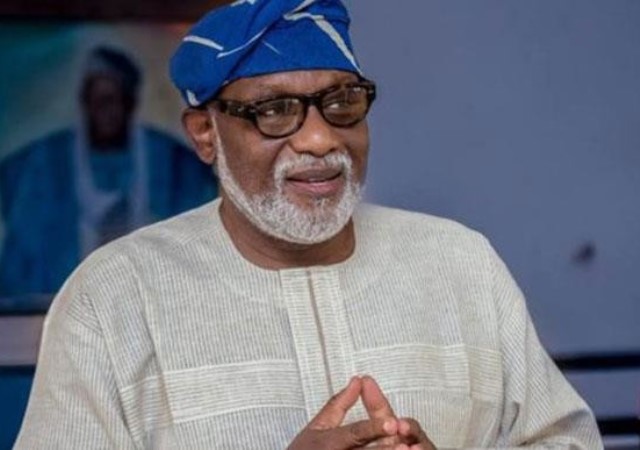
Rotimi Akeredolu, winner of the Ondo State governorship election
The Independent National Electoral Commission, INEC, has officially declared Rotimi Akeredolu the governor-elect of Ondo State.
INEC returning officer, Abdul-Ganiyu Ambali announced that Akeredolu, candidate of the All Progressives APC, scored 244,842 votes to defeat 27 others in the governorship election held on Saturday.
Also Eyitatyo Jegede of the Peoples Democratic Party, PDP, came second with 150,380 votes while Olusola Oke of the Alliance for Democracy, AD, scored 126,889 votes to come third.
Rotimi Akeredolu, fondly called ‘Aketi’ by friends and admirers won the governorship ticket of the APC on September 3, in a controversial contest that saw him defeating 23 other aspirants, including Olusola Oke, who later defected to the Alliance for Democracy,AD, and Olusegun Abraham, who was supported by National Leader of the party, Bola Tinubu.
Akeredolu polled 669 votes to defeat his closest rival and candidate of Tinubu who polled 635 votes. Although the other contestants initially accepted the results of the primary and even congratulated him, but facts later emerged that the election was rigged in his favour.
The other candidates protested and the party’s appeal committee recommended that the primary be cancelled. But John Oyegun, the National Chairman of the party overruled the decision of the appeal committee and upheld Akeredolu as governorship candidate of the party.
The development did not go down well with many leaders of the party, including Tinubu who accused Oyegun of betrayal. Tinubu was supported by former Vice President Atiku Abubakar. But Akeredolu refrained from joining the fray as he called on members to unite in the interest of the party.
When he met President Muhammadu Buhari shortly after his primary victory, he informed the president that he had resolved his differences with Tinubu and all were on the same page.
But there were media speculations that Tinubu backed Oke who was the candidate of the AD to spite the leadership of the APC. It was reported that Tinubu’s group had a power sharing arrangement with Oke as condition for support.
Though Oke denied this allegation, Tinubu never personally denied nor admitted supporting any other candidate apart from the candidate of the APC.
He was, however, conspicuously absent at the grand finale of Akerodulu’s campaign at Owo, which was attended by President Buhari and other some other party leaders.
Tinubu’s absence at the rally, as well as the absence of the governors of Lagos, Oyo and Osun was seen as sign that the Asiwaju did not endorse Akeredolu’s candidature.
Akeredolu’s journey to the Ondo Government House has a tinge of irony. He won the governorship ticket of the APC in 2012 with the active support of Tinubu, who backed him against all odds. He contested the governorship election but was defeated by the incumbent Olusegun Mimiko, then of the Labour Party.
One of the problems associated with Akeredolu’s candidacy in 2012 was that the former NBA President was too elitist and couldn’t connect with the electorate. Party leaders believe it was one of the reasons Tinubu was unwilling to back him again.
But despite this short-coming , Akeredolu was able to win the governorship election.
One obvious advantage he had going for him in this election is the federal power he brought into the campaign. In 2012 when he first ran for governor, APC was an opposition party trying to gain a foothold in the South West.
But four years after, it has transformed into the party at the centre, and Akeredolu flaunted this advantage throughout the campaign. He called on his people to support the party in power so that the state could benefit from federal largesse. On November 26, his people heeded that call.
Akeredolu was born on July 21st, 1956 to the family of an evangelist, Ola Akeredolu in Owo, Ondo State of Nigeria. He had his early education in Owo and proceeded to Aquinas College, Akure, Loyola Colege, Ibadan and Comprehensive High School, Ayetoro, for his secondary school education and Higher School Certificate, respectively.
He attended the University of Ife, now Obafemi Awolowo University, in Ile Ife, Osun State, where he obtained his LLB degree in 1977 and the B.L from the Nigerian Law School in 1978.
He was a student union leader at Ife where he was elected Vice President, Students’ Union, University Of Ife, for the 1975-1976 academic sessions.
He became the Attorney General and Commissioner for Justice in Ondo State between 1997 and 1999 serving at the same time as a member of the Ondo State Judicial Service Commission. He embarked on far reaching reforms as the AG of the state.
Some of his achievements are still visible in the state judiciary today. He was also a member of the Council of Legal Education during this period by virtue of his position as the AG.
He first became a member of Body of Benchers at the same time, 1997-1999, and was subsequently re-appointed in 2006. He remains a member till date.
He was the Chairman of the Legal Aid Council from 2005 to 2006. He was conferred with the prestigious title of the Senior Advocate of Nigeria in 1998.