Minister of Information and Culture, Lai Mohammed, has denied reports circulating in the social media that N3.4 billion was budgeted for the recently-launched national reorientation campaign “Change Begins With Me”.
Mohammed was speaking in Asaba, the Delta State capital on Friday at the opening of the 14th National Council on Information.
Describing the report as a ruse, he said it was reports like this that lends credence to the calls for some sort of regulation for the usage of the social media.
“Anyone can wake up and decide to become an online newspaper publisher, an online television station owner, an online radio station operator, a purveyor of news, photographs and videos,” the minister lamented.
“They use the numerous social media platforms like Facebook, Whatsapp, Skype, Twitter and Instagram just to mention a few.
“They spread whatever information that catches their fancy without engaging in the rigours of accuracy, fact-checking and fairness imposed by the traditional media.
“But there is another problem: They have their own public, and this public believes whatever information they put out.”
Mohammed further expressed disappointment that some journalists and seasoned writers go ahead and spread such falsehoods without bothering to crosscheck the facts.
He also refuted reports that some ministers have been sacked by president Muhammadu Buhari.
He said: “Ministers are daily being dropped on the social media. Many of us now wake up to read that we will be dropped as ministers or have our portfolios changed.
“Even our families and friends believe what they read or hear in the social media than what we tell them.”
Mohammed urged government media managers to always train their personnel on new technology and acquire state-of-the art technology as well as deploying uncommon commitment and passion to what they do.
He added that ministers or commissioners of information, government information managers are the true agents of change, urging them to sustain the “Change Begins With Me” campaign, which he said was aimed at “bringing back those time-tested values that once defined us as a people.”
The 46th meeting of the National Council on Information has the theme “Leveraging on Information and Digital Technology to Sustain the Change Agenda of Government”.
It is being attended by commissioners of information from the 36 states and the FCT and critical stakeholders in the government information circle, including heads of federal and state governments media organisations.
The Nigerian National Petroleum Corporation, NNPC, has said that Nigeria has lost about $7 billion or more than N2 trillion to pipeline vandalism as well as the activities of Niger Delta militants from January this year till date.
Maikanti Baru, Group Managing Director of NNPC, said this on Friday in Abuja at the 2016 Fiscal Liquidity Assessment Committee Retreat, while delivering a lecture titled: “Global Oil Prices, Militancy and Terrorism and its Impact on Government Revenue in Nigeria’’.
He added that apart from security challenges in the Niger Delta region, politics, judiciary, oil prices and production cost has continued to impact negatively on the oil industry.
“Over 7000kpd of crude oil has been lost due to vandalism this year. A bulk of the loss is from JV assets,” Baru said
“This implies that 60 per cent of oil production lost is NNPC-FGN equity.
“At an estimated price of 45 dollars per barrel, the total 2016 revenue loss to the Federation Account translates to about 7 billion dollars.
“This is money that the government could have used to achieve major infrastructural milestones.
“This loss is equivalent to a new 7,000mw power plant; new 350kpd refinery; over 30 per cent of National budget; and a new 1,700 kilometre pipeline,” he pointed out.
To check the ugly trend, the NNPC boss said the corporation has a plan to increase security of oil and gas assets as well as improve its community social responsibility and the Amnesty programme.
He said the NNPC planned “to renegotiate terms of Production Sharing Contract with deep offshore operating companies because with the current agreement, only 17.7 per cent of total revenue comes to government.”
The Nigeria Immigration Service, NIS, has ratified the employment of 888 out of the 2000 applicants who had been protesting their dismissal from the service while undergoing training.
Comptroller-General of Immigration, Muhammed Babandede, announced this during a news conference on Friday in Abuja.
He said that out of the 2000 applicants, a total of 1470 reported for screening while 888 met all the criteria and were therefore successful.
A breakdown shows that those recruited included 177 II Assistant Superintendents of Immigration; 305 Assistant Inspectors of Immigration and 406 Immigration Assistant 1 –immigration Assistant III.
Babandede said 530 applicants did not report for the screening exercise, while some pregnant women were also recruited because they met all the criteria of engagement into the NIS.
The criteria used to screen the applicants include: age on rank, academic certificate, physical fitness, drug free test, security clearance, good conduct/character and medical fitness.
Recall that the applicants had on Friday, August 19, staged a protest march to the Aso Rock Presidential Villa to complain about what they said was an attempt to rob them of their jobs.
They alleged that the NIS had illegally replaced them after they had undergone training, including handling of weapons, and were waiting for deployment.
But the immigration authorities explained that the recruitment exercise was only suspended as it was characterized by irregularity.
Nigeria’s Annual Education Conference to be held on November 8 will focus on the critical role teachers’ play in achieving the goal of providing learning opportunities for all.
Vice President Yemi Osinbajo is expected to deliver the keynote address while Kwame Akyeampong, an erudite international professor of Teacher Education at the University of Sussex, UK will present the lead paper.
The conference is organised by the Federal Ministry of Education with its partners in education, led by the UK Department for International Development (DFID).
Speaking on the proposed event, Oladele Akogun, a professor and Country Director of Education Data, Research and Evaluation in Nigeria, EDOREN, explained that the conference would provide an opportunity for all stakeholders in the education sector, especially teachers, to make input into education policies in the country.
He said: “ The main objective are to provide an opportunity for communicating research evidence that will guide basic education policy and practice of the Federal and State governments, and to bring together stakeholders in the education and policy sector.”
He said researches have shown that education policies are made without the input of critical stakeholders, including teachers, stressing that the long term aim of the conference is to give teachers the benefit of contributing to education policies.
Akogun, who spoke to journalists in Abuja on Thursday, said the theme of the conference is: Learning Opportunities for All: The Critical Role of Teachers. A carefully selected team of experts in diverse fields of education will lead discussions on topics such as: Improving the quality of teaching, developing an approach to managing teachers effectively, and rebuilding education services in emergencies.
Other sponsors of the conference include The British Council, UNICEF, State Education Partnership Investment Programme, Nigeria Partnership for Education Project, the United States Agency for International Development, USAID, and the Universal Basic Education Commission.
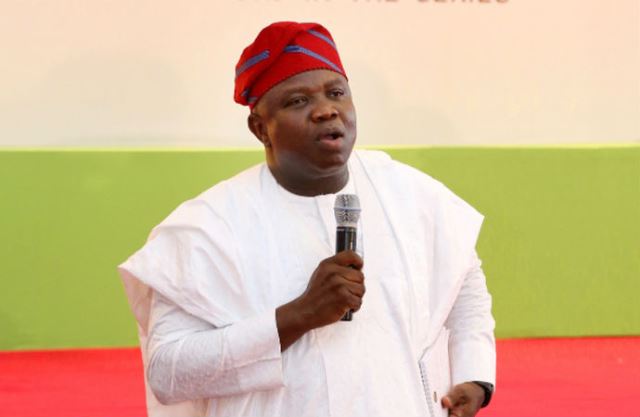
Governor Akinwumi Ambode of Lagos State has said that the Badagry Deep Sea Port project, when completed would be a major turning point in the economy of the state which was lately recognized as the fifth biggest economy in Africa.
Chief Press Secretary to the governor, Habib Aruna, quoted him as saying this after a meeting with the executive management of APM Terminals (Maersk Group) in London.
Ambode said that the meeting was sequel to a process which begun as far back as 2012, but which has been taken on with renewed vigour by his administration, resulting in a significant foreign investment estimated at over US $2.6billion into Lagos.
“This port and free zone, situated on over 1000 hectares is expected to be the largest deep sea port in Africa upon its completion. The project will include a container terminal, oil and gas services and a liquid bulk terminal, with general cargo and Ro-Ro facilities,” the Governor said.
He added that the project is expected to generate 500,000 direct and indirect jobs upon completion, and pledged his government’s commitment to ensuring the interests of the host communities alongside a sustainable regeneration and urban renewal of the area.
Governor Ambode noted that deep sea port project would be a major infrastructural development to the Badagry axis of Lagos state.
He also confirmed that talks are on to reach financial close on Lot 3 of the Mile 2-Seme 10-lane highway expansion, adding that it would complement the ongoing Badagry Deep Sea Port Project.
The representative of Maersk Group reassured the governor that the Group was committed to the Badagry Deep Sea Port, saying that that all business streams of the Group would be involved in ensuring the success of the Project.
It would be recalled that Governor Ambode about three weeks ago in London, met with representatives of APM Terminals led by the Head of Africa, Peter Volkjaer Jorgensen.
The Nigerian Army has inaugurated internet protocol desktop telephones at the 8 Task Force Division in Borno to facilitate easier communication with their families and loved ones.
This was disclosed in a statement issued by the Deputy Director, army Public Relations, Onyema Nwachukwu, in Maiduguri on Friday.
Nwachukwu stated that the facility was inaugurated by Abu Nani, the General Officer Commanding, GOC, of the Division in Monguno.
The statement read in part: “The Nigerian Army has inaugurated the first set of internet protocol desktop telephone in some locations of the 8 Task Force Division in Northern Borno.
“The essence is to alleviate the sufferings of troops who spend two to three hours travelling to Maiduguri to communicate with their families on phone.”
He added that the telephone systems “were installed at the headquarters of the taskforce in Monguno, in 7 Brigade Baga and 153 Task Force Battalion in Marte.”
Nwachukwu also noted that “Each of the call centres provides five terminal points for officers and soldiers to communicate with their families from the front lines.”
Nwachukwu said that the provision of the facility had resolved the nightmare of troops being cut off from their families and friends.
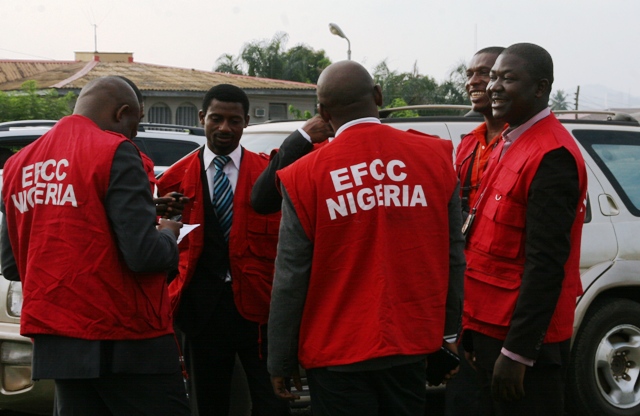
The Economic and Financial Crimes Commission, EFCC, has intensified investigations into the alleged corruption in the Judicial Arm of government.
At least three senior Nigerian lawyers were reported to have been invited by the anti-graft body to give clarifications on the alleged transfer of huge sums of money into the bank accounts of some of the judges under investigation.
The lawyers, whose names were given as Paul Usoro, Gani Adetola-Kaseem, and Felix Fagbohungbe, were sighted at the Lagos office of the EFCC on Thursday.
An EFCC source who pleaded anonymity because he was not authorized to speak on the matter, told an online newspaper, PREMIUM TIMES that the agency was beginning to appreciate the fact that “corruption in the judiciary is widespread.”
“Those we invited were found to have transferred money into the judges’ bank accounts,” he said, “we want them to come and explain the reason for the transfers.”
“More are still coming, about 20 to 30 of them,” he added.
The source also noted that “Some Senior Advocates of Nigeria who have assisted the Commission in handling some of our cases in the past are also involved.
“Some of these lawyers had assisted us with useful legal opinions on several matters. So, we are in a dilemma.”
The source pointed out the leadership of EFCC may have invited the senior lawyers following accusations that the Commission was planning to cover-up the activities of these senior lawyers to preserve their existing relationship.
He also disclosed that another senior lawyer, Niyi Akintola, was also summoned by the EFCC, but he was unable to report because he had travelled to Abuja to defend a judge before the National Judicial Council, NJC.
Recall that last week, the anti-graft agency invited some judges as part of investigations into the alleged corruption in the country’s judiciary.
The judges invited include: Uwani Abba-Aji, James Agbadu-Fishim, Mohammed Yunusa, Nganjiwa Hyledzira, and Musa Kurya.
Another judge, Rita Ofili-Ajumogobia, was also invited by the EFCC but she failed to honour her invitation.
“If any judge refuses to honour our summons, the EFCC will have no choice than to employ legal process to make him or her respect the law of the land,” the EFCC source said.
Supporters of the Ahmed Makarfi-led faction of the Peoples Democratic Party, PDP, in Ondo State are protesting the announcement of Jimoh Ibrahim as the candidate of the PDP in the forth-coming governorship election in the state.
Ibrahim was the candidate of the Ali Modu-Sheriff faction of the PDP.
The Independent National Electoral Commission, INEC, had on Thursday night released the list of candidates of the various parties participating in the Ondo election, but the list showed that Ibrahim was the PDP candidate instead of Eyitayo Jegede, who emerged victorious in the primary election held by the Makarfi-faction.
INEC cited a court judgement delivered by Justice Okon Abang of the federal high court, Abuja, which affirmed that Modu-Sheriff was the authentic National chairman of the PDP and ordered INEC to recognize Ibrahim as the authentic PDP candidate in the Ondo governorship election.
Justice Abang on Thursday also threw out an application by Jegede to appeal the judgement. He held that since Jegede did not take part in the election that produced Ibrahim as the PDP candidate, he has no locus standi to appeal the judgement.
Following the court judgement and INEC’s subsequent substitution of Jegede with Ibrahim, the town of Akure, the Ondo State capital erupted in protest on Thursday morning, as youths blocked the streets and lit bonfires along major highways.
The development led to serious traffic gridlock with motorists seeking alternative routes to their destinations.
Policemen were on hand to prevent the situation from escalating, though their number as at the time of this report was few when compared to the number of protesters.
Reports say similar protests are holding on in Ondo City and Ore.
Meanwhile, governor of Ondo State, Olusegun Mimiko met with President Buhari at the state house in Abuja on Thursday.
Mimiko told State House correspondents after the closed-door meeting that the decision by INEC had thrown the state into violence.
The governor described the announcement of Ibrahim’s name, instead of Jegede, as an act of injustice and mischief by INEC.
He added that President Buhari promised to look into the matter.
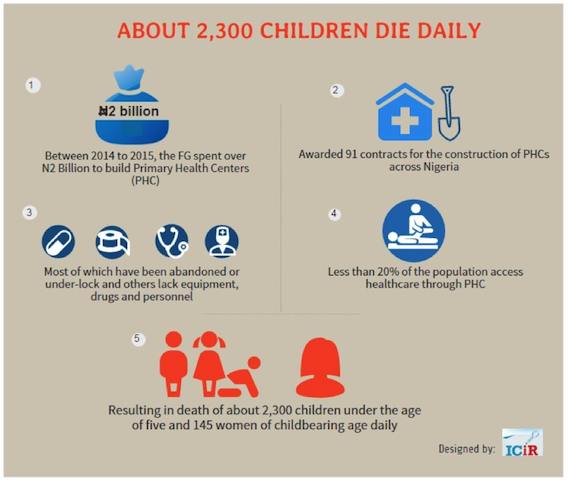
Dozens of Primary Health Centres, PHCs, built in the last two years across the country by the federal government at a cost of over N2 billion have remained unused, in spite of desperate need for such health facilities.
This is principally because money was appropriated, contracts awarded and construction commenced on the PHCs, without proper liaison and linkages with state and local governments where they are sited.
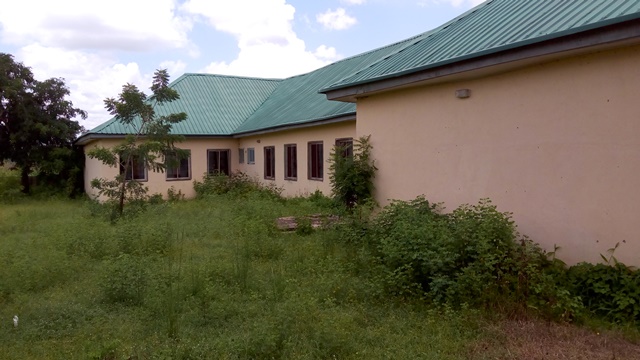
While most of the PHCs are still locked up months after they were built, others that have opened to the public lack equipment, drugs and health personnel to man them.
The Budeshi data showed that the new PHCs, which were awarded mainly at the uniform sum of N21, 986.893.00 to different contractors in many states raised the question of whether NPHCDA carried out competitive bidding on the projects.
Facts about new Primary Health Centres in Nigeria
A monitoring of these new PHCs by the Public and Private Sector Development Centre, PPDC, revealed that many of them were not functional and those that had been opened for services lacked the basic necessities to function properly.Under the Nigerian federal system, building and maintaining of PHCs are the responsibility of state and local governments.
The National Health Act in Section 2 listed all the services to be provided by the Federal Government and they do not include the building of PHCs.
The PPDC Report, which formed the basis of the Budeshi data, showed that only a few of the primary health centres built by NPHCDA in Delta and Benue were functional while the rest were locked and abandoned.
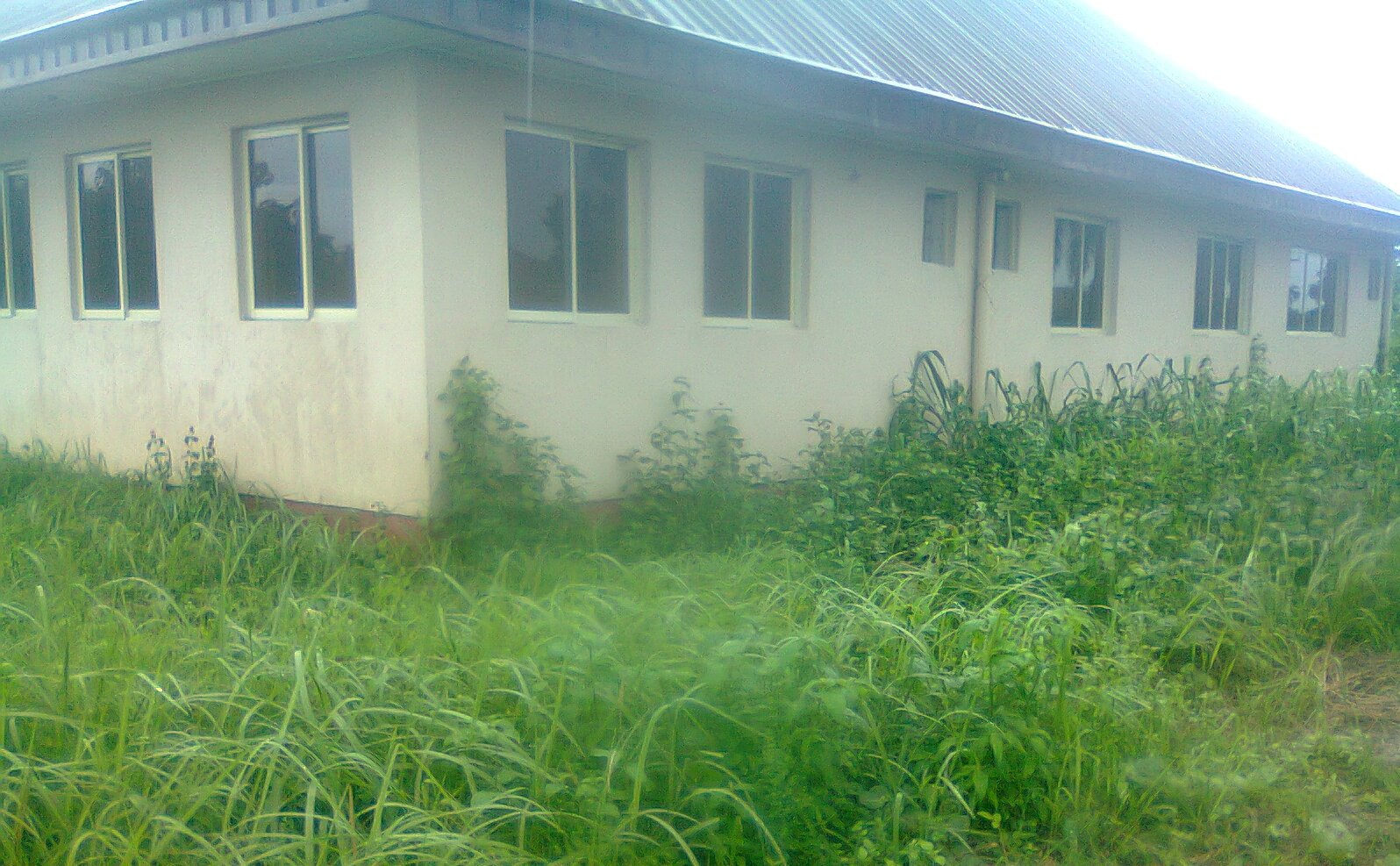
The report also showed that majority of the 14 new PHCs in Delta State were not functional and that only one seemed to be running optimally while few others that had been opened for services lacked staff, drugs and equipment.
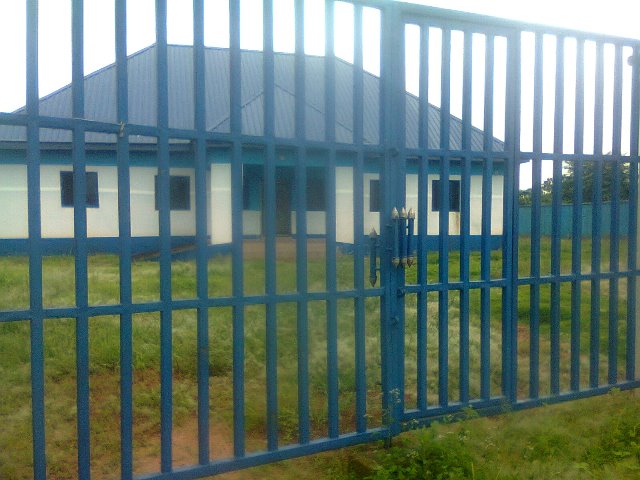
A community member at Igbogili in Delta State told PPDC monitors that the new PHC, constructed by Sharpstone Company Limited, was locked up by the contractor who claimed that he had not been paid.
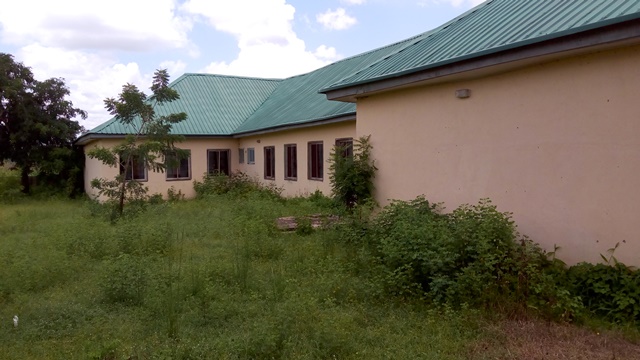
PPDC monitors observed that one of the new PHCs in Benue State, constructed by Sataab Investment Limited at Yandev Mbaluka in Gboko Local Government Area had been overtaken by grass as the facility was locked and had no access road.
Primary Health Centre building in Ughelli, Delta State overgrown with grass
The report also pointed out that other states of Lagos, Oyo, Ogun, Niger and Kano that have functional new PHCs had a shortage of staff as well as lacked drugs and equipment.
The Nigerian Health Watch, an online health focused magazine, in a report observed that “We can build, refurbish, staff, equip primary health care centres, but making them sustainably functional is a complex task that cannot be managed from Abuja.” “The role of the federal government should be that of a catalyst, guide, instigator, but not to deliver primary health care directly,” the magazine stated further.
Meanwhile, the PPDC report raises the question about how accountable the NPHCDA has been in the implementation of the Primary Health Care Under One Roof, PHCUOR. The National Council on Health approved the PHCUOR in 2011 to reduce fragmentation in the delivery of PHC services and integrate all PHCs under one authority. Under this arrangement, the NPHCDA is supposed to work hand in hand with the state PHC boards, local governments and communities in delivering PHC services.
Former Minister of Health, Professor Eyitayo Lambo said that PHCUOR was a new attempt to ensure a unified state-level structure that should be responsible for coordinating the management of PHC system and services.
But the PPDC report clearly shows that the local governments and communities were not carried along in the construction of the PHCs as the NPHCDA seemed to be interested in erecting the buildings without involving community stakeholders and mapping of existing PHCs in the communities.
According to the minimum standards for PHC in Nigeria, the Ward Development Committee, WDC, is responsible for co-managing the primary healthcare centres at the ward level. The WDC, which is made up of community leaders co-manage these PHCs with the local government.
Checks by www.icirnigeria.org show that the WDCs were not involved in the construction and management of the newly constructed PHCs. They had no say in the matter at all. This raises further questions on the seeming poor level of citizen participation and accountability in the construction of these PHCs.
The PPDC report indicated that one of the abandoned new PHC constructed by Federated Project Limited at Awume in Ohimini Local Government Area of Benue State is sited beside an old PHC which was operational but lacked adequate staff, drugs and equipment, a glaring case of duplication and waste of funds.
New Primary Health Centre in Igboli locked up
A report published bywww.icirnigeria.org in 2014 revealed that paucity of funds and government policy put PHCs in a state of total disrepair, leading to a largely inefficient healthcare delivery system at the grassroots.
Nigeria comes second to India in maternal and child deaths and accounts for about 10% of global under-five deaths. These deaths can be prevented if primary health care delivery in Nigeria can be made to function better in a manner that is accountable to the citizens.
Speaking at the first annual PHC Lecture organised by NPHCDA on December 8, 2015, former Minister of Health, Eyitayo Lambo, said that if the primary healthcare delivery system and the other two healthcare delivery systems were functioning well with effective referral system among the three tiers in place, the PHC system should be able to resolve the health problems of at least 70% of the people, compared to the less than 20% of the population that it currently attends to in Nigeria.
According to Lambo, given the high burden of infectious diseases and the related morbidity and mortality in Nigeria and the fact that about 70% of the population lives in rural areas, making PHC the cornerstone of our national health system is a step in the right direction.
As the PPDC report indicates, the building of PHCs without corresponding contributions from the states and local government in terms of staffing, equipping and maintaining of adequate drug supply will just be a waste of money by the federal government.
Appallingly, without addressing the obvious disconnect between healthcare strategies at different tiers of government, the Nigerian Muhammadu Buhari administration on January 19, 2016, announced a plan to rehabilitate and construct 10,000 PHCs within two years, at least one in each political ward across the federation.
A committee was also set up to map out all the existing PHCs in the country and determine how functional they are. Apparently, the committee discovered the futility of the government plan because on September 29, 2016, the Minister of Health Professor Isaac Adewole gave an indication that the federal government would not be able to implement the plan because it would put an additional financial burden on federal government and state governments might not meet up with their own contributions in the face of economic recession in the country.
Former Military Head of State, Abdulsalami Abubakar
Abdulsalami Abubakar, former Nigerian military head of State, has called for joint efforts by the government and other well-meaning Nigerians in order to find lasting solutions to the persistent deadly clashes between herdsmen and farmers across the country.
The former Army General-turned-farmer made this call when he hosted Governor Abubakar Bello of Niger State, his Kebbi State counterpart, Abubakar Bagudu, Minister of Agriculture, Audu Ogbeh and Governor of Central Bank of Nigeria, Godwin Emefiele, at his Maizube Farms on the outskirts of Minna, the Niger State capital.
Abubakar said the incessant herdsmen/farmers clashes were due to the increase in the rate of urbanization which meant that lands which were hitherto used for grazing and rearing livestocks have been converted to residential or industrial buildings.
He said: “The solution to the persistent clashes between farmers and herdsmen requires that all hands should be on deck.
“This should not be left to the government alone. We have to join hands with government to resolve the crisis.
“The animals need grazing field and water points but the rapid rate of urbanisation has grossly affected this.”
He suggested that government at all levels should provide grazing reserves for the herdsmen, with adequate water points, so as to reduce the violence, destruction and killings by the warring farmers and herdsmen.
“In providing the grazing reserves for these herdsmen, government should endeavour to build schools for the children of the nomadic herdsmen. This is very important,” Abubakar added.
The former military leader however pointed out that clashes between farmers and herdsmen “is not limited to this country, it occurs in virtually all the countries in West Africa”.
Agric Minister, Ogbeh disclosed that his Ministry is working on how to process Cassava leaves, which abound in the country, into feeds for cattle as part of efforts to mitigate the crisis.