Security agents were forced to use tear gas to disperse members of the Islamic Movement of Nigeria, IMN, who gathered at the Complex of the National Assembly as well as the Federal Government Secretariat in Abuja.
The protesters were calling for the release of the leader of the Movement, Ibrahim El-Zakzaky and other members of the Shiite sect being held in government custody.
El-Zakzaky has remained in what security officials described as “protective custody” since after a clash between the Shiite group and soldiers in Zaria, Kaduna State, in December 2015.
The clash led to the death of hundreds of members of the IMN, while some of the leaders of the sect, including El-Zakzaky, were arrested and are believed to be held in the headquarters of the Department of State Services, DSS.
The Shiite leader, through his counsel, Femi Falana, had sued the federal government asking for N2 billion in damages for “violations of his fundamental human rights.”
Falana argued that the Islamic cleric was not allowed access to anyone, including his family members, lawyers and doctors.
Ayodeji Ibitoye, an operative in the legal services department of the DSS, said in affidavit deposed on behalf of the federal government that Zakzaky’s detention was a proactive measure to forestall a similar incident that made the Boko Haram sect turn violent in 2009.
He stated that the FG believes that if the Zakzaky – who is the leader of one of the largest Islamic groups in the country – was allowed to be killed as contained in the intelligence report, the country may again be plunged into another Boko Haram-like crisis.
“Zakzaky was evacuated to the medical facility of the service where he is being attended to by the best doctors and his treatment has gulped millions of naira at the expense of the state,” the affidavit read.
Recall that the Kaduna State government, last month, proscribed the Islamic Movement of Nigeria, IMN, describing it as an unlawful group.
The Senate has mandated the Independent National Electoral commission, INEC, to hold the Rivers State National Assembly re-run elections on or before December 10.
The lawmakers threatened to suspend sitting if INEC fails to conduct the polls.
Deputy Senate President, Ike Ekweremadu, moved the motion during plenary on Wednesday.
“This motion is out of a need for every state to be part of the government,” he said.
“INEC has failed and refused to conduct rerun elections into the senate and House of Representatives in the Rivers state.
“I, therefore, urge the senate to ask INEC to conduct the elections by December 10, failure of which the senate will suspend plenary pending the time the elections are conducted.”
Contributing to the motion, the Senate leader, Ali Ndume, criticised INEC for the many inconclusive elections that have been witnessed in the country lately.
He supported the call for the Rivers re-run election to be conducted as soon as possible especially given the importance of the state in the economy of Nigeria.
He said: “You can imagine we are about to discuss PIB (Petroleum Industry Bill), and there are no members from Rivers state.
“We have a new leadership at INEC now, but we know the history; Inconclusive elections after inconclusive elections and suspension.
“So we ask that elections should take place in Rivers state.”
The senate, thereafter, resolved to suspend its sittings if the election was not held by December 10 as stated by INEC.
INEC had always cited insecurity as the reason for not holding the re-run elections in Rivers State.
Thousands of South Africans are protesting in the streets of Pretoria, the country’s administrative capital, calling for the resignation of President Jacob Zuma, who has been enmeshed in scandals that critics say are undermining the country’s democracy.
The protests came as the opposition called for the release of a report about allegations that a business family linked to Zuma sought to influence some Cabinet post selections to benefit its own business interests.
Some of the protesters are holding “Zuma must go” posters and chanting “fees must go” in response to unrest at universities around the country where students are demanding free education.
The possibility of new revelations of alleged wrongdoing at top levels of the South African government is likely to increase pressure on Zuma, who apologized earlier this year after the Constitutional Court said he flouted the constitution in a scandal over more than $20 million in state funds used to upgrade his rural home.
Zuma eventually paid back more than $500,000, an amount determined by the national treasury.
In a separate scandal, the Director of the National Prosecuting Authority this week dropped fraud charges against Finance Minister, Pravin Gordhan, who is also seen as Zuma’s right hand man.
On Wednesday, business executives, religious leaders and others gathered in a Pretoria cathedral to demand that Zuma quit.
They said alleged corruption linked to the president was undermining one of Africa’s biggest economies, which is experiencing weak growth, as well as a constitution that was crafted after the end of white minority rule in 1994.
“It is not possible to turn the situation around” as long as Zuma remains president, said Sipho Pityana of Save South Africa, a coalition of groups that say they seek to protect the constitution.
Separate rallies were also held in Pretoria by South Africa’s two biggest opposition parties, the Democratic Alliance and the Economic Freedom Fighters.
The ruling African National Congress party, which took power after the end of apartheid, lost several key municipalities in local elections in August, partly because of public dissatisfaction with the president.
Zuma has not commented this week on growing calls for him to resign.
He is scheduled to chair a forum in Harare on Thursday with Zimbabwean President Robert Mugabe.
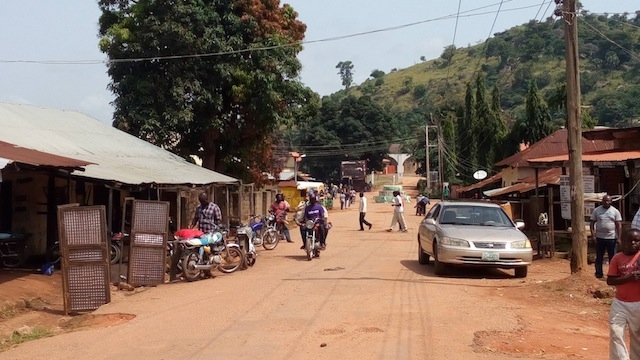
Nearly two months after earth tremors shook some communities in Kaduna State, residents still await help from the government amid fears of health consequences of the natural disaster.
By Augustine Agbo
The people of Kwoi in Kaduna State, which was recently hit by earth tremors, now live in fear over the safety of the various sources of drinking water in the community.
A 2.8 magnitude earth tremor hit the sleepy town of Kwoi and its environs in Jaba local government area of Kaduna State on Sunday, September 11, impacting about 300 houses and forcing scores of residents to flee.
The people now suspect that they may have been drinking unsafe water as their sewage lines may have been affected by the tremor, forcing faeces to leak into wells, boreholes, ponds, rivers and other water sources in the area.
Our reporter who just returned from a tour of the affected area said that many residents complained that the water they drink now has a funny, sour taste and fear that the tremor might also have negative lasting impacts on the people’s health.
The residents of Kwoi and other surrounding communities relied heavily on underground water for consumption. This has worried many who think that they might be at risk of falling sick in the near future from possible contaminated water.
Speaking to our reporter last week, the Interim Chairman, Jaba local government area, Ben Kure, expressed concerns over the possible health implications of the tremor.
He said that many questions needed to be answered and called on relevant agencies to take prompt action to determine the damage done by the tremors.
“What happened to our water system both underground and surface and what is the state of our sewage system”, he asked.
“The cracks could have affected several soakaways releasing toxic wastes into the underground waters”, he said.
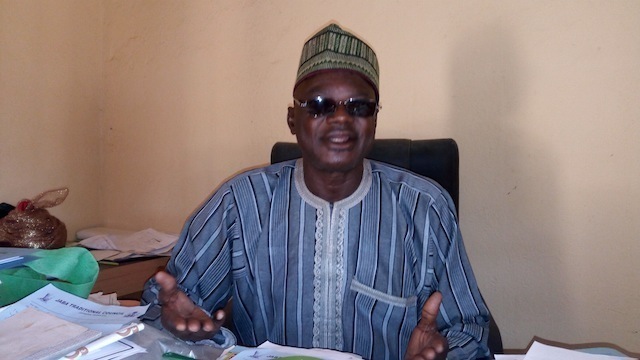
Also speaking with the www.icirnigeria.org at the palace of the paramount ruler, the secretary, Jaba Traditional Council, Makama Daniel Shehu, expressed fears over the future health of the people.
Shehu said that many people in the community had expressed fears over their health to the palace.
Cracked walls in a residential building
The tremors have left cracks in many houses in the impacted communities forcing many to relocate, while those who remain live in constant fear of their homes collapsing on their heads, in case of future occurrences.
When the first tremor occurred, residents were shocked and traumatised as they had never witnessed anything like that before.
The second tremor occurred in the early hours of the next day and was stronger, sending waves of panic throughout Kwoi town and neighboring communities such as Nok, Sabuzo, Gidan Kundi and Bita Ro.
The traumatised residents fled the town in droves even as the elders of Kwoi, led by the Kpop Ham, Danladi Gyet Maude and his lieutenants did their best to provide explanations for the sudden phenomena.
The frightened residents believed that angry gods who had turned against the people because of their iniquities caused the tremors.
But experts who visited the town explained to the people that the tremor was a result of the dynamism of the earth’s movement and that it is not new to Nigeria.
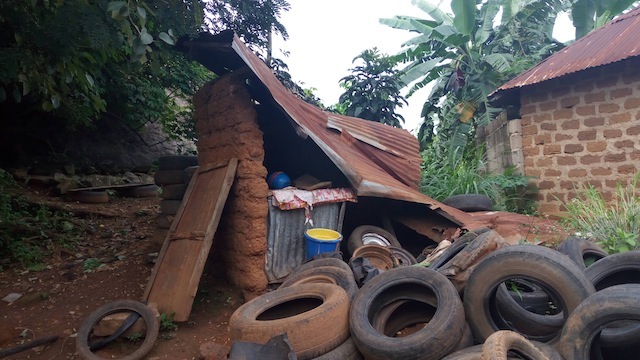
Emergency response team put the number of houses affected at 300 with many collapsing and others left with severe cracks. Most of the houses affected have toilets with their cesspit tanks that were affected in the course of the vibration.
Although no life was lost in the process, the people still live in fear as more vibrations continue to hit the agrarian town.
A destroyed mud building
Local residents find it hard to believe that what happened in Kwoi was an earth tremor; many told the www.icirnigeria.org that it was an earthquake even as the frightened residents recounted their experiences.
Isa Musa who was at home when the first tremor occurred said that he felt the vibration at about 11am when the ground shook tremendously.
“I was at home, immediately the ground shook, I ran out of the house only to find lots of people leaving their homes and worship places. It came like a thunder from beneath the earth. It also sounded like something coming from the nearby mountains.
“It repeated again at 1pm and another at 2pm, 3pm and by that time, most residents were already rattled in consternation.
“I was confused too with many thoughts running through my mind including the end of the world”, Musa said.
For Zainab Bulus, the fear in her children made her situation worst. She explained that the big tremor hit them when all of them were sleeping.
“We thought it was a building collapse as the tremor started in the early hours of Monday, my children woke to the shock and they started crying, I held all of them together assuring them that they are not dying.
“We couldn’t sleep in our homes again as we all ran out to avoid our building from falling on us”, the terrified housewife said.
Isiaka Salawu, an auto mechanic who had resumed at his workshop that fateful morning said the sound came from the huge rock few meters from his mechanic workshop.
According to him, the vibration from the third tremor led to the collapsed of a shop beside him.
“I was shocked to my bones, didn’t know where to run to as buildings cracked, some collapsed. I thought of running out of town but was not certain what lies in front. We thought we were about to be swallowed by the earth”, Salawu explained.
The Walin Jaba and District Head of Fada-Kwoi who spoke on behalf of the Kpop Ham of Jaba, corroborated the story of several residents.
He said the people had absorbed the shocks from the earlier tremors until 3.00 am on Monday morning when a more powerful vibration hit the town at a time most people were asleep.
By the time the second vibration hit the town the same morning, the whole town became apprehensive of the situation and immediately trooped out to the various palaces in the community.
“They were really scared, traumatised and desperate for answers to the thousands of questions asked.
“I was frightened too and didn’t know what to do at that time, I had to summon courage to go out and meet with them.
“I had to address them citing the name of God and that God could create anything and from my knowledge of Geography, I could explain the phenomenon”, he said.
Conflicting signal on relief efforts
More than one month after the first tremor hit Kwoi and its environs, the affected people in the communities have not received much help from the authorities as they try to rebuild their homes and return to normal life.
Much expected relief materials are yet to reach the affected persons leaving many of them to resort to self-help.
When our reporter visited the town recently, not a few of the residents lamented the absence of relief material promised by both the federal and the Kaduna State government.
Before visiting Kwoi, www.icirnigeria.org spoke with the Zonal Coordinator North West of the National Emergency Management Agency, NEMA, Musa Illalah in Kaduna who said the agency took a joint assessment with the Nigeria Geological Survey Agency, NGSA, and so far no recommendations has been made on whether to evacuate the residents of the affected areas.
He said he would not pre-empt the report from various government agencies on the tremor until they are made available.
In the area of relief material, the Zonal Coordinator said his office had made recommendations to the headquarters of NEMA but the bottlenecks created by the introduction of the Treasury Single Account, TSA, is partly responsible for the delay in getting relief items.
Illalah did not give any idea as to when the people will get the much needed relief material from the federal government.
On his part, the Executive Secretary, Kaduna State Emergency Management Agency, Ezekiel Baba Karik, claimed that the state government had provided some relief material for the affected persons.
Karik said the situation is not as bad as the media had painted it as the cracks were not fundamental.
“We are not relenting on our own, we are working with NEMA and other government agencies to provide for the people.”
“The state took 50 bundles of roofing zinc and 150 bags of cement to the people as relief material”, Karik said.
He also claimed the agency has emergency response teams in the 23 local government areas of the state. He also stated that life is back to normal in the affected communities.
But when our reporter contacted Kure, the Jaba council boss, he said that the state emergency relief agency sent only “150 bags of cement, 20 bundles of Zinc, bags of nails, 30 bags of rice and 10 bags of beans.”
Kure accused the National Space Research and Development Agency, NASRDA, of sidelining the local council when its team visited the area for findings.
“They came to Kwoi without consulting with the custodian of the land, we are the people affected, we felt the tremor more than anyone, yet the agency just came and left.
“We only saw them on national television when their report was being presented to the public.
Makama Daniel Shehu, Secretary, Jaba Traditional Council
Makama Daniel Shehu, who spoke for the traditional ruler, also said the palace was not aware of any relief items in Kwoi.
“We are not aware of anything from SEMA and NEMA. As at this very moment, I have assisted two women with two bags of cement each to fix their damaged homes because the women are widows”, he said.
He further stated that the people of Kwoi have been leaving in fear especially those close to the mountains as they feet the vibrations more than downtown residents.
Shehu also said he saw the NASRDA report only television as the council was not availed a copy.
Rahila Bawa, a widow who had to beg for cement to fix her house after losing hope of getting anything from the government told our reporter that she had to mend her cracked homes to avoid further damages.
“I decided to fix the wall to avoid the cracks from expanding as more tremors continue to hit us. If the house collapses, I would not be able to rebuild it because I don’t have the energy any more.
“I have not received any relief material and not heard of anything like that since it happened. I am a widow and my children are not strong to assist me that’s why I went asking for assistance”, she said.
Jessica Maitama, a small business owner and a mother of four said that her house was captured in the government data but has yet to get any assistance to repair her home.
“We are grateful that our homes did not collapse on us but government cannot leave us in this state, we need help to get our homes fixed.
“My children are still in a state of shock”, she said.
Some corps members who spoke to this news website said they have been receiving frantic calls from their parents to relocate from Kwoi.
Usman Arowolo who hails from Ogun State said he had never witnessed anything like that even though he has heard of tremors in the past.
“I was very afraid that night, we had to wait for our landlord for explanations. As strangers, we didn’t know it was earth tremor, it was the following day we got the picture”, he said.
Meanwhile, reacting to the allegations made by the Jaba council chairman, the head, media and communications at NASRDA, Felix Ali said that the agency went to Kwoi to carry out its professional job which was scientific.
“We did a comprehensive report on the earth tremor and we consulted all the relevant stakeholders. We were not there to raise funds for the affected persons.
“Our responsibilities was to carry out the remote cause of the tremor”, he noted.
He further stated that the report the agency presented to the public recently was based on what its team of experts saw on ground. According to him, the Kaduna State government was given a copy.
Ali declined to make available a copy to our reporter and said that the media only got a verbal explanation.
NASRDA findings had described the Kwoi earth tremor as a mini earthquake, positing that it was not true that high magnitude earthquake could not occur in Nigeria.
The report also stated that the tremors could be attributed to the stress released from the fault system of the area.
On the health implications of a leaking sewage system, a consulting environmental health officer and former registrar, Environmental Health Officers Registration Council Of Nigeria, EHORCN, Abisike Onyekachi, was of the view that there are chances the vibration could have cracked open several septic tanks.
In a chat with our reporter in Abuja, Onyekachi observed that there is a good chance of organisms from the sewage system leaking to ground water.
If this happens, he warned that there could be consequences such as enteric diseases that could be contacted through food and water.
Onyekachi noted that since the people largely depend on underground water for survival, there could be the risk of cholera, typhoid and others in the community in the near future.
“We didn’t build our houses with a view of having earthquakes, no reinforcement was done in most homes in the country hence, the risk of leakages in situation as this”, he said.
He urged government to immediately take water samples from various sources in Jaba local government to determine its safety to avoid another disaster.
A former head, Environmental Science Education, University of Abuja, Bassey Ubom, was of the view that government must undertake a comprehensive study of the tremor.
He advocated massive education of the people to prepare them for a worse case scenario as natural disasters like tremors and quakes rarely give warnings.
Also an environmental management scientist and expert in climate change, CO2 emissions and deforestation, Mande Hosea, in a sensitisation paper to the people of Kwoi assured that what took place in the town was not an earthquake.
Hosea, a senior lecturer at the Kaduna State University, said the vibration of the earth in Kwoi was as a result of sudden release of energy in the earth’s crust that created seismic waves.
“This scenario in Kwoi and environs is an earth tremor which is of low intensity and can toss people around, shake and destroy houses with poor engineering structure.
“The perceptible shaking/vibration could occur within few seconds in a day and the situation could persist for few days.
“This tremor occurred at a place called fault zone where jagged edges of two tectonic plates grind against each other, moving in slow motion and a plate may suddenly jolt into a new position and energy released in the fault by this movement creates tremor’’, he said.
He added that fault zones cut across many parts of Nigeria linking up to the Atlantic Ocean fractures zone and it is a zone of concern as areas at the proximity of these faults zones are at risk of tremor/earthquake.
He said tremor challenges are not recent development in Nigeria, as the country has a timeline of experience from 1933, 1939, 1964, 1984, 1990, 1994, 1997, 2000, 2009 and 2016 both in the South East, West and Northern part of Nigeria.
Hosea however ruled out an earthquake happening in Nigeria as West Africa is on a stable croton not located in the zone called ring of fire.
Meanwhile, the environmental expert advised that Nigeria should always be on the alert as the system is dynamic with the change in the environment.
As a precautionary measure, he urged the people to always have in their possession flashlight and first aid kit.
That people should avoid leaving heavy objects on shelves and anchor heavy furniture, cupboards and appliances to the walls or floor.
And in the case of Tremor, he advised that people should not panic, step away to open space and stay away from things in the room that could topple over.
He further advised that in tremor situation, people should hide under a desk or table, unplug electricity cords and watch out for dangling power lines.
He said the people of Kwoi should expect aftershocks in days ahead.
Since Hosea’s issued his advice, Kwoi residents have experienced several aftershocks that has gotten residents of the communities even more frightened.
Following Senate’s rejection of the external borrowing proposal from the presidency on Tuesday, the ministries of Finance and Budget and National Planning as well as the Debt Management Office, DMO, have commenced plans to represent the matter to the senate in a more detailed manner.
Senate leader, Ali Ndume, had moved the motion for the president’s request to be debated upon during plenary, but when Senate President, Bukola Saraki, put the motion to a voice vote, majority of the legislators responded in the negative.
The rejection reportedly came to the Executive as a surprise as the leadership of the ministries of Finance and Budget and National Planning as well as the DMO immediately met to work on the details of the loans.
After the plenary, Ndume addressed journalists where he confirmed that the loan request was turned down on “technical” grounds.
He said: “Honestly, I think the problem came on a technical ground. It was supposed to go to committee level and the committee was supposed to take a look at it.
“I am going to appeal to my colleagues to take a look at it again and see how we can bring it back, because one doesn’t throw away the baby with the bath water.
“One of the technical things that was missing there is that, even if you read the letter, it said ‘attached is a draft’ but there was no attachment. These are the kinds of lapses we are trying to look at.”
Also reacting to the Senate’s decision, Senior Special Assistant to President Buhari on National Assembly, Ita Enang, said that the presidency had noted the lapses and will furnish the Senate with details of the loan.
“We are not disputing with the distinguished Senate. There are certain information and details, which will enable them to consider in detail and appropriately the request of Mr. President as contained in the plan,” Enang said.
“So, we are collating that information; the Budget Office of the Federation, the Debt Management Office, the Minister of Budget and National Planning, the Minister of Finance and the Economic Management Team are collating the information so that it can be submitted to the Senate to enable the lawmakers make the appropriate decision.
“We will be engaging the Senate. We will not be disputing with them, but we will be engaging with them. When we present a matter before the legislature, it is for them to consider; and as they have considered, more information is needed and that information they are entitled to, and we will provide,” he added.
Similarly, the Director-General, DMO, Abraham Nwankwo, urged the Senate to approve the loan request as, according to him, the Federal Government would not have difficulties repaying it.
Nwankwo clarified that the proposed $29.9 billion loan, which covers a period of three years, has a lower interest rate of 1.5% as well as a long repayment period, and would help in addressing the glaring infrastructure deficit in the country.
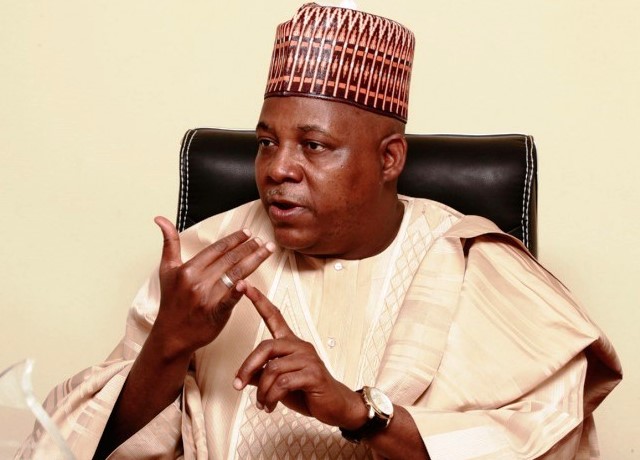
Governor Kashim Shettima of Borno State has said that he would approach the appropriate government agencies to request for undercover female policemen in order to unravel the allegations of sexual abuse by government officials working in the various Internally Displace Persons, IDP, camps in the state.
The governor said this when he received a delegation from the National Universities Commission who were in the state on an inspection visit to the proposed Borno State University.
Shettima said he intends to write to the Inspector General of Police, IGP, the Director General of the Department of State Security, DSS, the National Agency for Prohibition of Trafficking in Persons, NAPTIP, as well as the National Drugs Law Enforcement Agency, NDLEA to help in the investigation.
This is following the Human Rights Watch report released two days ago which revealed that many women and girls in the IDP camps were being sexually abused and exploited by officials in charge of the camps.
Governor Shettima said that the negative reports from the IDP camps was a major source of headache for him, but promised that something must be done to remedy the situation.
He said: ”Today, as Governor of Borno State, there is no issue that gives me headache like the unfortunate bye-products of IDP camps.
“Sadly and very sadly indeed, the IDP camps have become avenues that horrible stories of sexual slavery, prostitution rings, drug peddling and other social vices are emanating from.
“This is highly condemnable. Apart from investigating these claims and arresting culprits which is absolutely necessary, I am going to write letters to the Inspector General of Police, the Director General of the DSS, the National Drugs Law Enforcement Agency and may be the National Agency for the Prohibition of Trafficking in Persons, requesting all of them to deploy female and male undercover detectives to all our camps to permanently spy on anyone involved in sexual harassment, any form of prostitution, drugs trafficking, possible child trafficking and even the allegations of diversion of food items meant for IDP’s,” he said.
The governor added that he wants the investigation carried out and the culprits prosecuted so long as there was evidence.
“I would want these detectives to report their findings to their security establishments and whoever is found wanting should be picked up without notifying me so long as there is verifiable evidence to prosecute him or her,” he stated
He however added that it was not an easy task trying to regulate the movement of the people staying in the IDP camps due to the large number of the people there and also considering the fact that they are from different local government of the state and may have relatives staying around.
He said: “The problem with managing the IDPs camps is that you are dealing with a population of two or more local government areas in one location and you cannot imprison them by restricting or stopping them from leaving the camps in the day time.
“When a female IDP leaves the camp in the morning, you cannot be in control of where she goes and who she sees.
“If she leaves the camp and returns the following day, she may claim to have visited a family member and little can be done.”
Shettima added that whatever be the case, there was need to “instill sanity into the IDP camps.”
“Desperate situations call for desperate measures. Sexual harassment of female IDPs is a desperate situation.
“None of us here is beyond becoming an IDP if Allah decrees and none of us would fold arms if his or her daughter is in position to be sexually harassed, so we must act now,” he said.
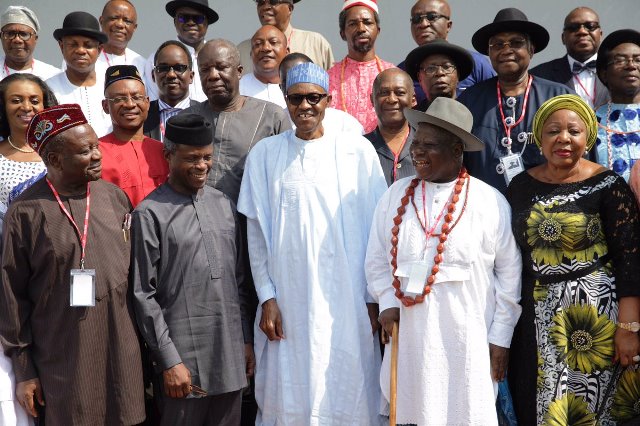
Stakeholders from the Niger Delta have presented 16 requests to President Muhammadu Buhari at a meeting they held behind closed doors with him at the Presidential Villa, Abuja.
The meeting which main agenda was how to bring the chaotic situation in the oil-rich region to a close,was also attended by Vice-President Yemi Osinbajo, some governors, ministers and other political appointees from the Niger Delta region.
Governors at the meeting include those of Akwa Ibom, Bayelsa, Delta and Imo States, as well as as the deputy governor of Rivers State; while serving ministers at the meeting include those of Interior, Justice, Transport, Budget and National Planning as well as Ministers of State for Health and Niger Delta Affairs.
The 16-point request was presented to the president on behalf of the delegation by the traditional ruler of Twon Brass, in Bayelsa State, Alfred Diete-Spiff.
The Pan-Niger Delta Forum, as the delegation described itself, demanded among other things: the allocation of oil blocks and awards of contracts to indigenes of the region; review of the amnesty programme; de-militarisation of communities in the region, and relocation of operational headquarters of oil companies to the region.
Buhari Calls For Peace
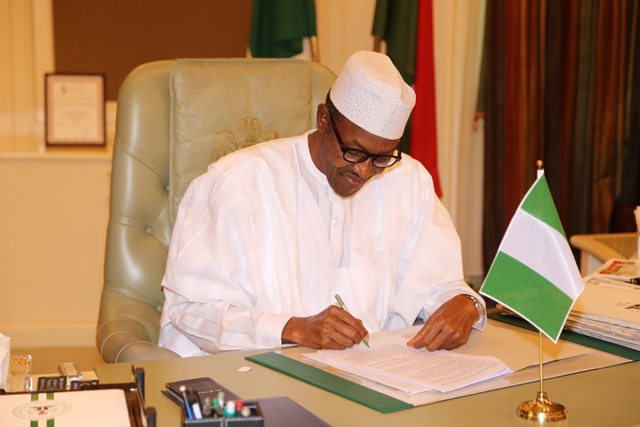
President Buhari assured the delegation that his administration is focused on its campaign promises of making the country safe, tackling corruption and making jobs available for the teeming population.
“We are determined to make life comfortable and affordable to all Nigerians. If anybody has a country to go to, let him go, we will stay here and salvage our country,” he said.
He however stressed that no appreciable progress would be possible if peace does not return to the Niger-Delta region.
The President said: “If we give peace a chance, investors will come here to invest. Nobody will invest in an insecure environment”.
“Please Your Excellencies, Your Majesties, Distinguished ladies and gentlemen; we all have our individual constituencies, let us try to pacify our constituencies.
“Let us first recover our country, secure the country and let us invite people who will invest.
“Let us create jobs for our people and let us be accountable to our people where we are sitting on treasuries, whether it is local government, state or the center.
“We should ensure that we rebuild this country. Nobody wants to fail. So, the only way out is, if people understand and believe that we are doing our best at all levels, then we will have some peace.
“But it they have reason to doubt our performance and sincerity, then we will have problem,” he said.
President Buhari pointed out that the service chiefs were also compiling their own report of the militancy situation.
He promised that “when I have these (service chiefs’) reports, including this one (just presented), we will revisit the situation to ensure that we succeed this time.”
Also present at the dialogue were the Service Chiefs, the Inspector-General of Police, Ibrahim Idris, and the Director-General of the Department of State Services, DSS, Lawal Daura.
Former governors, civil rights activists and community leaders from the Niger Delta region, including Obong Victor Attah, Chief Edwin Clark, Timi Alaibe, Florence Ita-Giwa, among others, were also at the meeting.
The Chairmen, Senate and House of Representatives committees on Upstream, Downstream as well as Niger Delta were also at the meeting.
A new report launched on Tuesday by the Family Planning 2020, FP2020, has ranked Nigeria among the worst countries in the delivery of family planning services. Nigeria is second to India in a global ranking on the number of women that die as a result of pregnancy.
The report used as baseline the target set at the 2012 London Summit on Family Planning where countries made a commitment to mobilise resources to enable 120 million women and girls use modern contraception by 2020 in 69 poorest countries, including Nigeria.
Despite significant global progress which has given more than 30 million additional women and girls access to modern contraction across the 69 FP2020 focus countries, Nigeria is still among the poor performing countries.
According to the report, there are more than 300 million women and girls using modern methods of contraceptives this year, a development that has averted 82 million unintended pregnancies, 25 million unsafe abortions and 124,000 maternal deaths.
Nigeria’s poor records of family planning have been attributed to the inability of the Nigerian Government to fulfil the pledge it made at the London Summit in 2012.
Nigeria made a commitment to increase its total funding for reproductive health commodities from $3 million to $11.3 million annually over four years, but it has so far released only about $3 million since 2012.
Chairman, Association for Advancing Family Planning, AAFP in Nigeria, Ejike Oji said the government has failed in its commitment to family planning as only about $3 million has been released so far by the federal government since 2012.
In Africa, according to the FP2020 Report, Eastern and Southern African countries have experienced the fastest growth in the use of modern methods and the steepest decline in unmet need, adding that for the first time, more than 30% of women are using a modern method of contraceptives in the regions.
The progress in eastern and southern African countries is in sharp contrast with Nigeria where only 2.7% of women of reproductive age are using a modern method of contraceptives whereas Nigeria committed at the London Summit to increase the percentage of women and couples using contraceptives by 2% each year to reach 36% by 2018.
Nigeria is in the group of poorest performing countries, such as Benin, Central Africa Republic, Chad, DR Congo, Eritrea, Gambia, Guinea, Mali, Mauritania, Niger, Somalia, South Sudan, and Sudan.
Due to the poor performance of these countries, the FP2020 fell short of reaching 19.2 million women and girls to be on the right track of achieving the 2020 target. Though the report noted that exciting progress has been achieved and more women and girls have been reached more than historical trends would predict.
Oji, a medical practitioner, said family planning could reduce the number of women that die as a result of pregnancy by up to 30%.
He lamented that within every three hours, 15 Nigerian women and girls will die due to pregnancy related causes, noting that about 70% of these deaths occur among women aged between 13 and 19 years.
He disclosed further that Nigeria currently has a maternal mortality ratio of 576 deaths out of every 100,000 live births. “This translates to about 40,000 women dying every year, 111 dying every day, or 5 people dying every hour,” he added.
FP2020 Report noted that Nigeria has only added 1,628,000 modern contraceptive users since 2012 which resulted in increased contraceptive prevalence rate to 14.7%, compared to 12.1% in 2012.
This little progress by Nigeria, according to FP 2020 Report, averted 1,450,000 unintended pregnancies and prevented 9,000 maternal deaths through the use of modern contraceptives in the past year.
The report stressed the need for Nigeria to accelerate progress on family planning services as the population of women of reproductive age grows by more than 1 million every year in the country.
The President of Association for Reproductive & Family Health, Oladapo Ladipo, a professor, called on Nigerians to push for the ban on child marriages as girls are too young and often have obstructed labours which contribute mainly to a large proportion of girls that die from pregnancy-related causes.
He said family planning revolves around three reasons which include health, economy and human rights, pointing out that family planning would reduce infant and maternal mortality as well as reduce poverty.
Ladipo said that family planning is central to achieving Sustainable Development Goals, SDGs, noting that women should have access to free family services.
The representative of Nigerian Urban Reproductive Health Initiative, Charity Ibeneme pointed out that family planning is not just about women and there are also family planning services for men.
She argued that Nigerian men should start using vasectomy to complement their spouses while emphasising that both Christianity and Islam support family planning.
Evidence from the Nigerian Demographic and Health Survey of 2013 indicates that Nigeria has not made a significant improvement in its uptake of family planning services over the last 10 years. The contraceptive prevalence rate has remained the same at 10% for the past 10 years with a marked difference between the urban and rural areas which are 17% and 6% respectively.
The use of the modern method of conception is particularly very low in the northern part of the country with less than 3% of women in the North East using contraceptives while in the South West, as much as 25% of women of reproductive age make use of modern contraceptives.
The FP2020 Report urged Nigeria to change social norms around family planning so that the topic is less taboo and also improve counselling and education to increase demand for contraceptives.
Nigeria was also admonished to ensure women can exercise informed choice as well as establish the infrastructure and health care providers to deliver quality family planning services.
The report noted that the low rate of contraceptive use by Nigerian women reflected high fertility desires and limited access to information about family planning, thereby making it difficult for Nigeria to accelerate progress.
Fulani leaders and traditional leaders in Kaduna state have signed a peace deal which is aimed at bringing to an end the series of clashes that have brought about loss of several lives and destruction of valuable property.
The peace deal is as a result of a meeting convened by the General Officer Commanding, 1 Division of the Nigerian Army, Adeniyi Oyebade, a Major General.
The meeting was attended by traditional rulers and leaders of the Fulani community, as well as heads of other security agencies in the state.
Since the beginning of 2016, about ten communities in Jemaa and Sanga local government areas of Kaduna state have witnessed increased attacks by suspected Fulani herdsmen, leading to the several deaths and destruction of houses and farmlands.
After the army general had informed the gathering of the purpose of the meeting, the leaders made their presentations and the meeting went into a closed-door session.
About five hours later, journalists were called into the room where the GOC read out their resolutions.
According to Oyebade, it was agreed at the meeting that a peace and reconciliation committee should be set-up to resolve all pending issues.
Banning of child herdsmen from grazing with cattle on farmlands and major roads, as well as prohibition of carrying of fire arms by herdsmen, were agreed upon.
The army GOC appealed to both parties to sheathe their swords for the interest of peace, warning that any party or individual that is found going against the peace deal would be prosecuted according to the law.
He also reassured the citizens of the state that the army, together with the other security agencies, would continue to discharge their responsibilities of protecting lives and property in the area.
After the meeting, National Secretary of the Miyetti Allah Cattle Breeders Association of Nigeria, Baba Othman, assured that his people would abide by the resolution.
He told journalists that a committee would be set up by all the parties for full implementation of the resolutions.
Kaduna State has, over the years, witnessed series of ethno-religious crises that have ravaged many communities.
In late October this year, three villages – Godogodo, Akwa’a and Anguwan Anjo – were attacked by armed men suspected to be Fulani herdsmen and over 60 people were killed in the attack.
About four days ago seven people including a community leader were murdered in cold blood with no trace of their killers.
The appeal court has suspended ruling on the leadership tussle case that is rocking the Peoples Democratic Party, PDP.
The appellate court had fixed today to hear the case involving the two factions of the PDP led by Ali Modu-Sheriff and Ahmed Makarfi respectively.
Also scheduled for hearing today was the issue of the authentic PDP candidate for the Ondo State governorship election which has been scheduled to hold on November 26.
Court officials told journalists that the ruling was suspended due to a petition against the judges accusing them of bias; and no new date has been fixed for the ruling.
The three-man panel of judges led by Jumai Sankey said that the petition was filed by Biyi Poroye, a member of the PDP faction led by the Modu-Sheriff faction.
Sankey said the petition was forwarded to the President of the Court of Appeal, Zainab Bulkachuwa, alleging that the court, under her leadership, was prone to being compromised for financial gains.
Subsequently, the three judges on the panel withdrew their participation in the case, pending the determination of the petition by the National Judicial Council, NJC.
She said her panel would return the case files to the President of the Appeal Court.
Modu-Sheriff, a one-time Borno State Governor and Makarfi, former governor of Kaduna State, have been locked in a series of legal battle over who is the authentic leader of the opposition PDP.
The Makarfi faction had approached the Appeal Court to set aside the judgement of Justice Okon Abang of the Federal High Court, Abuja which upheld Modu-Sheriff as the authentic PDP national chairman.
Justice Abang also directed the Independent National Electoral Commission, INEC, to recognize Jimoh Ibrahim, candidate of the Modu-Sheriff faction, as the authentic PDP candidate for the Ondo governorship election.
Before the judgement, INEC had already recognized Eyitayo Jegede, who won the primary election organized by the Makarfi-led faction.
Jegede then approached the Abuja Federal High Court, in keeping with the rules of the Federal High Court, to ask for permission to appeal the judgement, but Justice Abang denied the application, saying that Jegede has no local standi to appeal the ruling, and once again reaffirmed Jimoh Ibrahim as the PDP candidate in Ondo.
Consequently, INEC removed Jegede’s name from the Ondo governorship candidates’ list and replaced it with Ibrahim.
Jegede, as well as the Makarfi-led PDP faction then appealed to the Appeal Court asking that justice Abang’s judgement be set aside.
The appellate court fixed today (Tuesday) to hear the matter but the hearing has now been suspended.
With just about three weeks to the Ondo Governorship election, its difficult to predict what the next line of action by Jegede and his faction would be.
Especially as it appears the Ondo State chapter of the All Progressives Congress, APC, have closed ranks and agred to support Rotimi Akeredolu as its flag bearer.
Akeredolu visited president Buhari on Monday where he reportedly assured the president that he has secured the endorsement of party Chieftain, Bola Tinubu.
The former Lagos State Governor had initially supported Olusegun Abraham who lost out in the primaries to Akeredolu.