Home Blog Page 316

FG signs $328.8 million deal with Chinese firm to boost power supply

THE federal government has signed a $328.8 million contract with Chinese firm, China Machinery Engineering Corporation (CMEC), to rehabilitate and expand the electricity transmission network under Phase 1 of the Presidential Power Initiative (PPI).

The agreement was reportedly sealed on Wednesday, April 9.

It will cover the aspects of engineering, procurement, construction, and financing for the development of 330kV and 132kV transmission lines across the country.

It aims to improve grid reliability and reduce stranded generation capacity.

At the signing of the contract signing ceremony in Abuja, the Minister of Power, Adebayo Adelabu, said the agreement would cover 544 kilometres of transmission lines with a load capacity of 7,140 megawatts, spanning both brownfield and greenfield sites.

“The Federal Government and China Machinery Engineering Corporation (CMEC) on Wednesday signed a contract agreement worth 328.8 million dollars aimed at improving power supply across the country.”

He said the projects would act as the main arteries for delivering increased power from midstream transmission directly to homes, businesses, and industries.

Adelabu described the agreement as a vital step toward resolving persistent bottlenecks in Nigeria’s power value chain.

He stressed that enhancing the transmission network is essential to ensure that generated electricity is delivered efficiently to end-users.

He added that the signing of the agreement demonstrated the federal government’s commitment, under the leadership of President Bola Tinubu, to providing stable and reliable electricity to Nigerians.

On his part, the vice president of SINOMACH, Li Xiaoyu, commented that the project would play a significant role in improving electricity delivery across the country.

The ICIR reports that the PPI aims to modernise and expand Nigeria’s electricity grid through a partnership with Siemens Energy, which comes to increase electricity supply and boost economic growth, managed by the FGN Power Company.

However, Nigeria’s electricity supply has been in a sorry state for the past years.

Last year, the national grid collapsed about 11, raising concerns over grid stability and reliance on a centralised grid system.

Each time the grid collapses, it affects households, businesses, and critical sectors like healthcare, where a consistent power supply is essential.

Fresh Israeli airstrikes kill 26 in Gaza as ceasefire talks hit deadlock

AN Israeli airstrike has reortedly killed at least 26 Palestinians, including children, in a house in Shejaia in Gaza City.

Local health authorities revealed this on Wednesday, April 9, noting that dozens were injured in an airstrike that struck a multi-story residential building in eastern Gaza City.

Medics reported that many people are still believed to be missing and trapped beneath the rubble, as the strike also damaged several nearby homes.

On March 18, Israel resumed heavy airstrikes on the Gaza Strip, effectively ending a two-month ceasefire with Hamas. 

On March 31, Israel proposed a prolonged truce in Gaza in exchange for the release of its remaining citizens held as hostages.

Israeli officials who spoke on the condition of anonymity revealed that the proposal included the return of half of the 24 hostages still believed to be alive in Gaza, nearly 18 months after they were taken by Hamas-led gunmen.

Israel has said that Hamas military and governmental infrastructure must be completely dismantled and insisted that the group, which has ruled Gaza since 2007, would have no role in the enclave’s future governance.

However, Hamas has expressed willingness to step aside for another Palestinian administration but refuses to disarm and insists on having a say in selecting the next government.

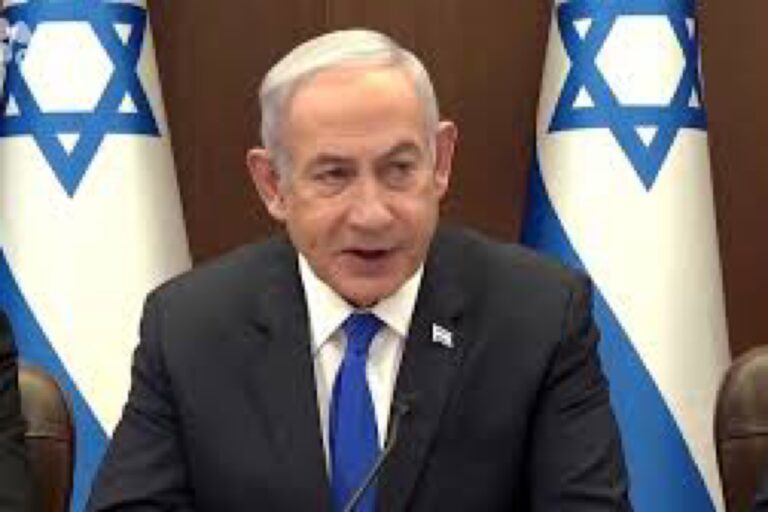
Israeli Prime Minister,, Benjamin Netanyahu, said on March 30, that his nation would intensify pressure on Hamas while continuing negotiations “under fire.” 

He said sustained military pressure was the most effective way to secure the return of the hostages.

However, a member of Hamas’s political bureau, told AFP on Tuesday April 8, that it was “necessary to reach a ceasefire” in Gaza.

He added that “communication with the mediators is still ongoing” but that “so far, there are no new proposals.”

Badran said Hamas “is open to all ideas that would lead to a ceasefire and stop the genocide enacted against our Palestinian people”.

The ICIR reports that on Monday, United States President Donald Trump and Israeli Prime Minister announced that fresh negotiations are underway to secure the release of more hostages held in Gaza.

Out of the 251 hostages taken during Hamas’s attack on Israel, 58 remain in captivity in Gaza, including 34 who the Israeli military says have died.

The health ministry in the Hamas-run territory said on Wednesday that at least 1,482 Palestinians have been killed in the renewed Israeli operations, taking the overall death toll since the start of the war to 50,846.

Hamas’s October 2023 attack that triggered the war resulted in the deaths of 1,218 people on the Israeli side, mostly civilians, according to an AFP tally based on Israeli official figures.

Trump mulls ‘tailored deals’ with trading partners, as tariff kicks off

UNITED States President, Donald Trump, has announced that his administration was working on “tailored deals” with trading partners, emphasising that allies such as Japan and South Korea would be given priority.

The ‘tailored deals’ come as his administration’s tariffs on several countries took effect on Wednesday, April 8, including massive 104 per cent duties on Chinese goods.

The move triggered fresh turmoil in global markets, and escalated the ongoing international trade war, fueling recession fears, and erasing trillions of dollars from the market value of major companies.

The ICIR reported that on April 2, Trump announced a 14 per cent tariff on Nigerian exports to the United States in response to Nigeria’s imposition of a 27 per cent tariff on United States exports, an imbalance that Trump claims has long disadvantaged American businesses and consumers.

He also announced the beginning of what he termed a new era of “fair trade,” vowing to “supercharge America’s industrial base” and compel foreign markets long accused of blocking United States goods to open up.

Along with the 14 per cent tariff on Nigerian exports, President Trump also introduced a broader trade policy that includes a standard 10 per cent tariff on all US imports. 

According to the policy, the new tariffs, effective immediately, apply to over 50 countries, including major trade partners such as China, the European Union, India, and Japan, along with developing economies across Asia, Africa, and Latin America.

According to Reuters, since Trump announced the new tariffs last Wednesday, the stock market index has experienced its steepest decline since the index was created in the 1950s, edging closer to a bear market, defined as a drop of 20 per cent from its recent peak.

Even global benchmark bonds, typically seen as safe-haven assets, were swept up in Wednesday’s market turmoil, signaling a troubling wave of forced selling that has investors on high alert.

However, Trump has downplayed the market turmoil and sent mixed messages to investors about the longevity of the tariffs, calling them “permanent,” while claiming they’re successfully pressuring other world leaders to seek negotiations.

“We have a lot of countries coming in that want to make deals,” he said at a White House event on Tuesday afternoon. He said at a later event that he expected China to pursue an agreement as well.

China,  Washington’s top economic rival but and a major trading partner, is the hardest hit, with tariffs imposed on its products since Trump returned to the White House now reaching a staggering 104 per cent.

Trump said Tuesday his government was working on “tailored deals” with trading partners, with the White House saying it would prioritise allies like Japan and South Korea.

As a result, Trump’s administration has scheduled talks with South Korea and Japan, and Italian Prime Minister Giorgia Meloni is due to visit next week.

In response to the massive 104 per cent duties on Chinese goods, on Wednesday, China pledged to take firm and effective action to protect its rights and interests.

China has vowed to resist what it considers an act of blackmail. “The U.S. continues to abuse tariffs to pressure China, We firmly oppose this and will never accept this kind of bullying,” Chinese Foreign Ministry spokesperson Lin Jian told a news conference.

Dying to mqke a deal

Trump told a dinner with fellow Republicans on Tuesday night that countries were “dying” to make a deal.

“I’m telling you, these countries are calling us up kissing my ass,” he said.

But Beijing has shown no signs of standing down, vowing to fight a trade war “to the end” and promising counter measures to defend its interests.

China’s retaliatory tariffs of 34 per cent on US goods are due to enter into force at 12:01 am local time on Thursday (1601 GMT Wednesday).

The ICIR reported the existing levies imposed in February and March, which take the cumulative tariff increase for Chinese goods during Trump’s second presidency to 104 percent.

Trump has insisted the ball was in China’s court, saying Beijing “wants to make a deal, badly, but they don’t know how to get it started.”


Ibas defies court order, appoints administrators for 23 Rivers LGAs

THE Rivers State Sole Administrator, Ibok-Ete Ibas, a retired Vice Admiral, has approved the appointment of administrators for the 23 Local Government Areas (LGAs) of the state.

The action came after a Federal High Court in Port Harcourt blocked Ibas from appointing administrators to manage the 23 local government areas, citing a breach of the constitution.

The court ruling, delivered by Adam Muhammed on Tuesday, April 8, 2025, in suit No. FHC/PH/CS/46/2025 came after the PILEX Centre for Civic Education Initiative, led by Courage Msirimovu, filed a lawsuit against Ibas.

Despite the court ruling, Ibas announced appointments of administrators for the local governments.

The Sole Administrator also endorsed the constitution of some boards of agencies, commissions, and parastatals, which he had earlier suspended.

The appointments were announced by Secretary to the State Government Ibibia Worika, a professor, in a government announcement on Wednesday, April 9.

The ICIR reported that President Bola Tinubu declared a state of emergency in Rivers State in March 2025 due to prolonged political instability and appointed Ibas as the Sole Administrator.

The move came after months of tensions between the embattled governor, Siminalayi Fubara, and his predecessor, Nyesom Wike, who is now the Minister of the Federal Capital Territory (FCT).

Tinubu, in a nationwide broadcast on Tuesday, March 18, announced that he had forwarded the decision to the National Assembly by constitutional provisions.

Tinubu cited prolonged political instability in the state as the reason for his decision, vowing to restore governance, peace, and security. 

In approving the emergency rule, the Senate joined the House of Representatives, which earlier endorsed the decision through a voice vote on Thursday, March 20.

Abuja school ordered to pay N100m for negligence over death of student

0

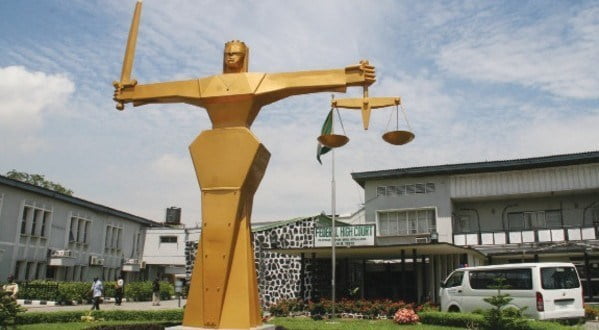
A HIGH Court of the Federal Capital Territory (FCT), sitting in Maitama, Abujesday, April 8, ordered an Abuja-based secondary school, Louisville Girls Secondary School, Gwagwalada, to pay the sum of N100 million in general damages for negligence in the death of one of its students, Kamzie Ikpeatusim.

According to Premium Times, the court, headed by Sylvanus Oriji, accused the school of negligence, which led to the death of Kamzie.

The judge also awarded the sum of N300,000 against the school as the cost of the action.

The judgment was delivered in the suit, marked CV/1738/18, filed by the father of the deceased pupil, Ifeanyi Ikpeatusim, against Louisville Girls Secondary School, Gwagwalada.

Ikpeatusim had sued the school, claiming their negligence caused his 9-year-old daughter’s death. The deceased girl, Kamzie, became severely ill just weeks after starting as a boarding student and passed away in October 2017.

Delivering his judgment, the trial judge, Oriji, held that the school’s negligence of duty and lack of care was indeed responsible for the death of Kamzie.

According to the judge, evidence available before the court showed that the deceased was not given adequate attention when she complained of illness.

While awarding costs against the school, Oriji admitted that no amount of money could bring the deceased back to life.

The judge ordered that 10 per cent interest be applied to the judgment sum from April 8 until full payment is made.

Oriji lauded the school management for improvements made to its sick bay following the unfortunate death of Kamzie, stressing that the introduction of doctors attending to students twice a day is praiseworthy.

On a relief sought by the bereaved father that a school structure be named in honour of his late daughter, the judge declined and instead suggested that improvements to the school’s sick bay were sufficient tribute to her memory.


How to verify social media profiles, pages

1

FAKE social media pages pose a serious threat to all users as some impersonate individuals, businesses, and organisations to spread scams, misinformation, and identity theft.

These fraudulent accounts manipulate users into trusting false information, stealing personal data, or engaging with deceptive schemes.

Without verification, individuals risk falling for phishing attacks, financial fraud, or believing false information that can influence decisions from health choices to voting. Fake accounts often impersonate trusted figures, making it easy to manipulate unsuspecting users.

Learning to verify social media pages protects personal data, prevents financial losses, and ensures access to accurate information. It also helps stop the spread of harmful content, safeguarding both individuals and online communities. By staying informed, users can confidently engage with authentic sources on social media and avoid digital traps.

Want to know how to verify the authenticity of social media profiles and pages, you will find the steps below useful:

1. Check the username/handle

Fake profiles and pages often mimic real ones by making slight modifications to usernames, such as adding underscores, extra numbers, or special characters (e.g., “@JohnDoe_Official” instead of “@JohnDoeOfficial” or “@CNNNews1” instead of “@CNN”).

These small changes can be misleading, making it easy for users to mistake a fake account for the real one. Always check for spelling errors and inconsistencies, and compare the account with the official website of the person or organisation to confirm if they have link to the page.

2. Look for verification badges

Different social media platforms use verification badges to indicate authentic accounts of public figures, businesses, and government organisations.

Social Media Verification

However, it’s important to note that verification policies vary across platforms, and on some, verification can be purchased, making it less reliable as a sole indicator of authenticity.

Below are the verification types for major social media platforms:

Facebook, Instagram, WhatsApp (Meta)

  • Blue Tick: Granted to public figures, celebrities, journalists, and brands to confirm authenticity.

TikTok Social Media Verification

  • Gray Tick: This was previously used for businesses but is no longer in use, as Meta now applies the blue tick to both individuals and businesses.
  • Meta Verified: Which is subscription-based is available to individuals and businesses who apply for verification by submitting an official ID.

X (formerly Twitter)

  • Blue Tick: Previously used for notable figures but is now available via paid subscriptions (X Premium) to all users. Some accounts still have legacy verification.
  • Gold Tick: Given to verified businesses.
  • Gray Tick: Reserved for verified government institutions, officials, and multilateral organisations.

TikTok

  • Blue Tick: Awarded to notable public figures, creators, and brands after an internal verification process to ensure authenticity. Unlike X, verification on TikTok cannot be purchased.

On platforms like X (Twitter), verification can be purchased through subscriptions, and thus having the blue tick does not always confirm authenticity. Always verify an account by checking additional details, such as usernames, posting history, and official websites of any individual, business or institution you’re researching about.

3. Review profile information

  • Bio and about section: Check for spelling errors, vague descriptions, or exaggerated claims. Authentic pages typically provide clear and professional details about their identity, purpose, or affiliations.
  • Account creation date: Fake accounts and pages are often recently created and may lack a history of consistent activity. A legitimate profile usually has a longer track record with regular updates or posts.
  • Contact information: Genuine pages often include official websites, verified email addresses, or other credible contact details. Be cautious of pages that lack such information or provide suspicious links.

4. Examine profile picture and media

Using Google Reverse Image Search or TinEye to verify whether a profile picture has been stolen or used elsewhere. Fake accounts often use stock images, AI-generated photos, or pictures of real individuals without their consent. Sometimes, they use photos of dead persons to create new social media profile or pages.

If the image is linked to multiple unrelated sources or appears on stock photo websites, the account may be fake. Also, check to ensure that the image has not been generated online using any of image generator such as this.

5. Analyse posting history and engagement

Authentic social media accounts typically maintain a consistent posting history, while fake pages sometimes post excessively within a short period to appear active or have very few posts overall.

Another red flag is the comment section as fraudulent pages often disable comments to avoid scrutiny or display spam-like engagement with repetitive, generic, or bot-generated responses.

Additionally, engagement patterns can reveal inconsistencies; a legitimate page usually has a balanced ratio of followers to interactions. If an account has thousands of followers but very little engagement, it may have purchased fake followers. Similarly, a sudden spike in activity from suspicious or bot-like accounts could indicate inauthentic behaviour.

6. Cross-check with official sources

To verify the authenticity of a social media account, start by conducting a Google search using the account name along with keywords like “official account” to see if reputable sources or the organisation itself recognise it. Next, visit the official website of the individual, brand, or organisation to check if they have links to their verified social media pages there, as legitimate entities often provide direct links.

Additionally, cross-check with reliable fact-checking organisations such as The FactCheckHub to determine if the social media account has been flagged for spreading misinformation or impersonation. These steps help confirm whether an account is genuine or potentially deceptive.

7. Use third-party tools

You may use websites like Botometer.org to analyse X (Twitter) accounts to assess the likelihood of them being bots by examining their activity patterns, engagement behaviour, and posting frequency. This tool helps identify inauthentic accounts that may be part of misinformation campaigns or spam networks.

If a social media profile includes a website link, performing a Whois Lookup can provide valuable insights into its domain ownership. This tool reveals details such as the registration date, ownership information (if not private), and the organisation behind the website. Checking these details can help verify whether the linked site is legitimate or associated with suspicious activities.

If you come across a Facebook page claiming to be the Central Bank of Nigeria (CBN) offering instant loans, several red flags can indicate it’s a scam.

The page may lack a verification badge, use a misleading username like “@CBN_loanFree2024” instead of the official handle and have an “About” section filled with grammatical errors and no official contact information.

Additionally, its posts may be only a few days old yet have thousands of fake likes. A quick Google search could reveal warnings from CBN about fraudulent pages impersonating the institution.

In conclusion, to avoid falling for such scams, always cross-check usernames and website links before trusting a social media page or profile. Avoid engaging with suspicious accounts; don’t like, comment, or share their content until you’re certain of their authenticity. Instead, report fake pages to social media platforms to help prevent misinformation, fraud and other forms of scam from spreading or harming truth.

This is republished from the FactCheckhub

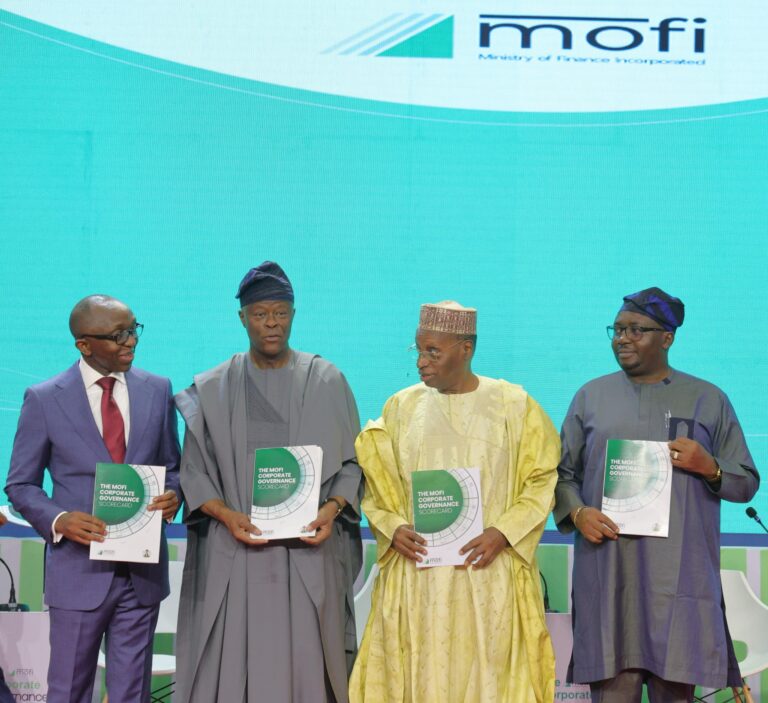
FG wants corporate governance incorporated in government business

THE Ministry of Finance Incorporated (MOFI) has stated that government institutions that prioritise an efficient corporate governance structure are supporting the Federal Government’s quest to attract private capital for Nigeria’s infrastructural development.

Managing Director of MOFI, Armstrong Takang, said this at the official launch of the Corporate Governance Scorecard in Abuja.

The two day event, held on April 7 and 8 themed ‘Ensuring Value Creation in State-Owned Enterprises Through Better Corporate Governance,’ was organised in partnership with the World Bank and is part of the Nigerian government’s efforts to reposition federal government-owned enterprises and government-linked companies as key instruments in driving inclusive economic growth and national development.

Established in 1959 and recently restructured, MOFI serves as the asset manager for the federal government. Its renewed mandate is centred on the enumeration, professionalisation, and optimisation of the federal government’s commercial assets.

MOFI is tasked with transforming underperforming assets into high-performing entities, attracting investments, and maximising returns to the Nigerian public.

According to Takang, a corporate governance culture in public institutions will attract private capital into Nigeria’s public sector financing.

He explained further that the initiative aims to improve transparency, accountability, and efficiency in the management of public resources.

Takang added that the mechanism would focus on evaluating the performance of State-Owned Enterprises (SOEs), identifying areas for improvement, and implementing reforms to boost productivity.

“State-owned enterprises form a critical component of the national economic framework. They wield considerable influence across key sectors, including energy, infrastructure, telecommunications, and financial services,” he noted.

The forum brought together senior government officials, industry leaders, development partners, corporate governance experts, and executives from federal government-owned enterprises and government-linked companies across Nigeria and West Africa.

Speaking at the event, Shamsudeen Usman, a former Minister of National Planning who now heads the board of MOFI, said the government wants its actions to reflect corporate governance efficiency.

“We want our action to speak for us henceforth so that we can attract private capital for government enterprises through our transparency,” Usman said.

He added that MOFI is prepared to ensure performance-based corporate governance in the public sector, noting that agencies that prioritise this should be rewarded.

The former minister further declared that the code of ethics and professionalism in corporate governance is henceforth the watchword for government enterprises.

Recognising the importance of ethics and professionalism in corporate governance, Usman noted that MOFI has embarked on strategic reforms to reposition SOEs for value creation.

“MOFI is tasked with serving as an active asset manager for the Federal Government, ensuring the professionalisation, optimisation, and efficient administration of government-owned enterprises.

“With the MOFI corporate governance scorecard initiative, the government is putting in place a mechanism to assess, monitor, and enhance the performance of its SOEs,” he said.

In delivering one of its key duties of managing government enterprises, The ICIR reported that MOFI has officially restructured and taken control of the government’s 40 per cent equity holding in the 11 privatised successor electricity distribution companies (DISCos).

Notably, MOFI is the investment and enterprise vehicle of the Nigerian government domiciled with the Federal Ministry of Finance.

Before now, the Bureau of Public Enterprise (BPE) has maintained such control of the government’s 40 per cent shares in the 11 Discos.

Stop paying ransom to bandits, kidnappers, Ribadu tells Nigerians

0

THE National Security Adviser (NSA), Nuhu Ribadu, has asked  Nigerians to stop paying ransom to bandits and kidnappers.

Ribadu appealed on Tuesday, April 8, while handing over 60 kidnapped victims rescued from captivity in Zangon Kataf, Southern Kaduna, to their families.

According to him, the rescued victims proved that security agencies can save abducted people without ransom payments.

“Today, we are releasing 60, and hopefully that will be the final one from that part of Nigeria. Last week, we did about 50.

“I want to once again use the opportunity to thank our armed forces, our security forces, and indeed, the leadership of President Bola Tinubu, who work daily to restore order, security, and stability.

“We are getting freedom back for our people. We will continue to do so. We will not relent, and we will not stop,” NAN quoted him to have saying.

Ribadu stressed that the victims comprised 35 males and 25 females.

While noting that the security agencies are working to arrest the perpetrators, he asked Nigerians to stop paying ransom to the kidnappers.

“I also want to use this opportunity to talk to our people to please, stop giving money to these people. It is one of the worst things happening.

“The families of many of these people, as you see them, gave money to their abductors, but it did not lead to their release. It is the security forces that rescued them.

“I want to make a very strong appeal to all, it is understandable that when your person is in captivity, you will do whatever it takes to get him or her back. But this is counterproductive,” he added. 

Over the years, Nigeria has faced kidnappings and banditry attacks, particularly in the northwestern and northeastern parts of Nigeria.

These incidents have led many families to resort to paying ransom to secure the release of their loved ones.

In December 2024, The ICIR reported how the National Bureau of Statistics (NBS) data showed that between May 2023 and April 2024, Nigerians paid approximately N2.23 trillion in ransoms to kidnappers.  

The NBS survey further revealed that 65 per cent of households affected by kidnapping incidents resorted to paying ransom, with an average payment of N2.67 million per incident.

The northwest region topped the list with 14.4 million reported cases, followed by the northcentral region with 8.8 million incidents.

 Meanwhile, the South-East region recorded the lowest number of crimes, with 6.18 million incidents.

The report showed that crime disproportionately affected rural areas, with 26.53 million incidents occurring in rural households compared to 25.36 million in urban areas.

Plateau killings genocidal, sponsored, Governor Muftwang alleges

0

PLATEAU State Governor, Caleb Muftwang, has described the recent wave of violence that has claimed over 50 lives and displaced thousands as a genocidal attack, alleging that the assault on the region is sponsored and deliberate.

The ICIR reported that attacks, which began on March 28, 2025, escalated with a series of coordinated invasion of villages across Bokkos Local Government Area of the North-Central state.

On Wednesday, April 2 the attack escalated in several communities of the LGA, displacing many and leaving a trail of destruction behind in Ruwi, Hurti, Tadai, Manguna, and Dafo communities.

The death toll from the recent attacks reportedly rose to 52, according to local authorities on April 4.

This followed the recovery of 40 more bodies on Wednesday and Thursday night while the search and rescue team kept combing the bushes for missing persons.

The governor made the remarks during Tuesday night’s edition of Channels Television’s Politics Today, stressing that the attacks in were sponsored and aimed at wiping out entire communities.

Muftwang, who expressed outrage over the continued killings, attributed the attacks to unidentified terrorist groups.

“I can tell you in all honesty that I cannot find any explanation other than genocide sponsored by terrorists. The question is, who are the persons behind the organisers of this terrorism? This is what the security agencies must help us to unravel,” the governor said.

“We must come to the point where we know the sponsors because it is not just the work of ordinary people. This is being sponsored from somewhere, and I am sure that in the coming days, the security agencies will work together – not at cross purposes but in unison –  to be able to bring out the requisite intelligence that will help us to put this matter behind us.”

The chairman of the Bokkos Cultural Development Council (BCDC), Farmasum Fuddang, on Wednesday April 2, accused suspected Fulani herders of carrying out the assaults.

Fuddang, said that more than 50 villages in Bokkos have been attacked in the past six months. 

Muftwang, decried that bandits have taken over 64 communities in his state.

“These communities that have been recently attacked were part of those that were invaded in 2023 but survived. The Ruwi community that was first attacked lost about 17 people in 2023 but they bounced back to show you the resilience of the people,” the governor said.

The ICIR reported that President Bola Tinubu pledged to bring those responsible for the gruesome attacks to justice, vowing they would face the full weight of the law.

In a statement on Saturday, April 5, Tinubu described the violence as “unacceptable” and directed security agencies to hunt down the perpetrators.

He commiserated with Governor Mutfwang and the people of Plateau State, assuring them of his support in ending the spate of ‘wanton bloodletting on the Plateau.

Meanwhile, former Vice President Atiku Abubakar and others blamed President Bola Tinubu’s administration for the deteriorating security situation in the country.

Atiku, reacting to the tragedy, said the persistent loss of lives across Nigeria is a direct consequence of the government’s failed security architecture, which he described as “an endemic nationwide phenomenon.”

South Korea heads for presidential polls June 3 after ex- leader ouster

THE SOUTH Korean government has announced readiness to hold its presidential election on June 3, following the removal of former leader Yoon Suk Yeol from office after a controversial declaration of martial law.

The country’s acting President, who is the Prime Minister, Han Duck-soo, announced this on Tuesday, adding that it would be declared a temporary public holiday to facilitate voting.

The ICIR reports that the democratic nation has effectively been without leadership since December 2024, when former President Yoon Suk Yeol tried to undermine civilian authority but was swiftly impeached by lawmakers and suspended from office.

Yeol’s suspension resulted in Prime Minister Han Duck-soo stepping in as acting president over the past few months.

The country’s Constitutional Court upheld his impeachment last week, Friday, April 4, officially removing him from office and prompting new elections, which are required to take place within 60 days.

In his latest announcement, Duck-soo said on Tuesday that the chosen date considers “the need to ensure smooth election operations and provide adequate time for political parties to prepare.”.

Duck-soo urged government ministries and the National Election Commission to “make thorough preparations to deliver an election that is fairer, more transparent than ever, and capable of earning the people’s trust.”

The ICIR reports that hat the winner of the election will be sworn in the very next day, unlike in other climes, where the president-elect usually has a two-month transition period.

Yoon’s Labour Minister, Kim Moon-soo, is among the few contenders who have expressed interest in running, noting that he resigned from his position on Tuesday to launch his campaign.

Although not currently an official member of Yoon’s People Power Party (PPP), Kim has been outperforming other conservative candidates in recent polls.

“I tendered my resignation and decided to run because the people want it, people I know want it, and I feel a sense of responsibility to solve national difficulties,” Kim told reporters.

Economic conditions during a “severe national crisis” are hurting people’s livelihoods, he said.

“I thought that all politicians and people should unite to overcome the crisis and work together to help the country develop further,” Kim said.

PPP lawmaker and the first in the party to support Yoon’s impeachment, Ahn Cheol-soo, also announced his candidacy on Tuesday, claiming he is “a cleaner candidate than anyone else.”

He also pledged to drive new economic growth by investing in areas like artificial intelligence, aiming to counter Trump’s trade policies.

Recall that Ahn contested the last three presidential elections, securing over 21 per cent of the popular vote in 2017, but withdrew and endorsed other candidates in the two subsequent elections. 

Kim and Ahn will enter a highly competitive field of conservative candidates seeking to overcome their party’s second impeachment in consecutive presidencies.