Home Blog Page 323

Kidnappers release former NYSC DG Tsiga after 8 weeks

0

FORMER Director-General of the National Youth Service Corps (NYSC), Maharazu Tsiga, has been released by his abductors after spending eight weeks in captivity.

A family member, Suleiman Tsiga, confirmed his release to the News Agency of Nigeria (NAN) on Wednesday, April 2, in Katsina.

According to him, the retired army Brigadier-General is in good condition but is receiving medical care at an undisclosed location.

Tsiga was abducted on February 6, 2024, from his residence in Tsiga, Bakori Local Government Area of Katsina State, alongside several other residents. 

The gunmen initially demanded a ransom of N250 million for his release, which was later reduced to N50 million after negotiation, according to reports.

However, it remains unclear whether any ransom was paid before his freedom was secured.

Backstory

The abduction occurred during a late-night raid in which over 100 gunmen stormed Tsiga town. The assailants broke into homes, seizing residents, including the home of the retired Brigadier-General. 

It was reported that after surrounding his house, the attackers forced their way inside, prompting Tsiga to confront them before he was taken.

The armed men also carried out simultaneous attacks on neighbouring communities in the Kankara Local Government Area. During the raid, two residents were injured, while one of the attackers was mistakenly shot by his group.

Following the abduction, the Katsina State Police Command spokesperson, Abubakar Sadiq, stated that officers were deployed to the scene but arrived after the gunmen had already fled with their hostages.

“Unfortunately, before the arrival of the operatives, the hoodlums had already succeeded in their mission”, Saidiq explained.

The ICIR reports that there has been series of kidnap attempts and rescue missions by the security forces in Katsina.

In one of its most recent publications, The ICIR reported that security forces, comprising the Police and Army, rescued four kidnap victims in Dandume Local Government of Katsina State.

On December 8, 2024, the command said it rescued about 20 victims in two kidnap attempts by armed bandits in the state on Saturday, December 7.

The incidents took place in Jibia and Faskari Local Government Areas (LGAs), the command posted on its X handle on Sunday, December 8.

The first incident occurred on December 7, 2024, at about 1900 hours, at Kwanar Makera along the Katsina–Magamar Jibia road, Jibia LGA.

According to the police Public Relations Officer, Abubakar Sadiq Aliyu, a group of bandits, armed with dangerous weapons, AK-47 rifles, opened fire on a moving vehicle.

Trump imposes 14% tariff on Nigerian exports to US

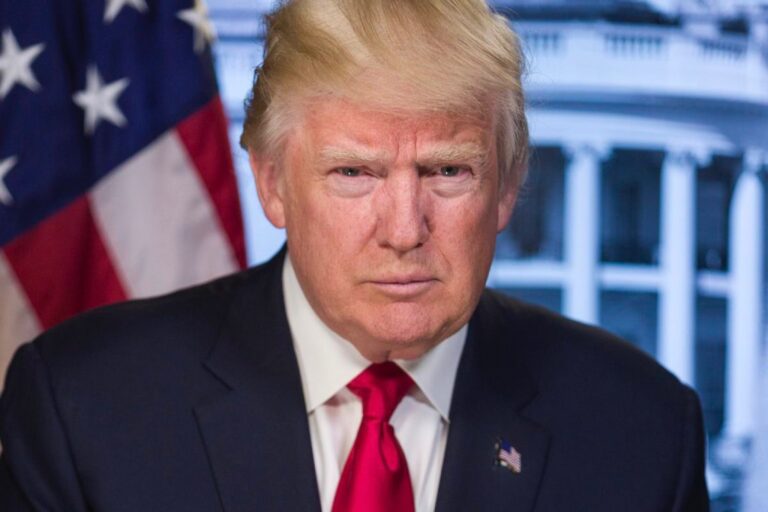
CITING trade disparity, United States President Donald Trump has announced that exports from Nigeria to the United States will now be subject to a 14 per cent tariff.

Trump made the announcement on Wednesday evening, April 2, during a ‘Make America Wealthy Again’ event at the Rose Garden, presenting it as part of a broader strategy to rebalance global trade and tackle perceived unfair trade practices.

The Trump administration remarked that Nigeria imposes a 27 per cent tariff on US exports, a disparity the US notes has long harmed American businesses and consumers. 

Also in his speech, Trump portrayed the tariff as part of a broader effort to safeguard American industries and ensure that foreign nations adhere to “fair” trade rules. 

He also announced the beginning of what he termed a new era of “fair trade,” vowing to “supercharge America’s industrial base” and compel foreign markets long accused of blocking United States goods to open up.

“This is one of the most important days in American history,” Trump said. “We will supercharge our domestic industrial base. We will prise open foreign markets and break down foreign trade barriers, and ultimately, more production at home will mean stronger competition and lower prices for consumers.

“This will be, indeed, the golden age of Americans coming back. We’re going to come back very strongly,” he stated.

Along with the 14 per cent tariff on Nigerian exports, President Trump also introduced a broader trade policy that includes a standard 10 per cent tariff on all US imports. 

According to the policy, the new tariffs, effective immediately, apply to over 50 countries, including major trade partners such as China, the European Union, India, and Japan, along with developing economies across Asia, Africa, and Latin America.

Although Nigeria is not one of the highest tariff imposers, this adjustment signals that the US is targeting a broad range of countries, including not only economic rivals but also developing nations with which it had previously maintained preferential trade terms.

Edo Election: Ighodalo rejects tribunal ruling, vows appeal

0

THE Peoples Democratic Party (PDP) candidate in the 2024 Edo State governorship election, Asue Ighodalo, has rejected the verdict of the election tribunal, which upheld the victory of the All Progressives Congress (APC) candidate, Monday Okpebholo.

In a statement issued late on Wednesday, April 2, Ighodalo vowed to appeal the ruling at the Court of Appeal.

The Edo Governorship Election Petitions Tribunal, sitting in Abuja, had on Wednesday dismissed the petition filed by Ighodalo and the PDP, ruling that the election was conducted in substantial compliance with the Electoral Act 2022. 

The three-member panel, led by a justice,  Wilfred Kpochi, unanimously held that there was no justification for overturning the result of the poll.

Following the judgement, Ighodalo announced his intention to seek redress at the Court of Appeal.

He emphasised that his legal battle was not for personal gain but a fight for democracy and the right of the people of Edo State to elect their leaders freely.

I have, therefore, instructed my legal team to proceed to the Court of Appeal to challenge this decision, which we consider a huge travesty of justice.

“This is not about me or any single individual; it is about the very essence of democracy, the preservation of our collective right to freely determine our future, and the legacy we leave for generations unborn,” he said in a statement.

Ighodalo urged his supporters and PDP faithful to remain calm and law-abiding as they continue their pursuit of justice through legal means.

He maintained that the verdict did not mark the end of their journey but rather the beginning of a more determined struggle for electoral justice.

“As an avowed democrat, I respect the judiciary as the last hope of the common man, and I urge all of you, our dear good people of Edo State, to remain peaceful, calm and law-abiding in the aftermath of this Judgement.

“However, let it be clear: this is not the end of our journey, but the beginning of a greater struggle for justice, democracy, and the sanctity of the people’s mandate freely conferred on my running mate, Barr. Osarodion Ogie and I are on the platform of our great Party, the People’s Democratic Party (PDP).

”While we all may not agree with the verdict, we, however, remain steadfast in our belief that the rule of law must remain the bedrock of our democracy. Our pursuit of justice in this regard is an affirmation of our firm belief that the right of the good people of Edo State to freely choose their leaders through a credible, free and fair electoral process must never be compromised,” he added.

Recall that the Independent National Electoral Commission (INEC) had declared Monday Okpebholo of the All Progressives Congress (APC) as the winner of the September 21, 2024, governorship election.

He secured 291,667 votes against Ighodalo’s 247,655 votes.

But dissatisfied with the outcome, the PDP and its candidate filed a petition challenging the process, arguing that the election was not conducted in line with the provisions of the Electoral Act 2022. 

Ethiopia’s civil war: what’s behind the Amhara rebellion?

0

By Amanuel TESFAYE, University of Helsinki and Yared Debebe, University of Gondar

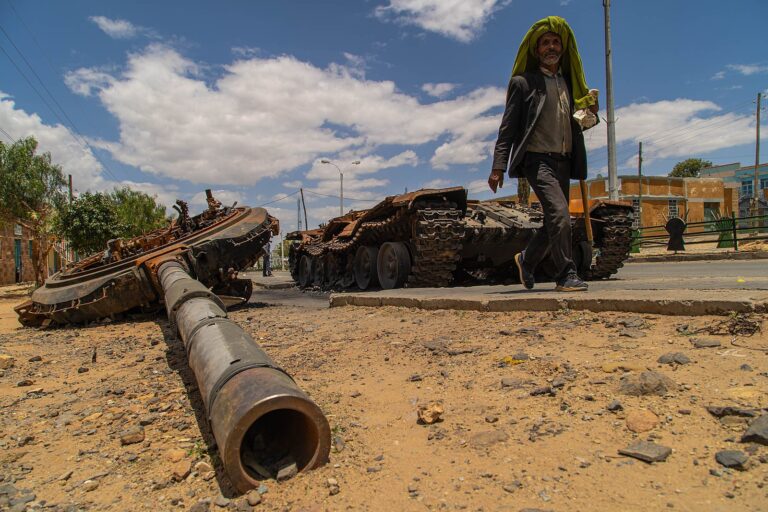
ETHIOPIA is in the grip of a civil war between federal government forces and the Fano, a loose alliance of ethnic-based militia in the Amhara region.

This conflict in Ethiopia’s north erupted less than a year after the devastating Tigray war, which ended in 2022.

The Amhara are one of Ethiopia’s largest ethnic groups and played a leading role in the making of the Ethiopian state. Amharic serves as the country’s working language.

The region shares a border with Tigray. During the Tigray war, which began in 2020, various Fano groups allied with the federal government. A peace deal in 2022 to stop the war sidelined the Amhara militia groups, which strained relations with the government.

The Amhara conflict began as minor sporadic clashes with government forces in April 2023. This rapidly escalated into a full-scale insurgency by August when Fano forces launched a full blown attack in an effort to control the region’s major cities.

The violence since has displaced more than 100,000 people and left 4.7 million children out of school.

The death toll from the conflict is piling up. In March 2025, the government claimed to have killed more than 300 Fano fighters.

We are researchers studying ethnic nationalism, social movements and insurgency in Ethiopia, with a focus on Amhara. Based on our studies into the Fano and ongoing research on Ethiopia’s political reforms process, we see three factors behind the escalating armed struggle in Amhara:

  • a mismanaged political transition from 2018 to 2020
  • fallout from the 2020-2022 Tigray war
  • a hollow pursuit of peace.

Mismanaged transition

Between 1991 and 2018, Ethiopia was governed by the Ethiopian People’s Revolutionary Democratic Front. This was a powerful coalition of four ethno-national parties representing Tigray, Amhara, Oromo, and Southern nations, nationalities and peoples.

Faced with a political crisis and growing unrest in 2014 following opposition clampdowns and arbitrary arrests, the coalition needed a change. Two members – the Oromo People’s Democratic Organisation and the Amhara National Democratic Movement – joined forces to oust the Tigray People’s Liberation Front from its dominant position. They did this by leveraging youth-led protests, which played out between 2015 and 2018.

Following the resignation of prime minister Hailemariam Desalegn in 2018, the two parties orchestrated Abiy Ahmed’s ascent to power.

For a moment, the relationship between the Oromo and Amhara wings of the coalition looked like one of equals. This didn’t last. In December 2019, Abiy merged the coalition into a single party, the Prosperity Party.

The Oromo wing positioned itself as the core of the Prosperity Party. It monopolised key political positions and economic opportunities. This included asserting control over the capital, Addis Ababa.

Amhara’s outspoken leaders who criticised this dominance faced removal, arrest or exile. The region’s president, Ambachew Mekonnen, was assassinated in June 2019.

Harassment, kidnappings for ransom and arrests were daily experiences for Amhara region residents trying to enter Addis Ababa. Members of the Amhara community also faced ethnic-based violence in various parts of the country.

These incidents provoked anti-government protests throughout Amhara.

Fallout from the Tigray war

A peace agreement signed in 2022 in South Africa ended a brutal two-year war in Tigray and neighbouring regions. However, it deepened the sense of marginalisation in Amhara.

While the agreement silenced the guns in Tigray, it sidelined Amhara constituencies by denying them representation in the talks despite the region being affected by the war. The agreement’s ambiguity regarding the fate of territories disputed between Amhara and Tigray, such as Welkait, further fuelled distrust.

The last nail in the coffin came in April 2023. The government decided to dismantle regional special forces. This was ostensibly aimed at consolidating the country’s fighting forces.

However, with unresolved territorial disputes and Oromo nationalist ambitions at the centre, disarming the Amhara Special Forces was interpreted as a move to weaken Amhara defences. Additionally, more than 200,000-strong Tigray Defence Forces were left intact. This contributed to a sense of vulnerability in neighbouring Amhara.

Public protests led to clashes with government forces. These protests morphed into an insurgency by the Fano in the following months.

The insurgency has expanded its reach and has public support across the region and in the diaspora.

The Fano insurgency is taking place in a territory three times the size of Tigray, stretching the federal army.

Various Fano factions cite objectives that range from the protection of Amhara interests to constitutional change and overthrowing the federal government.

However, the insurgency is still in its infancy. It lacks unified leadership, a cohesive structure or a chain of command. Factional divisions and competition persist, and there are no clear objectives.

Hollow pursuit of peace

The government seems determined to crush the Fano insurgency by force. A state of emergency was declared in August 2023 for six months. It was later extended.

While the state of emergency in Amhara officially ended in June 2024, some restrictions remain in place. This includes de facto curfews in major cities, including the capital Bahir Dar.

The counterinsurgency relies on heavy Ethiopian National Defence Forces deployments and drone strikes.

On the other hand, the government has indicated its openness to peace talks. However, it has avoided meaningful confidence-building measures, such as releasing Amhara political prisoners. A Peace Council established to mediate between the Fano and the government has proven ineffective. Its spokesperson has noted federal reluctance to negotiate.

The government’s peace efforts have centred on repeated calls for insurgents to surrender. There are reports that the government wants to talk to different Fano factions separately in the hope of fragmenting the insurgency further. Secret talks with one faction of the Fano are an indication of this strategy.

The path forward

The government’s violent counterinsurgency and occasional peace overtures are unlikely to succeed. The Prosperity Party is not popular in Amhara. A meaningful peace process – rather than calls for surrender or attempts to co-opt factions – is essential. This should start with measures like releasing arbitrarily detained Amhara activists, journalists, academics and politicians.

The federal government also needs to be part of a multi-stakeholder negotiation involving all Fano factions, civil society, community leaders, and domestic and diaspora-based opposition groups. Unbiased mediation from regional and international players may also be useful. Past attempts at piecemeal talks with factions of armed groups – be it in Tigray or Oromia – have prolonged insurgencies or fostered new ones. Only a comprehensive, all-inclusive dialogue can address the crisis.

Such a process needs to address deep-seated structural challenges. This includes ensuring the protection of Amhara minorities living in other regions, and the region’s representation within local, regional and federal government structures. Territorial disputes need to be addressed through a process rooted in historical context, constitutional principles and the consent of the people concerned.

Ultimately, enduring peace requires ending the cycle of ethnic dominance in Ethiopia’s federal governance arrangement.The Conversation

Amanuel Tesfaye, Doctoral Researcher, University of Helsinki and Yared Debebe, Assistant Professor, Political Science, University of Gondar

This article is republished from The Conversation under a Creative Commons license. Read the original article.

Edo: Tribunal dismisses Ighodalo, PDP petition, affirms Okpebholo as governor

0

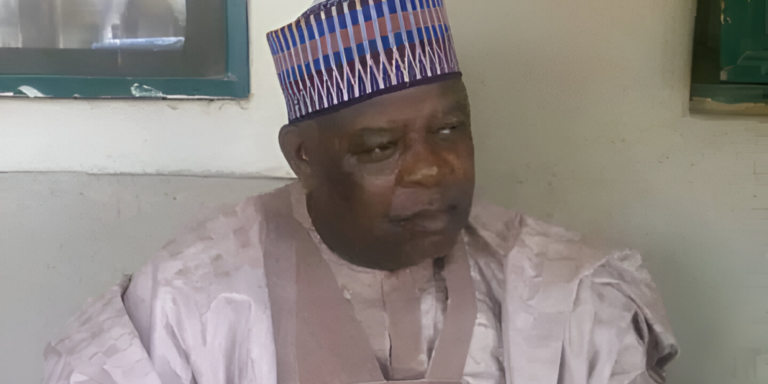
The Edo Governorship Election Petitions Tribunal sitting in Abuja has dismissed the petition of the Peoples Democratic Party (PDP) and its candidate, Asue Ighodalo, filed against Monday Okpebholo of the All Progressives Congress (APC).

The court affirmed Okpebholo as the duly elected governor of Edo State.

The three-man panel of the Tribunal on Wednesday, April 2, upheld the election as being validly conducted.

The chairman of the Tribunal, Wilfred Kpochi, delivered the judgment after many hours of deliberation.

The tribunal, in a unanimous decision by a three-member panel, said it found no reason to cancel the outcome of the governorship election held in the state on September 21, 2024.

The panel dismissed the PDP petition as lacking in merit.

The Independent National Electoral Commission (INEC) had declared that Okpebholo of the APC got a total of 291,667 votes to defeat his closest rival, Ighodalo of the PDP, who secured a total of 247,655 votes.

Dissatisfied with the result, the PDP and its candidate approached the tribunal, alleging that the election was not conducted in substantial compliance with provisions of the Electoral Act 2022.

The Tribunal had earlier dismissed the petition instituted against Okpebholo by the Action Alliance (AA) and one Adekunle Rufai Omoaje for lacking merit and being frivolous.

The court held that Omoaje had no locus standi to institute the case, as his petition was not based on election-related matters.

Among other points, the Tribunal held that Omoaje did not participate in the governorship election and, as such, had no power to question the validity of the election.

The Tribunal also held that Omoaje’s grievance against the election was that he was not recognised as the National Chairman of the Action Alliance for the purpose of nominating candidates for the poll.

Omoaje had, in his petition, asked the Tribunal to declare the declaration of Okpebholo and APC as winners of the election by INEC as illegal, unlawful, unconditional, and null and void due to non-compliance with the Electoral Act.

The Tribunal also dismissed the petition filed by the Accord Party (AP) against Okpebholo.

The tribunal, in its ruling, held that the petitioners – AP and its candidate in the election, Bright Enabulele- failed to establish their claims with sufficient evidence as required.


Tinubu jets out on two weeks ‘working visit’ to Paris

0

PRESIDENT Bola Tinubu is scheduled to depart Nigeria for what the presidency described as a two-week working visit to Paris, France today, Wednesday, April 2.

According to a statement by his Special Adviser on Information and Strategy, Bayo Onanuga, on Wednesday, April 2, Tinubu will use the retreat to evaluate ongoing reforms and strategise on ways to accelerate national development in the coming year.  

It also noted that the president is expected to assess his administration’s midterm performance and review key reforms ahead of his second year in office.  

The latest trip to Paris, while described as a working visit, adds to the long list of presidential travels that critics argue contradict Tinubu’s calls for austerity among Nigerians. 

“He will also use the retreat to review the progress of ongoing reforms and engage in strategic planning ahead of his administration’s second anniversary.

“This period of reflection will inform plans to deepen ongoing reforms and accelerate national development priorities in the coming year,” the statement added.

The visit comes amid the ongoing widespread economic hardship in Nigeria, with inflation and the cost of living still high due to the removal of fuel subsidies and currency unification policies introduced under Tinubu’s administration. 

While the government has repeatedly insisted these policies are necessary for economic recovery, they have triggered protests, including a 10-day demonstration against rising food prices in August 2024.  

In November 2024, The ICIR reported that despite urging Nigerians to endure the economic difficulties, Tinubu and Vice President Kashim Shettima came under criticism for their spending on foreign trips and allowances. 

An analysis by The ICIR revealed that the presidency had spent over N6.8 billion on foreign trips and related expenses within the year 2024, with the president himself as at the time, embarking on at least 17 foreign trips since assuming office in May 2023.  

Additionally, Tinubu and Shettima received N1.7 billion each as honorarium outside their official salaries in 2024, an amount that could cover the monthly wages of over 24,000 civil servants earning the national minimum wage of N70,000.

The president’s previous international visits have included engagements at the United Nations General Assembly, the G-20 Summit in India, and bilateral meetings in China, Qatar, and Saudi Arabia.  

Kurt Schork Awards 2025 calls for applications


The Kurt Schork Memorial Fund (KSMF) is accepting applications for the 2025 awards in international journalism, recognising journalists who report on conflict, corruption, and human rights abuses.

These awards commemorate the legacy of American freelance journalist Kurt Schork, who was killed on assignment in Sierra Leone in 2000. They continue to recognise and support journalists who risk their lives to report on critical global issues.

The awards feature three categories: Freelance Journalist, Local Reporter, and News Fixer, with each winner receiving $5,000.

Entries must include three published articles (June 1, 2024 – June 15, 2025) in English or with translations.

Deadline for the submission is on June 15, 2025. Interested applicants can submit their entries via the official website.

Kogi govt’ to Natasha: You flouted directives against homecoming rally

0

THE Kogi State government has declared that the senator representing Kogi Central in the Senate, Natasha Akpoti-Uduaghan has committed an offence by addressing supporters at her homecoming event on Tuesday, March 1, 2025.

He said that despite her claim of coming to visit her people for Sallah festivities, all her addresses were political to incite the people against constitutional authorities at the federal and state levels to create panic.

This was disclosed by the Kogi State Commissioner for Information, Kingsley Fanwo, when he appeared on Channels TV’s Politics Today on Tuesday, April 1.

According to him, the rally aimed to create tension and ensure that there was violence in the state.

“Yes, she has committed the offence of having a procession when the state government, acting on credible intelligence, directed that there should be none.

“She also addressed a rally. She will call it a homecoming to greet her people about Sallah. Where did they talk about Sallah there? All her addresses were political to incite the people against constitutional authorities.

“That was just what happened today. So that is a clear violation of the statement and the directive of the state government,” Fanwo stated.

According to the state spokesperson, the ban on rallies and political gatherings in the state was due to intelligence report that some political and religious rallies would lead to escalations, which may go into a full-blown crisis.

He said that due to the report, the state government issued a statement banning all kinds of rallies in the state.

He added the ban on convoys in the state was due to the fact that the government did not want people to import unauthorised people in the name of security into the state.

“So, nobody is saying that it is a law; it is a directive, it is a statement of the state government which has been plotted, and the statement was issued to ensure security and if you listen to her today, you will understand that those who gave the intelligence were very correct,” he added. 

He accused Akpoti-Uduaghan of dishing out what he termed “frivolous, careless, unfortunate lies” against prominent people in the state that could have resulted in lot of crises.

He stated that the senator mentioning names of high-profile individuals, such as the senate president, Godswill Akpabio, former governor Yahaya Bello, and current governor, Ododo about an alleged assassination plot can be considered inciting and may lead to a full-blown crisis.

“I saw a procession into a place where they were singing all kinds of inciting songs. Then I saw her also addressing supporters, making frivolous, bogus, and dishing out all sorts of lies to incite the people against the government, including Governor Usman Ododo,” Fanwo said.

On the consequence of Akpoti – Uduaghan’s action, Fanwo said the state government will expect the police to take the necessary action.

“So, it is not just about me. I’m very sure they will review it and take the necessary actions.

“There was a statement, there was a directive from the state governor, and the security agencies were told to execute the directive.

“If someone has violated it, the security agencies will not need the governor again to come and give them another directive. They know what to do. Only the security agencies will be able to answer that. They know how they go about their operations. I am not a police officer,” he declared.

He insisted that the state is only trying to secure the people and property to ensure that there is no breakdown of law and order.

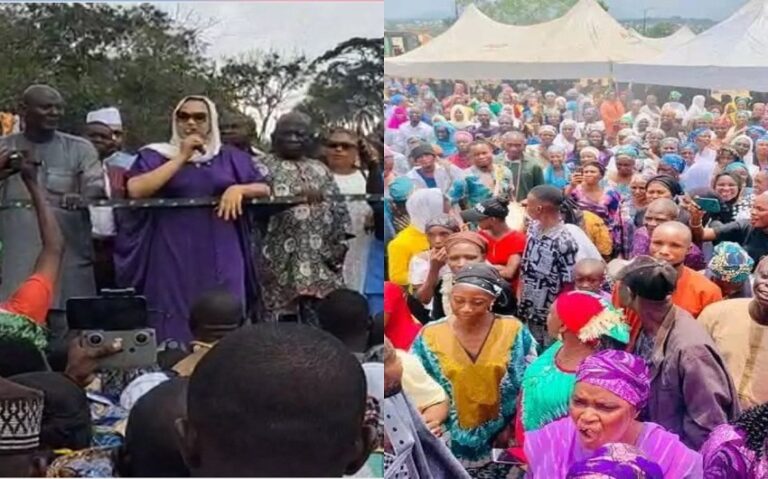
The ICIR reports that despite a police order asking Akpoti-Uduaghan to cancel her homecoming rally, a Kogi State ban on public gatherings, and a curfew imposed in the Okehi Local Government Area where her residence is located, Akpoti-Uduaghan held her homecoming rally on Tuesday.

At the event, she declared that she was not afraid of anyone as she faces her suspension and recall process from the Nigerian Senate.

Private sector boom: Business growth hits 14-month high in March

THE recovery in the Nigerian private sector gathered strength in March, with output, new orders and employment increasing to greater degrees than in February, the latest Purchasing Managers’ Index (PMI) report has shown.

It is the highest growth the sector has witnessed since January 2024 when the PMI recorded 54.5 points.

According to the monthly statistics from Stanbic IBTC Bank, the headline PMI posted 54.3 in March, up from 53.7 in February and above the 50.0 no-change mark for the fourth consecutive month.

A reading above 50.0 signals an improvement in business conditions and below 50.0, a deterioration.

The improvement in business conditions in the private sector was solid and the most marked since the start of 2024.

Central to the latest strengthening in the health of the private sector was an improving demand climate, the report pointed out, which led to a fifth successive monthly expansion in the review month.

The report indicated that firms were helped to some extent by softening inflationary pressures, with input costs increasing at the slowest pace since May 2023.

“Moreover, the pace of increase was sharp and the fastest in 14 months. In turn, the pace of output growth also quickened at the end of the opening quarter.

“Here too, the latest rise was the sharpest since January 2024. Output expanded across all four sectors covered by the report,” it stated.

According to the report, increases witnessed in new orders and output encouraged companies to expand their staffing levels and purchasing activities even as employment showed a modest rise in seven months.

While firms took advantage of softer price inflation to stockpile inputs, overall input costs continued to rise sharply.

The latest data from the National Bureau of Statistics (NBS) shows the pace of inflation eased for the fifth month running and was the slowest since May 2023.

It also indicates inflation figures dropped for the two consecutive months owing to the rebasing of the economy.

The ICIR reported headline inflation declined for the second consecutive time to 23.18 per cent in February, having fallen sharply from 34.80 per cent in December 2024 to 24.48 per cent in January.

The Stanbic IBTC report further shows that while the rates of expansion in output and new orders quickened in March, companies were less optimistic regarding the 12-month outlook for business activity, stressing that business confidence was at a three-month low.

“Softening inflationary pressures are helping to improve domestic demand conditions, in turn, supporting an overall improvement in private sector activity in Nigeria.

“Consequently, private sector activity strengthened for the fourth consecutive month, with the headline PMI settling higher at 54.3 points in March from 53.7 points in February – its highest since January 2024 (54.5 points),” the bank’s head of Equity Research West, Muyiwa Oni, commented.

Central to the improvement was an increase in customer requests, which ensured the rate of growth in new orders in March quickened to its fastest pace in 14 months, he stressed.

In line with this, the pace of output price inflation softened further – easing for the third successive month to the weakest since May 2023, Oni said.

He noted that private sector activity in first quarter of this year was at a much better position, which is consistent with a likely 3.9 per cent year-on-year growth in the non-oil sector, signifying a further improvement in business conditions compared to the fourth quarter of 2024.

For 2025, the non-oil sector is poised to improve further compared to 2024 as the lingering foreign exchange (FX) stability and improved FX liquidity conditions bode well for the real sector activities, including manufacturing, trade and real estate.

“This, in addition to the anticipated reduction in borrowing costs, should further support the growth of the non-oil sector in 2025.

“Accordingly, we project the non-oil sector to grow by 3.4% y/y in 2025. Therefore, we still expect the Nigerian economy to grow by 3.5% y/y in real terms in 2025 with the Q1:25 growth print forecasted to settle at 3.7% y/y,” Oni maintained.

US revokes student visas over campus activism, orders self-deportation  

THE United States has revoked the visas of hundreds of international students and carried out arrests over alleged support for Hamas.

This was revealed by the Secretary of State, Marco Rubio, who said that about 300 students were targeted last week as part of the Trump administration’s immigration crackdown titled, “Catch and Revoke.” 

According to Rubio, the programme utilises artificial intelligence to monitor and flag individuals engaged in activism perceived as supporting extremist groups.

Rubio said that beyond students who have physically participated in campus activism, even those who have shared or liked ‘anti-national’ posts on social media have received these email notifications.

The ICIR reports that international students have been receiving emails informing them that their visas have been revoked due to their involvement in campus activism. Some students have been allegedly arrested from campuses by immigration agents, targeted for deportation based on their writings or activism, and detained in federal custody despite having no criminal record.

A doctoral candidate in Africana Studies, Momodou Taal, had his student visa revoked for participating in “disruptive protests” and violating university policies, which US government officials claimed contributed to a hostile environment for Jewish students. After a judge refused to immediately halt his deportation, Taal announced that he was leaving the United States voluntarily.

“I have lost faith I could walk the streets without being abducted,” Taal said on X, adding, “Weighing up these options, I took the decision to leave on my own terms.”

Taal, a dual citizen of the United Kingdom and The Gambia, faced backlash for online comments made immediately after the Hamas attack on Israel, which resulted in over 1,200 deaths.

He tweeted “colonised peoples have the right to resist by any means necessary” and “Glory to the resistance!”

Shortly after, the United States directed consular offices to expand screening procedures for student visa applicants, including thorough social media investigations, to bar individuals deemed to support terrorism.

The consular has introduced a new standard for visa denials based on a broad interpretation of support for “terrorist activity.” 

Additionally, applicants for F (academic study visas), M (vocational study visas), or J (exchange visas) will also be subject to social media scrutiny. 

According to the TOI report, those deemed ineligible under these criteria will be denied the opportunity to study in the United States.

According to the directive, an applicant may be denied a visa if there is evidence that they advocate for terrorist activity or express public approval or support for a terrorist organisation.