Home Blog Page 350

Tinubu signs ₦54.99trn 2025 budget into law

0

PRESIDENT Bola Tinubu has signed the N54.99 trillion 2025 Appropriation Bill into law, a few days after adjustments by the National Assembly.

The signing took place on Friday, February 28, at the State House in Abuja during a brief ceremony. 

The budget, originally proposed at N49.7 trillion, was increased to N54.99 trillion before being passed by lawmakers.

It would be noted that Tinubu on Wednesday, December 18, presented Nigeria’s 2025 budget proposal to a joint session of the National Assembly with key highlights, adjusting the exchange rate benchmark to N1,500 per dollar.

The budget, titled “Budget of Restoration: Securing Peace, Rebuilding Prosperity,” aimed at consolidating policies to restructure Nigeria’s economy, boost human capital, and stimulate key sectors such as manufacturing and oil and gas production.

He said the 2025 budget sought to consolidate the key policies his administration had instituted to restructure Nigeria’s economy and boost human capital development, increase the volume of trade and investments, bolster oil and gas production, get the manufacturing sector humming, and ultimately increase the competitiveness of the country’s economy.

The ICIR also reported how the National Assembly had approved different allocations for capital and recurrent expenditures but later revised them to reflect a more balanced spending plan. 

The final budget increases recurrent spending while reducing capital expenditure by over N500 billion from earlier estimates.

A breakdown of the budget showed N3.645 trillion for statutory transfers, N14.317 trillion for debt servicing, N13.64 trillion for recurrent expenditure, and N23.963 trillion capital expenditure (development fund), with fiscal deficit put at N13.08 trillion.

The deficit-to-gross domestic product (GDP) ratio was put at 1.52 per cent.

Natasha refutes allegations of fund misappropriation as local content committee chair

THE former chairman of the Senate Committee on Local Content, Natasha Akpoti-Uduaghan, has denied allegation that she misappropriated the committee’s funds and committed other infractions while she led the committee. 

In a recent petition by the Youths Advocacy for Excellence (NOYAD), addressed to the Senate President, Godswill Akpabio, Akpoti-Uduaghan was accused of abusing her office by demanding favours from oil and gas stakeholders, sidelining the committee’s clerk, Edith Ajah, victimising other committee staff, among others.

The petitioners demanded a thorough probe into her tenure and issue sanctions where applicable.

“The Senate Committee on Ethics, Code of Conduct and Public Petitions should thoroughly investigate all illegally, subversive and intimidating activities of Senator Natasha Akpoti-Uduaghan with a view to exerting the necessary legal and disciplinary measures.

“Evidence at our disposal shows that Senator Natasha has corruptly enriched and overreached herself through intimidation tactics, unapproved public outreaches, and by reimbursing endorsements against regulations.

“With the benefit of hindsight, NOYAD is also alleging, with incontrovertible evidence, that Senator Natasha Akpoti-Uduaghan had, ab initio, never had any genuine support for the local content mandate but rather was focused on fleecing businesses,” part of the petition reads.

The lawmaker, who represents Kogi Central, took to her social handle after receiving the petition on Thursday, February 27, and promised to appear on Arise Television to shed light on the petition and some of the issues in the Senate.

While agreeing with the planned probe on her, she said the proceedings must be made public.

Speaking in an interview on Arise TV’s “The Morning Show” on Friday, February 28, Akpoti-Uduaghan alleged that she did not meet a dime in the committee’s account but let millions of naira in the account when she was leaving.

She said all attempts by the clerk and committee’s staff to convince her to share the fund she saved in the account fell on deaf ears.

“When I resumed as chair, the account balance of the Senate Committee on Local Content was zero,” she explained.

“By the time I handed over the position, the balance had grown to N13,649,335,” she added.

She said each committee received N950,000 monthly for operational expenses.

“The first month after my resumption, the clerk of the committee, whose name is well listed there, probably the lady who is behind this petition, Mrs. Edith Aja, approached me in January and said, oh, the first month’s payment has gotten in. And I was like, what do you mean by that?

“She told me that every month, every committee in the National Assembly receives N950,000 as running operational costs. And, so, I said, okay, what is the money supposed to be used for? She said, ‘for logistics, mail dispatches, refreshments for meetings that we have, and all that,” the lawmaker said.

 She further alleged that she told the staff and committee members that the money was meant to service the operations of the committee, not to enrich their pockets, and as such, the money must not be shared.

According to her, she directed that the money remains in the account and be used for legitimate expenses, such as purchasing office equipment and printing materials. 

“I said, okay, so if 950,000 Naira has hit the account, we are yet to call for any meetings, so I think leave that money there, or is there a problem? She said, yes. The trend or the norm is that if there is no event or happenstance that utilises the money, we are supposed to share the money.”

While displaying the printed bank statement for the committee, she stated, “Since I left office, the clerk has withdrawn approximately N9.9 million from that account, leaving a balance of just N123,000.”


Power outage hits Presidential Villa, other locations – AEDC

0

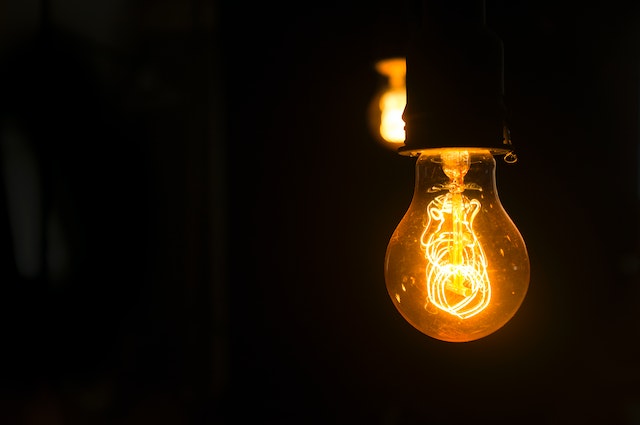
NIGERIAN Presidential Villa, including other locations, have been affected by widespread power outage caused by technical faults in some feeders owned by the Abuja Electricity Distribution Company (AEDC).

The AEDC made this known in a statement on Friday, February 28.

It said the technical fault which affected the power supply to some parts of the city in the Abuja metropolis impacted transmission to the locations.

“We regret to inform you that the power outage is due to a technical fault on the feeder serving these areas,” the distribution company (DisCo) said.

The identified areas include CKC Gwagwalada, Kuje Road, Almat Farms, Kiran Farm, Efugo, Kwali Road, L5 Injection Substation, Chukuku Environs, Premium Farm, El-rufai Estate, Daghiri, Kuje Extension, John Calvin Estate, Kings Court, Karmo District, Idu Industrial, Urban shelter Katampe.

Others are Living Faith Church Katampe, Jahi village, Katampe extension, Jahi by Gilmore, Gishiri, Mabushi, Kadokuchi, Navy Estate, Anan House, Jahi Village, NAF Conference, Lake View Phase 1&2, Custom Quarter, Chida Hotel, Dakibiu, Brains and Hammer City Estate, Today Estate, Dape District, Katsina Estate, Paradise Estate, Ochacho Estate, Kafe District, American Embassy Estate, part of Gwarinpa, Zone C War College, Lateef Jakande, Zone E, Zone D, Bestway Hotel, Eterna filling station.

Also affected are Dantata, R3 Injection Sub Station, R4 Injection Sub Station by Three Arm Zone, Aso Drive, Lugbe FHA 1, Part of FHA 2, Tudunwada, Master’s Lounge, Total Filling Station, Salem Academy, Environmental, Back of Premier Academy, Old Metro Bakery, Video Club, Pack Well, Unity Hospital, Sector F and surrounding areas R5 Injection Sub Station, Naff Valley Estate Injection Sub Station and surrounding areas.

Appealing to its customers to be patient, the AEDC said it is working to restore power supply to the affected areas.

“Our dedicated technical team is working tirelessly to restore power as quickly as possible,” it stated.

Amid this latest outage is that no fewer than 188 locations franchised within the Federal Capital Territory, operating under the AEDC, endured widespread power outages and blackouts caused by various technical faults to its feeders in two months.

These disruptions which occurred within the first two months of this year and affected the power supply to numerous areas,  impacted the living conditions and businesses of the people.

Commenting on power sector under-performance at the public presentation of the National Integrated Electricity Policy and Nigeria Integrated Resource Plan on Thursday, February 27, the Minister of Power, Adebayo Adelabu, lamented the continued decay of infrastructure in the electricity sector.

The ICIR reported the minister who blamed DisCos unwillingness  to invest in their networks while also criticised the companies for focusing on short-term profits at the expense of long-term investments.

He further lamented their reluctance to invest in necessary infrastructure and their inability to attract financing due to weak balance sheets have hindered progress.

Adelabu, however, hinted that the ministry is focusing on restructuring the DisCos, and has plans to carry out major reforms to address the poor investment strategies of the DisCos.

In January, The ICIR reported that thousands of Abuja residents faced a two-week outage.
The disruption is due to the relocation of the 33KV DC Airport Feeder and 132KV Kukwaba-Apo Transmission Line Towers along the Outer Southern Expressway by the Federal Capital Development Authority (FCDA).

FLASHBACK: Ex-NDDC chief accused Akpabio of sexual harassment in 2020

0

AMID fresh allegations of sexual harassment against Senate President Godswill Akpabio, a similar accusation was made against the lawmaker five years ago by former Acting Managing Director of the Niger Delta Development Commission (NDDC), Joy Nunieh.

Nunieh publicly accused Akpabio, who was then the Minister of Niger Delta Affairs, of attempting to sexually assault her at his guest house in Abuja. 

Speaking in an interview with Arise TV, she claimed that she fought back against his advances.

“Why did he not tell Nigerians that I slapped him in his guest house at Apo? I am the only Ogoni woman, the only Nigerian woman that has slapped him. I slapped him because of his plan B. Since he couldn’t get me to take that money, he thought that he could come up on me.

“He didn’t know that I’m a Port Harcourt girl. Port Harcourt girls are not moved by money…by somebody telling me that he will make me the substantive MD. Akpabio’s meetings with me were either at Apo or Meridien…Yes, I am accusing him of sexual harassment.”

Nunieh, during her brief tenure at the commission, had earlier claimed that Akpabio repeatedly pressured her to take an “oath of secrecy” to prevent her from exposing corruption at the NDDC during her tenure. 

She stated that had she agreed, she might have been implicated in financial mismanagement at the commission.

Akpabio refuted the allegations, dismissing Nunieh’s claims as false and politically motivated. 

He also stated that she had “temperament issues.”

“No matter the allegation, I wish that she will go to the hospital, see a doctor, take some injections and relax. I’m not saying there is something wrong with her, I’m saying there is something wrong with her temperament.

“You don’t need to ask me, you can ask about four other husbands that she married…”

Akpabio, in a statement by his Special Adviser Media, Anietie Ekong, further described the allegation as malicious and libellous.

He stated that it is “appalling that Ms. Nunieh never deemed it fit to report the alleged incident to the police at the earliest opportunity she had, before, during or after her tenure as the Acting Managing Director on 17th February, 2020, if indeed the allegation was true”.

The accusations sparked controversy at the time, but no formal investigation was conducted. 

Akpabio and Akpoti plenary saga

Nunieh’s allegations resurfaced following recent claims by a female senator, Natasha Akpoti-Uduaghan, who also accused Akpabio of making several sexual advances toward her, both in private and in the presence of her husband.

She said her stance towards the advances was the reason for her incessant conflicts with the Senate President at plenaries within the National Assembly Complex.

Speaking during an interview on Arise Television’s “The Morning Show” on Friday, February 28, the female lawmaker claimed she had all the evidence for her claims.

She challenged the State Security Service (SSS), National Intelligence Agency (NIA), among others to probe her allegations.

She also said three other female senators among the 109 lawmakers in the Senate had been quiet about her plight.

The ICIR contacted the media aide to Akpabio, Eseme Eyibo, immediately after the interview was over for his boss’ reaction to the accusation. He said he did not listen to the interview and would not respond immediately.

However, a media consultant to the Senate President, Kenny Okulogbo, in a chat with Punch described the allegations as tissue of lies.

He said, “All that Senator Natasha said are all tissue of lies. She is just angry because she was removed as the Chairman of the Senate Committee on Local Content. The Senate President will respond. We will make an official statement soon.”

‘This is not a nightclub’, Akpabio tells Akpoti

Recall that in 2024, Akpabio made what was widely regarded as a degrading comment when Akpoti-Uduaghan spoke on a motion during a plenary without the Senate President’s permission, an action that contravened the Senate standing order.

Akpabio, consequently, asked the senator to follow the house rule, adding that the Senate is not a nightclub where anybody can talk anyhow.

“Senator Natasha, you cannot speak without being asked or invited to speak in the Senate. This is not a nightclub,” Akpabio remarked.

Although he subsequently apologised for the comments, the duo have continued to have a face-off in the chamber since then.

Akpoti and Omokri ‘advances’ saga

The Akpabio and Akpoti controversy also resurfaced another incident.

In 2021, Akpoti stated that Reno Omokri a former presidential aide made advances at her at an event in 2014.

Akpoti had brought up the issue in reaction to Omokri’s post praising his wife while talking down on a woman who had asked to be his sugar baby.

“I rejected your si**y advances in 2014 at the Villa’s banquet hall during President Uhuru Kenyatta’s reciprocated visit…

I gave you a fake name and false contact number but…

Weren’t you married then?” she wrote.

She added that Omokri should know that the lady was joking.

Omokri said the allegation was not true, while adding that he was not in the country at the said time.

He provided his passport stamped pages to back his claim. These some netizens said was not sufficient evidence as it proved that he left the country after the said event.

Supreme Court freezes Rivers allocations, sacks LG chairpersons

0

THE Supreme Court has stopped the Central Bank of Nigeria (CBN), the Accountant General of the Federation (AGF), and other agencies of the Federal Government from releasing funds to Rivers State Government.

The court has also sacked all the local government chairpersons in the state.

The five-man panel of the court, in a judgment delivered by Emmanuel Akomaye, unanimously disregarded the cross-appeal filed by Rivers State Governor Siminalayi Fubara.

Fubara is challenging the validity of the state House of Assembly presided over by Martin Amaewhule.

In dismissing Fubara’s appeal, the court directed Amaewhule to resume sitting immediately with other elected members of the Rivers State House of Assembly.

The court deemed Fubara’s presentation of an appropriation bill before a four-man House of Assembly as absurd.

The court said the action denied 28 constituencies effective representation, violated a court order that mandated Fubara to re-present the 2024 appropriation bill before a validly constituted Assembly led by Amaewhule.

Furthermore, the apex court viewed Fubara’s actions regarding the alleged defection of 28 Rivers Assembly members as authoritarian, aimed at hindering the House’s legitimate functions under Amaewhule’s speakership.

The court also faulted the Abuja Division of the Court of Appeal for vacating the initial order that stopped the release of funds to Rivers State from the consolidated revenue.

It held that contrary to the verdict of the appellate court, the Federal High Court in Abuja had the requisite jurisdiction to entertain the suit the Amaewhule-led 27 lawmakers filed to challenge the continued withdrawal and expenditure of funds belonging to the state without the approval of the State Assembly.

“This wrong view influenced it to hold that the subject matter was not within the power of the Federal High Court,” the apex court ruled.

The court maintained that the basis for the case was the refusal of Fubara to obey a subsisting court order requiring him to present the Appropriation Bill to the lawful Assembly.

The court dismissed Fubara’s claim that given the defection of the lawmakers, he had to invoke the doctrine of necessity by presenting the Appropriation Bill to only five remaining members of the Assembly.

According to the court, the doctrine of necessity could not be invoked to explain an illegal action.

Earlier in October 2023, a Federal High Court in Abuja restrained the CBN from disbursing federal allocations to the Rivers state government.

The court held that monies from the federation account should not be released to the state pending the passage of a lawful appropriation act by a validly constituted House of Assembly.

The presiding judge, Joyce Abdulmalik, gave the verdict while delivering judgment on a suit filed by the Rivers State House of Assembly led by Amaewhule.

Abdulmalik held that Fubara was wrong to have presented the state’s 2024 Appropriation Bill to a five-member assembly “that was not properly constituted.”.

The ICIR reports that the Rivers State Assembly has been engulfed in a prolonged crisis since 2023, heightened by the defection of over 25 lawmakers loyal to former Governor Nyesom Wike from the People’s Democratic Party (PDP) to the All Progressives Congress (APC).

This development led to contention over the House leadership, with the faction led by Amaewhule being challenged by a rival group loyal to Fubara and headed by Victor Oko-Jumbo.     

Consequently, Fubara has been conducting the business of the state in conjunction with the Oko-Jumbo faction while disregarding the Amaewhule group.

In another judgment on Friday, the Supreme Court sacked all the Rivers’ local government chairpersons elected in October 2024.

According to Channels TV, the judgment delivered by Jamilu Tukur declared the election conducted by the Rivers State Independent Electoral Commission (RSIEC) invalid.

The court declared that the election grossly violated the Electoral Act.

Tukur declared the action of the state electoral commission void for lack of substantial compliance with the Electoral Act and guidelines as the electoral body continued voter registration even after announcing an election date.

The court held that processes leading to the conduct of a local government election were breached in clear violation of Section 150 of the Electoral Act.   

The ICIR reported that the African People’s Party (APP) won 22 out of the 23 chairmanship seats in the poll, with the Action Alliance (AA) claiming one.        

The election was held amidst accusations of violence, intimidation, and a disrupted political atmosphere.

The ICIR reports heightened tensions in the build-up to the poll across the state.

The ICIR also reported how an explosion rocked the APC secretariat in Port Harcourt just hours before the election.   

Fubara and his predecessor – the minister of the Federal Capital Territory (FCT) – Nyesom Wike, have been at loggerheads over who controls the PDP structure in the state, with President Bola Tinubu’s efforts to resolve the stalemate yielding no result. 

Bauchi gov’t under fire over five-week Ramadan holiday for schools

0

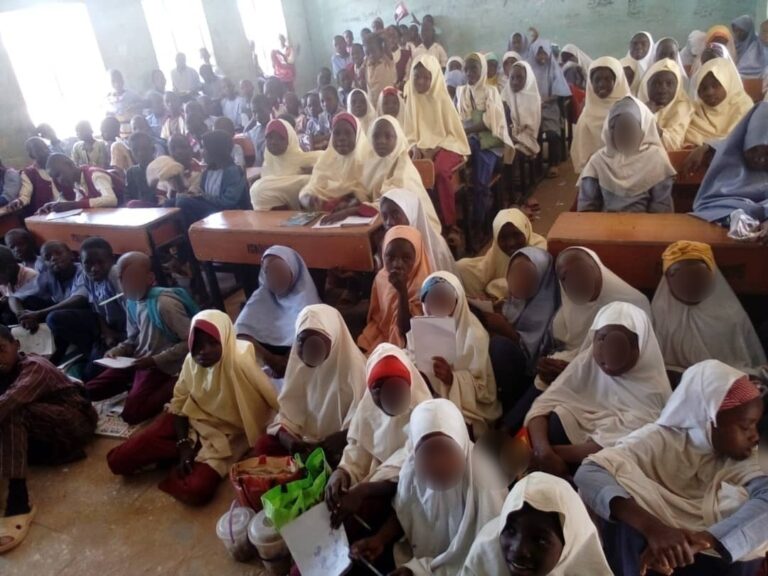
THE Bauchi State government is facing backlash following its decision to close all schools in the state for five weeks in observance of the 2025 Ramadan fast. 

The extended break, scheduled from March 1 to April 5, has sparked concerns among parents and many Nigerians, who fear it could negatively impact students’ academic progress.

The closure will affect all public and private primary and secondary schools, as well as higher institutions of learning in the state.

The Ministry of Education, in its approved 2024–2025 academic calendar, had incorporated the break as part of the school schedule. 

According to the official academic calendar, the second term of the 2024/2025 session began on January 5, 2025. However, the term was divided into two phases with phase 1, between January 5 – February 28. 

Phase 2 starts after a five-week break from March 1 to April 5, with classes resuming from April 6 to April 29.

The five-week closure means students will have only about three weeks of learning before the term officially ends, raising concerns about the adequacy of instructional time.

Confirming the development on Friday, the ministry’s Information Officer, Jalaludeen Maina, told the News Agency of Nigeria that the closure would affect all public and private primary, junior, and secondary schools, as well as higher institutions in the state.

“Yes, we are closing all our schools and this is included in our 2024-2025 approved calendar for the academic session that our students are not going to do the Ramadan fasting while in school.

“The five-week holiday is for Ramadan fasting, and immediately after the fasting, they will resume and continue with their academics,” he said.

Backlash from parents, stakeholders

However, the decision has reportedly drawn criticism from parents and Nigerians, who argue that such a long break could further harm the already struggling education system in Bauchi, a state with one of the highest rates of out-of-school children in Nigeria.

According to NAN, a parent, Sunita Joseph, expressed frustration over the extended holiday, warning that it could lead to a loss of learning among students.

“Why would Ramadan break be too long like this? The children may have even started forgetting what they had learned before the break,” she said.

Another concerned parent, Ismail Raji called on the state government to reconsider the decision, warning that it could contribute to the rising number of out-of-school children in the state.

Similarly, Mohammed Isa criticised the move, urging the government to focus on policies that promote education rather than disrupt it.

A social media user, Fazza, on X stated, “This prolonged closure seems excessive and may disrupt the academic calendar, ultimately affecting the students’ learning and development.”

Another user with the handle prof Imonokha Enakhena wrote “This is pathetic for a region that is educationally disadvantaged deliberately buzzing the button of self-destruction. Unfortunately, most schools have been closed because of palpable insecurity and are just attempting resumption; then you have this irresponsible and ignorant proclamation that is atrocious and obfuscating putting schools on hold for five weeks.”

Meanwhile, several other users lauded the development, noting that it was a reasonable decision due to the adverse weather during the fasting period.

They referenced some foreign countries that, according to them, close schools during extreme winter or summer conditions.

Akpabio made several attempts to sleep with me – Senator Natasha

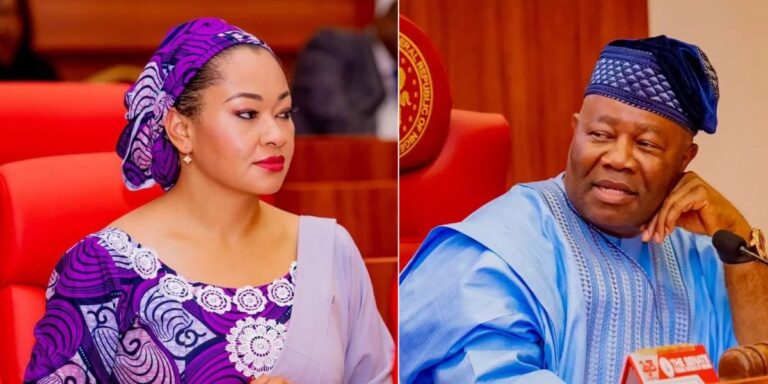
THE senator representing Kogi Central, Natasha Akpoti-Uduaghan, has accused Senate President Godswill Akpabio of making sexual advances towards her severally, which she said she turned down.

She said her stance towards the advances was the reason for her incessant conflicts with the Senate President at plenaries within the National Assembly Complex.

Speaking during an interview on Arise Television’s “The Morning Show” on Friday, February 28, the female lawmaker claimed that some of Akpabio’s love proposals were made with her on the phone and face to face in her husband’s presence.

She further alleged that she had all the evidence for her claims.

She challenged the State Security Service (SSS), National Intelligence Agency (NIA), among others to probe her allegations.

She also said three other female senators among the 109 lawmakers in the Senate had been quiet about her plight.

According to her, the first time Akpabio made sexual advances to her was a day before her birthday and that of the Senate President who shares the same birthday with her.

“It all started on the 8th of December, 2023, which was a day before his birthday and my birthday. We are birthday mates. We were all in Akwa Ibom because he had a big fanfare in the stadium. We were at his house at Ikot Ekpene. Then, we all moved to his house in Uyo about 8 pm and he held my hand and said he wanted to show me around his house.

“My husband was walking behind us, just three of us. We were walking around from room to room. He showed me the beautiful interior. I noticed that he hastened his pace, while still holding my hand, and my husband was behind, still on his phone, but he was catching up whenever he could.

“And then he got to this particular sitting room and he said, ‘do you like my house?’ I said, of course, sir. Every room, beautiful, nice interior, quality taste. He said, now that you’re a senator, I’m going to create time for us to come spend quality moments here. You will enjoy it. At that point, I just pulled away and I was like, I don’t understand what exactly that meant. But then, my husband, when I turned around, my husband looked at me and looked at him.”

According to the lawmaker, her husband kept asking her what Akpabio told her but she kept it to herself because of the cordial relationship between her husband and the Senate President.

She said that was not the only time Akpabio had sexually harassed her.

She further alleged that the Senate President made advances towards her when she went to his office in February after failed efforts to get approval to move a motion concerning the moribund Ajaokuta Steel Mill.

“I listed that motion five times. It was the sixth time that it was listed on the order paper that was approved. Many senators can testify to that.

“I went to him in his office and I said, Senate President, you know how important this Ajaokuta Steel Company is to me. You know how important it is to my people and Nigerians.

“I was like, sir, please, why can’t I take this motion? It’s very important. He then said, ‘Natasha, I am the chief presiding officer of the Senate.

“You can enjoy a whole lot if you take care of me and make me happy.’ At that point, I said, sir, I’ll pretend that I didn’t hear this. He said, ‘Well, the ball is in your court.”

The lawmaker said she pleaded with her husband to help her appeal to Akpabio to allow her to raise her motion at the Senate and her husband had to travel to London to meet him on the issue.

She described the situation between her and the Senate President as a situation where a university lecturer kept failing a student because she refused to sleep with him.

Responding to her most recent conflict with Akpabio, which was about sitting arrangements in the Senate, she said she was not notified before she was ordered to move elsewhere in the chamber.

The ICIR reports that Akpoti-Uduaghan and Akpabio had had conflicts in the chamber. During a plenary in July 2024, Akpoti-Uduaghan commented on a motion without Akpabio’s consent.

In his attempt to correct her, he said the Senate was not a nightclub where anybody could talk anyhow.

Akpabio bowed to pressure as he apologised to Akpoti-Uduaghan two days later for comparing her conduct in the Senate to that of a nightclub.

The ICIR reported that the Senate President’s comment caused social media outrage as women groups criticised him for the action and described his attitudes towards female senators as not only insulting but a denigration of the female gender and an attempt to stifle female voices.

The female lawmaker referred to the ‘nightclub’ saga during her interview on Friday. She said it was a common word Akpabio always used whenever he spoke about the need for both of them to travel and have fun together.

The ICIR contacted the media aide to Akpabio, Eseme Eyibo, immediately after the interview was over for a reaction to the claims. He said he did not listen to the interview and would not respond immediately.

He requested the interview link to enable him to respond.

The ICIR reported that Akpoti-Uduaghan had announced on her social media handles Thursday morning that she would appear on Arise Television to speak on her feud with the Senate President.


 FG owes GenCos, DisCos N4trn amid liquidity problems

0

NIGERIA’s power sector is currently experiencing more liquidity problems as the federal government has confirmed its indebtedness to the electricity generation (GENCOs) and distribution companies (DisCos) to the tune of N4 trillion.

The government has also blamed the distribution companies over lack of investment in its distribution infrastructure which could have enabled it to migrate more customers to band A for increased revenue.

Minister of Power, Adebayo Adelabu, who confirmed the development said the federal government is owing electricity generation companies (GenCos) and electricity distribution companies (DisCos) over N4 trillion in electricity subsidy.

The minister disclosed this on  Thursday, February 27, in Abuja at a public presentation of the National Integrated Electricity Policy (NIEP) and Nigeria Integrated Resource Plan (NIRP).

He remarked that the debt had posed a challenge in strengthening the power sector for optimum service delivery.

While giving a breakdown, the minister said N2 trillion is owed to GenCos as legacy debt while another N1.9 trillion is owed to them as part of electricity subsidy for 2024.

The DisCos, he said are owed N450 billion for 2024 electricity subsidy.

The minister said the government would not be able to continue the model of electricity subsidy payment, adding that a new model of intervention is in the works by identifying a segment of the population in need of it.

“How do you expect the GenCos to perform optimally? How do you expect them to pay for gas, service, and maintain their turbines and other infrastructure as well as pay their staff? If a total of N4 trillion is being owed to them.

“I do not deceive myself. The government cannot afford to continue to fund the level of subsidy that our consumption pattern is throwing up, because we have seen increasing consumption of electricity,” he emphasised.

The minister observed that the key issues are the market, liquidity, and sector reforms, noting that the government will continue to focus in addressing them.

“We’ll look at the tariff again. I am not saying that we’re going to increase the tariff but to look at the tariff and see how we can improve upon our modest achievement of last year,”he explained.

Noting that the lack of investment in the distribution networks of DisCos is hampering the progress of the sector, the minister observed that the government has not seen the migration of more customers to band A, attributing it to poor investments in network by DisCos.

“They have refused to invest in this sector. Fine, it can be explained in a way, but a lot of investment is required for us to achieve an accelerated migration of lower-band customers into Band A. It is taking a lot of time,” he said.

He added that the government was considering canceling some sections of electricity consumers’ classification to make it three – bands A, B, and C.

The minister said this is to reduce the tariff difference among them to enable those in the lower bands to enjoy more hours of electricity.

The ICIR reported that the World Bank has been supporting Nigeria’s power sector through the Power Sector Recovery Programme (PSRP), which has seen about $500 million lent to support the ailing sector.

Besides, a discussion on $1.5 billion loan is ongoing between the the global bank and the Nigerian government for the sector in addressing metering access and improving power infrastructure.

FCCPC to MultiChoice: Maintain current prices pending investigation

0

THE Federal Competition and Consumer Protection Commission (FCCPC) has directed MultiChoice Nigeria to maintain the current prices of its subscription packages until the ongoing investigation into its proposed price hike is concluded.

The Commission said in a statement on Thursday, February 27 by its director of corporate affairs, Ondaje Ijagwu.

“Pursuant to this, MultiChoice is expressly instructed to maintain the existing price structure as of February 27, 2025, pending the Commission’s review and final determination on the matter.

“Maintaining the status quo on pricing is essential to prevent any potential consumer harm during this period,” Ijagwu stated.

The directive followed MultiChoice Nigeria’s request for an extension concerning its scheduled appearance before the commission which it granted.

However, the company is required to attend the rescheduled investigative hearing on March 6, 2025, along with all relevant officers and a comprehensive response.

The ICIR reported that Multichoice Nigeria, the parent company of DStv and GOtv, has revealed plans to increase the prices of its packages effective March 1, 2025.

It made the known in a message to its customers on Monday, February 24, titled ‘Price Adjustment on DStv and GOtv packages.’

The MultiChoice chief executive officer, John Ugbe, explaining the decision for the upward review in price said, “Dear Customer, please note that effective 1 March 2025, there will be a price adjustment on all DStv packages. This enables us to continue offering our customers world-class homegrown and international content, delivered through the best technology.”

The price review will hike the DStv compact bouquet from N15,700 to N19,000, the compact plus to N30,000, and the premium subscription to N44,500.

Similarly, its GOtv customers, currently paying N3,600, will now pay N3,900, while the tariff on GOtv Plus will rise from N4,850 to N5,800.

Also, the GOtv max package will now cost N8,500 while the Supa will cost 11,400 and the Supa Plus, 16,800.

The pay television claimed the price increase on the Nigerian macroeconomic conditions.

It said this includes increasing operating costs, currency depreciation, and high inflation.

However, Nigerians have expressed displeasure with the proposed price increases by MultiChoice Nigeria, prompting the FCCPC to summon the organisation’s management and threaten level sanction on the company.

This is coming a year after its major price preview, The ICIR reported.

ICPC seeks interim forfeiture of N1.37bn linked to El-Rufai’s government

THE Independent Corrupt Practices and Other Related Offences Commission (ICPC) has initiated legal proceedings for temporary forfeiture of N1.37 billion paid into a private account by the administration of former Kaduna State Governor Nasir El-Rufai.

The commission approached a Federal High Court in Kaduna, seeking an interim forfeiture order on the fund, which it said was a proceed from a fraudulent light rail project that the administration failed to execute.

The ICPC had recovered the money into the commission’s recovery account domiciled with the Central Bank of Nigeria in the course of an ongoing investigation into the activities of the officials of the state government during the period.

The exparte motion filed by the commission before the court seeks the court’s nod for the commission to repatriate the fund to the Kaduna State Government.

The ICPC noted that the alleged diversion had deprived the people of Kaduna State of the benefits of the rail transportation system which the money was meant for.

The ICIR reports that the alleged discovery contradicts El-Rufai’s claim that not a dime was stolen under his administration. The former governor had also boasted recently when he appeared on Arise Television for an interview that he led a corruption-free government.

According to documents filed by the ICPC before the court, the Kaduna State Government, under El-Rufai, entered into a joint venture agreement in October 2016 with Indo Kaduna MRTS JV Nig. Ltd to develop a light rail transport system in the state.

At the time the contract was awarded, the company was not registered with the Corporate Affairs Commission (CAC).  Despite this, the state government proceeded to transfer over N11 billion into the company’s account at Sterling Bank through multiple transactions between December 23, 2016, and January 17, 2017.

The ICIR reports that awarding a contract to an unregistered company is a serious violation of Nigerian law.

Section 814 of the Companies and Allied Matters Act (CAMA) 2020 mandates the registration of business names with the Corporate Affairs Commission (CAC).

Operating a business without such registration is considered an offence under Section 821 of the same Act. Therefore, making payment into the account of such a company not registered by the CAC contravenes these provisions.

How the alleged fraud unfolded

The ICPC’s investigation revealed that rather than execute the rail project, Jitender Sachdeva, the president of Indo Kaduna MRTS JV Nig. Ltd., also the Indian representative of Skipper Nigeria Limited, allegedly instructed Sterling Bank to place the funds in a fixed deposit account.

Over time, the fixed deposit yielded an interest of N326.8 million, increasing the total sum under scrutiny to N11.37 billion.

The interest on the fixed deposit was said to have been diverted to different accounts of Skipper Nigeria Limited domiciled with Sterling Bank Nigeria Limited.

Further investigations showed that in 2019, N10 billion was refunded to the Kaduna State Government following concerns about the project’s execution.

However, the ICPC found that a balance of N1.04 billion remained unaccounted for. This remaining amount, according to the commission, was funnelled into the accounts of GTA Engineering Nigeria Ltd., a subsidiary of Skipper Nigeria Ltd., under “payment for feasibility study” for the light rail project.

The ICPC said there was no evidence that any such study was conducted.

Relying on the Proceeds of Crime (Recovery and Management) Act (2022), and the Advance Fee Fraud and Other Fraud-Related Offences Act (2006) and Nigerian Constitution, ICPC asked the court to grant an interim forfeiture order on the funds.

The commission argued that the money represented illicit proceeds derived from a contract that was never executed and the fund should be forfeited to the Federal Government in public interest.

In addition to the forfeiture request, the ICPC also sought an order compelling the publication of the court proceedings in two national newspapers.

This would allow any interested parties such as the Kaduna State Government or companies involved in the transaction to contest the forfeiture request and provide justification for why the funds should not be permanently confiscated.

Controversial light rail project 

The Kaduna light rail project was initially presented as a major infrastructure initiative designed to modernise the state’s transport system and ease movement of residents.

However, the project was abandoned, despite the billions of naira allocated to it.

The legal battle over the N1.37 billion comes amid broader scrutiny of Kaduna State’s finances. The state is grappling with allegations of mismanagement under the former governor, particularly concerning massive debts allegedly incurred by his administration.

El-Rufai was accused by his successor, Uba Sani, of leaving Kaduna in a dire financial state with billions in liabilities.

Sani said he could not pay salaries and further lamented that El-Rufai left a “huge debt burden of $587m, N85bn, and 115 contractual liabilities” for his government.

El-Rufai’ defence 

Former members of the Kaduna State Executive Council (2015–2023) including El-Rufai, however, denied corruption allegations in the Light Rail Project and insisted that all payments made for the project followed due process.

They explained that the rail project was part of the El-Rufai administration’s infrastructural development agenda and was designed as a Public-Private Partnership (PPP), with an Indian firm, Skipper, securing the contract after a competitive bidding process.

The project was to be funded through a $600–700 million loan from the Indian EXIM Bank, with Kaduna State providing a 15 per cent equity contribution.

According to the statement they issued as their defence, the state government engaged a French consultancy firm, Systra, alongside GTA Engineering, to conduct a feasibility study, which cost $2.8 million (about N890 million). The officials said the study was necessary to secure the loan, and its findings led to an in-principle approval from the Indian EXIM Bank in 2017.

However, they claimed the project stalled after the Federal Government declined to provide a sovereign guarantee, which was a key requirement for securing the loan.

They further noted that the state had made a down payment of N12 billion as part of its equity contribution but later recalled the funds when it became clear that the project could not be executed. They argued that all refunds were made except for the N890 million feasibility study cost.

According to them, the feasibility study remains the property of the Kaduna State Government. They also said a forensic audit was conducted to verify the refunds.

They accused the ICPC of shifting its allegations “after initially claiming that N13 billion was missing.”

They further accused the commission of pressuring Sterling Bank to deposit N1.3 billion into an escrow account with the Central Bank of Nigeria (CBN), which they said comprised the feasibility study cost and accrued interest. They posited that the forfeiture process initiated by the ICPC was unjustified and politically motivated.

Reacting to the ICPC’s claim that the funds were deposited into an unregistered company’s account, the former officials admitted there was a delay in incorporating the joint venture company but maintained that no laws were broken.

They insisted that the project was handled transparently and that the feasibility study and related documents remained state assets that could be used whenever the project is revived.